
Iguazu Falls Cultural Significance Guide
Understanding Iguazu’s cultural significance requires examining multiple dimensions: the indigenous cosmology that considers the falls sacred, the historical interactions between different cultures in the region, the artistic and literary traditions the falls have inspired, the environmental movement that has rallied around protecting this ecosystem, and the contemporary indigenous communities who maintain their ancestral connections to this powerful landscape. Each dimension reveals how deeply intertwined culture and nature remain at Iguazu Falls.
Key Takeaways
- Indigenous Sacred Site: Iguazu Falls holds profound spiritual meaning for the Guaraní people, who have inhabited the region for over 3,000 years and consider the falls a sacred manifestation of their creation mythology
- Cross-Border Cultural Heritage: The falls unite Argentina and Brazil in shared cultural stewardship, representing a unique example of binational cooperation in preserving both natural and cultural heritage
- Environmental Symbol: Iguazu has become a global icon for rainforest conservation and biodiversity protection, influencing environmental policy across South America
- Living Cultural Landscape: The region maintains active indigenous communities who continue traditional practices, ceremonies, and ecological knowledge systems developed over millennia
- Artistic Inspiration: The falls have inspired countless artists, writers, filmmakers, and musicians, shaping South American cultural identity and global perceptions of natural wonder
- Ecotourism Model: Iguazu pioneered sustainable tourism practices that balance cultural preservation, environmental protection, and economic development for local communities
Introduction: Understanding Iguazu’s Cultural Depth
Iguazu Falls represents far more than a spectacular natural phenomenon—it embodies a living cultural landscape where indigenous traditions, colonial history, modern conservation efforts, and artistic inspiration converge. The falls hold deep spiritual significance for the Guaraní people, who named the site “Yguazú” meaning “great water” and wove it into their creation narratives and cosmological understanding. This sacred relationship between people and place has shaped the region’s cultural identity for thousands of years.
The cultural significance of Iguazu extends beyond indigenous heritage to encompass binational cooperation between Argentina and Brazil, environmental activism that has made the falls a symbol of rainforest conservation, and artistic representations that have influenced global perceptions of South American natural beauty. The site demonstrates how natural wonders can serve as cultural touchstones, uniting diverse communities around shared values of preservation and respect for the natural world.
People Also Ask About Iguazu Falls Cultural Significance
What Makes Iguazu Falls Culturally Significant to Indigenous Peoples?
Iguazu Falls holds profound sacred significance for the Guaraní people, who have inhabited the upper Paraná River basin for over 3,000 years. The Guaraní creation mythology centers on the falls as the site where the serpent deity Mboi transformed the landscape in anger after the warrior Tarobá fled with the beautiful Naipí, whom the serpent deity claimed. This foundational narrative explains not only the falls’ formation but also establishes them as a place of divine power and transformation.
The Guaraní cosmological system views Iguazu as a threshold between the earthly realm and the spiritual world, a place where the boundaries between different dimensions of existence become permeable. Shamanic traditions include specific ceremonies performed at the falls to communicate with ancestral spirits and natural forces. The constant roar of the water represents the voice of the divine, and the mist rising from the cascades symbolizes the breath of creation itself.
Beyond spiritual significance, the falls region provided abundant natural resources that sustained Guaraní communities for millennia. The surrounding subtropical rainforest offered medicinal plants, construction materials, and food sources that remain central to traditional Guaraní ecological knowledge. The river systems supported fishing practices and served as transportation routes connecting different tribal territories. This practical relationship with the landscape reinforced the spiritual connection, creating a holistic cultural system where sacred and everyday life remained inseparable.
Contemporary Guaraní communities maintain these cultural connections through continued ceremonies, traditional ecological practices, and efforts to preserve their language and oral traditions. Several communities near the falls work as cultural interpreters and guides, sharing their ancestral knowledge with visitors while maintaining their spiritual relationship with the site. The Guaraní perspective emphasizes that Iguazu remains a living sacred site, not merely a historical or archaeological interest, requiring ongoing respect and ceremonial attention.
How Has Iguazu Falls Influenced South American Art and Literature?
Iguazu Falls has inspired an extraordinary body of artistic and literary work that shapes South American cultural identity and influences global artistic representations of natural beauty. The falls appear prominently in Argentine and Brazilian literature, serving as a symbol of untamed nature, national pride, and the complex relationship between civilization and wilderness. Writers including Jorge Luis Borges referenced the falls in their explorations of Argentine identity, while Brazilian poets celebrated Iguazu as embodiment of the nation’s natural grandeur.
Visual artists have long been drawn to capture Iguazu’s dramatic beauty, from 19th-century landscape painters who documented the falls during scientific expeditions to contemporary photographers and digital artists who continue exploring new perspectives on the cascades. The Argentine painter Florencio Molina Campos created iconic representations of the falls that helped establish them as a national symbol, while Brazilian modernist artists incorporated Iguazu into their reimagining of Brazilian cultural identity in the early 20th century.
Film and television productions have utilized Iguazu as a dramatic backdrop, introducing the falls to global audiences and cementing their status as an iconic location. Notable films including “The Mission” (1986) featured Iguazu prominently, using the falls to represent both natural beauty and the violent collision of indigenous and European cultures during colonial times. More recent productions continue this tradition, with Iguazu appearing in action sequences, documentaries, and dramatic narratives that leverage the falls’ visual impact.
Musical compositions inspired by Iguazu range from classical symphonic works to contemporary popular music, with composers attempting to translate the falls’ power and beauty into sound. The constant roar of the cascades has been sampled and incorporated into ambient music recordings, while folk musicians from both Argentina and Brazil have created songs celebrating the falls as natural and cultural treasures. This diverse artistic response demonstrates how deeply Iguazu has penetrated South American cultural consciousness across multiple creative disciplines.
What Role Does Iguazu Play in Environmental Conservation Culture?
Iguazu Falls serves as a powerful symbol for environmental conservation movements across South America and globally, representing the urgent need to protect threatened rainforest ecosystems and the biodiversity they sustain. The establishment of protected national parks on both the Argentine and Brazilian sides during the 1930s-1980s reflected growing environmental awareness and set precedents for conservation policy throughout the continent. These parks protect 550,000 acres of Atlantic Forest, one of the world’s most threatened ecosystems.
The falls have become emblematic in campaigns to halt deforestation and preserve endangered species habitat, with conservation organizations using images of Iguazu to communicate the value of protecting natural heritage. The site demonstrates successful conservation outcomes, with populations of jaguars, tapirs, and numerous bird species recovering after decades of protection. This success story provides hope and practical models for other conservation efforts facing similar challenges in balancing human development with ecosystem preservation.
Environmental education programs centered on Iguazu reach millions of people annually, teaching visitors about rainforest ecology, species interdependence, and the importance of watershed protection. School groups from across Argentina and Brazil visit the falls as part of environmental curriculum, while international visitors gain awareness of Atlantic Forest conservation needs. The parks employ interpreters who explain the ecological significance of the falls and surrounding forest, creating cultural understanding that supports long-term conservation commitment.
The binational cooperation required to manage Iguazu’s conservation has fostered a culture of environmental diplomacy between Argentina and Brazil, demonstrating how natural heritage can unite nations around shared conservation goals. Joint research programs, coordinated management strategies, and shared funding initiatives show how international cooperation can effectively address environmental challenges that cross political boundaries. This collaborative approach has influenced conservation efforts at other transboundary natural sites worldwide, establishing Iguazu as a model for cooperative environmental stewardship.
How Does Iguazu Falls Connect Argentine and Brazilian National Identity?
Iguazu Falls occupies a unique position in both Argentine and Brazilian national consciousness, serving as a source of pride and a symbol of natural heritage for both nations. The falls appear on currency, stamps, tourism promotions, and national iconography in both countries, representing each nation’s claim to extraordinary natural beauty and environmental wealth. This shared pride creates a distinctive cultural dynamic where national identity formation includes acknowledgment of transboundary natural heritage.
The falls feature prominently in national narratives about exploration, scientific discovery, and the preservation of wilderness. Argentine history emphasizes the role of early explorers and conservationists who advocated for protecting the falls, while Brazilian narratives celebrate the falls as evidence of the nation’s natural grandeur and environmental leadership. Both countries incorporate Iguazu into educational curricula as a point of national pride, teaching students about the falls’ geological formation, ecological importance, and cultural significance.
The development of tourism infrastructure at Iguazu reflects each nation’s approach to balancing development with conservation, creating distinct visitor experiences that embody different cultural values. The Brazilian park emphasizes panoramic views and accessibility, with infrastructure designed to showcase the falls’ full scale and power. The Argentine park prioritizes close-up experiences and immersion in the rainforest environment, reflecting a cultural emphasis on intimate connection with nature. These different approaches demonstrate how the same natural feature can be interpreted and presented through distinct cultural lenses.
Binational celebrations and cultural events held at Iguazu reinforce the shared heritage while respecting national distinctions. Annual festivals bring together Argentine and Brazilian communities in recognition of their common connection to the falls, while separate national celebrations honor each country’s specific relationship with the site. This balance between unity and distinctiveness creates a complex cultural landscape where Iguazu simultaneously represents national pride and international cooperation, demonstrating how natural wonders can transcend political boundaries while remaining deeply embedded in national identity.
Extended multi-day tours – 5+ days
Featured Iguazu Falls Multi-Day Tour Packages
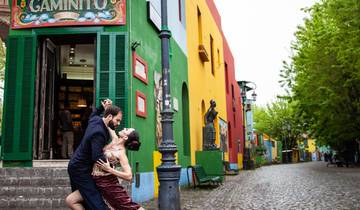
9 days
Tango & Samba (incl. domestic flights)
- ✓ Booking needs min. 2 travelers
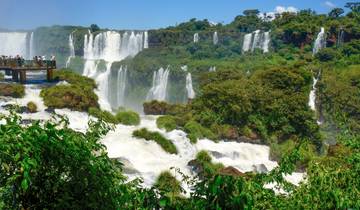
4 days
4-Day Iguazu Falls with LUXURY Resort & Airfare from Buenos Aires
- ✓ Comprehensive Iguazu Falls tour
- ✓ Expert local guides included
- ✓ All accommodation arranged
- ✓ Transportation provided
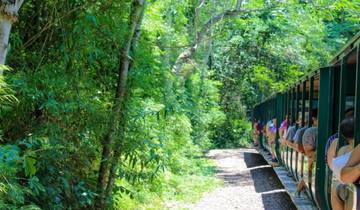
3 days
3-Day Iguazu Falls Tour – Argentine & Brazilian Sides with Transfers
- ✓ Comprehensive Iguazu Falls tour
- ✓ Expert local guides included
- ✓ All accommodation arranged
- ✓ Transportation provided
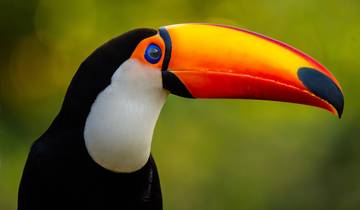
11 days
Exotic Trilogy: Rio, Iguazu Waterfalls & Amazon (incl. domestic flights)
- ✓ Booking needs min. 2 travelers
Multi-day tour packages powered by TourRadar. Prices and availability subject to change.
Indigenous Guaraní Heritage and Sacred Traditions
The Guaraní people’s connection to Iguazu Falls represents one of the longest continuous cultural relationships between indigenous peoples and a specific natural site in South America. Archaeological evidence indicates Guaraní presence in the upper Paraná region extends back at least 3,000 years, with the falls serving as a central geographic and spiritual landmark throughout this period. The Guaraní developed sophisticated ecological knowledge of the region, understanding seasonal patterns, plant medicine, animal behavior, and watershed dynamics that enabled sustainable living in the challenging rainforest environment.
Guaraní mythology explains Iguazu’s creation through the narrative of Mboi, the serpent deity who dwelt in the Iguazu River and demanded tribute from the local people. When the warrior Tarobá and his beloved Naipí attempted to escape down the river in a canoe to avoid Naipí’s sacrifice to Mboi, the enraged deity slashed the riverbed with his tail, creating the falls and transforming Naipí into a rock at the base of the cascades and Tarobá into a tree overlooking her from the cliff above. This story establishes the falls as a site of divine intervention, eternal love, and the consequences of defying sacred obligations.
The legend reflects deeper Guaraní cosmological concepts about the relationship between humans and nature, the power of water as both creative and destructive force, and the transformation between different states of being. The serpent Mboi represents primordial power and the wild, untamed aspects of nature that demand respect and proper relationship. The transformation of the lovers into permanent natural features symbolizes how human experiences and emotions become embedded in the landscape, creating places that hold both physical and spiritual significance.
Guaraní shamanic practices incorporated the falls into healing ceremonies and spiritual initiations, with the powerful energy of the cascading water serving as a catalyst for transformation and communication with spirit realms. Shamans led pilgrims to specific locations near the falls to perform rituals that restored balance, sought guidance from ancestors, or marked important life transitions. The mist rising from the Devil’s Throat and other major cataracts was considered particularly charged with spiritual power, creating conditions where the boundaries between visible and invisible worlds became permeable.
Traditional Guaraní language preserves detailed vocabulary describing different aspects of the falls—specific words for various types of cascades, the quality of mist at different times of day, the sounds the water makes in different seasons, and the rainbows that form in the spray. This linguistic sophistication demonstrates the depth of Guaraní observation and relationship with the site, with language itself encoding generations of accumulated knowledge and cultural meaning. The loss of this linguistic heritage as younger generations adopt Spanish or Portuguese represents a significant erosion of cultural knowledge.
Contemporary Guaraní communities maintain cultural connections to Iguazu through continued ceremonial practices, though these traditions face challenges from modernization, displacement, and cultural assimilation pressures. Some communities near the falls work to preserve traditional knowledge through educational programs that teach younger generations Guaraní language, stories, and ecological practices. Cultural centers interpret Guaraní heritage for visitors, creating economic opportunities while maintaining cultural continuity. These efforts demonstrate resilience and adaptation, with Guaraní people finding ways to honor ancestral traditions while navigating contemporary realities.
Colonial History and Cultural Transformation
The arrival of Spanish and Portuguese colonizers in the 16th century initiated profound cultural transformations in the Iguazu region, disrupting indigenous societies and introducing new cultural elements that would permanently alter the area’s human geography. Spanish explorer Álvar Núñez Cabeza de Vaca became the first European to document Iguazu Falls in 1541, describing the cascades in accounts that sparked European interest in the region. His writings reflected European cultural frameworks that emphasized conquest, resource extraction, and the subordination of nature and indigenous peoples to colonial control.
Jesuit missionaries established reductions (mission settlements) in the upper Paraná region during the 17th and 18th centuries, creating unique cultural hybrids that combined indigenous and European elements. The missions introduced Christianity, European agricultural practices, and new technologies while incorporating Guaraní language and certain cultural practices into mission life. This period created lasting impacts on indigenous culture, including the adoption of European musical traditions that merged with indigenous forms, creating distinctive cultural expressions that continue in the region.
The Jesuit period ended with their expulsion in 1767, leading to the collapse of mission communities and dispersal of indigenous populations. This disruption severed many indigenous people from their ancestral territories, including sacred sites like Iguazu Falls, and accelerated cultural loss as communities fragmented and traditional knowledge systems weakened. The post-Jesuit period saw increased exploitation of the region’s resources, with settlers establishing cattle ranches, yerba mate plantations, and logging operations that devastated indigenous communities and degraded the environment.
The 19th and early 20th centuries brought new waves of immigration from Europe to Argentina and Brazil, introducing additional cultural influences to the region. Italian, German, Polish, and other European settlers established communities near the falls, bringing their own cultural traditions while also developing new regional identities shaped by the unique environment. This cultural mixing created the contemporary population’s diverse heritage, though often at the expense of indigenous presence and influence in the region.
The gradual recognition of Iguazu’s value as natural heritage beginning in the early 20th century reflected evolving cultural attitudes toward wilderness and conservation. Argentine landscape architect Carlos Thays advocated for protecting the falls in the 1900s, leading to the establishment of Argentina’s first national park at Iguazu in 1934. This conservation impulse represented a cultural shift toward valuing nature for its own sake rather than purely as a resource for exploitation, though it also sometimes displaced indigenous communities from their ancestral lands in the name of conservation.
Binational Cultural Cooperation and Shared Heritage
The unique circumstance of Iguazu Falls straddling the Argentina-Brazil border has necessitated unprecedented binational cooperation that has shaped cultural attitudes toward environmental stewardship and international collaboration. The establishment of separate national parks on each side—Argentina’s Iguazu National Park in 1934 and Brazil’s Iguaçu National Park in 1939—created a framework for coordinated management that evolved into a model for transboundary conservation worldwide.
UNESCO’s designation of both parks as World Heritage Sites (Brazil in 1986, Argentina in 1984) reinforced the shared responsibility for protecting this natural and cultural treasure. The joint World Heritage status created formal mechanisms for cooperation, requiring both nations to coordinate conservation strategies, share research findings, and maintain consistent standards for visitor management and environmental protection. This collaboration has fostered cultural exchange between Argentine and Brazilian park staff, researchers, and conservation organizations, building relationships that extend beyond professional cooperation into genuine cross-cultural understanding.
The binational approach to Iguazu demonstrates how natural heritage can transcend political divisions and unite nations around shared values. Joint research programs investigate wildlife populations that move freely across the border, ignoring political boundaries in their use of the ecosystem. Coordinated anti-poaching efforts protect species throughout their range rather than creating enforcement gaps at borders. Shared funding initiatives pool resources from both nations to support major conservation projects that benefit the entire ecosystem.
Cultural events celebrating Iguazu bring together communities from both sides of the border, creating spaces for cultural exchange and mutual appreciation. Annual festivals feature music, dance, and culinary traditions from both Argentina and Brazil, demonstrating how the falls serve as a meeting point for different cultures. Educational exchanges allow students from each country to visit the opposite side, learning about different perspectives on the same natural feature and building cross-cultural friendships and understanding.
The development of distinct visitor experiences on each side reflects different cultural values and approaches to nature tourism. Brazil’s park infrastructure emphasizes accessibility and panoramic viewing, with elevated walkways and viewing platforms designed to showcase the falls’ full scale and power. Argentina’s park prioritizes close encounters with individual cataracts and immersion in the rainforest environment, with trails that wind through the forest and platforms that bring visitors within meters of major cascades. These different approaches create complementary experiences that together provide more comprehensive appreciation of the falls than either side could offer alone.
Language differences between Spanish-speaking Argentina and Portuguese-speaking Brazil create interesting cultural dynamics at Iguazu, where multilingual signs, guides, and interpretive materials accommodate visitors from both nations and international tourists. This linguistic diversity reinforces the site’s role as a cultural crossroads while occasionally creating communication challenges that require creative solutions. The development of a shared Iguazu vocabulary—words and concepts that transcend individual languages to describe unique features of the falls—demonstrates how the site itself generates new cultural commonalities.
Environmental Symbolism and Conservation Culture
Iguazu Falls has become one of the world’s most recognizable symbols for rainforest conservation and biodiversity protection, representing the urgent need to preserve threatened ecosystems and the species they sustain. The falls’ dramatic beauty makes them an effective communication tool for environmental organizations seeking to raise awareness about Atlantic Forest conservation, one of the world’s most threatened ecosystems with only 7% of original forest cover remaining outside of protected areas.
The visible contrast between protected rainforest within the parks and degraded landscapes beyond park boundaries demonstrates conservation’s tangible benefits and the consequences of uncontrolled development. Visitors can observe healthy, intact forest surrounding the falls while seeing cleared agricultural land and development in the distance, creating a powerful visual lesson about the importance of protected areas. This contrast has influenced environmental policy across South America, with Iguazu serving as evidence for the effectiveness of well-managed national parks.
Conservation success stories at Iguazu—including recovering populations of jaguars, harpy eagles, and other threatened species—provide hope and practical models for protecting biodiversity in other threatened ecosystems. The jaguar population within the parks has stabilized after decades of decline, with regular sightings demonstrating that large carnivores can persist in protected areas with proper management. These successes counter narratives of inevitable environmental decline, showing that dedicated conservation efforts can reverse negative trends and restore ecological health.
The cultural value placed on Iguazu as a conservation symbol has generated substantial economic and political support for environmental protection in the region. Both Argentine and Brazilian governments invest significant resources in park management, recognizing Iguazu’s importance to national image and tourism economy. This investment extends beyond park boundaries through buffer zone programs, reforestation initiatives, and support for sustainable development in surrounding communities, demonstrating how conservation of iconic sites can catalyze broader environmental protection efforts.
Environmental education programs at Iguazu reach over 1.5 million visitors annually, creating opportunities to influence attitudes and behaviors toward nature and conservation. Interpretive displays explain the importance of watersheds, the interconnectedness of species, and the threats facing Atlantic Forest ecosystems. School programs bring thousands of Argentine and Brazilian students to the parks each year, often providing their first direct experience with protected wilderness and creating formative memories that shape lifelong environmental values.
The global recognition of Iguazu through UNESCO World Heritage designation and inclusion on various “natural wonders” lists amplifies its symbolic power, making the falls shorthand for South American natural heritage and environmental values. International media coverage of Iguazu introduces the Atlantic Forest ecosystem to global audiences, raising awareness of conservation issues far beyond the immediate region. This global profile creates international pressure for continued protection and sustainable management, with conservation organizations worldwide monitoring threats to Iguazu and advocating for its preservation.
Contemporary Indigenous Cultural Preservation
Contemporary Guaraní communities in the Iguazu region work actively to preserve their cultural heritage while adapting to modern economic and social realities. Several indigenous communities operate cultural centers near the parks, offering visitors opportunities to learn about Guaraní traditions, language, and worldview. These centers serve dual purposes: generating income for indigenous families while educating non-indigenous visitors about Guaraní culture and maintaining cultural practices that might otherwise be lost.
Cultural guides from Guaraní communities lead specialized tours that interpret the landscape through indigenous perspectives, explaining traditional plant uses, pointing out sacred sites, and sharing stories that connect the physical environment to spiritual and cultural meanings. These interpretive experiences provide alternatives to standard nature tourism, offering deeper cultural context and supporting indigenous economic development. Visitors consistently rate these cultural encounters as highlights of their Iguazu experience, indicating strong interest in indigenous perspectives.
Language preservation efforts focus on teaching Guaraní to younger generations who increasingly grow up speaking Spanish or Portuguese as primary languages. Community schools incorporate Guaraní language instruction alongside standard curricula, while elder teaching programs pair young people with knowledge holders who pass on traditional stories, songs, and ecological wisdom. These initiatives face significant challenges from cultural assimilation pressures and limited resources, but they represent important resistance to cultural erasure.
Traditional ecological knowledge held by Guaraní elders includes sophisticated understanding of medicinal plants, seasonal patterns, animal behavior, and sustainable resource use developed over millennia of living in the Atlantic Forest. Scientific researchers increasingly collaborate with indigenous knowledge holders, recognizing that traditional ecological knowledge complements Western scientific approaches and often provides insights that would take decades to develop through conventional research methods. These collaborations validate indigenous knowledge systems while contributing to more effective conservation strategies.
Ceremonial practices continue in Guaraní communities, though often in modified forms that accommodate contemporary circumstances. Some communities maintain traditional spiritual practices privately, while others share ceremonial elements with visitors as part of cultural tourism programs. This balance between preservation and adaptation reflects the reality that cultures must evolve to survive, with contemporary Guaraní people navigating complex choices about which traditions to maintain, which to adapt, and how to share their heritage with outsiders while protecting sacred knowledge.
Indigenous rights advocacy in the Iguazu region focuses on land rights, cultural recognition, and meaningful participation in decisions affecting indigenous communities. Guaraní organizations work to secure legal recognition of indigenous territories, including areas within and adjacent to the national parks that hold cultural significance. These efforts challenge conservation models that exclude indigenous peoples from protected areas, advocating instead for approaches that recognize indigenous communities as essential partners in conservation and honor their historical and ongoing relationships with the land.
Artistic Legacy and Cultural Production
The artistic response to Iguazu Falls spans centuries and encompasses multiple creative disciplines, each attempting to capture and convey the falls’ power and beauty through different media. Early European explorers produced written accounts and sketches that introduced Iguazu to global awareness, though these representations often said as much about European cultural frameworks and colonial attitudes as they did about the falls themselves. Later 19th-century scientific expeditions included artists who created more accurate depictions, establishing visual conventions for representing the falls that persist in contemporary art.
Argentine and Brazilian painters of the late 19th and early 20th centuries incorporated Iguazu into nation-building narratives, using the falls to represent national grandeur and distinctive cultural identity. These artistic representations helped establish Iguazu as a national symbol, appearing in government buildings, schools, and public spaces where they reinforced messages about national pride and natural heritage. The visual language developed during this period—emphasizing scale, power, and untamed nature—continues to influence how Iguazu is photographed and depicted today.
Literary representations of Iguazu explore themes of sublime nature, the relationship between civilization and wilderness, and the search for meaning in the natural world. Poems, novels, and essays featuring the falls use them as metaphors for overwhelming force, eternal persistence, the cleansing power of nature, and the humbling of human pretension. Argentine writer Jorge Luis Borges referenced Iguazu in his explorations of infinity and eternal recurrence, using the falls’ endless cascade as a symbol for concepts that transcend human comprehension.
Photography has become the dominant contemporary art form for representing Iguazu, with millions of visitors each year attempting to capture the falls’ beauty through their own lenses. Professional photographers have created iconic images of Iguazu that shape global perceptions of the site—images of rainbows arcing through the mist, water cascading over cliff edges, the Devil’s Throat shrouded in spray. These photographs appear in tourism marketing, conservation campaigns, and fine art contexts, demonstrating photography’s power to influence how people understand and value natural places.
Film and television productions have leveraged Iguazu’s dramatic landscapes as backdrops for narratives ranging from action sequences to romantic encounters to documentary explorations of nature and culture. The Academy Award-winning film “The Mission” (1986) used Iguazu extensively, with the falls representing both natural beauty and the violent collision of cultures during the colonial period. More recent productions continue to discover new cinematic possibilities in the falls’ powerful presence, introducing Iguazu to global audiences who may never visit in person but develop cultural awareness through these mediated experiences.
Musical compositions inspired by Iguazu attempt to translate the falls’ sonic qualities into organized sound, from classical orchestral works that mimic the building intensity of cascading water to ambient recordings that incorporate actual sounds from the falls. Folk musicians from Argentina’s Misiones province and Brazil’s Paraná state have created regional musical traditions that reference Iguazu, using the falls as symbols of regional identity and pride. These diverse musical responses demonstrate how deeply the falls resonate in cultural consciousness, inspiring creative expression across genres and generations.
Tourism and Cultural Exchange
Tourism at Iguazu Falls facilitates enormous cultural exchange, bringing together visitors from across South America and around the world in shared appreciation of natural beauty. The annual flow of 1.5 million visitors creates a cosmopolitan atmosphere where different languages, cultures, and perspectives converge, generating interactions that transcend the immediate experience of viewing the falls. Tour groups from Japan, Europe, North America, and across South America share viewing platforms, exchange photography tips, and compare their various cultural responses to the falls’ power.
The development of tourism infrastructure and interpretation at Iguazu reflects evolving cultural values regarding nature tourism and environmental education. Early tourism development prioritized access and spectacle, with little attention to environmental impact or educational content. Contemporary approaches emphasize sustainability, education, and respect for both natural and cultural heritage, with interpretation programs that explain ecological processes, indigenous heritage, and conservation challenges alongside practical visitor information.
Tourism provides economic benefits that support conservation while creating employment opportunities for local communities, including indigenous peoples who work as guides, interpreters, and in cultural tourism programs. This economic value creates stakeholder support for continued protection of the falls and surrounding ecosystem, as communities recognize that environmental conservation directly supports their economic wellbeing. The challenge lies in balancing tourism growth with environmental protection and ensuring that economic benefits reach local communities rather than concentrating with outside operators.
Sustainable tourism initiatives at Iguazu include carbon offset programs, waste reduction efforts, and education campaigns that encourage visitors to minimize their environmental impact. The parks promote responsible visitor behavior through interpretation programs that explain why certain areas are restricted, how visitor actions affect wildlife, and what individuals can do to support conservation. These programs reflect a cultural shift toward viewing tourism not merely as economic activity but as an opportunity to build environmental awareness and support for conservation.
Cultural tourism programming increasingly incorporates indigenous perspectives and heritage, moving beyond purely environmental interpretation to explore human relationships with the landscape. Guided experiences led by Guaraní community members provide cultural context that enriches visitor understanding while supporting indigenous economic development and cultural preservation. These programs demonstrate growing recognition that natural heritage sites like Iguazu cannot be fully understood without acknowledging the human cultures that have shaped and been shaped by these landscapes.
Future Cultural Challenges and Opportunities
Climate change poses profound challenges to Iguazu’s cultural significance, with changing rainfall patterns, increased drought frequency, and rising temperatures threatening both the physical integrity of the falls and the ecosystems they sustain. Cultural responses to these challenges will determine whether future generations can maintain the same relationships with Iguazu that have characterized indigenous and contemporary cultures. Adaptation strategies must honor cultural values while acknowledging the reality of environmental change, finding ways to preserve meaning even as physical conditions evolve.
The ongoing loss of indigenous language and traditional knowledge represents an urgent cultural crisis that requires immediate action to preserve irreplaceable cultural heritage. As Guaraní elders pass away, they take with them unique knowledge, stories, and perspectives that cannot be replaced. Documentation efforts, language preservation programs, and support for indigenous cultural centers offer partial solutions, but cannot fully replace living cultural transmission. The challenge lies in creating conditions where younger indigenous people can maintain cultural identity while participating in modern economic and educational systems.
Balancing tourism growth with cultural and environmental preservation requires careful management and willingness to limit visitor numbers or modify access to protect both natural systems and cultural values. Increased tourism brings economic benefits but also risks degrading the experiences and environments that attract visitors in the first place. Cultural attitudes toward growth, development, and the appropriate relationship between humans and nature will determine how this balance evolves, with implications for both conservation effectiveness and cultural meaning.
Digital technology offers new opportunities for sharing Iguazu’s cultural significance with global audiences while raising questions about how virtual experiences might affect cultural meaning and values. Virtual reality experiences, drone photography, and live-streaming cameras make the falls accessible to people who cannot visit in person, democratizing access while potentially diminishing the cultural value placed on direct, embodied experience. Finding appropriate roles for technology in cultural transmission and heritage interpretation represents an ongoing challenge for park managers, educators, and cultural communities.
Conclusion: Iguazu as Living Cultural Heritage
Iguazu Falls embodies the profound interconnection between nature and culture, demonstrating how natural phenomena become embedded with meaning through human experience, interpretation, and relationship. The falls’ cultural significance extends far beyond aesthetic appreciation to encompass indigenous spiritual traditions maintained over millennia, artistic inspiration that shapes cultural production across multiple disciplines, environmental symbolism that drives conservation action, and binational cooperation that models international collaboration. Understanding this cultural depth enriches appreciation of Iguazu while highlighting the responsibility to protect both natural and cultural heritage for future generations.
The continuing evolution of Iguazu’s cultural meaning—from sacred site to national symbol to global conservation icon—demonstrates how cultural values adapt to changing contexts while maintaining core connections to place and meaning. Contemporary challenges including climate change, cultural assimilation, and tourism pressures require renewed commitment to preserving the multiple dimensions of Iguazu’s significance. By honoring indigenous heritage, supporting binational cooperation, maintaining environmental protection, and sharing cultural knowledge across generations and cultures, communities worldwide can ensure that Iguazu Falls continues to inspire, educate, and unite people around shared values of beauty, wonder, and respect for the natural world.
Frequently Asked Questions
What does Iguazu mean in Guaraní language?
Iguazu derives from Guaraní words “y” (water) and “guazú” (great or big), literally translating to “great water” or “big water.” This name reflects the Guaraní people’s direct experience of the falls’ overwhelming power and scale. The pronunciation “ee-gwah-SOO” maintains the Guaraní phonetic structure, though Spanish and Portuguese adaptations have created variations. The Guaraní language includes additional descriptive terms for specific features of the falls, demonstrating sophisticated linguistic encoding of detailed environmental knowledge developed over centuries of living in close relationship with this landscape.
How do indigenous communities currently participate in Iguazu tourism?
Indigenous Guaraní communities participate in Iguazu tourism through several mechanisms including operating cultural centers that interpret traditional knowledge and practices, working as specialized guides who provide indigenous perspectives on the landscape, selling traditional crafts and art to visitors, and performing cultural demonstrations of music, dance, and ceremonies. Several communities have established formal partnerships with park authorities to conduct authorized tourism activities within park boundaries. These economic opportunities provide income for indigenous families while creating spaces for cultural transmission and education. The participation varies between communities, with some actively engaged in tourism while others maintain more traditional lifestyles with limited commercial involvement.
What artistic movements have been influenced by Iguazu Falls?
Iguazu has influenced multiple artistic movements including South American landscape painting traditions of the 19th century that emphasized sublime nature and national identity, Brazilian modernism of the 1920s-1940s which incorporated Iguazu into reimagined national cultural identity, Latin American magical realism literature that uses the falls as settings for narratives blending reality and myth, and contemporary environmental art movements that engage with natural sites to raise conservation awareness. Photography movements including landscape photography, adventure photography, and environmental documentary work have all engaged extensively with Iguazu. The falls continue influencing contemporary digital art, video installations, and multimedia projects that explore relationships between humans and nature.
How has Iguazu shaped environmental policy in South America?
Iguazu’s establishment as protected national parks in the 1930s-1980s provided early models for conservation policy across South America, demonstrating that natural heritage protection could be compatible with national development goals. The binational cooperation framework developed for managing Iguazu influenced approaches to other transboundary conservation areas throughout the continent. UNESCO World Heritage designation of both parks established precedents for recognizing natural sites as having universal value deserving international protection and attention. Conservation successes at Iguazu—particularly recovery of threatened species populations—have been cited in policy debates about the effectiveness of protected areas, influencing resource allocation for conservation programs. The parks’ economic contribution through tourism has strengthened arguments that conservation can generate sustainable revenue while protecting natural heritage.
What role does Iguazu play in Argentine-Brazilian cultural relations?
Iguazu serves as a powerful symbol of shared natural heritage that transcends political boundaries, fostering cultural connections between Argentina and Brazil. The falls appear in cultural products from both nations, creating common reference points in otherwise distinct cultural traditions. Binational events and celebrations held at Iguazu bring together communities from both sides of the border, facilitating cultural exchange and building personal connections across the international boundary. Joint management of the parks requires ongoing collaboration that has built institutional relationships and cross-cultural understanding between park staff, researchers, and conservation organizations. The need to coordinate visitor experiences and protect shared ecosystems creates practical incentives for cooperation that extend beyond the immediate park boundaries into broader bilateral relations.
How do conservation and indigenous rights intersect at Iguazu?
The intersection of conservation and indigenous rights at Iguazu creates complex dynamics where nature protection objectives sometimes conflict with indigenous territorial claims and resource use rights. Historical establishment of protected parks displaced some indigenous communities from ancestral territories, creating grievances that persist into the present. Contemporary management approaches increasingly recognize indigenous peoples as essential partners in conservation rather than obstacles to overcome, with some parks developing collaborative management arrangements that honor indigenous rights while protecting ecosystems. Indigenous traditional ecological knowledge contributes to more effective conservation strategies by incorporating understanding developed over millennia of sustainable resource use. Ongoing negotiations about indigenous access to park areas for cultural and subsistence purposes reflect evolving understanding of the relationship between cultural rights and environmental protection.
What festivals and cultural events celebrate Iguazu Falls?
Annual events celebrating Iguazu include the Festival Internacional de las Cataratas which brings together musicians and artists from Argentina, Brazil, and across South America for performances near the falls. Regional folklore festivals in Misiones province (Argentina) and Paraná state (Brazil) feature Iguazu prominently in cultural programming, celebrating regional identity connected to the falls. Indigenous communities hold traditional ceremonies at various times throughout the year, some private and some open to cultural tourism participation. Environmental awareness events including World Water Day and Earth Day programs at the parks use Iguazu as focal points for education and celebration. The anniversaries of national park establishment are marked with special programs and cultural events recognizing conservation history and achievements.
How has tourism changed cultural perceptions of Iguazu?
Tourism development has transformed Iguazu from a relatively unknown natural feature (outside the local region) into a globally recognized icon, fundamentally changing how the falls are perceived culturally. Early tourism emphasized spectacle and adventure, framing Iguazu as a conquest destination for intrepid travelers. Contemporary tourism increasingly emphasizes environmental education and cultural understanding, positioning visitors as learners rather than consumers of natural spectacle. Mass tourism has made Iguazu accessible to broader populations including working-class South Americans and international visitors who previously could not afford such travel, democratizing access while creating challenges for sustainable management. The photographic documentation of Iguazu by millions of visitors has created vast visual archives that shape global perceptions and cultural meanings associated with the falls.
What stories beyond the Naipí and Tarobá legend are associated with Iguazu?
Beyond the famous creation myth, Guaraní oral traditions include stories about specific cataracts and features within the falls complex, each with its own narrative explaining formation or significance. Legends describe encounters between shamans and spirits at the falls, with the powerful water serving as sites for vision quests and spiritual transformation. Historical accounts from Jesuit missions describe indigenous ceremonies performed at the falls during the colonial period, though many details were not recorded. More recent folklore includes stories of early explorers and settlers encountering the falls, often emphasizing themes of being overwhelmed by natural power and humbled by grandeur. Contemporary oral histories from local communities include accounts of living through conservation struggles, park establishment, and the transformation of the region through tourism development.
How does Iguazu appear in South American literature?
Iguazu appears throughout South American literature as a symbol of natural grandeur, untamed wilderness, and the complex relationship between humans and nature. Argentine writers including Jorge Luis Borges referenced the falls in explorations of infinity, time, and the limits of human understanding, using the endless cascade as metaphor for eternal recurrence. Brazilian poets celebrated Iguazu as embodiment of national vitality and natural wealth in nation-building literature of the early 20th century. Contemporary fiction incorporates the falls as settings for narratives ranging from romance to mystery to magical realism, with the dramatic landscape providing atmosphere and metaphorical depth. Environmental literature uses Iguazu to explore themes of conservation, development conflicts, and humanity’s impact on nature. Indigenous authors increasingly assert Guaraní perspectives on the falls, challenging colonial narratives and reclaiming cultural authority over Iguazu’s meaning and representation.