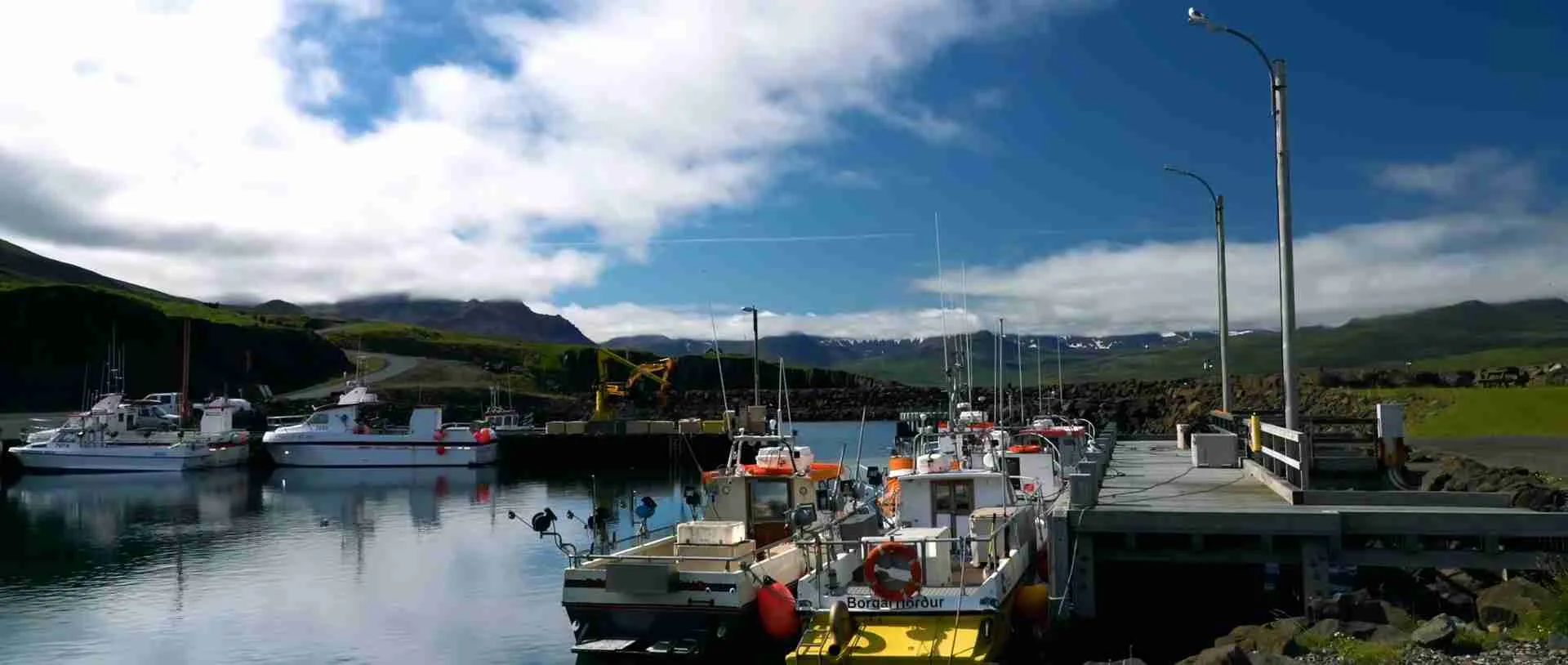
Iceland Fjords Travel Guide 2026: Ultimate Planning Resource
Iceland’s 109 glacially carved fjords create some of Europe’s most dramatic coastal landscapes, from the remote wilderness of the Westfjords to the artistic villages of the Eastfjords. This comprehensive guide covers everything you need to plan your 2026 fjord exploration, including verified costs, regional comparisons, seasonal strategies, and practical logistics for experiencing these magnificent U-shaped valleys that define Iceland’s rugged character.
Key Takeaways for Iceland Fjords 2026
- Regional Diversity: Iceland’s fjords divide into distinct regions—the wild, sparsely populated Westfjords (population 7,168), the artistic Eastfjords with colorful fishing villages, and the accessible North fjords near Akureyri—each offering different landscapes, infrastructure levels, and travel experiences.
- Budget Planning 2026: Expect ISK 130,000-260,000 ($925-1,855) per person for seven days covering accommodation (ISK 15,000-35,000/$107-250 nightly), meals (ISK 2,500-12,000/$20-96 daily), rental car (ISK 8,000-25,000/$57-180 daily), and fuel at ISK 305 ($2.48) per liter for gasoline.
- Seasonal Access: Summer (June-August) offers full road access but highest prices and August 2026 features a total solar eclipse creating extreme demand; shoulder seasons (May, September) provide 30-50% lower costs with good weather; winter restricts many Westfjords roads due to snow and ice.
- Transportation Reality: Public buses connect major towns but don’t support flexible fjord exploration—rental cars are essential, with 4×4 vehicles recommended for Westfjords’ gravel roads and mountain passes, particularly outside peak summer months.
- Trip Duration: Allow minimum 2-4 days for Westfjords exploration due to winding roads along deeply indented coastlines, 2-3 days for Eastfjords’ more accessible routes, or 7-10 days to experience both regions comprehensively via the Ring Road circuit.
- Eclipse Impact 2026: The August 12, 2026 total solar eclipse positions Iceland in the path of totality, causing exceptional demand spikes—book accommodation, rental cars, and tours 6-12 months ahead if traveling anytime during August to secure availability at reasonable rates.
People Also Ask About Iceland Fjords 2026
What is the Best Time to Visit Iceland’s Fjords in 2026?
May and September offer the best value-to-experience ratio for Iceland’s fjords in 2026, with 30-50% lower accommodation costs than peak summer (June-August) while maintaining accessible roads and decent weather. June through August provides maximum daylight (up to 22 hours in summer), full road access including Westfjords’ mountain passes, and optimal conditions for whale watching, kayaking, and hiking, but accommodation prices peak at ISK 25,000-45,000 ($180-320) per night in popular fjord towns. Winter (October-April) delivers dramatic aurora borealis viewing and 40-60% accommodation discounts (ISK 12,000-22,000/$85-160 nightly), but many Westfjords roads close completely due to snow and ice, limiting access to eastern and northern fjords only. Avoid August 2026 unless specifically targeting the August 12 total solar eclipse—demand will spike dramatically, with prices 50-100% above normal summer rates and many properties fully booked months in advance.
How Much Does it Cost to Visit Iceland’s Fjords in 2026?
A seven-day Iceland fjords self-drive trip in 2026 costs ISK 130,000-260,000 ($925-1,855) per person before flights, based on two travelers sharing accommodation and vehicle expenses. Accommodation represents the largest expense at ISK 15,000-35,000 ($107-250) per night for mid-range hotels or guesthouses in fjord towns like Ísafjörður, Seyðisfjörður, or Akureyri. Rental cars consume 30-45% of ground budgets at ISK 8,000-25,000 ($57-180) daily depending on vehicle type (economy 2WD versus 4×4 SUV), while fuel adds ISK 305 ($2.48) per liter for gasoline—expect ISK 35,000-55,000 ($250-390) in fuel costs for a week of fjord driving covering 1,200-1,800 kilometers. Daily food costs range ISK 2,500-4,000 ($20-32) for grocery self-catering to ISK 10,000-15,000 ($72-107) eating all restaurant meals, with mid-range restaurant dinners costing ISK 7,000-12,000 ($56-96) per person. Tours and activities add ISK 8,000-18,000 ($64-144) per excursion for whale watching, kayaking, or super jeep adventures in remote fjord areas.
Are the Westfjords or Eastfjords Better to Visit?
The Westfjords deliver the most dramatic, untouched fjord landscapes in Iceland with steeper mountains, more remote wilderness areas like Hornstrandir Nature Reserve, and the deepest fjord in the country (Ísafjarðardjúp), but require significantly more driving time on winding, often-gravel roads that are impassable October through May. The region’s population of just 7,168 means limited accommodation and dining options concentrated in Ísafjörður (2,679 residents), making advance booking essential in summer 2026. The Eastfjords offer gentler, more accessible fjord exploration along paved Ring Road sections, with larger towns like Egilsstaðir and Seyðisfjörður providing better infrastructure, more frequent accommodation options, and artistic communities including the photogenic Rainbow Street in Seyðisfjörður. Eastfjords roads remain passable year-round, making them viable for winter travelers seeking aurora viewing and off-season pricing. Choose Westfjords for wilderness isolation and the most spectacular scenery if visiting May-September with time for slow travel; select Eastfjords for easier logistics, year-round access, cultural experiences, and combining fjords with other Ring Road attractions.
Do You Need a 4×4 Vehicle for Iceland’s Fjords in 2026?
A 4×4 vehicle is strongly recommended for Westfjords exploration and essential for traveling outside June-August, while Eastfjords and North fjords are accessible with standard 2WD cars during summer months. Westfjords roads include numerous gravel sections, steep mountain passes, and routes that become treacherous with rain or early/late season snow—higher ground clearance and four-wheel drive provide crucial safety margins on roads like Route 60 around Ísafjarðardjúp or Route 61 to Dynjandi waterfall. Winter travel (October-April) to any fjord region requires 4×4 with studded tires for handling ice and snow on mountain passes, though many Westfjords routes close completely regardless of vehicle. The 4×4 premium adds ISK 5,000-12,000 ($35-86) daily to rental costs versus economy 2WD, but provides access to remote areas and better handling of Iceland’s notoriously changeable weather conditions. Economy 2WD cars work fine for summer Eastfjords travel along Ring Road (Route 1) and paved spur roads to towns like Seyðisfjörður and Eskifjörður, saving significant money if your 2026 itinerary focuses on these more accessible regions.
Extended multi-day tours – 5+ days
Featured Iceland Multi-Day Tour Packages
7 days
7 Day – Iceland Ring Road & Snæfellsnes Peninsula Small-Group Tour
- ✓ Comprehensive Iceland tour
- ✓ Expert local guides included
- ✓ All accommodation arranged
- ✓ Transportation provided
7 days
7-Day Small Group Journey Around Iceland with Premium Hotels
- ✓ Comprehensive Iceland tour
- ✓ Expert local guides included
- ✓ All accommodation arranged
- ✓ Transportation provided
5 days
5-Day Small Group Northern Lights Hunt & Glacier Lagoon Tour
- ✓ Comprehensive Iceland tour
- ✓ Expert local guides included
- ✓ All accommodation arranged
- ✓ Transportation provided
5 days
5 Days Land of Northern Lights
- ✓ Comprehensive Iceland tour
- ✓ Expert local guides included
- ✓ All accommodation arranged
- ✓ Transportation provided
Multi-day tour packages powered by TourRadar. Prices and availability subject to change.
Introduction to Iceland’s Fjord Regions
Iceland’s fjords represent the country’s most visually arresting geography—109 deep U-shaped inlets carved by Ice Age glaciers, surrounded by steep mountains and opening to the North Atlantic. These glacial valleys filled with seawater create dramatically indented coastlines primarily concentrated in two regions: the Westfjords peninsula extending from Iceland’s northwest corner toward Greenland, and the Eastfjords defining the country’s remote eastern coast. Additional significant fjords punctuate northern Iceland around Akureyri and areas immediately north of Reykjavík like Hvalfjörður.
The fjord regions share common geological origins but diverge dramatically in character, accessibility, and travel infrastructure. The Westfjords stand as Iceland’s most isolated territory, connected to the mainland by a seven-kilometer isthmus and defined by labyrinthine coastlines where roads wind endlessly around deep inlets. With Iceland’s smallest population density (7,168 residents across a vast peninsula) and predominantly gravel roads that close for six months annually, the Westfjords reward adventurous travelers with raw wilderness, towering bird cliffs at Látrabjarg, and the uninhabited Hornstrandir Nature Reserve accessible only by boat.
The Eastfjords present a gentler counterpoint—narrower fjords flanked by younger, more rugged mountains, with the paved Ring Road providing year-round access to colorful fishing villages. Towns like Seyðisfjörður with its famous Rainbow Street and blue church have evolved into artistic communities, while the region’s relative remoteness compared to southwest Iceland preserves authentic fishing culture and uncrowded natural landscapes. The Eastfjords host Iceland’s only wild reindeer population (approximately 7,000 animals descended from 18th-century Norwegian imports), adding unique wildlife viewing opportunities.
Northern fjords around Akureyri and Eyjafjörður offer the most accessible fjord experiences due to proximity to Iceland’s second-largest city (population 19,000+), with developed tourism infrastructure including regular flights from Reykjavík, extensive accommodation options, and organized tour operators. These fjords provide an excellent introduction to Iceland’s fjord landscapes for travelers with limited time or those seeking easier logistics while still experiencing dramatic mountain-backed coastal scenery.
Planning fjord travel in 2026 requires understanding these regional distinctions to match your interests, budget, time constraints, and travel season with appropriate destinations. This guide provides comprehensive information across all fjord regions to help you build an efficient, cost-effective itinerary that delivers the fjord experiences you’re seeking.
Understanding Iceland’s Fjord Geography and Formation
Iceland’s fjords began forming during the last Ice Age when massive glaciers covered most of the country. As these glaciers moved across the landscape, their immense weight and abrasive power carved deep U-shaped valleys into the bedrock—distinctly different from V-shaped river valleys. When the glaciers retreated approximately 10,000 years ago, rising sea levels flooded these glacial valleys, creating the fjords we see today: saltwater inlets flanked by steep valley walls rising directly from the sea.
This glacial carving process explains why Iceland’s fjords concentrate in specific regions rather than distributing evenly around the coastline. The western and eastern peninsulas experienced the most intensive glaciation due to their mountainous terrain and climatic conditions, resulting in dozens of deeply cut fjords along these coasts. In contrast, southern Iceland’s relatively flat topography and different glacial flow patterns created predominantly black sand beaches rather than fjords, with only shallow lagoons punctuating the south coast.
Ongoing geological processes continue shaping Iceland’s fjords. The island sits atop the Mid-Atlantic Ridge where the North American and Eurasian tectonic plates diverge, causing continuous volcanic activity and gradual land elevation changes. Erosion from powerful Atlantic storms, freeze-thaw cycles in the mountains, and occasional glacial outburst floods (jökulhlaups) modify fjord landscapes, though the basic U-shaped profile remains stable over human timescales.
The fjords’ dramatic depth creates their visual impact—Ísafjarðardjúp in the Westfjords reaches depths exceeding 200 meters, while fjord lengths vary from compact inlets just a few kilometers long to massive water bodies like Eyjafjörður extending 60+ kilometers inland. These depths moderate local climates by storing oceanic heat, while fjord walls create microclimates with significant temperature and precipitation variations between the water level and mountain peaks just hundreds of meters away.
Westfjords Region 2026: Iceland’s Most Remote Territory
The Westfjords peninsula extends from Iceland’s northwest corner as a massive protrusion toward Greenland, defined by dozens of fjords creating one of the world’s most convoluted coastlines. This region embodies Iceland at its most pristine and challenging—vast uninhabited areas, minimal infrastructure, weather influenced by the East Greenland Current making it Iceland’s coldest coastal zone, and roads that demand patient driving as they curve endlessly around deep inlets.
Ísafjörður serves as the regional capital and largest settlement with 2,679 residents, offering the Westfjords’ best concentration of services including hotels, restaurants, supermarkets, gas stations, and tour operators. The town occupies a narrow spit of land in Skutulsfjörður (a branch of massive Ísafjarðardjúp), surrounded by mountains rising directly from the water. Ísafjörður provides bases for kayaking tours exploring the fjord’s marine life, super jeep excursions into the highlands, and boat trips to remote Hornstrandir Nature Reserve.
Hornstrandir Nature Reserve represents the Westfjords’ ultimate wilderness destination—a completely uninhabited peninsula at the region’s northern tip, accessible only by boat from Ísafjörður. The reserve protects dramatic landscapes including 500-meter sea cliffs, Arctic fox populations (Iceland’s only native land mammal), and pristine tundra vegetation untouched by grazing sheep. Multi-day hiking expeditions in Hornstrandir require self-sufficiency with camping gear and supplies, though day trips from Ísafjörður via boat provide accessible wilderness sampling.
Látrabjarg represents Europe’s westernmost point and one of the continent’s largest bird cliffs—a 14-kilometer stretch of cliffs rising 450 meters directly from the ocean, hosting millions of seabirds including puffins (most accessible May-August), razorbills, guillemots, and fulmars. The cliff edges are unstable and dangerous, requiring extreme caution, but the site offers unparalleled bird photography opportunities and dramatic coastal scenery. Látrabjarg lies in the southern Westfjords, accessible via Route 612 from Patreksfjörður.
Dynjandi waterfall cascades 100 meters down a mountainside in a distinctive widening fan shape, with the main waterfall (Fjallfoss) crowned by six smaller cascades below. Located roughly midway down the Westfjords’ western coast along Route 60, Dynjandi serves as the region’s most photographed natural feature. A well-maintained 15-minute uphill walk from the parking area reaches the main waterfall, with the journey passing all lower cascades.
Rauðasandur (Red Sand Beach) creates a surreal color contrast—a 10-kilometer sweep of reddish-orange sand along the southern Westfjords coast, derived from pulverized scallop shells rather than volcanic minerals. The beach requires a rough gravel road approach but rewards with isolation and unique photographic opportunities including colonies of seals hauled out on the sand.
Westfjords travel requires realistic time budgeting. The winding roads around deeply indented fjords mean actual driving speeds average 40-50 kilometers per hour even on paved sections, with gravel roads reducing speeds to 30-40 kilometers per hour. The 95-kilometer drive from Ísafjörður to Látrabjarg requires 3.5-4.5 hours, while circling Ísafjarðardjúp fjord (the region’s largest) consumes an entire day despite appearing modest on maps. Budget minimum 4-5 days for meaningful Westfjords exploration if including Látrabjarg, Dynjandi, and Hornstrandir boat trip.
Eastfjords Region 2026: Artistic Villages and Accessible Fjord Beauty
The Eastfjords (Austurland) stretch along Iceland’s remote eastern coast from Berufjörður in the south to Vopnafjörður in the north, characterized by narrower fjords than the Westfjords, younger and more rugged mountains rising steeply from the water, and the paved Ring Road providing year-round access to most major settlements. This region balances dramatic fjord scenery with better infrastructure, making it more accessible for first-time visitors or those with limited time.
Seyðisfjörður stands as the Eastfjords’ artistic and cultural heart—a town of multicolored wooden houses clustered at the head of a narrow 17-kilometer fjord where sunlight reaches directly for only three months annually due to steep mountain walls. Rainbow Street, painted by local residents leading to the distinctive blue church, has become one of Iceland’s most photographed landmarks. The town hosts a thriving arts community with galleries, workshops, and the annual LungA art festival (July). Seyðisfjörður also serves as Iceland’s primary ferry connection to Europe via Smyril Line services to Denmark through the Faroe Islands, operating weekly April-October.
Egilsstaðir functions as the Eastfjords’ commercial center and largest town (population 2,500+), located not on a fjord but inland where Routes 1, 92, 93, and 94 converge. The town provides comprehensive services including hotels, restaurants, supermarkets, gas stations, car rental agencies, and the regional airport with daily flights to Reykjavík. Egilsstaðir serves as the logical base for exploring surrounding fjords via day trips, though the town itself lacks the coastal fjord character of smaller villages.
Djúpivogur occupies a scenic harbor setting in the southern Eastfjords, notable as Iceland’s first Cittaslow community (an international network promoting slower-paced living and local culture). The village of 450 residents features well-preserved historic buildings, an outdoor sculpture installation called “Eggin í Gleðivík” (34 oversized bird eggs representing local nesting species), and serves as a gateway to Vatnajökull National Park’s eastern sections.
Eskifjörður and Reyðarfjörður represent typical Eastfjords fishing villages—working harbors surrounded by steep mountains, colorful houses, small maritime museums preserving local history, and populations sustained by fishing industries. Reyðarfjörður hosts Iceland’s largest aluminum smelter (Alcoa Fjarðaál), while Eskifjörður maintains its traditional fishing village character with added appeal from the Randulfssjóhús maritime museum in a restored 1890s merchant’s warehouse.
The Eastfjords’ wild reindeer population (approximately 7,000 animals) descended from Norwegian imports in the 1770s, with these populations thriving in the region’s temperate conditions after introductions elsewhere failed. Reindeer spotting opportunities exist year-round, particularly in highland areas between fjords and around Snæfell mountain (1,833 meters), though animals descend to lower elevations in winter months.
Vök Baths near Egilsstaðir offers the Eastfjords’ primary geothermal bathing experience—floating pools in Lake Urriðavatn with infinity views across the water and surrounding mountains, plus sauna, cold plunge tunnel, and Vök Bistro restaurant. The facility provides a luxurious alternative to the overcrowded Blue Lagoon in southwest Iceland, with more intimate settings and fewer crowds.
Eastfjords road access via Ring Road (Route 1) means year-round travel possibilities, though winter conditions still require caution on mountain passes particularly the 632-meter Öxi pass between Egilsstaðir and Djúpivogur. Summer driving (June-September) encounters no road closures, making the Eastfjords viable for travelers wanting fjord experiences without Westfjords’ logistical challenges.
North Iceland Fjords 2026: Accessible Experiences Near Akureyri
Northern Iceland’s fjords radiate from Akureyri, the country’s second city (population 19,000+), providing the most accessible and developed fjord experiences for travelers with limited time or those seeking easier logistics. Eyjafjörður, Iceland’s longest fjord at 60+ kilometers, dominates the region with Akureyri positioned at the fjord’s southern terminus.
Akureyri itself offers comprehensive urban services unusual outside Reykjavík—international airport with multiple daily Reykjavík flights plus seasonal European connections, extensive accommodation from hostels to luxury hotels, diverse restaurants representing various cuisines, shopping including major supermarket chains, and organized tour operators offering fjord-based activities. The city’s fjord setting creates a microclimate with slightly warmer and drier conditions than surrounding areas, supporting botanical gardens and tree growth unusual for Iceland’s northern latitudes.
Eyjafjörður fjord supports multiple coastal villages along its eastern and western shores, each with distinct character. Dalvík (population 1,400) on the fjord’s western shore serves as a fishing hub and departure point for whale watching tours, with particularly high success rates for humpback whale sightings June-August. Ólafsfjörður and Siglufjörður occupy dramatic settings at the northern end of nearby Tröllaskagi Peninsula, connected to Akureyri via the 11-kilometer Ólafsfjarðargöng and Múlagöng tunnels that revolutionized winter access to these previously isolated communities.
Siglufjörður (population 1,100) dominated Iceland’s herring industry in the early 20th century when the town became one of the country’s wealthiest, processing millions of tons of herring until stocks collapsed in the 1960s. The Herring Era Museum (Síldarminjasafn Íslands) preserves this history in excellently curated exhibits showing the boom-and-bust cycle that defined the town. Modern Siglufjörður has reinvented itself as a base for hiking, skiing (the Tröllaskagi Peninsula offers some of Iceland’s best backcountry skiing), and craft beer production at Segull 67 brewery.
Grímsey Island, located 40 kilometers north of Iceland’s mainland directly on the Arctic Circle, technically qualifies as part of Akureyri’s municipality. The island hosts approximately 60 permanent residents, massive bird colonies including puffins, and the unique experience of crossing the Arctic Circle (66°33’N), marked by a concrete sphere that moves annually as the circle’s position shifts with Earth’s axial precession. Ferry service from Dalvík (three times weekly) or flights from Akureyri (daily year-round) provide access, with day trips possible though overnight stays offer better wildlife photography opportunities during summer’s extended twilight.
Northern fjords’ proximity to Akureyri enables day-trip strategies rather than requiring accommodation changes, making them ideal for travelers wanting to experience fjord landscapes while maintaining a stable urban base. This approach works particularly well in winter when road conditions can change rapidly—returning to Akureyri each evening provides flexibility if weather deteriorates.
Accommodation Costs Across Iceland’s Fjord Regions 2026
Accommodation represents the largest single expense category for Iceland fjord travel in 2026, typically consuming 30-40% of ground budgets. Prices vary significantly by season, region, and accommodation type, with the August 2026 solar eclipse creating exceptional demand spikes requiring booking 6-12 months ahead to secure any availability.
Budget accommodation in Iceland’s fjord regions costs ISK 8,000-18,000 ($57-130) per night in hostel dormitories (shared rooms with 4-12 beds), with private rooms in hostels ranging ISK 18,000-28,000 ($130-200) nightly. Budget hotels and guesthouses without private bathrooms run ISK 15,000-22,000 ($107-160) per night for double rooms. Notable budget options include Loft Hostel and Kex Hostel in Akureyri (both around ISK 8,000-12,000/$57-86 for dorms), The Barn Hostel in Vík (ISK 9,000-14,000/$64-100 dorms), and various guesthouses in Ísafjörður and Seyðisfjörður averaging ISK 16,000-20,000 ($115-145) for basic double rooms with shared facilities.
Mid-range accommodation dominates fjord towns, spanning ISK 22,000-45,000 ($160-320) per night for double rooms in 3-4 star hotels or quality guesthouses with private bathrooms. These properties typically include breakfast, modern amenities, and better locations within walking distance of town centers and harbors. Specific examples include Hotel Ísafjörður at approximately ISK 28,000-38,000 ($200-270) nightly in summer, Hotel Aldan in Seyðisfjörður ranging ISK 30,000-42,000 ($215-300), and various Center Hotels properties in Akureyri from ISK 25,000-40,000 ($180-285). Mid-range represents the best value proposition in Iceland, delivering comfortable accommodation with reliable standards at prices that, while high internationally, remain reasonable within Iceland’s cost structure.
Luxury accommodation options exist primarily in larger towns like Akureyri, with scattered high-end properties in smaller fjord communities. Expect ISK 50,000-90,000+ ($355-640+) per night for 5-star hotels or premium boutique properties. The few luxury fjord options include select properties in Akureyri’s downtown reaching ISK 55,000-75,000 ($390-535), while luxury lodges in remote Westfjords locations can exceed ISK 100,000 ($715) nightly during peak season. Luxury accommodation in fjord regions generally offers less value than equivalent properties in Reykjavík due to limited competition and higher operational costs in remote locations.
Seasonal price variation creates significant budgeting opportunities. High season (June-August) sees accommodation costs peak at the ranges quoted above, with August 2026 eclipse week potentially adding 50-100% premiums and selling out properties months in advance—book immediately if targeting this week. Shoulder season (May, September) typically delivers 20-30% lower rates: mid-range hotels that cost ISK 35,000 ($250) nightly in July drop to ISK 25,000-28,000 ($180-200) in September. Low season (October-April, excluding Christmas/New Year) offers the deepest discounts with mid-range accommodation falling to ISK 15,000-25,000 ($107-180) per night, though many Westfjords properties close completely during winter months.
Regional price differences add another planning variable. Reykjavík accommodation costs run 20-30% higher than fjord towns for equivalent quality levels. Within fjord regions, Akureyri as the largest northern city maintains prices comparable to or slightly above smaller fjord communities, while the most remote Westfjords locations actually charge premium rates (15-25% above Eastfjords equivalents) due to limited supply and higher operating costs. The Ring Road effect creates pricing patterns where towns along Route 1 (like Eastfjords villages) offer more competitive rates due to increased tourism traffic and competition, while off-Ring-Road Westfjords properties operate more as destination accommodations with corresponding pricing power.
Camping provides the lowest-cost option for summer travelers (late May-September only, as winter camping in Iceland is not recommended due to severe weather). Campsites charge ISK 1,500-4,000 ($10-30) per person per night, with facilities ranging from basic (toilets, cold water) to well-developed (showers, kitchens, laundry). Most fjord towns operate municipal campsites, while private campgrounds cluster near major attractions. Campervans combine accommodation and transportation, renting for ISK 18,000-45,000 ($130-320) daily depending on size and season, but eliminate separate accommodation costs—viable for summer travel May-September when campsite infrastructure operates fully.
Transportation and Getting Around Iceland’s Fjords 2026
Rental cars represent the essential transportation mode for meaningful fjord exploration in 2026, as public bus services connect only major towns without supporting the flexible stopping and schedule required for fjord sightseeing. Rental costs vary dramatically by vehicle category, season, and rental duration, typically consuming 30-45% of ground travel budgets.
Economy 2WD cars (Toyota Yaris, Volkswagen Polo, similar compacts) rent for ISK 8,000-15,000 ($57-107) daily in summer high season (June-August), dropping to ISK 5,000-10,000 ($35-72) in shoulder seasons (May, September-October) and ISK 4,000-8,000 ($28-57) in winter (November-April). These vehicles work adequately for Eastfjords Ring Road travel and paved roads in northern fjords around Akureyri, providing significant cost savings versus larger vehicles. However, 2WD economy cars struggle with Westfjords’ gravel roads, lack clearance for rough surfaces, and cannot legally drive F-roads (highland routes) under standard rental contracts—violating these restrictions voids insurance coverage.
4×4 SUVs (Suzuki Vitara, Dacia Duster, Toyota RAV4, larger models) represent the recommended vehicle category for Westfjords exploration and any off-Ring-Road travel. Rental rates run ISK 15,000-35,000 ($107-250) daily in summer high season, ISK 12,000-28,000 ($86-200) in shoulder seasons, and ISK 10,000-22,000 ($72-160) in winter. The 4×4 premium over economy 2WD averages ISK 7,000-12,000 ($50-86) daily, but provides crucial capabilities: higher ground clearance for rough roads and river crossings, four-wheel drive for gravel and snow, and better stability in Iceland’s fierce crosswinds. Winter travel (October-April) to any fjord region requires 4×4 with studded winter tires for safe navigation of ice and snow on mountain passes.
Rental duration affects daily rates—week-long rentals typically cost 15-25% less per day than 1-3 day rentals, while two-week rentals may save 25-35% daily versus very short rentals. One-day rentals incur significant premiums, often costing 40-60% more per day than week-long rates. Most fjord itineraries spanning 7-10 days automatically qualify for better weekly pricing.
Insurance adds substantial costs beyond base rental rates. Collision Damage Waiver (CDW) typically runs ISK 3,000-6,000 ($21-43) daily, reducing but not eliminating liability for vehicle damage. Super CDW (SCDW) for near-complete coverage costs ISK 5,000-9,000 ($35-64) daily but remains worthwhile given Iceland’s harsh conditions—wind-blown car doors, gravel kicked up by passing vehicles, and rough road surfaces create real damage risks. Gravel Protection (GP) specifically covering undercarriage and paint damage from gravel roads adds ISK 2,000-4,000 ($14-30) daily and is essential for Westfjords travel. Total insurance costs commonly add ISK 8,000-15,000 ($57-107) daily to base rental rates.
Fuel costs in Iceland rank among Europe’s highest. As of July 2026, gasoline costs ISK 305 ($2.48) per liter, equivalent to approximately $9.40 per gallon. Diesel runs slightly higher at ISK 320 ($2.60) per liter. A typical week-long fjord road trip covering 1,200-1,800 kilometers in a compact car consuming 6-7 liters per 100 kilometers requires 72-126 liters, costing ISK 22,000-38,500 ($160-275) in fuel. Larger 4×4 vehicles with consumption around 9-11 liters per 100 kilometers push fuel costs to ISK 33,000-62,000 ($235-440) weekly. Budget fuel at 15-20% of total trip costs for Eastfjords/North Iceland travel, 20-25% for Westfjords due to lower average speeds and circuitous routing dramatically increasing distance versus straight-line map measurements.
Gas stations cluster in larger towns with services every 50-100 kilometers along Ring Road, but Westfjords distances between stations can exceed 150 kilometers on some routes. Budget-priced Orkan and Costco (membership required) stations offer ISK 10-20 ($0.07-0.14) per liter savings versus N1 and Olis chains. Always refuel when passing gas stations in remote areas rather than gambling on making the next station—running dry in the Westfjords could strand you for hours awaiting rescue.
Public buses operated by Strætó in Reykjavík and various regional carriers connect major fjord towns but run limited schedules poorly suited to tourism. Sample routes include Akureyri-Dalvík (ISK 1,500-2,000/$11-14 one-way), Egilsstaðir-Seyðisfjörður (ISK 2,500-3,500/$18-25), and Ísafjörður-Patreksfjörður (summer only, ISK 6,000-8,000/$43-57). These services work for point-to-point transfers between towns but cannot support the flexible stopping required for photographing fjord viewpoints, visiting waterfalls, or exploring remote beaches.
Domestic flights provide time-saving alternatives to long drives. Air Iceland Connect operates year-round Reykjavík-Akureyri flights (45 minutes, ISK 12,000-28,000/$86-200 one-way depending on booking timing) and seasonal Reykjavík-Ísafjörður service (45 minutes, ISK 15,000-32,000/$107-230). Egilsstaðir receives daily Reykjavík flights (70 minutes, ISK 14,000-30,000/$100-215). Flying to Akureyri or Ísafjörður plus local car rental eliminates 5-7 hours each direction of driving from Reykjavík, converting long road trips into focused fjord exploration—worthwhile for travelers with limited vacation time even considering combined flight and rental car costs.
Food and Dining Costs in Iceland’s Fjords 2026
Food expenses in Iceland rank among Europe’s highest, with fjord regions matching or slightly exceeding Reykjavík’s already elevated prices due to longer supply chains and limited competition. Strategic meal planning significantly impacts overall budgets, as travelers choosing all restaurant meals spend 3-4 times more daily than those mixing grocery shopping with selective restaurant dining.
Grocery shopping for self-catering represents the most economical approach, costing ISK 2,500-4,000 ($20-32) per person daily for three meals. Bónus (Iceland’s discount grocery chain, identifiable by bright pink pig logo) offers the lowest prices, typically 15-25% below competitors like Krónan and Hagkaup. A sample daily grocery budget buying basics at Bónus includes bread ISK 400 ($3), cheese ISK 800 ($6), deli meats ISK 900 ($7), skyr (Icelandic thick yogurt) ISK 300 ($2.40), fruit ISK 600 ($4.30), pasta ISK 250 ($1.80), sauce ISK 400 ($3), coffee ISK 200 ($1.45), totaling approximately ISK 3,850 ($28) with room for snacks and beverages. Larger towns like Ísafjörður, Akureyri, Egilsstaðir, and Seyðisfjörður maintain Bónus or Krónan locations, while smaller villages have more expensive convenience stores charging 20-40% premiums—stock up in major towns before driving to remote areas.
Fast food and budget dining options exist in larger fjord towns but remain limited compared to Reykjavík. Bæjarins Beztu, Iceland’s famous hot dog stand, has locations beyond Reykjavík with “ein með öllu” (one with everything—ketchup, mustard, remoulade, raw and fried onions) costing ISK 820 ($6.50). Lamb shawarma from Mandi (Syrian restaurant with Reykjavík and Akureyri locations) costs ISK 2,090 ($17). Subway sandwiches run ISK 1,530-2,350 ($12-19) for 6-12 inch subs. KFC meals in Akureyri cost ISK 2,400-2,500 ($19-20). Gas station hot food at N1 and Olis stations—hot dogs, burgers, soup—provides roadtrip sustenance at ISK 800-1,800 ($6-14) per item, with quality exceeding American gas station food expectations.
Casual restaurant meals in fjord towns cost ISK 2,000-5,500 ($16-44) per person for lunch or simple dinner entrées without alcohol. Fish and chips runs ISK 2,200-3,000 ($18-24), burgers ISK 2,500-3,500 ($20-28), soup ISK 1,600-2,200 ($13-18), and pizza ISK 2,400-3,900 ($19-31) depending on size. Many restaurants offer lunch specials (11:30-14:00) providing 30-50% savings versus dinner pricing for identical dishes—prioritize lunch as your main sit-down meal to maximize value. Notable casual options include Tjöruhúsið in Ísafjörður (seafood buffet ISK 7,900/$63), Skaftfell Bistro in Seyðisfjörður (fish of day ISK 4,500-6,000/$36-48), and various harbor restaurants in Akureyri (mains ISK 3,500-6,500/$28-52).
Mid-range restaurants charge ISK 5,500-9,000 ($44-72) per entrée, with three-course meals for two totaling ISK 15,000-25,000 ($120-200) before alcohol. Fish of the day runs ISK 5,500-7,500 ($44-60), lamb dishes ISK 6,500-8,500 ($52-68), and beef ISK 7,500-9,500 ($60-76). Quality mid-range options in fjord regions include Við Pollinn in Ísafjörður (seasonal local ingredients, mains ISK 5,900-8,200/$47-66), Norð Austur Sushi & Bar in Seyðisfjörður (fusion cuisine, mains ISK 6,200-8,900/$50-71), and Strikið in Akureyri (harbor views, fish ISK 6,500-8,500/$52-68).
Fine dining exists primarily in Akureyri with limited high-end options in smaller fjord towns. Expect ISK 12,000-20,000+ ($96-160+) per person for multi-course tasting menus. Rub23 in Akureyri specializes in sushi and fish with entrées ISK 8,500-12,000 ($68-96), while Múlaberg Bistro & Bar offers upscale takes on Icelandic ingredients at ISK 9,500-14,000 ($76-112) per main course.
Alcohol prices reflect Iceland’s high alcohol taxes based on content percentages (stronger spirits cost more). Beer in restaurants runs ISK 1,200-1,800 ($10-14) per pint, wine ISK 1,800-3,000 ($14-24) per glass, and cocktails ISK 2,200-3,500 ($18-28). Purchasing alcohol at Duty-Free Iceland at Keflavík Airport before leaving the arrivals area offers the only opportunity to buy alcohol at reasonable prices—once outside duty-free, alcohol must be purchased at state monopoly Vínbúðin stores at prices 100-200% above duty-free. Many travelers stock up at the airport to avoid restaurant alcohol costs entirely.
Coffee in cafés costs ISK 550-800 ($4.40-6.40) for standard sizes, with cappuccinos ISK 650-900 ($5.20-7.20). Iceland maintains strong café culture even in small fjord towns, making coffee stops an expected part of travel days.
Realistic daily food budgets in 2026 span ISK 2,500-15,000 ($20-120) per person depending on meal strategies. Full grocery self-catering achieves the low end (ISK 2,500-4,000/$20-32 daily), one restaurant meal plus groceries for other meals runs ISK 6,000-10,000 ($48-80), and eating all restaurant meals without fine dining costs ISK 10,000-15,000 ($80-120). Budget travelers should plan groceries for breakfast and lunch, reserving one dinner every 2-3 days for restaurant meals to sample Icelandic cuisine while controlling costs.
Activities and Tour Costs in Fjord Regions 2026
Guided tours and activities add ISK 8,000-25,000 ($64-200) per person for half-day excursions to ISK 20,000-60,000 ($160-480) for full-day adventures, representing significant budget items if booking multiple activities but providing access to areas and experiences difficult or impossible to reach independently.
Whale watching tours depart from Ísafjörður, Akureyri, Dalvík, and Húsavík (north Iceland, not strictly a fjord but nearby). Prices run ISK 12,000-18,000 ($96-144) per person for 2-3 hour excursions, with highest success rates June-August when humpback whales, minke whales, dolphins, and occasional orcas frequent fjord waters. Akureyri and Húsavík operators report 95%+ sighting success rates in peak summer. Ísafjörður’s West Tours charges approximately ISK 11,900 ($95) for 2-hour whale watching combining cetacean viewing with seal colonies and bird cliffs. All tours provide warm overalls and life jackets due to cold ocean conditions even in summer.
Kayaking tours in fjords cost ISK 9,000-16,000 ($72-128) for 2-3 hour guided paddles exploring sheltered waters, marine life, and coastal geology from water level. Ísafjörður kayaking operators charge around ISK 12,000 ($96) for 2-hour fjord tours suitable for beginners, while Seyðisfjörður offers similar pricing for paddling the narrow 17-kilometer fjord surrounded by steep mountains. Multi-hour kayaking experiences work best May-September when water temperatures reach their annual “high” of 8-12°C (still cold, requiring provided drysuits).
Super jeep tours into highlands and remote areas range ISK 18,000-35,000 ($144-280) per person for full-day excursions in modified 4×4 trucks accessing terrain impossible for standard vehicles. Westfjords operators offer super jeep trips to remote beaches, highland lakes, and mountain viewpoints, while Eastfjords tours focus on Vatnajökull National Park’s eastern sections and highland routes to Kárahnjúkar hydroelectric area. These tours provide the only practical way for non-4×4 renters to experience Iceland’s most extreme landscapes.
Boat tours to Hornstrandir Nature Reserve from Ísafjörður operate May-September with day trips costing ISK 15,000-22,000 ($120-176) including boat transport, guided hiking in the reserve, and return to Ísafjörður. Multi-day Hornstrandir camping expeditions with boat drop-off and pickup run ISK 35,000-55,000 ($280-440) plus camping gear if not provided. The reserve’s complete lack of infrastructure means serious preparation for multi-day visits.
Dynjandi waterfall and Látrabjarg bird cliffs bus tours from Ísafjörður or Patreksfjörður cost ISK 15,000-24,000 ($120-192) for 6-10 hour excursions combining both sites. These tours eliminate challenging driving on winding gravel roads for travelers uncomfortable with Westfjords driving conditions, though they reduce flexibility versus self-drive exploration.
Fishing tours (sea angling) depart from most fjord harbors at ISK 12,000-20,000 ($96-160) for 3-5 hour trips with all equipment provided. Many tours clean and package caught fish for travelers to cook later—popular in fjord communities where fresh fish represents local culture. Akureyri, Dalvík, Ísafjörður, and eastern fjord towns operate fishing tours May-September.
Horseback riding on Icelandic horses (small, sturdy breed unique to Iceland) costs ISK 8,000-15,000 ($64-120) for 1-2 hour rides around fjord landscapes. Tours depart from farms near most major fjord towns, offering beginner-friendly experiences on horses trained for tourist riders. The horses’ unique gait (tölt) provides smoother rides than typical trotting.
Hiking represents the most budget-friendly activity as Iceland maintains no fee structure for accessing nature—all mountains, beaches, and public lands are free to explore. Popular Westfjords hikes include trails around Ísafjörður, paths to Dynjandi waterfall (free parking, 15-minute walk), and multi-day Hornstrandir trekking (boat transport required, see above). Eastfjords hiking options span coastal trails around Seyðisfjörður, Stórurð boulder field and mountain lake hike near Borgarfjörður Eystri (3-4 hours round trip, moderate difficulty), and various routes around Egilsstaðir. Download offline maps before hiking as cellular coverage is unreliable in remote areas.
Museum admission remains modest at ISK 1,500-2,500 ($12-20) per adult for local history museums, maritime collections, and cultural centers in fjord towns. Ísafjörður’s Maritime Museum, Seyðisfjörður’s Technical Museum, and Siglufjörður’s Herring Era Museum all charge in this range. Many small village museums operate on donation basis or free admission.
Best Time to Visit Iceland’s Fjords in 2026
Seasonal timing dramatically affects not just pricing but road access, daylight hours, and what experiences are possible in Iceland’s fjord regions. The August 12, 2026 total solar eclipse adds exceptional complexity to 2026 timing decisions, creating extreme demand and pricing spikes for the entire month.
Summer (June-August) delivers optimal conditions for fjord exploration with maximum daylight (19-22 hours daily allowing flexible schedules and late-evening photography), all roads open including Westfjords mountain passes, warmest temperatures (10-15°C in coastal areas, occasionally reaching 18-20°C in protected valleys), and full operational status for tours, accommodations, and attractions. However, summer represents absolute peak season with accommodation costs at annual highs, most crowds at popular sites, and highest rental car rates. Book accommodation and vehicles minimum 3-4 months ahead for July-August travel, 6-12 months ahead for anything in August 2026 due to eclipse demand.
May and September constitute shoulder seasons offering excellent value-to-experience ratios. May typically sees 25-35% lower accommodation costs than July while maintaining 18-20 hours of daylight, with most (but not all) Westfjords roads opened by mid-May—confirm specific route conditions before traveling. September delivers similar pricing advantages with 14-16 hours of daylight (still ample for full sightseeing days), stable weather transitioning from summer to autumn, and first aurora borealis viewing opportunities as darkness returns to northern latitudes. September also brings autumn colors to fjord valley vegetation, creating photographic opportunities unavailable in summer’s constant green. The tradeoff is shorter windows for weather-dependent activities like whale watching and slightly higher chances of road closures due to early autumn storms in the Westfjords.
October-April constitutes low season with dramatic 40-60% accommodation discounts and minimal tourists, but winter conditions severely limit fjord access. Most Westfjords roads close completely November-April due to snow accumulation and avalanche risks, making the region essentially inaccessible except for limited areas immediately around Ísafjörður. Eastfjords and northern fjords around Akureyri remain accessible year-round via maintained Ring Road sections, though mountain passes require 4×4 vehicles with studded winter tires and weather can close roads temporarily during major storms. Winter advantages include peak aurora borealis viewing conditions (September-March with best displays typically December-February), dramatic winter landscapes with snow-covered mountains rising from dark waters, and authentic local experiences as communities revert to serving residents rather than tourists. Daylight drops to 4-5 hours in midwinter (late December-early January), though Iceland’s northern latitude means extended twilight periods provide usable light several hours before sunrise and after sunset.
Christmas and New Year (December 20-January 5) see pricing spike 40-80% above normal winter rates as Icelanders travel domestically and international visitors target northern lights viewing, partially negating winter’s usual budget advantages.
The August 12, 2026 total solar eclipse positions Iceland’s northern regions (including Akureyri and northern fjords) in the path of totality, with Westfjords and Eastfjords experiencing partial eclipse (90-95% coverage). This rare event will attract thousands of eclipse chasers, astronomers, and tourists specifically for the event, creating unprecedented demand for accommodation, rental cars, and tours across all of Iceland but particularly in northern regions with best viewing conditions. Expect August 2026 accommodation costs to increase 50-150% above normal summer rates, with properties selling out 6-12 months ahead. Rental car availability will tighten dramatically as visitors book vehicles a year in advance. If targeting the eclipse, book immediately; if avoiding the chaos, plan Iceland fjord travel for June-July or September instead.
Sample 7-Day Iceland Fjords Itineraries 2026
These itineraries demonstrate realistic routing, timing, and budgets for different fjord region focuses, incorporating verified 2026 costs and practical driving times on actual roads rather than idealized map distances.
Westfjords Focus: 7 Days from Reykjavík
Day 1 (ISK 28,000/$200): Reykjavík to Stykkishólmur (180 km, 2.5 hours) via Borgarnes. Afternoon Breiðafjörður ferry to Brjánslækur (2.5 hours, included in calculation). Overnight Patreksfjörður. Accommodation ISK 20,000 ($145), ferry ISK 6,500 ($52 car and driver), dinner ISK 5,000 ($40), fuel ISK 3,000 ($24). Total approximately ISK 35,000 per day for two people, ISK 17,500 per person excluding lunch and breakfast.
Day 2 (ISK 32,000/$230): Patreksfjörður to Látrabjarg bird cliffs (45 km, 1.5 hours each way on gravel), spend 3-4 hours photographing birds and dramatic coastline. Afternoon drive to Rauðasandur red beach (rough gravel access). Return Patreksfjörður for second night. Accommodation ISK 20,000 ($145), meals ISK 8,000 ($64), fuel ISK 4,000 ($32). Total approximately ISK 32,000 per day for two people, ISK 16,000 per person.
Day 3 (ISK 35,000/$250): Patreksfjörður to Ísafjörður (95 km, 3.5-4 hours) via Dynjandi waterfall. Stop for 1-2 hours hiking to falls. Late afternoon arrival Ísafjörður. Accommodation ISK 24,000 ($172), meals ISK 9,000 ($72), fuel ISK 3,500 ($28). Total approximately ISK 37,000 per day for two people, ISK 18,500 per person.
Day 4 (ISK 38,000/$270): Full day Ísafjörður with whale watching tour ISK 12,000×2 ($96×2) and kayaking ISK 12,000×2 ($96×2). Accommodation ISK 24,000 ($172), tours ISK 24,000 ($192), meals ISK 7,000 ($56). Total approximately ISK 55,000 per day for two people, ISK 27,500 per person.
Day 5 (ISK 28,000/$200): Ísafjörður to Hólmavík (220 km, 5-6 hours) crossing Steingrímsfjarðarheiði pass, visiting Museum of Icelandic Sorcery and Witchcraft. Overnight Hólmavík. Accommodation ISK 18,000 ($130), museum ISK 2,000 ($16), meals ISK 7,000 ($56), fuel ISK 5,000 ($40). Total approximately ISK 32,000 per day for two people, ISK 16,000 per person.
Day 6 (ISK 22,000/$160): Hólmavík to Borgarnes (190 km, 2.5 hours). Afternoon visit Reykholt historical site and Hraunfossar/Barnafoss waterfalls. Overnight Borgarnes. Accommodation ISK 18,000 ($130), meals ISK 6,000 ($48), fuel ISK 4,000 ($32). Total approximately ISK 28,000 per day for two people, ISK 14,000 per person.
Day 7 (ISK 12,000/$85): Borgarnes to Reykjavík (75 km, 1 hour). Morning at leisure, afternoon return car in Reykjavík. Lunch ISK 4,000 ($32), fuel ISK 1,500 ($12). Total approximately ISK 6,000 per day for two people, ISK 3,000 per person.
Westfjords 7-Day Budget Summary:
[CALCULATION MODE] – Accommodation: ISK 124,000 (6 nights: 20,000 + 20,000 + 24,000 + 24,000 + 18,000 + 18,000) – Rental car 4×4: ISK 140,000 (7 days × ISK 20,000) – Fuel: ISK 21,000 (3,000 + 4,000 + 3,500 + 5,000 + 4,000 + 1,500) – Ferry: ISK 6,500 – Tours (whale watching + kayaking): ISK 24,000 – Meals: ISK 46,000 (5,000 + 8,000 + 9,000 + 7,000 + 7,000 + 6,000 + 4,000) – Museum: ISK 2,000 – TOTAL: 124,000 + 140,000 + 21,000 + 6,500 + 24,000 + 46,000 + 2,000 = ISK 363,500 – Per person (2 travelers): ISK 363,500 ÷ 2 = ISK 181,750 – Rounded to nearest ISK 500: ISK 182,000 ($1,300) per person [END CALCULATION] Total 7-day Westfjords trip: approximately ISK 182,000 ($1,300) per person based on two travelers sharing all accommodation and vehicle costs.Eastfjords Focus: 7 Days from Reykjavík
Day 1 (ISK 25,000/$180): Reykjavík to Vík (190 km, 2.5 hours) via south coast, visiting Seljalandsfoss and Skógafoss waterfalls. Overnight Vík. Accommodation ISK 22,000 ($160), meals ISK 7,000 ($56), fuel ISK 4,000 ($32). Total approximately ISK 33,000 per day for two people, ISK 16,500 per person.
Day 2 (ISK 28,000/$200): Vík to Höfn (270 km, 3.5 hours) via Jökulsárlón glacier lagoon (2-3 hour stop). Late afternoon Höfn. Accommodation ISK 24,000 ($172), meals ISK 8,000 ($64), fuel ISK 6,000 ($48). Total approximately ISK 38,000 per day for two people, ISK 19,000 per person.
Day 3 (ISK 26,000/$185): Höfn to Djúpivogur (105 km, 1.5 hours), exploring Vatnajökull National Park eastern section. Afternoon arrival Djúpivogur. Accommodation ISK 20,000 ($145), meals ISK 7,000 ($56), fuel ISK 2,500 ($20). Total approximately ISK 30,000 per day for two people, ISK 15,000 per person.
Day 4 (ISK 30,000/$215): Djúpivogur to Egilsstaðir (140 km, 2 hours) via coastal route. Afternoon visit Vök Baths ISK 6,000×2 ($48×2). Overnight Egilsstaðir. Accommodation ISK 26,000 ($186), geothermal baths ISK 12,000 ($96), meals ISK 8,000 ($64), fuel ISK 3,000 ($24). Total approximately ISK 49,000 per day for two people, ISK 24,500 per person.
Day 5 (ISK 28,000/$200): Day trip Egilsstaðir to Seyðisfjörður (55 km round trip, 1.5 hours total driving) exploring Rainbow Street and blue church, visiting local galleries. Second night Egilsstaðir. Accommodation ISK 26,000 ($186), meals ISK 9,000 ($72), fuel ISK 1,500 ($12). Total approximately ISK 37,000 per day for two people, ISK 18,500 per person.
Day 6 (ISK 30,000/$215): Egilsstaðir to Akureyri (265 km, 3.5 hours) via Dettifoss and Mývatn region. Overnight Akureyri. Accommodation ISK 28,000 ($200), meals ISK 9,000 ($72), fuel ISK 6,000 ($48). Total approximately ISK 43,000 per day for two people, ISK 21,500 per person.
Day 7 (ISK 18,000/$130): Akureyri to Reykjavík domestic flight (45 minutes) ISK 18,000×2 ($130×2) instead of 5-hour drive. Return rental car Akureyri airport. Flights ISK 36,000 ($260), breakfast ISK 3,000 ($24). Total approximately ISK 39,000 per day for two people, ISK 19,500 per person.
Eastfjords 7-Day Budget Summary:
[CALCULATION MODE] – Accommodation: ISK 146,000 (6 nights: 22,000 + 24,000 + 20,000 + 26,000 + 26,000 + 28,000) – Rental car 2WD: ISK 70,000 (6 days × ISK 11,700 average, returned day 7 Akureyri) – Fuel: ISK 23,000 (4,000 + 6,000 + 2,500 + 3,000 + 1,500 + 6,000) – Flights: ISK 36,000 (Akureyri-Reykjavík) – Vök Baths: ISK 12,000 – Meals: ISK 51,000 (7,000 + 8,000 + 7,000 + 8,000 + 9,000 + 9,000 + 3,000) – TOTAL: 146,000 + 70,000 + 23,000 + 36,000 + 12,000 + 51,000 = ISK 338,000 – Per person (2 travelers): ISK 338,000 ÷ 2 = ISK 169,000 – Rounded to nearest ISK 1,000: ISK 169,000 ($1,210) per person [END CALCULATION] Total 7-day Eastfjords trip: approximately ISK 169,000 ($1,210) per person based on two travelers sharing costs, using flight to save final driving day.Northern Lights Viewing in Iceland’s Fjords 2026
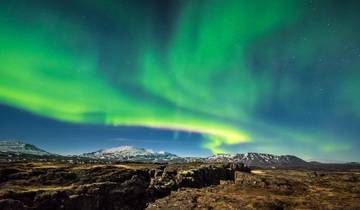
Iceland’s fjord regions offer exceptional aurora borealis viewing conditions September through March, combining dark skies far from light pollution with dramatic landscape foregrounds of mountains rising from water. The aurora viewing season overlaps with low tourism season, delivering 40-60% accommodation discounts while accessing one of nature’s most spectacular phenomena.
Optimal viewing months span September-October and February-March when darkness returns but extreme winter storms are less frequent than December-January. September offers the advantage of still-accessible Westfjords roads before winter closures, though shorter darkness windows (6-8 hours) compared to midwinter. February-March provides longer darkness (10-12 hours nightly) with improving weather as winter transitions to spring, but Westfjords remain largely inaccessible—focus on Eastfjords and northern regions for winter aurora viewing.
Fjord locations deliver superior aurora photography versus flat landscapes due to dramatic vertical relief creating foreground interest. Position yourself on fjord shores or elevated viewpoints above water to capture auroras reflected in the fjord surface with mountains silhouetted against the display. Eastfjords’ narrower, steeper-sided fjords like Seyðisfjörður create particularly striking compositions, while Westfjords’ massive Ísafjarðardjúp provides scale and multiple viewing angles.
Aurora forecasting relies on KP index (geomagnetic activity level) and cloud cover predictions. KP 2-3 produces visible auroras in Iceland’s dark fjord regions, while KP 4+ creates strong displays visible even through light clouds. Monitor Icelandic Meteorological Office aurora forecast (en.vedur.is/weather/forecasts/aurora) and cloud cover predictions, remaining flexible to drive to clear-sky areas when forecasts favor viewing. Many accommodations in fjord towns offer aurora wake-up services, alerting guests when displays appear overhead.
Winter driving to fjord aurora viewing locations requires 4×4 vehicles with studded tires, winter emergency supplies (blankets, food, water, shovel), and checking road conditions (road.is) before departing. Never stop on highways for aurora viewing—use designated parking areas or minor side roads to avoid blocking traffic or creating hazards on icy roads. Dress in extreme cold weather gear as aurora viewing typically requires 30-60 minutes standing outside in -5°C to -15°C temperatures (23°F to 5°F).
Wildlife Watching in Fjord Regions
Iceland’s fjords support diverse wildlife populations across marine and terrestrial environments, with seasonal concentrations creating reliable viewing opportunities May-September for most species.
Whale watching from Ísafjörður, Akureyri, Dalvík, and Húsavík consistently produces sightings of humpback whales, minke whales, white-beaked dolphins, and harbor porpoises June-August, with tour operators reporting 90-95%+ success rates. Humpback whales migrate to Icelandic waters to feed on rich herring and krill populations, breaching and tail-slapping in displays visible from tour boats. Occasional orca (killer whale) sightings occur throughout summer, while blue whales (largest animals on Earth) appear less frequently but make unforgettable encounters when spotted.
Seals haul out on rocks and beaches throughout fjord regions year-round, with harbor seals and grey seals both common. Best viewing occurs at low tide when seals rest on exposed rocks and shorelines—scan fjord edges with binoculars from roadside viewpoints or approach slowly on foot maintaining minimum 50-meter distances to avoid disturbing animals. Rauðasandur beach in southern Westfjords hosts particularly large seal colonies visible from the beach.
Puffins nest in massive colonies on coastal cliffs May-August, with Látrabjarg in Westfjords hosting Europe’s largest puffin colony alongside guillemots, razorbills, fulmars, and kittiwakes. The cliffs’ unstable edges require extreme caution but allow close puffin photography as the birds nest in burrows near cliff tops. Puffins depart for open ocean in late August, making July-early August the most reliable viewing window. Northern gannet colonies occupy cliffs around Grímsey Island and other northern coastal areas.
Arctic foxes, Iceland’s only native land mammal, inhabit remote Westfjords areas particularly Hornstrandir Nature Reserve where human abandonment in 1952 created ideal habitat. The foxes appear in summer brown coats and winter white pelts, scavenging seabird colonies and hunting small mammals. Sightings require patience and luck—Hornstrandir multi-day hiking trips provide best opportunities.
Reindeer populate Eastfjords highlands and lowlands year-round, with approximately 7,000 animals descended from Norwegian introductions in the 1770s. Autumn (September-October) brings reindeer to lower elevations around Route 1 and fjord edges as they migrate from summer highland grazing. Drive slowly in reindeer areas as animals cross roads unpredictably.
Birdwatching in fjord regions covers both seabirds (puffins, guillemots, kittiwakes, Arctic terns) and waders (golden plovers, whimbrels, oystercatchers). Arctic terns nest throughout coastal areas May-August, aggressively defending nests by dive-bombing perceived threats—give nesting areas wide berth or wear hats for protection. Spring (May-June) brings migrant species, while autumn (September) sees concentrations as birds stage for southward migration.
Photography Planning for Iceland’s Fjords 2026
Iceland’s fjords deliver world-class landscape photography combining dramatic vertical relief, diverse weather conditions, and exceptional light quality especially during summer’s extended golden hours and winter’s low-angle sunlight. Strategic planning around seasonal light, weather patterns, and specific locations maximizes photographic opportunities.
Summer solstice (June 20-21) provides 22-24 hours of daylight in northern Iceland with extended golden hour light lasting 3-4 hours in evening and morning—ideal for landscape photography but eliminating true darkness preventing night sky work. The weeks around summer solstice (June 1-July 15) offer the longest light windows, while late July-August sees darkness gradually returning allowing late-night/early-morning blue hour photography.
Shoulder seasons (May, September) deliver excellent light with dramatic storm systems creating dynamic cloudscapes and intermittent sun breaking through to illuminate fjord landscapes. September adds autumn colors to vegetation and first snow dusting on mountain peaks, creating layered compositions unavailable in summer’s constant green or winter’s complete snow cover.
Winter (November-February) provides low-angle sunlight (when present) creating long shadows and warm color temperatures, though short days (4-6 hours of light) limit shooting windows. Clear winter nights enable aurora photography with fjord landscapes as foregrounds, while storms create dramatic wave action against coastal cliffs and ice formations on fjord shores.
Essential gear for fjord photography includes wide-angle lenses (16-35mm equivalent) for landscape compositions, telephoto lenses (70-200mm+) for isolating distant mountains and wildlife, sturdy tripod essential for long exposures and low-light work, neutral density filters for smoothing water movement even in daytime, polarizing filter for managing reflections on water and enriching sky tones, and weatherproof camera protection as Iceland’s infamous horizontal rain will destroy unprotected electronics.
Prime locations include Dynjandi waterfall (Westfjords) for cascading multi-tier compositions with valley backdrop, Látrabjarg bird cliffs (Westfjords) for seabird photography May-August using telephoto lenses to isolate puffins and guillemots, Ísafjarðardjúp viewpoints along Route 61 for massive fjord panoramas, Seyðisfjörður Rainbow Street and blue church for colorful village scenes with steep mountain backdrop, Stöðvarfjörður and Fáskrúðsfjörður (Eastfjords) for fishing village harbors with boat reflections in calm water, and Eyjafjörður viewpoints near Akureyri for northern Iceland’s longest fjord with surrounding peaks.
Weather apps essential for photography planning include Icelandic Meteorological Office (en.vedur.is) for detailed local forecasts and wind predictions, Windy.com for visualizing wind patterns and cloud movement, and Aurora forecast (en.vedur.is/weather/forecasts/aurora) for northern lights activity. Iceland’s weather changes rapidly—monitor forecasts but remain flexible to capitalize on unexpected clearing or dramatic storm light.
Environmental and Cultural Considerations
Iceland’s fragile ecosystems and small local populations require conscious traveler behavior to minimize impact and respect local communities adapting to tourism pressures.
Leave No Trace principles apply strictly in Iceland’s wilderness areas—pack out all trash including organic waste like orange peels (decomposition rates are extremely slow in cold climates), stay on marked trails to prevent vegetation damage (arctic vegetation trampled once may require decades to recover), and camp only in designated campsites rather than wild camping except in uninhabited areas like Hornstrandir where wild camping is permitted but still requires care.
Moss-covered lava fields appear throughout Iceland and are strictly protected—walking on moss damages fragile growth accumulated over decades or centuries. Stay on marked paths even if they detour significantly around moss areas. Violating moss protection carries substantial fines enforced by rangers.
Roads in Iceland divide into paved (majority of Ring Road and primary routes), gravel (common in Westfjords and remote areas), and F-roads (highland routes marked with “F” prefix requiring 4×4 vehicles and illegal for 2WD cars under rental contracts). Driving off designated roads, across tundra, or creating new tracks is illegal throughout Iceland regardless of vehicle type, with violations carrying heavy fines and potential vehicle confiscation. The damage persists for decades in Iceland’s slow-recovery environment.
Respect private property particularly in fjord villages where limited parking and narrow roads create friction between residents and visitors. Many viewpoints and attractions on private land remain accessible due to landowner cooperation—abusing this access by littering, trespassing beyond designated areas, or blocking farm access threatens continued public access. If property posts “Private” or “No Entry” signs, respect them and find alternative viewpoints.
Fishing and foraging require permits—taking fish from Icelandic waters without license violates regulations, while picking berries or mushrooms on private land requires landowner permission. Public lands allow berry picking for personal consumption, but commercial foraging is regulated.
Drone operation in Iceland follows strict rules: flying over nature reserves, national parks, and some populated areas requires permits issued by Icelandic authorities weeks in advance. Operate drones minimum 150 meters from people, animals, and structures not under your control, never fly over nesting bird colonies May-August as the disturbance drives parents from nests exposing eggs and chicks to predators and weather, and check Icelandic Transport Authority regulations (icetra.is) before bringing drones to Iceland as rules change periodically.
Support local economies by shopping at local stores and eating at local restaurants when possible rather than bringing all supplies from Reykjavík. Fjord communities depend partially on tourism income during summer months to sustain populations through winter when fishing remains the primary livelihood—your spending helps maintain these communities allowing them to remain inhabited.
Packing Essentials for Iceland Fjords 2026
Iceland’s notoriously changeable weather requires layered clothing systems and quality rain protection regardless of season, while specific activities and seasons demand additional specialized gear.
Essential clothing for all seasons includes waterproof/windproof outer jacket and pants (not just water-resistant but fully waterproof with sealed seams—Iceland’s horizontal rain penetrates inferior gear immediately), insulating mid-layers like fleece or synthetic jackets (down loses insulating value when wet), moisture-wicking base layers in wool or synthetic fabrics avoiding cotton which retains moisture and chills, warm hat and gloves even in summer (wind chill and mountain elevations can drop temperatures dramatically), sturdy waterproof hiking boots with ankle support and aggressive tread (trails are often muddy or rocky), and multiple pairs of wool or synthetic hiking socks.
Summer-specific items include light fleece for cool evenings, sunglasses and sunscreen (high UV exposure at northern latitudes despite cool temperatures), and lightweight rain pants for unexpected showers. Winter additions include heavy insulated parka, thermal base layers, insulated waterproof boots rated for -20°C or colder, neck gaiter or balaclava for wind protection, and hand/toe warmers for extreme cold days.
Photography gear should include weatherproof camera bag or rain cover for backpack, lens cleaning cloths (sea spray and rain coat lenses constantly), spare batteries (cold temperatures drain batteries faster), 64GB+ memory cards (RAW files from modern cameras consume storage quickly), and portable hard drive for backing up images if traveling extended periods.
Camping gear for those using campsites or Hornstrandir wild camping requires four-season tent capable of handling strong winds (dome tents with strong pole systems work better than tunnel tents in Iceland’s wind), sleeping bag rated 0°C minimum for summer camping (-10°C for shoulder seasons), insulated sleeping pad (ground cold penetrates non-insulated pads), compact stove and fuel (white gas or propane canisters available in larger towns), and water filtration or purification (Iceland’s water is generally safe but filtration provides backup).
General travel essentials include reusable water bottle (tap water throughout Iceland is safe and delicious—no need to buy bottled water), headlamp for northern lights viewing or winter darkness, basic first aid kit including blister treatment for hiking, Icelandic phrasebook or translation app (though English is widely spoken, locals appreciate efforts in Icelandic), European power adapter (Iceland uses Type F plugs, 230V), and backup phone battery or portable charger (limited charging opportunities in remote areas).
Download offline maps for fjord regions before departure as cellular coverage drops to nothing outside towns and along remote roads. Google Maps offline mode works but dedicated GPS apps like Maps.me provide better trail coverage for hiking. Vedur.is (Icelandic Meteorological Office) mobile app provides weather forecasts and aurora alerts.
Money-Saving Strategies for Iceland Fjords 2026
Strategic planning significantly reduces Iceland’s notoriously high costs without sacrificing experience quality, with savings concentrated in accommodation, food, and timing decisions.
Accommodation savings start with shoulder season booking (May, September) delivering 25-35% discounts versus peak summer, while winter (October-April) offers 40-60% reductions if you’re willing to accept limited daylight and restricted Westfjords access. Book 4-6 months ahead even in shoulder seasons for best selection and rates, as last-minute availability is limited in smaller fjord towns. Consider guesthouses and farm stays over hotels—they often charge ISK 3,000-8,000 ($21-57) less per night for similar comfort levels, and breakfast is frequently included whereas hotels charge ISK 2,500-3,500 ($18-25) for breakfast buffets. Share accommodation costs by traveling as couples or small groups—two people sharing a double room (ISK 20,000-30,000/$145-215) each pay ISK 10,000-15,000 ($72-107), far less than solo travelers in single rooms.
Food represents the easiest budget control area. Self-catering from Bónus or Krónan supermarkets costs ISK 2,500-4,000 ($20-32) daily versus ISK 10,000-15,000 ($80-120) eating all restaurant meals—a family of four saves ISK 30,000-45,000 ($215-320) daily through grocery shopping. Choose accommodations with kitchens (guesthouses, vacation rentals, campsites) enabling cooking rather than hotel rooms without cooking facilities. Pack shelf-stable snacks from home (granola bars, nuts, dried fruit) to avoid expensive gas station prices ISK 500-1,200 ($4-10) per item. When eating out, prioritize lunch over dinner—identical dishes cost 30-50% less at lunch due to daytime specials at many restaurants, with lunch mains ISK 2,500-4,500 ($20-36) versus dinner mains ISK 5,500-9,000 ($44-72). Skip alcohol in restaurants entirely given beer costs ISK 1,200-1,800 ($10-14) per pint—purchase at Duty-Free Iceland at Keflavík Airport on arrival for 50-70% savings versus restaurant prices.
Rental car savings come from booking minimum 3-4 months ahead when best rates are available, choosing economy 2WD for Eastfjords/North Iceland travel where roads don’t require 4×4 (saves ISK 7,000-12,000/$50-86 daily), extending rental duration to qualify for weekly rates (15-25% daily savings versus short rentals), and comparing prices across multiple rental companies rather than booking the first option. Avoid one-day rentals which carry massive premiums—if needing vehicle for scattered days, evaluate whether multi-day rental is cheaper despite unused days. Fuel savings come from filling at budget chains Orkan and Costco (ISK 10-20/$0.07-0.14 per liter less than N1/Olis), driving moderate speeds 80-90 km/h rather than 100+ km/h (reduces fuel consumption 15-25%), and routing efficiently to minimize total kilometers rather than backtracking.
Activity costs reduce through prioritizing free natural attractions (all beaches, most waterfalls, hiking trails, viewpoints) over paid tours—Iceland’s nature is free to access with strategic touring delivering world-class experiences at zero cost beyond fuel. When booking tours, use local operators in fjord towns rather than Reykjavík tour companies which add commission markup—Ísafjörður’s West Tours charges ISK 11,900 ($95) for whale watching versus ISK 15,000-18,000 ($120-144) through Reykjavík booking platforms. Skip the Blue Lagoon’s ISK 10,000-15,000 ($80-120) admission in favor of Vök Baths in Eastfjords at ISK 6,000 ($48) or numerous free hot springs throughout Iceland if you’re willing to research locations.
Combination savings come from traveling as a couple or small group enabling cost-sharing across accommodation and vehicle (largest expense categories), visiting during shoulder seasons (accommodation 25-35% cheaper than summer), self-catering for breakfast and lunch while splurging on one dinner every 2-3 days (captures culinary experiences while controlling costs), and focusing itineraries on regions with free natural highlights rather than paid attractions. A couple following these strategies can reduce per-person costs from ISK 200,000+ ($1,430+) weekly to ISK 130,000-160,000 ($930-1,145) without sacrificing experience quality—the savings come from smart timing and strategic choices, not cutting experiences.
Frequently Asked Questions About Iceland Fjords Travel 2026
How many days do I need to explore Iceland’s fjords?
Minimum 2-4 days covers one fjord region (either Westfjords OR Eastfjords) with basic sightseeing, while 7-10 days enables comprehensive exploration of a single region or combination visits to both Westfjords and Eastfjords. Westfjords require longer durations due to slow driving on winding roads around deeply indented coastlines—expect 40-50 km/h average speeds meaning 4-5 days minimum for visiting Ísafjörður, Látrabjarg, Dynjandi, and Hornstrandir boat trip. Eastfjords work better for shorter trips with paved Ring Road access and compact geography allowing 3-4 days to experience Seyðisfjörður, Egilsstaðir area, and coastal villages. Adding northern fjords around Akureyri requires 2-3 additional days. Travelers combining fjords with Golden Circle, south coast, and Reykjavík should budget 10-14 days total for Iceland to properly experience all regions without exhausting driving schedules.
Can I visit Iceland’s fjords without a rental car?
Public buses connect major fjord towns (Akureyri, Ísafjörður, Egilsstaðir, Seyðisfjörður) but operate limited schedules unsuitable for flexible sightseeing—you can reach towns via bus but cannot effectively explore surrounding fjord landscapes, viewpoints, waterfalls, and beaches without private vehicle. Organized multi-day tours combining accommodation and transport exist for Westfjords and Eastfjords (typically ISK 180,000-350,000/$1,290-2,500 for 5-7 day packages), eliminating rental car needs but sacrificing independence and adding costs versus self-drive travel. Taxis from fjord towns charge ISK 15,000-30,000 ($107-215) for half-day excursions to nearby attractions—viable for 1-2 targeted outings but prohibitively expensive for week-long exploration. Rental cars remain the practical necessity for meaningful fjord travel unless booking comprehensive guided tours.
Is the Ring Road enough to see Iceland’s fjords or do I need to go off the Ring Road?
The Ring Road (Route 1) provides excellent access to Eastfjords and northern fjords around Akureyri but completely bypasses the Westfjords region requiring 800+ kilometer detour via Routes 60-61. Staying exclusively on Ring Road delivers quality fjord experiences in accessible locations (Seyðisfjörður, Egilsstaðir area, Eyjafjörður north of Akureyri) but misses Iceland’s most dramatic fjord landscapes in the Westfjords’ remote wilderness. For comprehensive fjord exploration including both Westfjords and Eastfjords, plan minimum 10-day itinerary departing Ring Road for Westfjords loop—this adds approximately 950 kilometers and 5-6 days versus Ring Road-only routing but accesses Látrabjarg bird cliffs, Dynjandi waterfall, Ísafjörður, and Hornstrandir Nature Reserve unavailable from Ring Road.
What’s the difference between the Westfjords and Eastfjords?
The Westfjords feature deeper, larger fjords with steeper mountains, more dramatic wilderness including uninhabited Hornstrandir Nature Reserve, and Iceland’s most remote territory with minimal infrastructure—population just 7,168 across vast peninsula. Roads are predominantly gravel, wind endlessly around deeply indented coastlines requiring patient driving, and close completely October-May in many areas due to snow and avalanche risks. The region rewards adventurous travelers seeking pristine isolation and the most spectacular scenery but demands more time and tolerates Westfjords’ challenging logistics. The Eastfjords offer narrower fjords with younger, more rugged mountains, better road infrastructure including year-round paved Ring Road access, and larger towns (Egilsstaðir, Seyðisfjörður) with more services, restaurants, and accommodation options. The Eastfjords attract artistic communities particularly in Seyðisfjörður with its Rainbow Street and galleries, maintain more accessible travel conditions suitable for first-time Iceland visitors, and work better for shorter trips or winter travel when Westfjords are largely inaccessible. Both regions deliver outstanding fjord landscapes—choose based on your tolerance for remote travel challenges and available time.
Do I need special permits to visit Iceland’s fjords?
No permits are required to visit Iceland’s fjords as all coastal areas, mountains, beaches, and most hiking trails operate under “right to roam” access allowing free public entry. The few exceptions are Hornstrandir Nature Reserve requiring boat transport (book through Ísafjörður operators, no separate permit needed) and some private property where landowners maintain courtesy access but post “Private Land” signs requesting respect for restrictions. Drone operation in certain areas including some fjord regions requires advance permits from Icelandic Transport Authority if flying over nature reserves or populated areas—check regulations at icetra.is before bringing drones. Fishing in Iceland’s waters requires licenses purchased from local authorities or fishing clubs—check specific fjord regulations if planning sea angling beyond organized tours. Wild camping in uninhabited areas like Hornstrandir is permitted without permits but campsites in populated areas charge per-person fees ISK 1,500-4,000 ($10-30) nightly.
When is the best season for whale watching in Iceland’s fjords?
June through August delivers optimal whale watching conditions in Iceland’s fjords with peak sighting success rates 90-95%+ and multiple species including humpback whales, minke whales, white-beaked dolphins, and harbor porpoises. Humpback whales migrate to Icelandic waters specifically to feed on rich herring and krill populations concentrated in fjords during summer months, with July-August representing peak season. Tour operators from Ísafjörður, Akureyri, Dalvík, and Húsavík operate daily whale watching excursions ISK 12,000-18,000 ($96-144) per person throughout summer, with multiple departures daily from larger ports. May and September shoulder seasons offer 70-85% sighting success rates at slightly reduced prices but cooler ocean conditions and lower whale populations. October-April sees most whale watching suspended due to whale migration to warmer waters, rough North Atlantic conditions making tours uncomfortable or dangerous, and tourism low season reducing demand—winter travelers seeking whale watching should fly to Iceland specifically June-August or accept lower probability shoulder-season tours.
Are Iceland’s fjords safe for swimming?
Swimming in Iceland’s fjord waters is technically possible but not recommended due to water temperatures remaining 4-12°C (39-54°F) year-round—cold enough to cause hypothermia within minutes without protection. Local Icelanders occasionally swim in fjords but have lifelong cold-water acclimatization most visitors lack. The safer alternative is geothermal pools and hot springs throughout fjord regions combining warm therapeutic water (38-40°C/100-104°F) with fjord views—Vök Baths near Egilsstaðir, natural hot springs around Ísafjörður, and numerous community swimming pools in every fjord town offer warm-water experiences without hypothermia risks. If attempting fjord swimming, use provided drysuits during kayaking tours allowing brief dips while maintaining insulation, limit exposure to under 5 minutes, and have warm dry clothes immediately available. Never swim alone in fjords and check tide tables to avoid being swept offshore by strong tidal currents common in narrow fjord mouths.
How do I handle Iceland’s changeable weather in the fjords?
Iceland’s weather changes rapidly and dramatically particularly in exposed fjord regions where mountains create microclimates and Atlantic weather systems move through quickly. Monitor Icelandic Meteorological Office forecasts (en.vedur.is) checking multiple times daily not just once before departure, pay special attention to wind forecasts as fjord geography can funnel and intensify winds making driving dangerous when gusts exceed 20-25 m/s (45-55 mph), and check road.is for real-time road conditions and closures before driving mountain passes or remote routes. Pack layered clothing allowing adjustment to temperature swings of 10-15°C within single days, carry full rain gear even on sunny mornings as afternoon storms appear from clear skies, and maintain flexible itineraries willing to modify plans when weather deteriorates—attempting Westfjords mountain passes during severe storms is dangerous regardless of vehicle type. Download offline weather apps as internet connectivity drops outside towns, watch for deteriorating conditions like increasing wind, darkening skies, or visibility reduction triggering immediate return to town, and never underestimate Iceland’s weather—international visitors frequently attempt to “push through” conditions that cause experienced Icelanders to shelter until weather clears.
Can I see the Northern Lights in Iceland’s fjords?
Iceland’s fjord regions deliver exceptional aurora borealis viewing September through March combining minimal light pollution with dramatic landscape foregrounds of mountains rising from water creating superior photography compositions versus flat landscapes. Optimal viewing months are September-October and February-March balancing adequate darkness (6-12 hours nightly) with relatively stable weather—December-January provides longest darkness but most frequent storms obscuring skies. Eastfjords and northern fjords around Akureyri remain accessible year-round via maintained roads supporting winter aurora viewing, while Westfjords’ winter road closures limit aurora access to immediate Ísafjörður vicinity. Monitor aurora forecasts at en.vedur.is/weather/forecasts/aurora checking KP index (2-3 produces visible displays in Iceland’s dark areas, 4+ creates strong shows) and cloud cover predictions determining viewing probability. Many fjord accommodations offer aurora wake-up services alerting guests to overhead displays, while northern lights tours from Akureyri cost ISK 8,000-15,000 ($64-120) transporting to optimal dark-sky locations. Best photography results come from scouting fjord viewpoints during daylight then returning after dark when displays appear—fjord reflections and mountain silhouettes create far more interesting compositions than generic aurora shots lacking foreground interest.
What should I do if I have car trouble in remote fjord areas?
Car breakdowns in Iceland’s remote fjord regions particularly Westfjords can strand travelers hours from assistance, requiring preparation and measured response. Your rental contract includes emergency roadside assistance number (typically operating 24/7)—call immediately when problems occur rather than attempting DIY repairs that might void insurance coverage. While awaiting rescue, stay with the vehicle as it provides shelter and makes you easier to locate than wandering on foot, activate hazard flashers and if safe use emergency triangle (provided in rental cars) 50 meters behind vehicle to warn approaching traffic, and conserve phone battery by minimizing non-essential use as rescue coordination requires communication. Rental companies dispatch assistance from nearest town but response times in Westfjords can exceed 3-4 hours given distances and limited local mechanics—pack emergency supplies including water, snacks, warm clothes, and blankets anticipating extended waits. Prevent breakdowns by maintaining adequate fuel (never let tank drop below 1/4 in remote areas), checking tire pressure weekly on gravel roads, driving conservatively avoiding reckless speeds on rough roads that damage suspensions, and conducting visual vehicle inspection each morning looking for fluid leaks, tire damage, or other obvious issues. Comprehensive insurance (SCDW) covers mechanical failures without charge while basic CDW often requires ISK 50,000-200,000 ($355-1,430) deductible payments for damage—the insurance premium proves worthwhile for remote travel.