
Hungary UNESCO World Heritage Sites: Complete Guide
Hungary preserves eight UNESCO World Heritage Sites representing centuries of architectural innovation, cultural evolution, and natural wonder across this Central European nation. From Budapest’s stunning riverside ensemble to ancient cave systems and historic wine regions, these sites showcase Hungary’s contributions to human civilization and its commitment to protecting irreplaceable heritage for future generations.
Key Takeaways
- Hungary maintains eight UNESCO World Heritage Sites, comprising seven cultural properties and one natural site inscribed between 1987 and 2002
- Budapest’s riverside panorama, Castle District, and Andrássy Avenue form Hungary’s most visited World Heritage Site, representing two millennia of architectural evolution
- Two sites cross international borders: the Caves of Aggtelek Karst shared with Slovakia, and the Fertő/Neusiedlersee Cultural Landscape shared with Austria
- The Caves of Aggtelek Karst represents Hungary’s sole natural World Heritage Site, featuring spectacular karst formations and diverse cave systems
- Hungary’s sites span architectural masterpieces, archaeological treasures, cultural landscapes, and natural phenomena, offering diverse heritage experiences
- Each site demonstrates Outstanding Universal Value through exceptional architecture, historical significance, cultural importance, or natural features
People Also Ask About Hungary UNESCO Sites
How many UNESCO World Heritage Sites does Hungary have?
Hungary has eight UNESCO World Heritage Sites inscribed on the World Heritage List, consisting of seven cultural sites and one natural site. The country ratified the World Heritage Convention on July 15, 1985, making its historical and natural sites eligible for UNESCO recognition. The first two Hungarian sites received inscription in 1987 during the 11th Session of the World Heritage Committee in Paris: Budapest (including the Banks of the Danube, Buda Castle Quarter, and Andrássy Avenue) and the Old Village of Hollókő with its surroundings. Subsequent inscriptions added the Caves of Aggtelek Karst and Slovak Karst (1995), Millenary Benedictine Abbey of Pannonhalma (1996), Hortobágy National Park (1999), Early Christian Necropolis of Pécs (2000), Fertő/Neusiedlersee Cultural Landscape (2001), and Tokaj Wine Region Historic Cultural Landscape (2002). Two of these sites are transnational properties shared with neighboring countries: the cave system with Slovakia and the Fertő landscape with Austria, reflecting the region’s interconnected cultural and natural heritage.
What is Hungary’s most famous UNESCO World Heritage Site?
Budapest, including the Banks of the Danube, the Buda Castle Quarter, and Andrássy Avenue, stands as Hungary’s most famous and visited UNESCO World Heritage Site, inscribed in 1987 and expanded in 2002. This urban ensemble encompasses over two millennia of architectural history, from Roman ruins of Aquincum to Gothic Buda Castle, neoclassical Parliament, Art Nouveau masterpieces, and the pioneering Millennium Underground Railway. The site illustrates Budapest’s evolution from three separate cities (Buda, Óbuda, and Pest) into one of Europe’s most spectacular capitals, with the Danube River providing the scenic backdrop for this architectural panorama. The Castle District preserves medieval street patterns alongside Gothic, Renaissance, and Baroque monuments, while Pest’s riverside features 19th-century architectural achievements including the Hungarian Parliament Building, arguably Europe’s most beautiful legislative building. Andrássy Avenue demonstrates exemplary 19th-century urban planning with elegant townhouses, cultural institutions like the State Opera House, and Heroes’ Square commemorating Hungarian history. The site’s inscription recognizes both its architectural significance and its influence on European urban development, making it essential viewing for understanding Hungarian culture and Central European heritage.
Are there any natural UNESCO sites in Hungary?
The Caves of Aggtelek Karst and Slovak Karst represents Hungary’s only natural UNESCO World Heritage Site, inscribed in 1995 as a transboundary property shared with Slovakia. This remarkable cave system features 712 documented caves concentrated in a relatively small area along the Hungarian-Slovak border, creating one of the world’s finest examples of temperate zone karst landscapes. The caves display extraordinary diversity in formations, sizes, and characteristics, ranging from massive chambers to narrow passages decorated with stalactites, stalagmites, flowstones, and rare aragonite formations. Baradla-Domica, the system’s longest cave at 25 kilometers, contains spectacular underground halls and passages accessible to visitors through guided tours. The karst landscape developed over millions of years through water dissolution of limestone bedrock, creating underground drainage systems, sinkholes, and surface karst features alongside the cave networks. The site’s scientific importance extends beyond geological interest to include unique cave-dwelling species adapted to complete darkness, archaeological evidence of prehistoric human occupation, and ongoing research into karst formation processes. While Hortobágy National Park features natural elements, it received cultural designation for demonstrating harmonious interaction between humans and nature rather than pure natural value.
Which UNESCO site in Hungary was inscribed first?
Two Hungarian sites share the distinction of first UNESCO World Heritage inscription, both inscribed simultaneously in 1987 during the 11th Session of the World Heritage Committee held in Paris, France. Budapest, including the Banks of the Danube and the Buda Castle Quarter (later expanded to include Andrássy Avenue in 2002), gained recognition for its outstanding urban landscape illustrating Hungarian capital development across two millennia. The Old Village of Hollókő and its Surroundings received inscription the same year as an exceptionally preserved example of pre-20th-century rural settlement, demonstrating traditional Hungarian village life and architecture. Hollókő holds the distinction of being the first village anywhere to receive World Heritage designation, setting precedent for recognizing living rural communities maintaining traditional practices alongside architectural preservation. The village’s 13th-century origins, 17th-18th-century development period, and continued habitation by residents maintaining folk traditions made it uniquely valuable for demonstrating rural Hungarian culture. Budapest’s inscription recognized urban architectural achievements while Hollókő celebrated rural heritage, together representing Hungary’s diverse cultural landscape to the international community through UNESCO’s platform.
Extended multi-day tours – 5+ days
Featured Hungary Multi-Day Tour Packages

3 days
Hungary 3-Day Discovery Tour
- ✓ Comprehensive Hungary experience
- ✓ Expert local guides included
- ✓ All accommodation included
- ✓ Transportation provided
5 days
Hungary 5-Day Highlights Experience
- ✓ Comprehensive Hungary experience
- ✓ Expert local guides included
- ✓ All accommodation included
- ✓ Transportation provided
7 days
Hungary 7-Day Cultural Journey
- ✓ Comprehensive Hungary experience
- ✓ Expert local guides included
- ✓ All accommodation included
- ✓ Transportation provided

10 days
Hungary 10-Day Complete Adventure
- ✓ Comprehensive Hungary experience
- ✓ Expert local guides included
- ✓ All accommodation included
- ✓ Transportation provided
Multi-day tour packages powered by TourRadar. Prices and availability subject to change.
Introduction to Hungary’s UNESCO Heritage
Hungary’s eight UNESCO World Heritage Sites represent the nation’s exceptional contributions to human civilization, architectural innovation, and natural preservation across centuries of cultural development and environmental stewardship. These sites, inscribed between 1987 and 2002, showcase the diversity of Hungarian heritage from urban architectural ensembles to rural settlements, from religious monuments to wine-producing landscapes, and from cultural evolution to natural wonder. Each inscription demonstrates Outstanding Universal Value according to UNESCO’s rigorous criteria, meaning the sites possess significance transcending national boundaries and holding importance for all humanity.
The sites span Hungary’s geography from the capital Budapest on the Danube River to the Great Hungarian Plain, from northern cave systems to western lakeshores, creating a heritage network accessible to visitors while serving educational and conservation functions. Seven cultural sites predominate, reflecting Hungary’s rich architectural and cultural history through monuments representing various periods, styles, and functions. The single natural site provides balance, demonstrating Hungary’s commitment to protecting geological and ecological treasures alongside cultural achievements.
Hungary accepted the UNESCO World Heritage Convention on July 15, 1985, joining the international effort to identify, protect, and preserve cultural and natural heritage of exceptional value. This ratification enabled Hungarian sites to receive consideration for World Heritage status, with the first inscriptions following just two years later. The country has actively participated in heritage protection, hosting the 26th session of the World Heritage Committee in Budapest in 2002, marking the convention’s 30th anniversary and resulting in the Budapest Declaration on World Heritage that shaped conservation approaches worldwide.
Two of Hungary’s World Heritage Sites cross international borders as transnational properties, recognizing that natural and cultural phenomena don’t respect political boundaries. The Caves of Aggtelek Karst and Slovak Karst, shared with Slovakia, demonstrates geological continuity across the border, while the Fertő/Neusiedlersee Cultural Landscape, shared with Austria, represents unified cultural evolution around a border-straddling lake. These transnational sites require coordinated management and conservation efforts between countries, exemplifying international cooperation in heritage protection.
Hungary’s World Heritage Sites attract millions of visitors annually, contributing significantly to tourism while requiring careful management to balance access with preservation. Budapest alone draws major international tourism, while the other sites offer authentic experiences of Hungarian culture, history, and nature beyond the capital’s urban attractions. Each site maintains visitor facilities, interpretation programs, and conservation measures funded through admission fees, government support, and international heritage programs.
Budapest: Banks of the Danube, Buda Castle Quarter, and Andrássy Avenue
Budapest’s World Heritage designation encompasses three interconnected components creating one of Europe’s most spectacular urban ensembles: the Danube riverbanks with their architectural panorama, the medieval Buda Castle Quarter on Castle Hill, and the grand Andrássy Avenue connecting the historic center to City Park. Inscribed in 1987 with expansion in 2002, this site illustrates over 2,000 years of Hungarian capital development from Roman Aquincum through medieval kingdoms to 19th-century imperial grandeur and modern nationhood.
The Banks of the Danube feature an extraordinary architectural panorama visible from both sides of the river, with the Hungarian Parliament Building dominating the Pest riverside. This neo-Gothic masterpiece, completed in 1904, ranks among Europe’s largest legislative buildings with its 268-meter facade, central dome reaching 96 meters, and elaborate decoration incorporating Hungarian historical symbolism. The Pest riverside extends from Margaret Bridge to Petőfi Bridge, showcasing 19th-century waterfront development including the Hungarian Academy of Sciences, Gresham Palace (now Four Seasons Hotel), and the Vigadó Concert Hall. The Buda side presents a complementary architectural statement with Buda Castle, Matthias Church, and Fisherman’s Bastion creating dramatic skyline features visible across the river.
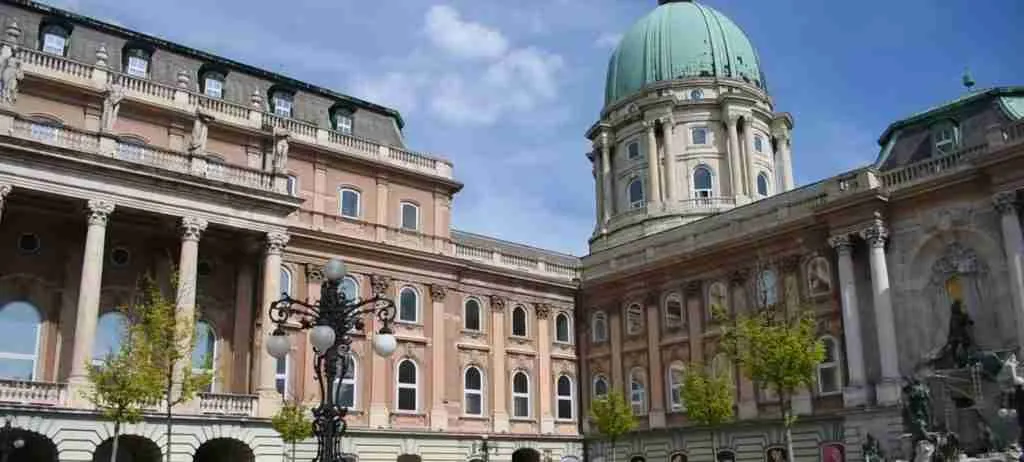
The Buda Castle Quarter preserves medieval street patterns and urban fabric despite repeated destruction and reconstruction through centuries of warfare, occupation, and natural disasters. The Royal Palace complex, though rebuilt multiple times with current structures largely dating from the 18th-20th centuries, occupies the site of medieval royal residence and houses major cultural institutions including the Hungarian National Gallery and Budapest History Museum. The palace’s baroque facades and neoclassical elements create imposing presence overlooking the Danube. Matthias Church represents Gothic architecture’s finest expression in Budapest, with its distinctive multicolored tile roof, soaring spire, and interior featuring medieval stone carvings and 19th-century frescoes by Károly Lotz. Fisherman’s Bastion, constructed 1895-1902 in neo-Romanesque style, provides viewing terraces with spectacular Danube and Parliament vistas while commemorating medieval fishermen who defended this section of city walls.
Andrássy Avenue, added to the World Heritage designation in 2002, demonstrates exemplary 19th-century urban planning and architecture extending 2.5 kilometers from Erzsébet Square to Heroes’ Square. The avenue features consistent architectural quality with eclectic-style palaces, townhouses, and cultural institutions designed by leading Hungarian architects including Miklós Ybl and Ödön Lechner. The Hungarian State Opera House (1884-1888) showcases neo-Renaissance architecture with spectacular interior decoration rivaling Vienna’s opera house. The avenue’s significance extends underground with the Millennium Underground Railway (M1 metro line), continental Europe’s first underground railway completed in 1896, now preserved with original stations demonstrating industrial-age engineering achievement.
Heroes’ Square terminates Andrássy Avenue with the Millennium Monument, a massive colonnade featuring statues of Hungarian kings and leaders surrounding the Archangel Gabriel atop a 36-meter column. The square connects to City Park containing Vajdahunyad Castle, a romantic architectural compilation representing various Hungarian building styles from Romanesque to Baroque, and Széchenyi Thermal Bath, one of Europe’s largest bath complexes. The entire ensemble from riverbanks through castle to avenue and park creates unified heritage showcasing Hungarian nation-building through architecture, urban planning, and cultural institution development during the late 19th and early 20th centuries.
Old Village of Hollókő and Its Surroundings
Hollókő, nestled in the Cserhát Hills of northern Hungary, became the first village worldwide to receive UNESCO World Heritage designation in 1987, recognizing its exceptional preservation of traditional rural settlement patterns and vernacular architecture predating 20th-century agricultural and social transformations. The village demonstrates pre-industrial Hungarian rural life through 67 protected buildings maintaining original architectural character alongside continued habitation by residents preserving folk traditions and cultural practices.
The settlement’s origins trace to the 13th century when a castle was constructed on Szár Hill following the Mongol invasion, with the village developing primarily during the 17th and 18th centuries as a typical Palóc ethnic group community. The Old Village (Óvalu) preserves the characteristic linear settlement pattern with houses arranged along a single main street, each building positioned perpendicular to the street with narrow frontages and extended depths. This layout reflects land division practices and social organization common throughout pre-modern Hungarian rural areas but rarely surviving intact into the 21st century.
Traditional houses demonstrate vernacular architecture adapted to local climate, available materials, and agricultural lifestyle. Timber-framed structures sit on stone foundations with whitewashed facades, wooden porches (tornác) providing covered outdoor space for household tasks, and steep shingled or tiled roofs accommodating attic storage. Interiors follow functional organization with cooking and living spaces, sleeping chambers, and storage areas arranged according to family needs and social customs. Decorative elements including carved wooden details, painted furniture, and textile arts reflect Palóc folk artistic traditions maintained through generations.
The village church, dating from the late 13th or early 14th century with subsequent modifications, anchors the community’s religious and social life. Its fortified character with thick walls and defensive position reflects medieval border region insecurity, while baroque interior alterations demonstrate evolving aesthetic preferences. The adjacent cemetery contains traditional wooden grave markers and memorial structures characteristic of Palóc funerary customs.
Hollókő remains a living community rather than an open-air museum, with approximately 450 permanent residents maintaining the village’s residential character alongside tourism development. Easter celebrations attract particular attention when residents don traditional Palóc costumes, participate in folk customs including egg decoration and traditional games, and welcome visitors to experience authentic cultural practices. The village hosts various folk art workshops, craft demonstrations, and cultural programs throughout the year, transmitting traditional knowledge while supporting local economy through heritage tourism.
The castle ruins on Szár Hill provide historical context and panoramic views across the village and surrounding landscape. Though largely destroyed, the remaining walls and foundations indicate the fortress’s strategic importance protecting northern trade routes and settlement areas. Archaeological work continues revealing details about medieval life and defensive architecture in this border region between Hungarian and Slovak territories.
Caves of Aggtelek Karst and Slovak Karst
The Caves of Aggtelek Karst and Slovak Karst represent Hungary’s sole natural UNESCO World Heritage Site, inscribed in 1995 as a transboundary property recognizing the exceptional karst landscape spanning the Hungarian-Slovak border. This site comprises 712 documented caves within a relatively compact area, creating one of the world’s densest concentrations of cave systems and demonstrating outstanding examples of temperate zone karst formation processes, cave decoration diversity, and specialized subterranean ecosystems.
The Baradla-Domica cave system, extending 25 kilometers with the main entrance in Hungary’s Aggtelek National Park and connections to Slovakia’s Domica Cave, ranks among Europe’s longest cave systems accessible to public tours. The cave features massive chambers including the Concert Hall where exceptional acoustics enable musical performances, long passages decorated with flowstone formations, and underground streams creating active geological processes visible to visitors. Guided tours ranging from short one-hour routes to extended six-hour expeditions reveal different sections of the cave system, with electric lighting illuminating spectacular stalactites, stalagmites, columns, and rare aragonite formations.
The karst landscape developed over millions of years through chemical and mechanical dissolution of Triassic limestone bedrock by slightly acidic water. Surface features include sinkholes, dolines, dry valleys, and limestone pavements characteristic of karst terrain, with underground drainage systems replacing surface streams throughout the region. Water percolating through the limestone created cave networks while depositing minerals to form diverse speleothems (cave formations) through continuous dripping, flowing, and evaporation processes still active today.
Scientific importance extends beyond geological interest to biological and archaeological values. The caves harbor specialized fauna adapted to complete darkness including endemic cave-dwelling beetles, spiders, and crustaceans found nowhere else on Earth. Bat populations utilize the caves for hibernation and breeding, with several species protected under European conservation regulations. Archaeological excavations reveal human occupation dating back 7,000 years, with findings including prehistoric tools, pottery, and evidence of cave use for shelter, ritual purposes, and refuge during conflicts.
Cave preservation requires careful management balancing visitor access with protection of fragile formations and ecosystems. Touching speleothems deposits skin oils and contaminants disrupting growth processes that occur over centuries, making visitor discipline essential. Temperature and humidity control, lighting management, and visitor number restrictions prevent environmental disruption that could damage formations or disturb cave-adapted species. The transnational nature requires coordinated conservation efforts between Hungarian and Slovak authorities, with joint management plans addressing shared responsibility for this geological treasure.
Aggtelek National Park provides visitor infrastructure including the main Baradla Cave entrance with tour facilities, educational programs, hiking trails exploring surface karst features, and accommodation options for extended exploration. The Slovak side offers complementary access and interpretation, with cross-border hiking trails connecting both portions of the World Heritage Site. Together, these facilities enable public appreciation while supporting scientific research and conservation programs protecting the caves for future generations.
Millenary Benedictine Abbey of Pannonhalma and Its Natural Environment
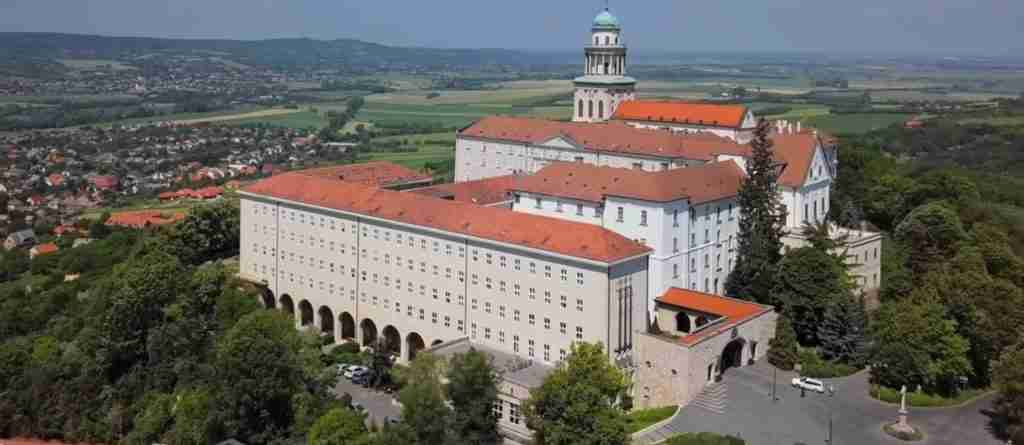
The Millenary Benedictine Abbey of Pannonhalma, inscribed on the World Heritage List in 1996, represents one of Hungary’s oldest historical monuments and documents 1,000 years of continuous Benedictine monastic life from 996 to present. Situated on Szent Márton Hill near Hungary’s western border, the abbey complex demonstrates architectural evolution across medieval, Renaissance, baroque, and modern periods while maintaining active religious, educational, and cultural functions within the monastic community.
The first Benedictine monks settled at Pannonhalma in 996 under the patronage of Prince Géza, father of Hungary’s first king Stephen I, establishing the monastery that would become instrumental in Christianizing the Hungarian people and developing medieval Hungarian culture. The monks founded Hungary’s first school, created important manuscripts, and preserved knowledge through the medieval period, contributing fundamentally to Central European intellectual and religious development. The abbey’s strategic location on the pilgrimage route to Jerusalem and its royal connections ensured resources for architectural development and cultural programs.
The abbey church, originally constructed in the 13th century, exemplifies early Gothic architecture in Hungary with its austere stone interior, pointed arches, and ribbed vaulting creating vertical emphasis and spiritual atmosphere. The lower church (crypt) preserves the oldest surviving sections dating to 1224, with Romanesque elements including massive pillars and barrel vaults supporting the Gothic church above. The baroque main altar and side chapels reflect 18th-century renovations transforming the medieval interior with gilded decoration, statuary, and paintings characteristic of Counter-Reformation Catholic aesthetics.
The cloister connects the church to monastic living spaces, library, and educational facilities through covered walkways surrounding a peaceful courtyard. Various architectural styles appear throughout the complex reflecting continuous occupation and periodic renovations: Gothic elements in the oldest sections, Renaissance features from 16th-century additions, baroque modifications throughout the 17th-18th centuries, and modern interventions respectfully integrated into the historical fabric. The library contains approximately 360,000 volumes including medieval manuscripts, early printed books, and comprehensive collections supporting monastic scholarship and the abbey’s secondary school.
The abbey continues functioning as a living monastery with approximately 45 Benedictine monks maintaining religious observance, managing the historic complex, operating a renowned secondary school for boys, producing wine and lavender products, and welcoming visitors for tours, spiritual retreats, and cultural programs. This continuity of purpose across a millennium distinguishes Pannonhalma from many European monasteries that became museums after secularization, demonstrating sustainable heritage use balancing preservation with active community life.
The surrounding landscape, included in the World Heritage designation, features terraced vineyards, herb gardens, forests, and agricultural lands managed by the monastic community according to Benedictine principles of self-sufficiency and stewardship. The abbey’s wine production continues medieval traditions with modern viticulture producing quality wines marketed under the Pannonhalma brand. Lavender cultivation and processing creates another income stream while maintaining the abbey’s botanical heritage and agricultural character. These productive activities support the monastery’s financial independence while preserving traditional land use patterns around the historic complex.
Hortobágy National Park – the Puszta
Hortobágy National Park, inscribed on the World Heritage List in 1999, protects 82,000 hectares of the Great Hungarian Plain (Alföld) representing the largest continuous natural grassland in Europe and demonstrating harmonious interaction between humans and the natural environment developed over two millennia of pastoral land use. Though inscribed as a cultural landscape rather than natural site, Hortobágy preserves ecosystems, traditional land management practices, and cultural heritage associated with Hungarian pastoral traditions on the Puszta (grassland steppe).
The landscape developed following Ice Age climatic changes and subsequent human modification through animal grazing, seasonal flooding, and grassland management that prevented forest succession while maintaining steppe vegetation. The area’s characteristic features include vast treeless horizons, alkaline grasslands and marshes, seasonal wetlands fed by the Tisza River, and mosaic habitats supporting exceptional biodiversity. Traditional land use involved extensive grazing by Hungarian Grey cattle, Racka sheep with distinctive spiral horns, and horses including Nonius breeds, with seasonal movement of herds and pastoral infrastructure defining human interaction with this challenging environment.
Wildlife diversity reflects the habitat complexity with breeding and migratory birds using Hortobágy as critical stopover and nesting areas. Approximately 340 bird species have been recorded including globally threatened species like the Great Bustard, Red-footed Falcon, and White-tailed Eagle. Wetland areas attract massive concentrations of waterfowl during migration periods, with tens of thousands of cranes, geese, and ducks staging in autumn before continuing to winter grounds. The grasslands support ground-nesting species including Lapwings, Stone Curlews, and various lark species requiring extensive open habitats increasingly rare in agricultural Europe.
Cultural heritage associated with pastoral traditions includes distinctive architecture adapted to treeless environment and available materials. The Nine-Arched Bridge (Kilenclyukú híd), completed in 1833, spans seasonal floodplains with its characteristic nine arches creating one of Hungary’s most iconic structures. Csárda (traditional inns) provided rest and refreshment for travelers crossing the plain, with some continuing to operate as restaurants serving traditional Hungarian cuisine. Sweep wells (gémeskút) utilizing lever systems to raise water from shallow wells appear throughout the landscape as symbols of Puszta life. Traditional thatched structures housed shepherds and stored equipment, with a few examples preserved demonstrating construction techniques using reeds and natural materials.
The horse culture of the Puszta finds expression in the csikós (horse herders) who developed extraordinary horsemanship skills including standing atop galloping horses and controlling multiple horses simultaneously. These traditions continue through cultural demonstrations at various locations within the park, with performances showcasing riding techniques, traditional costumes, and pastoral skills transmitted through generations. The traditions connect to Hungarian national identity with the Puszta representing historical Magyar pastoral culture predating agricultural intensification.
Conservation management balances traditional grazing practices essential to maintaining grassland ecosystems with modern conservation objectives protecting biodiversity and natural processes. Grazing by traditional livestock breeds prevents woody plant invasion while creating heterogeneous vegetation structure supporting diverse species. Water management maintains wetland habitats crucial for migratory birds while accommodating agricultural water needs in surrounding areas. The park operates as Hungary’s first national park (established 1973) and continues expanding protected areas and restoration programs recovering degraded habitats to historical steppe conditions.
Early Christian Necropolis of Pécs (Sopianae)
The Early Christian Necropolis of Pécs, inscribed on the World Heritage List in 2000, preserves an exceptional series of decorated underground burial chambers, chapels, and mausoleums constructed during the 4th century AD in the Roman settlement of Sopianae. Located in the modern city of Pécs in southern Hungary near the Croatian border, these underground structures demonstrate early Christian burial practices, artistic expression, and architectural development during Christianity’s transformation from persecuted minority to state religion in the late Roman Empire.
Sopianae served as an important provincial center in the Roman province of Pannonia, with the Christian community establishing an extensive cemetery on the northern edge of the settlement following typical Roman practice of burial outside city walls. The preserved structures date primarily from the 4th century when Christianity gained legal status under Constantine I (313 AD) and subsequently became the official state religion, enabling Christian communities to construct permanent above-ground memorial structures and elaborate underground burial chambers previously impossible during persecution periods.
The burial chambers feature distinctive characteristics combining Roman architectural traditions with emerging Christian symbolism and artistic programs. Underground rooms were excavated into soft limestone and constructed with brick vaulting, creating chambers accessible through stairs and passages. Interior decoration employed frescoes depicting biblical scenes, early Christian symbols including fish, anchors, and monograms, and geometric patterns derived from Roman artistic traditions. The paintings represent some of the earliest Christian art in the region, executed during the critical period when Christian iconography was developing distinctive visual languages separate from pagan artistic conventions.
Several chamber types appear throughout the cemetery complex reflecting different functional and social purposes. Simple burial chambers contained individual or family interments with modest decoration, while more elaborate memorial chapels featured sophisticated architectural elements including apses, columns, and decorative frescoes suggesting wealth and social status of the deceased. The Cella Septichora, a seven-apsed memorial structure with painted decoration, represents the necropolis’s most architecturally ambitious building, possibly functioning as a martyrium (memorial to a martyr) or memorial chapel for a prominent Christian family.
The necropolis remained in use through the 5th century until disruption from barbarian invasions and changing burial practices led to its abandonment. Subsequent centuries saw the structures buried and forgotten, with rediscovery beginning in the 18th century when construction projects accidentally revealed underground chambers. Systematic archaeological investigation commenced in the 19th and 20th centuries, revealing the extent and significance of the cemetery while developing conservation approaches to preserve fragile frescoes and architectural remains.
Public access to the necropolis occurs through several preserved burial chambers converted into visitor sites, including the Cella Septichora Visitor Centre integrating archaeological remains with interpretive exhibits explaining early Christian history, burial customs, and artistic development. The site’s location beneath modern Pécs creates unique conservation challenges requiring climate control, structural stabilization, and protection from urban development pressures while enabling visitor access to these exceptional early Christian monuments.
Fertő/Neusiedlersee Cultural Landscape
The Fertő/Neusiedlersee Cultural Landscape, inscribed on the World Heritage List in 2001, encompasses the area surrounding Lake Fertő (Neusiedlersee in German), a shallow steppe lake straddling the Austrian-Hungarian border. This transnational site recognizes 8,000 years of human interaction with a unique lacustrine environment, demonstrating how diverse cultures adapted to and shaped the landscape while developing distinctive settlement patterns, agricultural practices, and architectural traditions.
Lake Fertő/Neusiedlersee represents Central Europe’s largest endorheic lake (having no natural outlet), fed by precipitation and small streams while losing water primarily through evaporation. The lake’s shallow depth (averaging 1-1.5 meters), extensive reed beds forming Europe’s largest continuous reed habitat, alkaline water chemistry, and periodic water level fluctuations create ecological conditions supporting diverse wildlife while influencing human settlement and land use strategies. The lake’s designation as a Ramsar Wetland of International Importance recognizes its significance for breeding and migratory birds including rare species like Ferruginous Duck and White-tailed Eagle.
Cultural evolution around the lake reflects the region’s position at the intersection of various Central European peoples and political entities. Archaeological evidence documents Neolithic, Bronze Age, and Roman occupation, with continuous settlement through medieval periods when Hungarian, Germanic, and Slavic populations interacted in this border region. The landscape bears imprint of successive cultures through varied architectural styles, agricultural patterns, and place names reflecting linguistic diversity.
The Hungarian portion of the World Heritage Site includes the historic village of Fertőd with its magnificent Esterházy Palace, one of Hungary’s most important baroque structures. Constructed in the mid-18th century by Prince Nikolaus Esterházy, the palace complex earned the nickname “Hungarian Versailles” for its architectural ambition, formal gardens, and cultural programs. The palace hosted composer Joseph Haydn as court musician from 1766-1790, with performances in the palace’s concert hall contributing to classical music development. The palace demonstrates baroque architecture’s adaptation to Hungarian context while reflecting aristocratic patronage’s cultural significance.
Traditional villages surrounding the lake preserve vernacular architecture adapted to local materials, climate, and agricultural economy. Whitewashed houses with reed-thatched or tiled roofs, long narrow burgage plots accommodating farmsteads and gardens, and central squares with churches create characteristic settlement patterns. Wine cellars carved into hillsides reflect viticultural traditions exploiting the region’s favorable microclimate influenced by the lake’s temperature-moderating effects. Traditional land use includes extensive grazing, reed harvesting for thatching and other uses, fishing, and wine production creating cultural landscape shaped by sustainable resource exploitation.
The transnational character requires coordinated management between Austria and Hungary with joint commitments to conservation, sustainable development, and visitor management. The site encompasses multiple protection categories including national parks, nature reserves, and historic monuments managed according to each country’s legal frameworks while maintaining overarching World Heritage obligations. Bicycle routes, hiking trails, and interpretation facilities enable visitors to explore both the Austrian and Hungarian portions, experiencing the landscape’s cultural and natural diversity while learning about cross-border cooperation in heritage protection.
Tokaj Wine Region Historic Cultural Landscape
The Tokaj Wine Region Historic Cultural Landscape, inscribed on the World Heritage List in 2002, encompasses a compact area of approximately 11,149 hectares in northeastern Hungary where viticulture has shaped the landscape, economy, and culture for at least 1,000 years. The region produces Tokaji aszú, one of the world’s great sweet wines and the first wine region to receive legal designation and protection (1737), demonstrating the relationship between unique terroir, traditional viticultural practices, and distinctive cultural landscape.
Viticulture in the Tokaj region dates back at least to the 12th century, with the area’s exceptional conditions for producing high-quality sweet wines recognized by the 16th century. The region’s success derives from unique geological, topographical, and climatic conditions including volcanic bedrock providing mineral-rich soils, hillside slopes ensuring good drainage and sun exposure, autumn humidity from the Bodrog and Tisza rivers creating conditions for noble rot (Botrytis cinerea) affecting grapes, and protective surrounding mountains moderating climate extremes. These factors combine to produce the aszú grapes – botrytized berries concentrated in sugars and flavors – that form the basis for the region’s celebrated wines.
Traditional wine production involved meticulous hand-harvesting of individual aszú grapes, often requiring multiple passes through vineyards to select optimally affected berries. These grapes were traditionally collected in puttony (hods) with wine quality measured by the number of puttonyos added to base wine, creating the characteristic sweetness levels from 3 to 6 puttonyos. The labor-intensive production, limited quantity potential, and exceptional quality made Tokaji aszú historically expensive and prestigious, favored by European royalty including Louis XIV of France who called it “wine of kings, king of wines,” and Russian czars who maintained dedicated supply arrangements.
The cultural landscape visibly reflects centuries of viticultural tradition through terraced hillside vineyards, historic wine cellars carved into volcanic tuff providing ideal storage conditions, traditional wine villages with characteristic architecture, and the network of roads and paths connecting vineyards, cellars, and settlements. The region encompasses 27 villages and the towns of Tokaj, Mad, Tarcal, and Tolcsva, each contributing to wine production while preserving distinctive architectural character and cultural traditions associated with viticulture.
Wine cellars represent the most characteristic architectural feature, with thousands of underground cellars excavated into soft volcanic rock creating extensive labyrinthine storage systems beneath hillsides and villages. These cellars maintain consistent cool temperatures and high humidity ideal for wine maturation, with thick coatings of Cladosporium cellare, a dark mold unique to Tokaj cellars, covering walls and barrels while contributing to the distinctive maturation environment. Some cellar systems extend hundreds of meters with multiple levels and chambers, representing centuries of gradual expansion by wine-producing families.
Traditional wine houses and farmsteads follow characteristic patterns with residence, production facilities, and storage integrated into single complexes. Baroque, neoclassical, and eclectic-style buildings reflect prosperity during the region’s 18th and 19th century golden age, with some properties maintaining family ownership through generations. Churches, synagogues, and public buildings in wine towns demonstrate the wealth generated by viticulture supporting cultural and religious institutions.
Modern wine production balances traditional methods with contemporary techniques, quality control, and marketing strategies necessary for international competition while maintaining the regional character that justifies World Heritage recognition. Many producers offer cellar tours, tastings, and wine tourism experiences, with the region developing infrastructure supporting visitors interested in wine culture, landscape appreciation, and culinary traditions associated with Tokaji wine. Conservation efforts focus on preserving traditional landscape elements, historic cellar systems, and viticultural practices while accommodating necessary evolution in production methods and economic structures.
Visiting Hungary’s UNESCO Sites
Hungary’s eight UNESCO World Heritage Sites span the country from Budapest in the north-central region to Pécs near the southern border, from Pannonhalma in the west to Tokaj in the northeast, creating opportunities for comprehensive heritage tourism incorporating urban exploration, rural experiences, natural discovery, and cultural immersion. Each site offers distinct experiences requiring varying time commitments, physical capabilities, and preparation levels.
Budapest’s World Heritage areas provide the most accessible heritage experience given the capital’s extensive tourism infrastructure, public transportation networks, and accommodation options at all price points. The riverside architectural panorama, Castle District monuments, and Andrássy Avenue can be explored over multiple days through walking tours, river cruises, museum visits, and cultural programs. Entry costs vary from free riverside promenades and church exteriors to ticketed attractions like Buda Castle museums, Parliament tours, and State Opera performances. Combined tickets and passes offer value for visiting multiple attractions, while free walking tours provide orientation and historical context.
Hollókő functions as a day trip from Budapest (100 kilometers, accessible by bus or car) or overnight destination for deeper exploration of the village and surrounding Palóc region. The village imposes no general admission charge for walking the historic streets and experiencing the settlement atmosphere, though individual attractions including the castle, ethnographic exhibits, and craft workshops charge modest fees. Easter weekend represents peak visiting period with special programs, traditional costumes, and folk customs creating exceptional but crowded experiences. Other periods offer quieter appreciation of the preserved village character and opportunities to interact with residents.
The Caves of Aggtelek Karst require dedicated trips to northeastern Hungary (250 kilometers from Budapest) with the nearest significant town being Miskolc. Aggtelek National Park provides the primary access point with multiple cave tour options ranging from short one-hour routes suitable for families and those with limited mobility to challenging long tours requiring good fitness and appropriate clothing. Tours operate year-round with reservations recommended during summer and holiday periods. The caves maintain constant cool temperatures (10-11°C) requiring warm clothing even in summer. Overnight accommodation exists in the small village of Aggtelek and nearby Jósvafő, with camping, guesthouses, and small hotels providing basic to modest facilities.
Pannonhalma Abbey sits 20 kilometers south of Győr in northwestern Hungary, easily reached by bus or car from either Győr or Budapest (120 kilometers). The abbey welcomes visitors through guided tours in multiple languages showcasing the church, cloister, library, and grounds with advance booking recommended, particularly for groups. The abbey shop sells monastic products including wine, lavender items, and publications, while the restaurant offers dining with panoramic views. Several annual events including summer concerts and the Lavender Festival (July) attract large crowds requiring advance planning. Overnight stays are possible at the abbey guesthouse offering simple accommodation in monastic atmosphere.
Hortobágy National Park centers near Debrecen (200 kilometers east of Budapest) with the village of Hortobágy providing visitor facilities, accommodation, and access to park attractions. The park operates year-round though wildlife viewing peaks during spring breeding seasons and autumn migration periods. Various programs include guided nature tours, traditional horse shows demonstrating csikós horsemanship, and cultural programs at historic buildings like the Nine-Arched Bridge csárda. Bird watching attracts dedicated enthusiasts with binoculars and field guides, while general visitors appreciate the vast landscape, traditional architecture, and cultural demonstrations without specialized knowledge.
Pécs, Hungary’s fifth-largest city in the south, provides full urban infrastructure while maintaining accessible Early Christian Necropolis sites integrated into the modern city. The Cella Septichora Visitor Centre offers the most comprehensive experience with preserved burial chambers, archaeological exhibits, and interpretive materials explaining early Christian history. Other necropolis structures can be visited at scattered locations, often requiring local knowledge or organized tours for efficient access. Pécs combines World Heritage sites with additional cultural attractions, making multi-day visits rewarding for comprehensive exploration.
The Fertő/Neusiedlersee region spans the Austrian-Hungarian border with the Hungarian portion accessible from Sopron (70 kilometers from Budapest) and smaller lakeside settlements. Esterházy Palace in Fertőd represents the primary architectural attraction with guided tours, concerts, and cultural programs throughout the year. The lake area offers cycling routes, hiking trails, bird watching opportunities, and water sports combining active recreation with heritage appreciation. Wine villages provide tasting opportunities while preserving traditional architecture and landscape character.
Tokaj wine region sits in Hungary’s northeast corner (250 kilometers from Budapest) with the town of Tokaj and surrounding wine villages offering extensive cellar tours, tastings, accommodation in wine guesthouses, and opportunities to explore the cultural landscape. Many cellars welcome visitors for tours and tastings, some requiring advance booking while others accept walk-ins. The region rewards multi-day visits allowing thorough wine exploration, village discovery, and appreciation of the viticultural landscape. Harvest period (late September-October) offers special atmosphere though increased visitor numbers and producer busyness may limit spontaneous access.
Frequently Asked Questions
Can I visit all of Hungary’s UNESCO sites in one trip?
Visiting all eight Hungarian UNESCO World Heritage Sites in a single trip proves feasible given Hungary’s modest size and reasonable transportation connections, though requires at least 10-14 days for comfortable exploration without rushing. Budapest alone deserves 3-4 days for adequate appreciation of its architectural ensemble, museums, and cultural experiences. The remaining sites distribute across the country requiring day trips from Budapest (Hollókő, Pannonhalma, Esterházy Palace) or overnight stays in regional centers (Debrecen for Hortobágy, Miskolc area for Aggtelek Caves, Pécs for the necropolis, Tokaj for the wine region). Efficient routing might progress Budapest → Hollókő (day trip) → Pannonhalma (day trip or overnight Győr) → Fertőd/Lake Fertő (overnight Sopron) → return to Budapest → Hortobágy (overnight Debrecen) → Aggtelek (overnight near caves) → Tokaj (1-2 nights) → Pécs (overnight) → return to Budapest, covering approximately 1,500-2,000 kilometers total and requiring rental car for optimal flexibility given limited public transportation to some sites.
Are Hungary’s UNESCO sites accessible for visitors with mobility limitations?
Accessibility varies significantly across Hungary’s UNESCO sites with modern infrastructure providing better accommodation than historic structures constrained by preservation requirements. Budapest’s World Heritage areas present mixed accessibility: the riverside promenades, Andrássy Avenue, and Parliament interior offer wheelchair access and elevator facilities, while the Castle District’s historic streets, stairs, and medieval buildings create significant challenges requiring assistance or alternative viewing strategies. Aggtelek Caves maintain short barrier-free routes suitable for wheelchairs and limited mobility visitors, though longer tours require stair climbing and uneven surfaces. Hortobágy National Park’s flat terrain enables easy access to main viewpoints and visitor facilities, with some bird watching hides and observation towers requiring stairs. Pannonhalma Abbey includes steps throughout the historic complex limiting wheelchair access to certain areas while providing partial access to grounds and some interior spaces. Pécs necropolis sites vary with some underground chambers accessible only via stairs while visitor centers offer barrier-free exhibits. Hollókő’s cobblestone streets and village topography challenge wheelchair users though much of the settlement remains visible. Advance contact with site management enables arranging assistance, alternative access routes, and accessible tour options where available.
What is the best time of year to visit Hungary’s UNESCO sites?
Optimal timing varies by site, interests, and tolerance for weather conditions and crowds, with spring (April-May) and autumn (September-October) generally providing favorable conditions across most sites. Spring brings blooming landscapes particularly beautiful at Pannonhalma’s gardens, Hortobágy’s grasslands, and Lake Fertő’s wetlands, while moderate temperatures and smaller crowds enhance sightseeing comfort. Easter weekend at Hollókő offers exceptional cultural experiences though creates crowds and requires advance accommodation booking. Autumn delivers pleasant weather, harvest celebrations in Tokaj, prime bird migration at Hortobágy, and generally good conditions for outdoor exploration with fewer tourists than summer. Summer (June-August) sees peak tourism with fully booked accommodation, crowded attractions, and hot weather potentially uncomfortable for walking tours and cave visits, though longest days allow extended sightseeing and outdoor events flourish. Winter (December-February) brings cold temperatures limiting appeal of outdoor sites like Hortobágy while enabling unique experiences at indoor attractions, Christmas atmosphere in Budapest and Pécs, and uncrowded visitation at most sites with discounted accommodation offsetting weather limitations.
How much does it cost to visit Hungary’s UNESCO sites?
Entry costs vary widely with some World Heritage areas freely accessible while others charge admission fees supporting conservation and site management. Budapest’s riverside panoramas, Castle District streets, and Andrássy Avenue require no general admission though specific attractions within these areas charge: Buda Castle museums 2,000-3,500 HUF, Parliament tours 8,000 HUF, State Opera tours 3,500 HUF. Hollókő village exploration costs nothing beyond transportation though castle entry and museums charge 500-1,000 HUF. Aggtelek Caves admission ranges 1,500-3,500 HUF depending on tour length and route, with group discounts available. Hortobágy National Park entrance costs approximately 1,000 HUF with additional fees for guided programs and horse shows at 2,000-4,000 HUF. Pannonhalma Abbey guided tours cost 3,000-4,000 HUF including entrance to church, cloister, and library. Pécs necropolis Visitor Centre charges 2,500 HUF with combined tickets for multiple sites offering savings. Fertőd’s Esterházy Palace entry costs 3,000-4,000 HUF depending on tour type. Tokaj wine region cellar tours and tastings range 2,000-8,000+ HUF per person depending on wines sampled, duration, and cellar prestige. Transportation, accommodation, and meals constitute additional expenses varying by travel style and comfort preferences.
Are guided tours necessary or can I visit independently?
Independent visitation succeeds at most Hungarian UNESCO sites given adequate preparation, though guided tours enhance understanding of complex historical, architectural, or natural features while providing access to restricted areas. Budapest’s World Heritage areas work excellently for independent exploration using guidebooks, apps, and free information materials, though specialized tours by professional guides reveal architectural details, historical contexts, and hidden stories casual visitors might miss. Hollókő functions well independently for appreciating the village atmosphere though guides explain architectural features, folk traditions, and historical development adding depth beyond visual impression. Aggtelek Caves require guided tours for access to underground sections with rangers leading groups through passages while explaining geological formations and cave ecology. Hortobágy benefits from guides for identifying wildlife, understanding ecosystem dynamics, and accessing areas requiring special permissions, though self-guided visits appreciate landscape character adequately. Pannonhalma Abbey requires guided tours for interior access with multilingual options available by reservation. Pécs necropolis sites combine independent viewing of some structures with guided portions explaining early Christian art and architecture. Fertőd’s Esterházy Palace operates through guided tours bringing rooms and historical context to life. Tokaj wine region works independently for village exploration though cellar tours require guides explaining winemaking, tasting wines, and sharing family traditions.
What language are site materials and tours provided in?
English availability varies by site with major attractions offering comprehensive English information while smaller or less-visited sites may provide limited English materials. Budapest’s major World Heritage attractions include English signage, audio guides, printed materials, and guided tours given the capital’s international tourism focus, with German also widely available and other major languages occasionally offered. Aggtelek Caves provide English tours by reservation, particularly during summer season, with guides translating or providing printed English information when dedicated English tours aren’t scheduled. Pannonhalma Abbey offers English guided tours bookable in advance, with English text panels in visitor areas and English-speaking staff at reception. Hollókő’s interpretive materials increasingly include English translations though some exhibits remain Hungarian-only, with English-speaking guides available through advance arrangement. Hortobágy National Park’s visitor center provides English materials with some guided programs offering English interpretation by reservation. Pécs Visitor Centre features English exhibits and audio guides explaining necropolis sites. Esterházy Palace tours operate primarily in Hungarian and German with English tours increasingly available during peak season by advance booking. Tokaj wine cellars vary with tourist-oriented operations offering English while traditional family cellars may require Hungarian or arrange translation.
Can I photograph at Hungary’s UNESCO sites?
Photography policies vary by site with most allowing personal photography while restricting commercial photography or protecting certain sensitive features. Budapest’s World Heritage areas generally permit photography in public spaces including riverside views, castle district streets, and Andrássy Avenue exteriors, while individual museums and churches may restrict interior photography, prohibit flash photography near delicate artworks, or charge photography fees. Parliament Building tours restrict photography in certain areas while allowing it in others. Aggtelek Caves permit photography using available light but prohibit flash and tripods that could damage formations or disturb tours. Hollókő welcomes village and landscape photography while asking respectful approach to photographing residents and private property. Pannonhalma Abbey allows photography in some areas while restricting it in library and certain religious spaces. Hortobágy National Park encourages photography supporting conservation awareness while requesting minimal disturbance to wildlife. Pécs necropolis sites permit photography in visitor centers while protecting fragile frescoes through controlled lighting and visitor management. Tokaj cellars generally allow photography during tours with some proprietary processes or aging cellars restricted. Commercial photography, filming, drone operation, and professional equipment typically require advance permissions and may incur fees regardless of site.
Are there combined tickets or passes for visiting multiple UNESCO sites?
Hungary lacks comprehensive multi-site UNESCO World Heritage passes, with each site operating independent ticketing and admission policies managed by different authorities including municipal museums, national park administration, the Catholic Church, and private operators. However, some locations offer site-specific combination tickets: Budapest provides museum passes combining Castle Hill attractions and city museums; Pécs offers combined necropolis tickets for multiple burial chamber sites. The Budapest Card combines unlimited public transportation with discounts at various museums, tours, and thermal baths though savings depend heavily on usage patterns and attractions visited. Some attractions participate in the Hungarian Museum Card providing admission to numerous museums nationwide, though not universally covering UNESCO sites or offering sufficient savings for short-term visitors. Independent travelers benefit most from researching individual site admission policies, identifying student/senior discounts where eligible, and prioritizing sites matching personal interests rather than pursuing comprehensive coverage requiring excessive admission costs relative to available time and genuine interest level.
How can I learn about UNESCO’s designation criteria and why these sites were chosen?
UNESCO’s World Heritage designation requires sites to demonstrate Outstanding Universal Value by meeting at least one of ten criteria encompassing cultural significance (criteria i-vi) and natural importance (criteria vii-x). Hungary’s sites illustrate various criteria: Budapest meets criteria ii and iv for architectural influence and urban planning excellence; Hollókő meets criteria v for traditional settlement preservation; the Aggtelek Caves meet criteria viii for geological significance; Pannonhalma meets criteria iv and vi for architectural evolution and cultural associations; Hortobágy meets criteria iv and v for cultural landscape demonstrating pastoral traditions; Pécs necropolis meets criteria iii and iv for early Christian testimonial and architectural example; Fertő/Neusiedlersee meets criterion v for cultural landscape evolution; Tokaj meets criteria iii and v for viticultural tradition and landscape. UNESCO’s official website (whc.unesco.org) provides detailed justification statements, advisory body evaluations, and management documents explaining each site’s specific values and requirements. Many sites maintain visitor centers with exhibits explaining UNESCO designation, conservation challenges, and Outstanding Universal Value in accessible terms. Understanding these criteria helps visitors appreciate what makes sites globally significant beyond national or regional importance.
What conservation challenges do Hungary’s UNESCO sites face?
Conservation challenges vary by site type and location with common concerns including tourism pressure balancing visitor access with preservation requirements, climate change affecting structural stability and environmental conditions, urban development creating pressures on sites within growing cities, funding limitations constraining maintenance and conservation programs, and changing social conditions affecting living heritage sites. Budapest faces particular challenges from urban development pressures in and around World Heritage areas, with recent construction projects prompting UNESCO monitoring and requests for management plan updates ensuring heritage values protection. The Buda Castle reconstruction programs generated controversy regarding authenticity and appropriate intervention approaches. Aggtelek Caves require careful visitor management preventing formation damage from touch, lighting, temperature changes, and atmospheric contamination. Hortobágy confronts agricultural intensification pressures, water management conflicts between conservation and irrigation demands, and challenges maintaining traditional grazing practices as pastoral livelihoods decline. Hollókő struggles maintaining population and traditional lifestyles as younger generations seek urban opportunities while tourism creates economic benefits but risks commodifying authentic culture. Pannonhalma balances active monastic community needs with visitor expectations and structural conservation of aging buildings. Pécs protects underground chambers from groundwater fluctuation, structural instability, and urban development impacts. Conservation efforts involve multiple stakeholders including government agencies, site managers, local communities, UNESCO advisory bodies, and international experts collaborating to address these complex challenges while maintaining Outstanding Universal Value for future generations.