
Hue Travel Guide 2026: Imperial City UNESCO Complete Guide
Hue, Vietnam’s former imperial capital, stands as one of Southeast Asia’s most culturally significant destinations, with its UNESCO-listed Complex of Hue Monuments representing 143 years of Nguyen Dynasty rule from 1802 to 1945. The Imperial City’s walled citadel, royal tombs, and Perfume River setting create an unmatched historical experience in central Vietnam, offering travelers in 2026 exceptional value with entrance fees at 200,000 VND ($8) and comprehensive exploration opportunities across multiple heritage sites.
Key Takeaways for Visiting Hue Imperial City 2026
- UNESCO Recognition: The Complex of Hue Monuments received UNESCO World Heritage status in 1993, protecting over 500 hectares of imperial architecture including the Imperial City, Forbidden Purple City, royal tombs, and sacred temples.
- 2026 Entrance Costs: Imperial City admission costs 200,000 VND ($8 USD) for adults and 40,000 VND ($1.50) for children aged 7-12, with operating hours from 6:30 AM to 5:30 PM daily including holidays.
- Strategic Location: Hue sits in central Vietnam along the Perfume River, positioned 100 km north of Da Nang and 130 km south of the DMZ, making it an essential stop on any central Vietnam itinerary.
- Optimal Visit Duration: Plan 2-3 full days in Hue to thoroughly explore the Imperial City, major royal tombs (Minh Mang, Tu Duc, Khai Dinh), Thien Mu Pagoda, and experience the city’s distinctive royal cuisine.
- Budget-Friendly Destination: Daily costs in Hue average 600,000-1,500,000 VND ($25-60) per person depending on travel style, with accommodation ranging from 250,000 VND ($10) hostels to 3,000,000+ VND ($121+) luxury hotels.
- Year-Round Access: Unlike seasonal destinations, Hue’s monuments remain accessible throughout 2026, though February-April offers the most favorable weather conditions with minimal rainfall and comfortable temperatures.
People Also Ask About Hue Imperial City 2026
How Much Does It Cost to Visit Hue Imperial City in 2026?
The Imperial City entrance fee in 2026 costs 200,000 VND ($8 USD) for international adult visitors and 40,000 VND ($1.50) for children between ages 7-12. This single ticket provides access to the main Imperial Citadel complex including Ngo Mon Gate, the Nine Holy Cannons, Nine Nguyen Dynasty Urns, Thai Hoa Palace, Truong Sanh Residence, Thieu Phuong Royal Park, and Duyet Thi Duong Royal Theater. Combo tickets covering the Imperial City plus three major royal tombs (Minh Mang, Tu Duc, Khai Dinh) cost 530,000 VND ($21) for adults and provide two-day validity, offering significant savings compared to individual site purchases.
What Are the Opening Hours for Hue Imperial City in 2026?
The Imperial City operates from 6:30 AM to 5:30 PM every day throughout 2026, including Vietnamese holidays and Tet celebrations. Ticket sales occur from 7:00 AM to 5:00 PM at entrance gates, though arriving at opening time (6:30-7:00 AM) provides the best experience with fewer crowds, cooler temperatures, and optimal photography lighting. Extended evening hours may be available during special royal performance events, typically scheduled on weekends and during peak tourism months from February through August 2026.
How Many Days Should I Spend in Hue in 2026?
Allocate 2-3 full days in Hue to comprehensively experience the destination’s UNESCO heritage sites and cultural offerings in 2026. Day one should focus on the Imperial City complex (4-5 hours minimum), day two on the royal tombs circuit visiting Minh Mang, Tu Duc, and Khai Dinh tombs along with Thien Mu Pagoda, and day three on additional sites like the Museum of Royal Antiquities, local markets, and a Perfume River boat experience. Travelers with limited time can see primary highlights in one intensive day, though this rushed approach sacrifices depth for coverage.
Is Hue Imperial City Worth Visiting in 2026?
Hue Imperial City absolutely merits inclusion in any 2026 Vietnam itinerary, offering unparalleled access to authentic Nguyen Dynasty imperial architecture, extensive restoration projects completed in 2025 that reopened previously damaged sections, and cultural experiences unavailable elsewhere in Vietnam. The 200,000 VND ($8) entrance cost delivers exceptional value considering access to over 500 hectares of UNESCO-protected monuments, while Hue’s distinctive royal cuisine, reasonable accommodation prices, and strategic central Vietnam location make it superior to more commercialized destinations like Ha Long Bay for cultural immersion.
Extended multi-day tours – 5+ days
Featured Hue Multi-Day Tour Packages

5 days
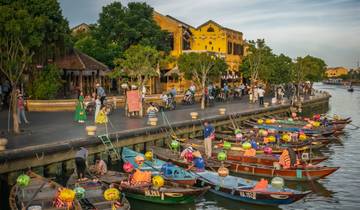
5-Day Experience Central of Vietnam with Up Travel: Da Nang – Hoi An Ancient Town – Hue Imperial City
- ✓ Comprehensive Hue tour
- ✓ Expert local guides included
- ✓ All accommodation arranged
- ✓ Transportation provided
5 days
Vietnam Voyage 02 – 5 Days Central Marvels
- ✓ Comprehensive Hue tour
- ✓ Expert local guides included
- ✓ All accommodation arranged
- ✓ Transportation provided
4 days
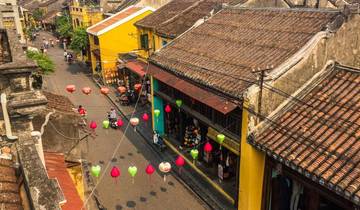
4-Day Central Vietnam Highlights 2026: Da Nang, Hoi An, Hue & Ba Na Hills
- ✓ Comprehensive Hue tour
- ✓ Expert local guides included
- ✓ All accommodation arranged
- ✓ Transportation provided
6 days
Explore central Vietnam 6 days 5 nights (Da Nang- Hoi An- Hue)
- ✓ Comprehensive Hue tour
- ✓ Expert local guides included
- ✓ All accommodation arranged
- ✓ Transportation provided
Multi-day tour packages powered by TourRadar. Prices and availability subject to change.
Introduction to Hue Imperial City: Vietnam’s Last Royal Capital
Hue’s transformation from provincial town to imperial capital began in 1802 when Emperor Gia Long established the Nguyen Dynasty and selected this central Vietnam location as his seat of power. Over the following 143 years until 1945, thirteen Nguyen emperors ruled Vietnam from Hue’s walled citadel, creating an architectural and cultural legacy that defines the city’s identity today. The Imperial City served as the administrative, political, and cultural heart of Vietnam during this period, witnessing the dynasty’s rise, French colonial influence, and eventual transition to modern governance.
The Complex of Hue Monuments earned UNESCO World Heritage designation in 1993, recognizing both its outstanding universal value and the urgent need for preservation following extensive damage during the 1968 Tet Offensive. This recognition encompasses not only the Imperial City itself but also the royal tombs scattered throughout the countryside, the sacred temples and pagodas along the Perfume River, and the intangible cultural heritage of Hue royal court music (nhã nhạc), which received separate UNESCO recognition in 2003 as an Intangible Cultural Heritage of Humanity.
In 2026, Hue stands as Vietnam’s most accessible UNESCO World Heritage site for travelers seeking authentic historical experiences. Unlike Ha Long Bay’s commercialization or Hoi An’s tourist saturation, Hue maintains genuine cultural character while offering modern amenities, reasonable prices, and comprehensive English-language information. Recent restoration work completed in 2025 reopened previously inaccessible sections of the Forbidden Purple City, adding new dimensions to the visitor experience and justifying return visits even for those who explored Hue in previous years.
The city’s geographic position in central Vietnam, 100 km north of Da Nang International Airport and positioned between Hanoi and Ho Chi Minh City, makes Hue an inevitable stop on most Vietnam itineraries. The Perfume River bisects the modern city, with the Imperial City and Old Quarter occupying the northern bank while hotels, restaurants, and tourism infrastructure concentrate on the southern shore. This layout creates a natural separation between historical monuments and contemporary development, preserving the Imperial City’s atmospheric integrity while ensuring traveler convenience.
Understanding the UNESCO Complex of Hue Monuments 2026
The UNESCO designation “Complex of Hue Monuments” encompasses far more than the Imperial City alone, protecting an interconnected system of architectural, landscape, and cultural sites across Thua Thien-Hue Province. This comprehensive approach recognizes that Nguyen Dynasty emperors conceived their capital not as a single fortress but as a carefully planned sacred landscape integrating feng shui principles, Confucian hierarchy, and Vietnamese cultural traditions. Understanding this broader context enriches any visit to individual sites within the complex.
Imperial City Core Zone: The Citadel, Imperial City, and Forbidden Purple City
The Imperial City occupies three concentric zones, each representing increasing levels of exclusivity and sacredness in Nguyen Dynasty court hierarchy. The outermost zone, the Citadel (Kinh Thanh), spans 520 hectares enclosed by 10 km of walls and moats. These fortifications incorporated French military engineering principles while maintaining Vietnamese architectural aesthetics, creating a unique defensive system that blended Western and Eastern design philosophy. The walls originally rose 6-7 meters high with a 4-meter-wide moat system fed by Perfume River tributaries.
Within the Citadel lies the Imperial City (Hoang Thanh), a 6-hectare walled enclosure containing the emperor’s working palaces, administrative buildings, temples, and reception halls. This zone included structures like Thai Hoa Palace (Palace of Supreme Harmony), where emperors conducted official state business, received foreign delegations, and presided over major ceremonies. The Imperial City’s yellow-tiled roofs signified imperial status, with strict regulations governing which buildings could use this distinctive color reserved for royalty throughout Vietnamese history.
The innermost zone, the Forbidden Purple City (Tu Cam Thanh), served as the emperor’s private residence and family quarters. Only the emperor, his family, eunuchs, and specifically authorized servants could enter this 8-hectare area, making it the most restricted space in all Vietnam. American bombing during the 1968 Tet Offensive devastated much of the Forbidden Purple City, leaving only foundations and scattered architectural fragments until recent restoration projects began reconstructing key buildings using historical records and surviving examples from other sites.
Royal Tomb Complex: Monumental Mausoleums in the Countryside
Seven major royal tombs dot the countryside surrounding Hue, each representing an individual emperor’s vision of the afterlife and his architectural legacy. Unlike Chinese imperial tombs that followed standardized designs, Nguyen Dynasty tombs reflect each emperor’s personality, artistic preferences, and philosophical outlook. These sites function as complete self-contained complexes incorporating temples, pavilions, lakes, gardens, and the emperor’s burial chamber, creating miniature imperial cities dedicated to eternal rest.
The three most visited tombs in 2026 each offer distinct experiences. Minh Mang Tomb (12 km from Hue center, 150,000 VND/$6 entrance) exemplifies geometric perfection and Confucian order, with buildings aligned along a central axis demonstrating the emperor’s preference for symmetry and traditional values. Tu Duc Tomb (7 km from Hue center, 150,000 VND/$6) emphasizes romantic naturalism with its lake setting, poem pavilions, and garden landscapes reflecting the emperor’s artistic sensibilities. Khai Dinh Tomb (10 km from Hue center, 150,000 VND/$6) showcases early 20th-century French architectural influence through its concrete construction, ceramic decoration, and fusion of Vietnamese and European design elements.
Sacred Temples and Pagodas Along the Perfume River
Religious sites formed integral components of the Nguyen Dynasty’s sacred landscape, with Thien Mu Pagoda (6 km from city center, free admission) holding particular significance as Hue’s oldest religious structure dating to 1601. The seven-story Phuoc Duyen Tower rises 21 meters above the Perfume River, serving as Hue’s most recognizable landmark alongside the Imperial City itself. The pagoda grounds contain the Austin car used by monk Thich Quang Duc during his 1963 self-immolation protest in Saigon, adding modern historical significance to this ancient spiritual site.
Lesser-known temples within the UNESCO complex include the Nguyen Dynasty Royal Family Temple (The To Mieu) inside the Imperial City, where emperors performed ancestor worship rituals, and various imperial temples dedicated to specific deities protecting the dynasty. These sites receive less tourist attention than major monuments but offer insights into the spiritual beliefs and ritual practices that governed daily life in the imperial court.
Planning Your Hue Visit: Best Time and Weather Considerations 2026
Hue’s tropical monsoon climate creates distinct wet and dry seasons that significantly impact visitor experience, though unlike some Southeast Asian destinations, Hue’s monuments remain accessible throughout the year. Understanding seasonal variations helps travelers optimize their 2026 visit for weather comfort, crowd levels, and overall experience quality.
Optimal Travel Window: February-April 2026
February through April represents Hue’s prime tourism season in 2026, offering the most favorable combination of weather, accessibility, and cultural events. Temperatures during these months range 22-28°C (72-82°F), providing comfortable conditions for extended outdoor exploration without excessive heat or cold. Rainfall drops to minimal levels with February averaging just 60mm, March 47mm, and April 64mm monthly precipitation, ensuring dry conditions for photography, walking tours, and countryside excursions to distant royal tombs.
This period coincides with several cultural festivals that enhance the Hue experience. The Hue Festival, a biennial event held in even-numbered years, transforms the city every April with royal ceremonies, traditional music performances, craft demonstrations, and international cultural exchanges. 2026 marks a festival year, making April particularly attractive for visitors seeking immersive cultural experiences beyond standard monument touring. Book accommodations 2-3 months in advance for April 2026 to secure preferred hotels at reasonable rates, as the festival increases both visitor numbers and prices.
Shoulder Seasons: May-August and September-November 2026
May through August brings higher temperatures (28-35°C/82-95°F) and increasing rainfall, though mornings and evenings remain pleasant for sightseeing. Afternoon rainstorms become common from June onward, typically arriving between 2-4 PM and lasting 1-3 hours before clearing. This weather pattern allows visitors to tour Imperial City monuments during cooler morning hours, retreat indoors for lunch and afternoon rest during peak heat and rain, then emerge for evening activities once temperatures moderate.
September through November transitions from wet season to dry season, with October representing the wettest month averaging 665mm rainfall. However, heavy rains often arrive as short intense downpours rather than all-day events, and accommodation prices drop 20-30% compared to peak season. Budget travelers willing to navigate occasional weather disruptions can achieve significant savings during these months while still accessing all major sites and enjoying Hue’s attractions with reduced tourist crowds.
Winter Season: December-January 2026
December and January bring Hue’s coolest weather with temperatures dipping to 18-22°C (64-72°F), requiring light jackets for evening activities and early morning temple visits. This period sees increased rainfall compared to spring months, though totals remain manageable at 200-350mm monthly. The cooler weather particularly suits travelers from tropical Southeast Asian countries seeking respite from year-round heat, though Western visitors accustomed to genuine winter may find Hue’s “cold season” quite mild.
Tet (Vietnamese Lunar New Year) typically falls in late January or early February, with 2026’s celebration scheduled for January 29-February 4. Hue’s monuments remain open during Tet with special royal ceremony reenactments and traditional performances, though many restaurants and shops close for 3-5 days. Accommodation becomes scarce and expensive during Tet week itself, with prices doubling or tripling normal rates. Travelers should either book accommodations 6+ months in advance for Tet or avoid this period entirely, visiting before January 20 or after February 10 to experience normal services and pricing.
Getting to Hue in 2026: Transportation and Access
Hue’s central Vietnam location provides multiple transportation options from major cities and international airports, with journey times, costs, and comfort levels varying significantly between methods. Strategic route selection based on origin point, budget, and time constraints optimizes the arrival experience.
Flying to Phu Bai International Airport (HUI)
Phu Bai International Airport sits 15 km south of Hue center, offering the fastest access for domestic travelers and select international routes. Vietnam Airlines, VietJet Air, and Bamboo Airways operate multiple daily flights from Hanoi (70-90 minutes, 800,000-2,500,000 VND/$32-100) and Ho Chi Minh City (90 minutes, 900,000-2,800,000 VND/$36-112) with prices fluctuating based on booking timing and airline. Book flights 2-3 months in advance and maintain flexibility on departure dates to secure lowest fares, as last-minute bookings can cost double or triple compared to advance purchases.
Airport transfer options include official airport taxis (250,000-350,000 VND/$10-14 fixed price to city center), Grab car service ($8-12 depending on final destination and time of day), and hotel shuttle buses arranged through accommodations. Mai Linh and Vinasun operate the most reliable official taxi services, displaying clear meter systems and company identification. Avoid freelance taxi drivers approaching travelers in the arrivals hall, as these frequently overcharge or take circuitous routes to inflate fares.
Traveling via Da Nang International Airport (DAD)
Many international travelers access Hue through Da Nang International Airport, Vietnam’s third-busiest airport located 100 km south. This routing proves particularly practical for combined itineraries visiting both cities, as Da Nang offers more international flight options, lower airfares from many origins, and the opportunity to experience both destinations during a central Vietnam stay. The journey from Da Nang to Hue takes 2.5-3.5 hours depending on transport method and traffic conditions.
Private taxi or car rental provides the most comfortable Da Nang-Hue transfer option, costing 1,100,000-1,900,000 VND ($45-75) for vehicles accommodating 4 passengers with luggage. This method allows stops at scenic viewpoints along Highway 1, particularly the famous Hai Van Pass, Lang Co Beach, and Marble Mountains if departing Da Nang city rather than the airport directly. Split among multiple travelers, private transport becomes cost-competitive with public buses while delivering superior comfort and flexibility.
Tourist bus services operated by companies like The Sinh Tourist, Hoang Long, and Hanh Cafe connect Da Nang and Hue multiple times daily, costing 150,000-450,000 VND ($6-18) per person for the 3-hour journey. Morning departures (7-9 AM) and afternoon departures (1-3 PM) prove most reliable, with evening services sometimes experiencing delays. Book tickets one day in advance through hotels or directly at bus company offices to guarantee seats, particularly during peak tourism months February-August 2026.
Train Travel: The Reunification Express Experience
Vietnam’s North-South Railway (Reunification Express) connects Hue to Hanoi (688 km, 12-14 hours) and Ho Chi Minh City (1,037 km, 18-22 hours) with overnight services offering sleeper berths for comfortable long-distance travel. Hanoi-Hue tickets cost 450,000-1,200,000 VND ($18-48) depending on class selection, with air-conditioned soft sleeper berths providing the best value for overnight journeys. The SE3, SE5, and SE7 southbound trains and SE2, SE4, SE8 northbound trains offer the most modern rolling stock with reliable air conditioning and cleaner facilities.
The short Da Nang-Hue train segment (2.5-3 hours, 80,000-200,000 VND/$3.20-8) provides spectacular coastal scenery through Hai Van Pass, considered one of Southeast Asia’s most scenic rail journeys. Sit on the right side heading north (left side heading south) to maximize ocean views during the 20 km stretch between Da Nang and Lang Co. Multiple daily departures allow flexibility in scheduling, though the SE1, SE3, SE5 northbound and SE2, SE4, SE6 southbound trains operate during daylight hours most suitable for scenery appreciation.
Book train tickets 2-4 weeks in advance through Vietnam Railways’ official website (dsvn.vn), the 12Go Asia platform, or Baolau.com to secure preferred berth positions and avoid sold-out situations during peak travel periods. Print or download mobile tickets as station staff may not accept email confirmations alone. Arrive at stations 30 minutes before departure to locate platforms, as English signage remains limited and train numbers can be confusing for first-time travelers.
Accommodation in Hue 2026: Where to Stay for Every Budget
Hue’s accommodation scene offers exceptional value compared to Vietnam’s coastal resort areas, with quality options available across all budget levels from backpacker hostels to luxury riverside properties. The southern bank of the Perfume River concentrates most tourist-oriented hotels within walking distance of restaurants, tour agencies, and transportation hubs, while the northern bank near the Imperial City provides quieter, more local atmosphere.
Budget Accommodation (250,000-650,000 VND / $10-26 Per Night)
Backpacker hostels and budget guesthouses cluster along Pham Ngu Lao and Chu Van An streets south of Trang Tien Bridge, offering dormitory beds for 150,000-300,000 VND ($6-12) and private rooms for 250,000-650,000 VND ($10-26) nightly. These properties typically include free Wi-Fi, basic breakfast, and tour booking services, with staff speaking functional English and providing local recommendations. Stop & Go Homestay, Poetic Hue Hotel, and Le Robinet Homestay represent reliable budget choices receiving consistently positive traveler reviews.
Budget hotels in this price range deliver clean rooms with private bathrooms, air conditioning, hot water, and sometimes small balconies overlooking street scenes. Don’t expect luxury amenities like pools or gyms, but core comfort standards meet or exceed Western budget hotel expectations. Family-run guesthouses often provide superior value compared to impersonal hotel chains, as owners offer personalized service, insider dining recommendations, and assistance with motorbike rentals and tour arrangements.
Mid-Range Accommodation (650,000-1,250,000 VND / $26-50 Per Night)
Three-star hotels and boutique properties in Hue’s mid-range category deliver impressive quality for 650,000-1,250,000 VND ($26-50) per night, with many featuring swimming pools, on-site restaurants, riverside locations, and rooms substantially larger than equivalent-priced properties in Western destinations. The Scarlett Boutique Hotel, Hue Riverside Villa, and Romance Hotel exemplify this category’s value proposition, combining elegant design with modern amenities and strategic locations near major attractions.
Mid-range hotels typically include substantial breakfast buffets featuring Vietnamese and Western options, 24-hour reception desks staffed with English speakers, and tour desks arranging DMZ trips, royal tomb circuits, and cooking classes. Room sizes range 25-35 square meters with comfortable beds, work desks, safes, coffee/tea facilities, and well-appointed bathrooms featuring effective shower pressure and hot water. Many properties in this bracket occupy restored French colonial buildings or newly constructed properties inspired by traditional Vietnamese architecture, creating atmospheric stays beyond simple lodging functionality.
Upscale and Boutique Hotels (1,250,000-3,000,000 VND / $50-121 Per Night)
Four-star boutique hotels and upscale properties elevate Hue accommodation into luxury territory while maintaining prices far below comparable properties in Vietnam’s beach resort areas. The Elegant Boutique Hotel, Jade Scene Hotel, and Indochine Palace offer 1,250,000-3,000,000 VND ($50-121) nightly rates for rooms featuring premium bedding, spacious bathrooms with separate tubs and showers, private balconies overlooking Perfume River or city vistas, and access to rooftop pools, spa facilities, and fine-dining restaurants.
Properties in this category emphasize personalized service with staff memorizing guest names, anticipating needs, and arranging customized experiences beyond standard tour offerings. Many hotels in this bracket occupy heritage buildings restored to preserve colonial architecture while incorporating modern systems for comfort and safety. Expect 40-60 square meter rooms, turn-down service, complimentary minibar items, and substantial breakfast spreads featuring fresh tropical fruits, made-to-order eggs, and regional specialties like bun bo Hue alongside international options.
Luxury Hotels (3,000,000+ VND / $121+ Per Night)
Hue’s luxury hotel sector includes properties like Melia Vinpearl Hue (the city’s tallest building with 34 floors), Pilgrimage Village, and Azerai La Residence, delivering five-star experiences for 3,000,000-8,000,000 VND ($121-320) per night. These properties offer comprehensive resort amenities including multiple restaurants, extensive spa facilities, fitness centers, concierge services, and distinctive design reflecting Hue’s cultural heritage through contemporary Vietnamese architectural interpretation.
Melia Vinpearl Hue’s prime riverside location provides panoramic city views from upper floors, with rooms featuring floor-to-ceiling windows, king beds, premium linens, marble bathrooms, and access to an indoor pool, gym, and six on-site dining venues. The hotel’s 34th-floor bar offers Hue’s best sunset views over the Imperial City and Perfume River. Pilgrimage Village takes an alternative approach with traditional-style bungalows scattered through landscaped gardens, creating a peaceful countryside retreat just 15 minutes from city center while maintaining five-star service standards and facilities.
Exploring Hue Imperial City 2026: Complete Site Guide
The Imperial City demands 4-6 hours for thorough exploration, with optimal visit strategy depending on interests, energy levels, and weather conditions. Arriving at opening time (6:30-7:00 AM) provides the best experience with fewer crowds, cooler temperatures, and superior photography lighting before harsh midday sun flattens architectural details and creates excessive contrast in images.
Main Entrance and Ngo Mon Gate: The Five-Phoenix Gateway
Visitors enter the Imperial City through Ngo Mon Gate (Noon Gate), the complex’s most photographed structure featuring five passages beneath a distinctive yellow-tiled pavilion. Emperor-exclusive central passage leads directly to Thai Hoa Palace, while flanking passages served mandarins and military officials according to strict hierarchical protocols. The upper pavilion served as viewing platform for royal ceremonies, with emperors appearing before subjects during major celebrations, proclamations, and military victories.
The gate’s architectural significance extends beyond symbolic importance, as it exemplifies the synthesis of Chinese, Vietnamese, and French influences characterizing Nguyen Dynasty construction. Chinese-inspired roof forms combine with Vietnamese decorative elements and French engineering principles in the underlying structure, creating a hybrid architectural language unique to Hue. Recent restoration replaced deteriorated roof tiles with authentic reproductions matching original colors and patterns, returning the gate to its 19th-century appearance.
Thai Hoa Palace: The Supreme Harmony Throne Room
Thai Hoa Palace (Palace of Supreme Harmony) functioned as the empire’s primary ceremonial hall where emperors received officials, foreign delegations, and conducted state business. The massive interior space features 80 red-lacquered wooden columns supporting an elaborate ceiling decorated with dragons and clouds in gold leaf, creating an overwhelming display of imperial power and artistic sophistication. The central dragon throne sits elevated on a platform, positioned precisely along the north-south axis connecting Ngo Mon Gate through the palace to the Forbidden Purple City beyond.
2025 restoration work completed authentic period furniture reconstruction based on historical photographs and written descriptions, allowing visitors to see the palace furnished as it appeared during actual court ceremonies rather than the empty hall that existed for decades after 1945. Golden ceremonial objects, silk banners, and ritual implements now occupy their historical positions, dramatically improving understanding of how these spaces functioned during active imperial rule rather than serving merely as architectural shells.
The Nine Holy Cannons: Military Might and Symbolic Protection
Nine massive bronze cannons line the walls near Thai Hoa Palace, each 5 meters long, weighing 10 tons, and bearing the name of one of four seasons and five elements in Vietnamese cosmology. Cast in 1803-1804 using bronze from weapons captured from Tay Son rebels, these cannons never fired projectiles in warfare but served as symbolic protectors of the Nguyen Dynasty through their spiritual power. Each cannon features elaborate decorative elements including dragons, clouds, and floral motifs executed with remarkable artistic skill despite the objects’ massive scale.
The cannons represent one of Hue’s most distinctive historical treasures, as comparable collections no longer exist in other Vietnamese imperial sites. Their survival through the 20th century’s wars and upheavals represents something of a miracle, as their bronze composition made them attractive targets for metal requisition during both French colonial occupation and American war periods when scrap metal held enormous value for manufacturing ammunition and military equipment.
Truong Sanh Residence and Dien Tho Palace: The Queen Mother’s Domain
The Truong Sanh Residence complex served as living quarters for empresses and royal concubines, with Dien Tho Palace functioning as the Queen Mother’s primary residence. These buildings exhibit more intimate scale compared to the emperor’s ceremonial halls, featuring covered walkways connecting pavilions, small courtyards with potted plants, and decorative elements emphasizing domestic comfort rather than political power. The architecture demonstrates how Nguyen Dynasty palace design adapted Chinese imperial models to Vietnamese climate, using open structures, cross-ventilation, and shaded walkways to manage tropical heat without mechanical cooling.
Recent restoration opened previously closed sections of the Truong Sanh complex, including residential quarters showing how royal family members lived daily lives distinct from ceremonial public appearances. Display cases contain personal items including clothing, cosmetics, jewelry, and household objects that humanize the palace occupants beyond their official roles. This approach helps visitors understand that the Imperial City functioned simultaneously as political center and family residence, with domestic routines unfolding parallel to state administration.
Forbidden Purple City: Ongoing Restoration and Limited Access
The Forbidden Purple City (Tu Cam Thanh) suffered most extensively during 1968 fighting, with American artillery destroying an estimated 80% of structures that had survived intact through previous centuries. Ongoing restoration projects began in the 1990s continue through 2026, using archaeological evidence, historical photographs, written descriptions, and surviving architectural fragments to guide reconstruction. Completed sections include the royal library (Thai Binh Lau) and several residential pavilions, while other areas remain archaeological sites with foundations, column bases, and fragmentary walls indicating former building locations.
The partially restored state actually enhances understanding of how extensively modern conflicts damaged Vietnam’s cultural heritage while demonstrating the enormous complexity and cost of authentic restoration work. Visitors can observe restoration teams employing traditional techniques to recreate decorative elements, following centuries-old methods for wood joinery, tile production, and lacquer application. This “work in progress” quality provides insights into heritage conservation practices while showing that restoration represents an ongoing commitment rather than a completed project.
Royal Tomb Circuit 2026: Exploring Hue’s Countryside Mausoleums
The royal tomb circuit requires a dedicated full day to visit the three major mausoleums (Minh Mang, Tu Duc, Khai Dinh) plus Thien Mu Pagoda, covering approximately 50-60 km total distance through Hue’s countryside. Most travelers hire private cars with drivers (900,000-1,400,000 VND/$36-56 full day), book organized tours (600,000-1,200,000 VND/$24-48 per person), or rent motorbikes (100,000-200,000 VND/$4-8 per day) for independent exploration.
Minh Mang Tomb: Confucian Perfection and Geometric Order
Minh Mang Tomb, located 12 km southwest of Hue on the west bank of Perfume River, exemplifies Confucian architectural principles through its strict axial symmetry, hierarchical arrangement, and integration with natural landscape. Emperor Minh Mang’s 1841 death initiated construction, with son Emperor Thieu Tri completing the project in 1843 after mobilizing over 10,000 workers for the three-year building campaign. The tomb complex spans 18 hectares encompassing Dai Hong Gate (main entrance), Hien Duc Gate, Sung An Temple dedicated to the emperor and empress, and a series of pavilions, bridges, and courtyards leading to the burial chamber.
The 150,000 VND ($6) entrance fee includes access to the entire complex, with visits requiring 60-90 minutes to appreciate the site’s architectural sophistication and landscape integration fully. A central lake (Tan Nguyet Lake) divides ceremonial areas from the burial precinct, crossed by three parallel bridges representing different aspects of Confucian cosmology. The tomb’s garden design incorporates feng shui principles throughout, positioning buildings and landscape elements to harmonize with surrounding mountains and water features while ensuring proper spiritual protection for the emperor’s eternal rest.
Tu Duc Tomb: Romantic Gardens and Poetic Retreat
Tu Duc Tomb, 7 km south of Hue, diverges dramatically from Minh Mang’s geometric formality through its romantic garden design, artificial lakes, and pavilions dedicated to poetry composition and philosophical contemplation. Emperor Tu Duc personally designed this complex during his lifetime (1847-1883), using it as a retreat palace before death rather than building it exclusively as a mausoleum. The site’s landscaping emphasizes natural aesthetics over axial symmetry, with winding paths, shaded groves, and water features creating contemplative spaces for quiet reflection.
The 150,000 VND ($6) admission provides access to 12 hectares of gardens, lakes, and structures including the Hoa Khiem Temple (honoring the emperor), Luong Khiem Palace (the emperor’s working residence), and Minh Khiem Theater (for royal entertainment). Interestingly, Emperor Tu Duc’s actual remains lie in an unmarked secret location rather than the prepared burial chamber within the complex, with the approximately 200 servants who transported the body executed to preserve the burial site’s secrecy. This unknown final resting place adds mystery to the tomb’s historical significance, though the elaborate structures that remain provide comprehensive insight into the emperor’s artistic sensibility and personal philosophy.
Khai Dinh Tomb: French Colonial Influence and Fusion Architecture
Khai Dinh Tomb, constructed 1920-1931 on Chau Chu Mountain 10 km from Hue, represents the Nguyen Dynasty’s latest architectural phase, when French colonial influence and Western building techniques transformed traditional Vietnamese imperial design. Emperor Khai Dinh employed reinforced concrete rather than wood for primary construction, covered surfaces in elaborate ceramic and glass mosaics, and incorporated Art Deco elements alongside Vietnamese decorative motifs. The result creates a unique architectural fusion that some critics find less authentic than earlier tombs while others appreciate as evidence of Vietnam’s cultural adaptation and synthesis.
The 150,000 VND ($6) entrance fee supports ongoing conservation work addressing water infiltration problems in the concrete structure, a common issue in early 20th-century reinforced concrete construction in tropical climates. The tomb’s interior features floor-to-ceiling murals created using ceramic fragments and glass, depicting scenes from Vietnamese daily life, imperial court ceremonies, and symbolic representations of virtues, vices, and spiritual concepts. The emperor’s remains rest in an underground chamber beneath a bronze statue, with the entire complex climbing a hillside through multiple levels connected by steep staircases requiring moderate physical fitness to navigate.
Hue Cuisine 2026: Royal Culinary Heritage and Street Food Traditions
Hue’s cuisine distinguishes itself from northern and southern Vietnamese food through its imperial heritage, chili-forward seasoning, and sophisticated presentation inherited from royal court cooking traditions. The city’s location in central Vietnam provides access to both fresh seafood from nearby coasts and agricultural products from inland regions, creating diverse ingredient availability that supports Hue’s reputation as Vietnam’s most sophisticated regional cuisine.
Signature Dishes and Where to Find Them
Bun Bo Hue (Hue-style beef noodle soup) represents the city’s most iconic dish, featuring thick round rice noodles in a beef broth seasoned with lemongrass, shrimp paste, and chili oil that delivers substantial heat compared to Hanoi’s pho. The soup contains sliced beef, pork knuckle, and pig blood cubes, garnished with fresh herbs, lime, and additional chili. Excellent versions cost 40,000-70,000 VND ($1.65-2.88) at specialist shops like Bun Bo Hue O Tuyet (60 Nguyen Cong Tru Street), where locals queue for morning bowls starting at 6:30 AM.
Banh Beo (steamed rice cakes) appear throughout central Vietnam but reach their highest expression in Hue, where small ceramic dishes hold delicate rice cakes topped with dried shrimp, scallion oil, and crispy pork skin. Street vendors sell sets of 8-10 cakes for 20,000-30,000 VND ($0.80-1.20), making this an ideal afternoon snack between major meals. Nem Lui (grilled lemongrass pork skewers) cost 40,000-60,000 VND ($1.65-2.45) for a serving of 4-6 skewers, served with rice paper, fresh vegetables, and peanut dipping sauce for DIY wrapping, combining interactive dining with complex flavor profiles.
Royal Cuisine: Heritage Dining Experiences
Royal cuisine (com co) restaurants recreate dishes once prepared exclusively for Nguyen Dynasty emperors, featuring elaborate presentation, miniature portions, and sophisticated flavor combinations unknown in common Vietnamese cooking. Restaurants like Ancient Hue Garden Houses and Cung Dinh Restaurant offer royal cuisine set menus for 400,000-800,000 VND ($16-32) per person, presenting 8-12 courses in authentic imperial style with servers dressed in traditional court attire. While expensive compared to street food, these experiences provide unique insight into Vietnamese culinary arts’ highest historical expression and make memorable special occasion dining.
Many royal dishes balance yin and yang principles through ingredient combinations, with cooling and heating foods carefully proportioned to promote health and longevity according to traditional Vietnamese medical concepts. Presentation aesthetics receive equal emphasis to flavor, with dishes arranged to represent symbolic meanings through colors, shapes, and garnishes. Modern interpretations maintain these principles while reducing serving sizes to match contemporary appetites rather than the multi-course imperial banquets that once lasted hours and served dozens of elaborate preparations.
Street Food Markets and Night Food Scenes
Dong Ba Market (Tran Hung Dao Street) functions as Hue’s primary public market, selling fresh produce, meats, seafood, and prepared foods alongside clothing and household goods. The market’s food stalls serve breakfast and lunch to locals, offering authentic experiences at 25,000-50,000 VND ($1-2) per meal with minimal English but enthusiastic service. Evening food markets along Nguyen Dinh Chieu Walking Street (weekends) provide tourist-friendly environments with translated menus and moderate prices, though authenticity and value suffer compared to purely local establishments.
Com hen (clam rice), a distinctively Hue dish, appears at evening street stalls for 20,000-40,000 VND ($0.80-1.65), combining room-temperature rice with tiny clams, roasted peanuts, crispy pork skin, fresh herbs, and chili sauce. The complex preparation requires hours of work to shell the tiny clams, making this a labor-intensive specialty rarely found outside Hue. Other night street specialties include banh khoai (crispy savory pancakes, 30,000-50,000 VND/$1.20-2), che Hue (sweet soups, 15,000-25,000 VND/$0.60-1), and various grilled seafood options priced by weight.
Transportation Within Hue 2026: Getting Around the City
Hue’s compact size and relatively limited traffic make navigation straightforward compared to Hanoi or Ho Chi Minh City, with most accommodation located within 2-3 km of the Imperial City and major sites accessible via short taxi or motorbike rides. Understanding local transportation options helps travelers maximize time efficiency while minimizing costs during their Hue stay.
Motorbike Rental: Independent Exploration
Motorbike rental costs 100,000-200,000 VND ($4-8) per day for automatic scooters (Honda Air Blade, Yamaha Nouvo) suitable for inexperienced riders, with semi-automatic and manual bikes available at similar prices for those with motorcycle licenses and experience. Hotels typically arrange rentals through partner companies, though independent shops along Chu Van An and Pham Ngu Lao streets offer competitive rates and better-maintained bikes. Always photograph bikes before accepting delivery to document existing scratches and damage, verify brakes and lights function properly, and ensure adequate fuel to begin riding immediately.
Hue’s roads accommodate motorbike traffic easily, with moderate speeds, limited congestion, and straightforward routing compared to larger Vietnamese cities. The royal tomb circuit becomes particularly enjoyable via motorbike, allowing stops at scenic viewpoints, small temples, and countryside villages impossible to access via organized tours. However, international driving permits technically required for motorbike operation rarely get checked except after accidents, when lack of proper documentation can create expensive legal and insurance complications. Travelers without motorcycle experience should consider alternative transportation rather than learning to ride in Vietnam traffic.
Taxi and Ride-Hailing Services
Grab operates as Hue’s dominant ride-hailing platform, offering car service (80,000-150,000 VND/$3.20-6 for typical within-city journeys) and GrabBike motorbike taxis (30,000-60,000 VND/$1.20-2.40) with transparent app-based pricing eliminating negotiation hassles. Download and configure the Grab app before arrival to avoid wasting time with setup during limited vacation days. Traditional metered taxis from Mai Linh and Vinasun companies charge 10,000-15,000 VND ($0.40-0.60) per kilometer after initial 10,000 VND flagfall, making them competitive with Grab for short distances while eliminating app dependency and digital payment requirements.
For royal tomb circuits and countryside excursions, negotiate full-day taxi hire at 900,000-1,400,000 VND ($36-56) depending on specific itinerary and vehicle size. Drivers typically wait at each site while tourists explore, providing air-conditioned comfort between stops and local knowledge about optimal routing, though English language skills vary considerably. Establish exact itinerary, departure time, and return expectations before beginning journeys to prevent misunderstandings and ensure drivers allocate sufficient time for thorough site exploration rather than rushing tourists through quick photo stops.
Bicycle Rental and Walking
Bicycle rental costs 30,000-60,000 VND ($1.20-2.40) per day from hotels and dedicated rental shops, providing economical, environmentally friendly transportation suitable for Imperial City exploration, Perfume River waterfront rides, and short countryside excursions to Thien Mu Pagoda. However, Hue’s heat, humidity, and occasional rainfall make cycling less practical than in temperate climates, particularly for extended distances or midday activities. Reserve bikes for early morning or late afternoon use when temperatures moderate and sunlight becomes less intense.
Walking proves viable for exploring areas south of Perfume River where hotels concentrate, with Trang Tien Bridge linking to the Imperial City via a pleasant 15-20 minute riverside walk. The Imperial City itself requires extensive walking across its 500-hectare grounds, with paved paths connecting major structures but limited shade in some sections. Comfortable walking shoes, sun protection, and adequate water supplies become essential for full-day exploration, as Hue’s tropical climate creates significantly more demanding conditions than walking similar distances in temperate regions.
Sample 2026 Hue Itineraries: Maximizing Your Visit
Effective itinerary planning concentrates major sites during optimal times, incorporates rest periods to prevent heat exhaustion, and balances historical sightseeing with cultural experiences and local interactions. The following itineraries demonstrate strategic approaches to Hue exploration for different trip durations.
One-Day Express Hue Itinerary
6:30 AM – Arrive at Imperial City at opening, explore Ngo Mon Gate, Thai Hoa Palace, Nine Holy Cannons, and Forbidden Purple City sections (3 hours). Morning coolness and low crowds create optimal conditions for thorough exploration and quality photography.
9:30 AM – Return to hotel for breakfast and brief rest period, avoiding peak midday heat while processing morning experiences and preparing for afternoon activities.
11:00 AM – Visit Khai Dinh Tomb (1.5 hours including 30-minute taxi travel time each direction). This tomb’s hillside location and elaborate interior merit extended attention despite smaller grounds compared to other royal tombs.
1:00 PM – Lunch at Madam Thu Restaurant (15 Tran Cao Van Street) for traditional Hue cuisine including bun bo Hue, nem lui, and banh beo in tourist-friendly environment with English menus. Budget 150,000-250,000 VND ($6-10) per person including drinks.
2:30 PM – Brief siesta at hotel during hottest part of day, or visit Museum of Royal Antiquities (air-conditioned alternative to outdoor sites) to learn about Nguyen Dynasty artifacts and imperial court life.
4:00 PM – Thien Mu Pagoda visit (1 hour) followed by Perfume River sunset viewing from riverside cafes or dragon boat cruise. Late afternoon light creates ideal photography conditions as temperatures moderate.
6:30 PM – Dinner at Hanh Restaurant (11 Pho Duc Chinh Street) for banh khoai, white rose dumplings, and other Hue specialties in atmospheric garden setting. Budget 150,000-300,000 VND ($6-12) per person.
8:00 PM – Evening walk along Nguyen Dinh Chieu pedestrian street (weekends only) or cultural performance at Royal Theater if scheduled.
Daily costs: Imperial City entrance 200,000 VND, Khai Dinh Tomb 150,000 VND, taxi transportation 300,000-400,000 VND, meals 300,000-550,000 VND. Total day cost: 950,000-1,300,000 VND ($38-52) per person excluding accommodation.
Two-Day Comprehensive Hue Itinerary
Day 1 – Imperial City Focus
6:30 AM – Imperial City opening arrival, systematic exploration of Ngo Mon Gate, Thai Hoa Palace, Truong Sanh Residence, Dien Tho Palace, and partially restored Forbidden Purple City sections (4-5 hours). Hire audio guide (100,000 VND/$4) or live guide (300,000 VND/$12) to enhance understanding beyond self-guided exploration.
11:30 AM – Dong Ba Market visit for local lunch experience (com hen, banh beo) and cultural observation of Hue’s primary public market. Budget 50,000-80,000 VND ($2-3.20) per person for authentic market food stalls.
1:00 PM – Return to hotel for 2-hour midday rest, essential for managing tropical heat and preparing energy reserves for afternoon activities.
3:00 PM – Museum of Royal Antiquities visit (100,000 VND/$4 entrance, 1.5 hours) providing essential context about imperial artifacts, court ceremonies, and Nguyen Dynasty history that deepens Imperial City appreciation.
5:00 PM – Perfume River dragon boat cruise (150,000-300,000 VND/$6-12) or riverside cafe sunset viewing with iced Vietnamese coffee.
7:00 PM – Dinner at Ancient Hue Garden House for royal cuisine tasting menu (400,000-800,000 VND/$16-32) or more casual dining at local favorite Quan Cam for affordable banh khoai and grilled dishes.
Day 2 – Royal Tomb Circuit
8:00 AM – Depart hotel via hired taxi (900,000-1,200,000 VND/$36-48 full day) or rented motorbike for countryside exploration.
8:30 AM – Minh Mang Tomb arrival, thorough exploration of geometric gardens, temple complex, and burial precinct (1.5 hours). Entry 150,000 VND ($6).
10:30 AM – Tu Duc Tomb visit emphasizing romantic garden design, poetry pavilions, and lake landscapes (1.5 hours). Entry 150,000 VND ($6).
12:30 PM – Lunch at countryside restaurant near tombs, experiencing local cooking distinct from city tourist establishments. Budget 100,000-200,000 VND ($4-8) per person.
2:00 PM – Thien Mu Pagoda visit including temple grounds, seven-story tower, and monk Thich Quang Duc’s Austin car (45 minutes). Free admission.
3:00 PM – Return to city via scenic riverside route, stopping at craft villages or local temples as time and interest allow.
4:00 PM – Hotel arrival and extended rest period after full day countryside exploration.
6:30 PM – Casual dinner at Lac Thanh Restaurant (6 Dinh Tien Hoang Street) for banh khoai, nem lui, and local beer in relaxed garden atmosphere popular with backpackers and budget travelers. Budget 150,000-250,000 VND ($6-10) per person.
Two-day costs: Imperial City 200,000 VND, three tombs 450,000 VND, Museum of Royal Antiquities 100,000 VND, transportation 1,000,000-1,400,000 VND, meals 800,000-1,500,000 VND. Total two-day cost: 2,550,000-3,650,000 VND ($102-146) per person excluding accommodation.
Three-Day Complete Hue Experience
Days 1-2 follow the comprehensive two-day itinerary above, with Day 3 dedicated to supplementary experiences, day trips, or deeper dives into specific interests.
Day 3 Option A – DMZ Tour
The Demilitarized Zone (DMZ) separating North and South Vietnam during the American War lies 70 km north of Hue, containing significant historical sites including Vinh Moc tunnels, Khe Sanh Combat Base, Rockpile firebase, and Hien Luong Bridge marking the 17th parallel boundary. Full-day DMZ tours cost 600,000-1,200,000 VND ($24-48) per person including transportation, guide, and entrance fees, departing 7:00-8:00 AM and returning 5:00-6:00 PM. This excursion provides essential historical context for understanding Vietnam War history and Hue’s strategic significance during that conflict.
Day 3 Option B – Bach Ma National Park
Bach Ma National Park, located 40 km south of Hue, preserves 22,000 hectares of pristine mountain rainforest harboring diverse wildlife including rare primates, birds, and orchids. The park’s summit provides spectacular views across central Vietnam when weather permits, though frequent cloud cover often obscures vistas. Full-day visits including transportation, entrance fees (80,000 VND/$3.20), and optional guide services cost 800,000-1,500,000 VND ($32-60) depending on group size and specific itinerary. This nature-focused option balances Hue’s historical emphasis with environmental appreciation and physical activity.
Day 3 Option C – Cooking Class and Perfume River Cycling
Morning cooking classes (600,000-1,200,000 VND/$24-48 per person, 9:00 AM-1:00 PM) combine market visits, hands-on cooking instruction for 3-4 traditional Hue dishes, and communal lunch eating prepared food. Afternoon cycling along Perfume River’s north bank explores rural villages, rice paddies, and local craft workshops rarely visited by tourists. This combination provides cultural immersion and active recreation without temple or monument fatigue that can develop after intensive historical sightseeing.
Money-Saving Strategies for Hue 2026
Budget-conscious travelers can reduce Hue expenses significantly through strategic planning while maintaining comfortable travel standards and accessing major attractions. The following approaches balance economy with quality experience rather than simply minimizing all costs regardless of value received.
Accommodation Cost Reduction
Book accommodations directly through hotel websites or phone contact rather than booking platforms like Booking.com or Agoda to avoid 15-25% commission markups built into listed prices. Hotels often match or beat platform prices when contacted directly, particularly for multi-night stays where negotiation becomes practical. Stay slightly away from the main tourist corridor along Hung Vuong Street to access 20-30% lower prices while remaining within easy walking distance of restaurants and attractions.
Travel during low season months (May-June, September-November) when hotels reduce rates 30-50% compared to peak February-April pricing. Shoulder season weather brings more rainfall but also fewer crowds, cooler temperatures after rain, and substantially better value. Book last-minute during low season rather than advance reserving, as hotels prefer confirmed bookings at discounted rates over empty rooms, creating negotiation opportunities for walk-in guests willing to shop around.
Food and Dining Savings
Eat breakfast at local street food stalls or banh mi vendors (25,000-40,000 VND/$1-1.60) rather than hotel buffets, saving 100,000-200,000 VND ($4-8) daily while experiencing authentic Vietnamese morning food culture. Prioritize street food and local restaurants (30,000-80,000 VND/$1.20-3.20 per meal) for lunch and casual dinners, reserving one or two special restaurant meals for entire Hue stay rather than every evening.
Purchase water, snacks, and fruits from supermarkets (Coopmart, VinMart) or markets rather than tourist area shops, reducing drink costs 50% and snack expenses 40% compared to convenience stores and hotel minibars. A 1.5-liter water bottle costs 8,000-12,000 VND ($0.32-0.48) at supermarkets versus 20,000-30,000 VND ($0.80-1.20) near tourist sites. Bring refillable water bottle and fruit purchases from morning market visits for between-meal sustenance without constant vendor purchases.
Transportation and Tour Economies
Rent motorbikes (100,000-150,000 VND/$4-6 daily) for independent royal tomb circuit exploration rather than booking organized tours (600,000-1,200,000 VND/$24-48), saving 400,000-900,000 VND ($16-36) for couples or solo travelers willing to navigate independently. Fuel costs for full-day countryside riding total approximately 40,000-60,000 VND ($1.60-2.40), maintaining substantial savings even accounting for all operational expenses.
Walk between Imperial City, riverside areas, and accommodations south of Perfume River rather than defaulting to taxis for every movement. Hue’s compact downtown spans just 2-3 km end to end, making 20-30 minute walks practical for budget-conscious travelers comfortable with tropical climate conditions. Reserve taxis and Grab for longer distances to royal tombs, early morning airport transfers, or late-night returns when walking becomes impractical.
Practical Tips for Hue Visitors 2026
Successful Hue visits depend on understanding local customs, managing tropical climate challenges, and navigating practical logistics that aren’t immediately obvious to first-time visitors. The following guidance addresses common questions and prevents typical problems encountered during Hue exploration.
Dress Codes and Cultural Respect
The Imperial City and royal tombs maintain modest dress requirements expecting covered shoulders and knees, though enforcement varies by season and visitor numbers. Shorts, sleeveless shirts, and revealing clothing technically violate site regulations and show disrespect to Vietnamese cultural heritage, though security rarely enforces strict standards during hot weather periods when even locals modify traditional dress for comfort. Carry a lightweight scarf or sarong to wrap around shoulders or waist when entering particularly sacred areas or if staff indicate concern about clothing appropriateness.
Pagodas and active temples maintain stricter dress and behavior expectations than imperial historical sites. Remove shoes before entering temple buildings, speak quietly, and request permission before photographing monks or religious ceremonies. Buddhist temples welcome visitors regardless of religious affiliation, though respectful behavior demonstrates cultural sensitivity and ensures continued tourist access to these spiritually significant spaces.
Photography Regulations and Etiquette
Photography permissions vary between sites, with the Imperial City and royal tombs generally allowing unrestricted photography without special permits or additional fees. Museum buildings within the Imperial City complex prohibit flash photography to prevent artifact degradation, clearly posting restrictions at entrances. Professional photography requiring tripods, large lighting equipment, or commercial purposes requires advance permission and possible fee payment, though casual tourist photography faces no restrictions.
Exercise discretion when photographing local people, particularly elderly residents, street vendors, and individuals engaged in daily activities rather than performing for tourists. Request permission through gestures or basic Vietnamese phrases rather than photographing people without consent, avoiding potentially offensive behavior that perpetuates negative tourist stereotypes. Many locals appreciate photo requests and enjoy seeing images on camera screens, creating interaction opportunities that enhance cultural exchange beyond one-sided observation.
Language and Communication
English language skills in Hue exceed smaller Vietnamese cities but lag behind Hanoi and Ho Chi Minh City, with tourist industry workers (hotels, restaurants, tour guides) speaking functional English while market vendors, taxi drivers, and local restaurant staff rely primarily on Vietnamese. Download Vietnamese translation apps (Google Translate, Microsoft Translator) enabling offline functionality for menu reading, basic conversation, and emergency communication when Wi-Fi or cellular data unavailable.
Learn basic Vietnamese phrases for greetings (xin chao = hello, cam on = thank you), numbers for price negotiations, and food terminology for market and street food ordering. Vietnamese people appreciate language learning efforts even when pronunciation proves imperfect, creating goodwill that often results in better service, insider recommendations, and friendly interactions beyond purely transactional tourist encounters.
Health and Safety Considerations
Hue presents minimal safety concerns for foreign tourists, with violent crime rare and petty theft uncommon compared to more trafficked destinations. Exercise standard precautions including hotel safe usage for passports and excess cash, attention to personal belongings in crowded markets, and avoiding deserted areas late at night. Motorbike theft represents the most common crime affecting tourists, prevented through careful parking location selection, helmet lock usage, and avoiding expensive bikes that attract thieves.
Tropical diseases including dengue fever, zika virus, and Japanese encephalitis exist in central Vietnam, though actual infection rates among short-term tourists remain very low. Use insect repellent containing DEET, wear long sleeves and pants during dawn/dusk peak mosquito activity periods, and stay in accommodations with air conditioning or effective mosquito screens. Consult travel health specialists before departure regarding recommended vaccinations and preventive medications appropriate for individual health profiles and trip durations.
Tap water in Hue remains unsafe for drinking without treatment, requiring bottled water purchases or filtration/purification for consumption. Brush teeth with bottled water rather than tap water, and exercise caution with ice in drinks at budget establishments where source water quality remains uncertain. Upscale hotels and restaurants use purified ice, though street vendors may not maintain equivalent standards. Food safety at street stalls generally proves excellent due to high turnover rates ensuring fresh ingredients, though travelers with sensitive digestive systems might introduce Vietnamese cuisine gradually rather than immediately consuming large quantities of unfamiliar foods.
Frequently Asked Questions About Visiting Hue 2026
Can I visit Hue Imperial City during Vietnamese holidays and Tet in 2026?
The Imperial City remains open throughout Vietnamese holidays including Tet (Lunar New Year, January 29-February 4, 2026), maintaining regular 6:30 AM-5:30 PM hours even during national celebrations. Special royal ceremony reenactments and traditional performances often occur during Tet, enhancing the visitor experience beyond standard monument touring. However, many restaurants and shops close for 2-4 days during Tet celebration peak (January 30-February 2), limiting dining options and requiring advance meal planning. Accommodation becomes scarce and expensive during Tet week itself, with prices doubling or tripling compared to normal rates and availability limited unless booked 6+ months in advance. Visit before January 25 or after February 8 to experience Hue without Tet complications while still accessing year-round monument operations.
Do I need a guide to visit Hue Imperial City and royal tombs in 2026?
Independent exploration of the Imperial City and royal tombs proves entirely practical without hired guides, as major structures include English signage explaining historical significance and architectural features. Audio guide rental at the Imperial City entrance (100,000 VND/$4) provides comprehensive information delivered via smartphone app or dedicated device, offering flexibility to explore at individual pace while accessing equivalent content to live guide tours. However, knowledgeable guides add substantial value through historical context, dynasty intrigue stories, and architectural details not covered by signage or audio guides. Hire guides directly at site entrances (300,000-500,000 VND/$12-20 for 2-3 hours) rather than booking through hotels or tour agencies charging significant commission markups. Small group tours organized through hotels (600,000-1,200,000 VND/$24-48 per person) provide guided royal tomb circuits with transportation included, representing reasonable value for travelers preferring structured experiences over independent exploration.
How much time should I allocate for Imperial City exploration in 2026?
Thorough Imperial City exploration requires 4-6 hours minimum, with serious history enthusiasts potentially spending entire days examining architectural details, museum displays, and lesser-visited sections beyond primary tourist routes. Arrive at 6:30-7:00 AM opening to maximize exploration time during cooler morning temperatures and photograph structures in soft early light before harsh midday sun creates excessive contrast. Rush visits completing the Imperial City in 2-3 hours sacrifice depth for basic coverage, touching main highlights (Ngo Mon Gate, Thai Hoa Palace, Nine Holy Cannons) but missing secondary structures, museum buildings, and garden areas that provide fuller understanding of imperial court life. Budget travelers visiting multiple UNESCO sites should prioritize the Imperial City over individual royal tombs if choosing between extended exploration of one complex versus superficial coverage of multiple locations, as the Imperial City delivers the most concentrated historical significance and architectural diversity among Hue’s monuments.
What is the best way to visit Hue’s royal tombs in 2026?
Private taxi hire (900,000-1,400,000 VND/$36-56 full day) provides the most comfortable royal tomb circuit option, delivering air-conditioned transport between sites, flexibility in timing, and drivers who wait during exploration. Split among 2-4 travelers, per-person costs become competitive with organized tours while maintaining superior flexibility. Motorbike rental (100,000-150,000 VND/$4-6 daily) offers maximum independence and lowest cost for confident riders comfortable navigating Vietnamese traffic, with countryside roads featuring minimal congestion and straightforward routing to major tombs. Organized tours (600,000-1,200,000 VND/$24-48 per person) bundle transportation and guide services, proving efficient for solo travelers or those preferring structured experiences over independent exploration. The standard three-tomb circuit (Minh Mang, Tu Duc, Khai Dinh) plus Thien Mu Pagoda requires 6-8 hours including transportation time, with departures at 8:00-9:00 AM allowing 1-1.5 hours per site and return to city by mid-afternoon. Add Gia Long or Dong Khanh tombs only when completing the major three and seeking additional experiences, as these secondary sites lack the architectural sophistication and historical significance of primary mausoleums.
Is street food safe to eat in Hue in 2026?
Hue’s street food maintains excellent safety standards due to high ingredient turnover, cultural emphasis on freshness, and competitive market dynamics incentivizing quality. Choose vendors with steady local customer flow indicating popular approval, observe food preparation to verify proper cooking temperatures, and prioritize fully cooked dishes over raw preparations when introducing Vietnamese cuisine to sensitive digestive systems. Morning operations (6:00-10:00 AM) serve the freshest ingredients as vendors purchase daily supplies at dawn markets, while evening stalls (5:00-10:00 PM) may use ingredients prepared earlier that day. Avoid street food from isolated vendors with minimal customer activity, as low turnover allows ingredients to sit unrefrigerated in tropical heat for extended periods. Budget 30,000-80,000 VND ($1.20-3.20) per street food meal in 2026, substantially less than restaurant equivalents while often delivering superior flavor and authenticity. First-time visitors can minimize digestive adjustment by eating street food for one meal daily initially, gradually increasing consumption as systems acclimate to unfamiliar ingredients, spice levels, and preparation methods distinct from home country cuisines.
What should I wear when visiting Hue monuments in 2026?
Light, breathable clothing covering shoulders and knees balances tropical heat management with cultural appropriateness when visiting the Imperial City and royal tombs in 2026. Quick-dry fabrics (synthetic blends, merino wool) prove superior to cotton for tropical climates, as they release sweat rapidly and dry completely within hours after washing. Wear comfortable walking shoes with good arch support rather than sandals or flip-flops, as Imperial City grounds span 500 hectares with limited shade and uneven surfaces in some sections. Bring sun protection including wide-brimmed hat, sunglasses, and high-SPF sunscreen, as tropical sun intensity exceeds temperate region exposure even during brief outdoor periods. Carry lightweight rain jacket or umbrella during wet season months (September-January) when afternoon storms arrive suddenly, creating temporary but intense downpours that soak unprotected visitors within minutes. Change clothing at hotel midday during multi-day visits to maintain fresh appearance and comfort, as tropical humidity and sweat make clothing feel unpleasant by afternoon even when technically clean.
Can I use credit cards in Hue or do I need cash in 2026?
Hue operates as a largely cash-based economy in 2026, with street food vendors, small restaurants, local markets, motorbike rentals, and entrance fee booths accepting only Vietnamese dong payments. Mid-range and upscale hotels, tourist-oriented restaurants, and organized tour agencies generally accept major credit cards (Visa, Mastercard), though many add 3-4% surcharges to card transactions offsetting merchant fees. ATMs cluster along major streets near tourist areas, dispensing Vietnamese dong in 500,000-5,000,000 VND denominations with reasonable exchange rates and 50,000-100,000 VND ($2-4) withdrawal fees depending on bank relationships. Withdraw larger amounts (5,000,000-10,000,000 VND/$200-400) to minimize fee frequency, maintaining portion in hotel safe while carrying daily needs (500,000-1,000,000 VND/$20-40) for transportation, food, and incidental expenses. Notify home bank before travel to prevent fraud alerts blocking international transactions, and carry backup cards from different issuers in case primary card malfunctions or gets compromised during trip.
How much should I budget per day for Hue in 2026?
Budget travelers maintaining hostel accommodation, street food meals, public transportation, and free/low-cost activities can explore Hue for 600,000-900,000 VND ($25-36) daily in 2026. This includes hostel dormitory bed 150,000-250,000 VND ($6-10), three street food meals 150,000-250,000 VND ($6-10), entrance fees if visiting one major site daily 150,000-200,000 VND ($6-8), local transportation via motorbike rental or occasional taxis 100,000-150,000 VND ($4-6), and drinks/snacks 50,000-100,000 VND ($2-4). Mid-range travelers selecting 3-star hotels, restaurant meals, organized tours, and comprehensive site access spend 1,500,000-2,500,000 VND ($60-100) daily including hotel 650,000-1,250,000 VND ($26-50), three restaurant meals 500,000-800,000 VND ($20-32), guided tours or private transportation 400,000-600,000 VND ($16-24), and miscellaneous expenses 200,000-400,000 VND ($8-16). Luxury travelers staying at top hotels, dining at upscale restaurants, and hiring private guides budget 3,500,000+ VND ($140+) daily, with five-star accommodation alone consuming 3,000,000-8,000,000 VND ($121-320) before meals, activities, and transportation costs. These estimates exclude international flights but include all in-country expenses from accommodation through departure.
What souvenirs should I buy in Hue in 2026?
Hue’s traditional crafts include conical hats (non la) decorated with poems and landscapes (50,000-200,000 VND/$2-8), silk lanterns (100,000-500,000 VND/$4-20), handmade embroidery (150,000-800,000 VND/$6-32), and ceramic reproductions of imperial court vessels (200,000-2,000,000 VND/$8-80). Dong Ba Market offers the widest craft selection with negotiable prices, though quality varies and bargaining skills significantly impact final costs. Specialized craft shops along Le Loi and Tran Hung Dao streets stock higher-quality items at premium prices with less negotiation flexibility but superior authenticity and craftsmanship. Food souvenirs including me xung sesame candy (50,000-100,000 VND/$2-4 per box), banh khoai crackers, and Hue-style chili sauce prove popular with visitors seeking edible memories. Purchase perishable food items near departure rather than at trip beginning to prevent spoilage in tropical heat without refrigeration. Avoid purchasing antiques or religious artifacts of questionable provenance, as export restrictions, authenticity concerns, and cultural sensitivity issues complicate such purchases for casual tourists. Modern reproductions provide equivalent aesthetic value without legal complications or ethical concerns about removing genuine cultural heritage from Vietnam.
Is Hue worth visiting if I’ve already seen other UNESCO sites in Vietnam?
Hue delivers distinct experiences compared to Ha Long Bay, Hoi An, and other Vietnamese UNESCO sites, justifying inclusion even for travelers already familiar with Vietnam’s World Heritage properties. The Imperial City represents Vietnam’s only intact royal capital, offering architectural and historical perspectives unavailable elsewhere in the country where earlier dynasties left minimal physical remains. Unlike Ha Long Bay’s natural focus or Hoi An’s merchant town character, Hue emphasizes imperial court culture, Confucian administration, and Vietnamese adaptations of Chinese dynastic models. The royal tomb circuit creates exceptional opportunities to appreciate individual emperor personalities through architectural expressions, contrasting markedly with anonymous temple complexes or natural sites lacking similar personal dimensions. Hue’s royal cuisine tradition, nhã nhạc court music performances, and cultural festivals showcase living heritage practices connected to historical sites rather than presenting monuments in isolation from contemporary cultural expressions. Budget 2-3 days in Hue regardless of prior Vietnam UNESCO site visits, as the city rewards deeper exploration beyond single-day superficial coverage and offers distinctive experiences justifying dedicated time allocation within longer Vietnam itineraries.