Deep in the heart of Machu Picchu lies a secret waiting for you – the Huayna Picchu hike. This trail is not as famous as the Inca citadel but offers a unique chance to see the Andean views and the Inca’s amazing architecture. It’s a hidden treasure in the Machu Picchu landscape.
Huayna Picchu is a mountain that stands tall over Machu Picchu. It’s an adventure for those who love to explore. Only 300 people can go up each day, making it a special and quiet experience. The hike is tough but the views from the top are unforgettable.

Key Takeaways
- Huayna Picchu offers a more exclusive and crowd-free experience compared to the main Machu Picchu site
- The hike is challenging, with steep stairs and narrow paths, but rewards hikers with breathtaking Andean vistas
- Permits for Huayna Picchu are limited to 300 per day and can sell out months in advance during peak season
- Huayna Picchu provides diverse photo opportunities along the trail, while Machu Picchu Mountain offers stunning landscape views from the summit
- The Huayna Picchu hike is not suitable for those with a fear of heights or young children, as the minimum age requirement is 12 years old
- Contact us for a comfortable and personalized itinerary (Free Service)
Unraveling Machu Picchu’s Off-the-Beaten-Path Treasures
Machu Picchu is a gem of Peru’s Inca heritage. But the Andes have many hidden treasures beyond it. Places like Rainbow Mountain and Humantay Lake let you see the sacred valley hidden gems. They offer a peek into the Andes’ rich culture.
Exploring Beyond the Famous Ruins
For those looking for more than the Inca Trail, the Lares Trek is a great choice. It’s less crowded and lets you dive deep into remote Andean communities. You’ll see how locals live, meet artisans, and see the stunning nature around you.


Hidden Gems Near Machu Picchu
A rainbow mountain day trip shows off the amazing Rainbow Mountain. Its colors will amaze you. And don’t miss Humantay Lake, with its blue waters and high mountains.
Want to dive deeper into the culture? Check out the local markets, festivals, and the Inti Raymi celebration in Cusco. These show the Andes’ long-standing traditions. Also, explore the Inca trail alternative routes and the Peruvian Amazon for more of Peru’s wonders.
“The Andes offer so much more than just Machu Picchu. Exploring the hidden gems and off-the-beaten-path destinations provides a truly immersive and authentic experience of Peruvian culture and nature.”
The Serene Allure of Putucusi Mountain
Putucusi Mountain sits right across from Machu Picchu ruins. It’s a hidden spot for adventurers who want a peaceful view of the ancient Inca city. You can get there by hiking the putucusi mountain hike. This trail gives you a special, breathtaking horizontal view of Machu Picchu that many miss.
The hike up Putucusi is tough, needing good fitness and agility. But, the scenery is stunning. You’ll see lush greenery and colorful animals, making it feel like a hidden paradise. This machu picchu view from neighboring mountain lets you see the ruins from a new angle, making you feel part of history.
“Putucusi is a hidden gem near Machu Picchu, offering a tranquil escape and breathtaking views of the ruins.”
If you’re looking for a unique and adventurous trip, Putucusi Mountain is perfect. It’s a chance to challenge yourself and enjoy the peace. And you’ll get to see the breathtaking horizontal view of machu picchu that not many people do.
Trekking the Inca Trail’s Alternative Routes
The famous Inca Trail to Machu Picchu is a top choice for adventurers. But, those looking for something different can try alternative trekking routes in the Andes. These paths reveal hidden spots, showing off the Inca’s history and the area’s beauty.
Hidden Treasures in the Andes
The Choquequirao trek is a hidden treasure, called Machu Picchu’s “sister city.” It’s a high Inca site in the Andes, only reachable by a tough trek. This makes it a less crowded spot than the famous ruins. The inca trail alternative routes also include the Huayna Picchu hike. It lets trekkers see Machu Picchu from above, giving a new view of the iconic citadel.
Sacred Valley’s Lesser-Known Wonders
Exploring beyond the usual paths, visitors find the Sacred Valley’s hidden gems. The moray agricultural terraces and the maras salt mines are two such wonders. The Moray terraces show the Inca’s farming skills. The Maras salt mines have been working for centuries, keeping a traditional way of life.
| Trek | Duration | Distance | Elevation |
|---|---|---|---|
| Salkantay Trek | 5 days/4 nights | 32 mi (51 km) | 13,780 ft (4,200 m) – 15,090 ft (4,600 m) |
| Lares Trek | 4 days/3 nights | 21 mi (34 km) | 9,596 ft (2,925 m) – 14,600 ft (4,450 m) |
| Lares + 2-day Inca Trail | 4 days/3 nights | 28 mi (46 km) | 12,300 ft (3,750 m) – 14,600 ft (4,450 m) |
These routes offer a closer and more personal trekking experience. They let you see the choquequirao machu picchu sister city and other spots missed by the crowds. Whether you pick the tough Salkantay Trek, the easier Lares Trek, or a mix with the Inca Trail, these inca trail alternative routes will give you lasting memories. They’ll deepen your love for the Andes’ culture and nature.
Conquering the Heights: The huayna picchu hike
The Huayna Picchu hike is a thrilling adventure for those who love the outdoors. It’s a short but tough trail that leads to amazing views of Machu Picchu from above. You’ll see the Inca citadel set against the stunning Andean peaks.
The hike is famous for its narrow paths and steep drop-offs. It also has the “Stairs of Death,” a scary part of the trail. But don’t worry, the stairs are wide and have a handrail, making it safe for those who are experienced.
Reaching the top of Huayna Picchu takes about 1.5 to 2 hours. You’ll climb to 8,923 feet (2,720 meters) high. The view from the top is incredible, showing Machu Picchu, the Urubamba River, and the Moon Temple.
Planning is key for a successful Huayna Picchu hike. Only 400 people can go each day, split into two groups. It’s best to book your ticket early, especially from May to October when it’s busy.
| Hiking Huayna Picchu | Details |
|---|---|
| Difficulty Level | Moderate to High |
| Elevation Gain | 8,923 ft (2,720 m) |
| Duration | 1.5 – 2 hours round trip |
| Daily Capacity | 400 hikers (in two groups) |
| Best Time to Hike | Dry season (April – September) |
The Huayna Picchu hike is an exciting challenge for hikers of all levels. It offers amazing views of Machu Picchu from above. With good planning and a sense of adventure, you can see this beautiful place from a new angle.

“The Huayna Picchu hike is a must-do for any adventurous traveler visiting Machu Picchu. The views from the top are simply breathtaking and make the challenging climb well worth the effort.” – Outdoor Enthusiast Magazine
The Mystic Allure of Choquequirao
Choquequirao is hidden in the Andes, near Machu Picchu. It’s a lesser-known Inca ruin that offers a chance to feel the solitude and serenity of the past. This place is only reachable by a tough hike.
Choquequirao is not as crowded as Machu Picchu, making it a hidden gem for those wanting a deep dive into history. The choquequirao inca ruins have a mysterious charm. They invite visitors to learn about the Inca civilization and connect with the machu picchu sister city.
The path to Choquequirao shows off the Incas’ amazing engineering and the area’s stunning nature. Hikers get to see amazing views, ancient fields, and feel the solitude and serenity of this special place.
“Choquequirao is a true hidden gem, a place where the Inca spirit still lingers, inviting travelers to step back in time and uncover the mysteries of this remarkable machu picchu sister city.”
If you want a closer look at Inca culture, you must visit Choquequirao. The remote and challenging trek leads to the choquequirao inca ruins. It’s a way to feel the true spirit of this machu picchu sister city.
Unveiling the Inca’s Agricultural Ingenuity at Moray
In the Sacred Valley of Peru, the Moray Inca archaeological site shows off the Inca’s amazing farming skills. It has circular agricultural terraces that were key for testing crops by the ancient Inca people.
When you go down into the terraces, you get a stunning and learning-filled experience. These terraces go deep, up to 150 meters, and were made to create different climates for crops. This way, the Inca could improve their farming methods. It shows how well they knew the land and could overcome Andean challenges.
Even though it’s near Machu Picchu, Moray is often overlooked. But for those who explore it, Moray reveals the Inca’s smart farming ways and their effort to use the land fully.
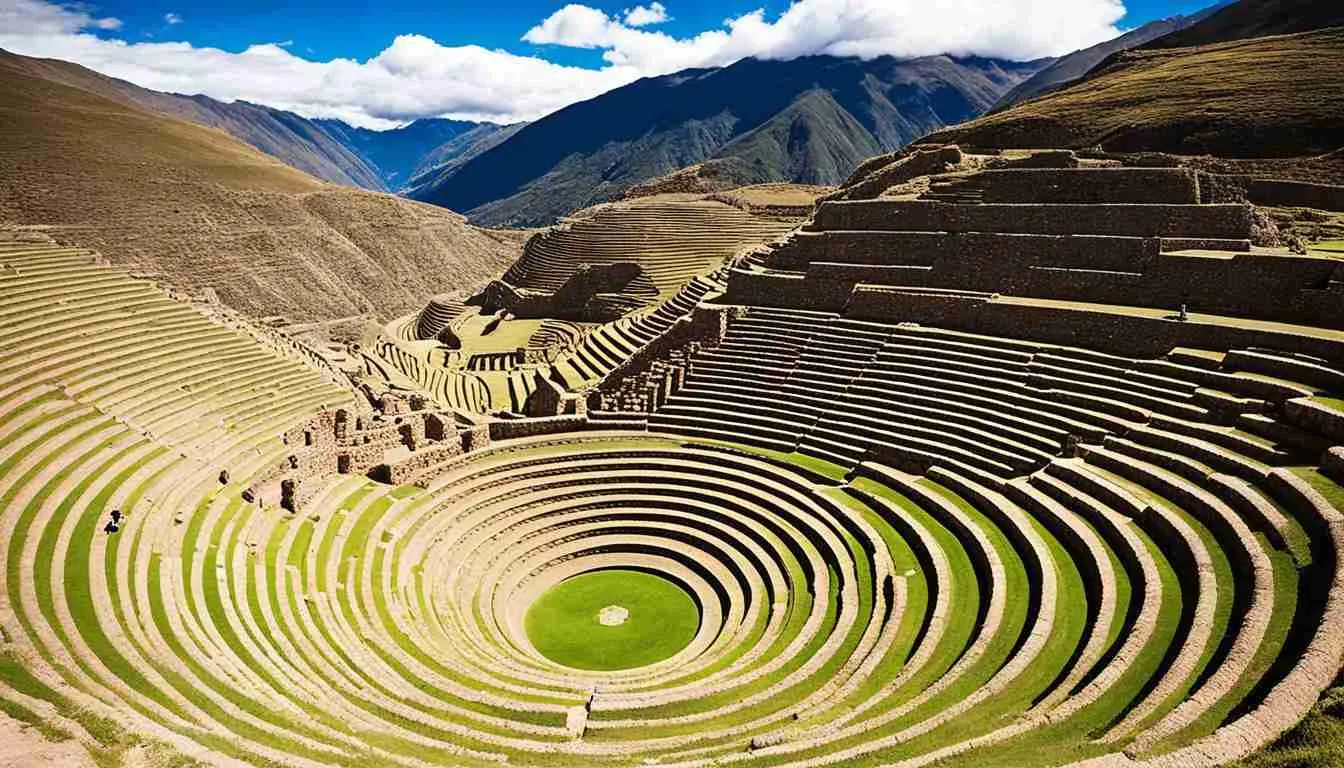
“Moray’s circular terraces are a testament to the Inca’s remarkable understanding of the land and their ability to adapt their farming practices to the challenges of the Andean environment.”
Visitors are amazed by the size and detail of the Inca’s work at Moray. The circular agricultural terraces show the Inca’s drive for new ideas and their aim for top-notch farming.
For those looking for something different from Machu Picchu, Moray Inca is a great choice. It lets you see the Inca’s smart farming methods and the lasting impact of their civilization.
Maras Salt Mines: A Timeless Tradition
In the stunning Sacred Valley, the Maras Salt Mines show us the lasting traditions of the Andes. This ancient site is still used today, often overlooked compared to Machu Picchu.
The mines sit at 3,000 meters high and have been making salt since the Tahuantinsuyo era. The Wari culture started using these salt pans in the 7th century AD. The Incas later used them in their sacred rituals.
Now, there are over 3,000 salt pools here, each about 5 square meters big. They get their salty water from the Qaqawiñay mountain. This salt is pink and full of minerals like magnesium and potassium.
| Key Facts about Maras Salt Mines | Details |
|---|---|
| Location | About 1.5 hours from Cusco, at 3,000 meters high |
| History | Salt making goes back to the Tahuantinsuyo era. The Wari and Inca cultures used the salt pans. |
| Number of Salt Pools | Over 3,000 salt pools, each 5 square meters big |
| Visiting Hours | Open from 7 am to 5 pm. Entrance costs 7 Peruvian soles (about $2.5 USD) |
Going to the Maras Salt Mines lets you see the old traditions of the locals. They still make salt the old way. This place is a hidden gem in the Sacred Valley, offering a different view from the Inca ruins. It shows the enduring Andes traditions that have lasted for years.
“The Maras Salt Mines are a testament to the ingenuity and resilience of the Andean people, preserving an ancient practice that continues to thrive in the modern era.”
Immersing in Local Culture and Markets
The Sacred Valley near Machu Picchu is more than just ancient ruins and stunning views. It’s full of vibrant markets and communities. Here, travelers can dive into the real culture of the Andes. You can explore the colorful stalls of the Pisac Market, watch traditional weaving, or meet Quechua artisans.
These markets let you see the daily life of the Andean people. From the busy Cusco market to small village squares, you’ll find everything from textiles to fresh food. Talking to local vendors and seeing their way of life helps you appreciate the Peruvian people’s strength and creativity.
Getting to know the local culture and traditions makes your trip complete. It’s not just about the Inca ruins. By connecting with the people, you gain a deeper respect for the Sacred Valley’s indigenous communities.