Starting an Andean trek in Peru needs careful planning. Cusco, at 3,399 meters (11,151 feet), poses unique challenges. It’s key to understand how to acclimatize to high altitudes for a safe and enjoyable trip.
Peru’s adventures require respect for the high elevations. Our expert guides suggest strategies to adapt to the thin air. This ensures a memorable journey through breathtaking landscapes. From the Sacred Valley to remote sites, the right preparation turns challenges into amazing experiences.
Key Takeaways
- Gradual ascent is critical for preventing altitude sickness
- Hydration plays a vital role in high altitude adaptation
- Physical fitness significantly impacts altitude tolerance
- Rest and acclimatization days are essential for safe travel
- Professional guidance can enhance your mountain experience
- Contact us for a comfortable and personalized itinerary (Free Service)
Understanding High Altitude Challenges in Peru
Traveling through Peru’s Andean landscapes is a unique challenge. The high elevation changes how we experience travel. It’s a test of human adaptation and resilience.
Places like Cusco, at 3,400 meters, pose a big challenge. It’s important to know how our bodies react to such high altitudes. This knowledge ensures a safe and fun trip.
Effects of Altitude on the Human Body
Going to high altitudes changes our bodies a lot. The lower oxygen levels cause immediate reactions:
- Increased respiratory rate
- Accelerated heart rate
- Enhanced red blood cell production
- Potential fluid retention
Common Symptoms of Altitude Sickness
Altitude sickness affects people differently. About 20% of visitors notice symptoms at 2,500 meters and above:
- Headaches – Often the first warning sign
- Dizziness – Indicating oxygen adaptation challenges
- Fatigue – Reduced physical performance
- Shortness of breath – Respiratory system adjustment
Risk Factors and Susceptibility
Fitness doesn’t protect against altitude sickness. At over 3,000 meters, 75% of people face altitude-related effects, no matter their fitness.
Acclimatization is key: Spend 24-48 hours at elevation before intense activities.
Expert Advice: Mastering High Altitude Acclimatization in Peru
Exploring Peru’s stunning landscapes means you need to get used to high altitudes. It’s crucial to prepare your body for these environments. About 43% of trekkers get altitude sickness at places like Pheriche, so being ready is key.
Our advice is to adapt slowly to avoid health problems. Slow and steady is the best way to tackle Peru’s mountain trails. Here are some important tips:
- Spend 2-3 days getting used to the altitude before trekking hard
- Don’t climb more than 1,000 feet a day if you’re over 8,000 feet
- Take breaks often while hiking
- Drink 2-3 liters of water every day
Getting ready for Peru’s hikes means knowing how you react to altitude. It’s not about how old you are or how fit. Symptoms like headaches, dizziness, and tiredness can show up within 24 hours at high places.
The key to successful high-altitude trekking is respecting your body’s adaptation process and listening to its signals.
Guides say to watch how your body reacts and adjust plans if needed. If you’re doing the Inca Trail, which goes from 7,874 to 13,779 feet, you must be extra careful about acclimatizing.


Essential Pre-Trip Preparation Strategies
Getting ready for a high-altitude adventure in Peru needs careful planning. Pre-trip altitude preparation is key for a safe and fun trip in the Andes.
For a successful mountain trip, you need to prepare well. This includes getting physically fit, being medically ready, and choosing the right gear.
Physical Conditioning Requirements
Building up your heart health is crucial for trekking in Peru’s high altitudes. Your training should include:
- Regular cardio exercises like hiking, running, and cycling
- Strength training for your legs and core
- Interval training to boost fitness and adapt to altitude
Medical Considerations and Checkups
Getting a thorough medical check before your trip is vital. Here’s what to do:
- Get a full physical check-up with your doctor
- Talk about how to prevent altitude sickness
- Check if you need any vaccinations for Peru
*”Proper medical preparation can transform a challenging trek into an unforgettable journey.”*
Packing Essential Gear and Supplies
Choosing the right gear for your trek in Peru is important. You’ll need:
- Layered clothes for changing temperatures
- Good waterproof hiking boots
- Medication for altitude sickness
- A compact first-aid kit
- Tools for staying hydrated and purifying water
By following these steps, you can make your Peruvian mountain trip a success and a memorable one.
The Role of Proper Hydration at High Altitudes

Traveling through Peru’s stunning mountains requires careful attention to staying hydrated. Trekkers in places like Cusco, at 3,400 meters, face special challenges. Drinking enough water is key to avoiding health problems at high altitudes.
When climbing the Andes, staying hydrated is even more important. The thin air and faster breathing lead to losing more water. Drinking water regularly helps keep your body working well and prevents sickness from the altitude.
“Water is your most powerful ally in mountain environments” – Andean Hiking Experts
Here are some effective ways to stay hydrated at high altitudes:
- Drink at least 3-4 liters of water daily
- Start hydrating 24 hours before mountain ascent
- Consume electrolyte-rich beverages
- Avoid alcohol and caffeine
- Sip water consistently, not in large quantities
Andean cultures have used coca leaf tea for centuries to stay hydrated. This natural method helps the body adjust to high altitudes. Today’s travelers can use this ancient wisdom along with modern hydration techniques for a better mountain experience.
Watching for signs of dehydration is crucial. Look out for dark urine, headaches, or feeling tired. By drinking enough water, adventurers can enjoy Peru’s beautiful high-altitude areas safely.
Dietary Recommendations for High Altitude Travel
When traveling to high altitudes, planning your meals is key. A good high altitude diet can make your trekking in the Andes better. It helps you adjust to the tough mountain conditions.
In places like Cusco, at about 3,400 meters, meal planning is essential. Andean nutrition tips suggest choosing foods that help your body adjust to high elevations.
Best Foods for Altitude Adaptation
Good nutrition at high altitudes means eating foods that are easy to digest and full of energy. Here are some tips:
- Eat 70-80% of calories from complex carbohydrates
- Make quinoa, a local Andean superfood, a staple for its protein and nutrients
- Include iron-rich foods like lentils and lean meats to help make red blood cells
- Choose snacks that are light but full of nutrients for energy
Foods to Avoid During Acclimatization
Some foods can make it harder for your body to adjust to high altitudes. Try to avoid:
- Heavy, fatty meals that are hard to digest
- Too much caffeine and alcohol
- Processed and hard-to-digest foods
Meal Timing and Portion Control
At high altitudes, digestion slows down. Here are some tips for eating:
- Eat smaller, more frequent meals
- Choose foods that are easy to digest
- Drink plenty of water and herbal teas like muña
- Listen to your body’s hunger and fullness signals
Natural Remedies and Local Solutions
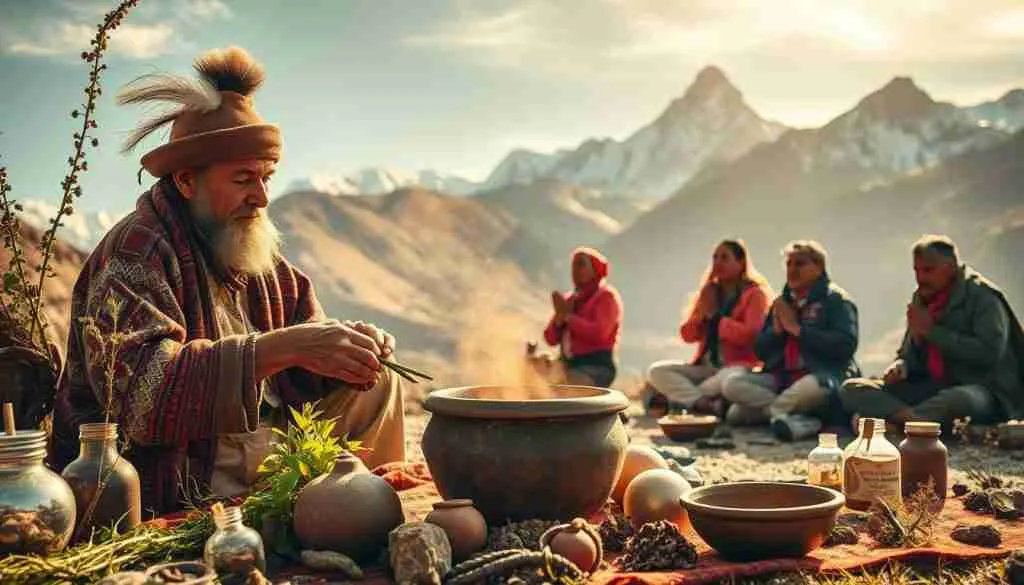
Travelers in Peru’s high-altitude areas often turn to traditional remedies. The coca leaf is a key natural aid for adjusting to high elevations.
Coca leaves are more than just a myth. For centuries, Andean people have used them to survive at extreme heights. They use several methods to acclimatize:
- Chewing coca leaves to ease altitude sickness
- Drinking coca tea to help breathing
- Enjoying herbal teas to boost energy and fight tiredness
Coca leaves are not just for health. They hold a special place in Andean culture and wellness. While it’s important to use them wisely, knowing how can help during mountain trips.
Local wisdom suggests that respecting traditional remedies can be key to successful mountain adaptation.
Andean communities also use other natural remedies. These include herbal mixes to help the body adjust to high places. For those looking at holistic ways to handle altitude, these traditional methods are interesting and helpful.
Gradual Ascent Strategies in the Andes
Planning your Andean ascent needs careful strategy and respect for the mountain environment. Trekking elevation strategies are key for safe, enjoyable high-altitude adventures. Successful travelers know that a methodical approach to climbing is essential for altitude gain safety.
Navigating the Andes’ complex terrain requires a strategic approach to altitude progression. Our expert recommendations aim to minimize risks while enhancing your mountain experience.
Recommended Climbing Patterns
Professional trekkers follow important guidelines for safe altitude exploration:
- Limit altitude gain to 305 meters (1,000 feet) per day above 3,000 meters
- Implement the “climb high, sleep low” principle
- Allow flexible pacing based on individual physical response
Rest Day Planning
Strategic rest days are crucial for altitude gain safety. Consider these acclimatization guidelines:
- Take a rest day for every 915 meters (3,000 feet) of elevation gained
- Use rest days for light hiking to help body adaptation
- Monitor personal physical condition carefully
Altitude Gain Guidelines
Trekking elevation strategies require understanding your body’s limits. Key considerations include:
- You can ascend more than 305 meters in a day
- Always return to a lower sleeping altitude
- Remain attentive to potential altitude sickness symptoms
The mountains demand respect—listen to your body and adjust your pace.
Physical Activity Guidelines at High Elevation
Exploring Peru’s high-altitude areas needs careful planning. Trekking pace is key in places like Cusco, at 3,400 meters. Knowing how to save energy and stay active is vital for a great mountain trip.
When you’re at high altitudes, your body needs time to adjust. It’s important to move slowly and steadily. This helps your body get used to the thinner air and prevents you from getting too tired.
- Start with light activities during initial altitude exposure
- Implement frequent short breaks instead of prolonged rest periods
- Use trekking poles to distribute physical strain
- Monitor breathing and heart rate closely
Conserving energy is crucial for trekking at high altitudes. Here are some tips:
- Maintain steady, controlled breathing
- Take gradual steps with measured movements
- Listen to your body’s signals
- Stay hydrated with 2-3 liters of water daily
| Activity Level | Recommended Approach | Duration |
|---|---|---|
| Initial Altitude Exposure | Gentle Walking | 30-45 minutes |
| Moderate Altitude | Incremental Hiking | 1-2 hours |
| Advanced Altitude | Controlled Trekking | 2-3 hours |
Your body needs time to get used to the thinner air. Focus on steady, controlled movements. This way, you’ll have a safe and fun experience at high altitudes.
Medical Considerations and Emergency Preparedness
Traveling to high altitudes needs careful planning and health awareness. Our guide on preventing altitude sickness will help you stay safe in Peru.
Warning Signs to Watch For
It’s important to spot altitude sickness symptoms early. Pay attention to how your body reacts to high elevations.
- Mild Symptoms: Headache, slight fatigue, mild dizziness
- Moderate Symptoms: Persistent headache, nausea, decreased coordination
- Severe Symptoms: Difficulty breathing, chest pain, mental confusion
Emergency Response Protocols
Quick and smart action is key in emergency situations at high altitudes. Our advice could save lives during tough treks.
| Symptom Level | Recommended Action | Priority |
|---|---|---|
| Mild | Rest, hydrate, consider descending | Low |
| Moderate | Immediate descent, oxygen support | Medium |
| Severe | Emergency medical evacuation | High |
When to Seek Medical Help
Knowing when to get medical help is key to avoiding altitude sickness. Always put your health first.
“In the mountains, your safety is your most valuable companion.” – Andean Trekking Wisdom
Local pharmacies in Cusco have medicines for altitude sickness. Tell your guide about any symptoms right away for a quick response.
Conclusion
Starting a Peru trekking journey needs careful planning and knowing how to handle high altitudes. The Andes are a unique place that tests and rewards those who prepare well. This includes getting used to the altitude and staying physically fit.
Traveling safely in the Andes, like in Cusco at 3,400 meters, is crucial. Whether you’re going on the Salkantay trek or Machu Picchu, knowing about altitude can make your trip amazing. It turns a tough journey into an unforgettable adventure.
This guide has given you key tips for Peru’s mountains. With the right hydration, diet, and gradual climbs, you’re ready to see the Andes’ beauty and culture. You’ll be prepared for an incredible journey.
Traveling at high altitudes is about respecting nature and listening to your body. With the right mindset and knowledge, your trip to Peru will be a journey of discovery and wonder.
