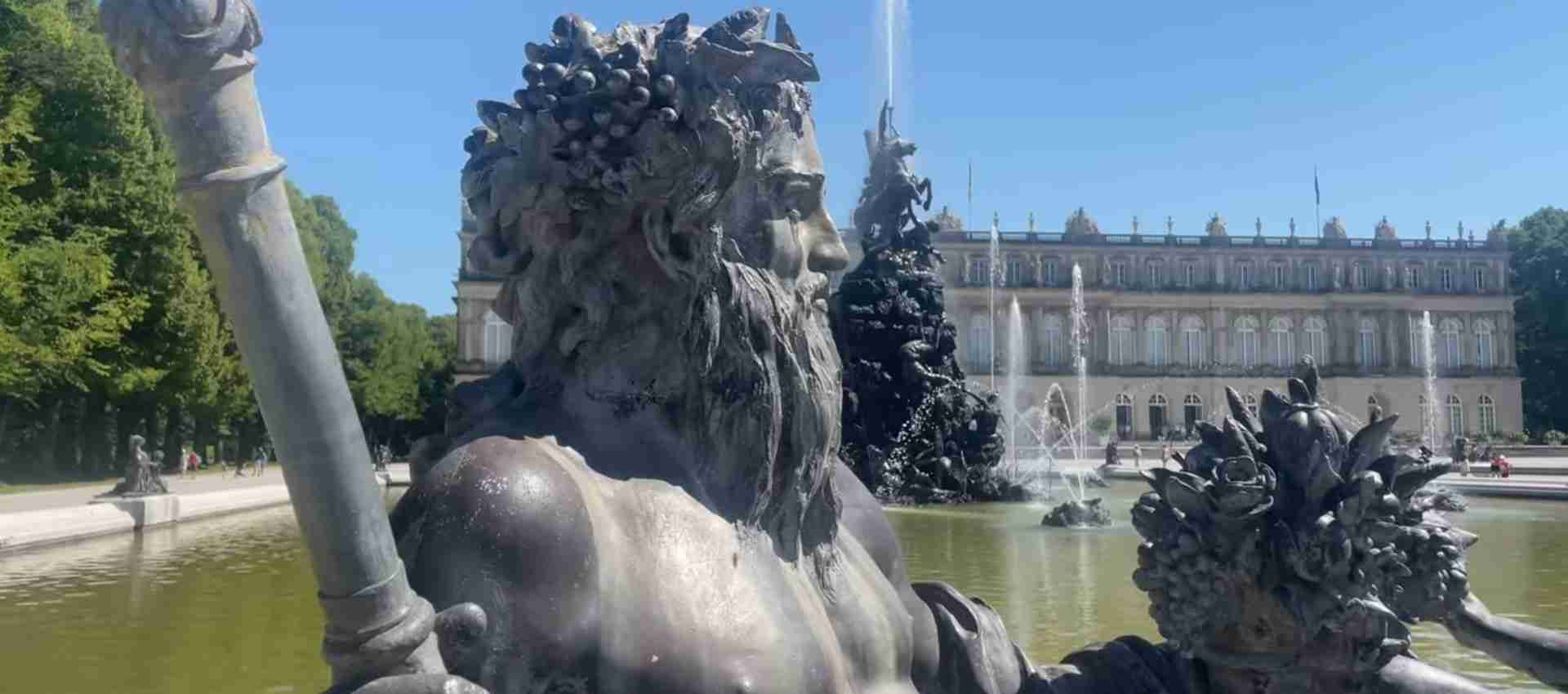
Herrenchiemsee Palace: Bavaria’s Versailles UNESCO
Key Takeaways
- Herrenchiemsee Palace represents King Ludwig II’s most ambitious architectural project, an homage to Louis XIV’s Versailles built on an island in Bavaria’s largest lake
- The palace’s Hall of Mirrors exceeds even Versailles in length, demonstrating Ludwig’s determination to surpass his French architectural model through superior craftsmanship and scale
- Despite enormous expenditure and twenty years of construction, the palace remained substantially incomplete at Ludwig’s death, with only twenty rooms finished from the planned seventy
- The completed state rooms showcase the absolute pinnacle of 19th-century decorative arts, featuring craftsmanship quality rarely matched in European palace construction
- The island setting on Herreninsel creates unique approach and atmosphere, with the palace appearing across water like a vision from another era
- Herrenchiemsee embodies the culmination and collapse of Ludwig’s architectural ambitions, representing both artistic triumph and unsustainable royal spending
Understanding Herrenchiemsee’s Monumental Vision
Herrenchiemsee Palace rises on the Herreninsel, the largest island in the Chiemsee lake in southeastern Bavaria, as King Ludwig II’s final and most grandiose architectural undertaking. Conceived as tribute to Louis XIV and the palace of Versailles, Herrenchiemsee attempted to recreate French absolutist splendor in Bavaria while surpassing the original in specific architectural elements. The palace’s construction consumed vast financial resources between 1878 and 1886, ultimately contributing to Ludwig’s political downfall and deposition. Today the palace stands as monument to romantic idealism, royal excess, and the twilight of European absolute monarchy.
The decision to build on an island demonstrates Ludwig’s desire for maximum isolation and theatrical effect. Unlike Linderhof’s mountain valley or Neuschwanstein’s mountain crag, Herrenchiemsee’s island location required visitors to journey across water, creating natural barrier between ordinary world and royal fantasy. The approach by boat, followed by carriage ride through island forests to the palace, builds anticipation and emphasizes separation from mundane reality. This isolation served Ludwig’s increasingly reclusive personality while providing dramatic setting that enhanced the palace’s aesthetic impact.
Herrenchiemsee represents Ludwig’s most explicit homage to French culture and absolutist monarchy. The king admired Louis XIV profoundly, seeing in the Sun King an ideal of monarchical power and cultural patronage that his own politically constrained position denied him. Building Bavarian Versailles allowed Ludwig to materialize his identification with French absolutism in architectural form. The palace program deliberately referenced specific Versailles features including the Hall of Mirrors, the state bedchamber, and the formal gardens, though interpreted through 19th-century romantic sensibility rather than archaeological reproduction.
The palace’s incomplete status adds poignant dimension to its significance. Unlike Linderhof, which Ludwig finished and enjoyed, Herrenchiemsee remained perpetual construction site throughout his final years. The completed rooms demonstrate extraordinary quality and beauty, yet the empty shells of unfinished wings reveal the unsustainability of the project. This incompletion makes Herrenchiemsee particularly powerful historical document—the palace embodies both the heights of 19th-century craftsmanship and the economic and political impossibility of maintaining absolute monarchy in modern industrial age.
People Also Ask About Herrenchiemsee Palace
Why did King Ludwig II build Herrenchiemsee on an island?
King Ludwig II chose the Herreninsel island in the Chiemsee lake for Herrenchiemsee Palace primarily to achieve maximum isolation and create dramatic approach sequence. The island location satisfied Ludwig’s increasingly antisocial tendencies, requiring visitors to cross water by boat before reaching the palace—a natural barrier ensuring privacy and exclusivity. The king purchased the entire island in 1873, giving him complete control over the environment without neighboring properties or public intrusion. The water crossing also created theatrical approach that built anticipation, with the palace appearing gradually across the lake like vision from another era.
The island setting provided practical advantages beyond isolation. The surrounding water created natural moat effect that prevented unauthorized access while offering spectacular views from palace windows across the alpine lake to mountains beyond. The location placed Herrenchiemsee in relative proximity to Munich (approximately 85 kilometers southeast) while maintaining sufficient distance to feel remote. The Chiemsee’s status as Bavaria’s largest lake provided appropriately grand setting for Ludwig’s grandest architectural project, creating visual relationship between palace scale and landscape scale.
The island choice also reflected romantic aesthetic preferences prevalent in 19th-century European culture. Islands carried associations with magical otherworlds, legends of Avalon and similar mythological places, and the possibility of creating perfect miniature kingdoms. Building on Herreninsel allowed Ludwig to fashion entire controlled environment—the palace, gardens, forests, and approach all designed to his specifications without external interference. This total environmental control enabled the king to create complete aesthetic experience from first boat landing to final palace chamber.
How does Herrenchiemsee’s Hall of Mirrors compare to Versailles?
Herrenchiemsee’s Hall of Mirrors deliberately references Versailles’s famous Galerie des Glaces but actually exceeds the French original in length, crystal chandelier quantity, and certain decorative elements. The Bavarian hall measures approximately 98 meters long compared to Versailles’s 73 meters, demonstrating Ludwig’s competitive desire not merely to copy but to surpass his French model. The hall contains fifty-two candelabras and thirty-three crystal chandeliers requiring over 7,000 candles when fully illuminated, creating spectacular light effects when reflected in the enormous mirrors lining both walls.
The decorative program follows Versailles’s general scheme with significant 19th-century enhancements. Both halls feature tall arched windows on one side opening to formal gardens, with mirrors opposite multiplying the garden views and interior splendor infinitely. Ceiling paintings depict glorification of the monarch—at Versailles, Louis XIV’s military victories and cultural achievements; at Herrenchiemsee, similar themes adapted to celebrate absolute monarchy in abstract terms. However, Herrenchiemsee’s execution employs 19th-century materials and techniques superior to 17th-century craftsmanship, with more refined plasterwork, better quality mirrors, and more elaborate gilt bronze details.
The functional difference proves most significant: Versailles’s Hall of Mirrors served as thoroughfare for court ceremony and reception space for diplomatic events, with thousands of courtiers and visitors experiencing its grandeur. Herrenchiemsee’s hall, by contrast, was built for audience of one—Ludwig himself—and saw virtually no ceremonial use during the king’s lifetime. This transformation from public state space to private aesthetic experience epitomizes the fundamental difference between 17th-century absolutism’s public display and 19th-century romantic monarchy’s private fantasy. The hall opened to public immediately after Ludwig’s death, finally serving audience for which such architectural magnificence logically exists.
What makes Herrenchiemsee architecturally significant despite being unfinished?
Herrenchiemsee achieves architectural significance precisely through the combination of exceptional completed portions and dramatic incomplete sections. The finished state rooms represent the absolute pinnacle of 19th-century historicist craftsmanship, demonstrating what unlimited budget and uncompromising standards could achieve in recreating historical styles. Every completed surface displays meticulous attention to detail, from the hand-carved and gilt woodwork to the painted ceiling frescoes executed in historical techniques. These rooms prove that 19th-century artisans could match or exceed their 18th-century predecessors in technical skill and decorative sophistication.
The incomplete sections provide equally valuable architectural evidence about construction processes and economic constraints. Visitors see partially finished walls, empty halls with basic structural elements but no decoration, and abandoned building materials—elements usually hidden in completed buildings. This exposure reveals how elaborate decorative schemes were built up layer by layer, from basic masonry through increasingly refined plasterwork to final painted and gilt surfaces. The incomplete status makes Herrenchiemsee exceptional teaching resource for architectural history and construction techniques.
The palace also demonstrates significant technological innovations in construction and building services. The structure incorporates iron framing systems unusual for palace architecture of the period, allowing larger uninterrupted interior spaces. Advanced heating systems, plumbing infrastructure, and early electrical wiring (installed posthumously but using planned conduit systems) show how 19th-century palaces integrated modern technology into historical aesthetic frameworks. These technical elements often receive insufficient attention in analysis of completed historical buildings but stand clearly visible in Herrenchiemsee’s unfinished sections.
Who designed Herrenchiemsee Palace and how was construction managed?
Architect Georg Dollmann received the principal commission for Herrenchiemsee, working under King Ludwig II’s direct supervision and exacting requirements. Dollmann had previously designed Linderhof Palace for Ludwig, establishing working relationship based on the architect’s willingness to execute the king’s vision without imposing his own artistic preferences. The relationship resembled Renaissance patron-artist dynamics, with Ludwig functioning as architectural conceptualizer while Dollmann provided technical expertise to realize the king’s ideas. This collaboration proved challenging as Ludwig demanded constant revisions and maintained impossibly high standards for every detail.
The design process relied heavily on study of Versailles itself. Ludwig sent teams to France to document Versailles through measurements, photographs, and sketches, creating comprehensive record of the French palace’s architecture and decoration. However, Herrenchiemsee was never intended as exact copy but rather creative reinterpretation that extracted essence of Versailles while adapting to Bavarian context and 19th-century technology. Dollmann synthesized historical references with contemporary construction methods, creating building that appeared 17th-century while employing advanced 19th-century structural systems.
Construction management faced enormous logistical challenges given the island location. All building materials required transport across the Chiemsee by boat, then conveyance from the island’s landing point to the construction site. During winter, ice sometimes closed the lake to boat traffic, forcing suspension of material deliveries. A small industrial community developed on the island to support construction, including temporary housing for workers, workshops for specialized craftsmen, and storage facilities for materials. The island setting that provided romantic isolation also created practical obstacles that increased construction costs and extended timelines.
Extended multi-day tours – 5+ days
Featured Bavaria Multi-Day Tour Packages
4 days
4 Day Munich Including Neuschwanstein Castle
- ✓ Comprehensive Bavaria tour
- ✓ Expert local guides included
- ✓ All accommodation arranged
- ✓ Transportation provided
5 days
5 Days Munich and Bavaria (Including Salzburg & Garmisch)
- ✓ Comprehensive Bavaria tour
- ✓ Expert local guides included
- ✓ All accommodation arranged
- ✓ Transportation provided

4 days
Springfest Munich (3-Star Hotel Senator)
- ✓ Booking needs min. 2 travelers
8 days
8 Day Munich including Nuremberg, Salzburg, Rothenburg & Neuschwanstein Linderhof
- ✓ Comprehensive Bavaria tour
- ✓ Expert local guides included
- ✓ All accommodation arranged
- ✓ Transportation provided
Multi-day tour packages powered by TourRadar. Prices and availability subject to change.
Historical Context and Construction Chronicle
The origins of Herrenchiemsee Palace trace to Ludwig II’s purchase of the Herreninsel island in 1873, when the king acquired the property to prevent proposed timber harvesting that would have destroyed the island’s forests. The island had housed an Augustinian monastery dissolved in 1803 during the secularization of Bavarian church properties, with the surviving Old Palace (Altes Schloss) serving various purposes through the mid-19th century. Ludwig initially showed no intention to build on the island, but by 1875 his thoughts turned to creating a “Temple of Fame” honoring Louis XIV and celebrating absolute monarchy.
The architectural program evolved from relatively modest memorial concept to full palace construction by 1878, when serious planning and site preparation began. The timing coincided with Ludwig’s deepening political frustration following German unification under Prussian leadership, which had effectively ended Bavarian independence despite the kingdom’s nominal sovereignty. Unable to exercise real political power, Ludwig channeled his royal prerogatives into architectural creation, with Herrenchiemsee becoming his most ambitious statement about monarchical grandeur and cultural patronage.
Foundation construction commenced in 1878 after extensive site preparation including leveling of building platform and creation of infrastructure to support massive construction project. The main palace structure rose quickly through 1879-1881, with the exterior essentially complete by 1881 despite ongoing interior work. This rapid structural progress reflected Ludwig’s urgency and his willingness to deploy massive labor forces and resources. However, the extremely detailed interior decoration progressed much more slowly, as Ludwig demanded exceptional quality in every element and frequently ordered complete reworking of finished rooms that failed to meet his standards.
The first completed state rooms opened for Ludwig’s inspection in 1881, but the king expressed dissatisfaction with various details, ordering modifications and improvements. The pace of completion remained agonizingly slow given the scale of the decorative task—seventy planned rooms requiring finish levels matching the finest 18th-century French work but executed by 19th-century artisans learning unfamiliar historical techniques. By 1884, approximately twenty rooms had reached completion or near-completion, though work continued on refinements and additional spaces.
Financial pressures mounted through the early 1880s as construction costs escalated beyond initial estimates and Ludwig’s other architectural projects consumed parallel resources. The king’s ministers and Bavarian government officials grew increasingly alarmed at the mounting debts and Ludwig’s apparent unwillingness to moderate his spending. By 1885, the financial situation had become critical, with Ludwig’s creditors demanding payment and government officials questioning his competence to manage state finances. The palace construction became central evidence in arguments about Ludwig’s mental fitness to rule.
Ludwig visited Herrenchiemsee for the first and only substantial stay in September 1885, occupying the completed state rooms for about one week. This brief residence represented the sole time the palace served its intended function as royal residence. The king apparently found the experience satisfying but also exhausting, as the scale and formality of the palace contrasted sharply with the intimate domestic atmosphere he preferred at Linderhof. This single visit proved to be Herrenchiemsee’s only moment of use for its designed purpose during Ludwig’s lifetime.
The political crisis culminated in June 1886 when a medical commission declared Ludwig mentally unfit to rule based on evidence including his extravagant building projects and reclusive behavior. The government deposed Ludwig, placing him under medical supervision. Three days later, on June 13, 1886, Ludwig died under mysterious circumstances in Lake Starnberg. His death ended all construction at Herrenchiemsee immediately, leaving the palace permanently incomplete. The Bavarian government assumed ownership of the property, opening it to public visitation within weeks of Ludwig’s death as museum documenting the late king’s artistic vision and controversial reign.
Architectural Design and Versailles Influences
Herrenchiemsee’s architectural program represents sophisticated reinterpretation of Versailles rather than archaeological reproduction, adapting French baroque palace design to 19th-century romantic sensibilities and Bavarian context. The main palace facade stretches approximately 100 meters in length, presenting symmetrical composition with central pavilion flanked by wings in manner characteristic of French classical architecture. The exterior employs cream-colored limestone with minimal ornament, allowing the architectural proportions and classical detailing to create aesthetic impact through restraint rather than decorative excess.
The palace plan follows Versailles’s organizational principles with significant modifications for the island site and reduced overall scale. The corps de logis (main building) contains the principal state rooms arranged in formal enfilade sequence, allowing uninterrupted views through multiple doorways when all rooms align. This baroque planning principle creates spectacular visual effects while serving ceremonial functions of court life, though at Herrenchiemsee the ceremonial functions existed only in Ludwig’s imagination. The central axis runs from the entrance vestibule through the great staircase, state apartments, and Hall of Mirrors to the gardens beyond, organizing the entire architectural composition around this processional sequence.
The Ambassador’s Staircase represents one of Herrenchiemsee’s most impressive architectural spaces, modeled on the destroyed Escalier des Ambassadeurs at Versailles. This double-flight ceremonial staircase ascends from the ground floor vestibule to the state apartments, with elaborate marble revetment, gilt bronze railings, painted ceiling frescoes, and monumental architectural framing. The staircase demonstrates baroque architectural theater at its finest, designed to impress visitors with monarchical power and cultural sophistication before they even reached the principal state rooms. The space required exceptional engineering to support the marble surfaces and create the soaring open volume.
The state bedchamber reproduces Versailles’s king’s bedroom in enhanced form, creating the most elaborate single room in the palace. The bed stands on a raised platform within an alcove framed by columns and balustrade, following the protocol of French court ceremony where the king’s rising and retiring (lever and coucher) constituted formal state events attended by courtiers. The room’s decoration employs the finest materials available—silk brocade wall coverings, elaborately carved and gilt woodwork, ceiling frescoes depicting allegorical glorification of monarchy, and inlaid parquet floors in complex geometric patterns. The room embodies the principle of monarchical divine right expressed through architectural magnificence.
The palace incorporated advanced structural systems unusual for historicist architecture. Iron framing supported many interior spaces, allowing larger room spans and reducing the massive masonry walls traditional construction would have required. This marriage of modern technology with historical aesthetic demonstrates 19th-century architects’ pragmatic willingness to use contemporary structural innovations while maintaining historical visual effects. The iron framework remained concealed behind historical-style decorative surfaces, revealing itself only in unfinished sections where the modern structural bones appear without their historical costume.
The exterior architectural treatment maintains discipline and classical proportions derived from French models. The roof employs French-style mansard configuration with prominent dormers, though executed in copper rather than slate due to material availability and preference. The window arrangements follow formal rhythm with hierarchical sizing—larger windows for principal state rooms, smaller windows for service areas—creating elevations that express interior functions through external architectural composition. The relatively restrained exterior decoration makes the interior splendor more dramatic through contrast.
Interior Decoration and Artistic Achievement
The completed state rooms at Herrenchiemsee represent arguably the finest achievement of 19th-century historicist decoration, demonstrating that contemporary artisans could match or surpass their 18th-century predecessors in technical skill and artistic sophistication. The decoration employs authentic materials and traditional techniques rather than modern substitutes, with hand-carved woodwork, genuine gold leaf, hand-painted silk textiles, and marble from historical European quarries. This commitment to material authenticity and craft technique created extraordinarily high quality results while consuming enormous financial resources and requiring years of work for each major room.
The Hall of Mirrors stands as the decorative centerpiece, a space of overwhelming magnificence that achieves its intended effect of inspiring awe through sheer visual splendor. The hall measures 98 meters long, lined with tall arched windows on the garden side and corresponding mirrors on the opposite wall. Between and above these elements, elaborate gilt plasterwork frames painted panels depicting mythological and allegorical scenes. The ceiling consists of multiple painted sections showing glorification of Louis XIV and celebration of monarchy, executed in manner referencing 17th-century French baroque ceiling painting. Crystal chandeliers hang at intervals along the hall’s length, supplemented by candelabras attached to the walls and mirrors.
The decorative scheme required coordinating multiple artistic disciplines and craft specialties. Plasterers created the elaborate rocaille ornament and architectural moldings that frame painted surfaces. Woodcarvers produced the gilt door frames, window casings, and decorative panels. Painters executed the ceiling frescoes and wall panels using traditional techniques. Bronze casters created the chandeliers, candelabras, and other metalwork. Glaziers cut and installed the enormous mirrors. Marble workers laid the patterned floors. Each specialty worked to exceptional standards, creating ensemble where every element matches the quality of every other element.
The Peace Room and War Room flanking the Hall of Mirrors reference similar spaces at Versailles while adapting the themes to Ludwig’s purposes. The Peace Room employs white, gold, and pale blue color scheme with decorative motifs emphasizing harmony, music, and the liberal arts. The War Room uses richer colors and iconography celebrating military valor and monarchical power, though interpreted more abstractly than Versailles’s specific references to Louis XIV’s military campaigns. These rooms demonstrate Ludwig’s selective adaptation of French models—preserving the spatial relationships and general thematic content while modifying specific references to serve different purposes.
The state bedchamber achieves perhaps the most sumptuous decoration in the entire palace, surpassing even the Hall of Mirrors in decorative density and material richness. The walls receive covering of silk brocade woven in patterns reproducing historical designs, with the textile work alone requiring years of production by specialized weavers. The bed features elaborate carved and gilt woodwork supporting fabric canopy and curtains, creating architectural furniture of extraordinary complexity. The balustrade separating the bed alcove from the main chamber employs gilt bronze with exceptional casting and finishing quality. The ceiling fresco depicts allegory of royal glory with technical skill and artistic sensitivity that proves 19th-century painters could execute large-scale decorative paintings matching 18th-century examples.
The unfinished rooms provide dramatic contrast to the completed spaces, revealing the enormous gap between basic construction and finished decoration. Some rooms have complete structural elements, plaster walls, and architectural details but lack paint, gilding, and fabric elements. Others remain bare shells with only basic masonry and rough plaster. These spaces demonstrate how the elaborate decorative effects visible in finished rooms result from layering multiple decorative campaigns—base plastering, architectural detailing, carved ornament, paint, gilding, textile hanging, and final touches. The incomplete rooms also show how the romantic effect of historical interiors depends on comprehensive coordination rather than single decorative element.
Gardens, Fountains, and Landscape Setting
The formal gardens at Herrenchiemsee extend from the palace’s garden facade toward the island’s southern shore, creating axial composition that terminates in distant view of the alpine mountains across the Chiemsee. The garden design references Versailles’s formal baroque gardens while adapting to the much smaller available space and the island’s natural topography. The central axis features a long water parterre flanked by broderie parterres (ornamental flowerbeds in elaborate patterns), with lateral allées (tree-lined walkways) extending into bosquets (wooded groves). The gardens demonstrate French formal design principles adapted to Bavarian conditions and romantic sensibilities.
The Latona Fountain occupies the central axis closest to the palace, reproducing Versailles’s fountain depicting the goddess Latona with her children Apollo and Diana. The fountain features elaborate sculptural program with multiple tiers of bronze figures representing peasants transforming into frogs and lizards according to the mythological story. The fountain basin creates reflecting pool that mirrors the palace facade, doubling its visual presence. Water jets create vertical accents that animate the garden composition while providing pleasant sound. The fountain operates during visitor season, though its elaborate water effects require significant hydraulic infrastructure including pumping stations and water storage systems.
The Grand Canal extends from the Latona Fountain toward the island’s southern point, creating strong linear element that organizes the entire garden composition. The canal measures approximately 550 meters long and varies in width, providing both visual terminus to views from the palace and recreational amenity for boating. Ludwig intended to use the canal for small boat excursions, recreating Louis XIV’s practice of taking evening boat rides on Versailles’s Grand Canal. The Herrenchiemsee canal required substantial excavation and water management systems to create and maintain, as the island’s water table and drainage patterns had to be modified to support the artificial waterway.
The bosquets flanking the main axis provided intended locations for additional garden features including fountains, pavilions, and sculptural programs. However, most of these elements remained unexecuted at Ludwig’s death, leaving the bosquets as forested areas with walking paths rather than the elaborately developed garden rooms characteristic of Versailles. This incomplete garden program mirrors the incomplete palace interior, with grand vision only partially realized before resources and time ran out. The mature trees that now fill the bosquets create romantic forest atmosphere quite different from the intended formal baroque garden rooms.
The island landscape beyond the formal gardens preserves naturalistic character that contrasts with the architectural formality near the palace. Forests of mixed deciduous and coniferous trees cover much of the Herreninsel, with walking paths providing access to various viewpoints around the island perimeter. These forested areas reflect 19th-century romantic appreciation for natural landscape beauty rather than baroque preference for geometric order. The combination of formal baroque gardens immediately adjacent to the palace and romantic natural forest surrounding them represents typical 19th-century landscape design philosophy, offering varied aesthetic experiences within unified estate.
The water approach to the island creates unique landscape experience impossible in mainland palace settings. Visitors arrive by boat from Prien am Chiemsee or other lake towns, experiencing the island and palace from distance before landing. The journey across the water builds anticipation while emphasizing the separation between ordinary world and royal retreat. The palace appears across the water framed by forest, creating picturesque compositions that change with season, time of day, and atmospheric conditions. This water approach represents essential component of the Herrenchiemsee experience, transforming simple journey to cultural site into theatrical prelude that enhances receptivity to the architectural and artistic experiences that follow.
Construction Techniques and Material Splendor
Herrenchiemsee’s construction employed combination of traditional craft techniques and contemporary industrial materials, creating building that appeared historical while incorporating modern structural and service systems. The basic structural system used load-bearing masonry walls of limestone, traditional construction method that would have been familiar to 18th-century builders. However, interior floors and roof structures incorporated iron beams that provided greater spans and better fire resistance than wooden alternatives, demonstrating pragmatic integration of industrial materials where they offered practical advantages without affecting visual aesthetics.
The decorative surfaces throughout the completed rooms employ materials selected for quality and historical authenticity regardless of cost. The wood used for carved ornament and paneling came from premium sources including walnut, oak, and tropical hardwoods, chosen for workability, stability, and visual beauty. The carvers worked these materials using traditional hand tools and techniques, creating three-dimensional ornament of exceptional delicacy and precision. The gold leaf applied to carved surfaces used genuine gold beaten to traditional thickness, applied with techniques perfected over centuries of craft practice. This commitment to authentic materials created decorative effects impossible to achieve with modern substitutes or shortcuts.
The marble work demonstrates equally uncompromising material standards. Floors in principal rooms employ geometric patterns created from multiple marble varieties sourced from quarries across Europe—Italian Carrara marble for white elements, red marbles from France and Belgium, black marble from Belgium, and colored marbles from various other sources. These materials required careful selection, precision cutting, and expert installation to create the intended visual effects. The marble revetment on walls and columns similarly employed premium materials precisely matched and installed. The Ambassador’s Staircase alone consumed vast quantities of marble in multiple varieties, creating surface treatment that rivals the finest baroque examples.
The textile elements in the state rooms represent extraordinary achievement in 19th-century weaving and textile arts. The wall coverings in the state bedchamber consist of silk brocade woven to reproduce historical patterns, requiring specialized looms and exceptional weaver skill. The production of sufficient yardage to cover the large wall surfaces required years of work by multiple weavers working continuously. The curtains, upholstery fabrics, and other textile elements similarly employed historically authentic weaving techniques and natural dye materials to achieve visual effects matching 18th-century examples. These textiles represent substantial portion of the decorative budget and demonstrate commitment to material authenticity even in elements that could have been substituted with less expensive alternatives.
The painted decoration employed traditional fresco and oil painting techniques executed by artists trained in historical methods. The ceiling frescoes required scaffolding systems that allowed painters to work on curved and vaulted surfaces, applying pigments in manner preserving the techniques of baroque ceiling painters. The iconographic programs required research into historical sources and classical mythology to ensure thematic appropriateness and symbolic accuracy. The painters worked from detailed preparatory drawings and cartoons (full-scale patterns), creating compositions that filled complex architectural spaces while maintaining coherent narrative and decorative programs.
The lighting systems evolved during construction from pure candlelight to incorporating early electrical installations. The crystal chandeliers were designed for candle illumination, with each fixture accommodating dozens or hundreds of individual candles depending on size. The candelabras attached to walls and mirrors similarly used candles as primary light source. However, late in Ludwig’s life and continuing after his death, electrical systems began installation using some of the infrastructure conduits built into the palace structure. This technological transition reflected broader cultural changes as electric lighting replaced flame illumination in wealthy residences, though the fixtures maintained historical appearance regardless of power source.
Cultural Significance and Ludwig’s French Obsession
Herrenchiemsee Palace embodies King Ludwig II’s profound identification with French culture, absolutist monarchy, and the persona of Louis XIV. The palace represents more than architectural homage—it manifests psychological and political displacement where Ludwig substituted French historical fantasy for unsatisfying Bavarian political reality. Unable to exercise meaningful royal authority in newly unified Germany, Ludwig asserted absolute control in the aesthetic realm, creating environment celebrating monarchical power precisely when such power had become politically impossible. This tension between fantasy and reality makes Herrenchiemsee particularly significant cultural document of monarchy’s 19th-century decline.
The palace reflects Ludwig’s education and cultural formation in Bavarian court that maintained strong French cultural orientation despite growing German nationalism. European aristocracies traditionally looked to French culture as model of refinement, with French language, etiquette, and artistic traditions dominating court life across the continent. Ludwig took this conventional aristocratic francophilia to extraordinary lengths, learning French fluently, studying French history intensively, and identifying personally with Louis XIV’s absolutist monarchy. Herrenchiemsee materialized this cultural orientation in architectural form, creating physical environment that transported its creator from 19th-century Bavaria to 17th-century France psychologically if not literally.
The palace’s cultural program celebrates specific concept of monarchy as divinely sanctioned absolute authority embodied in single sacred person of the king. This political theology, central to Louis XIV’s reign and epitomized in the phrase “L’état, c’est moi” (I am the state), had become politically untenable by Ludwig’s era as constitutional government and popular sovereignty gained acceptance across Europe. Ludwig’s commitment to absolutist ideology placed him at odds with political modernization, making Herrenchiemsee monument to outmoded political theory as well as artistic achievement. The palace thus represents cultural and political conservatism, aristocratic resistance to democratic reform, and nostalgia for preindustrial social hierarchies.
Herrenchiemsee contributed to broader 19th-century historicist movement in architecture and decorative arts, which looked to historical styles for aesthetic models rather than developing contemporary visual language. This historicism reflected uncertainty about modernity, desire to connect with preindustrial traditions, and belief that past cultures had achieved aesthetic perfection current artists should emulate rather than surpass. Ludwig’s palaces, particularly Herrenchiemsee with its explicit historical references, represent extreme expression of historicist philosophy—not merely incorporating historical elements but attempting comprehensive recreation of historical environments. This approach influenced subsequent palace and public building design across Europe, though few projects matched Herrenchiemsee’s uncompromising commitment to historical recreation.
The palace also demonstrates the relationship between artistic patronage and political power in 19th-century European monarchies. Ludwig employed artistic creation as substitute for political action, channeling resources and energy that previous Bavarian kings devoted to warfare, diplomacy, and territorial expansion into architectural and cultural projects. This transformation of royal authority from political to aesthetic realm reflected broader changes in monarchical position throughout Europe as constitutional systems limited royal prerogatives. However, Ludwig’s particular expression of this pattern through massively expensive building projects proved unsustainable, contributing directly to his political downfall and demonstrating the practical limits of substituting aesthetic for political power.
Herrenchiemsee’s incomplete status adds final layer of cultural significance. The palace stands as monument to romantic idealism confronting economic and political reality, with incomplete wings testifying to the impossibility of Ludwig’s vision. This failure makes Herrenchiemsee more historically interesting than complete success would have been—the palace documents not just artistic achievement but also the economic, political, and practical constraints that ended Ludwig’s reign and life. The juxtaposition of completed magnificence and abandoned construction reveals the fragility of Ludwig’s architectural fantasy and the broader fragility of European aristocratic culture in the industrial age.
Photography and Visual Documentation
Photographing Herrenchiemsee Palace presents unique opportunities and challenges related to the island setting, architectural scale, incomplete status, and interior restrictions. The palace offers extraordinary visual subjects including the dramatic water approach, the baroque facade against mountain backdrop, the spectacular completed interiors, and the poignant incomplete sections. However, photography restrictions inside the palace proper limit creative documentation options for interior spaces, while the formal gardens and island landscape remain freely photographable.
The classic view of Herrenchiemsee captures the palace facade from the formal gardens, with the Latona Fountain in foreground and the main building rising beyond. This composition places the fountain’s sculptures and water jets in immediate foreground, the water basin in middle ground, and the palace facade creating distant focal point. The layered composition demonstrates baroque spatial organization while creating visually rich image with multiple points of interest. Morning light works best for this view, illuminating the south-facing palace facade directly while creating favorable angles for the sculptural elements and water features.
The approach by boat provides dynamic photographic opportunities impossible in mainland palace settings. The journey across the Chiemsee allows photography of the island from various distances and angles as the boat approaches, with the palace appearing gradually through the trees. The water in foreground creates reflective surface that can double the visual presence of buildings and landscape. The surrounding mountains provide dramatic backdrop that changes with atmospheric conditions. These water approach photographs work particularly well during early morning or late afternoon when horizontal light creates warm color temperatures and enhanced atmospheric effects.
The Ambassador’s Staircase represents the most photographable interior space for visitors, as this area sometimes permits photography depending on tour groups and crowd management needs. The staircase’s double-flight configuration creates dramatic diagonal lines and complex spatial relationships that photograph well from multiple viewpoints. The marble surfaces, gilt bronze railings, and painted ceiling create rich visual texture and color. Wide-angle lenses capture the full spatial drama, while normal focal lengths isolate architectural details and decorative elements. The varied lighting—from windows, supplemented by artificial sources—creates challenges for exposure but also opportunities for dramatic lighting effects.
The incomplete sections offer unique photographic subjects rarely available in fully finished historic buildings. Empty halls with bare walls, partially completed plasterwork, and exposed structural elements reveal construction processes hidden in completed rooms. These spaces photograph well in black and white, which emphasizes texture and form while eliminating the distraction of incomplete paint schemes. The contrast between completed magnificence and raw construction creates powerful visual statements about completion versus incompletion, success versus failure, realized vision versus abandoned ambition. These photographs require careful composition to convey intended meaning rather than simply documenting decay.
The formal gardens photograph beautifully across all seasons, with each offering distinct aesthetic qualities. Spring brings flowering bulbs and fresh foliage. Summer provides lush greenery and active fountains with full water displays. Autumn creates brilliant foliage colors in the surrounding forests that frame the formal baroque parterres. Winter offers stark compositions with snow-covered gardens and dormant fountains. The gardens’ strong axial organization creates natural compositional structure, while the varied plantings and sculptural elements provide visual interest at multiple scales from grand vistas to intimate details.
Technical considerations for Herrenchiemsee photography include managing high dynamic range between sunlit facades and shadowed areas. The white limestone palace facade reflects intense light that can create exposure challenges, requiring careful metering or graduated neutral density filters to balance sky and building. Interior photography (where permitted) faces low light conditions that demand high ISO sensitivity, fast lenses, or tripod support for longer exposures. The restriction on flash photography in historic interiors necessitates working with available light, which often consists of window light supplemented by artificial illumination that creates mixed color temperatures requiring white balance adjustment in post-processing.
Conservation Challenges and Museum Operations
Herrenchiemsee Palace operates as state museum under the Bavarian Palace Department (Bayerische Verwaltung der staatlichen Schlösser, Gärten und Seen), presenting complex conservation and management challenges related to the incomplete status, island location, and fragile decorative elements. The palace welcomes several hundred thousand visitors annually, making it major cultural tourism destination while requiring careful management to protect vulnerable historic interiors. The conservation program balances preservation requirements against public access demands, scholarly research needs, and financial sustainability considerations.
Conservation of the completed state rooms focuses on preventing deterioration of the extraordinarily rich decorative surfaces. The gilt woodwork requires periodic cleaning and restoration to maintain brilliance and prevent damage from accumulated surface dirt and environmental pollutants. The painted ceiling frescoes face threats from humidity fluctuations, air pollution, and inherent material aging that causes paint layers to become unstable over time. The textile elements including wall coverings and upholstery suffer from light exposure, humidity changes, and natural fiber degradation that gradually weakens and fades historical fabrics. Comprehensive environmental control systems maintain temperature and humidity within narrow ranges to slow deterioration processes.
The Hall of Mirrors presents particular conservation challenges due to its scale and complexity. The enormous mirrors require specialized cleaning techniques that remove surface dirt without damaging the silvered backing or creating scratches. The crystal chandeliers demand periodic dismantling for thorough cleaning of individual glass elements, a labor-intensive process requiring weeks of specialized work for each fixture. The gilt surfaces throughout the hall need regular monitoring to detect and address deterioration before it becomes extensive. The marble floors withstand visitor traffic relatively well but require proper maintenance to prevent staining and surface wear.
The incomplete sections pose different conservation issues related to weather exposure and structural stability. Areas without finished roofing or window glazing face water infiltration that damages plasterwork and promotes mold growth. Structural elements left unprotected deteriorate more rapidly than finished sections with proper building envelope. The conservation strategy for incomplete areas involves maintaining structural integrity while preserving the evidence of incompletion rather than attempting to finish what Ludwig left undone. This approach treats the incomplete status as historically significant aspect of the palace rather than deficiency requiring correction.
The island location creates unique operational challenges for museum management. All visitors, staff, materials, and supplies must travel by boat, requiring coordination with ferry services and weather-dependent schedules. Winter weather sometimes closes the lake to boat traffic, forcing museum closure regardless of other considerations. Emergency services including fire response face complications accessing the island, necessitating robust on-site fire suppression systems and emergency procedures. The isolated location also complicates utilities provision, though modern infrastructure including electrical power, telecommunications, and water/sewer systems now connect the island to mainland services via underwater lines.
Educational programming serves diverse audiences including school groups, general tourists, academic researchers, and specialized interest groups focused on Ludwig II, 19th-century history, or decorative arts. Guided tours provide historical context and architectural analysis in multiple languages, with tour content calibrated to different audience knowledge levels. Special tours occasionally provide access to areas not included in standard visits, allowing deeper exploration for serious students of architecture and history. Exhibition spaces supplement the historic rooms with changing displays exploring specific aspects of Ludwig’s life, the palace’s construction, and the cultural context of 19th-century Bavaria. Scholarly research continues through collaborations with universities and research institutions, producing publications that advance understanding of the palace and its historical significance.
Comparison with Versailles and Interpretation of French Models
Herrenchiemsee’s relationship to its French model represents sophisticated architectural interpretation rather than simple copying, revealing both Ludwig II’s deep knowledge of Versailles and his selective adaptation of French precedents to serve different purposes in different era. Understanding these relationships illuminates both palaces while revealing broader patterns in 19th-century historicist architecture. The Bavarian palace simultaneously honors its model through careful reference and transforms it through romantic reinterpretation, creating building that belongs fully to neither 17th-century France nor 19th-century Germany but occupies unique position between historical periods and national cultures.
The scale difference proves immediately obvious: Versailles covers enormous area with hundreds of rooms housing elaborate court and government functions, while Herrenchiemsee planned approximately seventy rooms (achieving only twenty) serving purely private purposes. Versailles functioned as working palace for king, court, and administration, with thousands of people living and working within its walls. Herrenchiemsee was designed for single occupant with minimal staff, creating fundamentally different relationship between architecture and human presence. This transformation from public ceremonial space to private aesthetic retreat reflects the changed position of 19th-century monarchy—Ludwig commanded neither the court nor the political power that made Versailles necessary and possible.
The decorative programs show both careful study of French models and significant 19th-century modifications. Herrenchiemsee’s state rooms reference specific Versailles chambers but adapt the iconography and decorative schemes. Where Versailles celebrated Louis XIV’s specific military victories and political achievements through narrative ceiling paintings and sculptural programs, Herrenchiemsee depicts more abstract celebrations of monarchy in general rather than Ludwig’s personal accomplishments (which were primarily artistic patronage rather than political or military). This abstraction reflects both different purposes and changed circumstances—Ludwig had no comparable political triumphs to celebrate and designed the palace as shrine to monarchical ideal rather than personal monument.
The material quality and craftsmanship at Herrenchiemsee arguably exceed Versailles in certain respects due to 19th-century advantages. Improved metalworking technology allowed more elaborate gilt bronze elements. Better glass manufacturing created larger, clearer mirrors without the distortions present in 17th-century examples. Advanced chemical processes produced more stable pigments and dyes. However, these technical improvements came at enormous cost—the craftsmen producing Herrenchiemsee’s decorative elements worked slowly using pre-industrial techniques in industrial age, creating luxury goods in context that had largely moved beyond handcraft production. This paradox of employing cutting-edge technology to recreate preindustrial aesthetics characterizes much 19th-century historicist architecture.
The gardens reveal similar patterns of reference and transformation. Herrenchiemsee’s formal gardens follow Versailles’s baroque planning principles but operate at much reduced scale adapted to island site constraints. The Grand Canal represents fraction of Versailles’s canal length and serves purely aesthetic function rather than the recreational and symbolic purposes of its model. The fountain programs reference Versailles but simplify the elaborate hydraulic displays and mythological narratives. The bosquets remain largely undeveloped compared to Versailles’s elaborately furnished garden rooms. These reductions reflect both practical site limitations and the reality that garden construction had barely begun when Ludwig’s funds and reign both ended.
The architectural significance of Herrenchiemsee partly derives from this interpretive relationship to Versailles. The Bavarian palace demonstrates how 19th-century architects understood and adapted historical models, revealing period tastes, aesthetic theories, and cultural values through selective emphasis and modification of source material. Herrenchiemsee shows that historicist architecture involved creative reinterpretation rather than archaeological reconstruction, with architects making sophisticated judgments about which historical elements to preserve, adapt, or transform. This interpretive dimension makes Herrenchiemsee valuable document of 19th-century architectural culture independent of its qualities as isolated artistic achievement.
Ludwig’s Brief Residence and Palace Functions
King Ludwig II occupied Herrenchiemsee for only one brief period in September 1885, approximately one week that represents the palace’s sole use for its intended function during the king’s lifetime. This single residence epitomizes the tragedy of Herrenchiemsee—a palace conceived as royal residence but barely inhabited by its creator before political crisis and death ended both the building project and Ludwig’s reign. The king’s experience during this visit apparently combined satisfaction with the completed rooms’ magnificence and exhaustion from the palace’s overwhelming scale and formality, reinforcing his preference for Linderhof’s more intimate domestic atmosphere.
Ludwig’s daily routine during the September 1885 visit followed the eccentric patterns he had established at his other residences. The king maintained nocturnal schedule, sleeping during daylight hours and conducting his activities at night. He dined alone using the elaborate table service prepared by palace kitchens, though without Linderhof’s mechanical table-that-sets-itself for food delivery. He spent time in the Hall of Mirrors at night with thousands of candles burning—the only period when the hall served its intended purpose of providing magnificent environment for royal presence. He walked in the gardens during evening hours, experiencing the landscape in darkness rather than conventional daylight viewing.
The visit revealed practical deficiencies in the incomplete palace. Many planned service areas remained unfinished, requiring improvised solutions for basic palace operations. The heating systems proved inadequate for the large volumes of the state rooms, creating uncomfortable temperatures despite September’s relatively mild weather. The incomplete wings and unfinished sections created awkward circulation patterns and constant reminders of the building’s unfinished status. These practical problems, combined with the palace’s isolated island location and overwhelming architectural grandeur, apparently convinced Ludwig that Herrenchiemsee could never function as comfortable regular residence despite its aesthetic magnificence.
Following Ludwig’s brief residence, the palace stood essentially empty until his death nine months later in June 1886. Plans existed for future visits and continued interior completion work, but Ludwig never returned to the island. The palace remained staffed with small caretaking crew and construction workers completing various ongoing projects, but the grand state rooms saw no use and the incomplete sections received no further development. This abandonment reflects Ludwig’s realization that Herrenchiemsee represented impossible dream—beautiful in conception but unworkable in practice, magnificent as aesthetic achievement but unsuitable as genuine home.
The palace’s transition to museum function occurred with remarkable speed following Ludwig’s death. The Bavarian government, assuming ownership of the property along with Ludwig’s other palaces, recognized Herrenchiemsee’s potential as public attraction and historical monument. Within weeks of the king’s death, guided tours began operating, allowing ordinary citizens to view the extraordinary interiors their taxes had funded. This democratization of royal space represented typical 19th-century pattern as constitutional governments opened formerly private aristocratic residences to public visitation, transforming symbols of exclusion into shared cultural heritage.
Modern museum operations maintain Herrenchiemsee as biographical museum documenting Ludwig II’s life, artistic vision, and tragic fate. The palace preserves the state rooms essentially as Ludwig left them, though with necessary conservation interventions and environmental controls. Exhibition spaces provide historical context about Ludwig’s reign, the palace’s construction, and the cultural milieu of 19th-century Bavaria. The incomplete sections remain deliberately unfinished, serving as powerful visual evidence of the project’s unsustainability and the king’s political downfall. This interpretation treats the palace as historical document revealing broader patterns of 19th-century European history rather than merely celebrating artistic achievement.
Legacy and Contemporary Significance
Herrenchiemsee Palace occupies complex position in German cultural memory as simultaneously monument to artistic achievement and symbol of royal excess. The palace attracts hundreds of thousands of visitors annually who come to experience the magnificent completed state rooms and contemplate the poignant incomplete sections. These visitors bring diverse motivations and interpretations—some see romantic tragedy in Ludwig’s story, others appreciate pure aesthetic beauty regardless of historical context, still others critique the social inequality and political dysfunction the palace represents. This multiplicity of meanings makes Herrenchiemsee living cultural site rather than static historical monument.
The palace contributes significantly to Bavarian regional identity and tourism economy. The “Royal Castles” route combining Herrenchiemsee, Neuschwanstein, and Linderhof constitutes major tourist attraction that generates substantial economic activity for southeastern Bavaria. Hotels, restaurants, tour operators, boat services, and related businesses throughout the region benefit from Ludwig tourism. This economic significance creates stakeholder interest in maintaining and promoting the palace while raising questions about balancing commercial tourism against conservation needs and scholarly interpretation of complex historical legacy.
Herrenchiemsee influences contemporary architectural discourse about historicism, preservation, and the relationship between authenticity and interpretation. Architectural historians debate whether 19th-century historicist buildings like Herrenchiemsee deserve equal consideration with “original” historical architecture or represent inferior copies. Conservation theorists discuss appropriate treatment for incomplete historical structures—should they be finished according to original plans, left deliberately incomplete, or stabilized in current state? These debates engage fundamental questions about historical value, authenticity, and cultural heritage management that extend far beyond Herrenchiemsee itself.
The palace also serves ongoing scholarship on King Ludwig II, 19th-century German history, and the cultural dynamics of late European monarchy. Researchers continue investigating Ludwig’s psychological state, political relationships, artistic patronage, and mysterious death—topics that generate both serious historical analysis and popular speculation. Herrenchiemsee provides essential evidence for these inquiries, documenting Ludwig’s aesthetic vision, financial management, and relationship to French cultural models. The palace archive contains construction documents, financial records, and correspondence that illuminate the king’s working methods and artistic preferences.
Contemporary cultural productions including films, documentaries, novels, and theatrical works frequently feature Herrenchiemsee as setting for exploring Ludwig’s life and the decline of European monarchy. The palace’s dramatic incomplete status and island isolation make it particularly effective symbol for Ludwig’s political marginalization and romantic isolation. These popular cultural representations introduce new audiences to the palace while sometimes perpetuating myths and simplifications that complicate scholarly efforts to present historically accurate interpretation of Ludwig’s reign and achievements.
Frequently Asked Questions
How do I reach Herrenchiemsee Palace on the island?
Reaching Herrenchiemsee requires boat journey to the Herreninsel island in the Chiemsee lake. The primary departure points are Prien am Chiemsee and Gstadt, with regular ferry services operating year-round though with reduced frequency during winter months. From Munich, visitors travel by train to Prien am Chiemsee (approximately 1 hour journey), then walk or take local bus from the train station to the boat landing (Prien-Stock harbor). Ferry crossing takes approximately 15-20 minutes. Upon reaching the island, visitors walk or take horse-drawn carriage through forest to reach the palace (approximately 15-20 minute walk or shorter carriage ride). The entire journey from Munich to palace entrance typically requires 2-2.5 hours including connections.
Can visitors see all the rooms at Herrenchiemsee?
Visitors see only the completed and partially completed state rooms through mandatory guided tours, representing approximately twenty rooms from the planned seventy. The tour includes the Ambassador’s Staircase, the Hall of Mirrors, the Peace and War Rooms, the state bedchamber, and several other principal apartments. The incomplete sections remain largely inaccessible to standard tours for safety reasons and conservation concerns, though their existence becomes apparent through windows and partial views. Special tours occasionally provide access to additional areas including some incomplete sections for visitors with specialized interests. The museum also operates small exhibition spaces displaying artifacts and documentation related to Ludwig II and the palace construction. The limited access reflects both the incomplete status and the practical impossibility of providing stable tour routes through unfinished areas.
Why did Ludwig II never finish Herrenchiemsee?
Herrenchiemsee remained incomplete due to the convergence of financial crisis and political catastrophe that ended Ludwig’s reign and life in 1886. The palace construction consumed enormous resources—estimates suggest total expenditure reached approximately 16 million gold marks, making it Ludwig’s most expensive project. By 1885-1886, Ludwig faced mounting debts from all his building projects combined, with creditors demanding payment and government officials alarmed at the financial situation. The king’s apparent inability to moderate his spending or recognize fiscal constraints contributed to political decision to declare him mentally unfit to rule. His deposition in June 1886 and death three days later ended all construction immediately, leaving the palace permanently frozen at approximately thirty percent completion. Had Ludwig lived and retained his throne, the project likely still would have faced completion challenges given the scale, cost, and declining royal revenues.
What is the Old Palace on Herreninsel?
The Old Palace (Altes Schloss) refers to buildings remaining from the Augustinian monastery that occupied Herreninsel from the 8th century until its dissolution in 1803 during the secularization of Bavarian church properties. The monastery complex underwent various uses after secularization including ownership by private individuals and the Bavarian state. When Ludwig II purchased the island in 1873, the Old Palace existed as collection of baroque-era monastery buildings in various states of preservation. These structures remain separate from Ludwig’s New Palace and serve different museum functions. The Old Palace currently houses a museum dedicated to the German constitutional assembly that met on Herreninsel in 1948 to draft the Federal Republic of Germany’s Basic Law (constitution), creating interesting historical juxtaposition between Ludwig’s monarchical fantasy and modern democratic governance on the same island.
How does Herrenchiemsee compare to Ludwig’s other palaces?
Herrenchiemsee represents Ludwig II’s largest, most expensive, and least successful palace project when measured by completion and use. Neuschwanstein castle, though also unfinished, achieved more complete external appearance and greater iconic status despite incomplete interiors. Linderhof palace reached full completion and served as Ludwig’s genuine residence, making it the most successful project in functional terms. Herrenchiemsee exceeded both in scale, ambition, and cost while achieving only partial realization. The palace demonstrates Ludwig’s evolution from hopeful romantic (Neuschwanstein) to satisfied aesthete (Linderhof) to grandiose fantasist unable to distinguish achievable dreams from impossible visions. Herrenchiemsee’s incomplete status paradoxically makes it most historically significant as document of the king’s declining judgment and the unsustainability of his architectural patronage.
What happened to the craftsmen and artists who worked on Herrenchiemsee?
The craftsmen and artists employed on Herrenchiemsee faced immediate unemployment when construction ceased following Ludwig’s death in June 1886. The project had employed hundreds of specialized workers including woodcarvers, painters, plasterers, marble workers, metalworkers, and numerous supporting tradespeople. Many had worked continuously on Ludwig’s various projects for years, developing specialized skills in historical styles and techniques. The sudden termination left them seeking new employment in changed economic conditions—Bavaria’s building industry had expanded to meet Ludwig’s demands, and his projects’ end created labor surplus that depressed wages and opportunities. Some craftsmen found work on other building projects, though few matched Herrenchiemsee’s quality standards or budgets. Others left the building trades entirely. The community that had developed on Herreninsel to support construction dispersed rapidly once work ended. This human dimension of the palace’s incompletion reminds us that architectural projects involve not merely buildings and aesthetics but livelihoods and communities whose fates become entangled with aristocratic patronage.
Is Herrenchiemsee a UNESCO World Heritage Site?
Herrenchiemsee Palace is not currently designated as UNESCO World Heritage Site, though discussions occasionally occur about nominating Ludwig II’s palaces collectively or individually. The palace would potentially qualify under cultural criteria as outstanding example of 19th-century historicist architecture and royal patronage. However, UNESCO inscription requires demonstrating “outstanding universal value” that distinguishes sites globally, not merely national or regional significance. Herrenchiemsee’s incomplete status might actually strengthen a nomination by documenting not just achievement but also historical process, political context, and economic constraints. The palace’s excellent preservation, exceptional craftsmanship quality, and historical significance provide strong foundation for potential future nomination, though no formal nomination process is currently active. Many visitors assume the palace already possesses World Heritage status due to its obvious historical importance and museum-quality presentation.
What are the best photography opportunities at Herrenchiemsee?
The best photography opportunities at Herrenchiemsee include the water approach showing the island from the ferry, the palace facade from the formal gardens with the Latona Fountain in foreground, and the Grand Canal perspective looking toward the palace. The boat journey allows dynamic photography of the island appearing through trees across the water. The classic garden view works best during morning hours when the south-facing facade receives direct sunlight. The Ambassador’s Staircase (when photography is permitted) offers dramatic interior composition with marble surfaces and architectural details. The incomplete sections visible from certain angles provide unique subjects showing the contrast between finished magnificence and raw construction. The island’s forest paths and lakeside viewpoints offer varied perspectives on the palace and landscape. Seasonal variations significantly affect photographic opportunities—summer provides active fountains and lush gardens, autumn offers brilliant foliage colors, winter creates stark compositions with snow. Photography is prohibited in most palace interiors during standard tours, focusing photographic opportunities on exteriors, gardens, and landscape setting.
What makes Herrenchiemsee’s Hall of Mirrors superior to Versailles?
Herrenchiemsee’s Hall of Mirrors surpasses Versailles in specific measurable aspects while serving fundamentally different function. The Bavarian hall measures 98 meters long compared to Versailles’s 73 meters, making it approximately 25 meters longer. The hall contains more crystal chandeliers and candelabras than Versailles, requiring over 7,000 candles for full illumination. The 19th-century craftsmanship employed superior materials and techniques in certain respects—larger, clearer mirrors without 17th-century distortions, more refined gilt bronze work, and more elaborate plasterwork details. However, “superior” proves complicated assessment because the halls served different purposes: Versailles’s hall functioned as working ceremonial space for actual court activities, while Herrenchiemsee’s hall was built for single person’s aesthetic pleasure and saw virtually no use during Ludwig’s lifetime. The French hall possesses historical authenticity as genuine product of 17th-century court culture, while the Bavarian version represents 19th-century romantic interpretation of that culture. Herrenchiemsee achieves technical superiority in certain craft elements while lacking the historical and functional authenticity that makes Versailles architecturally significant beyond pure aesthetic achievement.
How much did Herrenchiemsee Palace cost and who paid for it?
Herrenchiemsee Palace cost approximately 16 million gold marks between initial planning in 1878 and construction cessation in 1886, making it Ludwig II’s most expensive building project. For context, this sum represented roughly sixteen thousand years of average worker wages in 1880s Bavaria, or about equivalent to several hundred million dollars in contemporary purchasing power. The funds came nominally from Ludwig’s personal fortune derived from royal civil list (annual state payment to the monarch), though the king borrowed extensively against future civil list payments when current revenues proved insufficient. Technically the Bavarian state financed construction through these civil list payments, meaning Bavarian taxpayers ultimately funded the palace despite it serving purely Ludwig’s personal purposes. This arrangement created political tensions as citizens questioned why public money supported private royal fantasies while social needs went unmet. The mounting debts and Ludwig’s inability to manage finances responsibly contributed directly to the political crisis that ended his reign, making Herrenchiemsee’s cost not merely financial figure but politically fatal burden.