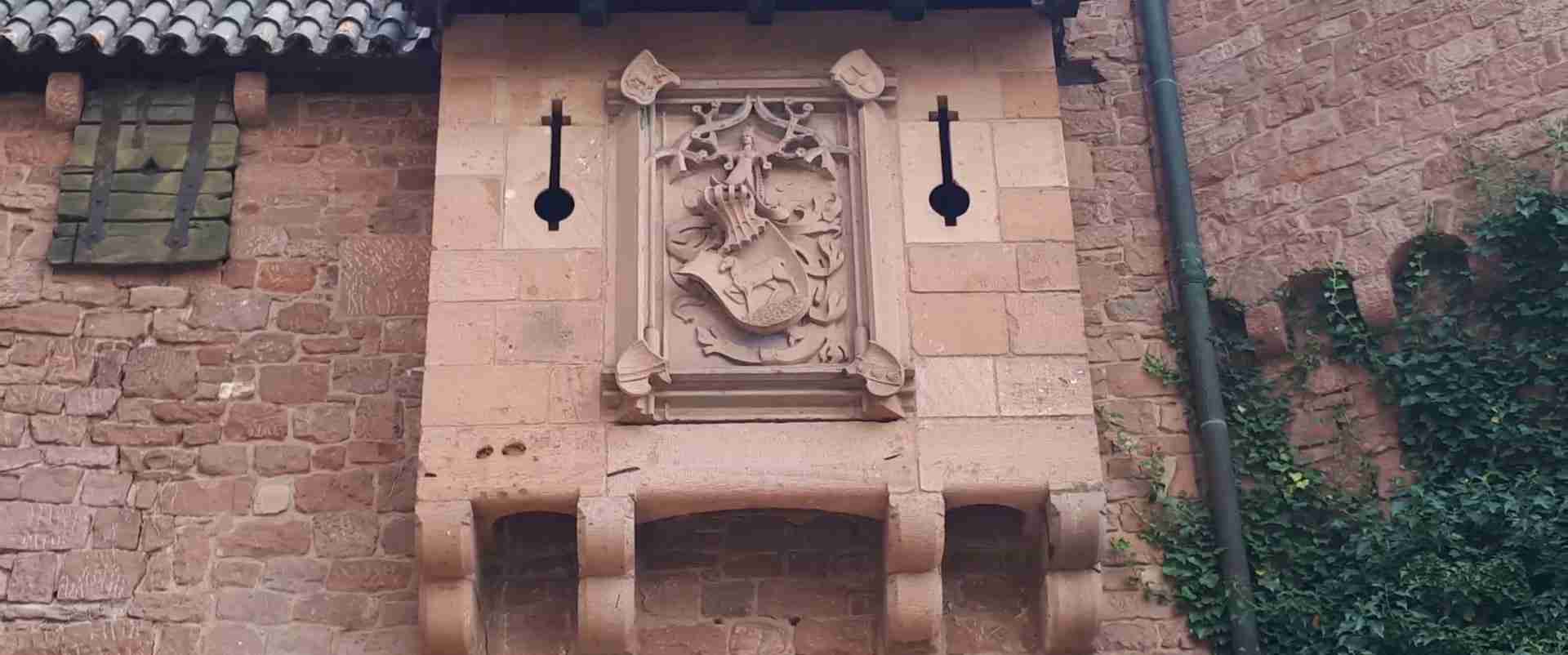
Château du Haut-Kœnigsbourg Day Trip 2027: Visiting St. Ulrich & Ribeauvillé Without the Crowds in Alsace
Haut-Kœnigsbourg Castle crowns a forested spur above the Alsace plain, and the three ruined castles of Ribeauvillé sit less than an hour’s drive to its south. This 2027 guide shows how to link them in one day from Colmar, using the Sélestat train, the line 500 shuttle, a car, or your own two feet, with timings, tickets and quieter-hour strategies.
Key Takeaways
- The castle shuttle is line 500, the Navette du Haut-Koenigsbourg, which runs from Sélestat station, not from Colmar; the separate “Navette des Crêtes” is a different summer service.
- Colmar to Sélestat takes about 12 minutes by TER train, and the 2026 castle ticket cost €12 for adults, €8 for ages 6-17, and nothing under 6 (2027 rates to be confirmed).
- Holders of a Fluo 67 shuttle ticket paid a reduced €6 castle entry in 2026, which makes the shuttle the cheapest way in.
- A public-transport day trip from Colmar to the castle costs approximately €40-60 per person, rising to approximately €45-70 per person with a Ribeauvillé extension.
- St. Ulrich Castle and Girsberg Castle stand about five minutes apart above Ribeauvillé, and a loop through them takes roughly 2.5 hours on foot.
- Arrive at opening time, avoid free-entry Sundays from November to March, and book online during peak periods to skip the longest queues.
People Also Ask About the Haut-Kœnigsbourg Day Trip 2027
How do you get from Colmar to Haut-Kœnigsbourg Castle without a car in 2027?
Take a TER train from Colmar to Sélestat, about 12 minutes, then board line 500, the Navette du Haut-Koenigsbourg, to the castle. The shuttle serves Cigoland, the Eagle Aviary, Monkey Mountain and the castle. It resumed service on 28 February 2026, and its 2027 calendar follows the castle’s opening dates, so check the Fluo Grand Est timetable before travelling.
How much does Haut-Kœnigsbourg Castle cost in 2027?
The 2026 adult ticket cost €12, with €8 for ages 6-17 and free entry under 6; a family ticket cost €30 (check the official website for 2027 rates). Visitors who show a Fluo 67 shuttle ticket paid €6 in 2026. Entry is free on the first Sunday of each month from November to March and during the European Heritage Days weekend.
Can you visit both Haut-Kœnigsbourg and the Ribeauvillé castles in one day in 2027?
Yes, most easily by car, and with effort by public transport. The castle visit takes about 1.5 hours, and the St. Ulrich and Girsberg loop takes roughly 2.5 hours on foot. Start at the castle’s opening time, then drive or take a bus to Ribeauvillé by early afternoon so the climb is finished before evening.
Are the Ribeauvillé castles free to visit in 2027?
St. Ulrich Castle is a freely accessible ruin whose keep can be climbed, according to visitor descriptions, and the hiking trails to all three castles are public paths. Haut-Ribeaupierre Castle is usually walked around rather than entered. Confirm current access and any safety closures with the Ribeauvillé tourist office before setting out.
Extended multi-day tours – 5+ days
Featured Alsace Lorraine Multi-Day Tour Packages
3 days
Alsace Lorraine 3-Day Discovery Tour
- ✓ Comprehensive Alsace Lorraine experience
- ✓ Expert local guides included
- ✓ All accommodation included
- ✓ Transportation provided

5 days
Alsace Lorraine 5-Day Highlights Experience
- ✓ Comprehensive Alsace Lorraine experience
- ✓ Expert local guides included
- ✓ All accommodation included
- ✓ Transportation provided
7 days
Alsace Lorraine 7-Day Cultural Journey
- ✓ Comprehensive Alsace Lorraine experience
- ✓ Expert local guides included
- ✓ All accommodation included
- ✓ Transportation provided

10 days
Alsace Lorraine 10-Day Complete Adventure
- ✓ Comprehensive Alsace Lorraine experience
- ✓ Expert local guides included
- ✓ All accommodation included
- ✓ Transportation provided
Multi-day tour packages powered by TourRadar. Prices and availability subject to change.
Planning the Haut-Kœnigsbourg Day Trip in 2027: What This Guide Covers
This guide plans one full day around two very different castle experiences in central Alsace: Haut-Kœnigsbourg, a heavily restored fortress with furnished interiors, and the ruins above Ribeauvillé, which are free, wooded and mostly empty. The two sit in different departments, with Haut-Kœnigsbourg in the Bas-Rhin at Orschwiller and Ribeauvillé in the Haut-Rhin, but the distance between them is short, and the contrast is the point of the trip.
The title promises “without the crowds”, so the guide is built around timing rather than secret places. Haut-Kœnigsbourg is one of the most visited castles in the region, and its busiest hours are predictable: late morning to mid-afternoon, summer weekends, school holidays and free-entry Sundays. The Ribeauvillé ruins sit up a steep forest trail, which filters out most casual visitors. Combining an early castle slot with an afternoon on the ruins is the simplest way to spend the day away from the largest groups.
A note on terms, so nothing is confusing on the day. The castle shuttle is line 500, officially the “Navette du Haut-Koenigsbourg”, and it starts at Sélestat. A similarly named service, the “Navette des Crêtes”, appears in regional ticketing documents as a separate summer shuttle in the Fluo 67 tourist network, and the sources consulted do not list it as a route to the castle. If you see that name on a timetable, treat it as a different service and do not plan the castle visit around it.
Prices in this guide are 2026 figures, because the 2027 tariffs and timetables had not been published when this article was prepared. They are marked as such, and the first mention of each carries a reminder to check the official source. Public transport fares and the castle’s calendar are the details most likely to change, so verify them in the weeks before travel.
Transit Logistics from Colmar 2027: Navigating the Navette du Haut-Koenigsbourg (Line 500) and Train Schedules
Without a car, the route from Colmar is a two-step journey: a short TER train to Sélestat, then the line 500 shuttle up to the castle. The train takes about 12 minutes, the shuttle takes roughly 25 minutes according to one 2026 day-trip guide, and a realistic door-to-door time from Colmar station to the castle gate is about 1 hour 15 minutes including the wait at Sélestat.
Colmar to Sélestat by train: frequency and fares for 2027
Colmar and Sélestat are connected by frequent TER Fluo regional trains, with some long-distance services also calling at both. The 2026 timetable listed 34 trips per day, a shortest journey of 11 minutes, a first departure at 5:18 and trains roughly every 30 minutes in the morning, for example 7:06, 7:36, 8:06, 8:36 and 9:06 on a July weekday. Expect a similar pattern in 2027, but check the SNCF Connect or Fluo app because timetables change each December and each summer.
A one-way ticket cost about €6 in 2026 according to one regional guide (check SNCF Connect or the Fluo app for current rates). A return therefore costs about €12 per person, and that is the figure used in the cost section below. Buy tickets at the station machine or in the app before boarding; keep the ticket until you leave the destination station in case of inspection.
Sélestat itself is worth a few minutes of planning. The station is the hub for the castle shuttle, for buses to the wine villages, and for connections toward Strasbourg. It is also the home of the Humanist Library, whose collection includes the library of the scholar Beatus Rhenanus, which UNESCO inscribed on its Memory of the World Register in 2011. If you have a spare 20 minutes before the shuttle departs, the old town is a short walk from the station, though the library visit itself needs its own time slot.
Line 500, the Navette du Haut-Koenigsbourg: stops, season and discounts
Line 500 is operated within the Fluo Grand Est network and starts from Sélestat. According to the regional operator, it links Sélestat with three leisure sites and the castle: Cigoland, the Eagle Aviary (Volerie des Aigles), Monkey Mountain (Montagne des Singes) and Haut-Kœnigsbourg Castle. The tourist office also lists Kintzheim village centre among its stops. The service runs according to the castle’s opening, so it does not operate on days the castle is closed.
In 2026 the line resumed on Saturday 28 February. The operator publishes a PDF timetable and fare sheet each year, and the 2027 edition should appear on the Fluo Grand Est site (the page titled “Ligne 500 Sélestat – Château du Haut-Koenigsbourg”). Treat any specific departure time quoted before that publication as indicative. A shuttle fare of about €2-3 each way is the working estimate here, based on third-party route planners, so a return costs about €5-6 per person.
The shuttle ticket is also a discount voucher. In 2026, showing a Fluo 67 transport ticket gave reduced entry at the four sites on the line: the castle at €6 for adults and children, Monkey Mountain at €10.50 for adults and €7 for children, the Eagle Aviary at €10 for adults and €7 for children, and Cigoland at €19 for adults and €17 for children. The offers could not be combined with each other. For a castle-only day, the reduction roughly offsets the cost of the shuttle itself, so there is no financial reason to prefer driving.
One practical point on tickets: a day ticket for the wider Fluo 67 network (called Alsa+ 24h) is listed by the regional rail operator as valid on the network’s tourist lines, including seasonal shuttles. Whether it applies to a journey that starts in the Haut-Rhin at Colmar depends on the zone you buy, so ask at the station rather than assuming. If in doubt, buy the simple Sélestat shuttle ticket on board or at the stop.
Shuttle Routes & Parking Strategies: Avoiding Peak-Hour Bottlenecks on the D159
The castle is reached by the D159 from the Sélestat side, about 12 km from the town, and the road climbs through the forest above Orschwiller and Kintzheim. On busy days this single approach is where queues form, because every car, coach and shuttle uses it. The strategies below keep you ahead of the traffic.
- Arrive before the opening hour. The castle opens at 9:30 on most days and 10:30 on Mondays, with longer summer hours in July and August (9:00 to 19:00 in 2026). Being on the road by 8:45 puts you in the car park before the coaches.
- Use the shuttle on weekends and holidays. A shuttle seat removes the parking search entirely, and the stop is close to the entrance.
- Know that the car park is paid. Parking at the foot of the castle is charged; the tariff changes, so check the sign on arrival, and keep a card or coins available.
- Leave outside the midday rush. Departing between noon and 14:00 puts you in the same queue as arriving visitors on the narrow road. Leaving at 16:00 or later is quieter, especially in July and August.
- Consider walking up from Orschwiller. The GR 5 path leads to the castle from the village, and visitors can park in the village and walk. The route is steep and wooded, so plan for sturdy footwear and extra time.
The “mountain pass” feeling comes from the elevation rather than from an actual pass: the castle stands at about 757 m, and the bends on the approach are tight. Drivers who are not used to mountain roads should leave extra time for the climb and the descent, particularly in wet weather or in winter, when snow and ice can affect the Vosges foothills.
Haut-Kœnigsbourg Castle Visit 2027: Hours, Tickets & What to Expect
The castle is open year-round except for 1 January, 25 December and 26 December, with a late opening at 10:30 on Mondays. Entry in 2026 cost €12 for adults, and a visit takes about 1.5 hours at a steady pace, longer if you add an audio guide, a themed tour or a stop in the medieval garden.
Opening hours at Haut-Kœnigsbourg Castle for 2027
The 2026 opening pattern was: January to March, 9:30 to 12:00 and 13:00 to 17:00; April to June and September to December, 9:30 to 18:00; July and August, 9:00 to 19:00. Last admission is one hour before the ticket office closes. Another regional listing shows the castle closing at 17:00 in late autumn, so assume the closing hour moves with the season and read the official calendar before a winter or late-autumn visit. The 2027 calendar was not yet published at the time of writing.
Haut-Kœnigsbourg Castle tickets and free-entry days for 2027
The 2026 adult price was €12, with €8 for ages 6 to 17 and free entry for children under 6 (check the official ticket site for current rates). The family ticket cost €30 for the same period according to a regional family-activities guide. Some resellers list adult tickets at around €11 with a small online discount, which can be worth a few minutes’ comparison, but the official ticket office remains the most reliable source for entry conditions.
Entry is free for all visitors on the first Sunday of the month from November to March, and during the European Heritage Days weekend in the third weekend of September. Free days attract crowds, and the castle’s own calendar is the place to confirm them. If your goal is a quiet visit, the free Sunday is the one date to avoid; if your goal is the lowest cost, plan to arrive at opening and accept the queue.
Online booking is recommended during peak periods, and the official ticket platform allows timed arrivals on busy dates. For a Monday visit in shoulder season, you can usually buy at the desk, but a booked ticket costs nothing extra and removes uncertainty.
What you see inside Haut-Kœnigsbourg Castle
The tourist board describes Haut-Kœnigsbourg as the only fully restored medieval castle in Alsace, and it shows a 15th-century fortress as it was imagined by the early 20th-century restoration team. Visitors follow a route through courtyards, stairs, the great hall and furnished rooms, and then climb the towers for views across the Alsace plain toward the Black Forest. The castle has about 300 steps of differing heights and orientations, so it is not suitable for visitors who cannot manage stairs, although the castle has offered a “visit in an armchair” arrangement for people with reduced mobility, with free entry for the visitor and one companion.
The medieval garden, the artillery bastion, the keep and the upper terraces give the visit its rhythm. Allow time for the viewpoints, because on a clear day they are the main reward for the climb. The restaurant on site offers meals, and the tourist board lists the castle as having catering, English and German-language information and acceptance of holiday vouchers. Themed evening and fantasy-themed tours also exist, ticketed separately at different prices (for example about €16 for the 2026 “Médiéval et Fantastique” visits), and these tickets do not always include the daytime visit.
Plan for the weather. The castle sits at altitude and can be cooler and windier than Colmar, with mist drifting through the forest on autumn mornings. A light jacket is useful even in summer, and in winter the interior stone rooms feel cold.
Haut-Kœnigsbourg History: From Medieval Fortress to Imperial Restoration
The castle’s history has three clear phases: a medieval stronghold that is generally dated to the 12th century, a ruin after the Thirty Years’ War, and an ambitious restoration in the early 20th century when Alsace belonged to the German Empire. The restoration is why the building looks complete today, and it is also why historians discuss how much of what you see is reconstruction.
Written records place a castle on this ridge in the 12th century, and the site passed through several noble families during the Middle Ages. It was rebuilt and strengthened for artillery in the late 15th century, a period when many Alsace castles were modernized with thick bastions and gun ports. The result was a fortress better suited to cannon than to the high, thin walls of earlier centuries.
The Thirty Years’ War brought destruction. Swedish forces besieged and burned the castle in 1633, according to standard accounts of the period, and the ruins stood for more than two centuries. In the 19th century the town of Sélestat acquired the site, and in 1899 the town presented it to the German emperor Wilhelm II, who had a personal interest in medieval imagery and in the region’s place in the empire.
The architect Bodo Ebhardt led the reconstruction, which began at the start of the 20th century and was completed around 1908. Ebhardt worked from surviving remains and from archival research, but he also made interpretive choices where evidence was incomplete, which is why scholars often describe the result as a 15th-century castle as seen through an early 20th-century lens. Visitors who want to understand where documentation ends and imagination begins will find the question a rewarding one to carry through the rooms.
After 1918, the castle passed into French hands, and today it is managed by the Collectivité européenne d’Alsace, which sets the admission prices each year. This explains why prices are published in the regional authority’s tariff documents, and why they can change from one year to the next.
Stacking the Itinerary 2027: Linking Haut-Kœnigsbourg with the Castle Ruins of Ribeauvillé
The two halves of this trip are a restored castle in the Bas-Rhin and three ruins in the Haut-Rhin, connected by a drive of under an hour or by a longer public-transport chain through Sélestat. The best stacking order is castle first, ruins second, because Haut-Kœnigsbourg opens at a fixed hour, queues grow during the day, and the Ribeauvillé trails are open all day without tickets.
Option 1: by car, the most efficient 2027 day
By car, leave Colmar by 8:30, reach the Haut-Kœnigsbourg car park shortly before opening, and enter at 9:30. Finish the visit around 11:30, then drive to Ribeauvillé, a drive of roughly 25 to 30 minutes depending on traffic (an estimate; check your route planner). Park near the trailhead (the rue du Lutzelbach is a documented starting point for one popular route), eat a late lunch in town, and walk the castle loop in the afternoon light.
This sequence puts your longest walk after a meal and a break, leaves a margin of daylight in winter, and uses the car on the roads where it saves the most time. In July and August, the daylight is long enough to add an evening glass of Riesling in Ribeauvillé before driving back.
Option 2: by public transport, a realistic 2027 plan
By public transport, the castle and the ruins are possible in one day but tight, because you must return to Sélestat after the castle and then take a bus to Ribeauvillé. The regional network lists an on-demand ELSA service, line 23, between Sélestat and Ribeauvillé (extending to Riquewihr on Sundays and holidays), as well as other regional buses; on-demand lines must be booked in advance, so reserve before the day.
- Take an early TER from Colmar to Sélestat, arriving around 8:15.
- Board the first line 500 shuttle for the castle, and buy a shuttle ticket for the discount on entry.
- Visit the castle for about 1.5 to 2 hours.
- Return to Sélestat on the shuttle, have lunch in the old town, then take the bus to Ribeauvillé.
- Walk to the ruins, spend about 2.5 hours on the loop, and return to Colmar on a regional bus or via Sélestat before the last evening services.
Because the shuttle timetable is fixed and the Ribeauvillé bus is limited, build in a margin of one hour. If the connections do not line up, the pragmatic alternative is to split the content: do the castle on this trip and keep the Ribeauvillé ruins for a separate half-day from Colmar, which is much simpler because Ribeauvillé is a short bus ride from the Colmar area.
Option 3: the long hike, Sélestat to Ribeauvillé via the castle
For strong walkers, a linear hike from Sélestat station to Ribeauvillé via Haut-Kœnigsbourg measures about 21.7 km, with a high point of 715 m, and it passes Kintzheim and the castle before descending toward Ribeauvillé. It is a long day, best attempted in spring or autumn with good weather, and it requires an early start because you must still allow time to visit the castle. Hikers return from Ribeauvillé to Sélestat by bus.
Trailhead Mechanics: Hiking Paths between Kintzheim, St. Ulrich, and Girsberg
Kintzheim, St. Ulrich Castle and Girsberg Castle lie on different parts of the same Vosges foothill ridge, and they are linked by the long GR 5 corridor rather than by a single short path. Kintzheim and Orschwiller are at the Haut-Kœnigsbourg end, and St. Ulrich and Girsberg sit directly above Ribeauvillé at the southern end. The two clusters are connected by roads and by the 21.7 km linear route from Sélestat, so most visitors treat them as two separate hikes joined by a car or bus ride.
The Kintzheim and Haut-Kœnigsbourg end. Several marked circuits climb to the castle from Kintzheim, Orschwiller and Saint-Hippolyte, and the GR 5 passes less than 2 km from the castle gate. A variant of the Orschwiller to Châtenois route (13.7 km) climbs to the castle itself. Kintzheim also has its own ruined castle, which houses the Eagle Aviary shows, and Monkey Mountain lies in the forest nearby.
The Ribeauvillé end. The three castles are St. Ulrich (also called Grand-Ribeaupierre, at roughly 520 m), Girsberg (about 527 m) and Haut-Ribeaupierre (about 652 m). Popular trail descriptions give these options:
- Short loop via the Fontaine du Chevreuil: about 5.2 km, around 2.5 hours, with a high point of 652 m. It climbs by the yellow-cross waymark, visits Haut-Ribeaupierre first and then descends toward St. Ulrich and Girsberg, with the GR 5 for the return.
- Standard three-castle loop: about 7.35 km, roughly 2 hours 34 minutes, with 380 m of ascent, rated intermediate by a hiking platform.
- Longer version with streams and fountains: about 3.5 hours at a relaxed pace, with a high point near 648 m.
Trail descriptions note sections with exposed rock where a handrail has been installed, so the descent from Haut-Ribeaupierre to St. Ulrich requires care. The waymarks used include a yellow cross, a red rectangle (the GR 5) and a red-white rectangle for the “Trois Châteaux” route. Download an offline map before you leave the trailhead, because mobile reception in the forest can be uneven.
Sensible gear is simple: shoes with grip, a water bottle, and a light layer. Allow at least 3 hours from parking to parking if you plan to climb the St. Ulrich keep and linger at the viewpoints.
The Castle Ruins of Ribeauvillé 2027: St. Ulrich, Girsberg and Haut-Ribeaupierre
Three ruined castles stand on the slope above Ribeauvillé, and an old local rhyme, quoted in a regional castle guide, lists them among the sights that define Alsace. They are St. Ulrich Castle, Girsberg Castle and Haut-Ribeaupierre Castle, and together they were the strongholds of the Ribeaupierre (Rappolstein) family, one of the most powerful noble houses of medieval Alsace.
St. Ulrich Castle: the largest and best preserved
St. Ulrich Castle (also called Grand-Ribeaupierre or Ulrichsburg) stands at around 520 m and is described as the largest and best-preserved of the three. The earliest remains date to the first half of the 12th century, and the Ribeaupierre family rebuilt it around 1200. Further works followed in the 15th and 16th centuries, including a southern outer bailey, and a chapel dedicated to St. Ulrich, whose remains stand beside the great hall, gave the castle its name. A priest is recorded as still serving in the chapel in 1573, even as the castle was gradually abandoned.
Visitors describe it as a large, freely accessible ruin where the keep can be climbed for views over the village roofs, the vineyards and the plain. There are picnic areas near the castle and at the Dusenbach cross on the way up. Because the access is open, there are no opening hours, but the ruin is exposed masonry, so stay on marked paths, avoid walls and keep children close.
Girsberg Castle: the neighbour five minutes away
Girsberg Castle lies within sight of St. Ulrich, and hikers report that the walk between them takes about five minutes. Its name, according to a 19th-century regional account, dates from the 14th century when the castle passed to a family called Girsberg. A local tale, repeated on trail pages, says two brothers once lived in separate castles on this ridge, and it is best read as folklore rather than documented history. The ruin is smaller than St. Ulrich, and its main appeal is the setting and the view back toward the larger castle. Check signage on arrival for any access restrictions, because the conditions of old ruins can change after storms or conservation work.
Haut-Ribeaupierre Castle: the high, quiet one
Haut-Ribeaupierre Castle, also known historically as Haut-Rappolstein, is the highest of the three, at about 652 m, and trail descriptions place it roughly 20 minutes above St. Ulrich. A 19th-century account calls it the oldest and says it was abandoned early, in the 16th century. Hikers often walk around it rather than inside it, and a visitor comment on a trail page says that it cannot be entered; treat that as a reason to check conditions rather than as an official rule. It is a rewarding picnic spot, with fewer visitors than the lower castles, and it is a key waypoint on the GR 5 as it descends toward Ribeauvillé.
How crowded are the ruins, and when is the quietest time?
Trail reviewers describe Ribeauvillé itself as very touristy, while the castle sites above it are comparatively quiet at strategic points. That matches the logic of the climb: the effort filters visitors. Weekday mornings and late afternoons are the least busy, and the shoulder months of April, May, late September and October combine mild weather with lighter crowds. Weekends in good weather attract more walkers, and that is also when the shuttle and the castle car parks fill. This is a general planning observation, not a measured visitor count.
Kintzheim, the Eagle Aviary and Monkey Mountain: Stops on the 2027 Shuttle Line
Kintzheim is a wine village between Sélestat and the castle, and it is the village where two of the line 500 attractions are located. The Eagle Aviary stages flying displays of birds of prey, and Monkey Mountain is a forest park where more than 200 Barbary macaques live free across 24 hectares, according to the regional operator. Both offer reduced entry with a Fluo 67 shuttle ticket (2026 prices were €10 for adults at the Eagle Aviary and €10.50 at Monkey Mountain).
These parks are not the focus of this guide, but they matter for planning. They are the reason the shuttle is busy on family weekends, and they add stops on the way up and down. If you are travelling with children, one of the two parks can replace the Ribeauvillé extension, since together with the castle they fill a day. If you are after quiet, skip them and stay on the shuttle to the castle.
Kintzheim has its own castle ruin, and walking circuits start from the village, including a loop around Monkey Mountain that returns through the vineyards above the village. These paths give you the castle’s silhouette from below, which is a pleasant way to understand the scale of the ridge before you climb it.
Sélestat in 2027: The Gateway Town, Humanist Library and Shuttle Hub
Sélestat is the practical base for the castle without a car, and it is also a destination in its own right. The town is the starting point of the line 500 shuttle, and its tourist office, called Sélestat Haut-Kœnigsbourg, covers the castle area and publishes bus and walking information at the Maison du Parvis on the place du Dr Maurice Kubler.
The Humanist Library is the town’s cultural landmark. A traditional Alsace saying counts it among three great regional treasures, alongside Strasbourg Cathedral and the Isenheim Altarpiece in Colmar. The collection preserves the library of the Humanist School and the private library of the scholar Beatus Rhenanus (1485-1547), who bequeathed his books to the town. The Rhenanus library has been inscribed on UNESCO’s Memory of the World Register since 2011. It is not a World Heritage Site in the architectural sense, but it is a recognised UNESCO documentary heritage collection, and it makes a thoughtful pairing with the castle: one shows how medieval power was imagined in 1900, the other how Renaissance learning was preserved.
If you add the library, treat it as a morning on a separate day, because a rushed 20-minute visit does not do the collection justice. For a one-day castle trip, a short walk through the old town and a bakery stop is the realistic extra.
Ribeauvillé in 2027: Town, Wine and What to Eat After the Hike
Ribeauvillé is a wine-route town at the foot of the Vosges whose old centre is dominated by historic houses, towers and fountains, and whose slopes produce Riesling and other Alsace white wines. Three of its vineyard sites hold Alsace Grand Cru status: Geisberg, Kirchberg de Ribeauvillé and Osterberg. A tasting after the hike is the traditional reward, and many growers welcome visitors in the afternoon.
The town is also home to the Pfifferdaj, a festival of musicians’ heritage held traditionally in early September, which draws large crowds; if your 2027 trip falls in that window, expect busier streets, fuller parking and fewer seats in restaurants. Check the dates with the tourist office, because festival weekends change from year to year.
Above the town, the pilgrimage chapel of Notre-Dame de Dusenbach lies on one of the hiking routes, and the nearby cross is a documented picnic stop. These small sites make the climb more varied than a plain castle approach, and they are a good reason to choose the longer loop if you have time.
For food, plan to finish the walk by mid-afternoon, since many traditional restaurants in Alsace serve lunch until about 14:00 and reopen for dinner in the evening; check the specific hours of your choice. Regional dishes include tarte flambée (a thin flatbread with cream, onions and bacon), choucroute (sauerkraut with meats) and Riesling-based sauces.
Haut-Kœnigsbourg Day Trip Cost 2027: Per-Person Budget from Colmar
A castle-only day by public transport from Colmar costs approximately €40-60 per person, and adding a Ribeauvillé hike by bus costs approximately €45-70 per person. These are excursion costs excluding accommodation, so they cover transport, entry and one meal.
Public transport, castle only (per person):
- TER train Colmar to Sélestat and back: about €12 (2026 fare)
- Line 500 shuttle return: about €5-6
- Castle entry: €6 with a shuttle ticket, or €12 at the full 2026 adult rate
- Lunch: about €15-30
- Total: approximately €40-60 per person
Public transport with the Ribeauvillé extension (per person):
- All items above
- Bus between Sélestat and Ribeauvillé, return: an estimate of €5-10, because fares vary with the service and on-demand lines are booked in advance
- Total: approximately €45-70 per person
The ruins above Ribeauvillé have no entry fee, so the extension adds transport and perhaps a drink or a tasting. By car, the figures change: the train and shuttle disappear, the castle entry remains at €12 (the discount applies only with a shuttle ticket), and you pay for fuel and for the paid car park at the castle, whose tariff should be checked on arrival. For two or more people sharing a car, driving can be cheaper per person, but the discounted shuttle is competitive for solo travellers and couples.
Money-saving options: book online to avoid on-site surprises; use the shuttle discount; visit on the first Sunday from November to March for free entry (accepting the crowd); and carry a picnic for the Ribeauvillé loop, since the viewpoints and picnic areas are free.
How to Visit Haut-Kœnigsbourg Without the Crowds in 2027
The most reliable way to avoid crowds at Haut-Kœnigsbourg is to arrive at opening time on a weekday outside school holidays. The castle’s visit route is one-way and guided by signage, so a crowd of coach groups at midday is felt in the narrow staircases and the great hall. These patterns are a planning inference from how heritage sites typically behave, not measured data from the castle.
- Pick the opening slot. On most days the gate opens at 9:30, and on Mondays at 10:30. The first hour is usually the calmest.
- Avoid free Sundays. In 2027 the first Sundays of January, February, March, November and December fall on 3 January, 7 February, 7 March, 7 November and 5 December, by the calendar; confirm with the castle’s calendar.
- Avoid Heritage Days. The European Heritage Days free weekend falls in the third weekend of September, which in 2027 is 18 and 19 September by the calendar.
- Visit in shoulder season. April, May, late September and October offer long opening hours and milder weather than July and August.
- Book online. The official ticket site recommends it for peak periods, and a timed booking reduces the ticket-queue stage.
- Go to the far end first. Walk past the first viewpoints and start with the upper levels; crowds tend to cluster near the entrance and the first terrace.
- Leave the car park late. Departing after 16:00 usually avoids the arriving-and-leaving jam on the D159.
In the afternoon, move to the ruins. Their trails are free, they are open all day and they offer a different sense of scale: the restored castle is a finished picture, and St. Ulrich is the raw material.
Best Season for the Haut-Kœnigsbourg and Ribeauvillé Day Trip in 2027
The best seasons for this trip are late spring and early autumn. Spring brings green forest and open trails, and the vineyards turn to gold and red in October. July and August have the longest opening hours, with the castle open from 9:00 to 19:00 in 2026, but they are also the most crowded months. Winter is possible but shorter in daylight, and the shuttle and bus schedule can be reduced.
The 2027 season also affects nearby alternatives. The Hohlandsbourg castle at Wintzenheim, near Colmar, was listed as closed from 2 November 2026 to 2 April 2027 inclusive, so it is not a winter backup, and it opens again in April. By contrast, Haut-Kœnigsbourg stays open through December. A regional family guide notes that the Hohlandsbourg family ticket cost €20 for four people in 2026 and that the castle offers a reduced rate on presentation of a Haut-Kœnigsbourg ticket, which is worth remembering if you plan a second castle on another day.
Check also the opening schedules of the three castles above Eguisheim, which the same guide lists as freely accessible, although the access road is closed in winter (listed as 15 November to 15 March). They are a good alternative for a quiet ruin hike if the Ribeauvillé trails are muddy or crowded.
Sample Haut-Kœnigsbourg Itineraries 2027: Three Ways to Spend the Day
The car itinerary: castle at opening, ruins in the afternoon
- 8:30 Depart Colmar by car for Orschwiller.
- 9:15 Park at the castle, buy a ticket online or at the desk.
- 9:30 Enter the castle; allow 1.5 to 2 hours.
- 11:45 Drive to Ribeauvillé; park near the trailhead.
- 12:30 Lunch in town.
- 14:00 Walk the three-castle loop of about 5 to 7 km.
- 17:00 Wine tasting or a drink in the old town.
- 18:00 Return to Colmar.
The public-transport itinerary: shuttle day with a Kintzheim option
- 8:06 TER from Colmar to Sélestat (the 2026 pattern; check the 2027 timetable).
- 8:30 Short walk around Sélestat while waiting for the shuttle.
- First shuttle to the castle; ticket discount applies.
- Castle visit, about 2 hours.
- Lunch at the castle restaurant or in Kintzheim.
- Optional stop at the Eagle Aviary or Monkey Mountain.
- Shuttle back to Sélestat, then TER to Colmar.
The walker’s itinerary: Orschwiller to the castle, then Ribeauvillé by bus
- Take the train to Sélestat, then a bus or taxi to Orschwiller.
- Walk the GR 5 up to the castle, arriving for opening.
- Visit the castle, then walk or ride back down.
- Reach Ribeauvillé by bus in the afternoon and hike the short loop through St. Ulrich and Girsberg.
- Return to Colmar by bus before the last services.
Practical Tips for the Haut-Kœnigsbourg Day Trip in 2027
- Footwear: wear shoes with grip. The castle has about 300 steps, and the Ribeauvillé trails include rocky sections with a handrail.
- Water and food: carry water for the hike; the castle has a restaurant, and Ribeauvillé has many.
- Layers: the castle sits at 757 m, and the forest is cooler than the plain.
- Offline maps: download trail maps before you start, because reception in the forest can be patchy.
- Daylight: in late autumn and winter, plan to finish hiking by mid-afternoon.
- Reduced mobility: the castle has offered an armchair-visit option with free entry for the visitor and a companion; ask the castle in advance for 2027 arrangements.
- Payment: the castle accepts cards, cheques, cash and holiday vouchers.
- Language: English and German information is available at the castle.
- Sunscreen and rain gear: weather in the Vosges foothills can change quickly.
- Closures: note the castle’s annual closures on 1 January, 25 December and 26 December.
Haut-Kœnigsbourg Day Trip 2027 Compared: Haut-Kœnigsbourg, Hohlandsbourg and Eguisheim Castles
Haut-Kœnigsbourg is the large, heavily visited, restored castle, with the highest entry price among the three. The Hohlandsbourg at Wintzenheim is smaller, closer to Colmar and cheaper for families, with a family ticket at €20 for four in 2026 and a reduced rate with a Haut-Kœnigsbourg ticket. The Eguisheim castles are ruins with free access and a seasonal road closure. Choose Haut-Kœnigsbourg for the full medieval experience, the Hohlandsbourg for an easy half-day close to Colmar, and the ruins for quiet and walking.
The Ribeauvillé trio sits between them in effort: more strenuous than Eguisheim, much quieter than Haut-Kœnigsbourg, and richer in views than most ruins. For travellers who like their castles in contrasting pairs, the combination of one restored and one ruined castle gives the clearest sense of how much the 1900s restoration changed the picture of the medieval Rhine.
Understanding Alsace Castles in 2027: Why Restored and Ruined Castles Sit Side by Side
Alsace has one of the densest concentrations of medieval castles in France, and most of them are ruins on the eastern edge of the Vosges. The mountains drop steeply toward the Rhine plain, and the ridge-top and spur sites that rise above the wine villages gave lords a view over trade routes and farmland. A regional castle association publishes visitor sheets for the ruins above Ribeauvillé, and the town makes a natural companion to Haut-Kœnigsbourg.
The contrast between a restored castle and a ruin is the most useful lens for this trip. At Haut-Kœnigsbourg, you walk through rooms that have roofs, floors and furniture, arranged to suggest late medieval life. At St. Ulrich, you see the bare stone of walls, a chapel footprint and a keep with its interior open to the sky. Each tells a different story: the first shows how the Middle Ages were imagined and presented in the early 1900s, and the second shows what time and war do to a fortress when nobody rebuilds it.
Visiting in that order helps. After the castle, the ruins become more legible, because you can compare a gate, a tower base or a window opening with its restored counterpart. Visiting in the opposite order has its own appeal, because the ruins make the restoration look even more ambitious. Either way, keep a few questions in mind as you walk: where does the original masonry end, what changed between the 12th and the 15th centuries, and how did the builders handle water, defence and daily life on a dry, exposed ridge?
The Ribeaupierre Family and Ribeauvillé: Context for the 2027 Castle Hike
The Ribeaupierre family, known in German as the Lords of Rappoltstein, held the lands around Ribeauvillé for centuries and gave their name to the castles on the slope. A regional account states that the family undertook a total reconstruction of St. Ulrich around 1200 and carried out important works again in the 15th and 16th centuries. Another source records a dispute over inheritance in the late 13th century, when a family member refused to share the lands of a common father with his co-heirs, and notes that a partition act dated 1298 names the upper castle.
These details matter to a hiker because they explain the layout. The upper castle, Haut-Ribeaupierre, was the early seat on the summit, and the lower castles developed as the family’s holdings and branches grew. A 19th-century local account suggests the upper castle was abandoned early, while St. Ulrich continued to be used for longer, which fits the better preservation of the lower ruin. These are historical interpretations drawn from local scholarship, so treat the exact chronology as provisional and read the information panels on site, if present, for the current view.
The town below developed as a market and wine centre under the family’s protection. Today its historic core remains compact enough to explore in an hour, with fountains, half-timbered houses and the towers that once belonged to the medieval defences. Because the ruins and the town are close together, the visit works best as a single story: a lordly family on the hill and a town on the slope that supported it.
How to Read a Restored Castle: Haut-Kœnigsbourg Through a 2027 Visitor’s Eyes
A restored castle rewards slow looking. The early 20th-century project reconstructed a building from ruins, and its architect combined archaeological evidence with judgement. That is why historians sometimes debate the degree of invention, and why visitors can enjoy the castle both as a monument and as a document of its own era. When Alsace belonged to the German Empire, a reconstructed castle was also a political statement about history and identity, and it opened in 1908 as the project concluded.
Practical ways to read the building:
- Look at joints and surfaces. Original masonry and new work often differ in colour, tooling and weathering, and the difference is easier to spot on the lower walls.
- Follow the defensive logic. Notice how the bastion and gun-ports serve artillery, and how the older towers served earlier forms of defence.
- Compare interiors with the ruins. If you visit Ribeauvillé afterwards, remember the furnished halls and imagine the ruin’s empty spaces filled in the same way.
- Use the viewpoints. The castle’s position above the plain explains its purpose: control and observation. From the upper levels the Rhine plain and, on clear days, the Black Forest horizon are visible.
An audio guide or themed tour can add detail, and the official site lists current options and prices. If you prefer to explore without commentary, the one-way route and signage make independent visits easy.
Family and Rainy-Day Planning for the Haut-Kœnigsbourg Day Trip 2027
Families can treat this day as a two-castle adventure, with the restored castle as the “story” and the ruins as the “explore” part. A family ticket at Haut-Kœnigsbourg cost €30 in 2026, and under-6s are free, which makes the castle a fair-value outing even without discounts. Younger children may find the 300 steps tiring, so pace the visit, and use the garden and the courtyard for breaks.
Strollers are a practical problem, because of the stairs and uneven stone. Consider a carrier for infants. The Ribeauvillé trails are not suitable for strollers, and the steeper sections with rock and a handrail are best saved for older children who walk confidently. If the weather turns, the castle interior gives shelter, and Sélestat offers indoor options in the old town. In heavy rain or after storms, avoid the Ribeauvillé trails, because wet rock and exposed roots are slippery, and postpone the loop rather than risk it.
For a rainy day with a car, the combination of the castle and a stop at the Eagle Aviary or Monkey Mountain depends on the parks’ own weather policies, which should be checked on their websites. Display times and animal viewing can change with conditions, and the line 500 operator lists these parks as the other major stops on the route.
Photography and Viewpoints at Haut-Kœnigsbourg and Ribeauvillé in 2027
The best photographs of the castle are taken from outside it, along the road and the forest edges where its silhouette is visible against the plain, and the walking circuits from Kintzheim and Orschwiller offer these views. Early morning light is often softer, and autumn mist can give the forest a dramatic backdrop. Inside the castle, the upper terraces provide wide views of the plain, and the courtyards offer symmetrical compositions.
At Ribeauvillé, the keep at St. Ulrich provides a high viewpoint over the village roofs and vineyards, and Haut-Ribeaupierre gives a quieter vantage with fewer people. Use the afternoon light for views toward the plain from the lower castles, and carry a lens cloth, since forest humidity can fog a lens. Respect safety rules: do not climb on walls, and keep back from edges, especially at the exposed rock sections.
Responsible Visiting at Haut-Kœnigsbourg and the Ribeauvillé Ruins in 2027
Medieval ruins are fragile, and forest trails are shared with local walkers and wildlife. Stay on marked paths, take rubbish with you, and avoid disturbing masonry. At the restored castle, follow the signage, because the visit route is designed to protect the interior. If you drive, park in designated areas and avoid blocking forest tracks, and if you use the shuttle, you reduce traffic on the D159. Travelling by train and shuttle also lowers emissions compared with driving, which is a small but real benefit for a region where the forest roads are narrow.
Frequently Asked Questions About the Haut-Kœnigsbourg Day Trip 2027
Is the Navette des Crêtes the shuttle to Haut-Kœnigsbourg Castle?
No. The castle shuttle is line 500, the Navette du Haut-Koenigsbourg, which starts at Sélestat. The Navette des Crêtes is listed in regional ticketing documents as a separate summer shuttle in the Fluo 67 tourist network, and it does not appear in the castle’s route information. Use the Fluo Grand Est line 500 page for the castle timetable.
How long does the trip from Colmar to Haut-Kœnigsbourg Castle take in 2027?
By public transport, allow about 1 hour 15 minutes door to door: roughly 12 minutes by TER to Sélestat, a connection wait, and a shuttle ride of about 25 minutes. By car, the castle is a drive of under an hour from Colmar, depending on traffic and the D159 approach.
Does the shuttle run every day in 2027?
The line runs according to the castle’s opening, so it operates on days the castle is open and not on its closure days. In 2026 it resumed on 28 February. The exact 2027 calendar and departure times are published on the Fluo Grand Est site, so confirm them before travelling.
How much is the castle ticket with the shuttle discount?
In 2026, showing a Fluo 67 ticket reduced castle entry to €6 for adults and children, compared with the standard €12 adult and €8 youth rates. The discount could not be combined with other offers, and the 2027 terms should be checked on the operator’s page.
Is Haut-Kœnigsbourg Castle free on any day in 2027?
Yes. Entry is free on the first Sunday of each month from November to March and during the European Heritage Days weekend in September. In 2027 those dates fall on 3 January, 7 February, 7 March, 18-19 September, 7 November and 5 December by the calendar; check the castle’s own calendar to confirm.
Can you hike from Haut-Kœnigsbourg to Ribeauvillé?
Yes, on a long linear route. A Sélestat to Ribeauvillé hike via the castle measures about 21.7 km and reaches a high point of 715 m, and hikers return by bus. It is a full day for experienced walkers, and it leaves little time to visit the castle interior unless you start very early.
How long does the St. Ulrich and Girsberg walk take?
The popular loops take roughly 2.5 hours for 5.2 to 7.35 km, with up to 380 m of ascent. Girsberg is about five minutes from St. Ulrich, and Haut-Ribeaupierre is about 20 minutes above St. Ulrich. Add time for the keep climb and for picnic stops.
Is a car necessary for this day trip in 2027?
No, but a car makes the Ribeauvillé extension easier. The castle alone works well by train and shuttle, and Ribeauvillé has bus connections from Sélestat, including an on-demand line that must be booked in advance. If your priority is the ruins, a car or a dedicated Ribeauvillé day is simpler.
What should you wear and carry for the hike?
Wear shoes with grip, carry water, a light layer and an offline map. The trail includes rocky sections, one of them secured with a handrail, and the castle itself has about 300 steps.
What is the best time of year for the trip in 2027?
Late spring and early autumn combine pleasant temperatures with lighter crowds than July and August. The castle remains open through December, but daylight is short, and the Hohlandsbourg alternative near Colmar is closed until 2 April 2027.