
Halifax Travel Guide 2026: Ultimate Planning Resource
Halifax stands as Atlantic Canada’s dynamic maritime capital where centuries of seafaring history meet contemporary urban energy along one of the world’s finest natural harbours. This guide delivers practical planning details for experiencing Nova Scotia’s capital in 2026, from navigating the historic waterfront boardwalk to exploring the star-shaped Citadel fortress that has overlooked the city since 1856, budgeting daily costs, and timing your visit to match Halifax’s distinct seasonal character.
Key Takeaways About Halifax in 2026
- Budget Planning 2026: Expect CAD $170-280 ($125-205 USD) per person daily for mid-range comfort, assuming two sharing hotel accommodation. Budget travelers manage on CAD $95-145 ($70-105 USD), while luxury visitors invest CAD $350-550+ ($255-400+ USD) per person daily. These totals include accommodation, meals, transport, and attractions.
- Best Time to Visit 2026: June through September delivers warm weather with highs of 20-25°C (68-77°F) but also peak crowds and highest hotel rates. May and October offer shoulder season advantages with 30-40% lower accommodation costs, comfortable temperatures, and fewer visitors while most attractions maintain full operations.
- Transportation Access 2026: Halifax Stanfield International Airport sits 35 kilometers from downtown. The MetroX 320 bus costs CAD $4.25 ($3 USD) and takes 50 minutes to Scotia Square, while taxis charge a flat CAD $68 ($50 USD) to downtown hotels. Halifax Transit operates extensive bus and ferry networks throughout the city at CAD $3 ($2.20 USD) per ride.
- Major Attractions 2026: The Halifax Experience Pass provides access to top attractions including Maritime Museum of the Atlantic, Canadian Museum of Immigration at Pier 21, Halifax Citadel, and harbour tours. Check official sites for current pricing as 2026 pass options include 24-hour, 48-hour, and 72-hour durations with check official websites for current rates.
- Waterfront Excellence: The 4-kilometer Halifax Waterfront Boardwalk connects shops, museums, restaurants, beer gardens, and maritime attractions from Historic Properties to Pier 21. The Alderney Ferry provides the oldest saltwater ferry service in North America crossing to Dartmouth for just CAD $3 ($2.20 USD), valid for 150 minutes with transfers.
- Day Trip Opportunities 2026: Peggy’s Cove Lighthouse sits 45 minutes southwest as Nova Scotia’s most photographed attraction. The UNESCO World Heritage town of Lunenburg lies 90 minutes down the coast, while the Bay of Fundy’s world-record tides are accessible within 2-3 hours. All make excellent day excursions from Halifax.
People Also Ask About Halifax Travel 2026
How much money do I need per day in Halifax in 2026?
Halifax daily costs in 2026 range from CAD $95-550+ ($70-400+ USD) per person depending on travel style, assuming two people sharing accommodation. Budget travelers spending CAD $95-145 ($70-105 USD) daily stay in hostels at CAD $35-55 ($25-40 USD) per bed, eat casual meals for CAD $40-60 ($30-45 USD), use public transit at CAD $6 ($4.40 USD) for two rides, and visit free attractions. Mid-range travelers allocating CAD $170-280 ($125-205 USD) per person daily book 3-star hotels at CAD $85-115 ($62-85 USD) per person when sharing, dine at good restaurants for CAD $60-95 ($44-70 USD), take occasional taxis, and pay for museums and tours. Luxury visitors investing CAD $350-550+ ($255-400+ USD) daily reserve 4-5 star properties at CAD $180-265+ ($130-195+ USD) per person sharing, enjoy fine dining at CAD $110-170 ($80-125 USD), use private transportation, and book premium experiences.
What is the best month to visit Halifax in 2026?
June through August represents Halifax’s peak summer season in 2026 with consistently warm weather averaging 20-25°C (68-77°F), maximum daylight hours extending past 9 PM, and full schedules at all attractions and restaurants. However, this period brings highest hotel rates at CAD $180-280 ($130-205 USD) per room nightly and significant cruise ship crowds along the waterfront on port days. September offers excellent value as an optimal shoulder month with comfortable 15-20°C (59-68°F) temperatures, 25-35% lower accommodation costs at CAD $135-210 ($100-155 USD) per room, spectacular fall foliage beginning in late September, and substantially reduced crowds while nearly all attractions maintain regular hours. May presents similar advantages with spring conditions, though ocean temperatures remain cold at 8-10°C (46-50°F) compared to September’s 14-16°C (57-61°F). Winter months from December through March see hotel bargains at CAD $95-160 ($70-115 USD) per room but challenging weather with frequent snow, temperatures often below freezing, and some attractions operating on reduced schedules.
How many days do you need in Halifax in 2026?
Three days in Halifax allows sufficient time to experience the city’s essential attractions without rushing. Day one covers the waterfront boardwalk from Historic Properties through Pier 21, the Maritime Museum of the Atlantic’s Titanic and Halifax Explosion exhibits, and casual harbor-side dining. Day two ascends to Halifax Citadel National Historic Site for the noon gun ceremony and panoramic views, explores the Victorian-era Halifax Public Gardens, walks the vibrant Spring Garden Road shopping district, and investigates the Canadian Museum of Immigration. Day three ventures to Peggy’s Cove Lighthouse on a half-day excursion returning for afternoon exploration of neighborhoods like the South End with its colorful Victorian homes, Point Pleasant Park’s coastal trails, or craft breweries in the North End. Adding a fourth or fifth day enables deeper neighborhood exploration, a full-day trip to Lunenburg UNESCO World Heritage Site, or coastal drives to fishing villages along the Eastern Shore. Weekend visitors can experience highlights in two days by combining waterfront and Citadel visits on day one with a Peggy’s Cove tour on day two, though this compressed schedule omits significant attractions and neighborhood character.
Is Halifax an expensive city to visit in 2026?
Halifax costs position moderately for Canadian cities in 2026, pricing 25-35% below major centers like Toronto, Vancouver, or Montreal but 15-25% above smaller Maritime cities such as Charlottetown or Moncton. Accommodation represents the largest expense with downtown 3-star hotels averaging CAD $130-172 ($95-125 USD) per room nightly in mid-season compared to CAD $206-280 ($150-205 USD) in Toronto. Restaurant meals run CAD $18-30 ($13-22 USD) for lunch and CAD $35-60 ($26-44 USD) for dinner at mid-range establishments, roughly comparable to Ottawa or Calgary. Public transit remains affordable at CAD $3 ($2.20 USD) per ride or CAD $82.50 ($60 USD) for a monthly pass. Major museums charge CAD $10-20 ($7.30-15 USD) for adult admission, while multi-attraction passes provide better value. Visitors can significantly reduce costs by traveling during shoulder seasons in May, September, or October when hotel rates drop 30-40% while weather remains pleasant and most attractions operate normally. Budget-conscious travelers staying in hostels, eating donairs and fish-and-chips from casual spots, using public transit exclusively, and focusing on free attractions like Point Pleasant Park, Halifax Public Gardens, and the Citadel grounds can experience Halifax for CAD $95-145 ($70-105 USD) daily per person including accommodation.
Extended multi-day tours – 5+ days
Featured Halifax Multi-Day Tour Packages
3 days
Halifax 3-Day Discovery Tour
- ✓ Comprehensive Halifax experience
- ✓ Expert local guides included
- ✓ All accommodation included
- ✓ Transportation provided

5 days
Halifax 5-Day Highlights Experience
- ✓ Comprehensive Halifax experience
- ✓ Expert local guides included
- ✓ All accommodation included
- ✓ Transportation provided

7 days
Halifax 7-Day Cultural Journey
- ✓ Comprehensive Halifax experience
- ✓ Expert local guides included
- ✓ All accommodation included
- ✓ Transportation provided

10 days
Halifax 10-Day Complete Adventure
- ✓ Comprehensive Halifax experience
- ✓ Expert local guides included
- ✓ All accommodation included
- ✓ Transportation provided
Multi-day tour packages powered by TourRadar. Prices and availability subject to change.
Introduction to Halifax in 2026
Halifax stands unique among Canadian cities for its profound maritime character shaped by the second-largest natural harbour in the world after Sydney, Australia. The city’s strategic Atlantic position has defined its role from 1749 founding through modern times as a military stronghold, immigration gateway welcoming over one million newcomers between 1928-1971, and site of historic tragedies including proximity to the 1912 Titanic sinking and the devastating 1917 Halifax Explosion that claimed 2,000 lives. This history permeates contemporary Halifax where the waterfront boardwalk connects working fishing vessels with craft breweries, the star-shaped Citadel fortress overlooks glass office towers, and museums preserve artifacts from both maritime glory and catastrophe.
The city functions as Atlantic Canada’s economic and cultural capital with a metro population approaching 450,000, supporting Nova Scotia’s largest concentration of restaurants, nightlife, shopping, and cultural venues while maintaining the approachable scale of a mid-sized city where downtown attractions cluster within comfortable walking distance. Halifax’s compact 5-square-kilometer downtown peninsula stretches between the harbour to the east and the Northwest Arm inlet to the west, with most visitor attractions concentrated along the waterfront, up the hill to the Citadel, and through the Victorian neighborhoods of the South End. This geography makes Halifax remarkably walkable despite the challenging topography of steep streets climbing from sea level to the 75-meter Citadel Hill.
In 2026, Halifax continues modernizing its infrastructure while preserving maritime heritage. Recent investments include the striking waterfront Seaport development mixing high-end hotels with street-level restaurants, the architecturally acclaimed Halifax Central Library serving as a community hub, and ongoing transit improvements including plans for 24-hour airport bus service. The city’s culinary scene has evolved beyond traditional seafood into diverse dining spanning authentic Lebanese and Thai to innovative farm-to-table concepts, while craft brewing has exploded with over 20 breweries operating across the metro region. This blend of historic preservation and contemporary energy creates Halifax’s distinctive character where morning might begin exploring a 19th-century fortress, afternoon sailing the harbour aboard a tall ship, and evening sampling craft beer in a converted industrial space.
Understanding Halifax’s seasonal rhythm proves essential for trip planning. Summer from June through August delivers consistently pleasant weather with temperatures averaging 20-25°C (68-77°F), extended daylight until after 9 PM, and peak tourism activity as cruise ships dock regularly along the waterfront bringing thousands of passengers for day visits. This season sees highest accommodation costs, longest restaurant waits, and crowded conditions at major attractions, particularly on cruise port days when the waterfront fills substantially. Fall from September through October provides arguably ideal visiting conditions with comfortable temperatures, spectacular foliage particularly in late September and early October, dramatically reduced crowds, and 30-40% lower hotel rates while nearly all attractions maintain regular operations. Winter from November through March brings cold temperatures frequently below freezing, substantial snowfall averaging 150 centimeters annually, and quiet streets as tourism largely ceases except during special events like New Year’s Eve. Spring from April through May sees unpredictable weather mixing sunny days with fog and rain, though warming temperatures and emerging greenery create pleasant conditions by late May as summer season approaches.
Getting to Halifax in 2026
Halifax Stanfield International Airport Access
Halifax Stanfield International Airport serves as Atlantic Canada’s busiest air facility located 35 kilometers north of downtown Halifax near the community of Enfield. The airport maintains extensive connections across Canada through Air Canada and WestJet networks with hourly flights to Toronto, multiple daily flights to Montreal, and regular service to all major Canadian cities. International routes in 2026 include seasonal flights to Europe with Air Canada Rouge, Air Transat, and European carriers serving London Gatwick, Paris, Frankfurt, and Reykjavik typically from late May through October. United States connections through Air Canada and United Airlines reach Boston, Newark, New York LaGuardia, and seasonal sun destinations in Florida and Caribbean.
The MetroX Route 320 bus provides economical airport transportation operating 22 hours daily from approximately 5:30 AM until 3:30 AM with service every 30-60 minutes depending on time of day. The bus costs CAD $4.25 ($3 USD) requiring exact change or payment through the HFXGO mobile app, taking approximately 50 minutes to reach downtown Scotia Square terminal on Barrington Street. This route serves numerous stops throughout Halifax and Dartmouth including hotels near Bayers Lake, downtown accommodations on Barrington Street, and connections to broader Halifax Transit network. The service proves practical for budget travelers comfortable with public transit, though limited luggage space can present challenges during busy periods and the 50-minute duration plus additional time reaching specific hotels makes this option less attractive for those with significant baggage or arriving late at night.
Taxis and ride-share services operate from designated zones outside the arrivals terminal charging a regulated flat rate of CAD $68 ($50 USD) to downtown Halifax destinations. This fixed pricing eliminates uncertainty about final costs regardless of traffic conditions, time of day, or specific downtown drop-off location within the designated zone. The 25-35 minute journey time depending on traffic makes taxis substantially faster than public transit, while trunk space accommodates luggage for families or groups. For parties of 2-4 travelers, splitting the CAD $68 flat rate brings per-person costs to CAD $17-34 ($12.50-25 USD), competitive with other options when factoring time savings and convenience. Pre-booking private car services through hotel concierges or online platforms typically costs CAD $65-85 ($48-62 USD) with advantage of guaranteed service, professional drivers familiar with hotel locations, and meet-and-greet service at arrivals particularly valuable for first-time visitors.
Rental cars from major agencies including Enterprise, Budget, Hertz, and National operate from a consolidated facility accessed via free shuttle bus from the terminal. Daily rates in 2026 range CAD $55-95 ($40-70 USD) for economy vehicles during off-peak periods, rising to CAD $85-140 ($62-103 USD) during summer peak season from mid-June through August. Weekly rates provide better value at approximately six times the daily rate rather than seven. Renting a car makes sense for visitors planning day trips beyond Halifax to destinations like Peggy’s Cove, Lunenburg, the Annapolis Valley, or Cape Breton where public transit proves limited or nonexistent. However, downtown Halifax visitors find cars more burden than benefit given limited parking, expensive hotel parking fees of CAD $25-40 ($18-30 USD) nightly, and walkable downtown core where most attractions cluster within 2 kilometers.
Arriving by Other Transportation Methods in 2026
Maritime Bus operates intercity coach service connecting Halifax to destinations across Nova Scotia, New Brunswick, and Prince Edward Island with modern coaches featuring WiFi, power outlets, and onboard restrooms. Routes from Halifax reach Yarmouth in southwestern Nova Scotia, Cape Breton via Sydney, Moncton in New Brunswick, and seasonal service to Prince Edward Island via the Confederation Bridge. One-way fares from Halifax to Sydney run CAD $55-75 ($40-55 USD) for the 5-hour journey, while Halifax to Moncton costs CAD $45-65 ($33-48 USD) taking approximately 4 hours. The Maritime Bus terminal operates from the VIA Rail station on Hollis Street in downtown Halifax within easy walking distance of waterfront hotels and attractions.
VIA Rail’s Ocean train service provides a unique travel experience connecting Halifax to Montreal through New Brunswick’s Miramichi region operating three times weekly in each direction. The 21-hour overnight journey departs Halifax on Tuesday, Friday, and Sunday evenings arriving Montreal the following afternoon, with return service departing Montreal Tuesday, Friday, and Sunday mornings reaching Halifax late the next evening. Sleeper class accommodations in private cabins cost CAD $425-650 ($310-475 USD) per person one-way including meals in the dining car, while economy seats run CAD $165-245 ($120-180 USD) without meal service. The scenic route traverses forests, rivers, and coastal sections particularly beautiful through the Matapedia Valley approaching Quebec, though the extended journey time appeals primarily to those valuing the rail experience over speed. The VIA Rail station on Hollis Street sits 1 kilometer south of the waterfront in an easily walkable location.
Cruise ships dock regularly at Halifax between May and October as a popular port on New England-Canada itineraries, with the 2026 season expecting over 150 ship calls bringing more than 300,000 passengers. Ships berth at two main facilities with the downtown cruise pavilions on the waterfront boardwalk offering walk-off access directly into the city’s heart, while the larger Seaport terminal at Pier 20-22 sits 1.5 kilometers south requiring a 15-20 minute walk or shuttle bus to downtown attractions. Cruise passengers typically receive 8-12 hours in port allowing time to explore the waterfront, visit the Citadel, tour Peggy’s Cove on organized excursions, or explore independently using hop-on-hop-off buses departing from the cruise terminals.
Transportation Within Halifax 2026
Halifax Transit Bus and Ferry Network 2026
Halifax Transit operates an extensive network of 60+ bus routes serving Halifax, Dartmouth, Bedford, Sackville, and surrounding communities with service from approximately 6 AM until midnight on weekdays, reduced hours on weekends, and limited routes running until 2-3 AM on Friday and Saturday nights. The fare structure uses a simple flat rate system charging CAD $3 ($2.20 USD) for a single ride on any route including the Alderney Ferry, valid for 150 minutes from activation allowing transfers between buses and ferries during that window. Seniors age 65+ ride free on Tuesdays from 10 AM to 3:30 PM and after 6 PM all week. Children under 5 always ride free, while youth ages 5-12 pay CAD $2 ($1.45 USD) per ride.
Payment options include exact cash when boarding requiring CAD $3 in coins or bills with no change provided, or the HFXGO mobile app allowing ticket purchase and activation on smartphones eliminating the need for exact change while providing additional convenience for transfers. Ten-ticket bundles purchased through HFXGO or at retail locations cost CAD $27.50 ($20 USD) saving CAD $2.50 versus individual fares, while monthly passes run CAD $82.50 ($60 USD) for unlimited rides becoming cost-effective for visitors staying 10+ days and using transit regularly. The HFXGO app also enables tracking bus locations in real-time, viewing route maps and schedules, and receiving service alerts about delays or detours making it essential for efficient transit use.
Key routes for visitors include Route 1 serving Spring Garden Road from the terminal to Point Pleasant Park passing Halifax Shopping Centre and numerous downtown hotels, Route 9 connecting downtown to Northwest Arm neighborhoods and Dalhousie University, and the MetroX routes providing express service with fewer stops between downtown and suburbs. The ferry service operates two routes with the Halifax-Dartmouth route running every 15 minutes during peak periods between the terminal adjacent to Historic Properties and Alderney Landing in downtown Dartmouth. This 12-minute crossing costs the same CAD $3 as a bus ride and qualifies as the oldest saltwater ferry service in North America continuously operating since the 1750s. The Woodside ferry from the same Halifax terminal serves the Woodside neighborhood on Dartmouth’s eastern shore with less frequent service primarily during commute hours.
Walking Halifax in 2026
Halifax’s compact downtown peninsula makes walking the most practical way to experience the city’s core attractions despite challenging topography. The waterfront boardwalk stretches 4 kilometers in a relatively flat route connecting all major waterside attractions, while steep streets climb from sea level to the Citadel summit at 75 meters elevation. Walking from the Historic Properties on the lower waterfront up to Halifax Citadel requires ascending 5-7 blocks with significant grade changes, burning calories but rewarding effort with expanding harbor views as elevation increases. Public staircases including the popular Jacob’s Ladder on Jacob Street provide shortcuts between lower and upper levels, though these 175-step stairs challenge fitness levels.
The entire downtown core from Point Pleasant Park to the Citadel to the North End covers approximately 5 kilometers north to south and 2 kilometers east to west, making it possible to walk between any two downtown attractions in 15-40 minutes depending on pace and route. Major walking routes include the flat waterfront boardwalk suitable for all fitness levels, the Spring Garden Road shopping corridor connecting the Public Gardens to the waterfront via a gradual downhill walk, and the South End residential area showcasing Victorian architecture on relatively level streets. Point Pleasant Park’s 75-hectare forested peninsula offers 40+ kilometers of walking trails winding through woods and along rocky coastline accessible via a 25-minute walk from the waterfront or a short bus ride on Route 1.
Winter conditions from December through March require caution when walking Halifax as snow and ice can make steep sidewalks treacherous. The city maintains major downtown sidewalks with regular plowing and salting, though residential areas often retain packed snow and ice throughout winter months. Wearing appropriate footwear with good traction proves essential, while visitors from warmer climates should exercise caution on hills and stairs during winter months. Summer walking conditions prove ideal with long daylight hours, though afternoon fog can roll in from the Atlantic creating cool damp conditions even during otherwise warm days requiring a light jacket or rain shell.
Taxis and Ride-Share Services 2026
Taxi service throughout Halifax operates via traditional cab companies including Casino Taxi, Yellow Cab, and others with vehicles available via phone dispatch, hotel concierge booking, or street hailing in busy downtown areas. Metered rates start with a CAD $4.90 ($3.60 USD) drop charge plus CAD $1.80 ($1.30 USD) per kilometer with additional charges for waiting time and extra passengers. Typical downtown trips between the waterfront and Spring Garden Road area run CAD $10-15 ($7.30-11 USD), while rides from downtown to Point Pleasant Park cost CAD $12-18 ($8.80-13 USD) depending on exact pickup and drop-off locations. Taxis accept cash and credit cards, though confirming card acceptance before departing avoids issues at destination.
Uber operates throughout Halifax with availability concentrated in downtown, Dartmouth, and residential areas though coverage thins in suburbs and outlying communities. Pricing through Uber typically runs 10-20% below traditional taxi metered rates for equivalent trips, with advantage of upfront pricing eliminating uncertainty about final charges and cashless payment through the app. During periods of high demand including Friday and Saturday nights, major events, or weather events, Uber implements surge pricing potentially making rides substantially more expensive than taxis. Uber availability in Halifax generally proves reliable in downtown areas within 5-10 minutes during daytime and evening hours, though very late night availability after 2 AM becomes less dependable particularly outside the downtown core.
For visitors using taxis or ride-share for occasional trips rather than primary transportation, budgeting CAD $15-30 ($11-22 USD) daily covers 1-2 rides avoiding long walks or transit connections, particularly useful for reaching Point Pleasant Park, the Northwest Arm area, or returning to hotels late at night after dining or nightlife. However, visitors relying heavily on taxis rather than public transit should budget CAD $40-75 ($30-55 USD) daily for 3-5 rides, at which point renting a car potentially provides better value and convenience despite parking challenges.
Accommodation Costs and Strategies in Halifax 2026
Downtown Halifax Hotels 2026
Downtown Halifax hotels cluster along the waterfront and Barrington Street providing walking access to major attractions while commanding premium rates reflecting prime locations. Summer peak season from mid-June through August sees highest demand and pricing with 3-star properties averaging CAD $165-210 ($120-155 USD) per room nightly, 4-star hotels ranging CAD $215-295 ($157-215 USD), and luxury 5-star options like The Muir and Sutton Place commanding CAD $320-425 ($235-310 USD) per room. Waterfront properties including Halifax Marriott Harbourfront and The Westin Nova Scotian add CAD $30-50 ($22-37 USD) premiums over comparable hotels located 2-3 blocks inland on Barrington or Grafton Streets.
Shoulder seasons in May, September, and October bring significant savings with typical 30-40% rate reductions across all categories. Mid-range 3-star hotels drop to CAD $115-160 ($84-117 USD) per room in shoulder months, while 4-star properties fall to CAD $150-220 ($110-160 USD) creating excellent value windows for quality accommodations. These reduced rates make upgrading from 3-star to 4-star properties affordable for many travelers, accessing enhanced amenities including fitness centers, pools, better breakfast options, and superior room quality for modest additional expense. September particularly offers ideal conditions combining pleasant weather averaging 15-20°C (59-68°F), beautiful early fall foliage, and these reduced rates after Labor Day when summer crowds disperse.
Winter from November through March sees lowest hotel rates at CAD $95-145 ($70-106 USD) per room for 3-star properties and CAD $130-195 ($95-143 USD) for 4-star hotels, though harsh weather with frequent snow, freezing temperatures, and reduced attraction hours limits appeal for leisure travelers. Business travelers during winter months find excellent accommodation value combined with empty restaurants and museums, though weather unpredictability can disrupt plans with snowstorms occasionally forcing attraction closures or making walking treacherous. Christmas through New Year’s represents a brief winter peak when rates increase 40-60% above typical winter pricing as visitors come for holiday events, New Year’s Eve celebrations, and winter festivities.
Budget-conscious travelers should strongly consider hotels located slightly outside the immediate waterfront area in neighborhoods like Quinpool Road, Bayers Road, or Halifax West where chains including Comfort Inn, Best Western, and Holiday Inn Express offer CAD $105-155 ($77-113 USD) per room during summer peak, dropping to CAD $80-125 ($58-91 USD) in shoulder seasons. These properties typically include free parking saving CAD $20-30 ($15-22 USD) nightly compared to downtown parking fees, though requiring 10-25 minute bus rides on Routes 1, 7, or 14 to reach downtown attractions. For visitors comfortable with public transit, these properties deliver substantial savings with CAD $6 ($4.40 USD) daily transit costs far less than the CAD $40-70 ($30-51 USD) premium for equivalent downtown hotels.
Alternative Accommodation Options 2026
Halifax hostels provide excellent budget accommodation for solo travelers and young groups with bed-in-shared-dormitory rates from CAD $35-55 ($26-40 USD) per person nightly. Halifax Backpackers Heritage House operates in a renovated mansion on Barrington Street within walking distance of the waterfront offering dorms with 4-8 beds, shared bathrooms, communal kitchen, and common areas facilitating social connections between travelers. Private rooms when available run CAD $85-115 ($62-84 USD) per room providing affordable options for couples or friends desiring privacy while accessing hostel amenities and social atmosphere. Most hostels include free WiFi, self-service laundry, and organized activities including pub crawls, city walking tours, and day trips to Peggy’s Cove creating built-in social networks valuable for solo travelers.
Vacation rental apartments and houses through Airbnb and Vrbo span the city from waterfront lofts to Victorian homes in the South End with pricing influenced by location, size, and amenities. Downtown one-bedroom apartments average CAD $140-195 ($102-143 USD) nightly during summer peak, offering full kitchens enabling grocery shopping and meal preparation saving CAD $30-60 ($22-44 USD) daily versus restaurant dining. Two-bedroom units ranging CAD $190-280 ($139-205 USD) nightly provide excellent value for families or groups of 4, breaking down to CAD $48-70 ($35-51 USD) per person nightly when fully occupied. South End Victorian homes converted to rental units offer charm and character at CAD $165-245 ($120-180 USD) nightly for 2-3 bedrooms, though requiring 15-25 minute walks or short bus rides to waterfront attractions.
Extended stay travelers remaining 7+ nights should investigate weekly rates reducing nightly costs 15-25% across hotels and vacation rentals. Many 3-star hotels offer unpublished weekly rates negotiable through direct contact with property managers, while vacation rental owners commonly discount weekly bookings. A 7-night booking during shoulder season at a mid-range hotel might secure CAD $950-1,250 ($695-915 USD) weekly compared to CAD $1,155-1,470 ($845-1,075 USD) calculated from daily rates, saving CAD $205-220 ($150-160 USD) weekly particularly valuable for budget-conscious travelers or those combining Halifax with remote work.
Dining and Food Costs in Halifax 2026
Restaurant Budget Planning 2026
Halifax’s dining scene ranges from casual donair shops and fish-and-chips counters to upscale waterfront restaurants and innovative farm-to-table concepts with pricing spanning all budget levels. Casual breakfast at coffee shops or cafes runs CAD $10-18 ($7.30-13 USD) for items like breakfast sandwiches, bagels, or muffins with coffee, while sit-down breakfast restaurants charge CAD $15-25 ($11-18 USD) for full plates including eggs, bacon, toast, and coffee. Budget lunch options including donairs, pizza slices, or fish-and-chips from counter-service spots cost CAD $10-16 ($7.30-12 USD), perfect for fueling afternoon sightseeing without depleting budgets.
Mid-range lunch at casual sit-down restaurants along the waterfront or Spring Garden Road runs CAD $18-30 ($13-22 USD) for entrees like lobster rolls, fish tacos, burgers, or pasta with most establishments adding 15% HST tax plus expected gratuity of 15-20% bringing final costs to CAD $23-40 ($17-30 USD) per person. Dinner at these same mid-range establishments increases to CAD $25-45 ($18-33 USD) for entrees, with full meals including appetizers or desserts and drinks totaling CAD $50-75 ($37-55 USD) per person before tax and tip. Upscale dining at waterfront restaurants like The Bicycle Thief, Stories, or Five Fishermen sees entrees ranging CAD $35-65 ($26-48 USD) with complete dinners including wine reaching CAD $90-140 ($66-102 USD) per person after tax and gratuity.
Halifax’s signature food is the donair, a shaved spiced beef wrapped in pita with sweet sauce created in Halifax in the 1970s and now found throughout Atlantic Canada. Authentic donairs from pizza shops and specialized donair restaurants cost CAD $8-13 ($5.80-9.50 USD) providing filling late-night food popular after bars close. Lobster rolls represent another regional specialty with quality versions running CAD $20-32 ($15-23 USD) depending on lobster market prices and restaurant positioning, while full lobster dinners at waterfront restaurants command CAD $35-55 ($26-40 USD) per person.
Budget-conscious diners should target the waterfront food trucks clustered along the boardwalk offering international cuisines including Lebanese, Korean, Thai, and Mexican at CAD $10-15 ($7.30-11 USD) per serving. The Halifax Seaport Farmers Market operating Saturdays year-round and daily during summer months features prepared food vendors selling fresh crepes, German pastries, ethnic dishes, and local produce enabling picnic meals at CAD $12-20 ($8.80-15 USD) per person. Grocery stores including Atlantic Superstore on Barrington Street and Sobeys on Spring Garden Road provide full-service supermarkets for self-catering with sandwich makings, salads, and prepared foods at CAD $8-15 ($5.80-11 USD) per meal significantly below restaurant pricing.
Food Cost Daily Budget Estimates 2026
Budget travelers limiting dining expenses to CAD $40-60 ($30-44 USD) daily combine strategies including hostel or hotel breakfast when included, lunch from food trucks or casual counters, and dinner at donair shops, pizza places, or grocery store prepared foods with occasional mid-range sit-down meals as treats. This approach enables experiencing Halifax’s food scene while controlling costs, particularly when occasional self-catering from groceries balances restaurant splurges. Purchasing groceries for 3-4 meals weekly and eating restaurant meals for remaining meals typically achieves this budget level.
Mid-range diners allocating CAD $60-95 ($44-70 USD) daily enjoy flexibility for sit-down breakfast at cafes, casual lunch at waterfront restaurants, and mid-range dinner at local favorites without budget stress. This level accommodates trying Halifax specialties including lobster rolls, fish-and-chips from quality spots, craft beer sampling at gastropubs, and occasional upscale dinners at celebrated restaurants while maintaining reasonable overall food budgets. Most travelers find this range comfortable enabling menu selection based on preference rather than price while experiencing Halifax’s dining diversity.
Luxury diners spending CAD $110-170 ($80-125 USD) daily access Halifax’s best restaurants including Stories’ tasting menus, Five Fishermen’s fresh Atlantic seafood, and The Bicycle Thief’s Italian-influenced coastal cuisine without budget constraints. This budget enables ordering appetizers, premium entrees, desserts, and cocktails or wine at dinner, quality breakfast and lunch options, and afternoon coffee or snacks at cafes without price concerns. Fine dining experiences in Halifax deliver exceptional quality and value compared to major cities like Toronto or Vancouver where equivalent meals cost 40-60% more.
Major Attractions and Activities in Halifax 2026
Halifax Citadel National Historic Site 2026
The Halifax Citadel dominates the city skyline from its strategic hilltop position where fortifications have stood since Halifax’s 1749 founding, with the current star-shaped fort completed in 1856 as part of the British Empire’s Atlantic defenses. The Citadel operated as an active military installation through both World Wars before transitioning to Parks Canada management and restoration as a National Historic Site showcasing mid-19th century garrison life through costumed interpreters, period rooms, military demonstrations, and extensive exhibits. The iconic noon gun has fired daily at exactly 12:00 PM since 1857, now marking time for downtown Halifax while providing visitors with precise photo opportunities as the black powder charge erupts in smoke and thunder.
The Citadel grounds open year-round with free access to exterior ramparts providing panoramic 360-degree views encompassing the harbour, downtown peninsula, Northwest Arm, and distant suburbs. Interior building access requires admission, check official Parks Canada website for current pricing as rates are subject to change. The Canada Strong Pass program offers free admission from June 19 to September 7, 2026, providing excellent timing for summer visitors. Interior exhibits occupy the former barracks, powder magazine, guard house, and officers’ quarters explaining the fort’s military history, Halifax’s strategic importance, and garrison life for the soldiers, officers, and families who inhabited this isolated hilltop outpost.
Costumed interpreters dressed as members of the 78th Highlanders Regiment and Royal Artillery demonstrate period military drills, fire muskets, and operate the noon gun using period-accurate equipment and procedures. The Army Museum housed within the Citadel preserves extensive military artifacts, uniforms, weapons, and documents spanning Nova Scotia’s military heritage from the Seven Years’ War through modern Canadian Armed Forces operations. Allow 2-3 hours to fully explore the ramparts, exhibits, demonstrations, and museums particularly during summer when all programming operates at full capacity with multiple demonstrations throughout the day.
Maritime Museum of the Atlantic 2026
The Maritime Museum of the Atlantic occupies a historic waterfront building on Lower Water Street preserving Nova Scotia’s maritime heritage through extensive permanent collections and rotating temporary exhibits. The museum’s most famous section documents the 1912 Titanic disaster through the largest collection of Titanic artifacts including deck chairs, wooden fragments, passenger belongings, and the only known intact deck chair from the ship. Halifax’s unique connection to the Titanic tragedy stems from the city’s role recovering bodies from the disaster site 1,200 kilometers southeast, with ships bringing 209 victims to Halifax for identification and burial in three city cemeteries where 150 remain today.
The Halifax Explosion exhibit powerfully recounts December 6, 1917 when the French munitions ship Mont Blanc collided with a Belgian relief vessel in Halifax Harbour’s narrows igniting 3,000 tons of explosives in the largest human-made explosion before the atomic bomb. The blast killed approximately 2,000 people instantly, injured 9,000 more, destroyed 1,600 homes, and left 6,000 homeless during a harsh winter that complicated rescue efforts. Artifacts including twisted metal, recovered personal items, photographs of devastation, and survivor testimonies convey the catastrophe’s human scale while explaining how the city rebuilt through international assistance particularly from Boston whose rapid aid created enduring Halifax-Boston bonds continuing through Nova Scotia’s annual Christmas tree gift to Boston.
Additional exhibits explore Nova Scotia’s shipbuilding heritage, the Age of Sail when wooden ships built in Maritime yards sailed worldwide, small craft traditions including dories and fishing boats essential to coastal communities, and World War naval convoys that assembled in Halifax Harbour before crossing the Atlantic. The museum’s floating exhibits moored outside include HMCS Sackville, the last surviving World War II corvette that protected Atlantic convoys, and CSS Acadia, a hydrographic survey vessel that mapped northern waters for decades. Admission check official museum website for current pricing, and plan 2-3 hours to properly explore the extensive collections though Titanic and Halifax Explosion exhibits alone warrant 60-90 minutes for anyone interested in these historic events.
Canadian Museum of Immigration at Pier 21 2026
Pier 21 served as Canada’s main immigration gateway from 1928 to 1971 welcoming nearly one million immigrants, war brides, evacuee children, and refugees arriving by ship to begin new lives in Canada. The restored facility now operates as the Canadian Museum of Immigration preserving this heritage through powerful first-person accounts, artifacts, photographs, and interactive exhibits documenting immigrant journeys from departure through arrival, processing, and settlement. The immigration experience comes alive through recorded testimonies from those who passed through Pier 21, many describing their first steps on Canadian soil after weeks at sea, the medical examinations and documentation required before entry, and transportation onward to destinations across Canada.
Permanent exhibits trace immigration patterns from early European arrivals through post-World War II displaced persons to modern refugee movements, examining how immigration shaped Canada’s multicultural character while honestly addressing discrimination, hardship, and challenges newcomers faced. Special exhibitions rotate regularly focusing on specific immigrant communities, historical periods, or contemporary immigration issues. The Scotiabank Family History Centre provides resources for visitors researching ancestors who arrived through Pier 21, with databases, passenger lists, and expert assistance helping connect family stories to the facility’s history.
The museum occupies the actual Pier 21 terminal where immigrants first encountered Canada, with original staircases, waiting rooms, and processing areas preserved creating tangible connections to this history. Admission check official museum website for current pricing. Plan 2-3 hours for thorough exploration, particularly if using Family History Centre research facilities. The powerful personal narratives and carefully curated exhibits create emotional impacts helping visitors understand immigration’s human dimensions beyond historical statistics.
Halifax Waterfront Boardwalk 2026
The Halifax Waterfront Boardwalk extends 4 kilometers along the harbour edge from Casino Nova Scotia in the north through the commercial core at Historic Properties to Pier 21 in the south providing Halifax’s signature recreational and tourist experience. The flat wooden boardwalk accommodates pedestrians, joggers, and cyclists with ample width for comfortable movement even during busy summer days when cruise ships disgorge thousands of visitors simultaneously. Historic Properties anchor the boardwalk’s northern section with restored 19th-century stone and timber warehouses now housing shops, restaurants, and galleries surrounding attractive courtyards once used for maritime commerce.
The central boardwalk sections passing the Maritime Museum feature water access steps where visitors touch the Atlantic directly, beer gardens including Bishop’s Cellar and Lower Deck offering outdoor waterfront drinking with live music on summer weekends, and the Alderney Ferry terminal providing harbour crossings to Dartmouth. Food trucks cluster along this stretch serving international cuisines from Korean to Lebanese enabling casual outdoor dining with harbour views. Public art installations, benches, and viewpoints create resting spots while street performers, musicians, and vendors add animation during warm months.
The southern boardwalk extends past the impressive Halifax Seaport development mixing high-end hotels with street-level restaurants before reaching Pier 21 museum and continuing to Point Pleasant Park entrances. The entire 4-kilometer walk takes 45-60 minutes at casual pace without stops, though most visitors spend 2-4 hours exploring attractions, browsing shops, eating, drinking, and photographing working fishing boats, yachts, naval vessels, and harbour activities. The boardwalk functions year-round though winter brings frigid winds off the water making warm clothing essential for extended waterside time from November through March.
Halifax Public Gardens 2026
The Halifax Public Gardens represent one of the finest surviving Victorian public gardens in North America occupying 6.5 hectares between Spring Garden Road and South Park Street just west of downtown. The gardens formally opened in 1867, Canadian Confederation year, though elements date to the 1830s when two adjacent private gardens merged. Victorian design principles create the gardens’ romantic character with winding paths, ornate cast-iron fountains, carefully composed flower beds, specimen trees, and a magnificent bandstand where Sunday afternoon concerts occur during summer months continuing traditions from the 1890s.
Seasonal plantings create year-round interest beginning with spring bulbs including thousands of tulips and daffodils brightening beds from April through May, summer perennials and annuals peaking from June through August, and fall foliage providing September color before winter dormancy. The gardens’ 138 species of trees include mature specimens of exotic varieties like ginkgo, European beech, and Japanese maple complementing native oaks, maples, and elms. Duck ponds attract waterfowl including domestic ducks, wild mallards, and occasional wood ducks while swans glide decoratively near ornate bridges and fountains.
The gardens remain free to enter operating from dawn to dusk year-round though most dramatic from May through October when flowers bloom and foliage flourishes. Winter access continues but with reduced appeal as snow covers paths and dormant plants create skeletal landscapes, though the Victorian infrastructure and mature tree forms retain interest for dedicated garden enthusiasts. Allow 45-90 minutes for leisurely strolls appreciating the designed landscapes, photographing fountains and flowers, and experiencing the peaceful atmosphere providing welcome refuge from urban bustle just two blocks away. The gardens position conveniently for walking connections to downtown via Spring Garden Road or Barrington Street making them ideal afternoon respites during downtown exploration.
Point Pleasant Park 2026
Point Pleasant Park occupies a 75-hectare forested peninsula at the entrance to Halifax’s Northwest Arm combining extensive walking and running trails with coastal fortifications, beaches, and panoramic ocean views. The park’s 40+ kilometers of trails wind through mixed forest including hemlock, oak, birch, and white pine with understory vegetation creating pleasant shaded walks during summer heat. The perimeter trail following rocky shoreline provides constant ocean views, sea breezes, and access to small beaches and coves though water remains cold for swimming even during summer months when temperatures reach only 14-16°C (57-61°F).
Historic Prince of Wales Tower dating to 1796-97 stands as North America’s first Martello tower built to defend against French naval attacks, with round stone walls, cannon emplacements, and exhibits explaining defensive architecture. The tower opens seasonally from late June through early September with Parks Canada interpretation. Additional fortifications including Cambridge Battery and remaining gun emplacements from World War I and II dot the park demonstrating Halifax’s strategic military importance requiring permanent coastal defenses. Container Port lookout provides elevated views encompassing container ships, the harbour mouth, and McNabs Island sitting in the outer harbour 2 kilometers offshore.
The park remains open year-round from dawn to dusk with free admission making it popular for walking, running, dog walking, and casual recreation among Halifax residents. Visitor peak occurs summer weekends when families picnic, children play at several playground areas, and walkers enjoy ocean breezes and forest shade. Winter transforms the park into cross-country skiing terrain when snow accumulates sufficiently though coastal winds sometimes keep trails bare when inland areas receive snow. Reaching Point Pleasant Park from downtown requires a 25-30 minute walk south on South Park Street or a short bus ride on Route 1 departing from Scotia Square or Spring Garden Road terminals with stops at the park’s Tower Road entrance.
Day Trips from Halifax 2026
Peggy’s Cove Lighthouse 2026
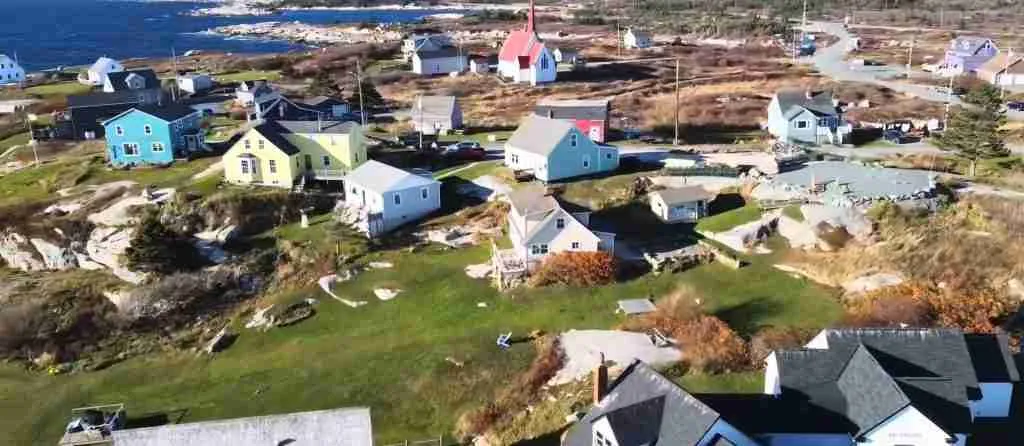
Peggy’s Cove Lighthouse stands as Nova Scotia’s most photographed landmark perched on massive granite rocks overlooking the Atlantic Ocean at the entrance to St. Margarets Bay 45 minutes southwest of Halifax. The iconic red-and-white lighthouse dates to 1868 with the current structure built in 1915, still operating as an active navigation aid while welcoming hundreds of thousands of visitors annually who photograph the lighthouse against crashing waves and ancient granite formations. The surrounding rocks warrant caution as powerful waves unexpectedly surge over ledges claiming lives with tragic regularity, with black-painted danger zones marking particularly hazardous areas where visitors must not venture despite tempting photo angles.
The adjacent fishing village of Peggy’s Cove retains authentic working character with lobster boats, fishing sheds, weathered homes, and stacked lobster traps creating picturesque scenes. Artist William deGarthe’s memorial commemorating fishermen lost at sea features a 30-meter granite outcrop carved with 32 life-sized figures of fishermen, their wives, children, and guardian angel created over four years from 1977-1981. Restaurants including Rhubarb Restaurant and The Sou’Wester serve seafood including lobster, fish-and-chips, and chowder with ocean views, though expect tourist pricing at CAD $18-35 ($13-26 USD) for lunch entrees.
Organized tours from Halifax including those operated by Ambassatours, Murphy’s The Cable Wharf, and local companies charge CAD $55-85 ($40-62 USD) per person for half-day trips combining Peggy’s Cove with other South Shore attractions like the Swissair Flight 111 memorial or coastal fishing villages. These tours provide transportation, guides explaining the area’s history and culture, and typically 60-90 minutes at Peggy’s Cove enabling lighthouse photography, village exploration, and lunch. Visitors driving independently should arrive before 10 AM or after 4 PM to avoid peak cruise ship crowds that descend midday during summer creating challenging parking and congested lighthouse access. Winter visits offer solitude and dramatic storms though ice and snow can make rocks extremely dangerous requiring winter boots with excellent traction.
Lunenburg UNESCO World Heritage Site 2026
Lunenburg represents the best-preserved British colonial settlement in North America earning UNESCO World Heritage designation in 1995 for its authentic town plan, architecture, and maritime heritage. Founded in 1753 as a British Protestant settlement countering French Catholic presence in Nova Scotia, Lunenburg thrived through shipbuilding, fishing, and maritime commerce with wealthy sea captains building elaborate homes displaying their prosperity. The town’s distinctive architecture features wooden homes painted in bright colors including the famous red, blue, yellow, and green facades photographed extensively, while church spires punctuate the hillside skyline overlooking Lunenburg Harbour’s working waterfront.
The downtown core maintains 18th and 19th-century character with well-preserved commercial buildings now housing galleries, craft shops, restaurants, and the excellent Fisheries Museum of the Atlantic documenting Nova Scotia’s fishing heritage. The museum occupies waterfront buildings showcasing fishing boats including schooner Theresa E. Connor and trawler Cape Sable both preserved as exhibits, aquarium tanks displaying local marine life, and extensive exhibits on fishing techniques, catches, and the industry’s social importance. Admission check official museum website for current pricing. Lunenburg Harbour still functions as a working port with fishing vessels, boat building yards, and the famous Bluenose II schooner when in port, a replica of the original Bluenose racing schooner appearing on Canadian dimes.
Reaching Lunenburg from Halifax requires 90-minute drives via Highway 103 passing through Mahone Bay, another attractive coastal town with notable church steeples worth a brief stop. Organized day tours from Halifax combining Lunenburg with Mahone Bay and sometimes Peggy’s Cove operate from CAD $95-140 ($70-102 USD) per person including transportation and guided commentary though allowing limited exploration time at each location. Independent drivers gain flexibility to spend 3-4 hours exploring Lunenburg thoroughly including the Fisheries Museum visit, waterfront walks, shopping, and lunch at restaurants like Salt Shaker Deli or Fleur de Sel serving fresh seafood at CAD $20-40 ($15-30 USD) per entree. Lunenburg rewards overnight stays enabling evening exploration after day-trippers depart and morning photography in soft light, with several heritage inns and B&Bs offering accommodations at CAD $135-220 ($100-160 USD) per room.
Bay of Fundy Tidal Experiences 2026
The Bay of Fundy between Nova Scotia and New Brunswick displays the world’s highest tides with water levels fluctuating up to 16 meters (53 feet) between high and low tide creating dramatic landscapes transforming twice daily. This tidal phenomenon results from the bay’s funnel shape concentrating tidal forces as water moves from the Atlantic into the narrowing bay. Several locations within 2-3 hours of Halifax provide accessible Fundy experiences including Burntcoat Head with the Guinness World Record for highest tides, Cape Chignecto’s rugged coastal hiking, and the tidal bore on rivers entering Minas Basin where incoming tides surge upstream against river currents.
Burntcoat Head Park near Maitland operates as the official highest tide observation point with interpretive center explaining tidal mechanics, viewing platforms overlooking mud flats that transform from exposed ocean floor at low tide to deep water at high tide within 6 hours, and beach access enabling walking on the ocean floor during low tide periods. Timing visits for the full tidal cycle requires consulting tide tables published online and at visitor centers, planning to arrive 2 hours before low tide enabling observation of receding water exposing the ocean floor followed by waiting 2-3 hours to watch incoming tides flood the basin. The dramatic transformation from walking on sea floor among stranded fishing boats to watching 40-foot cliffs disappear under rising water creates memorable experiences though requiring 4-6 hours including driving and tidal waiting.
Organized Bay of Fundy day tours from Halifax operate by several companies charging CAD $110-165 ($80-120 USD) per person for full-day excursions combining multiple stops including Burntcoat Head, tidal bore viewing, the town of Wolfville in the Annapolis Valley, and sometimes winery visits. These tours handle logistics including tide timing coordination and provide guided interpretation though long days with 5-6 hours driving round-trip plus stops. Independent drivers following the same routes gain flexibility for timing and stop selection though must coordinate personally with tide tables to ensure witnessing tidal changes rather than arriving at mid-tide when transformations occur less dramatically. Spring and fall bring highest tidal ranges during new and full moons creating most impressive demonstrations of tidal power.
Budget Breakdown Halifax 2026
Budget Traveler Daily Costs 2026
Budget travelers in Halifax can manage on CAD $95-145 ($70-105 USD) per person daily by staying in hostel dormitories at CAD $35-55 ($26-40 USD) per bed, preparing some meals from groceries while eating at casual spots for other meals totaling CAD $40-60 ($30-44 USD) for food, using public transit exclusively at CAD $6 ($4.40 USD) for two rides, and focusing on free attractions supplemented with occasional paid museums at CAD $10-20 ($7.30-15 USD) admission. This budget enables experiencing Halifax’s essential character while requiring strategic choices about priorities.
Hostel accommodation at Halifax Backpackers Heritage House or HI Halifax provides dorm beds with shared facilities, communal kitchens enabling self-catering, and social atmospheres facilitating connections with fellow travelers. Morning routine might include grocery store breakfast of bagels, fruit, and coffee for CAD $5 ($3.70 USD), packed lunch prepared from supermarket ingredients at CAD $8 ($5.80 USD), and evening donair or pizza at CAD $10-13 ($7.30-9.50 USD) leaving room for occasional sit-down meals at mid-range restaurants as budget permits. This food approach balances cost control with sampling Halifax specialties.
Free attractions consuming full days include walking the complete waterfront boardwalk, exploring Point Pleasant Park’s trails and shoreline, touring Halifax Public Gardens, viewing the Citadel exterior and grounds, and wandering South End neighborhoods photographing Victorian architecture. One paid museum admission every 2-3 days enables visiting Maritime Museum or Pier 21 without exceeding budget while the Canada Strong Pass providing free Citadel admission June 19-September 7, 2026 adds value for summer visitors. This budget level works for younger travelers, backpackers, and those prioritizing extended travel duration over comfort who accept shared dormitory sleeping, basic amenities, and self-catering meals.
Mid-Range Traveler Daily Costs 2026
Mid-range travelers spending CAD $170-280 ($125-205 USD) per person daily access comfortable experiences without luxury pricing. Hotel accommodation in 3-star properties costs CAD $130-172 ($95-125 USD) per room with two sharing bringing per-person costs to CAD $65-86 ($48-63 USD). Adding CAD $60-95 ($44-70 USD) for restaurant meals, CAD $10-15 ($7.30-11 USD) for occasional taxi rides supplementing public transit, CAD $25-40 ($18-30 USD) for attraction admissions, and CAD $10-15 ($7.30-11 USD) for coffee and snacks produces total daily costs around CAD $170-240 ($125-175 USD) per person with modest comfort.
Upgrading to 4-star hotels at CAD $172-210 ($125-155 USD) per room adds CAD $21-40 ($15-29 USD) per person when sharing accessing enhanced amenities including pools, gyms, better breakfast options, and superior room quality. This upgrade combined with slightly more generous dining at CAD $75-110 ($55-80 USD) daily and comprehensive attraction coverage including paid museums, tours, and experiences pushes daily costs to CAD $220-280 ($160-205 USD) per person representing the high end of mid-range travel with excellent comfort and convenience without reaching luxury territory.
This budget segment enables staying in well-located downtown hotels within walking distance of attractions, dining at recommended restaurants including waterfront spots for lobster and seafood without menu price concerns, visiting all desired museums and attractions, taking harbour tours or Peggy’s Cove excursions, and using taxis when convenient rather than only public transit. Most couples and families traveling Halifax target this budget range finding it delivers satisfying experiences with good value compared to major cities like Toronto or Vancouver where equivalent comfort costs 40-60% more.
Luxury Traveler Daily Costs 2026
Luxury travelers investing CAD $350-550+ ($255-400+ USD) per person daily access Halifax’s finest accommodations, dining, and experiences with minimal budget constraints. Premium 4-5 star hotels including The Muir, Sutton Place, or Halifax Marriott Harbourfront cost CAD $320-425 ($235-310 USD) per room bringing per-person costs to CAD $160-213 ($117-155 USD) when two share. Adding upscale dining at CAD $110-170 ($80-125 USD) daily enabling fine restaurants for dinner with wine plus quality breakfast and lunch, private transportation or frequent taxis at CAD $30-50 ($22-37 USD), comprehensive attraction access including private tours at CAD $40-80 ($30-58 USD), and shopping or entertainment spending at CAD $30-70 ($22-51 USD) produces daily totals around CAD $370-585 ($270-427 USD) per person.
Luxury accommodations provide harbor or city views, premium bedding, spa facilities, concierge services arranging reservations and tours, and ideal locations requiring minimal walking to reach attractions. Upscale dining experiences at restaurants like Stories, The Bicycle Thief, or Five Fishermen feature creative Atlantic cuisine with fresh seafood, quality wines, professional service, and sophisticated atmospheres with waterfront views or historic settings. Private guided tours with expert local guides explaining Halifax’s maritime heritage, Titanic connections, and military history enhance understanding while eliminating logistics stress.
This budget level particularly suits special occasions including anniversaries, milestone birthdays, or once-in-lifetime Atlantic Canada journeys where exceptional experiences justify premium costs. Halifax delivers impressive luxury value compared to international destinations where equivalent quality commands 50-100% higher daily costs. The city’s compact walkability means luxury travelers still benefit from pedestrian-friendly downtowns rather than requiring constant expensive transportation as in sprawling cities.
Sample Halifax Itineraries 2026
Three-Day First-Time Visitor Itinerary 2026
Day one focuses on waterfront exploration beginning with morning arrival at the Maritime Museum of the Atlantic when it opens at 9 AM avoiding later crowds. Spend 2 hours examining Titanic artifacts and Halifax Explosion exhibits before walking north along the boardwalk to Historic Properties for mid-morning coffee and waterfront atmosphere. Continue to the Alderney Ferry terminal for the 12-minute crossing to Dartmouth experiencing North America’s oldest saltwater ferry service with harbor views, then explore downtown Dartmouth’s cafes and public art before returning on the ferry. Afternoon proceeds south along the waterfront browsing shops, photographing fishing boats and harbor activities, and reaching Pier 21 Canadian Museum of Immigration by 2 PM. Spend 2 hours exploring immigration exhibits and personal stories before evening harbor sunset dinner at a waterfront restaurant like The Bicycle Thief. Total costs for day one include museum admissions, ferry rides at CAD $6 ($4.40 USD), and dinner around CAD $50-75 ($37-55 USD) per person.
Day two ascends to Halifax Citadel arriving by 11:30 AM to witness the noon gun firing, then spend 2-3 hours exploring ramparts, exhibits, and demonstrations by costumed interpreters. Descend via Jacob’s Ladder public stairs to Spring Garden Road for lunch at one of the area’s casual restaurants, then stroll through Halifax Public Gardens during afternoon hours when Victorian plantings display peak color and visitors are fewer than weekends. Walk Spring Garden Road’s shops and the architecturally stunning Halifax Central Library before evening exploring the North End’s craft brewery scene with dinner at a gastropub. Day two costs include Citadel admission and meals totaling approximately CAD $60-90 ($44-66 USD) per person.
Day three ventures to Peggy’s Cove either via organized tour departing downtown hotels at 9 AM or by rental car for independent exploration. Spend mid-morning photographing the lighthouse and exploring the village while avoiding peak midday cruise ship crowds, then either return to Halifax by early afternoon for Point Pleasant Park exploration or continue to Lunenburg for additional South Shore scenery and maritime heritage. Return to Halifax by late afternoon for final evening enjoying the waterfront, shopping for Nova Scotia products, or dining at a favorite restaurant discovered during the visit. Day three costs include either a tour at CAD $55-85 ($40-62 USD) per person or rental car at approximately CAD $80 ($58 USD) daily plus fuel at CAD $15-25 ($11-18 USD), combined with meals and any additional attraction admissions.
Five-Day Comprehensive Halifax Experience 2026
A five-day Halifax visit enables covering the three-day first-timer itinerary outlined above plus additional depth exploring neighborhoods, day trip options, and special interests. Day four might focus on the Eastern Shore driving to coastal villages like Peggy’s Cove, Prospect, Terence Bay, and East Dover experiencing working fishing communities less visited than Peggy’s Cove, or venturing inland to lake areas like Oakfield Provincial Park or Grand Lake for hiking and nature away from coastal tourist zones. Alternatively, dedicate day four to Lunenburg UNESCO World Heritage Site with overnight stay enabling thorough exploration of the Fisheries Museum, town architecture, galleries, and restaurants without rushing to return to Halifax same-day.
Day five could explore Annapolis Valley wine country 90 minutes from Halifax visiting wineries producing Tidal Bay white wines and ice wines unique to Nova Scotia’s climate, or journey to the Bay of Fundy experiencing world-record tides at Burntcoat Head combined with the Minas Basin scenic drive. Return to Halifax with time for final downtown shopping, museum visits missed earlier in the trip, or revisiting favorite waterfront spots discovered during initial days. This extended schedule removes rush allowing deeper engagement with places and people while accommodating weather flexibility if rain or fog disrupts planned outdoor activities.
Seasonal Considerations Halifax 2026
Summer Season June-August 2026
Summer delivers Halifax’s warmest and most consistent weather with daytime highs averaging 20-25°C (68-77°F), overnight lows around 13-15°C (55-59°F), and limited rainfall compared to spring and fall. Extended daylight hours with sunset after 9 PM in late June provide maximum sightseeing time, while ocean breezes moderate temperatures preventing the extreme heat experienced in central Canada during summer months. However, Atlantic fog can roll in unexpectedly particularly during June and early July creating cool damp conditions requiring jackets even on warm days, with visibility reducing from kilometers to meters within minutes as fog banks move onshore.
Peak tourism season from late June through August brings maximum crowds especially during cruise ship port days when 2,000-5,000 passengers overwhelm the waterfront boardwalk, restaurants, and shops creating lines, congestion, and challenging conditions for independent travelers. Hotel rates reach annual peaks at CAD $165-280+ ($120-205+ USD) per room for mid-range properties with advance booking essential particularly for weekend stays. Restaurants require reservations for weekend dinner service while popular lunch spots develop significant waits during midday cruise port calls. All attractions operate full schedules with extended hours at museums, daily programming at the Citadel, and maximum tour departures to Peggy’s Cove and other destinations.
Summer advantages include festival programming with events like Halifax Jazz Festival in July, Halifax Busker Festival in August, and numerous outdoor concerts and celebrations throughout the season. Beer gardens and waterfront patios operate at full capacity with live music on weekends creating vibrant atmosphere for evening entertainment. This season suits visitors prioritizing weather reliability, maximum attraction hours, and willingness to navigate crowds and premium pricing for peak-season Halifax experiences.
Shoulder Seasons May and September-October 2026
May represents spring shoulder season with increasing warmth as temperatures climb from 10-15°C (50-59°F) in early May to 15-20°C (59-68°F) by month’s end, though variable conditions including rain, fog, and occasional cold snaps require adaptable packing with layers and rain gear. Ocean temperatures remain frigid at 8-10°C (46-50°F) making beach activities unappealing, though onshore activities proceed comfortably on sunny days. Tourist crowds remain minimal until late May when summer season begins accelerating, while hotel rates stay 30-40% below summer peaks at CAD $115-180 ($84-132 USD) per room for mid-range properties. Most attractions operate full schedules by mid-May though some outdoor programming like Citadel demonstrations may start later in the month.
September through early October provides arguably ideal Halifax visiting conditions combining comfortable temperatures averaging 15-20°C (59-68°F), ocean water warming to 14-16°C (57-61°F) from summer heat retention, spectacular fall foliage beginning late September as maples and oaks turn brilliant reds and golds, and dramatically reduced crowds as families return to school and cruise ship season winds down. Hotel rates drop immediately after Labor Day bringing savings of 30-45% compared to August with mid-range properties available at CAD $130-190 ($95-140 USD) per room. Nearly all attractions maintain full operations through September, though some outdoor programming reduces slightly by October as cooler weather and shorter days arrive.
Late October sees increasing autumn chill with temperatures falling to 8-13°C (46-55°F), earlier sunsets around 6 PM limiting evening outdoor activities, and some attractions beginning winter schedule reductions or seasonal closures. However, the diminished crowds, excellent hotel value, and beautiful fall colors create compelling reasons to visit particularly for travelers prioritizing affordability and solitude over guaranteed warm weather. Shoulder season travelers should monitor weather forecasts closely, pack versatile clothing for variable conditions, and maintain schedule flexibility for weather-dependent activities like Peggy’s Cove visits better suited to clear days than fog or rain.
Winter Season November-March 2026-2027
Winter transforms Halifax into a quiet off-season destination with cold temperatures frequently below freezing from December through March, substantial snowfall averaging 150 centimeters accumulation seasonally, and bitter winds off the Atlantic creating wind chills substantially below actual temperatures. The city continues functioning as a working port and provincial capital rather than shutting down for winter, though tourism nearly ceases except during Christmas-New Year’s period. Hotel rates reach annual lows at CAD $95-160 ($70-117 USD) per room for mid-range properties enabling exceptional value for cold-tolerant visitors, while restaurants and attractions operate reduced but consistent hours serving local clientele.
Winter activities include exploring snowy Point Pleasant Park on cross-country skis when accumulation permits, photographing the frozen harbour and icy waterfront creating dramatic winter seascapes, and experiencing cozy pub culture as locals gather in warm establishments for craft beer, comfort food, and Maritime music. The Emera Oval near Halifax Commons operates as a large outdoor ice skating rink with free admission and skate rentals creating popular winter recreation. Some museums reduce operating hours or close Mondays during winter, though major attractions including Maritime Museum, Pier 21, and Halifax Citadel maintain year-round access with indoor exhibits particularly appealing during harsh weather days.
Christmas through New Year’s represents a brief winter peak when rates increase 40-60% above typical winter pricing and crowds return for holiday shopping, special events, and New Year’s Eve celebrations on the waterfront. The city decorates extensively with lights, while restaurants offer special menus and extended hours. However, weather unpredictability can disrupt plans with snowstorms occasionally forcing flights cancellations, road closures, and attraction shutdowns requiring flexible schedules and contingency planning. Winter suits budget-conscious travelers with cold tolerance seeking authentic local experiences without tourist crowds and willing to accept challenging weather conditions and reduced daylight for substantial cost savings.
Practical Planning Tips Halifax 2026
Packing Recommendations for Halifax 2026
Halifax’s maritime climate requires layered clothing even during summer months when fog and ocean breezes can create surprisingly cool conditions despite calendar dates suggesting summer warmth. Summer visitors should pack light jacket or sweater for evening waterfront walks and fog conditions, rain jacket or umbrella for occasional showers, comfortable walking shoes with good support for cobblestone waterfront streets and steep hills, and sun protection including hat and sunscreen for clear days. Casual dress predominates with very few restaurants requiring business casual or dressy attire, though upscale dining rooms appreciate collared shirts and long pants rather than t-shirts and shorts.
Spring and fall shoulder seasons demand more versatile wardrobes with medium-weight jacket or fleece, rain gear for increased precipitation probability, warm layers for cool mornings and evenings when temperatures may drop to 5-10°C (41-50°F), and both short and long-sleeve shirts enabling adjustment to variable conditions. Waterproof walking shoes or boots handle wet sidewalks and trails more effectively than summer sneakers, while scarf and light gloves prove useful for windy waterfront exploration during cooler shoulder season days. The “dress in layers” approach enables adding or removing items as temperature fluctuates throughout the day and between sun and shade, waterfront and inland areas.
Winter visitors require serious cold-weather equipment including insulated winter coat rated for -15 to -25°C (5 to -13°F), warm hat covering ears, insulated gloves or mittens, thermal underlayers, and winter boots with excellent traction for icy sidewalks and snow-covered surfaces. Halifax’s coastal winds create wind chills substantially colder than actual temperatures making windproof outerwear essential, while steep downtown streets covered in ice and packed snow demand winter boots preventing falls. Locals wear serious winter gear from December through March treating coastal winter conditions with respect rather than attempting to manage with inadequate lightweight jackets or running shoes inappropriate for conditions.
Money and Banking in Halifax 2026
Canadian currency uses dollars and cents with coins in denominations of 5¢, 10¢, 25¢, $1 (loonie), and $2 (toonie), while bills start at $5 and continue through $10, $20, $50, and $100. Pennies were eliminated from circulation in 2013 with cash transactions rounded to the nearest 5¢, though credit and debit cards charge exact amounts without rounding. Most businesses throughout Halifax accept major credit cards including Visa, Mastercard, and American Express, though smaller establishments, food trucks, and some cash-only restaurants exist requiring Canadian dollars.
Currency exchange at airport kiosks, downtown exchange bureaus, and banks provides Canadian dollars though airport rates typically include 4-6% worse exchange margins than downtown locations. Banks including RBC, TD, BMO, and Scotiabank have numerous downtown branches with ATMs dispensing Canadian dollars using international debit cards at favorable exchange rates set by card networks plus individual bank foreign transaction fees typically 2-3%. Using ATMs proves more economical than exchange bureaus for most travelers, though checking with your home bank about foreign ATM fees before travel avoids surprise charges.
Tipping customs in Halifax follow Canadian norms with 15-20% expected for restaurant table service, 15% standard for taxi rides, $2-3 per bag for hotel porters, and $3-5 daily for hotel housekeeping. Restaurant bills sometimes include automatic gratuity for groups of 6+ requiring careful checking to avoid double-tipping, while fast-casual counter service spots increasingly display tip prompts on payment terminals though expectations remain lower at 10-15% or skip tipping entirely when ordering and picking up food yourself. HST sales tax of 15% applies to most purchases with tax added at payment rather than included in displayed prices unlike European VAT systems.
Internet and Communication in Halifax 2026
WiFi access throughout Halifax proves extensive with free service at most hotels, cafes, restaurants, Halifax Transit ferries, Halifax Central Library, and many public spaces. Hotel WiFi typically works reliably in rooms and public areas though some budget properties may charge fees of CAD $5-10 ($3.70-7.30 USD) daily for access or restrict speeds on free tiers. Coffee shops including Tim Hortons, Starbucks, and independent cafes provide free WiFi with purchase creating convenient workspaces for travelers checking email, planning activities, or remote working while on extended stays.
International visitors should investigate roaming charges with home mobile carriers before arrival as unexpected roaming fees can accumulate rapidly at CAD $10-15 ($7.30-11 USD) per megabyte for data without roaming plans. Many carriers offer North American or international roaming packages providing better value than pay-as-you-go roaming rates. Alternatively, purchasing Canadian SIM cards from carriers including Rogers, Bell, or Telus enables local calling and data at Canadian rates, with prepaid options starting around CAD $35-50 ($26-37 USD) for 2-3 GB data plus local calling adequate for week-long visits. Convenience stores, mobile carrier stores, and electronics retailers sell prepaid SIM cards requiring unlocked phones for activation.
Safety and Health Considerations 2026
Halifax maintains low crime rates typical of mid-sized Canadian cities with violent crime rare in tourist areas and downtown core. Standard urban precautions including awareness of surroundings, securing valuables, and avoiding isolated areas late at night provide adequate security for most situations. The downtown waterfront, Public Gardens, and major attractions operate safely day and evening, while darker side streets away from main areas warrant more caution after midnight particularly when walking alone. Hotel safes enable securing passports, excess cash, and valuables avoiding need to carry everything daily.
Winter ice and snow create significant injury hazards on Halifax’s steep sidewalks and stairs with slips and falls common among visitors unfamiliar with navigating icy conditions. Wearing proper winter boots with good traction, taking extra care on stairways including the popular Jacob’s Ladder, and avoiding steep streets during icy conditions prevents injuries. Locals develop ice-walking techniques including shorter steps, keeping weight forward, and holding railings that visitors should adopt when exploring during winter months.
Medical services through emergency rooms at major hospitals including QEII Health Sciences Centre provide excellent care though wait times can extend to hours for non-emergency conditions. Walk-in clinics throughout Halifax treat minor ailments, injuries, and illnesses with shorter waits than emergency rooms. Travel health insurance proves essential for international visitors as Canadian healthcare system does not cover non-residents, potentially leaving travelers with substantial bills for medical care. United States visitors should verify whether their health insurance provides Canadian coverage before traveling.
Frequently Asked Questions About Halifax 2026
Do I need a car in Halifax in 2026?
Cars prove unnecessary for visitors remaining in downtown Halifax as the compact walkable core places attractions, restaurants, and hotels within 2 kilometers of each other, while Halifax Transit buses and ferries provide economical access to outlying neighborhoods. Walking the flat waterfront boardwalk, ascending to the Citadel, and exploring the South End requires only comfortable shoes and moderate fitness without vehicle assistance. Downtown hotel parking fees of CAD $20-40 ($15-30 USD) nightly plus limited street parking with meters charging CAD $3-4 ($2.20-3 USD) hourly from 8 AM to 6 PM make cars more burden than benefit for downtown-focused visits. However, day trips to Peggy’s Cove, Lunenburg, Bay of Fundy, or Annapolis Valley require either rental cars or organized tours as public transit to these destinations proves limited or nonexistent. Visitors planning multiple day excursions should rent cars for those specific days through daily rental rather than week-long bookings eliminating parking fees when vehicles sit unused during downtown days. Those combining Halifax with broader Nova Scotia exploration including Cape Breton, South Shore villages, or multi-day scenic drives obviously benefit from rental cars providing freedom and flexibility impossible via public transit.
Is tap water safe to drink in Halifax in 2026?
Halifax municipal tap water meets Canadian drinking water standards and flows safely from taps throughout the city without requiring boiling or filtration. The water originates from Lake Major, Pockwock Lake, and Bennery Lake protected watersheds northeast of Halifax providing clean supply requiring only standard municipal treatment before distribution. Visitors from countries with questionable water quality can drink tap water confidently in Halifax hotels, restaurants, and public facilities without concerns about waterborne illness. Bottled water sold in stores and restaurants proves unnecessary from safety perspectives though some visitors prefer bottled water taste or convenience. Restaurants serve tap water free when requested rather than automatically providing bottled water as occurs in some European countries, allowing budget-conscious diners to avoid bottled water charges while staying hydrated.
What language is spoken in Halifax in 2026?
English serves as the primary language throughout Halifax and Nova Scotia more broadly, spoken by the overwhelming majority of residents in daily life, business, tourism, and government. French-English bilingualism common in Quebec and New Brunswick appears less frequently in Nova Scotia though federal government services and some signage includes French as Canada’s other official language. Tourist industry workers including hotel staff, restaurant servers, tour guides, and museum personnel operate comfortably in English making communication straightforward for English-speaking visitors. Small immigrant communities including Lebanese, Korean, and others may speak native languages within their communities though conduct business and tourism interactions in English. Visitors speaking only English face no communication barriers exploring Halifax, while those speaking French as primary language will find some bilingual services though less comprehensively than in Quebec or Ottawa.
Can I see the Northern Lights from Halifax in 2026?
Halifax’s southern latitude at 44.6°N places it well beyond the typical Aurora Borealis viewing zone which concentrates in northern Canada above 55°N latitude including Yukon, Northwest Territories, and northern regions of provinces. Major geomagnetic storms occasionally push auroral displays far enough south to become visible in Nova Scotia, occurring perhaps 3-8 nights annually during strong solar activity periods though visibility remains uncertain and displays appear less vibrant than northern locations. Viewing requires traveling away from Halifax’s light pollution to dark-sky locations like wilderness areas or offshore islands, monitoring aurora forecast websites for heightened activity alerts, and accepting that most nights show nothing despite forecasts. Visitors specifically wanting Northern Lights experiences should target destinations like Yellowknife, Whitehorse, Churchill, or Iceland rather than Halifax where occasional sightings occur but reliable viewing proves impossible. However, Halifax offers excellent stargazing from dark locations during new moon periods with Milky Way visible from Point Pleasant Park, rural Nova Scotia locations, or offshore islands when skies clear.
What are Halifax’s unique local foods to try in 2026?
The Halifax donair represents the city’s signature dish created in the 1970s by Greek immigrant restaurateur introducing spiced beef cooked on a vertical rotisserie, shaved thin, and served in pita with tomatoes, onions, and sweet condensed milk sauce creating distinctive flavor unlike Mediterranean döner kebabs or Greek gyros. Authentic donairs from pizza shops and specialized donair restaurants cost CAD $8-13 ($5.80-9.50 USD) with late-night donair consumption forming Halifax cultural tradition after bars close. Lobster rolls showcase Nova Scotia’s lobster fishing heritage with fresh lobster meat served cold with mayonnaise or hot with butter in toasted split-top buns, available at waterfront restaurants and seafood shacks for CAD $20-32 ($15-23 USD) depending on market lobster prices. Fish and chips using Atlantic cod or haddock fried in crispy batter with thick-cut fries appears on most casual restaurant menus at CAD $15-25 ($11-18 USD), while higher-end restaurants serve pan-seared or grilled Atlantic fish including halibut, swordfish, and local catches with creative preparations. Oatcakes represent traditional Scottish-influenced baked goods made from oats, butter, and sugar in round flat cakes sold at farmers markets and Scottish heritage establishments. Blueberries grow wild throughout Nova Scotia appearing in pies, jams, pancakes, and desserts during summer months when fresh berries peak from July through August. Local craft beers from Alexander Keith’s historic brewery and newer craft operations including Garrison Brewing, Propeller Brewing, and Good Robot Brewing showcase Nova Scotia’s brewing culture with innovative styles alongside traditional ales.
How far in advance should I book Halifax hotels for 2026?
Summer peak season from late June through August requires booking 2-3 months minimum in advance for reasonable selection and rates, with popular waterfront properties and well-reviewed mid-range hotels often selling out 4+ months ahead for July-August weekends. Waiting until 2-4 weeks before summer arrival leaves limited options at inflated rates as remaining inventory prices higher taking advantage of desperate last-minute bookers. Cruise ship port days see particularly strong demand as some cruise passengers book hotels for pre- or post-cruise stays combining with independent travelers creating tight inventory. Shoulder seasons in May, September, and October allow shorter booking windows of 4-8 weeks securing good selection and rates, while winter months November through March enable booking 2-3 weeks ahead or sometimes even same-week as demand remains minimal. Special events including New Year’s Eve, major conferences, or sporting tournaments create demand spikes warranting earlier booking when schedules align with these dates. Budget properties and hostels generally maintain availability longer than upscale hotels as inventory levels remain higher and traveler profiles include more spontaneous bookers, though quality budget properties in prime locations still benefit from advance reservations during summer. Booking cancellable rates even far in advance provides insurance against plan changes while securing rooms and reasonable rates, with most hotels allowing free cancellation until 24-72 hours before arrival enabling shopping for better deals closer to travel dates.
Are credit cards widely accepted in Halifax in 2026?
Major credit cards including Visa, Mastercard, and American Express work at the vast majority of Halifax hotels, restaurants, attractions, shops, and services with contactless tap payment increasingly common for transactions under CAD $250 ($183 USD). Most establishments have adapted to chip-and-PIN technology standard in Canada though magnetic stripe fallback remains available for older cards, while contactless payment via cards or mobile phone wallets streamlines small transactions without PIN entry. However, some contexts still require cash including food trucks along the waterfront boardwalk, small ethnic restaurants in residential neighborhoods, farmers market vendors at Seaport Farmers Market, and occasional small shops or cafes preferring cash to avoid credit card processing fees. Transit payment via Halifax Transit’s HFXGO app eliminates exact change requirements though cash remains accepted on buses. Travelers should carry CAD $50-100 ($37-73 USD) cash for contingencies though credit cards handle 85-90% of typical tourist transactions. Notifying credit card companies before international travel prevents fraud alerts freezing cards when foreign transactions appear, while verifying foreign transaction fee policies before travel avoids surprise 2-3% fees some cards charge on international purchases. Credit cards offering no foreign transaction fees provide best value for Halifax spending, while those carrying fees make ATM cash withdrawals for large expenses potentially more economical despite ATM fees.
What are the best photo spots in Halifax in 2026?
The Halifax Waterfront Boardwalk provides countless photography opportunities with colorful fishing boats, historic buildings, harbour activities, and working vessels creating Maritime atmosphere particularly attractive during golden hour before sunset when warm light illuminates wooden docks and stone buildings. The view from Halifax Citadel ramparts encompasses 360-degree panoramas including downtown skyline, harbour entrance with container terminals, Georges Island in the harbour mouth, and residential neighborhoods cascading down hillsides creating iconic Halifax images particularly dramatic with fog banks rolling through the harbour or during blue hour twilight. Rainbow-painted crosswalks and street art in downtown areas add urban color while Victorian homes in the South End with distinctive architecture and manicured gardens photograph beautifully particularly along South Park Street, Dresden Row, and Oakland Road where colorful painted wood homes and mature trees create postcard scenes. Point Pleasant Park offers rugged coastal landscapes with waves crashing on granite rocks, isolated beaches with driftwood, and forest trails creating nature photography opportunities just minutes from downtown. Peggy’s Cove Lighthouse on massive granite boulders provides Nova Scotia’s most iconic image requiring early morning or late afternoon timing to avoid midday cruise ship crowds and harsh overhead light, while dawn or dusk delivers dramatic sky colors and softer light enhancing compositions.
Is Halifax good for solo travelers in 2026?
Halifax welcomes solo travelers with safe walkable downtown, friendly locals willing to provide directions and recommendations, extensive hostel infrastructure facilitating social connections, and manageable size preventing overwhelming confusion common in larger cities. The compact downtown places attractions within walking distance eliminating complex transit navigation, while Halifax Transit’s simple bus system uses flat fares and the helpful HFXGO app making independent movement straightforward. Hostels including Halifax Backpackers organize group activities like pub crawls and day trips to Peggy’s Cove creating instant social circles for solo travelers seeking companionship, while dorm accommodations naturally facilitate meeting fellow travelers. Solo dining proves comfortable at Halifax’s many casual restaurants, waterfront pubs, and food trucks where counter seating or communal tables accommodate individuals without awkwardness of dining alone at formal table-service restaurants. Safety concerns remain minimal in tourist areas with solo travelers of all genders walking downtown and waterfront safely during evening hours, though standard urban precautions about awareness and avoiding isolated areas late at night apply. The city’s maritime heritage, multiple museums, walking trails, and waterfront atmosphere provide engaging activities for solo travelers whether seeking solitude in Point Pleasant Park or social interaction at busy waterfront beer gardens. Solo female travelers report feeling safe and comfortable exploring Halifax independently, while solo male travelers find the compact city easy to navigate and locals approachable for conversation in pubs and cafes. Overall Halifax ranks among Canada’s easiest cities for solo travel given its safety, walkability, social infrastructure, and welcoming culture.
Can I swim in the ocean at Halifax beaches in 2026?
Ocean swimming around Halifax remains possible though water temperatures test endurance even during peak summer months when Atlantic temperatures reach only 14-16°C (57-61°F) far colder than Gulf of Mexico, Caribbean, or even Pacific Northwest waters. Beaches including Crystal Crescent Beach 25 minutes south of Halifax, Lawrencetown Beach on the Eastern Shore popular with surfers, and Queensland Beach offer ocean access with sand, changing facilities, and lifeguards during summer though most swimmers limit time to quick dips rather than extended swimming due to cold water. Wetsuits enable comfortable longer swims or surfing sessions with local surf shops renting equipment including wetsuits, boards, and accessories for those attempting Atlantic surfing at Lawrencetown or Martinique Beach where consistent waves attract surf culture despite frigid water. Children and less cold-tolerant swimmers prefer freshwater lakes including Chocolate Lake, Albro Lake, and Williams Lake where summer temperatures reach comfortable 20-23°C (68-73°F) allowing extended swimming and water play with sandy beaches, picnic areas, and facilities at supervised provincial parks. Peak swimming season runs mid-July through late August when both ocean and lake temperatures maximize though even then Atlantic swimming appeals primarily to hardy souls comfortable with cold water rather than casual swimmers expecting Caribbean warmth. September sees ocean temperatures peak from accumulated summer heat though air temperatures begin cooling creating less appealing swimming conditions despite relatively warmer water compared to June. Overall Halifax swimming emphasizes rugged Atlantic experiences and freshwater lakes rather than tropical beach resort swimming with cold water and Maritime climate creating different beach culture than warmer destinations.