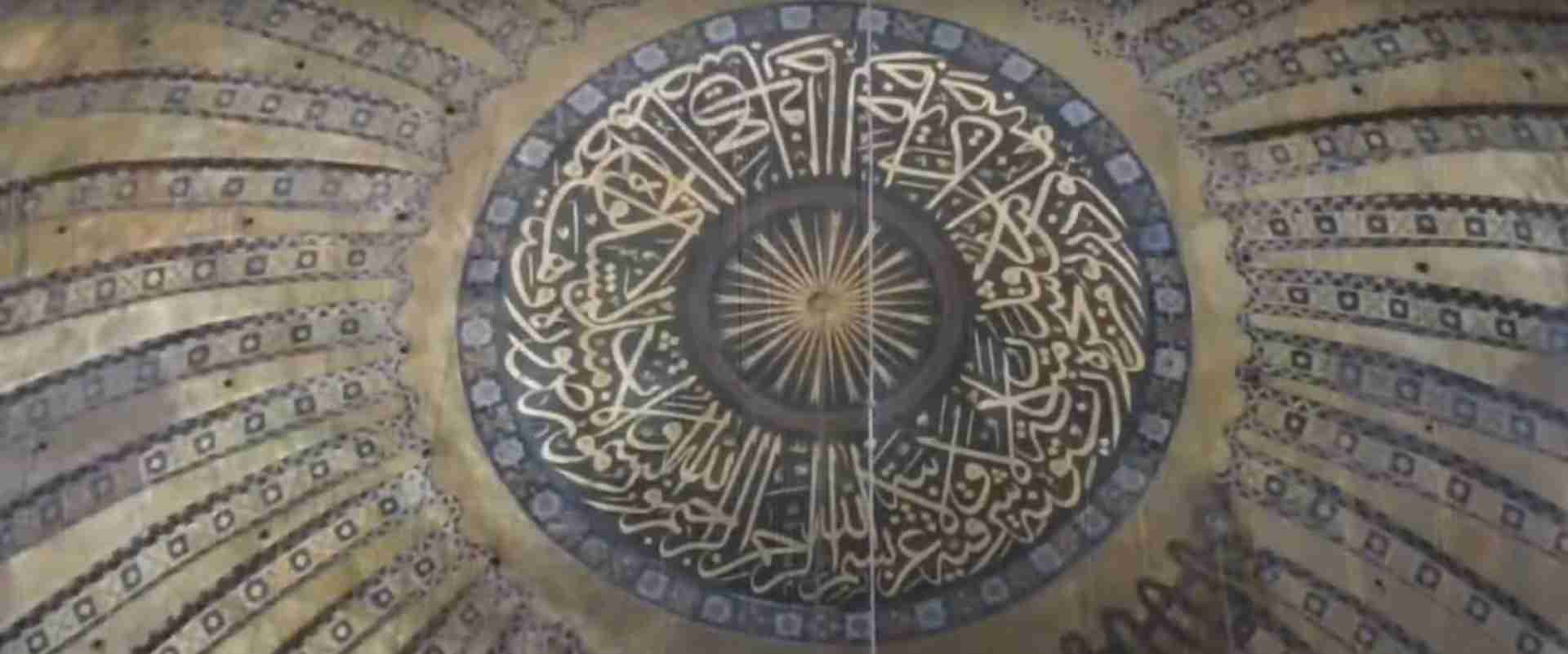
Hagia Sophia History: The Extraordinary Journey from Byzantine Cathedral to Ottoman Mosque
The history of Hagia Sophia reads like an epic novel spanning 1,500 years of human civilization. This UNESCO World Heritage Site has witnessed the rise and fall of two mighty empires, survived countless earthquakes, wars, and political upheavals, and emerged as one of the world’s most significant architectural and cultural monuments. Understanding its layered history is essential to appreciating why this magnificent structure continues to captivate millions of visitors in modern Istanbul.
Key Takeaways
- Three different buildings have occupied the site since 360 AD, with the current structure dating to 537 AD
- 1,000-year reign as world’s largest cathedral until Seville Cathedral was completed in 16th century
- Bloodless transformation in 1453 when Sultan Mehmed II converted it from church to mosque
- Revolutionary architectural design by Anthemius of Tralles and Isidore of Miletus influenced centuries of religious buildings
- UNESCO World Heritage status since 1985 recognizing its outstanding universal value
- Unique preservation of both Christian and Islamic elements creating an unparalleled cultural synthesis
The First Churches: Constantine’s Vision (325-537 AD)
Constantine’s Megale Ekklesia
The story of Hagia Sophia begins with Roman Emperor Constantine I, who commissioned the first Christian church on this site in 325 AD. Built on the foundations of a pagan temple, this initial structure was called Megale Ekklesia (Great Church) and represented Constantine’s vision of Christianity as the empire’s official religion.
Constantine chose this location strategically at the tip of Istanbul’s historic peninsula, surrounded on three sides by the Golden Horn, Bosphorus, and Sea of Marmara. This positioning symbolized the church’s role as the spiritual heart of “New Rome” – Constantinople, the city that would bear his name for over a millennium.
The first church was consecrated in 360 AD by Constantine’s son, Constantius II. Historical accounts describe a magnificent basilica adorned with marble columns, precious metals, and elaborate decorations befitting the capital’s premier religious site.
Destruction and Rebuilding
The original Megale Ekklesia met its end in 404 AD during violent riots following the second exile of John Chrysostom, the popular Patriarch of Constantinople. The fire that consumed the church reflected the intense religious and political tensions of the early Byzantine period.
Emperor Theodosius II ordered the church’s reconstruction, creating a larger and more impressive structure. This second church was rededicated in 415 AD and served the Christian community for over a century. Archaeological excavations have revealed remnants of this second church’s foundations, showing it followed traditional basilica design with a wooden roof and marble decorations.
However, this second structure also fell victim to violence during the infamous Nika Riots of January 532 AD, when supporters of competing chariot racing teams clashed with imperial forces, nearly toppling Emperor Justinian I from power.
Justinian’s Architectural Revolution (532-537 AD)
A Vision Beyond Imagination
The destruction of the second church provided Emperor Justinian I with an unprecedented opportunity to create something extraordinary. Rather than simply rebuilding, he envisioned a revolutionary structure that would surpass all existing religious buildings and stand as a testament to Byzantine power and Christian faith.
Justinian famously declared his ambition to create a building that would rival Solomon’s Temple in Jerusalem. He reportedly consulted not only with architects but also with mathematicians, engineers, and theologians to achieve his vision of creating heaven on earth.
Master Architects and Revolutionary Design
For this monumental project, Justinian selected two brilliant minds: Anthemius of Tralles, a renowned mathematician and engineer, and Isidore of Miletus, a physicist and architect. Their collaboration would produce one of history’s most innovative structural designs.
The architects’ revolutionary approach centered on supporting a massive central dome using pendentives – curved triangular segments that transfer the dome’s weight to four massive piers. This technique, refined at Hagia Sophia, allowed for an unprecedented sense of open space and ethereal light that made the dome appear to float weightlessly.
Construction Marvel
Construction began immediately after the Nika Riots ended in February 532 AD. The speed of construction was remarkable for such an ambitious project – the entire building was completed in just five years and ten months.
The construction employed over 10,000 workers and utilized materials gathered from across the Byzantine Empire. Purple porphyry came from Egypt, green marble from Thessaly, black stone from the Bosphorus region, and yellow stone from North Africa. Justinian reportedly raided ancient temples throughout the empire for the finest columns and decorative elements.
Contemporary accounts describe the emperor personally supervising construction, often appearing at the site to ensure his vision was being realized. The project consumed vast imperial resources, with some historians suggesting it cost the equivalent of several years of imperial revenue.
The Great Consecration
On December 27, 537 AD, Justinian proudly consecrated his masterpiece. Legend records his exclamation upon entering the completed building: “Solomon, I have surpassed thee!” This boast was not mere imperial hubris – the scale, innovation, and grandeur of Hagia Sophia truly surpassed all previous architectural achievements.
Byzantine Golden Age (537-1453 AD)
Center of Eastern Christianity
For nearly 1,000 years, Hagia Sophia served as the most important church in Eastern Christianity. As the seat of the Ecumenical Patriarch of Constantinople, it hosted crucial religious ceremonies, imperial coronations, and theological debates that shaped Christian doctrine.
The building’s significance extended far beyond Constantinople. Pilgrims traveled from across the Christian world to experience its divine beauty, while its architectural influence spread throughout the Byzantine Empire and beyond, inspiring countless churches from Russia to Italy.
Iconoclastic Struggles (726-843 AD)
The 8th and 9th centuries brought profound challenges during the Iconoclastic period, when Byzantine emperors banned religious images and ordered their destruction. This theological controversy had dramatic implications for Hagia Sophia’s decoration.
Emperor Leo III initiated the first wave of iconoclasm in 726 AD, ordering the removal or destruction of figurative mosaics throughout the empire. At Hagia Sophia, magnificent religious scenes were plastered over or destroyed, leaving only geometric and floral patterns.
The end of iconoclasm in 843 AD, known as the “Triumph of Orthodoxy,” triggered a renaissance of religious art. The first major figurative mosaic created after this period was the Virgin and Child in the apse, installed around 867 AD with an inscription celebrating the restoration of religious images: “The images which the imposters had cast down here pious emperors have again set up.”
Architectural Challenges and Renovations
Hagia Sophia’s ambitious dome faced significant structural challenges throughout the Byzantine period. The first partial collapse occurred in 558 AD due to earthquakes and structural stress, requiring extensive repairs by Isidore the Younger, nephew of the original architect.
Subsequent earthquakes in 869 and 989 AD necessitated additional repairs and structural reinforcements. Each restoration preserved the building’s basic design while incorporating contemporary artistic styles and engineering improvements.
Mosaic Masterpieces
Between the 9th and 14th centuries, successive Byzantine emperors commissioned magnificent mosaics that transformed Hagia Sophia into a glittering jewel box of religious art. These included:
Imperial Portraits: Mosaics depicting emperors and empresses offering gifts to Christ and the Virgin Mary, demonstrating the close relationship between church and state in Byzantine culture.
Religious Scenes: Biblical narratives and saints’ portraits that served both decorative and educational purposes in an era when most Christians were illiterate.
The Deësis Mosaic: Created around 1261 AD, this masterpiece showing Christ flanked by the Virgin Mary and John the Baptist represents the pinnacle of Byzantine artistic achievement with its remarkable expressiveness and technical sophistication.
Ottoman Transformation (1453-1931 AD)
Mehmed II’s Historic Decision
On May 29, 1453 AD, Sultan Mehmed II entered Constantinople as conqueror, ending over 1,000 years of Byzantine rule. His decision regarding Hagia Sophia would define the building’s next 500 years of history.
Rather than destroying this symbol of Byzantine Christianity, Mehmed II demonstrated remarkable cultural sensitivity by ordering its immediate conversion to a mosque. This decision reflected both practical considerations – the Ottoman elite needed a grand mosque worthy of their new capital – and a sophisticated understanding of the building’s extraordinary value.
The conversion process began immediately after the conquest. Mehmed II personally attended the first Friday prayers held in the newly designated Ayasofya Mosque on June 1, 1453, establishing a tradition that continues today.
Sensitive Islamic Adaptations
The Ottoman transformation of Hagia Sophia demonstrated remarkable architectural and cultural sensitivity. Rather than destroying Christian elements, Ottoman architects developed innovative solutions to adapt the space for Islamic worship while preserving its essential character:
Mihrab Installation: A beautifully carved marble mihrab was installed to indicate the direction of Mecca. Due to the building’s east-west Christian orientation, the mihrab had to be positioned at an angle, creating an interesting geometric tension that architects resolved elegantly.
Minbar Addition: An intricately carved wooden minbar (pulpit) was installed for delivering Friday sermons, showcasing the finest Ottoman woodworking craftsmanship.
Minaret Construction: Four minarets were added progressively – initially a wooden structure by Mehmed II, followed by brick and stone minarets under subsequent sultans. These towers became integral to Istanbul’s iconic skyline.
Covering Christian Imagery: Rather than destroying Byzantine mosaics, Ottomans simply covered figurative images with plaster or whitewash, preserving them for future generations. Geometric and floral mosaics remained visible, creating a unique synthesis of Christian and Islamic art.
Architectural Enhancements
Ottoman sultans continuously enhanced Hagia Sophia throughout their 481-year stewardship:
Suleiman the Magnificent (1520-1566): Added massive bronze candlesticks from his Hungarian conquests and commissioned the famous architect Mimar Sinan to strengthen the building with external buttresses that became part of its distinctive silhouette.
Later Additions: Subsequent sultans added a library, tomb complex, and madrasah (religious school), creating a comprehensive religious complex that served the community’s educational and spiritual needs.
Preservation Efforts
The Fossati Brothers, Italian architects, conducted major restoration work between 1847-1849 under Sultan Abdülmecid I. Their meticulous documentation of the building’s condition and their careful exposure of hidden Byzantine mosaics provided invaluable historical records while ensuring structural stability.
Modern Era Transformation (1931-Present)
Atatürk’s Revolutionary Decision
In 1931, Mustafa Kemal Atatürk made the groundbreaking decision to secularize Hagia Sophia and convert it into a museum. This unprecedented move reflected his vision of modern Turkey as a bridge between East and West, accommodating both its Islamic heritage and its pre-Islamic past.
The museum conversion allowed for the exposure and restoration of Byzantine mosaics that had been covered for centuries. The juxtaposition of Christian and Islamic elements created a unique cultural space that celebrated Turkey’s complex heritage.
UNESCO World Heritage Recognition
In 1985, UNESCO inscribed the “Historic Areas of Istanbul” on the World Heritage List, with Hagia Sophia as a central component. The designation recognized the building’s “outstanding universal value” as a masterpiece of human creative genius and its unique testimony to cultural interchange.
The UNESCO criteria emphasized Hagia Sophia’s role as an architectural influence on mosque design throughout the Islamic world and its exceptional collection of mosaics representing both Eastern and Western artistic traditions.
International Restoration Efforts
The Byzantine Institute of America, led by Thomas Whittemore, conducted crucial restoration work from 1931-1949, uncovering and preserving the building’s magnificent mosaics. This international collaboration demonstrated global commitment to preserving this shared heritage.
Subsequent restoration projects have involved experts from multiple countries, employing cutting-edge conservation techniques to ensure Hagia Sophia’s preservation for future generations.
Return to Mosque Status (2020)
On July 24, 2020, President Recep Tayyip Erdoğan signed a decree reconverting Hagia Sophia to mosque status, ending its 86-year period as a museum. This decision sparked international debate while reflecting contemporary Turkish political and religious sentiments.
The reconversion maintains public access for tourists and preserves both Christian and Islamic elements, with special arrangements to protect the Byzantine mosaics during prayer times. The building continues to serve as both an active place of worship and a cultural monument welcoming visitors from around the world.
Architectural Legacy and Global Influence
Revolutionary Engineering Solutions
Hagia Sophia’s architectural innovations influenced religious building design for over 1,500 years. The pendentive dome system, perfected in this structure, became the standard solution for supporting large domes over square spaces.
The building’s successful integration of horizontal and vertical elements created a sense of infinite space that architects have attempted to replicate in countless churches, mosques, and secular buildings worldwide.
Islamic Architecture Inspiration
Ottoman architects drew heavily on Hagia Sophia’s design principles for their own mosque constructions. The great architect Mimar Sinan explicitly acknowledged his debt to Hagia Sophia in designing masterpieces like the Süleymaniye Mosque and Selimiye Mosque.
The influence extended throughout the Ottoman Empire and beyond, with Hagia Sophia-inspired mosques built from Cairo to Sarajevo, creating a distinctive architectural language that merged Byzantine structural systems with Islamic decorative programs.
Cultural Synthesis and Shared Heritage
Symbol of Religious Tolerance
Throughout its history, Hagia Sophia has embodied remarkable religious tolerance and cultural synthesis. The Ottoman decision to preserve rather than destroy Christian elements created a unique space where different faith traditions coexist within the same architectural framework.
This approach influenced broader Ottoman policies toward religious minorities and established precedents for cultural preservation that remain relevant in today’s multicultural world.
Modern Diplomatic Significance
Hagia Sophia continues to serve as a diplomatic symbol representing the complex relationships between Christianity and Islam, East and West, tradition and modernity. International discussions about its status reflect broader conversations about religious freedom, cultural heritage, and national identity.
Lessons from 1,500 Years of History
Resilience Through Change
Hagia Sophia’s survival through earthquakes, conquests, religious controversies, and political transformations demonstrates remarkable architectural and cultural resilience. Each challenge prompted adaptations that preserved essential characteristics while allowing evolution.
Heritage Preservation Models
The building’s history offers valuable lessons for modern heritage preservation efforts. The Ottoman approach of adaptation rather than destruction, combined with modern restoration techniques and international cooperation, provides models for protecting cultural monuments worldwide.
Conclusion: A Living Monument to Human Achievement
The history of Hagia Sophia encompasses the full sweep of Mediterranean and Middle Eastern civilization over the past 1,500 years. From Constantine’s vision of a Christian capital to Justinian’s architectural revolution, from Ottoman cultural synthesis to modern UNESCO recognition, this extraordinary building has continuously adapted while maintaining its essential grandeur.
Understanding this layered history enhances any visit to Hagia Sophia, transforming a sightseeing experience into a profound encounter with the forces that have shaped our world. As both an active place of worship and a UNESCO World Heritage Site, Hagia Sophia continues to make history while preserving the remarkable legacy of human creativity, faith, and cultural exchange.
Visitors today witness not just a building but a living document of 1,500 years of human achievement, conflict, and reconciliation – a testament to the power of architecture to transcend political and religious boundaries while inspiring generations across cultures and centuries.
Frequently Asked Questions
How many different buildings have stood on the Hagia Sophia site?
Three different structures have occupied this site. The first (360-404 AD) was Constantine’s Megale Ekklesia, destroyed in riots. The second (415-532 AD) was Theodosius II’s reconstruction, destroyed in the Nika Riots. The current building (537 AD-present) was commissioned by Justinian I.
Why did Sultan Mehmed II choose to convert rather than destroy Hagia Sophia?
Mehmed II’s decision reflected both practical needs for a grand imperial mosque and sophisticated understanding of the building’s architectural and cultural value. The preservation approach became a model for Ottoman cultural policies and demonstrated respect for conquered peoples’ heritage.
What happened to the Christian mosaics during Ottoman rule?
Rather than destroying them, Ottomans covered figurative Christian mosaics with plaster or whitewash while leaving geometric and floral patterns visible. This preservation method protected the artwork until 20th-century restoration efforts could properly uncover and conserve them.
How did Hagia Sophia influence later Islamic architecture?
The building’s pendentive dome system and spatial organization directly influenced Ottoman mosque design. Architect Mimar Sinan and others studied Hagia Sophia extensively, adapting its structural innovations for mosques throughout the Ottoman Empire and creating a distinctive architectural synthesis.
When and why was Hagia Sophia made a UNESCO World Heritage Site?
UNESCO inscribed the “Historic Areas of Istanbul” including Hagia Sophia in 1985, recognizing its outstanding universal value as a masterpiece of human creative genius and unique testimony to cultural interchange between Europe and Asia over many centuries.
What was the significance of the Iconoclastic period for Hagia Sophia?
During Iconoclasm (726-843 AD), figurative religious images were banned and destroyed throughout the Byzantine Empire. At Hagia Sophia, many mosaics were destroyed or covered. The end of Iconoclasm in 843 AD triggered a renaissance of religious art, beginning with the Virgin and Child apse mosaic.
How has Hagia Sophia survived earthquakes over 1,500 years?
The building has endured multiple major earthquakes (558, 869, 989 AD and others) through original engineering excellence and continuous maintenance. Each earthquake required repairs that often strengthened the structure, while Ottoman additions like Sinan’s buttresses enhanced seismic stability.
What role did international experts play in Hagia Sophia’s preservation?
The Fossati Brothers (1847-1849) conducted crucial documentation and restoration under Ottoman rule. Later, the Byzantine Institute of America (1931-1949) led by Thomas Whittemore uncovered and restored many mosaics, establishing international collaboration models for heritage preservation.
How does Hagia Sophia’s current status as a mosque affect tourism?
The 2020 reconversion to mosque status maintains tourist access while requiring visitors to respect prayer times and dress codes. The arrangement preserves both the building’s function as an active place of worship and its role as a cultural monument open to global visitors.
What makes Hagia Sophia architecturally unique compared to other Byzantine churches?
Hagia Sophia’s revolutionary pendentive dome system, massive scale, and integration of horizontal and vertical elements created unprecedented interior space and lighting effects. These innovations influenced religious architecture for centuries and established new possibilities for monumental building design.