
Ha Long Bay Photography Guide: Mastering the Karst Landscape
This comprehensive photography guide examines technical approaches, creative strategies, and practical considerations for capturing Ha Long Bay’s essence. Whether shooting from cruise decks, kayaks at water level, or elevated viewpoints on limestone peaks, photographers discover compositions that range from grand landscapes to intimate details of weathered rock, floating villages, and traditional wooden junk boats that add human scale to the monumental karst scenery.
Key Takeaways
- Golden hour light transforms karst limestone towers into glowing sculptures, with sunrise at 5:30-6:30 AM and sunset at 5:30-6:30 PM providing optimal conditions
- Wide-angle lenses (16-35mm) capture the bay’s expansive karst formations, while telephoto lenses (70-200mm) isolate distant limestone towers for dramatic compositions
- Mist and fog between November-March create ethereal atmospheres that define Ha Long Bay’s iconic aesthetic in photography
- Elevated viewpoints on Ti Top Island, cruise ship decks, and karst peak summits provide superior perspectives for capturing the bay’s limestone labyrinth
- Long exposure techniques smooth choppy waters and emphasize the stillness that contrasts with the dramatic vertical karst formations
- Polarizing filters cut through water surface glare and deepen blue skies, essential for midday photography when golden hour isn’t available
Photographing Ha Long Bay’s UNESCO Landscape
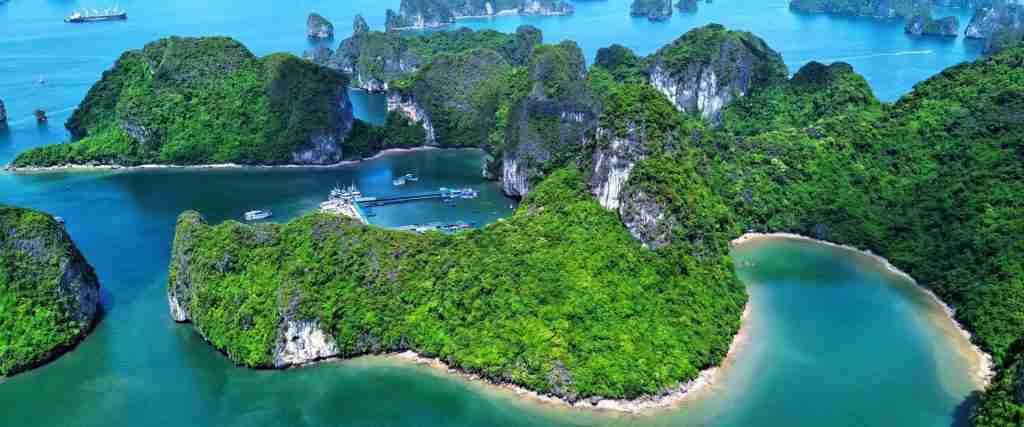
Ha Long Bay presents photographers with one of Earth’s most distinctive seascapes—nearly 2,000 limestone karst towers rising from emerald waters in an otherworldly vertical landscape. The UNESCO World Heritage site’s photographic appeal stems from the dramatic interplay between solid rock and fluid water, enhanced by atmospheric conditions that shift from crystalline clarity to mysterious fog within hours.
Successful Ha Long Bay photography requires understanding how light interacts with limestone, how atmospheric moisture creates the bay’s signature mystical quality, and how compositional choices emphasize the landscape’s unique verticality. The karst formations provide endless photographic subjects, from individual towers that resemble giant sculptures to panoramic vistas where hundreds of limestone peaks march toward distant horizons.
People Also Ask About Ha Long Bay Photography
What’s the best time of day to photograph Ha Long Bay?
Golden hour delivers Ha Long Bay’s most spectacular light conditions, with sunrise at 5:30-6:30 AM and sunset at 5:30-6:30 PM depending on season. Morning light illuminates eastern-facing karst walls while creating dramatic shadows on western faces, providing three-dimensional depth to limestone towers. Sunset backlights the karst formations, creating silhouettes against colorful skies. Midday harsh overhead light flattens the landscape but works well with polarizing filters to emphasize the bay’s emerald waters. Overcast conditions during monsoon months create soft, even light that enhances color saturation while eliminating harsh shadows.
Which camera equipment works best for Ha Long Bay photography?
Wide-angle lenses from 16-35mm capture the bay’s expansive karst panoramas and work well from cruise decks where space allows. Standard zoom lenses (24-70mm) provide versatility for both landscapes and detail shots from moving vessels. Telephoto lenses (70-200mm) isolate distant limestone towers and compress perspective to emphasize the bay’s density of karst formations. Full-frame cameras handle low light better for sunrise and sunset photography, while crop-sensor cameras extend telephoto reach. Mirrorless systems offer advantages through electronic viewfinders that preview exposure in real-time. Weatherproof gear protects against the bay’s humid, salty environment.
How do you photograph Ha Long Bay from a moving cruise ship?
Fast shutter speeds at 1/500 second or faster freeze motion from moving vessels, eliminating camera shake and boat movement blur. Image stabilization in lenses or camera bodies provides additional sharpness insurance. Shooting in burst mode increases keeper rates when the boat’s movement creates constantly changing compositions. Upper cruise deck positions offer unobstructed views over railings and cabin structures. Plan compositions anticipating the ship’s path—starboard or port positioning determines which karst formations you’ll photograph. Sunrise and sunset shoots require advance deck positioning as prime spots fill quickly with other photographers.
What role does fog and mist play in Ha Long Bay photography?
Fog transforms Ha Long Bay into the ethereal landscape seen in iconic images, with limestone towers emerging from mist like ancient ruins. November through March provides the highest probability of morning fog that burns off gradually between 7-10 AM. Light fog adds atmospheric depth and mystery while maintaining detail in karst formations. Heavy fog obscures distant elements, creating minimalist compositions with isolated limestone towers. Mist scatters and softens light, creating even illumination across the scene. Fog photography requires faster ISO settings to maintain usable shutter speeds in reduced light conditions. The interplay between visible and obscured karst formations creates natural layering in compositions.
Extended multi-day tours – 5+ days
Featured Vietnam Multi-Day Tour Packages

3 days
Vietnam 3-Day Discovery Tour
- ✓ Comprehensive Vietnam experience
- ✓ Expert local guides included
- ✓ All accommodation included
- ✓ Transportation provided

5 days
Vietnam 5-Day Highlights Experience
- ✓ Comprehensive Vietnam experience
- ✓ Expert local guides included
- ✓ All accommodation included
- ✓ Transportation provided

7 days
Vietnam 7-Day Cultural Journey
- ✓ Comprehensive Vietnam experience
- ✓ Expert local guides included
- ✓ All accommodation included
- ✓ Transportation provided
10 days
Vietnam 10-Day Complete Adventure
- ✓ Comprehensive Vietnam experience
- ✓ Expert local guides included
- ✓ All accommodation included
- ✓ Transportation provided
Multi-day tour packages powered by TourRadar. Prices and availability subject to change.
Essential Photography Equipment for Ha Long Bay
Camera Bodies and Sensors
Full-frame sensors capture wider dynamic range essential for Ha Long Bay’s high-contrast scenes where bright skies meet shadowed karst walls. Modern mirrorless cameras offer advantages through silent shutters that don’t disturb peaceful bay atmospheres and electronic viewfinders that preview exposure before shooting. Crop-sensor cameras provide budget-friendly alternatives while extending telephoto reach—a 70-200mm lens becomes effectively 105-300mm on APS-C sensors for compressing distant karst formations.
Weather sealing protects camera internals from Ha Long Bay’s humid, salty environment where moisture and spray pose constant threats to electronics. Backup camera bodies prevent technical failures from ending photographic opportunities on multi-day cruises where equipment replacement remains impossible. High ISO performance matters for dawn and dusk photography when golden hour light fades to blue hour twilight over the karst landscape.
Lens Selection Strategy
Wide-angle lenses from 14-24mm or 16-35mm capture Ha Long Bay’s grand karst panoramas from cruise ship decks and elevated viewpoints. Ultra-wide angles risk distortion at frame edges but create dramatic foreground-to-background relationships when shooting from kayaks at water level. Standard zoom lenses covering 24-70mm provide versatility for adapting to changing compositions as cruise ships navigate through the limestone labyrinth.
Telephoto lenses ranging from 70-200mm isolate individual karst towers rising from the water, compressing distance to create dense arrays of limestone formations. Longer telephotos at 100-400mm capture distant floating villages and traditional junk boats, adding human elements to sweeping karst landscapes. Prime lenses at 35mm, 50mm, and 85mm provide maximum sharpness and low-light performance for detail work and portraits against karst backdrops.
Essential Accessories and Filters
Polarizing filters cut through water surface glare and reflections, revealing the emerald green water beneath while deepening blue skies against gray limestone. Rotate polarizers to maximum effect at 90 degrees from the sun for optimal sky darkening. Neutral density filters enable long exposures during bright daylight, smoothing water surfaces and creating motion blur in passing clouds above static karst formations.
Graduated neutral density filters balance exposure between bright skies and darker water surfaces, though digital blending of multiple exposures often produces superior results. Lens hoods prevent flare from bright tropical sun and protect front elements from spray when shooting from kayaks or lower cruise decks. Sturdy tripods stabilize cameras for long exposures during blue hour but prove impractical on moving vessels where fast shutter speeds and high ISO settings replace tripod stability.
Protection and Maintenance Gear
Waterproof camera bags protect equipment during transport between locations and when shooting from spray-prone kayaks near karst walls. Silica gel packets combat persistent humidity that fogs lenses and encourages fungus growth in tropical climates. Microfiber cloths remove water spots and salt spray from front elements between shots. Rain covers protect cameras during monsoon downpours that arrive suddenly over the bay. Memory card redundancy prevents data loss through card failures—shoot with dual card slots when available or carry multiple cards for single-slot bodies.
Mastering Light on the Karst Landscape
Golden Hour Magic: Sunrise and Sunset
Sunrise arrives between 5:30-6:30 AM depending on season, painting eastern karst faces in warm gold and orange tones while western faces remain in cool blue shadow. This directional light creates three-dimensional modeling that reveals the texture and form of weathered limestone. Position cruise ships or kayaks to capture sidelight raking across karst surfaces, emphasizing every crack, crevice, and erosion pattern carved over millennia.
Sunset occurs between 5:30-6:30 PM, offering opportunities for silhouetting karst formations against colorful skies. Backlit limestone towers create dramatic shapes where form matters more than surface detail. Long exposures during sunset’s final moments capture motion in clouds above static karst pinnacles. The brief period when sun sits on the horizon provides the warmest light of day, transforming gray limestone into golden sculptures.
Blue Hour Ethereality
Blue hour follows sunset by 20-30 minutes, creating soft, even light across the bay when the sky glows deep blue while ambient light fades. Karst formations become silhouettes against twilight skies while lights from cruise ships and floating villages add warm points of interest. Long exposures of 10-30 seconds smooth water surfaces to glass-like reflections and capture subtle gradients in blue hour skies. High ISO settings of 1600-3200 maintain shorter exposures when shooting handheld from moving vessels.
Midday Light Challenges and Solutions
Harsh midday sun creates high contrast between bright skies and shadowed karst walls that challenges camera dynamic range. Polarizing filters cut through glare on water surfaces and deepen blue skies, creating visual separation between sky and limestone. Shoot in RAW format to maximize post-processing flexibility for recovering shadow detail and taming highlight brightness. Convert midday scenes to black and white where dramatic contrast becomes an asset rather than liability.
Overcast conditions during midday provide soft, directionless light that eliminates harsh shadows while maintaining detail across the entire tonal range. Cloud cover enhances color saturation in the bay’s emerald waters and gray limestone while preventing blown highlights in bright skies. Embrace flat light for photographing karst details, floating village life, and traditional boats where even illumination reveals subjects without dramatic shadows.
Fog and Atmospheric Conditions
Morning fog creates Ha Long Bay’s most ethereal and iconic photographic conditions, with limestone towers emerging from mist like mountains floating in clouds. November through March offers the highest probability of fog that forms overnight and burns off gradually after sunrise. Light fog adds atmospheric perspective where distant karst formations fade progressively lighter, creating natural depth layers in compositions.
Heavy fog reduces visibility to a few hundred meters, enabling minimalist compositions with isolated limestone towers surrounded by white mist. Fog scatters and softens light, creating even illumination without harsh shadows or highlights. Increase ISO settings to compensate for reduced light in fog, maintaining shutter speeds fast enough to handhold cameras on moving cruise ships. Fog photography rewards patience as conditions shift continuously—towers emerge and disappear as mist swirls through the karst labyrinth.
Compositional Approaches for Karst Seascapes
Emphasizing Verticality and Scale
Ha Long Bay’s defining characteristic—massive vertical limestone towers rising from horizontal water surfaces—demands compositional approaches that emphasize this dramatic relationship. Vertical (portrait) orientation accommodates the karst formations’ towering height while de-emphasizing the bay’s horizontal expanse. Include foreground elements at water level to establish scale and guide viewers’ eyes upward toward limestone peaks reaching into sky.
Traditional junk boats with rust-colored sails provide human scale references that make limestone cliffs appear even more monumental. Kayakers paddling near karst walls serve similar purposes, emphasizing the massive size of limestone formations through small human figures. Compositional techniques that layer foreground, middle ground, and background elements create depth perception essential for conveying the bay’s three-dimensional complexity.
Rule of Thirds and Golden Ratio Applications
Position dominant karst formations at rule-of-thirds intersections rather than dead center, creating dynamic compositions with visual tension. Place horizon lines at the upper or lower third of frames rather than splitting images in half—emphasize either dramatic skies or emerald waters depending on which offers more visual interest. Leading lines from boat wakes, karst cliff edges, or clouds guide viewers’ eyes through compositions toward primary subjects.
Golden ratio spiral compositions work naturally with Ha Long Bay’s curved karst coastlines and the arc of junk boat sails. The Fibonacci sequence appears organically in how limestone towers march from foreground to background in diminishing sizes, creating natural rhythm in landscape photographs. Break composition rules deliberately when the subject demands it—centered symmetrical compositions work well for single dramatic karst towers reflected in calm water.
Perspective and Point of View Variations
Elevated viewpoints from cruise ship upper decks or karst peak summits reveal patterns invisible from water level—the density of limestone formations and the labyrinthine channels between them. High angles flatten perspective somewhat but provide comprehensive views of the karst archipelago. Ti Top Island’s viewpoint offers one of the bay’s best elevated positions accessible without technical climbing.
Water-level perspectives from kayaks position cameras at the base of towering karst walls, emphasizing the cliffs’ imposing height. Shooting upward from kayaks creates dramatic angles where limestone towers lean into frame edges with dynamic tension. Extreme low angles where the camera nearly touches the water surface create unique perspectives rarely seen in Ha Long Bay photography, differentiating your images from typical elevated cruise ship shots.
Incorporating Foreground Interest
Strong foreground elements prevent compositions from becoming flat landscapes of distant karst formations. Use kayak bows, boat railings, or floating vegetation as foreground anchors that provide depth and context. Weathered rock formations emerging from water near your shooting position create natural leading lines toward distant limestone towers. Traditional fishing boats moored in foreground positions add cultural context and human scale to karst landscapes.
Hyperfocal distance focusing ensures sharpness from foreground elements through distant karst formations, maximizing depth of field in landscape compositions. Wide apertures at f/2.8-f/4 deliberately blur foregrounds to isolate specific mid-ground or background karst towers as primary subjects. Experiment with selective focus to direct attention toward your intended focal point within the complex karst landscape.
Prime Photography Locations and Viewpoints
Ti Top Island Summit Viewpoint
Ti Top Island’s summit viewpoint reaches approximately 100 meters elevation via 400+ stone steps, providing Ha Long Bay’s most accessible elevated perspective. The 360-degree panorama reveals karst formations extending to every horizon, with cruise ships appearing as miniature vessels threading through the limestone labyrinth below. Sunrise and sunset visits offer dramatic lighting with fewer crowds than midday tourist rush hours.
Wide-angle lenses capture the bay’s full expanse from the summit platform while telephoto lenses isolate specific karst groupings or cruise ships for scale reference. The climb takes 15-20 minutes, requiring early departure from cruise ships to secure prime photography positions before tourist groups arrive. Morning light illuminates the eastern karst formations while afternoon light favors western sections of the bay visible from the summit.
Sung Sot Cave (Surprise Cave) Perspectives
Sung Sot Cave’s elevated entrance provides dramatic framing opportunities where the cave mouth frames external karst views like a natural picture frame. Shoot from within the cave looking outward, using the dark rock formations as frame edges that guide attention toward sunlit karst formations beyond. Inside the cave, dramatic lighting on stalactites and stalagmites offers completely different photographic subjects from the external seascape.
Flash or continuous LED lights illuminate cave interiors effectively, though natural light streaming through openings creates dramatic chiaroscuro effects on limestone formations. Tripods enable long exposures that reveal detail in shadowed cave sections while maintaining proper exposure in brighter areas near openings. HDR techniques or exposure bracketing handle the extreme dynamic range between dark cave interiors and bright exterior karst landscapes.
Floating Village Environments
Vung Vieng and Cua Van floating villages provide cultural photography opportunities with traditional fishing communities, wooden houses floating on barrels, and daily life unfolding on water. Respectfully approach village photography with permission from residents before photographing people or homes. Wide-angle lenses capture village context against karst backdrops while telephoto lenses isolate individual fishing activities or architectural details.
Morning light illuminates floating villages most effectively as residents begin daily fishing activities and children paddle to floating schools. Overcast conditions reduce harsh shadows on colorful wooden structures while maintaining detail across entire scenes. Include karst formations in backgrounds to establish location context and create visual relationships between human settlements and the dramatic natural landscape surrounding them.
Kayaking Perspectives Near Karst Walls
Kayaking positions photographers at water level with the freedom to approach karst walls closely, creating intimate perspectives on limestone textures, erosion patterns, and small caves accessible only by kayak. The low angle emphasizes the towering height of cliffs rising directly from the water. Photograph from stable seated positions in kayaks, using fast shutter speeds to compensate for wave motion.
Waterproof cameras or housings protect equipment from spray and potential capsizing. Keep backup cameras dry in sealed bags stored in kayak hulls. Photograph other kayakers near karst walls for human scale and action elements. Dramatic lighting occurs when paddling through narrow passages between karst formations where direct sunlight penetrates only briefly, creating spotlights on water and stone.
Technical Photography Techniques for Ha Long Bay
Exposure Strategies for High-Contrast Scenes
Ha Long Bay’s high-contrast conditions—bright tropical skies above dark karst shadows—challenge camera dynamic range. Shoot in RAW format to maximize post-processing flexibility for recovering shadow detail and controlling highlight brightness. Expose for highlights to prevent blown-out skies, then lift shadows in post-processing where modern sensors maintain excellent shadow detail even when underexposed by 2-3 stops.
Bracketing exposures creates multiple files at different brightness levels for HDR processing or manual blending. Shoot three frames at -1, 0, and +1 EV to cover the full tonal range from bright skies through shadowed karst walls. Graduated neutral density filters balance exposure between bright skies and darker foregrounds in-camera, though digital blending offers more control.
Long Exposure Techniques for Water Smoothing
Long exposures from 1-30 seconds smooth choppy water surfaces to silky sheets that contrast with static limestone towers, emphasizing the solid-versus-fluid nature of Ha Long Bay’s landscape. Neutral density filters cut light transmission by 3-10 stops, enabling long exposures even during bright daylight. Secure tripods provide essential stability for multi-second exposures, though these prove impractical on moving cruise ships.
Calculate long exposure times using the exposure triangle—if correct exposure reads 1/125 second at f/8, a 6-stop ND filter extends exposure to 2 seconds at the same aperture. Experiment with exposure lengths between 0.5-5 seconds for varied water smoothing effects. Longer exposures create ethereal mist-like water surfaces while shorter exposures maintain some texture and wave detail.
Focus Techniques for Maximum Sharpness
Hyperfocal distance focusing maximizes depth of field from foreground through distant karst formations, essential for landscape photography where sharpness throughout the frame matters. Calculate hyperfocal distance using smartphone apps or charts, focusing approximately one-third into the scene for maximum front-to-back sharpness. Apertures between f/8-f/11 provide optimal sharpness without diffraction softening that occurs at very small apertures beyond f/16.
Back-button focus separates focusing from shutter release, enabling focus lock on specific elements while recomposing without refocusing. Single-point AF mode provides precise control over focus placement on specific karst formations rather than relying on multi-point AF that might choose wrong focus areas. Manual focus offers complete control but requires careful confirmation through magnified live view to ensure critical sharpness.
Managing Motion from Moving Vessels
Fast shutter speeds at 1/500-1/1000 second freeze camera motion on moving cruise ships, eliminating blur from vessel movement and vibration. Image stabilization in lenses or camera bodies provides 2-4 stops of additional shake reduction, though this doesn’t compensate for vessel motion—only camera shake. Burst mode shooting increases keeper rates when compositions change constantly as ships navigate through karst formations.
Higher ISO settings from 400-1600 enable faster shutter speeds in lower light conditions during dawn and dusk golden hours. Modern cameras maintain excellent image quality at ISO 1600-3200, making high ISO shooting practical for maintaining critical sharpness. Lean against ship railings or structures to brace yourself, adding human stability to camera stabilization systems.
Creative Photography Approaches Beyond Standard Landscapes
Black and White Conversion Strategies
Black and white conversion emphasizes Ha Long Bay’s dramatic forms, textures, and tonal contrasts without the distraction of color. The interplay between gray limestone, dark shadows, and bright skies creates graphic compositions with strong visual impact. Misty conditions translate beautifully to monochrome where atmospheric perspective creates natural tonal gradations from dark foreground rocks to light distant fog.
Convert RAW files to black and white in post-processing rather than shooting in-camera monochrome, maintaining color information for flexible interpretation. Adjust individual color channels during conversion to control how different hues render as gray tones—darken blue channel to create dramatic skies, lighten green channel to reveal water detail. Contrast and clarity adjustments emphasize limestone textures and weathering patterns.
Minimalist Compositions in Fog
Heavy fog enables minimalist compositions with single karst towers isolated against white mist, stripped of complex context down to essential forms. The negative space of fog balances positive space of limestone, creating zen-like simplicity. Fog conceals the bay’s complexity, allowing individual elements to stand alone as subjects worth contemplating.
Shoot with significant negative space around isolated karst formations, embracing emptiness as compositional element. High-key exposure maintains brightness in fog while preventing it from rendering as muddy gray. Minimal compositions benefit from careful subject placement using rule of thirds or golden ratio, as the simplified scene amplifies the importance of compositional choices.
Capturing Motion and Activity
Kayakers, traditional junk boats, and floating village activities inject motion and human interest into static karst landscapes. Panning techniques at 1/30-1/60 second follow moving boats, blurring backgrounds while keeping vessels sharp—conveying motion through blur. Freeze action at 1/500 second or faster captures paddlers mid-stroke or jumping children on floating village docks.
Long exposures blur moving boats into ghost-like streaks across calm water while karst formations remain pin-sharp, creating dynamic contrast between transient human activity and eternal limestone. Multiple exposure techniques layer stationary landscapes with motion elements, merging separate moments into single surreal images.
Detail and Abstract Photography
Weathered limestone textures, erosion patterns, cave formations, and small-scale geological features provide abstract subjects that complement grand landscape compositions. Telephoto lenses compress and isolate specific rock formations, removing context to create shape and form studies. Dramatic side-lighting emphasizes every crack and crevice carved by water and time.
Reflected karst formations in calm water create natural abstractions where reality inverts and symmetry dominates. Shoot during blue hour when ambient light balances between landscape and reflections. Slight breezes distort reflections into impressionistic interpretations of limestone towers, transforming photographs into paintings.
Seasonal Photography Considerations
Winter Fog Season: November-March
Winter brings Ha Long Bay’s most dramatic atmospheric conditions with frequent morning fog that creates the iconic ethereal landscape seen in classic photographs. Cold nights followed by warmer days generate fog that forms overnight and persists through morning hours. The mist transforms the bay into a mysterious realm where limestone towers emerge from clouds, creating natural layers and depth.
Lower winter light angles create longer golden hours with warmer color temperatures. Cooler weather makes photography more comfortable though the bay remains humid year-round. Winter months offer the best combination of good weather, atmospheric conditions, and comfortable photography temperatures despite this being the busiest tourist season.
Summer Clear Skies: April-October
Summer provides bright, clear conditions with deep blue skies and excellent visibility extending for kilometers across the bay. The strong tropical sun creates harsh midday light but spectacular golden hours. Higher summer temperatures and humidity challenge photographers but produce vivid colors in water and vegetation. Monsoon afternoon storms arrive suddenly with dramatic cloud formations and rain that adds dynamic weather elements.
Summer brings fewer crowds during weekdays compared to winter high season, providing more exclusive access to viewpoints and photography locations. The bay’s emerald waters appear most vibrant under bright summer sun, though polarizing filters remain essential for cutting glare. Sunset arrives later in summer, extending golden hour photography opportunities into the evening.
Monsoon Challenges and Opportunities
Monsoon seasons bring frequent rain, dramatic storm clouds, and dynamic weather that changes rapidly. Rain creates opportunities for dramatic weather photography with dark clouds contrasting against limestone towers. Lightning illuminates night skies, though photographing lightning safely requires proper techniques and patience. Post-storm clearing reveals incredibly clean air with maximum visibility and saturated colors.
Protect equipment with rain covers and waterproof bags during monsoon conditions. Sudden downpours appear without warning, requiring constant equipment protection awareness. The dynamic weather creates unique moods impossible during clear conditions, rewarding photographers who embrace challenging conditions rather than avoiding them.
Post-Processing Techniques for Ha Long Bay Images
RAW Processing Fundamentals
RAW file processing provides essential control over Ha Long Bay’s high-contrast scenes. Adjust exposure, highlights, shadows, whites, and blacks independently to recover detail throughout the tonal range. Pull down highlights by 20-40% to recover blown sky detail, then lift shadows by 30-50% to reveal karst cliff detail without compromising image quality.
Clarity and texture adjustments enhance limestone weathering patterns and erosion details. Moderate clarity increases between 10-25 emphasize karst textures without creating unnatural halos. Vibrance adjustments enhance color saturation subtly without oversaturating already-vibrant elements, maintaining natural color while increasing visual impact.
Color Grading and Tone Curves
Tone curve adjustments provide precise control over contrast and tonality. S-curves increase contrast in midtones while protecting shadows and highlights. Lift shadow points slightly to prevent crushing blacks, maintaining detail in dark karst walls. Color grading through HSL panels allows independent control over hues—enhance emerald water tones without affecting limestone grays.
Split toning adds color to highlights and shadows independently—warm tones in highlights complemented by cool blues in shadows create subtle color contrasts. Temperature and tint adjustments correct color casts from hazy conditions or challenging light. White balance fine-tuning ensures limestone renders neutral gray rather than color-contaminated tones.
Panoramic Stitching Techniques
Ha Long Bay’s expansive karst vistas benefit from panoramic stitching that extends beyond single-frame capabilities. Shoot overlapping frames covering 30-50% overlap between images, maintaining consistent exposure and focus across the panorama sequence. Use manual exposure mode to prevent brightness shifts between frames that complicate stitching.
Specialized software like PTGui or Adobe Lightroom’s panorama merge function aligns and blends multiple frames into seamless wide-format images. Shoot vertical frames for multi-row panoramas that capture both karst height and bay width in ultra-high-resolution composites. Gigapixel panoramas reveal incredible detail throughout massive print sizes.
Selective Dodging and Burning
Selective dodging brightens specific areas while burning darkens others, directing viewer attention toward intended focal points. Lighten specific karst formations to make them stand out from surrounding elements. Darken frame edges subtly to prevent viewer eyes from wandering outside the composition, a technique called vignetting when applied gently.
Gradient masks apply adjustments gradually across images—darken bright skies smoothly without creating hard edges. Luminosity masks target specific tonal ranges for adjustment without affecting other brightness levels. These sophisticated masking techniques enable surgical precision in post-processing that enhances images while maintaining natural appearance.
Frequently Asked Questions About Ha Long Bay Photography
Do I need a professional camera to photograph Ha Long Bay well?
Modern smartphones capture excellent Ha Long Bay photographs with multi-lens systems, computational photography, and HDR capabilities. Dedicated cameras provide advantages through interchangeable lenses, better low-light performance, and manual controls, but smartphones produce shareable images for most purposes. The photographer’s eye for composition and light matters more than equipment specifications. Master your existing gear thoroughly before upgrading to more expensive equipment.
Can I use drones to photograph Ha Long Bay?
Drone regulations in Ha Long Bay prohibit recreational drone flights in many areas due to safety and privacy concerns. Some tour operators offer authorized drone photography services with proper permits. Check current regulations before bringing drones, as enforcement has increased in recent years. Unauthorized drone use risks confiscation and fines. Elevated viewpoints like Ti Top Island provide legal alternatives for aerial-perspective photography.
How do I protect camera equipment from humidity and salt spray?
Store cameras in sealed bags with silica gel packets when not shooting, controlling humidity exposure. Wipe equipment with microfiber cloths after shooting near spray-prone areas like kayaks or lower cruise decks. Weather-sealed cameras and lenses resist moisture better than non-sealed gear. Avoid lens changes in humid, salty environments to prevent sensor contamination. Bring equipment to room temperature gradually when moving between air-conditioned spaces and humid exterior conditions, preventing condensation formation.
What’s the best way to photograph from a kayak?
Use waterproof cameras or quality waterproof housings for complete protection from splashes and potential capsizing. Secure cameras with neck straps or wrist straps to prevent drops into water. Shoot from stable seated positions with kayak stabilized against rock walls when possible. Fast shutter speeds compensate for kayak motion and wave action. Keep spare cameras or smartphones in waterproof bags as backups. Photograph other kayakers for human interest rather than attempting self-portraits while paddling.
Should I photograph in RAW or JPEG format?
RAW format provides maximum post-processing flexibility essential for Ha Long Bay’s high-contrast lighting conditions. RAW files capture more shadow and highlight information than JPEGs, enabling significant exposure adjustments without quality loss. The additional processing time required for RAW files pays dividends in image quality and creative control. Shoot RAW+JPEG if storage allows, providing both high-quality files and immediately-usable JPEGs for quick sharing.
How can I photograph Ha Long Bay differently from typical tourist shots?
Explore unique perspectives by photographing from kayaks at water level rather than exclusively from cruise ship decks. Wake early for sunrise photography before tourist crowds arrive at popular viewpoints. Incorporate foreground elements like traditional boats, fishing activities, or floating village life rather than shooting only karst landscapes. Experiment with black and white conversion, long exposures, and abstract detail shots. Visit during shoulder seasons for different atmospheric conditions and fewer photographers competing for prime positions.
What are common photography mistakes to avoid in Ha Long Bay?
Avoid centering the horizon line which creates static, divided compositions. Don’t rely exclusively on midday light—wake for sunrise and stay for sunset. Skip the temptation to include everything in wide-angle shots that lack clear focal points. Avoid forgetting polarizing filters which cut glare on water surfaces. Don’t neglect RAW format shooting which limits post-processing capabilities. Skip excessive HDR processing that creates unnatural-looking images. Avoid disrespecting floating village residents by photographing without permission.
How many memory cards should I bring to Ha Long Bay?
Multi-day cruise trips generate thousands of photographs. Bring at least 128GB storage capacity spread across multiple cards for redundancy. High-resolution RAW files consume 30-50MB each, with 2,000 images requiring 60-100GB storage. Extra cards cost less than missing photographs due to filled memory. Format cards before trips and backup images to multiple devices during longer cruises. Cloud backup remains difficult due to limited internet connectivity on cruises.
Can I photograph stars and the Milky Way from Ha Long Bay?
Light pollution from Halong City and cruise ship lights challenges astrophotography in central bay areas. Remote anchorages during overnight cruises offer darker skies suitable for star photography. The Milky Way appears most prominently from March-October with core visible during April-September. Use wide-angle lenses at f/2.8 or wider, ISO 3200-6400, and exposures of 15-30 seconds. Include silhouetted karst formations in foreground for dramatic star landscape compositions.
What’s the best way to organize and backup Ha Long Bay photographs?
Download and backup images daily during multi-day cruises despite limited internet for cloud backup. Bring laptop or tablet for reviewing and organizing images. Use dual-card slot cameras that simultaneously write to two cards for redundancy. Organize by date and location while memories remain fresh. Edit and cull images promptly rather than accumulating thousands of unprocessed files. Create backup copies on multiple devices before formatting cards for reuse.
Crafting Your Ha Long Bay Photography Vision
Ha Long Bay rewards photographers who approach the karst landscape with technical understanding, creative vision, and willingness to wake before sunrise and stay past sunset when golden light transforms limestone into glowing sculptures. The UNESCO World Heritage site provides endless compositions from grand panoramas to intimate details, from ethereal fog-shrouded minimalism to vibrant color-saturated seascapes.
Success in Ha Long Bay photography stems from mastering light—understanding how golden hour enhances three-dimensional form, how fog creates atmospheric mystery, and how midday challenges become opportunities through proper technique. Equipment matters less than knowledge—smartphone photographers create compelling images through superior composition while expensive camera owners produce forgettable snapshots when composition, light, and timing fail.
The karst landscape’s vertical drama demands compositional approaches that emphasize the relationship between towering limestone and horizontal water. Elevated viewpoints reveal patterns and complexity invisible from water level, while kayak perspectives create intimacy with individual karst formations. Traditional boats, floating villages, and human activity provide scale and cultural context that transform pure landscapes into stories about people living among monumental natural architecture.
Post-processing completes the creative vision begun during capture, though excessive manipulation destroys the scene’s authentic character. Balance shadow and highlight detail, enhance natural colors without oversaturation, and apply techniques that clarify your artistic intent rather than creating artificial effects disconnected from the location’s true nature. Your Ha Long Bay photographs should transport viewers to Vietnam’s most iconic seascape, sharing the wonder you experienced amid the karst labyrinth.