
Ha Long Bay Hidden Gems: Exploring Beyond the Crowded Highlights
This comprehensive hidden gems guide reveals Ha Long Bay’s secret treasures through multiple dimensions: adjacent bays offering comparable beauty with minimal crowds, lesser-known karst formations and beaches within the main bay, authentic cultural experiences in villages bypassed by standard tours, adventure activities in remote locations, and strategic timing enabling crowd avoidance at popular sites. These insider perspectives transform standard Ha Long Bay visits into extraordinary explorations revealing the UNESCO World Heritage site’s full complexity beyond surface-level tourism.
Key Takeaways
- Lan Ha Bay, adjacent to Ha Long Bay proper, offers similarly dramatic karst landscapes with significantly fewer tourists and more accessible kayaking through pristine channels
- Ba Hang floating village maintains authentic traditional culture with minimal tourism development compared to heavily-visited Cua Van and Vung Vieng villages
- Dark and Bright Cave (Hang Tối Hang Sáng) provides adventurous kayaking through cavern systems connecting interior lagoons, accessible only by paddling through complete darkness
- Cat Ba Island’s less-visited eastern coast features deserted beaches, traditional fishing communities, and hiking trails through pristine jungle without tourist infrastructure
- Bai Tu Long Bay northeast of Ha Long Bay showcases equivalent geological beauty with virgin wilderness character absent from the heavily-touristed main bay
- Early morning and late afternoon timing at popular sites creates crowd-free experiences as most tours concentrate during midday hours
Discovering Ha Long Bay’s Secret Treasures
Ha Long Bay’s fame creates paradoxical challenges where spectacular beauty attracts crowds that diminish the very wilderness qualities making the landscape special. However, strategic exploration beyond standard tourist circuits reveals hidden corners maintaining pristine character despite the bay’s overall tourism development. These secret spots reward adventurous travelers with authentic wilderness encounters, cultural experiences untainted by mass tourism, and photography opportunities capturing Ha Long Bay’s essence without crowds marring compositions.
The concept of “hidden gems” evolves as areas once remote become discovered and incorporated into tourist routes. Today’s secret beach transforms into tomorrow’s popular destination as word spreads and operators add new locations to itineraries. This guide focuses on places maintaining relative obscurity due to access difficulties, distance from main tourist routes, or simply lack of awareness among mainstream visitors who stick to established highlights without exploring deeper.
People Also Ask About Ha Long Bay Hidden Gems
Are there parts of Ha Long Bay without tourists?
Truly tourist-free areas exist in remote sections of Bai Tu Long Bay and Lan Ha Bay where multi-day cruises venture beyond day trip reach. Even within main Ha Long Bay, early morning and late afternoon timing creates crowd-free experiences as most tours concentrate during midday hours. Cat Ba Island’s eastern coastline maintains wilderness character with deserted beaches accessible only by boat or difficult hiking. However, Ha Long Bay’s fame means complete tourist absence proves rare except in the most remote areas requiring extended boat trips and adventurous spirit. Strategic timing and location selection minimize rather than eliminate tourist encounters, with relative isolation rather than absolute solitude representing realistic expectations.
What’s the difference between Ha Long, Lan Ha, and Bai Tu Long Bays?
Ha Long Bay proper refers to the main UNESCO World Heritage area with the highest concentration of karst formations and heaviest tourist development. Lan Ha Bay extends south from Ha Long Bay into Cat Ba archipelago, offering similar karst landscapes with significantly fewer tourists and more accessible kayaking. Bai Tu Long Bay stretches northeast of Ha Long Bay, showcasing equivalent geological beauty with virgin wilderness character and minimal tourism infrastructure. All three form interconnected systems with similar limestone karst formations but varying development levels. Lan Ha Bay provides easiest access to less-crowded areas while maintaining high scenic quality. Bai Tu Long offers the most remote experiences requiring extended boat trips to reach pristine wilderness zones.
How can I avoid crowds at Ha Long Bay’s popular sites?
Visit major sites during early morning (before 9 AM) or late afternoon (after 3 PM) when most tour groups concentrate elsewhere. Book three-day cruises visiting popular sites on Day 2 when schedules differ from two-day cruise patterns creating temporal crowd separation. Choose weekday departures avoiding weekend domestic tourism peaks. Visit during shoulder season (March-April, October-November) rather than peak winter months. Explore Lan Ha Bay or Bai Tu Long Bay alternatives to main Ha Long Bay. Hire private boats enabling flexible timing and location selection. Stay on Cat Ba Island allowing early departure before tour boats arrive from mainland. These strategies reduce but don’t eliminate crowds, with realistic expectations of fewer rather than zero fellow visitors.
Can I explore Ha Long Bay’s hidden areas independently?
Independent exploration requires kayak rentals from Cat Ba Island ($5-8 hourly) or private boat charters ($200-400 daily) providing freedom to visit remote areas. However, safety concerns, navigation difficulties, and weather unpredictability make independent exploration challenging without local knowledge. Many “hidden” areas sit within protected zones requiring permits or guide accompaniment. Compromise approaches include hiring local guides for personalized itineraries visiting off-standard locations while maintaining safety and regulatory compliance. Small adventure tour companies specializing in hidden locations provide guided access to remote areas impossible on large group tours. Balance independence desires against practical realities of safe, legal, environmentally responsible bay exploration.
Extended multi-day tours – 5+ days
Featured Vietnam Multi-Day Tour Packages

11 days
Astonishing Vietnam In 11 Days
- ✓ Comprehensive Vietnam tour
- ✓ Expert local guides included
- ✓ All accommodation arranged
- ✓ Transportation provided

10 days
Ultimate 10-Day Vietnam Discovery: Ho Chi Minh, Hanoi Culture, Nature & Heritage
- ✓ Comprehensive Vietnam tour
- ✓ Expert local guides included
- ✓ All accommodation arranged
- ✓ Transportation provided

14 days
Best Of Vietnam In 14 Days
- ✓ Comprehensive Vietnam tour
- ✓ Expert local guides included
- ✓ All accommodation arranged
- ✓ Transportation provided
7 days
7-Day Vietnam Discovery Tour Across Three Regions – Ho Chi Minh City, Da Nang & Hanoi | Up Travel Vietnam
- ✓ Comprehensive Vietnam tour
- ✓ Expert local guides included
- ✓ All accommodation arranged
- ✓ Transportation provided
Multi-day tour packages powered by TourRadar. Prices and availability subject to change.
Lan Ha Bay and Bai Tu Long Bay: Pristine Alternatives
Lan Ha Bay: Cat Ba’s Hidden Seascape
Lan Ha Bay’s 400 karst islands and islets create landscapes visually indistinguishable from Ha Long Bay while hosting dramatically fewer tourists. The bay extends from Cat Ba Island’s eastern shore, accessible via short boat rides from Cat Ba Town enabling day trips or overnight kayaking expeditions. Limestone towers rise from emerald waters in configurations matching Ha Long Bay’s iconic formations, yet most cruises bypass Lan Ha for main Ha Long attractions creating relative obscurity preserving wilderness character.
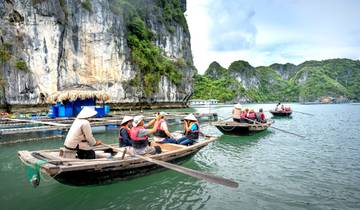
Kayaking through Lan Ha’s karst channels provides intimate exploration impossible in Ha Long’s crowded waters. Narrow passages between limestone walls open into hidden lagoons surrounded by vertical cliffs where silence replaces the boat engine noise constant in main bay areas. Small beaches dot karst bases, accessible only by kayak or small boat, offering private swimming spots contrasting with Ha Long’s crowded beaches overwhelmed by tour groups. Floating villages in Lan Ha maintain more authentic character with less tourism development than their Ha Long Bay counterparts.
Cat Ba-based tour operators offer Lan Ha Bay day trips ($30-50) or overnight camping expeditions ($80-120) emphasizing adventure over luxury. These tours attract younger, more active travelers seeking authentic wilderness experiences rather than comfort-priority cruising. The kayaking demands moderate fitness but rewards effort with pristine seascapes and genuine exploration feeling absent from standard Ha Long tourism. Lan Ha represents the best-kept secret for travelers seeking Ha Long Bay beauty without Ha Long Bay crowds.
Bai Tu Long Bay: Remote Wilderness Zone
Bai Tu Long Bay’s 6,000 hectares of karst landscape northeast of Ha Long Bay sees fraction of main bay tourism due to distance from Halong City ports. The bay’s name translates as “children of the dragon,” referencing legends describing dragon offspring creating this area’s karst formations. Remote location requires three-day cruises to explore properly, with few operators venturing into these wilderness areas maintaining pristine character absent from heavily-touristed zones.
Thien Canh Son Cave in Bai Tu Long Bay showcases spectacular stalactites and stalagmites without the crowds overwhelming Sung Sot or Thien Cung Caves in main Ha Long Bay. Ban Chan Beach offers white sand and clear water rivaling popular Ha Long beaches without tourist infrastructure or cruise ship arrivals. Vung Vieng fishing village in Bai Tu Long maintains traditional culture less affected by tourism than main bay floating villages. The bay’s isolation preserves wildlife including langurs, eagles, and diverse marine species thriving in waters experiencing less boat traffic and tourism disruption.
Accessing Bai Tu Long requires selecting specific cruise itineraries explicitly covering this area, as most two-day cruises remain within main Ha Long Bay boundaries. Three-day luxury cruises increasingly explore Bai Tu Long as differentiation strategy offering exclusive areas unavailable to standard tours. The extra day and premium pricing create barriers filtering mass tourism while rewarding committed travelers with authentic wilderness experiences rivaling Ha Long Bay’s pre-tourism character.
Secret Spots Within Main Ha Long Bay
Dark and Bright Cave (Hang Tối Hang Sáng)
This adventure highlight near Vung Vieng village offers thrilling kayaking through pitch-black cave passages connecting to interior lagoons. The experience begins paddling through the “Dark Cave” (Hang Tối), navigating complete darkness as the entrance light disappears behind while exit light remains invisible ahead. The sensory deprivation creates mild disorientation before eyes adjust to faint luminescence filtering through the passage. Emerging into the interior lagoon surrounded by vertical limestone walls creates dramatic contrast with the preceding darkness.
The return journey passes through “Bright Cave” (Hang Sáng), a parallel passage with ceiling openings admitting natural light creating cathedral-like atmosphere. The kayaking requires confidence in darkness and basic paddling skills, with some passages requiring ducking beneath low ceiling sections. Despite the adventure appeal, relatively few tours include this experience due to perceived difficulty, keeping crowds minimal compared to easier cave visits accessible via walkways and stairs.
Safety considerations include wearing provided helmets, following guide instructions carefully, and avoiding the experience during rough seas when wave action inside passages creates hazards. The adventure rewards with unique perspective on karst formation interior processes where water carved passages through solid limestone over millennia. Photography proves challenging in darkness but the interior lagoon provides stunning compositions of vertical karsts surrounding still water creating perfect mirror reflections.
Monkey Island (Cat Dua Island)
This small island earned its name from wild monkey troops inhabiting the karst formation, though reduced populations from habitat disturbance and past capture attempts mean monkey sightings no longer guarantee despite the name. The island’s value lies in its beach and swimming opportunities relatively uncrowded compared to popular Ti Top Island or Soi Sim Beach. The white sand beach curves around the island’s southern shore with calm, clear water ideal for swimming and snorkeling.
Access requires specific tour selection as not all cruises include Monkey Island in itineraries. Those visiting find pleasant beach time without the crowds crushing popular beaches during peak hours. The karst formation rising behind the beach provides dramatic backdrop for photography with traditional junk boats often anchored offshore creating classic Ha Long Bay compositions. Small caves near the beach invite exploration, with stalactites visible in entrance areas accessible without technical spelunking.
Me Cung Cave and Ti Top Beach Quieter Hours
Me Cung Cave receives fewer visitors than Sung Sot despite comparable beauty, offering similar stalactites, stalagmites, and historical significance with substantially fewer crowds. The cave features natural lighting through ceiling openings creating dramatic illumination effects on rock formations. Archaeological evidence suggests prehistoric human habitation, adding cultural-historical dimensions beyond geological interest. Tours incorporating Me Cung rather than Sung Sot provide equivalent cave experiences without fighting through crowds for photographs.
Ti Top Island viewpoint, while popular, experiences dramatic crowd variation by time of day. Early morning arrivals before 8:30 AM or late afternoon visits after 3:30 PM find the summit relatively empty compared to midday chaos when multiple cruise ships simultaneously disgorge passengers. The 400-step climb remains identical but the summit experience transforms from mob scene to pleasant viewpoint enabling actual contemplation of the panorama rather than just fighting for photograph space. Strategic timing converts major tourist sites into pleasant experiences through temporal crowd avoidance.
Cat Ba Island’s Hidden Corners
Eastern Coast Beaches and Villages
Cat Ba Island’s eastern coastline facing open sea remains largely undeveloped compared to the western shore with its tourist infrastructure. Remote beaches accessible via boat or difficult jungle trails offer pristine sand and clear water without facilities, vendors, or crowds. Cat Ong and Cat Dua beaches represent the most accessible examples, requiring 30-minute boat rides from Cat Ba harbor or 1-2 hour hikes through national park terrain.
Traditional fishing villages dot the eastern coast, maintaining authentic livelihoods less influenced by tourism than western shore communities. Visitors arriving respectfully find warm hospitality and insights into genuine fishing culture versus tourist-oriented villages elsewhere. The lack of restaurants and accommodations in these areas necessitates self-sufficiency bringing food and water, contributing to their continued isolation from mass tourism requiring service infrastructure.
Cat Ba National Park Interior Trails
Most visitors experience Cat Ba National Park via the short trek to Ngu Lam Peak viewpoint, leaving deeper interior trails relatively deserted. Extended trails reach remote areas of the park showcasing pristine subtropical forest, karst mountain landscapes, and wildlife including the critically endangered Cat Ba langur. The Viet Hai village trail crosses the island to a valley settlement accessible only by boat or this challenging trek, rewarding hikers with authentic village life and spectacular scenery.
Trail difficulty ranges from moderate walks to strenuous climbs requiring good fitness. Navigation challenges exist as trail marking remains inconsistent, with hiring local guides recommended for interior exploration. The park’s biodiversity includes over 700 plant species, 300 bird species, and numerous mammals, reptiles, and amphibians. Serious nature enthusiasts find the interior trails provide wildlife encounters and wilderness atmosphere impossible in heavily-visited bay areas.
Hospital Cave (Hang Quan Y)
This extensive cave complex served as secret hospital, ammunition storage, and planning center for North Vietnamese forces during the American War. The 17-room complex carved into Cat Ba’s limestone includes operating rooms, recovery wards, and storage facilities, preserved as historical site. While not strictly “hidden” as it appears in guidebooks, Hospital Cave receives fraction of visitors compared to coastal attractions, creating opportunities for contemplative exploration of this historically significant location.
The cave provides insights into Vietnamese wartime resilience and the practical use of karst formations for military purposes beyond aesthetic appreciation. Temperature inside remains cool even during hot weather, demonstrating why caves served as effective shelter. The interpretation focuses on historical narrative rather than geological features, complementing rather than duplicating bay cruise cave visits emphasizing geological formations.
Off-the-Beaten-Path Cultural Experiences
Ba Hang Floating Village
Ba Hang maintains more traditional character than heavily-visited Cua Van and Vung Vieng villages, hosting fewer tourist boats and preserving authentic fishing culture less commodified for tourism consumption. The village’s location in Lan Ha Bay requires specific tour selection or independent boat charter, creating access barriers that protect cultural integrity while limiting tourist encounters. Residents continue traditional fishing supplemented rather than replaced by tourism income, maintaining authentic maritime lifestyles.
Visiting Ba Hang provides insights into genuine floating village life versus the semi-staged experiences in more touristed villages where residents increasingly perform culture for visitors rather than simply living it. The less-polished presentation reveals actual living conditions, economic challenges, and adaptive strategies as communities navigate between tradition and modernity. Respectful visitors who recognize homes as private residential spaces rather than tourist attractions find warm welcomes and meaningful cultural exchange.
Inland Vietnamese Villages on Cat Ba
Cat Ba Island’s interior villages including Gia Luan and Viet Hai maintain traditional Vietnamese rural culture less influenced by coastal tourism. These agricultural communities grow vegetables, raise livestock, and maintain ancestral houses contrasting sharply with floating fishing villages and tourist beach towns. Access requires hiking or boat trips plus overland walking, creating natural barriers limiting casual tourism.
Viet Hai village operates homestays enabling overnight stays with local families, providing deeper cultural immersion than day trips allow. Hosts share meals, demonstrate traditional activities, and offer insights into rural Vietnamese life unavailable through brief tourist encounters. The homestay income supports village economy while maintaining agricultural traditions and family structures. This form of community-based tourism represents sustainable development balancing economic benefits with cultural preservation.
Pearl Farm Visits Beyond Tourist Shows
While many tours include pearl farm stops featuring sales-oriented presentations, some floating villages operate working farms accessible through personal connections or specialized tours. These authentic operations prioritize actual pearl cultivation over tourist entertainment, providing genuine insights into aquaculture techniques, oyster biology, and the economic transformation pearl farming created in floating village communities. Workers demonstrate real cultivation processes rather than simplified tourist shows.
Visiting working farms requires advance arrangements through knowledgeable local guides or Cat Ba-based tour operators specializing in authentic cultural experiences. The less-polished presentations lack the entertainment value of tourist-oriented shows but offer superior educational content for visitors genuinely interested in aquaculture and community adaptation to economic change. Some farms allow visitors to open oysters and keep any discovered pearls, providing hands-on experiences beyond passive observation.
Strategic Timing for Crowd Avoidance
Shoulder Season Advantages
March-April and October-November shoulder seasons reduce tourist numbers 30-40% compared to peak December-February winter months while maintaining excellent weather. Popular sites that feel overcrowded in winter become manageable in shoulders, with viewpoints accommodating photography without constant jostling. Cave visits allow actual geological observation rather than just fighting through crowds. Floating village tours enable meaningful interactions versus brief encounters amid tour group chaos.
The reduced crowds create qualitative experience improvements transcending simple numbers. Guides provide more detailed commentary when not rushing groups through scheduled stops. Boat crews offer personalized service impossible during peak season chaos. Photography captures clean compositions without tourists photobombing every frame. The overall atmosphere shifts from industrial tourism processing to relaxed exploration, transforming Ha Long Bay visits from stressful crowd management into enjoyable wilderness appreciation.
Early Morning and Late Afternoon Magic
Most tours operate 9 AM-4 PM schedules, creating predictable crowd patterns concentrating at popular sites during midday hours. Arranging early departures reaching major sites before 8:30 AM finds beaches, caves, and viewpoints relatively empty. Late afternoon visits after 3:30 PM similarly avoid crowds as most boats begin return journeys. These off-peak hours additionally provide superior lighting for photography with golden hour enhancement at sunset.
Three-day cruises enable timing flexibility impossible on two-day trips following rigid schedules. Visiting popular sites on Day 2 when most cruises focus elsewhere creates temporal separation from crowds despite visiting identical locations. Overnight anchoring in remote locations enables dawn kayaking and late evening star viewing impossible for vessels returning to ports each night. Extended cruises thus provide not just geographic access to remote areas but temporal flexibility enabling crowd avoidance through strategic scheduling.
Weekday vs Weekend Dynamics
Vietnamese domestic tourism concentrates on weekends, creating crowd spikes at popular sites during Saturday-Sunday periods. Weekday cruises, particularly Tuesday-Thursday, encounter smaller crowds as domestic visitors return to work and international tourism distributes more evenly across weeks. The difference becomes especially pronounced at accessible sites including Ti Top Island where weekend crowds can reach several hundred simultaneous visitors versus weekday dozens.
Weekend crowds affect not just numbers but experience quality, with stressed guides rushing groups, overwhelmed facilities, and competitive atmosphere for viewpoints and photographs. Weekday visits create relaxed environments where guides provide better interpretation, facilities function smoothly, and visitors enjoy sites without constant jostling. The modest price savings on weekday cruises pale compared to experience quality improvements from reduced crowding.
Adventure Activities in Remote Areas
Rock Climbing on Virgin Karst Walls
Ha Long Bay’s limestone cliffs provide world-class rock climbing opportunities, with routes ranging from beginner to expert difficulty. While a few heavily-climbed karsts near Cat Ba see regular traffic, most formations remain pristine with established routes seeing minimal ascents. Climbing companies including Asia Outdoors and Cat Ba Climbing operate guided trips to remote karsts, providing equipment, instruction, and safety management enabling climbers to access otherwise inaccessible cliff faces.
The climbing combines athletic challenge with unique perspectives on karst geology and bay scenery impossible from boats or beaches. Routes ascend directly up overhanging limestone faces with exposure over water, creating exciting positions where small mistakes result in harmless splashes rather than dangerous falls. The activity remains relatively niche, keeping climbed karsts uncrowded compared to tourist-swamped beaches and viewpoints. Multi-day climbing expeditions camp on remote beaches, exploring virgin cliff lines away from any tourism.
Sea Kayaking Expeditions
Extended kayaking trips over 2-3 days enable reaching remote Lan Ha Bay and Bai Tu Long Bay areas impossible for day paddlers. Expeditions camp on deserted beaches, paddle through uninhabited karst channels, and explore caves accessible only by kayak. The self-powered travel creates intimate encounters with seascapes versus motorized boat distancing from environments.
Kayaking expeditions require moderate fitness and comfort with basic camping, appealing to adventure travelers over comfort-priority tourists. Specialized operators including Blue Swimmer and Buffalo Tours organize guided trips handling logistics, safety, and navigation while participants enjoy wilderness paddling. The activity provides authentic exploration feeling contrasting sharply with passive cruise ship observation of landscapes. Camping on remote beaches under star-filled skies creates memorable experiences impossible on luxury vessels despite their superior amenities.
Scuba Diving and Snorkeling
Ha Long Bay’s waters support diverse marine life despite visibility challenges from sediment and plankton. Diving sites in Lan Ha Bay and around Cat Ba Island showcase coral formations, rocky reefs with colorful fish, and underwater karst landscapes invisible from surface. While not competing with tropical coral reefs elsewhere, the diving provides unique perspectives on bay ecosystems and geological features.
Rainbow Divers and other Cat Ba-based operators offer dive trips to less-visited sites avoiding standard tourist routes. Snorkeling at remote beaches provides glimpses of marine life without diving certification requirements. The underwater realm remains Ha Long Bay’s most genuinely hidden dimension, as few tourists venture beneath surface waters, leaving marine environments relatively pristine compared to overcrowded land areas.
Frequently Asked Questions About Ha Long Bay Hidden Gems
Will “hidden” places remain secret if guidebooks and websites mention them?
Publicity inevitably increases visitation though access difficulty, remoteness, and activity requirements maintain relative obscurity for many locations. Places requiring multi-day cruises, challenging hikes, or adventure skills resist mass tourism despite awareness. However, accessible “hidden gems” do become popular over time, requiring constant discovery of new secret spots as old ones become mainstream. The concept of “hidden” remains relative rather than absolute in famous destinations like Ha Long Bay, with realistic expectations of fewer rather than zero tourists at less-promoted locations.
Are hidden areas as beautiful as famous sites like Ti Top Island?
Scenic beauty remains consistently spectacular throughout Ha Long Bay’s karst landscape, with “hidden” areas offering visual experiences equivalent to famous sites. The advantage lies not in superior beauty but rather in crowd absence enabling actual appreciation versus fighting through masses for brief glimpses. A moderately attractive location experienced in solitude often proves more satisfying than spectacular viewpoints overwhelmed by tourists. Beauty remains subjective though, with some travelers preferring iconic locations despite crowds while others value crowd-free experiences despite less dramatic scenery.
Is it safe to explore hidden areas independently?
Safety concerns including navigation difficulties, weather changes, medical emergencies, and regulatory restrictions make independent exploration risky without proper preparation and local knowledge. Hiring local guides for off-standard itineraries provides access to hidden areas while maintaining safety and regulatory compliance. Established adventure tour companies balance independence with safety through guided trips to remote locations. Solo exploration requires careful planning, appropriate equipment, emergency communication devices, weather monitoring, and realistic self-assessment of skills and experience. When in doubt, guided exploration provides safer access to hidden areas than completely independent ventures.
Do I need special permits to visit remote areas?
Protected zones within Ha Long Bay require permits and guide accompaniment, with restrictions intended to prevent environmental damage and ensure visitor safety. Tour operators handle permit logistics for included destinations. Independent exploration may inadvertently enter restricted areas, risking fines or expulsion. Verify current regulations before planning off-standard itineraries, as rules change periodically. Working with reputable local guides ensures regulatory compliance while accessing restricted areas legally through proper permitting. Conservation regulations serve important protective functions despite limiting complete freedom to explore anywhere desired.
How do I find tours covering hidden locations?
Research specialized adventure tour companies explicitly advertising off-beaten-path itineraries rather than mainstream operators following standard routes. Cat Ba-based companies show more flexibility exploring Lan Ha Bay and remote areas compared to large Halong City operators serving mass tourism. Private tour arrangements enable requesting specific hidden locations with flexible guides. Multi-day cruises venture into remote areas impossible for day trips. Read detailed itineraries carefully as many tours claim “off the beaten path” while covering identical standard routes. Contact operators directly asking specific questions about crowd levels, alternative locations, and timing strategies for accessing popular sites during quiet periods.
What’s the best hidden gem for photography?
Lan Ha Bay provides Ha Long Bay beauty without cruise ship clutter ruining compositions. Dark and Bright Cave offers dramatic interior shots impossible elsewhere. Early morning at Ti Top Island captures classic views without crowds. Remote beaches in eastern Cat Ba create pristine foreground interest for karst backgrounds. Bai Tu Long Bay’s virgin wilderness delivers authentic wilderness photography. The “best” location depends on photographic interests—dramatic landscapes, cultural documentation, wildlife, adventure activities—with different hidden locations serving different photographic goals. Visiting multiple hidden areas over extended stays provides diverse photography portfolio impossible from standard tourist circuit.
Can families with children access hidden areas?
Family suitability varies by specific location and children’s ages. Accessible hidden gems like Lan Ha Bay day trips work well for families. Challenging activities including rock climbing, dark cave kayaking, and strenuous hiking suit older children and teenagers but prove inappropriate for young children. Many remote areas lack facilities including bathrooms and food services, creating difficulties with young children. Private family tours customize experiences balancing hidden locations with family-appropriate activities and facilities. Assess your specific family’s capabilities, interests, and patience for adventure versus seeking family-friendly standard tours providing easier experiences despite crowds.
How much extra do hidden gem tours cost?
Specialized adventure tours to remote areas cost similar to standard mid-range cruises at $150-300 for two-day trips, with premiums reflecting small group sizes and specialized guiding rather than access to expensive infrastructure. Private tours add 20-40% premiums enabling custom itineraries. Extended three-day cruises reaching Bai Tu Long Bay cost $280-450, justified through additional days and remote area access. Budget hidden gem access via Cat Ba-based independent travel costs less than standard Hanoi tours while providing superior crowd avoidance. Overall, hidden gem exploration doesn’t necessarily cost more—smart location and timing choices reduce crowds without premium spending.
Do hidden areas have the same safety standards as tourist sites?
Remote locations lack safety infrastructure including guardrails, emergency services, rescue capabilities, and communication systems standard at developed tourist sites. This creates additional risks requiring self-sufficiency and proper preparation. However, remote areas also avoid hazards including overwhelming crowds, stressed infrastructure, and complacency from over-familiarity with hazards. Different risk profiles mean neither option proves universally safer—developed sites prevent certain risks while remote areas introduce others. Assess personal risk tolerance and capabilities honestly when deciding between well-developed standard sites versus adventurous hidden locations requiring greater self-reliance.
Will climate change affect Ha Long Bay’s hidden areas?
Rising sea levels from climate change threaten low-lying beaches and interior lagoons in both mainstream and hidden areas. Increased storm intensity affects remote locations more severely due to lack of protective infrastructure. Ocean acidification impacts marine ecosystems in hidden diving sites. However, climate impacts affect all Ha Long Bay areas regardless of tourism development, with hidden locations not uniquely vulnerable compared to popular sites. The broader climate challenges facing coastal environments worldwide include Ha Long Bay, making conservation of both mainstream and hidden areas crucial for preserving this UNESCO World Heritage landscape for future generations.
Unlocking Ha Long Bay’s Secret Treasures
Ha Long Bay’s hidden gems reward travelers willing to venture beyond convenient standard tourism circuits into remote areas, less-visited locations, and off-peak timing strategies enabling crowd-free experiences. The UNESCO World Heritage site’s fame means complete tourist absence proves impossible, yet strategic exploration finds relative solitude preserving wilderness character absent from heavily-developed mainstream areas. These secret spots deliver authentic encounters with karst landscapes, traditional cultures, and natural environments that define Ha Long Bay’s essential character beyond surface-level tourism.
Accessing hidden areas requires accepting trade-offs between convenience and authenticity, comfort and adventure, efficiency and depth. Standard tourist circuits maximize ease and minimize risk while sacrificing authentic wilderness experiences. Hidden gem exploration demands additional effort, moderate discomfort, and willingness to forego luxury amenities in exchange for genuine discovery and meaningful encounters with landscapes and cultures. The appropriate choice depends on individual priorities, with neither approach universally superior but rather serving different traveler values and comfort levels.
The most effective strategy combines both mainstream and hidden experiences, visiting iconic locations during optimal timing to avoid worst crowding while allocating time for remote area exploration providing authentic wilderness encounters. This balanced approach captures Ha Long Bay’s full spectrum from celebrated landmarks to secret treasures, from comfortable cruise ship observation to adventurous kayaking expeditions, from convenient accessibility to challenging access rewarding effort with pristine destinations. Your Ha Long Bay experience need not choose between popular sites and hidden gems—strategic planning enables both.
Remember that today’s hidden gems risk becoming tomorrow’s crowded attractions as awareness spreads and tourism infrastructure develops. Responsible hidden gem tourism requires treading lightly, respecting environments and cultures, supporting conservation through proper behavior, and maintaining discretion about specific locations to preserve their hidden character. Share experiences without exact coordinates, describe locations without enabling mass visitation, and prioritize preservation over personal satisfaction from “discovering” places. Ha Long Bay’s hidden treasures deserve protection ensuring they remain special for future travelers seeking authentic encounters with this extraordinary UNESCO World Heritage landscape.