Guggenheim Bilbao: Complete Museum Guide
Key Takeaways:
- Frank Gehry’s titanium-clad masterpiece revolutionized museum architecture when completed in 1997, establishing the “Bilbao Effect” phenomenon
- The building features 24,000 square meters of exhibition space across three levels, with curving galleries defying traditional museum design
- Permanent collection highlights include works by Rothko, Koons, Serra, and Basque artists integrated into site-specific installations
- The museum’s construction transformed Bilbao from declining industrial city into international cultural destination, attracting 1+ million visitors annually
- Photography opportunities abound both inside and outside, with the titanium facade creating different reflections throughout the day
- The building embodies deconstructivist architecture principles while maintaining functional exhibition spaces respecting artwork requirements
Understanding Guggenheim Bilbao’s Architectural Revolution
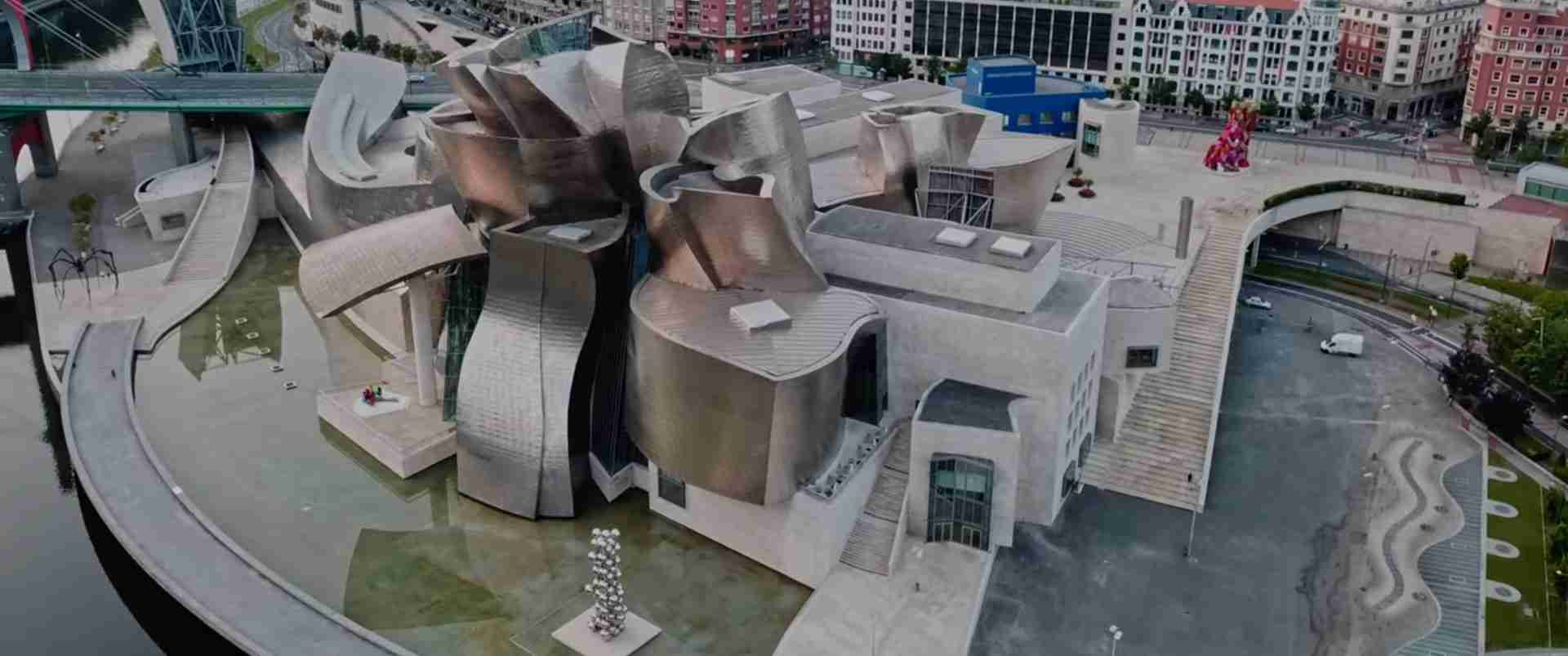
The Guggenheim Museum Bilbao stands as Frank Gehry’s most celebrated work, a titanium-clad sculptural form that defies conventional architectural categorization. Opened October 1997, the building emerged from Basque regional government’s ambitious vision to catalyze urban renewal through cultural investment. The project succeeded spectacularly, generating what urban planners worldwide now reference as the “Bilbao Effect” – the transformation of post-industrial cities through iconic architectural landmarks that attract tourism and international attention.
Gehry’s design occupies a former industrial site beside the Nervión River, integrating water views and urban context into the museum’s spatial experience. The building spans 24,000 square meters across multiple levels, with 11,000 square meters dedicated to exhibition galleries. Nineteen distinct gallery spaces range from intimate rooms suited to delicate works on paper, to the massive 130-meter-long Fish Gallery accommodating Richard Serra’s monumental steel sculptures. This diversity of scale enables curatorial flexibility impossible in traditional museum buildings.
The exterior features approximately 33,000 titanium panels, each 0.38 millimeters thick and measuring 60×30 centimeters. These panels create undulating surfaces that reflect changing light throughout the day, with the building appearing to shift color from silver to gold depending on weather conditions and sun angles. The titanium cladding serves both aesthetic and practical functions, providing weather protection while requiring minimal maintenance compared to traditional building materials. The panels overlap like fish scales, allowing thermal expansion without structural stress.
Gehry employed CATIA computer-aided design software, originally developed for French aerospace industry, to model the building’s complex curves and ensure structural feasibility. This technological approach revolutionized architectural practice, demonstrating computers’ potential for realizing forms previously impossible to calculate and construct. The design process involved creating physical models at multiple scales, which technicians then digitized to generate construction documents. This hybrid methodology combined traditional architectural craftsmanship with cutting-edge digital tools.
People Also Ask About Guggenheim Bilbao
What makes Guggenheim Bilbao architecturally significant?
The museum represents watershed moment in late 20th-century architecture, demonstrating deconstructivism’s potential to create functional public buildings rather than merely theoretical constructs. Gehry’s design challenged architectural orthodoxy that separated building form from decorative elements, instead creating unified composition where structure, cladding, and space flow seamlessly. The building proved complex curved forms could be constructed within reasonable budgets using innovative materials and computer-aided design methodologies. Its success inspired countless municipalities to commission “starchitect” buildings hoping to replicate Bilbao’s urban transformation, though few achieved comparable cultural or economic impact. The museum demonstrated architecture’s power to rebrand entire cities, establishing new paradigm for urban cultural policy.
Who designed the Guggenheim Museum in Bilbao and when was it built?
Canadian-American architect Frank Gehry designed the museum following international competition in 1991. Construction began 1993 and completed October 1997, with King Juan Carlos I officially inaugurating the building. The Basque regional government provided primary funding through autonomous community budget, investing approximately 20 billion pesetas (€120 million in 1997 values) in construction and infrastructure. The Solomon R. Guggenheim Foundation partnered to provide curatorial expertise, international art loans, and brand recognition. This public-private partnership model became template for similar projects worldwide, demonstrating how regional governments could leverage international cultural institutions to achieve local development goals.
What art collections can you see at Guggenheim Bilbao?
The permanent collection focuses on post-1960s contemporary art, with particular strength in American Abstract Expressionism, Pop Art, Minimalism, and Basque artists. Major holdings include Mark Rothko’s color field paintings, Andy Warhol’s silkscreens, and Richard Serra’s monumental Cor-Ten steel sculptures. The museum commissions site-specific installations that engage with the building’s unique architecture, creating works inseparable from their exhibition spaces. Rotating displays drawn from Guggenheim Foundation’s international network supplement the permanent collection, with works traveling from New York, Venice, and Berlin sister institutions. Temporary exhibitions feature major international artists and thematic surveys covering movements, periods, and concepts from modern and contemporary art history. The collection strategy emphasizes sculpture and installation art suited to the building’s dramatic spatial volumes.
What’s the best way to photograph Guggenheim Bilbao?
Early morning light (7-9 AM) and late afternoon golden hour (one hour before sunset) provide optimal conditions for exterior photography, when angled sunlight emphasizes the titanium facade’s curves and creates dramatic shadows. The eastern bank of Nervión River across La Salve Bridge offers classic vantage point showing the building’s full riverside elevation with water reflections. Shoot from multiple distances: wide-angle lenses (16-24mm) capture architectural totality, while telephoto lenses (70-200mm) compress perspective to emphasize sculptural details and titanium panel textures. Overcast days create even lighting that prevents harsh shadows and blown highlights on reflective titanium surfaces. Include Jeff Koons’ Puppy sculpture in foreground for scale reference and compositional interest. Interior photography proves challenging due to lighting variations and artwork copyright restrictions, though the atrium’s soaring central space allows architectural shots emphasizing structural elements and natural light penetration.
Extended multi-day tours – 5+ days
Featured Bilbao Multi-Day Tour Packages
7 days
The North Trail, Self-drive
- ✓ Comprehensive Bilbao tour
- ✓ Expert local guides included
- ✓ All accommodation arranged
- ✓ Transportation provided
5 days
The Northern Gateway, Self-Drive
- ✓ Comprehensive Bilbao tour
- ✓ Expert local guides included
- ✓ All accommodation arranged
- ✓ Transportation provided
4 days
4-Day Green Spain (Northwest)
- ✓ Comprehensive Bilbao tour
- ✓ Expert local guides included
- ✓ All accommodation arranged
- ✓ Transportation provided
7 days
Best of Basque Country From Bilbao – 7 days (Superior)
- ✓ Comprehensive Bilbao tour
- ✓ Expert local guides included
- ✓ All accommodation arranged
- ✓ Transportation provided
Multi-day tour packages powered by TourRadar. Prices and availability subject to change.
Architectural Innovation and Design Philosophy
Deconstructivist Principles in Practice
Gehry’s design embodies deconstructivism’s core principles: fragmented forms, non-rectilinear geometry, and apparent structural instability creating dynamic visual tension. The building reads as collection of discrete volumes – limestone-clad orthogonal blocks housing conventional galleries, titanium-curved forms creating dramatic special-purpose spaces, glass walls providing transparency and light penetration. These elements appear to collide and intersect rather than merge smoothly, creating architectural composition that privileges complexity over simplification.
The central atrium rises 50 meters, functioning as spatial organizing element connecting all gallery levels while flooding interiors with natural light through glazed roof sections. Curved metal walkways and glass elevators traverse this vertical space, allowing visitors to perceive the building’s volumetric complexity from changing viewpoints. The atrium demonstrates Gehry’s interest in architectural transparency, where structural systems and circulation paths remain visible rather than concealed behind finished surfaces.
Despite radical external appearance, interior galleries provide conventional “white cube” spaces meeting conservation standards for temperature, humidity, and lighting control. This duality acknowledges that however revolutionary the building’s exterior, the primary function remains protecting and displaying artwork. Critics initially questioned whether Gehry’s architecture would compete with exhibited art, but experience demonstrated the varied gallery types accommodate diverse artistic approaches without overwhelming individual works.
Structural Engineering Achievement
Spanish engineering firm IDOM collaborated with Canadian engineers to realize Gehry’s vision, developing structural systems capable of supporting the complex curved forms. The building employs steel framework with limestone cladding on orthogonal volumes and titanium panels on curved surfaces. Load-bearing walls occur only in conventional rectangular galleries, while curved sections utilize steel skeleton fully visible from exterior where titanium panels attach to underlying framework.
The massive Fish Gallery spans 130 meters without internal columns, employing steel trusses hidden within ceiling depth. This column-free space accommodated Richard Serra’s “The Matter of Time” installation, requiring unobstructed floor area for visitors to walk through and around the monumental steel sculptures. The engineering achievement enabled artistic installation impossible in conventionally structured buildings, demonstrating how architectural innovation expands curatorial possibilities.
Foundation systems address challenging site conditions including river proximity and former industrial contamination. The building sits on 666 reinforced concrete piles driven 15-20 meters into bedrock beneath river sediments, distributing structural loads while isolating the museum from ground-level pollutants. This foundation strategy protected artwork while enabling construction on problematic site, transforming urban liability into architectural opportunity.
Material Innovation and Sustainable Design
The titanium cladding represents innovative application of aerospace materials to architectural purposes. Each panel’s minimal thickness (0.38mm) reduces material costs while creating lightweight exterior that doesn’t overload structural framework. The panels’ overlapping installation accommodates thermal expansion, as titanium expands and contracts significantly with temperature variations. This detail-level engineering prevents structural stress while maintaining weatherproof envelope.
Limestone blocks contrasting with titanium surfaces come from Granada quarries, providing warm tan color that grounds the building’s more flamboyant curved elements. The stone cladding follows traditional construction methodology, with blocks stacked and mortared using centuries-old techniques. This material juxtaposition creates dialogue between conventional and innovative building practices, acknowledging architectural history while advancing contemporary possibilities.
Natural ventilation and daylighting strategies reduce energy consumption compared to fully mechanical museum environments. The glazed atrium roof includes automated shading systems that adjust based on solar intensity, preventing excessive heat gain while maintaining natural light penetration. Gallery skylights with translucent ceilings diffuse daylight across exhibition spaces, supplemented by artificial lighting systems that maintain conservation-appropriate illumination levels. These passive environmental control strategies demonstrate Gehry’s attention to operational efficiency alongside architectural expression.
Historical Background and Urban Transformation
Bilbao’s Industrial Decline and Renewal Strategy
Bilbao developed as major industrial center during 19th and 20th centuries, with steel mills, shipyards, and heavy manufacturing lining the Nervión River. The 1970s-80s brought economic crisis as globalization shifted heavy industry to lower-cost regions, leaving Bilbao with unemployment rates exceeding 25% and extensive contaminated brownfield sites. The city faced existential question: reinvent economic base or accept permanent decline.
Basque regional authorities developed comprehensive urban renewal strategy emphasizing cultural infrastructure, environmental remediation, and transportation improvements. The Guggenheim Museum became flagship project within this broader plan, which also included Norman Foster’s Metro system, Santiago Calatrava’s airport terminal, and César Pelli’s Abandoibarra master plan transforming waterfront industrial zones into mixed-use districts combining residential, commercial, and cultural functions.
The museum site previously housed Olabeaga warehouses and shipping facilities, with contaminated soils requiring extensive remediation before construction. Site selection proved strategic, occupying prominent riverfront location visible from multiple vantage points while catalyzing redevelopment of surrounding abandoned industrial areas. The building’s dramatic architecture created instant landmark attracting international attention, fundamentally altering Bilbao’s global perception from declining rust belt city to cultural destination.
The “Bilbao Effect” Phenomenon
The museum’s success generated term “Bilbao Effect” describing cultural investment’s potential to drive urban economic transformation. First-year attendance exceeded 1.3 million visitors, far surpassing projections of 500,000 annually. Economic impact studies calculated the museum generated €166 million in first three years, recovering construction costs while creating thousands of direct and indirect jobs in hospitality, transportation, and service sectors.
The transformation extended beyond tourism revenue to include real estate appreciation, business investment, and psychological renewal of civic pride. Property values in surrounding neighborhoods increased 15-25% within five years of opening. International corporations established Bilbao offices, citing improved quality of life and cultural amenities as recruitment advantages for executive talent. The city’s repositioning from industrial backwater to cultural capital demonstrated soft power of architectural and cultural investment.
Subsequent attempts to replicate the Bilbao Effect achieved mixed results. Municipalities worldwide commissioned celebrity architects to design iconic cultural buildings, though few generated comparable economic or social impact. Analysis suggests success requires comprehensive planning beyond individual buildings, including infrastructure investment, programming excellence, and sustained commitment to cultural development. The Guggenheim succeeded because it formed centerpiece of coordinated strategy rather than isolated gesture.
Partnership Between Guggenheim Foundation and Basque Government
The Solomon R. Guggenheim Foundation brought international prestige and curatorial expertise to the project, while Basque authorities provided funding and local support. This partnership model established template for international cultural franchise operations, where established institutions lend brand recognition and professional knowledge to emerging cultural venues in exchange for funding and global expansion opportunities.
Negotiations addressed collection sharing, programming autonomy, and financial responsibilities. The Basque government agreed to cover construction costs and operating budgets, while Guggenheim provided access to its permanent collection and temporary exhibition programming. The arrangement specified minimum loan commitments from New York headquarters while allowing Bilbao curatorial staff independence in developing exhibitions reflecting regional artistic traditions and contemporary concerns.
The partnership proved mutually beneficial: Guggenheim expanded international presence while Bilbao gained instant cultural credibility through association with prestigious art world institution. Subsequent Guggenheim ventures in Las Vegas, Berlin, and Abu Dhabi followed similar franchise models with varying degrees of success, though none replicated Bilbao’s transformative urban impact. The Bilbao museum remains Guggenheim’s most successful international expansion, validating the foundation’s global ambitions.
Permanent Collection Highlights
Richard Serra’s “The Matter of Time”
The Fish Gallery houses Richard Serra’s monumental installation comprising eight Cor-Ten steel sculptures, some weighing over 200 tons and reaching heights of 4 meters. Visitors walk through and around these massive curving forms, experiencing how sculptural space manipulates perception and bodily awareness. The sculptures’ weathered steel surfaces develop characteristic rust patina, with oxidation creating protective layer that prevents further corrosion while establishing warm brown coloration.
Serra designed the installation specifically for the gallery’s vast column-free space, creating works inseparable from their architectural context. The sculptures explore themes of ellipse, spiral, and torque, mathematical forms translated into physical experience. Walking through narrow passages between steel walls creates claustrophobic intensity, while emerging into open spaces provides spatial relief. This manipulation of movement and perception exemplifies Serra’s long-standing interest in phenomenological experience of sculpture.
The installation represents culmination of Serra’s career-long investigation into large-scale steel sculpture, synthesizing formal concerns developed across decades into unified environmental work. Critics identify “The Matter of Time” among Serra’s most significant achievements, demonstrating mature artist’s ability to work at architectural scale while maintaining sculptural integrity. The Guggenheim commissioned the work understanding it would become permanent installation, tying museum’s identity to Serra’s artistic vision.
Jeff Koons’ “Puppy”
The 13-meter-tall terrier sculpture composed of living flowers occupies the entrance plaza, welcoming visitors with whimsical monumentality. Koons created Puppy in 1992 for documenta IX in Kassel, Germany, with Guggenheim acquiring permanent version for Bilbao site. The sculpture employs stainless steel armature supporting 70,000+ flowering plants, with internal irrigation system maintaining botanical health year-round. Horticulturalists replant the surface twice annually, selecting flower varieties suited to seasonal conditions.
Puppy exemplifies Koons’ practice of transforming kitsch imagery through scale manipulation and material elevation. The oversized dog references porcelain figurines and popular pet culture, subjects typically dismissed by high art institutions. By monumentalizing these forms and executing them with museum-quality craftsmanship, Koons challenges distinctions between high and low culture while creating accessible, broadly appealing public art.
The sculpture became iconic symbol of Guggenheim Bilbao, featured prominently in promotional materials and tourist photography. Its placement outside museum entrance makes it freely accessible to public regardless of admission status, extending museum’s cultural impact beyond paying visitors. Puppy demonstrates contemporary art’s potential to engage diverse audiences through familiar imagery and spectacular presentation, contradicting assumptions that contemporary art remains inaccessible to general public.
Basque Artist Collections
The museum maintains significant commitment to Basque and Spanish artists, balancing international programming with regional cultural representation. Eduardo Chillida’s sculptures occupy prominent positions throughout permanent galleries, with works in steel, granite, and alabaster demonstrating the Basque sculptor’s investigation of mass, void, and spatial tension. Chillida’s practice influenced generation of Basque artists, establishing regional sculptural tradition the museum documents and preserves.
Jorge Oteiza’s abstract sculptures explore geometry and spiritual experience, creating forms that balance solidity with seeming weightlessness. Oteiza’s investigations into Basque identity and artistic traditions inform his formal experimentation, connecting avant-garde practices to regional cultural concerns. The museum positions Oteiza as crucial figure linking Basque artistic heritage to international modernist movements.
Cristina Iglesias’ site-specific installations engage architectural space through woven metal screens creating semi-transparent barriers that filter light and vision. Her works transform gallery environments into contemplative spaces where architectural and sculptural elements merge. The museum commissioned several permanent installations demonstrating commitment to supporting contemporary Basque artists while maintaining international collection standards.
American Abstract Expressionism and Pop Art
Mark Rothko’s color field paintings occupy dedicated gallery, with dark-toned works from late 1960s creating meditative environment suited to contemplative viewing. The rectangular color blocks floating on canvas grounds explore emotional and spiritual dimensions of pure color, rejecting representational imagery for abstract expression. Gallery lighting emphasizes subtle tonal variations within apparent monochrome surfaces, revealing complex layers invisible in reproduction.
Clyfford Still’s dramatic abstractions represent Abstract Expressionism’s gestural wing, with jagged color forms suggesting landscape without depicting specific places. Still’s rejection of European artistic traditions aligned with post-war American artistic nationalism, asserting uniquely American visual language. His paintings’ monumental scale suits Guggenheim’s large galleries, allowing proper viewing distance for works demanding physical engagement.
Andy Warhol’s silkscreens document Pop Art’s transformation of commercial imagery into fine art contexts. The museum holds examples from major series including Marilyn Monroe portraits and Campbell’s Soup Cans, demonstrating Warhol’s mechanical reproduction techniques and celebrity culture fascination. These works contextualize contemporary art’s engagement with mass media and consumer culture, themes remaining relevant decades after creation.
Temporary Exhibition Programming
Blockbuster International Exhibitions
The museum presents major temporary exhibitions featuring renowned international artists, with past shows including comprehensive surveys of Picasso, Dalí, Kandinsky, and other modernist masters. These blockbuster exhibitions attract visitors beyond the museum’s permanent collection appeal, generating attendance spikes that fill hotels and restaurants throughout Bilbao. Exhibition development occurs years in advance, with curatorial teams negotiating loans from museums and private collections worldwide.
Contemporary artist retrospectives showcase living practitioners’ career developments, with solo exhibitions examining artistic evolution across decades. The museum’s flexible gallery spaces accommodate diverse media including painting, sculpture, video, installation, and performance art. Recent exhibitions explored thematic concerns including environmental crisis, identity politics, and digital technology’s cultural impact, positioning museum as venue for contemporary artistic discourse.
Guggenheim’s international network facilitates exhibition sharing across New York, Venice, Berlin, and Bilbao locations, allowing cost-efficient programming while maintaining local specificity. Exhibitions originated in Bilbao travel to sister institutions, with curatorial collaboration ensuring scholarly rigor while adapting presentations to different architectural contexts. This network effect maximizes exhibition investment while establishing Guggenheim as global cultural brand.
Focus on Photography and New Media
Photography exhibitions trace medium’s evolution from documentary tool to recognized fine art form, with retrospectives examining major photographers’ contributions. The museum’s commitment to photography reflects contemporary art’s expanded media definitions, acknowledging photography’s central role in 20th and 21st-century visual culture. Dedicated galleries provide controlled lighting essential for photographic print display, preventing light damage while ensuring optimal viewing conditions.
Video and new media installations occupy galleries equipped with specialized projection and sound systems. These technically complex exhibitions require extensive preparation, with technicians installing equipment specifically for each show. The museum embraces digital art forms despite preservation challenges, recognizing their importance in contemporary artistic practice. Interactive installations invite visitor participation, transforming passive viewing into active engagement with artistic concepts.
Regional Artist Spotlights
The museum regularly features emerging and mid-career Basque artists, fulfilling commitment to regional cultural support while introducing international audiences to local artistic production. These exhibitions balance educational mission with discovery function, presenting unfamiliar artists within context validating their work’s significance. Solo exhibitions provide comprehensive overview of individual artistic practices, while group shows explore thematic connections between multiple practitioners.
Commissioned installations created specifically for museum spaces demonstrate institutional support for artistic experimentation. Artists receive funding and technical assistance to realize ambitious projects exceeding typical gallery budgets. These site-specific works often remain on view for extended periods, becoming semi-permanent collection additions enriching museum’s offerings beyond traditional exhibition programming.
Visitor Experience and Gallery Layout
Navigation and Gallery Organization
The museum’s three-level layout connects via central atrium, with galleries radiating from this vertical core. Ground floor galleries include the massive Fish Gallery housing Serra’s installation, plus several medium-sized rooms for rotating exhibitions. First floor galleries occupy both conventional rectangular spaces and irregular curved rooms following building’s external form. Second floor provides intimate spaces suited to works on paper, photography, and small-scale sculptures.
Wayfinding proves intuitive despite complex layout, with the central atrium functioning as orientation point visible from most gallery locations. Visitors circulate freely between levels using elevators or metal walkways, viewing artwork while simultaneously experiencing building’s architectural drama. This dual focus – on exhibited art and containing architecture – characterizes the Guggenheim experience, with each element enhancing rather than competing with the other.
Gallery walls employ neutral colors allowing artwork to command visual attention. Lighting systems combine natural daylight filtered through translucent ceilings with adjustable artificial sources maintaining conservation-appropriate illumination levels. Climate control maintains stable temperature and humidity preventing artwork deterioration, with systems invisible to visitors but crucial for collection preservation.
Audio Guides and Interpretive Materials
Audio guides available in multiple languages provide exhibition commentary, artist background, and architectural information. The guides employ number system where visitors input codes posted beside artworks to hear relevant content. Commentary duration ranges from brief 90-second overviews to extended 5-minute detailed analyses, allowing users to customize depth of engagement based on interest level and available time.
Wall text panels balance accessibility with scholarly rigor, providing sufficient context for general audiences while satisfying informed viewers seeking substantive information. Labels include basic identification (artist name, title, date, medium), plus contextual paragraph situating works within artistic movements or career developments. Extended labels accompany major pieces, offering detailed analysis of formal qualities, historical significance, and interpretive perspectives.
Gallery guides available at information desk provide exhibition maps, featured artwork highlights, and practical visitor information. These printed materials supplement digital resources while serving visitors preferring physical references. The museum’s mobile application extends interpretive content beyond audio guides, including video interviews with artists, curatorial commentary, and augmented reality experiences overlaying additional information onto exhibited works.
Accessibility Features
The museum maintains comprehensive accessibility with wheelchair-accessible entrances, elevators connecting all levels, and wide gallery doorways accommodating mobility devices. Audio guides include descriptive audio tracks for visually impaired visitors, providing detailed verbal descriptions of artworks’ visual qualities. Touch tours enable tactile exploration of selected sculptures and architectural elements, with trained staff guiding participants through multi-sensory museum experiences.
Seating throughout galleries allows visitors requiring rest to view artwork comfortably. The museum provides wheelchairs and walkers free of charge, with advance reservation ensuring availability. Service animals accompany visitors throughout museum spaces, with staff trained to accommodate assistance animals while maintaining artwork security.
Sign language interpretation occurs at scheduled tours, with advance notice enabling deaf and hard-of-hearing visitors to participate in guided programs. Written tour scripts accommodate visitors who cannot participate in audio tours, providing identical content in readable format. These comprehensive accessibility provisions demonstrate institutional commitment to serving diverse audiences with varying physical and sensory abilities.
Museum Shop and Dining
Design-Focused Retail Experience
The museum shop occupies prominent ground-floor location, featuring design objects, art books, and exhibition-related merchandise. Product selection emphasizes quality and design integrity over generic souvenirs, with many items created specifically for Guggenheim by contemporary designers. Architecture books document Gehry’s design process through drawings, models, and photographs, providing detailed technical and aesthetic analysis unavailable elsewhere.
Artist-designed products include Jeff Koons Puppy merchandise, Richard Serra sculpture miniatures, and limited-edition prints by featured artists. These objects blur boundaries between commercial products and art multiples, offering accessible entry points to contemporary art collecting. Price range spans affordable postcards and posters to premium limited editions costing hundreds of euros.
Design object selection includes furniture, lighting, textiles, and home accessories by leading contemporary designers. Guggenheim-branded products maintain high design standards, avoiding visual clutter or kitsch aesthetics common to museum gift shops. The shop functions as curated design exhibition, introducing visitors to contemporary design practices while generating revenue supporting museum operations.
Restaurant and Café Options
Nerua restaurant occupies dedicated space within museum building, offering Michelin-starred fine dining with contemporary Basque cuisine emphasis. The restaurant operates independently from museum admission, accepting reservations from both museum visitors and outside diners. Tasting menus showcase seasonal ingredients prepared using modernist techniques, with wine pairings featuring Spanish vintages. Floor-to-ceiling windows overlook reflecting pool and sculpture garden, integrating dining experience with artistic environment.
The museum café provides casual dining option for visitors seeking lighter meals or refreshments between gallery visits. Menu includes sandwiches, salads, pastries, and beverages, with seating indoors and on outdoor terrace overlooking riverfront. Café design continues building’s aesthetic with contemporary furnishings and clean architectural lines, maintaining visual coherence throughout visitor experience.
Both dining venues emphasize local sourcing and seasonal menus, reflecting Basque Country’s gastronomic reputation. Regional specialties appear alongside international options, introducing visitors to Basque culinary traditions while accommodating diverse dietary preferences. The restaurants contribute to museum’s role as comprehensive cultural destination rather than isolated art viewing venue.
Photography Guidelines and Best Practices
Interior Photography Policies
Photography without flash is permitted in most permanent collection galleries, allowing visitors to document their museum experience while protecting light-sensitive artworks. Temporary exhibitions may restrict photography based on lending institutions’ requirements or artists’ preferences, with signage clearly indicating restricted areas. Tripods, selfie sticks, and professional lighting equipment require special permission, as these items pose security risks or impede other visitors’ movement through galleries.
The central atrium provides spectacular architectural photography opportunities, with natural light streaming through glazed roof sections creating dramatic illumination. Metal walkways and glass elevators add geometric elements to compositions, while building’s curves create organic counterpoint to industrial materials. Varying vantage points throughout atrium levels enable diverse compositional approaches, from ground-level perspectives emphasizing vertical scale to elevated views revealing spatial relationships between architectural elements.
Exterior Photography Techniques
The titanium facade’s reflective qualities create different photographic opportunities throughout the day. Morning light from east emphasizes building’s curves through shadow gradations, while afternoon sun from west creates warm glow on titanium panels. Overcast days provide even lighting preventing excessive contrast between highlighted and shadowed areas, though sunny conditions create more dramatic results emphasizing architectural sculpturality.
The Nervión River provides reflecting surface doubling visual impact, particularly during calm weather when water surface mirrors building forms. Photograph from eastern riverbank for complete riverside elevation view, or position yourself at southern approach showing building’s dramatic entrance sequence. La Salve Bridge offers elevated vantage point capturing building within urban context, showing relationship between museum and surrounding cityscape.
Seasonal vegetation changes around museum grounds offer varying photographic contexts. Spring flowers provide colorful foreground elements, summer foliage creates green frames, autumn colors add warm tones, winter’s bare branches emphasize building’s forms. Puppy sculpture undergoes seasonal flower changes, with different botanical varieties creating distinct color palettes throughout year.
Night Photography Opportunities
Exterior lighting transforms building after dark, with uplighting emphasizing titanium panels’ curves and creating glowing presence visible across city. The building reads as luminous object rather than solid mass, with lighting design revealing forms obscured in daylight. Photograph during blue hour (30-45 minutes after sunset) when sky retains color while artificial lights reach full intensity, balancing ambient and building illumination.
Long exposure techniques (2-30 seconds) smooth water surfaces creating mirror reflections, while capturing light trails from passing traffic on adjacent roads. Use tripod for stability, with cable release or timer preventing camera shake. Wide apertures (f/8-f/16) maintain sharpness throughout scene, while high ISO settings (800-3200) compensate for low light levels without excessive noise in modern digital cameras.
Educational Programs and Outreach
School Group Visits
The museum develops age-appropriate programs for elementary through university students, adapting content and teaching methodologies to different developmental stages. Elementary programs emphasize hands-on activities and visual learning, with gallery experiences complemented by art-making workshops. Middle school programs introduce art historical concepts and critical thinking skills, encouraging students to analyze artworks independently. High school and university programs engage complex theoretical frameworks, preparing students for advanced art history study.
Guided tours led by trained educators focus on selected artworks enabling deep engagement rather than superficial surveys of entire collection. Discussion-based methodology encourages students to observe carefully, articulate responses, and develop interpretive skills. Tours conclude with studio activities where students create artworks responding to museum experiences, reinforcing visual concepts through practical application.
Teachers receive preparatory materials including lesson plans, image sets, and vocabulary lists enabling classroom preparation before museum visits. Post-visit resources extend learning beyond single museum experience, with activities reinforcing concepts and encouraging continued engagement with visual arts. These comprehensive educational materials position museum as long-term partner in arts education rather than isolated field trip destination.
Adult Education and Lecture Series
Public lecture series features art historians, curators, artists, and critics discussing contemporary art topics, exhibition themes, and artistic practices. These programs attract local art community members, students, and interested general public, creating intellectual forum for art discourse. Lectures occur in museum’s auditorium, with some programs live-streamed or recorded for online access extending reach beyond physical attendees.
Gallery talks led by curators provide insider perspectives on exhibition development, artwork selection, and interpretive approaches. These informal presentations allow direct dialogue between museum professionals and visitors, demystifying curatorial practice while enriching visitor understanding of exhibited works. Gallery talks often reveal behind-scenes information about conservation challenges, loan negotiations, and installation complexities invisible in finished exhibitions.
Workshops teach practical skills including drawing, painting, sculpture, and digital media techniques. Professional artists lead sessions combining technical instruction with conceptual discussion, helping participants develop both craft abilities and critical thinking about artistic practices. These hands-on programs serve adult learners seeking creative outlets while supporting museum’s mission of arts education across all age groups.
Community Partnerships
The museum collaborates with local schools, social service organizations, and community groups to extend access beyond traditional museum audiences. Programs target underserved populations including economically disadvantaged families, recent immigrants, and isolated senior citizens. Free or reduced-price admission combines with specialized programming addressing specific community needs and interests.
Neighborhood outreach brings museum educators into communities, conducting art workshops at community centers, schools, and public housing developments. These off-site programs reduce barriers to museum access while demonstrating institutional commitment to serving entire city rather than merely tourist populations. Relationships developed through outreach encourage subsequent museum visits, with participants feeling ownership stake in local cultural institution.
Conservation and Museum Operations
Artwork Preservation Strategies
Conservation staff monitor environmental conditions throughout galleries, maintaining stable temperature (20-22°C) and humidity (45-55% relative humidity) preventing artwork deterioration. Digital sensors track conditions continuously, with automated systems adjusting climate control to maintain optimal parameters. Conservators inspect artworks regularly, documenting condition changes and implementing preventive treatments before problems escalate.
Light exposure receives careful management, as ultraviolet radiation damages pigments, papers, and textiles. Gallery lighting employs LED systems providing consistent color rendering while minimizing harmful UV emissions. Light meters measure illumination levels, with curators reducing exposure for light-sensitive works through shorter exhibition periods or protective screening. This balance between visibility and preservation requires constant calibration based on individual artwork vulnerabilities.
Major conservation treatments occur in museum’s dedicated laboratory, equipped with specialized tools and materials for addressing complex preservation challenges. Conservators stabilize flaking paint, repair torn canvases, clean accumulated surface grime, and reverse previous inappropriate restoration attempts. Treatment documentation creates permanent record of interventions, enabling future conservators to understand artwork’s condition history and previous treatments.
Building Maintenance
The titanium facade requires minimal maintenance compared to traditional building materials, with periodic washing removing atmospheric pollution and preserving reflective finish. Specialized cleaning crews access exterior surfaces using suspended platforms, working systematically across building envelope without scaffolding disrupting public access. Individual damaged panels can be replaced without affecting surrounding cladding, as modular installation system allows selective intervention.
Mechanical systems undergo regular maintenance preventing breakdowns that could compromise climate control in galleries. HVAC equipment operates continuously, with redundant systems ensuring backup capacity if primary components fail. The museum’s operational budget allocates significant resources to preventive maintenance, recognizing that system failures could endanger priceless artworks through temperature or humidity excursions.
Cultural Significance and Legacy
Impact on Museum Architecture
Guggenheim Bilbao influenced subsequent museum design worldwide, demonstrating that bold architecture could attract visitors and generate economic development. The building’s success encouraged museums to commission distinctive buildings serving as attractions independent of exhibited collections. This architectural turn generated debate about whether buildings should subordinate themselves to artwork or whether museums could legitimately celebrate architectural expression.
Critics argue the building overwhelms exhibited art, creating competition rather than complementarity between architecture and collection. Defenders respond that Gehry provided diverse gallery types accommodating various artwork scales and types, demonstrating responsible curatorial thinking alongside architectural ambition. The debate continues among architects, curators, and critics, with Guggenheim Bilbao remaining central reference point for discussions about museum architecture’s proper role.
Influence on Urban Cultural Policy
The Bilbao Effect encouraged municipalities worldwide to invest in signature cultural buildings hoping to replicate the city’s transformation. However, many attempts failed to achieve comparable impact, revealing that iconic architecture alone cannot guarantee urban renewal without comprehensive planning addressing infrastructure, programming, and sustained cultural investment. Successful examples like Tate Modern in London or MAXXI in Rome demonstrated that Bilbao’s success could be replicated with proper execution, while failures in cities lacking cultural infrastructure or programming expertise wasted public resources on buildings without sustainable purpose.
The museum validated cultural investment as economic development strategy, providing empirical evidence that art museums could generate substantial returns through tourism revenue, job creation, and urban revitalization. This economic argument influenced public policy debates about cultural funding, shifting discourse from intrinsic cultural value to measurable economic impact. Both cultural advocates and critics questioned whether this instrumentalization of culture reduced art to mere economic tool, losing sight of broader humanistic purposes.
Frequently Asked Questions
How long does it take to visit Guggenheim Bilbao?
Most visitors spend 2-3 hours in the museum, allowing time for permanent collection highlights and one temporary exhibition. Art enthusiasts interested in comprehensive viewing allocate 3-4 hours, reading all wall text and viewing every gallery. Quick visits focusing solely on architecture and major artworks like Serra’s installation and Puppy sculpture require 60-90 minutes minimum. The museum’s size and architectural complexity warrant leisurely pacing, as rushing prevents proper appreciation of both artworks and building. Consider returning for second visit if first experience feels rushed, as admission tickets don’t expire on specific date.
Can you take photographs inside the museum?
Photography without flash is permitted in most permanent collection galleries, though temporary exhibitions may restrict photography based on loan agreements with lending institutions. Prohibited photography areas display clear signage indicating restrictions. Tripods, monopods, and selfie sticks are not allowed, as these devices obstruct other visitors’ movement and pose security risks to artworks. The museum encourages sharing experiences on social media while respecting artwork copyright and other visitors’ experiences. Video recording follows same guidelines as still photography, permitted in designated areas without professional equipment.
What is the significance of the titanium exterior?
The titanium cladding represents both aesthetic choice and practical solution, providing weather-resistant exterior requiring minimal maintenance while creating distinctive reflective surface distinguishing building from conventional museum architecture. Titanium’s aerospace industry origins symbolize technological innovation and futurity, reinforcing museum’s commitment to contemporary art and cutting-edge design. The material’s ability to weather naturally without painting or protective coatings reduces long-term maintenance costs while developing subtle patina over time. Each panel’s individual positioning creates complex curved surfaces impossible to achieve with traditional flat building materials, enabling Gehry’s sculptural architectural vision.
Are there any free admission days?
The museum maintains consistent admission pricing year-round without scheduled free days for general public. However, specific groups receive complimentary access including children under 12, Friends of the Guggenheim members, and accredited art professionals. Special promotional periods occasionally offer reduced or free admission, announced through museum’s website and social media channels. The museum prioritizes accessibility through affordable admission pricing rather than sporadic free days, reasoning that consistently reasonable rates serve broader public better than occasional free access creating crowding and diminished visitor experience.
What restaurants are near the museum?
The Abandoibarra waterfront district surrounding the museum features numerous restaurants ranging from casual cafés to upscale dining establishments. Nerua restaurant within museum building offers Michelin-starred fine dining with contemporary Basque cuisine, requiring reservations particularly during peak tourism season. Casual options include riverfront cafés serving pintxos, sandwiches, and coffee within 5-minute walk of museum entrance. The nearby Ensanche district contains additional restaurant concentration, with 10-15 minute walks providing access to traditional Basque restaurants, international cuisine, and budget-friendly options. Most restaurants close between lunch and dinner service (typically 4-8 PM), so plan meal timing accordingly to avoid arriving during closed hours.
Is Guggenheim Bilbao suitable for children?
The museum welcomes children with family-friendly programming and interactive spaces encouraging young visitors’ engagement with contemporary art. Puppy sculpture provides accessible entry point appealing to children regardless of art knowledge, while Serra’s massive steel sculptures allow physical exploration through walking passages between forms. Family activity booklets guide children through galleries with age-appropriate questions and activities. Weekend family workshops combine gallery visits with hands-on art-making, providing multi-sensory experiences suited to young learners. The museum’s architectural drama fascinates children even when exhibited artworks exceed their interest or comprehension, making visits worthwhile for families seeking cultural activities. However, strict no-touch policies and quiet gallery atmosphere may challenge very young children, so families with toddlers should plan shorter visits and maintain realistic expectations.
How did the museum change Bilbao?
The museum catalyzed comprehensive urban transformation extending far beyond tourism increases. Bilbao’s international reputation shifted from declining industrial city to cultural destination, attracting business investment and educated young professionals previously unlikely to consider relocating. Real estate values increased significantly in museum vicinity, with waterfront developments replacing industrial sites with mixed-use projects combining residential, commercial, and cultural functions. The success validated Basque regional government’s urban renewal strategy, encouraging continued investment in infrastructure, education, and cultural programming. Employment impacts extended beyond direct museum jobs to hospitality, transportation, and service sectors supporting tourism growth. Perhaps most significantly, the museum restored civic pride and confidence in Bilbao’s future, transforming psychological atmosphere from resignation about decline to optimism about ongoing renewal. This psychological shift proved as important as measurable economic impacts, enabling additional development projects and cultural initiatives building on museum’s success.
What makes Frank Gehry’s design revolutionary?
Gehry’s design revolutionized museum architecture by proving complex curved forms could be constructed practically while maintaining functional exhibition spaces. The building demonstrated computer-aided design tools’ potential for realizing previously impossible architectural visions, establishing methodology now standard in contemporary practice. Gehry challenged modernist orthodoxy separating structural expression from decorative elements, creating unified composition where all architectural components contribute to sculptural totality. The design validated deconstructivism as approach capable of producing functional public buildings rather than remaining purely theoretical exercise, influencing subsequent architectural discourse and practice. Perhaps most importantly, the building proved museums could serve as urban attractions independent of exhibited collections, establishing new paradigm where architecture itself draws visitors and generates economic activity. This architectural turn influenced museum planning worldwide, though subsequent attempts rarely achieved comparable success due to Gehry’s exceptional design skills and Bilbao’s comprehensive urban strategy supporting museum development.
What permanent artworks are always on display?
Richard Serra’s “The Matter of Time” installation remains permanently installed in the Fish Gallery, comprising eight monumental Cor-Ten steel sculptures visitors walk through and around. Jeff Koons’ “Puppy” sculpture stands at museum entrance as permanent outdoor installation, replanted seasonally with fresh flowering plants. Additional permanent collection works rotate through galleries based on conservation requirements and curatorial decisions, with specific artworks appearing regularly but not continuously. The museum balances permanent collection display with temporary exhibitions, dedicating approximately 60% of gallery space to rotating shows while maintaining consistent presence of signature works like Serra’s installation. Visitors seeking specific artworks should verify current display status through museum website or contact visitor services, as even major collection pieces occasionally undergo conservation treatment or travel to exhibitions at sister institutions.
Why is it called the Guggenheim Museum?
The museum operates as franchise of Solomon R. Guggenheim Foundation, established by American businessman and art collector Solomon R. Guggenheim in 1937. Guggenheim accumulated significant modern art collection, which formed basis for New York museum bearing his name. The foundation expanded internationally, establishing museums in Venice, Bilbao, and Abu Dhabi, each maintaining Guggenheim name while operating with regional specificity. Bilbao museum resulted from partnership between Guggenheim Foundation and Basque regional government, with Guggenheim providing brand recognition, curatorial expertise, and access to international art loans while Basque authorities funded construction and operations. The name represents institutional collaboration rather than indicating Guggenheim family founded or funded Bilbao museum independently, distinguishing this franchise model from traditional museum development where single institution creates satellite locations.