Great Migration Serengeti: When & Where to See It (2026 Calendar)
Key Takeaways
- The Great Migration follows a predictable clockwise circuit through the Serengeti-Mara ecosystem, with 2026 offering optimal viewing opportunities from January through December
- River crossings at the Mara River occur primarily July-October 2026, representing the migration’s most dramatic spectacle
- Budget €200-400 per person per day for mid-range safaris in 2026, with luxury options reaching €800-1,500 daily
- Advance booking of 6-12 months essential for prime 2026 migration camps, particularly during July-September peak season
- Strategic positioning across different Serengeti regions throughout 2026 maximizes wildlife encounters and photographic opportunities
Understanding the Great Migration Phenomenon in 2026
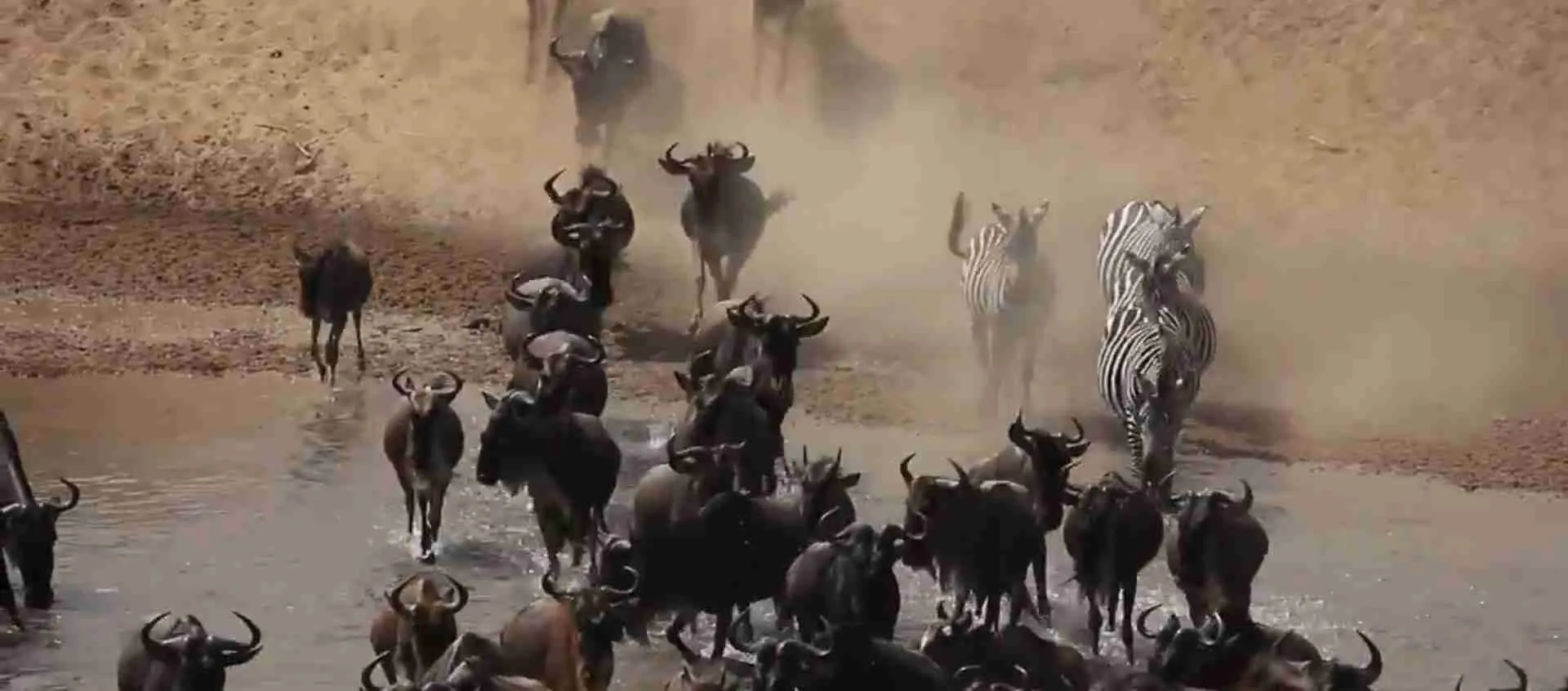
The Great Migration stands as Earth’s largest terrestrial wildlife movement, a continuous cycle involving approximately 1.5 million wildebeest, 400,000 zebras, and 200,000 gazelles traversing the Serengeti-Mara ecosystem in search of fresh grazing and water. This UNESCO World Heritage phenomenon offers travelers in 2026 an unparalleled opportunity to witness nature’s grandest spectacle across Tanzania’s vast savannahs and Kenya’s Masai Mara.
Unlike seasonal events with fixed dates, the migration responds to rainfall patterns and grass growth, creating a dynamic calendar that experienced guides and safari operators track with remarkable precision. For 2026 visitors, understanding this movement pattern transforms a safari from hopeful wildlife viewing into strategic positioning for guaranteed encounters with massive herds, dramatic predator interactions, and the legendary river crossings that define this natural wonder.
The Serengeti National Park encompasses 14,750 square kilometers of protected wilderness, divided into distinct regions each offering unique migration experiences throughout the year. From the southern calving grounds where 8,000 wildebeest calves arrive daily during peak birthing season, to the northern Mara River crossings where crocodiles await and thousands perish in treacherous currents, each month presents different chapters in this eternal story of survival, movement, and renewal.
Planning a 2026 migration safari requires understanding not just where the herds will be, but how accommodation availability, flight logistics, and seasonal pricing create practical constraints that savvy travelers navigate months in advance. This comprehensive guide provides the detailed calendar, regional breakdown, and booking strategies needed to experience the Great Migration at its most spectacular moments.
People Also Ask About Great Migration Serengeti 2026
When is the best time to see the Great Migration in Serengeti in 2026?
The optimal viewing period depends on which migration phase interests you most. For river crossings—the most dramatic spectacle—visit July through October 2026 when herds concentrate near the Mara River in the northern Serengeti and cross into Kenya’s Masai Mara. For calving season, when predator action peaks and 8,000 wildebeest calves arrive daily, plan for late January through March 2026 in the southern Serengeti plains. Each phase offers distinct wildlife experiences, and serious migration enthusiasts often plan multiple 2026 visits to witness different chapters of this natural phenomenon.
How much does a Great Migration safari cost in 2026?
Migration safari costs in 2026 range from $250-400 per person per day for mid-range tented camps to $800-1,500 daily for luxury mobile camps that follow the herds (prices vary by season and operator—confirm current rates when booking). Budget options using permanent lodges with game drives start around $200 per person daily during shoulder seasons. A typical 5-7 day migration safari totals $1,500-3,500 for mid-range experiences and $5,000-10,000 for luxury experiences, excluding international flights. Peak season (July-September) commands premium pricing, while January-March calving season offers excellent value with fewer crowds.
Where exactly will the migration be in Serengeti during 2026?
The migration follows a predictable clockwise pattern through the Serengeti-Mara ecosystem. In January-March 2026, herds concentrate in the southern Serengeti (Ndutu area and short-grass plains) for calving season. April-May 2026 sees movement through the Western Corridor toward the Grumeti River. June-July 2026 positions herds in the central and western Serengeti. July-October 2026 brings the famous Mara River crossings in the northern Serengeti and Masai Mara. November-December 2026 sees herds returning southward through the eastern Serengeti toward the calving grounds.
Do I need to book a Great Migration safari far in advance for 2026?
Advance booking of 6-12 months proves essential for 2026 migration safaris, particularly for July-September peak season when premium camps sell out entirely. Luxury mobile camps that reposition to follow the herds maintain limited capacity and require reservations 9-12 months ahead. Mid-range permanent camps offer more flexibility but still require 4-6 months advance booking for optimal dates. Calving season (January-March) allows slightly shorter planning windows of 3-4 months. For serious migration experiences in 2026, begin planning and booking by late 2025 or early 2026.
Extended multi-day tours – 5+ days
Featured Park Serengeti National Park Multi-Day Tour Packages

3 days
Park Serengeti National Park 3-Day Discovery Tour
- ✓ Comprehensive Park Serengeti National Park experience
- ✓ Expert local guides included
- ✓ All accommodation included
- ✓ Transportation provided
5 days
Park Serengeti National Park 5-Day Highlights Experience
- ✓ Comprehensive Park Serengeti National Park experience
- ✓ Expert local guides included
- ✓ All accommodation included
- ✓ Transportation provided
7 days
Park Serengeti National Park 7-Day Cultural Journey
- ✓ Comprehensive Park Serengeti National Park experience
- ✓ Expert local guides included
- ✓ All accommodation included
- ✓ Transportation provided
10 days
Park Serengeti National Park 10-Day Complete Adventure
- ✓ Comprehensive Park Serengeti National Park experience
- ✓ Expert local guides included
- ✓ All accommodation included
- ✓ Transportation provided
Multi-day tour packages powered by TourRadar. Prices and availability subject to change.
Complete 2026 Migration Calendar and Monthly Guide
The Great Migration operates on nature’s schedule rather than human convenience, yet decades of observation reveal consistent patterns that allow precise planning for 2026 visits. This month-by-month breakdown positions travelers for maximum wildlife encounters throughout the year.
January 2026: Southern Serengeti Calving Season Begins
The migration calendar opens with herds concentrated on the short-grass plains of the southern Serengeti, stretching from the Ndutu area to the Ngorongoro Conservation Area border. Pregnant wildebeest gather in staggering numbers, preparing for the synchronized birthing event that defines January and February.
The short-grass plains offer several advantages for calving: mineral-rich volcanic soils produce nutritious grazing essential for lactating mothers, flat terrain provides visibility to detect approaching predators, and the concentration of herds creates safety in numbers for vulnerable newborns. For 2026 visitors, this concentration translates to guaranteed encounters with hundreds of thousands of animals across relatively compact areas.
Predator density reaches annual peaks during calving season, with lion prides, cheetah coalitions, and hyena clans positioning near the birthing grounds. Wildlife photography opportunities prove exceptional—the combination of dramatic predator-prey interactions, tender mother-calf bonding moments, and vast herds against golden-grass backgrounds creates diverse portfolio opportunities.
January 2026 Recommended Areas: Ndutu, Lake Masek, Southern Serengeti Plains, Ngorongoro Conservation Area short-grass plains
January 2026 Weather: Dry season transitioning to short rains, temperatures 25-30°C, excellent game viewing conditions
February 2026: Peak Calving Season and Predator Action
February represents the migration’s most intense calving period, with approximately 8,000 wildebeest calves born daily during peak weeks. This synchronized birthing evolved as a survival strategy—predators cannot possibly consume all newborns when they arrive simultaneously, ensuring species survival despite heavy losses.
For 2026 safari visitors, February offers unmatched wildlife drama. Newborn calves stand and run within minutes of birth, immediately joining the herd in an instinctive survival response. Predators test the herds constantly, isolating weak or confused individuals. The flat terrain and concentrated herds make this the easiest month for locating animals and witnessing natural behaviors.
Accommodation in the Ndutu area and southern Serengeti reaches capacity during February 2026, with premium camps booking 9-12 months in advance. The area’s limited permanent infrastructure means mobile camps and seasonal operations provide most accommodation, requiring early planning for quality options.
February 2026 Recommended Areas: Ndutu area, Lake Masek, Hidden Valley, Naabi Hill area
February 2026 Weather: Short rains possible, temperatures 24-29°C, green grass creating stunning photography backdrops
March 2026: Late Calving and Early Movement North
Calving continues through March 2026 though at reduced intensity as the birthing peak passes. Herds begin showing restlessness as grass depletes on the short-grass plains, with scouts and lead groups probing northward routes. This transitional month offers excellent value—wildlife concentrations remain high while peak-season crowds diminish.
The long rains typically begin in late March, transforming the landscape and triggering the herds’ northward movement. Experienced guides read these environmental signals, positioning guests to witness the migration’s dramatic transition from static calving grounds to mobile grazing herds.
Young calves born in January-February have now developed sufficient strength for travel, an essential capability for the demanding journey ahead. Predators continue active hunting, focusing on calves not yet strong enough for sustained running.
March 2026 Recommended Areas: Ndutu area, Southern Serengeti, Seronera transition zone
March 2026 Weather: Long rains beginning, temperatures 22-27°C, dramatic storm photography opportunities
April-May 2026: Western Corridor Movement and Grumeti River
The long rains push the migration northwest through the Western Corridor toward the Grumeti River. This period represents the migration’s least-visited phase—heavy rains make some roads challenging, and the dispersed herds prove harder to locate. However, dedicated migration enthusiasts find April-May 2026 rewarding for uncrowded encounters and dramatic rain-season landscapes.
The Grumeti River presents the first major water crossing of the annual cycle, though less dramatic than Mara River crossings due to the river’s smaller scale and the herds’ spread-out timing. Crocodiles reaching 5-6 meters inhabit the Grumeti, and crossing points offer predator-prey drama without the extreme crowding of northern crossings.
Lodge rates drop significantly during the green season, making April-May 2026 attractive for budget-conscious travelers willing to accept less predictable animal movements. The Serengeti’s resident wildlife—lions, elephants, giraffes, and countless other species—remains present year-round regardless of migration positioning.
April-May 2026 Recommended Areas: Western Corridor, Grumeti Reserves, Central Serengeti
April-May 2026 Weather: Long rains, temperatures 20-25°C, some road closures possible, dramatic landscapes
June 2026: Central Serengeti Concentration and Preparing for Crossings
As rains diminish in June 2026, the migration consolidates in the central and western Serengeti, with advance groups reaching the northern regions. This transitional month positions herds for the legendary Mara River crossings that begin in earnest during July.
The Seronera area sees massive herds passing through, offering excellent game viewing near established lodges and camps. River levels remain high from recent rains, building anticipation for dramatic crossings. Predators follow the herds, and the concentration in the central region creates exceptional lion and cheetah sighting opportunities.
June 2026 represents the calm before the storm—herds gather along the Mara River’s southern banks, testing crossing points and retreating, building numbers until courage or desperation triggers the first major crossings. Travelers positioned in northern Serengeti during late June often witness these preliminary attempts.
June 2026 Recommended Areas: Central Serengeti, Seronera area, Northern Serengeti (late June)
June 2026 Weather: Dry season beginning, temperatures 20-26°C, excellent road conditions, clear skies
July 2026: Mara River Crossings Begin
July 2026 marks the beginning of the Great Migration’s most spectacular phase—the Mara River crossings that have become iconic symbols of African wildlife. Massive herds gather on riverbanks, building numbers over hours or days before a lead animal plunges in, triggering thousands to follow regardless of danger.
The Mara River’s treacherous currents, steep banks, and resident crocodile population create genuine peril. Wildebeest drown in annual numbers exceeding 250,000, their bodies feeding the river ecosystem and fertilizing the Mara’s waters. For 2026 visitors, witnessing a major crossing combines exhilaration, drama, and humbling confrontation with nature’s indifference to individual survival.
Northern Serengeti camps fill completely during July-September 2026, with premium riverside positions commanding top prices and requiring booking 9-12 months ahead. Multiple crossing points along the Mara River mean flexibility improves chances—camps with access to several crossing sites prove most valuable.
July 2026 Recommended Areas: Northern Serengeti (Kogatende, Lamai, Mara River camps)
July 2026 Weather: Dry season, temperatures 18-25°C, cool mornings, excellent visibility
August 2026: Peak River Crossing Season
August represents peak crossing season in 2026, with herds moving continuously between the northern Serengeti and Kenya’s Masai Mara. Multiple crossings occur daily during peak periods—sometimes the same herds cross and recross, driven by grass availability and herd dynamics.
The crossing spectacle draws photographers, filmmakers, and wildlife enthusiasts from around the world, creating significant demand for northern Serengeti accommodation. Early morning positioning at known crossing points rewards patient viewers with sunrise crossings when golden light illuminates the chaos of thousands of animals plunging into crocodile-filled waters.
Predator activity intensifies during August 2026 as lions and crocodiles exploit the concentrated food source. Post-crossing chaos often triggers lion hunts on disoriented, exhausted wildebeest still dripping from river passage. The dramatic concentration of wildlife events makes August the premiere month for wildlife photography and videography.
August 2026 Recommended Areas: Northern Serengeti, Mara River crossing points, Kogatende area
August 2026 Weather: Dry season peak, temperatures 18-26°C, dusty conditions, dramatic skies
September 2026: Continued Crossings and Masai Mara Overflow
September 2026 continues the crossing season with herds splitting between the northern Serengeti and Kenya’s Masai Mara. The international border proves meaningless to wildebeest, creating a transboundary spectacle across the Serengeti-Mara ecosystem.
Grass depletion in the Masai Mara often triggers return crossings into Tanzania during September, creating the unusual spectacle of herds crossing the Mara River in both directions within days. This unpredictability requires flexible itineraries—safari operators with access to both sides of the river maximize opportunities.
September offers slightly reduced crowds compared to August while maintaining excellent crossing activity. Accommodation availability improves marginally, though premium camps remain fully booked throughout the month.
September 2026 Recommended Areas: Northern Serengeti, Masai Mara (Kenya), Mara River region
September 2026 Weather: Dry season continuing, temperatures 20-28°C, occasional short rains beginning
October 2026: Final Crossings and Southern Movement Begins
October 2026 marks the transition from river crossing season to the southward return journey. Late crossings continue through early October, but herds increasingly concentrate in central regions, reading environmental signals about rain patterns that will trigger their annual return to the southern calving grounds.
The first short rains typically arrive in late October, greening the central and eastern Serengeti and drawing herds away from the dry northern regions. This transitional period offers excellent value—crossing season crowds depart while massive herds remain present across accessible central areas.
Wildlife diversity peaks during October as resident species join migration herds. Elephant herds, previously dispersed seeking water, concentrate near remaining water sources. Lion prides fatten on available prey. The entire ecosystem pulses with activity as the seasonal transition unfolds.
October 2026 Recommended Areas: Central Serengeti, Eastern Serengeti, Northern regions (early October)
October 2026 Weather: Short rains beginning, temperatures 22-30°C, dramatic thunderstorms, green grass returning
November 2026: Eastern Serengeti and Return Journey
November 2026 positions herds across the eastern Serengeti as the southward journey accelerates. Following rain patterns, the migration moves through Lobo, the Namiri Plains, and the Soit Orgoss kopjes areas, spreading across landscapes less visited than the famous crossing points.
This month offers exceptional lion sighting opportunities as prides in the eastern Serengeti encounter migration herds passing through their territories. The Namiri Plains, closed to tourism for decades to allow lion population recovery, now offers some of the Serengeti’s most consistent big cat encounters.
Short rains create lush landscapes perfect for photography, with green grass contrasting against dramatic storm skies. Accommodation prices moderate from peak season levels while wildlife concentrations remain impressive.
November 2026 Recommended Areas: Eastern Serengeti, Namiri Plains, Lobo area, Central Serengeti
November 2026 Weather: Short rains, temperatures 22-28°C, afternoon thunderstorms, stunning light
December 2026: Approaching the Calving Grounds
December 2026 closes the annual cycle as herds approach the southern Serengeti, pregnant females increasingly heavy with the next generation. The migration spreads across the central and southern regions, with lead groups reaching the Ndutu area and short-grass plains by late December.
Holiday season brings increased visitor numbers to the Serengeti, though the migration’s spread across extensive areas prevents extreme crowding. Family-friendly safaris prove popular during December school holidays, with the combination of accessible wildlife and comfortable dry-season conditions appealing to multi-generational groups.
The cycle prepares to repeat as December transitions to January—wildebeest gather on the calving grounds, predators position for the coming feast, and the eternal rhythm of movement, birth, and survival continues as it has for millennia.
December 2026 Recommended Areas: Southern Serengeti, Ndutu area (late December), Central Serengeti
December 2026 Weather: Short rains ending, temperatures 24-29°C, green landscapes, excellent visibility
Budget Planning for Great Migration Safari 2026
Migration safaris span an enormous price range, from budget options accessible to backpackers to ultra-luxury experiences rivaling the world’s most exclusive travel. Understanding the pricing structure enables travelers to maximize wildlife experiences within their 2026 budget constraints.
Accommodation Cost Categories for 2026
Budget Options ($150-250 per person/night): Basic tented camps and lodges outside prime migration zones, often requiring longer game drives to reach herds. Group departures with shared vehicles. Examples include camps in the central Serengeti with migration access during transition months.
Mid-Range Options ($300-500 per person/night): Comfortable tented camps in good wildlife areas, private game drives, experienced guides. Seasonal camps that reposition 2-3 times annually to follow migration patterns. Full-board accommodation with quality meals and service.
Luxury Options ($600-1,000 per person/night): Premier camps in prime migration positions, expert guides, excellent cuisine, and personalized service. Mobile camps that follow herds precisely. Superior tents with en-suite facilities and thoughtful amenities.
Ultra-Luxury Options ($1,200-2,500 per person/night): Exclusive camps with 6-10 tents maximum, private guiding, exceptional cuisine, and bespoke experiences. Fly-camping, hot air balloon safaris, and private crossing access. The finest safari experiences available.
Sample 2026 Safari Budget Breakdowns
Budget 5-Day Migration Safari (Calving Season January-March 2026):
Accommodation at mid-range seasonal camp: $350 per night x 4 nights = $1,400. Park fees: $70 per day x 5 days = $350. Internal flights Arusha-Serengeti return: $450. Game drives and activities: included. Meals and drinks: included. Tips and gratuities: $150-200. Total: $2,350-2,400 per person (excluding international flights and accommodation).
Mid-Range 7-Day Migration Safari (River Crossing Season July-September 2026):
Premium seasonal camp: $550 per night x 6 nights = $3,300. Park fees: $70 per day x 7 days = $490. Internal flights: $650. Hot air balloon safari: $550. Game drives: included. Meals and beverages: included. Tips: $300-350. Total: $5,290-5,340 per person (excluding international flights and accommodation).
Luxury 10-Day Multi-Region Migration Safari 2026:
Mixed luxury camps following migration: $900 average per night x 9 nights = $8,100. Park fees: $70 per day x 10 days = $700. Charter flights between regions: $1,800. Hot air balloon: $550. Special activities and experiences: $500. Premium beverages: included. Tips: $500-600. Total: $12,150-12,250 per person (excluding international flights and accommodation).
Money-Saving Strategies for 2026 Migration Safaris
Strategic planning significantly reduces migration safari costs without sacrificing wildlife experiences. Shoulder seasons (January-March calving, October-November return journey) offer 20-40% savings compared to peak July-September crossing season while delivering excellent wildlife encounters.
Joining group departures rather than private safaris reduces vehicle and guide costs substantially. Many mid-range operators offer scheduled departures with small groups (4-6 travelers) at prices 30-40% below private equivalents. The social aspect enhances experiences for solo travelers and couples.
Booking early—9-12 months ahead—often secures early-bird discounts of 10-15% at quality camps. Conversely, last-minute availability occasionally offers significant discounts when camps have remaining capacity, though relying on this strategy for peak season proves risky.
Combining Serengeti migration with other Tanzania highlights (Ngorongoro Crater, Tarangire National Park, Zanzibar beaches) through package deals often reduces per-day costs compared to booking components separately.
Transportation and Logistics for 2026 Migration Safaris
Reaching the Serengeti’s migration hotspots requires understanding Tanzania’s safari logistics, from international arrival points to internal transfers that position travelers near the herds.
International Access Points for 2026
Kilimanjaro International Airport (JRO) serves as the primary gateway for Serengeti safaris, with direct flights from Amsterdam (KLM), Doha (Qatar Airways), Addis Ababa (Ethiopian Airlines), Nairobi, and other regional hubs. Flight time from Europe runs 10-12 hours with connections.
Arusha serves as the safari capital of northern Tanzania, with most operators based here organizing Serengeti trips. Travelers typically spend one night in Arusha before morning departures to the Serengeti.
Nairobi (Kenya) offers an alternative routing with connections to the Masai Mara for combined Kenya-Tanzania migration experiences. Border crossings between Masai Mara and Serengeti require coordination but enable comprehensive migration coverage.
Internal Serengeti Transportation in 2026
Scheduled Flights: Daily flights connect Arusha to multiple Serengeti airstrips (Seronera, Kogatende, Ndutu, Grumeti) via operators including Coastal Aviation and Safari Link. Flight time runs 60-90 minutes depending on route. Cost: $300-500 one-way per person.
Charter Flights: Private charters offer flexibility for reaching remote camps or optimizing timing. Cost: $1,500-3,500 per flight depending on aircraft and distance. Essential for accessing some exclusive camps.
Road Transfers: Driving from Arusha to the Serengeti takes 6-8 hours depending on destination within the park. Road safaris offer cost savings and game viewing during transit through Ngorongoro Crater area. Some travelers combine outbound flights with return road journeys for varied experiences.
Moving Within the Serengeti in 2026
Tracking the migration across the Serengeti’s vastness requires strategic positioning and sometimes mid-trip relocations. Multi-camp itineraries prove most effective for comprehensive migration coverage—spending 2-3 nights in different regions captures varied experiences.
Mobile camps that physically relocate to follow herds offer the most precise migration tracking but require advance booking and premium pricing. These operations pack up entire camps and reposition 3-4 times annually, maintaining proximity to major herds throughout the cycle.
Permanent lodges in central locations (Seronera area) provide access during transitional periods when herds pass through, offering more modest pricing with less guaranteed migration proximity. Strategic timing—April-June and October-December—maximizes chances of catching herds near permanent facilities.
Accommodation Strategies for 2026 Migration Season
Accommodation choice fundamentally shapes migration safari experiences, from wildlife encounter quality to overall comfort and service standards. Understanding the options enables informed decisions matching priorities and budgets.
Mobile Camp Advantages for 2026 Migration
Mobile camps represent the gold standard for serious migration tracking. These operations physically relocate camps 3-4 times annually, positioning tents within walking distance of major herds. Wake to wildebeest sounds, watch sunsets over grazing masses, and eliminate long drives to find animals.
Premium mobile camps offer surprising luxury despite their nomadic nature—spacious canvas tents with proper beds, en-suite bucket showers, and flush toilets create comfortable bases for wilderness immersion. Expert guides leading these operations possess intimate migration knowledge accumulated over decades.
Mobile camp pricing reflects the operational complexity—expect $600-1,500 per person per night for quality operations. Booking requirements extend 9-12 months ahead for peak season dates, with many repeat guests reserving immediately upon completing previous trips.
Seasonal Tented Camps for 2026
Seasonal camps occupy semi-permanent positions in productive wildlife areas, operating during specific months when migration passes nearby. These camps offer middle-ground options—better migration access than permanent lodges without mobile camp premium pricing.
The Ndutu area hosts numerous seasonal camps during January-March calving season, dismantling when herds depart. Similarly, northern Serengeti seasonal camps operate July-October for crossing season. Quality seasonal camps price $300-600 per person per night with good wildlife encounters.
Permanent Lodges and Their 2026 Role
Permanent lodges in the central Serengeti (Seronera area) provide year-round accommodation with migration access during transitional periods. These facilities offer consistent comfort, established infrastructure, and often family-friendly features not available in remote tented camps.
During April-June and October-December, herds pass through central areas where permanent lodges provide excellent access at more modest pricing than peak-season mobile camps. Resident wildlife—lions, elephants, leopards, cheetahs—ensures quality game viewing even when migration herds range elsewhere.
Sample 2026 Migration Itineraries
Crafting effective migration itineraries requires balancing wildlife priorities, travel logistics, and available time. These sample journeys demonstrate successful approaches for different 2026 periods.
Calving Season Itinerary: January-February 2026 (7 Days)
Day 1: Arrive Kilimanjaro Airport, transfer to Arusha lodge. Rest and safari briefing.
Day 2: Morning flight to Ndutu airstrip (60 minutes). Afternoon game drive exploring southern plains. Overnight at seasonal tented camp near calving grounds.
Days 3-4: Full days exploring calving areas with expert guide. Witness births, predator hunts, and massive herd concentrations. Photographic opportunities throughout dawn-to-dusk game drives.
Day 5: Morning game drive, then transfer to Ngorongoro Crater rim lodge. Afternoon at leisure with crater views.
Day 6: Full day Ngorongoro Crater game drive—the world’s largest unflooded caldera with dense wildlife populations. Black rhino sighting opportunities. Return to rim lodge.
Day 7: Morning game drive or cultural visit to Maasai village. Transfer to Arusha and onward travel.
2026 Budget Estimate: Ndutu tented camp $400/night x 3 = $1,200. Ngorongoro lodge $350/night x 2 = $700. Arusha hotel $150 x 1 = $150. Flights $450. Park fees $490. Crater entry $295. Guide tips $200. Total: approximately $3,485 per person (excluding international flights).
River Crossing Itinerary: August 2026 (8 Days)
Day 1: Arrive Kilimanjaro, overnight Arusha.
Day 2: Morning flight to northern Serengeti (Kogatende area). Afternoon game drive exploring Mara River crossing points. Overnight at riverside camp.
Days 3-5: Three full days positioned for river crossings. Dawn starts to reach crossing points before herds build courage. Patience rewarded with dramatic crossings—sometimes multiple daily during peak activity. Expert guides read herd behavior to anticipate crossing timing.
Day 6: Morning game drive, midday flight to central Serengeti. Afternoon exploring Seronera area’s big cat territories. Overnight at permanent lodge.
Day 7: Early morning hot air balloon safari over migration herds (weather permitting). Champagne breakfast in the bush. Afternoon game drive. Final night at lodge.
Day 8: Morning game drive, flight to Arusha, connect to international departure.
2026 Budget Estimate: Northern camp $650/night x 4 = $2,600. Central lodge $400/night x 2 = $800. Arusha hotel $150. Flights $750. Balloon $550. Park fees $560. Tips $300. Total: approximately $5,710 per person (excluding international flights).
Extended Multi-Season Itinerary: 12 Days Covering Varied Migration Phases 2026
Days 1-4: Southern Serengeti/Ndutu during calving season or return journey (depending on travel dates). Mobile camp experience following herds across short-grass plains.
Days 5-7: Transfer to northern Serengeti for Mara River access. Tented camp positioned for crossing opportunities. Concentrated game viewing during peak activity hours.
Days 8-10: Masai Mara (Kenya) for different ecosystem perspective. Balloon safari, cultural experiences, and continued migration access from Kenya side.
Days 11-12: Return to Arusha via Ngorongoro Crater or direct flight. Final game viewing and departure.
2026 Budget Estimate (Mid-Range): $550 average per night x 11 nights = $6,050. Flights and transfers $1,500. Park fees $770. Activities $800. Tips $400. Total: approximately $9,520 per person (excluding international flights).
Booking Strategies for 2026 Migration Season
Securing quality migration safari experiences requires understanding booking timelines, operator selection, and strategic planning that positions travelers for success.
When to Book Your 2026 Migration Safari
Peak season (July-September) demands the longest lead times—serious travelers book 12-18 months ahead for premium camps. By January 2026, the best northern Serengeti options for July-September 2026 will be substantially committed. Waiting until mid-2026 for peak season typically means accepting remaining availability rather than choosing optimal properties.
Calving season (January-March) allows more flexibility with 6-9 months advance booking securing quality options. Shoulder seasons (April-June, October-December) can sometimes accommodate 3-6 months advance planning, though premium camps still require earlier commitment.
Selecting Migration Safari Operators for 2026
Operator quality varies enormously in Tanzania’s competitive safari market. Established operators with long track records, professional associations (TATO—Tanzania Association of Tour Operators), and clear safety protocols provide confidence in service delivery.
Guide quality proves crucial for migration experiences—expert guides read animal behavior, anticipate movement patterns, and position vehicles for optimal encounters. Ask operators about guide experience, training, and specifically migration expertise. The difference between average and exceptional guiding transforms safari quality.
Camp partnerships matter significantly. Operators with strong relationships at premium camps secure allocations during peak periods when independent booking proves impossible. Ask which camps operators recommend and why—the answers reveal both expertise and access.
2026 Booking Checklist and Timeline
12-18 Months Before (Now for Peak Season 2026): Research operators and camps, determine travel dates, request proposals, compare options, confirm booking with deposits.
6-9 Months Before: Finalize itinerary details, book international flights, arrange travel insurance, begin visa process for Tanzania, confirm any special requests.
3-6 Months Before: Complete final payments, receive detailed itinerary, arrange airport transfers, confirm internal flight schedules, prepare packing lists.
1 Month Before: Reconfirm all reservations, complete travel documentation, arrange currency exchange, final equipment preparation.
Essential Packing and Preparation for 2026 Migration Safari
Migration safari success depends partly on appropriate preparation, from camera equipment to clothing and health precautions that enable comfortable wildlife watching across varied conditions.
Photography Equipment for 2026 Migration
Telephoto lenses prove essential—200-400mm range captures intimate wildlife portraits while longer lenses (500-600mm) enable detailed shots of distant herds and river crossings. Image stabilization technology helps in vehicle conditions. Bring backup bodies and lenses; dust and wildlife opportunities make equipment reliability crucial.
Memory card capacity for migration photography should far exceed typical travel—expect 500-1,000+ images daily during active periods. Multiple high-capacity cards prevent the tragic choice between deleting images and missing opportunities. Bring sufficient charging solutions for battery-hungry cameras.
Clothing and Personal Items for 2026
Neutral colors (khaki, olive, brown, tan) serve safari game viewing—bright colors potentially disturb wildlife. Layering accommodates temperature swings from cool dawn drives (bring fleece or warm jacket) to hot midday sun (light, breathable fabrics).
Quality binoculars transform migration viewing, enabling detailed observation of distant crossings and behavior. 8×42 or 10×42 models balance magnification with light gathering and field of view. Budget $200-500 for reliable optics lasting many safaris.
Sun protection (quality sunscreen, wide-brimmed hat, polarized sunglasses) prevents the sunburn and discomfort that diminish safari enjoyment. Safari vehicles provide limited shade during extended game drives.
Health Preparation for 2026 Tanzania Travel
Malaria prevention requires attention for Serengeti travel. Consult travel medicine specialists 6-8 weeks before departure regarding appropriate prophylaxis options. The Serengeti sits in a malaria zone year-round; prevention proves far preferable to treatment.
Yellow fever vaccination is required for Tanzania entry when arriving from endemic countries and recommended for all travelers. Other recommended vaccinations include hepatitis A and B, typhoid, and current routine immunizations. Travel clinics provide comprehensive pre-trip consultations.
Travel insurance covering medical evacuation proves essential for Serengeti safaris. Remote locations mean that serious medical issues require evacuation to Nairobi or beyond—insurance covering $100,000+ evacuation costs provides necessary protection.
2026 Migration Safari Updates and Current Information
The Serengeti-Mara ecosystem remains one of Earth’s most pristine wildlife environments, with conservation efforts ensuring the migration continues largely as it has for millennia. For 2026 visitors, several factors merit attention in final planning.
Conservation and Park Management Updates 2026
Tanzania National Parks Authority (TANAPA) continues managing visitor numbers and infrastructure development to balance tourism revenue with ecosystem preservation. Daily vehicle limits at popular sites and designated game-viewing routes help distribute impact across the park’s vastness.
Cross-border coordination between Tanzania and Kenya facilitates transboundary wildlife movement and tourism experiences. Combined Tanzania-Kenya itineraries allow comprehensive migration coverage, though separate visas and park fees apply for each country.
Sustainability Considerations for 2026 Visitors
Choosing operators committed to conservation, community benefit, and environmental responsibility supports the ecosystem’s long-term health. Ask operators about their sustainability practices, community partnerships, and conservation contributions when selecting safari providers.
Carbon offset programs address aviation’s environmental impact—many operators offer voluntary offset options for internal flights. Some travelers offset international flights as well, recognizing that reaching the Serengeti requires substantial air travel.
Responsible wildlife viewing—maintaining appropriate distances, avoiding interference with animal behavior, and following guide instructions—ensures quality experiences while protecting the ecosystem that makes them possible.
Frequently Asked Questions About Great Migration Serengeti 2026
Is the Great Migration worth seeing in 2026?
Absolutely. The Great Migration represents one of Earth’s most spectacular natural events, with 2026 offering the same extraordinary wildlife spectacle that has captivated visitors for generations. Whether witnessing the drama of river crossings, the tenderness of calving season, or simply experiencing two million animals moving across vast savannahs, the migration delivers transformative wildlife encounters unavailable anywhere else on the planet.
Can I see the migration if I only have 3-4 days in 2026?
A 3-4 day safari can provide meaningful migration experiences if timed correctly. Focus on a single region during peak activity—Ndutu during January-February calving or northern Serengeti during July-September crossings. Fly in and out to maximize game-viewing time. While longer trips provide deeper experiences, even short visits offer incredible wildlife encounters.
What happens if the migration isn’t where predicted in 2026?
Migration timing varies based on rainfall patterns, and herds sometimes move earlier or later than historical averages. Quality safari operators employ scouts tracking herd movements and can adjust itineraries accordingly. Booking with flexible operators and choosing mobile camps that reposition increases chances of optimal encounters regardless of exact timing.
Are river crossings guaranteed during July-September 2026?
No wildlife event can be guaranteed—nature operates on its own schedule. However, July-September 2026 represents the highest probability period for witnessing crossings. Patience proves essential; herds may gather for hours or days before crossing. Multiple days in the northern Serengeti dramatically increase crossing chances.
Is the migration dangerous to watch in 2026?
Safari vehicles provide safe observation positions for all migration activities. Professional guides maintain appropriate distances from wildlife while positioning for excellent viewing. The dangers of the migration—crocodile attacks, drowning, predator hunts—affect the animals, not observers in properly conducted safaris.
What if it rains during my 2026 migration safari?
Rain creates challenges but also opportunities. Wet-season landscapes photograph beautifully, and dramatic storm light produces remarkable images. Safari vehicles handle most conditions, though some roads may become impassable during heavy rains. Pack rain gear and maintain flexibility—experienced guides adjust plans to maximize wildlife encounters regardless of weather.
Can children experience the Great Migration in 2026?
Yes, with appropriate planning. Many camps welcome families and provide modified experiences suitable for children. Minimum ages vary by property—some luxury camps require children 8+ while others accommodate all ages. Shorter game drives, pool time, and child-friendly activities help young travelers enjoy safari experiences without exhaustion.
What other wildlife besides wildebeest will I see in 2026?
The Serengeti hosts extraordinary wildlife diversity beyond migration herds. Expect lions (approximately 3,000 in the ecosystem), leopards, cheetahs, elephants, giraffes, hippos, crocodiles, zebras, gazelles, and hundreds of bird species. The concentration of predators during migration periods creates exceptional big cat encounters.
Should I combine Serengeti with other destinations in 2026?
Popular combinations include Ngorongoro Crater (2-hour drive from Serengeti, unique ecosystem), Tarangire National Park (famous elephant herds), and Zanzibar beaches (for post-safari relaxation). Kenya’s Masai Mara offers the migration from a different perspective. Extended itineraries provide varied experiences while amortizing international flight costs.
How do I choose between different camps for 2026?
Consider location relative to predicted herd positions, guide quality and expertise, camp style (mobile vs. permanent), comfort level, and budget. Reading reviews from recent guests provides insights into current service quality. Consulting with experienced operators helps match camp choices to priorities and travel dates.