
Great Barrier Reef Architecture Guide: The Engineering Marvel of Nature’s Largest Living Structure
Key Takeaways
- The Great Barrier Reef comprises over 2,900 individual reefs and 900 islands spanning 2,300 kilometers, creating the world’s largest living structure visible from space
- Coral polyps construct calcium carbonate skeletons through biological precipitation, building massive reef structures achieving vertical growth rates of 1-2 centimeters annually under optimal conditions
- The reef system encompasses four distinct architectural forms: fringing reefs, barrier reefs, platform reefs, and coral cays, each exhibiting unique structural characteristics adapted to specific environmental conditions
- Reef architecture demonstrates sophisticated natural engineering principles including wave energy dissipation, structural redundancy, adaptive growth responses, and ecosystem integration creating self-sustaining communities
- The three-dimensional complexity of reef structures creates diverse habitats supporting extraordinary biodiversity, with architectural features determining species distribution and ecological relationships
- Understanding reef architecture reveals how biological, physical, and chemical processes interact to construct ecosystems demonstrating resilience, adaptation, and engineering elegance surpassing human-designed structures
Introduction: Natural Architecture at Planetary Scale
The Great Barrier Reef represents Earth’s most spectacular example of biological architecture, where countless microscopic organisms collectively construct structures of immense scale and complexity. This extraordinary ecosystem stretches 2,300 kilometers along Australia’s northeastern coast, comprising over 2,900 individual reefs and 900 islands covering approximately 344,400 square kilometers. The reef’s architecture spans scales from individual coral polyps measuring millimeters to massive reef structures extending hundreds of meters in depth and kilometers in length. This multi-scale organization creates the world’s largest living structure, visible from space yet built atom by atom through biological processes operating over millennia.
The architectural principles governing reef construction rival and often surpass human engineering achievements. Coral structures demonstrate sophisticated stress distribution, wave energy dissipation, material efficiency, and adaptive responses to environmental forces. The reef’s three-dimensional complexity creates intricate labyrinths of passages, caves, overhangs, and platforms providing diverse habitats for thousands of species. This biological architecture integrates structure with function, creating self-sustaining ecosystems where architectural form determines ecological relationships, species distribution, and community dynamics. Understanding reef architecture reveals fundamental principles about how biological systems organize matter, respond to environmental forces, and create complex adaptive structures through distributed processes lacking centralized design or control.
This comprehensive architectural guide examines the Great Barrier Reef’s structural organization across multiple scales and perspectives. We explore the fundamental building blocks of reef architecture beginning with individual coral polyps and their calcium carbonate skeletons, examine how these elements aggregate into coral colonies exhibiting diverse growth forms, investigate how colonies combine into reef structures of various types, and finally consider how individual reefs integrate into the vast system-level architecture of the entire Great Barrier Reef. Through this multi-scale analysis, the reef emerges as a masterpiece of natural engineering demonstrating principles applicable far beyond marine biology, offering insights into self-organization, distributed construction, and the emergence of complexity from simple processes repeated across vast numbers of individual actors.
People Also Ask About Great Barrier Reef Architecture
What are coral reefs made of and how do they form structures?
Coral reefs are constructed from calcium carbonate (limestone) deposited by coral polyps, tiny marine animals related to sea anemones. Each polyp secretes calcium carbonate from its base, forming a cup-shaped skeleton called a corallite that protects the soft-bodied animal. Polyps reproduce both sexually and asexually, with asexual budding creating connected polyp colonies sharing skeletal structures. As polyps die, their skeletons remain, providing foundation for new polyps to build upon. This continuous cycle of growth, death, and new construction over hundreds to thousands of years creates massive reef structures. The calcium carbonate comes from seawater, with polyps using specialized cells to precipitate dissolved calcium and carbonate ions into solid limestone. This biological mineralization process operates most effectively in warm, clear, sunlit waters where symbiotic algae living within coral tissues provide energy through photosynthesis.
How fast do coral reefs grow and build their structures?
Coral reef growth rates vary significantly depending on coral species, environmental conditions, and location within the reef structure. Fast-growing branching corals can achieve vertical growth rates of 10-20 centimeters per year under optimal conditions, while slow-growing massive boulder corals may grow only 5-25 millimeters annually. Overall reef structure accretion rates for the Great Barrier Reef range from 1-2 centimeters per year when averaged across all coral types and reef zones. However, gross growth rates differ from net accretion because biological and physical erosion processes remove carbonate material even as new growth adds it. Factors affecting growth rates include water temperature, light availability, water quality, nutrient levels, and physical disturbance frequency. The fastest growth occurs in shallow, high-energy reef zones where branching corals dominate, while deeper reef zones experience slower growth dominated by massive coral forms adapted to low-light conditions.
What are the different types of reef structures in the Great Barrier Reef?
The Great Barrier Reef encompasses four primary reef structure types: fringing reefs, barrier reefs, platform reefs, and coral cays. Fringing reefs grow directly adjacent to coastlines, attached to shore or separated by narrow shallow lagoons. Barrier reefs develop parallel to coastlines but separated by deeper, wider lagoon systems, with the Great Barrier Reef itself representing the world’s most extensive barrier reef system. Platform reefs occur in open water away from continental coasts, typically developing on submerged former reef platforms or other geological features, showing varied shapes including crescentic, elongated, or irregular forms. Coral cays are low-lying sandy or coral rubble islands formed atop platform reefs through wave action accumulating and depositing sediments. Each reef type exhibits characteristic architectural features adapted to its environmental position, wave exposure, depth, and substrate conditions.
How does reef architecture protect coastlines from storms?
Reef architecture provides natural coastal protection through multiple mechanisms that dissipate wave energy before it reaches shorelines. The reef structure causes waves to break on the outer reef edge, converting organized wave energy into turbulent water motion and heat. This wave-breaking process can reduce wave heights by 70-90% compared to unobstructed ocean waves. The rough, complex three-dimensional structure of coral surfaces creates friction that further dissipates energy from waves passing over reef flats. Reef width also matters, with wider reefs providing more distance for energy dissipation. The architectural complexity of channels, passages, and reef structures creates flow patterns that distribute and redirect water movement, preventing concentrated force impacts. During tropical cyclones, reef structures absorb tremendous wave energy that would otherwise cause severe coastal erosion and flooding. Economic valuations estimate this coastal protection service provided by the Great Barrier Reef at billions of dollars annually, comparable to cost of artificial coastal defenses.
Extended multi-day tours – 5+ days
Featured Great Barrier Reef Multi-Day Tour Packages
3 days
Great Barrier Reef 3-Day Discovery Tour
- ✓ Comprehensive Great Barrier Reef experience
- ✓ Expert local guides included
- ✓ All accommodation included
- ✓ Transportation provided

5 days
Great Barrier Reef 5-Day Highlights Experience
- ✓ Comprehensive Great Barrier Reef experience
- ✓ Expert local guides included
- ✓ All accommodation included
- ✓ Transportation provided
7 days
Great Barrier Reef 7-Day Cultural Journey
- ✓ Comprehensive Great Barrier Reef experience
- ✓ Expert local guides included
- ✓ All accommodation included
- ✓ Transportation provided

10 days
Great Barrier Reef 10-Day Complete Adventure
- ✓ Comprehensive Great Barrier Reef experience
- ✓ Expert local guides included
- ✓ All accommodation included
- ✓ Transportation provided
Multi-day tour packages powered by TourRadar. Prices and availability subject to change.
Fundamental Building Blocks: Coral Polyp Architecture
The Great Barrier Reef’s immense architecture originates from coral polyps, cylindrical animals measuring typically 1-10 millimeters in diameter, though some species produce polyps up to several centimeters. Each polyp possesses a radially symmetric body plan with a central mouth surrounded by tentacles arranged in multiples of six, reflecting their cnidarian phylum relationship to sea anemones and jellyfish. The polyp’s base secretes calcium carbonate forming the corallite skeleton, a cup-shaped structure providing protection and attachment substrate. The architectural sophistication visible at polyp scale establishes patterns repeated at larger scales throughout reef structures.
Coral polyps demonstrate remarkable architectural efficiency in their skeletal construction. The corallite cup features thin walls (typically 0.5-2 millimeters) providing maximum structural strength with minimal material investment. Radial septa project inward from the cup wall, creating a star-burst pattern when viewed from above while providing structural reinforcement and increasing surface area for polyp attachment. The columella, a central pillar structure in many species, provides additional support while maintaining openness for polyp tissue connection. This architecture exemplifies nature’s tendency toward material economy, using minimal calcium carbonate to achieve necessary structural functions while avoiding unnecessary mass that would require additional energy for construction.
The relationship between polyp architecture and symbiotic zooxanthellae algae living within polyp tissues fundamentally influences coral growth forms and reef-building capacity. Zooxanthellae require sunlight for photosynthesis, constraining coral growth to shallow, sunlit waters and favoring architectural forms maximizing light capture. This symbiotic relationship enables corals to deposit calcium carbonate far more rapidly than would be possible through polyp feeding alone, with zooxanthellae providing up to 90% of coral energy requirements. The architectural implications extend beyond individual polyps to colony and reef-level structures, as light optimization drives the diverse growth forms exhibited by different coral species adapted to various depth and light intensity conditions.
Polyp architecture also reflects defensive adaptations against predators and competitors. Many corals develop elaborate skeletal features including spines, ridges, and reinforced walls providing protection against crown-of-thorns starfish and other corallivores. Some species produce polyps that retract deeply into protective cups during daylight when predation risk is highest, extending tentacles only at night for feeding. Architectural features thus serve multiple functions simultaneously: structural support, predator defense, light capture optimization, and water flow enhancement for feeding. This multi-functional design represents sophisticated biological engineering where every architectural element contributes to polyp survival and reproductive success.
Colony-Level Architecture: Growth Forms and Structural Diversity
Coral colonies emerge through asexual reproduction where polyps bud new polyps that remain connected through shared tissue and integrated skeletal frameworks. This colonial organization creates structures ranging from simple encrusting forms covering substrates like biological paint to massive boulder colonies weighing hundreds of tons and living for centuries. The architectural diversity of colony growth forms reflects adaptations to different environmental conditions including depth, wave energy, light availability, and sedimentation patterns. Scientists categorize colony growth forms into major types including branching, massive, plate, foliose, encrusting, and solitary, each exhibiting characteristic structural properties and ecological advantages.
Branching corals, exemplified by Acropora species dominating many reef crest environments, develop tree-like or antler-like structures with multiple branches radiating from central attachment points. This architecture maximizes three-dimensional space utilization and surface area for light capture while maintaining relatively light weight that enables rapid upward growth toward water surface. Branches typically measure 5-15 centimeters in diameter, large enough for structural integrity but small enough that storm waves can break individual branches without destroying entire colonies. The spaces between branches create microhabitats for fish and invertebrates while maintaining water flow necessary for feeding and gas exchange. Branching architecture enables some Acropora species to achieve the reef’s fastest growth rates, extending 10-20 centimeters vertically per year under favorable conditions.
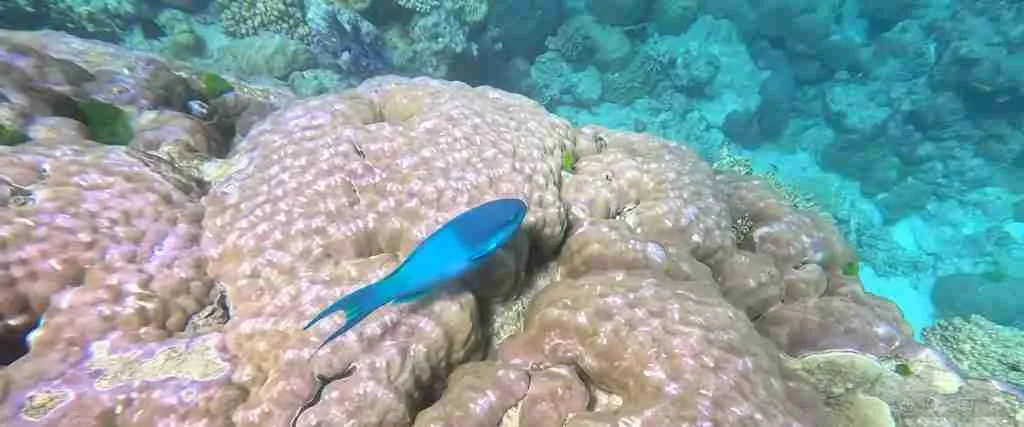
Massive boulder corals including Porites species build hemispherical or dome-shaped colonies through slow, steady radial growth producing robust structures resistant to wave damage. These colonies can achieve diameters exceeding 5 meters and ages surpassing 500 years, making them the reef’s oldest and largest coral individuals. The massive architecture distributes stress evenly across the colony structure, enabling survival through tropical cyclones that destroy more fragile branching forms. Growth rates are slow, typically 5-25 millimeters per year, but the architectural robustness ensures longevity compensating for reduced growth speed. Massive corals often dominate deeper reef zones and areas exposed to high wave energy where their structural resilience provides competitive advantages over faster-growing but more fragile species.
Plate and foliose corals develop horizontal or vase-shaped structures maximizing light capture in deeper waters where light intensity limits coral growth. These architectural forms spread laterally, creating overhanging ledges and shelves that provide shaded habitat for light-sensitive species while maximizing the colony’s photosynthetic surface area. The platy architecture enables efficient light harvesting in low-light environments where massive or branching forms would be disadvantaged. However, the horizontal orientation makes plate corals vulnerable to sediment accumulation and susceptible to breakage from storm waves, limiting their distribution to relatively protected deeper reef zones. The architectural trade-offs between light capture efficiency and structural vulnerability illustrate how environmental conditions select for particular growth forms in different reef zones.
Reef-Scale Architecture: Structural Types and Zonation
Individual reefs within the Great Barrier Reef system exhibit characteristic structural organization reflecting geological substrate, wave exposure, and biological processes. Fringing reefs develop directly adjacent to continental or island coastlines, building outward from shore on rocky substrate or former reef platforms. These reefs show pronounced zonation from nearshore reef flat zones dominated by hardy coral communities tolerant of variable conditions through to outer reef slopes facing open ocean with diverse coral assemblages adapted to high water quality and consistent conditions. The architectural transition across zones reflects environmental gradients in wave energy, light levels, sedimentation, and water quality.
Barrier reefs, the most architecturally complex reef type, develop parallel to coastlines but separated by lagoon systems that may be several kilometers wide and tens of meters deep. The barrier reef structure creates natural harbors protecting coastlines from ocean swells while the lagoon provides protected habitat for seagrass communities and species requiring shelter from high-energy environments. The reef’s outer slope faces the open ocean, experiencing maximum wave exposure and supporting abundant coral growth down to depths where light limits photosynthesis. The reef crest zone, where waves break, endures extreme physical forces selecting for robust branching corals forming interlocking frameworks called spurs and grooves that channel water flow and dissipate wave energy through structural complexity.
Platform reefs occur throughout the Great Barrier Reef’s offshore regions, developing on submerged geological features including former reef platforms from earlier sea level configurations. These reefs grow upward toward the surface from depths of 20-40 meters, creating structures that may measure several kilometers in length and width. Platform reefs show diverse architectural forms including crescentic shapes with distinctive lagoon systems, elongated ribbon reefs aligned with prevailing currents and wind patterns, and irregular deltaic forms influenced by substrate geometry. The architectural diversity reflects complex interactions between reef growth processes, water movement patterns, substrate characteristics, and historical development through multiple sea level changes.
Coral cays represent special architectural features where physical processes accumulate sediments on reef platforms, creating low-lying islands that may support vegetation and terrestrial ecosystems. Wave action breaks coral structures into rubble and sand that accumulates in stable zones on reef platforms, typically on the leeward side where wave energy decreases. Over time, these sediment accumulations build above high tide level, creating island foundations. Once established, vegetation including coconut palms, pisonia trees, and various shrubs colonizes cays, stabilizing sediments and facilitating further vertical growth. The architectural development from submerged reef platform to vegetated coral cay can occur over centuries to millennia, creating terrestrial habitat in the middle of marine ecosystems and providing critical nesting sites for seabirds and sea turtles.
System-Level Architecture: The Reef Matrix
The Great Barrier Reef’s system-level architecture encompasses over 2,900 individual reefs organized into a vast matrix extending 2,300 kilometers north-south and up to 250 kilometers east-west at its widest section. This reef matrix is not continuous but rather comprises discrete reefs separated by channels, passages, and inter-reef areas of sand, rubble, or seagrass habitat. The architectural arrangement creates a heterogeneous seascape where reef and non-reef habitats alternate, providing diverse ecosystem types supporting different species assemblages and ecological functions. Understanding system-level architecture requires considering not just individual reefs but also the spaces between reefs and the connectivity enabling larvae, nutrients, and organisms to move through the system.
The reef matrix shows pronounced cross-shelf organization with distinct reef types and architectural characteristics varying from inshore to offshore positions. Inshore reefs near the continental coast experience higher turbidity from river discharge, greater temperature variability, and more variable salinity creating environmental challenges for coral growth. These reefs show lower coral diversity and abundance but support communities adapted to variable conditions. Mid-shelf reefs occupy intermediate positions experiencing moderate environmental conditions and supporting diverse coral assemblages. Offshore reefs near the continental shelf edge experience the highest water quality, most stable conditions, and greatest wave exposure, supporting maximum coral diversity and abundance. This cross-shelf gradient creates distinctive architectural zones with characteristic reef structures, coral assemblages, and ecological communities adapted to each environmental context.
The architectural connectivity between individual reefs determines system-level properties including resilience, species distribution, and ecosystem function. Coral spawning events release millions of larvae that drift with currents for days to weeks before settling on suitable substrate. The architectural configuration of reefs across the system, combined with oceanographic current patterns, determines which reefs serve as larval sources, which as sinks receiving larvae from elsewhere, and the network of connections linking reefs across the entire system. This connectivity architecture means that reef health in one location can influence recovery potential in distant locations, requiring system-level management approaches rather than just protecting individual reefs in isolation.
Climate change increasingly influences the Great Barrier Reef’s system-level architecture through altered patterns of coral survival, growth, and recovery following disturbances. Recent mass bleaching events preferentially damaged corals in northern and central reef sections while southern reefs experienced less severe impacts due to cooler water temperatures. This spatially heterogeneous impact pattern alters the architectural distribution of coral cover, shifts community composition toward more heat-tolerant species, and may restructure connectivity patterns as remaining coral populations become concentrated in particular regions. Understanding how system-level architecture responds to climate change impacts proves essential for predicting ecosystem trajectories and developing management strategies supporting reef persistence under changing environmental conditions.
Engineering Principles: Structural Performance and Adaptation
The Great Barrier Reef’s architecture demonstrates sophisticated engineering principles that engineers and architects increasingly study for biomimetic applications. Wave energy dissipation represents one of the reef’s most important structural functions, with rough, complex reef surfaces creating friction that transforms organized wave energy into turbulent flow and heat. The architectural features including spurs and grooves, rubble zones, and variable depth topography enhance energy dissipation through mechanisms including wave breaking, bottom friction, and flow interference. Studies measuring wave transmission across reef structures document energy reduction of 70-90%, performance levels exceeding many artificial coastal defense structures while providing additional ecosystem benefits including habitat provision and biodiversity support.
Structural resilience through redundancy and distributed architecture enables reef persistence despite disturbances including tropical cyclones, coral bleaching events, and predator outbreaks. The reef’s modular organization means damage to one section does not compromise the entire system, with adjacent healthy reefs serving as recovery sources. Colony-level architecture shows similar redundancy, with branching coral colonies able to regenerate from surviving fragments after storm damage. The distributed nature of reef construction, with millions of polyps each contributing incrementally to structural development, means the architectural system lacks single points of failure that could compromise overall integrity. This design principle contrasts with human structures where critical support elements can cause catastrophic failure if damaged.
Adaptive architecture represents another principle exhibited by coral reef structures, with growth responses dynamically adjusted to environmental conditions. Corals experiencing strong water flow develop more robust, compact growth forms with thicker branches compared to genetically identical individuals growing in calmer waters where more delicate, expansive forms prove advantageous. This phenotypic plasticity enables architectural optimization for local conditions without requiring genetic changes, allowing colonies to adjust to environmental variation. At reef scale, community composition shifts in response to disturbance regimes, with robust massive corals increasing in importance in high-disturbance environments while more diverse assemblages develop under moderate disturbance. These adaptive responses maintain ecosystem function across varying environmental conditions.
Material efficiency in reef architecture reflects evolutionary optimization toward minimal resource use for maximal structural performance. Coral skeletons employ thin-wall construction, strategic buttressing, and porous architecture that reduces material requirements while maintaining structural integrity. The skeletal porosity, typically 40-60% void space, provides multiple benefits including reduced weight enabling faster growth, flow channels supplying nutrients to polyps, and compliance allowing structural flex under wave loading rather than brittle failure. Engineers studying coral architecture have developed bio-inspired structural materials and designs incorporating similar principles for applications including lightweight structural components, energy-dissipating materials, and adaptive structures responding to environmental forces.
Ecological Architecture: Habitat Complexity and Biodiversity
The three-dimensional architectural complexity of coral reef structures creates diverse habitats supporting the extraordinary biodiversity characteristic of these ecosystems. Architectural features at multiple scales provide specialized niches for different species: microscopic crevices sheltering juvenile fish, branching coral frameworks creating foraging areas for predators, massive coral colonies offering permanent refuges for territorial species, caves and overhangs providing shaded habitat for light-sensitive invertebrates, and reef slope variations creating depth gradients with characteristic communities adapted to different light and pressure conditions. This habitat diversity enables species coexistence through resource partitioning, where different species utilize different architectural niches reducing direct competition.
Architectural complexity correlates strongly with biodiversity across reef systems globally, with more structurally complex reefs supporting greater species richness and abundance. The Great Barrier Reef’s architectural diversity, encompassing the full range of reef types and structural forms, contributes substantially to its status as Earth’s most biodiverse marine ecosystem. Research quantifying structural complexity through metrics including rugosity (surface roughness), fractal dimension (scale-independent complexity), and habitat diversity demonstrates that coral architecture explains much of the variation in fish and invertebrate community structure between reefs. This relationship emphasizes that conserving reef biodiversity requires protecting not just coral cover but also the architectural complexity that corals create.
The architectural relationship between coral colonies and associated species often exhibits remarkable specificity, with particular species requiring specific structural features. Coral gobies live exclusively within branches of Acropora corals, where their small size enables navigation through narrow gaps between branches while gaining protection from predators. Christmas tree worms bore into coral skeletons, creating permanent tubes from which they extend feeding structures while protected by coral tissue. Numerous fish species require specific coral architectural features for spawning, with damselfish depositing eggs on smooth coral surfaces where they can defend nests effectively, while wrasses utilize coral rubble zones for sleeping shelters they bury under each night. These architectural dependencies mean that changes in reef structure through coral mortality or growth form shifts cascade through dependent species, potentially causing community-wide changes from architectural alterations.
Reef architecture also structures ecological interactions including predation, competition, and mutualism that regulate community dynamics. The three-dimensional maze of coral branches and crevices provides refuges where prey species escape predators, maintaining prey populations that would otherwise be eliminated from more architecturally simple habitats. Architectural complexity influences competition between coral species by creating varied light and flow environments where different species gain competitive advantages, maintaining species diversity through environmental heterogeneity. Mutualistic relationships including cleaner fish stations occupying conspicuous coral outcrops and anemonefish sheltering among anemones attached to coral structures depend on architectural features providing the spatial context for these interactions to operate effectively.
Photographic Documentation: Capturing Reef Architecture
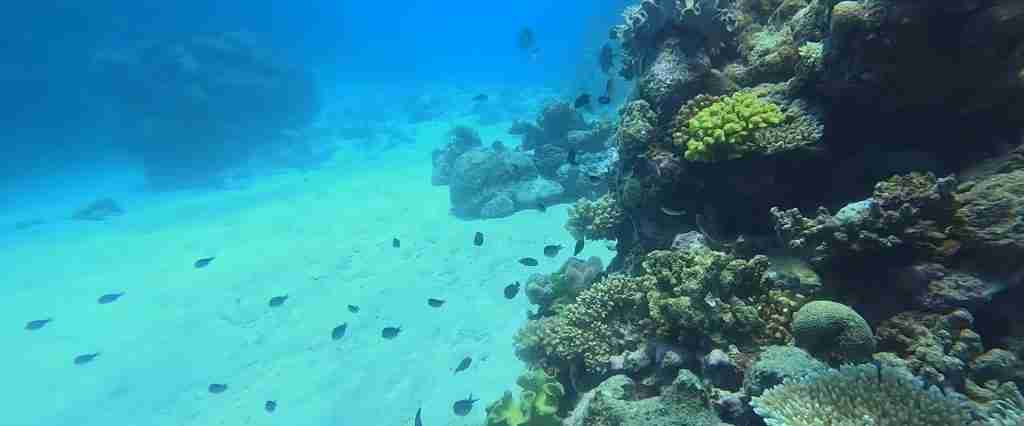
Photographing the Great Barrier Reef’s architecture requires understanding how to represent three-dimensional complexity through two-dimensional images. Wide-angle underwater photography captures the overall structural organization of reef formations, showing how coral colonies aggregate into reef structures and how different growth forms create architectural patterns. Effective wide-angle reef architecture shots use strong foreground elements including prominent coral colonies or reef features to establish scale and depth, while background elements including water column, reef slope, or adjacent structures provide context. Side-lighting or backlighting enhances structural relief, making three-dimensional forms more apparent than flat frontal lighting that can make complex structures appear two-dimensional.
Macro photography reveals architectural details at colony and polyp scales, showing the intricate patterns of corallite arrangement, septal structure, and tissue organization. Photographing colony architecture benefits from precise lighting control emphasizing surface texture and relief. Oblique lighting from one side creates shadows highlighting structural features while maintaining color information from the coral tissue. Focus stacking techniques combine multiple images at different focus distances into single composite images showing sharp detail throughout the three-dimensional structure, overcoming the limited depth of field inherent in macro photography. These techniques prove particularly valuable for documenting colony growth forms and structural details invisible in wider shots.
Scale documentation in reef architecture photography presents challenges because uniform blue water backgrounds provide no size references. Including recognizable elements like fish, divers, or measurement scales establishes scale relationships helping viewers comprehend the actual dimensions of structures. Consistent use of known-size reference objects across multiple images enables scientific documentation of colony sizes, growth rates, and structural changes over time. Time-series photography from identical positions and angles documents architectural changes including coral growth, storm damage, bleaching impacts, and recovery processes, providing visual records complementing quantitative monitoring data.
Emerging technologies including photogrammetry and 3D reconstruction enable comprehensive architectural documentation beyond traditional photography capabilities. Photogrammetry uses multiple overlapping photographs from different angles to create detailed three-dimensional computer models of reef structures. These digital models preserve complete architectural information including accurate dimensions, surface textures, and structural relationships, enabling detailed analysis of growth forms, habitat complexity, and changes over time. Virtual reality applications allow researchers and public audiences to explore reef architecture from any angle, examining structural features and scale relationships impossible to experience through conventional photography or even direct observation. These advanced documentation techniques increasingly supplement traditional scientific monitoring, providing unprecedented detail about reef architecture at scales from individual coral colonies to entire reef systems.
Conservation Implications: Protecting Architectural Heritage
Protecting the Great Barrier Reef’s architectural integrity represents a fundamental conservation objective because structure and function are inseparably linked in these ecosystems. Architectural degradation through coral mortality reduces habitat complexity, decreasing the species diversity and abundance that reefs can support. The loss of structural complexity persists long after initial coral death because calcium carbonate skeletons resist erosion, potentially maintaining habitat structure for years to decades. However, without living coral to maintain and repair structures, reef architecture gradually erodes through biological and physical processes, eventually flattening into rubble fields lacking the three-dimensional complexity supporting diverse communities. This trajectory from structurally complex living reef to degraded rubble represents habitat loss comparable to rainforest conversion to grassland, with similarly severe biodiversity consequences.
Climate change threatens reef architecture through multiple mechanisms operating at different timescales. Mass coral bleaching events cause rapid mortality converting living coral cover to recently dead skeleton, initially maintaining structure but beginning irreversible degradation pathways. Ocean acidification reduces coral calcification rates, slowing architectural construction while erosion processes continue at normal or accelerated rates. This imbalance between construction and erosion shifts reefs toward net erosion, potentially collapsing architectural structures that developed over millennia. The warming-induced shift from fast-growing branching corals toward slower-growing massive forms reduces architectural complexity even where living coral cover persists. These climate impacts fundamentally alter reef architecture, requiring conservation strategies addressing not just coral survival but also maintaining architectural complexity necessary for ecosystem function.
Active intervention strategies increasingly focus on architectural restoration as climate change impacts exceed reef natural recovery capacity. Coral transplantation programs install nursery-grown corals on degraded reef areas, attempting to restore both coral cover and structural complexity. Artificial reef structures provide interim architectural complexity supporting marine life while transplanted corals grow and develop natural reef structures. 3D printing technology enables creation of artificial structures mimicking specific coral growth forms and architectural features, potentially accelerating habitat restoration beyond natural recovery timelines. While these interventions remain experimental and cannot substitute for addressing climate change root causes, they may help maintain architectural functions in reef areas where natural processes have been overwhelmed by cumulative impacts.
The Great Barrier Reef’s architectural heritage represents irreplaceable natural value accumulated over thousands of years that cannot be reconstructed on meaningful timescales if lost. This architectural legacy provides humanity with ecosystem services including coastal protection, fisheries habitat, tourism resources, and scientific knowledge opportunities valued at billions of dollars annually. More fundamentally, the reef’s architecture represents a masterpiece of natural engineering demonstrating organizational principles, structural sophistication, and functional integration that humanity is only beginning to understand and appreciate. Protecting this architectural heritage requires recognizing that coral reefs provide far more than pretty underwater scenery, instead constituting complex structural systems where architecture determines ecology, where form enables function, and where the loss of structure means the loss of irreplaceable natural values transcending any simple economic valuation.
FAQ: Great Barrier Reef Architecture
How tall are the reef structures in the Great Barrier Reef?
Reef structures in the Great Barrier Reef vary considerably in height depending on their location and development history. Most reefs extend from depths of 20-40 meters up to near the surface, creating vertical relief of 20-40 meters. The outer barrier reef near the continental shelf edge rises from depths exceeding 50 meters, creating reef walls of 50+ meters vertical extent. Individual coral colonies within reef structures range from small encrusting forms a few centimeters high to massive boulder colonies reaching 5+ meters in diameter and height. Platform reefs in the offshore region develop on former reef foundations from earlier sea levels, with total carbonate accumulation potentially exceeding 100 meters thickness when including older reef deposits beneath the living surface layer.
What materials do corals use to build reef structures?
Corals build reef structures from calcium carbonate (CaCO₃), specifically the mineral form aragonite, which they precipitate from seawater. Coral polyps extract dissolved calcium ions and carbonate ions from seawater, combining them within specialized cells to form solid aragonite crystals that compose the coral skeleton. The calcium and carbonate come ultimately from weathering of terrestrial rocks, transport by rivers to oceans, and dissolution in seawater. Symbiotic zooxanthellae algae living within coral tissues assist the calcification process by providing energy and removing metabolic waste products that would otherwise inhibit calcium carbonate precipitation. The reef structure thus represents transformed seawater chemistry, with dissolved minerals converted into solid limestone through biological processes.
How does wave action shape reef architecture?
Wave energy fundamentally influences reef architectural development through selective pressures favoring growth forms resistant to physical forces. High-energy reef crest zones exposed to direct ocean swells support robust branching corals with thick branches, compact growth forms, or massive boulder corals resisting wave forces. These zones develop characteristic spur-and-groove formations where coral ridges (spurs) alternate with sand-filled channels (grooves) aligned perpendicular to wave approach direction, channeling water flow and dissipating energy. Protected reef flat areas behind wave-breaking zones support more delicate branching and plate corals unable to survive high-energy environments. Lagoons and leeward reef areas sheltered from dominant wave directions develop distinct architectural assemblages adapted to calmer conditions. Storm waves from tropical cyclones cause major architectural disruption, breaking delicate structures and moving rubble, creating long-term influences on reef structural development.
What is the difference between fringing, barrier, and platform reefs?
Fringing reefs grow directly adjacent to coastlines with no intervening lagoon, building outward from shore on rocky substrate. They show narrow reef flats and steep outer slopes dropping into deeper water. Barrier reefs develop parallel to coastlines but separated by lagoon systems of varying width and depth, with the reef structure protecting lagoons from ocean waves. The Great Barrier Reef itself represents a barrier reef system with lagoon widths ranging from several kilometers near the coast to over 100 kilometers in the far north. Platform reefs occur in open water away from continental coasts, developing on submerged geological features. They show diverse shapes including circular, crescentic, or irregular forms and lack the linear organization of barrier reefs. Platform reefs grow vertically from depths of 20-40 meters toward the surface, potentially forming complete rings enclosing lagoon systems or developing asymmetric forms influenced by prevailing currents and wave directions.
How deep can coral reefs grow?
Reef-building corals in the Great Barrier Reef extend from the surface down to approximately 40-50 meters depth under optimal water clarity conditions. Light availability limits maximum depth because symbiotic zooxanthellae require sunlight for photosynthesis. Depth limits vary with water clarity, seasonal sun angles, and coral species light requirements. The greatest coral abundance and diversity occur in shallow waters above 20 meters depth where light levels support rapid growth. Between 20-40 meters, coral diversity and abundance decline with depth as decreasing light limits photosynthesis. Below 40 meters, reef-building processes become marginal, with only shade-tolerant species persisting. Some non-reef-building corals lacking zooxanthellae symbionts survive at much greater depths, with deep-water coral communities documented beyond 100 meters, but these deeper corals grow too slowly to build substantial reef structures comparable to shallow-water reefs.
What causes spurs and grooves on reef edges?
Spurs and grooves represent architectural features on high-energy reef fronts where ocean swells break directly on reef edges. The alternating pattern of coral ridges (spurs) and sand channels (grooves) develops through interaction between wave forces and coral growth patterns. Grooves channel water surging over the reef, concentrating flow and preventing sediment accumulation while spurs grow between channels where wave forces remain manageable for coral survival. The spur structures develop from interlocking frameworks of robust branching corals, particularly Acropora species, growing into ridge formations perpendicular to wave approach. Groove spacing typically ranges from 10-30 meters, with dimensions influenced by wave characteristics and coral growth rates. This architectural pattern efficiently dissipates wave energy through flow channelization while maximizing coral growth area across the reef front zone.
How does reef architecture change with depth?
Reef architecture shows pronounced vertical zonation reflecting depth-related gradients in light availability, wave energy, and sedimentation. Shallow reef flat zones (0-3 meters) support hardy coral species tolerant of variable temperatures, occasional aerial exposure at low tides, and high wave energy. The reef crest zone (3-10 meters) where waves break supports robust branching corals forming the densest structural frameworks. The upper reef slope (10-20 meters) supports maximum coral diversity and abundance with varied growth forms including branching, massive, and plate corals. The lower reef slope (20-40 meters) shows decreasing coral abundance and architectural complexity as light limits growth, with shade-tolerant plate and foliose corals dominating. Below 40 meters, reef-building processes become marginal with scattered coral colonies unable to create continuous reef structures. This depth zonation creates stacked architectural zones with characteristic structural properties and species assemblages adapted to each depth range.
Can reef architecture recover after damage from cyclones or bleaching?
Reef architectural recovery following disturbances depends on damage extent, surviving coral populations, and environmental conditions during recovery periods. After tropical cyclones break coral structures, recovery begins with coral larvae settling on damaged areas and surviving coral fragments regenerating. Fast-growing branching corals can restore structural complexity within 5-15 years under favorable conditions with minimal subsequent disturbances. However, severe damage requiring recovery from small surviving populations may require decades for architectural restoration. Mass bleaching events initially leave coral skeletons intact, maintaining structural complexity temporarily, but dead skeletons erode over years, gradually flattening reef architecture. Recovery requires not just coral recolonization but restoration of three-dimensional structural complexity through decades of coral growth. Recent increases in disturbance frequency reduce recovery timeframes between impacts, potentially preventing full architectural recovery and driving reefs toward persistent degraded states lacking historical structural complexity.
What role do coral cays play in reef architecture?
Coral cays represent special architectural features where reef-generated sediments accumulate into islands, creating terrestrial habitat within marine ecosystems. Wave action breaks coral structures into rubble and sand that accumulates in stable zones on reef platforms, typically on leeward sides where wave energy decreases. Sediment accumulation builds above high tide level, creating islands that may support vegetation including coconut palms, pisonia trees, and various shrubs. Vegetation stabilizes sediments and facilitates vertical growth through organic matter accumulation. Cays provide critical nesting habitat for seabirds including terns, noddies, and shearwaters, and sea turtles including green and loggerhead turtles. The architectural development from submerged reef to vegetated island demonstrates how biological processes (coral growth) and physical processes (sediment transport) interact to create new habitat types expanding ecosystem diversity beyond purely submarine reef structures.
How does climate change affect reef architecture?
Climate change threatens reef architecture through multiple mechanisms operating at different timescales. Mass coral bleaching from warming waters causes rapid mortality, converting living architectural frameworks to dead skeleton that begins degrading. Ocean acidification reduces coral calcification rates, slowing new architectural construction by 10-30% compared to pre-industrial conditions. This imbalance between reduced construction and continued erosion shifts reefs toward net erosion, potentially causing architectural collapse. Warming favors coral species with massive growth forms over fast-growing branching species, reducing architectural complexity even where coral cover persists. More intense tropical cyclones cause greater structural damage, requiring longer recovery periods. Sea level rise may enable upward reef growth if living coral remains healthy, but combined stresses from warming and acidification may prevent growth keeping pace with rising seas. These cumulative impacts fundamentally alter reef architecture, potentially causing irreversible transitions from structurally complex ecosystems to simplified rubble fields unable to support historical biodiversity levels.