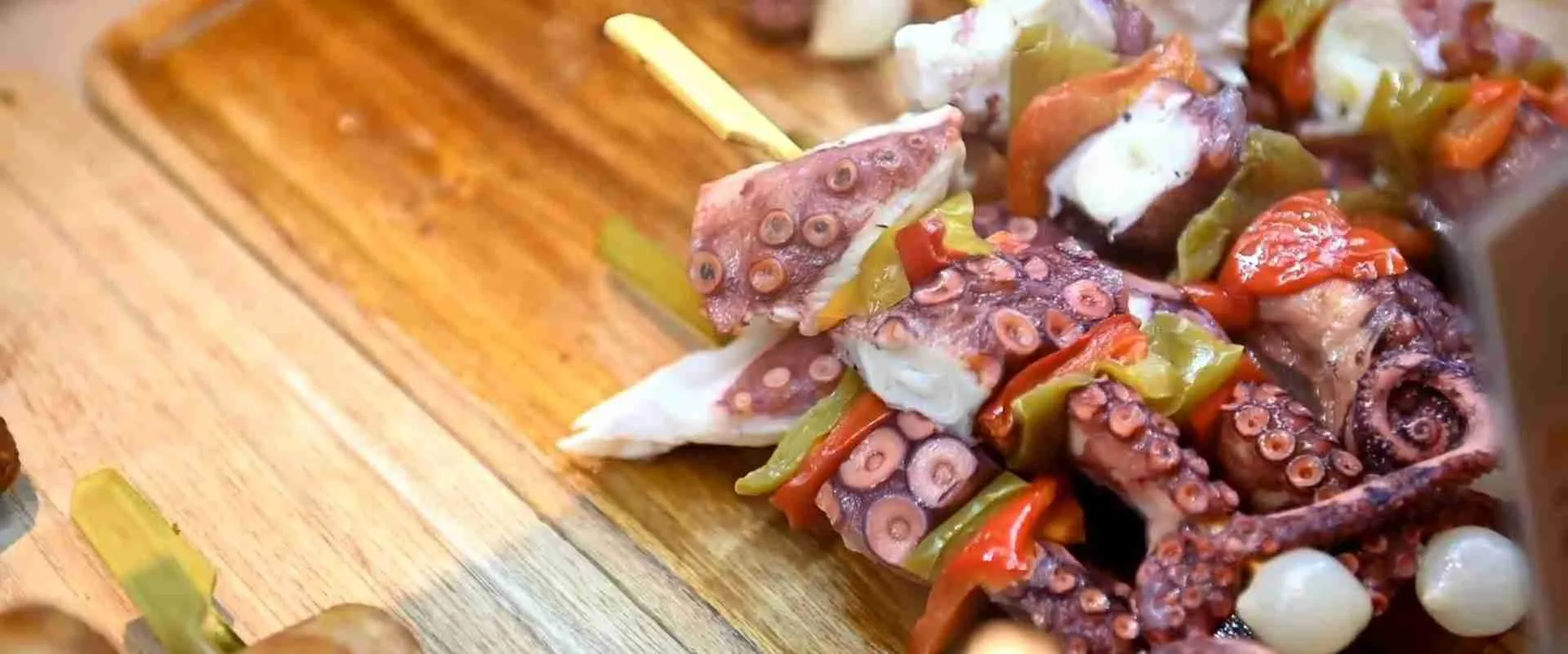
Granada Food Guide: Free Tapas Culture & Moorish Cuisine
Granada stands apart from every other Spanish city in one remarkable way: order a drink at almost any bar and a free tapa arrives automatically, no charge or request required. Eight centuries of Moorish rule left a culinary stamp on the city that remains visible in its spice profiles, sweet traditions, and tea-house culture. This guide covers the free tapas tradition in full, the Moorish ingredients and dishes still woven into everyday cooking, and the neighborhoods, markets, and seasonal rhythms that make Granada one of Europe’s most rewarding food destinations.
Key Takeaways
- Granada is one of the few cities in Spain where a free tapa arrives automatically with every alcoholic drink ordered, making evenings out exceptionally affordable compared to the rest of the country.
- The city’s Moorish history — spanning roughly 781 years between the early 8th century and 1492 — left a lasting culinary stamp visible in its use of almonds, warm spices, pomegranates, honey-based sweets, and mint tea.
- The UNESCO-listed Albaicín quarter and Sacromonte neighborhood offer the most atmospheric eating experiences; the area around Calle Navas near the cathedral is the city’s most reliable and concentrated tapas corridor.
- Key local dishes include remojón (a bright orange and salt cod salad), the hearty plato alpujarreño from the Alpujarras mountains, tortilla del Sacromonte, and habas con jamón (broad beans with Iberian ham).
- Tea houses lining Calle Calderería Nueva in the Albaicín carry a Moorish café tradition forward through mint tea, herbal infusions, and Middle Eastern pastries served in tiled, candlelit interiors.
- A full evening of tapas hopping — multiple rounds of drinks with free food — typically costs €12–€20 per person, making Granada one of the most economical and satisfying food destinations in Southern Europe.
People Also Ask About Granada Food
Does Granada really give free tapas with every drink?
Yes — in the overwhelming majority of Granada’s traditional bars and tabernas, a free tapa arrives automatically with every alcoholic drink ordered. The tapa is the bar’s choice, not the customer’s: it might be a small dish of olives, a slice of tortilla española (Spanish potato omelette), a croqueta, a wedge of pizza, a piece of fried fish, or a small bowl of stew. Many bars escalate the size and quality of the tapa as rounds continue: the first typically brings something modest, the second something more substantial and often hot. This custom is not standard across Spain — bars in Madrid, Barcelona, or the Basque Country charge separately for tapas — making Granada genuinely exceptional. Almería and Jaén also maintain versions of this tradition, but Granada is the city most associated with it and where the practice is most consistently observed. Most Granadans regard it simply as the natural way bars function, not a promotion or a novelty.
What are the most iconic dishes from Granada?
Remojón granadino is the dish most closely associated with the city: a refreshing salad combining segments of navel orange, flaked salt cod (bacalao desalado), black olives, spring onion, hard-boiled egg, and a generous pour of fruity olive oil, served at room temperature with a briny, sweet, acidic character that reflects the Moorish-influenced palate. The plato alpujarreño is the iconic mountain dish: a cast-iron skillet piled with fried egg, sliced chorizo, morcilla (blood sausage), griddled Iberian ham, and papas a lo pobre (slow-fried potato slices with peppers and onion). Tortilla del Sacromonte, named for the cave-dwelling neighborhood above the Albaicín, is a distinctly local omelette traditionally made with lamb offal — calf’s brain and kidney in older recipes — giving it a richer, more complex flavor than standard Spanish tortilla. Habas con jamón (broad beans with Iberian ham), particularly good in spring, rounds out the canonical Granadan repertoire. The Pionono — a small cylinder of syrup-soaked biscuit wrapped around toasted caramel cream — is the city’s signature pastry.
How is Moorish influence visible in Granada’s food today?
Granada was the final capital of the last Moorish emirate in the Iberian Peninsula, surrendering to the Catholic Monarchs on January 2, 1492, after nearly eight centuries of Islamic presence in the region. That history persists in the kitchen in specific, traceable ways. The use of warm spices — cumin, coriander, cinnamon, and saffron — in savory dishes and sweets sets Granadan cooking apart from much of northern Spain. The pomegranate, symbol of the city itself (granada means pomegranate in Spanish), appears in molasses glazes, salads, and garnishes. Almonds and almond paste underpin the local sweet tradition, from marzipan-style confections to the Pionono pastry. Honey features in both savory preparations and desserts. Mint tea, served in the tea houses of the Albaicín, continues a drinking tradition carried forward from the medieval medina. The cold almond soup ajoblanco, a summer staple, draws on medieval Iberian Islamic culinary practices. Even the physical landscape of the Albaicín — whitewashed lanes, hidden garden houses with fountains, covered markets — frames a culinary culture still shaped by the civilization that designed it.
What is the best neighborhood for tapas in Granada?
Granada’s tapas scene concentrates in several distinct neighborhoods, each with a different character. The area around Calle Navas, running south from Granada Cathedral, is the city’s most famous tapas corridor: a dense strip of tabernas where the free-tapa custom is consistent and the energy high, suitable for visitors wanting a reliable first experience. Plaza Nueva, the main square at the base of the Alhambra hill, has a mix of tourist-facing bars and genuinely good local spots on the adjacent streets. The Albaicín, the UNESCO-listed Moorish quarter climbing the hill opposite the Alhambra, offers smaller family-run bars, better views, and a more labyrinthine atmosphere. Campo del Príncipe (Prince’s Field), a wide square in the Realejo neighborhood — historically the Jewish quarter — is a locals’ favorite: outdoor terraces, lower prices, and considerably less tourist pressure. Sacromonte, the cave neighborhood above the Albaicín, is oriented more toward dinner and flamenco than casual tapas hopping and is best visited at night.
Extended multi-day tours – 5+ days
Featured Granada Spain Multi-Day Tour Packages

3 days
Granada Spain 3-Day Discovery Tour
- ✓ Comprehensive Granada Spain experience
- ✓ Expert local guides included
- ✓ All accommodation included
- ✓ Transportation provided
5 days
Granada Spain 5-Day Highlights Experience
- ✓ Comprehensive Granada Spain experience
- ✓ Expert local guides included
- ✓ All accommodation included
- ✓ Transportation provided

7 days
Granada Spain 7-Day Cultural Journey
- ✓ Comprehensive Granada Spain experience
- ✓ Expert local guides included
- ✓ All accommodation included
- ✓ Transportation provided

10 days
Granada Spain 10-Day Complete Adventure
- ✓ Comprehensive Granada Spain experience
- ✓ Expert local guides included
- ✓ All accommodation included
- ✓ Transportation provided
Multi-day tour packages powered by TourRadar. Prices and availability subject to change.
Introduction: A City Built on the Culture of Eating Together
Granada sits at the foot of the Sierra Nevada, Spain’s highest mountain range, at an elevation where summers are intensely hot and winters genuinely cold. This geography shapes what the city eats: cured mountain meats from the villages of Las Alpujarras, fresh vegetables from the irrigated agricultural plain called the Vega de Granada that surrounds the city, game from the sierra, and seafood from the Costa Tropical roughly 60 kilometers to the south. The combination gives Granadan cuisine more range than the average Andalusian city, pulling simultaneously from mountain, plain, and sea in ways that make the table exceptionally varied.
The city is also home to one of Spain’s largest universities, and the student population — tens of thousands of young people spread across a compact historic center — sustains an affordable, lively bar culture that has resisted the price inflation common to more tourist-saturated Spanish cities. Bars in Granada function as social infrastructure: the place where people eat lunch before returning to work, where families gather on Sunday afternoons, where friends spend the hours between finishing and heading home. The free tapa is not a marketing gimmick but a deeply embedded social norm reflecting the city’s belief that eating and drinking together is inseparable — that feeding someone, however briefly, is an expression of hospitality.
Layered over this Andalusian base is the Moorish heritage: nearly eight centuries of Islamic civilization left an imprint on Granada so comprehensive that the city carries two UNESCO World Heritage Sites as testimony to it — the Alhambra palace complex and the Albaicín quarter. The culinary legacy is less visually spectacular than the architecture but equally persistent. The ingredients, techniques, and sweet traditions that arrived and developed during the long period of Islamic rule were absorbed into the local kitchen, renamed in Spanish, and passed through generations of cooks who stayed in the city after 1492 and the Andalusian families who learned from them. Granada is therefore not simply a city where Moorish cuisine can be recreated for tourists — it is a city where the Moorish culinary tradition never fully ended.
This guide approaches Granada’s food scene as two interlocking stories: the living tapas culture that plays out nightly in the city’s bars, and the historical culinary heritage that explains why those tapas taste the way they do. Both stories require exploration on foot, glass in hand, moving from bar to bar as the evening cools and the hills above the Albaicín catch the last light.
The Free Tapas Tradition: How Granada’s System Works
The mechanics of Granada’s free tapas system are simple: order a drink at a bar and a tapa arrives alongside it. No menu, no additional charge, no request. The system operates on an unspoken social contract between bar and customer: a single drink includes a single small portion of food, and ordering another drink earns another tapa. In many bars the quality and size of the tapas improve as the rounds accumulate, rewarding the customer who stays for two or three drinks before moving on.
What Counts as a Tapas Drink
In most Granada bars, any alcoholic drink triggers the free tapa: a caña (small draft beer, typically 200ml), a glass of house wine, a tinto de verano (red wine mixed with lemon soda), a vermouth, or a spirit. In many traditional bars, ordering a soft drink or sparkling water also earns a tapa, though this varies by establishment and is more reliably extended by older, neighborhood-focused tabernas than by newer venues. The drink itself typically costs €1.80–€2.50 at bars away from the main tourist circuits, rising to €2.50–€3.50 on the most visible streets and plazas near major monuments. The food is included in that price — an arrangement that makes the economics of a Granada evening feel almost implausibly generous.
The Art of Reading the Tapa
The free tapa is the bar’s choice, and what arrives tells you something about the establishment. A first-round tapa of olives or a small bag of chips is standard almost everywhere. A first-round tapa of tortilla española, a freshly made croqueta, or bread rubbed with tomato and topped with jamón suggests a kitchen that takes its food seriously. A first-round tapa of a hot stew, a fried fish assortment, or a rice dish signals a bar that rewards multiple visits. Some bars display their tapas in glass cases at the counter, allowing you to see the evening’s range before ordering; others bring a surprise. A chalkboard on the wall listing the day’s tapas is among the best quality signals.
Standing at the Bar Versus Sitting at a Table
The standing position at the counter — la barra — is culturally central to the Granada tapas experience. In lower-budget tabernas, bar staff tend to prioritize the regulars standing at the counter over customers seated at outdoor tables, and the tapas arriving at the barra often reflect this. In better establishments the quality is consistent across all positions. If the goal is to eat as well as possible, the barra is the strategic choice. If the goal is a relaxed evening watching the street in warm weather, the outdoor terrace is entirely acceptable and widely used by locals.
Tapas Hopping: The Culture of Movement
The tapas culture of Granada is built around movement: visiting two, three, four, or more bars over the course of two to three hours, having one or two drinks at each, eating the tapas that come with them, and experiencing the cumulative variety that the circuit provides. This approach — called ir de tapas or tapeo — is how locals use the system to eat a diverse, satisfying evening meal at minimal cost. The route matters less than the instinct: a bar full of Spanish speakers talking at full volume, with glasses raised and the bartender visibly busy, is the reliable quality signal. A bar with staff recruiting passersby from the doorstep or a menu in five languages displayed outside is not.
Tapa Origins: Tradition and Legend
How the tapas tradition began is a matter of competing local legends rather than documented history. One popular account holds that the word tapa (lid or cover) derives from the practice of placing a slice of bread or a piece of cured ham over a glass to protect the contents from flies — and that the covering food gradually evolved into the accompanying dish. Another tradition attributes the custom to medieval royal decrees requiring food to be served alongside alcohol to prevent drunkenness; variants of this story attach to different monarchs in different Spanish regions, making verification impossible. What can be said with confidence is that the practice of serving food with drinks in Andalusian bars is at least several centuries old, and that Granada developed this custom into its most consistent and formalized expression anywhere in Spain.
Moorish Culinary Heritage: Eight Centuries of Flavor
Islamic civilization reached the Iberian Peninsula beginning in 711 CE, when Umayyad forces crossed from North Africa and rapidly extended control across most of the territory that is today Spain and Portugal. Over the following centuries, the Arabic-speaking civilization that established itself in Al-Andalus developed a sophisticated culinary culture drawing on Persian, Arab, Berber, Jewish, and indigenous Iberian traditions. Granada, as the final Nasrid capital and the last major city to fall to the Reconquista in 1492, absorbed more of this heritage and maintained it longer than any other city in Spain.
Ingredients Introduced or Expanded in the Moorish Era
The agricultural contributions of Islamic Iberia were both substantial and permanent. The Moors brought sophisticated irrigation systems — the acequias (water channels) that still run through the Albaicín and the Vega de Granada — enabling the cultivation of crops poorly suited to dry Mediterranean conditions. Among the ingredients introduced or significantly expanded during this era: almonds, which became the foundation of the local sweet tradition; citrus fruits including bitter oranges that preceded sweeter varieties developed later; pomegranates, which the city eventually adopted as its emblem; eggplant; artichokes; spinach; rice; and a range of spices including cumin, coriander, caraway, cinnamon, and saffron, arriving via trade routes that connected Al-Andalus to the spice markets of the East. These ingredients did not disappear after 1492. They were thoroughly embedded in the local agricultural economy and continued to be grown, used, and refined by the Morisco communities that remained in Granada for over a century after the Reconquista, and by the Andalusian families who absorbed their culinary knowledge.
The Nasrid Kitchen and Its Survival
The Nasrid dynasty ruled Granada from 1238 to 1492 and presided over a period of considerable cultural productivity. Medieval Iberian Islamic culinary manuscripts — several of which survive — describe a cuisine of meaningful complexity: slow-cooked meat preparations with fruit and spice, cold almond beverages, honey-based confections, and elaborate rice dishes. The precise degree to which modern Granadan cooking directly descends from these texts versus having developed along parallel lines is a question for culinary historians rather than confident assertion; what is traceable is the persistence of specific ingredients, flavor combinations, and techniques across the centuries. The cold almond soup ajoblanco — almonds, bread, garlic, olive oil, sherry vinegar, and water — aligns closely with cold almond beverages described in medieval Andalusian sources. The combination of lamb with cinnamon and dried fruit, found in some traditional Granada restaurant preparations, mirrors techniques present in surviving manuscripts from the period. These are continuities rather than exact survivals, and the honest framing is one of culinary influence and inheritance rather than unbroken direct descent.
Tea Culture as Living Heritage
The most immediately visible Moorish culinary legacy in Granada is the tea-house culture of the Albaicín, covered in detail in a later section. The tea houses of Calle Calderería Nueva represent a living connection between Granada and Morocco — a connection with genuine historical depth, since the population expelled from Granada in 1492 largely settled in North Africa, and Moroccan families in cities like Fez have historically traced their ancestry to Granada. Many of the teterías in the Albaicín today are operated by Moroccan immigrants, and the cultural continuity they embody is both real and partly consciously constructed for a modern audience — both things are simultaneously true, and neither diminishes the experience of sitting in a candlelit tile-walled room with a glass of mint tea and a view of the Alhambra.
Granada’s Tapas Neighborhoods: A Practical Guide
Granada’s historic center is compact — most neighborhoods are reachable on foot from a central base — but each carries a distinct personality when it comes to eating and drinking. Knowing which area to choose for which mood is the key practical skill for navigating the tapas scene effectively.
Calle Navas and the Cathedral Quarter
Calle Navas is the street most visitors first associate with Granada tapas: a pedestrian lane running south from the rear of Granada Cathedral, flanked by tabernas operating since the mid-20th century and a few more recent arrivals that have adopted the local traditions successfully. The street and the small plazas feeding off it — the surrounding lanes of Plaza de las Pasiegas, Calle Pescadería, and the adjacent blocks — host the city’s densest concentration of tapas bars. For visitors arriving without local knowledge, this area delivers the free tapas experience most reliably, and is particularly animated from 7:30 PM onward when workers finishing for the evening fill the bars. The clientele is a genuine mix of locals and tourists, with the balance tipping more local the further from the cathedral you walk.
The Albaicín Quarter
The Albaicín, the UNESCO-listed Moorish quarter occupying the hill directly opposite the Alhambra, offers a very different tapas experience. The neighborhood is a labyrinth of narrow whitewashed lanes, small plazas, and hidden garden houses, and its bars tend to be smaller, family-run, and less oriented toward tourist volume. The quality of individual bars in the Albaicín is often higher than anything on the Calle Navas strip, and the setting — whitewashed walls, views across to the Alhambra illuminated at night — is unlike anything else in Spain. Getting there requires either a 20-minute uphill walk from Plaza Nueva or a short taxi ride. The lower section of Calle Calderería Nueva at the foot of the Albaicín is the easiest entry point and also the location of the tea-house district.
Campo del Príncipe and the Realejo
Campo del Príncipe (Prince’s Field) is a large, irregularly shaped square in the Realejo neighborhood — Granada’s historic Jewish quarter. The square is primarily residential in character, surrounded by modest apartment buildings and lined with bars whose outdoor tables fill the entire plaza on warm evenings. This is the most authentically local tapas experience in the city center: prices are slightly lower than the tourist-facing streets, the crowds are predominantly Granadan, and the atmosphere is convivial rather than performative. The Realejo as a whole — the streets around the square including Calle Molinos and Calle Pavaneras — has developed a secondary tapas circuit that rewards an evening of exploration.
Sacromonte
Sacromonte, the cave-dwelling neighborhood cut into the hillside above the Albaicín, is less about casual tapas hopping and more about dinner and flamenco. The neighborhood’s cave restaurants — zambras — typically serve a fixed dinner menu alongside a flamenco performance, and the food, while not always remarkable in execution, is strongly themed around local Granadan dishes including tortilla del Sacromonte. Independent bars exist in Sacromonte and can be excellent, but the area functions primarily as a dinner and cultural destination rather than a casual tapas circuit, and is best visited at night when the cave interiors are warm with candlelight.
Calle Elvira and the Student Zone
Calle Elvira runs roughly parallel to the Alhambra hill between the lower Albaicín and the city center, and together with the streets around it forms the heart of Granada’s student nightlife. The bars here stay open later than almost anywhere else in the city, the clientele skews young and international, and the food is more eclectic than traditional — falafel bars, vegan tapas spots, and international cuisine appear alongside the tabernas. The free tapa custom holds throughout this area, and the prices are among the lowest in the city. The lower section of Calle Calderería Nueva, where the tetería district begins, provides a gentler alternative to the livelier evening energy elsewhere on the strip.
Plaza Nueva and the Alhambra Approach
Plaza Nueva, the main square at the base of the hill leading to the Alhambra, is a natural gathering point and has both tourist-facing bars and several genuinely good tapas spots on the adjacent streets. The square itself is lively throughout the day and into the night, and the bars on its eastern side — toward the Carrera del Darro running alongside the Río Darro — are among the more atmospheric in the city center. These bars have the additional advantage of proximity to the old river walk, one of the most pleasant evening strolls in Andalusia, with views up to the walls of the Alhambra above the Albaicín.
Essential Dishes: What to Eat in Granada
Beyond whatever free tapa the bar provides, Granada has a canon of specific dishes worth actively seeking out. Several are unique to the city or to the broader Granada province and are unavailable in their authentic form anywhere else in Spain.
Remojón Granadino
Remojón is the dish that most clearly embodies Granada’s Moorish-influenced palate: the combination of sweet citrus, salty preserved fish, briny olives, and fruity olive oil in a cold salad format has deep roots in Andalusian Islamic cooking, where preserved and fresh ingredients were routinely combined in ways that bridged the sweet-salty divide. The Granada version uses navel oranges — the sweet, seedless varieties grown in the province’s subtropical coastal zone — peeled, segmented, and arranged with flaked salt cod (bacalao soaked overnight to remove the salt), sliced black olives, finely chopped spring onion, wedges of hard-boiled egg, and a liberal dressing of local olive oil. It is served at room temperature or slightly chilled and is best in winter and spring when the oranges are at their peak. Look for it on bar menus and in traditional restaurants; it appears less commonly as a free tapa but is well worth ordering separately when you see it.
Plato Alpujarreño
The Alpujarras — the chain of high valleys on the southern slopes of the Sierra Nevada, between the mountain range and the coast — are known for their distinctive culture, architecture, and above all their cured meats. The plato alpujarreño brings the products of these mountains together on a single dish: a fried egg, sliced chorizo (dried pork sausage spiced with paprika and garlic), a round of morcilla (blood sausage, typically the rice-based Granadan style), griddled Iberian ham, and papas a lo pobre serving as the base. Papas a lo pobre — literally “poor man’s potatoes” — are sliced potatoes cooked slowly in olive oil with green pepper, onion, and garlic until completely tender and fragrant. The plato alpujarreño is filling enough to constitute a full lunch and appears on menus throughout Granada province; it is the dish that most completely captures the character of the mountain food tradition that feeds the city from the south.
Tortilla del Sacromonte
The tortilla del Sacromonte is the local answer to the standard Spanish potato omelette, and considerably stranger and more interesting. Traditional versions of the recipe incorporate lamb’s brain and kidney into the egg mixture — offal ingredients associated with cooking traditions that survived in the Sacromonte Romani community, one of several groups at the margins of post-Reconquista Granada society who preserved culinary practices with roots older than the Christian city. The result is a denser, richer, more savory omelette than the standard potato version, with a pronounced mineral quality. Many contemporary restaurant versions substitute more widely available ingredients for the offal, making the dish more accessible but somewhat less historically interesting. For the traditional version, look at older restaurants in the Sacromonte neighborhood itself and the upper Albaicín, where it is more likely to be prepared as it was.
Habas con Jamón
The combination of young broad beans with Iberian ham is one of the most widely loved spring dishes in Andalusia, but the Granadan preparation has a distinguishing detail: many local recipes finish the pan with a handful of fresh mint leaves, a flavor note that is unambiguously Moorish in origin and sets this version apart from preparations made elsewhere. The dish is best from February through April, when the beans are young enough that the inner membrane is still sweet and tender. Outside this window it remains available year-round using frozen beans, but the spring version — particularly when the mint is generous — is in a different category. It appears commonly as a free tapa in spring, making it one of the more pleasant seasonal surprises of an evening on the tapas circuit.
Patatas a lo Pobre
The poorest dish in Granada’s repertoire is also among its most quietly accomplished. Sliced potatoes are cooked slowly — not fried at high heat but sweated gently in a generous quantity of olive oil alongside strips of green pepper and sliced onion, covered and stirred occasionally until completely tender, just beginning to color, and saturated with the oil and the sweetness of the vegetables around them. The result is humble and deeply satisfying. Patatas a lo pobre appear as a standalone tapa, as the base of the plato alpujarreño, and as an accompaniment to practically everything in Granada’s kitchen. The technique of slow-cooking vegetables in olive oil rather than water or stock is characteristic of Andalusian cooking and plausibly traces to the Moorish agricultural and culinary traditions that made olive oil the dominant cooking fat in this corner of Spain.
The Free Tapa’s Greatest Hits
Beyond the set-piece local dishes, the free tapas that arrive across a Granada evening constitute their own repertoire worth knowing. Croquetas — cylinders of thick béchamel sauce mixed with jamón, salt cod, or mushrooms, breaded and fried — are among the most common and most variable: a good croqueta is crisp at the surface and liquid-creamy inside with a pronounced flavor; a mediocre one is dense and paste-like. Boquerones fritos — small fresh anchovies dusted in flour and fried whole — arrive on small plates in the coastal Andalusian style, eaten in one or two bites with a squeeze of lemon. Pincho moruno — a small skewer of pork or chicken marinated in a spice paste of cumin, coriander, paprika, garlic, and saffron and grilled — is the tapa that most explicitly announces its cultural origins. A correctly made pincho moruno, still hot from the grill and smelling of cumin, is one of the great small pleasures of Spanish food culture.
Moorish-Influenced Cuisine and the Sweet Tradition
Spices in Granada’s Savory Kitchen
The most immediate Moorish flavoring signal in Granada’s food is cumin, which appears in chorizo and other pork sausages, in spice rubs for lamb and rabbit, in some tomato-based stews, and in the pincho moruno marinade. Coriander seed and caraway are present in artisanal products and older recipes rather than everyday cooking. Cinnamon crosses between sweet and savory with particular frequency in Granada: it flavors lamb preparations in traditional restaurants, appears in holiday biscuits and pastry fillings, and seasons the thick hot chocolate served at winter churros stalls. Saffron is the prestige spice, used in rice dishes, some soups, and the yellow-tinted broths of ceremonial cooking. That these spices — rather than the chile-based heat introduced from the Americas after 1492 — remain the dominant flavoring vocabulary of Granadan cooking is itself a historical statement about the persistence of pre-Reconquista taste.
The Pomegranate as Ingredient and Symbol
The pomegranate appears on Granada’s coat of arms, on ceramic tiles throughout the Alhambra and Albaicín, on souvenir merchandise, and quietly in the local kitchen. In cooking, it functions as a garnish and flavoring agent: seeds scattered over salads and rice dishes; pomegranate molasses (a reduction of the juice to a thick, tart syrup) drizzled over roasted meats, particularly lamb; fresh juice served at bars in the Albaicín. The ingredient is particularly visible at restaurants that explicitly invoke the Moorish heritage, but it also appears in home cooking and in the older recipes of the Granadan countryside, where pomegranate trees grow alongside olive and orange orchards in the province’s warmer valleys.
The Almond at the Heart of Granada’s Sweet Tradition
Almonds were cultivated extensively in Al-Andalus and became foundational to the Iberian Islamic confectionery tradition: ground with sugar and honey, they produce the almond paste from which marzipan developed. Spanish mazapán and its Granadan equivalents — shaped almond confections sold in pastry-shop cases across the city — are descendants of this medieval sweet. The almond also appears in polvorón (the crumbly almond shortbread associated with Christmas but available year-round in Granada’s pastelerías), in turrón (almond nougat), in the cold soup ajoblanco, and in numerous pastry fillings. The convent pastry tradition — sweets made and sold by cloistered religious communities — draws heavily on almond-based recipes that were already old when the convents adopted them, and many of these recipes likely entered convent kitchens via the culinary knowledge of converso women who remained in Granada after 1492.
Pionono: Granada’s Signature Pastry
The Pionono is Granada’s most distinctive pastry and one of the few genuinely hyper-local sweets in Spanish confectionery. It is a small cylindrical preparation: a strip of soft biscuit soaked in a cinnamon-infused sugar syrup, rolled tightly, filled with a toasted caramel custard cream, and briefly grilled or torched on top to caramelize the surface. The result is sweet, soft, and eaten in two or three bites. By local tradition, the pastry was created in Santa Fe — the small town immediately outside Granada where Ferdinand and Isabella signed the agreement with Columbus in 1492 — and is said to take its name from Pope Pius IX (Pío Nono in Italian and Spanish), though the precise etymology remains debated and unconfirmed in contemporary documentary sources. The authentic Pionono is available at pastry shop counters throughout Granada and should be eaten within hours of purchase, as the custard softens the biscuit over time and the caramelized top loses its character.
Ajoblanco: The White Gazpacho
Ajoblanco is older than the tomato-red gazpacho that now dominates popular imagination — tomatoes arrived in Spain from the Americas after 1492 and took generations to enter everyday cooking. The ingredients of ajoblanco are entirely pre-Columbian: blanched almonds, stale white bread, raw garlic, olive oil, sherry vinegar, and water, blended until silky smooth and served very cold. The flavor is complex — the nutty almonds softened by the bread, the garlic sharpened by the vinegar, with a quality that hovers between soup and cream. It is traditionally garnished with seedless grapes or small pieces of melon, a sweet-savory combination that aligns with Moorish flavor principles. Ajoblanco appears on menus at traditional Granadan restaurants and at bars with a kitchen from June onward; it is strictly a summer dish and disappears reliably when the weather cools.
Tea Houses: Moorish Café Culture in the Albaicín
No visit to Granada’s food scene is complete without time in one of the tea houses that line Calle Calderería Nueva and its parallel street Calle Calderería Vieja, on the lower slopes of the Albaicín. The tea-house culture of Granada is simultaneously a living Moorish tradition, a reflection of contemporary Moroccan immigration, and a conscious evocation of historical atmosphere for a modern audience — all three of these things are true and not mutually exclusive.
The Physical Setting
The tea houses of Calle Calderería Nueva are low-lit, incense-scented interiors decorated with Moroccan-style tiles, wooden lattice screens, embossed metalwork lamps, and cushioned seating at low tables. The overall effect deliberately evokes the atmosphere of a North African café. The street itself — tiled façades, Moorish arched doorways, spice shops, and vendors of mint and dried herbs — forms one of the most atmospheric pedestrian corridors in Granada, particularly in the late afternoon when the light softens and the scents from the incense and spice stalls intensify. The contrast between stepping out of this lane and back onto the wider Calle Elvira is one of the more disorienting pleasant transitions in Spanish urban life.
What to Drink
Mint tea (té de menta) is the emblematic drink: fresh spearmint leaves steeped with green tea and poured from height into small glasses to create a light foam, sweetened generously with sugar in the Moroccan tradition. Many tea houses allow customers to specify the level of sweetness. Beyond mint tea, the establishments offer extensive menus of herbal infusions — single-herb and blended — black teas with warm spices, and Rooibos preparations. Licorice tea is particularly associated with Andalusia and appears on most menus. Some tea houses serve the thick, almost pudding-like hot chocolate of Granada tradition alongside the tea menu, particularly in winter. None of these establishments serve alcohol, making them a natural destination for non-drinkers navigating an otherwise drink-centric food culture.
What to Eat
Most tea houses serve Middle Eastern sweets alongside their drinks menus. Baklava — layers of phyllo pastry with nut filling soaked in honey syrup — is the universal offering. Basbousa (a dense semolina cake soaked in syrup and garnished with almonds), chebakia (sesame and anise cookies in honey syrup, associated with Moroccan Ramadan celebrations), and various almond-paste confections appear alongside it. Some establishments serve more substantial savory food: hummus, flatbreads, and North African-style dips. The quality of sweets varies considerably across the street’s establishments; the most reliable quality signal is freshness — sweets displayed on tiered plates being actively served and refilled are more likely to be fresh than those sitting under glass for extended periods.
The Culture of the Tetería
Tea houses are not quick-coffee destinations. They are slow spaces designed for long visits: conversations that extend across hours, board games, journals, unhurried afternoons. Most tables are at low cushioned height, encouraging a reclined posture incompatible with rushing. Hookah pipes are available at many establishments, further extending the average visit. The tea house is the anti-tapas-bar in this regard: where the tapas circuit encourages movement and variety between establishments, the tea house invites stillness within one. Both modes belong to the city’s food culture, and the ideal Granada food day — tapas hopping in the evening, a tea house in the late afternoon — includes both.
Local Drinks: What to Order Beyond the Free Tapa
Granada’s drink culture is shaped primarily by the tapas circuit: every drink is a vehicle for the food that accompanies it, and the choice of drink affects the pace and the bill of an evening. Understanding the full range of local options — alcoholic and otherwise — is useful before approaching the bar.
Beer: The Standard Tapas Trigger
The caña — a small (200ml) glass of cold draft beer in a narrow glass — is the default tapas-circuit drink throughout Andalusia. Granada’s local beer brand is Alhambra, named for the palace complex and now owned by a large Spanish brewery group; its Especial and Reserva 1925 variants are widely available on tap throughout the city and are reliable, clean-tasting beers suited to repeated drinking over a long evening. A caña at a traditional Granada bar typically costs €1.80–€2.50 and arrives with its tapa.
Wine, Vermouth, and Lower-Alcohol Options
House wine in Granada’s tabernas is cheap, unpretentious, and frequently better than its price suggests — Andalusia has good bulk production from regions like Montilla-Moriles, which produces dry, sherry-like wines from Pedro Ximénez grapes that work well as a table wine. Granada also has its own Denominación de Origen: the Contraviesa-Alpujarras, a high-altitude growing zone on the southern slopes of the Sierra Nevada producing distinctive wines from Garnacha, Tempranillo, and the indigenous white variety Vigiriega. These local wines appear at specialist wine bars and better tapas bars rather than the most casual tabernas; asking specifically for “vino de la Alpujarra” or “vino granadino” signals genuine interest to the bartender. Tinto de verano (red wine with lemon soda over ice) and vermouth, typically served with a pickled olive or a small anchovy, are popular lower-alcohol alternatives that also trigger the free tapa.
Sherry and Fortified Wines
Manzanilla and Fino sherries from Jerez de la Frontera and Sanlúcar de Barrameda — pale, bone-dry, intensely saline and nutty — are natural partners for fried fish, olives, and salt cod-based tapas. They appear at their best at establishments that describe themselves as bodegas or that maintain a serious wine list; asking for a chilled glass of Manzanilla at a bar with a range of sherries on the counter is among the more rewarding small decisions in an Andalusian food day.
Non-Alcoholic Drinks
Granada’s non-alcoholic drink culture has more depth than immediately apparent. Granizada de limón — lemon granita, made by blending fresh lemon juice with sugar syrup and crushed ice to a slushy consistency — is one of the city’s definitive summer refreshments, served at cafés and ice-cream parlors through the warm months. Mosto (unfermented grape juice, available in some bars during the autumn harvest season) is an excellent non-alcoholic alternative that frequently also earns a tapa. Fresh orange juice is available everywhere given the provincial citrus tradition and the Moorish legacy of citrus cultivation in the province. Spanish café culture — café solo (espresso), café con leche, cortado — is well developed, and the mid-morning coffee break is as much a social institution in Granada as the evening tapas round.
Granada’s Markets and Food Shopping
For visitors interested in taking Granada’s food culture home, or simply in seeing where the city’s cooks source their ingredients, the city’s markets and specialist shops provide access to local products rarely found outside the province.
Mercado San Agustín
Granada’s main covered market, the Mercado San Agustín, sits one block from the cathedral on Calle San Agustín. The market occupies a two-story building of late 19th-century construction and houses stalls selling fresh fish trucked daily from the Costa Tropical, beef and lamb from the sierra, Granadan vegetables and citrus from the Vega, olives and olive oil, local cheeses — particularly the semi-cured goat cheeses from the Alpujarras villages — and prepared foods. The market is most active Monday through Saturday mornings from around 8 AM to 2 PM and closes during the early afternoon. It is a working market aimed at local residents rather than a tourist-oriented food hall, and the prices and the atmosphere reflect this entirely.
The Alcaicería
The Alcaicería is Granada’s reconstructed medieval market, originally the Nasrid silk exchange, located immediately adjacent to the cathedral. The current structures date from the 19th century, replacing a previous market that burned; they are atmospheric reconstructions rather than original medieval fabric, though the network of narrow covered lanes retains something of the medina’s spatial character. Today the Alcaicería sells a mix of tourist souvenirs, locally made ceramics, leather goods, and — in several specialist stalls — genuine spices, teas, almonds, dried fruits, and local food products. The spice vendors stock cumin, saffron, coriander, and the Moorish spice blends used in pincho moruno marinades; buying from them is a direct connection to the culinary heritage the market once served.
Specialist Food Shops in the Albaicín
The streets of the Albaicín, particularly around Calle Calderería Nueva and the lower neighborhood, hold specialist food and tea shops selling products with genuine provenance: artisanal olive oils from provincial mills, locally produced honey from the sierra (in varieties depending on whether the bees forage on lavender, rosemary, or chestnut blossom), Alpujarran jams from the high-valley fruit orchards, and dried herbs gathered from the mountain slopes. Local saffron — grown in small quantities in the Baza plateau in the north of the province — occasionally appears in these shops at significantly higher quality than the saffron imported from La Mancha or Iran that fills most commercial shelves. These shops are the most reliable source of food products that represent something specific to Granada rather than generic Andalusian produce.
Seasonal Eating in Granada
Granada’s food calendar is more strongly seasonal than many visitors expect. The city’s position at altitude, with access to both mountain and coastal microclimates and to the intensely productive Vega de Granada plain, produces distinct seasonal rhythms that affect what appears on menus, in markets, and as free tapas throughout the year.
Spring: Beans, Asparagus, and Easter Sweets
The habas (broad bean) season from February through April is the event that most excites Granada’s food community. When the beans are young enough to eat pod and all — briefly blanched and dressed with olive oil and sea salt — they represent the arrival of spring in edible form. By March the interior beans reach optimal size for habas con jamón, the season’s defining tapa. Wild asparagus (espárragos trigueros), thinner and more intensely flavored than cultivated varieties, appears at market stalls foraged from the edges of the Vega’s agricultural fields. Easter brings torrijas — bread soaked in milk and egg, fried and dusted with cinnamon sugar — to pastelerías and some bars during Semana Santa (Holy Week), which is simultaneously one of the city’s most important religious events and one of its most vibrant food periods.
Summer: Cold Soups, Fresh Tomatoes, and the Feria
The Granadan summer is intense — daily temperatures above 38°C are common in July and August — and the city responds with cold food. Gazpacho and ajoblanco appear on every menu from June onward. Fresh tomatoes from the Vega de Granada reach their peak in July and August; a simple combination of sliced ripe tomato, good olive oil, and sea salt on bread is one of the best summer tapas in the city. Granizada de limón and other chilled drinks sustain people through the afternoon heat. The city’s summer feria brings temporary food stalls and an intensification of the tapas circuit that lasts through the festive weeks.
Autumn: Game, Mushrooms, and New Wine
The Sierra Nevada’s autumn hunting season brings venison, partridge, and rabbit to restaurant menus from October onward. These game preparations — slow-cooked stews with wine, herbs, and root vegetables — represent a colder-weather register of Granadan cooking that rarely appears in summer. Mushrooms foraged from the sierra’s pine and oak forests (boletus and níscalos, the Catalan milk cap) appear at market stalls and in restaurant dishes through October and November. The wine harvest in the Contraviesa-Alpujarras region takes place in September, and early releases sometimes appear at wine bars in the city by November.
Winter: Stews, Orange Season, and Holiday Sweets
Winter in Granada is cold enough at altitude to make mountain-food cooking feel appropriate: the puchero — a slow-cooked stew of chickpeas, various cuts of meat, and winter vegetables — is the standard home-cooking response to cold weather, and older restaurants serve it through the winter months. Navel orange season peaks between December and March, making remojón its most seasonal winter dish rather than a summer one. The holiday sweet season brings polvorón, turrón, and Pionono to pastry shop windows in December; the city’s Christmas market adds roasted chestnuts and warm spiced wine to the street-food landscape of the cathedral area.
Practical Tips for Tapas Hopping in Granada
Tapas hopping in Granada has its own logic and etiquette. Understanding both makes the difference between a slightly chaotic evening and a highly satisfying one.
Timing
Granada has two main tapas windows: the lunch circuit (roughly 1:30 PM–3:30 PM) and the evening circuit (roughly 7:30 PM–11:00 PM). The lunch circuit is faster-paced — Granadans are fitting tapas into a working lunch break. The evening circuit is social and slower, more likely to extend across multiple bars and several hours. Bars between these windows are often quiet or closed for rest. Arriving for the evening circuit before 7:30 PM risks encountering empty tabernas; after 9:00 PM the best bars are fully alive. On weekends everything starts and ends later than on weekdays.
Standing at the Barra
The bar counter (la barra) is where the action concentrates in a Granada taberna. Standing here puts you in direct visual contact with the kitchen and the bartender, producing better and faster service and better tapa allocation in most establishments. Many Granadans spend an entire tapas evening standing, which confuses visitors expecting to be seated. Claiming a stretch of bar and standing your ground — politely, with a glass — is normal behavior, not rudeness.
Ordering and Moving On
The minimum practical Spanish for a Granada bar: Una caña, por favor (a small beer please); Un vino, por favor (a house wine); Otro igual (same again); La cuenta, por favor (the bill). Beyond this, pointing at what you want or asking ¿Qué hay hoy? (what do you have today?) is entirely acceptable. The art of leaving is equally important: the tapas circuit requires movement. Two drinks and their accompanying tapas at each bar is the standard pacing, with a walk between each stop. Staying for four or five rounds at a single bar undermines the variety that is the circuit’s main point.
Cash and Cards
Many of Granada’s smaller, older tabernas are cash-only or operate with card minimum amounts. Carrying €30–€50 in small bills for an evening of tapas hopping is prudent. Newer establishments and bars on the main tourist-facing streets accept cards reliably, but assuming universal card acceptance leads to awkward moments at the counter.
Non-Drinkers at the Granada Tapas Bar
The free tapa culture is built around alcoholic drinks, but non-drinkers are not excluded from it. In most traditional Granada bars, ordering a soft drink or sparkling water still earns a tapa — the social contract of feeding the customer is strong enough that many bartenders extend it regardless of the drink. This is not guaranteed everywhere, but it is common enough that non-drinkers should simply order a drink they want and observe what arrives. The tea houses of Calle Calderería Nueva are entirely alcohol-free environments, providing a substantial alternative evening culture for non-drinkers.
Dietary Restrictions and Free Tapas
The free tapa system creates challenges for people with dietary restrictions, since you do not choose the tapa and it may contain allergens without prior notice. The most common allergens in Granada’s tapas are shellfish, gluten (croquetas, bread-based preparations, some sauces), and pork (jamón, chorizo, morcilla). Communicating restrictions in Spanish at the moment of ordering — Soy alérgico/a a los mariscos (I am allergic to seafood); Soy celíaco/a (I am celiac) — gives the bar staff the opportunity to substitute or inform you of the tapa composition. Most traditional tabernas will make adjustments for genuine allergies if asked clearly in advance.
Where to Eat in Granada: From the Tapas Circuit to Fine Dining
The Tapas Circuit: Maximum Value, Maximum Authenticity
Tapas hopping is the most economical, most social, and most culturally authentic way to eat a full evening meal in Granada. A typical evening — starting around 8 PM, visiting four or five bars, having two drinks at each, receiving the corresponding tapas — provides enough food for a satisfying dinner and costs approximately €12–€20 per person, depending on the drinks chosen and the generosity of the bars visited. This makes a Granada tapas evening one of the best-value comprehensive food experiences in Europe. The food is not always at the level of a dedicated restaurant kitchen, but the variety across bars, the social atmosphere, and the cumulative culinary education that comes from tasting the same city’s kitchen across a dozen different approaches make the circuit the natural first choice for any visit.
The Menú del Día: Granada’s Best Lunch Value
For a sit-down midday meal, the menú del día (fixed-price lunch menu) is the institution to seek. Available at most restaurants serving lunch, the menú typically includes a starter, main course, dessert or coffee, bread, and a glass of wine or soft drink for a fixed price. In Granada this ranges from €10 at neighborhood restaurants to €14–€16 at better-regarded establishments. The quality frequently exceeds what individual à la carte dishes from the same kitchen would suggest, because restaurants direct their best seasonal ingredients and most careful preparation into the daily menu to maintain repeat custom. Seeking out the best menú del día in a given neighborhood — chalkboard outside listing the day’s dishes, tables full of local office workers eating with evident satisfaction — is one of the most rewarding practical skills in Granada food tourism.
Mid-Range Dining
Granada’s mid-range restaurant scene — sit-down dinner at approximately €20–€35 per person including wine — offers well-executed traditional Granadan cooking alongside creative Andalusian cuisine that incorporates Moorish flavors into contemporary presentations. The Realejo and upper Albaicín neighborhoods have developed concentrations of mid-range restaurants serving local food at prices below the monument-adjacent tourist restaurants. Booking ahead for dinner is advisable on weekends throughout the year and throughout the week during Granada’s festival periods — Semana Santa in March or April, and the Corpus Christi celebrations in May or June.
Fine Dining and Tasting Menus
Granada has a small but genuine fine-dining scene, with several restaurants operating tasting menus that explore Granadan and Andalusian culinary heritage through modern technique. These typically cost €45–€70 per person for the menu itself, with wine pairing adding a similar amount. The most ambitious kitchens in this category are spread across the city center rather than concentrated in a single neighborhood, and they tend to occupy renovated historic spaces. Reservations are essential and should be made at least several days in advance during spring and autumn, Granada’s busiest visitor periods.
Food Tours as an Orientation
For visitors who want a guided introduction before exploring independently, food tours led by local guides visit four to six bars across two neighborhoods in two to three hours, with explanations of each tapa, its history, and the bar’s character. These tours cost approximately €40–€75 per person including drinks and tapas. They are most useful as an orientation — learning which types of bars to prioritize and how to read them — rather than as a substitute for the independent tapas circuit that should follow.
Frequently Asked Questions About Granada Food
When is the best time of year to visit Granada for food?
Spring (March–May) and early autumn (September–October) offer the best combination of pleasant weather and peak seasonal ingredients. Spring brings habas, wild asparagus, and the most vibrant Semana Santa food culture. Autumn has game season, fresh mushrooms from the sierra, and the wine harvest. Summer (July–August) is very hot but delivers ajoblanco, peak-season tomatoes, and the city’s feria food scene. Winter is considerably underrated: the navel orange season makes remojón at its best a winter experience, holiday sweets fill the pastelerías in December, and the city is significantly less crowded and more affordable than during the spring and autumn peak periods.
Can I participate in Granada’s tapas culture if I don’t drink alcohol?
Yes, with some adjustment. In many traditional Granada bars, ordering a soft drink or sparkling water still earns a free tapa as a matter of custom, so the free-food culture extends partially to non-drinkers. This varies by establishment, and the best approach is to order what you want and observe whether a tapa arrives. The tea houses of Calle Calderería Nueva are entirely alcohol-free environments with their own rich food and drink culture — mint tea, herbal infusions, Middle Eastern sweets — that constitutes a full alternative evening program. Specialty coffee bars and juice establishments throughout the city provide additional options. The tapas circuit in its most complete form is built around alcoholic drinks, but non-drinkers can participate in most of its social and culinary dimensions.
How do I tell a good tapas bar from a tourist trap?
The most reliable indicators of a genuine local bar: a crowd of Spanish speakers in animated conversation with glasses raised; prices written on a chalkboard inside rather than a laminated menu in multiple languages displayed outside; no staff stationed at the door to recruit passersby; bar staff busy with existing customers rather than performing a welcome to the street. A bar genuinely full of locals at 9 PM on a Tuesday evening is almost universally better than one that appears full only of tourists or one that is empty. The Calle Navas strip has both excellent local bars and tourist-oriented establishments in close proximity; the Campo del Príncipe square and the Realejo streets generally have a higher ratio of genuine local clientele.
What should I eat for breakfast in Granada?
The traditional Granadan breakfast is tostada: a thick slice of white bread toasted on a griddle, drizzled with olive oil, and served either with crushed tomato and sea salt or with a layer of jamón on top, accompanied by a café con leche. Most cafés and bars serve this from around 8 AM. On cold winter mornings, churros with thick hot chocolate — the Granadan version is denser and more intensely flavored than the Madrilenian style — is the warming alternative. The menú del desayuno (breakfast menu) at most neighborhood bars, including tostada, orange juice, and coffee, costs €2–€5 and is excellent value before a morning’s walking.
Are there vegetarian options in Granada’s tapas bars?
Vegetarian options exist throughout Granada’s tapas scene but require attention because the default kitchen uses jamón extensively and many sauces and stews are meat-based. Reliable vegetarian tapas include patatas a lo pobre, tortilla española (check that the bar’s version does not incorporate chorizo or ham, which some do), olives and pickles, gazpacho and ajoblanco, and vegetable-based dishes at bars with a written menu. The Albaicín and Calle Elvira areas have the city’s highest concentration of vegetarian and vegan bars, some of which also operate the free tapa system with plant-based options. All tea houses are suitable for vegetarians and vegans alike.
What is the menú del día and is it worth ordering?
The menú del día is unambiguously worth ordering at any Granada restaurant that offers one. For €10–€16 it typically provides a starter, a main course, dessert or coffee, bread, and a drink — a complete, properly cooked lunch at a price that is impossible to match with individual dishes ordered à la carte from the same menu. Restaurants invest their best seasonal ingredients and preparation into the daily menu to attract repeat custom from local workers and residents. It is served Monday through Friday between roughly 1:30 PM and 3:30 PM, and sometimes on Saturday. Arriving at a restaurant that offers a menú del día and ordering only à la carte is almost always a worse decision on value and often on quality.
What Moorish sweets can I buy to take home from Granada?
The most portable take-home sweets are polvorón — crumbly almond shortbread wrapped in individual tissue paper, available in boxes at pastelerías throughout the city — and marzipan-style almond confections (pasta de almendra) in decorative shapes, sold by weight at confectionery shops in the city center. Both keep for several days at room temperature. Pionono pastries do not travel well due to their custard filling and should be eaten locally. Packaged turrón from local producers and local olive oil, saffron from the Baza plateau, and honey from the Alpujarras are excellent shelf-stable take-home options available at specialist shops in the Albaicín and at the Mercado San Agustín.
Is Granada’s food very spicy?
Granada’s cuisine is not spicy in the sense of chile heat. The dominant spice notes are aromatic and warm rather than hot: cumin adds an earthy dimension to meat preparations; cinnamon appears in both savory and sweet contexts; paprika in the cured sausages contributes a mild fruitiness, with the sweet (dulce) variety used far more commonly than the hot (picante). The pincho moruno marinade includes a small quantity of chile alongside the aromatic spices, but even this is mild by most international standards. Visitors with low spice tolerance will encounter no difficulty eating across the full range of Granada’s traditional cuisine.
What local Granada wine should I look for?
The Contraviesa-Alpujarras Denominación de Origen is one of Spain’s most distinctive and least-known wine regions, producing wines at altitudes between 700 and 1,400 meters on the southern slopes of the Sierra Nevada. The red wines from Garnacha and Tempranillo are robust and mountain-character; the indigenous white variety Vigiriega produces a refreshing, slightly herbal wine found essentially nowhere outside Granada province. These wines appear at wine-focused bars and specialist restaurants in the city; asking specifically for “vino de Granada” or “vino de la Alpujarra” is the way to access them, as the region does not carry the name recognition of Rioja or Ribera del Duero and does not appear prominently on generic bar wine lists.
How far in advance should I book a restaurant for dinner in Granada?
For casual tapas bars and most mid-range restaurants, no advance booking is required — the walk-in culture is strong and finding space is rarely difficult on weeknights. For restaurants with defined menus or local reputations, booking one to three days ahead is advisable on weekends and during the city’s peak festival periods (Semana Santa, Corpus Christi, and the September–October autumn season). For fine-dining tasting menus, booking a week or more in advance is prudent year-round. Tea houses never take reservations and are walk-in only, with possible waits of 20–30 minutes on busy summer evenings.