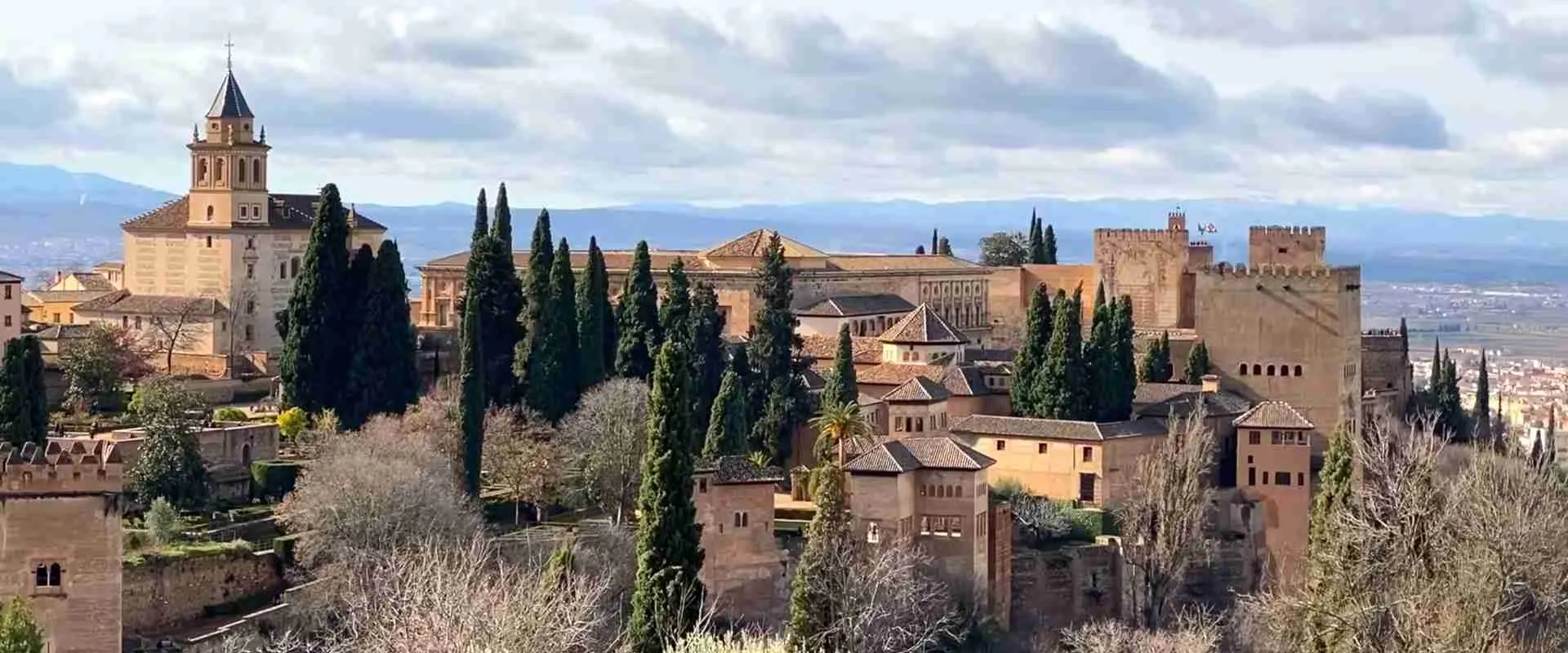
Granada Budget Guide 2027: Complete Travel Cost Breakdown
Granada consistently delivers more value per euro than any other major city in Andalusia — a world-class Moorish palace complex priced at €22, meals that come with free food attached to your drink order, and hotel rooms that cost half what Barcelona charges for equivalent comfort. This guide breaks down every cost category for 2027, from the Alhambra’s verified ticket price to a €13 set lunch, so you can build a realistic daily budget before you arrive, whether you’re stretching euros in a hostel dorm or settling into a four-star hotel with views of the Sierra Nevada.
Key Takeaways
- Budget travelers staying in hostel dorms and working Granada’s free-tapas circuit need approximately €55–85 per person per day, making it one of Spain’s most affordable major cities for genuine heritage travel.
- Mid-range visitors in a two- or three-star hotel (two sharing a room), eating at a mix of tapas bars and sit-down restaurants, budget approximately €125–195 per person per day.
- Luxury travelers in four- or five-star accommodation — including the Parador de Granada inside the Alhambra complex — with fine dining and private guided tours budget approximately €255–395 per person per day (two sharing).
- The Alhambra general admission costs €21 at the box office and €22 when booked online in 2026; expect similar pricing in 2027. Only 6,600 tickets are sold per day and peak-season morning entry slots sell out 30–90 days in advance — book as soon as your dates are confirmed.
- Granada’s free-tapas tradition is unique among major Spanish cities: order a drink at a traditional bar and a complimentary dish arrives automatically, effectively replacing a dedicated dinner budget for travelers willing to work the tapas circuit at €2.50–3.50 per drink.
- A mid-range week in Granada costs approximately €875–1,365 per person (two sharing, all meals, attractions, and local transport), compared with €1,400–2,000 or more for equivalent comfort in Barcelona or Seville.
People Also Ask About Granada Budget 2027
How much does a day in Granada cost in 2027?
Daily costs in Granada range from approximately €55–85 per person for budget travelers in hostel dorms using the free-tapas circuit, to €125–195 per person per day for mid-range visitors in a two- or three-star hotel (two sharing a room) eating at a mix of restaurants. Luxury travelers in four- or five-star accommodation with fine dining and private tours budget €255–395 per person per day. These ranges include accommodation, all meals, local transport, and a pro-rated share of major attraction admissions. The structural advantage that separates Granada from other Andalusian cities is the free-tapas culture: ordering a drink at a traditional neighborhood bar brings a complimentary dish at no extra charge — something Seville, Córdoba, and Málaga no longer offer consistently — which reduces food costs at every tier and makes the lower end of each daily range genuinely livable rather than spartan.
How much does the Alhambra cost in 2027?
The official Alhambra general admission — covering the Nasrid Palaces, the Alcazaba fortress, the Partal gardens, and the Generalife estate — was €21 at the box office and €22 when purchased online in 2026 (a booking surcharge of approximately €1.27 applies to internet purchases). Expect similar pricing in 2027; always confirm on the official Alhambra website before booking, as prices are reviewed annually. A reduced ticket covering only the Generalife and Alcazaba, without the Nasrid Palaces, costs approximately €12–13. Group guided tours via third-party operators run €40–75 per person and typically include the ticket. Only 6,600 total tickets are sold per day, and morning entry slots for the Nasrid Palaces can sell out 30–90 days ahead during spring and early summer. Children under 12 enter free.
When is the cheapest time to visit Granada in 2027?
Hotel prices in Granada are lowest in November, January, and early February, when mid-range double rooms regularly fall below €80 per night — a 40–50 percent reduction from the June peak of €140–170. August sees intense heat (regularly above 38°C in the city center) that suppresses leisure demand and softens accommodation prices, though flights remain expensive. The best balance of low prices and comfortable walking temperatures is mid-October through early November and early March through mid-April. Alhambra ticket availability also improves significantly in these windows: slots often remain available two to three weeks ahead, versus the 30–90 day lead time required in spring. Avoid Semana Santa (Easter week, usually late March or April), when hotels across Andalusia spike 40–70 percent and book four to five months in advance.
Is Granada cheaper than other Spanish cities in 2027?
Yes — measurably so in every major cost category. Mid-range hotel rooms that cost €90–140 per night in Granada run €150–220 in Barcelona and €140–200 in Madrid for comparable quality. A three-course menu del día (set lunch with drink) costs €11–15 in Granada versus €15–20 at equivalent Madrid restaurants. The single largest structural advantage is the free-tapas tradition: an evening of drinks and complimentary food at a Granada tapas bar costs €10–15 per person, where the same volume of food ordered à la carte at a Seville or Barcelona restaurant would cost €30–50. The Alhambra at €22 also outperforms its Spanish competitors for value: the Sagrada Família charges €35–55 depending on access tier, and the Alcázar of Seville charges approximately €15 for a much smaller and less complex site. Budget travelers can comfortably manage €55–85 per day in Granada; the same experience in Barcelona requires €85–120 or more.
Extended multi-day tours – 5+ days
Featured Granada Spain Multi-Day Tour Packages
5 days
Andalucia & Toledo, 5 days on Tuesdays
- ✓ Comprehensive Granada Spain tour
- ✓ Expert local guides included
- ✓ All accommodation arranged
- ✓ Transportation provided
6 days
Tropical Coast and Nature, Self-drive
- ✓ Comprehensive Granada Spain tour
- ✓ Expert local guides included
- ✓ All accommodation arranged
- ✓ Transportation provided

7 days
Absolutely Spain
- ✓ Comprehensive Granada Spain tour
- ✓ Expert local guides included
- ✓ All accommodation arranged
- ✓ Transportation provided

7 days
Andalusia – Gibraltar, Granada and the Nature of Southern Spain
- ✓ Booking needs min. 2 travelers
Multi-day tour packages powered by TourRadar. Prices and availability subject to change.
Planning Your Granada Budget for 2027: An Overview
Granada sits at roughly 700 meters above sea level at the foot of the Sierra Nevada in Andalusia, a positioning that gives it cooler evenings than the coastal cities even in high summer and clear mountain views that are part of the city’s visual identity. For budget planning, the city divides into three zones whose transport demands differ significantly. The historic center — around the Cathedral of Granada, the Royal Chapel, the Realejo quarter, and the main tapas streets — is compact and walkable; most visitors staying centrally can cover this area entirely on foot. The Alhambra hill, rising on the east edge of the city, is a ten-minute bus ride (€1.60 single ticket) or a twenty-five to thirty-minute uphill walk from Plaza Nueva. The Albaicín and Sacromonte neighborhoods on the opposing hillside are walkable from the center but involve steep cobblestoned streets; dedicated minibus lines serve both areas for visitors who prefer not to climb.
Understanding that Granada is simultaneously a major UNESCO heritage city and a large Spanish university town — the University of Granada enrolls more than 60,000 students — is the key to understanding its pricing structure. Student demand at the low end of the market sustains a dense network of cheap, genuinely good bars, bakeries, and restaurants that simply do not exist in the same concentration in coastal resort cities. Competition for student customers keeps entry-level prices honest: a €13 three-course lunch, a €1.50 coffee, and a €2.50 beer with a free tapa are not tourist exceptions here; they are the standard local prices.
For 2027 planning purposes, the prices in this guide are based on verified 2026 data. Spain’s hospitality sector has seen annual price increases of approximately 3–5 percent in recent years, so 2027 prices may be modestly higher than the figures cited. All specific prices — particularly the Alhambra ticket, museum admissions, and transport fares — should be confirmed on official websites before your trip.
Accommodation Costs in Granada 2027
Granada’s accommodation market is priced well below other major Andalusian cities, with a genuine spread from €20 hostel dorm beds to €300-plus rooms at the Parador de Granada inside the Alhambra complex. Prices are sensitive to the time of year and neighborhood, with June, Easter week, and the last two weeks of March carrying the highest hotel rates.
Budget Accommodation in Granada 2027
Hostel dorm beds in Granada range from approximately €20 to €35 per person per night at well-reviewed central properties. This places Granada comfortably below Barcelona (€30–50 for equivalent dorms) and Madrid (€28–45). The most budget-dense areas are along Calle Elvira, near Plaza Nueva, and in the Realejo quarter — all within ten to fifteen minutes’ walk of the main tapas streets, the Cathedral of Granada, and the bus stops for the Alhambra. Most hostel properties include free Wi-Fi and kitchen access; self-catered breakfasts and occasional lunches from the kitchen meaningfully reduce daily food costs for very tight budgets.
Private rooms in guesthouses and hostales — typically without en-suite bathrooms but with clean shared facilities — run €50–80 per room per night in shoulder season, and €80–110 during Easter week and the June high season. In November, January, and February, the same rooms fall to €40–65. For solo travelers, the hostel dorm remains the most financially sensible option: Granada’s well-designed hostels, particularly those around the historic center, have good communal spaces and are not primarily student residences, making them workable for adult solo travelers of any age.
Mid-Range Hotels in Granada 2027
Three-star hotels in the historic center — with private en-suite bathrooms, air conditioning, and often a small breakfast option — typically cost €90–140 per room per night in shoulder season (September–October and March–May). In June and during Easter week, the same rooms reach €150–180. In December through February (excluding Christmas week), rates drop to €70–100.
Granada’s mid-range market includes a category particularly worth seeking: boutique hotels in converted carmen houses in the Albaicín, traditional whitewashed buildings with tiled interior courtyards and rooftop terraces with Alhambra views. These properties occupy the €100–150 per room range in shoulder season and represent genuine character and quality at a price that would be unattainable in Barcelona or Seville. For two travelers sharing a room, mid-range accommodation adds €45–70 per person per night to the overall daily cost — the single biggest variable in the mid-range budget range.
Apartment rentals for stays of three nights or more offer competitive pricing at this tier: a well-located one-bedroom apartment in the historic center or Realejo with kitchen facilities regularly rents for €80–120 per night, working out to €40–60 per person for two travelers — broadly equivalent to a mid-range hotel and adding kitchen access that reduces food costs further. Ensure any rental is listed on Andalusia’s official tourist accommodation register before booking.
Luxury Hotels in Granada 2027
Granada’s luxury accommodation ranges from upscale four-star properties in the historic center and Albaicín (€180–240 per room per night in shoulder season) to the Parador de Granada, a converted fifteenth-century monastery set within the Alhambra complex itself, where rooms in peak periods reach €280–500 per night. The Parador’s positioning — guests walk directly from the hotel into the Alhambra grounds and can experience the complex before the gates open to the general public — is a genuinely unique advantage that justifies a premium for travelers whose primary purpose is the Alhambra.
Several four-star boutique hotels in the Albaicín and historic center offer palace-level experience at more accessible prices: converted sixteenth- and seventeenth-century buildings with private plunge pools, rooftop terraces, and genuine architectural character typically run €185–260 per room per night in spring. For budget purposes, plan on €90–135 per person per night for accommodation at the luxury tier (based on two sharing), with the Parador at the very top of that range.
Neighborhood Guide: Where to Stay by Budget in Granada 2027
The historic center (Centro and Realejo) is the best base for most first-time visitors: it concentrates restaurants, tapas bars, the Royal Chapel, bus stops for the Alhambra, and the widest range of accommodation across all tiers. Distances are walkable, traffic is limited in much of the old core, and the density of nightlife and dining means you spend less time and money on transport.
The Albaicín offers more atmosphere and quiet — narrow Moorish streets, carmen houses with private gardens, traditional tea houses along Calle Calderería Nueva — and suits the mid-range to upper-mid-range traveler who prioritizes character over convenience. It involves steep streets that can be challenging with heavy luggage and requires either the C31 minibus or a short taxi to the Cathedral area.
The Alhambra hill itself has very limited options beyond the Parador; it is not an area to base yourself unless you specifically want Parador proximity.
Budget chain hotels and basic pensiones near the bus and train stations (northwest of center, a 25–35 minute walk or two bus stops from Plaza Nueva) regularly undercut central prices by 20–30 percent. For travelers arriving and departing early whose priority is minimizing accommodation costs, this is a rational choice — but factor in at least one or two bus journeys per day to reach the sights.
Food and Dining Costs in Granada 2027
Food is where Granada most dramatically outperforms the rest of Spain in value terms. The combination of a free-tapas tradition, a student economy that sustains dense networks of cheap restaurants, and a provincial position that has kept prices away from coastal resort levels makes Granada genuinely exceptional in this category.
Granada’s Free Tapas Tradition: How It Saves Your Budget
Granada is one of the last major Spanish cities where ordering a drink at a bar automatically brings a complimentary tapa — a small dish of food served without additional charge. This is not a marketing gimmick or a feature exclusive to tourist bars; it is a deeply embedded local practice that operates at neighborhood institutions throughout the city, particularly in the Realejo quarter, along Calle Navas, and across the historic center around Calle Elvira. The range of free tapas varies by venue: at the most generous establishments, three or four drinks in the evening produces enough food for a substantial dinner. At a minimum, a caña (small beer, approximately €2.50–3.00) or a glass of house wine arrives with a portion of potato salad, a croquette, or a slice of tortilla — meaningful food that reduces your need for a paid dinner.
Traditional institutions that have built their reputation on free-tapas generosity include Casa Julio on Calle Elvira, a venue declared a local heritage institution that has served free fried fish tapas with every drink since the mid-twentieth century, and Bodegas Castañeda, a wine-bar institution along Calle Elvira where the standing-at-the-bar ritual and rotating free tapa have remained constants for generations. Bars like these still price a small beer at €2.50–3; the free tapa brings the real cost per calorie-equivalent far below anything possible at a sit-down restaurant.
The practical budget implication: four to five drinks at a free-tapas bar in the evening, at €2.50–3 each, costs €10–15 per person with multiple dishes of complimentary food — effectively a full dinner with alcohol included. Travelers who structure their evenings around a tapas bar circuit (two or three venues, two drinks each) can eat well and socially at €12–18 per person without ever ordering from a menu. This strategy is not a compromise on quality; it is the way local residents, office workers, and families eat in Granada.
Budget Dining in Granada 2027
For sit-down meals, the menu del día is the single most powerful cost tool in Granada’s dining economy. This three-course set lunch — typically a starter (soup, salad, or vegetable dish), a main (meat, fish, or pasta), dessert or coffee, and a drink — costs €11–15 at the overwhelming majority of Granada’s neighborhood restaurants and bars. Some of the best-reviewed lunch deals in the city come in at €13, including a tapa appetizer, starter, main, dessert, and a glass of house wine. At working-class bars a few streets off the main tourist flow, three-course menus del día go as low as €10–11. The menu del día is served from roughly 13:00 to 16:00 Monday through Friday and at many places on Saturday; this is Spain’s primary meal of the day and the format most locals use for their main eating.
Breakfast at a local café in Granada is among the most affordable in Spain. A coffee and tostada (half a toasted bread roll with olive oil and tomato, or butter and jam) costs €3–5 at a neighborhood bar. A café con leche alone (coffee with hot milk, served in a glass) runs €1.20–1.80; pastries and magdalenas add €0.80–1.50 each. Cafés in the Albaicín with Alhambra-view terraces charge a modest premium — €4.50–6.50 for the same breakfast — but remain significantly cheaper than equivalent terrace experiences in Barcelona or Seville.
For the most aggressive budget strategy: coffee and tostada for breakfast (€3–5), menu del día at a local bar for lunch (€12–14), and a tapas-bar evening of three to four drinks with free food (€8–12). Total daily food and drink expenditure under this approach: approximately €23–31 per person — genuinely exceptional for a city with this level of heritage.
Mid-Range Restaurant Costs in Granada 2027
Sit-down restaurants with full table service, printed menus, and a range of starters and mains typically charge €10–18 per person for a starter, €14–22 for a main course, and €5–8 for dessert. A two-course evening meal without drinks runs €22–35 per person; add a shared half-bottle of decent house wine (€6–10) and the total reaches €28–45 per person. The business-district lunch menu at a mid-range Granada restaurant runs approximately €15–18, somewhat higher than the neighborhood bars but still well below Madrid equivalents.
Granada’s cuisine at this price level is worth the spend: the city’s position between the Sierra Nevada and the Costa Tropical gives local restaurants access to both mountain-raised meat and fresh Mediterranean seafood at source prices well below coastal resort cities. Dishes to look for include plato alpujarreño (a mountain-origin plate of fried egg, chorizo, blood sausage, ham, and potatoes), sopa castellana (garlic soup thickened with bread and egg), and fresh seafood from the nearby coast — particularly prawns, clams, and the fried fish (pescaito frito) that appears freely at tapas bars and reasonably priced at mid-range restaurants.
Upscale Dining in Granada 2027
Granada’s fine dining scene is compact but delivers real quality. Upscale restaurants serving modern Andalusian cuisine or market-driven seasonal menus typically charge €55–90 per person for a full meal with wine pairing. Tasting menus at the city’s most acclaimed tables run €75–110 per person before beverages. These are not Barcelona or Madrid prices, and at the quality level delivered, represent solid value for the tier.
A Granada-specific upscale experience worth budgeting for is the Sacromonte flamenco dinner show: cave-venue performances combining flamenco music with dinner range from €55–75 per person for group dinner-and-show packages to €90–120 for smaller, more intimate performances with a more substantial meal. These prices include performance, dinner, and standard drinks; confirm 2027 pricing directly with Sacromonte venues when booking, as individual show pricing varies.
Grocery and Self-Catering Costs in Granada 2027
Travelers in apartments or hostels with kitchen access can reduce food costs significantly through partial self-catering. Granada has well-stocked supermarkets including Mercadona, Lidl, and Carrefour branches, plus local produce markets where Alpujarran vegetables, cheeses, and cured meats from the Sierra Nevada villages are available at source prices. A weekly grocery budget for one person cooking most meals runs approximately €40–70, versus €150–200 or more for three restaurant meals daily. For travelers staying a week or more who value the freedom to eat at irregular hours, partial self-catering for breakfast and occasional lunches is a worthwhile strategy — particularly given that dinner at a free-tapas bar already costs less than cooking.
Alhambra and Attraction Costs in Granada 2027
The Alhambra dominates any Granada attractions budget, both in cost and in planning complexity. Getting the logistics right — booking the correct ticket type, securing a Nasrid Palaces entry slot, and arriving on time — is the most consequential practical decision of any Granada trip.
Alhambra Ticket Prices 2027
The official Alhambra general admission in 2026 is €21 at the box office and €22 when purchased online. A booking surcharge of approximately €1.27 is applied to all internet and telephone purchases; this is a standard administrative fee, not a third-party markup. General admission covers the full daytime complex: the Nasrid Palaces (the pinnacle of the visit, requiring a timed entry slot), the Alcazaba fortress with panoramic views over Granada, the Partal gardens, and the Generalife estate with its irrigated terraced gardens. This is the ticket the overwhelming majority of visitors should purchase. Confirm 2027 pricing on the official Alhambra website at time of booking.
The most critical practical point about the Alhambra is capacity management. Only 6,600 total tickets are sold per day across all ticket types, and the Nasrid Palaces further limit entry to 300 visitors per 30-minute slot. During April, May, June, and around Easter, the most desirable morning slots sell out 30–90 days in advance; by late spring, the only remaining slots may be late afternoon (which reduces available time before closing) or midweek rather than weekends. The box office releases a limited allocation of walk-up tickets daily, but relying on this during spring or summer is high risk. Book online as soon as your travel dates are fixed. The booking surcharge is worth it for the certainty of a confirmed entry time.
Beyond general admission, several alternative ticket types address specific needs. The Generalife and Alcazaba ticket (no Nasrid Palaces) costs approximately €12–13 and suits repeat visitors who have already seen the palaces. A night visit to the Nasrid Palaces runs approximately €12–15; the evening Generalife visit costs approximately €8. Both offer atmospheric alternatives for visitors who missed the daytime general ticket. The Dobla de Oro combination (general Alhambra admission plus five historic-center monuments) runs approximately €30 online, making it an efficient option if you plan to visit the Cathedral of Granada, Royal Chapel, Cartuja Monastery, San Jerónimo Monastery, and Sacromonte Abbey during your stay.
Guided Alhambra tours via established operators (Viator, GetYourGuide, and local Granada companies) run approximately €40–50 for a standard group tour and €60–75 for a small-group premium tour. Private tours for two to four people start at approximately €80–100 per person. These prices typically include the entrance ticket. An audio guide for self-guided visitors is available for approximately €5 at the site and covers the main Nasrid Palace halls and gardens with good historical context. Children under 12 enter the Alhambra free; reduced-price tickets are available for qualifying categories including EU students under 26 — verify current eligibility on the official website.
Other Major Paid Attractions in Granada 2027
The Granada Cathedral, one of Spain’s most significant Renaissance churches, charges approximately €5–6 per adult for a self-guided tourist visit. It opens Monday through Saturday from approximately 10:00 to 18:15 and on Sundays from around 15:00 to 18:15, with modified hours during religious services and festivals — check current times on the official website before visiting.
The Royal Chapel of Granada — a separate Gothic building adjacent to the Cathedral, housing the marble tombs of Ferdinand and Isabella and a museum of royal art including Flemish paintings, crowns, and personal objects of the Catholic Monarchs — charges approximately €6–8 per adult. Opening hours are broadly Monday through Saturday 10:15–18:30 and Sundays 11:00–18:00, but are modified on significant religious dates; the Chapel is closed Good Friday, December 25, and January 1.
The Cartuja Monastery (Monasterio de La Cartuja), located approximately 20 minutes by bus northwest of the historic center, is among the finest examples of Spanish Baroque architecture anywhere in the country; its late-seventeenth-century sacristy, with elaborate stucco decoration and trompe l’oeil effects, is extraordinary. Entry costs approximately €5–6 per adult. The Science Park (Parque de las Ciencias), Granada’s hands-on science museum with a planetarium and outdoor science gardens, charges approximately €8–12 per adult and is a worthwhile half-day for visitors with children or strong science interests. The San Jerónimo Monastery, the first Renaissance monastic foundation built in Granada after the Reconquista, charges approximately €4–5 per adult.
El Bañuelo, a preserved eleventh-century Moorish bathhouse in the Darro River valley below the Albaicín, is one of the best-maintained hammam complexes in Europe and charges a small admission of approximately €3–5. A contemporary Arab bath experience — the fully operational hammam spa venues that operate in the Albaicín, offering hot and cold pools, steam rooms, and massage — costs approximately €30–45 per person for a standard circuit and €45–70 with massage add-ons; book directly with the venue for 2027 pricing.
Free Attractions and Sites in Granada 2027
Granada’s free-sight portfolio is unusually strong. The Albaicín neighborhood — the UNESCO-listed historic Moorish quarter of narrow whitewashed streets, traditional carmen houses, and small fountains — can occupy three to five hours of exploration and costs nothing. The Mirador de San Nicolás, the viewpoint offering the city’s defining panorama of the Alhambra against the snow-capped Sierra Nevada backdrop, is free at all hours and accessible on foot from the Albaicín or by the C31 minibus from the city center. Early morning and the hour before sunset produce the most famous light; the latter is considerably more crowded.
The Paseo de los Tristes, the riverside promenade running along the Darro River beneath the Alhambra walls, is free and particularly beautiful in the early evening when the palace above is lit. The Carmen de los Mártires, a nineteenth-century garden estate with formal parterres, peacocks, ponds, and mountain views, is free to enter and often uncrowded. Walking through the Sacromonte hillside — the cave neighborhood above the Darro valley where flamenco culture is embedded in the city’s history — is free; the dedicated Sacromonte Caves Museum charges approximately €5 per adult. The Realejo quarter, the former Jewish district south of the Cathedral, has several public plazas with significant street art and the accessible Jardines del Triunfo. Several of Granada’s neighborhood churches admit visitors free during non-service hours.
Transportation Costs in Granada 2027
Getting to Granada: Flights, Trains, and Buses 2027
Granada has a small international airport (Federico García Lorca Granada-Jaén Airport, GRX), approximately 18 km west of the city center, served by a limited number of domestic and budget international routes. The airport bus (Line LAD) runs every 30–60 minutes and costs approximately €3 each way, with a journey time of around 45–60 minutes to the city center. A taxi from the airport to the historic center costs approximately €20–28 and takes around 25–30 minutes. Check the airport bus timetable against your flight times when budgeting, as service is not continuous through the day; if your flight falls outside the main departure windows, a taxi may be the only practical transfer option.
Most international travelers arrive via Málaga Airport (AGP), Spain’s main southern hub approximately 130 km from Granada and connected to hundreds of international routes. The ALSA bus service runs directly from Málaga Airport to Granada’s bus station, with tickets available from approximately €8 when booked in advance on the ALSA website and app; same-day or station-purchased tickets typically cost €12–14. The journey takes approximately 90 minutes. The ALSA website also lists a direct service from Málaga bus station to Granada (approximately €10–14), which requires connecting to the city bus station from the airport first via the Line A airport bus (€2, 20 minutes).
Since 2019, Granada has a high-speed rail connection (AVE) to Madrid. Direct AVE trains from Madrid Atocha reach Granada in approximately three hours and twenty minutes, with Promo advance tickets starting around €30–40 and standard fares running €60–80 depending on the date and booking window. Book through Renfe four to six weeks ahead for the best prices; last-minute booking significantly increases the cost. From Seville, the fastest rail connection involves a change at Antequera-Santa Ana for a total journey of approximately two and a half hours, with tickets running €20–45. For travelers arriving from northern Europe, overnight coach services from Madrid and Barcelona (operated by ALSA) are slower but regularly cheaper than the train for budget-focused visitors.
Getting Around Granada in 2027
Granada’s historic center is small enough that most visitors staying centrally can walk between the Cathedral, the main tapas streets, the Realejo, and Plaza Nueva without needing local transport at all. The distances that consistently justify a bus or taxi are: the Alhambra hill, the Cartuja Monastery to the northwest, and the Sacromonte caves to the northeast.
City buses in Granada are operated by Rober (the local brand name, though the fleet is part of the wider ALSA group). A single ticket costs €1.60, purchased on board. The Credibus travel card costs a refundable €2 deposit and reduces the per-trip fare to €0.54 — a significant saving for any visitor making more than four trips total. The card can be shared between members of the same group traveling together on the same journey, and the deposit is refunded when the card is returned. If you and a travel companion plan five or more bus journeys combined during a three-day trip, the Credibus pays for itself immediately.
Key tourist bus routes: C30 connects the city center with the Alhambra; C31 connects the city center with the Albaicín; C32 links the Alhambra and Albaicín directly; C34 serves the Sacromonte area. Lines C30–C34 use small red minibuses capable of navigating the narrow streets that larger buses cannot access. Urban taxis are white with a green stripe, metered, and reasonably priced: a ride within the historic center or to the Alhambra costs approximately €5–8; a taxi from the train or bus station to the city center runs approximately €8–12.
Granada also operates a tram-style metro (metro ligero) running south-north through the city. For most tourists, the metro’s stops do not align closely enough with the main heritage sites to be useful; the bus network is the more practical option for sightseeing movement.
Day Trip Transport Costs from Granada 2027
Granada’s location makes it an excellent base for day trips to several outstanding nearby destinations. The Sierra Nevada ski resort, Europe’s southernmost, is approximately 35 km east of the city; ski season runs December through April, and bus services from the city operate throughout that period at approximately €5–8 each way. Lift passes for skiing are separate and run approximately €40–55 per adult per day in 2026.
The Alpujarra villages — a series of Moorish-origin white villages scattered across the southern Sierra Nevada slopes — are reachable by ALSA bus (approximately €8–12 round trip to Lanjarón and Órgiva), making for an inexpensive half-day or full-day excursion into landscape and culinary traditions quite different from the city. The Alhambra ticket’s sister monument cluster, the cave-dwelling sites of Guadix (approximately 55 km east), is reachable by bus for approximately €8–10 round trip. Day trips to Córdoba cost approximately €13–16 round trip by bus; to Seville, approximately €25–35 round trip by bus or €35–60 by train depending on advance purchase. Málaga makes an easy half-day excursion at approximately €8–14 round trip by ALSA bus.
Complete Daily Budget Breakdowns for Granada 2027
Budget Traveler Daily Costs in Granada 2027
Budget travelers staying in hostel dorms, maximizing the free-tapas circuit for evening meals, walking most distances, and visiting primarily free sights with the Alhambra ticket amortized across a multi-day stay budget approximately €55–85 per person per day. This total includes all accommodation, all meals and drinks, local transport, and a pro-rated share of the Alhambra general admission spread across three days.
A typical budget day in Granada: hostel dorm bed €20–35; café breakfast (coffee and tostada) €3–5; menu del día lunch at a local bar €11–14; afternoon coffee €1.50–2; evening tapas circuit (four drinks at €2.50–3 each, with free tapas on every round) €10–14; one or two city bus trips €1–3; Alhambra ticket of €22 amortized across three days approximately €7 per day. Total: approximately €53–80 per person daily, rounded to the €55–85 range to account for minor daily variation such as an additional paid museum or an extra round of drinks. Budget travelers in Granada are not sacrificing; the free-tapas strategy provides a sociable, genuinely enjoyable evening at a cost that beats cooking in the hostel kitchen when you factor in the drink included.
Mid-Range Daily Costs in Granada 2027
Mid-range travelers in a two- or three-star hotel (two sharing a room), eating a mix of menu del día lunches and sit-down dinners, visiting the Alhambra and one to two other paid sights per day, and using buses for the Alhambra and Albaicín trips budget approximately €125–195 per person per day.
Component breakdown: hotel room at €90–140 per night divided between two occupants (per person €45–70); breakfast at a café or hotel €6–10; menu del día lunch €18–25; sit-down dinner with wine €30–45; coffees and afternoon snacks €5–8; local transport (two to three bus trips or one short taxi) €5–12; attraction costs amortized across the day (Alhambra every two to three days plus one other paid sight) €15–25. Total: approximately €125–195 per person daily.
The wide spread within this range reflects the accommodation tier more than anything else: a traveler in a €90/night hotel in the outer center will spend €45 per person on accommodation; one in a €140/night boutique hotel in the Albaicín spends €70 — a difference of €25 per person per day that spans most of the low-to-high range. Food and attractions within the mid-range tier vary less dramatically.
Luxury Daily Costs in Granada 2027
Luxury travelers in four- or five-star accommodation (two sharing a room), eating at Granada’s upscale restaurants, taking taxis throughout, and using private or premium guided tours budget approximately €255–395 per person per day.
Component breakdown: hotel room at €180–270 per night divided between two occupants (per person €90–135); upscale hotel or café breakfast €12–18; lunch at an upscale restaurant with wine €28–50; dinner at a fine-dining restaurant with wine pairing €60–90; coffees and afternoon snacks €8–14; taxis €15–25; Alhambra premium guided tour and monument admissions amortized per day €42–63. Total: approximately €255–395 per person daily.
For two people booking the Parador de Granada in peak season (rooms at €320–500 per night), accommodation alone reaches €160–250 per person per night, pushing the daily total well above the stated range into €350–500+ territory. The Parador is priced as an experience as much as a hotel; guests who would otherwise spend on multiple private guided tours and premium viewing experiences can consolidate those costs into the Parador stay itself, which includes direct before-hours access to the Alhambra grounds.
Sample Itineraries with Cost Breakdowns for 2027
3-Day Granada Itinerary: Budget Breakdown 2027
The following three-day plan is structured for a mid-range traveler (two sharing a hotel room). All costs are per person. Book the Alhambra ticket before departure.
Day 1 — Albaicín, Sacromonte, and the City Center
Arrive by AVE train from Madrid or by ALSA bus from Málaga Airport. Check into mid-range hotel (per person share): €50–60. Airport/station bus transfer: €3; one city bus to hotel: €2. Café breakfast: €5–7. Lunch at a local bar (menu del día): €13–15. Afternoon walk through the Albaicín neighborhood and up to the Mirador de San Nicolás (free). Evening: Sacromonte flamenco cave show with dinner: €55–70 per person. Day 1 per person: approximately €128–157.
Day 2 — Alhambra Full Day
Hotel (per person share): €50–60. Café breakfast: €5–7. Bus to Alhambra (pre-booked Credibus card): €2 return. Alhambra general admission (booked online in advance): €22. Lunch in the Realejo or a café outside the Alhambra complex: €14–18. Afternoon coffee: €2. Dinner at a mid-range restaurant in the historic center: €32–42 including wine. Day 2 per person: approximately €127–153.
Day 3 — Cathedral Quarter and Departure
Hotel (per person share): €50–60. Café breakfast: €5–8. Granada Cathedral entry: approximately €5. Royal Chapel entry: approximately €7. Lunch at a tapas bar (menu del día or tapas circuit): €12–15. Afternoon stroll through the Carmen de los Mártires (free). Coffee and pastry: €3. Bus to train or bus station, or airport bus: €2–3. Day 3 per person: approximately €84–101.
Three-Day Total per Person: accommodation €150–180, meals €115–135, Sacromonte show €55–70, Alhambra €22, Cathedral and Royal Chapel €12, transport and transfers €9–13. Grand total: approximately €340–415 per person over three days (add international or domestic flights separately).
5-Day Granada Itinerary: Cost Planning 2027
A five-day visit allows time for one day trip and more relaxed engagement with the city. Days 1–3 follow the plan above (approximately €340–415 per person). Days 4 and 5 add the following:
Day 4 — Alpujarra Villages Day Trip
Hotel (per person share): €50–60. Round-trip bus to the Alpujarras (Lanjarón/Órgiva): €10–12. Café breakfast before departure: €5. Lunch at a village restaurant in the Alpujarras — mountain cooking, excellent value: €13–16. Return to Granada in the late afternoon. Dinner at a Granada tapas bar using the free-tapas strategy (four drinks): €10–14. Day 4 per person: approximately €88–107.
Day 5 — Cartuja Monastery, Science Park, and Departure
Hotel checkout; no accommodation cost for Day 5 (using it as the final touring day before evening departure). Café breakfast: €5–7. Bus to Cartuja Monastery and back: €3. Cartuja Monastery entry: €5. Lunch (menu del día): €12–14. Bus to Science Park: €3. Science Park adult entry: €8–12. Afternoon coffee: €4. Transfer to bus or train station: €2–3. Day 5 per person: approximately €42–51.
Five-Day Grand Total per Person: Days 1–3 approximately €340–415, Day 4 approximately €88–107, Day 5 approximately €42–51. Overall: approximately €465–570 per person over five days (accommodation, meals, attractions, and local transport; international flights separate).
Seasonal Price Variations in Granada 2027
Granada’s price cycle is more pronounced than many visitors expect, particularly in the accommodation category. Understanding the annual rhythm lets you time a trip to balance pleasant conditions with manageable costs.
High Season — Mid-April through June: The most popular period combines reliably warm temperatures (22–30°C), the Generalife gardens at their most lush, and clear spring light for Alhambra photography. Hotel rates peak at €140–180 for mid-range rooms; the Parador and top-tier hotels reach their annual high. Alhambra morning slots for the Nasrid Palaces require booking 30–90 days ahead. Semana Santa (Easter week, timing varies by year — check the 2027 calendar) drives accommodation prices 40–70 percent above surrounding weeks and fills the city with processions and visitors; accommodation should be secured four to five months in advance if traveling that week.
Summer — July and August: The city center regularly exceeds 38°C in July, making intensive daytime walking uncomfortable. Many Spanish visitors and international tourists time their trips to this period, sustaining demand, but intense heat suppresses some leisure demand and holds mid-range hotel prices in the €110–150 range in August rather than the June peak. Evenings are busy, the tapas circuit is fully alive until midnight, and the Alhambra still requires advance booking — but the late afternoon is perhaps the most challenging time of year to walk the exposed Alcazaba ramparts.
Autumn — September through November: September and early October retain summer prices and temperatures. From mid-October onward, temperatures drop to a very pleasant 15–24°C, the Sierra Nevada gets its first dusting of snow visible from the Albaicín, hotel rates soften 25–40 percent below June levels, and Alhambra ticket availability improves significantly. Late October and November are among the best months for an unhurried visit: the city is quiet, the light is golden in the afternoons, and the free-tapas bars are full of locals enjoying the cooler evenings.
Winter — December through February: Hotel prices hit their annual low, with mid-range rooms regularly available at €70–95 per night. January and early February are consistently the cheapest period for accommodation. The Sierra Nevada ski season (running from approximately December through April) generates weekend demand from Spanish visitors, so accommodation prices can spike on Friday and Saturday nights even in deep winter — particularly during school holiday weeks (Christmas, February half-term). Weekday winter visits are exceptional value. The cultural program across Granada’s theaters, flamenco venues, and concert halls intensifies in winter; the city has a rich indoor cultural life that complements the reduced outdoor exploration conditions.
Hidden Costs and Fees in Granada 2027
Alhambra online booking surcharge: The €1.27 booking fee applied to every online or telephone Alhambra purchase is non-negotiable and unavoidable if you book through the official channel in advance (which you must, for most peak-season visits). Build this into your per-person cost: two adults booking online pay approximately €3 extra in total over the box office price.
Nasrid Palaces timed entry: Every Alhambra general admission ticket prints a specific 30-minute entry window for the Nasrid Palaces. Missing this window means losing access to the palaces even if your general admission is valid. The Palaces are the centerpiece of any Alhambra visit; losing them is not recoverable. Plan your journey — by bus from the center (10–15 minutes plus waiting time) or by taxi (8 minutes but variable for pickup) — to arrive with at least 20 minutes to spare before your slot opens.
Tourist menus vs. genuine menu del día: Restaurants along the main tourist axis around the Cathedral and Plaza Nueva often display a “tourist menu” at €15–20 with laminated English menus and photographs. This product resembles but is not the same as the authentic menu del día: the dishes are typically lower quality, the wine may be absent or extra, and the value is considerably worse. Walk one or two streets further from the peak tourist flow to find genuine menu del día bars where you see local workers and families eating. The price difference (€10–11 versus €15–20) adds up significantly over a week.
Hammam and Arab bath upsells: The contemporary hammam spa venues in the Albaicín are legitimate experiences and fairly priced at €30–45 per person for the basic circuit. However, they aggressively upsell massage add-ons (€15–35 each) and tea service packages (€5–10) at the point of arrival. Decide your budget before entering and decline extras that exceed it; the standard circuit without massage is a complete and enjoyable experience in its own right.
Flamenco show operator markups: Tour operators and hotel concierges typically add 15–25 percent to Sacromonte flamenco show prices as a booking commission. Calling or emailing the cave venues directly (most have English-speaking staff) saves this markup and allows you to ask about the specific performers scheduled for your date — a significant quality variable, as not all shows feature the same performers.
ATM surcharges: Granada’s main tourist areas have a proliferation of privately operated standalone ATMs charging €3–6 per withdrawal in hidden conversion fees. Use ATMs affiliated with recognizable bank networks (CaixaBank, Santander, BBVA, Sabadell) inside or adjacent to bank branches; these typically charge no surcharge for standard card withdrawals, though your home bank’s international fees still apply.
Airport transfer timing: The LAD airport bus does not run a fully continuous schedule — check the timetable against your flight before relying on it. Departures during the early morning and late evening are spaced 60 minutes or more apart, making a missed bus a significant delay. For very early or very late flights, budget for a taxi (€20–28) from the start rather than hoping to catch the bus.
Money-Saving Strategies for Granada 2027
Book the Alhambra ticket the moment your travel dates are confirmed. This is the single highest-impact budget and planning decision. A missed or wrong Alhambra slot results either in losing the experience entirely or in buying another day of accommodation to rebook — both outcomes far more costly than spending five minutes booking online months in advance. The €1.27 online surcharge is the cheapest insurance you can buy for your trip.
Get a Credibus card on the day you arrive. The difference between €1.60 per single bus trip and €0.54 per trip with the card is €1.06 per journey. For two travelers making five Alhambra and Albaicín bus journeys over a three-day trip, the combined saving is approximately €10 — slightly less than the card’s deposit cost, but the savings compound quickly with longer stays or bigger groups. The card refund fully recovers the €2 deposit.
Structure dinner around the free-tapas circuit. This saves €20–35 per person per evening compared with ordering an equivalent amount of food à la carte at a sit-down restaurant. Three or four drinks at a traditional Granada tapas bar produces more food than a restaurant starter and main combined, at one-third to one-half the cost. This is not a budget compromise; the city’s most celebrated free-tapas institutions have reputations built on the generosity and quality of their free offerings.
Eat your main meal at lunch. The menu del día at €11–15 provides a three-course lunch with a drink at prices that are impossible to match at dinner on the same quality basis. A substantial menu del día at 14:00, followed by a tapas circuit at 21:00, is the most economical and most authentically Granadino way to eat in the city.
Visit on weekdays rather than weekends. Alhambra weekday morning slots are easier to secure with shorter advance booking. Restaurants in the tourist zones are less frantic Tuesday through Thursday. The Albaicín and Sacromonte views are less crowded. The quality of the experience is generally higher, and the cost pressure on accommodation is lower in the middle of the week.
Travel in shoulder season. Mid-October through early November or early March through mid-April combines comfortable walking temperatures with 25–40 percent lower accommodation costs versus the June peak, much easier Alhambra ticket availability, and a more relaxed pace throughout the city. Moving a trip from June to October saves approximately €15–40 per person per night on accommodation alone.
Consider the Dobla de Oro if you plan to visit multiple monuments. At approximately €30 online, it combines Alhambra general admission with five historic-center monuments. Individual admissions for the Cathedral, Royal Chapel, Cartuja Monastery, San Jerónimo Monastery, and Sacromonte Abbey add up to approximately €25–29 separately, so the Dobla de Oro represents a saving of roughly €5–10 while consolidating bookings into a single purchase.
Use the ALSA app for intercity and day-trip buses. Advance ticket purchases on ALSA’s app and website are consistently cheaper than station purchases. The €8 Málaga Airport–Granada advance bus fare versus the €13–14 walk-up rate saves €5–10 per person per leg, a meaningful amount when multiplied across a group or a round trip.
Granada Travel Costs by Traveler Type in 2027
Solo travelers face the standard single-room premium: hotels and guesthouses charge the full room rate regardless of occupancy, doubling the per-person accommodation cost relative to two-sharing. A solo mid-range traveler in a private hotel room (€80–120 per night for a single room) combined with restaurant dining and main attractions budgets approximately €155–245 per person per day — noticeably above the two-sharing mid-range range. Hostel dorms remain the most financially rational option: at €20–35 per bed, they bring the daily total back to the standard €55–85 budget range, and Granada’s hostel community — centered on well-designed social properties near the historic center — is well suited to adult solo travel of any demographic.
Couples travel at the optimal cost-per-person across all tiers. Every budget breakdown in this guide assumes two sharing a room, making the ranges directly applicable. Couples should account for two Alhambra general admissions at €22 each (€44 total for the complex visit) and factor in monument admissions as individual costs.
Families with children benefit significantly from the Alhambra’s free admission for under-12s. For a family of four with two adults and two young children, the Alhambra admission is €44 (adults only) rather than €88. The Science Park, with its interactive exhibits, outdoor science installations, and planetarium, offers four to five hours of genuine engagement for approximately €8–12 per adult (child rates are lower; verify on the website for 2027 pricing). The Albaicín is accessible for children in good weather but involves steep cobblestoned climbs that make strollers impractical on many streets; the C31 minibus is more practical with young children. Granada’s restaurants and cafés are relaxed and child-welcoming at all hours. A family of four (two adults, two children under 12) in a mid-range hotel or family apartment should budget approximately €290–430 per day for the party inclusive of all costs.
Travelers with limited time (two nights, three days) should prioritize the Alhambra above all other decisions — book it first, then build the rest of the itinerary around the confirmed entry time. A two-night visit that misses the Alhambra through lack of advance planning is a common and preventable regret. The three-day itinerary above (approximately €340–415 per person at mid-range, excluding flights) covers the essential experiences: Alhambra, Albaicín, Sacromonte, and the Cathedral quarter, with one evening meal at a proper restaurant and one evening on the free-tapas circuit.
Frequently Asked Questions About Granada Costs 2027
How much should I budget for a week in Granada in 2027?
A budget week — hostel dormitory, free-tapas circuit for evening meals, menu del día lunches, one Alhambra visit, and primarily free sights — costs approximately €385–595 per person, including accommodation, all meals, local transport, and the Alhambra ticket. A mid-range week with two sharing a hotel room, a mix of restaurants, and all main paid sights costs approximately €875–1,365 per person. A luxury week in four- or five-star accommodation with fine dining and private guided tours runs approximately €1,785–2,765 per person. All figures exclude international flights. Granada sits roughly 30–40 percent below Barcelona and Seville for comparable mid-range weekly costs, driven primarily by the accommodation price differential and the free-tapas food subsidy.
Can you still get free tapas in Granada in 2027?
Yes, genuinely. Granada’s free-tapas tradition remains intact and active in 2027 at traditional neighborhood bars throughout the city. The practice is most consistent in the Realejo quarter, along Calle Navas and Calle Elvira, and across the historic center around Plaza de la Trinidad and Calle Mesones. Order a caña (small beer, €2.50–3) or a glass of house wine at a traditional bar and a complimentary dish arrives automatically. The quality and size of the free tapa varies by venue: the city’s most competitive free-tapas institutions bring generous portions of croquettes, stews, or fried fish on every round. The practice has become less consistent at tourist-facing restaurants directly adjacent to the Cathedral and Plaza Nueva, where some places now only serve free tapas at the bar counter or not at all. Seek out the bars where you see local residents standing and eating rather than tourists occupying tables, and ask the bartender if the bar serves free tapas (¿Sirve tapas con las bebidas?) if you are uncertain.
Do I need to book the Alhambra months in advance in 2027?
In spring (March through June) and around Easter, yes — months in advance is not an exaggeration for the most desirable morning entry slots. The Nasrid Palaces admit only 300 visitors per 30-minute time slot, and with 6,600 total tickets sold per day across all areas, competition for morning slots fills them 30–90 days ahead during peak periods. In low season (November through February), some availability exists two to four weeks ahead, and even walk-up box office tickets are occasionally possible on quiet weekdays. For any trip from March through late June, and for any August weekend visit, book online the day your travel dates are confirmed — not a week before your trip. The official booking platform is the Alhambra’s own website; third-party platforms (GetYourGuide, Viator) also sell with the entry ticket included in guided-tour pricing but at a higher total cost.
What is the cheapest way to get from Málaga Airport to Granada in 2027?
The ALSA bus direct from Málaga Airport to Granada’s bus station is the cheapest and most straightforward option. Advance tickets on the ALSA app or website start from approximately €8 per person one way; same-day or counter-purchased tickets cost €12–14. The journey takes approximately 90 minutes. For two travelers, the bus saves approximately €100 versus a shared taxi. The bus departs from the Málaga Airport arrivals area and runs multiple times daily; check the current timetable on the ALSA website for 2027 departures, as early-morning and late-evening flights may not align with every departure. If your flight is early and you need to be in Granada by a specific time, building in one bus connection’s buffer is prudent.
Is the Alhambra worth the €22 admission in 2027?
The Alhambra general admission at €22 represents outstanding value relative to comparable European heritage sites. The ticket covers the Nasrid Palaces (fourteenth-century Moorish royal palace halls with intricate geometric tilework and carved stucco ceilings), the Alcazaba fortress (eleventh century, with panoramic views over the city), the Partal gardens, and the Generalife estate (a summer palace with terraced gardens, water channels, and cypress avenues) — a complex of such scope and variety that four to five hours pass quickly. The Sagrada Família in Barcelona charges €35–55 depending on access level for a single twentieth-century structure; Versailles charges €21–27 for the palace alone without the park. The Alhambra at €22 is among the best-priced major heritage sites in Europe. The only avoidable cost escalation is booking a private guided tour at €80–100 per person when the self-guided ticket at €22 plus a €5 audio guide provides the same access; for most visitors, the audio guide delivers adequate context.
What hidden costs should I watch out for in Granada in 2027?
Five costs consistently catch first-time visitors off guard. First, the Alhambra online booking surcharge (€1.27 per ticket, unavoidable when buying in advance). Second, ATM fees at standalone tourist-area machines (€3–6 per withdrawal); use bank-branded ATMs instead. Third, the Nasrid Palaces timed-entry window: if you miss your 30-minute slot, you lose palace access regardless of what you paid — build in at least 20 minutes of buffer before your entry time. Fourth, hammam upsells: the base circuit at a Granada Arab bath is €30–45; staff will offer massage add-ons of €15–35 at check-in. Decide your budget before entering. Fifth, the “tourist menu” trap along the Cathedral tourist strip: what appears to be a menu del día at €15–18 is often lower quality than the €11–13 genuine menu del día available two streets further from the main tourist axis. Each of these is avoidable with a few minutes’ advance awareness.
Does Granada charge a tourist tax in 2027?
As of mid-2026, Granada does not levy a per-night city tourist tax (tasa turística) equivalent to those applied in Barcelona (€3.25 per person per night at four-star hotels) or Venice. Andalusia’s regional government has discussed a regional tourist levy, but no framework had been implemented in the region as of the most recent available information. If a tax is introduced for 2027, it would most likely appear as a small nightly charge (€0.75–2.50 per person per night based on regional precedents elsewhere in Spain) added to your hotel bill, separate from the room rate. Confirm with your specific accommodation at the time of booking whether any local or regional tax now applies; a direct question via email before arrival is the most reliable way to establish the current position.
How does Granada compare to Seville for travel costs in 2027?
Granada comes in consistently cheaper than Seville across all major cost categories. Mid-range hotel rooms in Seville’s historic center (Barrio de Santa Cruz and surroundings) run €120–180 per night in shoulder season, versus €90–140 in Granada. Restaurant prices at equivalent quality in Seville run 15–25 percent higher. Granada’s most significant cost advantage over Seville remains the free-tapas tradition: Seville has largely abandoned the practice of giving complimentary food with drinks, making a Granada tapas evening 30–50 percent cheaper for the equivalent experience. The two cities’ main attractions are priced similarly (Alcázar of Seville at approximately €15; Alhambra at €22), but the Alhambra covers far more ground and time. Budget travelers will spend €15–25 per person per day less in Granada than in Seville; mid-range travelers will save €25–40 per person per day, primarily on accommodation and dining.
What free experiences should I prioritize in Granada in 2027?
Granada’s free experience portfolio is among the strongest of any heritage city in Europe. The Albaicín neighborhood walk takes three to five hours and is entirely free; it combines the visual richness of a UNESCO World Heritage streetscape with the sensory atmosphere of tea houses, carmen gardens, and neighborhood life that no paid attraction can replicate. The Mirador de San Nicolás viewpoint is free and offers the most photographed view in southern Spain — the Alhambra across the Darro valley against the snow-capped Sierra Nevada. The Paseo de los Tristes riverside promenade at the foot of the Alhambra walls is free and beautiful at any time of day. The Carmen de los Mártires, the Sacromonte hillside walk, and the Realejo quarter street art are all free. And the free-tapas circuit in the evenings is itself a cultural experience unique to Granada — a form of social dining rooted in the city’s history and daily life that is unavailable anywhere else in Spain at this quality and scale.
How much does a flamenco show cost in Granada in 2027?
Flamenco shows in Granada’s Sacromonte cave venues — the form most directly connected to the city’s Romani flamenco heritage and the historical home of the cante jondo singing tradition — typically run €25–45 per person for a standalone performance without dinner. Dinner-and-show packages at established cave venues range from €55–75 per person. For a more intimate setting, some peña flamenca clubs (private venue performances for smaller audiences) charge €30–50 per person for entrance only. The most important quality variable is the performers themselves, which vary by date; call or email the cave directly to ask who is performing before booking. Booking directly with Sacromonte venues saves the 15–25 percent commission that tour operators add. Note that the free-flamenco alternative also exists: Granada’s summer cultural calendar occasionally includes outdoor flamenco performances in public spaces — check the city’s official cultural events program for 2027 dates.