Golden Pavilion vs Silver Pavilion: Complete UNESCO Comparison Guide
Kyoto’s two most famous pavilions represent contrasting philosophies within Japan’s UNESCO World Heritage collection, offering visitors dramatically different architectural and spiritual experiences. Kinkaku-ji (Golden Pavilion) and Ginkaku-ji (Silver Pavilion) embody opposing aesthetic principles that defined different periods of Japanese cultural development, making them essential comparative studies for understanding the evolution of the country’s architectural and spiritual traditions.
🔑 Key Takeaways
- Kinkaku-ji (Golden Pavilion) offers iconic gold-leaf architecture and reflection photography but attracts massive crowds
- Ginkaku-ji (Silver Pavilion) provides refined aesthetics and contemplative gardens with more manageable visitor numbers
- Architectural contrast represents different Buddhist philosophies: ostentatious power vs understated elegance
- Garden experiences differ dramatically – viewing from distance vs immersive walking meditation
- Seasonal timing affects each pavilion differently for optimal photography and crowd conditions
- Combined visits showcase the full spectrum of Japanese UNESCO temple architecture and garden design
While both pavilions rank among Kyoto’s must-visit UNESCO sites, their differences in crowd levels, architectural styles, garden designs, and spiritual atmospheres require distinct visiting strategies and expectations. This comprehensive comparison guide helps travelers understand which pavilion best matches their interests, how to visit both efficiently, and what unique experiences each UNESCO site offers within the broader context of Japan’s cultural heritage.
Historical Context and Cultural Significance
Understanding the historical backgrounds of both pavilions provides essential context for appreciating their architectural and philosophical differences, as each reflects distinct periods of Japanese cultural development and religious expression.
Kinkaku-ji (Golden Pavilion): Muromachi Period Grandeur
Historical Foundation: Built in 1397 by Ashikaga Yoshimitsu, the third shogun of the Muromachi period, Kinkaku-ji originally served as a retirement villa called Kitayama-den. The structure demonstrated the shogun’s power and wealth through ostentatious gold-leaf covering that reflected both literal and figurative brilliance.
Buddhist Integration: After Yoshimitsu’s death in 1408, the villa was converted into a Zen temple following his wishes. The building combines secular palatial architecture with religious function, representing the integration of political power and spiritual authority during the Muromachi period.
Architectural Symbolism: The three-story structure incorporates different architectural styles on each level: Heian period palace style (first floor), samurai house style (second floor), and Zen temple style (third floor). This integration symbolizes the harmony between different aspects of Japanese culture.
Phoenix Hall Influence: The pavilion’s design draws inspiration from the Buddhist concept of the Pure Land paradise, with the gold-leaf covering representing the spiritual realm’s divine radiance reflected in the surrounding pond.
Ginkaku-ji (Silver Pavilion): Higashiyama Culture Refinement
Historical Origins: Constructed in 1482 by Ashikaga Yoshimasa, the eighth shogun and Yoshimitsu’s grandson, Ginkaku-ji initially served as a retirement villa called Higashiyama-den. Despite its name, the pavilion contains no silver but represents refined aesthetic philosophy.
Cultural Revolution: Ginkaku-ji embodies the Higashiyama culture movement that emphasized subtle beauty, understated elegance, and profound aesthetic sophistication. This philosophy influenced tea ceremony, flower arrangement, and garden design principles still practiced today.
Zen Philosophy Integration: The pavilion’s restrained design reflects Zen Buddhist principles of simplicity, impermanence, and finding beauty in modest materials. The absence of precious metal covering demonstrates confidence in architectural form and natural materials.
Aesthetic Innovation: Yoshimasa gathered artists, poets, and aesthetic philosophers who developed sophisticated cultural practices centered on appreciating subtle beauty in everyday objects and experiences, revolutionizing Japanese artistic expression.
Extended multi-day tours – 5+ days
Featured Tokyo to Kyoto Japan Multi-Day Tour Packages
11 days
Japan´s Landscapes end Kyoto (18 destinations)
- ✓ Comprehensive Tokyo to Kyoto Japan tour
- ✓ Expert local guides included
- ✓ All accommodation arranged
- ✓ Transportation provided

14 days
Simply Japan
- ✓ Comprehensive Tokyo to Kyoto Japan tour
- ✓ Expert local guides included
- ✓ All accommodation arranged
- ✓ Transportation provided

17 days
Japan Adventure 17 Day
- ✓ Comprehensive Tokyo to Kyoto Japan tour
- ✓ Expert local guides included
- ✓ All accommodation arranged
- ✓ Transportation provided
8 days
8 Day Highlights of Japan Small Group Tour Package
- ✓ Comprehensive Tokyo to Kyoto Japan tour
- ✓ Expert local guides included
- ✓ All accommodation arranged
- ✓ Transportation provided
Multi-day tour packages powered by TourRadar. Prices and availability subject to change.
Architectural Analysis and Design Philosophy
Kinkaku-ji: Ostentatious Magnificence
Gold-Leaf Mastery: The pavilion’s exterior surfaces (except the ground floor) are covered in pure gold leaf applied over lacquer, creating stunning reflections that change throughout the day. The gold covering required regular restoration, with the most recent renovation completed in 1987 using traditional techniques.
Multi-Level Design: The three-story structure rises 12.5 meters, with each level serving different functions: ground floor for reception, second floor for poetry and music, and third floor for Buddhist meditation. Each level demonstrates different architectural influences and decorative approaches.
Structural Engineering: The building employs post-and-beam construction typical of Japanese temple architecture, but the gold-leaf application required specialized techniques to prevent leaf deterioration from weather exposure and humidity.
Symbolic Elements: The roof features a bronze phoenix (ho-oh) that serves as both decorative element and lightning rod. The phoenix symbolizes imperial authority and spiritual transcendence, reinforcing the building’s connection to both temporal and divine power.
Ginkaku-ji: Elegant Restraint
Natural Materials: The pavilion employs traditional Japanese construction using natural wood, bamboo, and paper without precious metal ornamentation. This restraint demonstrates confidence in architectural form and natural material beauty.
Two-Story Simplicity: The more modest two-story structure emphasizes horizontal lines and integration with surrounding landscape rather than vertical dominance. The design prioritizes harmony with natural surroundings over architectural monumentality.
Shoin-Zukuri Style: The building exemplifies refined shoin-zukuri residential architecture characterized by tatami flooring, sliding paper doors (fusuma), and built-in shelving. This style influenced Japanese residential design for centuries.
Innovative Features: The pavilion includes architectural innovations like wide overhanging eaves, carefully proportioned window placements, and integration of interior and exterior spaces that became standard elements in Japanese residential architecture.
Garden Design and Landscape Philosophy
Kinkaku-ji Gardens: Reflection and Display
Mirror Lake (Kyoko-chi): The pavilion’s famous reflection in the surrounding pond creates its most iconic image. The lake’s design and maintenance ensure perfect mirror reflections of the golden building, particularly during calm morning conditions.
Island Symbolism: The pond contains several small islands representing Buddhist and Taoist cosmology. Crane and Turtle islands symbolize longevity and spiritual immortality, while other islands represent different aspects of Buddhist paradise.
Viewing Perspective Design: The garden is designed for viewing the pavilion from specific vantage points rather than immersive exploration. Visitors follow a prescribed path that presents optimal viewing angles for appreciating the building’s reflection and architectural details.
Seasonal Plant Selection: Trees and shrubs are selected to complement the golden pavilion throughout seasons: pine trees for year-round green backdrop, maple trees for autumn color contrast, and flowering trees for spring beauty enhancement.
Ginkaku-ji Gardens: Contemplative Immersion
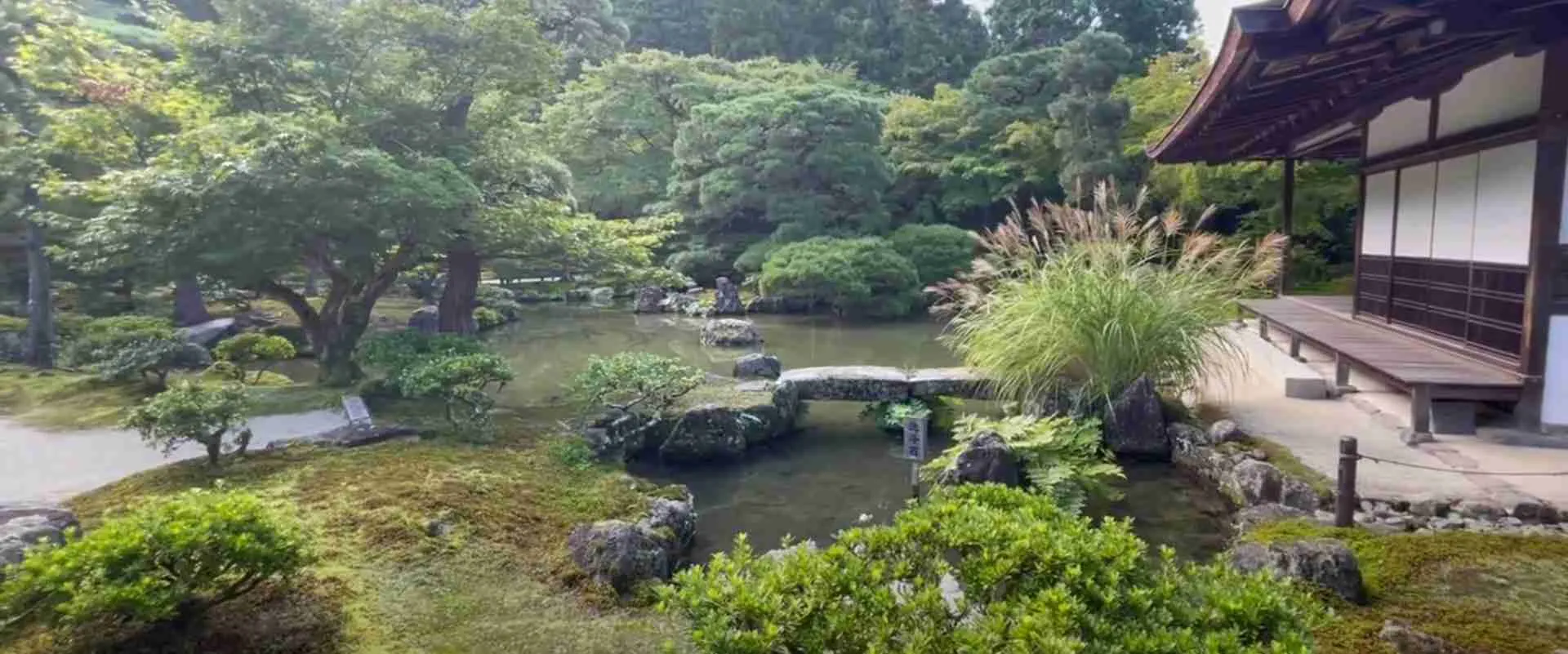
Dry Landscape (Karesansui): The famous sand garden features meticulously raked gravel patterns representing ocean waves and mountains. This abstract landscape invites contemplation and meditation rather than literal interpretation.
Moss Garden Integration: Extensive moss-covered areas create soft green carpets that provide visual rest and emphasize the garden’s contemplative character. The moss requires specific humidity and light conditions maintained through careful garden management.
Walking Meditation Paths: Unlike Kinkaku-ji’s viewing-focused design, Ginkaku-ji offers extensive walking paths through diverse garden environments including pine forests, bamboo groves, and mountain stream areas that encourage slow exploration.
Borrowed Scenery (Shakkei): The garden incorporates distant mountain views as integral design elements, extending the visual space beyond the temple boundaries and connecting the immediate garden with broader natural landscape.
Visitor Experience and Crowd Dynamics
Kinkaku-ji: Managing the Tourist Magnet
Extreme Crowd Conditions: As Kyoto’s most photographed building, Kinkaku-ji attracts massive crowds year-round, with peak seasons bringing virtually constant queues. Tour buses arrive every few minutes during busy periods, making peaceful visits challenging.
Prescribed Route System: Visitors follow a one-way path around the pond with designated viewing platforms. This system manages crowds but limits exploration flexibility and creates bottlenecks at prime photography spots.
Time Pressure Environment: High visitor volume creates implicit pressure to move quickly through viewing areas, making contemplative experiences difficult during peak hours. Most visitors spend 20-30 minutes due to crowd pressure rather than personal preference.
Optimal Visiting Strategy: Arrive at 6:00 AM opening time for 1-2 hours of manageable crowds. Winter mornings and rainy days provide the most peaceful experiences, though weather affects reflection photography quality.
Ginkaku-ji: Contemplative Exploration
More Manageable Crowds: While popular, Ginkaku-ji attracts fewer visitors than Kinkaku-ji, particularly during off-peak seasons and weekdays. The temple’s contemplative character naturally encourages quieter, more respectful visitor behavior.
Flexible Exploration: The garden’s multiple paths and varied environments allow visitors to find quiet spaces even during busy periods. The mountainside walking trails offer virtual solitude compared to the main pavilion area.
Extended Experience Opportunities: The temple’s design encourages longer visits (1-2 hours) for full garden exploration and contemplation. Multiple viewing areas and garden environments provide varied experiences within a single visit.
Peaceful Timing Windows: Early morning visits (7:00-9:00 AM) and late afternoon periods (4:00-6:00 PM) offer particularly peaceful experiences with optimal lighting for both photography and contemplation.
Photography Opportunities and Techniques
Kinkaku-ji Photography Mastery
Iconic Reflection Shots: The classic reflection photograph requires calm water conditions, optimal lighting, and precise positioning. Early morning provides the best conditions with minimal wind and golden hour illumination.
Seasonal Variations: Each season offers unique photographic opportunities: spring cherry blossoms framing the pavilion, summer lush green contrasts, autumn maple leaf complements, and winter snow providing dramatic monochrome backgrounds.
Lighting Considerations: Morning side-lighting (8:00-10:00 AM) enhances the gold-leaf brilliance while avoiding harsh shadows. Overcast conditions provide even lighting but reduce the dramatic reflection contrast.
Compositional Challenges: Including crowds in artistic ways or eliminating them entirely requires creative framing, telephoto lenses for detail isolation, or ultra-wide angles for environmental context. Professional photographers often use longer exposures during evening illuminations.
Ginkaku-ji Photography Artistry
Architectural Detail Focus: The pavilion’s natural materials and refined proportions reward close-up architectural photography emphasizing craftsmanship, weathering patterns, and material textures rather than dramatic distant views.
Garden Photography Opportunities: The diverse garden environments provide endless compositional possibilities: abstract sand patterns, moss texture studies, borrowed scenery compositions, and seasonal plant details.
Contemplative Atmosphere Capture: Successful Ginkaku-ji photography often emphasizes atmosphere, mood, and the interplay between architecture and nature rather than iconic landmark imagery.
Advanced Techniques: Long exposure photography during misty conditions creates ethereal garden images. Macro photography of moss, stone, and architectural details reveals the temple’s sophisticated craftsmanship and natural integration.
Seasonal Experiences and Optimal Timing
Spring (March-May): Cherry Blossom Contrasts
Kinkaku-ji Spring Magic: Cherry blossoms surrounding the golden pavilion create pink and gold color combinations that epitomize Japanese spring beauty. Peak bloom (early April) brings maximum crowds but unforgettable photographic opportunities.
Ginkaku-ji Spring Subtlety: Cherry blossoms in the temple grounds provide delicate beauty that complements rather than competes with the pavilion’s understated elegance. Spring offers ideal weather for extended garden exploration.
Comparative Strategy: Visit Ginkaku-ji during peak cherry blossom week when Kinkaku-ji becomes impossibly crowded. The Silver Pavilion’s spring experience often proves more satisfying during this challenging season.
Summer (June-August): Green Garden Glory
Kinkaku-ji Summer Challenges: Extreme heat and humidity combined with maximum tour group activity create difficult visiting conditions. However, lush green foliage provides beautiful contrast with gold architecture.
Ginkaku-ji Summer Advantages: The temple’s mountain location and extensive tree coverage provide natural cooling. Summer offers the best conditions for moss garden appreciation and mountain trail exploration.
Heat Management: Both pavilions require early morning visits (6:00-8:00 AM) during summer, but Ginkaku-ji’s shaded gardens allow for longer comfortable exploration throughout the day.
Autumn (September-November): Foliage Spectacles
Kinkaku-ji Autumn Drama: Red and gold autumn colors create spectacular combinations with the golden pavilion, though crowds rival cherry blossom season intensity. Peak foliage (mid-November) offers incredible photography at the cost of comfort.
Ginkaku-ji Autumn Contemplation: Autumn colors throughout the extensive gardens provide varied foliage experiences from dramatic mountain views to intimate moss garden scenes. Generally less crowded than Kinkaku-ji during peak foliage.
Autumn Strategy: Plan early autumn visits (October) for good color development with manageable crowds, or focus on evening illuminations when available for magical nighttime experiences.
Winter (December-February): Contrasting Serenity
Kinkaku-ji Snow Scenes: Snow-covered golden pavilion creates one of Japan’s most iconic winter images. Snowy conditions dramatically reduce crowds while enhancing the pavilion’s dramatic beauty.
Ginkaku-ji Winter Meditation: Snow transforms the gardens into minimalist landscapes perfect for contemplation and artistic photography. Winter offers the temple’s most peaceful and introspective experiences.
Winter Advantages: Both temples benefit from winter’s crowd reduction, but Ginkaku-ji particularly excels during this season when its contemplative character can be fully appreciated without interruption.
Cultural and Spiritual Experiences
Kinkaku-ji: Power and Transcendence
Imperial Authority Symbols: The pavilion’s golden magnificence represents the intersection of temporal power and spiritual authority, demonstrating how wealth could be employed for religious purposes during the Muromachi period.
Pure Land Buddhism: The building embodies Pure Land Buddhist concepts of paradise through its golden radiance and reflection in the surrounding pond, creating an earthly representation of the Buddhist Pure Land.
Meditation on Impermanence: Despite its permanent-seeming gold covering, the pavilion has been destroyed and rebuilt multiple times, offering reflection on Buddhist concepts of impermanence and renewal.
Ginkaku-ji: Zen and Aesthetic Philosophy
Wabi-Sabi Principles: The pavilion exemplifies wabi-sabi aesthetic philosophy that finds beauty in imperfection, impermanence, and incompleteness. The weathered natural materials demonstrate these principles through aging and patina.
Tea Ceremony Culture: The temple’s aesthetic philosophy directly influenced Japanese tea ceremony development, emphasizing appreciation of simple, natural beauty and mindful attention to subtle details.
Zen Garden Meditation: The sand garden and extensive walking paths provide opportunities for moving meditation and contemplative practice, encouraging visitors to slow down and appreciate subtle beauty.
Practical Visiting Strategies
Single-Day Combined Visit Strategy
Optimal Routing: Begin with Kinkaku-ji at 6:00 AM opening for crowd-free golden pavilion photography, then travel to Ginkaku-ji for late morning exploration when lighting enhances the gardens. This sequence maximizes both temples’ advantages.
Transportation Between Sites: The temples are located 30 minutes apart by public transportation or 15 minutes by taxi. Bus #102 connects both sites with several stops, while taxi costs approximately ¥1,500-2,000 depending on traffic.
Time Allocation: Budget 1-1.5 hours for Kinkaku-ji (including photography and brief garden exploration) and 2-3 hours for Ginkaku-ji (including full garden walks and contemplation time).
Energy Management: Start with the more crowded, challenging Kinkaku-ji when energy levels are highest, then enjoy the peaceful, contemplative Ginkaku-ji experience for afternoon relaxation.
Multi-Day Detailed Exploration
Kinkaku-ji Deep Dive: Dedicate a full morning to Kinkaku-ji during different weather conditions or seasons. Multiple visits reveal how lighting, weather, and seasonal changes transform the pavilion’s appearance and photographic opportunities.
Ginkaku-ji Extended Experience: Spend a full afternoon exploring all garden areas, including mountain trails that most visitors skip. The temple rewards slow exploration with hidden viewpoints and contemplative spaces.
Seasonal Return Visits: Both pavilions transform dramatically with seasons, justifying return visits for travelers staying longer in Kyoto. Each season offers unique photographic and experiential opportunities.
Comparative UNESCO Context
Architectural Heritage Significance
Design Evolution Representation: Together, both pavilions demonstrate the evolution of Japanese architecture from ostentatious display (Kinkaku-ji) to refined restraint (Ginkaku-ji), showcasing how aesthetic philosophy changed within the same ruling family over 85 years.
Construction Technique Preservation: Both buildings preserve traditional Japanese carpentry techniques using post-and-beam construction without nails, demonstrating sophisticated engineering knowledge that influenced centuries of Japanese architecture.
Cultural Period Documentation: The pavilions serve as architectural documents of their respective cultural periods: Muromachi militaristic display versus Higashiyama artistic refinement, providing insight into changing political and social priorities.
Garden Design Heritage
Landscape Philosophy Evolution: The gardens demonstrate the development of Japanese landscape design from formal, viewing-focused arrangements (Kinkaku-ji) to immersive, contemplative environments (Ginkaku-ji).
Zen Influence Integration: Both gardens show how Zen Buddhist philosophy influenced landscape design, but in different ways: symbolic representation versus direct experiential engagement with nature.
Maintenance Tradition Preservation: The gardens maintain traditional Japanese landscaping techniques including precise pruning, moss cultivation, and sand pattern raking that represent centuries of horticultural knowledge.
Cost Considerations and Value Assessment
Admission and Additional Costs
Entry Fees: Both temples charge ¥400 admission for adults, making them equally affordable UNESCO experiences. The fee includes access to all garden areas and mountain trails at Ginkaku-ji.
Transportation Costs: Reaching both temples requires similar transportation costs from central Kyoto (¥230 by bus, ¥1,500-2,000 by taxi). Multiple temple visits may justify daily transportation passes.
Photography Restrictions: Both temples allow exterior photography but restrict flash and tripod usage. Professional photography may require special permits and additional fees.
Value Proposition Analysis
Time Investment vs Experience Quality: Kinkaku-ji offers concentrated iconic imagery in shorter time periods, while Ginkaku-ji provides extended contemplative experiences justifying longer visits.
Crowd Tolerance vs Reward: Kinkaku-ji’s crowds may frustrate some visitors, but the golden pavilion’s iconic beauty often justifies the challenge. Ginkaku-ji consistently provides peaceful experiences with subtle rewards.
Photography vs Contemplation Priorities: Choose Kinkaku-ji for iconic Instagram-worthy shots and Ginkaku-ji for artistic photography and spiritual experiences. Both serve different traveler priorities effectively.
Local Integration and Cultural Context
Neighborhood Character Differences
Kinkaku-ji Area (Kita Ward): Surrounded by residential neighborhoods with fewer tourist amenities. The area maintains local character despite the temple’s popularity, offering authentic Japanese neighborhood experiences.
Ginkaku-ji Area (Sakyo Ward): Located near Kyoto University and the Philosopher’s Path, creating an intellectual and artistic atmosphere. The area offers numerous traditional shops, cafes, and cultural experiences.
Walking Route Opportunities: Ginkaku-ji connects with the famous Philosopher’s Path (Tetsugaku-no-michi) leading to other temples and cultural sites. Kinkaku-ji offers fewer walking connections but provides authentic residential area exploration.
Cultural Activity Integration
Tea Ceremony Connections: Ginkaku-ji’s aesthetic philosophy directly connects to tea ceremony culture, with several nearby venues offering authentic tea ceremony experiences that complement the temple visit.
Traditional Crafts: Both temple areas feature traditional craft shops, but Ginkaku-ji’s neighborhood offers more opportunities for purchasing authentic Japanese arts and crafts influenced by the temple’s aesthetic philosophy.
Cultural Workshop Opportunities: Ginkaku-ji area provides access to traditional arts workshops including pottery, calligraphy, and garden design that connect directly to the temple’s cultural significance.
Advanced Visitor Tips and Insider Knowledge
Professional Photography Strategies
Kinkaku-ji Professional Techniques: Use polarizing filters to enhance reflection contrast and reduce glare from the gold leaf. Telephoto lenses isolate architectural details while eliminating crowds from compositions.
Ginkaku-ji Artistic Approaches: Focus on abstract compositions emphasizing textures, patterns, and atmospheric effects rather than documentary architecture photography. Macro lenses reveal intricate garden details.
Seasonal Equipment Considerations: Winter visits may require tripods for low-light conditions, while summer requires UV filters and lens hoods for harsh sunlight management.
Cultural Etiquette Refinements
Meditation and Contemplation: At Ginkaku-ji, sitting quietly in garden areas for extended periods is encouraged and culturally appropriate. At Kinkaku-ji, brief contemplation is more suitable due to crowd pressures.
Interaction with Temple Staff: Both temples employ monks and lay staff who appreciate respectful questions about history and Buddhist practices. Speaking softly and showing genuine interest enhances cultural exchanges.
Offering Protocols: Small donations at temple collection boxes support maintenance and demonstrate respect. Both temples sell protective amulets (omamori) and prayer plaques (ema) for meaningful souvenirs.
Decision Matrix: Choosing Between Pavilions
Time-Constrained Travelers
Single Temple Priority: Choose Kinkaku-ji for iconic photography and instant recognition factor. Choose Ginkaku-ji for peaceful contemplation and authentic Japanese aesthetic experience.
Weather Considerations: Kinkaku-ji depends heavily on reflection photography requiring calm water and good lighting. Ginkaku-ji offers rewarding experiences in all weather conditions.
Crowd Tolerance Assessment: Visitors sensitive to crowds should prioritize Ginkaku-ji, while those seeking iconic imagery should accept Kinkaku-ji’s challenging conditions.
Extended Stay Optimization
Multiple Visit Strategy: Return to both temples during different seasons and weather conditions for comprehensive understanding of their changing beauty and photographic opportunities.
Cultural Deep Dive: Combine temple visits with related cultural experiences: tea ceremony after Ginkaku-ji, traditional garden design workshops, and Buddhist meditation sessions.
Photography Project Development: Document both temples through seasonal cycles, different lighting conditions, and varying weather effects for comprehensive artistic projects.
Integration with Broader Kyoto UNESCO Experience
Temple Complex Connections
Architectural Style Progression: Visit both pavilions as part of broader UNESCO temple exploration to understand the evolution of Japanese religious architecture from Heian through Muromachi periods.
Garden Design Evolution: Compare both gardens with other UNESCO sites like Ryoan-ji’s rock garden and Tenryu-ji’s landscape garden to understand different approaches to Japanese garden philosophy.
Cultural Period Context: Study both pavilions alongside Nijo Castle (representing political power) and various Buddhist temples to understand the complex relationship between temporal authority and spiritual expression.
Thematic UNESCO Tours
Golden Theme: Combine Kinkaku-ji with other golden elements in Kyoto UNESCO sites, such as golden altar pieces in various temples and golden decorative elements in Nijo Castle.
Garden Meditation Theme: Connect Ginkaku-ji with other contemplative UNESCO gardens including Ryoan-ji, Saihoji (Moss Temple), and Tenryu-ji for comprehensive meditation garden experiences.
Architectural Evolution Theme: Use both pavilions as anchoring points for understanding how Japanese architecture evolved from Chinese influences through distinctly Japanese innovations.
❓ Frequently Asked Questions
Which pavilion is better for first-time visitors to Kyoto?
Kinkaku-ji (Golden Pavilion) offers the most iconic and instantly recognizable Japanese temple experience, making it ideal for first-time visitors seeking classic Japan imagery. However, be prepared for significant crowds and plan for early morning visits.
Can I visit both pavilions in the same day comfortably?
Yes, both pavilions can be visited in a single day with proper planning. Start with Kinkaku-ji at 6 AM opening time, then visit Ginkaku-ji in late morning or afternoon. Allow 4-5 hours total including transportation time between sites.
Which pavilion offers better photography opportunities?
Kinkaku-ji provides more iconic, instantly recognizable photography with dramatic golden reflections. Ginkaku-ji offers more artistic and contemplative photography opportunities with diverse garden environments and architectural details.
Are the crowds significantly different between the two pavilions?
Yes, Kinkaku-ji attracts much larger crowds year-round due to its iconic status. Ginkaku-ji remains busy but more manageable, offering better opportunities for peaceful contemplation and unhurried exploration.
Which pavilion is better during different seasons?
Both offer unique seasonal beauty: Kinkaku-ji excels in winter snow scenes and autumn colors, while Ginkaku-ji provides superior spring and summer experiences with its extensive gardens and mountain trails offering natural cooling.
Why is Ginkaku-ji called the Silver Pavilion when it contains no silver?
The name “Silver Pavilion” originated as a contrast to the Golden Pavilion, but Ashikaga Yoshimasa never covered the building in silver. The name reflects the refined, understated aesthetic philosophy rather than literal silver decoration.
Which pavilion offers better value for the admission price?
Both charge ¥400 admission, but Ginkaku-ji offers better value through extensive gardens, mountain trails, and longer recommended visit duration (2-3 hours vs 1 hour at Kinkaku-ji). However, value depends on personal interests.
Can I see both pavilions during a brief Kyoto visit?
Yes, both pavilions can be experienced in a half-day with efficient planning. However, rushing through Ginkaku-ji’s contemplative gardens defeats their purpose. Consider prioritizing one pavilion for deeper appreciation if time is extremely limited.
Which pavilion is more accessible for elderly visitors or those with mobility issues?
Kinkaku-ji offers better accessibility with flatter paths and shorter walking distances. Ginkaku-ji requires significant uphill walking and has steep mountain trails, though the main pavilion area remains accessible with moderate walking ability.
Do both pavilions offer the same cultural and historical significance?
Both hold equal UNESCO World Heritage status and represent different but equally important periods of Japanese cultural development. Kinkaku-ji demonstrates Muromachi period power display, while Ginkaku-ji represents Higashiyama culture’s aesthetic refinement.