Girona Day Trip from Barcelona 2026: Medieval & Game of Thrones
Key Takeaways:
- Trains from Barcelona to Girona run every 30-60 minutes with journey times of 38-90 minutes, costing €11-20 each way depending on service type
- The medieval quarter, Jewish heritage sites, and Game of Thrones filming locations cluster within a compact 1.5 km walkable area
- Full-day visits cost €51-75 per person including transportation, attractions, and meals (excluding accommodation)
- Book cathedral tickets online in advance during peak summer months (June-September) to avoid queues
- Spring (April-May) and fall (September-October) offer optimal weather with fewer crowds for exploring the medieval streets
- Most Game of Thrones locations are accessible without entrance fees, though guided tours provide deeper context for fans
Planning Your Barcelona to Girona Day Trip in 2026
Girona stands as Catalonia’s hidden medieval treasure, offering an extraordinary day trip from Barcelona that combines thousand-year-old Jewish heritage, stunning Romanesque and Gothic architecture, and modern pop culture fame from Game of Thrones filming locations. Located just 100 kilometers northeast of Barcelona, this compact historic city delivers an immersive medieval experience without the overwhelming crowds of Barcelona’s Gothic Quarter.
The city’s strategic position on the Onyar River creates a distinctive visual identity, with colorful houses hanging over the water and medieval bridges connecting the historic center to modern neighborhoods. Girona Cathedral dominates the skyline with the widest Gothic nave in the world, while the labyrinthine streets of the Jewish Quarter (El Call) transport visitors back to medieval Sepharad. For Game of Thrones enthusiasts, Girona served as the filming location for Braavos and King’s Landing scenes in Season 6, adding contemporary cultural significance to centuries of authentic history.
Planning a Girona day trip in 2026 requires understanding the transportation options, timing your visit to avoid peak crowds, and prioritizing the compact medieval quarter’s numerous attractions within a realistic timeframe. The city rewards both quick four-hour visits focusing on highlights and leisurely full-day explorations that include dining experiences and extended wandering through atmospheric medieval streets. This guide provides comprehensive 2026 planning information to maximize your Girona experience while managing costs and logistics efficiently.
People Also Ask About Girona Day Trips 2026
How much does a day trip from Barcelona to Girona cost in 2026?
A day trip from Barcelona to Girona costs €51-75 per person for a full day including round-trip train transportation (€20-25), Girona Cathedral admission (€7-10), Arab Baths entrance (€4-5), lunch at a mid-range restaurant (€15-25), and snacks or coffee (€5-10). Half-day express visits cost €30-45 focusing on the cathedral and free walking areas. These costs exclude accommodation and optional guided tours.
Budget-conscious travelers minimize costs by taking slower regional trains (€11 one-way versus €20 for high-speed), bringing packed lunches, and exploring the medieval quarter’s free attractions including the city walls, Onyar River bridges, and Game of Thrones filming locations. Mid-range visitors balance train speed with comfort, dine at traditional Catalan restaurants, and add one or two paid attractions. The compact medieval center keeps transportation costs within Girona negligible since everything is walkable.
What is the best way to get from Barcelona to Girona in 2026?
Train service provides the best transportation from Barcelona to Girona in 2026, with frequent departures from Barcelona Sants and Passeig de Gràcia stations. High-speed AVE trains complete the journey in 38 minutes and cost €15-20 each way, while regional trains take 90 minutes and cost €11-15 each way. Trains depart every 30-60 minutes throughout the day from early morning until late evening, providing flexible scheduling for day trips.
Book train tickets through Renfe’s website or app up to 60 days in advance for the best prices, though same-day tickets remain available at stations. High-speed trains suit travelers maximizing time in Girona, while regional trains appeal to budget travelers who don’t mind the longer journey. Organized tours from Barcelona cost €65-95 and include transportation plus guided walking tours but restrict your schedule to the tour group’s timeline. Private car rental adds flexibility but costs €80-120 per day plus fuel and parking (€15-25 in Girona), making it impractical for solo travelers but viable for groups of four or more.
Is Girona worth a day trip from Barcelona in 2026?
Girona absolutely merits a day trip from Barcelona for travelers seeking authentic medieval architecture without Barcelona’s overwhelming crowds. The city offers the best-preserved Jewish quarter in Western Europe, the widest Gothic nave in the world at Girona Cathedral, impressive Arab Baths demonstrating Romanesque artistry, and walkable medieval city walls providing panoramic views. Game of Thrones fans gain the additional appeal of exploring actual filming locations from Season 6.
The compact medieval quarter concentrates major attractions within 1.5 kilometers, making Girona ideal for visitors who find Toledo or Segovia too sprawling or distant. Unlike Barcelona’s Gothic Quarter where medieval buildings mix with modern tourist infrastructure, Girona preserves genuine medieval atmosphere throughout El Call’s narrow streets. Food enthusiasts appreciate Girona’s renowned culinary scene, including multiple Michelin-starred restaurants and traditional Catalan cuisine at accessible prices. The city rewards both quick visits focusing on architectural highlights and leisurely full-day explorations including extended walks along the Onyar River and city walls.
Where were the Game of Thrones scenes filmed in Girona?
Game of Thrones filmed multiple Season 6 scenes in Girona’s medieval quarter, transforming the city into both Braavos and King’s Landing. The cathedral steps became the setting for Jaime Lannister’s arrival at King’s Landing, while the Arab Baths served as interior locations for Oldtown scenes. Girona’s narrow medieval streets doubled as Braavos alleyways where Arya Stark trained with the Faceless Men, and the cathedral’s baroque exterior appeared in Jaime and Cersei scenes.
Specific filming locations include Carrer del Bisbe Josep Cartañà leading to the cathedral, Pujada de Sant Domènec stairs where Arya fled the Waif, the Jewish Quarter’s labyrinthine streets representing Braavos architecture, and several plazas throughout the medieval center. The city celebrates this connection with discrete markers at major filming sites, though Girona deliberately avoids excessive commercialization. Free walking tour apps provide Game of Thrones-specific routes connecting all filming locations within a 45-60 minute circuit. Paid guided tours (€15-25) offer production insights and behind-the-scenes stories from local guides who witnessed the filming.
Extended multi-day tours – 5+ days
Featured Barcelona Multi-Day Tour Packages

3 days
Barcelona 3-Day Discovery Tour
- ✓ Comprehensive Barcelona experience
- ✓ Expert local guides included
- ✓ All accommodation included
- ✓ Transportation provided
5 days
Barcelona 5-Day Highlights Experience
- ✓ Comprehensive Barcelona experience
- ✓ Expert local guides included
- ✓ All accommodation included
- ✓ Transportation provided
7 days
Barcelona 7-Day Cultural Journey
- ✓ Comprehensive Barcelona experience
- ✓ Expert local guides included
- ✓ All accommodation included
- ✓ Transportation provided
10 days
Barcelona 10-Day Complete Adventure
- ✓ Comprehensive Barcelona experience
- ✓ Expert local guides included
- ✓ All accommodation included
- ✓ Transportation provided
Multi-day tour packages powered by TourRadar. Prices and availability subject to change.
Essential Planning Information 2026
Current Costs and Pricing Breakdown
Transportation from Barcelona to Girona costs €20-25 round trip for high-speed AVE trains (38 minutes) or €11-15 for regional trains (90 minutes) in 2026. Check renfe.com for current official rates as pricing varies by departure time and advance booking. Within Girona, all major attractions fall within walking distance, eliminating local transportation costs.
Girona Cathedral admission costs €7 (basic entry to nave and cloister) or €10 (includes cathedral treasury museum and audio guide). The Arab Baths charge €4 entrance, while walking the medieval city walls remains free. Combined tickets covering multiple museums cost €12-15 but require advance planning to visit all included sites within one day. Game of Thrones filming locations are accessible without entrance fees, though some are on private cathedral property included in the €7-10 cathedral ticket.
Dining costs range from €8-12 for casual bakery lunches to €15-25 for sit-down meals at mid-range Catalan restaurants. Traditional menus del día (fixed-price lunch menus) cost €12-18 and include three courses plus bread and drink, providing excellent value. Coffee and pastries cost €3-5 at cafés along the Onyar River, while takeaway bocadillos (sandwiches) from local shops cost €5-8. The medieval quarter offers numerous dining options across all price ranges concentrated near Plaça de la Independència and along Carrer de la Força.
Transportation Options and Schedules
Trains depart Barcelona Sants station for Girona every 30-60 minutes from 5:40 AM until 10:00 PM, with additional departures from Passeig de Gràcia station 5 minutes later. High-speed AVE services complete the journey in 38 minutes, while regional Media Distancia trains take 75-90 minutes. Return trains from Girona to Barcelona operate on the same frequency until late evening, with the last departure around 10:00 PM.
Morning departures between 8:00-9:00 AM optimize full-day visits, arriving in Girona by 9:00-10:00 AM and providing 7-8 hours before comfortable return trains around 6:00-7:00 PM. Afternoon departures after 10:00 AM suit half-day visits focusing on the medieval quarter and cathedral. Weekend trains experience higher demand, requiring advance booking during peak summer months (June-September). Book tickets 2-4 weeks ahead for weekend visits in high season, while weekday tickets remain available same-day except during major festivals.
Girona’s train station (Girona-Centre) sits 1.5 kilometers south of the medieval quarter, requiring a 15-20 minute walk or 5-minute taxi ride (€8-10). The walk follows straightforward signage along Carrer de Barcelona through modern neighborhoods before crossing the Onyar River into the historic center. Local buses (Line 1 and 4) connect the station to the old town for €1.50 but run infrequently compared to the direct walk. Most visitors walk to immerse themselves in the transition from modern to medieval Girona.
Getting to Girona from Barcelona 2026
Train Service 2026
Renfe operates both high-speed AVE and regional Media Distancia trains from Barcelona to Girona throughout the day. AVE trains depart every 60-90 minutes and complete the journey in 38 minutes, providing comfortable assigned seating with outlets and bathrooms. Regional trains depart more frequently (every 30-60 minutes) but take 75-90 minutes, offering cheaper fares with open seating arrangements. Both services depart from Barcelona Sants, with most trains making additional stops at Passeig de Gràcia station.
Purchase tickets through Renfe’s website (renfe.com), mobile app, or station ticket machines up to 60 days in advance. Advance booking provides discounts of 20-40% compared to same-day prices, particularly for AVE services. Tickets become refundable or exchangeable when purchased as “Flexible” fares for a €3-5 premium. Print-at-home or mobile tickets eliminate queuing at station machines, though tickets remain available for purchase at automated machines accepting credit cards.
Barcelona Sants station includes clear signage directing passengers to track platforms, with electronic departure boards listing all trains. Arrive 15-20 minutes before AVE departures to locate platforms and board, or 10 minutes for regional services which don’t require advance platform checking. The station offers luggage storage (€5-8 per day) for travelers continuing elsewhere after Girona visits, plus cafés, shops, and bathrooms. Passeig de Gràcia station provides a more central Barcelona departure point near major hotels, though train options are more limited than Sants.
Organized Tours 2026
Organized day tours from Barcelona to Girona cost €65-95 and include round-trip transportation in air-conditioned coaches plus guided walking tours of the medieval quarter in 2026. Standard tours depart Barcelona at 8:00-9:00 AM and return by 6:00-7:00 PM, spending 4-5 hours in Girona with a local guide. Tours typically include the cathedral exterior, Jewish Quarter walking circuit, city walls, and Onyar River area, plus free time for lunch (not included in tour price).
Premium Game of Thrones tours (€85-110) focus specifically on filming locations with guides providing production stories and scene comparisons. These specialized tours spend extra time at the Arab Baths, cathedral steps, and medieval street locations where Season 6 scenes were shot. Some tours combine Girona with nearby locations like Figueres (Dalí Museum) or the Costa Brava, creating full-day excursions that reduce time in Girona to 2-3 hours.
Book tours through major operators like GetYourGuide, Viator, or Civitatis 1-2 weeks in advance for guaranteed availability during peak season. Tours offer convenience for travelers uncomfortable with independent train navigation or those wanting expert commentary, but restrict your schedule to the group’s timeline. Independent travelers using trains gain flexibility to stay longer, depart earlier, or adjust their Girona itinerary spontaneously while typically saving €30-50 compared to organized tours.
Private Transportation 2026
Rental cars from Barcelona to Girona cost €80-120 per day plus fuel (€15-20 round trip) in 2026, making private transportation practical for groups of three or more but expensive for solo travelers or couples. The AP-7 toll highway provides the fastest route (60-75 minutes) with tolls costing €10-15 round trip, while the free C-31 coastal route takes 90-120 minutes through smaller towns. GPS navigation apps like Google Maps or Waze provide real-time traffic updates and route optimization.
Parking in Girona’s medieval quarter is extremely limited, with most streets pedestrianized. Public parking garages near the old town charge €15-25 per day, with the closest options being Parking Güell (5-minute walk to cathedral) and Parking Migdia (10-minute walk to Jewish Quarter). Street parking in residential areas outside the walls costs €1.50-2.50 per hour with 2-4 hour limits. The train station offers free parking but requires walking 20 minutes to the medieval center or taking a taxi.
Private drivers or taxi services from Barcelona cost €180-250 for the round trip including waiting time in Girona, targeting luxury travelers or small groups wanting maximum convenience. Pre-book drivers through hotel concierges or specialized transfer services for reliable pricing and English-speaking drivers. Standard Barcelona taxis don’t provide competitive rates for long-distance trips compared to trains or rental cars.
What to See in Girona 2026
The Medieval Quarter and Jewish Heritage
El Call (the Jewish Quarter) represents the best-preserved medieval Jewish neighborhood in Western Europe, featuring labyrinthine cobblestone streets, stone archways, and buildings dating from the 9th-15th centuries. This compact quarter occupies steep hillside terrain between the Onyar River and the cathedral, creating a maze of narrow passages (some only 2-3 feet wide) that protected the Jewish community during medieval times. Walking El Call’s streets transports visitors directly into Sephardic history, with original medieval stonework and architectural elements visible throughout.
The Museum of Jewish History (Museu d’Història dels Jueus) occupies medieval buildings in El Call’s heart, presenting Girona’s Jewish community history from the 9th century until the 1492 expulsion. The museum costs €4 entry and includes English explanations of daily life, religious practices, persecution periods, and the community’s intellectual contributions. Highlights include reconstructed medieval rooms, tombstone collections with Hebrew inscriptions, and exhibits on prominent Jewish scholars who lived in Girona including Nahmanides and Isaac the Blind.
Carrer de la Força serves as the Jewish Quarter’s main artery, running from Plaça de la Catedral down through the medieval center. This street formed medieval Girona’s primary commercial route, with ground floors serving as shops and artisan workshops while families lived above. Walking Carrer de la Força from cathedral to river reveals the quarter’s vertical development, with streets branching off into tiny residential alleys. The street maintains its medieval character with stone buildings, overhanging balconies, and minimal modern intrusion.
Medieval Girona housed one of Europe’s most important Jewish communities, with rabbinical schools attracting scholars from across the Mediterranean. The Jewish presence shaped the city’s intellectual and economic development for six centuries until the 1492 expulsion following the Alhambra Decree. Today, El Call preserves this heritage through careful restoration work, interpretive signage in multiple languages, and active cultural programming that honors Sephardic traditions.
Game of Thrones Filming Locations
Girona Cathedral’s baroque steps became one of Game of Thrones Season 6’s most recognizable filming locations, appearing in the scene where Jaime Lannister arrives at King’s Landing. The 90-step staircase leading to the cathedral creates a dramatic ascent that cinematographers used effectively for establishing shots. These steps are freely accessible during cathedral opening hours (included in the €7 cathedral ticket), though filming markers or plaques are deliberately subtle to preserve the building’s authentic character.
The Arab Baths’ Romanesque architecture served as interior filming locations for Oldtown scenes in Season 6. The building’s distinctive octagonal layout with columns supporting a central cupola provided atmospheric medieval settings that required minimal set decoration. Arab Baths admission (€4) includes access to all rooms where filming occurred, with small markers indicating specific scene locations. The baths date from 1194 and represent remarkable Romanesque craftsmanship, making them worthwhile independent of Game of Thrones connections.
Pujada de Sant Domènec stairs became the setting for Arya Stark’s chase scene fleeing the Waif through Braavos streets. This steep medieval staircase connects the cathedral area to lower medieval neighborhoods, featuring stone walls and archways that perfectly matched the show’s Braavos aesthetic. The stairs are freely accessible and form part of most medieval quarter walking routes, providing dramatic photo opportunities with views across Girona’s rooftops.
Multiple narrow streets throughout El Call doubled as Braavos alleyways and marketplaces in various scenes. Carrer de Sant Llorenç, Carrer dels Alemanys, and passages around Plaça dels Jurats all appear in Season 6 episodes. Walking these streets reveals why Girona appealed to location scouts: the preserved medieval character required minimal modification to transform into fictional Braavos. Free downloadable walking tour apps mark specific filming locations with GPS coordinates and scene photos, creating a self-guided Game of Thrones circuit taking 45-60 minutes to complete.
Girona Cathedral and Arab Baths
Girona Cathedral dominates the city skyline with the widest Gothic nave in the world (22.98 meters), surpassing even St. Peter’s Basilica in Rome. This single-nave design creates an enormous interior space that impresses visitors immediately upon entry. The cathedral evolved over seven centuries (11th-18th), incorporating Romanesque, Gothic, and Baroque elements into a unified structure. The Romanesque cloister, with its intricate carved capitals depicting biblical scenes, contrasts with the soaring Gothic nave’s vertical emphasis.
Cathedral admission (€7 basic entry or €10 including treasury museum) provides access to the nave, cloister, and exterior observation points. The treasury museum houses the Creation Tapestry, an 11th-century Romanesque textile considered one of Europe’s most important medieval tapestries. The fabric depicts the Biblical creation story with remarkable preservation of original colors and detail. Cathedral audio guides (included in €10 ticket) explain architectural evolution, artistic treasures, and historical significance in multiple languages.
The cathedral’s baroque façade dates from the 18th century and replaced earlier Gothic work, creating interesting stylistic contrast with the cathedral’s Gothic interior. The 90-step staircase leading to the entrance provides dramatic approach and panoramic views across Girona’s old town. Cathedral opening hours run 10:00 AM – 6:30 PM in summer (April-October) and 10:00 AM – 5:30 PM in winter, with last entry 30 minutes before closing. Sunday morning masses restrict tourist access until approximately 12:00 PM.
The Arab Baths (Banys Àrabs) sit near the cathedral in the Capuchin Monastery quarter, representing exceptional 12th-century Romanesque architecture inspired by earlier Roman and Islamic bath traditions. Despite the name, the baths were built by Christian craftsmen in 1194 but incorporated North African architectural elements including the octagonal layout and column arrangement. The building preserved remarkable original features including the frigidarium (cold room), tepidarium (warm room), caldarium (hot room), and the distinctive octagonal cupola admitting natural light.
Arab Baths admission (€4) includes access to all rooms with explanatory panels describing the building’s construction, social function, and architectural significance. The baths operated as public bathing facilities until the 15th century and later served various purposes including prison and private residence. Recent restoration work returned the building to its medieval appearance, removing later additions and reinforcing original stonework. The baths open daily 10:00 AM – 7:00 PM in summer and 10:00 AM – 2:00 PM in winter.
City Walls and Panoramic Views
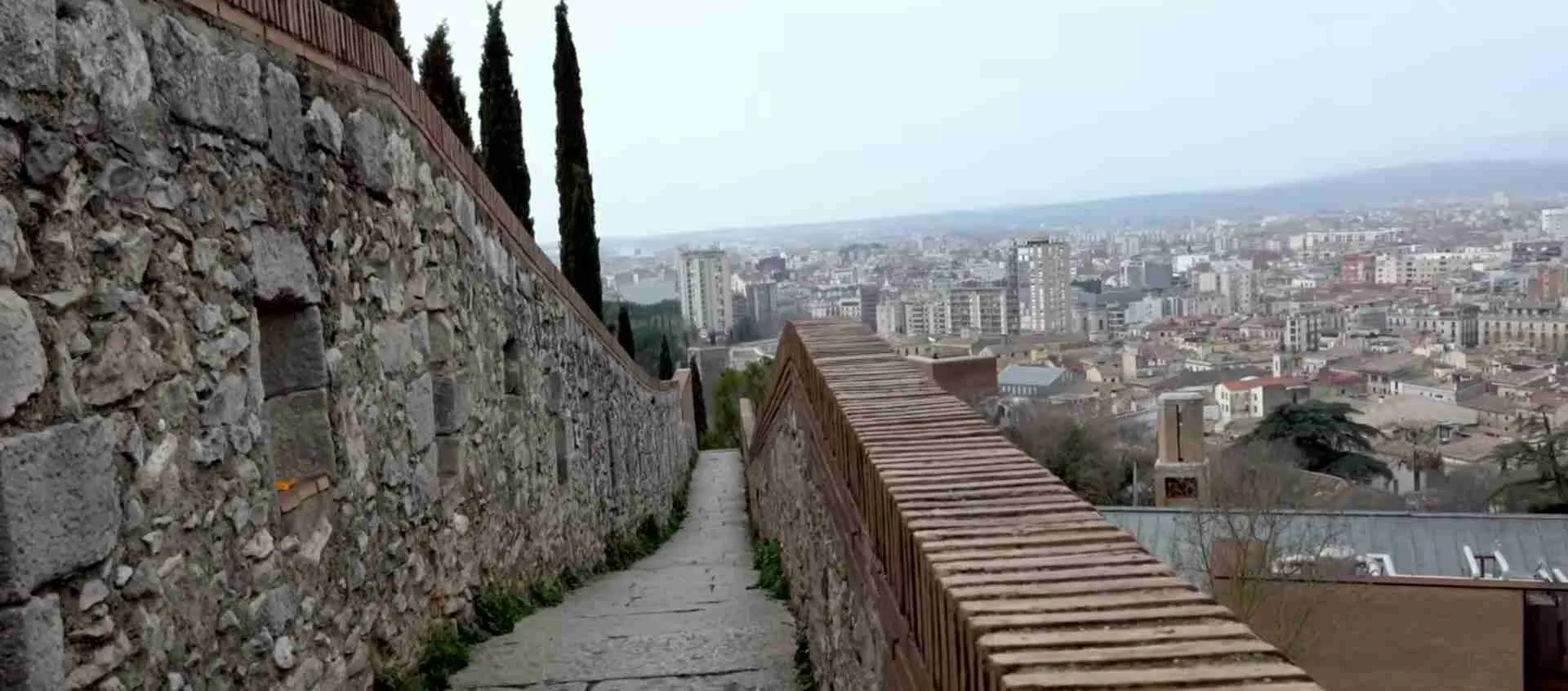
Girona’s medieval city walls (Passeig de la Muralla) stretch nearly 1 kilometer along the old town’s eastern edge, providing elevated walking paths with panoramic views across red-tiled rooftops, the Onyar River, and surrounding mountains. The walls date primarily from the 14th-15th centuries, built atop earlier 9th-century Carolingian fortifications. Walking the entire circuit takes 45-60 minutes at a leisurely pace, with multiple access points allowing visitors to walk shorter sections.
Access the walls from several staircases including near the Arab Baths, behind the cathedral, or from lower points near the river. The walkway features wide stone paths suitable for most fitness levels, though some sections include uneven surfaces and steps. Walls walking is completely free and accessible during daylight hours year-round. Benches at strategic viewpoints encourage pausing to appreciate the medieval cityscape and photograph the distinctive orange and yellow houses lining the Onyar River.
The walls reveal Girona’s military history through preserved watchtowers, defensive ramparts, and strategic positioning overlooking approach routes. Information panels along the route explain the city’s numerous sieges, including the famous 1809 resistance against Napoleon’s forces. The walkway provides unique perspectives on the cathedral’s position dominating the hilltop, the Jewish Quarter’s compact layout, and the city’s growth beyond medieval boundaries into modern neighborhoods.
Sunset walks along the walls (approximately 6:00-8:00 PM in summer) provide exceptional lighting for photography as the setting sun illuminates the Onyar River houses in warm tones. Morning walks (8:00-10:00 AM) offer cooler temperatures and fewer crowds before the city’s daily tourist rush. The walls circuit can be walked in either direction, though counterclockwise from the cathedral provides gradual elevation changes versus clockwise ascents.
Onyar River and Colorful Houses
The Onyar River bisects Girona between the medieval old town on the east bank and 19th-20th century neighborhoods on the west, creating the city’s most photographed vista. Colorful houses in ochre, orange, yellow, and red tones line the river’s east bank, creating a distinctive painted tableau that has become Girona’s visual trademark. These houses date primarily from the 19th-20th centuries and were deliberately painted in vibrant colors to enhance the city’s aesthetic appeal and differentiate individual properties.
Several bridges cross the Onyar, with Pont de les Peixateries Velles (designed by Gustave Eiffel in 1877) being the most historically significant. This iron footbridge connects the old town to Plaça de la Independència, Girona’s main modern square. Walking the bridges provides perspectives for photographing the colorful houses from different angles and heights. The Eiffel Bridge particularly offers centered compositions with the cathedral rising behind the painted facades.
Riverside walking paths (Passeig Arqueològic) follow both banks, creating pleasant promenades for morning or evening strolls. Cafés and restaurants along the western bank provide dining spots with views directly onto the colorful houses and medieval quarter. The river itself remains shallow most of the year, with visible rocks and occasional waterfowl adding to the scene’s charm. River views change dramatically with lighting conditions: morning sun illuminates the houses from the front, while afternoon backlighting creates silhouettes.
The colorful houses developed their current appearance in the mid-20th century when Girona promoted the aesthetic as a tourist attraction. Prior to this, buildings were typically natural stone or white-painted plaster. Today, property owners must maintain the colorful painting scheme as part of Girona’s urban conservation policy. This creates an interesting tension between authentic medieval architecture (stone and natural tones) and 20th-century commercial tourism (bright painted surfaces) that defines modern Girona’s character.
Budget Planning for Your 2026 Girona Visit
Transportation Budget 2026
Round-trip train transportation from Barcelona to Girona costs €20-25 for high-speed AVE services (38 minutes each way) or €11-15 for regional trains (90 minutes each way). Book tickets 2-4 weeks in advance for 20-30% discounts compared to same-day prices, particularly important for weekend travel during peak summer months. AVE trains justify the premium for visitors maximizing time in Girona or those continuing to the Costa Brava the same day, while regional trains suit budget travelers and those making multiple stops between Barcelona and Girona.
Within Girona, walking covers all major medieval quarter attractions without requiring local transportation. The 1.5-kilometer distance from the train station to the cathedral takes 15-20 minutes on foot and provides a pleasant introduction to the city. Taxis from the station to the medieval quarter cost €8-10 and save 10 minutes but aren’t necessary unless carrying significant luggage. City buses (€1.50 per ride) serve the station but run infrequently compared to the straightforward walk.
Travelers combining Girona with other destinations like Figueres, Besalú, or Costa Brava towns benefit from regional train passes (€15-25 for unlimited day travel within Catalonia), though these passes only make financial sense when making 3+ journeys per day. Most Barcelona-based visitors stick with standard point-to-point tickets for single Girona day trips. Group discounts (4+ travelers) reduce per-person costs by 15-20% on some services but require booking through Renfe’s group travel system 2+ weeks ahead.
Entrance Fees and Activities 2026
Girona Cathedral charges €7 for basic entry (nave and cloister access) or €10 for comprehensive admission including the treasury museum and audio guide. The Arab Baths cost €4 entrance. Walking the city walls, exploring El Call (Jewish Quarter) streets, viewing Game of Thrones filming locations, and photographing the Onyar River houses remain free activities. The Museum of Jewish History costs €4 entry. These four paid attractions total €18-25, covering the major indoor experiences.
Combined museum tickets covering multiple sites cost €12-15 but require planning to visit all included locations within one day, which is challenging given opening hours and walking distances. Most visitors prioritize the cathedral (€7-10) as the essential paid attraction, adding the Arab Baths (€4) if time allows. Budget travelers focusing on free attractions (walls, Jewish Quarter streets, river views, Game of Thrones locations) experience Girona’s essential medieval character without entrance fees.
Optional guided tours cost €15-25 for 90-minute walking tours of the medieval quarter, with specialized Game of Thrones tours commanding €20-30. Audio guide apps like Rick Steves or GPSmyCity provide free or low-cost (€2-5) self-guided alternatives with historical commentary. Free walking tours operate on a tip-basis (suggest €10-15 per person) and cover main medieval quarter highlights in 90-120 minutes. These free tours provide good value for budget-conscious visitors wanting expert commentary without fixed costs.
Dining Options 2026
Budget dining options in Girona include bakeries and sandwich shops (€5-10 for substantial meals), takeaway bocadillos (€5-8), and casual cafés offering platos combinados (combined plates) for €8-12. Several cafeterias around Plaça de la Independència serve basic menus del día (fixed-price lunch menus) for €10-15 including three courses, bread, and wine. Supermarkets near the train station stock fresh bread, cheese, cured meats, and fruit for picnic lunches (€8-15 total) eaten along the city walls or river.
Mid-range restaurants throughout the medieval quarter charge €15-25 for complete lunch meals, with traditional Catalan cuisine at restaurants along Carrer de la Força and near the cathedral. Menus del día at these establishments (€12-18) provide excellent value, typically including starter (salad or soup), main course (meat or fish), dessert, bread, and one drink. Girona specializes in traditional Catalan dishes including trinxat (potato and cabbage), botifarra (local sausage), and xuixo (sweet pastry unique to Girona).
Coffee and pastries at riverside cafés cost €3-5, with local pastry shops offering xuixos (€2-3 each) as Girona’s distinctive sweet treat. Ice cream shops throughout the medieval quarter charge €3-5 for cones. Evening tapas bars provide small plates (€4-8 each) and local wines (€3-6 per glass), though most day-trippers return to Barcelona for dinner. Budget €15-25 total for drinks and snacks if supplementing a packed lunch, or €25-45 for restaurant meals.
Total Day Cost Estimates 2026
Budget day trips to Girona cost €30-45 per person using regional trains (€11 one-way, €22 round trip), focusing on free attractions (city walls, Jewish Quarter streets, Game of Thrones locations, Onyar River views), and bringing packed lunches or eating takeaway bocadillos (€5-8). This minimal budget still provides excellent medieval quarter experiences without indoor attractions. Add €7-10 for cathedral admission if budget allows one paid entry.
Mid-range day trips cost €51-75 per person including high-speed AVE trains (€20-25 round trip), Girona Cathedral admission (€7-10), Arab Baths entrance (€4-5), lunch at a mid-range restaurant (€15-25), and snacks or coffee (€5-10). This budget provides comprehensive access to major attractions with comfortable transportation. Total day cost: €51-75 per person (excluding accommodation).
Premium experiences cost €95-130 per person including organized tours from Barcelona (€65-95 with transportation and guide), cathedral and Arab Baths admission (€11-15 total), lunch at higher-end restaurants (€25-35), and optional Game of Thrones specialized tour (€20-30). Premium budgets suit travelers wanting expert commentary without independent planning. These organized tours include transportation and guide services but restrict schedule flexibility compared to independent train travel.
Group travelers (3-4 people) considering rental cars split transportation costs, potentially reducing per-person expenses to €25-35 for transportation versus €20-25 for trains. However, parking fees (€15-25) and tolls (€10-15) typically eliminate cost advantages unless combining Girona with other destinations in a multi-day road trip. Couples and solo travelers always save money using trains compared to private transportation.
Sample 2026 Itineraries
Half-Day Express Itinerary (4-5 hours)
Depart Barcelona Sants on an 8:00-9:00 AM high-speed AVE train, arriving in Girona by 9:00-10:00 AM. Walk 15-20 minutes from the train station to the medieval quarter, crossing the Onyar River via Pont de les Peixateries Velles while photographing the colorful houses. Enter the Jewish Quarter (El Call) through Carrer de la Força, spending 30-45 minutes wandering the labyrinthine medieval streets including Carrer de Sant Llorenç and passages around the Museum of Jewish History (exterior viewing only if skipping paid entries).
Climb to Girona Cathedral by 10:30-11:00 AM, purchasing the €7 basic admission ticket. Spend 60-75 minutes exploring the world’s widest Gothic nave, Romanesque cloister with carved capitals, and treasury museum if upgraded to the €10 comprehensive ticket. Exit the cathedral and walk 5 minutes to the city walls access point behind the cathedral, ascending to the Passeig de la Muralla for 30-45 minutes of elevated walking with panoramic views across red-tiled rooftops and the Onyar River valley.
Descend from the walls near the Arab Baths (exterior viewing only in half-day itinerary unless time allows) and walk back toward the river through different medieval streets to complete a circuit. Stop for quick coffee and xuixo pastries (€5-8 total) at a riverside café around 12:30-1:00 PM before walking back to the train station. Catch return trains to Barcelona departing between 1:00-2:00 PM, arriving back at Barcelona Sants by 2:00-3:00 PM.
Half-day costs: AVE train round trip €20-25, cathedral admission €7-10, coffee and pastry €5-8. Total: €32-43 per person. This compressed itinerary prioritizes the cathedral and city walls as essential experiences while providing a taste of the medieval quarter’s atmosphere. The schedule works well for travelers with afternoon Barcelona plans or those continuing to Costa Brava destinations.
Full-Day Comprehensive Itinerary (8-10 hours)
Depart Barcelona Sants on an 8:00-8:30 AM train (high-speed or regional based on budget), arriving in Girona by 9:00-10:00 AM. Walk to the medieval quarter and begin at the lower elevation near the Onyar River, spending 20-30 minutes photographing the colorful houses from multiple bridge perspectives. Enter the Jewish Quarter through Plaça de la Catedral and explore the Museum of Jewish History (€4 entry), allocating 45-60 minutes for exhibits on Sephardic heritage and medieval Girona’s Jewish community.
Wind through El Call’s narrow streets, specifically seeking out Game of Thrones filming locations including Pujada de Sant Domènec stairs (Arya’s chase scene) and various alleyways representing Braavos. Spend 30-45 minutes on this specialized circuit, using a free walking tour app to identify specific scenes. Exit El Call and climb to Girona Cathedral by 11:00-11:30 AM, purchasing the €10 comprehensive ticket including treasury museum and audio guide. Allocate 90-120 minutes for thorough cathedral exploration including the Creation Tapestry, cloister details, and baroque exterior staircase.
Break for lunch 1:00-2:30 PM at a traditional Catalan restaurant along Carrer de la Força or near Plaça de la Independència, ordering the menú del día (€12-18) for three courses including local specialties like trinxat or botifarra. After lunch, walk to the Arab Baths (€4 entry) and spend 30-45 minutes exploring the Romanesque architecture and Game of Thrones interior filming locations.
Access the city walls around 3:30-4:00 PM for a complete 45-60 minute circuit walk, stopping at viewpoints for photographs and rest on benches with panoramic vistas. Descend from the walls and spend final hours (5:00-6:00 PM) revisiting favorite medieval streets, shopping for local products in artisan boutiques, or enjoying coffee and xuixo pastries (€5-8) at a riverside café. Walk to the train station by 6:30 PM for return trains to Barcelona departing 7:00-8:00 PM, arriving back in Barcelona by 8:00-9:00 PM.
Full-day costs: Train round trip €20-25, cathedral comprehensive admission €10, Museum of Jewish History €4, Arab Baths €4, lunch at mid-range restaurant €15-25, coffee and pastry €5-8. Total day cost: €58-76 per person (excluding accommodation). This comprehensive itinerary covers all major paid attractions and provides ample time for unhurried medieval quarter wandering.
Game of Thrones Fan Itinerary
Depart Barcelona on an 8:30 AM train and begin at Girona Cathedral’s baroque steps where Jaime Lannister’s King’s Landing arrival was filmed. Purchase the €10 cathedral comprehensive ticket and explore interior spaces used in various scenes. Allocate 90 minutes for cathedral visit including identifying specific filming angles and locations. Download a Game of Thrones walking tour app (free or €2-5) providing GPS-marked filming locations throughout the medieval quarter.
Walk to the Arab Baths (€4 entry) by 11:30 AM for Oldtown interior scenes, spending 45 minutes identifying specific rooms and architectural features seen in episodes. The octagonal layout with columns appears prominently in Season 6 Oldtown sequences. Exit and begin the medieval quarter filming location circuit, focusing on Pujada de Sant Domènec stairs (Arya fleeing the Waif), various alleyways around Carrer de Sant Llorenç (Braavos marketplace scenes), and Plaça dels Jurats (additional Season 6 locations).
Lunch 1:00-2:00 PM at restaurants near filming locations, discussing scenes with fellow fans often present. Join an optional specialized Game of Thrones guided tour (€20-30) departing around 2:30-3:00 PM if wanting expert production insights and behind-the-scenes stories. These tours last 90-120 minutes and provide access to filming details not available in apps or self-guided exploration. Alternative: continue independent exploration of filming sites without paid tour.
Spend late afternoon (4:00-6:00 PM) revisiting favorite filming locations for better photography lighting, walking the city walls for overhead perspectives of locations, and exploring the Jewish Quarter’s streets that perfectly matched the show’s Braavos aesthetic. Consider purchasing Game of Thrones merchandise from shops near the cathedral selling maps, posters, and other memorabilia. Return to Barcelona on evening trains.
Game of Thrones fan costs: Train round trip €20-25, cathedral comprehensive admission €10, Arab Baths €4, walking tour app €2-5, optional guided tour €20-30, lunch €15-25, snacks €5-10. Total: €56-109 per person depending on whether including the specialized guided tour. This themed itinerary comprehensively covers Season 6 filming locations while appreciating Girona’s authentic medieval character that made it perfect for the show’s production.
Best Time to Visit Girona in 2026
Seasonal Considerations 2026
Spring (April-May) provides optimal conditions for visiting Girona with mild temperatures (15-22°C/59-72°F), blooming flowers throughout the medieval quarter, and moderate tourist crowds significantly lower than peak summer levels. The city’s annual Temps de Flors (Flower Festival) in mid-May transforms courtyards, streets, and buildings into floral art installations, creating spectacular photography opportunities though also attracting maximum spring crowds for that specific week. Book train tickets and restaurant reservations 2-3 weeks ahead if visiting during Temps de Flors.
Summer (June-September) brings peak tourist season with crowds throughout the medieval quarter, longer cathedral opening hours (until 6:30-7:00 PM), and hot temperatures (25-32°C/77-90°F) making midday exploration challenging. The city walls walk becomes particularly demanding in afternoon heat, requiring morning or evening timing. Summer advantages include extended daylight hours for photography (sunset around 9:00-9:30 PM) and full-service restaurant availability. Book trains, accommodations, and cathedral tickets 3-4 weeks ahead for July-August visits.
Fall (September-October) rivals spring as the ideal visiting season with comfortable temperatures (18-24°C/64-75°F), harvest season featuring local food festivals, autumn colors enhancing the Onyar River valley scenery, and decreasing crowds after school summer vacations end. September maintains summer opening hours while October transitions to shorter winter schedules. Rain increases in October compared to summer months but remains manageable with appropriate planning. Cultural events throughout fall celebrate Catalan traditions without overwhelming tourist infrastructure.
Winter (November-March) offers the quietest visiting experience with minimal crowds, lower accommodation prices in surrounding areas (though Girona day trips typically don’t include overnight stays), and authentic local atmosphere. Cathedral and Arab Baths reduce hours (closing 2:00-5:30 PM) and some restaurants near tourist areas close for annual renovations. Temperatures range 8-15°C (46-59°F) with increased rainfall. Winter suits travelers prioritizing solitude and authentic local experience over optimal weather. The city’s Christmas markets (late November-early January) create festive atmosphere worth timing visits around.
Crowd Management Strategies 2026
Visit Girona on weekdays (Tuesday-Thursday) rather than weekends when Barcelona residents and tour groups maximize medieval quarter crowds. The cathedral sees peak visitor flow 11:00 AM-2:00 PM, making 10:00 AM opening or post-3:00 PM arrivals optimal for less crowded experiences. The narrow streets of El Call become congested 11:30 AM-1:30 PM when multiple tour groups transit simultaneously, suggesting early morning (9:00-10:30 AM) or late afternoon (4:00-6:00 PM) exploration.
Book cathedral tickets online in advance during peak summer months to bypass ticket counter queues. The Arab Baths rarely experience significant crowding due to limited capacity and 30-minute typical visit duration. City walls walking sees highest traffic late morning (10:30 AM-12:00 PM) and late afternoon (5:00-6:30 PM) when tour groups complete their circuits, making midday (1:00-4:00 PM) or early morning (8:00-9:00 AM) optimal for solitude.
Arrive in Girona before 10:00 AM to experience the medieval quarter before tour buses arrive (typically 10:30-11:00 AM). Most organized tours depart Girona by 5:00-5:30 PM, creating quieter evening hours for independent travelers staying later. The last Barcelona-bound trains around 9:00-10:00 PM allow extended evening visits with atmospheric lighting and reduced crowds. Restaurants near tourist areas experience lunch rushes 1:00-2:30 PM; dining at 12:00-12:30 PM or after 2:30 PM avoids waits.
The Game of Thrones filming locations including the cathedral steps and Pujada de Sant Domènec stairs attract dedicated fan groups throughout the day. Visit these specific locations early morning (before 10:00 AM) or late afternoon (after 5:00 PM) for unobstructed photography without crowds. The Onyar River bridges see constant foot traffic for photography; position yourself during less popular hours (early morning, late afternoon) for clear shots without tourist photobombing.
Dining and Food Experiences 2026
Traditional Catalan Cuisine
Girona maintains strong Catalan culinary traditions featuring regional dishes distinct from Barcelona’s tourist-oriented offerings. Trinxat, a traditional mountain dish combining mashed potatoes, cabbage, and garlic topped with local bacon or botifarra sausage, appears on menus at restaurants throughout the medieval quarter. The dish originates from Catalan Pyrenees regions and provides hearty sustenance particularly welcome after morning cathedral and walls exploration. Restaurants serving authentic trinxat charge €12-18 as a main course.
Botifarra, Catalonia’s signature sausage, comes in multiple varieties including white (botifarra blanca), blood sausage (botifarra negra), and sweet versions with lemon or cinnamon. Local restaurants grill botifarra and serve with mongetes (white beans) for €14-20. The combination represents traditional Catalan comfort food prepared the same way for generations. Quality varies significantly; restaurants sourcing from local butchers near Girona’s municipal market provide superior versions compared to tourist-focused establishments using commercial suppliers.
Xuixo (pronounced “choo-cho”), a cream-filled pastry unique to Girona, represents the city’s signature sweet. Local bakeries throughout the medieval quarter prepare fresh xuixos daily (€2-3 each), with Pastisseria Casa Cacao near Plaça de la Independència and historic bakeries along Carrer de la Força offering acclaimed versions. The pastry features a cylindrical shape with flaky layers encasing crema catalana (Catalan custard), dusted with granulated sugar. Purchase xuixos mid-morning for breakfast or afternoon snack rather than first thing (when many bakeries haven’t completed production).
Menus del día provide excellent value for sampling traditional Catalan cuisine at €12-18 for three courses plus bread and drink. These fixed-price lunch menus typically offer 2-3 choices for each course, including options like escalivada (roasted vegetables), esqueixada (salt cod salad), suquet de peix (fish stew), or conill amb allioli (rabbit with garlic sauce). Restaurants around Carrer de la Força and Plaça del Vi serve authentic menus del día primarily to local workers rather than tourists, ensuring quality and traditional preparation.
Budget-Friendly Options 2026
Bakeries throughout the medieval quarter sell fresh bread, coca (Catalan flatbread with various toppings), and empanadas for €2-5 per item. Forn Dulcet near the cathedral and bakeries along Rambla de la Llibertat provide substantial takeaway options suitable for picnic lunches consumed along the city walls or near the Onyar River. Supermarkets including Caprabo and Mercadona near the train station stock fresh produce, cheese, cured meats, and bread for assembled lunches costing €8-15 total.
Bocadillerías (sandwich shops) throughout Girona prepare made-to-order bocadillos (large sandwiches on crusty bread) for €5-8. Standard options include jamón serrano, cheese, tortilla española, botifarra, or combined fillings. These substantial sandwiches provide filling lunches for budget travelers. Several bocadillerías near Plaça de la Independència cater to local workers and maintain authentic pricing and quality compared to tourist-focused cafés near the cathedral charging €10-12 for similar items.
Cafés around the train station and modern neighborhoods south of the old town serve platos combinados (combined plates featuring protein, eggs, fries, and salad) for €8-12. While less atmospheric than medieval quarter restaurants, these establishments provide efficient, filling meals at lower prices. Menús del día at non-tourist cafeterías cost €10-13 compared to €15-18 in prime medieval quarter locations, though quality and ambiance differ significantly.
Girona’s municipal market (Mercat del Lleó) near Plaça de la Independència operates mornings (8:00 AM-2:00 PM) selling fresh produce, cheese, cured meats, and prepared foods. The market includes casual food stalls serving bocadillos, empanadas, and traditional dishes for €5-10. Shopping the market and consuming food at standing counters provides authentic local experience and excellent value. The market closes afternoons and Sundays, limiting availability for some day trip schedules.
Local Markets and Street Food
Mercat del Lleó operates Monday-Saturday mornings as Girona’s main food market, featuring over 60 vendors selling fresh seafood, local vegetables, artisan cheeses, cured meats, olives, and prepared foods. The market building dates from 1892 and maintains traditional Catalan market atmosphere with vendors calling out products and prices. Arriving between 9:00-11:00 AM provides optimal selection before vendors begin closing around 1:00-1:30 PM ahead of the 2:00 PM market closure.
Market food stalls serve traditional Catalan breakfast and lunch items including truita de patates (potato omelet), pa amb tomàquet (bread with tomato, olive oil, and salt), and various bocadillos. Counter seating or standing areas provide casual dining atmosphere where locals purchase quick meals. Prices run €5-12 for substantial market meals. The market represents authentic Girona food culture focused on local suppliers rather than tourist restaurants.
Street food options in Girona remain limited compared to larger cities, with most casual eating occurring in established cafés and restaurants rather than food trucks or street vendors. However, during the Temps de Flors festival in May, temporary food stalls appear throughout the medieval quarter selling churros, creps, roasted nuts, and local products. Summer months see increased outdoor café seating along the Rambla de la Llibertat and Plaça de la Independència functioning as casual dining spaces.
Ice cream shops (gelaterias) throughout the medieval quarter serve artisan gelato for €3-5 per cone, providing refreshing breaks during warm weather exploration. Several establishments near the cathedral and along the river prepare gelato using traditional methods with seasonal flavors. Horchaterías sell traditional horchata (tiger nut milk drink) and fartons (sweet pastries for dunking) during summer months, though these remain less common in Girona compared to Valencia where they originated.
Booking and Reservations 2026
Train Ticket Booking Strategies
Book Barcelona-Girona train tickets through Renfe’s website (renfe.com) or mobile app 15-60 days in advance for optimal pricing and seat selection. Renfe releases tickets approximately 60 days before travel dates, with the best promotional fares (20-40% off standard prices) selling out 3-4 weeks ahead during peak summer months and weekends. Mid-week travel (Tuesday-Thursday) maintains better last-minute availability than Friday-Sunday departures when Barcelona residents travel to Costa Brava destinations.
Create a Renfe account for faster booking and to receive promotional emails announcing fare sales. The mobile app provides easier interface than the website and allows storing tickets digitally for scanning at stations. Purchase tickets as “Flexible” fares for €3-5 premium if your schedule might change, enabling free exchanges or refunds. Standard tickets (cheaper by €3-5) don’t allow changes or refunds once purchased.
Compare high-speed AVE versus regional train pricing when booking, as promotional AVE fares sometimes cost only €2-3 more than regional services while saving 50 minutes travel time each direction. Regional trains work best for budget travelers with flexible schedules, while AVE trains suit visitors maximizing Girona time. Monitor Renfe’s website 30-40 days before travel for occasional flash sales offering both service types at reduced prices.
Print-at-home or mobile tickets eliminate station queuing at automated machines. If purchasing at stations, arrive 30-45 minutes before departure to allow time for machine queues (which can be substantial weekends and peak hours). Station machines accept credit cards and display English interfaces. Ticket counters with staff provide assistance but typically have longer queues than self-service machines.
Tour Operator Recommendations
GetYourGuide, Viator, and Civitatis offer the widest selection of organized Barcelona-Girona day tours with prices ranging €65-95 for standard tours and €85-110 for specialized Game of Thrones experiences. Read recent reviews carefully focusing on guide knowledge, group size (smaller groups 12-15 people provide better experience than 40+ person coach tours), and time allocation in Girona versus travel time. Tours spending less than 4 hours in Girona don’t provide adequate exploration time.
Book tours 1-2 weeks in advance during peak season (June-September) as popular departures sell out. Last-minute availability improves during off-season (November-March) and mid-week. Check cancellation policies before booking; reputable operators allow free cancellation 24-48 hours before departure. Tours include transportation and guide services but exclude most entrance fees (cathedral, Arab Baths, museums) and meals, adding €15-30 per person to advertised prices.
Local Girona guides offer private walking tours (€120-180 for 2-3 hours serving groups of 1-6 people) booked through the Girona tourism office website. These private tours provide customized itineraries and eliminate shared group dynamics but cost more per person for solo travelers or couples. Groups of 3-4 paying €30-45 per person for private guides versus €65-95 for organized coach tours gain personalized attention while reducing total costs.
Free walking tours operate in Girona on a tip-basis, with guides expecting €10-15 per person for 90-120 minute tours covering medieval quarter highlights. These tours depart from Plaça de la Independència at scheduled times (typically 11:00 AM and 4:00 PM) and don’t require advance booking. Quality varies by guide; arrive early and assess the guide’s English fluency and group size before committing. Free tours provide good value for budget travelers wanting expert commentary without fixed costs.
Cathedral and Museum Tickets
Girona Cathedral tickets (€7 basic, €10 comprehensive) can be purchased online through the cathedral’s official website or at the entrance ticket office. Online booking makes sense during peak summer months (July-August) and weekends when entrance queues extend 15-30 minutes during midday hours (11:00 AM-1:00 PM). Off-season and weekday visits rarely require advance booking as on-site ticket counter queues remain minimal.
The comprehensive €10 ticket including the treasury museum and audio guide provides significant added value over the basic €7 entry. The Creation Tapestry in the treasury museum represents one of Europe’s most important medieval textiles and justifies the €3 upgrade. Audio guides provide English commentary explaining architectural evolution, artistic treasures, and historical context over approximately 60 minutes, enhancing understanding beyond self-guided exploration.
Arab Baths tickets (€4) are purchased only at the entrance as advance booking isn’t available. The small building rarely experiences significant queuing due to limited capacity that naturally regulates visitor flow. Visit duration averages 30 minutes, creating relatively quick turnover. Mornings (10:00-11:30 AM) and late afternoons (5:00-6:30 PM in summer) provide quietest access.
Museum of Jewish History tickets (€4) are similarly purchased at the entrance without advance booking systems. The museum’s compact size means visitor numbers remain relatively low even during peak season. Budget 45-60 minutes for thorough exploration of exhibits. Combined tickets covering multiple museums exist but require planning to visit all included sites within opening hours, which can be challenging in single-day visits. Most visitors prioritize the cathedral and add other sites if time permits rather than pre-purchasing combined tickets.
Practical Tips for 2026 Visitors
What to Bring
Comfortable walking shoes with good support are essential for Girona’s medieval cobblestone streets, cathedral stairs, and city walls circuit. The old quarter features uneven stone surfaces, steep inclines throughout the Jewish Quarter, and 90 steps leading to the cathedral entrance. Thin-soled shoes or sandals prove inadequate for 4-8 hours of walking across varied medieval terrain. Broken-in athletic shoes or walking boots prevent blisters and provide necessary ankle support.
Bring sun protection including sunscreen, sunglasses, and a hat during warm months (May-September) as the city walls walk and cathedral approach stairs expose visitors to direct sun for extended periods. Summer temperatures reach 28-32°C (82-90°F) with strong Mediterranean sun requiring reapplication of sunscreen every 2-3 hours. Water bottles (refill at public fountains in plazas) prevent dehydration during walking. Lightweight, breathable clothing in layers accommodates temperature variations between shaded narrow streets and sun-exposed open areas.
Pack a light backpack or day bag for carrying purchased food, water, extra layers, and souvenirs. The medieval quarter includes stairs and narrow passages where rolling luggage becomes impractical; backpacks provide hands-free convenience. Camera or smartphone with adequate battery life captures the colorful Onyar houses, medieval architecture, and panoramic wall views. External battery packs ensure sufficient power for GPS navigation and photography throughout full-day visits.
Bring cash (€20-50) for small purchases at bakeries, market stalls, and cafés that may not accept cards for low-value transactions. ATMs exist throughout the medieval quarter dispensing euros, though withdrawal fees apply for non-EU cards. Credit cards work at restaurants, cathedral ticket office, and organized tour bookings. The train station includes luggage storage lockers (€5-8 per day) for travelers continuing elsewhere after Girona visits.
Walking Conditions and Accessibility
Girona’s medieval quarter presents significant accessibility challenges with cobblestone streets, steep inclines, numerous staircases, and narrow passages throughout the Jewish Quarter. The 90 steps leading to the cathedral entrance lack ramps or elevator alternatives. City walls walkways include uneven surfaces and steps at various points. The Arab Baths building features stairs without elevator access. These conditions make the medieval quarter difficult for visitors with mobility limitations or those using wheelchairs.
The cathedral interior provides level access once inside, with smooth floors throughout the nave and treasury museum. Wheelchairs can access the main cathedral spaces via an alternative entrance (ask staff at ticket office), though the cloister requires climbing steps. The lower medieval streets near the Onyar River provide flatter terrain than the hillside Jewish Quarter and cathedral area, allowing mobility-limited visitors to experience river views and some medieval architecture without steep climbing.
Families with strollers find the medieval quarter challenging due to narrow streets (some only 2-3 feet wide), cobblestones, and frequent stairs. Lightweight umbrella strollers work better than bulky strollers, though many families opt to carry children in backpack carriers for greater mobility. The train station to medieval quarter walk (15-20 minutes) follows relatively flat modern streets suitable for strollers before transitioning to the old town’s challenging terrain.
Rest points exist throughout the walking routes including benches along the city walls, plaza seating areas, and numerous cafés with outdoor tables. The compact medieval quarter allows breaking walking into short segments with frequent rest stops. Plan for slower walking pace (1-1.5 km/hour) compared to flat urban environments, particularly during summer heat. Cathedral and Arab Baths provide air-conditioned indoor relief during hot weather exploration.
Language and Communication
Catalan serves as Girona’s primary language, with Spanish (Castilian) widely spoken as a secondary language throughout the city. Most tourism workers including cathedral staff, museum guides, and restaurant servers in the medieval quarter speak functional English. Train station announcements and signage appear in Catalan, Spanish, and English. Renfe train staff provide English assistance for ticket questions or platform directions.
Learn basic Catalan or Spanish phrases enhancing interactions: “bon dia” (good day), “gràcies” (thank you), “si us plau” (please), “adéu” (goodbye). Locals appreciate attempts at Catalan particularly outside tourist areas. Restaurant menus in the medieval quarter typically include English translations or photo menus. Cathedral audio guides and information panels provide English content. Google Translate app with downloaded Spanish/Catalan language packs enables offline translation when needed.
Girona Tourism Office (near the train station and in Plaça de la Catedral) provides free maps, English-speaking staff assistance, and information about current events or temporary closures. The office stocks English-language walking tour maps highlighting Game of Thrones filming locations, Jewish Quarter heritage sites, and architectural points of interest. Staff help with restaurant recommendations, transportation questions, and booking local guides.
WiFi availability exists at most restaurants, cafés, and the train station, though connection speed and reliability vary. Consider purchasing a Spanish or EU data SIM card for smartphone navigation and on-the-go translation if planning multiple destinations. Offline map apps like Maps.me or Google Maps downloaded areas enable GPS navigation without requiring data connection. The compact medieval quarter makes navigation relatively simple once you’ve identified major landmarks (cathedral, river, city walls).
Frequently Asked Questions
Do I need to book anything in advance for a Girona day trip?
Book Barcelona-Girona train tickets 2-4 weeks in advance during peak season (June-September) and for weekend travel to secure best prices and preferred departure times. Train tickets purchased same-day cost 20-40% more than advance bookings. Cathedral tickets can be purchased on arrival except during peak summer weekends when online booking prevents 15-30 minute entrance queues. All other attractions (Arab Baths, museums, city walls) allow entry without advance booking.
Can I visit Girona in winter?
Girona welcomes visitors year-round with winter (November-March) offering quieter experiences and authentic local atmosphere. Cathedral and Arab Baths reduce hours, closing earlier (2:00-5:30 PM) compared to summer schedules. Temperatures range 8-15°C (46-59°F) with increased rainfall requiring waterproof clothing. Many restaurants near tourist areas close for annual renovations in January-February, though sufficient options remain open. Winter suits travelers prioritizing solitude over optimal weather.
Are Game of Thrones tours worth it?
Specialized Game of Thrones tours (€20-30) provide value for dedicated fans wanting production stories and behind-the-scenes details beyond self-guided exploration. Tours identify specific filming locations, explain set modifications, and share interactions with cast members during filming. Casual fans exploring locations independently using free walking tour apps save €20-30 while still experiencing major filming sites. The medieval quarter’s authentic character justifies visiting regardless of Game of Thrones interest.
How much time do I need in Girona?
Half-day visits (4-5 hours) cover the cathedral, city walls, and basic Jewish Quarter exploration. Full-day visits (8-10 hours) allow comprehensive attraction coverage including the Arab Baths, museums, extended walking, and leisurely meals. Game of Thrones fans wanting thorough filming location exploration need 6-8 hours. The compact medieval quarter makes even quick 3-4 hour visits worthwhile for travelers with limited schedules, though rushing diminishes the atmospheric medieval experience.
Is Girona suitable for children?
Girona appeals to children interested in castles, medieval history, or Game of Thrones. The city walls walk provides adventure element, while the cathedral’s scale impresses young visitors. However, the extensive walking, numerous stairs, and lack of specific children’s attractions may challenge families with young children (under 8). The compact size allows breaking exploration into short segments with frequent breaks. Ice cream shops, playground areas near the river, and casual dining suit family needs.
Can I combine Girona with other Costa Brava destinations?
Girona combines effectively with Costa Brava coastal towns (Tossa de Mar, Cadaqués, Calella de Palafrugell) or Figueres (Dalí Museum) in multi-day trips using Girona as a base with rental car. Single-day combinations from Barcelona require very early departures and strategic planning. Most visitors dedicate full days to either Girona or Costa Brava rather than combining due to transportation time. Regional trains from Girona reach Figueres in 30-40 minutes, making that combination most practical for public transport users.
What are the best restaurants in Girona?
Traditional Catalan cuisine appears at restaurants along Carrer de la Força including Occi and Restaurant Nu, serving menus del día (€12-18) and à la carte options. Rocambolesc (near the cathedral) serves creative ice cream created by Roca brothers from El Celler de Can Roca (three-Michelin-star restaurant). Casa Marieta offers traditional Catalan cooking in atmospheric medieval setting. For budget dining, bakeries around Plaça de la Independència and market stalls at Mercat del Lleó provide quality at lower prices.
Is Girona crowded?
Summer months (June-September) and weekends bring significant crowds to the cathedral and main medieval streets, though never approaching Barcelona’s Gothic Quarter congestion levels. Weekday visits (Tuesday-Thursday) and shoulder seasons (April-May, September-October) provide comfortable exploration with manageable visitor numbers. The Jewish Quarter’s narrow streets concentrate crowds in limited space, while the city walls and river areas distribute visitors more effectively. Early morning (before 10:00 AM) and late afternoon (after 5:00 PM) offer quietest experiences.
What’s the best photo spot in Girona?
Pont de les Peixateries Velles (Eiffel Bridge) provides centered compositions featuring the colorful Onyar houses with the cathedral rising behind. Morning light (9:00-11:00 AM) illuminates the houses’ facades while late afternoon (5:00-7:00 PM) creates warm golden tones. The city walls offer elevated panoramic perspectives across red-tiled rooftops. The cathedral’s 90-step approach provides dramatic architectural photography, while narrow Jewish Quarter streets create intimate medieval scenes. Each location requires different lighting; plan photography around optimal sun positions.
Do I need travel insurance for a day trip?
Day trips from Barcelona to Girona within Catalonia don’t require specialized travel insurance beyond standard health coverage. EU visitors use their European Health Insurance Card (EHIC) for emergency care. Non-EU travelers should verify their existing travel insurance covers day trips or purchase comprehensive travel insurance covering medical emergencies, trip cancellation, and lost belongings. Train travel within Spain presents minimal risk, making extensive insurance unnecessary for most visitors.