
Gijón Travel Guide 2026: Essential Planning & Practical Advice
Gijón sits on a Cantabrian bay in northern Spain’s Asturias region — a working city of 270,000 that combines Roman archaeology, a free municipal museum network, one of Spain’s finest urban beaches, and a cider culture that shapes every evening out. Without UNESCO designation or international celebrity, it draws travelers who have moved beyond the Spanish south, and consistently rewards them with affordable prices, genuine local atmosphere, and immediate access to some of the continent’s most dramatic mountain landscapes.
Key Takeaways: Gijón 2026
- Daily Costs 2026: Budget travelers manage on €55-85 per person daily (hostel or basic private room, free museums, menú del día meals). Mid-range comfort runs €100-150 per person daily (3-star hotel shared, sidrerías, day trips). Luxury experiences cost €180-300 per person daily (4-5-star accommodation, quality seafood restaurants, taxis). A 5-day stay costs €275-425 (budget), €500-750 (mid-range), or €900-1,500 (luxury) per person.
- Getting There 2026: Fly into Asturias Airport (OVD), 45 minutes from Gijón by ALSA bus (€9) or 35 minutes by taxi (approximately €60-70). Renfe trains from Madrid take 4-5 hours; advance fares start from €15-30. ALSA coaches from Madrid run approximately €50-55 per ticket.
- Free Attractions 2026: Gijón’s entire municipal museum network — Termas Romanas de Campo Valdés, Museo del Pueblo de Asturias, Museo del Ferrocarril de Asturias, Casa Natal de Jovellanos, and eight other sites — admits visitors free of charge. The Bioparc Acuario is the main paid attraction at €19.50 for adults in 2026.
- Best Time to Visit 2026: May-June and September-October offer mild temperatures (18-22°C), reduced crowds, and shoulder-season hotel rates 25-40% below August peaks. July-August is high season, culminating in the Semana Grande festival (August 9-16), with free nightly outdoor concerts and fireworks over San Lorenzo Bay. Book Semana Grande accommodation at least two to three months in advance.
- Sidra Culture: Asturian natural cider defines social life in Gijón. Bottles cost €3.50-5 at local chigres (cider bars); the traditional overhead pour (l’escanciado) aerates the cider and is performed with practiced ease by every barman in the city.
- Getting Around: Cimadevilla, the 1.5km Playa de San Lorenzo, Plaza Mayor, and most museums sit within walking distance of any central hotel. EMTUSA urban buses cover the wider city at €1.25 per ride, with free transfers between lines within 45 minutes.
People Also Ask About Gijón 2026
How much does a trip to Gijón cost per day in 2026?
Daily costs in Gijón range from €55-85 per person on a budget (hostel dorm or cheapest private room, free municipal museums, menú del día lunches, tapas evenings) to €100-150 mid-range (two sharing a 3-star hotel, sidrería meals, occasional paid attraction) or €180-300 for luxury (two sharing a 4-5-star hotel, quality Asturian seafood restaurants, taxis). All figures include accommodation pre-divided per person, meals, local transport, and typical attraction spending. Gijón’s free museum network dramatically reduces the standard European attraction cost. A full week runs €385-595 (budget), €700-1,050 (mid-range), or €1,260-2,100 (luxury) per person. Among Spanish coastal cities of comparable cultural interest, Gijón consistently delivers 30-50% lower daily costs than Barcelona or San Sebastián.
When is the best time to visit Gijón in 2026?
The optimal visiting window for Gijón in 2026 runs from late May through June and September through mid-October. These shoulder months deliver temperatures of 18-22°C, meaningfully smaller tourist numbers than peak summer, and hotel rates well below August peaks. July and August are warm and lively — the Semana Grande festival runs August 9-16 with free nightly concerts, a spectacular fireworks display over the bay on August 14, and the traditional Danza Prima folk celebration on August 15 — but prices rise 30-50% and rooms sell out weeks in advance. November brings the Gijón International Film Festival, one of Spain’s oldest independent cinema events (founded 1963), with comfortable accommodation value. Winter (December-March) is the city at its wettest and quietest, suited to travelers seeking total immersion in local Asturian life rather than standard tourist infrastructure.
How do I get from Asturias Airport to Gijón in 2026?
The ALSA bus from Asturias Airport (OVD) to Gijón’s central bus station runs every 30 minutes throughout the day, takes approximately 45 minutes, and costs €9 per ticket. The bus stop sits immediately outside the terminal’s arrivals exit — no navigation required. A metered taxi covers the 42-kilometer route in 35-40 minutes and costs approximately €60-70, making it worthwhile for late arrivals or groups of three or more splitting the fare. Pre-booked private transfers run €70-85 for a sedan. No direct train connects the airport to Gijón; the ALSA bus is the standard public transport option. The airport (officially Asturias Airport, often called Oviedo Airport) also serves Oviedo (closer at approximately 15km) and Avilés.
Are there free things to do in Gijón in 2026?
Gijón offers exceptional cultural value through its free municipal museum network: the Termas Romanas de Campo Valdés (first and second century Roman thermal baths beneath the Cimadevilla plaza), Museo del Pueblo de Asturias (open-air ethnographic museum), Museo del Ferrocarril de Asturias (railway heritage museum), Casa Natal de Jovellanos (birthplace of Spain’s great Enlightenment philosopher), Museo Nicanor Piñole, Museo Evaristo Valle, Museo Barjola, the Parque Arqueológico-Natural de la Campa Torres, and four additional sites all charge nothing. Beyond museums, the 1.5km Playa de San Lorenzo, the Cimadevilla old quarter, the Elogio al Horizonte sculpture by Eduardo Chillida, the Laboral Ciudad de la Cultura grounds, and the Parque de Isabel la Católica are all free. A full culturally rich day in Gijón is achievable at zero admission cost.
Extended multi-day tours – 5+ days
Featured Asturias Multi-Day Tour Packages
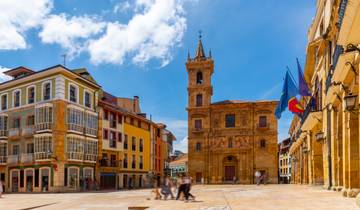
10 days
Spain – by Bike on the Camino del Nortepart 10 Days
- ✓ Comprehensive Asturias tour
- ✓ Expert local guides included
- ✓ All accommodation arranged
- ✓ Transportation provided
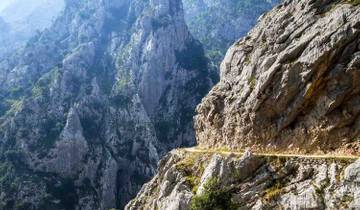
9 days
Hiking the High Trails of the Picos de Europa
- ✓ Comprehensive Asturias tour
- ✓ Expert local guides included
- ✓ All accommodation arranged
- ✓ Transportation provided
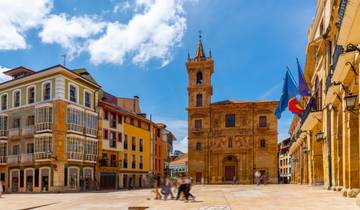
10 days
Spain – Hiking on the Camino del Norte 10 Days
- ✓ Comprehensive Asturias tour
- ✓ Expert local guides included
- ✓ All accommodation arranged
- ✓ Transportation provided

8 days
Spain – Asturias and Somiedo (8 days)
- ✓ Comprehensive Asturias tour
- ✓ Expert local guides included
- ✓ All accommodation arranged
- ✓ Transportation provided
Multi-day tour packages powered by TourRadar. Prices and availability subject to change.
Introduction: Gijón in Context
The Spanish north is a fundamentally different country from the Spain of package holidays and mass tourism. Gijón — known in Asturian as Xixón — sits on the Cantabrian coast of the Asturias region, which Spanish visitors long regarded as the nation’s most beautiful and least visited corner. International travelers are arriving in greater numbers now, but the city retains the unselfconscious character of a place that has not yet been shaped by the tourism industry’s expectations of what a Spanish destination should look and feel like.
Gijón’s modern identity was built on coal and steel. Its deindustrialization over the past four decades produced something rare: a Spanish city that reinvented itself through culture and quality of life rather than through tourism infrastructure. The result is a city where world-class museums are free, where restaurants are priced for residents rather than visitors, where the beaches are used by families and surfers rather than sunbed operators, and where the evening paseo ends at a sidrería rather than a cocktail bar aimed at tourists.
The city covers 182 square kilometers along a bay flanked by two beaches — the long Playa de San Lorenzo on the east and the shorter Playa de Poniente on the west — with the Cimadevilla peninsula jutting between them into the Cantabrian Sea. On that peninsula, beneath the flagstones in front of the church of San Pedro, lie the best-preserved Roman thermal baths in northern Spain. The Roman town of Gigia, established in the late first century AD, occupied this strategic promontory. Seventeen centuries of building have accumulated around it, leaving traces of every era in the compact streets of what is now Gijón’s most visited neighborhood.
The city is also the birthplace of Gaspar Melchor de Jovellanos (1744-1811), the Enlightenment jurist, economist, and philosopher whose advocacy for education reform, economic modernization, and the arts reshaped Spanish intellectual life. His legacy is threaded through the city in the Museo Casa Natal de Jovellanos, the Teatro Jovellanos, and the Laboral Ciudad de la Cultura — the spectacular 270,000-square-meter complex built as a labor university during the Franco era, now repurposed as a center for contemporary art, film, and creative industries.
For the 2026 traveler, Gijón presents a compelling proposition: genuine cultural depth at prices well below the Spanish average, direct access to the Picos de Europa mountains, a food culture built around Asturias’ outstanding regional cuisine, and a local population for whom tourism is still a reasonably novel economic fact rather than the dominant reality of city life.
Why Visit Gijón in 2026: The Case for Asturias’ Coastal Capital
Gijón earns a 2026 visit on four distinct merits: an extraordinary concentration of free cultural attractions, one of Spain’s finest regional cuisines, immediate proximity to both the Picos de Europa and the Asturian coast, and travel costs that make most other popular Spanish destinations look expensive by comparison.
The free museum proposition is genuinely remarkable. Gijón’s city council funds a network of twelve cultural sites requiring no admission — Roman ruins, folk ethnography, railway heritage, fine art collections, and industrial history all accessible without charge. For travelers accustomed to European museum pricing where €10-20 per attraction is standard, an entire day of cultural programming at zero cost represents a meaningful financial saving and a refreshing alternative to the transactional nature so often accompanying cultural tourism.
The food culture is equally compelling. Asturian cuisine draws on an extraordinary larder: Atlantic seafood from the Cantabrian coast (pixín/monkfish, merluza/hake, nécora/shore crab, oricios/sea urchins), mountain dairy products (Cabrales and other protected-designation blue cheeses), fabas (the large white beans of fabada asturiana), and the cachopo — a breaded veal escalope stuffed with cured ham and local cheese that is simultaneously the most indulgent and most characteristic dish in the regional canon. All of this reaches the table in sidrerías where a full three-course menú del día with natural cider rarely exceeds €16.
For outdoor enthusiasts, Gijón functions as the coastal gateway to Picos de Europa National Park (approximately 80 kilometers south), the Sella river canyon (home to Europe’s most celebrated annual canoe descent), and the Ruta del Cantábrico coastal trail. The combination of urban beach life, Roman archaeology, mountain day trips, and Asturian gastronomy in a single itinerary is practically unmatched in Spain.
The value proposition rounds out the case. Gijón hotel prices average 30-40% below Madrid and 40-50% below Barcelona and San Sebastián. The menú del día costs €10-16. Twelve municipal cultural sites cost nothing. These facts together make Gijón one of the most affordable destination cities in western Europe relative to the quality and depth of experience on offer.
Getting to Gijón in 2026: Flights, Trains, and Bus Connections
Gijón connects to the wider transport network through Asturias Airport (OVD), Renfe intercity rail, and ALSA long-distance coaches. The fastest connection from Madrid takes under four hours by train with advance booking; the cheapest connection on any route is the airport ALSA bus at €9.
By Air: Asturias Airport (OVD)
Asturias Airport (IATA: OVD) sits 42 kilometers northwest of Gijón near Avilés. Iberia, Vueling, Air Nostrum, and seasonal European low-cost carriers operate routes from London Stansted, Amsterdam Schiphol, Paris CDG, Zürich, Munich, Dublin, and all major Spanish cities. Domestic connections from Madrid and Barcelona run six or more daily services per route during summer, making them the standard approach for transatlantic travelers arriving via the Spanish hubs.
From the airport to Gijón, ALSA runs a direct bus service with departures every 30 minutes. The fare is €9 per ticket; the journey takes approximately 45 minutes to Gijón’s central bus station. The bus stop sits immediately outside the arrivals hall — no wayfinding required. Tickets are available at airport vending machines, the ALSA desk, and through the ALSA app and website. Check the CTA (Consorcio de Transportes de Asturias) search tool for current schedules before traveling.
A metered taxi from the airport to central Gijón takes 35-40 minutes and costs approximately €60-70. Pre-booked private transfers run €70-85 for a sedan accommodating up to four passengers. The taxi is worth the premium for late-night arrivals, early-morning departures, or travelers with significant luggage. Groups of three or more splitting the fare make the taxi economically comparable to the bus. Check official regional taxi fare schedules for current regulated rates.
By Train: Renfe Services to Gijón
Renfe operates intercity services to Gijón-Sanz Crespo station from Madrid Chamartín. Alvia trains cover the 383-kilometer route in approximately four hours; Intercity services take five to six hours. Advance Básico fares start at €15-30 when booked weeks ahead; same-day standard fares run €60-90. Renfe’s AVLO low-cost service offers promotional fares from €15 on this route when booked far in advance. There are four daily departures in each direction. Book through renfe.com for the best prices, up to three months ahead of travel. From Barcelona, the journey requires a connection in Madrid and takes seven or more hours — flying or taking the bus is more practical from Catalonia.
Within Asturias, Renfe Cercanías connects Gijón with Oviedo (30 minutes, from €2) and Avilés (45 minutes, from €2). These regional commuter trains run frequently throughout the day and make both the regional capital and the Niemeyer cultural complex in Avilés natural day trips from Gijón.
By Bus: ALSA Long-Distance Coaches
ALSA coaches connect Gijón with Madrid in approximately six to seven hours at €50-55 one-way from Gijón’s central bus station. Evening overnight services from Madrid (departing around 23:00-00:30, arriving Gijón around 07:00-08:00) allow travelers to save on one night’s accommodation. From Bilbao, buses run in approximately three and a half to four hours at €25-35. ALSA advance booking through the website or app yields fares 20-30% below walk-up window prices. The bus station is adjacent to the train station; both sit in the western section of the city center, fifteen minutes’ walk from Cimadevilla.
By Car
Gijón is well connected by the A-8 Autovía del Cantábrico (east-west coastal motorway) and the A-66 Ruta de la Plata (south from Oviedo toward Salamanca and Seville). Driving from Madrid takes approximately four hours via the A-66 through Oviedo. A car adds significant value for exploring the Asturian coast, inland villages, and Picos de Europa but creates parking friction in the city. Central paid car parks charge €15-20 per day. Street parking near Cimadevilla and the beach is scarce from July through August; plan to park in a garage rather than circling.
Getting Around Gijón 2026: Transport Within the City
Central Gijón rewards walkers: the Cimadevilla quarter, Playa de San Lorenzo, Plaza Mayor, and the main museum cluster connect on foot from any hotel in the central districts. EMTUSA urban buses serve outlying neighborhoods efficiently at €1.25 per ride.
Walking
The Cimadevilla peninsula measures roughly 600 meters across at its widest. The walk from Plaza Mayor to the Elogio al Horizonte viewpoint at the peninsula’s tip takes ten minutes at an easy pace. The full 1.5km length of Playa de San Lorenzo — from the Cimadevilla headland to the church of San Lorenzo — takes twenty-five minutes. From the city center to the Bioparc Acuario on Playa de Poniente takes thirty minutes along the seafront promenade. The walk from the center to the Parque de Isabel la Católica (location of the Museo del Pueblo de Asturias and the Parador) takes fifteen to twenty minutes. For most visitors based in the center or Cimadevilla, the first full day of sightseeing requires zero bus rides.
EMTUSA Urban Buses
EMTUSA operates eighteen regular lines and four night services (búhos) throughout Gijón. The single fare is €1.25 per ride; all tickets include free transfers between lines within 45 minutes. Lines 1, 2, and 4 cover the main areas of tourist interest. The EMTUSA app provides real-time arrivals at all stops. The Laboral Ciudad de la Cultura (4km from the center) and the Villa Romana de Veranes require bus connections; both are served by EMTUSA lines with stops clearly signed at the central hubs. Children under 17 travel free on EMTUSA with the Tarjeta Ciudadana (resident card); visiting children pay the standard €1.25 adult fare.
Taxis and Rideshare
Taxis in Gijón are plentiful and reasonably priced. A metered journey from the center to the Laboral Ciudad de la Cultura costs approximately €8-12. Within the central areas, short rides between neighborhoods run €5-8. Uber operates in the city at pricing comparable to taxis. Late-night returns from the Cimadevilla bar area or Paseo de Begoña run €5-8 within the central zone.
Cycling and Shared Scooters
Gijón has expanded its protected cycle network considerably along the seafront and connecting the main neighborhoods. The city operates a public bicycle-sharing system with docking stations near both beaches, the central parks, and the main transport hubs. Shared electric scooters from operators including Tier serve shorter urban hops. Cycling the full seafront promenade from Poniente to San Lorenzo and back covers approximately six kilometers in thirty minutes and counts as one of the most pleasant urban rides in northern Spain.
When to Visit Gijón 2026: Seasons, Weather, and Events
The ideal visiting window for Gijón runs from late May through mid-October, with June and September as the strongest shoulder-season months. Summer peaks in July-August with a corresponding surge in prices, festivals, and crowds; winter is wet and quiet but offers the city at its most authentically local.
Spring in Gijón 2026 (April-June)
April brings warming temperatures (highs of 15-18°C) and significantly reduced tourist numbers. The Asturian countryside enters its greenest phase following winter rainfall, making April and May the best months for day trips toward the coast and mountain foothills. Hotel rates in spring run 25-35% below August levels, with walk-in availability reliable at all but the most popular properties. May and June push temperatures toward 18-22°C — warm enough for the beach on fine days, perfect for museum and historic quarter visits every day. June increasingly serves as a sweet spot combining consistently pleasant weather with manageable visitor numbers.
Summer in Gijón 2026 (July-August)
Summer is peak season across all metrics. July and August bring maximum temperatures of 22-25°C and up to 7.5 sunshine hours per day in July. Both main beaches operate with full lifeguard service from late June through early September. Hotel prices climb 30-50% above shoulder rates; popular properties fill weeks or months ahead. The Semana Grande (Big Week) of 2026 runs August 9-16. Named for the Begoña festival, it fills the city with free nightly concerts at the Plaza Mayor and Playa de Poniente stages featuring national and international artists, a Noche de los Fuegos fireworks spectacular over the bay on August 14, and the traditional Danza Prima and Restallón folk ceremony on the beach on August 15. The Feria de Muestras de Asturias — Asturias’ largest trade and consumer fair — runs throughout most of August at the Luis Adaro exhibition grounds. Book accommodation for Semana Grande at minimum two to three months ahead; last-minute rooms in any category are effectively unavailable during festival week.
Autumn in Gijón 2026 (September-October)
September maintains summer warmth (average highs of 18-21°C) with noticeably fewer tourists once Spanish school holidays end in the first week of September. Ocean temperatures peak in late August and September — making September the best month for swimming — before cooling through October. Hotel rates return to shoulder-season levels from the second week of September. October cools to 15-18°C highs with increasing rainfall but remains pleasant for cultural visits, coastal day trips, and long evenings in the sidrerías. The Gijón International Film Festival, founded in 1963 and one of Spain’s most respected independent cinema events, takes place each November across venues including the Teatro Jovellanos, drawing filmmakers and cinephiles from across Europe.
Winter in Gijón 2026 (November-March)
Gijón’s Atlantic climate delivers regular winter rainfall — November averages 163mm across 16 rainy days, the wettest month of the year. Temperatures drop to highs of 10-15°C with occasional colder spells. Tourist infrastructure scales back in winter: some smaller restaurants reduce hours, coastal excursion operators pause, and the beaches belong to dog walkers, winter surfers, and local joggers. Hotels reach their lowest annual prices, often 40-50% below August rates, and the city returns to resident rhythms. Travelers seeking uncrowded museums, honest Asturian cooking at genuinely local prices, and an entirely unmanufactured city atmosphere find winter Gijón deeply satisfying — provided they pack a quality waterproof jacket.
Top Attractions and Things to Do in Gijón 2026
Gijón’s attractions span Roman archaeology, folk ethnography, industrial heritage, contemporary art, ocean beach life, and natural landscape day trips. Almost all municipal sites are free; the Bioparc Acuario is the only significant paid attraction in the city.
Cimadevilla: The Historic Peninsula (FREE)
The Cimadevilla peninsula is Gijón’s oldest neighborhood, occupying the headland that juts north into the Cantabrian Sea between the two main beaches. A dense network of narrow streets, whitewashed fishermen’s houses, small plazas, and bar-lined alleys covers the peninsula; the original fishermen’s quarter at its base preserves stone structures from the 18th and 19th centuries. The summit of Cimadevilla offers panoramic views across both bays, the commercial port, and — on clear days — the first ridges of the Cantabrian mountains to the south. The Elogio al Horizonte (In Praise of the Horizon), a monumental steel sculpture installed in 1990 by Basque artist Eduardo Chillida, stands at the highest point overlooking the open sea and serves as the symbolic landmark of contemporary Gijón. Access to all of Cimadevilla and its viewpoints is free and unrestricted at all hours.
Termas Romanas de Campo Valdés (FREE)
The Roman thermal baths beneath the plaza in front of the Cimadevilla church of San Pedro are the most important Roman site in northern Spain, constructed in the late first and early second centuries AD during the Flavian-era expansion of the town of Gigia. The museum, opened in 1995, uses suspended walkways, interactive displays, scale models, and the original preserved hypocaust underfloor heating system to narrate Roman bathing culture and the daily life of Gigia’s inhabitants. Fragments of original mosaic floors and wall paintings survive in situ. The entrance descends underground via a signed staircase in front of the church — easy to miss at street level. Open Tuesday through Friday 9:30-14:00 and 17:00-19:30; Saturday, Sunday, and public holidays 10:00-14:00 and 17:00-19:30. Closed Mondays and on January 1, Carnival Tuesday, August 15, and December 24, 25, and 31. Admission free. Check museos.gijon.es for any seasonal hour adjustments.
Muséu del Pueblu d’Asturies (FREE)
The Museum of the People of Asturias, set within the Parque de Isabel la Católica, ranks as one of the finest open-air ethnographic museums in Spain. Traditional hórreos (stone and wood granary structures elevated on stilts), pallozas (round thatched stone houses of Atlantic Celtic tradition), reconstructed farmsteads, cider presses, forges, and maritime equipment occupy a large outdoor campus alongside indoor galleries documenting Asturian rural and maritime life across centuries. The museum also manages the Fototeca de Asturias (regional photographic archive) and the Archivo de la Tradición Oral. A connected section — the Museo de la Gaita — examines the Asturian bagpipe tradition and Celtic musical heritage across the Atlantic fringe. The park setting makes this a particularly relaxed visit combining genuine museum depth with open-air space suitable for all ages. Admission free.
Bioparc Acuario de Gijón (PAID — €19.50 adult)
The Bioparc Acuario on the Playa de Poniente seafront houses over 4,000 animals from 400 species across 60 freshwater and saltwater tanks representing twelve global ecosystems: the Cantabrian coast, Asturian rivers, the Atlantic, Pacific, and Indian Oceans, the Caribbean Sea, the tropical American rainforest, and African great lakes environments. Bull sharks, rays, sea eels, loggerhead sea turtles, moray eels, piranhas, axolotls, and jellyfish occupy the main display tanks; feeding demonstrations and interactive zones engage younger visitors across the full ninety-minute circuit. The aquarium also operates a seafront restaurant with sea views and daily menus. Admission in 2026: adults (15-64) €19.50, children (3-14) €11, seniors (65+) €12, children under 3 free. Check acuariogijon.es for current rates and any available advance booking discounts before visiting.
Laboral Ciudad de la Cultura
The Laboral complex — 270,000 square meters of neoclassical and rationalist architecture built between 1945 and 1956 as the Universidad Laboral, a boarding school for the children of Asturian coal and steel workers — is one of the most architecturally significant and historically charged buildings in Spain. The main structure by architect Luis Moya Blanco incorporates a towering clock tower visible kilometers away, a complete chapel, theater, sports grounds, and formal gardens within a campus that effectively constitutes a self-contained town. Its conversion into the LABoral Centro de Arte y Creación Industrial has made it a destination for contemporary art, technology, film, and digital creativity programming. The grounds, gardens, and architecture are free to explore; the art center charges varying admission for temporary exhibitions. Guided architectural tours depart from the main entrance; check laboral.org for current schedule. Located 4 kilometers south of the city center — accessible by EMTUSA bus or taxi.
Museo del Ferrocarril de Asturias (FREE)
The Railway Museum of Asturias, housed in the former FEVE narrow-gauge station and depot near Gijón-Sanz Crespo, preserves rolling stock, infrastructure, and documentation from the Asturian industrial railway system — the network of narrow-gauge lines that served the coal mines and connected the coastal ports. Steam locomotives from multiple eras, historic passenger coaches, mining railway wagons, maintenance equipment, and the architectural structure of the original station hall all contribute to one of the most complete regional railway collections in Spain. Admission free. Check museos.gijon.es for current opening hours.
Parque Arqueológico-Natural de la Campa Torres (FREE)
The Campa Torres archaeological park preserves the Castro de Noega — the Iron Age hill fort of the Cilúrnigos tribe, inhabited from the sixth or fifth century BC through the second century AD — on the western headland of Gijón Bay. Archaeological excavations have produced exceptional material evidence of active trade with Mediterranean and Atlantic commercial networks centuries before Roman arrival, including imported Greek and Phoenician ceramic vessels. The site sits within a natural coastal park offering sweeping views across the full arc of Gijón Bay; the combination of Iron Age archaeological context and dramatic Cantabrian seascape makes this one of the most memorable outdoor sites in the region. Admission free. Accessible by EMTUSA bus from the center.
Playa de San Lorenzo
Playa de San Lorenzo is Gijón’s primary urban beach: 1.5 kilometers of sandy Atlantic shore between the Cimadevilla headland and the church of San Lorenzo, backed by the Paseo del Muro de San Lorenzo promenade. Lifeguard service operates from late June through early September. Beach bars (chiringuitos) with full food and drink service open from May through September. The beach holds an excellent water quality rating from Spanish regional environmental authorities. Accessible beach infrastructure — including amphibious beach wheelchairs available free through the Red Cross service in summer — serves travelers with mobility needs. In the early mornings, the beach hosts yoga sessions, open-water swimmers, and surfers catching the Bay of Biscay Atlantic swell before the crowds arrive. Access free year-round.
Gijón Neighborhoods 2026: Where to Base Yourself
Gijón’s neighborhoods divide clearly by character. Staying in the central zone or Cimadevilla puts all major sights within walking distance and maximizes evening dining and bar options. Outlying neighborhoods offer more residential character and lower hotel prices at the cost of one additional bus ride or a ten-minute taxi to the historic core.
Cimadevilla
The historic peninsula district is the most atmospheric base in Gijón: oldest streets, closest proximity to the Roman baths and Cantabrian viewpoints, and the densest concentration of tapas bars, sidrerías, and terrace cafés within a few blocks. Accommodation is limited — mostly boutique hotels and rental apartments — and commands a location premium. Rates run 15-25% above equivalent quality in the center district, a premium most visitors focused on historic atmosphere consider worthwhile. Nightlife noise in the lower streets is a consideration for light sleepers; upper Cimadevilla and the Santa Catalina hilltop are quieter.
El Centro (City Center)
The central district around Plaza Mayor and the commercial streets of Corrida and Uría is the practical base for most first-time visitors. Hotels range from budget pensions to 4-star business hotels; the main transport hubs (train and bus stations) sit within fifteen minutes’ walk; the beach is ten minutes east; Cimadevilla is five minutes west. The diversity of accommodation quality and price, restaurant variety, and ease of movement to all city neighborhoods make El Centro the default recommendation for those without a specific preference for beach or old-town immersion.
Begoña
The Begoña district east of the center and behind Playa de San Lorenzo combines residential character with proximity to the beach and the lively Paseo de Begoña — one of Gijón’s main evening promenade streets, lined with sidrerías, terraces, and cafés. Hotels here tend to mid-range pricing; the location suits travelers who prioritize beach access alongside cultural sightseeing. The walk from Begoña to Cimadevilla takes fifteen to twenty minutes along the seafront promenade.
El Llano and Poniente
El Llano is a residential neighborhood southwest of the center known to locals as the district with the highest concentration of traditional sidrerías in the city. Less architecturally interesting than the center or Cimadevilla, it compensates with genuine neighborhood character and restaurant prices calibrated for residents rather than visitors. Poniente, to the west of Cimadevilla and fronting Playa de Poniente, hosts the Bioparc Acuario and is oriented toward beach access in summer. An EMTUSA bus ride from either neighborhood to the center takes under ten minutes.
Where to Stay in Gijón 2026: Accommodation by Budget
Gijón’s accommodation market spans hostels and pensions, mid-range beach and business hotels, and a small luxury tier anchored by the Parador. All categories price well below equivalent properties in Madrid or Barcelona, with the notable exception of Semana Grande week when rates across all tiers reach their annual maximum.
Budget Accommodation in Gijón 2026 (€25-75 per night)
The budget sector in Gijón is serviceable rather than extensive. The Boogalow Hostel occupies a central location and offers dorm beds from €27-30 per night with a social atmosphere suited to solo travelers and backpackers. The Gijon Surf Hostel caters to the surf community near Playa de Poniente with comparable dorm pricing. Budget hotels and pensiones throughout the center and Begoña offer private en-suite rooms from €50-75 per night in low-to-mid season, rising to €75-100 during peak summer. Hotel Alda Centro Gijón, Hotel San Miguel Gijón, and the Hostal San Félix receive consistent positive reviews for the budget category. Book all budget properties in advance for July and August — and at minimum two to three months ahead for Semana Grande week (August 9-16), when even the cheapest beds in the city sell out completely.
Mid-Range Hotels in Gijón 2026 (€80-140 per night)
The mid-range category delivers the strongest value in Gijón’s accommodation market. Hotel Asturias, a listed building on Plaza Mayor overlooking the main square and steps from both Cimadevilla and the beach, stands as the most distinctive mid-range option in the city; double rooms run €80-130 outside peak season and the location is hard to improve upon. The NH Gijón, Abba Playa Gijón (beachfront on San Lorenzo), Hotel Zentral Gijón Rey Pelayo, Hotel Hernán Cortés, and Hotel Príncipe de Asturias complete the quality mid-range tier at €90-140. Breakfast is frequently not included in base rates at this level; opt for a nearby café rather than the hotel’s own breakfast service for the same quality at half the cost (hotel breakfast €8-15 per person; café equivalent €3-5).
Luxury Hotels and the Parador in Gijón 2026 (€130-250+ per night)
The Parador de Gijón, occupying a meticulously restored 19th-century water mill within the Parque de Isabel la Católica, is the most distinctive luxury choice in the city. Rates run €150-220 per night; the park setting offers a markedly quieter base than the center without sacrificing walkable distance to attractions. The Silken Ciudad Gijón (4-star, full spa, pool, conference facilities) and the Oca Palacio de la Llorea Hotel & Spa represent the upper tier of city-center luxury at comparable rates. The El Môderne Hotel (boutique, Cimadevilla location) and Munna Hotel Boutique offer smaller-scale luxury with personality, strong location scores, and rates that compete favorably with the larger properties. All luxury properties implement seasonal pricing; Semana Grande rates at this tier can reach 50-60% above baseline. Check hotel websites directly as well as booking platforms — direct booking frequently yields better included amenities, if not always better room rates.
Seasonal Pricing Patterns 2026
Gijón accommodation follows a clear seasonal curve. Winter (November-March, excluding Christmas and New Year) represents the lowest point — mid-range doubles available from €60-70, hostels at minimum rates. Spring and autumn deliver good-weather conditions at 25-40% below August pricing. July marks the start of the rise; August, particularly Semana Grande week, reaches the annual maximum with no meaningful last-minute availability in popular properties. The rule of thumb: the better the weather window, the further ahead to book and the higher the rate to expect.
Gijón Food and Drink 2026: Asturian Cuisine and Sidra Culture
Asturian cuisine is among the most distinctive in Spain — built on Atlantic seafood, mountain dairy, robust bean stews, and above all, natural cider. Gijón’s food culture is accessible and affordable, with the city’s working-class roots keeping restaurant pricing honest. The richest eating is found in the neighborhood sidrerías of El Llano and Begoña rather than in the tourist-adjacent spots near Cimadevilla’s waterfront.
The Menú del Día: Gijón’s Best-Value Meal
The menú del día remains the cornerstone of eating out in Gijón. Served Monday through Friday from 13:00 to 16:00 at virtually every sidrería and traditional restaurant, it delivers three courses — starter, main, dessert — plus bread, a drink (often a bottle of natural sidra at the table), and coffee for €10-16. Quality ranges from solid working lunch at the lower end to genuinely excellent Asturian cooking at €14-16. The densest concentrations of quality menú del día options are in El Llano, along the Paseo de Begoña, and in the streets behind Cimadevilla’s tourist-facing frontage. Weekend menus at the same establishments run €16-26 and are fuller productions, but the weekday format represents the best value in the entire Spanish dining calendar.
Essential Asturian Dishes
Fabada asturiana — a slow-cooked stew of large white fabes beans with morcilla (blood sausage), chorizo, and lacón (cured pork shoulder) — is the most emblematic Asturian dish and appears on virtually every traditional menu year-round. Pixín a la sidra (monkfish braised in cider sauce) showcases the Cantabrian seafood larder at its most typical. Cachopo — two large breaded veal escalopes encasing a filling of cured ham and local cheese, pan-fried until golden — is substantial enough to serve two people sharing as a main course; some sidrerías offer cachopo con queso Cabrales, adding the region’s most famous blue cheese to the filling. Oricios (sea urchins) appear from September through April, served raw or au gratin — a Cantabrian delicacy costing €8-15 for a portion at quality sidrerías. Arroz con leche asturiano, a baked rice pudding caramelized on top, closes virtually every traditional Asturian meal.
Sidra Culture: The Overhead Pour
Asturian natural cider is produced by fermenting apple juice without added carbonation, resulting in a dry, cloudy, lightly tannic drink with pronounced fruit character — entirely different from British or French sweetened ciders. The key to drinking it correctly is l’escanciado: the barman holds the bottle at full arm’s height above the head while the glass is held at thigh level, allowing a thin stream to fall the full vertical distance and oxygenate the cider on impact. The brief foamy head that forms must be consumed immediately, before the aeration effect dissipates. Each measure poured (a culete) is small; the drinking pace at a sidrería is faster than it appears from outside. Locals perform l’escanciado with casual precision; visitors’ attempts provide light entertainment for the bar — no one minds.
Bottles of natural sidra cost €3.50-5 at a sidrería. The major Asturian cider houses represented in Gijón include El Gaitero, Cortina, and Vallegón. Espichas — informal events held at cider presses when a fresh barrel is tapped and food served communally — are a seasonal tradition from January through April and provide the most authentic sidra experience available to visitors. The July Certamen Internacional de Sidra Natural, held in Gijón, brings together ciders from across the Atlantic cider-producing world for public tastings and competitions.
Breakfast and Coffee
Gijón’s café culture follows standard Spanish patterns. A café con leche (espresso with equal hot milk) and a tostada (toasted bread with olive oil or tomato and olive oil) costs €3-5 at a local bar. Churros con chocolate — the fried dough fritter combination — appears at specialist churrerías in the center. Hotel breakfasts at mid-range properties run €8-15 per person; the nearest neighborhood café delivers equivalent quality at €3-5. Coffee at €1.50-2 per cup is one of the most consistent good-value items in the entire Spanish economy.
Evening Dining in Gijón
Beyond the menú del día, Gijón’s restaurant scene extends to full evening dining from €15-35 per head at mid-range sidrerías and seafood restaurants. The best-value evening meals are in El Llano and Begoña rather than in the tourist-facing sections of Cimadevilla or the central plaza zone. A full sidrería dinner — starters shared at the table, main courses, a bottle or two of natural cider — runs €20-35 per person. Seafood-focused restaurants specializing in Cantabrian catch (nécoras, oricios, merluza en salsa verde) run €35-60 per person for a full meal. The city’s most acclaimed kitchens, serving contemporary Asturian cuisine with premium ingredients, price at €60-80+ per person.
Daily Budget Planning for Gijón 2026: What Everything Costs
The following breakdowns cover all three visitor tiers per person per day, assuming two travelers sharing hotel accommodation. Hotel rates are divided by two before any calculation. All figures include accommodation (per-person share), meals, local transport, and typical attraction spending for that tier. Lower-end figures represent shoulder-season (May-June, September-October) visits; upper-end figures represent peak summer and Semana Grande spending.
Budget Daily Costs in Gijón 2026
Budget travelers spending on hostel dorms or the cheapest private rooms, visiting free museums, eating the menú del día at lunch, and tapas-style in the evenings spend €55-85 per person daily. Components: accommodation €27-35 (hostel dorm bed or cheapest private room per person — already per-person rates requiring no division), breakfast €3-5 (café con leche and tostada), lunch €10-13 (menú del día with sidra), dinner €10-15 (tapas and a bottle of cider at a local bar), local transport €2.50-5 (EMTUSA bus rides for out-of-center sites), and miscellaneous €2-7 (coffee, snacks, incidentals). Gijón’s twelve free municipal museums eliminate the standard European attraction budget; adding one Bioparc Acuario visit (€19.50) averaged across a 5-day stay adds approximately €4 per day. Total: approximately €55-85 per person daily.
Mid-Range Daily Costs in Gijón 2026
Mid-range travelers sharing a 3-star hotel, eating quality menús del día at lunch and full sidrería dinners in the evenings, and mixing free museums with occasional paid tours or the Bioparc spend €100-150 per person daily. Hotel €80-130 per room ÷ 2 = €40-65 per person. Breakfast €7-10 (quality café or light hotel breakfast). Lunch €13-16 (quality menú del día). Dinner €22-28 (full sidrería with starters and a shared bottle). Transport €5-8 (EMTUSA plus occasional taxi). Attractions €5-10 (Bioparc averaged across stay, one or two paid guided tours). Incidentals €8-10. Total: approximately €100-150 per person daily (two sharing mid-range hotel).
Luxury Daily Costs in Gijón 2026
Luxury travelers staying at the Parador, Silken Ciudad Gijón, or equivalent, dining at the best Asturian seafood and contemporary restaurants, and moving primarily by taxi or private transfer spend €180-300 per person daily. Hotel €120-200 per room ÷ 2 = €60-100 per person. Breakfast €12-20 (hotel buffet or premium café). Lunch €25-40 (quality seafood or contemporary Asturian restaurant). Dinner €40-70 (top-tier Asturian dining). Transport €12-20 (taxis for all journeys, day trip car rental). Attractions €15-25 (private guided tours, premium cultural events). Incidentals €15-25 (quality wine and spirits, premium cafés, gifts). Total: approximately €180-300 per person daily (two sharing luxury hotel).
Sample Cost Summary for a 5-Day Gijón Trip
A 5-day Gijón visit per person costs approximately:
- Budget (hostel or basic hotel, free museums, menú del día meals, EMTUSA transport): €275-425 per person
- Mid-range (3-star hotel shared, sidrerías, Bioparc, day trip to Oviedo by Cercanías): €500-750 per person
- Luxury (4-5-star hotel, seafood restaurants, taxis, guided tour of Laboral): €900-1,500 per person
Fixed Individual Costs in Gijón 2026
- EMTUSA urban bus: €1.25 per ride (free transfer within 45 minutes)
- ALSA airport-Gijón bus: €9 per ticket
- Taxi: airport to city center approximately €60-70; within center €5-8; center to Laboral €8-12
- Renfe Cercanías to Oviedo: from €2 each way
- Renfe Cercanías to Avilés: from €2 each way
- Menú del día: €10-16 (weekday); €16-26 (weekend)
- Bottle of natural sidra: €3.50-5
- Café con leche: €1.50-2
- Bioparc Acuario (adult 15-64): €19.50
- Bioparc Acuario (child 3-14): €11
- Bioparc Acuario (senior 65+): €12
- All 12 municipal museums: €0
Money-Saving Strategies for Gijón 2026
Gijón is already among Spain’s most affordable destination cities. Several specific approaches stretch the budget further without compromising the depth or quality of the experience.
Build the Itinerary Around the Free Museum Network
Gijón’s twelve free municipal museums provide multiple full days of substantive cultural programming at zero entry cost. Structure the itinerary around the Termas Romanas, Museo del Pueblo de Asturias, Museo del Ferrocarril, Casa Natal de Jovellanos, Campa Torres, and Villa Romana de Veranes before adding paid experiences. These institutions alone fill three to four days of genuine engagement. The Bioparc is worth adding once per stay; book online in advance through acuariogijon.es for any available discount over the taquilla rate.
Take the Airport Bus, Not a Taxi
The €9 ALSA airport bus saves a solo traveler €51-61 over a standard taxi for the same 45-minute journey. For two travelers sharing a taxi, the bus saves €42-52 in combined fares (€21-26 per person) compared to a metered €60-70 taxi. The bus is comfortable, frequent, runs until late evening, and deposits passengers directly at the central bus station. Reserve the taxi option for very late-night arrivals or when traveling with very young children or significant mobility equipment.
Eat the Menú del Día Every Weekday Lunch
The weekday menú del día at €10-16 is the best food value in Spain. Three courses plus drink plus bread for less than a simple tourist-area sandwich and coffee costs almost anywhere in northern Europe. Concentrating on the menú del día for lunch and lighter tapas-bar eating for dinner keeps total daily food spending at €20-30 per person while delivering genuinely excellent Asturian cuisine. Most of the best menús are in the neighborhood sidrerías of El Llano and the streets behind Cimadevilla — not in the restaurant-row places visible from the beach promenade.
Visit in Shoulder Season
A mid-range hotel room that costs €130 per night during Semana Grande week costs €80-90 in October and €70-80 in November. Shoulder-season savings on accommodation alone run €150-250 over a 5-day stay for a couple in a 3-star hotel. The weather in May, June, September, and October is perfectly good for the full range of Gijón activities; the beach, museums, day trips, and sidrería evenings are all available without the August crowds or prices.
Travel the Asturian Rail Network
Renfe Cercanías trains connect Gijón with Oviedo (30 minutes, from €2) and Avilés (45 minutes, from €2) for less than a coffee. A day trip to Oviedo — including the UNESCO pre-Romanesque churches and the Ensanche dining district — costs €4 in Cercanías fares return per person. The same logic applies to coastal train connections toward Villaviciosa and Ribadesella. Substituting Cercanías travel for taxis or hired cars on regional day trips saves €30-60 per excursion.
Drink Sidra Rather Than Wine or Beer
A bottle of natural sidra at €3.50-4, shared between two people in the local manner, costs €1.75-2 per person — less than half the price of wine by the glass and often less than bottled beer. The experience of l’escanciado service at a traditional chigre is simultaneously Gijón’s best-value and most culturally significant drinking experience. Make the sidra bars of El Llano and Begoña the primary evening destination rather than the tourist-facing café terraces around Plaza Mayor or the Cimadevilla waterfront, and evening entertainment costs drop significantly.
Practical Information for Gijón 2026: Safety, Connectivity, and Essentials
Safety in Gijón 2026
Gijón is a safe city by European standards. Standard urban precautions apply: keep valuables out of sight on the beach during summer, do not leave bags unattended on San Lorenzo, and be alert to the higher pickpocket density in heavily crowded areas during Semana Grande week. The Cimadevilla bar district is lively until very late on weekend nights; standard late-night street awareness applies in that context. Beach safety is actively managed: lifeguard service operates on both main beaches from late June through early September, and the flag warning system (green/yellow/red/purple) is taken seriously by both lifeguards and local bathers. The Cantabrian Atlantic carries strong currents at certain beaches; swim only at flagged, supervised sections and observe red-flag conditions without exception.
Language
Spanish (Castilian) is the dominant language in all contexts. Asturian (bable) appears on some signage, cultural materials, and menus — it is a Romance language closely related to Castilian, and mutual intelligibility is high for anyone who speaks Spanish. English is spoken to a functional level at hotel front desks, the main tourist offices, and the most internationally oriented restaurants and attractions. At neighborhood sidrerías, local food markets, transport kiosks, and most bars, Spanish is the only working language. Learning basic food and hospitality vocabulary in Spanish — ordering, thanking, asking for the bill, common dishes — improves both the practical experience and the warmth of interaction with local staff considerably.
Tourist Information
Gijón’s main tourist office is on the Paseo del Muro de San Lorenzo (the seafront promenade behind Playa de San Lorenzo). English-speaking staff provide free city maps, current event listings, transport advice, and accommodation guidance. A second seasonal office operates in Cimadevilla. The official tourism website gijon.es/turismo carries English-language content including museum hours, event calendars, and transport information. The Gijón tourism app provides maps, attraction guides, and walk itineraries.
Connectivity in Gijón 2026
Mobile data coverage across Gijón and the wider Asturian region is excellent on all major Spanish networks (Movistar, Vodafone, Orange, MásMóvil). EU-resident travelers roam at domestic rates under European roaming regulations. Visitors from outside the EU find SIM cards with 30-day tourist data packages (€15-20 for generous data allowances) available at the airport, the main carrier shops on Corrida and Uría, and electronics retailers. Free public WiFi covers the seafront promenade zone, the tourist office, and an expanding network of civic spaces. Virtually all mid-range and above cafés, restaurants, and hotels provide WiFi; budget sidrerías in working-class neighborhoods sometimes do not.
Currency and Payments
Spain uses the Euro. Credit and debit cards (Visa, Mastercard) are accepted universally at hotels, supermarkets, major attractions, and most restaurants. A significant number of traditional sidrerías, local market stalls, and old-school chigres operate cash-only or strongly prefer cash; carry €30-50 in notes and coins at all times. ATMs (cajeros automáticos) are available throughout the center, at both transport hubs, and near all main beaches. Bank ATMs yield better exchange rates than exchange offices. Debit cards with no foreign transaction fee (Revolut, Wise, Starling) minimize costs for non-Eurozone travelers. Contactless payments and Apple Pay are accepted at most card-accepting establishments.
Opening Hours and Spanish Time
Gijón follows standard Spanish scheduling. Shops open 10:00-14:00 and 17:00-20:30 (larger chains and supermarkets remain open through the midday break). Restaurants serve lunch 13:00-16:00 and dinner 21:00-23:30. Municipal museums operate roughly 10:00-19:00 with some maintaining a midday closure (check museos.gijon.es for individual site hours, which vary by season). Banks are open Monday-Friday 8:30-14:00. Spain’s eating and socializing schedule runs later than most visitors expect: dinner before 20:30 marks you immediately as a tourist; 21:00-21:30 is the earliest realistic dinner reservation time at a local sidrería operating on Spanish social rhythms.
Medical and Emergency Services
Emergency services in Spain: 112 (combined emergency line for police, fire, and ambulance). The Hospital de Jove handles acute medical needs within Gijón. The Hospital Universitario Central de Asturias (HUCA) in Oviedo (30 minutes) is the main regional referral hospital. Pharmacies (farmacias, identified by a green cross) are found throughout the city center and are the first point of contact for minor ailments; a rota system ensures at least one pharmacy in each district remains open at night and on Sundays. EU citizens present their European Health Insurance Card (EHIC) or the UK equivalent (GHIC) for treatment within the public system. Visitors from outside the EU require comprehensive private travel insurance with medical coverage.
Day Trips from Gijón 2026: Oviedo, Picos de Europa, and the Asturian Coast
Gijón’s central position on the Asturian coast makes it an excellent base for day trips to the regional capital, coastal fishing villages, and the Picos de Europa — one of Western Europe’s most dramatic mountain landscapes, rising from sea-level to over 2,600 meters within 25 kilometers of the Cantabrian shore.
Oviedo (30km, 30 minutes by Cercanías)
Asturias’ compact regional capital is the essential first day trip from Gijón. Renfe Cercanías connects the two cities in 30 minutes at fares from €2 each way; ALSA buses and taxis are alternative options. Oviedo’s central achievement is its cluster of pre-Romanesque churches: Santa María del Naranco, San Miguel de Lillo, and San Julián de los Prados date from the 9th century and represent the finest surviving examples of early medieval Asturian architecture anywhere, inscribed on the UNESCO World Heritage List. The cathedral of San Salvador and its Cámara Santa — holding extraordinary early medieval gold- and silverwork including the Cross of the Angels (808 AD) and the Cross of Victory (908 AD) — anchor the medieval core. The Ensanche district south of the old town concentrates the city’s best restaurants and the covered Fontán market. The famous Woody Allen sculpture on the Calle Milicias Nacionales marks the filmmaker’s affection for Oviedo (“a magical city,” he said in his 1997 Golden Globe acceptance speech). Allow a full day; the pre-Romanesque churches require a separate excursion to the northern hills of Monte Naranco.
Avilés and the Centro Niemeyer (25km, 30-45 minutes)
Avilés reinvented its industrial waterfront with the Centro Niemeyer, the last major completed work of Brazilian architect Oscar Niemeyer, opened in 2011 when the architect was 103 years old. The complex — a white dome auditorium, a multipurpose tower, and a wide sculpted plaza oriented toward the estuary — is both architecturally significant and accessible (exterior and public spaces free; exhibition programming carries varying admission). Avilés’ own medieval old town, centered on the arcaded Plaza de España and its surrounding Romanesque-Gothic churches, is among the best-preserved historic centers in Asturias and sees only a fraction of the visitors that Oviedo and Gijón attract. The combination of avant-garde architecture and medieval street heritage in a single day trip is unusually compelling. Cercanías from Gijón takes 45 minutes at fares from €2.
Picos de Europa National Park (80-90km, 1.5-2 hours by car)
The Picos de Europa National Park, Spain’s third-largest at 67,455 hectares, rises from sea-level to 2,648 meters (Torre de Cerredo) within 25 kilometers of the Cantabrian coast, creating one of the most spectacular transitions between maritime and alpine environments in Europe. The Garganta del Cares — a 12-kilometer canyon hike following a water channel blasted through sheer limestone gorge walls with 500-meter vertical drops — is the park’s signature walk, departing from the village of Poncebos and taking approximately four hours return. The Naranjo de Bulnes (2,519 meters), a freestanding limestone tower visible from much of the western massif, is the park’s iconic summit. Lake Enol and Lake Ercina on the high plateau above Covadonga offer a more accessible mountain landscape reachable by the road from Cangas de Onís. A rental car is the practical requirement for Picos day trips from Gijón; public bus services to Cangas de Onís exist but significantly limit flexibility in the park itself. Budget approximately €40-60 for a mid-size rental for a day trip including fuel.
Asturian Fishing Villages and the Coastal Route
The Cantabrian coastline east and west of Gijón preserves a succession of traditional fishing villages, headland viewpoints, and small beaches that represent the Asturian seascape at its most characteristic. Luanco (20km west) and Candás (18km west) are working fishing ports reachable by bus within thirty minutes, both retaining active fleets and genuinely local waterfront restaurants. Ribadesella (65km east) combines a well-preserved old town, the estuary mouth of the Sella river, and the Tito Bustillo cave — a Palaeolithic site with paintings 20,000 years old, inscribed under the UNESCO “Cave of Altamira and Palaeolithic Cave Art of Northern Spain” designation. Lastres, an improbably picturesque fishing village clinging to a cliff above its harbor, is visible from the coast road east of Villaviciosa and worth a brief stop. Villaviciosa itself — approximately 25km east of Gijón — is the capital of Asturian cider production and home to the 13th-century Romanesque church of Santa María de la Oliva. Eastern coastal day trips are most practical by car; the narrow-gauge FEVE railway offers a scenic but slow alternative to some coastal destinations.
Frequently Asked Questions About Gijón 2026
How many days does a first visit to Gijón require?
Three days covers the essential Gijón experience: Cimadevilla and the Termas Romanas on day one, the Museo del Pueblo de Asturias and the Laboral Ciudad de la Cultura on day two, Playa de San Lorenzo and the Bioparc Acuario on day three. Five days is the recommended minimum for travelers combining Gijón with a day trip to Oviedo and one to either the Picos de Europa or the Asturian coastal villages. A full week allows complete exploration of all twelve free municipal museums, the Campa Torres and Villa Romana de Veranes outlying sites, relaxed beach time, and multiple regional excursions without rushing any element of the itinerary.
Is Gijón a good destination for families with young children?
Gijón is an excellent family destination. Playa de San Lorenzo is supervised, gradually shelving, and safe for children in summer — the accessible beach wheelchair service through the Red Cross is available at no cost. The Bioparc Acuario at €11 per child (3-14) engages young visitors directly through twelve global aquatic ecosystems, shark tanks, and touch-pool elements. The Museo del Pueblo de Asturias, with its outdoor reconstructed farmsteads, traditional animals, and open park space, works for children who struggle with strictly indoor museum formats. The Campa Torres archaeological park combines outdoor coastal space with child-accessible storytelling about Iron Age life. Spanish restaurant culture is deeply child-friendly; bringing children to any restaurant at any hour draws warmth rather than tension.
Do restaurants in Gijón require advance reservations?
Reservations are essential for popular sidrerías during Semana Grande (August 9-16) and on summer weekends at the most-reviewed establishments. Outside peak season, walk-in availability at lunch is reliable, particularly before 13:30 or after 15:00. For the most popular sidrerías — Tierra Astur Poniente, La Galana, and comparable establishments — reserve three to seven days ahead for summer Saturday evenings. Neighborhood sidrerías in El Llano and Begoña operate without reservations under normal conditions year-round. Contact preferred restaurants directly by phone or through their websites rather than relying on third-party booking platforms, which sometimes have incomplete availability.
Can I visit Gijón and Oviedo on the same trip efficiently?
Yes — this is the standard Asturian itinerary and the most natural combination. Use Gijón as the primary base and visit Oviedo as a day trip on the 30-minute Cercanías train (from €2 each way). The cities are close enough that an Oviedo day trip requires no logistical preparation beyond checking the train times. Some travelers split their stay between both cities — Oviedo’s pre-Romanesque churches, the Ensanche restaurant district, and the Cámara Santa medieval treasury justify two nights minimum in the capital. A combined 7-10 day Asturias trip based across both cities, with additional days in the Picos de Europa and along the coast, represents one of the most complete northern Spain travel experiences available to 2026 visitors.
Is Gijón safe for solo travelers, including solo women?
Gijón is safe for solo travelers, including solo female travelers. Standard urban precautions — awareness in crowded festival contexts, the usual late-night street sense in bar districts — apply without any specific concern beyond what applies in any Spanish city of comparable size. The Spanish social culture of eating at the bar counter (mostrador) in sidrerías makes solo travel particularly natural: ordering at the bar, standing with a glass of sidra and a plate of tapas, is standard practice for locals and requires no social justification. The hostel scene provides a social base for budget solo travelers. The tourist office staff speak English and assist first-time solo arrivals with maps, itinerary planning, and transport logistics.
What is the Gijón Semana Grande and when does it take place in 2026?
The Semana Grande (Big Week) is Gijón’s biggest annual celebration, tied to the feast day of the Virgin of Begoña on August 15. In 2026, the main festival week runs August 9-16. The programming includes free nightly concerts by national and international artists at two outdoor stages (Plaza Mayor and Playa de Poniente), the spectacular Noche de los Fuegos fireworks display over San Lorenzo Bay on August 14, the traditional Danza Prima and Restallón folk dance ceremony on the beach on August 15, parades, markets, the Feria de Muestras consumer and trade fair, and a range of family and children’s events throughout the city. All concerts are free. Accommodation books out completely during festival week; reserve at minimum two to three months ahead, and expect to pay peak-of-peak rates across all hotel categories.
What Asturian food products can I take home from Gijón?
The most distinctive Asturian products for the journey home are: Cabrales (PDO blue cheese wrapped in chestnut leaves, available at the city’s covered markets and specialist food shops), bottles of natural sidra from major producers including El Gaitero and Cortina, Asturian mel (protected-designation honey from mountain beekeeping), carbayones (puff pastry filled with marzipan and almonds, the most iconic Asturian sweet), and casadielles (deep-fried or baked pastry with walnut filling). Cabrales travels best in its traditional chestnut-leaf wrapping kept cool; the stronger the cheese, the older and more potent the flavor. The supermarkets and delicatessen counters of El Corte Inglés and Mercadona offer genuine regional products at honest prices. Avoid generic “Spain” branded souvenir items near the tourist beaches.
What does a coffee and breakfast cost in Gijón in 2026?
A café con leche (espresso with equal hot milk) costs €1.50-2 at virtually every bar and café in Gijón. A tostada (toast with olive oil, or with tomato and olive oil) adds €1.50-2.50 to the coffee. The classic Asturian breakfast — café con leche and a freshly toasted sandwich of ham and cheese, served at the bar counter — costs €3.50-5 in total. Hotel breakfasts add a surcharge of €8-15 per person for what is rarely better than the neighborhood café version. The quality of everyday Spanish café culture — reliably good espresso, fresh bread, and efficient service at very modest prices — is one of the most consistent pleasures of any Spanish city, and Gijón is no exception.
Are there any additional taxes or hidden fees in Gijón accommodation in 2026?
Spain does not impose a national tourist accommodation tax, and Asturias has no regional tourist bed tax — unlike Catalonia and the Balearic Islands where per-night tourist taxes add €1-4 per person. Hotel rates displayed in Gijón are all-inclusive of IVA (the standard 10% VAT applied to accommodation in Spain), meaning the price shown at booking is the price charged at checkout without additions. Restaurant prices in Spain include IVA by law; no separate service charge is added automatically to the bill. Tips are appreciated but entirely discretionary: rounding up the bill or leaving €1-2 per person at a restaurant represents the local norm, not an obligation. Parking in the city center costs €1.50-2.50 per hour at surface meters or €15-20 per day in covered garages, and is the one materially significant additional cost for travelers arriving by car.
Is the Gijón cider tradition something tourists can participate in, or is it primarily a local experience?
The sidra culture in Gijón is open to visitors, enthusiastically so. Locals at a traditional chigre or sidrería welcome strangers ordering a bottle and attempting l’escanciado — the overhead pour — with a combination of amusement and genuine encouragement. The espicha format (open-barrel communal events, mainly January-April) provides the most immersive context but requires either a local contact or an organized experience. The Certamen Internacional de Sidra Natural in July opens public tasting sessions to all visitors. For practical access year-round: choose a sidrería in El Llano or Begoña over a tourist-facing spot near the beach, order a bottle of sidra natural rather than a beer, and ask the barman to pour it — the interaction that follows is the most reliably authentic social experience available to visitors in Gijón.