
Getting to Statue of Liberty 2026: Complete Transportation Guide
Reaching the Statue of Liberty in 2026 requires two distinct transportation stages: getting to a ferry departure point (Battery Park in Manhattan or Liberty State Park in New Jersey), then boarding official Statue Cruises ferries to Liberty Island. No alternative access exists—private boats cannot dock at Liberty Island, and all visitors must use the authorized ferry service regardless of how they reach departure points. This guide covers all aspects of transportation: subway routes to Battery Park, driving and parking options, taxi and rideshare services, the free Staten Island Ferry alternative, ferry schedules and operations, and step-by-step navigation from various starting points including airports, Manhattan hotels, and regional locations.
Key Takeaways
- Battery Park in Manhattan serves as the primary ferry departure point, accessible via multiple subway lines reaching the area in 25-35 minutes from midtown
- Liberty State Park in Jersey City provides alternative departure with free parking and less crowded boarding experience
- The Staten Island Ferry offers completely free views of the statue without requiring tickets or advance reservations
- Subway travel costs $2.90 per ride while taxis from midtown to Battery Park cost $20-35 depending on traffic
- All visitors to Liberty Island must use official Statue Cruises ferries departing from Battery Park or Liberty State Park—no private boat access exists
- Arrive 30-45 minutes before scheduled ferry departure time to allow for security screening and boarding procedures
Introduction: Understanding Transportation to Liberty Island
Transportation choices significantly affect visit timing, costs, and convenience. Subway travel from midtown Manhattan to Battery Park costs $2.90 per person and takes 25-35 minutes, while taxis cover the same distance for $20-35 in similar or longer time depending on traffic. Driving to Liberty State Park in New Jersey provides free parking but requires tolerating bridge or tunnel traffic, while Manhattan driving faces expensive parking ($40-60 daily) and congested streets. The free Staten Island Ferry provides excellent statue views without any transportation costs beyond reaching the Whitehall Terminal. Understanding these options allows selecting optimal transportation matching budgets, group sizes, comfort preferences, and origination points.
This comprehensive transportation guide examines subway access to Battery Park with specific route details, driving directions and parking for both departure points, taxi and rideshare considerations, the Staten Island Ferry as free alternative, ferry schedules and boarding procedures, transportation from airports, and troubleshooting common navigation problems. Whether arriving from JFK airport, staying in a Brooklyn hotel, or driving from Philadelphia, this guide provides the specific routing information needed to reach ferry departure points efficiently and begin your Liberty Island visit smoothly.
People Also Ask About Transportation
How do I get to the Statue of Liberty from Manhattan?
From Manhattan, take the subway to Battery Park where official Statue Cruises ferries depart for Liberty Island. Multiple subway lines serve the area: the R and W trains to Whitehall Street-South Ferry station, the 1 train to South Ferry station, the 4 and 5 trains to Bowling Green station, or the J and Z trains to Broad Street station. All stations sit within 5-10 minute walk of the ferry departure point at Clinton Castle in Battery Park. From midtown Manhattan hotels, subway travel takes 25-35 minutes plus walking time to stations and from stations to hotels. Alternatively, taxis or rideshares from midtown cost $20-35 and take similar time depending on traffic. Upon reaching Battery Park, follow signs to Castle Clinton (the ferry departure facility) where you’ll proceed through security screening before boarding. Arrive 30-45 minutes before your scheduled ferry time to allow for security processing.
Can I drive to the Statue of Liberty?
You cannot drive directly to Liberty Island—all visitors must use official ferries from Battery Park or Liberty State Park. However, you can drive to these departure points. Driving to Battery Park in Manhattan is impractical due to limited expensive parking ($40-60+ daily) and Manhattan traffic congestion. The better driving option is Liberty State Park in Jersey City, New Jersey, which provides free parking in large lots adjacent to the ferry terminal. From New York, drive through Holland Tunnel or Lincoln Tunnel to New Jersey, then follow signs to Liberty State Park (approximately 15-25 minutes from tunnel exits depending on traffic). The New Jersey departure offers identical ferry service to Liberty Island as Battery Park while providing free parking and less crowded boarding. For visitors traveling by car or staying in New Jersey, Liberty State Park provides the logical departure point eliminating Manhattan parking costs and hassles.
What is the ferry schedule to Liberty Island in 2026?
Ferry schedules vary by season with more frequent departures during peak summer months and reduced frequency in winter. Summer schedules (June-August) run approximately 8:30 AM-5:00 PM with ferries departing every 20-30 minutes from both Battery Park and Liberty State Park. Shoulder season (April-May, September-October) operates roughly 9:00 AM-4:30 PM with departures every 30-45 minutes. Winter schedules (November-March) run approximately 9:30 AM-3:30 PM with departures every 45-60 minutes. Exact schedules and times are subject to change—check statuecruises.com when booking tickets for current specific schedules. Tickets specify departure times but return ferries are flexible—visitors can return on any ferry with available capacity rather than being locked into specific return times. The last ferry departure of the day is the final opportunity to reach the islands, though visitors on islands can return on later ferries after final departure times.
Is there a free way to see the Statue of Liberty?
Yes, the Staten Island Ferry provides completely free views of the Statue of Liberty without requiring tickets, reservations, or advance planning. The ferry operates 24/7 between Whitehall Terminal in lower Manhattan (accessible via 1 train to South Ferry or R/W trains to Whitehall Street) and St. George Terminal in Staten Island. The 25-minute crossing passes relatively close to Liberty Island, providing clear views from outdoor decks. Service runs every 15-30 minutes during weekdays and every 30-60 minutes evenings and weekends. The right side (starboard) of the ferry when traveling from Manhattan toward Staten Island offers the best statue views. This free option costs absolutely nothing and requires no planning—simply arrive at Whitehall Terminal and board the next departure. Many visitors make round-trips solely for statue viewing without disembarking at Staten Island. The free ferry provides excellent alternative or supplement to paid Liberty Island visits, though it doesn’t allow island access or interior exploration.
Extended multi-day tours – 5+ days
Featured New York Multi-Day Tour Packages

3 days
New York 3-Day Discovery Tour
- ✓ Comprehensive New York experience
- ✓ Expert local guides included
- ✓ All accommodation included
- ✓ Transportation provided

5 days
New York 5-Day Highlights Experience
- ✓ Comprehensive New York experience
- ✓ Expert local guides included
- ✓ All accommodation included
- ✓ Transportation provided
7 days
New York 7-Day Cultural Journey
- ✓ Comprehensive New York experience
- ✓ Expert local guides included
- ✓ All accommodation included
- ✓ Transportation provided

10 days
New York 10-Day Complete Adventure
- ✓ Comprehensive New York experience
- ✓ Expert local guides included
- ✓ All accommodation included
- ✓ Transportation provided
Multi-day tour packages powered by TourRadar. Prices and availability subject to change.
Subway Access to Battery Park: Routes and Stations
The R and W subway lines provide the most direct access to Battery Park via Whitehall Street-South Ferry station. These trains run along the Broadway line through Union Square, Times Square (42nd Street station for connections), and down through lower Manhattan to the Whitehall Street-South Ferry terminus. From Times Square, the R/W ride to Whitehall Street takes approximately 20-25 minutes. Exit the station following signs to “South Ferry” or “Battery Park” and walk approximately 5 minutes to Castle Clinton, the ferry departure facility. The R train runs local while the W provides express service during weekday peak hours—take whichever train arrives first as both serve identical stations in lower Manhattan. During late nights and weekends, only the R train operates.
The 1 train serves South Ferry station providing alternative access to Battery Park. This route runs along the West Side of Manhattan through Times Square (42nd Street-Times Square station), Penn Station (34th Street), and down the west side to South Ferry. From Times Square, the 1 train takes approximately 25-30 minutes to reach South Ferry. The station sits slightly west of Whitehall Street station, requiring approximately 5-8 minute walk to Castle Clinton. The 1 train runs 24/7 making it reliable for early morning or late evening travel when some other lines reduce service. This line works well for travelers staying on Manhattan’s west side or near any 1 train station from 96th Street down through midtown and lower Manhattan.
The 4 and 5 trains reach Bowling Green station, one stop north of South Ferry but still within easy walking distance of Battery Park. These express trains run along the east side through Grand Central-42nd Street and down through lower Manhattan to Bowling Green. From Grand Central, the ride takes approximately 15-20 minutes. Exit Bowling Green station and walk south approximately 8-10 minutes to Castle Clinton. The 4 and 5 trains provide the fastest subway option from the east side and Grand Central area. Both trains run express in Manhattan, making fewer stops than local trains and saving several minutes compared to local services. However, the slightly longer walk from Bowling Green versus Whitehall Street or South Ferry stations offsets some time savings from faster train service.
The J and Z trains serve Broad Street station in the Financial District, requiring approximately 10-12 minute walk west to Battery Park. These trains run through Brooklyn and lower Manhattan, providing access from Brooklyn neighborhoods including Williamsburg and Bedford-Stuyvesant. From Brooklyn, travel time varies by starting point but generally ranges 20-35 minutes to Broad Street. Exit the station and walk west on Wall Street or other cross streets to Battery Park and Castle Clinton. The J/Z trains work best for travelers staying in Brooklyn along these lines, though other Brooklyn subway lines including the R train provide more direct Battery Park access from many Brooklyn neighborhoods.
Subway navigation tips enhance efficiency and reduce confusion. Use Google Maps or the MTA official app for real-time service updates and route planning—these apps account for current service changes and provide optimal routing. Purchase MetroCard at station vending machines before reaching turnstiles to avoid delays—$2.90 per ride or $34 for unlimited 7-day passes. Keep MetroCard accessible for smooth turnstile passage. During rush hours (7:00-9:00 AM, 4:30-7:00 PM weekdays), trains run more frequently but also become more crowded—allow extra time for boarding and standing room. During weekends, some lines have service changes or reduced schedules—check MTA website before weekend travel. If you miss your stop, simply exit at the next station and take a train back one stop rather than panicking or making complex route adjustments.
Driving and Parking: Battery Park and Liberty State Park Options
Driving to Battery Park in Manhattan faces multiple challenges making it the least recommended option for most visitors. Battery Park itself has no parking facilities, requiring using nearby commercial parking garages charging $40-60+ for daily parking. The closest garages sit several blocks from Castle Clinton, requiring walking with luggage or belongings. Manhattan traffic congestion makes driving time unpredictable—crosstown travel from east side to Battery Park can take 20-45 minutes for distances walkable in 30 minutes. Street parking near Battery Park is extremely limited, heavily restricted, and expensive ($3-4 per hour at meters with 2-hour maximums). If driving into Manhattan from outside the city, you’ll also pay bridge or tunnel tolls ($15-19 depending on crossing and time of day, plus higher rates for vehicles without E-ZPass). Only visitors who must drive (mobility limitations, large groups with equipment, families with small children) should consider driving to Battery Park, and even then, most find taxis or rideshares more practical than personal vehicles.
Liberty State Park in Jersey City, New Jersey provides vastly superior driving option with free parking in large lots adjacent to the ferry terminal. From Manhattan or points north, take the Holland Tunnel ($17 toll from Manhattan) or Lincoln Tunnel ($17 toll) to New Jersey, then follow Route 78 east to the Jersey City waterfront. Exit at signs for Liberty State Park (clearly marked) and follow park roads to the ferry terminal parking areas. Total driving time from midtown Manhattan tunnel approaches ranges 25-40 minutes depending on traffic. The parking lots accommodate hundreds of vehicles and fill only during peak summer days—most times, parking remains readily available. The free parking saves $40-60 daily versus Manhattan garages, making the modest tunnel toll worthwhile. After parking, walk approximately 2-5 minutes to the Liberty State Park ferry terminal—much shorter walks than from Manhattan parking garages to Battery Park.
Driving from regional locations varies by starting point. From Philadelphia (95 miles), take I-95 north to New Jersey Turnpike north, then follow signs to Jersey City and Liberty State Park—total drive time approximately 2-2.5 hours plus tolls totaling $15-20. From Boston (215 miles), take I-95 south or I-90 (Mass Pike) to I-95 south, crossing into New York then New Jersey, following signs to Liberty State Park—total drive approximately 4-4.5 hours plus tolls $20-30. From Washington DC (225 miles), take I-95 north through Maryland, Delaware, and New Jersey to Liberty State Park exits—approximately 4-5 hours drive time plus tolls $25-35. From upstate New York, take I-87 south to George Washington Bridge, crossing into New Jersey and following local routes to Liberty State Park. All these drives terminate at Liberty State Park rather than Manhattan Battery Park for parking advantages. Plan arrivals accounting for traffic—weekday rush hours (7-9 AM, 4-7 PM) add 30-60 minutes to drive times through New York/New Jersey metro area.
Parking alternatives for Manhattan visitors include parking in outer boroughs then using subway to Battery Park. Queens and Brooklyn parking garages charge $20-35 daily—less than Manhattan but still expensive. Street parking in outer borough neighborhoods costs $1-2 per hour at meters with better availability than Manhattan. Some subway stations have park-and-ride lots though these fill early on weekdays. Hotel parking for guests ranges $40-60+ per night at Manhattan hotels, $20-40 at outer borough properties, or is included free at some New Jersey hotels. Visitors staying in hotels with parking can leave cars at hotels and use subway to reach Battery Park, avoiding the hassle of driving into Manhattan and searching for parking. The parking challenges reinforce that most visitors should rely on public transit rather than personal vehicles when visiting from within the New York metro area.
GPS and navigation systems generally route vehicles effectively to Liberty State Park—enter “Liberty State Park Ferry Terminal, Jersey City, NJ” as destination. For Battery Park, GPS often routes to nearby streets since Castle Clinton itself doesn’t have a vehicle address—use “State Street and Battery Place, New York, NY 10004” to reach the Battery Park area, then follow signs to parking garages. Waze and Google Maps provide real-time traffic updates helping avoid congestion and accidents. During navigation, follow signs to “Statue of Liberty” at Liberty State Park or “Battery Park” in Manhattan—the attractions are well-signed. If navigation systems malfunction or provide confusing directions, stop and ask locals for directions—New Yorkers and Jersey City residents are accustomed to providing directions to Statue of Liberty ferry terminals and can generally point you correctly even if they don’t know exact routes.
Taxi and Rideshare Services: Costs and Considerations
Taxis from midtown Manhattan hotels to Battery Park cost $20-35 depending on exact starting and ending points, traffic conditions, and route variations. From Times Square area to Battery Park, expect $22-28 base fare plus tolls (none for this route), tips (15-20% standard), and potential surcharges for peak hours or multiple passengers. The trip takes 20-35 minutes in moderate traffic but can extend to 45-60 minutes during rush hours when Manhattan gridlock is severe. Taxis wait in dedicated taxi stands near most major hotels, or you can hail yellow cabs on streets—raise your arm to signal availability. When entering taxis, confirm driver will use meter (required by law) and provide destination address. Payment accepts credit cards though some drivers prefer cash—small bills ease transactions. Tips should be 15-20% of metered fare.
Uber and Lyft rideshare services provide similar costs and convenience to taxis. Standard Uber or Lyft rides from midtown to Battery Park range $18-32 depending on demand-based surge pricing, traffic, and time of day. During peak demand periods (morning rush, evening rush, rainy weather), surge pricing can increase costs 1.5-3 times normal rates—a $20 ride becomes $30-60 during extreme surge. Check the app before confirming rides to see current pricing and whether surge is active. Wait times for pickup average 3-8 minutes depending on driver availability. Rideshares offer the advantage of cashless payment through apps and upfront pricing showing total costs before confirming rides. However, surge pricing unpredictability sometimes makes taxis more cost-effective during peak demand when rideshare prices spike but taxi meter rates remain constant.
Shared ride options through Uber Pool or Lyft Shared reduce costs by matching multiple passengers heading similar directions. Shared rides from midtown to Battery Park cost $10-18 per person—substantially less than private rides but adding 10-20 minutes for picking up and dropping off other passengers. Shared rides work well for solo travelers or pairs not in extreme hurry and wanting to save money. The apps match passengers automatically and provide pickup points within several blocks of requested locations. Shared rides become less available during off-peak hours when passenger volume doesn’t support efficient matching. During rush hours, shared rides might actually be faster than private rides due to access to HOV (high occupancy vehicle) lanes on some routes, though this benefit rarely applies to Battery Park routes.
Group taxi or rideshare considerations affect cost-effectiveness. Standard taxis and rideshares accommodate 4 passengers maximum—groups of 5+ require multiple vehicles doubling costs. For families of 4, a single taxi at $25-35 total costs $6.25-8.75 per person—competitive with subway’s $2.90 per person but offering door-to-door convenience without stairs, turnstiles, or waiting for trains. Groups of 2-3 find taxis/rideshares less cost-effective versus subway—$20-30 total for 2 people is $10-15 per person, substantially higher than $2.90 subway fare. Solo travelers find taxis expensive at full $20-35 cost versus $2.90 subway. The cost-benefit calculation shifts based on group size—larger groups (up to 4) benefit more from shared taxi/rideshare costs while solo travelers pay full premium for modest convenience gains.
Taxi and rideshare booking strategies optimize costs and convenience. Book rideshares 5-10 minutes before you’re ready to leave rather than immediately—this allows checking pricing without commitment while ensuring rides arrive when you’re prepared to depart. During surge pricing periods, wait 15-30 minutes if possible to see if prices decrease as demand balances—surge typically lasts 20-45 minutes during rush hour spikes. Compare Uber and Lyft pricing since rates sometimes vary 10-20% between services for identical trips. Consider UberXL or Lyft XL for groups of 5-6 passengers—these larger vehicles cost $30-45 but divide across more people reducing per-person costs versus taking two standard rides. For airport transportation, book in advance using scheduled rides avoiding surge pricing and ensuring availability. Tipping etiquette: 15-20% for good service, lower for poor service, added to card payment in rideshare apps or given in cash to taxi drivers.
Staten Island Ferry: Free Alternative for Statue Views
The Staten Island Ferry operates 24/7 providing completely free passenger service between Whitehall Terminal in lower Manhattan and St. George Terminal in Staten Island. The ferry runs every 15-30 minutes during weekday peak hours (6:00-9:00 AM, 4:00-7:00 PM), every 30 minutes during weekday midday and evenings, every 30 minutes on weekends, and hourly overnight (1:00-6:00 AM). No tickets, reservations, or payments are required—simply arrive at the terminal and board the next departing ferry. The service carries both passengers and vehicles, though pedestrian boarding uses separate areas from vehicle decks. The ferry crossing takes approximately 25 minutes each way, and many visitors make round-trips without disembarking at Staten Island, spending roughly 50 minutes plus terminal time for the complete experience.
Reaching Whitehall Terminal uses the same subway routes as Battery Park ferry access. The 1 train to South Ferry station exits directly into the Staten Island Ferry terminal—the most convenient route. The R and W trains to Whitehall Street-South Ferry station sit one block from the ferry terminal requiring brief walk. The 4 and 5 trains to Bowling Green station require 5-8 minute walk to the terminal. From Times Square, subway travel takes 20-30 minutes to reach Whitehall Terminal. The terminal building is large and clearly marked—you cannot miss it when exiting nearby subway stations. Inside the terminal, follow signs to “Manhattan-bound” ferries for departures from Manhattan to Staten Island, and “Staten Island-bound” for returns. The terminal has bathrooms, limited food vendors, and waiting areas.
Statue viewing from the ferry occurs during both Manhattan-to-Staten Island and return crossings, though the best views depend on which side of the ferry you board. When traveling from Manhattan toward Staten Island, the right side (starboard) provides best views as the ferry passes south of Liberty Island. On return trips from Staten Island to Manhattan, the left side (port) offers best views. The outdoor decks provide optimal photography opportunities with unobstructed views, though they can be crowded during good weather and peak times. Indoor climate-controlled seating areas also have windows allowing views while protecting from weather. The ferry passes close enough to Liberty Island for clear views of the statue from approximately water level—different perspective than viewing from Liberty Island itself or from Manhattan shore but excellent nonetheless.
Photography opportunities from the Staten Island Ferry allow capturing unique angles and perspectives. The moving platform creates dynamic viewing as angles constantly change during approach and departure from Liberty Island. Morning eastbound trips (Manhattan to Staten Island) provide good lighting on the statue’s face. Late afternoon westbound trips (Staten Island to Manhattan) offer golden hour lighting opportunities. The ferry’s movement requires faster shutter speeds (1/500 second or faster) to prevent motion blur—modern smartphones handle this automatically in good light. Telephoto or zoom lenses (or smartphone digital zoom) help fill the frame since the statue appears relatively small from ferry distance. Include context in photos—the harbor, Manhattan skyline, or other ferries—rather than only attempting to photograph the statue itself. The free access and unique water-level perspective make the Staten Island Ferry worthwhile for photography enthusiasts supplementing or replacing paid ferry visits.
Combining Staten Island Ferry with paid Ellis Island visits creates economical hybrid approach. Use the paid official ferry ($24-31) for Ellis Island Immigration Museum access—the ticket includes Liberty Island but you can skip that stop and go directly to Ellis Island. Then use the free Staten Island Ferry for statue viewing from the water. This combination costs only the ferry ticket price while providing both museum access and statue views, though it sacrifices walking Liberty Island grounds. Budget-conscious travelers without strong need to physically stand on Liberty Island find this hybrid approach delivers substantial value—museum access, statue views, and full harbor experience for minimal cost. The Ellis Island museum deserves the paid admission for its comprehensive immigration exhibits, while the statue viewing from Staten Island Ferry proves adequate for many visitors not requiring island access.
Official Ferry Operations: Statue Cruises Service
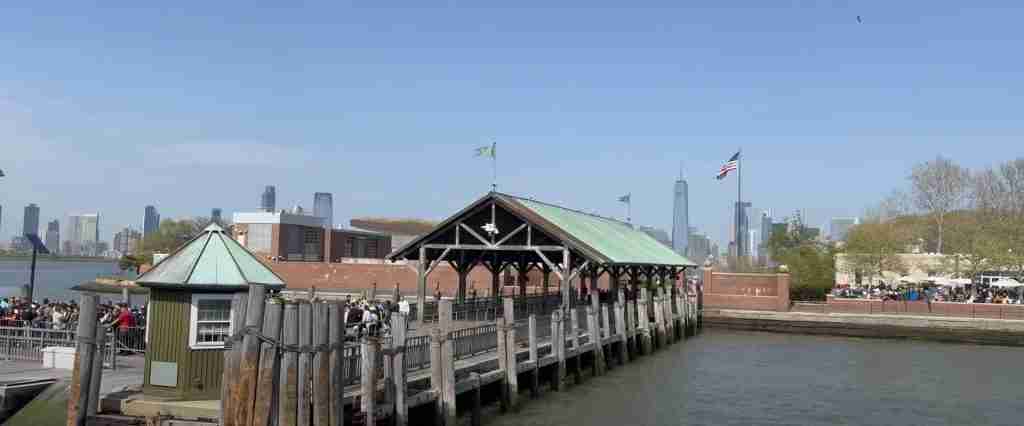
Statue Cruises operates the exclusive authorized ferry service to Liberty Island and Ellis Island from both Battery Park and Liberty State Park. No alternative ferry operators, private boats, or other access methods exist—Statue Cruises holds the National Park Service concession for all visitor transportation to the islands. All visitors regardless of ticket type, access level, or booking method use identical ferry service. Claims by tour operators about “skip-the-line” or “VIP ferry access” are misleading—everyone uses the same ferries with the same security screening. The ferry service includes transportation in ticket prices—when you purchase a Statue of Liberty ticket, the ferry transportation is included rather than being separate additional charge.
Ferry boarding procedures begin with security screening at departure terminals resembling airport security. All passengers pass through metal detectors, bags go through X-ray machines, and security officers conduct additional screening if needed. Prohibited items include weapons, large bags (nothing exceeding standard backpack size), aerosols, sharp objects, and various other items—review the prohibited items list before arriving to avoid disposal or storage complications. After security, passengers proceed to boarding areas where ferries load on first-come, first-served basis within scheduled time slots. Tickets specify departure times but boarding typically begins 15-20 minutes before scheduled departure. Late arrivals after ferry departure must wait for subsequent ferries with available capacity—arrive 30-45 minutes before scheduled times to ensure boarding scheduled ferries.
Ferry vessels accommodate several hundred passengers on multiple decks with both indoor climate-controlled seating and outdoor deck areas. The boats are modern, well-maintained, and comfortable for the 15-minute crossing to Liberty Island. Indoor seating provides protection from weather with windows allowing views. Outdoor decks offer best views and photography opportunities but fill quickly—board promptly and head outside if views are priorities. The ferries include bathrooms, though they can have lines during busy crossings. Food and beverage service is not available on ferries—bring water and snacks if needed. The crossing takes approximately 15 minutes from Battery Park or Liberty State Park to Liberty Island. During the crossing, announcements provide information about the statue and islands. Audio tour devices available at Liberty Island (included in ticket prices) provide more comprehensive information than ferry announcements.
Ferry routes typically make three stops during complete circuits: departure point (Battery Park or Liberty State Park), Liberty Island, then Ellis Island, before returning to departure point. Visitors board at their departure point, disembark at Liberty Island, explore as long as desired, then board subsequent ferry to Ellis Island. After Ellis Island exploration, board ferries returning to departure points. The system allows flexibility—spend 30 minutes or 3 hours on Liberty Island based on your interests rather than being locked into specific return ferries. However, ferries eventually stop running (times vary by season, typically 3:30-5:00 PM for last departures depending on season)—visitors must leave islands before final ferries depart or they’ll be stranded requiring special arrangements for return transportation.
Ferry service modifications occur for weather, mechanical issues, or special circumstances. High winds, lightning, or severe weather occasionally force temporary service suspensions for safety. Statue Cruises notifies ticket holders via email about cancellations and provides rescheduling without penalties. Ferry mechanical issues rarely cause problems but can create delays—backup vessels exist though bringing them online takes time. During extremely busy periods (summer weekends, July 4th), ferries may reach capacity requiring waiting for subsequent departures even with valid tickets for earlier times. These situations are rare but possible. National holidays may affect schedules—Christmas Day sees no service, while Thanksgiving and New Year’s typically maintain service with possible modified schedules. Check the Statue Cruises website or contact customer service about specific dates if visiting during holidays or following weather forecasts suggesting possible service impacts.
Airport Transportation to Statue Liberty Departure Points
From John F. Kennedy International Airport (JFK) in Queens, multiple transportation options reach Battery Park or Liberty State Park. The AirTrain JFK connects airport terminals to subway stations where you can transfer to trains reaching Battery Park. Take AirTrain ($8.25) to Jamaica Station or Howard Beach Station, then transfer to subway lines reaching lower Manhattan—total journey time 75-90 minutes costing approximately $11 ($8.25 AirTrain plus $2.90 subway). This economical option requires patience, luggage handling on stairs and turnstiles, and tolerance for crowded trains. Taxis from JFK to Battery Park cost $70-85 including tolls (flat rate $52 plus tolls and tip), taking 60-90 minutes depending on traffic. Uber and Lyft range $65-95 depending on demand, matching or exceeding taxi costs with similar travel times. Airport shuttles and shared van services cost $25-35 per person, taking 90-120 minutes with multiple stops. The best option depends on budget, luggage amount, group size, and tolerance for complexity—budget solo travelers favor AirTrain-subway, while families or those with substantial luggage find taxis/rideshares worthwhile despite higher costs.
From Newark Liberty International Airport (EWR) in New Jersey, reaching either Battery Park or Liberty State Park provides options. The AirTrain Newark ($5.50) connects airport terminals to Newark Airport Railroad Station where NJ Transit trains run to Penn Station in Manhattan ($15.25 train ticket)—total cost $20.75 and 60-75 minutes travel time. From Penn Station, take subway to Battery Park (additional $2.90, adding 25-30 minutes). Alternatively, from Newark Airport take NJ Transit to Newark Penn Station, transfer to PATH train reaching World Trade Center in Manhattan ($2.75), then walk or take short taxi to Battery Park—total approximately $8.25 and 75-90 minutes. For Liberty State Park in New Jersey, take AirTrain Newark to Newark Airport Railroad Station, then taxi to Liberty State Park ($25-35, 20-30 minutes). Taxis from Newark Airport to Battery Park cost $60-80 including tolls, taking 45-70 minutes. For Liberty State Park, taxis cost $30-45 taking 25-40 minutes. Newark Airport is closer to Liberty State Park than JFK, making the New Jersey ferry departure particularly convenient for Newark arrivals.
From LaGuardia Airport (LGA) in Queens, transportation to Battery Park uses subway or taxi options. No direct AirTrain serves LaGuardia—instead, take M60 bus ($2.90) to subway stations in Manhattan where you transfer to trains reaching Battery Park, or take Q70 bus (free) to subway stations in Queens. Total public transit journey takes 75-100 minutes costing $5.80. The complexity and duration make public transit from LaGuardia less appealing than from JFK or Newark. Taxis from LaGuardia to Battery Park cost $40-55 including tolls and taking 40-60 minutes depending on traffic. Uber and Lyft range $35-60 depending on demand. LaGuardia’s proximity to Manhattan makes taxis relatively more cost-effective versus other airports where the price premium over public transit is larger. Groups of 2-3+ find taxis reasonable value from LaGuardia given moderate pricing and significant time savings over complex public transit requiring multiple transfers.
Regional transportation from outside New York City varies by mode. Amtrak trains arrive at Penn Station in Manhattan, from which subway reaches Battery Park in 25-30 minutes costing $2.90. Penn Station sits on multiple subway lines (1, 2, 3, A, C, E trains) providing good connections. From Penn Station to Liberty State Park, take PATH train or NJ Transit to Jersey City, then taxi to the park (total 45-60 minutes, $8-15 plus taxi). Long-distance buses (Greyhound, Megabus, BoltBus) typically arrive at Port Authority Bus Terminal in midtown Manhattan, from which subway reaches Battery Park in 25-35 minutes costing $2.90. Some buses arrive at other locations—check your specific route and destination terminal. Regional driving follows routes outlined in the driving section—most visitors find Liberty State Park the most convenient driving destination due to free parking avoiding Manhattan parking challenges. For travelers arriving via train or bus, the subway from arrival terminals to Battery Park provides the most straightforward and economical connection.
Luggage storage options help visitors arriving at airports or train stations who want to visit the Statue of Liberty before hotel check-in or after checkout. Various luggage storage services exist near Battery Park, Penn Station, Grand Central, and Times Square, charging $5-15 per bag per day. Schwartz Travel provides luggage storage near Battery Park. LuggageHero and Bounce offer multiple locations throughout Manhattan bookable via apps. Hotels sometimes allow storing luggage before check-in or after checkout for guests—inquire when booking. Carrying luggage to Liberty Island is impractical—large bags are prohibited through security, and even smaller bags become burdensome during lengthy island exploration. Plan luggage storage in advance when visiting the statue on arrival or departure days, building storage time into your schedule and budgeting the modest storage fees that enable visiting without hauling bags around all day.
Troubleshooting Common Transportation Problems
Getting lost in Manhattan subway stations happens to many visitors. The system is complex with multiple lines, platforms, and exits at major stations. When disoriented, stop and consult subway maps posted throughout stations rather than wandering randomly. Ask station agents in token booths or any uniformed MTA employee for directions—they help lost passengers constantly and know how to guide you. Use smartphone maps checking your location and route to destination. Many stations have multiple exits blocks apart—exiting at wrong exit adds unnecessary walking. Stay calm, refer to maps and signage, and don’t hesitate to ask for help. Most New Yorkers respond helpfully to polite requests for directions, despite stereotypes about unfriendly New Yorkers. Getting temporarily lost rarely creates serious problems—worst case, you exit the station, reorient using street maps, and walk the final distance rather than sorting out subway confusion.
Missing scheduled ferry departures occurs when security lines take longer than expected, traffic delays arrival, or misunderstanding departure location causes late arrival. If you miss your scheduled ferry time, proceed to customer service at the ferry terminal explaining the situation. They’ll typically assign you to the next available ferry with capacity. During peak times, this might mean waiting 30-60 minutes or longer. During off-peak periods, the next ferry may depart within 20-30 minutes. The tickets specify departure times but have some flexibility—Statue Cruises accommodates reasonable delays rather than rigidly enforcing exact times. However, arriving very late (multiple hours) or during extremely busy periods might face more problems. The solution is prevention—arrive 30-45 minutes before scheduled times providing buffer for unexpected delays. If serious problems (major subway disruptions, accidents) prevent reaching the terminal on time, contact Statue Cruises customer service to explain circumstances and discuss rescheduling options.
Subway service disruptions happen periodically due to mechanical problems, police investigations, track work, or other issues. Weekend scheduled maintenance often affects service with some lines not running or running on modified routes. When disruptions occur, check the MTA website, official MTA app, or Twitter feed for real-time service updates and suggested alternative routes. Station agents can provide information about alternatives. Consider switching to buses, which run on street level avoiding subway-specific problems, though buses are slower than subways. Taxis and rideshares provide backup when subway disruptions threaten making you late for scheduled ferry times. Build extra time into schedules on weekends when service changes are more common. If subway problems seem widespread or severe, consider rescheduling statue visit for another day rather than struggling through major disruptions that will stress and frustrate you throughout the entire trip.
Incorrect departure location arrival happens when visitors go to Battery Park instead of Liberty State Park or vice versa. If you arrive at wrong location, the solution depends on time available before scheduled ferry. With 2+ hours, you might travel to correct location—Battery Park to Liberty State Park requires approximately 60-75 minutes via PATH train and taxi/rideshare. With less time, contact Statue Cruises customer service immediately explaining the mistake and requesting reassignment to different departure point or later time at correct location. They can sometimes accommodate booking errors. Prevention requires carefully checking which departure point your tickets specify when booking and again before departing for the ferry. Battery Park is in Manhattan, Liberty State Park is in New Jersey—verify which one your tickets specify. Your confirmation email states the departure location. Double-check before leaving your hotel, and again when entering navigation systems or telling taxi drivers your destination.
Extreme weather affecting transportation includes heavy snow, severe thunderstorms, or hurricanes. During significant weather events, ferry service may be cancelled for safety—Statue Cruises notifies ticket holders and provides rescheduling. Subway service usually continues during rain and light snow but may face delays or suspensions during severe weather. Roads become hazardous during snow or heavy rain affecting driving and taxi service. When weather forecasts predict severe conditions, consider rescheduling statue visits using the $5 per ticket rescheduling option rather than traveling in dangerous conditions. If already in New York when unexpected severe weather develops, monitor Statue Cruises notifications and local news for service updates. Don’t attempt reaching ferry terminals during genuinely dangerous weather—wait until conditions improve. Your safety is more important than adhering to predetermined schedules. Most weather delays last hours rather than days—rescheduling for the next day usually allows completing visits without major trip disruptions.
Frequently Asked Questions About Transportation
What is the best way to get to the Statue of Liberty?
The subway provides the best combination of cost, reliability, and speed for most Manhattan visitors. From midtown Manhattan, take the 1 train to South Ferry, the R or W trains to Whitehall Street-South Ferry, or the 4 or 5 trains to Bowling Green—all routes reach Battery Park in 25-35 minutes costing $2.90 per person. The subway avoids traffic unpredictability affecting taxis and costs dramatically less ($2.90 vs $20-35 for taxis). For visitors driving to New York or staying in New Jersey, driving to Liberty State Park and using the ferry from there provides the best option with free parking. For visitors wanting to avoid paid ferry costs, the Staten Island Ferry offers free views though without island access. The “best” method depends on your specific situation—most Manhattan visitors favor subway, drivers favor Liberty State Park, and budget-conscious viewers favor Staten Island Ferry. All methods provide access to the statue experience with trade-offs between cost, convenience, and comprehensiveness.
How long does it take to get to Battery Park from Times Square?
Subway travel from Times Square to Battery Park takes 20-30 minutes depending on specific route and wait times for trains. The 1 train from Times Square-42nd Street station to South Ferry takes approximately 25-30 minutes. The R or W trains from Times Square-42nd Street to Whitehall Street-South Ferry take approximately 20-25 minutes (R runs local, W provides some express service). Add 5-10 minutes for walking to subway stations from hotels, waiting for trains, and walking from stations to Castle Clinton ferry terminal. Total door-to-door time from Times Square area hotels to ferry departure ranges 35-50 minutes allowing for all stages. Taxis cover the distance in 20-35 minutes in moderate traffic but extend to 45-60 minutes during rush hours—similar or slower than subway while costing $22-28 versus $2.90 for subway. Plan for 45-60 minutes minimum from Times Square hotels to ferry boarding to ensure comfortable arrival with time for security screening.
Can I take an Uber to Liberty Island?
No, you cannot take Uber, taxi, or any vehicle directly to Liberty Island—all visitors must use official Statue Cruises ferries from Battery Park or Liberty State Park. Uber and taxis can transport you to these ferry departure points but cannot reach the island itself. You can Uber from your Manhattan hotel to Battery Park (Castle Clinton area) for approximately $20-35 from midtown, then board the ferry to Liberty Island. Alternatively, Uber to Liberty State Park in New Jersey if that’s your preferred departure point. The Uber drops you at the ferry terminal where you proceed through security and board ferries like all other visitors. No special boat access, private yacht docking, or alternative transportation to Liberty Island exists—everyone uses identical ferry service regardless of how they reached the departure terminals. This universal ferry requirement creates equitable access where wealth cannot buy superior transportation or skip-line privileges since all visitors share identical boats and processes.
Is there parking at the Statue of Liberty?
There is no parking on Liberty Island itself—visitors cannot drive to the island. However, free parking exists at Liberty State Park in Jersey City, New Jersey, where ferries depart for Liberty Island. The large parking lots adjacent to the ferry terminal accommodate hundreds of vehicles and are free of charge. The lots fill only during peak summer days—most times, parking remains readily available. Battery Park in Manhattan has no parking facility—nearby commercial garages charge $40-60+ for daily parking. For visitors driving to see the Statue of Liberty, Liberty State Park provides the clear choice with free convenient parking. From the Liberty State Park lots, walk approximately 2-5 minutes to the ferry terminal. After returning from Liberty Island and Ellis Island, your car remains safely parked where you left it. The free parking eliminates daily parking expenses while providing equal ferry access to Liberty Island as Manhattan departures—a compelling advantage for drivers.
How early should I arrive at the ferry terminal?
Arrive 30-45 minutes before your scheduled ferry departure time to allow for security screening, bathroom visits, and boarding. Security screening takes 10-20 minutes during off-peak times but extends to 30-45 minutes during peak summer periods and weekends. Late arrivals miss scheduled ferries and must wait for subsequent departures with available capacity. Ferry boarding begins approximately 15-20 minutes before departure times and closes at departure time—no boarding after ferries depart. The 30-45 minute arrival buffer accounts for longer-than-expected security lines, difficulty finding the terminal, last-minute needs, and unexpected delays. First ferry departures of the day require the earliest arrival since security just opened and lines may form. Better to arrive early and wait briefly than to rush and create stress or miss scheduled ferries requiring 30-60+ minute waits for next available boats. Factor the 30-45 minute buffer into your complete travel time when planning departure from hotels.
Does the subway run to both ferry departure points?
The subway reaches Battery Park in Manhattan via multiple lines (1, R, W, 4, 5, J, Z trains to various stations all within walking distance). However, the subway does not directly reach Liberty State Park in New Jersey. To reach Liberty State Park via public transit, take the PATH train from Manhattan to Jersey City (Pavonia-Newport or Exchange Place stations), then take a taxi or rideshare approximately 10-15 minutes to Liberty State Park. Alternatively, take NJ Transit trains to Jersey City or Hoboken stations, then taxi to the park. The PATH train costs $2.75, taxis from PATH stations to Liberty State Park cost $10-15. Total public transit journey to Liberty State Park takes 45-75 minutes from midtown Manhattan costing $13-18, compared to 25-35 minutes and $2.90 to Battery Park. The complexity and time make Liberty State Park more suitable for drivers than public transit users. Manhattan visitors without cars should use Battery Park departure. Drivers and New Jersey residents should use Liberty State Park departure.
What if I can’t find Castle Clinton at Battery Park?
Castle Clinton, the ferry departure facility, sits in Battery Park near the southern tip of Manhattan at the waterfront. After exiting subway stations (South Ferry, Whitehall Street, or Bowling Green), walk toward the water—the large circular sandstone fortress structure is Castle Clinton, clearly visible near the waterfront. Signs throughout Battery Park direct to “Statue of Liberty Ferries” and “Castle Clinton.” If disoriented, ask any park ranger, police officer, or even other tourists for directions—everyone knows where Castle Clinton is since it’s the main departure point for the Statue of Liberty. Your smartphone GPS can navigate to “Castle Clinton National Monument, Battery Park, New York” providing walking directions. The facility has large signs reading “Statue of Liberty Ferry” and “Statue Cruises” visible from across the park. During busy periods, the concentration of tourists and queues at security screening make the location obvious. If you reach the waterfront promenade at Battery Park’s edge, Castle Clinton sits prominently—you cannot miss the brown circular fort structure where crowds gather.
Are there accessible transportation options?
Yes, accessible transportation exists at all stages. Subway stations in Manhattan are increasingly accessible with elevators at many stations, though not all stations are fully accessible—check the MTA accessible station list or use the official app which notes accessible stations. Taxis and rideshares can accommodate wheelchairs via accessible vehicle options in Uber and Lyft apps or by requesting accessible cabs. Ferries to Liberty Island are fully wheelchair accessible with ramps for boarding and accessible seating areas on board. Liberty State Park and Battery Park both have accessible pathways from parking or transit to ferry terminals. However, some older subway stations lack elevators requiring using accessible stations that may not be closest to your destination—plan routes checking accessibility. Accessible taxis may have longer wait times than standard cabs. Despite challenges, wheelchair users and those with mobility limitations can successfully reach ferry terminals and access Liberty Island with advance planning and appropriate transportation selection. Contact Statue Cruises in advance about specific accessibility needs to ensure appropriate accommodations.
Can I walk to Battery Park from my hotel?
If your hotel sits within one mile of Battery Park (Financial District, Battery Park City, TriBeCa, or lower neighborhoods), walking is feasible and pleasant taking 15-30 minutes depending on exact location. Hotels further than one mile make walking impractical—from midtown, walking would take 60-90 minutes covering 3-4 miles. Use smartphone maps to check walking distance and estimated time from your specific hotel. Walking works well for hotels in the southern third of Manhattan. For midtown, Times Square, Upper East Side, Upper West Side, or other distant neighborhoods, use subway or taxis rather than walking. Walking provides exercise, sightseeing opportunities, and eliminates transportation costs but only makes sense for relatively proximate locations. If walking, allow extra time for getting lost (which commonly happens even with GPS), stopping for photos, and arriving relaxed rather than rushed. Manhattan’s grid layout above Houston Street makes navigation straightforward, though the Financial District’s older irregular streets can confuse newcomers—but heading toward the water eventually reaches Battery Park at Manhattan’s southern tip.
What happens if there are transportation strikes or disruptions?
Transportation strikes are rare but possible. Subway strikes affect all public transit—use taxis, rideshares, Citi Bike bikeshare, or walking as alternatives. During strikes, traffic worsens dramatically as everyone shifts to cars and taxis—allow substantially more time for travel and expect higher rideshare surge pricing. Ferry workers striking would cancel Liberty Island access entirely—Statue Cruises would notify ticket holders and provide rescheduling. If planning visits during periods when strikes are threatened or announced, monitor news closely and be prepared to reschedule if necessary. Equipment failures, police investigations, or medical emergencies create temporary disruptions—these usually resolve within 1-3 hours. Check real-time service updates on the MTA website and app during your trip, particularly before traveling to ferry terminals for scheduled ferry times. Build extra time into schedules allowing for minor disruptions without missing ferries. For major sustained disruptions, consider rescheduling statue visits for days when transportation operates normally rather than struggling through severe disruptions that create stressful difficult journeys.