
Getting to Panama City 2026: Complete Transportation Guide
Key Takeaways
- Tocumen International Airport serves 120+ direct destinations worldwide with Copa Airlines’ regional hub providing extensive connectivity
- Panama Metro Lines 1 and 2 connect major districts for $0.35 per ride with air-conditioned trains departing every 3-8 minutes
- Metropolitan transportation card works across metro and MetroBus systems with $2.50 unlimited daily passes available
- Licensed yellow taxis operate on meters starting at $2.50 with $30-35 fixed airport rates to city center
- Uber and Cabify function throughout Panama City providing price transparency and cashless payment convenience
- Strategic neighborhood positioning near metro stations eliminates most taxi costs while maintaining attraction access
Understanding Panama City Transportation in 2026
Panama City presents Central America’s most sophisticated urban transportation network, combining modern metro infrastructure with extensive bus routes, reliable taxi services, and comprehensive ride-sharing options. The metropolitan system enables efficient navigation across the city’s diverse neighborhoods, from historic Casco Viejo through the Banking District’s skyscraper corridor to residential areas stretching toward the canal. Understanding these interconnected systems transforms potentially challenging urban navigation into straightforward logistical planning.
The transportation landscape divides into distinct tiers based on comfort, speed, and cost. The Metro delivers rapid point-to-point transit along fixed routes for minimal expense, MetroBus extends coverage to areas beyond rail service, taxis provide door-to-door convenience with moderate pricing, and ride-sharing apps combine taxi convenience with price transparency. Each mode suits specific travel scenarios, with strategic visitors mixing options based on daily itineraries and budget considerations.
Panama City’s dollarized economy simplifies transportation budgeting, eliminating currency conversion calculations while creating pricing structures comparable to US mid-sized cities. However, the tropical climate makes air-conditioned transport particularly valuable, with Metro and modern buses providing climate-controlled comfort versus older bus routes and standard taxis with variable air conditioning function. This comfort consideration influences transportation choices beyond pure cost optimization.
The compact tourist district geography enables significant walking between major attractions within Casco Viejo, along the Cinta Costera waterfront, and through the Amador Causeway. However, distances between neighborhoods require motorized transport, with afternoon heat and humidity making mid-day taxi or Metro travel preferable to extended outdoor walks. Strategic itinerary planning clusters geographically proximate attractions, minimizing transportation needs while maximizing sightseeing efficiency.
People Also Ask About Panama City Transportation 2026
What is the best way to get from Tocumen Airport to Panama City hotels in 2026?
Licensed yellow taxis charge $30-35 fixed rates from Tocumen International Airport to city center hotels, providing direct door-to-door service in 25-40 minutes depending on traffic and destination neighborhood. Uber and Cabify operate from designated rideshare pickup zones with slightly lower rates of $25-30. The airport metro station connects to city metro lines but requires one transfer and managing luggage through crowded stations, making taxis preferable for most arrivals despite higher cost.
Is the Panama City Metro safe and easy to use in 2026?
Panama Metro operates with excellent safety records, modern infrastructure, clear signage in Spanish and English, and straightforward two-line configuration requiring minimal navigation skills. Stations feature security personnel, surveillance systems, and well-lit platforms. The rechargeable card system proves intuitive, with card purchases and reloading available at all stations through automated machines accepting cash and credit cards.
Do I need a car rental for visiting Panama City in 2026?
Car rentals prove impractical for Panama City tourism due to aggressive traffic patterns, complex one-way systems, expensive parking ($15-30 daily at hotels), and excellent public transportation alternatives. The combination of Metro, MetroBus, and affordable taxis provides superior convenience for urban sightseeing. However, rental cars become valuable for day trips to surrounding areas like Gamboa Rainforest, Soberanía National Park, or Pacific coast beaches beyond public transport reach.
How much should I budget for transportation in Panama City in 2026?
Budget travelers using exclusively Metro and MetroBus spend $2.50-5 daily with unlimited day passes or multiple single rides. Mid-range visitors mixing Metro with occasional taxis budget $15-25 daily for comfortable cross-town travel. Luxury travelers prioritizing convenience with Uber or taxi-exclusive transport spend $30-50 daily. Airport transfers add one-time $30-35 taxi costs each direction outside daily budgets.
Extended multi-day tours – 5+ days
Featured Panama Multi-Day Tour Packages

9 days
9 Days Across Panama: Culture, Mountains & Caribbean Paradise
- ✓ Comprehensive Panama tour
- ✓ Expert local guides included
- ✓ All accommodation arranged
- ✓ Transportation provided

8 days
Highlights of Panama
- ✓ Comprehensive Panama tour
- ✓ Expert local guides included
- ✓ All accommodation arranged
- ✓ Transportation provided

5 days
Panama & San Blas Islands (Guna Yala) – 5 days
- ✓ Comprehensive Panama tour
- ✓ Expert local guides included
- ✓ All accommodation arranged
- ✓ Transportation provided
8 days
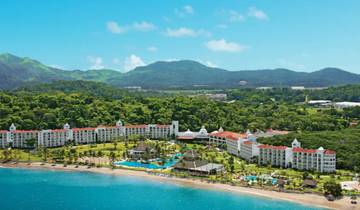
Explore Panama and Enjoy Paradise at Playa Bonita
- ✓ Comprehensive Panama tour
- ✓ Expert local guides included
- ✓ All accommodation arranged
- ✓ Transportation provided
Multi-day tour packages powered by TourRadar. Prices and availability subject to change.
Flying to Panama City in 2026
Tocumen International Airport Overview
Tocumen International Airport (PTY) functions as Panama’s primary international gateway and Copa Airlines’ regional hub, positioned 15 kilometers east of downtown Panama City. The airport serves 120+ destinations across the Americas, Europe, and limited Asian routes, with Copa Airlines providing the most extensive network through its hub-and-spoke operation. Modern facilities include two terminals connected by internal transport, extensive duty-free shopping, numerous dining options, and efficient immigration and customs processing.
Copa Airlines dominates Tocumen operations with 300+ daily flights connecting throughout Central America, South America, the Caribbean, and North America. The airline’s punctuality records and modern Boeing 737 fleet create reliable travel experiences, though baggage policies require attention as basic economy fares exclude checked bags. Advance seat selection and baggage purchases prove more economical than airport counter additions.
US carriers including American Airlines, United, Delta, and JetBlue operate multiple daily flights from major hubs including Miami, Houston, New York JFK, Orlando, and Fort Lauderdale. These services provide alternatives to Copa with competitive pricing on select routes, particularly when booked 45-60 days in advance during promotional periods. Spirit Airlines offers budget options from Fort Lauderdale and Orlando with base fares of $100-200 round trip before baggage fees.
European connectivity includes Iberia from Madrid, Turkish Airlines from Istanbul, and Lufthansa from Frankfurt, providing convenient access for European travelers. These routes operate 3-6 times weekly with flight times of 10-12 hours eastbound, often with favorable overnight scheduling enabling arrival with minimal day loss to time zone adjustment.
Airport Arrival and Immigration Process
International arrivals proceed through immigration, baggage claim, and customs in 30-60 minutes depending on flight arrival clustering and line management. US citizens receive automatic 180-day tourist stamps without visa requirements, while Canadian and EU passport holders enjoy similar treatment. Immigration officers occasionally request onward ticket proof and accommodation confirmation, though enforcement varies by individual officer discretion.
Baggage claim operates efficiently with carousels clearly marked by flight number and destination. However, Copa Airlines’ hub operation creates arrival waves with 8-12 flights landing within 30-minute windows, potentially causing crowding and slower baggage delivery. Travelers with carry-on only bypass these delays entirely, though Panama’s tropical climate and potential extended stays make checked luggage practical for most visitors.
Customs declaration forms distributed on flights require completion before immigration, with Panama enforcing strict agricultural product prohibitions and duty-free allowances. Personal electronics, reasonable clothing quantities, and opened alcohol bottles pass without issue, while sealed liquor bottles face $10-15 duty beyond first bottle allowances. Customs officers occasionally conduct random luggage inspections but generally wave through tourist travelers with properly completed forms.
Airport to City Transportation Options
Official yellow taxi stands outside arrivals charge $30-35 fixed rates to city center neighborhoods including Casco Viejo, El Cangrejo, and the Banking District. These prices remain consistent day and night, eliminating surge pricing concerns. Taxis accommodate up to four passengers with standard luggage, making them economical for couples and small groups splitting costs. Journey times range 25-40 minutes depending on traffic, with morning rush hours (7-9 AM) and evening peaks (5-7 PM) extending travel times.
Uber and Cabify operate from designated rideshare pickup zones located past the taxi stands, requiring 5-minute walks from baggage claim through clearly marked corridors. Rates run $25-30 to central destinations with price transparency through apps before confirming rides. However, surge pricing during peak arrival times occasionally elevates costs above taxi fixed rates, warranting price checks before selecting transport mode.
Metro service connects Tocumen Airport to city lines through a dedicated airport station opened in 2019, providing budget-conscious alternatives for $0.70-1.05 depending on final destination. However, the route requires transferring at Albrook station with luggage navigation through crowded platforms, elevators with variable function, and potential 40-60 minute total journey times. Solo budget travelers with light luggage find this viable, while groups and families prefer taxi convenience.
Private transfer services arranged through hotels or booking platforms charge $40-60 for meet-and-greet service with name signs, luggage assistance, and direct hotel delivery. These premium options suit luxury travelers, elderly visitors, or those arriving late-night when taxi availability might prove uncertain. However, the abundant official taxi supply makes prearranged transfers unnecessary for most visitors.
Panama Metro System 2026
Metro Lines and Coverage
Line 1 extends north-south from Albrook Bus Terminal through downtown commercial districts to San Miguelito residential areas, serving 16 stations across 15 kilometers. Key tourist stations include Albrook (bus terminal and mall), Cinco de Mayo (Casco Viejo access), and Iglesia del Carmen (Via España shopping district). Trains operate 5 AM – 11 PM Monday-Saturday and 7 AM – 10 PM Sunday with 3-8 minute headways during peak periods and 6-12 minutes off-peak.
Line 2 runs east-west from San Miguelito through Tocumen Airport to Nuevo Tocumen residential areas, covering 21 kilometers with 16 stations. The airport connection enables baggage-laden arrivals to reach city hotels via metro, though most visitors prefer taxi convenience. This line opened in 2019, extending the network’s reach and creating transfer possibilities at San Miguelito station connecting both lines.
Future Line 3 construction progresses toward planned 2025-2026 completion, extending service to additional residential areas and creating a third transfer point. However, tourist visitors primarily utilize Lines 1 and 2 for access to major attractions, shopping districts, and neighborhood exploration. The existing two-line network covers most tourism needs efficiently without requiring Line 3 access.
Using the Metro: Cards, Fares, and Procedures
Metro cards cost $2 initial purchase at station vending machines, with reloadable balances from $0.35 (single ride minimum) to $100 maximum. Machines accept $1, $5, $10, and $20 bills plus credit/debit cards, though cash proves more reliable given occasional card reader malfunctions. The same cards function on MetroBus routes, enabling seamless system integration without managing separate payment methods.
Single ride fares cost $0.35 for distances up to 6 kilometers and $0.70 for longer journeys, with the system calculating automatically based on entry and exit stations. Unlimited day passes cost $2.50 and activate at first use, expiring at midnight regardless of purchase time. Travelers making 8+ rides daily find day passes economical, though single-ride pricing proves economical for visitors making 3-4 trips daily.
Station entry requires tapping cards at turnstiles, with gates opening automatically on successful payment. Exit stations require tapping again to calculate final fares and deduct balances. Insufficient balance triggers turnstile lockout, requiring reloading at station machines before exit completion. This system prevents fare evasion while creating minor inconvenience for travelers misjudging remaining balances.
Trains feature clear route maps, station announcements in Spanish with some English, and digital displays showing upcoming stops. Peak hour crowding occurs 7-9 AM and 5-7 PM weekdays when office workers commute, making mid-morning through mid-afternoon ideal for tourist travel with guaranteed seating and personal space. Air conditioning functions consistently, providing climate-controlled comfort during tropical afternoons.
Strategic Metro Use for Tourism
Accommodations near Line 1 stations including Via Argentina, Iglesia del Carmen, or Santo Tomás enable car-free exploration with metro access to Albrook Mall, Casco Viejo area (Cinco de Mayo station requires 15-minute walk through neighborhood to historic district), and commercial districts. These central neighborhoods combine metro convenience with walking access to restaurants, supermarkets, and urban character.
Casco Viejo visits require metro to Cinco de Mayo station followed by 1.2 kilometer walks through transitional neighborhoods or $3-5 taxi rides covering the final distance. While technically walkable, afternoon heat and street conditions lead many visitors to combine metro efficiency with short taxi connections. Return trips reverse this pattern, with metro delivering budget-conscious transport covering most distance.
Albrook station provides access to Central America’s largest shopping mall, the international bus terminal for regional travel, and transfer points to MetroBus routes serving areas beyond metro coverage. The complex spans multiple city blocks with clear signage directing passengers between metro platforms, bus terminal gates, and shopping center entrances. Allow 10-15 minutes for initial orientation when first visiting this major transportation hub.
MetroBus and Local Bus Services 2026
MetroBus Network Overview
MetroBus routes extend metro coverage throughout neighborhoods beyond rail access, operating modern air-conditioned buses with the same rechargeable card payment system. Routes connect residential areas with metro stations, serve destinations including Amador Causeway and Panama Viejo archaeological site, and provide alternatives when metro routes don’t align with specific destinations. Fares cost $0.25 per ride regardless of distance, making buses the most economical public transport option.
Route maps available at major metro stations and online show numbered routes with stop locations, though service frequency varies from 10-minute headways on popular routes to 30-45 minutes on peripheral services. Real-time arrival information remains limited, requiring flexibility when planning bus-dependent itineraries. However, the $0.25 fare creates minimal financial risk when testing routes versus committing to $5-12 taxi rides.
Tourist-relevant routes include those serving the Amador Causeway waterfront, Metropolitan Natural Park, and coastal areas beyond central districts. While metro delivers faster service along its fixed lines, buses enable broader geographic exploration for budget-conscious travelers willing to invest time understanding route systems. Combined metro-bus journeys often prove more economical than cross-town taxi rides while providing authentic local travel experiences.
Traditional Bus Services
Traditional “Diablo Rojo” buses largely disappeared following MetroBus expansion, though some privately-operated buses continue serving peripheral neighborhoods beyond MetroBus coverage. These aging vehicles charge $0.25-0.50 cash-only fares collected by conductors rather than card systems, creating minor payment inconveniences. Air conditioning proves unreliable, windows remain open creating ventilation, and route information relies on conductor announcements in Spanish.
Tourist visitors rarely need traditional bus services given MetroBus and metro coverage of major attractions and commercial areas. However, adventurous travelers exploring beyond typical tourist circuits may encounter these services in outlying neighborhoods. The experience provides authentic local transportation perspectives while requiring Spanish language skills and navigation confidence.
Taxi Services in Panama City 2026
Licensed Yellow Taxi Operations
Official yellow taxis operate throughout Panama City with meters required by law, starting at $2.50 and adding $0.50 per kilometer plus time charges during traffic delays. Drivers activate meters at trip start, with rates climbing based on distance and duration. Cross-town trips from Casco Viejo to El Cangrejo cost $5-8, while longer journeys to Tocumen Airport run the standardized $30-35 fixed rate.
Hailing taxis on streets proves straightforward in commercial and tourist districts, with drivers stopping for raised hands signaling ride requests. However, late evening availability in residential neighborhoods may require hotel desk assistance calling taxi companies for dispatched rides. These hotel-arranged taxis add $2-3 premiums but guarantee reliable service when street hailing proves impractical.
Taxi drivers accept cash payment only, with US dollars universally used and small bills ($5, $10, $20) preferred. Many drivers lack change for $50 or $100 bills, requiring passengers to maintain adequate small denominations or stop at convenience stores for change before completing fares. Tipping remains uncommon, though rounding fares up to the nearest dollar shows appreciation for exceptional service or luggage assistance.
Meters occasionally “malfunction” on tourist routes, with drivers proposing fixed rates exceeding metered equivalents. Politely insisting on meter use or exiting the taxi and finding alternatives usually resolves these situations. However, legitimate fixed rates apply for airport transfers and some specialized routes, with these exceptions clearly established before trip commencement.
Safety and Selection Practices
Licensed yellow taxis display official registration numbers on doors and roofs, with driver identification cards visible on dashboards. These markers distinguish legitimate services from informal operators lacking insurance and regulatory oversight. Tourist districts and major hotels feature consistent legitimate taxi availability, while peripheral areas may include unlicensed operators requiring vigilance in vehicle selection.
Solo female travelers and elderly visitors prefer hotel-dispatched taxis over street hailing, particularly during evening hours or when traveling to unfamiliar neighborhoods. The 15-minute wait for dispatched service and minor premium charge provide security advantages justifying the convenience reduction. Groups and daytime travelers find street-hailed taxis perfectly safe when selecting properly licensed vehicles.
Taxi safety records in Panama City compare favorably to other Central American capitals, with violent incidents extremely rare in tourist districts and commercial areas. However, basic precautions including avoiding unlicensed vehicles, maintaining awareness of route directions, and keeping valuables concealed prove sensible regardless of destination security levels.
Ride-Sharing Services 2026
Uber and Cabify Operations
Uber operates extensively throughout Panama City with pricing typically 10-20% below metered taxi rates while providing price transparency through app displays before confirming rides. The service functions from airport rideshare zones, major hotels, shopping centers, and residential neighborhoods with 3-8 minute average wait times during daytime hours. Peak demand surges during morning and evening rush hours, rainy periods, and weekend evenings when pricing multipliers potentially exceed taxi rates.
Cabify provides similar service with competitive pricing and comparable vehicle quality, creating market competition that benefits consumers through promotional offers and loyalty programs. The app-based platforms eliminate language barriers for non-Spanish speakers, enable cashless payment through linked credit cards, and provide driver ratings ensuring service quality accountability.
Both services operate sedans accommodating up to four passengers with standard luggage, though Uber offers SUV options for larger groups or excess baggage at 30-50% premiums over standard rides. Split payment features enable group travel cost division, while ride histories document expenses for business travel reimbursement or personal budget tracking.
Strategic Ride-Sharing Use
Morning airport arrivals between 6-9 AM often feature surge pricing on ride-sharing apps as business travelers compete for limited vehicle availability. Comparing real-time app quotes with the $30-35 fixed taxi rate determines optimal transport mode, with taxis sometimes proving more economical during extreme surge periods.
Rainy afternoon demand creates 1.5x to 2.5x pricing surges as locals and tourists simultaneously seek dry transportation. The surge notifications display in apps before trip confirmation, enabling informed decisions whether to accept elevated costs, wait 15-30 minutes for surge reduction, or switch to traditional taxis unaffected by demand pricing.
Late evening and early morning hours (midnight – 5 AM) feature longer wait times and occasional service unavailability in peripheral neighborhoods as driver numbers decline. These periods make hotel-dispatched taxis more reliable despite slightly higher costs and longer wait times.
Walking and Pedestrian Navigation 2026
Walkable Tourist Districts
Casco Viejo’s compact 0.5 square kilometer UNESCO district enables entirely pedestrian exploration, with attractions, restaurants, churches, and plazas accessible through colonial-era streets designed for walking rather than vehicles. The neighborhood’s flat terrain, pedestrian-priority streets, and 15-20 minute end-to-end crossing make walking the optimal transport mode within the district. However, afternoon heat and humidity prompt many visitors to schedule walking activities during cooler morning hours or sunset periods.
The Cinta Costera waterfront promenade extends 7 kilometers along Panama Bay, featuring dedicated pedestrian and cycling paths separated from vehicle traffic. The flat, well-maintained pathway connects downtown areas through the Banking District to the old town, enabling 60-90 minute linear walks with ocean views, exercise stations, and playground areas. Morning joggers and evening strollers populate the route, creating safe pedestrian environments throughout daylight hours.
Amador Causeway stretches 3 kilometers into the Pacific Ocean along the Panama Canal entrance, with vehicle-free zones and protected pathways providing safe walking and cycling routes. The causeway links three islands with restaurants, marinas, and the Biomuseo, creating a linear exploration route requiring 45-60 minutes end-to-end walking or 20-30 minutes cycling. Sunset walks attract locals and tourists, establishing social atmospheres beyond pure transportation function.
Pedestrian Safety Considerations
Crosswalks in tourist and commercial districts feature pedestrian signals and driver compliance, though residential neighborhoods show less consistent traffic law adherence. Defensive pedestrian behavior including making eye contact with drivers, waiting for clear traffic gaps, and using designated crossings proves essential regardless of signal indications. Downtown traffic moves aggressively, with drivers prioritizing vehicle flow over pedestrian right-of-way.
Sidewalk quality varies dramatically between recently developed Banking District areas with wide, well-maintained pathways and older neighborhoods featuring narrow, uneven sidewalks with obstacles including utility poles, vendor displays, and drainage grates. Comfortable walking shoes with ankle support prove essential for extended urban exploration, particularly in historic districts with cobblestone surfaces and uneven pavement.
Afternoon tropical heat creates pedestrian fatigue during extended walks, with temperatures reaching 85-95°F (29-35°C) and humidity levels of 70-90% year-round. Strategic urban walking schedules morning activities before 11 AM heat onset, utilizes air-conditioned Metro or taxis for midday transport, and resumes walking during late afternoon and evening cooling periods. Carrying water bottles, wearing sun protection, and taking café breaks prevents heat-related discomfort.
Day Trip Transportation 2026
Panama Canal Day Trip Options
Miraflores Locks Visitor Center sits 10 kilometers from downtown Panama City, accessible via taxi ($12-18 one-way), Uber ($10-15), or MetroBus routes requiring transfers and 45-60 minute journeys. Most visitors choose taxis for door-to-door convenience, with round-trip costs of $24-36 plus wait time if requesting same driver return service. Organized tours include transportation as part of $50-75 packages combining multiple canal observation points.
Agua Clara Locks on the canal’s Atlantic side requires 80-kilometer journeys from Panama City, accessible via rental car (90-minute drive), organized tours ($60-85 including transportation and guide), or Colón-bound buses from Albrook terminal ($3-5 one-way) plus taxis from Colón to the locks ($15-20). The distance and logistics make organized tours most practical for visitors without rental cars, though independent travelers with flexibility create budget-friendly alternatives combining public buses and taxis.
Panama Canal partial transit tours departing from Flamenco Marina include transportation to the embarkation point as part of $165 per person tour packages. These 4-6 hour experiences eliminate independent transportation planning while providing intimate canal perspectives impossible from observation centers.
Nature and Adventure Destinations
Soberanía National Park and Gamboa Rainforest area sit 40 kilometers northwest of Panama City, requiring rental cars, organized tours ($75-120 including guide and transportation), or shared shuttles ($25-35 per person round-trip) departing from hotels. The park lacks public transportation access, making group options essential for car-free travelers seeking rainforest hiking, wildlife observation, and canopy tours.
Metropolitan Natural Park within city limits proves accessible via taxi ($8-12 from central hotels), providing tropical forest hiking without extensive transportation logistics. The 265-hectare reserve delivers morning wildlife observation and afternoon exercise within 20 minutes of most accommodations, creating convenient nature experiences for travelers with limited time or transportation budgets.
Pacific beach destinations including Playa Coronado, Santa Clara, and El Palmar sit 80-120 kilometers from Panama City, requiring 90-120 minute drives via rental car or organized beach day tours ($60-90 per person). Public buses serve these areas from Albrook terminal at $5-8 one-way, though infrequent return schedules and limited beach proximity make organized tours more practical for day visitors. Weekend beach traffic creates 2+ hour return journeys, warranting early departure planning or overnight stays extending single-day visits into relaxed weekends.
Cultural and Historical Excursions
Portobelo and the Caribbean coast require 2-hour drives via rental car or organized cultural tours ($80-110 per person including guide and meals). The UNESCO-listed colonial fortress town lacks direct public bus service requiring multiple transfers, making group tours optimal for single-day visits. However, independent travelers extending visits overnight access $8-12 direct buses from Albrook terminal with 2.5-hour journey times.
El Valle de Antón mountain town sits 120 kilometers west of Panama City, accessible via 2-hour drives or weekend excursion tours ($70-95 per person). The volcanic crater town features hiking, hot springs, and cooler mountain climate creating popular weekend escapes. Direct buses depart Albrook terminal every 2-3 hours for $4-6 one-way, with return service running until 4 PM requiring overnight stays for late afternoon arrivals.
Emberá indigenous village visits depart via boat from the Chagres River, with tour operators providing complete transportation from Panama City hotels as part of $75-95 per person packages. The remote villages lack independent access without private boat charters, making organized tours the only practical option for most travelers seeking these authentic cultural encounters.
Car Rental and Driving 2026
Rental Considerations and Costs
International rental agencies including Hertz, Budget, Avis, and Alamo operate at Tocumen Airport and downtown locations, charging $35-65 per day for compact vehicles with basic insurance. However, mandatory third-party liability insurance adds $12-20 daily, collision damage waivers cost $15-25 daily, and personal accident coverage runs $8-12 daily when not covered by credit card benefits. Full insurance packages elevate daily costs to $70-120, creating significant expense compared to public transportation alternatives.
Credit card rental insurance coverage varies by issuer, with some cards providing collision damage waivers but not liability coverage required by Panamanian law. Verify credit card benefits before declining rental agency insurance to avoid coverage gaps exposing travelers to financial liability. Debit card rentals incur additional deposits of $300-500 held during rental periods.
Rental vehicles suit multi-day regional exploration visiting destinations including Pacific beaches, mountain towns, and Caribbean coast areas beyond practical public transportation access. However, Panama City driving presents aggressive traffic, confusing one-way systems, expensive parking, and unnecessary expense given excellent urban public transport. Strategic travelers pick up rental cars when departing the city for regional trips rather than using them for metropolitan sightseeing.
Driving Conditions and Regulations
Panama City traffic operates aggressively with frequent lane changes, minimal turn signal use, and assertive merging creating intimidating conditions for visitors unfamiliar with Latin American driving culture. Rush hours (7-9 AM and 5-7 PM) create gridlock on major corridors, with 15-minute journeys extending to 45-60 minutes during peak congestion. Weekend traffic flows more smoothly, though beach-bound Friday afternoons and Sunday returns create highway backups.
Parking costs $3-8 per hour in commercial districts, with most hotels charging $15-30 daily for garage access or valet service. Street parking presents security concerns in many neighborhoods, with vehicle break-ins targeting visible luggage and electronics. Hotel concierges universally recommend paid garage parking over street spaces despite cost differences, protecting vehicles and contents from opportunistic theft.
Highway systems connecting Panama City with regional destinations feature good pavement quality, clear signage, and reasonable traffic law enforcement. However, rural roads beyond major routes show variable maintenance with potholes, inadequate lighting, and wandering livestock creating hazards. International driver’s licenses supplement home country licenses for official rental documentation, though enforcement varies with most renters providing only home licenses without issues.
Transportation Planning Strategies 2026
Neighborhood Selection Based on Transit Access
Hotels near metro stations including Via Argentina, Iglesia del Carmen, and Santo Tomás on Line 1 enable car-free exploration with $2.50 daily transit budgets covering unlimited metro travel. These neighborhoods combine transit convenience with walking access to restaurants, supermarkets, and urban character, creating efficient bases for budget-conscious travelers. Rooms cost $80-140 nightly in three-star properties, balancing location value with comfortable amenities.
Casco Viejo accommodations eliminate transportation needs for historic district exploration while requiring metro or taxi access to other attractions. The pedestrian-friendly UNESCO zone enables walking to dozens of restaurants, churches, museums, and plazas within the 0.5 square kilometer district. However, nighttime returns to hotels require taxi rides costing $5-8 from other neighborhoods, adding daily transportation expenses to premium accommodation rates.
Banking District hotels provide walkability to office towers, waterfront dining, and upscale shopping while positioning guests 15-25 minutes from major attractions via taxi. These luxury properties cater to business travelers with limited tourist infrastructure nearby, requiring consistent taxi or Uber usage for sightseeing. Transportation budgets of $25-40 daily accommodate this convenience-focused approach.
Budget Optimization Through Transit Planning
Metro-centric itineraries visiting attractions near Line 1 stations including Albrook Mall (shopping and bus terminal), Via España commercial district, and Cinco de Mayo (walking distance to Casco Viejo) minimize transportation costs to $2.50 daily unlimited passes. Strategic attraction selection based on metro accessibility rather than pure interest creates comprehensive Panama City experiences on minimal transit budgets.
Mixed-mode transportation combining metro for longer distances with short taxi connections for final segments balances budget efficiency with convenience. For example, metro to Cinco de Mayo station ($0.35) plus $3-5 taxi to Casco Viejo center costs $3.35-5.35 versus $7-10 direct taxi from central hotels. These hybrid approaches save 40-60% on transportation while maintaining reasonable convenience.
Group travelers splitting taxi costs create per-person expenses competitive with public transit while adding door-to-door convenience. A $12 taxi ride divided among four passengers costs $3 each, marginally above metro $0.70 fares but eliminating station walks, transfers, and weather exposure. Couples and small groups frequently find shared taxis optimal balance of economy and comfort.
Time Efficiency Considerations
Metro travel between major stations requires 15-25 minutes compared to 20-35 minutes by taxi during non-rush periods. However, metro eliminates traffic uncertainty, parking searches, and route navigation, creating more predictable journey times. Time-sensitive travelers catching flights, tours, or restaurant reservations rely on metro consistency over taxi potential delays during unpredictable traffic conditions.
Rush hour taxi travel multiplies journey times by 2-3x normal durations, with 15-minute off-peak trips extending to 30-45 minutes during morning and evening peaks. Metro travel times remain constant regardless of surface traffic, creating significant time savings during congested periods. Strategic visitors schedule attractions, shopping, and dining during mid-morning through mid-afternoon hours when both metro and taxi options flow efficiently.
Airport departure planning requires 60-90 minute buffers from city center to Tocumen for international flights, accounting for check-in, security, and immigration processing. The fixed-price $30-35 taxi eliminates timing uncertainty versus metro transfers requiring 40-60 minutes plus platform waiting and potential service delays.
2026 Transportation Updates and Changes
Metro Line 3 Development
Metro Line 3 construction progresses toward 2025-2026 completion, eventually extending service to western neighborhoods and creating additional system capacity. However, tourists primarily benefit from existing Lines 1 and 2 covering major attractions and commercial districts. The expansion demonstrates Panama’s continued public transportation investment while creating temporary construction disruptions in affected areas.
Future metro extensions will eventually connect to more residential areas and potential airport improvements, though specific timelines and routes remain subject to government planning revisions. Travelers visiting in 2026 rely on the current two-line system without expecting immediate Line 3 access, though opening celebrations may coincide with some visits creating local excitement and potential service disruptions during inaugural periods.
Ride-Sharing Regulatory Environment
Uber and Cabify continue operating in Panama City despite periodic regulatory challenges from traditional taxi operators. The services maintain strong user bases and consistent availability, though travelers should monitor app functionality during visits in case temporary service suspensions occur due to regulatory disputes. Backup plans including traditional taxi knowledge prevent transportation disruptions if ride-sharing temporarily faces restrictions.
Additional ride-sharing platforms periodically enter the Panama market, creating competition through promotional offers and introductory pricing. However, Uber and Cabify maintain dominant market positions with established driver networks and user familiarity. Travelers benefit from downloading both apps before arrival, enabling price comparison and service redundancy.
Public Transportation Expansion
MetroBus route expansion continues adding coverage to peripheral neighborhoods while upgrading aging traditional buses to modern air-conditioned vehicles. These improvements primarily benefit residential commuters rather than tourist visitors, though expanded coverage may enable budget-conscious travelers to access previously difficult destinations through public transit alternatives to taxis.
FAQ: Panama City Transportation 2026
Can I use my contactless credit card on public transportation?
No, Panama’s metro and MetroBus systems require specific rechargeable cards purchased at stations. While the cards accept credit card payment for reloading, contactless credit cards cannot tap directly at turnstiles. The $2 card purchase plus desired balance load represents one-time investment used throughout visits.
Is it safe to use taxis late at night in Panama City?
Licensed yellow taxis operate safely throughout tourist and commercial districts during late evening hours. However, travelers reduce risk by requesting hotel-dispatched taxis rather than street hailing after midnight, particularly in peripheral neighborhoods. The minor dispatch wait and $2-3 premium provide security advantages justifying the convenience reduction.
Do taxis accept credit cards in Panama City?
Traditional yellow taxis accept cash payment only, requiring US dollars in small bills. Uber and Cabify enable cashless payment through linked credit cards in apps, creating convenient alternatives for travelers preferring electronic payment. Maintaining $50-100 cash for taxi contingencies proves prudent despite ride-sharing availability.
How far in advance should I book airport transportation?
The abundant taxi supply at Tocumen Airport eliminates advance booking requirements for most arrivals. However, late-night arrivals (midnight-5 AM) or large groups benefit from prearranged hotel transfers ensuring reliable service. Uber and Cabify function at all hours with 5-15 minute waits from designated airport pickup zones.
Can I walk between Casco Viejo and the Banking District?
The 4-kilometer distance between Casco Viejo and Banking District central areas requires 50-70 minutes walking through mixed-quality neighborhoods including highway overpasses and limited sidewalks. Metro ($0.70) or taxi ($6-9) prove more practical for this cross-town connection, with walking better suited to individual neighborhood exploration rather than district-to-district travel.
Are rental cars worth it for a Panama City-only visit?
Rental cars create unnecessary expense and hassle for Panama City-only visits given excellent public transportation and affordable taxis. The combination of aggressive traffic, expensive parking, and metro/taxi alternatives makes car rental impractical for urban tourism. However, rental cars become valuable for day trips to surrounding areas beyond public transport reach.
What transportation apps should I download before arrival?
Uber and Cabify apps enable ride-sharing access, Google Maps provides metro routing and walking directions, and Moovit offers public transportation planning with real-time updates. Download these apps before departure with Panama City data cached for offline functionality in case cellular data access faces initial setup delays.
Can I bike around Panama City safely?
Protected bike paths along Cinta Costera waterfront and Amador Causeway enable safe cycling in dedicated zones. However, cycling on city streets proves dangerous given aggressive traffic and minimal bike lane infrastructure beyond waterfront areas. Bike rentals ($5-8 hourly) suit recreational waterfront riding rather than practical urban transportation.
How much should I tip taxi drivers?
Tipping taxi drivers remains uncommon in Panama City, with metered fares considered complete payment. However, rounding fares up to the nearest dollar or adding $1-2 for exceptional service or luggage assistance shows appreciation. Uber and Cabify enable in-app tipping, though this practice follows the same discretionary approach as traditional taxis.
What is the best transportation option for families with young children?
Families benefit from taxi or Uber convenience providing door-to-door service without managing strollers through metro turnstiles and crowded platforms. The $15-25 daily taxi budget for multiple cross-town trips proves economical when split among family members while maintaining child comfort. Metro suits families with older children comfortable with public transit navigation.