Getting to Dolomites 2026: Complete Transportation Guide
Reaching and exploring the Dolomites requires understanding multiple transportation options across airports, ground transport, and local systems. The region lacks a single major airport or train station, instead distributing access through several smaller gateways surrounding the mountain range. This decentralized structure initially appears complex but enables flexible planning matching individual preferences for convenience, cost, and travel style. Understanding transportation patterns, costs, and logistics transforms apparent complexity into strategic advantage.
Key Takeaways
- Venice Marco Polo Airport serves as the primary gateway, located 160 kilometers from Cortina with Cortina Express buses operating daily at €18-22 one-way in 2.5 hours
- The South Tyrol Guest Pass provides unlimited regional bus and train travel at no additional cost when staying at participating accommodations (85%+ of properties include this benefit)
- Car rental costs €30-50 daily for compact vehicles suitable for mountain roads, with weekly rentals reducing costs to €25-40 daily through multi-day discounts
- Regional bus networks connect all major valleys with hourly services during peak season, single tickets at €2-5, and day passes at €10-15 for unlimited travel
- Bolzano and Innsbruck airports provide alternative northern access with shuttle services costing €25-45 per person to major resort towns
- Free ski buses operate during winter season connecting accommodations to lift stations every 10-20 minutes, eliminating need for private vehicles at ski resorts
Introduction: Navigating Dolomites Transportation
The Dolomites span northeastern Italy across three regions (Veneto, Trentino-Alto Adige, Friuli-Venezia Giulia) creating multiple entry points. Venice serves the southern approach, Bolzano the western valleys, Innsbruck (Austria) the northern route, and smaller regional airports provide specialized access. Ground transportation includes direct buses, rental cars, regional trains connecting to valley buses, and transfer services. Once in the Dolomites, comprehensive public bus networks and included guest passes enable economical valley exploration, while rental cars provide maximum flexibility at higher cost.
Strategic transportation planning balances cost, convenience, and flexibility. Budget travelers prioritize public transportation using the Cortina Express from Venice and South Tyrol Guest Pass for valley travel, minimizing costs while accepting schedule constraints. Mid-range visitors often rent cars gaining flexibility for multi-valley exploration and trailhead access despite higher expenses. Luxury travelers employ private transfer services and rental cars with prepaid tolls and parking, prioritizing convenience over cost. This guide provides comprehensive information enabling informed transportation decisions optimizing your Dolomites access and exploration.
People Also Ask About Dolomites Transportation
What is the closest airport to the Dolomites?
Bolzano Airport (BZO) sits closest to the western Dolomites at just 40 kilometers from Val Gardena, though it operates limited seasonal flights from select European cities including Vienna, Berlin, and London. Flight availability concentrates during winter and summer peak seasons with reduced or suspended service during shoulder periods. The small airport processes flights quickly with minimal security delays, creating efficient arrivals despite limited frequency. Shuttle buses connect to Val Gardena in 60-75 minutes for €8-12 per person, making this the fastest airport-to-mountains option when flights align with travel dates.
Venice Marco Polo Airport (VCE) serves as the primary gateway for most international travelers despite the 160-kilometer distance from Cortina. Major airlines including Lufthansa, Air France, British Airways, and budget carriers operate extensive flight networks. The airport handles international connections efficiently with English-language signage and services. The Cortina Express bus departs directly from the airport terminal operating April-October, while year-round regional buses connect via Mestre or Treviso. Venice’s superior flight options, competitive pricing, and reliable ground connections make it the default choice for travelers from outside Europe and many European origins.
Do I need a car in the Dolomites?
Cars remain optional for Dolomites visits, with public transportation providing viable alternatives through comprehensive bus networks and the South Tyrol Guest Pass. Travelers staying in single valleys accessing nearby trails manage well without cars using unlimited Guest Pass buses for local travel and walking within towns. The pass covers regional buses connecting valley towns, seasonal trailhead shuttles, and ski buses during winter. Single-valley itineraries centered on popular areas like Val Gardena, Cortina, or Alta Badia access extensive hiking and skiing through public transport without private vehicles.
Cars benefit multi-valley explorers, families with young children or extensive gear, photographers targeting sunrise/sunset locations requiring early/late access, and travelers prioritizing spontaneity over scheduled bus departures. Rental costs of €30-50 daily plus fuel (€15-25 daily) create significant expenses justified by increased flexibility. Remote trailheads, small villages, and off-schedule exploration become possible with private vehicles. However, parking challenges in town centers (€5-12 daily), navigation on narrow mountain roads, and driving stress factor into car decisions. Assess your specific itinerary: valley-based stays need no cars, while multi-valley exploration benefits from vehicle flexibility despite costs.
How do you get from Venice to the Dolomites?
The Cortina Express bus provides direct service from Venice Marco Polo Airport to Cortina d’Ampezzo operating daily April through October. Three departures leave Venice at 8:30 AM, 12:30 PM, and 4:30 PM with return services from Cortina at 8:30 AM, 1:00 PM, and 4:30 PM. Journey time runs 2.5-3 hours with tickets costing €18-22 one-way, €32-38 round-trip. Book online at cortinaexpress.it or purchase on-board with €3-5 surcharge. The bus stops at Venice airport terminal, and upon request at Treviso airport, before continuing to Cortina’s bus station. This direct service eliminates transfers providing convenient Venice-to-mountains transport.
Car rental from Venice enables flexible Dolomites exploration. Major rental agencies (Hertz, Europcar, Avis, Sixt) operate from Venice airport with counters in the arrivals hall. Compact cars suitable for mountain driving cost €35-55 daily with automatic transmissions adding €10-15. The drive covers 160 kilometers requiring 2-2.5 hours via the A27 autostrada and SR51 mountain road. Tolls cost €6-8 depending on exit. Return the car in the Dolomites (Cortina, Bolzano) for one-way fees of €50-100, or drive back to Venice before departure. Shared car costs work well for groups of 3-4 splitting expenses while maintaining private vehicle convenience.
Is there a train to the Dolomites?
Direct trains do not reach the Dolomites’ interior valleys, though regional rail connects to gateway cities requiring bus transfers to mountain destinations. The Brenner railway line serves Bolzano and Bressanone with connections to major Italian cities. Trains from Venice to Bolzano take 3.5-4 hours with tickets at €25-40. From Milan, the journey requires 3.5-4 hours at €30-45. High-speed Frecciarossa service reaches Bolzano from major cities, while regional trains provide local connections. From Bolzano or Bressanone, regional buses continue to Val Gardena (45-60 minutes, €5-8), Alta Badia (60-75 minutes, €8-12), and Val Pusteria (30-90 minutes, €5-12).
The train-plus-bus combination works well for carless travelers from Italian cities, though requiring more time than direct driving. Venice-to-Cortina via train and bus takes 4.5-5.5 hours total versus 2.5 hours for the Cortina Express direct bus. However, trains from Milan or other northern cities sometimes prove faster than driving while eliminating driving stress. Calculate total journey times including connections: trains excel for long-distance travel from Milan or Rome, while buses work better for Venice-Dolomites travel. The South Tyrol Guest Pass covers regional trains within Alto Adige, potentially including portions of longer journeys for accommodation guests.
Extended multi-day tours – 5+ days
Featured The Dolomites Multi-Day Tour Packages
3 days
The Dolomites 3-Day Discovery Tour
- ✓ Comprehensive The Dolomites experience
- ✓ Expert local guides included
- ✓ All accommodation included
- ✓ Transportation provided
5 days
The Dolomites 5-Day Highlights Experience
- ✓ Comprehensive The Dolomites experience
- ✓ Expert local guides included
- ✓ All accommodation included
- ✓ Transportation provided

7 days
The Dolomites 7-Day Cultural Journey
- ✓ Comprehensive The Dolomites experience
- ✓ Expert local guides included
- ✓ All accommodation included
- ✓ Transportation provided
10 days
The Dolomites 10-Day Complete Adventure
- ✓ Comprehensive The Dolomites experience
- ✓ Expert local guides included
- ✓ All accommodation included
- ✓ Transportation provided
Multi-day tour packages powered by TourRadar. Prices and availability subject to change.
Airport Options and Access
Venice Marco Polo Airport (VCE)
Venice Marco Polo Airport serves as the primary international gateway with extensive flight networks from European capitals, secondary cities, and limited intercontinental service from North America and Middle East. The airport handles 12 million annual passengers maintaining modern facilities with English-language services. Terminal layout concentrates services in a compact space enabling quick navigation. Security processing takes 15-30 minutes during normal periods, extending to 45-60 minutes during peak summer mornings (7:00-9:00 AM). Budget extra time for summer weekend departures.
The Cortina Express bus departs from the airport terminal forecourt operating April-October with three daily departures at 8:30 AM, 12:30 PM, and 4:30 PM. Purchase tickets online before arrival or from the driver with small surcharge. The bus stops at marked areas outside the arrivals hall. For winter travel when the Cortina Express suspends operations, rent cars at airport agencies or take ATVO buses to Venice Mestre train station (€8-12, 25 minutes) connecting to regional buses toward the Dolomites. Car rental agencies cluster in the arrivals hall with shuttle buses to off-airport lots adding 10-15 minutes to pickup times.
Alternative transport from Venice includes private transfer services costing €180-280 for vehicles accommodating up to 8 passengers. These services provide door-to-door convenience with flight tracking and meet-and-greet, justifying premiums for groups or luxury travelers. Shared shuttle services operate during peak season at €35-50 per person requiring advance booking and accepting multiple stops extending journey times. Water taxi service from the airport to Venice city costs €110-150, enabling visits to Venice before continuing to the Dolomites—an option combining sightseeing with practical transport.
Innsbruck Airport (INN) – Austria
Innsbruck Airport in Austria provides northern Dolomites access, particularly for the Sesto/Sexten area and eastern valleys. The small airport serves limited routes including Vienna, Frankfurt, Amsterdam, and London with seasonal flights from other European cities. Austrian, Lufthansa, and budget carriers operate services, though frequency remains lower than Venice. The compact airport enables quick processing with minimal walking between terminal areas. Austrian entry requirements apply: EU citizens use standard ID cards, non-EU visitors require passports valid for Italy/Schengen entry.
Ground transport from Innsbruck to the Dolomites covers 110-140 kilometers depending on destination. Direct shuttle services to Cortina cost €35-45 per person requiring 90-minute travel time. Shuttles to the Sesto/Sexten area run €30-40 per person for 60-75 minute journeys. Car rental agencies at the airport include major brands with vehicles suitable for mountain driving. The border crossing from Austria to Italy proceeds smoothly within the Schengen zone requiring no stops or document checks. Fuel prices in Austria run 5-10% higher than Italy, suggesting filling tanks after crossing borders.
Innsbruck works well for travelers from German-speaking regions, northern Europe, and those planning combined Austria-Dolomites trips. Flight options from UK, Netherlands, and Scandinavia sometimes offer better schedules or prices than Venice routes. However, limited flight frequency creates vulnerability to cancellations or changes with few alternative same-day options. The northern entry provides quick access to the Sesto Dolomites and Cortina while requiring longer drives to western valleys like Val Gardena. Assess flight routing and final Dolomites destinations when choosing between Venice and Innsbruck gateways.
Regional Airports: Bolzano, Verona, Treviso
Bolzano Airport (BZO) operates seasonal service (primarily December-March and June-September) from Vienna, Berlin, London, and select other cities. The tiny airport processes passengers quickly with minimal facilities. Shuttle buses to Val Gardena depart coordinated with flight arrivals, taking 60-75 minutes at €8-12 per person. The proximity to western Dolomite valleys creates the fastest airport-to-mountains option when flights align with travel plans. However, limited frequency and seasonal suspension make this a specialty option rather than primary choice for most travelers. Monitor airline websites for schedule announcements in autumn for upcoming winter/summer seasons.
Verona Airport (VRN) sits 180 kilometers south of Cortina serving budget airlines including Ryanair and Wizz Air from European cities. The airport handles primarily leisure traffic with good connections to UK, Germany, and Spain. Direct bus services to Cortina operate during peak season (summer and winter) taking 3-3.5 hours at €20-28 per person. Car rental provides alternative access with the drive covering 180 kilometers in 2.5-3 hours via the A22 autostrada and SR48 mountain road. Tolls add €12-18. Verona works well for budget-conscious travelers from destinations served by low-cost carriers, accepting longer ground transport for better flight prices.
Treviso Airport (TSF) operates as a Ryanair hub with extensive budget connections from European cities. The small airport sits 30 kilometers from Venice and 150 kilometers from Cortina. ATVO buses connect to Venice Mestre station (€12-16, 40 minutes) for regional bus connections to the Dolomites. The Cortina Express sometimes stops at Treviso by advance arrangement. Car rental agencies operate at the airport enabling direct drives to the mountains. Budget travelers flying Ryanair often find Treviso more convenient than Venice proper, though ground transport requires additional planning compared to Venice Marco Polo’s direct Cortina Express service.
Ground Transportation Options
Car Rental: Costs and Considerations
Car rental costs vary by season, booking timing, and vehicle type. Compact cars suitable for mountain roads (Fiat 500, VW Polo, similar) cost €30-50 daily during peak season, dropping to €25-40 in shoulder periods. Week-long rentals reduce daily costs by 15-25% through multi-day discounts: seven days cost €175-280 (€25-40 daily) versus €210-350 for separate daily bookings. Automatic transmissions add €10-15 daily compared to manual vehicles. Larger vehicles including SUVs suitable for families or winter driving cost €50-80 daily with 4WD capability adding further premiums.
Insurance options create significant cost variations. Basic coverage included in rental rates provides collision damage waiver and theft protection with high deductibles (€800-1,500). Full insurance eliminating deductibles costs €15-25 daily adding €105-175 weekly. This premium provides peace of mind for mountain driving where narrow roads, steep grades, and rockfall increase incident risks compared to urban driving. Personal auto insurance sometimes covers rentals—verify before purchase. Credit card rental coverage varies by card and region—confirm Italian coverage if relying on card protection. The full insurance investment proves worthwhile for inexperienced mountain drivers or those seeking worry-free experiences.
Fuel costs add €80-120 weekly for typical Dolomites driving covering 500-700 kilometers exploring multiple valleys and trailheads. Gasoline prices average €1.75-1.85 per liter with diesel at €1.60-1.70. Compact cars consume 5-6 liters per 100 kilometers enabling 500-kilometer driving on €50-70 fuel. Mountain driving with frequent elevation changes increases consumption 10-20% versus highway travel. Plan fuel stops in valley towns rather than mountain roads—stations appear infrequently at high elevations with premium pricing. Fill tanks before holiday weekends avoiding sold-out or premium-priced mountain stations.
Driving in the Dolomites: Roads and Navigation
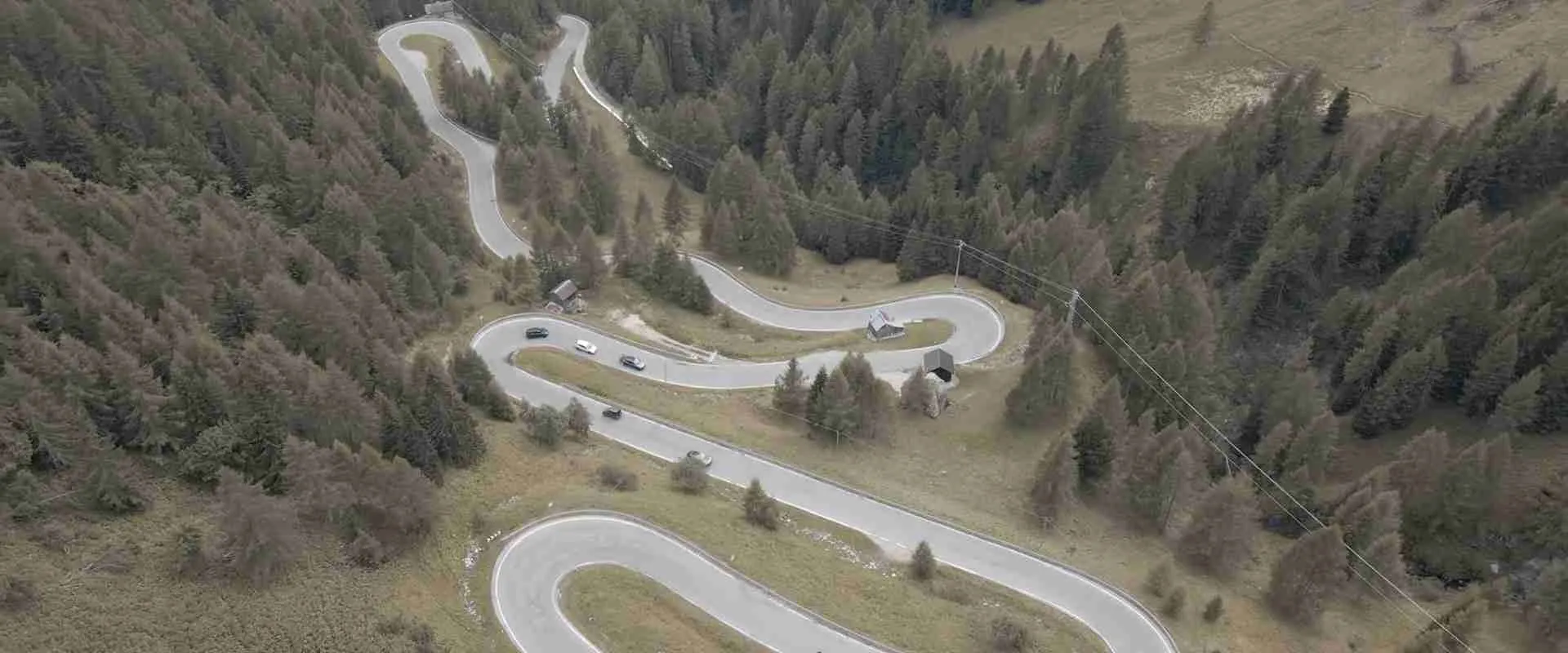
Dolomite roads range from modern highways to narrow mountain passes requiring confident driving. Major routes including the Great Dolomite Road (SS48) connect valleys through engineered highways with good pavement, clear markings, and regular maintenance. These primary routes accommodate tour buses and RVs though with tighter tolerances than North American highways. Secondary roads including pass routes (Passo Pordoi, Passo Gardena, Passo Sella) feature switchbacks, narrow sections, and occasional single-lane segments. These roads suit compact cars better than large vehicles, with height restrictions in some tunnels limiting RV access.
Summer driving conditions prove straightforward with dry pavement and good visibility. However, heavy recreational traffic during July-August creates congestion on popular routes and trailhead access roads. Start early (before 8:00 AM) securing parking at popular destinations like Tre Cime di Lavaredo before lots fill. Afternoon return traffic creates delays on main valleys 4:00-6:00 PM weekends. Plan driving around peak traffic periods or accept slower speeds during busy times. Motorcycle and bicycle traffic shares mountain roads—exercise caution passing cyclists on narrow sections with limited visibility.
Winter driving requires winter tires or snow chains legally mandatory November 15-April 15. Rental agencies provide winter-equipped vehicles during this period at no additional cost. Major roads receive regular plowing and salting maintaining reasonable conditions within hours of snowfall. However, active storms create hazardous conditions requiring reduced speeds or delayed travel. Monitor weather forecasts at meteotrentino.it or provincia.bz.it adjusting plans for major snow events. Carry snow chains even with winter tires as chains become mandatory during heavy snowfall on certain passes. Practice chain installation before emergencies—roadside installation in storm conditions proves challenging and dangerous.
Parking: Costs and Availability
Town center parking in popular resorts including Cortina, Ortisei, and Selva costs €2-3 per hour in paid zones with daily maximums of €15-20. Blue-lined spaces require payment Monday-Saturday 8:00 AM-7:00 PM, free Sundays and nights. White-lined spaces offer free parking when available, though quantity remains limited filling quickly. Municipal parking lots charge €1.50-2.50 per hour or €10-15 daily providing reliable parking near town centers. Many hotels include free parking for guests eliminating town center parking expenses and hassles. Properties without parking indicate this clearly during booking—verify parking availability when comparing accommodations if planning car rental.
Trailhead parking varies by popularity and management. Famous locations including Tre Cime di Lavaredo charge tolls (€30 per vehicle) or parking fees (€5-10 daily) at large organized lots. Passo Pordoi, Passo Sella, and major pass parking costs €2-5 daily. Less-frequented trailheads offer free parking in small lots or roadside pull-offs. Arrive early (before 9:00 AM summer weekends) for popular trails as lots fill completely by midmorning. Alternative late starts after 2:00 PM find departing hikers freeing spaces though limiting daylight for longer routes. Consider midweek visits or lesser-known trails avoiding parking challenges entirely.
Winter parking follows different patterns as ski buses eliminate parking needs at lift stations. However, town center parking during ski season becomes more challenging with overnight visitors filling spaces. Street parking limitations during snow removal require moving vehicles to designated areas—hotels clarify these requirements. Ski area parking lots provide free parking at most resorts with premium close-in spots charging €5-10 daily. Parking regulations and restrictions appear on multilingual signage—read carefully avoiding tickets or towing. Italian parking enforcement proves strict with fines of €40-100 for violations including expired meters or restricted zone parking.
Public Transportation Systems
Regional Bus Networks
Comprehensive regional bus networks connect all Dolomite valleys operated by provincial transportation authorities. South Tyrol (Alto Adige) operates the SAD bus system serving Val Gardena, Alta Badia, Val Pusteria, and Val di Funes with over 100 routes. Veneto operates Dolomiti Bus serving Cortina, Belluno, and surrounding areas. Trentino operates regional buses covering Val di Fassa and surrounding territories. These systems maintain reliable schedules with buses arriving within 5-10 minutes of posted times. Real-time tracking appears at major stops and via mobile apps enabling accurate arrival predictions.
Single-ride tickets cost €2-5 depending on distance: under 5 kilometers €2.00, 5-15 kilometers €3.50, longer routes within regions €5.00. Purchase tickets from machines at major stops, tobacco shops (tabacchi), or drivers with slight surcharge. Day passes cost €10 for valley access, €15 for extended multi-valley travel providing unlimited regional riding. These passes break even after 3-4 rides, benefiting active travelers using buses throughout days. Validate tickets in yellow machines onboard or at stops avoiding €50-100 fines for unticketed travel. Controllers check randomly with strict enforcement regardless of tourist status or language barriers.
Peak summer and winter seasons bring hourly services during daylight hours (6:00 AM-8:00 PM) on major routes. Shoulder seasons reduce frequencies to every 90-120 minutes with some routes suspending entirely during April-May and October-November. Check current schedules at regional transportation websites: suedtirolmobil.info (South Tyrol), dolomitibus.it (Veneto), and ttesercizio.it (Trentino). Download PDF schedules or mobile apps for offline access avoiding connectivity challenges in valleys. Plan itineraries around bus schedules particularly during shoulder seasons when frequencies decrease substantially.
South Tyrol Guest Pass Benefits
The South Tyrol Guest Pass revolutionizes budget travel by providing unlimited regional transportation at no additional cost. Over 85% of South Tyrol accommodations (hotels, guesthouses, apartments, camping) participate in this program. The pass activates upon check-in and remains valid throughout stays plus arrival and departure days. Coverage includes all SAD regional buses, Trenitalia regional trains between Brenner and Trento, and seasonal mountain shuttle services. The pass saves €20-40 daily compared to purchasing individual tickets, delivering substantial value for multi-day stays.
Pass benefits extend beyond basic bus travel to include specialty services. Seasonal shuttles to popular trailheads including Puez-Odle and Catinaccio areas operate mid-June through September carrying Guest Pass holders free. Winter ski buses connecting accommodations to lift stations run continuously Guest Pass holders without charge. The Ritten/Renon cable car from Bolzano includes Guest Pass access. Museum discounts at participating institutions reduce entry fees 10-25%. These supplementary benefits enhance pass value beyond pure transportation savings.
To utilize the pass, present it when boarding buses or trains for validator scanning or conductor inspection. The pass includes holder photo and accommodation details preventing sharing or transfer. Lost passes can be reissued at accommodation reception. The pass works exclusively in South Tyrol (Alto Adige) region covering Val Gardena, Alta Badia, Val Pusteria, Val di Funes, and Bolzano area—it does not extend to Veneto (Cortina) or Trentino (Val di Fassa) regions. Travelers splitting stays between regions lose pass benefits outside South Tyrol, though the significant savings during Alto Adige portions justify planning itineraries maximizing Guest Pass utilization.
Seasonal Shuttle Services
Summer shuttle buses serve popular trailheads eliminating parking challenges and trail congestion. The Tre Cime di Lavaredo shuttle operates July-August with departures from Misurina every 20-30 minutes 8:00 AM-5:00 PM. Round-trip tickets cost €5 per person versus €30 toll for private vehicles plus parking fees. The shuttle drops passengers at Rifugio Auronzo (2,320 meters) providing immediate trail access. The Cinque Torri shuttle from Cortina runs similar schedules for €5-8 round-trip. Lago di Sorapis shuttle from Passo Tre Croci costs €3-5 round-trip serving trailhead access.
These shuttles reduce environmental impact while easing congestion at sensitive locations. The services eliminate parking stress, reduce costs versus private vehicles, and enable car-free access to premier hiking. However, return schedules create constraints requiring completion of hikes by final shuttle departures around 5:00-6:00 PM. Miss the final shuttle and alternative return options include expensive taxis (€40-80 depending on distance) or hitchhiking from other hikers. Build sufficient time buffers completing routes 1-2 hours before final departures avoiding last-shuttle stress.
Winter shuttle services operate differently with continuous free ski buses connecting accommodations to lift stations. These heated buses run every 10-20 minutes during ski season (December-March) from 8:00 AM-6:00 PM. The buses stop at designated locations marked with signs and schedules. No tickets required—simply board and ride. The service covers all major ski areas including Cortina, Val Gardena, Alta Badia, and Val di Fassa. Ski equipment travels free with racks or dedicated storage areas. These shuttles eliminate driving, parking, and fuel costs enabling carless ski holidays throughout the Dolomites.
Private Transfer and Tour Services
Private Transfer Options
Private transfer services provide door-to-door transportation from airports to accommodations at premium pricing. Venice airport to Cortina transfers cost €180-280 for vehicles accommodating up to 8 passengers depending on vehicle type and service level. Innsbruck to Cortina runs €160-240. Bolzano airport to Val Gardena costs €80-140. These services include flight tracking adjusting pickup times for delays, meet-and-greet at arrivals halls, luggage assistance, and comfortable vehicles with climate control. Drivers speak English and provide local information during drives.
Private transfers suit groups splitting costs across multiple passengers, luxury travelers prioritizing convenience, families with young children or extensive luggage, and those arriving late evening when public transport ceases operations. Calculate per-person costs when assessing value: €240 transfer for 6 people costs €40 per person—competitive with bus tickets while adding substantial convenience. However, solo travelers or couples pay full vehicle costs making transfers expensive versus €18-22 bus tickets. Book transfers through hotel concierges, online platforms including Welcome Pickups or Daytrip, or local transfer companies advertising at airports.
Shared transfer services split costs among multiple parties booking similar routes. These services cost €35-50 per person from Venice to Cortina operating during peak season. Multiple stops extend journey times 30-60 minutes compared to direct private transfers. Book online confirming schedules matching flight arrivals. Shared services work best for budget-conscious travelers seeking comfort above public buses without full private transfer expenses. However, limited availability, schedule constraints, and multi-stop delays make shared transfers compromise options rather than optimal choices for most situations.
Organized Tour Transportation
Package tours include comprehensive transportation eliminating independent travel planning. Multi-day hiking tours provide airport pickup, accommodation-to-trailhead transfers, and final airport return. These all-inclusive packages cost €1,200-2,400 per person for week-long trips including transportation, accommodation, guides, and some meals. Ski packages offer similar inclusive arrangements with airport transfers and daily lift station shuttles. The transportation convenience combines with structured itineraries removing planning burdens while eliminating flexibility for spontaneous exploration.
Day tours from major cities including Venice, Milan, or Verona provide guided Dolomites excursions with round-trip transportation. Full-day tours cost €80-150 per person departing early morning and returning evening. These tours suit travelers based in gateway cities desiring Dolomites exposure without overnight mountain stays. However, long drives (2-4 hours each way) limit mountain time to 4-6 hours insufficient for substantive hiking or exploration. Day tours work best for overviews enabling future focused visits rather than comprehensive Dolomites experiences.
Transportation Tips and Strategies
Booking Timing and Advance Planning
Book transportation 6-12 weeks ahead for optimal pricing and availability. Cortina Express buses fill completely during August weekends requiring advance purchase securing seats. Car rentals during summer peak (July-August) and winter holidays (December-January) benefit from 8-10 week advance reservations achieving 20-30% savings versus last-minute rates. Flight bookings 3-6 months ahead secure best prices before peak-season premiums increase fares 50-100%. Last-minute transportation bookings work during shoulder seasons (May-June, September-October) when excess capacity enables reasonable rates and availability.
Flexible dates enable substantial savings on flights with midweek travel (Tuesday-Thursday) costing 15-30% less than weekend flights. Red-eye or early-morning flights offer better pricing than convenient mid-day services. Compare nearby airports: Venice-Treviso flight differences sometimes reach €50-100 round-trip justifying slightly longer ground transport. Use flight comparison tools checking multiple airports and date combinations finding optimal cost-convenience balance. The extra planning effort saves €100-300 per person across flights and ground transport enabling budget reallocation toward activities or accommodation upgrades.
Seasonal Transportation Patterns
Peak season transportation faces capacity constraints requiring advance planning. July-August bus services run at near-full capacity with popular routes selling out days ahead. Reserve seats when possible rather than hoping for space. Car rental availability tightens during peak weeks with preferred vehicle types selling out or commanding premium pricing. Winter holidays (Christmas-New Year) create similar patterns with all transport modes experiencing maximum demand. Book transportation first when planning peak-season trips securing access before addressing accommodation and activities.
Shoulder season transportation requires different strategies as reduced services and seasonal suspensions limit options. The Cortina Express suspends operations November-March requiring alternative transport. Many regional bus routes reduce frequencies or suspend during April-May and October-November. Verify current schedules rather than assuming year-round operations. However, reduced demand creates availability making advance booking less critical. Week-ahead transportation planning suffices during shoulder seasons versus months-ahead peak period requirements. The reduced pressure enables flexible planning adapting to weather forecasts and evolving itineraries.
FAQ Section: Transportation Questions
Can I drive from Venice to the Dolomites in one day?
The drive from Venice to Cortina covers 160 kilometers requiring 2-2.5 hours under normal conditions, easily completed in single day. Allow 3-3.5 hours during peak summer weekends accounting for traffic. The route follows the A27 autostrada to Alemagna exit (€6-8 toll), then SR51 mountain road through Pieve di Cadore to Cortina. The drive showcases progressively dramatic scenery as highway transitions to mountain road with the final 30 kilometers delivering spectacular alpine views. Stop at Pieve di Cadore (90 minutes from Venice) for coffee and pastries breaking the drive. The comfortable single-day journey enables morning airport arrival and afternoon mountain destination for efficient travel days.
What is the best way to travel between different Dolomite valleys?
Cars provide maximum flexibility for multi-valley exploration covering 30-60 kilometer distances between major valleys in 45-90 minutes. Popular routes including Val Gardena to Cortina via Passo Falzarego take 60 minutes, Val Gardena to Val di Fassa via Passo Sella requires 45 minutes. Public buses connect valleys though with limited schedules requiring 1-3 hour journeys including connections. The SAD bus system links South Tyrol valleys with transfers at hubs including Bolzano or Bressanone. Travel between Cortina (Veneto) and Val Gardena (Alto Adige) requires planning as different regional systems operate with no direct buses. Multi-valley visitors benefit substantially from car flexibility avoiding multi-hour bus journeys and schedule constraints that limit spontaneous exploration.
How early should I arrive at the airport for my flight home?
Arrive 2 hours before European flights from Venice, Verona, or Treviso airports enabling check-in, security processing, and finding gates without stress. The 2-hour buffer accommodates normal processing and unexpected delays. Three hours proves necessary for intercontinental flights from Venice requiring additional passport control and security screening. Small regional airports including Bolzano and Innsbruck require just 90 minutes given minimal security queues and compact terminals. However, morning peak periods (7:00-9:00 AM) at Venice bring heavier traffic extending security times—add 30-minute buffer for early departures. Calculate backwards from flight times: 2-hour airport arrival plus 2.5-hour Cortina-Venice drive means departing Cortina 4.5 hours before flight times.
Are there electric vehicle charging stations in the Dolomites?
Electric vehicle charging infrastructure expands throughout the Dolomites with stations in major towns and some trailhead parking areas. Bolzano, Bressanone, Cortina, and Ortisei feature multiple charging points at public parking lots and hotels. ChargePoint, Enel X, and regional networks operate stations with varying payment systems—download apps before arrival. Charging costs €0.40-0.60 per kWh with full charges taking 1-4 hours depending on battery size and charging speed. However, mountain coverage remains incomplete with limited charging at remote locations. Plan routes considering charging availability and vehicle range. Winter cold and mountain driving reduce EV efficiency 20-40% requiring larger buffers than flat terrain. Electric vehicles prove feasible for Dolomites travel with planning though conventionally-fueled vehicles offer simpler logistics.
Can I take bicycles on buses in the Dolomites?
Bicycle transport on regional buses varies by region and season. Summer bike buses operate designated routes in South Tyrol carrying bicycles on rear-mounted racks or trailers. These services connect cycling paths and mountain bike trails enabling point-to-point rides without backtracking. Book bike spaces online or at ticket offices—space limits reach 8-12 bikes per bus filling during peak periods. Regular buses accommodate folding bikes only. Some mountain lifts permit bikes enabling uplift for downhill riding. The Sellaronda lift circuit allows bikes on specific lifts summer season with tickets around €30-40 daily. Dedicated bike transport planning proves essential—bicycles cannot spontaneously board buses without dedicated infrastructure.
What if my flight is delayed and I miss my bus?
Flight delays create missed connection risks particularly with the Cortina Express final 4:30 PM departure from Venice. Contact bus companies immediately notifying of delays—some operators accommodate late passengers if practical. However, schedules remain firm without obligation for delay accommodation. Alternative options include booking next-day bus (space permitting), arranging private transfer (€180-280), renting car for one-way drive (€50-100 one-way fee), or staying overnight Venice using next morning bus. Travel insurance covering delay expenses reimburses accommodation and alternative transport costs making this modest investment worthwhile for connection peace of mind. Build connection buffers when booking: 2-3 hour gaps between flight arrivals and bus departures accommodate typical delays without stress.
Do I need an international driving permit?
International Driving Permits (IDP) prove unnecessary for EU/EEA license holders driving in Italy with standard national licenses sufficing. Non-EU visitors require IDP in addition to national licenses for legal driving. The permit translates licenses into multiple languages facilitating police interactions during traffic stops. Obtain IDPs from automobile associations in home countries—Italy does not issue IDPs to visitors. Rental agencies accept IDP plus national licenses for vehicle rental. Drive with both documents as police sometimes request both during checks. Failure to produce IDP when required risks fines or vehicle impounding creating significant travel disruptions. The permit costs just €15-30 and takes days to obtain, making advance acquisition essential for non-EU drivers planning Dolomites car rental.
Can I rent a car with an American/Canadian driver’s license?
North American licenses require International Driving Permits for legal Italian driving and car rental. However, some rental agencies rent to Americans and Canadians using only North American licenses without IDP enforcement. This practice violates Italian law creating legal vulnerabilities during police interactions. Police stops without IDP risk €300-400 fines and possible vehicle confiscation. Always obtain IDP before travel eliminating legal risks. The US and Canada automobile associations issue IDPs valid one year for $20-30 USD/CAD. Process takes 1-2 weeks including postal delivery. Apply immediately upon deciding to rent Dolomites vehicles avoiding last-minute complications. The minor IDP investment prevents substantial legal and financial risks making it essential for North American visitors planning car rental.
Is it safe to drive in the Dolomites?
Dolomite driving proves safe for confident drivers comfortable with mountain roads. Major routes maintain good pavement, clear markings, and guardrails at exposed sections. Secondary roads including passes feature switchbacks and narrow sections requiring careful driving but remain safe with appropriate speeds and attention. Italian drivers familiar with mountain roads sometimes drive aggressively—stay right allowing faster traffic to pass. Winter conditions require winter tires (mandatory) and possible chains (also mandatory when required) with cautious driving during active snowfall. Rockfall risks exist after heavy rain or freeze-thaw cycles—watch for falling rock signs and falling debris. Overall, millions drive Dolomite roads annually with minimal incidents when following rules, maintaining appropriate speeds, and adjusting to conditions. Inexperienced mountain drivers should practice on easier roads before tackling challenging passes, or utilize public transportation eliminating driving stress entirely.
What happens if I get a traffic ticket?
Traffic tickets issued by Italian police require payment through postal notices arriving weeks after violations at rental car company addresses. Rental agencies forward notices to renters adding €25-50 administrative fees. Common violations include speeding (€40-300 depending on excess), restricted zone entry in historic town centers (€80-150), parking violations (€40-100), and expired parking meters (€40-80). Contest options exist though prove impractical for visitors requiring Italian legal representation. Pay tickets promptly avoiding penalties doubling fines after deadlines. The combination of violation fine plus rental agency administrative fee creates significant expenses—exercise caution following all traffic rules. Speed cameras throughout the Dolomites enforce limits strictly with 10 km/h tolerance before triggering fines. Drive attentively obeying posted limits avoiding expensive surprises weeks after returning home.