
German Wine Route: Rhine Valley & Moselle Tasting Guide
Key Takeaways:
- Germany’s Rhine and Moselle valleys produce world-renowned Riesling wines on UNESCO-protected steep slate slopes where Romans first established viticulture two millennia ago
- The Moselle River’s dramatic hairpin bends create south-facing vineyard exposures reaching 65-degree gradients—the steepest cultivated vineyards on Earth
- German wine classification distinguishes quality levels from Kabinett through Trockenbeerenauslese, with ripeness at harvest determining wine style and complexity
- Traditional Weingut estate visits offer cellar tours, vineyard walks, and direct tastings that commercial wine shops cannot replicate
- The balance between residual sweetness and acidity defines German Riesling’s distinctive character, creating wines that age magnificently across decades
Introduction to German Wine Heritage
The steep hillsides flanking Germany’s Rhine and Moselle rivers represent one of viticulture’s most challenging and rewarding environments. Here, where Roman legions first planted vines two thousand years ago, winemakers continue extracting extraordinary wines from impossibly steep slopes through techniques refined across generations. The resulting wines—particularly Riesling—rank among the world’s most distinctive, combining mineral precision with fruit purity in styles ranging from bone-dry to lusciously sweet.
The Rhine and Moselle wine regions share fundamental characteristics while maintaining distinct identities that experienced tasters recognize immediately. Both rivers carve through slate and schist formations that stress vines into producing concentrated fruit while imparting mineral signatures that define terroir expression. Both regions preserve traditional winemaking approaches that prioritize vineyard character over cellar manipulation. Yet each river’s specific geography, microclimate, and cultural traditions produce wines with recognizable regional fingerprints.
Visiting these wine regions provides experiences unavailable through commercial wine purchasing alone. Walking vineyard paths up vertiginous slopes reveals the physical reality behind every bottle—understanding that workers must climb these gradients multiple times annually transforms wine appreciation from intellectual exercise to visceral comprehension. Tasting directly from cellar casks connects current vintages to centuries of accumulated knowledge. Conversations with winemakers whose families have cultivated specific plots for generations illuminate the human relationships with land that industrial agriculture obscures.
This guide explores the essential knowledge needed to navigate German wine culture effectively, from understanding label terminology through selecting estate visits that match individual interests. Whether planning dedicated wine-focused travel or incorporating tasting experiences into broader Rhine Valley exploration, the information provided enables informed choices that maximize the value of time invested in one of Europe’s most distinctive wine regions.
People Also Ask About German Wine Tasting
What makes German Riesling different from Riesling produced elsewhere?
German Riesling’s distinctive character emerges from the intersection of marginal climate, slate-based soils, and traditional winemaking philosophy emphasizing purity over manipulation. The cool continental climate produces extended growing seasons where grapes develop slowly, accumulating flavor compounds while retaining natural acidity that provides structural backbone. Slate and schist soils stress vines into concentrated production while contributing mineral signatures that German winemakers consider essential terroir expression. Traditional fermentation in large neutral oak casks preserves fruit character without adding oak flavors that mask grape expression. The resulting wines achieve balance between residual sweetness and acidity that distinguishes German Riesling from warmer-climate versions where acidity drops before optimal flavor development.
How do German wine quality classifications work?
German wine law establishes quality tiers based primarily on grape ripeness at harvest, measured in degrees Oechsle (sugar content). The Prädikat system distinguishes six quality levels in ascending order: Kabinett (earliest harvest, lightest wines), Spätlese (late harvest, richer character), Auslese (select harvest, concentrated expression), Beerenauslese (berry-select, typically sweet), Eiswein (ice wine, frozen grapes), and Trockenbeerenauslese (dried berry select, intensely concentrated). Each level requires specific minimum ripeness thresholds and prohibits chaptalization (sugar addition). The VDP association adds vineyard classification distinguishing Grosse Lage (grand cru equivalent), Erste Lage (premier cru), and Ortswein (village level) sites based on historical reputation and terroir quality.
What is the difference between trocken, halbtrocken, and feinherb German wines?
These terms indicate residual sugar levels determining perceived sweetness. Trocken (dry) wines contain less than 9 grams per liter residual sugar, presenting as bone-dry with acidity dominating. Halbtrocken (half-dry) permits 12-18 grams per liter, producing wines with subtle sweetness balanced by acidity. Feinherb represents an informal term suggesting off-dry character between halbtrocken and fully sweet styles—winemakers use this designation when they feel official categories inadequately describe their wine’s balance. Understanding these distinctions enables selecting wines matching food pairings and personal preference, as German Riesling ranges from austerely dry through lusciously sweet within the same grape variety.
Why are German wine labels so complicated to understand?
German wine labels communicate extensive information reflecting the quality classification system’s complexity. Labels identify producer, village, vineyard (often with Gothic script), grape variety, quality level (Prädikat), vintage, style designation (trocken/halbtrocken), and various regulatory identifications. This density reflects German viticulture’s emphasis on provenance and quality verification—every bottle traces to specific vineyard parcels with documented ripeness at harvest. Learning to decode labels rewards persistent attention, as the information provided enables educated purchasing decisions based on terroir, style, and quality level that less informative labels from other regions cannot support.
Extended multi-day tours – 5+ days
Featured Rhine Valley Multi-Day Tour Packages
3 days
Rhine Valley 3-Day Discovery Tour
- ✓ Comprehensive Rhine Valley experience
- ✓ Expert local guides included
- ✓ All accommodation included
- ✓ Transportation provided

5 days
Rhine Valley 5-Day Highlights Experience
- ✓ Comprehensive Rhine Valley experience
- ✓ Expert local guides included
- ✓ All accommodation included
- ✓ Transportation provided

7 days
Rhine Valley 7-Day Cultural Journey
- ✓ Comprehensive Rhine Valley experience
- ✓ Expert local guides included
- ✓ All accommodation included
- ✓ Transportation provided

10 days
Rhine Valley 10-Day Complete Adventure
- ✓ Comprehensive Rhine Valley experience
- ✓ Expert local guides included
- ✓ All accommodation included
- ✓ Transportation provided
Multi-day tour packages powered by TourRadar. Prices and availability subject to change.
Geographic Overview of Rhine Wine Regions
The Rhine River’s wine-producing tributaries and banks encompass multiple distinct regions, each contributing unique character to Germany’s viticultural mosaic. Understanding regional distinctions enables targeted exploration matching individual preferences with appropriate destinations.
The Rheingau: Germany’s Noble Wine District
The Rheingau occupies a unique geographic position where the Rhine turns westward for thirty kilometers before resuming its northward course. This anomaly creates a continuous south-facing slope sheltered from northern winds, establishing conditions that produce some of Germany’s most celebrated wines. The region’s reputation for quality dates to Charlemagne’s observation that snow melted earliest on these slopes, prompting vineyard establishment that has continued uninterrupted for twelve centuries.
Rheingau wines demonstrate power and structure uncommon in German Riesling, reflecting the region’s relatively warmer microclimate and deep loess soils over slate foundations. The wines balance richness with characteristic Riesling acidity, producing age-worthy bottles that develop complexity across decades of cellar storage. Historic estates including Schloss Johannisberg, Schloss Vollrads, and Kloster Eberbach maintain traditions established during medieval monastic viticulture while adapting to contemporary quality expectations.
The Rheingau contains approximately 3,200 hectares under vine, modest compared to larger German regions but intensively cultivated with exceptional site selection. Riesling dominates plantings at over 78 percent of total area, with Spätburgunder (Pinot Noir) representing the significant red variety. The concentration of historic estates, accessible villages, and UNESCO-adjacent positioning makes the Rheingau particularly suitable for wine-focused tourism combining tasting experiences with cultural exploration.
The Rheinhessen: Germany’s Largest Wine Region
Rheinhessen stretches across 26,500 hectares southwest of Mainz, making it Germany’s largest wine-producing region by area. The landscape presents gentler topography than the dramatic Rhine gorge, with rolling hills rather than steep valley slopes. This accessibility historically encouraged quantity-focused production, though recent decades have seen quality-conscious producers elevating Rheinhessen’s reputation through site-specific viticulture and careful winemaking.
The region’s diversity supports multiple grape varieties beyond Riesling’s dominance elsewhere. Müller-Thurgau, Silvaner, Grauburgunder (Pinot Gris), and Weissburgunder (Pinot Blanc) all thrive in Rheinhessen’s varied soils and exposures. Red varieties including Dornfelder and Spätburgunder occupy increasing acreage as climate warming enables fuller ripening. This varietal diversity enables exploring German wine’s breadth beyond the Riesling focus characterizing other regions.
The Roter Hang (Red Slope) near Nierstein represents Rheinhessen’s most celebrated terroir, where iron-rich red sandstone soils produce Rieslings of distinctive character. These slopes overlooking the Rhine demonstrate that exceptional sites exist even within regions better known for volume production. Quality-focused producers scattered throughout Rheinhessen reward exploratory visitors willing to venture beyond established tourist circuits.
The Pfalz: Warmth and Abundance
The Pfalz (Palatinate) parallels the Rhine south of Rheinhessen, protected by the Haardt Mountains creating Germany’s warmest and driest wine climate. This Mediterranean-influenced environment enables grape varieties impossible in cooler northern regions while producing Rieslings of generous fruit character distinct from steely northern expressions. The region ranks as Germany’s second-largest by production, combining significant volume with quality leaders producing internationally recognized wines.
Pfalz Riesling demonstrates tropical fruit notes and body uncommon in German wine, reflecting the region’s relative warmth. Spätburgunder achieves full ripeness producing serious red wines competing with Burgundy benchmarks. Aromatic varieties including Gewürztraminer, Muskateller, and Scheurebe thrive in conditions enabling full aromatic development. The diversity makes the Pfalz ideal for exploring German wine’s range beyond the Riesling-focused image.
The Deutsche Weinstrasse (German Wine Road) traverses the Pfalz for eighty-five kilometers, establishing Germany’s oldest designated wine route. The road connects wine villages offering continuous tasting opportunities through landscapes combining vineyards with almond orchards, fig trees, and other Mediterranean vegetation anomalous in Central Europe. Tourism infrastructure developed along this route makes the Pfalz exceptionally accessible for visitors seeking organized wine exploration.
The Moselle Valley: Steep Slopes and Pure Expression
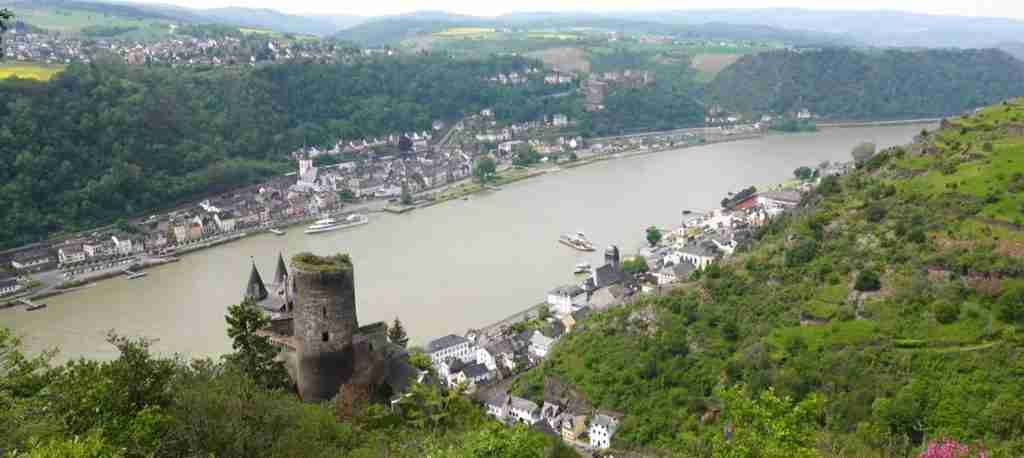
The Moselle River carves one of Europe’s most dramatic wine landscapes as it winds from the Luxembourg border through ancient slate formations toward its Rhine confluence at Koblenz. The river’s tortuous course creates hairpin bends where south-facing slopes achieve ideal sun exposure while the water mass moderates temperature extremes. These conditions enable viticulture at latitudes and gradients that would otherwise prove impossible, producing wines of crystalline purity that define Riesling’s potential.
Moselle vineyards occupy slopes reaching sixty-five degrees gradient—the steepest cultivated vineyards anywhere on Earth. These extreme inclinations preclude mechanization entirely; all vineyard work proceeds by hand, with workers climbing slopes using ladder-like stairs constructed from slate. The physical demands discourage vineyard expansion while ensuring that surviving sites receive intensive attention that mass production cannot replicate.
The Moselle’s slate soils—predominantly blue-grey Devonian slate with pockets of red and grey varieties—impart distinctive mineral character that defines the region’s wines. Slate’s heat retention extends the growing season by radiating warmth through cool autumn nights, enabling grapes to reach optimal ripeness despite the northerly latitude. The soil’s poor fertility stresses vines into concentrated production rather than vigorous growth, intensifying flavors through reduced yields.
Middle Moselle: The Classic Core
The Middle Moselle between Trittenheim and Zell contains the valley’s most celebrated vineyard sites, where optimal slope orientation and slate composition produce wines of benchmark quality. Villages including Piesport, Brauneberg, Bernkastel, Wehlen, Zeltingen, Ürzig, and Erden each contain vineyard parcels recognized as among Germany’s finest terroirs. The continuous succession of renowned sites creates a concentrated wine destination unmatched for quality per kilometer.
Classic Middle Moselle Riesling demonstrates delicacy and transparency that heavier wines cannot approach. Light body belies intense flavor concentration, with citrus and stone fruit notes interweaving with slate-derived minerality. The wines’ relatively low alcohol—often 8-10 percent compared to typical table wine’s 13-14 percent—enables generous consumption without intoxication effects that heavier wines produce. Extended aging potential transforms these seemingly simple wines into complex expressions that reward decades of cellar patience.
The Middle Moselle’s tourism infrastructure enables comprehensive exploration without automobile dependence. River cruises stop at major villages, train service connects larger towns, and cycling paths follow the riverbanks through continuous vineyard scenery. Estate visits can be arranged at numerous quality producers, from internationally renowned names to family operations selling primarily locally.
Saar and Ruwer Tributaries
The Saar and Ruwer rivers join the Moselle from the south, contributing distinctive tributary wines from their own valley systems. Both tributaries share the main Moselle’s slate soils and steep-slope viticulture while producing wines of even greater delicacy and acidity reflecting their cooler microclimates. In challenging vintages, these tributaries struggle to ripen grapes adequately; in favorable years, they produce some of Germany’s most ethereal wines.
Saar wines demonstrate laser-like precision with acidity that can seem aggressive in youth but develops into extraordinary complexity with bottle aging. The cool climate produces wines of exceptional ageability, with well-stored examples from favorable vintages maintaining vitality across half-centuries and longer. Producers including Egon Müller, Van Volxem, and Zilliken establish quality benchmarks that command premium prices reflecting both excellence and scarcity.
The Ruwer valley contains just a handful of significant estates, creating an intimate wine region where personal relationships between visitors and producers develop naturally. Maximin Grünhaus and Karthäuserhof rank among Germany’s most celebrated estates, producing wines that combine Moselle transparency with distinctive Ruwer character. The tributary’s small scale enables comprehensive exploration within limited time while providing contrast with the main Moselle’s greater production volume.
Understanding German Wine Classification
German wine classification reflects the intersection of legal requirements, traditional quality designations, and producer organization standards. Understanding these overlapping systems enables informed purchasing and appreciation of the quality indicators that German labels communicate.
The Prädikat Quality Hierarchy
The Prädikatswein system establishes legally defined quality levels based on grape ripeness at harvest, measured in degrees Oechsle (sugar content). This approach differs fundamentally from geographic classification systems used in France or Italy, where vineyard location determines quality tier regardless of vintage conditions. German classification rewards optimal ripeness achievement rather than geographic prestige, enabling exceptional sites to produce higher Prädikat levels while ensuring that even renowned vineyards cannot claim elevated status when conditions prevent adequate ripening.
Kabinett represents the entry level of Prädikatswein, requiring minimum 70-85 degrees Oechsle depending on region. These wines demonstrate Riesling’s delicate expression, with light body and modest alcohol enabling refreshing consumption that heavier wines cannot match. Traditional Kabinett retains subtle sweetness balanced by acidity, though modern producers increasingly ferment to complete dryness for food-friendly styles.
Spätlese (late harvest) requires higher ripeness thresholds indicating grapes picked after the main harvest when continued hang time concentrated sugars. The additional ripeness produces wines of greater intensity and complexity while maintaining elegant proportions. Spätlese ranges from dry through sweet depending on fermentation choices and residual sugar retention.
Auslese (select harvest) requires selective picking of only the ripest grape clusters, typically achieved by multiple harvest passes through the same vineyard. The concentration produces wines of significant intensity suitable either as rich dry wines or lusciously sweet expressions. Auslese represents the boundary where quality-focused production becomes economically challenging—the labor required for selective harvesting increases costs dramatically.
The highest Prädikat levels require conditions that occur unpredictably. Beerenauslese (berry select) demands grapes affected by Botrytis cinerea noble rot, which concentrates sugars while adding honeyed complexity. Eiswein requires grapes frozen on the vine, harvested and pressed while frozen to concentrate sugars through ice crystal removal. Trockenbeerenauslese (dried berry select) represents the apex—grapes so affected by noble rot that they shrivel to raisin-like concentration, yielding tiny quantities of intensely complex sweet wine.
VDP Classification and Vineyard Hierarchy
The Verband Deutscher Prädikatsweingüter (VDP) represents Germany’s most prestigious producer association, establishing vineyard classification standards exceeding legal requirements. VDP members collectively define quality expectations that legal minimum standards cannot ensure, creating unofficial but widely recognized hierarchy distinguishing exceptional sites from merely adequate ones.
VDP Grosse Lage designates vineyards considered capable of producing Germany’s finest wines—equivalent to grand cru in Burgundian terminology. Wines from these sites carry the GG (Grosses Gewächs) designation when fermented dry, indicating both top terroir and dry style. The Grosse Lage classification reflects historical reputation, terroir assessment, and producer consensus, establishing benchmarks that market prices validate through premium positioning.
VDP Erste Lage indicates premier cru equivalent sites producing excellent wines that fall marginally below Grosse Lage standards. Ortswein (village level) and Gutswein (estate level) complete the pyramid’s lower tiers, establishing quality gradations that enable informed purchasing across the producer’s entire range.
Understanding VDP classification enables identifying wines justified at premium prices versus those where producer reputation exceeds terroir quality. The classification applies only to VDP members—excellent producers outside the association exist but lack equivalent hierarchical designation for their vineyard holdings.
Style Designations: Sweetness and Dryness
German wine’s sweetness spectrum requires explicit labeling to communicate style expectations. The residual sugar remaining after fermentation fundamentally shapes wine character, making style designation essential information that other wine regions rarely provide.
Trocken wines ferment to essential dryness, with residual sugar below perception thresholds. These wines suit food pairing situations where sweetness would clash with savory preparations. Modern German winemaking increasingly emphasizes trocken production, responding to global preference shifts toward dry table wines. VDP members’ GG wines by definition ferment trocken, positioning them as gastronomic wines rather than solo sipping expressions.
Halbtrocken (half-dry) retains perceptible but moderate sweetness balanced by Riesling’s natural acidity. These wines bridge food and dessert functions, pairing effectively with spicy cuisines where residual sugar moderates heat perception. The style has declined in fashionability but retains devoted adherents who appreciate its versatility.
Feinherb operates as an informal designation indicating off-dry character without the specific technical parameters halbtrocken requires. Producers use this term when they feel their wine’s balance differs from what the legal categories suggest, enabling more accurate communication of the actual drinking experience.
Süss or lieblich indicates openly sweet wines, typically those where fermentation stopped before converting all sugar to alcohol. Traditional German Riesling with residual sweetness balances sugar against acidity in ways that prevent cloying character, creating sweet wines that refresh rather than fatigue the palate. These styles have fallen from fashion but represent authentic German wine tradition deserving appreciation on their own terms.
Wine Tasting Etiquette and Practices
German wine culture maintains traditions that shape tasting experiences in ways unfamiliar to visitors accustomed to other wine regions. Understanding these cultural expectations enables comfortable participation in experiences that might otherwise prove confusing or awkward.
Estate Visits and Cellar Door Practices
German wineries traditionally operate by appointment rather than maintaining continuous tasting room hours. This practice reflects the integration of production and hospitality—the same family members making wine also conduct tastings, requiring scheduling that accommodates both functions. Advance arrangements demonstrate respect for producers’ time while ensuring personal attention during the visit.
Tasting fees vary significantly between operations and regions. Traditional family estates often provide complimentary tastings expecting visitors to purchase bottles, while tourist-oriented operations charge per-glass or flight fees. Establishing expectations before tasting prevents misunderstandings; directly asking “Was kostet die Probe?” (What does the tasting cost?) demonstrates appropriate German directness that producers appreciate.
German cellar tours focus on production rather than showmanship. Expect functional spaces displaying fermentation vessels and barrel storage rather than architect-designed tasting theaters. The aesthetic emphasizes authenticity over performance—the same vessels conducting fermentation receive visitors without special preparation. This functional approach communicates that wine quality derives from vineyard work and cellar care rather than marketing presentation.
Tasting Techniques for German Wines
German Riesling rewards deliberate tasting that allows subtle characteristics to emerge. The wines’ relatively light body and lower alcohol concentrations require different appreciation techniques than more powerful wine styles demand.
Temperature significantly affects German wine expression. Excessive chilling suppresses aromatic development and intensifies acidity perception, while inadequate cooling allows alcohol to dominate subtle fruit notes. Target temperatures around 8-12 degrees Celsius enable optimal expression—producers typically serve their wines at ideal temperatures, providing reference points for home serving.
Sequential tasting typically progresses from dry through sweet styles, and from lighter through more concentrated expressions. This progression prevents palate fatigue while allowing each wine’s character to emerge without competition from previously tasted examples. Producers design their tasting sequences to communicate house style evolution across quality levels.
Spitting during extensive tastings maintains tasting capacity and sobriety, enabling evaluation of more wines than consumption would permit. German producers expect professional spitting without embarrassment—the practice demonstrates serious evaluation intent rather than declining the wine’s quality. Spittoons or buckets appear at professional tastings; their presence indicates appropriate spitting behavior.
Purchasing and Shipping Considerations
Estate-direct purchasing provides access to wines unavailable through commercial distribution while supporting producers at margins exceeding wholesale channels. Producers appreciate direct sales that maintain higher margins than bulk distribution, often reserving limited-production wines for personal visitors rather than shipping to distant markets.
Quantity minimums vary between producers; some sell single bottles while others require case quantities justifying shipping logistics. Asking about minimum orders before tasting prevents disappointment when desired wines prove unavailable in desired quantities. Mixed cases combining various wines from a single producer typically satisfy minimum requirements while enabling diversity exploration.
Shipping presents the most complex aspect of direct purchasing for international visitors. German wine shippers maintain temperature-controlled logistics during transport, though summer heat remains challenging for long-distance shipments. Many producers ship directly to international destinations; others require local pickup or domestic delivery addresses. Establishing shipping options before purchasing avoids situations where desired wines cannot reach their intended destination.
Food Pairing Traditions
German wine evolved alongside regional cuisine, creating pairing traditions that demonstrate how local food and wine cultures develop in mutual relationship. Understanding traditional pairings enables appropriate wine selection for German culinary experiences while suggesting applications beyond regional cooking.
Classic Regional Combinations
Riesling’s acidity and residual sweetness create exceptional versatility for rich, fatty, and strongly flavored foods that overwhelm wines lacking similar structural elements. Traditional pork preparations—including Schweinshaxe (roasted pork knuckle), Saumagen (stuffed pig stomach), and various sausage preparations—find ideal partners in Riesling’s ability to cut richness while complementing savory flavors.
River fish preparations represent historical Rhine Valley cuisine that continues in regional restaurants. Riesling from the same watershed that produces the fish creates terroir harmony—the same soil minerals influencing vine growth also affected fish habitat. Freshwater preparations including trout, carp, and pike partner naturally with local wines sharing geographic origin.
Sauerkraut’s fermented sourness requires wine capable of matching rather than fighting its acidity. Off-dry Riesling provides sweetness that moderates sauerkraut’s sharpness while maintaining acidic structure that prevents palate fatigue. This pairing demonstrates how traditional preparations developed assuming wine’s moderating presence.
Cheese pairings follow German traditions prioritizing regional production. Strong-flavored cheeses including Limburger and Romadur require wines capable of matching intensity—Spätlese or Auslese with residual sweetness balance pungent cheese character. Milder preparations including quark-based dishes and fresh cheeses complement lighter Kabinett expressions.
Modern Applications Beyond Tradition
German Riesling’s structural characteristics enable pairings that traditional regional cuisine never anticipated. The same acidity cutting pork fat also moderates spicy heat, making Riesling exceptional partners for Thai, Vietnamese, Chinese, and Indian cuisines. Residual sweetness provides cooling contrast to capsaicin while acid maintains palate freshness through extended meals.
Japanese cuisine offers particular affinity with German Riesling. The wines’ delicacy matches sushi’s subtle flavors without overwhelming, while acidity cleanses the palate between courses. Riesling’s lower alcohol avoids the numbing effects that stronger wines produce, enabling appreciation of subtle taste variations across multi-course presentations.
The current German winemaking emphasis on trocken styles creates food-friendly wines suitable for any cuisine requiring crisp white wine accompaniment. These dry Rieslings substitute for Chablis, Muscadet, or Albariño in applications ranging from raw shellfish through simple grilled fish. The distinctive German character adds terroir interest that international-style wines cannot provide.
Seasonal Considerations for Wine Visiting
Wine region visits offer different experiences across seasons, with each period providing distinct advantages for different visitor priorities. Understanding seasonal patterns enables timing visits to match individual interests.
Spring Renewal
Spring transforms wine valleys as vineyard work intensifies after winter dormancy. Bud break typically occurs in late April, covering slopes with fresh green growth that photographs beautifully against still-brown hillsides. The contrast creates visual interest unavailable during summer’s uniform greenery.
Spring visits coincide with wine release cycles, as producers bottle previous vintages for sale. New release tastings enable evaluating current bottlings that will develop in cellars over coming years. Producers possess time for visitor attention before harvest pressures consume available hours.
Weather variability characterizes spring conditions, with warm days alternating with cold snaps and frequent rainfall. Prepared visitors accept changeable conditions as the price for avoiding summer crowds while experiencing vineyard renewal energy.
Summer Abundance
Summer delivers warm conditions ideal for combining wine visits with outdoor activities including cycling, hiking, and river cruising. Extended daylight enables full-day exploration impossible during shorter winter periods. Vineyard canopy reaches full development, creating the lush green scenery characterizing wine country imagery.
Peak tourist season brings crowded conditions at popular destinations, with accommodation prices reaching annual maximums. Advance booking proves essential for preferred properties; last-minute visits risk limited availability at elevated prices. Popular estates may require appointments scheduled weeks ahead.
Vineyard work continues through summer with canopy management activities including shoot positioning, leaf removal, and cluster thinning. Visitors encounter workers performing these tasks, providing opportunities to observe viticulture in practice rather than viewing dormant landscapes.
Autumn Harvest
Harvest season transforms wine regions into active production zones where the year’s work culminates in grape collection and processing. The atmosphere intensifies as producers focus entirely on bringing fruit from vineyard to cellar before weather deterioration compromises quality. The energy proves infectious for visitors willing to accommodate disrupted schedules.
Harvest timing varies with vintage conditions, typically spanning late September through November in German regions. Early-ripening vineyards begin harvest weeks before late-ripening sites on steeper slopes, extending the active period beyond single-week concentration. Noble rot development may continue harvesting into December for producers pursuing Beerenauslese and Trockenbeerenauslese.
Autumn foliage creates spectacular visual conditions as vineyard leaves turn yellow, orange, and red against grey slate backgrounds. This combination of natural color display and human activity creates photography opportunities unavailable during other seasons. The melancholy beauty of approaching dormancy adds emotional dimension that summer’s abundance cannot match.
Winter Stillness
Winter presents wine regions at their most intimate, with dormant vineyards and minimal tourist presence creating contemplative atmosphere. Reduced visitor numbers enable personal attention from producers unavailable during busy seasons. The quiet reveals landscape character that summer crowds obscure.
Christmas markets throughout wine villages create festive atmospheres combining regional traditions with wine culture. Mulled wine (Glühwein) consumption reaches peak levels, though serious tasting focuses on producers’ normal offerings. Market atmospheres provide cultural experiences beyond wine focus.
Limited daylight restricts activity hours while cold conditions discourage extended outdoor exploration. Interior-focused visits emphasizing cellar tours and extended tastings suit winter conditions better than vineyard walks. Some properties close entirely or operate reduced hours during winter months.
Wine Village Highlights
Rheingau Destinations
Rüdesheim anchors Rheingau tourism with its famous Drosselgasse—a narrow street lined with wine taverns that has attracted visitors for over a century. The concentrated entertainment atmosphere suits visitors seeking convivial consumption rather than serious evaluation, though quality estates surrounding the town reward those willing to venture beyond the central district.
Johannisberg centers on the famous Schloss Johannisberg, where German Riesling tradition traces its documented origin. The estate’s 1775 “discovery” of late harvest’s benefits—when a delayed permit messenger resulted in grapes hanging past normal harvest dates—established Spätlese as a recognized category. The castle’s vineyard views across the Rhine toward Mainz rank among the region’s most spectacular.
Eltville maintains historic character without Rüdesheim’s tourist concentration, offering wine tavern culture in more authentic proportions. The town’s medieval fortifications and half-timbered architecture create appropriate settings for wines connecting contemporary production with centuries of tradition.
Moselle Valley Villages
Bernkastel-Kues splits across the Moselle, with Bernkastel’s medieval market square and half-timbered houses attracting most tourist attention while Kues across the river maintains quieter residential character. The surrounding vineyard slopes including the famous Bernkasteler Doctor produce some of Germany’s most celebrated wines from a setting that photographs beautifully from every angle.
Trittenheim occupies a dramatic river loop that creates exceptional sun exposure on surrounding slopes. The village’s size enables intimate exploration on foot while supporting several quality estates producing wines that reward serious attention. The combination of landscape drama and wine quality makes Trittenheim essential for Moselle understanding.
Piesport surrounds an amphitheater-like vineyard bowl that concentrates sun exposure while protecting vines from wind. The Piesporter Goldtröpfchen vineyard ranks among Germany’s most renowned, though commercial exploitation of the Piesporter name for mass-market wines has unfortunately diluted the site’s reputation among consumers unfamiliar with German wine geography.
Frequently Asked Questions
What is the best time of year to visit German wine regions?
Optimal timing depends on visitor priorities. September and October provide harvest atmosphere with excellent weather and beautiful autumn colors, though producers have limited time for visitors during their busiest work period. Late spring and early summer offer pleasant conditions, new vintage releases, and available producer attention without peak-season crowds. Winter suits visitors prioritizing intimate experiences and Christmas market atmospheres over vineyard beauty.
How much should I expect to pay for quality German Riesling?
Quality-level pricing spans wide ranges reflecting both production costs and market positioning. Entry-level Gutswein from quality producers starts around €8-15, providing excellent introduction to house style. Ortswein and village-level wines range €15-25 for solid quality. Erste Lage and VDP.Grosse Lage wines command €25-75 depending on producer reputation. Top-tier producers’ Grosse Gewächs from renowned sites reach €75-150, with legendary estates commanding premium beyond even these levels.
Should I drink German Riesling young or aged?
German Riesling rewards both approaches depending on style and personal preference. Lighter Kabinett wines provide immediate pleasure when young, though quality examples develop interesting complexity through 5-10 years of aging. Spätlese and Auslese improve dramatically over decades, with well-stored bottles from great vintages maintaining vitality after 30-50 years. The highest Prädikat levels—Beerenauslese and Trockenbeerenauslese—require extended aging to integrate their concentrated components, often reaching peak expression after 20-40 years.
What food pairs best with German Riesling?
Riesling’s acidity and potential sweetness create exceptional versatility. Traditional pairings with pork, sauerkraut, and freshwater fish remain relevant. Spicy Asian cuisines—Thai, Vietnamese, Chinese, Indian—find particularly effective partnerships with off-dry styles where sweetness moderates heat. Japanese cuisine’s subtlety matches Riesling’s delicacy. Rich seafood preparations including lobster and crab complement fuller Spätlese expressions. The diversity of German Riesling styles enables matching with virtually any cuisine through appropriate wine selection.
What is the difference between Mosel and Moselle?
Mosel represents the German spelling of the river’s name, while Moselle is the French spelling used in France and Luxembourg where the river also flows. The German wine region officially uses Mosel since 2007, though older references and non-German sources often use Moselle. Both terms reference the same river and wine region; usage differences reflect language preference rather than geographic distinction.
Can I visit German wineries without speaking German?
English proficiency varies among German wine producers, with larger estates and tourist-oriented operations typically accommodating English speakers while smaller family operations may communicate primarily in German. Advance research identifying English-speaking producers enables comfortable experiences; alternatively, basic German phrases combined with wine vocabulary enables functional communication. Many producers welcome visitors regardless of language barriers, using wines themselves to communicate what words cannot express.
How do German wines compare to other European Rieslings?
German Riesling achieves delicacy and balance that warmer-climate versions cannot replicate. Austrian Riesling from the Wachau demonstrates greater body and alcohol reflecting its climate; Alsatian Riesling shows power from its continental conditions. German examples from the Moselle and Saar particularly achieve ethereal lightness impossible elsewhere, with body and alcohol levels enabling generous consumption without fatigue. The combination of acidity, residual sweetness, and mineral expression creates signatures that distinguish German Riesling as unique rather than simply regional variation.
What does “Grosses Gewächs” mean on German wine labels?
Grosses Gewächs (abbreviated GG) indicates a dry wine from a Grosse Lage (grand cru) vineyard site as classified by the VDP producer association. The designation requires both top terroir classification and trocken (dry) fermentation, positioning GG wines as Germany’s finest expressions for gastronomic purposes. Only VDP member producers use this designation, as it reflects association standards rather than legal classification. GG wines represent producers’ flagship bottlings, typically commanding premium prices reflecting both quality and prestige positioning.
Are German wine regions accessible by public transportation?
Rhine Valley wine regions benefit from excellent rail connectivity, with regular service along both riverbanks enabling car-free exploration of major towns. The Moselle Valley train line follows the river from Koblenz through Cochem and Bullay toward Trier, though service frequency decreases beyond major stations. River cruise options provide scenic transportation while visiting multiple wine villages. Cycling paths following both rivers enable athletic visitors to connect villages at their own pace. The combination of transportation options makes German wine regions among Europe’s most accessible without automobile dependence.
What makes steep-slope viticulture so special?
Steep-slope vineyards achieve sun exposure angles impossible on flat terrain, maximizing photosynthesis and ripening potential in marginal climates. The slopes also provide drainage preventing root waterlogging while their elevation creates air circulation reducing disease pressure. The physical difficulty of working steep slopes ensures intensive hand care that mechanized viticulture cannot match. Combined with typically poor, well-drained soils that stress vines into concentration, steep-slope conditions produce wines of intensity and character that flatter terrain cannot replicate regardless of climate or variety.