Geneva Hidden Gems Guide: Secret Spots & Lesser-Known Treasures
Geneva reveals its most enchanting character beyond the famous Jet d’Eau and United Nations headquarters. The city conceals architectural marvels shaped like cartoon mushrooms, secret medieval passages threading through Old Town cobblestones, a bohemian Mediterranean enclave that feels transported from Turin, and a lakeside confluence where two rivers meet but refuse to blend their waters. This guide unlocks the doors locals keep slightly ajar — the thermal baths where Genevans gather at dawn, the cemetery where literary giants rest beneath simple stones, the whimsical apartment buildings that defy Swiss conservatism, and the hidden courtyards where artisans still practice centuries-old crafts.
Key Takeaways
- Bains des Pâquis offers year-round lakeside immersion: This beloved public bathhouse on Lake Geneva provides swimming, saunas, hammam, and fondue dining for just CHF 2 entry, functioning as a social hub where locals gather from dawn until evening across all seasons.
- Carouge presents Geneva’s Mediterranean soul: Built by the Kingdom of Sardinia in the 18th century, this separate municipality features pastel-colored Italian architecture, hidden courtyards accessed through open doorways, artisan workshops, and a Saturday market considered Geneva’s finest.
- La Jonction displays a natural hydrological phenomenon: The confluence of the turquoise Rhône and milky-white Arve rivers creates a visible boundary where waters of different temperatures, densities, and colors flow side-by-side before gradually merging — best viewed from the viaduct bridge 40 meters above.
- Schtroumpfs Buildings defy architectural convention: Four residential complexes in Les Grottes neighborhood feature curved walls, irregular angles, pastel colors, and no straight lines anywhere, housing 173 subsidized apartments designed between 1982-1984 and ranked among the decade’s most influential buildings.
- Secret Old Town passages reveal medieval Geneva: The steep Degrés-de-Poules staircase dates to 1554, while Passage de Monetier zigzags through 100 meters of medieval buildings, narrowing to 50 centimeters, opening only during December’s L’Escalade festival.
- Cemetery of Kings functions as sculpture garden and historical repository: This verdant park holds Geneva’s most distinguished residents including John Calvin, Jorge Luis Borges, and Jean Piaget, with tombstones ranging from simple markers to elaborate artistic monuments serving as outdoor sculptures.
People Also Ask About Geneva Hidden Gems
What makes Bains des Pâquis different from regular beaches?
Bains des Pâquis operates as a year-round community gathering place rather than a seasonal beach. Entry costs CHF 2 for adults during official hours, providing access to lake swimming platforms, a restaurant serving breakfast from 7 AM and fondue until 11 PM, table tennis, water slides, and climbing walls. Winter transforms the facility with heated wooden cabins, saunas at CHF 20 entry including Turkish bath and hammam access, and massage services at CHF 70 for 50 minutes. The location attracts locals for morning fondue overlooking the lake, sunset concerts, and social gatherings throughout the day. Unlike commercial beaches, this remains an affordable community institution where Genevans from all backgrounds mingle on shared wooden pontoons extending into the lake.
Why is Carouge called the Greenwich Village of Geneva?
Carouge earned this nickname through its bohemian atmosphere, artistic community, and historical role as Geneva’s rebellious neighbor. Built by the Kingdom of Sardinia in the 1780s to rival strict Protestant Geneva, the town welcomed minorities, permitted alcohol and dancing when Geneva banned them, and attracted craftsmen with religious tolerance. Today the neighborhood maintains this independent spirit through artisan workshops, vintage boutiques, jazz clubs like the legendary Chat Noir, and outdoor cafés lining Mediterranean-style architecture. The Saturday market at Place du Marché operates continuously for over 300 years, selling local cheese, flowers, and produce. Hidden courtyards accessible through open doorways reveal climbing vines, workshops, and lush gardens invisible from the street — discovered only by wandering the narrow pedestrian lanes behind the pastel façades.
How do you reach La Jonction confluence viewing point?
The Viaduc de la Jonction railway bridge provides the optimal vantage point 40 meters above where the Rhône and Arve rivers meet. Walk from central Geneva through Bois de la Bâtie park to reach the bridge pedestrian path, which carries two rail tracks alongside a walkway offering unobstructed views of the confluence below. Alternatively, walk along the Rhône riverside promenade to Pointe de la Jonction at the water’s edge, where the two rivers physically converge. The turquoise Rhône flows clear and slow from Lake Geneva while the milky-white Arve rushes down from Mont Blanc carrying glacial sediment. Temperature and density differences prevent immediate mixing, creating a visible boundary between the waters. Locals gather on grassy areas along the Rhône for picnics, swimming, and summer DJ sessions at the confluence point.
Can visitors tour the inside of Schtroumpfs Buildings?
The Schtroumpfs Buildings function as private residences with 170 city-subsidized apartments, preventing public interior access. Exterior viewing remains unrestricted at 23-29 Rue Louis-Favre in the Les Grottes neighborhood, one block from Cornavin train station. The architecture reveals its whimsical details from the street: balconies shaped like butterfly wings, balustrades with wrought-iron vegetation motifs, mushroom-shaped columns, irregular curved walls with no straight lines, and pastel color schemes shifting across connected buildings. Ground floor spaces house a pole dance studio, doctors’ offices, small theater, and café accessible to visitors. Thursday markets at Place des Grottes nearby complete the bohemian neighborhood experience. Architects Christian Hunziker, Robert Frei, and Georges Berthoud designed these structures inspired by Antoni Gaudí’s work in Barcelona and Friedensreich Hundertwasser’s organic architecture.
Extended multi-day tours – 5+ days
Featured Geneva Multi-Day Tour Packages

3 days
Geneva 3-Day Discovery Tour
- ✓ Comprehensive Geneva experience
- ✓ Expert local guides included
- ✓ All accommodation included
- ✓ Transportation provided

5 days
Geneva 5-Day Highlights Experience
- ✓ Comprehensive Geneva experience
- ✓ Expert local guides included
- ✓ All accommodation included
- ✓ Transportation provided

7 days
Geneva 7-Day Cultural Journey
- ✓ Comprehensive Geneva experience
- ✓ Expert local guides included
- ✓ All accommodation included
- ✓ Transportation provided
10 days
Geneva 10-Day Complete Adventure
- ✓ Comprehensive Geneva experience
- ✓ Expert local guides included
- ✓ All accommodation included
- ✓ Transportation provided
Multi-day tour packages powered by TourRadar. Prices and availability subject to change.
Introduction
Geneva’s international reputation centers on diplomacy, banking, and alpine vistas — the United Nations, World Health Organization, pristine lakefront promenades, and the towering Jet d’Eau fountain. Yet this manicured image conceals a more intriguing city where architectural rebels built cartoonish apartment complexes that shocked conservative residents, where medieval passages twist through Old Town foundations, where a separate Italian-influenced municipality maintains its bohemian soul, and where natural phenomena create visual spectacles in the city center.
The hidden Geneva exists in plain sight, overlooked by visitors following conventional tourist circuits. Locals swim year-round at a lakeside bathhouse serving fondue, wander Carouge’s Mediterranean courtyards on Saturday mornings, photograph the point where two rivers meet but refuse to blend, and appreciate whimsical buildings once derided as ridiculous now celebrated as architectural landmarks. These experiences reveal the city’s layered character — Calvinist austerity coexisting with Italian exuberance, international formality alongside community informality, Swiss precision juxtaposed with organic creativity.
This guide illuminates the pathways locals traverse daily: the steep medieval staircases connecting upper and lower Old Town, the cemetery functioning as sculpture garden and peaceful reading room, the neighborhood markets selling regional specialties, the architectural curiosities that challenged urban planning conventions, and the natural gathering places where Genevans socialize across class boundaries. Understanding these hidden dimensions transforms Geneva from a corporate stopover into a multifaceted city where historical layers, cultural contradictions, and community traditions create depth beneath the polished surface.
Bains des Pâquis: Geneva’s Social Lakeside Institution
Bains des Pâquis operates as Geneva’s most democratic gathering place, where corporate executives share wooden pontoons with students, families picnic beside solo readers, and morning swimmers encounter evening fondue diners. This lakeside bathhouse extends from Quai du Mont-Blanc into Lake Geneva on a peninsula jetty, functioning continuously since 1872 through multiple reconstructions. The current concrete structure dates from 1932, replacing earlier wooden platforms. Entry costs CHF 2 for adults and CHF 1 for children aged 6-15 during summer operating hours, with free access for children under 6. Winter rates decrease to CHF 1, while sauna facilities command CHF 20 entrance including all thermal amenities.
The facility transcends typical beach or pool functions. Swimming platforms surround the peninsula, allowing direct lake access from multiple angles. Free sunrise concerts occur during summer mornings at approximately 6 AM, drawing early risers for live music overlooking the water. La Buvette des Bains restaurant serves breakfast from 7 AM, featuring fresh-pressed juices, handmade bread, and birchermuesli. The famous fondue service begins at 6 PM, requiring reservations for wooden cabin tables during winter when demand peaks. Lunch offerings include plat du jour, salads, cheese plates, and fresh-squeezed juices at prices below central Geneva restaurant rates.
Winter operations expand the thermal facilities. Saunas, Turkish bath, and hammam open from September through May, with Monday offering reduced CHF 13 entry. Towel rental costs CHF 5 if visitors arrive without their own. Massage services provide relaxation, sports, reflexology, lymphatic drainage, and shiatsu treatments for CHF 70 per 50-minute session, bookable by phone Monday-Friday 9 AM-1 PM. The Turkish bath overlooks the lake through windows, maintaining moderate temperatures suitable for extended relaxation. Hammam services include black soap exfoliation treatments. Summer closes the saunas but opens the hammam daily from 10 AM-7:30 PM for CHF 10 including towel rental.
Community character defines the Bains experience. Locals treat the peninsula as a neighborhood living room, arriving for morning coffee, midday swimming breaks, afternoon reading sessions, or evening gatherings. The atmosphere mixes informality with mutual respect — regulars recognize each other across seasons, conversations flow naturally between strangers sharing tables, and children play freely while parents socialize. Thursday markets at nearby Place des Grottes complement morning visits, creating a routine combining market shopping with lakeside relaxation.
Practical access information clarifies logistics. Take bus lines 6, 8, 9, or 25 to Mont-Blanc stop, then walk eight minutes along the lakeshore. Water taxis called mouettes provide lake crossings from multiple points including Molard, Eaux-Vives, and Genève Plage. White and blue parking zones line Quai du Mont-Blanc and Quai Wilson, with the Fairmont Grand Hotel parking garage offering spaces at CHF 3 per hour. Geneva’s free bike rental service Genève Roule operates nearby, with ample bicycle parking available. Operating hours extend from approximately 9 AM-9 PM in summer and 10 AM-7 PM in winter, though exact times vary with weather conditions and season.
Carouge: Geneva’s Mediterranean Bohemian Quarter
Carouge remains technically independent as its own municipality while functioning as an integral Geneva neighborhood, accessible via a ten-minute tram ride from the city center. The Kingdom of Sardinia built this planned city in the 1780s, hiring Italian architects to create a rival to Protestant Geneva across the Arve River. The resulting Mediterranean architecture — low-rise pastel buildings with terraces, arcaded streets modeled after Turin, and grid layout oriented around central squares — persists unchanged, creating an atmosphere distinctly different from Geneva’s austere stone facades.
Place du Marché forms the neighborhood’s beating heart. This central square hosts Saturday and Wednesday morning markets that have operated continuously for over 300 years, selling local cheese, wines, flowers, seasonal produce, and artisan products. The Church of Sainte-Croix dominates the square architecturally, housing 36 bells considered among Switzerland’s finest collections. Surrounding café terraces spread across the square during warm months, filled with locals lingering over coffee and conversation. Flat fountains shoot water from the ground during summer, creating impromptu playgrounds for children.
Hidden courtyards constitute Carouge’s defining characteristic. Wander down Rue Saint-Joseph or Rue Ancienne during daytime when many doors remain open, revealing lush inner gardens, climbing vines, artisan workshops, and fountain-centered courtyards invisible from the street. These secret spaces developed from the original Sardinian urban plan that prioritized communal gardens and workshop access. Contemporary residents maintain the tradition, leaving ground-floor doors unlocked during business hours to share the beauty with passersby. The discovery process — peeking through open doorways, stumbling upon unexpected green spaces, finding craftspeople at work — rewards aimless wandering more than directed navigation.
Artisan tradition continues from Carouge’s founding when religious minorities and skilled craftsmen fled Geneva’s strict Protestant regulations. Over 450 artisans worked here by 1790, representing thirty different trades from blacksmiths to sculptors. Modern equivalents include jewelry designers, book restorers, potters, chocolate makers, and fashion designers occupying ground-floor workshops along the main streets. Small independent boutiques sell vintage clothing, antiques, handmade crafts, and locally produced goods. The Musée de Carouge, housed in a traditional townhouse, chronicles this artisan history through rotating exhibitions of 19th-century ceramics, textiles, and contemporary works.
Culinary and nightlife scenes draw Genevans seeking alternatives to expensive city-center restaurants. Le Flacon holds a Michelin star despite maintaining relaxed open-kitchen atmosphere and artistic modern presentations. Bistro des Halles offers classic French bistro experience with mirrored walls and vintage décor perfect for people-watching. Multiple gelaterias cluster around Place du Marché, serving artisan Italian ice cream consumed while sitting by the fountain. Evening transforms the neighborhood, particularly along Rue Vautier and Place du Marché where bars, jazz clubs, and music venues concentrate. Le Chat Noir (Black Cat) functions as legendary jazz club, bar, and concert venue attracting locals for live music and cocktails away from hotel bars and corporate lounges.
Practical navigation proves straightforward. Tram lines 12 and 18 reach Carouge from central Geneva in ten minutes, with multiple stops serving different neighborhood areas. The district welcomes pedestrian exploration — park at the large Centre Commercial de Carouge if driving, then walk. Thursday markets at Place des Grottes in Les Grottes neighborhood can be combined with Carouge visits for a full day of hidden Geneva discovery. Cinema Bio on Rue Saint-Joseph displays iconic retro neon signage photogenic at dusk, marking an independent cinema screening art house films. December Christmas markets and ice-skating rinks transform the squares into winter festival spaces.
La Jonction: Where Two Rivers Meet But Don’t Mix
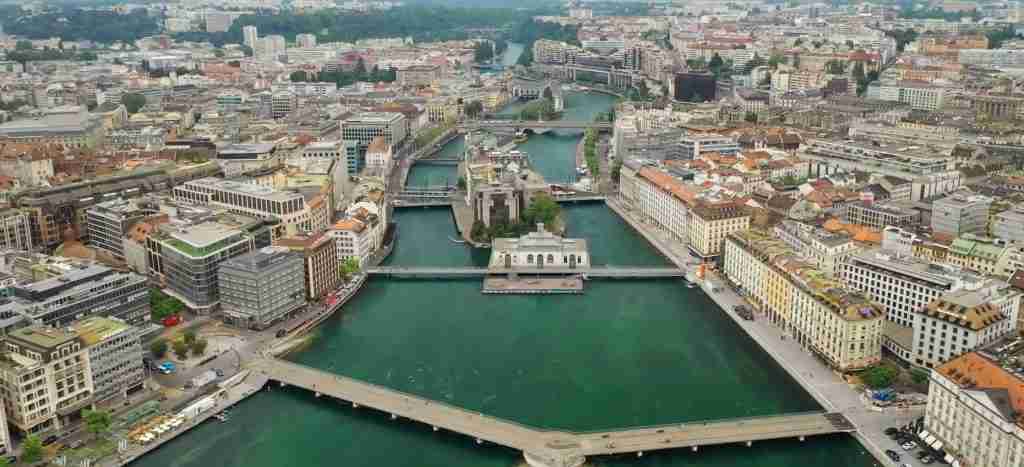
La Jonction presents one of Geneva’s most striking natural phenomena — the confluence where the Rhône River flowing from Lake Geneva meets the Arve River descending from Mont Blanc massif, creating a visible boundary between turquoise and milky-white waters that resist immediate mixing. The Rhône emerges crystal clear from Lake Geneva, its water filtered through the deep lake and warmed by sun exposure, flowing at a slower pace with a distinctive blue-green color. The Arve rushes down from alpine glaciers carrying heavy sediment loads of sand and mud, maintaining frigid temperatures and a cloudy grayish-white appearance from suspended particles.
The visual effect varies with seasonal water levels and flow rates. Spring snowmelt intensifies the Arve’s volume and sediment load, creating dramatic contrast against the Rhône’s clearer water. Summer stabilizes flows, allowing more gradual blending. Winter reduces both volumes, making the boundary more subtle but still visible. The two rivers flow parallel for a short distance before turbulence patterns begin mixing the waters downstream. Temperature differences contribute to separation — the cold Arve sinks slightly beneath the warmer Rhône, delaying complete integration. Density variations from sediment concentration further maintain the boundary.
Viaduc de la Jonction railway bridge provides the optimal viewing platform 40 meters above the confluence. This viaduct, completed in 1945, carries two railway tracks and a pedestrian footpath directly over the meeting point. Walk from Geneva’s center through Bois de la Bâtie park to reach the bridge, which offers unobstructed overhead views of the contrasting waters merging below. The pedestrian path allows stopping for photographs and extended observation without railway interference. Viewing times vary with sun position — morning light illuminates the color contrast most dramatically.
Pointe de la Jonction at water level offers a different perspective. This peninsula between the two rivers functions as recreational area with grassy spaces, walking paths, and direct river access. Locals gather for picnics, sunbathing, and swimming during warm months. Young people jump into the Rhône from various points along the banks, floating downstream in the current. Summer DJ sessions and informal gatherings create party atmosphere at the confluence tip during evenings. The area attracts joggers and cyclists using the riverside paths connecting to broader Geneva trail networks.
Water sports utilize the powerful currents. Rafting and kayaking tours launch upstream on the Rhône, paddling through city sections before encountering the cold Arve current at the confluence. Tour operators report noticeable temperature drops when rafts cross from Rhône to Arve water. The mixing zone creates complex currents requiring experienced navigation. Swimming proves challenging due to current strength — locals familiar with conditions jump in for brief cooling swims but avoid extended water time.
Historical context enriches understanding. The area surrounding the confluence served agricultural purposes feeding Geneva in earlier centuries. Industrial development followed as the city expanded, utilizing water power and river access. Contemporary reclamation transformed the zone into recreational green space, with the city investing in pathway maintenance, landscaping, and environmental preservation. Scientists study the confluence patterns to understand hydrological dynamics, climate change impacts on river flows, and sediment transport affecting water quality. Poplar and willow trees line the banks, providing shade and contributing to peaceful ambiance despite urban proximity.
Schtroumpfs Buildings: Geneva’s Whimsical Architectural Rebellion
The Schtroumpfs Buildings occupy 23-29 Rue Louis-Favre in Les Grottes neighborhood, one block northeast of Cornavin train station, presenting Geneva’s most unconventional residential architecture. Four connected buildings containing 170 city-subsidized apartments and 3,300 square meters of commercial space display no straight lines anywhere — curved walls, irregular angles, wrought-iron balustrades with organic vegetation motifs, balconies shaped like butterfly wings, mushroom-shaped support columns, spiral stairwells, and pastel color schemes that shift across facades. Architects Christian Hunziker, Robert Frei, and Georges Berthoud designed the complex between 1982-1984, deliberately rejecting Geneva’s conservative architectural traditions.
The nickname “Schtroumpfs” (Smurfs in French) derives from resemblance to the mushroom-shaped houses inhabited by cartoon characters from Belgian comic creator Peyo’s 1958 series. Initial public reception proved hostile — conservative Genevans called the buildings ridiculous, inadmissible, and childish, questioning how such fantastical structures could exist in Calvin’s austere city. The 1984 Comité International des Critiques d’Architecture ranked the complex second among the decade’s most influential buildings globally, recognizing the architectural significance Geneva residents initially rejected. Today the structures appear in every Geneva guidebook, functioning as tourist attraction and neighborhood landmark.
Architectural inspiration came primarily from Antoni Gaudí’s Barcelona works and Friedensreich Hundertwasser’s organic architecture philosophy. The trio of architects studied Gaudí’s Casa Milà and Park Güell curved forms, adapting principles to Geneva’s urban context. Hundertwasser’s ecological focus and rejection of straight lines influenced the design philosophy that disorder stimulates creativity rather than threatening architectural integrity. The result blends these influences into a uniquely Geneva expression — whimsical without reaching Gaudí’s extremes, organic without Hundertwasser’s maximum irregularity, colorful while maintaining pastel Swiss restraint.
Interior spaces maintain the curved aesthetic. Spiral staircases without straight handrails connect floors through organic shapes. Individual apartments feature unique ornamental details, with construction workers encouraged to express creativity in finishing touches. No two units share identical layouts due to the irregular building shapes. Balconies cantilever at unexpected angles, creating surprising views and unusual spatial relationships. The buildings integrate with surrounding vegetation, allowing trees and shrubs to soften the structures’ visual impact while maintaining the fantasy atmosphere.
Ground-floor commercial spaces house diverse tenants accessible to visitors. A pole dance studio occupies one unit, alongside doctors’ offices, a small theater for performances, and a café serving the neighborhood. Thursday markets at nearby Place des Grottes create weekly gathering events, with the Schtroumpfs Buildings providing distinctive architectural backdrop. The Les Grottes neighborhood overall maintains alternative character — bars with moderate prices like Café de la Reine, Au Coin Mousse, and Brasseur des Grottes attract students and artists rather than corporate professionals.
Social housing regulations govern residency. The city calculates rent according to tenant income, making apartments accessible across economic classes. Annual applications number around 4,000 for Geneva’s rent-adjusted social housing program, but only approximately 200 units become available citywide. Waiting lists extend years for Schtroumpfs apartments specifically due to their distinctive character and central location. The buildings house multigenerational families, young professionals, artists, and retirees, creating economic diversity rare in expensive Geneva neighborhoods.
Secret Passages of Old Town Geneva
Geneva’s medieval Old Town conceals narrow passages threading between buildings, connecting upper and lower districts through steep staircases and covered walkways that predate modern street planning. These routes functioned as shortcuts for residents navigating the hillside topography, serving practical purposes while creating atmospheric experiences unavailable on main thoroughfares.
Degrés-de-Poules (Chicken Steps) constitutes the most accessible secret passage, connecting Place du Bourg-de-Four to the backside of Saint-Pierre Cathedral. This covered staircase dates to 1554, replacing an earlier open-air route that climbed directly from the square to the cathedral level. The name derives from the steep narrow steps resembling chicken coop ladders — “degrés” meaning steps, “poules” meaning hens. The passage remains open daily, allowing anyone to experience the medieval shortcut. Steep angles require caution, especially during wet weather when stone steps become slippery. The covered sections provide atmospheric lighting effects as sunlight filters through openings.
Passage de Monetier offers a more exclusive experience, opening only once annually during December’s L’Escalade festival celebrating Geneva’s 1602 victory over Savoyard invasion forces. This passage zigzags through 100 meters of medieval buildings between Rue du Perron and the old rampart foundations, narrowing to 50 centimeters at its tightest point. The route follows paths between early fortifications protecting Cathedral Saint-Pierre’s hill, dating to roughly 1300-1400 AD when buildings gradually filled spaces between defensive walls. A map engraved at the entrance identifies the passage: “Passage de Monetier, at the base of the capitular cloister enclosure of Saint-Pierre, 12th-13th centuries.”
The restricted access to Passage de Monetier stems from its location threading through private property and between residential buildings. During L’Escalade festival (typically December 11-12), the passage opens for two days, allowing visitors to squeeze through the narrowest sections and experience the medieval layout. Darkness, tight confines, and irregular surfaces create adventure atmosphere. The passage served no military purpose during the 1602 Savoyard attack despite urban myths — historical records show the battle occurred elsewhere in the city. The opening ceremony simply adds medieval authenticity to L’Escalade festivities celebrating Geneva’s independence.
Other Old Town passages and covered walkways reward exploration. Passage des Lions near the cathedral features historical plaques and intricate architectural details. Various covered arcades along Rue de l’Hôtel-de-Ville and connecting streets provide weather protection while maintaining medieval character. These routes allow movement through Old Town avoiding main tourist flows, discovering hidden courtyards, antique shops, and quiet corners invisible from primary thoroughfares. Summer heat makes shaded passages particularly valuable, while winter weather protection becomes essential.
Cemetery of Kings: Geneva’s Verdant Pantheon
Cimetière des Rois (officially Cimetière de Plainpalais) functions simultaneously as cemetery, sculpture garden, and peaceful urban park in the Jonction quarter at Rue des Rois 10. Established in 1482 for plague victims during the Black Death’s second pandemic wave, the cemetery evolved into Geneva’s equivalent of Westminster Abbey or Père Lachaise — final resting place for distinguished personalities who contributed significantly to the city’s intellectual, political, and cultural life. Geneva regulations strictly limit burial rights to magistrates and notable figures approved by the Administrative Council, making it effectively a closed cemetery for ordinary residents.
Famous inhabitants include Protestant Reformation leader John Calvin, though his exact grave location remains unknown with only a traditional memorial marker indicating his approximate resting place. Argentine author Jorge Luis Borges lies beneath a roughhewn stone engraved with Nordic and English imagery evoking the myths that fascinated him, having returned to Geneva where he spent childhood years. Developmental psychologist Jean Piaget, conductor Ernest Ansermet, former UN High Commissioner Sérgio Vieira de Mello, and Swiss presidents including Georges Favon rest here alongside writers, artists, scientists, and political leaders spanning centuries of Geneva history.
The cemetery’s memorial monuments range from simple stones to elaborate artistic sculptures, creating an outdoor gallery. Georges Favon’s monument rises three meters tall shaped like a rugged mountain. François Simon’s grave features two incredibly detailed bronze hands rising from ground level. A svelte 1.6-meter bronze bird of paradise marks Simone Rapin’s resting place. Man-of-letters Paul Fabien Perret-Gentil lies beneath an enormous red marble book. Sculptor Pedro Meylan’s intense visage watches over the graves, having created works for other monuments here. These varied artistic approaches reflect individual personalities and artistic periods, making grave-wandering a sculptural discovery process.
Controversial burials provoke ongoing discussion about who merits inclusion. Grisélidis Réal, a sex worker, author, and women’s rights activist who died in 2005, initially sparked debate when the city council approved her burial among Geneva’s heroes. Supporters emphasized her role as eloquent defender of prostitutes’ rights and important social voice. Her polished grey stone headstone subtly displays carved navel and lower torso outline, continuing her tradition of challenging conventions even in death. The cemetery holds no religious affiliation, distinguishing it from most historical European burial grounds and allowing diverse inhabitants regardless of faith.
The 2.8-hectare grounds function as park for living Genevans. Locals treat the space as reading room, picnic spot, and contemplative walking area rather than solely memorial site. White gravel pathways crisscross large grassy areas left slightly overgrown intentionally, creating naturalistic atmosphere rather than manicured cemetery formality. Shrubs and trees in numerous varieties provide shade, seasonal color, and bird habitat. Autumn proves particularly evocative when fallen leaves cover graves and paths, creating rich mustiness as they decompose into soil.
Contemporary art installations occasionally occupy the cemetery. Sophie Calle’s “Tomb of Secrets” — a flat stone rectangle flush with ground containing a slot for inserting written secrets — invites public participation in ongoing anonymous confession. Claudio Colucci’s “Question Time,” a green metal park bench with question-mark-shaped overhang, remains from a 2016 sculpture garden exhibition. These additions acknowledge the cemetery’s dual function as memorial space and living public park.
Operating hours run daily from 7:30 AM to 7 PM, with free admission. The cemetery sits approximately one mile from central Geneva hotels, accessible by bus or tram to the Plainpalais area. No new general burials occur — only pre-approved distinguished figures can claim spaces, with choreographer Noemi Lapzeson interred in January 2018 as the most recent addition. This closure preserves historical character while honoring contemporary achievers meeting the strict approval criteria.
Quartier des Bains: Geneva’s Contemporary Art District
The Quartier des Bains (Baths Quarter) concentrates Geneva’s contemporary art scene in a compact district near Cornavin station, named for former public bathhouses that occupied the area. Galleries, museums, artists’ studios, and cultural spaces cluster along streets where industrial buildings converted into exhibition venues. The neighborhood functions as Geneva’s answer to Chelsea in New York or Shoreditch in London — an arts district where contemporary work displays alongside experimental performances and creative businesses.
MAMCO (Museum of Modern and Contemporary Art) anchors the quarter with 3,500 square meters of exhibition space displaying 3,000 works from permanent collections alongside rotating temporary exhibitions. The museum opened in 1994 in a former industrial building, establishing the neighborhood’s cultural direction. Three times annually, MAMCO renews its presentation, creating dialogue between permanent collection pieces and temporary proposals that exceed simple exhibition combinations. Large retrospectives feature artists like Martin Kippenberger, Jim Shaw, Sylvie Fleury, John Armleder, and William Leavitt.
Smaller independent galleries occupy street-level spaces and renovated warehouses throughout the quarter. These commercial galleries represent contemporary artists, host openings, and maintain regular exhibition schedules attracting collectors and art enthusiasts. Monthly coordinated art walks bring multiple venues together for evening openings with wine and informal gatherings. The galleries range from established spaces representing blue-chip artists to experimental venues showcasing emerging talents and challenging work.
Street art and murals appear throughout the neighborhood, sanctioned by property owners who embrace creative expression. Walls display large-scale works by local and international artists, creating an outdoor gallery accessible without entrance fees or gallery hours. The vibrant visual environment reflects the quarter’s alternative character, distinguishing it from Geneva’s conservative financial district aesthetics. Photography opportunities abound for visitors interested in contemporary urban art.
Cafés, restaurants, and bars catering to the art community provide informal gathering spaces. These establishments tend toward casual atmosphere and moderate prices compared to central Geneva’s expense. Creative professionals meet for coffee, gallery owners discuss exhibitions over lunch, and evening openings spill from galleries into nearby bars. Thursday evenings particularly buzz with activity when multiple venues coordinate exhibition openings.
Practical navigation remains straightforward from Cornavin station. Walk five minutes to reach the quarter’s edge, then explore on foot as venues concentrate within several blocks. The Bains des Pâquis lakeside bathhouse and Schtroumpfs Buildings sit nearby, allowing combined visits exploring Geneva’s creative and unconventional sides in a single afternoon. Quarterly art publications and online listings detail current exhibitions and upcoming openings for visitors planning gallery visits.
Bois de la Bâtie: Geneva’s Natural Urban Escape
Bois de la Bâtie occupies 20 hectares on Geneva’s western edge where the Rhône River curves toward La Jonction, functioning as the city’s largest natural park. The forest provides hiking trails, picnic areas, playgrounds, a small zoo, and winding paths through mature trees creating a genuine woodland atmosphere despite urban proximity. Locals use the park for morning jogs, family outings, dog walks, and nature immersion without leaving city limits.
The zoo within the park houses regional animal species in naturalistic enclosures. Red pandas constitute the star attraction, visible climbing trees and exploring their habitat. Farm animals in petting areas allow children direct interaction with goats, rabbits, and chickens. Aviaries display native and exotic bird species. The zoo operates free of charge, making it accessible for regular family visits. Educational signage explains animal behaviors, conservation status, and natural habitats.
Trail networks wind through the forest, offering varied walking experiences from short loops to longer hikes connecting to La Jonction and riverside paths. The irregular topography creates elevation changes unusual for Geneva’s generally flat lakeside areas. Mature trees including oak, beech, and chestnut provide extensive canopy cover, making the park valuable during summer heat. Seasonal changes affect the forest dramatically — spring brings wildflowers and fresh greenery, autumn colors the canopy gold and red, winter creates stark sculptural tree silhouettes.
Playgrounds and picnic facilities accommodate family gatherings. Multiple play structures suit different age groups, from toddler equipment to challenging climbing structures for older children. Picnic tables scatter throughout the park, some in open meadows and others beneath tree cover. Grills allow outdoor cooking at designated locations. The infrastructure supports all-day family outings combining nature walks, zoo visits, playground time, and meals.
Access from central Geneva requires tram or bus connections, with the park positioned on the city’s western edge rather than central core. The location filters out casual visitors, creating a more local atmosphere than high-traffic tourist parks. Combining Bois de la Bâtie with La Jonction viewing from the Viaduc creates a natural itinerary — walk through the forest, cross the railway bridge to observe the river confluence, then continue along riverside paths or return through the park.
Local Markets and Food Experiences
Geneva’s neighborhood markets reveal local food culture and community gathering traditions invisible in supermarket shopping. These weekly events sell regional products directly from producers, creating opportunities to taste Geneva specialties, interact with farmers and artisans, and observe how Genevans provision their households.
Carouge Market at Place du Marché operates Saturday and Wednesday mornings, having functioned continuously for over 300 years. This market sells local cheese including Gruyère, Appenzeller, and regional varieties, fresh bread from artisan bakers, seasonal produce from surrounding agricultural areas, honey from local beekeepers, and flowers in brilliant displays. Wine vendors pour tastings of Geneva and Swiss wines. Prepared food stalls offer immediate consumption options — rotisserie chickens, regional sausages, fresh pasta, and pastries. The market atmosphere buzzes with French conversation, vendor calls, and social interactions as neighbors encounter each other weekly.
Plainpalais Market on Boulevard Georges-Favon hosts Geneva’s largest flea market alongside produce vendors. Wednesday and Saturday mornings draw treasure hunters seeking antiques, vintage clothing, used books, vinyl records, and miscellaneous objects. Produce stands sell seasonal fruits and vegetables at competitive prices. The market attracts bargain seekers and collectors willing to arrive early for best selections. Surrounding the permanent market structure, temporary stalls expand the offerings during peak seasons.
Pâquis Market near the lakeside bathhouse operates Wednesdays, offering international flavors reflecting the neighborhood’s diverse population. Vendors sell North African spices, Middle Eastern ingredients, Asian produce, and European specialties alongside Swiss products. The multicultural character distinguishes this market from more traditional Geneva markets focused primarily on Swiss and French offerings.
Geneva sausage Longeole appears at markets and traditional restaurants, representing the city’s unique culinary contribution. This fennel-seasoned pork sausage requires slow cooking, typically served with rösti (Swiss potato pancake) or lentils. Recognizing authentic Longeole requires checking for the protected geographic indication certification ensuring traditional production methods. Markets sell both raw sausages for home cooking and prepared versions ready to eat.
Fondue experiences range from casual to ceremonial. Bains des Pâquis serves fondue au crémant in waterfront heated cabins during winter, requiring reservations for prime evening slots. Traditional restaurants throughout Old Town offer classic cheese fondue and raclette, with quality varying significantly between tourist-focused and local-patronized establishments. Ask market cheese vendors for recommendations on restaurants serving authentic preparations rather than simplified tourist versions.
Seasonal Experiences Throughout the Year
Geneva’s hidden gems transform with seasonal changes, offering distinct experiences across the calendar. Understanding these variations helps visitors and residents optimize timing for specific activities and atmospheric preferences.
Spring brings L’Escalade festival preparations visible in Old Town shops selling marmite chocolates and traditional costume components. March through May sees moderate weather ideal for walking Carouge’s streets before summer heat, exploring Cemetery of Kings under fresh green foliage, and observing higher water volumes at La Jonction as snowmelt increases alpine river flows. Markets display spring vegetables, early strawberries, and abundant flower varieties. Bains des Pâquis transitions from winter sauna mode to summer swimming platforms, with May marking the shift.
Summer maximizes outdoor activities. Bains des Pâquis becomes social headquarters with extended hours, sunrise concerts at 6 AM, swimming platforms crowded with families and young adults, and fondue served on lakeside terraces until 11 PM. La Jonction attracts swimmers jumping from banks into the Rhône current, while grassy areas host picnics and DJ sessions. Carouge’s outdoor café terraces fill every evening, with lingering conversations extending late into warm nights. Bois de la Bâtie provides shaded forest respite from urban heat. Markets peak with summer produce including local cherries, apricots, berries, and vegetables.
Autumn offers Cemetery of Kings at its most evocative — fallen leaves cover graves and paths in gold and brown layers, creating rich seasonal atmosphere. La Jonction’s color contrast intensifies as autumn rains increase the Arve’s sediment load while the Rhône maintains clarity. Carouge’s Saturday market sells autumn harvest including squash, mushrooms, and new wine. September’s Vogue de Carouge street fair transforms the neighborhood with rides, food stalls, and evening entertainment. Temperature drops make walking tours comfortable after summer heat.
Winter brings L’Escalade festival in early December, opening Passage de Monetier for its annual two-day public access and filling Old Town with costumed celebrations, chocolate marmite smashing traditions, and historical reenactments. Bains des Pâquis transforms into winter gathering place, with heated wooden cabins serving fondue overlooking the lake, saunas and hammam providing thermal relaxation, and hardy locals ice swimming before warming in Turkish baths. Carouge Christmas markets create festive atmosphere with ice-skating rink and illuminated streets. Snow occasionally dusts the Cemetery of Kings, adding delicate beauty to the monuments.
Practical Information for Discovering Hidden Geneva
Transportation infrastructure makes hidden gems accessible through public transit. Geneva’s TPG (Transports Publics Genevois) network includes trams, buses, and lake boats called mouettes. Tourist cards from hotels provide free public transport during stays. Tram 12 reaches Carouge from central stations. Buses 6, 8, 9, and 25 serve Bains des Pâquis. Walking remains the optimal method within Old Town for discovering secret passages and architectural details.
Timing considerations optimize experiences. Early morning visits to Bains des Pâquis capture the local atmosphere before tourist arrivals — sunrise concerts at 6 AM attract dedicated community members. Saturday mornings at Carouge Market (8 AM-1 PM approximately) provide authentic shopping experiences alongside Genevans provisioning weekly groceries. Cemetery of Kings visits work best during weekday mornings when few visitors disturb the contemplative atmosphere. La Jonction viewing benefits from morning light illuminating the color contrast between rivers.
Budget-conscious exploration proves feasible despite Geneva’s expensive reputation. Bains des Pâquis charges CHF 2 entry for full-day lakeside access. Markets sell prepared foods cheaper than restaurants — purchase bread, cheese, and fruit for picnics in parks or along lakefronts. Cemetery of Kings, Old Town passages, Schtroumpfs Buildings exterior viewing, and La Jonction confluence all require zero admission fees. Carouge exploration costs nothing beyond optional café stops or artisan purchases.
Language presents minimal barriers in multilingual Geneva. While French dominates daily conversation, English works reliably in tourist-serving establishments and younger generations speak multiple languages. Market vendors appreciate attempted French phrases when purchasing goods. Basic expressions for shopping include: “Bonjour” (hello), “Combien?” (how much?), “Je voudrais” (I would like), and “Merci” (thank you). Most signage appears in French, though major attractions provide English information.
Photography opportunities abound throughout hidden Geneva. Schtroumpfs Buildings present architectural details from multiple angles, with morning light illuminating pastel colors most favorably. La Jonction requires overhead perspective from the viaduct bridge for capturing the two-river contrast. Carouge’s hidden courtyards and colorful façades photograph well in soft afternoon light. Cemetery of Kings monuments create sculptural subjects, though respectful behavior toward mourners and graves remains essential. Old Town passages benefit from minimal editing to preserve atmospheric lighting effects.
Safety considerations remain minimal in Geneva’s exceptionally secure urban environment. Standard precautions apply: watch valuables in crowded markets, avoid isolated areas after dark, and maintain awareness in unfamiliar neighborhoods. The La Jonction swimming areas attract locals familiar with current strengths — visitors should observe behavior before attempting river swimming. Winter ice on Old Town passage stairs requires cautious footing. Bois de la Bâtie paths remain well-maintained but natural surfaces can be uneven.
Combining Hidden Gems Into Walking Itineraries
Strategic combinations create efficient discovery routes maximizing hidden Geneva experiences. A northern lakeside itinerary begins at Bains des Pâquis for morning swimming or breakfast, walks east along the lakefront promenade observing Jet d’Eau from the less-photographed northern shore, then continues to Pâquis Market (Wednesday mornings) before returning for afternoon lakeside relaxation and evening fondue. This route reveals local daily rhythms rather than tourist circuits.
The western confluence walk starts at Bois de la Bâtie park entrance, follows forest trails to the eastern edge, crosses Viaduc de la Jonction railway bridge viewing the river confluence below, descends to Pointe de la Jonction at water level for close observation of the mixing waters, then walks along Rhône riverside paths returning toward central Geneva. This three-hour route combines nature, hydrological phenomena, and local gathering spots.
Old Town architectural discovery focuses on secret passages and medieval layers. Enter through Degrés-de-Poules staircase from Place du Bourg-de-Four, explore Cathedral Saint-Pierre’s archaeological site beneath the church revealing Roman foundations, wander narrow lanes seeking open courtyard doorways, and note passage markers for future L’Escalade festival visits. Carouge can be added via tram for afternoon market visits or café time in Mediterranean squares. This cultural immersion requires half to full day depending on cathedral visit depth.
The bohemian creative circuit connects artistic neighborhoods and unconventional architecture. Start at Schtroumpfs Buildings in Les Grottes photographing whimsical facades, explore Thursday market at Place des Grottes (morning), walk through Quartier des Bains galleries viewing contemporary art, take tram 12 to Carouge for Mediterranean architecture and artisan workshops, then evening returns to Les Grottes or Carouge bars for nightlife. This reveals Geneva’s creative spirit countering conservative stereotypes.
Cemetery and memorial heritage follows contemplative themes. Cemetery of Kings morning visit allows quiet reflection among notable graves, followed by walking to nearby Plainpalais Market (Wednesday/Saturday) for produce and flea market browsing. Afternoon proceeds to Cathédrale Saint-Pierre viewing John Calvin’s traditional memorial before exploring Old Town passages where Reformation history layers beneath current streets. This intellectual and spiritual journey traces Geneva’s religious and cultural legacy.
Hidden Gems Beyond Central Geneva
Versoix marshes present natural wetland environment 10 kilometers northeast of Geneva center, accessible by regional train. These marshes support beaver populations, wild boar, diverse bird species, and aquatic ecosystems protected as nature reserve. Canoe excursions explore narrow waterways threading through reeds and vegetation, revealing wildlife invisible from land. The pristine setting contrasts dramatically with urban Geneva, demonstrating Swiss environmental preservation within commuting distance of major cities.
Conservatory and Botanical Garden Geneva maintains extensive collections across 28 hectares, including greenhouses displaying tropical, desert, and temperate plants from worldwide sources. The herbarium preserves over 6 million specimens for scientific research. Outdoor gardens feature alpine plants, medicinal herbs, historical varieties, and themed collections. Free admission makes this valuable for nature enthusiasts and families seeking educational outdoor experiences. The location along Lake Geneva’s northern shore allows combination with other lakeside attractions.
Fondation Baur Asian art museum specializes in Chinese and Japanese ceramics, jades, prints, and decorative arts displayed in rotating exhibitions within an elegant mansion setting. This lesser-known collection presents exceptional quality pieces with detailed contextual information. The intimate museum atmosphere contrasts with larger institutional venues, creating contemplative viewing experiences. Temporary exhibitions complement permanent collections with focused thematic presentations.
Skateboard Museum occupies small space in central Geneva displaying an impressive collection spanning skateboarding history from early wooden boards through contemporary designs. The founder’s passion manifests in every wall, shelf, and corner packed with rare gems and iconic pieces. Personal tours share stories behind specific boards and cultural context of skateboarding’s evolution. This niche museum appeals to skateboard enthusiasts and anyone appreciating subcultural artifacts.
Frequently Asked Questions
How much time should I allocate for exploring Geneva’s hidden gems?
Allocate minimum three full days to experience major hidden gems without rushing. Day one covers Bains des Pâquis morning visit, Old Town secret passages exploration, and Cemetery of Kings contemplation. Day two explores Carouge Saturday market, neighborhood wandering through hidden courtyards, and afternoon at La Jonction observing river confluence. Day three examines Schtroumpfs Buildings architecture, Quartier des Bains contemporary art galleries, and Bois de la Bâtie natural areas. Combining multiple sites in single days proves feasible given Geneva’s compact geography, though lingering at each location reveals deeper character than rapid touring. Week-long stays allow leisurely discovery including market days, seasonal events, and spontaneous diversions following local recommendations.
Can I visit hidden gems during winter months?
Winter transforms rather than closes Geneva’s hidden gems, creating distinct seasonal experiences. Bains des Pâquis shifts to winter mode with heated cabins serving fondue, saunas and hammam providing thermal relaxation, and ice swimming attracting hardy locals followed by warm Turkish bath sessions. Cemetery of Kings displays striking beauty when occasional snow dusts monuments and bare tree branches create sculptural silhouettes. La Jonction shows intensified color contrast after autumn rains increase Arve sediment loads. Carouge hosts Christmas markets with ice-skating rinks and festive illumination. December’s L’Escalade festival opens Passage de Monetier secret passage for annual two-day access alongside Old Town celebrations. Reduced daylight hours require earlier starts for walking tours, while indoor venues like galleries and museums provide weather-independent options.
Are Geneva’s hidden gems suitable for families with children?
Most hidden gems accommodate family visits with appropriate planning. Bains des Pâquis provides children’s water slides, climbing walls, shallow swimming areas, and table tennis alongside restaurant options ranging from breakfast to dinner. Carouge’s Saturday market features fountain play areas where children splash while parents shop, with numerous ice cream vendors and casual dining. Cemetery of Kings functions as park where local families picnic and children explore while parents read, though respectful behavior toward graves remains essential. Schtroumpfs Buildings fascinate children with colorful architecture and irregular shapes visible from public sidewalks. La Jonction offers grassy areas for playing and safe river viewing from Viaduc bridge, though swimming proves dangerous due to strong currents. Bois de la Bâtie includes playgrounds, zoo animals, and forest trails suitable for family walks. Old Town passages present adventure for older children capable of navigating steep stairs safely.
What distinguishes Geneva’s hidden gems from major tourist attractions?
Hidden gems reveal authentic local life and community gathering places rather than monuments designed for tourist consumption. Bains des Pâquis functions as neighborhood institution where Genevans socialize across economic classes, not a commercial beach resort. Carouge maintains working artisan community and residential character despite tourist interest. La Jonction attracts locals for picnics and swimming rather than organized tour groups. Cemetery of Kings serves as peaceful reading room for residents alongside its memorial purpose. These spaces demonstrate how Genevans actually spend time rather than performing for visitors. The experiences require more initiative than following signs to Jet d’Eau — discovering hidden courtyards in Carouge demands wandering unlabeled streets, appreciating Cemetery of Kings requires historical knowledge beyond names on stones, and understanding Bains des Pâquis’ significance needs observing regular community interactions.
How do I find the best local restaurants and cafés near hidden gems?
Ask vendors at neighborhood markets for restaurant recommendations — cheese sellers and producers maintain opinions about establishments serving quality preparations of their products. Observe where locals gather during meal times rather than following tourist concentrations. Carouge’s Rue Saint-Joseph and streets radiating from Place du Marché host numerous cafés and restaurants patronized by residents rather than guidebook followers. Les Grottes neighborhood around Schtroumpfs Buildings offers bars and casual eateries with moderate prices compared to central Geneva. Bains des Pâquis’ La Buvette restaurant provides authentic fondue and plat du jour at below-market rates. Quartier des Bains cafés serve the art community with relaxed atmospheres. Avoid establishments displaying multilingual menus with photographs near major attractions — these target tourists rather than locals. Early evening observations reveal which places fill with French-speaking regulars versus foreign languages.
Can I access hidden gems using only public transportation?
Geneva’s comprehensive public transport network reaches all major hidden gems without requiring cars or taxis. TPG trams and buses operate frequently with hotel guest cards providing free travel during stays. Bains des Pâquis sits walking distance from central hotels or reaches via buses 6, 8, 9, and 25 to Mont-Blanc stop. Tram 12 connects central Geneva to Carouge in ten minutes. Old Town exploration proceeds entirely on foot from any central location. Cemetery of Kings, La Jonction, and Bois de la Bâtie require tram or bus connections from center but remain accessible without personal vehicles. Mouettes (water taxis) cross Lake Geneva connecting various lakeside points including Bains des Pâquis. Walking proves optimal for discovering architectural details and hidden passages where vehicles cannot venture. Bicycle rental through Geneva’s free Genève Roule program provides alternative transportation for longer distances while maintaining flexibility.
What should I know about Swiss social customs when visiting local gathering places?
Swiss social customs emphasize punctuality, quietness, and personal space respect. Arrive on time for any reservations at Bains des Pâquis fondue dinners or restaurant bookings. Maintain moderate voice levels in public spaces — loud conversations attract disapproving glances even in casual settings. Greet shopkeepers and vendors with “Bonjour” when entering markets or small stores, and “Au revoir” when leaving. Queue orderly at markets and cashiers without pushing or crowding. Sunday observes quiet day traditions limiting noise activities, though markets and attractions operate normally. Swimming attire at Bains des Pâquis ranges from full swimsuits to complete nudity — both remain acceptable, choose personal comfort level. Tipping follows Swiss customs of rounding up bills rather than calculating percentages, with service included in prices. Request permission before photographing individuals even in public spaces. Cemetery of Kings requires respectful behavior as active memorial site despite park-like atmosphere.
Are there guided tours available for Geneva’s hidden gems?
Specialized walking tours focus on Geneva’s lesser-known attractions and neighborhoods, led by local guides sharing insider knowledge and historical context. Geneva Tourism office schedules themed walks including Old Town passages, architectural diversity, and neighborhood discoveries. Private guide services customize itineraries combining specific hidden gems matching interests. The Passage de Monetier opens during L’Escalade festival with guided groups explaining medieval history and urban development. Some local historians offer Cemetery of Kings tours identifying notable graves and sharing biographies beyond names on stones. However, many hidden gems reward independent exploration more than guided visits — discovering Carouge’s courtyards through open doorways occurs spontaneously while wandering rather than following predetermined routes. Bains des Pâquis’ community atmosphere develops through repeated visits observing regular patterns rather than single guided introductions. Balance guided historical context with unstructured exploration time for optimal experiences.
How can I learn more about Geneva’s architectural history before visiting?
Geneva architectural resources include municipal archives, historical societies, and specialized publications. The Ville de Genève official website (geneve.ch) maintains sections describing architectural landmarks including Schtroumpfs Buildings with historical photographs and design explanations. Local bookstores sell architectural guides examining Geneva’s building styles from medieval through contemporary periods. University libraries hold academic studies analyzing specific neighborhoods and architects. The 1984 ranking by Comité International des Critiques d’Architecture placing Schtroumpfs Buildings second among decade’s influential structures appears in architecture journals from that era. Antoni Gaudí and Friedensreich Hundertwasser monographs provide context for understanding Schtroumpfs design influences. Musée de Carouge exhibitions occasionally feature neighborhood architectural history with original plans and historical context. Walking tours led by architecture specialists explain building techniques, stylistic movements, and urban planning decisions visible in current streetscapes.
What makes Geneva’s hidden gems worth visiting despite the city’s high costs?
Hidden gems provide authentic experiences and value unavailable at expensive mainstream attractions. Bains des Pâquis offers full-day lakeside access for CHF 2 compared to commercial beach resorts charging ten times that amount. Cemetery of Kings, La Jonction, Schtroumpfs Buildings viewing, and Old Town passages require zero admission fees while revealing significant cultural and natural phenomena. Market shopping provides direct producer pricing on exceptional local products unavailable in grocery chains. The experiences demonstrate how expensive Geneva maintains community institutions accessible across economic classes — thermal baths with lake views, public parks functioning as sculpture gardens, architectural experiments in subsidized housing, and natural hydrological displays in city centers. These gems also reveal aspects of Geneva invisible through conventional tourism: medieval urban planning, contemporary art scenes, bohemian neighborhoods resisting gentrification, environmental preservation, and multicultural community life. The value extends beyond cost savings to authentic cultural understanding worth more than any admission price.