
Galway Travel Guide 2026: Complete Visitor’s Guide to Ireland’s West Coast
Galway beckons as Ireland’s bohemian cultural heart, where cobbled medieval lanes meet wild Atlantic shores and traditional music spills from colorful pubs into street corners alive with performers and festivals. This vibrant university city on Ireland’s western coast serves as the gateway to Connemara’s rugged mountains, the dramatic Cliffs of Moher, and the ancient Aran Islands, combining urban energy with access to some of Europe’s most spectacular natural landscapes. Whether you’re drawn by Galway’s renowned arts festivals, its thriving food scene rooted in fresh Atlantic seafood, or the promise of day trips along the Wild Atlantic Way, this guide provides everything needed to plan an authentic Irish experience in 2026.
Key Takeaways
- Cultural Festivals Year-Round 2026: Galway hosts major events including the Galway International Arts Festival (July), Galway Races (July-August), Galway Theatre Festival (April 30-May 9), and Macnas Halloween Parade (October), with advance booking essential during festival periods when accommodation prices increase significantly.
- Strategic Gateway Location: Galway’s position makes it the ideal base for exploring Ireland’s west coast, with the Cliffs of Moher one hour south, Connemara National Park 45 minutes northwest, and the Aran Islands accessible by 40-minute ferry from nearby Rossaveel or 90-minute sailing from Galway City itself.
- Compact Walkable City Center: Galway’s Latin Quarter, Spanish Arch, Eyre Square, and Salthill Promenade are all within easy walking distance, with the pedestrianized Quay Street and Shop Street creating a vibrant hub where most attractions, restaurants, and traditional pubs cluster within a 15-minute radius.
- Authentic Irish Language and Culture: As a designated Gaeltacht (Irish-speaking) region gateway, Galway offers immersion in traditional Irish music sessions nightly in pubs throughout the Latin Quarter, artisan markets every Saturday, and proximity to communities where Irish remains the primary language spoken daily.
- Seasonal Weather Considerations 2026: Ireland’s west coast climate brings mild temperatures year-round but frequent rain, with summer months (June-August) offering the warmest weather (15-20°C) and longest daylight hours, while shoulder seasons (April-May, September-October) provide fewer crowds and lower accommodation costs with unpredictable conditions.
- Transportation Hub Accessibility: Direct buses from Dublin Airport run hourly with fares from €13-15, Irish Rail trains connect Dublin Heuston to Galway Ceannt Station in 2 hours 20 minutes for €17-26, and Shannon Airport sits just one hour south with regular bus connections, making Galway easily accessible without a rental car.
People Also Ask About Visiting Galway in 2026
How many days should I spend in Galway in 2026?
Three to four days allows sufficient time to explore Galway City and take one or two day trips to nearby attractions. Spend one full day walking the city center visiting Galway Cathedral, the Spanish Arch, Galway City Museum (free admission), and the Latin Quarter, with evenings dedicated to pub crawls along Quay Street where traditional music sessions occur nightly. Dedicate a second day to the Cliffs of Moher and Burren (full-day tour €40-60 including admission), a third day to the Aran Islands (ferry €17-34 return plus island activities), and reserve time for Salthill Promenade, Saturday market browsing, and perhaps a half-day in Connemara. Festival attendees should add extra days as events like the Galway International Arts Festival span two weeks with overlapping performances requiring multiple evenings. Two days suffices for city highlights only, while a full week allows deeper exploration including overnight stays on the Aran Islands or in Connemara, multiple festival performances, and a more relaxed pace without rushing between attractions.
What is the best time to visit Galway in 2026?
May through September offers the warmest weather and longest days in Galway, with July and August bringing peak tourist season, fully booked accommodations, and the highest prices alongside major festivals like the Galway International Arts Festival and Galway Races. Late spring (May-June) and early autumn (September) provide the ideal balance of pleasant weather averaging 12-17°C, fewer crowds than midsummer, lower accommodation rates, and generally drier conditions than winter months. Festival enthusiasts should plan around specific events: the Galway Theatre Festival runs April 30-May 9 2026, the Galway International Arts Festival occupies mid-July, and the Galway Races draw massive crowds in late July and early August. Winter months (November-February) bring the lowest prices with hotels from €100 per night compared to €200-260 in summer, but expect frequent rain, strong Atlantic winds, shorter daylight hours (sunset by 5pm in December), and reduced ferry schedules to the Aran Islands with some seasonal services suspended entirely. October offers the unique experience of the Macnas Halloween Parade, one of Ireland’s most spectacular street theater events, while avoiding summer crowds but accepting autumn weather unpredictability.
Is Galway expensive to visit in 2026?
Galway costs moderate compared to Dublin but prices have risen steadily, with budget-conscious travelers managing on €95-130 per person daily including hostel accommodation (€25-40 per bed), budget meals (€10-18), public transport, and free or low-cost attractions, while mid-range visitors spend €200-290 daily for hotel accommodation (€90-125 per person sharing), restaurant meals (€35-50 for dinner), and paid tours or attractions. Accommodation represents the largest expense with three-star hotels averaging €130-170 per night, four-star properties €155-200, and luxury options €250-370, with prices spiking 40-60% during Galway Races and Arts Festival weeks when advance booking months ahead becomes essential. Dining costs vary dramatically from €5-10 for takeaway meals and pub lunches to €35-50 for three-course restaurant dinners, with Galway’s Saturday market offering fresh produce and artisan foods for self-catering. Public transport within Galway costs just €1.55 per ride with a Leap Card (30% cheaper than cash fares), while day tours to the Cliffs of Moher range €40-60 and Aran Islands ferry tickets cost €17-34 return from Rossaveel. Free activities including the Galway City Museum, Salthill Promenade walks, Saturday market browsing, Spanish Arch area exploration, and nightly traditional music sessions in many pubs significantly reduce daily costs for budget travelers willing to prioritize cultural experiences over paid attractions.
Can I visit Galway without a car in 2026?
Galway functions excellently as a car-free destination with compact city center distances making walking the primary transportation method, comprehensive public bus routes operated by Bus Éireann and City Direct serving suburbs and nearby towns for €1.55-2.40 per ride, and abundant organized day tours departing daily to all major regional attractions including the Cliffs of Moher, Connemara, and Aran Islands. Irish Rail connects Galway to Dublin (€17-26 one-way, 2 hours 20 minutes), Limerick, and other cities, while Citylink and Bus Éireann operate frequent coaches from Dublin Airport (€13-15, 2 hours 45 minutes) and Shannon Airport (approximately one hour). The Galway to Aran Islands route offers year-round ferries from Rossaveel ferry terminal (€17-34 return, 40 minutes) with connecting bus service from Galway City included in ferry ticket prices, while seasonal direct ferries from Galway City docks run April-September. Organized day tours eliminate navigation concerns entirely with packages including the Cliffs of Moher tour (€40-60), Connemara and Kylemore Abbey tour (€35-55), and combined Aran Islands and Cliffs of Moher experiences (€55-80), all departing from central Galway pickup points. Within the city, the bike-share program (Bikeshare.ie) offers stations at Glenina Heights and other locations for independent two-wheeled exploration, while taxis and ride-sharing services provide backup options for late-night returns or luggage-heavy situations, making rental cars unnecessary unless planning extensive independent exploration of remote Connemara areas or multiple self-guided day trips to scattered rural attractions.
Extended multi-day tours – 5+ days
Featured Galway Multi-Day Tour Packages

3 days
Galway 3-Day Discovery Tour
- ✓ Comprehensive Galway experience
- ✓ Expert local guides included
- ✓ All accommodation included
- ✓ Transportation provided
5 days
Galway 5-Day Highlights Experience
- ✓ Comprehensive Galway experience
- ✓ Expert local guides included
- ✓ All accommodation included
- ✓ Transportation provided
7 days
Galway 7-Day Cultural Journey
- ✓ Comprehensive Galway experience
- ✓ Expert local guides included
- ✓ All accommodation included
- ✓ Transportation provided
10 days
Galway 10-Day Complete Adventure
- ✓ Comprehensive Galway experience
- ✓ Expert local guides included
- ✓ All accommodation included
- ✓ Transportation provided
Multi-day tour packages powered by TourRadar. Prices and availability subject to change.
Introduction: Discovering Galway’s Unique Character in 2026
Galway occupies a singular position in Ireland’s cultural landscape as the country’s self-proclaimed Cultural Heart, where medieval heritage meets contemporary artistic energy in a city small enough to explore on foot yet large enough to sustain year-round festivals, live music venues, and a thriving creative community. The city’s character stems from its dual identity: a working port and university town with nearly 80,000 permanent residents that swells significantly during term time at the University of Galway, formerly known as NUI Galway, and a tourism destination drawing visitors to its colorful streetscapes, Atlantic coastal position, and role as gateway to Connemara’s wilderness and the offshore Aran Islands where Irish language and traditional culture remain living realities rather than museum pieces.
The medieval core surrounding Quay Street and Shop Street preserves the layout of the 13th-century walled town granted city status in 1484, with the Spanish Arch standing as a remnant of the defensive walls that once protected merchant houses trading with Spain and France. This Latin Quarter, as locals call the area between Eyre Square and the Spanish Arch, concentrates Galway’s pub culture, live music scene, and artisan shops in a warren of narrow lanes where painted facades in vibrant yellows, blues, and reds create the Instagram-worthy backdrop that appears in countless tourism promotions. Street performers occupy corners along Quay Street throughout summer months, ranging from traditional Irish musicians to contemporary buskers, fire jugglers, and living statues, creating an outdoor theater atmosphere that draws evening strollers even when shops close.
Galway’s festival calendar defines much of its annual rhythm, with major cultural events attracting international visitors and booking accommodation months in advance. The Galway International Arts Festival, running for two weeks in July, transforms the city into an arts showcase with theater performances, visual art exhibitions, street spectacle, and music ranging from traditional Irish sessions to contemporary experimental works. The Galway Races in late July and early August bring a different energy entirely, with horse racing enthusiasts, social events, and fashion competitions filling hotels and creating a party atmosphere throughout the city. Smaller but equally significant events include the Galway Theatre Festival (April 30-May 9, 2026), showcasing emerging Irish theater companies, the Galway International Oyster Festival in September celebrating the city’s seafood heritage, and the spectacular Macnas Halloween Parade in October, featuring giant puppets, street theater, and elaborate costumes in Ireland’s largest Halloween celebration.
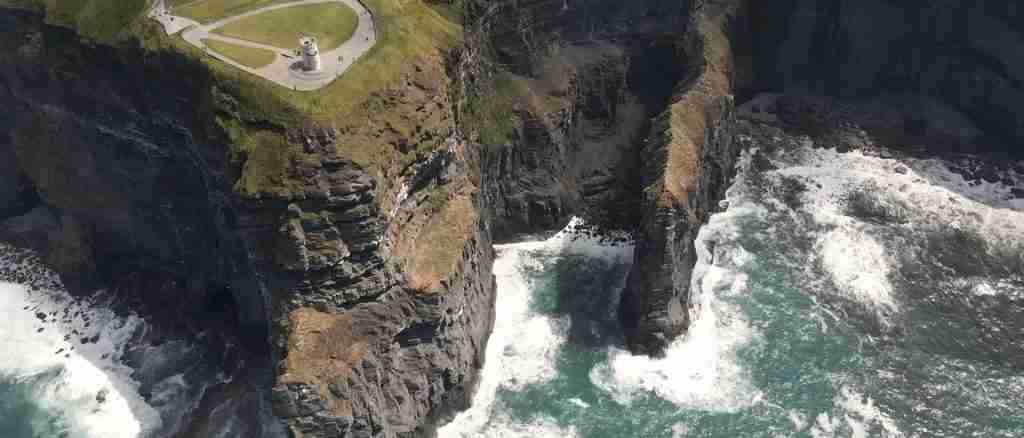
Beyond the city center, Galway’s position on the Wild Atlantic Way coastal touring route makes it an ideal base for day trips to dramatic coastal cliffs, prehistoric stone forts, and traditional fishing villages. The Cliffs of Moher, rising 214 meters above the Atlantic approximately one hour south in County Clare, rank among Ireland’s most photographed natural wonders and appear in multiple film productions including Harry Potter and the Half-Blood Prince. Connemara National Park, 45 minutes northwest near the village of Letterfrack, offers hiking trails through mountain and bog landscapes with Diamond Hill providing panoramic views over island-dotted bays. The three Aran Islands—Inis Mór, Inis Meáin, and Inis Oírr—accessible by ferry from Rossaveel or Galway City, preserve traditional Irish language, dry-stone wall construction, and archaeological sites including the prehistoric hill fort Dún Aonghasa perched on Inis Mór’s western cliffs.
Galway’s food scene reflects its Atlantic coastal location with fresh oysters, mussels, crab, and fish featuring prominently on restaurant menus, from casual fish and chips shops to Michelin-starred Aniar in the West End celebrating hyper-local ingredients sourced from Connemara farms and Galway Bay waters. The Saturday market at Church Lane near St. Nicholas’ Collegiate Church draws crowds browsing stalls selling artisan cheeses, smoked salmon, fresh baked goods, handcrafted jewelry, and organic vegetables, creating a social gathering point where locals shop for weekend provisions while visitors sample Irish farmhouse products. Pubs throughout the Latin Quarter offer traditional music sessions most evenings without cover charges, with Taaffes, Tig Coili, and Monroe’s tavern particularly known for quality musicians playing fiddles, tin whistles, bodhrán drums, and guitars in impromptu gatherings that welcome respectful listeners but discourage loud conversation during performances.
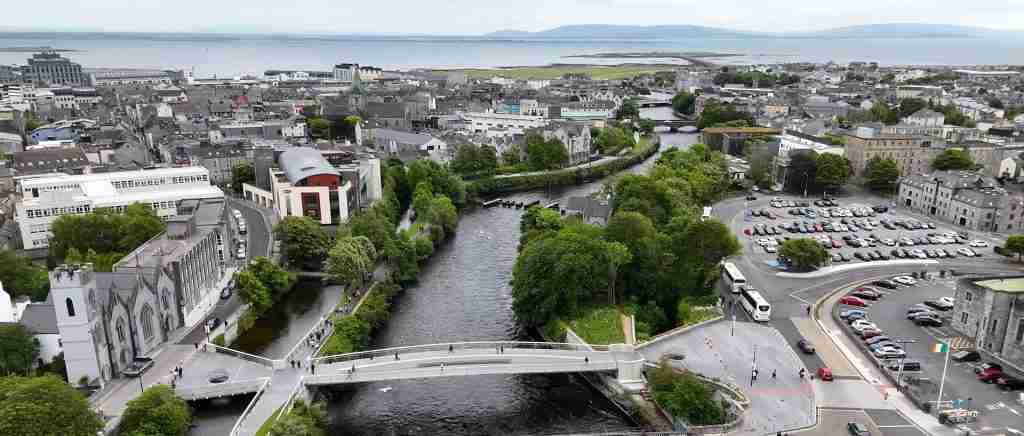
The city’s compact size and walkable center make orientation straightforward even for first-time visitors. Eyre Square (officially John F. Kennedy Memorial Park) serves as the de facto city center, with the bus and train stations positioned on its eastern edge, shops and department stores lining its northern side, and pedestrianized streets leading west toward the Latin Quarter. From Eyre Square, a 10-minute walk down Shop Street and Quay Street reaches the Spanish Arch and Galway City Museum on the River Corrib’s east bank, while a 25-minute stroll along the coast reaches Salthill Promenade, a Victorian-era waterfront featuring arcades, restaurants, and seaside walks with views across Galway Bay toward the Burren’s limestone hills. The River Corrib bisects the city, with the main tourist areas concentrated on the east bank and the West End residential neighborhood and University of Galway campus on the west bank connected by several pedestrian bridges.
Galway’s appeal in 2026 rests on this combination of authentic Irish cultural experiences, dramatic nearby landscapes, compact walkable urban core, and year-round festival calendar that transforms the city into a celebration of arts, music, literature, and traditional heritage without losing its character as a functioning university town where students, artists, and long-term residents create a community beyond tourism’s surface attractions.
Getting to Galway in 2026: Transportation Options and Connections
Galway’s accessibility from major Irish and international entry points makes reaching the city straightforward whether arriving by air, rail, or bus, with multiple daily connections from Dublin Airport, Shannon Airport, and Irish cities eliminating the necessity for rental cars unless planning extensive independent rural exploration.
Air Travel and Airport Connections to Galway 2026
Shannon Airport (SNN), located approximately 60 miles (97 kilometers) south of Galway in County Clare, serves as the closest international airport with direct flights from North America (New York, Boston, Philadelphia, Chicago), the United Kingdom, and European destinations. Bus Éireann route 51 connects Shannon Airport to Galway with journey time around 90 minutes for €15-20, departing approximately every two hours throughout the day, while private bus companies including Citylink offer direct express services with similar fares and journey times. Ireland West Airport Knock (NOC), situated 45 miles (72 kilometers) north of Galway, primarily handles European destinations and summer seasonal routes, with bus connections taking approximately 90 minutes to reach Galway city center.
Dublin Airport (DUB), Ireland’s busiest international hub with extensive connections from North America, Europe, and beyond, sits 140 miles (225 kilometers) from Galway with direct bus services eliminating the need for Dublin city transfers. Citylink operates hourly direct buses from Dublin Airport Terminal 1 and Terminal 2 to Galway Coach Station on Fairgreen Road, with journey time 2 hours 45 minutes and advance online fares starting around €13-15, rising to €18-22 for same-day walk-up tickets. GoBus provides similar direct Dublin Airport to Galway service with comparable fares and frequencies, offering a backup option when Citylink sells out during peak travel periods or festival weekends. Both companies provide free WiFi, comfortable coaches, and luggage storage beneath seats, making the direct bus option more convenient than combining Dublin Airport to Dublin city center transport with separate train or bus tickets to Galway.
Travelers arriving at Dublin Airport who prefer train travel must first reach Dublin city center, typically by Airlink Express bus (€8-10, 40 minutes to city center), local bus (€3.30-4, approximately one hour), or taxi (€25-35 to Heuston Station, 30-45 minutes depending on traffic), adding both cost and complexity compared to direct bus options. The train journey itself from Dublin Heuston Station to Galway Ceannt Station operates approximately 10 times daily with Irish Rail (Iarnród Éireann) taking 2 hours 20 minutes, but ticket prices of €17-26 one-way often exceed the total cost of direct Dublin Airport buses when accounting for Dublin city transportation connections.
Train Travel to Galway 2026
Irish Rail operates frequent InterCity services connecting Galway with Dublin, Limerick, Athlone, and intermediate stations along the western corridor, with Galway’s Ceannt Station located just off Eyre Square within a 5-minute walk of the city center Latin Quarter. The Dublin Heuston to Galway route runs approximately 10 departures daily from early morning through evening, with journey time averaging 2 hours 20 minutes and advance online booking yielding the lowest fares around €17-20 for off-peak travel, rising to €22-26 for peak times and last-minute purchases. The scenic route crosses the midlands and passes through towns including Athlone where the train crosses the River Shannon, offering views of Ireland’s agricultural heartland before reaching Galway’s Atlantic coast.
Travelers should note that Dublin operates two separate railway stations that do not connect by rail: Heuston Station serves western and southern routes including Galway, Cork, and Limerick, while Connolly Station serves northern and southeastern routes including Belfast and Sligo. Transferring between stations requires taking the Luas Red Line tram (approximately 15 minutes, €2.15 with Leap Card) or the 145 bus, making train travel from Dublin Airport to Galway less convenient than direct bus options that avoid city center transfers entirely. Irish Rail tickets can be purchased online at irishrail.ie for the best prices, at station ticket offices, or through automated machines, with the reusable Leap Card accepted for payment and offering small discounts compared to single-journey tickets.
Bus Services and Coaches to Galway 2026
Galway’s central bus station (Galway Coach Station) on Fairgreen Road, positioned immediately east of Eyre Square, serves as the arrival and departure point for Bus Éireann regional services, Citylink express coaches, and GoBus routes connecting Galway with cities, towns, and airports throughout Ireland. This centralized station with waiting areas, ticket offices, and nearby parking makes bus travel the most straightforward and cost-effective option for most visitors arriving without private vehicles.
Citylink represents the primary express coach operator between Dublin and Galway, with departures every hour throughout the day from Dublin city center (Crampton Quay at Dame Street), Dublin Airport terminals, and intermediate stops, arriving at Galway Coach Station after 2 hours 45 minutes. Online advance fares start around €13-15, with same-day tickets reaching €18-22 depending on demand and travel time. The service provides free WiFi, power outlets at seats, comfortable coaches with restrooms, and luggage storage, making it competitive with train travel while offering better value and direct airport connections. GoBus operates a similar service with comparable fares and schedules, serving as an alternative when Citylink sells out or for travelers preferring different departure times.
Bus Éireann, Ireland’s national bus company, operates extensive regional services connecting Galway with Cork (route 51, approximately 4 hours 30 minutes, €25-30), Limerick (route 51, approximately 2 hours, €15-20), and smaller towns throughout the west of Ireland. These regional services typically cost less than private coach companies but take longer with multiple stops in villages and rural areas, making them more suitable for travelers exploring regional Ireland than visitors seeking direct city-to-city transportation. The TFI (Transport for Ireland) Leap Card works on Bus Éireann services, offering 30% discounts compared to cash fares and eliminating the need to carry exact change for bus drivers.
Driving to Galway 2026
Visitors driving from Dublin take the M6 motorway westbound for approximately 140 miles (225 kilometers), with journey time around 2 hours 30 minutes under normal traffic conditions, though Friday afternoon rush hour and summer weekends can add 30-60 minutes to the trip. The M6 represents Ireland’s primary east-west route, fully motorway standard with service areas at Enfield and Athlone, making for straightforward navigation once clear of Dublin’s urban traffic. From Shannon Airport, the N18 north connects to Ennis and the N67 west toward Galway, covering approximately 60 miles in one hour under typical conditions.
Parking in central Galway presents challenges during summer months and weekends, with on-street parking limited to pay-and-display areas (€2-3 per hour, two-hour maximum in the Latin Quarter) and multi-story car parks including Eyre Square Shopping Centre car park, Dyke Road car park, and others charging €2-3 per hour with daily maximums around €15-20. Hotels outside the immediate city center often provide free or reduced-rate parking for guests, making accommodation choice significant for drivers planning to keep vehicles rather than rely on walking and public transport once based in Galway. Rental car companies including Budget, Enterprise, Hertz, and local operators maintain offices at Galway Airport and on Eyre Square for easy pickup and drop-off, with advance online booking recommended for best rates, typically €35-60 per day for economy cars with manual transmission, rising to €60-90 for automatic transmission or larger vehicles.
Driving in Ireland follows left-side road rules, potentially confusing for visitors from right-side driving countries, with narrow rural roads, sheep crossing without warning, and aggressive local drivers on motorways adding stress for unaccustomed visitors. Many travelers find arriving by bus or train and relying on organized day tours more relaxing than self-driving, reserving rental cars for travelers specifically planning extended Connemara exploration, visits to remote archaeological sites inaccessible by public transport, or multi-day road trips along the Wild Atlantic Way beyond Galway’s immediate vicinity.
Accommodation in Galway 2026: Where to Stay for Every Budget
Galway’s accommodation ranges from budget hostels popular with backpackers and students to luxury hotels overlooking Galway Bay, with location decisions balancing proximity to Latin Quarter nightlife against quieter residential areas offering better value and parking options, while seasonal price variations make advance booking essential during festival periods when hotels fill months ahead at premium rates.
Budget Accommodation Options in Galway 2026
Hostel dormitory beds in Galway cost €25-40 per night at well-regarded properties including Kinlay Hostel Galway on Merchants Road (awarded Best Hostel in Ireland 2025), Snoozles Hostel beside the bus and train stations, and Sleepzone Hostel on Bothar na mBan, all offering free WiFi, self-catering kitchens, common areas with social atmosphere, and central locations within 5-10 minute walk of Eyre Square and the Latin Quarter. These hostels attract international backpackers, solo travelers, and budget-conscious visitors willing to sacrifice privacy for significant cost savings, with dormitories typically housing 4-8 beds per room with shared bathrooms down the hall. Private rooms at hostels cost €60-90 per night, offering more expensive but still affordable alternatives to hotels for couples or friends traveling together who value hostel social atmosphere and kitchen facilities.
Budget hotels and guesthouses including Forster Court Hotel, Western Hotel, and numerous family-run B&Bs scattered throughout Galway’s residential neighborhoods charge €70-120 per night for double rooms with private bathrooms, basic furnishings, and Irish breakfast often included in the rate. These properties typically occupy Victorian-era townhouses or purpose-built small hotels, offering more privacy and quieter nights than hostels without luxury amenities like fitness centers or room service. The Salthill area, a 25-minute walk or 10-minute bus ride from the city center, concentrates numerous budget and mid-range B&Bs with sea views across Galway Bay, trading central location for coastal atmosphere and slightly lower prices than equivalent properties in the Latin Quarter.
Budget travelers should book accommodations several weeks in advance even in shoulder seasons, with summer months (June-August) and festival weekends (Galway Races last week of July, Arts Festival mid-July) requiring reservations 2-3 months ahead as properties fill completely and prices rise 40-60% above typical rates. Galway’s popularity as a weekend destination for Dublin residents and stag/hen parties means Friday-Saturday nights cost more than Sunday-Thursday even outside festival periods, with Sunday-Wednesday stays offering the best budget accommodation value for flexible travelers.
Mid-Range Hotels and B&Bs in Galway 2026
Three-star and four-star hotels in central Galway charge €130-200 per night for double rooms depending on season and specific property, with well-reviewed options including the Eyre Square Hotel overlooking the park, Leonardo Hotel Galway (an eco-certified property focusing on sustainability), the family-friendly Park House Hotel, and The House Hotel in the Docks neighborhood offering harbor views. These properties provide modern amenities including ensuite bathrooms, flat-screen televisions, WiFi, daily housekeeping, and on-site restaurants or breakfast rooms, eliminating the need to venture out for morning meals while offering professional service standards above family-run guesthouses.
The Salthill Hotel, Galway Bay Hotel, and Clayton Hotel Galway position themselves along the coast in Salthill, offering sea views, leisure centers with swimming pools, spas, and extensive parking facilities in exchange for 20-30 minute walks to the Latin Quarter or reliance on the frequent 401 bus route (€1.55 with Leap Card) connecting Salthill with Eyre Square every 20-30 minutes. These properties attract families, spa weekend visitors, and travelers prioritizing seaside atmosphere over immediate proximity to pub nightlife, with room rates typically €10-30 per night lower than equivalent central hotels while offering larger rooms and better facilities.
Authentic Irish B&B experiences flourish in residential neighborhoods surrounding the city center, with Victorian and Edwardian homes converted to welcoming guesthouses charging €90-140 per night including substantial Irish breakfasts of eggs, sausage, bacon, black pudding, grilled tomatoes, and brown bread that eliminate lunch expenses for hearty eaters. These family-run properties offer personal recommendations from hosts who live on premises, quieter nights away from pub districts, and often more character in period furnishings than standardized hotel rooms, appealing to travelers seeking interaction with locals and traditional Irish hospitality over anonymous hotel efficiency.
Luxury Hotels and Unique Stays in Galway 2026
Galway’s luxury accommodation sector includes The g Hotel & Spa, a boutique property designed with bold pink and purple color schemes, contemporary art installations, and a full-service spa, charging €250-370 per night for uniquely styled rooms that appeal to style-conscious travelers and spa weekend visitors. Glenlo Abbey Hotel & Estate, positioned three miles outside the city on 200 acres beside Lough Corrib, offers five-star luxury in a converted abbey with golf course, falconry experiences, river cruises, and The Pullman Restaurant set in vintage Orient Express railway carriages, charging €300-450 per night for rooms combining period architecture with modern luxury amenities and peaceful rural settings while remaining just 10 minutes drive from central Galway.
The Hardiman Hotel (formerly the Great Southern Hotel) on Eyre Square represents Galway’s grand Victorian railway hotel heritage, with marble bathrooms, high ceilings, period moldings, and lavish public spaces evoking 19th-century luxury for €220-320 per night depending on room category and season. The Dean Galway, opened in 2022, brings contemporary design focusing on local art, craft cocktails, rooftop terrace with outdoor pool, and stylish public spaces targeting younger luxury travelers and design enthusiasts willing to pay €200-290 per night for Instagram-worthy interiors and social atmosphere over traditional grand hotel formality.
Unique accommodation options include glamping at Aran Islands Camping & Glamping on Inis Mór, combining luxury tent accommodations with island atmosphere for around €90-140 per night, and self-catering apartments scattered throughout Galway ranging from €100-200 per night depending on size and location, offering kitchen facilities ideal for families or longer stays where cooking some meals significantly reduces overall trip costs. Booking platforms including Airbnb, Booking.com, and direct hotel websites should be compared for best rates, with direct booking sometimes yielding lower prices or complimentary upgrades, while booking platforms offer user reviews providing realistic expectations beyond official marketing materials.
Exploring Galway City 2026: Essential Attractions and Experiences
Galway’s compact medieval center concentrates atmospheric lanes, historic buildings, and cultural attractions within easy walking distance, while nearby Salthill offers coastal promenades and the city’s museum, cathedral, and university campus provide insight into Galway’s history, religious heritage, and contemporary academic life that shapes the city’s youthful character.
The Latin Quarter and Quay Street 2026
Quay Street forms the atmospheric heart of Galway’s tourism experience, a narrow pedestrianized lane lined with brightly painted pubs, restaurants, boutiques selling Aran sweaters and Celtic jewelry, and street performers creating outdoor entertainment from morning through late evening during summer months. This medieval streetscape preserves the scale and layout of the 13th-century merchant quarter, with buildings dating from the 16th and 17th centuries featuring colorful facades in blues, yellows, reds, and greens that photograph beautifully and create Galway’s signature visual identity appearing on countless postcards and promotional materials.
Pubs along Quay Street including Taaffes, The Quays, and Tigh Neachtain host traditional Irish music sessions most evenings without cover charges, with musicians gathering spontaneously or in semi-organized weekly sessions to play fiddles, tin whistles, bodhrán drums, guitars, and concertinas in performances welcoming respectful listeners who appreciate the music without loud conversation during tunes. These sessions represent authentic cultural experiences rather than staged tourist shows, with quality varying based on which musicians attend on any given evening but generally maintaining high standards given Galway’s reputation as a music city where accomplished traditional players live and perform regularly.
Shop Street, running parallel to Quay Street slightly inland, concentrates retail businesses including Irish chain stores, international brands, department stores, and the Galway Shopping Centre, creating a more commercial atmosphere than Quay Street’s tourist-oriented boutiques and pubs. The intersection of Shop Street, High Street, and Mainguard Street marks medieval Galway’s commercial center, with Lynch’s Castle (now occupied by a bank) representing the finest example of 16th-century merchant house architecture surviving in Ireland, its carved stone facades and mullioned windows demonstrating the wealth generated by Galway’s medieval trade connections with France and Spain.
Spanish Arch and Galway City Museum 2026
The Spanish Arch survives as the most visible remnant of Galway’s medieval defensive walls, originally constructed in 1584 to protect merchant houses and quays where Spanish trading ships unloaded wine and brought goods to exchange for Irish wool and hides. The arch stands beside the River Corrib near its flow into Galway Bay, with the adjacent area called The Long Walk offering riverside strolling and views across to the Claddagh neighborhood on the opposite bank. Tourists gather around the Spanish Arch throughout the day for photographs, while locals sit on the nearby steps and walls enjoying picnics, buskers performing, and people-watching as the city passes by.
Galway City Museum occupies a modern three-story building immediately beside the Spanish Arch, offering free admission to exhibitions covering Galway’s history from medieval times through the Irish independence movement, traditional crafts including Galway hooker boats and Claddagh rings, maritime heritage with displays on fishing traditions, and contemporary art installations rotating throughout the year. The museum dedicates significant space to the 1916 Easter Rising and Irish War of Independence, presenting the nationalist perspective on British occupation with historical artifacts, photographs, and video presentations from historians explaining events in objective yet emotionally powerful narratives. The top floor viewing deck provides panoramic vistas over Galway Bay, the Claddagh, and the city center, offering excellent photography opportunities and orientation for first-time visitors learning the city’s geography.
Museum opening hours run Tuesday-Saturday 10am-5pm and Sunday 12pm-5pm, with extended summer hours and special exhibitions throughout the year, making it an essential stop for visitors interested in understanding Galway’s historical development beyond surface tourist attractions. The museum requires 60-90 minutes for thorough exploration, with longer stays possible for visitors particularly interested in Irish independence history or temporary exhibitions on specialized topics.
Galway Cathedral 2026
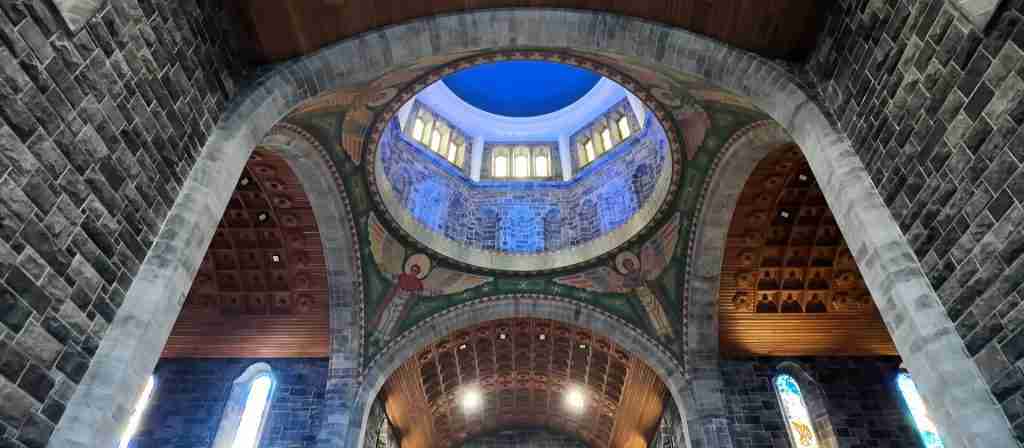
The Cathedral of Our Lady Assumed into Heaven and St. Nicholas, universally known simply as Galway Cathedral, dominates the western skyline despite being Europe’s youngest great stone cathedral, dedicated only in 1965 after construction beginning in 1958. The massive Renaissance Revival structure features a green copper dome reaching 145 feet, Connemara marble throughout the interior, intricate rose windows depicting religious scenes, and a John F. Kennedy memorial mosaic commemorating the American president who visited Ireland in 1963, two years before the cathedral’s dedication.
The cathedral occupies the former site of the county jail on the west bank of the River Corrib, with the building’s scale and architectural ambition reflecting the confidence of the Catholic Church in Ireland during the 1960s before decades of scandal and declining religious practice transformed Irish attitudes toward institutional religion. The interior features soaring arches, polished limestone pillars, and seating capacity for 1,500 worshippers, with the vast open space creating dramatic acoustic effects appreciated during occasional classical music concerts and choral performances. Visitors enter free of charge throughout the day except during Mass times, with respectful behavior expected given the building’s active religious use alongside its role as tourist attraction and architectural landmark.
The cathedral’s riverside location a 10-minute walk west of Eyre Square provides the opportunity to stroll along Gaol River Walk, a pleasant tree-lined path following the River Corrib from the cathedral toward the university campus and Salmon Weir Bridge, where visitors can observe salmon jumping upstream during spawning season (primarily May-July) as the fish return from the Atlantic to spawn in Lough Corrib’s tributaries.
Eyre Square and City Center 2026
Eyre Square (officially renamed John F. Kennedy Memorial Park in 1965 when the American president visited Galway months before his assassination) functions as Galway’s de facto civic center, with grassy areas, walking paths, monument sculptures, and a small playground occupying the park space while shops, hotels, and the bus and train stations line the square’s perimeter. The Browne Doorway, a 17th-century carved limestone doorway relocated from a demolished merchant house, stands prominently in the park as one of Galway’s most important architectural fragments, while the Quincentennial Fountain with fourteen Galway “sails” (flags representing the fourteen merchant families who dominated medieval Galway) provides a modern sculptural focal point.
Eyre Square serves primarily as a transit hub and orientation point rather than a destination attraction itself, with benches occupied by locals eating lunch, tourists consulting maps, and occasional outdoor events including craft fairs, concerts, and the annual Christmas market transforming the space into gathering points during festival periods. The square’s central location makes it a natural meeting point, with “meet at Eyre Square” serving as Galway’s default rendezvous instruction when locals and visitors coordinate gatherings.
Salthill Promenade and Beaches 2026
Salthill, Galway’s Victorian seaside resort neighborhood positioned 25 minutes walk or 10 minutes by bus west along the coast, offers a complete contrast to the medieval Latin Quarter with a 2-kilometer promenade along Galway Bay featuring arcades, amusement attractions, restaurants, ice cream shops, and views across the water toward the Burren’s limestone terraces and Clare coast. The promenade attracts Galway residents for evening walks, jogging, and swimming at Blackrock diving boards where brave souls plunge into the Atlantic year-round, while the sandy beach at Salthill draws families during summer months despite Ireland’s characteristically cool ocean temperatures averaging 12-15°C even in July and August.
The Salthill Promenade Walk represents one of Galway’s essential free activities, particularly during evening when Atlantic sunsets paint the western sky and the distant Aran Islands appear as dark silhouettes on the horizon. Leisureland, an indoor leisure complex at the promenade’s eastern end, offers swimming pool, gym, and activity facilities for rainy days when outdoor exploration loses appeal, charging admission for access to pool and facilities. Bus route 401 connects Eyre Square with Salthill every 20-30 minutes for €1.55 with Leap Card, making the journey simple for visitors not inclined to walk 25 minutes each direction.
Day Trips from Galway 2026: Essential Excursions to Nearby Attractions
Galway’s strategic position makes it the ideal base for exploring Ireland’s most dramatic coastal scenery, ancient archaeological sites, and traditional island communities, with professional tour operators offering daily departures to all major attractions while ferry services and public buses enable independent travelers to reach the Aran Islands, Cliffs of Moher, and Connemara without rental cars.
The Cliffs of Moher and the Burren 2026
The Cliffs of Moher rise 214 meters at their highest point, stretching 8 kilometers along the Clare coast approximately one hour south of Galway and ranking among Ireland’s most photographed natural landmarks after appearing in numerous films including Harry Potter and the Half-Blood Prince and The Princess Bride. The Cliffs of Moher Visitor Experience, built into the hillside at the main viewing area, charges €10 admission for adults during peak hours (11am-4pm) and reduced rates of €9 for students and seniors, with free entry for children under 12 and family tickets available for €20. Admission includes access to 2 kilometers of paved clifftop paths, the visitor center with interactive exhibits on geology and seabird colonies, and O’Brien’s Tower, a round stone tower offering elevated viewpoints for small additional fee. The free Burren & Cliffs Explorer bus operates May-September 2026, connecting Galway, the Burren, and the Cliffs of Moher without charge for visitors willing to use scheduled public transport.
Organized day tours from Galway to the Cliffs of Moher operate daily year-round with multiple departure times, typically including admission to the visitor center, 75-90 minutes at the cliffs, and stops at additional attractions including the Burren’s lunar-like limestone landscape, Dunguaire Castle, and the village of Doolin known for traditional music pubs. Tour prices range €40-60 depending on operator and inclusions, with morning departures (9am-10am) returning by mid-afternoon and afternoon tours (2pm-3pm) returning around 6pm-7pm, allowing travelers to combine cliff visits with other Galway activities in the same day. Popular operators including Galway Tour Company, Lally Tours, and Paddywagon Tours receive consistently positive reviews for knowledgeable driver-guides combining driving duties with entertaining commentary on Irish history, folklore, and local culture during the approximately two-hour journey each direction.
The Burren, designated a UNESCO Global Geopark, presents a 250-square-kilometer landscape of exposed limestone pavement created by glacial activity and centuries of weathering, resulting in a stark grey terrain resembling lunar surfaces while supporting surprisingly diverse flora including Arctic-alpine and Mediterranean species growing in the unique microclimate created by limestone’s heat retention. Tour stops typically include the Poulnabrone Dolmen, a 5,000-year-old megalithic tomb marking an ancient burial site, and brief photo opportunities at scenic viewpoints overlooking the Burren’s characteristic terraces and ancient stone walls. The combination of the Burren’s geological curiosity and the Cliffs of Moher’s dramatic coastal scenery makes this the single most popular day trip from Galway, with tours selling out during summer months and festival weekends requiring advance online booking 1-2 weeks ahead.
The Aran Islands 2026
The three Aran Islands—Inis Mór (Inishmore), Inis Meáin (Inishmaan), and Inis Oírr (Inisheer)—preserve traditional Irish language and culture in island communities where Irish remains the primary spoken language, dry stone walls built without mortar divide tiny fields, and archaeological sites including prehistoric hill forts predate written history. Ferries to the islands depart year-round from Rossaveel ferry terminal 37 kilometers west of Galway, with Aran Island Ferries operating the primary service charging €17-34 return for adults depending on destination island. The ferry journey to Inis Mór, the largest and most visited island, takes 40 minutes from Rossaveel, while Inis Meáin and Inis Oírr require slightly longer crossing times of approximately one hour as the ferries call at multiple islands on each departure.
Seasonal ferries operate directly from Galway City docks to Inis Mór from April through September 2026, offering more convenient departure points for travelers without vehicles but requiring 90 minutes crossing time compared to 40 minutes from Rossaveel. These city center departures charge higher fares around €51-106 return but eliminate the need for bus connections to Rossaveel, making them attractive for travelers prioritizing convenience over cost savings. The return journey from Inis Mór to Galway City passes close to the Cliffs of Moher, providing seaward views of the cliffs from below and creating a combination Aran Islands and Cliffs of Moher experience in a single day trip.
Inis Mór, measuring approximately 12 kilometers long and 3 kilometers wide, concentrates most tourist activity among the three islands with the prehistoric stone fort Dún Aonghasa occupying a spectacular clifftop position 100 meters above the Atlantic, the ancient monastic site of the Seven Churches providing insight into early Christian Ireland, and the village of Kilronan offering restaurants, pubs with traditional music, hotels, and Aran sweater shops selling authentic hand-knitted wool garments in traditional patterns. Bicycle rental (€10-15 for the day) and pony trap tours (€50-80 for groups) provide transportation around the island, as private cars cannot be brought on ferries and the island’s few roads make cycling or walking the primary exploration methods. A full day trip to Inis Mór requires departing Galway by 9am bus to Rossaveel for the 10:30am ferry, spending 4-5 hours exploring the island, and returning on the 4pm-5pm ferry to reach Galway by early evening.
Inis Meáin, the middle island in both size and position, attracts fewer tourists seeking peaceful retreat and literary connections to playwright John Millington Synge, who summered on the island and drew inspiration for works including “The Playboy of the Western World” from island life. Inis Oírr, the smallest and most accessible island from Doolin in Clare (15-minute ferry crossing), offers the 16th-century O’Brien’s Castle ruins, the Plassey shipwreck on the beach, and a relaxed atmosphere with single pub, limited accommodation, and minimal tourist infrastructure appealing to visitors content with simple pleasures and dramatic coastal scenery without extensive activities or attractions.
Connemara National Park and Kylemore Abbey 2026
Connemara National Park, positioned 45 minutes northwest of Galway near the village of Letterfrack, protects 3,000 hectares of mountains, bogs, heaths, and grasslands offering hiking trails through characteristic Connemara landscapes with the Diamond Hill trail (7 kilometers return, 3-4 hours) climbing to 442-meter summit providing panoramic views over island-dotted bays, the Twelve Bens mountain range, and Atlantic coastline. The visitor center near Letterfrack village offers free admission with exhibitions on Connemara ecology, geology, and cultural history, audiovisual presentations, and ranger-led walks during summer months introducing visitors to the park’s natural features and traditional land use patterns. The park maintains free year-round access to trails and grounds, making it an excellent budget-friendly day trip for hikers and nature enthusiasts comfortable navigating independently without organized tour structure.
Kylemore Abbey, positioned 7 kilometers east of the national park, presents a dramatically scenic 19th-century castle and abbey occupying waterside position beneath mountains with Victorian walled garden, Gothic church, and abbey buildings open to visitors. Originally built as a romantic castle by wealthy Manchester businessman Mitchell Henry in 1868 as a memorial to his deceased wife, the property was purchased by Benedictine nuns fleeing Belgium during World War I and transformed into an abbey that continues to house a small community of nuns today. Admission costs €15 for adults with €13 student and €12 senior rates, granting access to the abbey’s public rooms displaying period furnishings, the restored Victorian walled garden featuring vegetables, flowers, and greenhouses, the neo-Gothic church positioned across the lake, and grounds offering woodland walks and lake views. The abbey café serves lunch and refreshments, while the gift shop sells nun-made products including pottery, preserves, and religious items, with visitor center exhibitions explaining the property’s history and Benedictine life.
Organized Connemara and Kylemore Abbey day tours from Galway operate daily, typically lasting 7-8 hours with multiple stops including Kylemore Abbey, Connemara National Park or the village of Clifden, the Sky Road scenic drive, and fishing villages along the coast. Tour prices range €35-55 including Kylemore Abbey admission, with luxury small-group tours charging premium rates for smaller buses and more personalized experiences. Independent travelers can reach Connemara by Bus Éireann route 419 from Galway to Clifden (1 hour 30 minutes, €12-15 one-way, 2-3 departures daily) with connections to Kylemore Abbey and Letterfrack, though limited bus frequencies make organized tours more practical for visitors attempting to see multiple Connemara highlights in a single day without overnight stays in the region.
Galway’s Food and Dining Scene 2026
Galway’s culinary reputation rests on fresh Atlantic seafood, farmhouse produce from Connemara and County Clare, artisan food producers selling at the Saturday market, and restaurants ranging from casual fish and chips shops to Michelin-starred establishments celebrating hyper-local ingredients, with the city’s pub culture offering substantial traditional Irish meals alongside pints of Guinness and live music sessions.
Budget-Friendly Dining in Galway 2026
Budget travelers can eat well in Galway for €10-18 per meal at casual restaurants, takeaway shops, and pubs offering lunch specials, with The Dough Bros pizzeria on Middle Street serving Neapolitan-style pizzas on handmade bases for around €12-15, Boojum near the Spanish Arch providing generous Mexican-style burritos and burrito bowls for €8-12, and Xi’an Street Food on Middle Street offering authentic Chinese hand-pulled noodles and dumplings for €10-14. Fish and chips, Ireland’s ubiquitous takeaway meal, costs €12-15 at quality shops including Hooked on Henry Street, recognized for fresh fish and generous portions, and McDonagh’s in the city center, a Galway institution operating since 1902 with both takeaway window and sit-down restaurant sections.
Pub food represents excellent value for hearty eaters, with traditional Irish stew, shepherd’s pie, fish and chips, and burger meals costing €14-18 in pubs throughout the Latin Quarter including Taaffes, The Kings Head, and Murty Rabbitt’s, often accompanied by live traditional music sessions creating atmospheric dining without additional cover charges. Early bird specials offered by many restaurants between 5pm-7pm reduce prices on three-course menus by 20-30%, with restaurants including Brasserie on the Corner and Oscar’s Seafood Bistro providing quality meals at discounted rates for diners willing to eat earlier than typical Irish dinner hours around 7:30pm-9pm.
Galway’s Saturday market at Church Lane, operating year-round from 8am-6pm, offers the best budget option for self-catering travelers with stalls selling fresh baked breads, farmhouse cheeses, smoked salmon, oysters, vegetables, and prepared foods including crepes, falafel wraps, and Asian street food at prices significantly below restaurant rates. Supermarkets including Tesco, Lidl, and Dunnes Stores throughout Galway provide standard groceries for travelers with apartment kitchens or hostel cooking facilities, with meal preparation costs averaging €4-8 per person for simple dinners compared to €15-35 for budget restaurant meals.
Mid-Range and Upscale Restaurants in Galway 2026
Mid-range restaurants in Galway charge €35-50 per person for three-course dinners without drinks, with seafood specialists including Oscar’s Seafood Bistro on Lower Dominick Street featuring creatively prepared fish, crab, and prawns for €25-40 per main course, Kai Restaurant & Wine Bar near the Spanish Arch focusing on organic and artisan ingredients sourced from named Galway suppliers, and McDonagh’s sit-down restaurant section offering traditional seafood preparations including oysters, mussels, and whole grilled fish in comfortable family-friendly atmosphere. The city’s riverside location and proximity to Atlantic fishing grounds ensures exceptional seafood quality, with restaurants displaying daily catches and seasonal specialties on blackboard menus changing based on availability rather than fixed printed offerings.
International cuisine thrives in Galway’s diverse dining scene, with Tartare Café & Wine Bar offering French-inspired small plates and natural wines (€8-15 per plate), Wa Café serving Japanese-influenced dishes in minimalist contemporary space, and numerous Italian restaurants including Da Roberta’s and Milano providing pasta, pizza, and risotto dishes. Asian options include Lana Asian Food in Salthill specializing in Thai cuisine with mains under €12, Umbrella Asian Tapas on Middle Street combining sushi and Asian fusion small plates, and Samyo Asian Street Food offering Korean and Japanese preparations.
Galway’s sole Michelin-starred restaurant Aniar, positioned in the West End district, celebrates ingredients from the specific place that is west of Ireland, foraging wild foods from Connemara, sourcing seafood from named local fishermen, and working with small-scale farmers producing rare breed meats and heritage vegetables. The tasting menu experience costs approximately €95 per person (check current pricing directly as rates update seasonally), with natural wine pairings adding €65-75, representing a splurge meal showcasing Ireland’s progressive fine dining scene but requiring reservations weeks or months in advance during busy summer season and festival periods.
Traditional Irish Food and Galway Specialties 2026
Galway oysters, harvested from Galway Bay and internationally celebrated for sweet brininess influenced by the bay’s unique mix of Atlantic saltwater and freshwater from Lough Corrib, appear on menus throughout the city from September through April when oyster season peaks, with the Galway International Oyster Festival in late September marking the official season opening with oyster shucking competitions, tasting events, and celebrations. Oyster prices vary dramatically from €3-4 per oyster at casual pubs to €18-25 for half-dozen at upscale seafood restaurants, with the authentic experience found in atmospheric pubs like Tigh Neachtain and The Dough Bros where locals gather for oysters and pints of Guinness on Friday evenings.
Traditional Irish breakfast, offered at B&Bs and hotels throughout Galway, typically includes fried eggs, bacon, sausages, black pudding (blood sausage), white pudding (pork and oatmeal sausage), grilled tomatoes, mushrooms, baked beans, and brown bread or toast, providing enough calories to eliminate or significantly reduce lunch expenses for travelers content with one large meal fueling the day’s activities. Vegetarian breakfast variations substitute vegetables and hash browns for meat products, while continental breakfast options provide lighter alternatives of cereal, yogurt, fruits, and pastries for visitors unaccustomed to heavy morning meals.
Irish stew, traditionally made with lamb or mutton, potatoes, onions, and carrots slow-cooked until tender, appears on pub menus throughout Galway as an authentic taste of Irish comfort food, typically costing €14-16 and served with brown bread for soaking up rich broth. Seafood chowder, cream-based soup loaded with local fish, mussels, and prawns, represents another Irish specialty particularly suited to Galway’s coastal location, often served in bread bowls at casual restaurants and pubs for €10-14. Boxty, potato pancakes made from grated raw and mashed potatoes, occasionally appears on traditional restaurant menus as accompaniment to main courses or filled with various ingredients as complete meals.
Galway’s Music and Nightlife Scene 2026
Galway’s reputation as Ireland’s music capital stems from nightly traditional Irish music sessions in Latin Quarter pubs, contemporary live music venues hosting touring bands, street performers creating outdoor entertainment throughout summer, and festival programming bringing international artists to the city during Arts Festival and smaller events throughout the year.
Traditional Irish Music Sessions in Galway 2026
Traditional Irish music sessions occur nightly in numerous Galway pubs, particularly concentrated along Quay Street and surrounding lanes in the Latin Quarter, with musicians gathering spontaneously or in loosely organized weekly sessions to play reels, jigs, hornpipes, and slow airs on fiddles, tin whistles, uilleann pipes, bodhrán drums, guitars, concertinas, and accordions. These sessions follow informal protocols where experienced musicians lead and newcomers join when invited, with the quality and authenticity varying significantly between tourist-oriented pubs hiring professional musicians for scheduled performances and genuine sessions where local players gather primarily for their own enjoyment while welcoming respectful listeners.
Recommended pubs for authentic traditional music include Tig Coili on Mainguard Street, known for high-quality musicians and serious music atmosphere discouraging loud conversation during performances; Taaffes on Shop Street, hosting sessions most evenings with mix of regulars and visiting musicians; Tigh Neachtain on Cross Street, offering traditional atmosphere in Victorian-era premises with intimate upstairs room for sessions; and Monroe’s Tavern on Dominick Street, combining traditional music with contemporary Irish bands on different nights. Sessions typically begin around 9pm-9:30pm and continue until 11pm-midnight on weeknights, later on weekends, with no cover charges though purchasing drinks represents expected protocol for occupying seats during performances.
Visitors should observe traditional music session etiquette: avoid loud conversation during tunes, refrain from requesting specific songs or applauding between tunes in a set (musicians play several tunes consecutively without breaks), and never record videos or take flash photographs without asking permission from musicians. The best sessions create an intimate, almost meditative atmosphere where musicians communicate through subtle cues and listeners appreciate nuances of ornamentation, rhythm, and interaction between instruments, making respectful quiet from the audience essential to the experience.
Pubs and Bars in Galway 2026
Galway’s pub scene extends beyond traditional music to craft beer bars, cocktail lounges, and lively social pubs attracting students, tourists, and locals in equal measure, with The King’s Head on High Street operating in a historic building with medieval wine cellars and claiming foundation date of 1649, Garavan’s on William Street offering craft beer selection in cozy atmosphere popular with locals, and The Quays on Quay Street providing multiple bars, floors, and rooms in maze-like Victorian premises combining traditional snugs with modern renovation. Pints of Guinness cost €5.50-6.50 depending on location and establishment, with craft beers typically €6-7 per pint and cocktails €9-12, making pub drinking an expensive habit for budget travelers but representing essential Irish cultural experience combining social atmosphere with drink consumption.
The Latin Quarter concentrates most tourist-oriented pubs with live music, outdoor seating during summer months, and lively atmosphere seven nights weekly, while the West End across the River Corrib offers quieter neighborhood pubs including Richardson’s Bar and Monroe’s Tavern attracting more locals than tourists with lower prices and authentic community atmosphere. Eyre Square area pubs cater primarily to students from nearby University of Galway, with younger crowds, later hours, DJ nights, and rowdier weekend atmosphere appealing to visitors in their twenties but potentially overwhelming for older travelers seeking traditional pub culture over nightclub environment.
Galway’s pub licensing laws permit alcohol sales until 12:30am on weeknights and 1:30am on weekend nights, with many establishments continuing as late-night venues after official bar closing by transitioning to nightclub atmosphere with DJ music and dance floors. Busier pubs charge €5-10 cover after 10pm-11pm on Friday and Saturday nights, particularly during student term time and festival periods when demand exceeds capacity and door staff control entry to prevent overcrowding.
Festivals and Cultural Events in Galway 2026
The Galway International Arts Festival, running for two weeks in mid-July, transforms the city into Ireland’s premier arts destination with theater performances in venues throughout Galway, street spectacle featuring international circus and performance companies, visual art exhibitions in galleries and outdoor installations, music ranging from traditional Irish sessions to contemporary jazz and experimental works, and comedy shows attracting Irish and international performers. The festival requires advance ticket booking for major performances, with package deals offering better value than individual show tickets, while many street performances, exhibitions, and smaller events remain free, allowing budget travelers to participate in festival atmosphere without expensive ticket purchases. Accommodation books months in advance for Arts Festival fortnight with prices rising 40-60% above typical summer rates, making early planning essential for visitors targeting this peak cultural period.
The Galway Races, held in late July and early August at Ballybrit Racecourse 3 kilometers east of the city center, combine horse racing with social events, fashion competitions, and party atmosphere attracting over 150,000 visitors across the week-long meet. Race days begin around 2pm with last race finishing by 6pm-7pm, after which revelers descend on Galway’s pubs for evenings of drinking, music, and socializing that continue into early morning hours. The Races week represents Galway’s busiest period with accommodation completely booked months ahead, streets crowded with racegoers in formal dress and elaborate hats, and pubs charging premium prices or operating ticket-only systems managing capacity during the most popular race days.
The Galway Theatre Festival (April 30-May 9, 2026) showcases emerging Irish theater companies and new works in intimate venues throughout the city, offering more accessible atmosphere and lower ticket prices than the massive Arts Festival while providing opportunities to see potentially groundbreaking performances before they transfer to Dublin or international stages. The Galway International Oyster Festival in September celebrates the city’s seafood heritage with oyster opening championships, tastings, cooking demonstrations, and celebrations of Galway’s fishing traditions. The Macnas Halloween Parade in late October creates Ireland’s most spectacular Halloween street theater event with giant puppets, elaborate costumes, fire performances, and community celebration drawing 60,000-70,000 spectators to witness the parade’s dramatic storytelling through Galway’s streets.
Practical Information for Visiting Galway 2026
Understanding Galway’s practical details including currency, weather patterns, language considerations, safety environment, and local customs helps visitors navigate the city confidently while respecting Irish cultural norms and avoiding common tourist mistakes that mark travelers as inexperienced or culturally insensitive.
Currency, Payments, and Tipping in Galway 2026
Ireland uses the euro (€) as official currency, with ATMs widely available throughout Galway accepting international debit and credit cards with typical withdrawal fees of €3-5 per transaction charged by Irish banks in addition to foreign transaction fees from home banks. Credit cards work for most payments at restaurants, hotels, shops, and tour operators, though smaller pubs, market vendors, and some B&Bs prefer cash or charge 2-3% surcharges for card payments below €10-15. Currency exchange offices in the city center offer worse rates than ATMs, making cash withdrawals the most economical method for obtaining euros despite transaction fees, with travelers advised to withdraw larger amounts less frequently rather than small amounts repeatedly to minimize per-transaction charges.
Tipping practices in Ireland differ from American expectations, with 10-12% considered generous gratuity for good restaurant service rather than the automatic 15-20% common in the United States. Many restaurants add 10-12.5% service charge automatically to bills for groups of six or more, in which case additional tipping is unnecessary unless service exceeded normal standards. Bartenders do not expect tips for beer or wine service though regulars often leave small change or round up bills, while cocktail bartenders appreciate €1-2 per drink in busy establishments. Taxi drivers receive rounding up to next €5 increment or 10% on longer journeys, hotel porters expect €1-2 per bag for carrying luggage, and tour guides appreciate €5-10 per person for full-day tours if service met expectations, though tipping tour guides remains optional rather than mandatory in Irish culture.
Weather and What to Pack for Galway 2026
Galway’s maritime climate brings mild temperatures year-round but frequent rain, strong winds, and rapidly changing conditions requiring layered clothing and waterproof outer layers regardless of season, with summer months (June-August) averaging 15-20°C (59-68°F), spring and autumn (March-May, September-November) ranging 8-15°C (46-59°F), and winter (December-February) typically 4-10°C (39-50°F) with frost uncommon but persistent dampness making temperatures feel colder than thermometer readings suggest. Rain falls approximately 15-20 days per month throughout the year with brief showers interspersed with sunny intervals representing typical pattern rather than all-day downpours, though Atlantic storms occasionally bring sustained heavy rain and gale-force winds particularly October-March when weather systems track directly across Ireland’s west coast.
Essential packing items include waterproof jacket with hood (absolutely critical year-round), comfortable waterproof walking shoes or boots with good traction for cobblestone streets and wet surfaces, sweater or fleece for layering even in summer when evening temperatures drop, and compact umbrella for supplementing rain jacket though strong winds often render umbrellas useless during storms. Sunscreen and sunglasses prove necessary during summer months despite frequent clouds as UV radiation remains strong during clear intervals, while winter visitors should pack warm layers including thermal underwear, gloves, and winter hat for exploring exposed coastal areas including the Cliffs of Moher and Aran Islands where wind chill significantly reduces apparent temperatures.
Galway’s weather changes rapidly with multiple seasons possible in single day, making layering strategies more effective than choosing outfit based on morning conditions that may shift dramatically by afternoon. Locals dress practically rather than fashionably with emphasis on waterproof outer layers and comfortable walking shoes, though Galway’s university population and arts community embrace more eclectic personal style than conservative rural Irish towns. Visitors concerned about appearing touristy should avoid bright rain ponchos, fanny packs, and “Kiss Me I’m Irish” t-shirts in favor of understated practical clothing matching local preferences for muted colors and functional design.
Language and Communication in Galway 2026
English serves as the primary language in Galway City with virtually all residents speaking fluent English regardless of educational background or occupation, making communication straightforward for English-speaking visitors who need not worry about language barriers in shops, restaurants, hotels, or tourist attractions. Irish (Gaeilge), the country’s first official language, appears on street signs, government buildings, and official documents but most Galway residents speak Irish as second language learned in school rather than primary home language, with exceptions in nearby Gaeltacht (Irish-speaking) districts in Connemara and on the Aran Islands where Irish remains the community’s primary daily language and English functions as second language for interactions with tourists and outside institutions.
Irish language place names on road signs occasionally confuse visitors unfamiliar with Irish spelling conventions that differ dramatically from English phonetics, with Galway appearing as “Gaillimh” (pronounced roughly “GAL-iv”), the Aran Islands known as “Oileáin Árann,” and Connemara written “Conamara” in Irish. Tourist maps and materials typically provide both Irish and English names, while locals respond to English names without issue making language knowledge unnecessary for practical navigation despite adding cultural appreciation for travelers who learn basic Irish greetings including “Dia dhuit” (hello, pronounced “dee-ah gwit”), “Slán” (goodbye, pronounced “slawn”), and “Go raibh maith agat” (thank you, pronounced roughly “guh rev mah ah-gut”).
Irish accents in Galway present moderate comprehension challenges for North American visitors unaccustomed to local speech patterns, pronunciation, and vocabulary, with rapid speech, dropped consonants, and idioms requiring attentive listening and occasional requests for repetition or clarification without causing offense. Older speakers and rural residents from surrounding Connemara areas speak with heavier accents and broader dialects than younger urban Galway residents whose speech reflects media exposure and international connections, while bartenders, tour guides, and hospitality workers accustomed to international visitors typically modify speech patterns for clarity when serving non-Irish customers.
Safety and Health Considerations in Galway 2026
Galway ranks as a safe destination with low violent crime rates and minimal safety concerns for tourists practicing basic urban awareness including guarding valuables, avoiding isolated areas late at night, and maintaining awareness of surroundings in crowded pubs and tourist areas where pickpocketing occasionally occurs. The Latin Quarter’s compact layout and strong nightlife economy create well-populated streets until 1am-2am when pubs close, though visitors should exercise caution walking alone through unlit areas or taking shortcuts through car parks and alleyways where visibility and foot traffic decrease. Intoxicated individuals, particularly young men in groups during Galway Races week and Friday-Saturday nights throughout the year, occasionally cause disturbances including loud behavior, fights, and aggressive panhandling, though these incidents rarely target tourists specifically and avoiding confrontation by changing walking routes or entering nearby establishments resolves most situations safely.
Ireland’s public healthcare system provides emergency medical treatment at University Hospital Galway without upfront payment for all patients regardless of citizenship or insurance status, though non-EU visitors receive bills after treatment for services not classified as immediate emergency care, making travel health insurance essential for North American and other non-European travelers who may face significant costs for hospital admission, specialist consultations, or extended treatment. Pharmacies (called chemists in Ireland) throughout Galway dispense many medications without prescription that require prescriptions in other countries including basic antibiotics for common infections, though pharmacists conduct brief consultations ensuring appropriate medication selection and dosage. Galway City Pharmacy on Eyre Square operates extended hours including weekends for travelers requiring prescriptions filled or over-the-counter medications for common ailments.
Tap water throughout Ireland meets high safety standards and can be consumed without concerns, with bottled water representing unnecessary expense for health-conscious travelers rather than safety necessity. Galway’s Atlantic maritime climate brings dampness year-round potentially affecting visitors with respiratory conditions or arthritis, while those sensitive to pollen should note that grass pollen counts peak May-July and can trigger allergic reactions in susceptible individuals despite Ireland’s reputation for clean air and limited industrial pollution.
Local Customs and Cultural Etiquette in Galway 2026
Irish social customs emphasize friendliness, humor, and informal interaction regardless of social status, with Galway residents generally welcoming visitors and willing to provide directions, recommendations, or conversation without expecting payment or reciprocation beyond basic courtesy and respectful behavior. Pub culture dominates Galway’s social life with gatherings in pubs serving as primary entertainment and social bonding activity, though Irish drinking culture should not be romanticized as harmless fun given Ireland’s serious alcohol abuse issues affecting communities throughout the country. Visitors should drink responsibly, never drive after consuming alcohol (Ireland enforces strict drunk driving laws with severe penalties), and avoid excessive intoxication that causes disruptions or requires assistance from strangers or emergency services.
Queue jumping represents serious offense in Irish culture with strong social enforcement through loud complaints and public shaming, making orderly line formation essential at bus stops, ATMs, shop counters, and bar service areas even when formal queuing infrastructure like stanchions and ropes are absent. Irish rounds system in pubs expects participants to take turns buying drinks for the group rather than each person purchasing individual drinks separately, creating social obligation to reciprocate when others buy rounds even if not explicitly agreed in advance, with visitors free to decline participating in rounds by ordering and paying for own drinks individually without causing major offense though potentially missing bonding opportunities with new acquaintances.
Political discussions should approach Irish history and British-Irish relations carefully given ongoing complexities of Northern Ireland’s status, Brexit’s impact on the Irish border, and historical grievances dating to British colonization and the Irish Famine of the 1840s that killed and displaced millions. Most Irish people distinguish between British government policies they oppose and British individuals they meet as visitors or friends, though older generations and those directly affected by Northern Ireland’s Troubles maintain stronger anti-British sentiments than younger urban Irish who generally view historical conflicts as past grievances with limited contemporary relevance. Visitors should avoid making light of Irish history, offering unsolicited opinions on Northern Ireland politics, or comparing Irish experiences to other ethnic conflicts without deep knowledge and cultural sensitivity.
Frequently Asked Questions About Visiting Galway in 2026
How do I get from Dublin to Galway in 2026?
Direct express buses from Dublin city center and Dublin Airport to Galway represent the most convenient and economical option, with Citylink and GoBus operating hourly departures throughout the day for €13-22 depending on advance booking and travel time. The bus journey takes 2 hours 45 minutes from Dublin Airport or 2 hours 30 minutes from the city center, arriving at Galway Coach Station on Fairgreen Road beside Eyre Square. Irish Rail trains from Dublin Heuston Station to Galway Ceannt Station run approximately 10 times daily with journey time 2 hours 20 minutes for €17-26 one-way, though reaching Heuston Station from Dublin Airport requires bus or taxi connections adding time and expense compared to direct airport buses. Driving takes approximately 2 hours 30 minutes on the M6 motorway covering 140 miles, though car rental, fuel costs, and Galway city center parking charges make driving more expensive than buses unless traveling in groups of 3-4 people sharing costs or planning extensive exploration beyond Galway requiring vehicle flexibility.
What are the must-see attractions in Galway in 2026?
Essential Galway experiences include walking the Latin Quarter and Quay Street to absorb the colorful streetscape and traditional music pub culture, visiting the free Galway City Museum beside the Spanish Arch for historical context on the city’s development, and strolling Salthill Promenade for coastal views and Victorian seaside atmosphere. Day trips from Galway to the Cliffs of Moher provide Ireland’s most dramatic coastal scenery one hour south, while ferry trips to the Aran Islands offer immersion in traditional Irish language and culture with prehistoric stone forts and island landscapes. Galway Cathedral showcases modern ecclesiastical architecture, the Saturday market at Church Lane features artisan food producers and crafts, and evening pub sessions along Quay Street and surrounding lanes deliver authentic Irish music experiences without cover charges. Festival attendees should prioritize Galway International Arts Festival programming in July, Galway Races social atmosphere in late July-August, or Macnas Halloween Parade spectacle in October depending on travel dates and interests.
Is Galway suitable for families with children in 2026?
Galway accommodates families well with pedestrianized city center making walking with strollers manageable, family-friendly attractions including the National Aquarium of Ireland (Leisureland complex in Salthill), beaches at Salthill and nearby areas, and Galway City Museum’s interactive exhibits appealing to children while educating about local history. Restaurants throughout Galway welcome families with children’s menus widely available, though traditional music pubs during evening sessions create adult atmosphere where young children may disturb other patrons and musicians, making afternoon or early evening pub meals more appropriate than late-night visits. Day trips to the Cliffs of Moher engage children with dramatic scenery and visitor center exhibits featuring virtual reality experiences and seabird displays, while Aran Islands ferry journeys and bicycle rentals for island exploration provide adventure suitable for elementary school ages and older. Budget families should consider self-catering accommodation with kitchen facilities reducing meal expenses significantly, while noting that family rooms sleeping 3-4 in single accommodation often cost only €20-40 more than standard doubles, creating better value than booking multiple rooms.
What festivals should I plan around when visiting Galway in 2026?
The Galway International Arts Festival in mid-July represents Ireland’s premier arts celebration with two weeks of theater, music, visual art, street spectacle, and performances requiring advance booking for major shows but offering numerous free events for budget travelers. The Galway Races in late July and early August create party atmosphere with horse racing, social events, and crowded pubs but also highest accommodation prices and difficulty finding available rooms without reservations made months ahead. The Galway Theatre Festival (April 30-May 9, 2026) showcases emerging Irish theater in more intimate atmosphere than Arts Festival, while the Galway International Oyster Festival in September celebrates local seafood culture. The Macnas Halloween Parade in October draws 60,000-70,000 spectators for Ireland’s most spectacular Halloween street theater featuring giant puppets and elaborate performances. Smaller events including Fleadh Na Bealtaine (traditional Irish music festival, May Bank Holiday weekend) and various cultural events throughout the year maintain Galway’s reputation as festival city beyond major headline events, though visitors should research specific dates as festival scheduling varies year to year.
Where should I stay in Galway: city center or Salthill in 2026?
City center accommodation within walking distance of Eyre Square and the Latin Quarter provides maximum convenience for evening pub sessions, restaurant access, and exploring medieval streets, though higher prices (typically €20-40 per night premium over Salthill), limited parking, and street noise from late-night revelers affect some properties particularly on Quay Street and immediate surroundings. Salthill offers coastal atmosphere with sea views, promenade walks, beaches, and generally quieter nights appealing to families, couples seeking relaxation, and visitors prioritizing peaceful sleep over proximity to nightlife, though the 25-minute walk or 10-minute bus ride (€1.55 with Leap Card, every 20-30 minutes on route 401) to the city center adds transportation time and cost to each day’s activities. Budget travelers should compare total costs including transportation expenses when evaluating Salthill’s lower accommodation rates against city center convenience, while drivers benefit from Salthill’s more abundant and affordable parking compared to city center restrictions and fees. Families with young children often prefer Salthill’s relaxed environment and beach access, while solo travelers and those prioritizing Galway’s music scene and nightlife favor city center locations despite higher costs and noise considerations.
What should I know about traditional Irish music sessions in Galway 2026?
Traditional music sessions in Galway pubs follow informal protocols with musicians gathering to play primarily for their own enjoyment rather than as staged performances for tourists, though certain pubs hire professional musicians for scheduled sessions ensuring consistent quality and predictable timing. Respectful session etiquette requires quiet conversation or silence during tunes, avoiding requests for specific songs or interrupting musicians, refraining from applauding between tunes in a set as musicians play several pieces continuously, and never recording video or taking flash photographs without permission from the musicians. Sessions typically begin around 9pm-9:30pm and continue until 11pm-midnight on weeknights, later on weekends, with no cover charges though purchasing drinks represents expected behavior for occupying seats during performances. Quality varies significantly between authentic sessions where accomplished local musicians gather casually and tourist-oriented performances where hired musicians play predictable repertoire for pub customers, with Tig Coili on Mainguard Street, Taaffes on Shop Street, and Tigh Neachtain on Cross Street maintaining reputations for high-quality authentic sessions attracting serious musicians and knowledgeable listeners who appreciate traditional Irish music beyond background entertainment.
How much money do I need per day in Galway in 2026?
Budget travelers spending carefully manage on €95-130 per person daily including hostel dormitory beds (€25-40), budget restaurant meals and takeaways (€10-18 per meal), city bus transport (€1.55 per ride with Leap Card), free attractions like Galway City Museum and walking tours, and occasional paid activities like pub music cover charges or museum admissions. Mid-range visitors allocating €200-290 per person daily cover three-star hotel accommodation divided between two sharing (€65-85 per person), restaurant meals (€15-20 lunch, €35-50 dinner), day tour to Cliffs of Moher or Aran Islands (€40-60), and drinks at pubs with music (€15-25 for 3-4 pints). Luxury travelers spending €350-500+ daily stay in four-star or five-star hotels (€125-185 per person sharing), dine at upscale restaurants including Michelin-starred Aniar, take private guided tours, and enjoy premium experiences without budget concerns. These estimates exclude major shopping expenses, rental cars (€35-90 per day plus fuel), and extraordinary costs like extended stays in hospital requiring health insurance coverage for non-EU visitors. Festival periods including Galway Races week and Arts Festival fortnight increase accommodation costs 40-60% while other daily expenses remain relatively stable, requiring visitors to adjust budgets based on travel dates and specific events planned.
Can I see the Northern Lights from Galway in 2026?
Aurora borealis displays occasionally reach Ireland’s latitude during strong geomagnetic storms, with Galway’s Atlantic coast position and limited light pollution in areas west of the city providing reasonable viewing opportunities when solar activity produces auroras at lower latitudes than usual. The Northern Lights appear in Ireland only during major geomagnetic storms typically occurring 1-3 times per year rather than nightly displays seen in Scandinavian countries, Iceland, and northern Scotland, making aurora viewing a bonus possibility rather than reliable attraction to plan travel around. Viewing requires clear skies (challenging given Ireland’s frequent cloud cover), dark conditions away from city lights (Connemara’s remote areas offer best darkness), and strong solar activity triggering aurora displays, with specialized aurora forecast websites providing alerts when geomagnetic conditions suggest possible visibility in Ireland. Winter months (October-March) offer longer darkness hours improving potential viewing opportunities during the limited occasions when auroras reach Ireland’s latitude, though Galway’s primary attractions remain accessible year-round making aurora chasing an unrealistic primary motivation for visiting the city given Ireland’s variable weather and the auroras’ infrequent appearances at this southern latitude.
What’s the WiFi and mobile connectivity like in Galway in 2026?
Hotels, hostels, cafes, restaurants, and many pubs throughout Galway offer free WiFi access with varying speeds and reliability, typically adequate for email, messaging apps, social media browsing, and basic internet activities though potentially struggling with video streaming or large file uploads during peak usage periods when multiple customers share bandwidth. Accommodation properties generally provide WiFi passwords upon check-in or display credentials in common areas and guest rooms, while cafes expect beverage purchases before sharing network access with customers seeking free internet during extended stays. Mobile coverage from Irish networks Vodafone, Three, and Eir reaches good 4G/5G speeds throughout Galway city and major roads in Connemara, though rural areas, mountains, and remote coastal sections experience reduced connectivity or no service requiring advance planning for navigation and communication when exploring beyond urban areas.
European Union visitors benefit from roaming agreements allowing use of home country mobile data in Ireland without additional charges, while North American and other international travelers should verify roaming costs with home carriers before traveling as rates vary dramatically from reasonable daily fees to excessive per-megabyte charges encouraging purchase of local Irish SIM cards from Vodafone, Three, or Eir shops throughout Galway. Prepaid SIM cards cost €10-20 with starter credit and data allowances, requiring unlocked phones compatible with European GSM networks and typically offering better value than international roaming for visitors staying more than few days who anticipate significant data usage for navigation, restaurant searches, and social media updates. Ireland operates on different electrical standards (230V, Type G three-pin plugs) than North America requiring adapter plugs for charging devices, though most modern electronics including phones and laptops include dual-voltage power adapters automatically adjusting to local electrical standards requiring only physical plug adapters rather than voltage converters.
What are the best day trips from Galway for photography in 2026?
The Cliffs of Moher provide Ireland’s most iconic coastal photography with 214-meter cliffs, dramatic Atlantic waves, seabird colonies, and O’Brien’s Tower creating dramatic compositions best captured during morning or evening light when low sun angles illuminate cliff faces and cast long shadows across the landscape’s dramatic topography. The Aran Islands offer prehistoric stone forts perched on clifftops, dry stone walls creating geometric patterns across terrain, traditional thatched cottages, and dramatic coastal scenery with photographers finding excellent subjects throughout Inis Mór including Dún Aonghasa cliff fort and the island’s southwestern limestone pavements and storm beaches. Connemara landscapes feature mountains, lakes, bogs, and rugged coastline with locations including Kylemore Abbey reflected in lake waters, the Sky Road scenic drive outside Clifden providing elevated Atlantic viewpoints, and Diamond Hill trail in Connemara National Park offering panoramic vistas over island-dotted bays and the Twelve Bens mountain range.
Within Galway city, the colorful building facades along Quay Street photograph beautifully during blue hour before sunrise or after sunset when street lighting creates warm glow against twilight skies, while the Spanish Arch and Long Walk beside the River Corrib offer waterside compositions with Galway hooker boats occasionally moored in traditional sailing positions. Salthill Promenade faces west capturing Atlantic sunsets with the Aran Islands appearing as silhouettes during clear evenings, while Galway Cathedral’s Renaissance dome and rose windows provide architectural photography opportunities both exterior and interior if respecting the building’s religious function and avoiding flash during services or prayer times. Weather considerations prove crucial for Irish landscape photography with rapidly changing conditions creating dramatic storm light and rainbows but also obscuring views with heavy cloud, rain, or fog, requiring flexible schedules accepting that some days produce minimal photographic opportunities while others deliver extraordinary light and atmospheric conditions worth extended shooting sessions capturing Ireland’s characteristic moody maritime beauty.