Free Things to Do in Reykjavik 2026: Complete Budget-Friendly Guide
Iceland’s reputation as one of the world’s most expensive destinations shouldn’t deter budget-conscious travelers from experiencing Reykjavik’s vibrant culture and stunning landscapes. The capital city offers dozens of free attractions, from geothermal pools for children to iconic landmarks, walking tours, and outdoor art installations that reveal Iceland’s rich heritage without requiring admission fees. This guide reveals how to explore Reykjavik’s best experiences while keeping expenses minimal.
Key Takeaways: Free Reykjavik Experiences 2026
- Free Church Access: Hallgrímskirkja church interior is completely free, though the tower observation deck costs ISK 1,500 ($10) as of January 2026
- Free Swimming for Youth: All public geothermal pools offer free admission for children and teens ages 0-15, with adult entry at ISK 1,430 ($10)
- Free Walking Tours: City Walk and Free Walking Tours Reykjavik offer complimentary guided walks led by local experts (tips appreciated but not required)
- City Card Value 2026: The 24-hour Reykjavik City Card at ISK 5,500 ($45) provides free museum access and unlimited bus travel, paying for itself after visiting 2-3 attractions
- Free Outdoor Art: Sun Voyager sculpture, Harpa Concert Hall’s public areas, and downtown street art galleries require no admission fees
- Solar Eclipse Event: August 12, 2026 brings a total solar eclipse visible from Reykjavik—a once-in-a-lifetime free natural spectacle
People Also Ask About Free Things in Reykjavik 2026
What free activities can you do in Reykjavik in 2026?
Reykjavik offers extensive free activities including the complete interior of Hallgrímskirkja church, free walking tours with local guides, access to Harpa Concert Hall’s public spaces, strolling Laugavegur shopping street, exploring Tjörnin pond and City Hall exhibits, visiting the Sun Voyager sculpture and Old Harbor, and enjoying the Botanical Garden (free entry during summer guided tours on Fridays). Children and teens ages 0-15 access all 18 public geothermal swimming pools free of charge.
Are Reykjavik’s swimming pools free in 2026?
Swimming pools in Reykjavik are free for children and teenagers ages 0-15 throughout 2026. Adults pay ISK 1,430 ($10) per visit, and youth ages 16-17 pay ISK 220 ($1.50). The Reykjavik City Card provides free unlimited access to all municipal pools for cardholders. All 18 geothermal pools feature hot tubs, saunas, and steam rooms heated by Iceland’s renewable geothermal energy.
Is the Hallgrímskirkja church free to enter in 2026?
The Hallgrímskirkja church interior is completely free to visit in 2026 during public hours. Only the tower observation deck requires a ticket, priced at ISK 1,500 ($10) for adults, ISK 1,000 ($7) for seniors and students, ISK 200 ($1.40) for children ages 7-16, and free for children under 7 as of January 2, 2026. The church closes during Sunday mass from 10:30 AM to 12:30 PM.
How much money can you save with free activities in Reykjavik 2026?
Budget-conscious travelers can save ISK 15,000-25,000 ($105-175) daily by focusing on free activities in Reykjavik. A typical paid itinerary costs ISK 20,000-35,000 ($140-245) for attractions alone, but free alternatives—church access, walking tours, outdoor art, public spaces, and children’s pool access—eliminate these expenses entirely while still providing authentic cultural experiences and stunning photo opportunities.
Extended multi-day tours – 5+ days
Featured Reykjavik Multi-Day Tour Packages
3 days
Reykjavik 3-Day Discovery Tour
- ✓ Comprehensive Reykjavik experience
- ✓ Expert local guides included
- ✓ All accommodation included
- ✓ Transportation provided

5 days
Reykjavik 5-Day Highlights Experience
- ✓ Comprehensive Reykjavik experience
- ✓ Expert local guides included
- ✓ All accommodation included
- ✓ Transportation provided
7 days
Reykjavik 7-Day Cultural Journey
- ✓ Comprehensive Reykjavik experience
- ✓ Expert local guides included
- ✓ All accommodation included
- ✓ Transportation provided
10 days
Reykjavik 10-Day Complete Adventure
- ✓ Comprehensive Reykjavik experience
- ✓ Expert local guides included
- ✓ All accommodation included
- ✓ Transportation provided
Multi-day tour packages powered by TourRadar. Prices and availability subject to change.
Introduction: Experiencing Reykjavik Without Breaking Your Budget 2026
Reykjavik presents a fascinating paradox for travelers planning 2026 visits: while Iceland ranks among Europe’s most expensive destinations, the capital city simultaneously offers some of the continent’s richest free cultural experiences. This comprehensive guide reveals how to navigate Reykjavik’s world-class attractions, geothermal bathing culture, architectural landmarks, and natural beauty while minimizing admission costs.
Iceland’s tourism industry has evolved significantly since the 2008 financial crisis, when visitor numbers exploded from 400,000 annually to over 2 million by 2018. This growth brought increased prices for tourist-focused attractions, but also expanded free public access to many cultural institutions. The city’s commitment to maintaining public spaces—18 geothermal swimming pools, extensive walking areas, free children’s access to cultural facilities—reflects Iceland’s egalitarian social values and ensures budget travelers can experience authentic Icelandic life.
The 2026 travel season brings special significance to Reykjavik: on August 12, 2026, a total solar eclipse will cross western Iceland, including the Reykjanes Peninsula and parts of Reykjavik itself. This once-in-a-lifetime astronomical event—the first total solar eclipse visible from Iceland since 1954, and Reykjavik’s first in nearly 600 years—provides a spectacular free natural attraction that will draw visitors from around the globe. Planning your visit around this event requires booking accommodations well in advance, but the eclipse viewing itself costs nothing beyond certified eclipse glasses.
This guide organizes free Reykjavik experiences into practical categories: landmark access, outdoor attractions, cultural institutions, walking tours, children’s activities, and budget-stretching strategies. Each section provides specific locations, operating hours, and insider tips to maximize your free experience. For travelers with limited budgets, combining free attractions with strategic paid experiences creates a rich Reykjavik itinerary without financial stress.
Hallgrímskirkja Church – Free Landmark Access 2026
Hallgrímskirkja church interior is completely free to visit and stands as Reykjavik’s most recognizable landmark, its 74.5-meter tower dominating the city skyline from nearly every vantage point. The church, designed by state architect Guðjón Samúelsson between 1945-1986, draws architectural inspiration from Iceland’s basalt lava columns—those hexagonal rock formations visible at sites like Svartifoss waterfall and along coastal cliffs throughout the country.
The church interior features stark, minimalist Lutheran design with white concrete walls, sparse decoration, and exceptional acoustics. The massive pipe organ, installed in 1992, towers 15 meters high and contains 5,275 pipes weighing 25 tons total. Free organ concerts occur on the first Saturday of each month from October through June, with tickets sold separately for special performances. The church hosts free Sunday worship services at 11:00 AM, though the building closes to tourists during religious services from 10:30 AM to 12:30 PM.
Outside the church entrance stands a statue of Leifur Eiríksson (Leif Erikson), the Icelandic explorer who reached North America around 1000 AD—approximately 500 years before Columbus. The United States gifted this statue to Iceland in 1930 to commemorate the 1,000th anniversary of Iceland’s parliament (Alþingi). An identical statue stands in Newport News, Virginia. Photographing the statue and church exterior costs nothing and provides iconic Reykjavik images.
Church opening hours vary seasonally: May through August, the church opens 9:00 AM to 8:00 PM daily; September through April, hours reduce to 10:00 AM to 5:00 PM daily. The church occasionally closes for private events, weddings, and concerts beyond the regular Sunday service closure. Check the official website at hallgrimskirkja.is before planning your visit.
The tower observation deck is NOT free—it requires a separate ticket at ISK 1,500 ($10) for adults as of January 2, 2026, with discounted rates for seniors, students, and children. The tower provides 360-degree views across Reykjavik, showing the colorful rooftops, surrounding mountains including Mount Esja to the north, and the Atlantic Ocean stretching west. An elevator carries visitors to the eighth floor, with a short staircase leading to the outdoor viewing platform. For budget travelers, the free church interior and exterior provide the essential Hallgrímskirkja experience without tower access.
Free Walking Tours in Reykjavik 2026
Free walking tours provide excellent value for budget travelers seeking orientation to Reykjavik’s layout, history, and culture without upfront costs. Two established companies—City Walk and Free Walking Tours Reykjavik—offer complimentary guided walks led by local experts who work primarily for tips rather than fixed fees.
City Walk operates daily tours departing from Ingólfur Square (the small plaza near Austurvöllur Parliament Square) at multiple times throughout the day. Tours last approximately 2 hours and cover downtown Reykjavik’s major landmarks including Hallgrímskirkja, the Parliament building, Reykjavik Cathedral, Harpa Concert Hall, the Old Harbor, and significant historical sites. Guides share Iceland’s settlement history (traditionally dated to 874 AD when Norse chieftain Ingólfur Arnarson established the first permanent settlement), the country’s independence from Denmark in 1944, and contemporary Icelandic culture.
Free Walking Tours Reykjavik follows a similar model with daily departures covering comparable routes. Both companies employ knowledgeable local guides who grew up in Iceland or have lived in Reykjavik for extended periods, providing authentic perspectives on Icelandic life, hidden local spots, restaurant recommendations, and practical travel advice.
The “free” model operates on voluntary tips—guides receive no salary and earn income exclusively from gratuities. Standard tipping practices suggest ISK 1,500-2,500 ($10-17) per person for a 2-hour tour, though this remains entirely voluntary. Even budget travelers who cannot afford tips can join tours without obligation, making these genuinely accessible experiences.
Walking tours provide several advantages beyond cost savings: expert local knowledge that guidebooks cannot match, orientation to Reykjavik’s compact downtown layout, opportunities to ask questions about current events and local life, and connections with other travelers. Tours operate year-round regardless of weather—Reykjavik’s notoriously variable conditions simply require appropriate layered clothing, waterproof outer shells, and comfortable walking shoes.
Booking requirements vary by company. Some tours accept walk-up participants, while others prefer advance online registration to manage group sizes. Check each company’s website for current schedules and any registration requirements before planning your day.
Tjörnin Pond and City Hall – Free Downtown Access 2026
Tjörnin pond occupies central Reykjavik’s heart and costs nothing to visit, providing a peaceful urban nature experience just steps from Parliament buildings and the main shopping district. The name “Tjörnin” translates to “the pond” in Icelandic, though the water body actually comprises five small interconnected ponds fed by underground springs.
Bird watching represents Tjörnin’s primary free attraction. Over 40 bird species frequent the pond throughout the year, with populations peaking during summer months when migratory species arrive. Arctic terns nest around the pond edges from May through August, demonstrating their famous aggressive defense of nesting territories—photographers and walkers should maintain respectful distances. Ducks, geese, and swans inhabit the pond year-round, with locals and tourists feeding the birds despite official discouragement from environmental authorities concerned about artificial feeding patterns.
Winter transforms Tjörnin when the pond freezes, creating natural ice skating opportunities. The city maintains a portion of the ice during cold periods, and locals bring their own skates for impromptu skating sessions. Skating costs nothing beyond equipment rental if you lack personal skates. The frozen pond surrounded by colorful Icelandic houses creates exceptional photography opportunities from December through February.
Reykjavik City Hall (Ráðhús Reykjavíkur) sits directly on Tjörnin’s northern shore, partially extending over the water on concrete pillars. The building’s architecture, completed in 1992, deliberately contrasts modern glass and concrete with the historic wooden and stone buildings surrounding the pond. City Hall is open to visitors free of charge Monday through Friday 8:00 AM to 8:00 PM.
Inside City Hall, a massive three-dimensional topographic relief map of Iceland occupies the main floor. This permanent free exhibit shows Iceland’s dramatic geography including glaciers, volcanic systems, fjords, and highlands at approximately 1:100,000 scale. The map measures several meters across and allows visitors to understand Iceland’s geological features better than any flat map. City Hall also hosts rotating free exhibitions about Reykjavik history, urban planning initiatives, and cultural topics.
The walking path around Tjörnin measures approximately 1.4 kilometers and takes 20-30 minutes at a leisurely pace. Benches positioned around the pond provide rest spots, and the path remains accessible year-round, though ice makes winter walking more challenging. The route passes colorful traditional Icelandic houses painted in red, blue, yellow, and green—excellent photography subjects especially during golden hour lighting.
Harpa Concert Hall – Free Public Access 2026
Harpa Concert Hall and Conference Centre opened in 2011 and immediately became one of Reykjavik’s architectural icons, its glass-panel facade designed by Danish-Icelandic artist Ólafur Elíasson in collaboration with Henning Larsen Architects. Public access to Harpa’s interior and exterior spaces costs nothing, making it an essential free Reykjavik experience.
The building’s exterior features hundreds of glass panels in geometric patterns that reflect the sky, ocean, and city lights in constantly changing colors. The panels’ design draws inspiration from Iceland’s basalt columns, echoing the same geological motifs visible in Hallgrímskirkja’s architecture. At night, interior lighting creates spectacular color displays visible across the harbor—photographers should visit during evening blue hour for the most dramatic images.
Inside, the main lobby and public corridors are free to explore without tickets to performances. The glass facade creates exceptional natural lighting during daytime hours, while carefully designed acoustic spaces demonstrate Iceland’s commitment to architectural excellence. Multiple floors contain public walkways, seating areas, and observation points overlooking the Old Harbor and Mount Esja across Faxaflói Bay.
Harpa serves as home to Iceland Symphony Orchestra and Icelandic Opera, hosting over 1,000 events annually including concerts, plays, conferences, and festivals. While ticketed performances cost ISK 3,000-15,000 ($20-105) depending on the event, Harpa occasionally offers free lunchtime concerts, public rehearsals, and festival performances. Check the official schedule at en.harpa.is for current free events during your visit.
The building’s public cafe (not free) provides seating with harbor views, but visitors can bring their own refreshments and use public seating areas throughout the ground floor without purchasing anything. Free public restrooms are available, making Harpa a practical rest stop during downtown walking explorations.
Guided tours of Harpa cost ISK 4,900 ($34) and require advance booking, but self-guided exploration of all public areas costs nothing. The building’s architecture, harbor setting, and cultural significance make it worthwhile even without attending ticketed performances. Plan 30-45 minutes for a thorough self-guided exploration including the main lobby, upper floor walkways, and exterior perimeter.
Free Outdoor Sculptures and Art in Reykjavik 2026
Reykjavik functions as an open-air sculpture gallery with dozens of public art installations accessible free throughout the city. The most famous, Sólfar (Sun Voyager), sits on the waterfront sculpture path approximately 1.5 kilometers east of the city center near Sæbraut coastal road.
Sun Voyager, created by Icelandic artist Jón Gunnar Árnason and installed in 1990, represents a dreamboat or ode to the sun rather than a Viking ship as many visitors assume. The stainless steel sculpture measures approximately 12 meters long and sits on a concrete platform directly beside the coastal walking path. The sculpture’s reflection in calm water and mountain backdrop (Mount Esja visible across the bay) create Iceland’s most photographed sculpture installation. Sunrise and sunset provide the most dramatic lighting, though the sculpture merits visits at any hour.
The Einar Jónsson Sculpture Garden, located directly behind Hallgrímskirkja church, displays works by Iceland’s first sculptor to gain international recognition. Einar Jónsson (1874-1954) created symbolic works exploring themes of mortality, Icelandic mythology, and universal human experiences. The outdoor garden contains 26 bronze sculptures and is free to visit year-round, though operating hours follow seasonal schedules: summer (May-September) 9:00 AM to 5:00 PM daily, winter (October-April) 1:00 PM to 5:00 PM daily. The indoor Einar Jónsson Museum requires admission tickets, but the garden itself costs nothing.
Downtown street art appears throughout Reykjavik’s oldest neighborhoods, particularly along Skólavörðustígur (the street leading uphill to Hallgrímskirkja) and surrounding Laugavegur shopping district. Building murals, artistic installations, and creative window displays change regularly as local and international artists contribute to Reykjavik’s visual landscape. Several artist-run galleries along these streets welcome visitors to browse without purchase obligations.
The Marshall House (Grandi area near the Old Harbor) functions as a cultural center housing The Living Art Museum (Nýlistasafnið), a non-profit artist-run museum founded in 1978. While contributions are encouraged, admission is technically free or pay-what-you-wish. The museum showcases contemporary Icelandic art, experimental exhibitions, performances, and discussions. Opening hours are typically Wednesday-Sunday 12:00 PM to 5:00 PM, though these vary so check current schedules before visiting.
Public sculpture walks can be self-guided using Reykjavik tourist information maps available free at the main tourist information center on Aðalstræti. These maps identify major public art installations throughout the downtown core and waterfront areas.
Old Harbor and Waterfront – Free Exploration 2026
Reykjavik’s Old Harbor (Gamla Höfnin) transformed from a working fishing port to a cultural and tourism district over the past two decades, but walking the harbor area, photographing the waterfront, and exploring public spaces remains completely free. The harbor sits approximately 15 minutes’ walk west from Laugavegur shopping street.
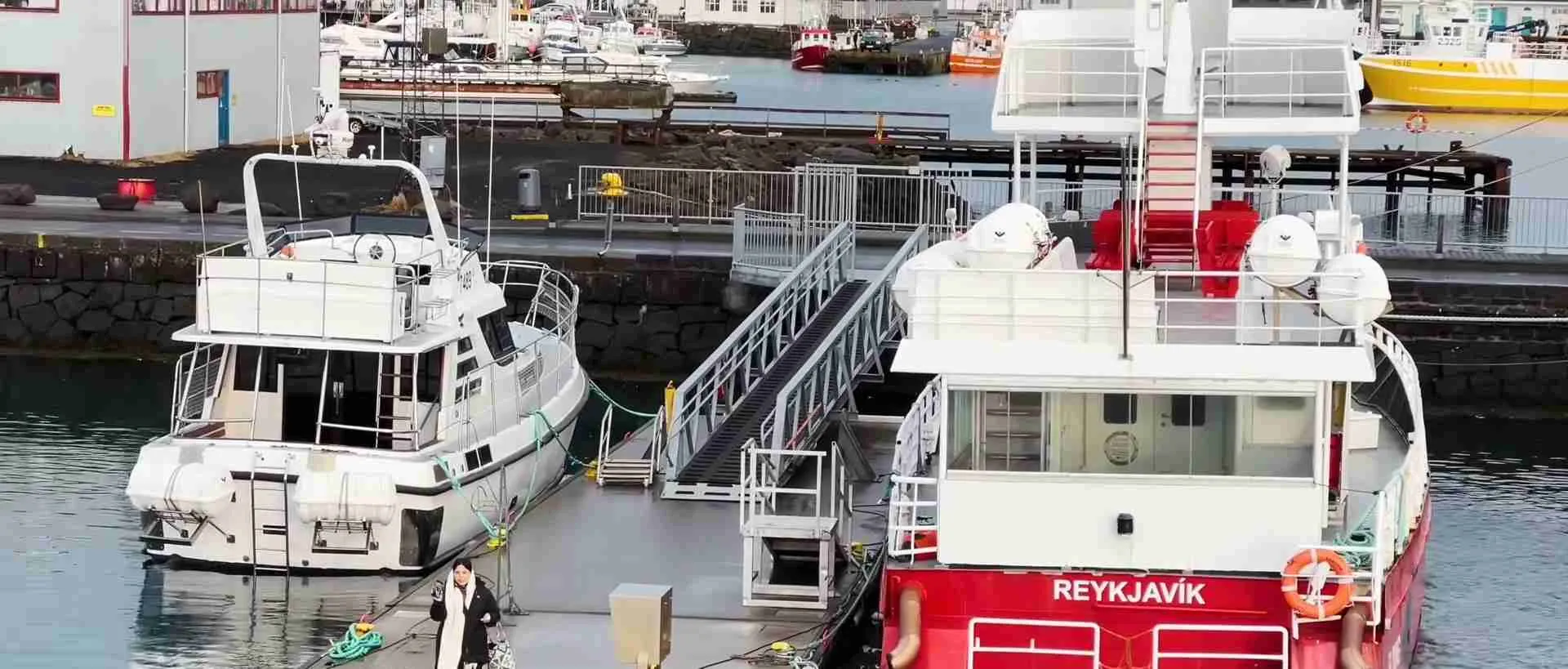
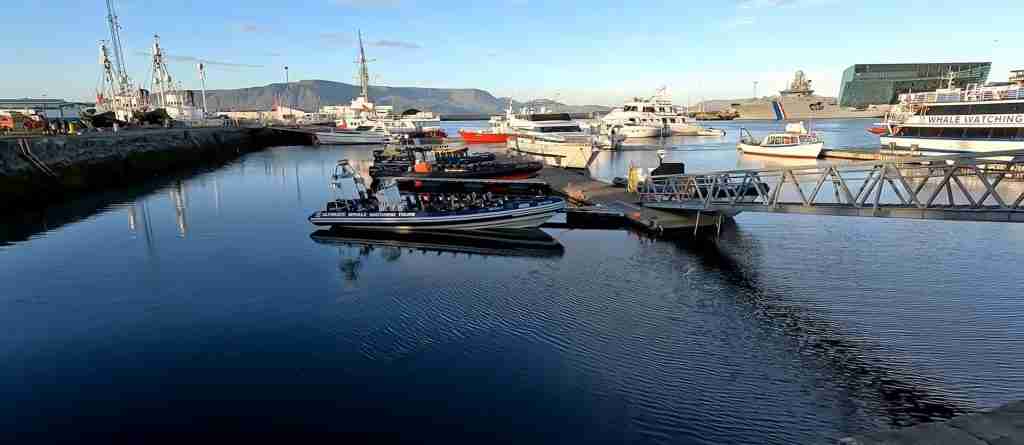
The Grandi neighborhood (the reclaimed harbor area) contains colorful fishing boats, whale watching tour offices (tours themselves cost money, but watching departures and arrivals is free), maritime equipment, and converted warehouses now housing restaurants, galleries, and shops. Window shopping costs nothing, and the industrial maritime atmosphere contrasts sharply with downtown’s more polished tourist areas.
Several maritime museums cluster in the Old Harbor area. The Reykjavik Maritime Museum charges admission (though it’s included free with the Reykjavik City Card), but the museum’s exterior, the Coast Guard vessel Óðinn moored alongside (exterior viewing free), and the surrounding dock area cost nothing to explore. Historic photographs and information panels around the harbor area provide free context about Iceland’s fishing industry history and its economic significance.
The harbor promenade extends several kilometers along the waterfront, connecting the Old Harbor with the Sun Voyager sculpture and continuing east toward residential neighborhoods. This walking path remains accessible year-round and provides views across Faxaflói Bay toward Snæfellsnes Peninsula on clear days. The volcano Snæfellsjökull, 120 kilometers distant, appears as a distinctive snow-covered cone on exceptionally clear days.
Viðey Island, visible from the harbor, can be reached via ferry (ferry costs ISK 1,500/$10 round-trip for adults, though the Reykjavik City Card includes one free ferry journey). The island itself contains no admission fees once you arrive—walking trails, bird watching, Yoko Ono’s Imagine Peace Tower memorial to John Lennon, and historical ruins cost nothing to explore beyond the ferry ticket.
Street musicians, particularly during summer months, perform along the harbor walkways. While tipping street performers is appreciated, simply enjoying free live music while walking requires no payment. Summer weekends bring the most consistent performances.
Laugavegur and Downtown – Free Walking Areas 2026
Laugavegur, Reykjavik’s main shopping street, extends approximately one kilometer from the downtown area up to Hallgrímskirkja church. Walking this street and the surrounding downtown core costs nothing while providing extensive window shopping, architectural viewing, and people-watching opportunities.
The street name “Laugavegur” translates to “wash road”—historically, this path led from downtown to hot springs where Reykjavik residents washed their clothes before modern plumbing. Today, the street contains Iceland’s highest concentration of shops, restaurants, bars, and tourist services. Window shopping reveals traditional Icelandic woolens, design stores, bookshops, and souvenir outlets.
Skólavörðustígur, the street branching uphill from Laugavegur directly to Hallgrímskirkja, features colorful buildings, independent boutiques, and artistic murals. The 20-minute walk from Laugavegur’s eastern end up to the church provides a complete cross-section of Reykjavik architecture and street life. Rainbow Street, the section of Skólavörðustígur near Hallgrímskirkja painted in rainbow colors, celebrates Iceland’s LGBTQ+ community and pride culture—it’s become a popular photo spot.
Austurvöllur Square, Reykjavik’s oldest public square, sits adjacent to the Alþingi (Parliament) building and Reykjavik Cathedral. The square functions as a gathering point for political demonstrations, cultural events, and casual socializing. Benches around the square provide free seating, and the statue of Jón Sigurðsson (leader of Iceland’s 19th-century independence movement) occupies the square’s center.
Reykjavik Cathedral (Dómkirkjan), completed in 1796, welcomes visitors free during daytime hours. This modest Lutheran church, despite being Iceland’s nominal cathedral, appears remarkably simple compared to European cathedrals—its white interior and minimal decoration reflect Lutheran aesthetics and Iceland’s historical poverty during Danish colonial rule. The cathedral sits just steps from Parliament buildings, making it easy to combine with Austurvöllur Square visits.
Year-round window shopping and street walking remain free regardless of season, though Reykjavik’s notoriously variable weather requires layered waterproof clothing. Winter darkness (4-5 hours of daylight in December-January) creates atmospheric evening street scenes with shop windows and street lights providing illumination.
Botanical Garden – Free Summer Entry 2026
Reykjavik Botanical Garden (Grasagarður Reykjavíkur) occupies a site in Laugardalur Valley approximately 2.5 kilometers from downtown. The garden admission policy operates on a donation basis—entrance is technically free, though contributions support the garden’s maintenance and educational programs.
The garden contains over 5,000 plant species from Iceland and around the world, organized into thematic sections including Icelandic native plants, Arctic and alpine species, perennials, and foreign ornamental plants. The collection demonstrates which plants can survive Iceland’s challenging climate (Zone 7 in hardiness terms, with temperatures rarely exceeding 15°C/59°F in summer or dropping below -10°C/14°F in winter, but with extreme wind exposure).
Free 30-minute guided tours in English operate every Friday during summer months (June-August) without advance booking required. Tours provide botanical information, garden history, and explanations of plant adaptations to Icelandic conditions. The garden’s cafe (not free) operates during summer months offering refreshments made with herbs and spices grown on-site.
Ponds within the garden attract bird populations year-round, creating free bird-watching opportunities comparable to Tjörnin pond but in a more naturalistic setting. The garden’s relatively quiet location (compared to downtown areas) makes it appealing for visitors seeking peaceful green space.
Opening hours follow seasonal schedules: summer (May-September) weekdays 8:00 AM to 10:00 PM, weekends 10:00 AM to 10:00 PM; winter (October-April) weekdays 10:00 AM to 3:00 PM, closed weekends. The garden closes earlier during winter due to limited daylight hours and reduced visitor numbers. Winter visits can be atmospheric with snow-covered paths and frosted plants, though the most impressive displays occur during June-August when arctic wildflowers bloom.
The garden sits adjacent to Laugardalslaug swimming pool (Iceland’s largest public pool complex) and Reykjavik Family Park and Zoo, allowing combination visits to multiple attractions in Laugardalur area. City buses serve the area with regular departures from downtown—bus fare costs ISK 550 ($3.80) for adults, or use the Reykjavik City Card for free unlimited bus access.
Free Swimming for Children and Teens 2026
All 18 municipal swimming pools in Reykjavik offer free admission for children and teenagers ages 0-15 throughout 2026, representing significant value for families traveling with young people. This policy applies uniformly across all city-operated pools without restrictions or blackout dates.
Swimming pools in Iceland function as essential community hubs rather than mere recreational facilities. Locals visit pools year-round regardless of weather, soaking in geothermal hot tubs, swimming laps, and socializing in an informal setting that serves similar social functions to pubs in Britain or cafes in continental Europe. For children, free pool access provides authentic cultural immersion into Icelandic daily life.
Admission costs for accompanying adults are ISK 1,430 ($10) as of January 1, 2026, with youth ages 16-17 paying reduced rates of ISK 220 ($1.50). These prices apply at all municipal pools including Laugardalslaug (the largest complex), Sundhöll Reykjavíkur (the historic downtown pool), Vesturbæjarlaug (the locals’ favorite), and 15 other locations throughout the capital area.
Each pool features different amenities, but standard facilities include outdoor heated swimming pools (maintained at 28-29°C/82-84°F year-round), indoor pools, multiple hot tubs at varying temperatures (36-42°C/97-108°F), saunas, steam rooms, and children’s pools. Several pools including Laugardalslaug and Breiðholtslaug feature water slides popular with children. All pools use geothermal water heated by Iceland’s volcanic activity, making them environmentally sustainable and inexpensive to operate.
Pool etiquette in Iceland requires thorough showering without swimsuits before entering pool areas. This strict hygiene policy keeps pools remarkably clean without requiring excessive chlorination. Shower areas provide body wash and shampoo, and staff enforce showering rules—non-compliance can result in removal from the facility. This cultural practice initially surprises many foreign visitors but ensures high water quality standards.
Opening hours vary by location but typically range from 6:00 AM or 6:30 AM until 9:00 PM or 10:00 PM on weekdays, with slightly reduced hours on weekends. Most pools maintain these hours year-round, allowing for atmospheric winter evening soaks under northern lights (visible September-April when skies are dark and clear).
Towel and swimsuit rentals are available for small fees at most locations if you arrive unprepared, though bringing your own equipment is more economical. Lockers require ISK 100 coins (refundable deposit), so carry a few coins if paying cash rather than using the Reykjavik City Card for entry.
Reykjavik City Card – Worth It for Free Access? 2026
The Reykjavik City Card is NOT free—it costs ISK 5,500 ($45) for 24 hours, ISK 7,700 ($63) for 48 hours, or ISK 9,500 ($78) for 72 hours as of 2026. However, the card provides free access to numerous attractions that otherwise charge admission, potentially saving significant money for visitors planning to visit multiple paid sites.
Free inclusions with the City Card comprise all municipal swimming pools (unlimited visits during card validity), most major museums (National Museum of Iceland, Settlement Exhibition, Reykjavik Art Museum’s three locations, Reykjavik Maritime Museum, and others), the Reykjavik Family Park and Zoo, unlimited city bus travel throughout the capital area, and one ferry trip to Viðey Island. Additional discounts apply to tours, restaurants, and services throughout the city.
The card pays for itself quickly with strategic planning: three museum visits at ISK 1,500-2,500 ($10-17) each = ISK 4,500-7,500, two pool visits at ISK 1,430 ($10) each = ISK 2,860, four bus rides at ISK 550 ($3.80) each = ISK 2,200. Total value: ISK 9,560-12,560 ($66-87), exceeding the 24-hour card cost of ISK 5,500 ($45). Families with multiple members can achieve even greater proportional savings since children already receive free museum entry (ages 0-17) and free pool access (ages 0-15), making cards primarily valuable for adults.
The 48-hour and 72-hour cards provide better value per hour compared to the 24-hour option—the 72-hour card at ISK 9,500 ($78) breaks down to ISK 132 ($1.08) per hour of validity, while the 24-hour card costs ISK 229 ($1.88) per hour. For visitors staying in Reykjavik 2-3 days and planning intensive sightseeing, the longer-duration cards maximize value.
Cards must be activated in person at designated pickup locations (various museums and the tourist information center) by writing the start date and time on the card back. Validity runs for consecutive hours from activation—a 48-hour card activated at 2:00 PM Thursday remains valid until 2:00 PM Saturday. This consecutive-hour model allows for strategic timing to maximize usage across multiple days.
For extreme budget travelers focused exclusively on free activities, the City Card is unnecessary—everything in this guide remains accessible without it. However, travelers wanting to add 2-3 paid museums or multiple pool visits while using public transportation should calculate whether the card saves money based on their specific planned activities.
The card does NOT include the airport bus (Flybus) to/from Keflavík International Airport—this bus costs ISK 4,000 ($28) one-way separately. The card also excludes major paid attractions like Perlan Museum, Hallgrímskirkja tower, Blue Lagoon, and privately-operated tours. Always verify current card benefits at visitreykjavik.is before purchasing, as included attractions can change.
Planning Free Day Itineraries in Reykjavik 2026
Strategic planning maximizes free experiences while creating a rich Reykjavik itinerary. This section presents two sample days using exclusively free activities.
Day 1 – Downtown Cultural Immersion: Begin at Hallgrímskirkja church at 10:00 AM for free interior access (30 minutes). Walk down Skólavörðustígur to Laugavegur shopping street (15 minutes). Explore Laugavegur and surrounding streets with window shopping and architecture viewing (1.5 hours). Visit Reykjavik Cathedral and Austurvöllur Square near Parliament buildings (30 minutes). Walk to Tjörnin pond and City Hall to view the Iceland relief map (45 minutes). Join a free walking tour departing from Ingólfur Square at 2:00 PM (2 hours). After the tour, walk to Harpa Concert Hall for self-guided exploration (45 minutes). Continue to the Old Harbor for waterfront walking and photography (1 hour). Return to accommodation or enjoy street musicians in the harbor area during summer evening hours.
Day 2 – Art and Nature: Take the city bus to Laugardalur Valley (if not using City Card, bus costs ISK 550/$3.80 one-way). Visit the Botanical Garden during morning hours (1.5 hours). Walk to Laugardalslaug swimming pool; if traveling with children ages 0-15, they enter free while adults decide whether the ISK 1,430 ($10) admission fits their budget (1-2 hours). Return downtown via city bus (ISK 550/$3.80 one-way without City Card). Visit the Einar Jónsson Sculpture Garden behind Hallgrímskirkja (45 minutes). Walk to the Sun Voyager sculpture along the waterfront (30-minute walk one-way). Spend remaining time exploring the Marshall House/Living Art Museum (pay-what-you-wish admission) and Grandi neighborhood’s street art and industrial waterfront areas.
These itineraries demonstrate that full days of high-quality Reykjavik experiences cost nothing beyond potential bus fares (ISK 1,100-2,200/$7.60-15.20 for 2-4 bus rides) and optional pool admission. Adding strategic paid attractions—Hallgrímskirkja tower, one major museum, or a specific tour—enhances the experience without overwhelming budgets.
2026 Solar Eclipse – Free Once-in-a-Lifetime Event
August 12, 2026 brings a total solar eclipse visible from western Iceland including portions of Reykjavik, creating a free natural spectacular that occurs perhaps once in a lifetime for most people. The eclipse path crosses the Reykjanes Peninsula southwest of Reykjavik, with totality beginning around 5:48 PM local time and lasting approximately one minute depending on exact location.
Reykjavik itself sits near the edge of the totality path—the city center will experience partial coverage approaching totality, while the Grotta lighthouse area at Reykjavik’s northwestern tip falls within the total eclipse zone with approximately 30-60 seconds of totality. Iceland’s last total solar eclipse occurred in 1954, and Reykjavik’s previous total eclipse dates back nearly 600 years, making this an exceptionally rare event for the capital city.
Eclipse viewing itself costs nothing beyond certified eclipse glasses (required for safely viewing partial phases). Special eclipse glasses cost ISK 500-1,500 ($3.50-10) at optical shops, camera stores, and tourist shops throughout Reykjavik. Never view the sun without proper eye protection except during the brief totality phase when the moon completely covers the solar disk.
Best viewing locations in Reykjavik include the Grotta lighthouse area (within totality path), the Sun Voyager sculpture and surrounding coastal areas (partial coverage with excellent unobstructed views), Perlan Museum’s observation deck (paid admission ISK 6,290/$43 but provides elevated vantage point), and Hallgrímskirkja tower (paid admission ISK 1,500/$10 but requires advance planning as crowds will be exceptional). Any location with clear western horizon views works—even your accommodation balcony if it faces west.
Accommodation and tours for August 12, 2026 are already booking heavily as of early 2026. Travelers planning to visit Reykjavik for the eclipse should book lodging 6-12 months in advance. Special eclipse tours departing from Reykjavik into the totality path cost ISK 15,000-30,000 ($105-210) but provide transportation to optimal viewing sites on the Reykjanes Peninsula with expert guidance.
Weather represents the primary uncertainty—Iceland’s famously variable climate makes clear skies unpredictable even one day in advance. August averages 50-60% cloud cover in Reykjavik, meaning roughly even odds of clear viewing. Having 1-2 backup days in your Iceland itinerary around August 12 provides flexibility to chase clearer weather if necessary, though the eclipse only occurs on that specific date regardless of weather.
The eclipse creates a bucket-list free attraction that perfectly complements Iceland’s other natural wonders. No other major city worldwide experiences totality during the 2026 eclipse, making Reykjavik uniquely positioned for urban eclipse viewing combined with cultural activities and modern amenities.
Seasonal Considerations for Free Activities 2026
Reykjavik’s free attractions vary significantly by season, with summer (June-August) offering the most extensive options and longest operating hours, while winter (November-February) provides darker, more atmospheric experiences with potential northern lights viewing.
Summer brings midnight sun conditions—in June, Reykjavik experiences only 3-4 hours of semi-darkness rather than true night. Extended daylight allows for late-evening free activities including walking tours until 9:00 PM or later, photography during prolonged golden hours, and outdoor sculpture viewing at any hour. Swimming pools maintain full operating hours, the Botanical Garden opens until 10:00 PM, and street life extends well into the evening hours. Summer also brings higher tourist crowds, making popular free attractions like Hallgrímskirkja more congested.
Winter’s primary advantage for free activities involves northern lights (aurora borealis) viewing from within Reykjavik’s city limits. Clear, dark nights from September through April provide aurora opportunities, with peak visibility October-March when darkness lasts 16-20 hours daily. Free northern lights viewing spots include Grotta lighthouse, the Sun Voyager sculpture area, Hallgrímskirkja church grounds (exterior viewable 24/7 even when church is closed), and Öskjuhlíð hill near Perlan Museum. The city’s light pollution reduces aurora visibility compared to rural Iceland, but strong auroral displays remain visible even from downtown Reykjavik.
Winter pool visits create atmospheric experiences as outdoor geothermal pools steam in cold air, creating ethereal fog effects and potentially allowing aurora viewing while soaking (though children’s free access makes this primarily a family activity rather than romantic aurora-watching). Winter daylight shortages mean outdoor sculptures and walking areas must be visited during limited daylight hours (10:00 AM to 4:00 PM in December-January), though urban lighting makes evening walking feasible along main streets.
Spring (April-May) and autumn (September-October) represent shoulder seasons with moderate weather, fewer crowds, and transitional conditions. April often brings the year’s strongest winds but also clearer skies for viewing distant mountains. September combines still-warm temperatures (8-12°C/46-54°F) with returning darkness for possible aurora viewing and autumn colors in the Botanical Garden.
Free seasonal events enhance Reykjavik’s year-round appeal: Reykjavik Winter Lights Festival (early February) includes free light installations and museum evening events; Reykjavik Culture Night (late August) transforms the city into a free festival with outdoor performances, open museums, and fireworks; and various music festivals include free outdoor concerts alongside ticketed performances. Check event calendars at visitreykjavik.is when planning specific 2026 travel dates to coordinate with free festival offerings.
Budget-Stretching Strategies Beyond Free Attractions 2026
While this guide focuses on free activities, several budget-friendly practices maximize limited funds when some paid experiences become necessary or desired in Reykjavik.
Grocery shopping at Bónus supermarkets (identifiable by their pink pig logo) saves 30-40% versus downtown minimarkets or tourist-area shops. Bónus operates multiple Reykjavik locations with opening hours typically 11:00 AM to 6:30 PM weekdays, 10:00 AM to 6:00 PM weekends (hours vary by location). Self-catering breakfast and lunch using supermarket supplies allows travelers to splurge on one restaurant dinner rather than paying inflated restaurant prices for all meals. Icelandic tap water ranks among the world’s purest—filling reusable bottles from any tap saves ISK 300-500 ($2-3.50) per bottle compared to purchasing bottled water.
Happy hour deals at downtown bars (typically 4:00-7:00 PM daily) reduce alcohol prices by 30-50%. Beer costs ISK 1,000-1,400 ($7-10) during happy hour versus ISK 1,600-2,000 ($11-14) at regular prices—still expensive by international standards but more manageable for travelers wanting to experience Reykjavik’s renowned nightlife.
Walking rather than using taxis saves enormous sums in Reykjavik’s compact downtown. Taxi fares start around ISK 1,000 ($7) and increase rapidly—a trip from the city center to Laugardalur costs ISK 2,500-3,500 ($17-24). The same journey via city bus costs ISK 550 ($3.80), or is free with the Reykjavik City Card. Most downtown attractions lie within 2 kilometers of Laugavegur, making everything walkable in 15-30 minutes.
Camping represents the ultimate budget accommodation in Reykjavik. Reykjavik Eco Campsite in Laugardalur charges ISK 2,100 ($14.50) per person per night for tent camping with full facilities including hot showers, cooking areas, and laundry. The campsite operates late May through late September, and proximity to Laugardalslaug swimming pool (5-minute walk) provides morning shower/sauna access for campers. Winter camping is not officially supported due to harsh conditions, though some adventurous travelers do wild camp outside official sites.
Iceland’s Right to Roam law (Allemansrätten) technically allows wild camping on uncultivated public land, but Reykjavik’s urban status and private property density make this impractical within city limits. Rural areas outside Reykjavik offer legitimate wild camping opportunities for those with proper equipment, though travelers should research current regulations as rules tighten periodically in response to environmental impact concerns.
Free WiFi pervades Reykjavik—libraries, cafes, hotels, and many public spaces provide internet access without purchase requirements. The Reykjavik City Library offers free WiFi, computer use, and warm indoor space with no usage time limits, making it an excellent free activity during inclement weather. Main library hours are Monday-Thursday 10:00 AM to 8:00 PM, Friday 10:00 AM to 6:00 PM, Saturday-Sunday 1:00 PM to 5:00 PM.
Combining Free Attractions with Paid Experiences 2026
Pure budget travelers can create excellent Reykjavik itineraries using exclusively free activities, but most visitors benefit from combining free attractions with selective paid experiences to create richer, more diverse trips.
The Blue Lagoon, Iceland’s most famous geothermal spa located 50 kilometers from Reykjavik, costs ISK 12,900-17,900 ($89-124) for standard admission during 2026. This represents a major expense, but many travelers consider it worthwhile for the iconic milky-blue waters and luxurious facilities that public swimming pools cannot match. Combining a Blue Lagoon visit (half-day, paid) with free Reykjavik activities for the remainder of your stay creates a balanced approach.
Golden Circle tours (covering Þingvellir National Park, Geysir geothermal area, and Gullfoss waterfall) cost ISK 10,000-15,000 ($69-104) for day tours from Reykjavik. These tours access Iceland’s natural wonders beyond Reykjavik’s reach via public transportation. Booking one Golden Circle tour while spending 1-2 days on free Reykjavik activities provides nature/culture balance without overspending.
Museum selection allows strategic paid cultural experiences complementing free attractions. The National Museum of Iceland (free with City Card, otherwise ISK 2,500/$17) provides comprehensive Icelandic history from settlement through independence. The Settlement Exhibition (free with City Card, otherwise ISK 2,000/$14) shows archaeological remains of Reykjavik’s first settlement. Choosing one paid museum combined with free walking tours, Hallgrímskirkja, and outdoor sculptures creates a complete cultural picture.
Whale watching tours (ISK 12,000-15,000/$83-104) and puffin viewing tours (ISK 8,000-12,000/$55-83) represent specialized wildlife experiences impossible to replicate freely. These remain optional luxuries, but travelers prioritizing wildlife can allocate budget to one tour while keeping other days focused on free Reykjavik attractions.
The calculation becomes personal: identify your highest-priority paid experiences, allocate budget accordingly, then maximize free activities for remaining time. A traveler spending ISK 25,000 ($173) on Blue Lagoon and Golden Circle tour can still enjoy 2-3 days of free Reykjavik exploration, creating a trip that balances Iceland’s famous natural attractions with budget-conscious urban cultural immersion.
Practical Information for Free Reykjavik Experiences 2026
Weather preparation determines success for free outdoor Reykjavik activities. Iceland’s notoriously changeable weather means multiple conditions within single days—plan for rain, wind, and temperature fluctuations regardless of season. Layered clothing (base layer, insulation layer, waterproof/windproof outer shell) provides flexibility to adjust to changing conditions. Waterproof jackets and pants prove essential even during summer months when rain squalls arrive suddenly.
Walking shoes should be waterproof and provide good ankle support for Reykjavik’s sometimes-uneven sidewalks and paths around ponds and gardens. Winter requires boots with good traction for potentially icy conditions. Summer walking requires less specialized footwear but still benefits from waterproof materials.
Tourist information services operate from the main Visit Reykjavik office at Aðalstræti 2 in downtown. Hours run Monday-Friday 9:00 AM to 5:00 PM, Saturday-Sunday 9:00 AM to 4:00 PM year-round. Staff provide free city maps, current event information, attraction updates, and practical advice at no charge. The office also serves as a Reykjavik City Card pickup location if purchasing online.
Free public restrooms exist in City Hall, the Reykjavik City Library, Harpa Concert Hall, and most museums. Many downtown cafes and restaurants reserve restrooms for paying customers only, so knowing free public facilities locations prevents awkward situations. Swimming pools include changing facilities and showers, making them practical for freshening up during long walking days (pool admission required for interior access).
Mobile phone service and data coverage throughout Reykjavik enables navigation apps, attraction research, and practical planning. Purchasing an Icelandic SIM card (ISK 2,000-3,000/$14-21 for tourist data packages) or using international roaming provides connectivity for finding free attractions, checking opening hours, and navigating between sites.
Currency exchange rates fluctuate, but ISK 1,000 equals approximately $7 USD as of early 2026. Most Reykjavik businesses accept credit/debit cards including Visa and Mastercard—Iceland ranks among Europe’s most cashless societies. However, some parking meters, older vending machines, and pool lockers require coins, so carrying ISK 1,000-2,000 in small bills and coins proves useful.
Safety in Reykjavik ranks excellent with very low crime rates compared to similarly-sized European cities. Petty theft occasionally occurs in tourist areas, but violent crime remains rare. Normal urban precautions (secure valuables, remain aware in crowded areas) suffice. Emergency services use the universal European emergency number 112 for police, ambulance, and fire services.
Frequently Asked Questions About Free Reykjavik Activities 2026
Can you visit Reykjavik without spending money on attractions?
Yes, Reykjavik offers extensive completely free attractions including Hallgrímskirkja church interior, free walking tours, all outdoor sculptures, Harpa Concert Hall’s public areas, Tjörnin pond, City Hall exhibits, Old Harbor waterfront, Laugavegur shopping district, the Botanical Garden (donation-based), Einar Jónsson Sculpture Garden, and children’s free swimming pool access. Travelers spending 2-3 days in Reykjavik can create rich itineraries using exclusively free activities, though most visitors choose to add selective paid experiences like the Hallgrímskirkja tower or specific museums.
Are there hidden costs for Reykjavik’s “free” attractions?
Most free attractions genuinely require no payment—Hallgrímskirkja church interior, outdoor sculptures, and walking areas have no hidden fees. Free walking tours operate on voluntary tips (suggested ISK 1,500-2,500/$10-17 per person, but truly optional). The Botanical Garden and Living Art Museum use donation-based models where contributions support operations but are not mandatory. Public restrooms are generally free in municipal buildings. The primary “hidden” cost involves transportation to reach some attractions via city buses if not walking, at ISK 550 ($3.80) per ride for adults (children pay reduced fares, teens 16-17 pay ISK 220/$1.50).
How much can families save with free children’s swimming pool access?
Families with children ages 0-15 save ISK 1,430 ($10) per child per swimming pool visit compared to adult rates. A family with two children visiting Reykjavik pools twice during a 3-day stay saves ISK 5,720 ($40) total—nearly matching the cost of a 24-hour Reykjavik City Card. Families with three or more children achieving multiple pool visits realize even greater proportional savings. Free children’s pool access combined with free museum entry for under-18s makes Reykjavik surprisingly family-friendly despite Iceland’s expensive reputation.
Is Reykjavik still enjoyable if you avoid all paid attractions?
Yes—Reykjavik’s free attractions capture essential elements of Icelandic culture, architecture, and daily life without requiring paid admissions. Free experiences include Iceland’s iconic church architecture (Hallgrímskirkja), geothermal bathing culture (children’s pool access and swimming pool atmosphere), Viking and settlement history (free walking tour narratives and City Hall exhibits), contemporary art (street murals and artist-run galleries), and stunning landscapes (harbor views, mountain vistas, and waterfront paths). Travelers skipping major paid museums and the Hallgrímskirkja tower still experience authentic Reykjavik culture and return home with comprehensive understanding of Iceland’s society, history, and natural setting.
What’s the best free vantage point for Reykjavik city views in 2026?
The Hallgrímskirkja tower offers the best views but requires a paid ticket at ISK 1,500 ($10). For free vantage points, Perlan Museum’s grounds (exterior area outside the paid museum) provide elevated city views without admission fees—walk or take city bus 18 to Perlan and explore the hilltop park area around the building. Öskjuhlíð hill surrounding Perlan offers walking paths with city views through the trees. The Sun Voyager sculpture area along the waterfront provides stunning sea and mountain views with the city as backdrop. None of these match the Hallgrímskirkja tower’s 360-degree panorama, but they cost nothing while still offering quality photo opportunities and orientation to Reykjavik’s layout.
Do free walking tours really expect tips, or can you skip tipping?
Free walking tour guides work for tips as their sole income—there’s no salary or guaranteed payment. Standard tipping practices suggest ISK 1,500-2,500 ($10-17) per person for 2-hour tours, but tips remain genuinely voluntary. Guides understand that some budget travelers cannot afford tips and still welcome their participation. If your budget absolutely prohibits tipping, joining a free tour without tipping is acceptable—you’re not violating any policy. However, if you can afford ISK 1,000-2,000 ($7-14), even small tips help support local guides who share their city’s stories. Tipping in cash at tour’s end provides the most direct support to guides.
Can you see northern lights from Reykjavik without joining paid tours?
Yes, northern lights viewing requires no payment—the natural phenomenon is free regardless of location. Reykjavik’s light pollution reduces visibility compared to dark rural areas, but strong auroral displays remain visible from city limits during clear, dark nights (September-April). Best free Reykjavik aurora spots include Grotta lighthouse (northwestern edge of city with minimal light interference), the Sun Voyager sculpture area, Hallgrímskirkja church grounds, and Öskjuhlíð hill. Northern lights activity depends on solar activity and clear skies—check aurora forecasts at en.vedur.is (Iceland Meteorological Office) and plan viewing during cloudless nights with forecast aurora activity. Paid northern lights tours transport visitors to darker rural locations and provide expert guidance, but patient travelers with clear skies can observe aurora free from Reykjavik itself.
What free indoor activities exist for bad weather days in Reykjavik 2026?
Bad weather (rain, wind, or storms) offers several free indoor options: Hallgrímskirkja church interior, Harpa Concert Hall’s public spaces with harbor views through glass walls, City Hall’s Iceland relief map exhibit and rotating exhibitions, Reykjavik Cathedral, Reykjavik City Library for free WiFi and reading, and the Living Art Museum (pay-what-you-wish admission, though contributions encouraged). Shopping street window browsing along Laugavegur provides weather-protected walking through connected indoor shopping arcades. Kringlan Shopping Center (suburban mall accessible via city bus) offers extensive indoor walking, free WiFi, seating areas, and browsing without purchase obligations. These options prevent complete itinerary disruption during Iceland’s frequent inclement weather.
Are Reykjavik’s outdoor sculptures and art installations accessible year-round?
Yes, outdoor sculptures including Sun Voyager, the Einar Jónsson Sculpture Garden, and street art installations remain accessible 24/7 year-round regardless of season or weather. Winter conditions create atmospheric viewing with snow-covered sculptures and dramatic lighting, though daylight limitations (4-5 hours daily in December-January) restrict photography to midday hours. Some outdoor sculptures become partially snow-covered during heavy winter precipitation, changing their visual appearance. The Einar Jónsson Sculpture Garden has gates that close during evening hours (schedules vary seasonally), but the Sun Voyager and most street installations have no time restrictions.
How does the 2026 solar eclipse viewing work for free in Reykjavik?
The August 12, 2026 total solar eclipse is free to view from any location with clear westward views—no tickets or reservations required for observing this natural event. Reykjavik’s Grotta lighthouse area falls within the totality path experiencing 30-60 seconds of complete solar coverage around 5:48 PM local time. The city center experiences near-total eclipse (approximately 95-98% coverage). Free viewing locations include any spot with unobstructed western horizon: beaches, parks, Hallgrímskirkja church grounds, harbor areas, or even your accommodation if it faces west. The only required purchase involves certified solar eclipse glasses (ISK 500-1,500/$3.50-10) for safe viewing during partial eclipse phases. Glasses are unnecessary during the brief totality when the moon completely covers the sun, but essential for all partial phases before and after totality. Without proper eye protection, solar viewing can cause permanent eye damage.