
Free Things to Do in New Orleans 2026: Complete Guide
New Orleans proves that the best experiences don’t require opening your wallet. From world-class free festivals featuring hundreds of musicians to historic neighborhoods alive with street performers, second lines, and architectural splendor, the Crescent City offers more zero-cost cultural experiences than virtually any American destination. This guide reveals how to experience authentic New Orleans culture, music, food samples, museums, and festivals in 2026 without spending a dime.
Key Takeaways: Free New Orleans Experiences 2026
- Major Free Festivals 2026: French Quarter Festival (April 16-19) delivers 300+ free performances across 20+ stages making it the world’s largest free music celebration, while Mardi Gras season (January 6-February 17) offers dozens of free parade viewing opportunities throughout the city
- Year-Round Free Music: Frenchmen Street venues feature nightly live music with no cover charges, while Wednesday at the Square presents free concerts through May 6 in Lafayette Square featuring legendary New Orleans musicians like Kermit Ruffins and Jon Cleary
- Historic Neighborhoods Cost Nothing: Self-guided walking tours of the French Quarter, Garden District, and Magazine Street’s six-mile antique corridor provide unlimited architectural appreciation, while the historic St. Louis Cathedral welcomes visitors daily with free entry
- Free Museums and Cultural Sites: The Historic New Orleans Collection at 520 Royal Street, Sazerac House cocktail museum with complimentary samples, and the Newcomb Art Museum at Tulane all offer free admission, while Louis Armstrong Park and Congo Square preserve essential African-American cultural heritage at no cost
- Streetcar Sightseeing for Minimal Cost: Historic streetcar rides cost just $1.25 per trip or $3 for unlimited 24-hour access via Jazzy Pass, transforming transportation into an affordable moving tour through oak-lined streets and past antebellum mansions
- Spontaneous Street Culture: Second line parades, brass band performances, Mardi Gras Indian gatherings (Super Sunday on March 15 at A.L. Davis Park), and street performers throughout the French Quarter and Frenchmen Street create daily free entertainment impossible to experience anywhere else
People Also Ask About Free New Orleans Activities 2026
What are the best completely free festivals in New Orleans in 2026?
French Quarter Festival (April 16-19, 2026) stands as the world’s largest free music celebration with more than 300 performances by Louisiana artists across 20+ stages throughout the French Quarter. The festival features Grammy winners like PJ Morton, soul legend Irma Thomas, bounce star Big Freedia, and hundreds of local musicians performing jazz, brass band, funk, R&B, and traditional New Orleans music. More than 70 food vendors serve over 275 dishes, and the event expands in 2026 to include Goldring Woldenberg Riverfront Park with additional stages and a new 5K race on April 18. Admission remains completely free, though organizers suggest a $5 voluntary donation to support the 1,800 local musicians performing.
Mardi Gras parade season (January 6 through Fat Tuesday on February 17, 2026) offers dozens of free parade viewing opportunities. Major parades including Endymion (February 14), Bacchus (February 15), Zulu and Rex (February 17) roll through Uptown routes along St. Charles Avenue and Canal Street with elaborate floats, marching bands, and millions of throws. Wednesday at the Square free concert series runs Wednesday evenings 5-8pm through May 6 in Lafayette Square featuring Kermit Ruffins and the Barbecue Swingers, Corey Henry and the Treme Funktet, Brass-A-Holics, and Jon Cleary. The Treme Creole Gumbo Festival in November at Louis Armstrong Park combines free music performances with affordable food vendors.
Can you really experience New Orleans music culture for free in 2026?
New Orleans remains one of few American cities where world-class live music performances occur nightly with no cover charges. Frenchmen Street in the Marigny neighborhood hosts venues like the Spotted Cat Music Club, d.b.a., and Blue Nile where jazz, brass band, blues, and funk groups perform seven nights weekly without admission fees. Musicians play for tips and drink sales rather than door charges, allowing visitors to experience authentic New Orleans music in intimate club settings while spending only on beverages.
Street performers throughout the French Quarter, particularly on Royal Street and Jackson Square, deliver professional-caliber jazz, brass band, and solo performances daily. The New Orleans Jazz Museum at the Old U.S. Mint hosts free concerts every Friday afternoon with tickets distributed first-come, first-served at the front desk. Louis Armstrong Park’s Congo Square features traditional African drumming and dancing on Sunday afternoons where enslaved and free people of African descent historically gathered for cultural celebrations. Second line parades occur most Sunday afternoons throughout the year as social aid and pleasure clubs march through neighborhoods with brass bands, creating spontaneous free street festivals that anyone can join.
Which New Orleans museums and cultural sites offer free admission in 2026?
The Historic New Orleans Collection at 520 Royal Street in the French Quarter provides free admission to rotating and permanent exhibitions exploring Louisiana history and culture, operating as both museum and research center. The Newcomb Art Museum at Tulane University offers free entry to contemporary art exhibitions. The Sydney and Walda Besthoff Sculpture Garden adjacent to the New Orleans Museum of Art in City Park showcases world-class outdoor sculpture installations with free access even when NOMA charges admission.
Sazerac House at 101 Magazine Street delivers a free interactive museum experience chronicling New Orleans cocktail history with complimentary drink samples of the city’s signature Sazerac, Ramos Gin Fizz, and other cocktails. Jean Lafitte National Historical Park and Preserve operates six sites across south Louisiana preserving Mississippi Delta natural and cultural resources with free admission including the French Quarter Visitor Center at 419 Decatur Street. St. Louis Cathedral in Jackson Square welcomes visitors daily with free entry to view the historic church interior, with Sunday Mass at 9am and 11am. The Lower Ninth Ward Living Museum shares post-Katrina recovery stories and neighborhood history through resident voices with free admission.
What are the best free walking areas and neighborhoods to explore in New Orleans 2026?
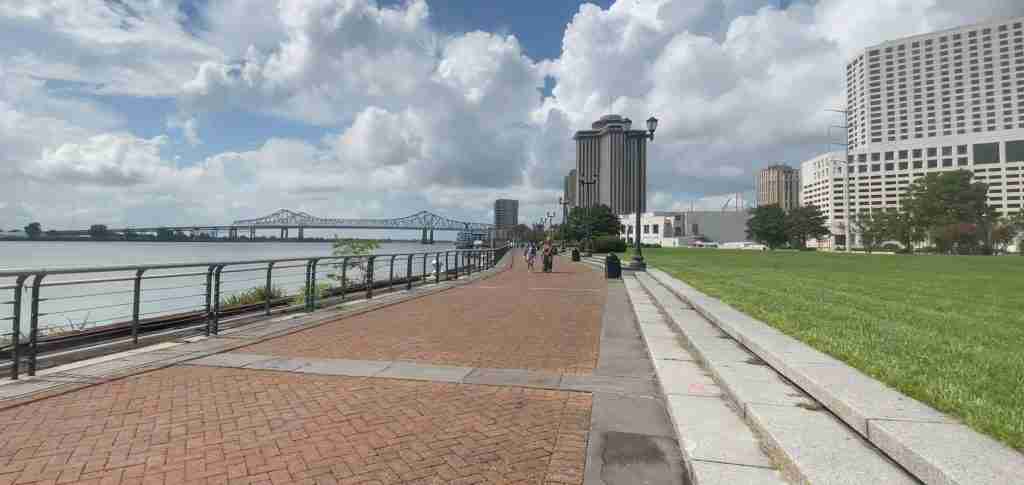
The French Quarter’s historic grid bounded by Canal Street, Decatur Street, Rampart Street, and Esplanade Avenue offers unlimited free exploration of 18th and 19th century architecture, wrought-iron balconies, hidden courtyards, and street life. Royal Street showcases antique shops and art galleries with free browsing, while Jackson Square presents street performers, artists, fortune tellers, and the iconic St. Louis Cathedral backdrop. The Moonwalk along the Mississippi River provides free riverfront access with views of cargo ships, the Crescent City Connection bridge, and river commerce.
The Garden District features America’s finest collection of antebellum mansions and gardens along tree-lined streets including Prytania Street, First Street, and Coliseum Street. Self-guided walking tours cost nothing beyond downloading a free route map, passing homes like the Anne Rice residence and Commander’s Palace restaurant. Lafayette Cemetery No. 1 at 1400 Washington Avenue displays distinctive above-ground tombs with free entry for self-guided exploration. Magazine Street extends six miles from the French Quarter through the Garden District to Uptown with continuous shopping, galleries, restaurants, and window browsing. The Marigny and Bywater neighborhoods along the river from Esplanade Avenue showcase colorful Creole cottages, street art, and bohemian character with free wandering along Chartres Street, Royal Street, and Burgundy Street. Crescent Park provides 1.4 miles of riverfront greenspace with unobstructed Mississippi River views.
Extended multi-day tours – 5+ days
Featured New Orleans Multi-Day Tour Packages

3 days
New Orleans 3-Day Discovery Tour
- ✓ Comprehensive New Orleans experience
- ✓ Expert local guides included
- ✓ All accommodation included
- ✓ Transportation provided
5 days
New Orleans 5-Day Highlights Experience
- ✓ Comprehensive New Orleans experience
- ✓ Expert local guides included
- ✓ All accommodation included
- ✓ Transportation provided

7 days
New Orleans 7-Day Cultural Journey
- ✓ Comprehensive New Orleans experience
- ✓ Expert local guides included
- ✓ All accommodation included
- ✓ Transportation provided

10 days
New Orleans 10-Day Complete Adventure
- ✓ Comprehensive New Orleans experience
- ✓ Expert local guides included
- ✓ All accommodation included
- ✓ Transportation provided
Multi-day tour packages powered by TourRadar. Prices and availability subject to change.
Introduction: Why New Orleans Leads America in Free Cultural Experiences
New Orleans distinguishes itself from every American city through an approach to culture that prioritizes public access over admission fees. Where most destinations gate their best experiences behind ticket prices, New Orleans maintains a fundamental belief that music, parades, festivals, and cultural celebration belong to everyone regardless of budget. This philosophy produces practical results: the world’s largest free music festival, nightly free concerts in dozens of venues, massive parades accessible to any sidewalk spectator, and museums that welcome visitors without charge.
The city’s unique cultural ecosystem emerged from African, French, Spanish, Caribbean, and American influences creating traditions found nowhere else. Second line parades march through neighborhoods every Sunday with brass bands and dancing crowds that anyone can join. Mardi Gras Indians gather in elaborate hand-beaded suits for Super Sunday celebrations in public parks. Street musicians perform professional-caliber jazz, brass, and blues on French Quarter corners for tips rather than admission tickets. This accessibility isn’t marketing strategy but cultural DNA extending back centuries to Congo Square gatherings where enslaved people maintained African traditions through public drumming and dance.
Understanding how to access free experiences in 2026 requires knowing the festival calendar, neighborhood layouts, music venue protocols, and cultural event schedules that locals navigate instinctively. French Quarter Festival in April delivers four days of world-class music across 20+ stages with zero admission cost. Mardi Gras season from January through February offers parade viewing from any public sidewalk. Frenchmen Street provides nightly live music without cover charges in intimate clubs. Historic neighborhoods invite unlimited walking exploration of architecture, gardens, and street life.
This guide maps the complete landscape of free New Orleans experiences across 2026, from major festivals to hidden museum gems, from streetcar routes to neighborhood walking tours, from scheduled concerts to spontaneous street performances. Budget constraints need not limit cultural immersion when the city’s greatest treasures remain open to all.
French Quarter Festival 2026: The World’s Largest Free Music Celebration
French Quarter Festival 2026 runs April 16-19 across the historic French Quarter, presenting more than 300 performances by Louisiana artists on 20+ stages throughout the neighborhood. The festival has expanded for 2026 to include Goldring Woldenberg Riverfront Park at the Gov. Nicholls Street wharf, adding new stages and entry points beyond the traditional Woldenberg Park location behind the Audubon Aquarium. This expansion creates multiple access points near the French Market and the New Orleans Jazz Museum, spreading performances and crowds across a larger footprint.
Headliners for 2026 include Grammy-winning New Orleans native PJ Morton on the Abita Beer Stage at Berger Great Lawn, soul legend Irma Thomas (the Soul Queen of New Orleans), bounce icon Big Freedia, Dawn Richard, Kermit Ruffins and the Barbecue Swingers, George Porter Jr. and the Runnin’ Pardners, The Soul Rebels, Dirty Dozen Brass Band, Rebirth Brass Band, and Cyril Neville. First-time festival performers include 92-year-old blues harmonica player Bobby Rush, Kyle Roussel’s Church of New Orleans project, and jazz traditionalists alongside contemporary R&B and funk acts. The complete lineup features more than 300 local musicians performing jazz, brass band, funk, R&B, gospel, zydeco, blues, and traditional New Orleans music styles across four days.
More than 70 local food vendors serve over 275 dishes representing New Orleans and Louisiana cuisine. Returning favorites include crabmeat beignets from Loretta’s Pralines, Jamaican patties from 14 Parishes, and seafood pasta from Creole Country Cafe. New vendors for 2026 include Spicy Mango, Willie Mae’s Scotch House, Chicken’s Kitchen, Fritai, and Addis NOLA, joining established participants in creating a comprehensive culinary showcase parallel to the music programming.
The festival operates completely cashless in 2026 with digital payment required for food and beverage purchases. Admission remains free to all performances and festival areas, though organizers encourage a suggested $5 donation per person to help sustain programming quality and volume. This donation model helps address a $500,000 funding gap in 2026 as production and security costs exceed revenue from sponsorships and beverage sales. Fest Family VIP Plus passes offering front-of-stage access, private bars, air-conditioned restrooms, and optional parking cost $469 for weekend passes or $169 for single-day access, but general festival attendance requires no payment.
Free dance lessons sponsored by the French Market Corporation run throughout the festival at the French Market Traditional Jazz Stage and Willow Dispensary Stage, teaching second line, swing, and traditional dance styles. The New Orleans Jazz Museum presents a special exhibition “The First Piano Professors and Lost Music of Early New Orleans” highlighting pre-recording-era pianists including Basile Barès, Edmond Dédé, and William T. Francis. The festival introduces a new 5K race on Saturday April 18, 2026, combining fitness with festival celebration through French Quarter streets with registration at runsignup.com/fqf5k.
Festival hours typically run noon through evening Thursday through Sunday, with exact stage times and performance schedules published at frenchquarterfest.org/music closer to the event. The expansion to Goldring Woldenberg Riverfront Park can be accessed along the riverfront walking path or from the foot of Esplanade Avenue, while traditional festival areas near Jackson Square, Woldenberg Park, and throughout the French Quarter maintain their established locations. Street closures affect French Quarter traffic patterns during the festival, making the event most accessible by walking, streetcar, or rideshare rather than personal vehicles.
Mardi Gras 2026: Free Parade Viewing and Carnival Celebrations
Mardi Gras season 2026 begins January 6 (Epiphany/Twelfth Night) and builds through Fat Tuesday on February 17, 2026. This creates a compressed carnival season compared to years when Easter falls later, concentrating parade activity into a shorter timeframe with multiple major parades occurring each day during the final two weeks. More than 60 parades roll through New Orleans and surrounding parishes during the season, all viewable for free from public sidewalks, neutral grounds, and parade routes.
The season opens January 6 with the Krewe of Joan of Arc parade in the French Quarter at 7:30pm and the Phunny Phorty Phellows’ streetcar parade at 7pm. Early-season parades including Krewe Mosaique (January 17), Krewe of Chewbacchus (January 24), Krewe Bohème (January 30), and Krewe du Vieux (January 31) maintain smaller scales with satirical themes, elaborate costumes, and artistic floats in French Quarter and Marigny routes. These early parades offer easier viewing with fewer crowds while showcasing the creative, subversive side of Mardi Gras beyond mainstream super-krewes.
Major parades concentrate in the final ten days before Fat Tuesday. The weekend before Mardi Gras (February 7-8) features multiple parades daily including Krewe of Pontchartrain, Legion of Mars, Krewe of Choctaw, Krewe of Freret, Krewe of Pygmalion, and Krewe of Sparta Society. The final weekend brings the largest parades: Krewe of Endymion (Saturday February 14 at 4:15pm) follows a Mid-City route along Orleans Avenue with 3,200 riders and celebrity grand marshals; Krewe of Bacchus (Sunday February 15 at 5:15pm) rolls on the Uptown route with massive floats and A-list celebrities; Krewe of Orpheus (Monday February 16 at 6pm) features Harry Connick Jr.’s super-krewe with innovative floats and music stars.
Mardi Gras Day (Tuesday February 17, 2026) presents the traditional finale with Zulu Social Aid and Pleasure Club departing at 8am and Rex, King of Carnival, rolling at 10am along the St. Charles Avenue route. Zulu riders throw signature hand-decorated coconuts (a prized catch requiring both hands raised to signal readiness to receive), while Rex represents old-line Mardi Gras tradition with the official King of Carnival. Both parades converge downtown on Canal Street by early afternoon, followed by the Crescent City Classic parade and walking krewes including Pete Fountain’s Half-Fast Walking Club and Jefferson City Buzzards.
Prime parade viewing locations along St. Charles Avenue between Napoleon Avenue and Lee Circle offer the best combination of access, amenities, and throw-catching opportunities. Magazine Street parallel to St. Charles provides alternative viewing with local businesses, restaurants, and restroom access. Canal Street downtown attracts massive crowds but delivers multiple parades including Endymion and Bacchus. Neighborhoods along parade routes set up ladders with seats bolted atop for children to catch throws at eye level with float riders, a uniquely New Orleans tradition creating front-row viewing even behind crowds.
Parade etiquette maintains specific rules: yelling “throw me something, mister!” signals desire for beads and throws; raising both hands overhead indicates readiness to catch coconuts or heavy throws; keeping children visible on shoulders or ladders helps riders target families. Never lean over parade barriers or enter the route during parades. Most throws cost krewes money, so riders appreciate enthusiasm and interaction. Ground scores (beads and throws that hit pavement) follow finders-keepers rules. Arrive 90+ minutes early for premium spots along St. Charles Avenue during major parades, or find less-crowded viewing on Magazine Street and side streets with shorter sight lines but easier access.
Free Live Music Throughout New Orleans 2026
Frenchmen Street: Nightly Free Jazz, Funk, and Brass Band Performances
Frenchmen Street in the Marigny neighborhood operates as New Orleans’ authentic music district where locals and informed visitors experience nightly live performances without cover charges. The three-block stretch from Decatur Street to Burgundy Street hosts clubs including the Spotted Cat Music Club, d.b.a., Blue Nile, Snug Harbor Jazz Bistro (which does charge cover for name acts), Maison, and Three Muses presenting jazz, brass band, funk, blues, reggae, and R&B seven nights weekly.
The Spotted Cat maintains its no-cover-ever policy with continuous live music from afternoon through late night featuring traditional jazz, swing, and gypsy jazz acts. Musicians perform for tips collected in buckets passed between sets, creating an economic model where quality performance directly rewards artists while maintaining free access. D.b.a. presents funk, brass band, soul, and rock acts nightly without admission charges, operating on bar sales and tip support. Blue Nile features funk, brass, and contemporary acts with occasional ticketed shows for touring bands but most nights maintaining free entry.
Music typically begins between 4pm and 7pm depending on venue and day, continuing until midnight or later on weekends. Multiple clubs feature simultaneous performances, allowing free movement between venues to sample different acts and styles throughout an evening. The Frenchmen Art Bazaar operates nightly in the street between clubs, presenting local artists, craftspeople, jewelry makers, and painters in an open-air market contributing to the neighborhood’s creative atmosphere.
Frenchmen Street differs fundamentally from Bourbon Street’s tourist-oriented bar scene through its focus on authentic local music, neighborhood character, and musician-driven programming rather than commercial cover bands and DJ bars. The street attracts music enthusiasts, musicians, and residents alongside tourists, creating organic audience energy missing from manufactured entertainment districts. Brass bands often perform on the street itself outside clubs, and impromptu second lines occasionally form when multiple brass acts converge.
Wednesday at the Square Free Concert Series
Wednesday at the Square presents free outdoor concerts 5-8pm Wednesday evenings in Lafayette Square (bounded by St. Charles Avenue, Camp Street, Magazine Street, and Girod Street) from March through May 6, 2026. The spring tradition features established New Orleans artists performing for crowds on the downtown square lawn with food vendors and an art market operating during shows.
The 2026 lineup includes Kermit Ruffins and the Barbecue Swingers (traditional jazz and R&B), Corey Henry and the Treme Funktet (funk and soul), Jelly Joseph with Nigel Hall (funk and jam), Brass-A-Holics (brass band), and Jon Cleary and the Absolute Monster Gentlemen (funk and R&B piano). Each week features a different headliner representing diverse New Orleans music traditions from brass band to jazz to contemporary funk, attracting crowds from downtown workers to tourists to neighborhood families.
The series operates rain or shine with no tickets required and no advance reservation necessary. Attendees bring blankets, lawn chairs, and picnics, or purchase from food vendors stationed around the square perimeter. The family-friendly atmosphere welcomes children with space for dancing and movement. Location in the Central Business District makes the concerts accessible via multiple streetcar lines (St. Charles, Canal Street), while nearby parking garages serve those driving.
Street Performers and Buskers Throughout the French Quarter
Royal Street from Canal Street to Esplanade Avenue functions as New Orleans’ premier street performance corridor where professional musicians present daily shows for tips rather than venue bookings. Brass bands, jazz trios, solo guitarists, horn players, and vocalists claim regular spots along the seven-block pedestrian section delivering performances often matching club-quality music.
Jackson Square surrounding St. Louis Cathedral hosts the highest concentration of performers including jazz bands, brass groups, lone trumpeters, guitarists, and vocalists performing beneath the square’s oak trees and along the iron fence. Performance quality varies but regularly includes professional musicians between gigs or established street performers with decades of experience. Some performers maintain consistent daily schedules at specific locations, creating regular audiences who return to catch favorite acts.
Performers work for tips placed in instrument cases or buckets, making contributions appreciated but not required for listening. Tipping conventions suggest $1-5 for casual listening, $5-10 for extended engagement or requests, more for groups requiring multiple musicians’ support. Photography with performers typically merits tips. The street performer economy supports working musicians earning daily income while providing free soundtrack to French Quarter exploration.
Free Friday Concerts at the New Orleans Jazz Museum
The New Orleans Jazz Museum at the Old U.S. Mint (400 Esplanade Avenue) hosts free concerts every Friday afternoon in the museum’s performance center. Tickets distribute first-come, first-served at the front desk with concerts typically beginning early afternoon. The museum building itself, constructed in 1835 as a U.S. Mint facility, provides historic architecture and intimate acoustics for traditional jazz, brass band, and contemporary performances by local artists.
Concerts feature established New Orleans musicians, emerging artists, and traditional jazz practitioners performing in the museum’s climate-controlled space with seating for audiences. The program maintains the museum’s mission of preserving and presenting New Orleans jazz heritage while providing free access to live performances in a formal concert setting distinct from club or street environments.
Congo Square Sunday Drumming and Dancing
Louis Armstrong Park’s Congo Square hosts traditional African drumming and dancing on Sunday afternoons, continuing a cultural practice dating to the 1700s when Congo Square operated as the only location in New Orleans where enslaved and free people of African descent could gather for cultural celebrations. The Sunday tradition maintains these roots through community drumming circles, traditional dance, and gatherings open to all participants and observers.
Drummers create polyrhythmic patterns using djembes, congas, and traditional percussion while dancers perform movements rooted in African and Caribbean traditions. The gatherings welcome participants who wish to drum or dance, or observers who prefer to watch and appreciate the cultural continuity. Energy ranges from meditative to celebratory depending on participants and rhythms, creating spontaneous community celebration without formal programming or admission requirements.
Congo Square occupies historic ground within Louis Armstrong Park (entrance at North Rampart Street and St. Philip Street), accessible from the French Quarter by short walk across Rampart Street. The park itself offers free access to green space, walking paths, and the Mahalia Jackson Theater for the Performing Arts (when hosting free events), though some park facilities charge admission.
Free Museums and Cultural Sites in New Orleans 2026
The Historic New Orleans Collection
The Historic New Orleans Collection at 520 Royal Street in the French Quarter operates as a free museum, research center, and publisher dedicated to Louisiana history and Gulf South culture. The museum occupies multiple historic buildings including the 1792 Merieult House, presenting rotating exhibitions alongside permanent displays exploring New Orleans architecture, French Quarter history, material culture, and regional heritage.
Current and rotating exhibitions examine topics including Louisiana music traditions, French Quarter development, Gulf Coast environmental history, and New Orleans social history through artifacts, documents, photographs, and interactive displays. The Williams Research Center at 410 Chartres Street provides free access to archival materials, historic photographs, maps, and documents for researchers and history enthusiasts with reading room access during business hours.
The museum maintains Tuesday-Saturday hours with free admission to all public galleries, though some special exhibitions or programs may require advance registration. Guided tours of the historic buildings and courtyards run at scheduled times throughout the day, providing deeper context for the property’s architecture and collections. The museum shop sells publications, prints, and local history books without requiring museum admission.
Sazerac House: Free Cocktail Museum and Tasting Experience
Sazerac House at 101 Magazine Street presents a three-floor interactive museum exploring New Orleans cocktail culture, the Sazerac Company’s history, and iconic drinks including the Sazerac, Ramos Gin Fizz, and Hurricane. Admission remains free with complimentary cocktail samples distributed throughout the museum experience, making this the city’s most generous free tasting opportunity.
The ground floor traces Sazerac brand history and New Orleans drinking culture through exhibits and artifacts. The second floor demonstrates cocktail production with working distillery equipment and interactive displays showing how classic New Orleans drinks are mixed. The third floor features a working bar where visitors sample the Sazerac cocktail and other New Orleans classics while learning proper mixing techniques and drink history. Each visitor receives multiple complimentary samples during the museum tour, with recipe cards provided for recreating drinks at home.
The museum operates with free admission but may implement timed entry or virtual queuing during peak periods to manage capacity. Reservations through the website help guarantee entry during busy times. The experience typically requires 60-90 minutes to tour all three floors and complete the tasting portion. Age 21+ required for alcohol samples, but the museum admits all ages with non-alcoholic alternatives for minors.
Sydney and Walda Besthoff Sculpture Garden
The Sydney and Walda Besthoff Sculpture Garden adjacent to the New Orleans Museum of Art in City Park provides free access to world-class outdoor sculpture installations in landscaped gardens featuring lagoons, walking paths, and mature live oaks. The five-acre garden displays more than 90 sculptures by artists including Henry Moore, Barbara Hepworth, Robert Indiana, and contemporary sculptors, creating an outdoor museum experience accessible without NOMA admission fees.
Sculptures integrate with natural surroundings through strategic placement among oaks, around water features, and along walking paths encouraging discovery rather than formal gallery viewing. Works range from classical to contemporary, figurative to abstract, intimate to monumental in scale. The garden operates as City Park public space with free entry during daylight hours even when NOMA requires paid admission for interior galleries.
Music in the Garden concerts occur on select dates presenting outdoor performances by classical ensembles, jazz groups, and contemporary musicians in the sculpture garden setting. These free performances combine visual art, landscape, and live music for multi-sensory experiences in one of the city’s most beautiful outdoor spaces.
Newcomb Art Museum at Tulane University
The Newcomb Art Museum at Tulane University (Woldenberg Art Center, 6823 St. Charles Avenue) offers free admission to contemporary art exhibitions featuring regional, national, and international artists. The museum maintains rotating exhibition schedule showcasing painting, sculpture, photography, video, installation, and mixed media works with focus on contemporary practice and regional artistic production.
Exhibitions change approximately quarterly, ensuring regular new content for repeat visitors. The museum collection includes historical Newcomb Pottery produced by the Newcomb College art program from 1895-1940, examples of which appear in permanent collection displays alongside contemporary exhibitions. University location on St. Charles Avenue makes access convenient via streetcar with Tulane/Audubon Zoo stop directly serving campus.
St. Louis Cathedral
St. Louis Cathedral in Jackson Square stands as the oldest continuously active Roman Catholic cathedral in the United States, welcoming visitors daily for self-guided viewing of the historic church interior. Free entry allows appreciation of the cathedral’s architecture, religious art, stained glass windows, and prominent position anchoring Jackson Square’s visual composition.
Sunday Mass at 9am and 11am welcomes attendees whether observing as cultural experience or participating as worship, with the cathedral’s musical tradition featuring organ and choral performance as part of liturgical celebration. Weekday Masses occur throughout the week on varying schedules. Visitors should silence phones, dress respectfully, and maintain quiet behavior appropriate for an active house of worship. Photography is permitted but flash and commercial photography require permission.
The cathedral underwent extensive renovation after Hurricane Katrina, restoring historic elements while modernizing structural and mechanical systems. The building occupies its third iteration on the site, with the current structure dating to 1850 replacing earlier churches destroyed by hurricanes and fires. The cathedral’s central placement in Jackson Square, flanked by the Cabildo and Presbytere (Louisiana State Museum buildings requiring paid admission), creates the iconic French Quarter vista photographed by millions annually.
Jean Lafitte National Historical Park and Preserve
Jean Lafitte National Historical Park and Preserve operates six sites across south Louisiana with free admission, including the French Quarter Visitor Center at 419 Decatur Street. The Visitor Center provides orientation to New Orleans history, park resources, and Gulf Coast culture through exhibits, films, and ranger programs. Free ranger-led walking tours of the French Quarter depart from the Visitor Center multiple times daily, offering professional interpretation of neighborhood history, architecture, and culture.
Other park sites including the Barataria Preserve in Marrero provide free access to Louisiana wetlands ecosystems with boardwalk trails through swamp and marsh habitats showcasing cypress forests, alligators, wading birds, and Gulf Coast biodiversity. The Chalmette Battlefield preserves the site of the 1815 Battle of New Orleans with free admission to battlefield grounds, visitor center, and historic structures.
Lower Ninth Ward Living Museum
The Lower Ninth Ward Living Museum (1235 Deslonde Street) shares neighborhood history and Hurricane Katrina recovery stories through resident voices and community archives with free admission. The museum opened post-Katrina as a community-driven space where more than 60 Lower Ninth Ward residents have contributed oral histories, family photographs, and cultural artifacts documenting generations of neighborhood life.
Six exhibition rooms trace Lower Ninth Ward history from its origins as refuge for formerly enslaved people through 20th century development, Hurricane Katrina devastation, and ongoing recovery and resilience. The museum operates as both historical repository and community gathering space, preserving voices and perspectives often marginalized in mainstream historical narratives. Limited hours and volunteer staffing require checking current schedule before visiting.
Free Walking Tours and Neighborhood Exploration 2026
French Quarter Self-Guided Walking
The French Quarter’s 13-block-by-6-block historic grid contains unlimited free exploration opportunities across architecture spanning 1720s-1850s construction. Walking Royal Street from Canal Street to Esplanade Avenue showcases the neighborhood’s finest Creole townhouses, wrought-iron galleries, antique shops, and art galleries with free browsing. Bourbon Street presents tourist bars and live music venues with varying cover policies, while Chartres Street and Decatur Street offer quieter alternatives with residential character and riverfront access.
Jackson Square serves as the Quarter’s visual and social center, bounded by St. Louis Cathedral, the Cabildo, and Presbytere museum buildings (paid admission for museums), with the square itself open to the public for people-watching, street performer viewing, and photography. The Moonwalk along the Mississippi River from the foot of Canal Street past Jackson Square to Esplanade Avenue provides free riverfront walking with cargo ship views, barge traffic, and Algiers Point vistas across the river.
Notable free viewing sites include: Preservation Hall exterior at 726 St. Peter Street (performances inside require ticket purchase), Pat O’Brien’s exterior courtyard glimpses, Lafitte’s Blacksmith Shop Bar at 941 Bourbon Street (reputedly the Quarter’s oldest structure), the French Market from Decatur Street (vendors and browsing free, purchases optional), and dozens of courtyards, fountains, and architectural details visible from sidewalks and through open gates.
Free French Quarter maps distribute at hotel front desks, visitor centers, and the Jean Lafitte National Park Visitor Center at 419 Decatur Street. Self-guided walking routes typically cover 1-2 miles over 60-90 minutes, or extend to several hours with stops at bars, cafes, and shops. Morning walks avoid afternoon heat and evening crowds, while late afternoon and early evening present the Quarter at its most atmospheric with street musicians emerging and historic architecture bathed in golden light.
Garden District Walking Tour
The Garden District showcases America’s finest collection of antebellum mansions within a 20-block residential neighborhood bounded roughly by Magazine Street, Louisiana Avenue, St. Charles Avenue, and Jackson Avenue. Self-guided walking tours cost nothing beyond downloading a free map or following marked routes along Prytania Street, First Street, Third Street, and Coliseum Street past Greek Revival, Italianate, and Victorian mansions set among oak-shaded gardens.
Notable free viewing sites include Commander’s Palace restaurant (1403 Washington Avenue) in its Victorian mansion setting, the Anne Rice residence (1239 First Street) where the author lived and set vampire novels, and dozens of privately owned mansions maintaining 1840s-1860s architecture and gardens. Most homes remain private residences closed to interior touring, but architectural appreciation from public sidewalks provides the essential Garden District experience of scale, style, and setting that drew wealthy Americans to build here after Louisiana Purchase.
Lafayette Cemetery No. 1 at 1400 Washington Avenue adjacent to Commander’s Palace opens for free self-guided tours Monday-Friday 8am-2:30pm and Saturday 8am-noon. The cemetery’s above-ground tombs, narrow pathways, and distinctive New Orleans burial architecture showcase 19th century funerary traditions in a compact neighborhood cemetery setting. The cemetery gate closes at posted times, so arriving with adequate viewing time prevents being locked inside.
Magazine Street’s six-mile commercial corridor from the French Quarter through the Garden District to Uptown provides continuous window shopping, gallery browsing, and architectural viewing without purchase requirements. Antique shops, clothing boutiques, art galleries, and home goods stores welcome browsing, while sidewalk restaurants and cafes create active streetscape. Walking the full six miles requires several hours; most visitors cover 1-2 mile sections focusing on Lower Garden District (Louisiana Avenue to Jackson Avenue) or Upper Garden District (Jackson Avenue to Napoleon Avenue) concentrations.
Tip-Based “Free” Walking Tours
Free Tours by Foot and NOLA Tour Guy operate on tip-only compensation models, advertising “free” walking tours while expecting tips approximating $20-25 per person at tour conclusion. Tours cover French Quarter history, Garden District architecture, cemetery tours, ghost tours, and pub crawls led by local guides sharing neighborhood knowledge, historical context, and cultural insights during 90-120 minute walks.
The model technically costs nothing with no advance payment required, allowing participants to determine fair compensation based on tour quality and their budget. Guides work primarily for tips, creating economic pressure to deliver engaging, informative experiences that merit compensation. Tours typically request but don’t require tips, though social expectation and guide livelihoods make tipping standard among participants who can afford contribution.
Tours depart at scheduled times from designated meeting points published on company websites, with reservations recommended during peak seasons to help guides anticipate group sizes. Group sizes range from intimate 5-8 person tours to larger 15-20 person walks depending on season and tour popularity. The tip-based model makes tours effectively free for budget-constrained travelers while providing superior value compared to fixed-price $40-60 commercial tours covering similar content.
Free Parks, Outdoor Spaces, and Riverfront Access 2026
City Park: Free Access to 1,300 Acres
City Park’s 1,300 acres provide free access to walking paths, mature live oak groves, picnic areas, lagoons, and green spaces making it among America’s largest and oldest urban parks. While specific attractions within the park charge admission (Botanical Garden, Museum of Art, Storyland), the park itself remains free to enter with parking available throughout the grounds.
Free activities include walking and jogging on miles of paved and dirt paths beneath centuries-old live oaks, some with limbs spreading over 150 feet creating natural canopies. Couturie Forest within the park offers natural area walking through pine and hardwood forests. The Great Lawn provides open space for picnics, frisbee, informal sports, and events including free concerts and festivals throughout the year.
Kayak and pedal boat rentals at Big Lake cost fees, but walking along the lakefront and viewing the water remains free. The Peristyle pavilion on Big Lake serves as event space and architectural landmark accessible for photography and appreciation. Pavilions throughout the park offer sheltered picnic areas. The park’s walking/jogging distance from Mid-City neighborhoods makes it accessible by foot or bike for residents, while parking lots serve visitors arriving by car.
Crescent Park: Riverfront Greenspace
Crescent Park extends 1.4 miles along the Mississippi River through the Bywater and Marigny neighborhoods, providing elevated riverfront access with unobstructed views of river commerce, the French Quarter skyline across the water, and passing ships. The linear park occupies former industrial land converted to public greenspace with native plantings, walking paths, viewing platforms, and artwork integrated along the route.
Access points include Mandeville Crossing (at Piety Street and Chartres Street) and Mazant Street. The park’s elevation above river commerce provides perspective on Mississippi River scale, current, and commercial activity invisible from most French Quarter locations. Benches and rest areas along the path create spaces for contemplation, reading, or river watching. The park hosts occasional free events including outdoor performances, community gatherings, and fitness activities.
Woldenberg Riverfront Park and the Moonwalk
Woldenberg Riverfront Park stretches along the Mississippi River from Canal Street to Jackson Square, providing public riverfront access with views of river traffic, the Crescent City Connection bridge, and Algiers Point across the water. The park includes walking paths, public art installations, benches, and the adjacent Moonwalk elevated promenade running behind Jackson Square along the river.
The Moonwalk (named for Mayor Moon Landrieu who championed riverfront public access) provides the French Quarter’s primary free riverfront viewing with cargo ships, paddlewheelers, cruise ships, and barge traffic passing at close range. Evening visits showcase sunset over the river and city lights reflecting on water. Woldenberg Park hosts occasional free concerts, cultural events, and serves as festival space including portions of French Quarter Festival staging.
Audubon Park
Audubon Park’s 350 acres between St. Charles Avenue and the Mississippi River in Uptown provide free access to walking paths, sports fields, playgrounds, mature live oak groves, and lagoons. The 1.8-mile paved loop circling the park attracts joggers, walkers, and cyclists navigating beneath oak canopies past lagoons populated by egrets, herons, and other wading birds.
The Audubon Zoo occupies significant park acreage but charges admission; the park itself remains free for those using paths, green spaces, and amenities outside zoo boundaries. The Magazine Street entrance provides access to park areas without approaching zoo admission gates. The park’s location along the St. Charles Streetcar line makes it accessible via $1.25 transit fare, with the Audubon Zoo stop serving as the primary park access point.
Second Lines, Brass Bands, and Spontaneous Street Culture 2026
Understanding Second Line Traditions
Second lines represent New Orleans’ most distinctive free cultural experience, operating as neighborhood parades where social aid and pleasure clubs parade through streets accompanied by brass bands, with dancing crowds (the “second line”) following the official club members (the “first line”). These Sunday afternoon traditions occur most weekends throughout the year, following routes through neighborhoods including Treme, Seventh Ward, Ninth Ward, and Uptown areas rather than tourist zones.
The parades combine cultural preservation, community celebration, mutual aid tradition, and public performance with roots in African American benevolent societies providing insurance, funeral costs, and community support since the 1800s. Modern second lines maintain these traditions while evolving into weekly celebrations of neighborhood identity, musical heritage, and collective joy expressed through brass band music, elaborate costumes, and ecstatic dancing.
Second line schedules publish weekly in local media including Gambit newspaper and WWOZ radio’s Livewire calendar, typically announcing Sunday parade routes and times on Thursday or Friday. Parades generally begin between noon and 2pm, lasting 2-3 hours as they wind through neighborhood streets at walking pace. No tickets or admission fees exist; anyone can join the second line by following the parade and dancing in the street, or observe from sidewalks as the parade passes.
Etiquette encourages respectful participation: follow parade flow without blocking musicians or official club members, respect residential neighborhoods by not littering or trespassing on private property, tip brass band musicians who perform for hours in Louisiana heat, and understand that second lines serve community celebration rather than tourist performance even as they welcome all participants. Dress comfortably for dancing and walking several miles, carry water particularly in summer months, and exercise awareness of surroundings in neighborhoods unfamiliar to visitors.
Mardi Gras Indians: Super Sunday 2026
Mardi Gras Indian tribes gather on Super Sunday (March 15, 2026) at A.L. Davis Park in Central City for their annual public gathering separate from Mardi Gras Day appearances. Indian tribes including Wild Magnolias, Wild Tchoupitoulas, Golden Eagles, Yellow Pocahontas, Creole Wild West, and dozens of others parade in elaborate hand-beaded and feathered suits representing months or years of artistic labor creating ceremonial costumes honoring African and Native American cultural fusion.
The gathering operates as free public event with tribes parading to the park in full regalia, performing traditional chants, and displaying suits to community audiences. Big Chiefs lead their tribes in ceremonial encounters with rival tribes, conducting ritualized confrontations through dance and chant rather than violence. The beadwork, feathers, and suit construction represent some of New Orleans’ finest folk art and cultural craftsmanship, visible for free during Super Sunday.
Photography is welcomed but Indians may request tips for formal portraits given the thousands of dollars and hundreds of hours invested in suit creation. The event typically runs mid-morning through early afternoon with exact timing following Indian time (whenever tribes arrive and ceremonial requirements dictate). A.L. Davis Park location in Central City requires taxi, rideshare, or personal vehicle as the area lacks convenient streetcar access.
Brass Band Performances Throughout the City
Brass bands perform throughout New Orleans at second lines, funerals, parades, street corners, and club venues with varying admission policies. Free brass band performances occur regularly on Frenchmen Street where groups like Rebirth Brass Band, Hot 8 Brass Band, Preservation Hall Jazz Band (in ticketed Preservation Hall shows), TBC Brass Band, and To Be Continued Brass Band maintain regular club dates with minimal or no cover charges.
Funeral processions occasionally bring brass bands through streets in traditional jazz funerals combining somber hymns on the way to cemetery with celebratory dancing and uptempo music on the return celebrating the deceased’s life. These processions close streets temporarily as they pass, creating spontaneous free performances for witnesses along the route. Respect for the funeral purpose should guide behavior even as the musical tradition invites celebration.
Street corner performances, particularly in the French Quarter on Royal Street and near Jackson Square, feature brass bands performing for tips during high tourist traffic periods. These performances provide accessible brass band experience for visitors who miss club shows or second lines, with contribution suggested but not required for listening.
Seasonal Free Events and Festivals Throughout 2026
Spring Festivals March-May
Spring in New Orleans concentrates free and affordable festivals beginning with Super Sunday Mardi Gras Indian gathering (March 15) at A.L. Davis Park. The Crescent City Classic 10K road race (April 4) operates as ticketed run but creates free spectator opportunity watching 20,000+ runners navigate the Uptown-downtown 10K course. The French Quarter Easter Parade (April 5) presents costumed parade through the Quarter celebrating Easter with creative and elaborate outfits.
French Quarter Festival (April 16-19) anchors spring with four days of free music across 20+ stages. The Hogs for the Cause barbecue festival (April 10-11) charges admission but showcases competitive barbecue and live music in City Park. The Bayou Boogaloo (mid-May) presents free music, art, and kayaking along Bayou St. John with multiple stages and food vendors. Festivals occur nearly every weekend March through May, with many offering free admission or affordable entry fees under $10-15.
Summer Festival Season
Summer festivals include the French Market Creole Tomato Festival (June) celebrating Louisiana tomatoes with cooking demonstrations, samples, and Bloody Mary competitions with free admission. Essence Festival (July 4 weekend) charges for main arena performances but hosts free events and cultural programming throughout the weekend. The Satchmo SummerFest (August) celebrates Louis Armstrong’s birthday with free music in the French Quarter over three days featuring traditional jazz, educational programming, and cultural exhibitions.
Wednesday at the Square concerts continue through early May, providing weekly free music in Lafayette Square. City Park and other venues host free summer concert series, outdoor movies, and community events checking local calendars and event listings for specific dates and programming.
Fall Festivals September-November
The Treme Creole Gumbo Festival (November) at Louis Armstrong Park presents free music alongside food vendors serving gumbo variations and Louisiana cuisine. The festival combines brass band performances, traditional jazz, and contemporary New Orleans music with affordable food prices and free admission to music stages. Jazz Fest merchandise from previous years sells for $6 at the festival, making it legendary for cheap t-shirt shopping.
Halloween in New Orleans brings elaborate costuming throughout the French Quarter and Marigny with free street celebrations, costume parades, and neighborhood parties. While bars and venues may charge cover during Halloween weekend, street-level celebration and costume viewing costs nothing.
Affordable Additions: Streetcar Rides and Nominal-Cost Experiences
Historic Streetcar Lines: $1.25 Mobile Sightseeing
New Orleans operates four historic streetcar lines providing transportation doubling as affordable sightseeing tours through the city’s most scenic areas. Single rides cost $1.25 exact change or payment via GoMobile app, while Jazzy Pass unlimited ride options cost $3 for 24 hours, $9 for three days, or $15 for five days, transforming public transit into bargain city tours.
The St. Charles Streetcar, operating since 1835 as the world’s oldest continuously operating streetcar, runs from Canal Street through the Garden District and Uptown along St. Charles Avenue’s oak-lined neutral ground past antebellum mansions, Loyola and Tulane universities, and Audubon Park to the Carrollton Avenue terminus. The 13-mile round trip requires approximately 90 minutes, creating a moving architectural tour for $1.25 or $3 unlimited daily riding.
The Canal Streetcar operates two branches: the Canal-City Park/Museum route terminating at the New Orleans Museum of Art and City Park, and the Canal-Cemeteries route serving the historic above-ground cemeteries on Canal Boulevard. Both lines begin at Canal Street and the riverfront, providing connections to other streetcar routes and downtown destinations.
The Riverfront Streetcar runs along the Mississippi River from the French Market through the Warehouse Arts District to the Convention Center, connecting French Quarter, Woldenberg Park, Warehouse District galleries, and the National WWII Museum area (museum admission charged separately). The Rampart-St. Claude line serves Marigny and Bywater neighborhoods including Frenchmen Street music district access.
Streetcars operate at slower pace than cars or buses, enhancing sightseeing rather than prioritizing speed. Board at the front, pay fare or scan Jazzy Pass, and exit from rear doors. Streetcars fill quickly during peak hours; alternative options include waiting for next car (typically 10-20 minute intervals) or walking along the route to less-crowded pickup points. The St. Charles line receives highest tourist traffic; early morning or midday riding avoids evening rush hour and late afternoon crowds.
Free Sample-Based Experiences
Sazerac House provides the most generous free tasting opportunity with multiple complimentary cocktail samples throughout the museum tour. Brewery tours at Urban South Brewery, NOLA Brewing, and other local breweries typically cost $5-10 but include samples often exceeding the tour price in beer value. Some breweries offer free taproom access with optional flight or pint purchases.
The Southern Food & Beverage Museum at 1504 Oretha Castle Haley Boulevard charges $15 admission but regularly hosts free First Friday events with reduced admission or waived fees during special programming. Farmers markets including the Crescent City Farmers Market (multiple locations, varying days) offer free browsing with sample opportunities from vendors selling Louisiana produce, prepared foods, and local products.
Practical Information for Free New Orleans Experiences 2026
Best Times to Visit for Free Festivals
Mardi Gras season (January 6-February 17, 2026) delivers maximum free parade viewing and street celebration opportunities but brings increased accommodation costs and massive crowds. French Quarter Festival (April 16-19) provides similar cultural immersion with more manageable crowds, moderate weather, and diverse music programming without Mardi Gras’s intensity and expense.
November and early December offer mild weather, reduced tourist crowds, and local festivals including the Treme Creole Gumbo Festival providing authentic New Orleans experiences without peak-season pricing or summer heat. Second line parades occur year-round but concentrate in fall and spring when weather supports outdoor celebration. Summer brings heat and humidity discouraging extended outdoor activity but offers affordable hotel rates and less-crowded attractions offsetting climate challenges.
Transportation for Free Experience Access
Walking covers most French Quarter, Marigny, and Warehouse District free attractions within 1-2 mile radius of Jackson Square. Streetcars extend range to Garden District, City Park, and Uptown areas for $1.25 per trip or $3 unlimited day pass. The comprehensive streetcar network makes car rental unnecessary for visitors focusing on core neighborhoods and free attractions.
Bicycles expand range beyond walking distance while maintaining flexibility for neighborhood exploration. Bike rental costs approximately $25-35 per day, providing value for those covering Garden District, City Park, and extended Magazine Street browsing in single day. Blue Bikes bikeshare operates throughout the city with $8 day passes or $15 three-day passes offering unlimited 30-minute trips.
Rideshare services (Uber, Lyft) provide backup for late-night returns from Frenchmen Street or reaching second line parade routes in residential neighborhoods lacking streetcar access. Costs typically range $8-15 for trips within city core, rising to $15-25 for longer distances or surge pricing during high-demand periods.
Safety Considerations
French Quarter, Garden District, Magazine Street, Marigny, and major festival areas maintain heavy foot traffic and police presence creating safe environments for walking and free exploration during daylight and evening hours. Late-night walking in poorly lit areas or isolated stretches should be avoided, with rideshare or taxi preferred for returns after midnight.
Second line parades occur in residential neighborhoods with varying economic conditions and crime levels; attending in groups, remaining aware of surroundings, and leaving before dark when parades conclude enhances safety. Avoid displaying expensive cameras, jewelry, or phones unnecessarily. Keep valuables secured in front pockets or bags worn across body rather than loosely carried purses or back pockets vulnerable to pickpockets in crowded festival environments.
Bourbon Street attracts intoxicated crowds making it less safe than quieter French Quarter streets, particularly late at night. Frenchmen Street maintains more neighborhood character with music-focused crowds creating safer atmosphere than Bourbon’s party-oriented bars. Trust instincts; leave situations feeling uncomfortable or unsafe.
Weather and Seasonal Planning
Summer heat (June-September) brings 90-95°F temperatures with 70-80% humidity creating oppressive conditions for extended outdoor activity. Morning walks before 10am and evening activities after 6pm avoid peak heat. Carry water, wear sun protection, and plan indoor breaks in air-conditioned museums, galleries, or cafes during midday hours. Afternoon thunderstorms occur frequently; these brief intense storms clear quickly but can disrupt outdoor plans.
Spring (March-May) and fall (October-November) provide ideal weather for free walking tours, neighborhood exploration, and outdoor festivals with temperatures 65-80°F and lower humidity than summer. These seasons concentrate major free festivals including French Quarter Festival, Bayou Boogaloo, and Treme Gumbo Festival. Hurricane season (June-November) brings risk of tropical systems disrupting travel plans, though direct hits occur infrequently.
Winter (December-February) brings mild temperatures 50-65°F making comfortable walking conditions, though occasional cold fronts can drop temperatures to 30s-40s requiring layers. Mardi Gras season dominates late winter with parade viewing requiring tolerance for variable weather including occasional rain and wind. Winter represents low season for tourism outside Mardi Gras, creating opportunities for less-crowded free attraction visiting.
Frequently Asked Questions About Free Things to Do in New Orleans 2026
Is French Quarter Festival really completely free in 2026?
French Quarter Festival 2026 (April 16-19) operates with completely free admission to all music stages, performances, and festival areas throughout the French Quarter. More than 300 performances by Louisiana musicians occur across 20+ stages over four days with no tickets, wristbands, or entry fees required. Food and beverage vendors charge for purchases, and the festival operates on cashless payment system requiring credit/debit cards for transactions, but accessing all music performances costs nothing. Organizers suggest a $5 voluntary donation per person to support the 1,800 local musicians performing, but this remains optional rather than required.
Fest Family VIP Plus passes cost $469 for weekend access or $169 for single-day entry, offering front-of-stage viewing areas, private bars, air-conditioned restrooms, and optional parking, but general festival attendance and all music performances remain free to the public without VIP purchase. The festival’s mission prioritizes accessible Louisiana music celebration rather than ticketed event model, distinguishing it from Jazz Fest which charges admission.
Can you catch Mardi Gras parades for free or do you need tickets?
All Mardi Gras parades in New Orleans roll through public streets viewable for free from any sidewalk, neutral ground, or public viewing location along parade routes. No tickets, passes, or fees exist for standard parade viewing. Prime viewing spots along St. Charles Avenue, Magazine Street, and Canal Street cost nothing beyond arriving early to claim sidewalk or neutral ground space. Ladder seats (custom-built ladders with seats bolted on top allowing children to catch throws at float height) belong to families who bring and claim spaces, but these occupy public areas without payment to the city or krewes.
Some organizations and businesses sell bleacher seating, balcony access, or party spaces along parade routes, but these represent commercial options separate from free public viewing available to anyone. French Quarter balcony viewing, Uptown mansion viewing parties, and grandstand seating near Lee Circle cost $50-200 per person depending on location and amenities, but thousands of people successfully view every major parade for free from public spaces.
Where can you hear live music in New Orleans without paying cover charges?
Frenchmen Street in the Marigny neighborhood provides the highest concentration of no-cover music venues including the Spotted Cat Music Club, d.b.a., Blue Nile, and Maison presenting jazz, brass band, funk, and blues nightly. Musicians perform for tips and bar sales rather than door charges, allowing free entry with optional beverage purchase and tips appreciated but not required. Royal Street in the French Quarter features professional street musicians performing for tips throughout the day, particularly in the pedestrian blocks between Canal Street and St. Philip Street.
Wednesday at the Square presents free outdoor concerts in Lafayette Square 5-8pm Wednesdays from March through May 6, 2026, featuring established New Orleans artists. Free Friday concerts at the New Orleans Jazz Museum distribute tickets at the front desk on concert days. Louis Armstrong Park’s Congo Square hosts free Sunday drumming and dancing, while second line parades occurring most Sundays feature brass bands marching through neighborhoods with no admission requirements. French Quarter Festival (April 16-19) delivers four days of free music across 20+ stages featuring 300+ Louisiana artists.
What are the best free museums in New Orleans in 2026?
The Historic New Orleans Collection at 520 Royal Street operates as free museum and research center with rotating exhibitions exploring Louisiana history, architecture, and culture in historic French Quarter buildings. Sazerac House at 101 Magazine Street provides free admission to three floors of interactive cocktail museum with complimentary drink samples including the Sazerac cocktail and other New Orleans classics. The Sydney and Walda Besthoff Sculpture Garden adjacent to the New Orleans Museum of Art showcases more than 90 outdoor sculptures in landscaped gardens with free access separate from NOMA’s paid admission.
The Newcomb Art Museum at Tulane University (6823 St. Charles Avenue) offers free admission to contemporary art exhibitions. Jean Lafitte National Historical Park’s French Quarter Visitor Center (419 Decatur Street) provides free exhibits and ranger-led walking tours. The Lower Ninth Ward Living Museum (1235 Deslonde Street) shares neighborhood history and Katrina recovery stories with free admission, though limited hours require checking schedule before visiting. St. Louis Cathedral in Jackson Square allows free self-guided viewing of the historic church interior daily.
How much do streetcar rides cost in New Orleans and are they worth taking?
New Orleans streetcars cost $1.25 per ride when paying with exact change cash, or passengers can purchase Jazzy Pass unlimited ride options at $3 for 24 hours, $9 for three days, or $15 for five days via GoMobile app, physical cards at RTA ticket machines, or select retailers. Transfers between streetcar lines cost an additional $0.25 when paying cash, or are included free with Jazzy Pass within a two-hour window.
Streetcars function simultaneously as practical transportation and affordable sightseeing tour, particularly the St. Charles line which runs 13 miles round trip from Canal Street through the Garden District past antebellum mansions, Audubon Park, and Tulane/Loyola universities. The slow pace (averaging 10-12 mph) that frustrates commuters creates ideal sightseeing experience for visitors, with the historic 1920s streetcars themselves representing rolling museums. The Canal Street line serves City Park and the cemeteries, while the Riverfront line connects French Quarter, Warehouse Arts District, and Convention Center area. Purchasing a 24-hour Jazzy Pass for $3 enables unlimited riding across all lines, effectively creating all-day narrated city tour for the cost of a coffee.
Are there free walking tours in New Orleans or do guides always charge?
Free Tours by Foot and NOLA Tour Guy operate on tip-only compensation without fixed prices or advance payment. These “free” tours expect tips of approximately $20-25 per person at conclusion based on tour quality and participant satisfaction, but technically require no payment making them accessible to budget-constrained travelers. Tours cover French Quarter history, Garden District architecture, cemeteries, and ghost tours with local guides providing 90-120 minute walking experiences.
Jean Lafitte National Historical Park offers genuinely free ranger-led French Quarter walking tours departing multiple times daily from the Visitor Center at 419 Decatur Street with professional park rangers providing historical interpretation and neighborhood context without any payment or tips expected. These government-operated tours deliver quality comparable to commercial options while remaining completely free.
Self-guided walking requires only downloading free neighborhood maps or following established routes through the French Quarter, Garden District, or Magazine Street. The French Quarter’s compact 13-by-6 block grid makes independent exploration simple with landmarks like Jackson Square, St. Louis Cathedral, and the riverfront providing orientation points. Garden District walking routes follow public streets past antebellum mansions visible from sidewalks, requiring no guide or payment for architectural appreciation.
What free festivals happen in New Orleans besides Mardi Gras and French Quarter Festival?
The Treme Creole Gumbo Festival in November at Louis Armstrong Park combines free music performances by brass bands and traditional jazz acts with food vendors selling Louisiana gumbo and cuisine at affordable prices. Wednesday at the Square presents free weekly outdoor concerts in Lafayette Square from March through May 6, featuring established New Orleans musicians. Super Sunday (March 15, 2026) brings Mardi Gras Indian tribes to A.L. Davis Park in full regalia for free public gathering showcasing elaborate hand-beaded suits and traditional chants.
Bayou Boogaloo (mid-May) along Bayou St. John offers free music on multiple stages plus kayaking, art market, and food vendors. The French Quarter Easter Parade (April 5) presents costumed parade celebrating Easter with creative outfits. Neighborhood festivals including the Frenchmen Art Market nightly on Frenchmen Street, various gallery openings and art walks in the Warehouse District, and second line parades most Sundays provide ongoing free cultural experiences throughout the year beyond marquee festival weekends.
Can you experience New Orleans culture on a zero-dollar budget?
Experiencing substantial New Orleans culture requires zero spending beyond arrival transportation and basic accommodation (or free accommodation through friends, family, or Couchsurfing). French Quarter walking, Garden District architecture viewing, Magazine Street browsing, riverfront parks, and City Park access all cost nothing. Street performers throughout the French Quarter and Frenchmen Street provide free live music, while second line parades occurring most Sundays welcome participants without charge.
Mardi Gras parade viewing from public sidewalks costs nothing, delivering the carnival’s essential experience without expenditure. French Quarter Festival (April 16-19) offers four days of world-class music performances for free. St. Louis Cathedral, The Historic New Orleans Collection, Sazerac House (with free drink samples), Sculpture Garden at NOMA, and other free museums provide cultural content without admission fees. Wednesday at the Square concerts, free Friday Jazz Museum performances, and Congo Square Sunday drumming supplement festival music with year-round free options.
Complete zero-dollar days require carrying water and food from accommodation rather than purchasing, limiting activities to walking-distance free attractions, and resisting food vendor temptation at festivals and street fairs, but the cultural richness available without spending demonstrates New Orleans’ essential accessibility. Adding minimal spending for streetcar rides ($3 day pass), occasional street performer tips, or affordable food dramatically enhances experience while maintaining budget-conscious approach.
What’s the best way to find second line parade schedules in 2026?
Second line parade schedules publish weekly in the Gambit newspaper (print and online at bestofneworleans.com) typically announcing Sunday parade routes and times by Thursday or Friday. WWOZ 90.7 FM community radio maintains the Livewire calendar at wwoz.org listing upcoming second lines, festivals, concerts, and cultural events with dates, times, and locations. The calendar updates regularly as clubs announce parade permits and routes.
Social media including Instagram and Facebook accounts of social aid and pleasure clubs, brass bands, and New Orleans culture accounts share second line announcements as parade dates approach. Following accounts like @wwoz, @nolaweekday, @whereyallat, and individual club pages provides real-time updates. Second lines typically begin between noon and 2pm on Sundays, lasting 2-3 hours as they wind through neighborhoods at walking pace.
Asking locals, hotel concierges, or French Quarter bartenders often reveals upcoming second lines, as neighborhood residents track club parade schedules affecting street closures and Sunday plans. The spontaneous nature of some second lines (particularly around Mardi Gras and festival seasons) means official scheduling doesn’t capture every brass band parade, making WWOZ Livewire the most comprehensive single source for verified parade information.
Is it safe to walk around New Orleans visiting free attractions?
French Quarter, Garden District, Magazine Street, Marigny (including Frenchmen Street), and Warehouse Arts District maintain safe walking environments during daytime and evening hours due to heavy foot traffic, tourism, and police presence. These core neighborhoods host the majority of free attractions with millions of annual visitors walking without incident. Standard urban safety awareness applies: remain conscious of surroundings, avoid displaying expensive electronics or jewelry unnecessarily, keep valuables in front pockets or secured bags rather than loose or accessible positions.
Walking routes between neighborhoods sometimes cross less-trafficked transitional areas; using main thoroughfares (Magazine Street, St. Charles Avenue, Canal Street) rather than quiet residential side streets provides more populated routes. Late-night walking (after midnight) should stick to well-lit active areas or utilize rideshare for returns to accommodations. Second line parades occur in varied neighborhoods including economically disadvantaged areas; attending in groups and leaving before dark when parades conclude enhances safety.
City Park’s daytime walking remains safe in well-trafficked areas including the Sculpture Garden, Great Lawn, and main paths, though isolated sections after dark should be avoided. Riverfront parks including Woldenberg and Crescent Park maintain safe environments during daylight and early evening with other visitors present, but lack of crowds after dark suggests avoiding late-night solitary visits. The same safety practices applicable in any major American city apply in New Orleans: awareness without paranoia, common-sense precautions, and trust of instincts create safe experiences for millions of annual visitors.