Free Things to Do in Liverpool 2026: Budget Travel Guide
Liverpool offers an exceptional array of free attractions spanning world-class museums, architectural masterpieces, vibrant street art districts, and expansive parks that rival any European city. This comprehensive guide reveals how to experience Liverpool’s rich cultural heritage, Beatles legacy, maritime history, and contemporary creative scene without spending a penny, proving that budget travel never means compromising on memorable experiences.
Key Takeaways: Free Liverpool Experiences 2026
- Museum Capital Outside London: Liverpool hosts more museums and art galleries than any other UK city outside London, with the majority offering completely free admission including the Museum of Liverpool, World Museum, Walker Art Gallery, and Victoria Gallery & Museum
- Dual Cathedral Experience: Both Liverpool Anglican Cathedral (Britain’s largest cathedral) and the Metropolitan Cathedral of Christ the King offer free daily entry, providing architectural contrasts between Gothic grandeur and modernist innovation
- Baltic Triangle Street Art Hub: The Baltic Triangle creative district showcases Liverpool’s vibrant street art scene with iconic murals including Paul Curtis’s For All Liverpool’s Liver Birds wings and massive works by artists like Akse and John Culshaw, all viewable without charge
- Waterfront Heritage: The UNESCO-listed waterfront featuring the Three Graces buildings, Royal Albert Dock, and Pier Head offers stunning architecture and Mersey River views completely free of charge throughout 2026
- Green Spaces Network: Entry to all Liverpool parks is unrestricted in terms of opening hours and free of charge in all cases, including Sefton Park (235 acres), Croxteth Country Park with working farm, Calderstones Park with Neolithic monoliths, and Wavertree Botanic Gardens
- Cultural Programming: National Museums Liverpool’s venues are free to visit and open from 10am-5pm, Tuesday to Sunday, hosting rotating exhibitions, educational programs, and special events throughout the year
People Also Ask About Free Liverpool Activities 2026
How many free museums can you visit in Liverpool in 2026?
Seven museums and attractions in Liverpool can be visited without charge, including the Museum of Liverpool, World Museum, Walker Art Gallery, Victoria Gallery & Museum, Garstang Museum of Archaeology, Open Eye Gallery, and various university collections. National Museums Liverpool’s museums and galleries are free to visit and open from 10am-5pm, Tuesday to Sunday. Note that the International Slavery Museum and portions of the Merseyside Maritime Museum are temporarily closed until 2028 for redevelopment, though other collections remain accessible. These institutions collectively house millions of artifacts spanning archaeology, natural history, fine art, local history, and maritime heritage, providing days of free exploration across diverse subjects.
Are Liverpool’s cathedrals free to enter in 2026?
Entry to Liverpool Anglican Cathedral is completely free, welcoming visitors to explore Britain’s largest cathedral daily. The Metropolitan Cathedral also offers free admission at all times, allowing visitors to explore seven days a week. While cathedral entry requires no payment, optional paid experiences exist including the Anglican Cathedral’s Tower Experience (offering 360-degree views from 500 feet) and guided tours at both locations. The free cathedral access includes viewing the main spaces, chapels, art installations, and architectural details, with both venues hosting free services, concerts, and events throughout the year that visitors can attend.
Where is the best free street art in Liverpool located?
The Baltic Triangle is Liverpool’s primary street art district, with Jamaica Street cutting through the area as the main artery featuring works by Paul Curtis, John Culshaw, Akse, and local collectives like the Secret Society of Super Villain Artists. The neighborhood’s industrial warehouses provide massive canvases for large-scale murals including the famous Liver Bird wings, the Abbey Road crossing recreation at Cain’s Brewery, and the towering Tempest Building mural by Nomad Clan. Street art appears throughout New Bird Street, Stanhope Street, Grafton Street, and around the Jamaica Street skate park, with pieces constantly evolving as new artists contribute. The entire Baltic Triangle district is within 15 minutes’ walk from Liverpool city center, making self-guided street art tours completely free and easily accessible.
What free parks and outdoor spaces are available in Liverpool in 2026?
Sefton Park, a magnificent 235-acre Grade I listed park, serves as Liverpool’s premier green space and is completely free to visit, featuring the Palm House, children’s playgrounds, and extensive walking paths. Croxteth Hall and Country Park provides free access to woodland trails, ponds, wildlife habitats, and a working farm, while Calderstones Park offers Neolithic monoliths, walled gardens, and the Mansion House with free exhibitions. Wavertree Botanic Gardens showcases Victorian botanical design with ornamental fountains and seasonal plantings. Additional free parks include Everton Park with panoramic city views, Princes Park (which inspired New York’s Central Park design), Festival Gardens with landscaped waterfalls, Otterspool Promenade along the River Mersey, and Chavasse Park in Liverpool ONE shopping district.
Extended multi-day tours – 5+ days
Featured Liverpool Multi-Day Tour Packages
2 days
Essential England (7 destinations)
- ✓ Comprehensive Liverpool tour
- ✓ Expert local guides included
- ✓ All accommodation arranged
- ✓ Transportation provided
6 days
6 Day London And Liverpool By Train
- ✓ Comprehensive Liverpool tour
- ✓ Expert local guides included
- ✓ All accommodation arranged
- ✓ Transportation provided

6 days
England in a Week (Classic, Winter)
- ✓ Comprehensive Liverpool tour
- ✓ Expert local guides included
- ✓ All accommodation arranged
- ✓ Transportation provided
4 days
Anfield Stadium&LFC Liverpool Experience
- ✓ Comprehensive Liverpool tour
- ✓ Expert local guides included
- ✓ All accommodation arranged
- ✓ Transportation provided
Multi-day tour packages powered by TourRadar. Prices and availability subject to change.
Introduction: Discovering Liverpool’s Free Cultural Wealth in 2026
Liverpool stands as one of Britain’s most budget-friendly cultural destinations, offering travelers the rare opportunity to experience world-class museums, historic architecture, vibrant contemporary art, and extensive green spaces entirely without admission fees. The city’s commitment to accessible culture means that visitors in 2026 can explore collections rivaling London institutions, walk through neighborhoods steeped in Beatles history, marvel at Gothic and modernist cathedral architecture, and discover cutting-edge street art districts without spending money on entry tickets. This guide provides comprehensive coverage of Liverpool’s free attractions organized by category, with practical visiting information including opening hours, accessibility details, and strategic planning advice to maximize your no-cost exploration.
Liverpool’s free attraction network reflects the city’s democratic cultural philosophy established through institutions like National Museums Liverpool, which maintains that world heritage and artistic excellence should be accessible to all regardless of economic means. This approach extends beyond traditional museums to encompass architectural landmarks, public art installations, historic sites, and recreational spaces that collectively tell Liverpool’s story from Roman settlement through industrial revolution to modern creative renaissance. Understanding how to navigate this free attraction ecosystem allows travelers to design multi-day Liverpool itineraries with minimal expenditure on entertainment while still experiencing the city’s defining characteristics.
The strategic value of Liverpool’s free offerings extends beyond simple cost savings to include educational depth, flexibility in schedule planning, and the ability to revisit favorites without financial consideration. Families can structure entire vacations around free museums with children’s programming, history enthusiasts can spend days exploring maritime heritage without budget constraints, art lovers can return repeatedly to study favorite paintings, and photographers can capture the city’s architecture and street art at optimal lighting throughout the day. This freedom from admission fees fundamentally changes how visitors experience Liverpool, encouraging deeper exploration and spontaneous discovery rather than rushed visits to justify ticket purchases.
World-Class Free Museums in Liverpool 2026
Liverpool’s museum sector represents the city’s greatest cultural asset for budget travelers, with National Museums Liverpool operating multiple venues that rank among Britain’s finest institutions while charging no admission fees. This network provides comprehensive coverage of human achievement across art, science, history, and culture, with collections spanning millennia and continents. Each museum maintains professional curatorial standards, climate-controlled galleries, accessible facilities, and rotating exhibitions that keep repeat visits fresh and engaging throughout 2026.
Museum of Liverpool: City Story and Popular Culture
The Museum of Liverpool, housed in a stunning Danish-designed building opened in 2011, serves as the world’s first national museum devoted to the history of a regional city, demonstrating Liverpool’s unique global influence across three floors of innovative galleries. The museum addresses Liverpool’s complex heritage including its central role in the transatlantic slave trade, emergence as the British Empire’s second city, and transformation into a cultural powerhouse that produced The Beatles and countless other musical acts. Interactive exhibits allow visitors to explore Liverpool’s industrial archaeology, social movements, sports culture, and contributions to film and television production.
The People’s Republic gallery examines how Liverpool’s working-class culture and political movements shaped British society, featuring artifacts from labor unions, cooperative movements, and social justice campaigns that originated in the city. The Wondrous Place section celebrates Liverpool’s outsized cultural influence, displaying original clothing worn by The Beatles, memorabilia from Eurovision 2023, film props from productions shot in Liverpool, and interactive music quizzes testing visitors’ knowledge of Liverpool bands across decades. The museum’s second floor provides spectacular views across the waterfront to the Three Graces and Mersey River, offering excellent free photography opportunities.
Special exhibitions rotate throughout 2026, maintaining the museum’s relevance for repeat visitors. Educational programs run Tuesday through Sunday including family workshops, curator talks, and school group facilities that make the museum particularly valuable for traveling families. The museum shop and cafe operate commercially but browsing the extensive Liverpool history book collection costs nothing, and the outdoor plaza provides free seating with river views perfect for picnics between museum visits.
World Museum: Natural History and World Cultures
The World Museum offers five floors of excitement with admission completely free, providing endless opportunities to discover and explore across natural history, archaeology, ethnography, and physical sciences. The museum’s collections span Egyptian mummies and Greek antiquities to dinosaur skeletons and live aquarium exhibits, creating diverse appeal for visitors of all ages and interests. The dramatic six-story atrium serves as the architectural centerpiece, with thematic galleries branching off at each level offering distinct subject areas.
The natural history galleries showcase impressive dinosaur casts, stuffed animals in habitat dioramas, and geological specimens explaining Earth’s formation and evolution. The Bug House presents live insects and arachnids in naturalistic enclosures, demonstrating biodiversity and adaptation strategies while engaging children through hands-on learning stations. The aquarium section houses tropical and temperate fish species in well-maintained tanks, providing calming viewing experiences and educational signage about aquatic ecosystems and conservation challenges facing marine environments globally.
The archaeology and world cultures floors transport visitors across continents and millennia, displaying artifacts from ancient Egypt, Greece, Rome, pre-Columbian Americas, and African kingdoms. Egyptian galleries feature genuine mummies, funerary objects, and hieroglyphic texts explaining death rituals and beliefs about the afterlife. The Discovery Centre on the third floor caters specifically to children with interactive exhibits allowing handling of specimens, costume try-ons, and craft activities supervised by education staff. The Planetarium hosts scheduled shows exploring astronomy and space science, though these require advance booking and charge small fees unlike the museum’s free galleries.
Walker Art Gallery: National Gallery of the North
The Walker Art Gallery houses the most significant collection of art in the United Kingdom outside of London, earning its reputation as the ‘National Gallery of the North’ with paintings, sculptures, and decorative arts spanning seven centuries. The gallery’s strengths include Italian and Flemish Renaissance works, British portraiture from the 18th and 19th centuries, Pre-Raphaelite masterpieces, and contemporary art reflecting modern movements. The collection provides comprehensive art historical education completely free of charge, with galleries arranged chronologically to illustrate stylistic evolution.
The Pre-Raphaelite holdings represent one of the Walker’s treasures, featuring major works by Millais, Rossetti, and Burne-Jones that exemplify the movement’s attention to nature, medieval inspiration, and brilliant color palettes. Victorian narrative paintings fill multiple galleries, telling stories through elaborate compositions that reward extended viewing and interpretation. The modern art sections display 20th-century British art including works by Hockney, Freud, and Hirst, demonstrating Liverpool’s continued relevance in contemporary art discourse.
The sculpture courts display three-dimensional works from classical antiquity through modernism, providing relief from flat paintings and demonstrating sculptural techniques across materials and periods. The decorative arts collection encompasses ceramics, glassware, furniture, and metalwork showing craftsmanship evolution and design trends. The ground floor features the Big Art for Little Artists space, an interactive gallery designed for children to create their own artworks inspired by gallery pieces, with all materials provided free of charge. Free guided tours run regularly, offering expert insights into highlighted works and thematic connections between pieces.
Victoria Gallery & Museum: University Collections
The Victoria Gallery & Museum, operated by the University of Liverpool, offers a unique institution blending art gallery and museum exhibits in a beautiful Victorian building featuring the university’s teaching collections accumulated since 1881. The building itself represents architectural interest with its Gothic Revival exterior and ornate interior spaces including the grand staircase and stained glass windows. Free admission provides access to diverse collections ranging from fine art to scientific specimens to archaeological finds used in university teaching but displayed for public education.
The Nightmares in a Bell Jar collection presents preserved biological specimens including reptiles, deep-sea creatures, and anatomical preparations that fascinate visitors with strong constitutions while demonstrating Victorian scientific methodology and collection practices. The Nasty Gnashers & Dreadful Dentures exhibition explores dental history with Victorian-era equipment and practices that seem barbaric by modern standards. Art galleries display rotating exhibitions from the university’s permanent collection alongside contemporary works by students and regional artists, providing insights into Liverpool’s active art education programs.
The Leggate Theatre within the building hosts free lectures, concerts, and performances throughout the year, extending the venue’s cultural offerings beyond static exhibitions. The Waterhouse Café operates during museum hours, though visitors can pack lunches and eat in designated areas. The museum provides particular value for those interested in academic history, scientific education, and the evolution of university teaching methods, offering perspectives unavailable in purely public museums focused on general audiences.
Merseyside Maritime Museum and International Slavery Museum (Partially Closed)
The Merseyside Maritime Museum and International Slavery Museum are temporarily closed for redevelopment, reopening in 2028, though visitors should verify current status as partial galleries may open during 2026. When fully operational, the Maritime Museum occupies four floors exploring Liverpool’s relationship with the sea across passenger liners, cargo shipping, naval warfare, and emigration waves that saw millions depart from Liverpool docks. The Titanic exhibition examines Liverpool’s connection to the ill-fated liner through the White Star Line headquarters and crew members who called the city home.
The International Slavery Museum on the third floor addresses Liverpool’s central role in the transatlantic slave trade with unflinching honesty, presenting the economic systems that enriched the city while causing immeasurable human suffering. Exhibits trace slavery’s historical development, the Middle Passage experience, resistance movements, abolition campaigns, and slavery’s modern legacy including contemporary forms of human trafficking and forced labor. The museum’s commitment to difficult truths makes it essential viewing for understanding Liverpool’s complete history rather than sanitized heritage narratives.
The Seized! exhibition in the museum basement explores customs enforcement, smuggling history, and border control evolution with interactive displays and confiscated contraband including unusual items found in passenger luggage. The Emigrants to a New World gallery documents Liverpool’s role as Europe’s primary emigration port during the 19th and early 20th centuries, with nine million people passing through the city en route to new lives in North America, Australia, and elsewhere. Personal stories, ship manifests, and reconstructed steerage quarters bring the emigrant experience to life.
Additional Free Museum Spaces
The Open Eye Gallery, established in 1977, serves as a renowned photography gallery and archive offering free admission to photographic works and temporary exhibitions, though it relocated to RIBA North on Mann Island while its permanent space undergoes renovations. The gallery specializes in contemporary photography, documentary work, and emerging photographers, providing insights into photographic art beyond simple snapshot aesthetics. Temporary exhibitions rotate every few months, ensuring fresh content for repeat visitors throughout 2026.
The Bluecoat, housed in Liverpool’s oldest city center building, showcases visual art, music, dance, live art, and literature across four galleries completely free year-round, with additional programming in its relaxing rear garden and front courtyard. The building itself represents historical architecture worth viewing, with its distinctive blue-painted exterior giving the arts center its name. Free family-friendly events run regularly, making the Bluecoat particularly valuable for traveling families seeking creative activities for children.
The Garstang Museum of Archaeology at the University of Liverpool displays artifacts from excavations in Egypt, Sudan, and the Near East conducted by Professor John Garstang who founded the Institute of Archaeology in 1904. Highlights include an Egyptian mummy, ancient pottery, tools, and decorative objects illustrating ancient civilizations’ daily life and religious practices. The small museum provides concentrated archaeological education without the overwhelming scale of larger institutions, perfect for focused hour-long visits between other activities.
Liverpool’s Two Magnificent Cathedrals in 2026
Liverpool’s dual cathedral presence creates unique opportunities for architectural comparison, religious art appreciation, and historical education completely free of charge. Both Anglican and Metropolitan Cathedrals offer free entry to their main spaces, with both venues within 10-15 minutes’ walk of each other along Hope Street, allowing visitors to experience contrasting architectural philosophies in single outings. The cathedrals represent different Christian denominations, construction periods, and design approaches while sharing spiritual purposes and community service roles.
Liverpool Anglican Cathedral: Gothic Masterpiece
Liverpool Anglican Cathedral, Britain’s largest cathedral and the fifth largest in Europe, offers completely free entry to visitors daily, welcoming all to explore its vast Gothic interior designed by Giles Gilbert Scott and constructed between 1904 and 1978. The cathedral spans 621 feet in total external length, making it the longest cathedral in the world, with interior dimensions and overall volume ranking among Christianity’s greatest churches. The scale becomes apparent immediately upon entry, with massive stone pillars supporting the highest Gothic arches ever constructed, creating a sense of awe and spiritual transcendence rare in human-built spaces.
The Lady Chapel at the eastern end, completed first in 1910, demonstrates exquisite craftsmanship in its carved stone, stained glass, and decorative details that reward close inspection. The nave stretches seemingly endlessly toward the main entrance, with side aisles featuring chapels dedicated to various saints, military units, and civic organizations. The Central Space beneath the tower serves as the liturgical heart where services occur, with seating arranged to create intimate worship atmosphere despite the building’s enormous scale. The organ, one of the world’s largest, fills the space with sound during services and concerts.
Stained glass windows throughout the cathedral tell biblical stories and honor donors, with the Great West Window by Carl Edwards covering 1,600 square feet in three lancets over 52 feet high depicting creation and the Risen Christ. Natural light filtering through these windows creates changing atmospheric effects throughout the day as sun angles shift. The cathedral hosts regular free concerts, art installations, and cultural events beyond religious services, functioning as Liverpool’s premier venue for large-scale gatherings. While entry is free, the Tower Experience offers optional paid access to spectacular views from 500 feet above sea level, though the main cathedral experience costs nothing.
Metropolitan Cathedral: Modernist Innovation
The Liverpool Metropolitan Cathedral of Christ the King, affectionately known as “Paddy’s Wigwam,” offers free admission seven days a week to experience its revolutionary circular design crowned by a conical lantern tower filled with stained glass by John Piper and Patrick Reyntiens. Architect Sir Frederick Gibberd’s design, selected from 300 competition entries in 1959, creates a circular plan with 195-foot diameter accommodating 2,000 worshippers who can all see the central altar, revolutionizing Catholic liturgical space for the modern era.
The building’s exterior features 16 boomerang-shaped concrete buttresses supporting the soaring lantern tower, creating a dramatic silhouette visible across Liverpool. The Portland stone cladding and aluminum roof represent 1960s construction technology, though early design flaws caused leaks and maintenance challenges addressed through subsequent renovations. The interior’s circular arrangement with thirteen chapels around the perimeter creates intimate worship spaces within the larger structure, each dedicated to different devotional purposes with unique artistic treatments.
The lantern tower’s stained glass panels fill the interior with vibrant colored light throughout the day, creating kaleidoscopic effects as sunlight angles change. This natural lighting eliminates the dark atmosphere typical of older cathedrals, instead producing bright, uplifting space that reflects Vatican II theological reforms emphasizing community participation over hierarchical separation. The Lutyens Crypt beneath the cathedral represents the only completed portion of an earlier, more traditional design abandoned due to cost overruns. The crypt now houses the Treasury displaying vestments, religious artifacts, and cathedral construction history.
Free guided tours provide architectural and historical context explaining the cathedral’s controversial design, construction challenges, and liturgical innovations. The cathedral hosts concerts, art exhibitions, and interfaith events throughout 2026 beyond regular masses, functioning as community gathering space open to all regardless of religious affiliation. The cathedral shop sells religious items and souvenirs, though browsing costs nothing and the building’s dramatic architecture photographs beautifully from both interior and exterior perspectives.
Hope Street: Connecting the Cathedrals
The walk between cathedrals along Hope Street provides additional free cultural experiences passing the Liverpool Philharmonic Hall, Georgian townhouses converted to restaurants and galleries, and the Liverpool Institute for Performing Arts founded by Paul McCartney in his former grammar school building. Street performers often occupy the route during summer months, and the neighborhood’s architectural character represents Liverpool’s Georgian and Victorian prosperity. Budget travelers can pack lunches to enjoy in Abercromby Square garden along the route, surrounded by university buildings and mature trees.
Baltic Triangle: Liverpool’s Free Street Art District 2026
The Baltic Triangle, within a 15-minute walk from Liverpool city center, has emerged as the city’s creative hub comparable to London’s Shoreditch, featuring industrial buildings repurposed by artists, entrepreneurs, and independent businesses. The area’s name derives from its historic warehouses that handled trade with Scandinavian countries around the Baltic Sea, though modern character centers on creative industries, street food markets, craft breweries, and most visibly, vibrant street art covering virtually every available wall surface. Self-guided walking tours cost nothing and provide hours of discovery as new artworks constantly appear alongside established pieces.
Iconic Baltic Triangle Murals and Street Art
Paul Curtis’s For All Liverpool’s Liver Birds wings, painted in 2017 on Jamaica Street, represents the Baltic Triangle’s most photographed street art, with thousands of visitors and locals posing in front of the outstretched mineral green wings to transform themselves into human-Liver Bird hybrids. The interactive nature makes the artwork participatory rather than passive viewing, with social media driving its popularity and ensuring continued foot traffic years after creation. The wings appear on brick wall in excellent condition, easily photographed throughout the day with varying light conditions creating different atmospheric effects.
John Culshaw’s Liver Bird mural on the side of a Grade II-listed building presents a detailed interpretation of Liverpool’s iconic symbol against a vibrant graphic sunset, funded through the Liverpool Without Walls initiative to enhance public space beauty and civic pride. The artwork’s scale and professional execution demonstrate street art’s evolution from underground graffiti to officially sanctioned public art commissioning. Akse’s hyperrealistic portrait murals appear throughout the district, including a 21-meter-high piece on the Tempest Building that ranks among northern England’s tallest murals.
The Abbey Road recreation at Cain’s Brewery, commissioned by The Beatles Story for the album’s 50th anniversary in 2019, uses dimensional painting techniques allowing passersby to recreate the famous crossing photograph through forced perspective. The interactive artwork attracts Beatles fans and photography enthusiasts who spend time positioning themselves correctly within the composition. Additional pieces throughout the district include Nomad Clan’s towering female figure on the Tempest Building symbolizing new beginnings and entrepreneurship, Cal Medforth’s Ernie the Giant at Ten Streets Market, and countless smaller works by local and visiting artists.
Self-Guided Baltic Triangle Street Art Walking Routes
Jamaica Street cuts through the Baltic Triangle as the main artery, with most other streets running perpendicular including New Bird Street which crosses Jamaica at the skate park junction where graffiti covers every surface in constantly changing displays. Begin walking tours at the Jamaica Street skate park where young skaters provide human energy complementing the visual art surrounding the recreational space. The skate park features the motivational mural reading “If you want to go fast, go alone. If you want to go far, go together” alongside dozens of other pieces in various styles.
Walk north on Jamaica Street toward the city center, pausing at every warehouse facade and alley entrance where new artworks appear regularly. The Secret Society of Super Villain Artists (SSOSVA), a Liverpool-based collective, maintains multiple pieces throughout the neighborhood with their distinctive styles recognizable to regular visitors. Photography enthusiasts should bring wide-angle lenses to capture large-scale murals in narrow streets, while detail shooters will find countless close-up subjects in smaller stickers, paste-ups, and painted details.
Branch onto side streets including Stanhope Street, where the former Daniel Higson Building’s car park displays significant murals, and Grafton Street where walls provide rotating canvases for emerging artists. Oldham Place hosts Zap Graffiti studios which run workshops and maintain impressive yard pieces visible from the cobbled street. The constantly evolving nature means no two visits reveal identical artwork, with some pieces lasting years while others disappear under fresh paint within weeks, creating urgency for photography documentation.
Baltic Market and Creative Business District
Beyond street art, the Baltic Triangle offers free window shopping at vintage stores, browsing craft markets on weekends, and observing the neighborhood’s transformation into Liverpool’s hipster quarter. The Baltic Market operates as covered food hall and gathering space where visitors can explore without purchasing, observing the creative repurposing of industrial spaces. Independent breweries including Mad Hatter and Liverpool Brewing Company operate taprooms, though sampling requires purchases while simply viewing the facilities and learning brewing processes often happens informally through friendly conversation.
The area’s creative businesses include design studios, advertising agencies, tech startups, and media production companies that give the neighborhood productive energy beyond pure entertainment and nightlife. Walking through during business hours reveals this working creative community rather than just nighttime party district. Free events occur regularly including outdoor film screenings, live music performances, and art market pop-ups, with schedules posted on Baltic Triangle social media channels and community bulletin boards.
Liverpool Waterfront and Iconic Architecture 2026
Liverpool’s waterfront holds UNESCO World Heritage status for its exceptional maritime mercantile architecture, providing free access to historically significant buildings and public spaces that once formed the British Empire’s western gateway. The waterfront stretches along the Mersey River from Albert Dock north to Princes Dock, encompassing museums, monuments, public art, and viewpoints that collectively tell Liverpool’s rise as global port city. Walking the entire waterfront costs nothing while delivering history lessons, photography opportunities, and river atmosphere.
Royal Albert Dock: Historic Warehouse Complex
Royal Albert Dock comprises a renovated area hosting the famous Tate Liverpool gallery and the Beatles Museum, a tribute to the rock group, alongside restaurants and shops in converted warehouses. The dock itself represents Victorian engineering achievement, opened in 1846 as the world’s first non-combustible warehouse system with cast iron columns, brick walls, and stone dock surrounds eliminating fire risk while facilitating cargo transfer directly between ships and storage. The architectural significance and preservation efforts earned UNESCO recognition, though visitors access the public spaces freely without admission charges.
Walking around the dock’s perimeter provides ever-changing perspectives on the warehouse facades and waterfront activity. The cobblestone quays and maritime atmosphere transport visitors to Liverpool’s 19th-century zenith when the docks handled cargo from every continent. While Tate Liverpool remains temporarily closed for renovations during 2026, the Royal Albert Dock Company maintains the public spaces including seating areas, information boards explaining history, and seasonal decorations during holidays. Free events programmed throughout summer include outdoor concerts, cultural festivals, and maritime heritage demonstrations.
The dock area connects directly to the free National Museums Liverpool sites including the Maritime Museum and International Slavery Museum (when reopened), creating efficient routing for museum visitors. Photographers find excellent subjects in the reflections on the dock water, the contrast between red brick warehouses and blue sky, and the human activity of visitors and workers populating the space. Sunrise and sunset produce particularly dramatic lighting effects with the warehouses silhouetted against colorful skies or catching warm light on their brick facades.
Pier Head and the Three Graces
Pier Head serves as the jumping-off point for ferries across to Birkenhead and the location of the Three Graces—the Royal Liver Building, the Cunard Building, and the Port of Liverpool Building, representing early 20th-century Liverpool’s confidence and prosperity through monumental Edwardian Baroque architecture. The three buildings together form Liverpool’s most recognizable skyline, appearing in countless photographs and serving as the city’s visual signature. Public access to the plaza area costs nothing, allowing close inspection of architectural details and reading interpretive signage explaining each building’s history and function.
The Royal Liver Building, completed in 1911, stands as one of Britain’s first reinforced concrete high-rises, topped by the mythical Liver Birds that have become Liverpool’s symbol. The building’s clock faces exceed Big Ben’s diameter, though this often-cited fact gets disputed depending on measurement methodology. The Cunard Building, completed 1917, served as headquarters for the Cunard Line that operated luxury ocean liners including the Queen Mary and Queen Elizabeth, with its interior featuring marble halls and ornate detailing visible during occasional open days.
The Port of Liverpool Building, completed 1907, housed the Mersey Docks and Harbour Board with its distinctive dome crowned by sculptures representing commerce and industry. The plaza between these buildings provides open space for walking, sitting, and photography without obstruction. Street performers often occupy the space during warmer months, and the area hosts major events including New Year’s Eve celebrations, marathon start/finish lines, and cultural festivals throughout 2026. The adjacent Museum of Liverpool provides convenient indoor exploration when weather turns poor.
Liverpool Waterfront Statues and Monuments
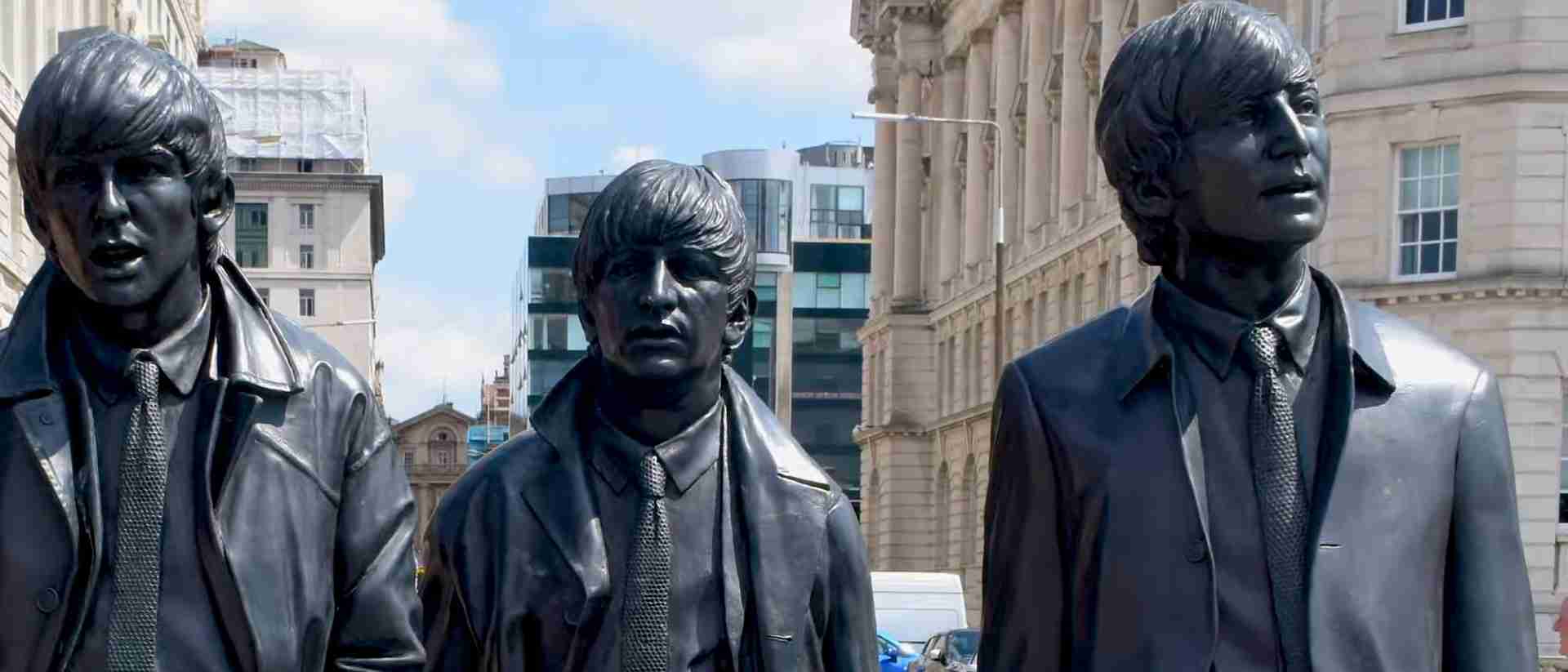
Public art installations dot the waterfront including the bronze Beatles statue showing the four band members walking together, popular for tourist photographs though sometimes crowded during peak season. The Captain Frederick John Walker monument honors the Royal Navy officer who commanded anti-submarine operations during World War II, with the memorial facing the river he defended. The Queen Victoria Monument at Derby Square, built over the former Liverpool Castle site, demonstrates grand Edwardian memorial design with allegorical figures surrounding the monarch’s bronze statue.
The waterfront’s public realm improvements continue through 2026 with artwork installations, improved signage, and heritage interpretation enhancing the free cultural experience. Evening visits reveal the buildings dramatically lit, with the Liver Building’s illumination changing colors for special occasions and charitable causes. The waterfront’s UNESCO status ensures continued preservation and access, making these spaces reliable free attractions for years beyond 2026.
Parks and Green Spaces: Liverpool’s Free Natural Retreats 2026
Liverpool offers extensive parks and outdoor areas that are completely free to visit year-round, providing sunshine destinations in summer and atmospheric autumn strolls through fallen leaves. The city’s Victorian park system represents 19th-century urban planning philosophy emphasizing public health through accessible green space, with many parks retaining original landscape design features including ornamental lakes, formal gardens, and mature tree collections. Modern additions include playgrounds, sports facilities, and community programming that extends parks’ utility beyond passive recreation.
Sefton Park: Liverpool’s Premier Victorian Park
Sefton Park’s magnificent 235 acres hold Grade I listed status, offering visitors a perfect place for leisurely walks with features including the beautiful Palm House, cafe, children’s playground, and extensive amenities. The park opened in 1872 following a design competition won by architects Édouard André and Lewis Hornblower, creating pastoral English landscape complete with meandering paths, ornamental lake, and strategic tree plantings that have matured into impressive specimens. The park inspired Central Park designers and hosts millions of visitors annually while never charging admission fees.
The Palm House, a spectacular glass and cast iron conservatory completed in 1896, stands as the park’s architectural centerpiece though admission charges apply to enter this climate-controlled botanical display. The exterior provides free photography subjects, and surrounding gardens display seasonal plantings accessible without charge. The park’s lake supports waterfowl populations including swans, geese, and ducks that families enjoy feeding, though visitors should bring appropriate bread alternatives rather than traditional bread which harms bird health.
Sports facilities throughout Sefton Park include tennis courts, bowling greens, and football pitches available through free booking systems, plus a large adventure playground for children featuring modern equipment suitable for various age ranges. The park hosts free events throughout summer including outdoor theater productions, concert series, and community festivals that draw neighborhood residents and tourists alike. Tree-lined avenues provide shaded walking even during hot weather, and the park’s size ensures finding quiet spots away from crowds remains possible even on busy weekends.
Croxteth Country Park: Working Estate Experience
Croxteth Country Park, as Liverpool’s largest park, offers diverse experiences including woodland trails, accessible children’s play areas, outdoor gym equipment, running routes, and Croxteth Park Farm with animal experiences spread across hundreds of acres just 15 minutes from city center. The park exemplifies a working country estate with the historic hall itself surrounded by mature woodlands, rare breed farm animals in traditional “Home Farm” yards, and Victorian walled gardens, though Croxteth Hall entry requires paid tickets while grounds access remains free.
The farm provides excellent family activities with viewing areas for rare breed cattle, sheep, pigs, and poultry maintained as heritage livestock preservation program. Seasonal activities include lamb feeding during spring and harvest celebrations in autumn, creating educational opportunities connecting urban children to agricultural practices. The walled garden displays fruit trees, vegetable plots, and cutting flowers maintained by volunteers, demonstrating traditional kitchen garden cultivation methods that once supported grand houses.
Walking trails through Croxteth’s woodlands range from easy flat paths suitable for strollers to more challenging routes through undulating terrain, with waymarking ensuring visitors don’t get lost in the extensive grounds. Wildlife spotting opportunities include woodland birds, squirrels, and occasional deer that roam the estate. The park provides free parking in designated areas, unusual for Liverpool attractions, making car access particularly convenient for families with young children or extensive picnic supplies.
Calderstones Park: Ancient Stones and Modern Amenities
Calderstones Park features a collection of six Neolithic sandstone monoliths from approximately 2500 BCE, providing delightfully unusual ancient monuments within a city park setting alongside the Reader Café operating inside the elegant 1800s Mansion House. The park name derives from these ancient stones whose purpose remains debated, though they likely held ritual or territorial significance for prehistoric communities. The stones provide tangible connection to Liverpool area’s deep human history predating Roman occupation, Saxon settlements, and Norman conquest.
The Mansion House hosts free exhibitions on local history including The Calderstones Story explaining the park’s development from private estate to public amenity. The building’s elegant rooms and period features provide architectural interest beyond the history displays. The Reader Café operates as charitable enterprise combining food service with literary activities, though visiting the building and grounds costs nothing even if café purchases aren’t made. The surrounding formal gardens include perennial borders, specimen trees, and seasonal bedding displays maintained to high horticultural standards.
Children’s play facilities include modern equipment suitable for various ages, and the park’s open lawns provide space for informal sports, picnicking, and kite flying. The Calderstones Botanic Gardens Trust manages conservation projects throughout the park, with volunteers maintaining heritage features and developing new displays. Free guided walks operate periodically, advertised on the park’s notice boards and website, providing expert interpretation of the landscape, trees, and historical features that casual visitors might overlook.
Additional Notable Liverpool Parks
Wavertree Botanic Gardens offers Victorian botanical design with ornamental fountains, fish ponds, a curator’s lodge from the 1830s, and seasonal displays including dramatic autumn foliage and spring cherry blossoms. The 19th-century park demonstrates period landscape gardening with formal beds, specimen trees, and architectural follies creating picturesque scenes. Everton Park provides scenic retreat with stunning panoramic views of the city skyline and River Mersey from its elevated position developed as green space in the 1980s on former residential land, making it one of Liverpool’s best free viewpoints.
Princes Park, opened 1842, holds historical significance as the park that allegedly inspired New York’s Central Park designers who visited Liverpool during planning phases. The park provides typical Victorian amenities including ornamental lake, extensive walking paths, sports facilities, and weekly Parkrun events every Saturday morning welcoming runners of all abilities at no charge. Festival Gardens creates more contemporary landscape design with waterfalls, ponds, colorful pagodas, and sculptural elements providing photogenic subjects unlike traditional Victorian park aesthetics.
Otterspool Park and Promenade along the River Mersey offers kite flying opportunities, children’s playground, skate park, and walking paths with unobstructed river views and sunsets over the water. Otterspool Adventure provides additional facilities though most outdoor features require paid admission. Clarke’s Garden near Otterspool provides tranquil escape with mature trees, lawns, flowerbeds, and a pub within the park offering food service, though simply walking through the space costs nothing.
Liverpool Central Library and Literary Spaces 2026
Liverpool Central Library blends old and new architecture in an architectural gem instantly recognizable by its contemporary glass frontage and huge glass roof, housing elegant reading rooms, rare books, and rooftop spaces. The building offers free accessible visits with excellent facilities including multiple floors of materials and stunning architectural spaces that function as attractions independent of book borrowing needs. Visitors can explore without library cards, experiencing the building’s architectural merger of Victorian heritage reading rooms with 21st-century sustainable design.
Picton Reading Room: Circular Victorian Masterpiece
The Grade II-listed Picton Reading Room represents a book-lover’s dream as a circular, wood-paneled space lined with dozens of bookshelves creating impressive architectural effect. The room’s geometry and craftsmanship demonstrate Victorian confidence in public education and library service as civic priorities worthy of monumental architecture. Natural light filters through the room’s circular skylight, eliminating the dim conditions typical of period reading rooms while maintaining historical atmosphere through preserved details.
The Picton Reading Room remains functional workspace with seating available during library hours for quiet reading, research, or simply absorbing the architectural atmosphere. Photography is generally permitted though visitors should respect library users’ needs for quiet concentration. The room hosts occasional exhibitions, lectures, and cultural events that emphasize Liverpool’s literary heritage and contemporary writing community, with schedules available on the library website.
Hornby Library and Oak Room Special Collections
The handsome Hornby Library stacks rare books in traditional bookcases while the Oak Room displays a priceless illustrated copy of Birds of America by Victorian naturalist James John Audubon beneath protective glass. The Audubon work represents one of the world’s most valuable books, with its enormous plates depicting American bird species in life-size detail through hand-colored engravings. Viewing this masterwork costs nothing yet provides access to artistic and scientific achievement that would typically require museum admission.
The Hornby Library’s collection includes manuscripts, early printed books, and local history materials available to researchers by appointment. Casual visitors can view the reading room’s architectural features and book storage systems without accessing restricted materials. The Oak Room’s wood paneling, period furniture, and museum-quality display cases create atmospheric spaces worth visiting purely for architectural appreciation beyond the displayed materials’ intellectual content.
Library Amenities and Rooftop Access
The library’s rooftop terrace provides panoramic views across St. George’s Quarter toward Liverpool’s architectural landmarks, offering excellent free photography platform and outdoor seating during pleasant weather. Café facilities operate commercially though visitors can bring packed lunches to enjoy in designated areas. The Discovery Room provides children’s section with age-appropriate books, computers, and activity spaces making the library valuable free destination for traveling families needing indoor activities during poor weather.
Regular free programming includes author talks, poetry readings, historical lectures, and community events that welcome public participation. The library’s extensive Liverpool history and genealogy collections support family history research with trained staff providing guidance on archive navigation. Computer workstations offer internet access to library users, though temporary day passes allow tourist access to digital resources without full membership.
Free Walking and Architectural Discovery in Liverpool 2026
Liverpool’s compact city center and distinctive architectural heritage make self-guided walking tours excellent free activities requiring only comfortable shoes and curiosity. The city’s grid pattern and river orientation provide natural navigation aids preventing serious getting lost, while diverse building styles from Georgian townhouses through Victorian civic monuments to contemporary glass towers illustrate architectural evolution across three centuries. Strategic walking routes connect major free attractions while passing additional points of interest that add depth to Liverpool exploration.
Georgian Quarter and University Precinct
The Georgian Quarter surrounding the cathedrals contains Britain’s finest surviving Georgian streets outside Edinburgh and Bath, with terraced townhouses lining perfectly proportioned streets demonstrating 18th-century urban design principles. Many buildings show decorative details including fanlights over doors, wrought iron railings, and original sash windows that characterize the period. The neighborhood now houses restaurants, student accommodations, professional offices, and university departments, though the architectural character remains remarkably intact.
Walk through Rodney Street, Falkner Square, and surrounding streets noting the consistent building heights, material choices, and architectural elements that create harmonious streetscapes. Several blue plaques mark former residences of notable figures including William Gladstone, though the neighborhood’s value comes from ensemble effect rather than individual landmarks. The streets photograph beautifully in morning and late afternoon light when raking sun angles emphasize architectural details and shadows add depth to facades.
The University of Liverpool campus intermixes with residential streets, bringing younger energy and cultural facilities including the Victoria Gallery & Museum. Abercromby Square provides green space with mature trees and garden plantings where visitors can rest between walking segments. The area’s cafes and pubs operate commercially though window shopping and observing student life costs nothing while adding human interest to architectural tours.
Commercial District and Victorian Grandeur
The commercial center around Castle Street, Dale Street, and Water Street showcases Victorian commercial architecture when Liverpool ranked among the world’s wealthiest cities. Banks, insurance companies, and trading firms commissioned impressive buildings demonstrating their prosperity and reliability through classical columns, sculptural decoration, and quality materials. Many buildings preserve ornate banking halls, though most now house modern offices, restaurants, or shops while maintaining period exteriors.
The Town Hall on Castle Street provides elegant Georgian Palladian architecture with its prominent dome and columns, though interior access occurs only during open days and group tours. The building’s exterior repays careful study with its sculptural elements, proportional relationships, and commanding position overlooking the commercial district. St. George’s Hall nearby represents Greek Revival monumentalism, with its enormous columns and sculptural program creating one of Britain’s finest neoclassical buildings. The interior holds St. George’s Hall heritage tours available at modest cost, though the exterior provides free architectural education.
Walking through these streets reveals architectural details easily missed from vehicles: carved keystones above windows, decorative frieze work, ornamental metalwork, and sculptural elements representing commerce, navigation, and civic virtues. Reading building dates and architect names on foundation stones or plaques provides historical context understanding Liverpool’s development phases. The area empties considerably outside business hours, making weekend and evening walks quieter though losing the human activity that brings streets to life during weekdays.
St. Luke’s Bombed Out Church: Living War Memorial
St. Luke’s ‘Bombed Out’ Church has stood at Liverpool’s heart since 1832, hollowed by an incendiary device in the May Blitz of 1941, functioning today as a living war memorial and events venue. The church deliberately remains roofless as memorial to civilian victims of aerial bombardment, with only exterior walls and gothic window tracery surviving. The haunting ruins create powerful architectural presence while serving as reminder of war’s destructive force on civilian infrastructure and cultural heritage.
The interior space now hosts outdoor events including markets, concerts, and community gatherings, with the sky visible where vaulted ceilings once existed. The contrast between decorative gothic details and scarred stonework creates poignant visual effect. Information boards explain the church’s history, the Blitz’s impact on Liverpool, and post-war debates about preservation versus reconstruction. Visiting costs nothing though respectful behavior befits a war memorial where lives were lost.
The surrounding streets in the Ropewalks district feature additional Victorian architecture, independent shops, and cultural venues creating vibrant neighborhood character. The Bold Street area nearby provides alternative shopping and cafe culture, with pedestrianized streets encouraging exploration without traffic concerns. This walking route connects naturally to the Baltic Triangle, allowing themed tours exploring Liverpool’s creative districts and street art culture.
Free Beatles and Music Heritage Sites 2026
While major Beatles attractions like The Beatles Story museum charge admission, numerous free sites connect visitors to the band’s history and Liverpool’s broader musical heritage. Self-guided Beatles walking tours cost nothing beyond time and effort, visiting locations featured in songs, photographs, and the band’s biography. Liverpool’s musical legacy extends beyond The Beatles to include countless other artists, venues, and movements that shaped British popular music across decades.
Penny Lane and Strawberry Field
Penny Lane, the suburban street immortalized in the 1967 Beatles song, remains ordinary residential thoroughfare that attracts fans seeking connection to the band’s childhood environment. The street sign frequently gets stolen by overzealous fans, with the council now riveting rather than screwing signs to poles. The “shelter in the middle of the roundabout” referenced in lyrics exists at the junction with Smithdown Place, though it’s simply a small traffic island with trees rather than elaborate shelter. The barber shop, bank, and roundabout mentioned in the song still exist, allowing fans to photograph locations matching mental images created by lyrics.
Strawberry Field, the former Salvation Army children’s home that inspired John Lennon’s song, now operates a cafe that’s open daily with the famous red gates accessible for photography. The gates became pilgrimage site for Beatles fans worldwide, with countless photographs taken through the decades showing visitors of every age and nationality posing beside the portal that sparked Lennon’s imagination. The site’s redevelopment as Strawberry Field visitor center and cafe creates commercial venture, though photographing the exterior gates from public pavement costs nothing.
The Cavern Quarter and Mathew Street
Mathew Street in the city center hosts the rebuilt Cavern Club where The Beatles performed nearly 300 times during their early years, though the modern club operates as commercial venue charging admission for live music performances. The street itself functions as free outdoor Beatles museum with statues, wall murals, and the Cavern Walks shopping arcade featuring Beatles-themed retail. The John Lennon statue at Cavern Walks provides popular photograph location, and various wall plaques commemorate significant musical moments that occurred on this short street.
The surrounding area includes record shops, music memorabilia stores, and Beatles-themed souvenir shops that welcome browsers even without purchases. Free live music frequently occurs on Mathew Street during summer weekends as buskers perform Beatles songs and other rock classics for passing crowds. The Beatles Shop offers extensive merchandise while displaying memorabilia and photographs that tell the band’s story, with browsing free even if purchases don’t follow.
Childhood Homes and University Connection
While the National Trust operates ticketed tours of John Lennon’s and Paul McCartney’s childhood homes in the suburbs, the exteriors remain visible from public streets for free photographs. The houses themselves appear modest, demonstrating the working-class and lower-middle-class backgrounds that informed the band’s songwriting and public personas. The areas around Menlove Avenue and Forthlin Road provide context understanding Liverpool’s post-war suburban development and the neighborhood environments that shaped young musicians.
Liverpool Institute for Performing Arts (LIPA), founded by Paul McCartney in his former grammar school building, occasionally offers public events and open days, though the building’s exterior and its connection to Beatles history can be appreciated freely. The Art School near the Anglican Cathedral where John Lennon and Stuart Sutcliffe studied art provides another free architectural connection to the band’s history, though building interiors require appointments or special access.
Seasonal Free Events and Activities in Liverpool 2026
Liverpool’s cultural calendar includes numerous free events throughout 2026 spanning music festivals, cultural celebrations, public art installations, and community programming that enhance the city’s appeal for budget travelers. Timing visits to coincide with major free events multiplies the value of Liverpool exploration, adding unique experiences beyond permanent attractions. Event schedules evolve annually, so checking Visit Liverpool and specific venue websites before trips ensures catching relevant programming during visit windows.
Free Summer Events and Festivals
Baltic Weekender returns on May 29th and 30th 2026, taking over multiple indoor and outdoor venues in the Baltic Triangle area with artists and performers creating free festival atmosphere celebrating the neighborhood’s creative character. The event typically includes live music on outdoor stages, art installations, market stalls, and performances that activate the entire district. While some venue-specific programming may charge admission, extensive free content occurs on streets and public spaces.
Mathew Street Festival, typically held in late August, transforms the Cavern Quarter into outdoor music venue with multiple stages hosting tribute bands and original artists across weekend-long celebration of Liverpool’s musical heritage. The festival draws enormous crowds with conservative attendance estimates exceeding 300,000 people across the weekend, creating vibrant atmosphere though also significant crowding. No admission charges apply to street stages, making this Liverpool’s largest free music event.
Liverpool Pride occurs in late July, celebrating LGBTQ+ communities with parade through city center followed by entertainment in festival village. While certain fenced areas may charge admission, the parade route and much festival content remains accessible without tickets. The event demonstrates Liverpool’s inclusive character and provides vibrant cultural experience regardless of visitors’ sexual orientation or gender identity. Other summer programming includes outdoor cinema screenings in parks, free concerts in cathedral settings, and neighborhood festivals celebrating local communities.
Christmas Markets and Seasonal Celebrations
Liverpool’s Christmas markets transform the city center from mid-November through December with German-style wooden chalets selling crafts, decorations, and food. While purchases cost money, walking through the markets browsing stalls and absorbing festive atmosphere costs nothing. The city’s Christmas lights displays, particularly along Church Street and around St. George’s Hall, create free evening entertainment with impressive illumination schemes updated annually.
Ice skating rinks typically operate in prominent locations including George’s Dock near Albert Dock, though skating requires paid sessions. The festive atmosphere around these attractions, Christmas music, decorations, and general seasonal excitement creates free experiential value beyond specific paid activities. New Year’s Eve waterfront celebrations include fireworks displays over the Mersey River, creating spectacular free viewing opportunities from public spaces along the waterfront, though arrival several hours early secures good vantage points given event popularity.
Cultural Heritage Celebrations
Chinese New Year celebrations in Liverpool’s Chinatown, reportedly Europe’s oldest Chinese community, include parades, performances, and cultural displays marking the lunar new year typically in late January or early February. The festivities center on Great George Square and surrounding streets with dragon dances, martial arts demonstrations, and food stalls creating festival atmosphere. While food and souvenirs cost money, watching performances and absorbing cultural celebration costs nothing.
Liverpool Arab Arts Festival occurs annually celebrating Arabic culture through music, literature, film, and visual arts, with many events free to attend. The festival demonstrates Liverpool’s contemporary multicultural character beyond historical maritime connections. Heritage Open Days in September provide free access to buildings normally closed to public including historic houses, commercial buildings, and civic structures, allowing architectural enthusiasts rare glimpses inside otherwise restricted spaces.
Budget-Friendly Dining and Picnic Strategies 2026
While this guide focuses on free attractions, budget travelers need food strategies that minimize costs while experiencing Liverpool’s culinary scene. Combining free attractions with economical dining maximizes daily budgets, allowing extended stays or freeing resources for optional paid experiences like tower climbs and boat tours that enhance but don’t define Liverpool visits.
Picnic-Friendly Parks and Public Spaces
Liverpool’s parks explicitly permit picnicking, with many providing tables, benches, and open lawns for spreading blankets. Sefton Park, Calderstones Park, and other major parks host families picnicking during summer weekends, normalizing the practice and ensuring visitors don’t feel self-conscious eating home-prepared food in public. Supermarkets including Tesco, Sainsbury’s, and Lidl operate throughout Liverpool with sandwiches, salads, and snacks priced considerably below restaurant meals.
The waterfront provides additional picnic locations with benches along the promenade offering river views while eating. The plaza at Museum of Liverpool includes outdoor seating where visitors can eat packed lunches between museum galleries. Liverpool Central Library designates areas where food consumption is permitted, allowing indoor picnicking during poor weather though respecting quiet zones where eating isn’t appropriate.
Free Water and Budget Refreshments
Liverpool’s public water fountains allow refilling reusable water bottles without purchasing bottled water throughout the day. Museums, libraries, and large retail areas including Liverpool ONE provide water fountain access, with locations mapped on sustainability apps helping locate nearest facilities. Tap water in Liverpool meets all safety standards, making purchased bottled water unnecessary expense.
Cafe browsing without purchases becomes acceptable when spread across multiple establishments rather than occupying single venue’s tables for extended periods without ordering. Many cafes tolerate quick restroom use by non-customers during busy tourist periods, though courteous behavior and occasional purchases at different locations throughout days maintains goodwill. The library cafe and museum cafes generally permit browsing menus and occupying common areas without immediate purchases.
Markets and Budget Food Options
Liverpool’s markets including St. John’s Market near Clayton Square provide budget food stalls with meals priced below restaurant equivalents. The market environment allows browsing multiple vendors before committing to purchases, and sample offerings sometimes appear. Baltic Market operates as covered food hall with diverse cuisines, though prices target young professionals rather than extreme budget travelers.
Bakery chains including Greggs provide inexpensive sandwiches, pastries, and hot beverages across numerous Liverpool locations. While not fine dining, these options deliver calories efficiently for travelers prioritizing sightseeing time over culinary experiences. Discount supermarkets including Poundland and B&M Bargains sell snacks, drinks, and ready-to-eat items at rock-bottom prices, useful for travelers staying in accommodations with refrigeration and kitchen facilities.
Practical Information for Free Liverpool Activities 2026
Maximizing free attraction value requires understanding practical details including opening hours, transportation options, accessibility considerations, and seasonal variations that affect visitor experiences. This section provides essential planning information ensuring efficient use of limited vacation time while avoiding frustration from missed opportunities or closed venues.
Museum Hours and Seasonal Variations
National Museums Liverpool’s venues open from 10am-5pm, Tuesday to Sunday, remaining closed Mondays except bank holidays when museums operate and close the following Tuesday instead. Last entry occurs 15 minutes before closing time, so arrive by 4:45pm to ensure admission. Summer sometimes brings extended evening hours during special exhibitions or events, with schedules published on individual museum websites. Christmas period closures typically span December 24-26, with reduced hours between Christmas and New Year.
Liverpool Anglican Cathedral maintains 8am-6pm daily opening throughout most of the year, though services may restrict visitor movement during worship times. The Metropolitan Cathedral opens daily with similar hours though specific times vary seasonally. Both cathedrals close sections occasionally for weddings, funerals, and special services, though advance closure notices appear on websites. Sunday morning visits work best after 12pm when services conclude, allowing full visitor experience without navigating around active worship.
Parks operate without formal opening hours though lighting limits evening use during winter months. Summer daylight extends until 9:30pm, allowing evening park visits after museums close. Winter darkness by 5pm means afternoon park visits become necessary. The Baltic Triangle street art remains visible 24 hours though evening and night photography requires appropriate lighting equipment or accepting different atmospheric effects than daytime shooting.
Transportation and Getting Around
Liverpool’s compact city center makes walking the primary transportation mode for free attraction access, with most destinations reachable within 20-30 minute walks from accommodations in central areas. Comfortable walking shoes become essential equipment given pavement surfaces including cobblestones in historic areas that challenge inappropriate footwear. The city’s relatively flat topography eases walking compared to hillier British cities.
Public transportation includes buses and Merseyrail trains connecting outlying parks like Croxteth Country Park and waterfront destinations like Formby Beach. While transportation costs aren’t free, affordable day passes provide unlimited travel across networks. Cycling infrastructure continues improving with dedicated lanes on major routes, though bicycle rentals involve costs. Many attractions provide cycle parking encouraging this transportation mode.
The Mersey Ferry operates between Liverpool Pier Head and Birkenhead/Seacombe, with commuter services priced affordably though tourist cruises cost significantly more. The basic ferry crossing itself provides river views and photographic opportunities, functioning as budget alternative to dedicated river cruise products. The ferry continues operating regardless of weather, though outdoor deck access may close during storms.
Accessibility and Inclusive Access
National Museums Liverpool maintains wheelchair accessibility across all venues with elevators, accessible restrooms, and level gallery floors throughout. The museums provide free mobility aids including wheelchairs and manual wheelchairs for visitor use, though booking ahead ensures availability. Visual impairment accommodations include tactile elements, large print guides, and assistance from trained staff. Audio description tours operate at major venues, providing narrative detail describing visual exhibits for blind and partially sighted visitors.
Liverpool Anglican Cathedral’s vast scale presents mobility challenges despite elevator access to upper floors, with the Tower Experience requiring stair climbing unsuitable for mobility-impaired visitors. The Metropolitan Cathedral provides better ground-floor accessibility given its modern design and circular layout. Both cathedrals offer hearing loops for visitors with hearing aids, and staff provide assistance when requested.
Parks vary considerably in accessibility, with larger parks like Sefton Park and Croxteth providing paved paths suitable for wheelchairs and mobility scooters alongside rougher natural surface trails. Smaller parks and historic gardens sometimes feature steps, uneven surfaces, and narrow paths challenging for mobility aids. Accessible restroom facilities exist in major parks though distribution remains patchy in smaller spaces.
Weather Considerations and Indoor Alternatives
Liverpool’s maritime climate brings changeable weather requiring flexible planning and appropriate clothing including waterproof layers regardless of season. Summer temperatures rarely exceed 25°C (77°F), making extreme heat uncommon though sunny periods do occur. Winter cold and damp create less pleasant outdoor conditions, though major attractions remain operational. Rain occurs year-round with particular frequency during autumn and winter months.
The museum and cathedral network provides extensive indoor alternatives during poor weather, allowing full-day itineraries without weather exposure. Liverpool Central Library offers additional indoor refuge with comfortable seating, climate control, and interesting spaces to explore. Indoor shopping areas including Liverpool ONE provide weatherproof browsing when outdoor activities become unpleasant, though resisting purchase temptations requires discipline.
Park visits become weather-dependent, with heavy rain or strong winds making outdoor recreation less appealing. Checking weather forecasts allows strategic planning, visiting indoor attractions during predicted rain and maximizing outdoor time during clearer periods. Locals continue outdoor activities during light rain using proper clothing, though tourists often prefer indoor alternatives when weather deteriorates.
Photography Policies and Social Media Sharing
Photography is generally permitted in museums and cathedrals for personal use without flash, which damages light-sensitive artifacts and disturbs other visitors. Certain exhibits may prohibit photography where copyright concerns exist or loaned objects come with restrictions from lenders. Signage indicates photography restrictions, though when in doubt, asking staff prevents rule violations and potential requests to delete images.
Street art in the Baltic Triangle specifically encourages photography and social media sharing, with many pieces designed as Instagram-friendly installations anticipating visitor photography. Artists generally appreciate photo sharing with proper credits, though tagging locations and artists when known provides appropriate recognition. Commercial photography requiring tripods, lighting equipment, or model shoots may require permissions from property owners even in public spaces.
Sharing free attraction information on social media helps other travelers discover budget-friendly Liverpool experiences, creating virtuous cycle where increased awareness brings more visitors who then share information further. Tagging Liverpool attractions and using appropriate hashtags connects posts to broader conversation about the city’s cultural offerings. Respectful photography avoiding invasion of other visitors’ privacy and sacred space sensitivity in religious buildings maintains community goodwill toward tourists.
Money-Saving Strategies for Liverpool Travel 2026
While this guide focuses on free attractions, comprehensive budget travel requires addressing all expense categories including accommodation, transportation, and meals. Strategic planning across these areas combined with free attraction focus allows experiencing Liverpool thoroughly on minimal budgets, making the city accessible to students, families, and retired travelers without substantial travel funds.
Accommodation Cost Reduction
Budget accommodation options include hostels providing dormitory beds from £15-30 nightly depending on season and location, with private rooms priced higher but still below hotel rates. Hostels often feature communal kitchens allowing meal preparation, social common areas facilitating traveler connections, and central locations reducing transportation needs. Quality varies significantly between properties, with research through booking sites and hostel-specific reviews identifying better-maintained facilities.
Budget hotel chains including Premier Inn, Travelodge, and Ibis operate multiple Liverpool locations with rooms priced £40-80 depending on advance booking and date flexibility. Booking well ahead secures lower rates, particularly for weekday stays when business travel demand drops. Off-season winter visits except Christmas period find lowest prices across all accommodation categories. Suburban locations price below city center properties while still providing public transportation access to attractions.
Alternative accommodation including Airbnb rentals may offer value for groups or families when per-person costs split across multiple travelers. Entire apartment rentals include kitchen facilities allowing grocery shopping and meal preparation, dramatically reducing food costs compared to restaurant dining for every meal. University residences sometimes offer summer vacation rentals when students depart, providing basic but clean accommodations at low prices.
Transportation Efficiency
Walking maximizes free attraction value while eliminating transportation costs for centrally-located accommodations. Liverpool’s compact downtown means reaching museums, cathedrals, and waterfront attractions on foot from most hotels and hostels. Outlying attractions like Croxteth Country Park require buses, though daily travel passes price around £5 providing unlimited rides making multiple trips economical.
Advance train booking from other UK cities secures cheapest fares, with off-peak restrictions providing further savings for flexible travelers. Coach services including National Express and Megabus operate budget intercity transportation priced significantly below trains, though longer journey times trade money for time. Regional airports connect Liverpool to European destinations via budget airlines, though factoring airport transfers to city center impacts total cost calculations.
Meal Planning and Food Budgets
Supermarket shopping for breakfast and lunch supplies slashes food costs, with provisions for two days of basic meals costing £10-15 versus £30-50 for equivalent restaurant dining. Hostels and budget hotel chains increasingly provide guest kitchen access, allowing simple cooking even during budget travel. Evening meals can mix budget restaurant options (Chinese takeaway, pizza, pub fare at £8-15) with occasional supermarket convenience foods when seeking accommodation cooking facilities.
Free breakfast inclusions when choosing accommodations provide substantial value, eliminating one meal expense daily while providing energy for morning museum visits. Continental breakfasts include bread, spreads, cereal, fruit, coffee, and juice—basic but adequate nutrition for sightseeing days. Carrying reusable water bottles and snacks purchased at supermarkets prevents expensive impulse purchases at tourist areas where prices inflate significantly.
Avoiding Tourist Traps and Unnecessary Expenses
Tourist-oriented restaurants near Albert Dock and Pier Head charge premium prices for mediocre food, banking on one-time visitors who won’t return. Walking 5-10 minutes inland from waterfront areas finds restaurants and cafes serving local customers at reasonable prices without tourism markup. Chain restaurants provide predictable quality and pricing throughout Liverpool, useful for budget certainty though sacrificing local character.
Souvenir shopping temptation leads many travelers into unnecessary expenditures buying items that clutter homes after return. Photography provides free souvenirs preserving memories without physical objects, while careful souvenir selection focuses on small, meaningful items rather than bulk purchasing. Museum shops offer quality items though prices reflect supporting institutional operations—browsing costs nothing while providing gift ideas for future purchase elsewhere.
Combining Free Liverpool Attractions into Multi-Day Itineraries 2026
Strategic itinerary planning maximizes free attraction experiences while managing energy levels, weather variations, and geographic efficiency. These suggested daily routes provide frameworks for Liverpool visits, customizable based on personal interests, fitness levels, and travel party composition including children, seniors, or mobility-impaired visitors.
Day One: Waterfront and Museums
Begin at Pier Head by 10am, photographing the Three Graces in morning light and exploring the waterfront plaza. Walk to the Museum of Liverpool when it opens, spending 2-3 hours exploring Liverpool’s city history, popular culture, and People’s Republic exhibits. Exit for packed lunch at waterfront benches or indoor museum seating areas depending on weather. Walk through Albert Dock photographing the warehouses and examining plaques explaining dock history and UNESCO World Heritage designation.
Visit World Museum mid-afternoon, prioritizing personal interest areas among natural history, archaeology, ethnography, or aquarium sections. The five-floor museum provides hours of exploration, though fatigue typically limits attention after 2-3 hours. Exit by 5pm closing time and walk 10 minutes to Liverpool Central Library, exploring the Picton Reading Room, Hornby Library, and rooftop terrace during extended library hours. Return to accommodation via city center streets observing commercial architecture and evening atmosphere.
Day Two: Cathedrals and Georgian Quarter
Start at Liverpool Anglican Cathedral by 9am before crowds arrive, exploring the vast interior, Lady Chapel, and architectural details. Spend 90 minutes minimum given the building’s scale, with longer visits for photography enthusiasts. Walk along Hope Street toward the Metropolitan Cathedral, pausing at the Liverpool Philharmonic Hall exterior and Georgian townhouses. Enter the Metropolitan Cathedral around 11am, experiencing the contrasting modernist design and dramatic lantern tower lighting.
Pack lunch in nearby Abercromby Square garden or Georgian Quarter streets. Afternoon options include Walker Art Gallery (2-3 hours viewing the art collection) or Calderstones Park if weather favors outdoor activity. The park requires bus transportation but provides afternoon nature immersion with Neolithic stones, Mansion House, and extensive gardens. Evening walk through St. Luke’s Bombed Out Church area and Bold Street, exploring the alternative shopping district and observing Liverpool’s creative community.
Day Three: Parks and Baltic Triangle
Dedicate morning to major park visit, choosing Sefton Park (accessible by bus, 30 minutes exploration minimum), Croxteth Country Park (requires bus, 2-3 hours including farm and gardens), or Calderstones Park (bus accessible, 90 minutes to 2 hours). Pack substantial lunch and snacks, using parks’ picnic facilities and enjoying green space after two days of urban exploration. Return to city center by early afternoon.
Walk to Baltic Triangle by 3pm, beginning street art exploration at Jamaica Street skate park and proceeding systematically through murals on Jamaica Street, New Bird Street, and side streets. The district works best photographed in afternoon and golden hour light, with 2-3 hours needed to see major works plus discovery time for smaller pieces. Evening options include returning to waterfront for sunset photography or exploring the Cavern Quarter’s free street entertainment if visiting during summer weekends.
Day Four: Hidden Gems and Cultural Spaces
Start at Victoria Gallery & Museum when it opens, exploring the university collections and building architecture. Walk to nearby Bluecoat arts center, Liverpool’s oldest city center building, examining the galleries and garden spaces. Mid-morning proceed to Open Eye Gallery at RIBA North if interested in photography, or substitute other personal interest areas including neighborhood exploration in Chinatown or exploring additional city center streets.
Afternoon visit to Wavertree Botanic Gardens or other smaller parks depending on weather, providing nature break without dedicating entire morning. Alternative indoor afternoon activity includes extended Liverpool Central Library time, exploring all special rooms and collections in detail. Evening farewell walk along the waterfront from Albert Dock to Princes Dock, photographing landmarks at sunset and reflecting on Liverpool experiences before departure.
Family-Friendly Free Activities in Liverpool 2026
Traveling families benefit enormously from Liverpool’s free attractions, with children’s programming, interactive exhibits, and outdoor spaces providing entertainment without depleting vacation budgets. Strategic family itinerary planning accounts for children’s shorter attention spans, need for physical activity between museums, and different interest levels than adult travelers, creating enjoyable experiences for all ages.
Museum Features for Children
The Museum of Liverpool includes interactive exhibits allowing children to handle objects, try activities, and engage physically rather than passive viewing. The Wondrous Place music section features listening stations and quizzes entertaining young Beatles fans, while sport exhibits include football activities reflecting Liverpool’s strong football culture. The museum’s second-floor balcony provides safe outdoor space where children can move freely while adults rest on benches admiring river views.
World Museum’s Discovery Centre caters specifically to children with hands-on learning stations, specimen handling, costume try-ons, and supervised craft activities. The Bug House fascinates most children with live insects and arachnids in naturalistic displays, though some younger children may find large spiders frightening. The aquarium section provides calming viewing where children can observe fish behavior while resting after active exhibits. The museum’s diverse content means finding something engaging for virtually all ages from toddlers through teenagers.
Walker Art Gallery’s Big Art for Little Artists ground-floor space provides creative activities where children create artworks inspired by gallery pieces using provided materials. This interactive approach transforms potential boring adult art viewing into engaging creative time for children. Many children enjoy the sculpture courts where three-dimensional works provide different viewing experience than flat paintings, and some Victorian narrative paintings tell stories children can decode and discuss.
Park Activities for Active Children
Sefton Park’s large adventure playground features modern equipment suitable for various ages with separate toddler and older children’s sections. The playground’s size and equipment diversity typically entertains children for 45 minutes to an hour, providing physical activity after museum mornings. The park’s open lawns allow ball games, kite flying, and running around releasing pent-up energy from indoor attractions or travel days.
Croxteth Country Park’s working farm provides excellent family activity with viewing areas for rare breed animals including friendly sheep, cattle, pigs, and chickens. Seasonal lamb feeding during spring creates memorable hands-on animal interaction. The estate’s extensive grounds provide multiple walking routes suitable for family rambles, with woods offering natural exploration including stick collecting, leaf identification, and wildlife spotting opportunities that engage children with nature.
The Jamaica Street skate park in Baltic Triangle fascinates children watching older skaters perform tricks, though younger children should maintain safe distance from active skating areas. The surrounding street art creates visual interest keeping children engaged during walking tours that might otherwise bore young audiences. Interactive murals including the Liver Bird wings allow children to pose for photos, making them active participants in cultural exploration rather than passive museum visitors.
Educational Family Activities
Museum family trails provide structured scavenger hunt activities guiding children through galleries while teaching age-appropriate content. These free activity sheets are available at museum entrances, turning passive viewing into active searching and learning. Parents can supplement official trails with their own games including counting specific object types, finding particular colors, or photographing interesting discoveries encouraging closer observation than children might maintain otherwise.
Cathedral visits teach architectural concepts, religious art, and historical periods through physical space exploration. Children often find the enormous scale memorable, with games including “how many steps to walk the length” or “counting windows” making abstract concepts concrete through personal experience. The comparative exercise visiting both Liverpool cathedrals introduces architectural style discussion appropriate even for younger children who can observe obvious differences between Gothic and modernist design.
Parks teach natural science including tree identification, bird watching, seasonal changes observation, and ecosystem concepts through direct nature contact. Simple activities like collecting fallen leaves in autumn, observing flower blooms in spring, or feeding waterfowl (with appropriate foods) create educational moments without formal instruction. Photography challenges where children document interesting finds throughout days create personal souvenirs while teaching observation and composition skills.
Frequently Asked Questions About Free Liverpool Activities 2026
Are all Liverpool museums genuinely free or do they request donations?
National Museums Liverpool’s museums and galleries are free to visit, with no admission charges, mandatory donations, or suggested contribution amounts at entrances. Voluntary donation boxes exist near exits and gift shops, where visitors can contribute if they wish to support the institutions, but absolutely no payment is required or expected for entry. The free admission policy extends to temporary exhibitions within the free museums, though occasionally special traveling exhibitions may charge admission while regular galleries remain free. This contrasts with some free museums that heavily emphasize suggested donations creating psychological pressure to pay, which Liverpool’s National Museums do not employ.
What free activities work best during rainy weather in Liverpool?
Liverpool’s extensive museum network provides multiple full-day indoor options during rain, with Museum of Liverpool, World Museum, Walker Art Gallery, and Victoria Gallery & Museum collectively offering 20+ hours of exploration across diverse subjects. Liverpool Central Library provides additional indoor refuge with the Picton Reading Room, special collections, and public seating areas where visitors can rest between museums or spend entire rainy afternoons reading. Both cathedrals offer weatherproof architectural exploration, with the Anglican Cathedral’s vast interior providing 2-3 hours of discovery. Liverpool ONE shopping district connects indoor spaces allowing weather-protected walking between retail stores, cafes, and Chavasse Park covered areas, useful for families needing children to burn energy without outdoor exposure.
Can you visit Liverpool’s street art in the Baltic Triangle safely at night?
The Baltic Triangle experiences gentrification bringing increased foot traffic and reduced crime compared to previous decades when the abandoned industrial area had reputation for danger. Evening visits during summer when daylight extends until late allow street art photography in good natural light with reasonable safety given the area’s bars, restaurants, and legitimate business activity creating natural surveillance. However, very late night visits (after midnight) when venues close should be approached cautiously, particularly for solo travelers, as the area becomes quiet and isolated with fewer witnesses if problems occur. Weekend evenings see heaviest foot traffic from nightlife crowds, providing safety through numbers though also potential rowdiness from intoxicated visitors.
Do Liverpool’s free parks have restroom facilities and are they well-maintained?
Major parks including Sefton Park and Croxteth Country Park provide public restrooms maintained to reasonable standards during operating hours, though cleanliness varies throughout days with morning visits typically finding better conditions than late afternoon after heavy use. Smaller parks may lack restroom facilities entirely, requiring strategic planning using nearby cafes, museums, or commercial establishments for restroom access. Liverpool Central Library, museums, and cathedrals all provide clean public restrooms accessible during their operating hours, useful for emergency needs during park visits nearby. Winter months sometimes see park restrooms closed for maintenance or freeze protection, creating challenges for outdoor exploration during cold weather periods.
Are there free guided tours of Liverpool’s main attractions in 2026?
Museum staff occasionally offer free guided tours or curator talks at National Museums Liverpool sites, with schedules posted on individual museum websites and announced at information desks. These guided experiences provide expert insights beyond self-guided exploration though timing may not align with visit schedules. The cathedrals periodically offer volunteer-led tours explaining architectural features and history, though tower climbs incur charges. Free walking tours operated by various providers work on tip-based models where guides work for voluntary gratuities rather than fixed fees, though calling these “free” requires semantic flexibility since payment is expected even if not legally required. The quality and historical accuracy of these tours varies significantly between operators, with research through review sites identifying better-qualified guides.
Which free Liverpool attraction provides the best panoramic city views?
Everton Park offers Liverpool’s best free panoramic viewpoint with elevated position providing sweeping vistas across the city skyline and River Mersey without admission charges or tower climb fees. The park’s hillside location creates natural viewing platform accessible by short walk from bus stops, making the view easily reachable. Liverpool Central Library’s rooftop terrace provides free city views across St. George’s Quarter toward the cathedrals and city center architecture, though views cover smaller area than Everton Park’s comprehensive panorama. While Liverpool Anglican Cathedral’s Tower Experience offers superior height and 360-degree views, the £8 admission charge disqualifies it from free attraction category despite the main cathedral entry being free.
Can you photograph inside Liverpool’s cathedrals and museums freely?
Photography for personal use is permitted in Liverpool’s cathedrals without flash, which damages sensitive materials and disturbs worshippers and other visitors. The cathedrals explicitly encourage sharing photos on social media, helping promote these architectural treasures to wider audiences. National Museums Liverpool permits photography throughout most galleries for personal use without flash or tripods, though certain exhibits may prohibit photography where copyright concerns exist for contemporary artworks or loaned objects come with lender restrictions. Signage clearly indicates photography restrictions, and museum staff remind visitors who violate rules. Commercial photography including professional equipment or obvious modeling shoots requires advance permission from institutions even when personal photography is permitted.
What’s the minimum recommended time to experience Liverpool’s main free attractions adequately?
A three-day Liverpool visit allows experiencing the major free attractions without excessive rushing, dedicating one day to waterfront museums and UNESCO sites, one day to both cathedrals and Walker Art Gallery, and one day to parks and Baltic Triangle street art. Two-day visits require prioritizing personal interests, combining Museum of Liverpool and waterfront with either cathedral visits or street art exploration, but necessarily omitting significant attractions. Four or five days allow thorough exploration including multiple parks, repeat visits to favorite museums, extended neighborhood walking tours, and flexibility for weather-related itinerary adjustments. Even week-long visits wouldn’t exhaust Liverpool’s free cultural offerings when including all museums, parks, architectural districts, and repeated visits to particularly engaging attractions.
Are Liverpool’s free attractions suitable for elderly or mobility-impaired visitors?
National Museums Liverpool maintains excellent accessibility across all venues with wheelchair access, elevators, accessible restrooms, and level gallery floors throughout facilities. The museums provide free mobility aid equipment including wheelchairs available for visitor use during museum hours. Liverpool Anglican Cathedral provides wheelchair access to ground-floor areas though the Tower Experience requires stair climbing unsuitable for mobility limitations. The Metropolitan Cathedral’s modern single-level circular design offers superior accessibility for elderly and mobility-impaired visitors. Major parks including Sefton Park provide paved paths suitable for wheelchairs and mobility scooters though some areas feature unpaved natural surfaces requiring consideration. The Baltic Triangle’s cobblestone streets and industrial character create accessibility challenges with uneven surfaces though street art remains visible from accessible routes.
Does visiting during winter months significantly reduce free attraction quality or availability in Liverpool?
Indoor attractions including museums, cathedrals, and library maintain consistent quality year-round with climate-controlled environments protecting collections and ensuring visitor comfort regardless of external weather. Winter actually provides advantages for museum visits with reduced tourist crowds compared to summer peak season, allowing easier viewing of popular artworks and exhibits without competing with school groups and international visitors. Parks remain accessible though reduced daylight hours limit evening use, and winter weather makes outdoor activities less appealing than summer months. Some free events including outdoor concerts and festivals occur exclusively during warmer months, though winter brings Christmas markets, seasonal decorations, and holiday programming that substitutes different experiences for summer offerings. Budget travelers find particular value in winter visits when accommodation and transportation costs drop significantly compared to peak summer pricing.