Free Things to Do in Killarney 2026: Budget Travel Guide
Killarney transforms budget travel into an adventure of discovery where Ireland’s first national park opens without admission fees and medieval ruins stand accessible day and night. The 10,000-hectare landscape delivers mountain panoramas, cascading waterfalls, and ancient woodlands at no cost beyond the effort to explore them, making this County Kerry destination a masterclass in experiencing premium Irish scenery on a zero-euro attractions budget.
Key Takeaways: Free Killarney Experiences 2026
- Complete National Park Access: Killarney National Park operates 24/7 year-round with zero admission fees, encompassing 10,000 hectares of lakes, mountains, native oakwoods, and UNESCO Biosphere Reserve landscapes accessible from Killarney town center within a five-minute walk.
- Free Historical Sites: Muckross Abbey ruins (founded 1448) and Ross Castle grounds remain open without charge, featuring medieval architecture, ancient yew trees, and lakeside fortress views against the MacGillycuddy’s Reeks backdrop.
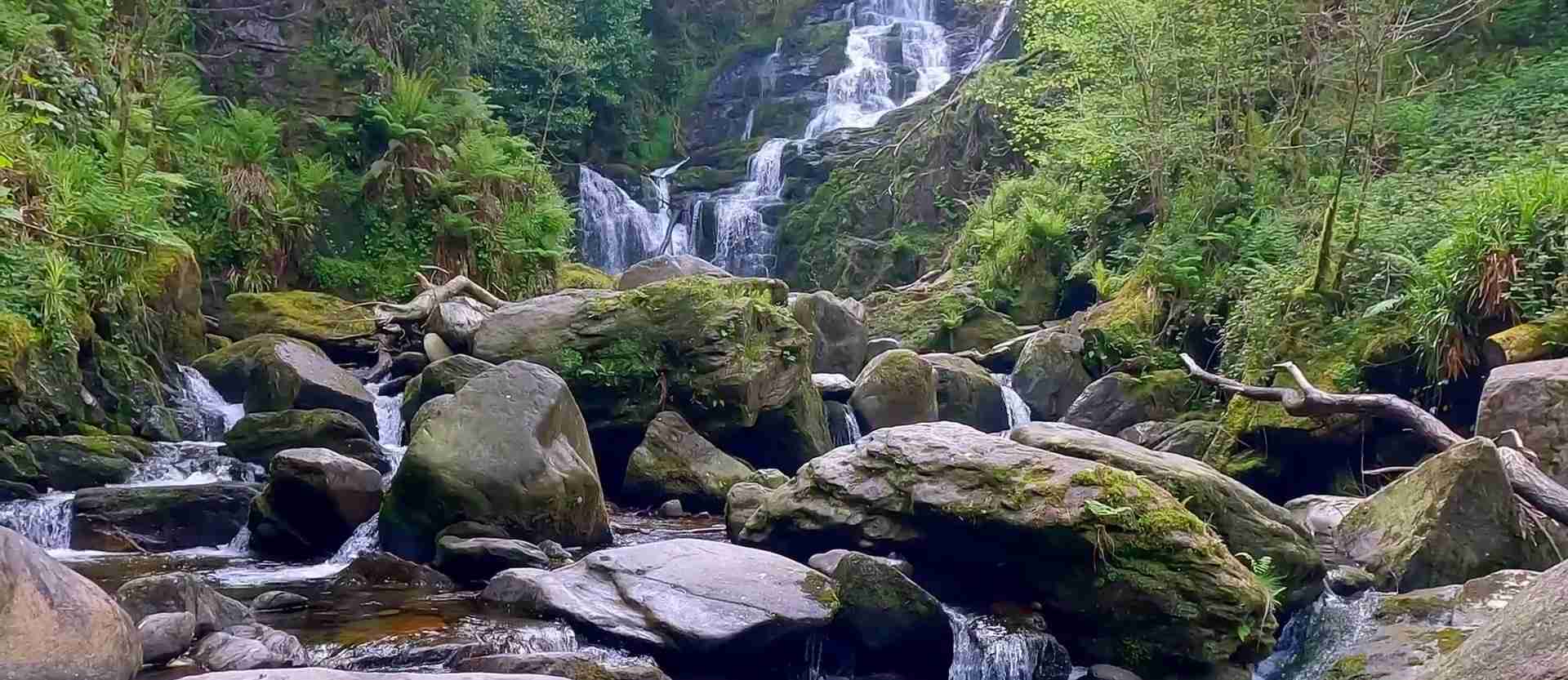
- Zero-Cost Natural Attractions: Torc Waterfall’s 20-meter cascade, Ladies View panoramic viewpoint, Meeting of the Waters confluence, and Blue Pool forest trail deliver Killarney’s signature scenery with free parking and 24-hour accessibility.
- Extensive Free Trail Network: Over 50 kilometers of maintained walking and cycling paths thread through the national park, including the Knockreer Circular (5km), Muckross Lake Loop (11km), and Ross Island Mining Trail (17 stops), all accessible without fees.
- Budget-Friendly Town Base: Killarney town provides free walking access to Killarney House Gardens, St. Mary’s Cathedral exterior viewing, and traditional music sessions in public spaces, with the national park entrance steps from the town center.
- Free Wildlife Watching: Ireland’s only remaining native red deer herd roams Killarney National Park openly, with prime viewing locations along Knockreer paths and Muckross demesne requiring no permits or guided tour expenses.
People Also Ask About Free Activities Killarney 2026
Is Killarney National Park Really Completely Free to Visit in 2026?
Killarney National Park charges zero admission fees for entry, parking, or access to its trail network throughout 2026. The 10,000-hectare national park operates as Ireland’s first designated national reserve (established 1932) with free 24-hour access year-round. Parking lots at Muckross House, Ross Castle, and Torc Waterfall provide free parking spaces, though these fill early during summer months (typically by 10 AM June through August). The park’s walking trails, lakeshores, mountains, and woodland areas remain accessible without permits or fees, though specific attractions within park boundaries carry separate charges.
Muckross House interior tours cost €9 for adults, while Ross Castle guided tours inside the 15th-century tower require admission fees (check official site for current rates). However, Muckross Gardens, Ross Castle grounds, the interactive exhibition inside Killarney House, and all natural features remain free. Visitors can explore the UNESCO Biosphere Reserve landscape, observe the native red deer herd, photograph the Lakes of Killarney, and access historical sites like Muckross Abbey without spending money on admission. Bike rentals from Killarney town shops cost approximately €20 per day, but walking remains completely free. The national park’s free accessibility makes it Ireland’s most budget-friendly major natural attraction.
What Are the Best Free Walking Trails in Killarney 2026?
The Knockreer Circular Walk (5km, 90 minutes) ranks as Killarney’s most accessible free trail, starting from Deenagh Lodge five minutes’ walk from town center with paved paths throughout and guaranteed red deer sightings in open parkland. The Muckross Lake Loop (11km, 3 hours) provides the most comprehensive free national park experience, circling Muckross Lake from Muckross House through Dinis Cottage to Torc Waterfall with minimal elevation gain. Ross Island Mining Trail delivers cultural depth free of charge through 17 marked stops exploring Europe’s oldest known copper mines dating to 2400 BCE, accessed from Ross Castle with interpretation panels explaining Bronze Age mining operations.
For waterfall access, the Torc Waterfall approach trail requires only five minutes’ flat walking from the N71 car park through moss-covered woodland to the 20-meter cascade viewing platform. Extended free hiking options include the Blue Pool Trail (2.5km) to a secluded forest swimming hole, the Library Point walk (5km round trip) along Lough Leane shoreline from Ross Castle, and the Old Kenmare Road section providing mountain views without fees. The Muckross Abbey Loop (2.5km) combines medieval ruins exploration with riverside paths. All trails feature free access with detailed maps available at Killarney House Visitor Centre (also free). Peak trail traffic occurs 11 AM to 3 PM daily during summer; dawn and evening walks offer solitude without crowds or costs.
Are There Free Things to Do in Killarney Town Center 2026?
Killarney House Gardens provide free entry to manicured grounds featuring Victorian-era landscaping, herbaceous borders, and mountain panoramas within five minutes’ walk of High Street, with the house’s interactive exhibition (15 rooms exploring national park biodiversity and history) also accessible without charge Thursday through Monday 9:15 AM to 5:15 PM. St. Mary’s Cathedral, a Gothic Revival limestone structure completed 1855, welcomes visitors to view its exterior architecture free of charge, with the building serving as the trailhead for Knockreer Estate walks entering the national park directly from town.
The town center itself offers free exploration of colorful Victorian architecture lining High Street and Plunkett Street, with no admission fees for window shopping craft stores, photographing painted building facades, or walking the pedestrian-friendly core. Traditional Irish music sessions occur regularly in pub settings (drinks not required for listening from doorways or outdoor seating areas). Free parking operates at select municipal lots after 6 PM and all day Sunday, though metered spaces dominate the town center (€1-2 per hour). The tourist information office on Beech Road provides free maps, trail guides, and recommendations without purchase obligations. Self-guided architectural walks cost nothing beyond shoe leather, and the town’s compact layout (700 meters end-to-end) makes car-free exploration entirely feasible on foot.
How Much Money Do I Actually Need for a Free Day in Killarney 2026?
A completely free day exploring Killarney National Park costs €0 when combining self-packed meals with free trail access and natural attractions, though most visitors budget €15-25 per person for food and optional refreshments. The zero-cost day involves walking to Knockreer Estate from town (free), hiking to Ross Castle grounds (free), continuing to Muckross Abbey ruins (free), visiting Torc Waterfall (free), and returning via the Muckross Lake Loop (free) — an 11-kilometer circuit requiring 3-4 hours. Packed lunch from grocery stores (€5-8 for supplies) replaces café stops, with refillable water bottles eliminating beverage costs.
Budget-conscious visitors allocate €8-12 for a café lunch at Dinis Cottage or Muckross House café, €3-5 for coffee stops, and €5-8 for snacks, totaling €15-25 daily. Transport costs within Killarney town remain zero when walking, though bike rentals (€20 per day) accelerate park exploration at added expense. Free parking at national park lots eliminates vehicle fees, while Killarney town center metered parking costs €1-2 per hour. A practical free day budget: €0 for attractions and parking, €15-25 for self-catering food, €0 for transport when walking. Visitors spending zero euros on admission can allocate saved funds toward accommodation upgrades or evening pub experiences while maintaining budget travel principles throughout daytime exploration.
Extended multi-day tours – 5+ days
Featured Killarney Multi-Day Tour Packages
6 days
6-Day Magical Southern Explorer Small Group Tour
- ✓ Comprehensive Killarney tour
- ✓ Expert local guides included
- ✓ All accommodation arranged
- ✓ Transportation provided
4 days
Ring of Kerry and Dingle Peninsula – 4 Days (Small Group)
- ✓ Comprehensive Killarney tour
- ✓ Expert local guides included
- ✓ All accommodation arranged
- ✓ Transportation provided
3 days
From Dublin: 3 Day Dingle, Killarney & the Wild Atlantic Way
- ✓ Comprehensive Killarney tour
- ✓ Expert local guides included
- ✓ All accommodation arranged
- ✓ Transportation provided
5 days
5 Day South Coast Experience Tour – Small Group Tour
- ✓ Comprehensive Killarney tour
- ✓ Expert local guides included
- ✓ All accommodation arranged
- ✓ Transportation provided
Multi-day tour packages powered by TourRadar. Prices and availability subject to change.
Introduction: Budget Travel Excellence in County Kerry 2026
Killarney rewrites the budget travel equation through a simple geographical reality: Ireland’s oldest and most spectacular national park sits on the town’s doorstep with gates that never close and admission fees that never existed. The 10,000-hectare Killarney National Park, designated a UNESCO Biosphere Reserve in 1981, operates under a conservation mandate that prioritizes public access over revenue generation, creating what travel economists would call a “premium product with zero price point” — ancient oak forests, glacial lakes, and Ireland’s highest mountain range available to anyone willing to walk through an open gate.
This accessibility architecture transforms budget constraints into exploration advantages. Where paid attractions compress experiences into guided tour timeframes, Killarney’s free landscapes reward dawn walkers discovering red deer at Knockreer Estate, afternoon explorers photographing Torc Waterfall without tour bus crowds, and evening wanderers watching sunset color the MacGillycuddy’s Reeks from Ladies View viewpoint. The medieval ruins of Muckross Abbey stand accessible 24 hours daily, their 15th-century Franciscan cloisters open to midnight stargazers and 6 AM photographers equally. Ross Castle’s lakeside fortress grounds deliver postcard panoramas without admission charges, though interior tours require fees.
Killarney’s free attractions catalog reads like a greatest hits compilation of Irish landscape features: the three Lakes of Killarney (Lough Leane, Muckross Lake, Upper Lake) accessible via shoreline trails, the Meeting of the Waters where all three converge beneath ancient stone bridges, cascading Torc Waterfall fed by Devil’s Punchbowl mountain lake, native sessile oak woodlands among Europe’s last remaining Atlantic forest fragments, and Ireland’s only wild red deer herd descended from Ice Age populations. These aren’t consolation prizes for budget travelers — they represent Killarney’s defining attractions, with paid alternatives like Muckross House interior tours and jaunting car rides serving as supplements rather than centerpieces.
The free experience infrastructure extends beyond natural features into cultural depth. Killarney House Gardens provide Victorian-era landscape design accessible without fees, their restored pleasure gardens featuring parterre beds and the famous “Wild Edric” rose hedgerow. The interactive exhibition inside Killarney House documents national park biodiversity across 15 rooms without admission charges. Ross Island Mining Trail interprets Bronze Age copper extraction through 17 marked stops exploring shafts and spoil heaps dating to 2400 BCE, delivering archaeological significance at zero cost. The Blue Pool forest trail leads to a secluded swimming hole where locals have bathed free for generations.
Budget travel in Killarney 2026 navigates a simple principle: allocate zero euros to attractions, minimal funds to transport (walking is free, bike rental optional at €20 daily), and flexible spending on food depending on self-catering versus café preferences. A packed lunch from Killarney supermarkets (€5-8) replaces the €12-18 café meals while hiking. Refillable water bottles eliminate €2-3 beverage purchases. The result: a full day exploring premium Irish landscapes for €5-25 per person depending on food choices, with attraction admission consuming exactly €0 of the budget. This economic efficiency enables multi-day Killarney visits on backpacker budgets, extended stays during shoulder season low-rate accommodation periods, and luxury budget allocation redirects toward evening experiences in Killarney’s traditional music pubs.
The following sections detail Killarney’s free attractions category by category, from national park natural features through medieval historical sites to town-based cultural experiences, with practical access information, crowd-avoidance strategies, and budget optimization tips integrated throughout. The goal: comprehensive Killarney exploration spending nothing on admission while experiencing everything that defines this County Kerry destination as Ireland’s landscape showcase.
Killarney National Park Free Access 2026
Killarney National Park operates as Ireland’s free outdoor museum, its 10,000 hectares accessible 24 hours daily year-round without admission fees, parking charges, or permit requirements. Established 1932 when Muckross Estate transferred to the Irish state, the park protects the Lakes of Killarney watershed, MacGillycuddy’s Reeks foothills, and Atlantic oakwood remnants under a conservation mandate that prohibited commercialization from inception. This founding philosophy persists through 2026: every trail, lakeshore, mountain viewpoint, and forest path remains open to the public without cost.
The park’s free infrastructure includes three major parking areas at Muckross House, Ross Castle, and Torc Waterfall, all operating without fees though spaces fill rapidly during summer months. Muckross House car park (largest capacity) typically fills by 10 AM June through August, with Ross Castle and Torc lots following by 11 AM. Strategic timing enables guaranteed free parking: arrive before 9 AM or after 4 PM summer season, anytime during shoulder months (April-May, September-October), or utilize Killarney town parking (some free evening/Sunday spaces) then walk into the park via Knockreer Estate entrance near St. Mary’s Cathedral.
The national park’s trail network exceeds 50 kilometers of maintained paths ranging from paved wheelchair-accessible routes (Knockreer and Muckross main paths) to rugged mountain trails requiring hiking experience. All routes remain free to access without permits, though mountain hiking safety equipment (proper footwear, weatherproof layers, navigation tools) becomes non-optional when venturing beyond lakeside paths. The park’s signature trails deliver distinct free experiences: Knockreer Circular provides town-adjacent wildlife watching, Muckross Lake Loop circles the central lake through varied ecosystems, Ross Island Mining Trail interprets Bronze Age archaeology, and Old Kenmare Road sections climb into mountain viewpoints.
Wildlife observation opportunities cost nothing beyond patience and timing. The national park protects Ireland’s only remaining native red deer herd, descendants of Ice Age populations that survived in Kerry’s mountains when elsewhere eliminated. Prime deer viewing locations include Knockreer Estate open parkland (dawn and dusk optimal), Muckross demesne meadows (early morning), and Upper Lake woodlands (year-round but shy). The park’s UNESCO Biosphere Reserve designation recognizes internationally significant ecosystems including sessile oak forests, arbutus (strawberry tree) groves unique to southwest Ireland, and peregrine falcon nesting sites. Birdwatchers access these habitats freely, with species lists available at Killarney House Visitor Centre.
The park’s water features remain publicly accessible without fees or restrictions. The three Lakes of Killarney (Lough Leane 5,000 acres, Muckross Lake 680 acres, Upper Lake 430 acres) offer shore access via multiple trails, with swimming permitted at designated locations including the Goleen shore of Muckross Lake and several Upper Lake bays. The Meeting of the Waters, where all three lakes converge beneath Old Weir Bridge, provides one of Killarney’s most photographed scenes accessible via the Muckross Lake Loop trail (free). Fishing operates under national license requirements (separate fees apply) but shore access and viewpoint photography remain free activities.
Killarney House Visitor Centre operates Thursday through Monday 9:15 AM to 5:15 PM (last entry 5 PM) with free admission to the interactive exhibition. The 15-room display covers national park formation, UNESCO designation, native species profiles, conservation projects, and cultural history through multimedia presentations and artifact displays. The center provides free trail maps, current condition reports, wildlife sighting updates, and ranger advice without purchase requirements. The Killarney House Gardens surrounding the visitor center feature restored Victorian landscaping accessible free during daylight hours, including the cherry walk, herbaceous border, and parterre beds designed for Queen Victoria’s 1861 visit (which never occurred due to Prince Albert’s death).
Access points into the national park from Killarney town require zero transport costs when walking. The Knockreer Estate entrance opposite St. Mary’s Cathedral sits five minutes’ walk from High Street via Port Road. The Killarney House Gardens gate on Mission Road/Beech Road lies 400 meters from town center. Ross Castle access via Ross Road extends 2.5 kilometers from central Killarney, achievable as a 30-minute walk or 10-minute bike ride. These town-park connections eliminate bus fees, taxi costs, and parking complications while providing immediate free access to national park landscapes from accommodation bases.
The park’s seasonal variations affect free experience quality without changing access terms. May and June deliver peak rhododendron and azalea blooms in Muckross Gardens (free to view), wildflower meadows across Knockreer parkland, and maximum daylight hours for extended hiking. July-August bring warmest temperatures ideal for lakeside picnics and swimming but also peak crowds at popular viewpoints. September-October provide autumn foliage color through oakwood trails with reduced visitor numbers. November-March offer solitude and dramatic weather-scape photography opportunities, though shorter daylight windows (sunset by 5 PM December-January) limit full-day free hiking options. All seasons maintain free access — weather and crowd preferences alone determine optimal timing.
Free Natural Attractions Killarney 2026
Torc Waterfall delivers Killarney’s most accessible free natural spectacle through a five-minute flat walk from the N71 car park (free parking, though limited spaces fill by mid-morning peak season). The Owengarriff River plunges 20 meters (66 feet) over rock ledges in a cascade visible from a viewing platform reached via paved woodland path. The waterfall originates at Devil’s Punchbowl mountain lake 400 meters elevation on Mangerton Mountain slopes, gathering volume during Ireland’s frequent rainfall to create year-round flow that intensifies dramatically after storms.
The Torc approach walk threads through temperate rainforest ecosystem where moss-carpeted trees, giant ferns (some species reaching 2 meters), and over one hundred green-spectrum shades create an almost tropical atmosphere incongruous with Ireland’s latitude. This woodland microclimate results from high rainfall (Killarney receives 1,500mm annually), mild Atlantic temperatures, and the oakwood canopy’s moisture retention. The free five-minute stroll thus samples rare European forest types usually requiring tropical travel budgets to experience. Extended free hiking options from Torc include the waterfall steps climb (100 steps to upper viewpoint, expanded lake panoramas) and the Torc Mountain trail (7.5km loop to 535-meter summit, strenuous but spectacular views when weather cooperates).
Ladies View occupies a roadside viewpoint on the N71 Ring of Kerry route 11 kilometers south of Killarney, providing free parking and panoramic vistas across the Upper Lake toward MacGillycuddy’s Reeks mountain range. The viewpoint earned its name from Queen Victoria’s ladies-in-waiting who stopped here during an 1861 royal tour, reportedly declaring it Ireland’s finest view. The location delivers on that claim during clear conditions: the Upper Lake spreads 430 acres below, Carrauntoohil (Ireland’s highest peak at 1,039 meters) dominates the western horizon, and the Black Valley cuts between mountain ridges to the south.
The viewpoint operates without admission fees or time restrictions, though a small café and gift shop on-site charges for refreshments (not required for viewing access). The elevated position (approximately 50 meters above the lake) provides photography angles impossible from shoreline perspectives, capturing the interplay between water, mountain, and sky that defines Kerry landscape aesthetics. Free parking accommodates perhaps 20 vehicles, filling quickly during tour bus hours (11 AM – 3 PM summer). Early morning visits (before 9 AM) or evening stops (after 5 PM) guarantee parking availability and offer superior photography light angles without crowds blocking viewpoint access. The location serves as a free photo-opportunity stop on self-drive Ring of Kerry circuits, requiring five minutes for viewing and photography.
The Meeting of the Waters marks the confluence where Killarney’s Upper Lake flows through a narrow channel under Old Weir Bridge to join Muckross Lake and Lough Leane. The geological feature creates a water-flow spectacle enhanced by the bridge’s 200-year-old stone arches and surrounding ancient woodland. Access requires hiking the Muckross Lake Loop trail to kilometer 8 (approximately 2 hours from Muckross House car park), passing Dinis Cottage refreshment stop before reaching the confluence. The location remains free to access, secluded from road traffic, and unpopulated relative to Torc Waterfall or Ross Castle.
Photographers prioritize the Meeting of the Waters for several free advantages: the Old Weir Bridge provides foreground architectural interest, the water flow creates dynamic movement in long-exposure shots, the surrounding oakwood canopy filters light artistically, and the absence of modern development enables timeless landscape compositions. The spot serves traditional picnic purposes, with flat rocks along the water’s edge providing seating. Swimming occurs here though strong currents and sudden depth changes warrant caution — local knowledge and strong swimming ability prove essential. The round-trip hike from Muckross House (approximately 16 kilometers full loop) requires 4-5 hours, delivering this free natural attraction as part of Killarney’s premier free full-day hiking circuit.
The Blue Pool Trail diverges from the main Muckross Lake Loop to reach a secluded forest swimming hole approximately 1.5 kilometers from Muckross House car park. The trail follows a grassy path through oakwood and opens onto a small pool fed by forest streams, its blue-green water colored by limestone geology and organic matter. Swimming remains an informal free activity without facilities, lifeguards, or changing rooms — purely a natural spot where locals have bathed for generations. The pool measures approximately 15 meters diameter and 2-3 meters maximum depth, suitable for cooling off during summer hikes but too small for serious swimming training.
Access requires some navigational attention as the Blue Pool turnoff from the main Lake Loop lacks prominent signage (intentional to preserve the location’s quiet character). The trail’s grassy surface becomes muddy after rain, and the final approach descends a gentle slope where tree roots create trip hazards. These minor challenges maintain the Blue Pool’s status as a slightly hidden gem requiring modest effort to discover — reward for venturing beyond the main thoroughfares. The free swimming opportunity provides budget travelers a Killarney experience unavailable to tour bus visitors, accessed through knowledge rather than payment.
Aghadoe Cathedral ruins (also called Aghadoe Church and Round Tower) occupy a hilltop location 4 kilometers west of Killarney town, accessible via minor road with free parking at the site. The monastery foundations date to the 7th century, though current ruins represent 12th-century construction. The site consists of a roofless church nave, partial round tower, ancient graveyard, and scattered medieval stonework. The historical significance remains secondary to the viewpoint value: Aghadoe Hill provides elevated panoramas across Lough Leane to the MacGillycuddy’s Reeks, arguably superior to Ladies View due to the additional perspective angle.
The ruins operate without custodians, admission fees, or restricted hours — purely a free heritage site accessible anytime for viewing, photography, and the remarkable lake-mountain panoramas. On-site benches enable extended contemplation of the views at zero cost. The location suits sunset photography particularly well, with western light illuminating the mountains while the lake darkens. Aghadoe receives minimal tourist traffic relative to national park sites, despite offering comparable views, because it requires driving off the main Ring of Kerry route. This tourist bypass preserves the spot’s quiet atmosphere and guarantees parking availability even during peak season. Budget travelers willing to navigate minor roads discover free premium viewpoints without crowds — the trade-off for slightly increased access effort.
Free Historical Sites Killarney 2026
Muckross Abbey ruins deliver medieval architectural drama at zero admission cost, accessible 24 hours daily via two parking areas on the N71 road (one directly opposite the abbey gates, another with limited spaces opposite Muckross Park Hotel). The Franciscan friary foundation dates to 1448 under patronage of Daniel McCarthy Mor, though legend suggests 15th-century King of Desmond Cormac MacCarthy Mor founded the monastery after a vision directed him to build on Carraig na Chiuil (Rock of Music). The well-preserved ruins showcase a classic Franciscan layout: rectangular nave, inserted central square tower, south transept, northern cloisters surrounding a courtyard, refectory, and abbot’s quarters.
The abbey’s signature feature commands immediate attention: an ancient yew tree grows from the cloister courtyard center, its massive trunk and sprawling canopy reportedly as old as the 15th-century abbey itself (over 575 years). Local superstition warns that anyone harming the tree will die within a year — a belief that has protected the yew through centuries of occupation, abandonment, and ruin. The tree’s gnarled bark, umbrella-like canopy, and positioning within the perfectly preserved cloister arcade creates one of Ireland’s most photographed medieval scenes, accessible freely for photography any hour of day or night.
Architectural exploration opportunities extend beyond the famous yew. The church features fine Gothic windows with tracery partially intact, the central tower retains structural stability allowing interior viewing of its vaulted ceiling, and the cloister arcade displays an unbroken sequence of arches around the courtyard square. Wall fragments preserve sections of original plasterwork and hints of painted decoration that once adorned the interior. The graveyard contains both ancient monastic burials and a modern cemetery still in active use, with notable interments including three Gaelic poets (Geoffrey O’Donoghue, Aodhagan O’Rathaille, Eoghan Rua O’Suilleabhain) from the 17th and 18th centuries. Reading weathered headstone inscriptions provides free historical research opportunities spanning five centuries.
The abbey’s setting within Killarney National Park enables combination visits linking medieval history with natural landscapes. The Muckross Abbey Loop (2.5km) circles the ruins via woodland paths and lakeside trails, requiring approximately 45 minutes and passing through sessile oak forest to Muckross Lake shores. This free circuit delivers both architectural heritage and ecosystem diversity in a single short hike. Extended combinations connect Muckross Abbey with Muckross House Gardens (7-minute walk), Torc Waterfall (8-minute drive or 2km cycle), and Ross Castle (17-minute drive) — budget travelers can construct full-day free historical site tours using these proximate locations.
Practical free access operates without restrictions: no gates bar entry, no admission booth collects fees, no guided tours require joining (self-guided exploration proceeds at individual pace). Interpretive panels at the site provide historical context about the Franciscan order, the abbey’s founding, architectural features, and the famous yew tree. The abbey ruins remain un-fenced, enabling atmospheric evening visits when golden hour light illuminates the stonework and the yew casts dramatic shadows across the cloister courtyard. Photography occurs freely without prohibitions, time limits, or requirements to avoid other visitors — the location accommodates simultaneous explorers without congestion except during peak coach tour stops (typically 11 AM – 2 PM summer weekdays).
Ross Castle stands on Lough Leane shoreline 2.5 kilometers from Killarney town center, a 15th-century tower house accessible via free-parking car park or 30-minute walk from town. The O’Donoghue Mor clan built the castle as their stronghold, and it represents one of Ireland’s best-preserved examples of medieval Irish chieftain architecture. The exterior grounds, lakeside positioning, and surrounding landscape remain freely accessible 24 hours daily, though interior tours require admission fees (check official site for current rates) and operate seasonally with restricted hours.
The free experience centers on exterior viewing and grounds exploration. The castle’s four-story tower rises from a small peninsula jutting into Lough Leane, its limestone walls and corner turrets creating the iconic Irish castle silhouette against mountain backdrops. The position enables 360-degree photography incorporating castle architecture, lake reflections, mountain panoramas, and shoreline vegetation. The immediate grounds include landscaped lawns, shoreline paths, and historic outbuildings, all accessible without fees. A small bridge across a water channel provides foreground interest for compositions, and swans typically inhabit the immediate area (bring bread for free wildlife interaction, though feeding practices spark conservation debates).
Ross Castle serves as the trailhead for multiple free hiking routes. The Ross Island Mining Trail (17 marked stops, approximately 5km loop) begins at the castle car park and explores Bronze Age copper mines dating to 2400 BCE, among western Europe’s oldest known metal extraction sites. Interpretation panels at each stop explain mining techniques, ore processing, and the archaeological evidence discovered here. The trail follows woodland paths and shoreline tracks around Ross Island, delivering both industrial archaeology and natural scenery freely. The route requires 2-3 hours for complete exploration including reading all interpretive information.
The Library Point trail extends 5 kilometers round-trip from Ross Castle along Lough Leane shoreline through native oakwood to a peninsula viewpoint. The path alternates between woodland shade and open lakeside sections, providing habitat diversity for birdwatching (free activity with binoculars). Library Point itself offers panoramic views across Lough Leane to Innisfallen Island and the mountains beyond, with no facilities or developments disrupting the natural scene. The round-trip hike requires approximately 90 minutes at moderate pace and operates without fees, permits, or restrictions — simply a free trail from castle grounds to wilderness viewpoint.
Governor’s Rock represents another free diversion from Ross Island Mining Trail, accessed via a short spur path to a rocky outcrop overlooking Lough Leane. The elevated position (approximately 15 meters above water level) provides photography angles and swimming access (local knowledge essential — water depth varies, currents exist). The “Governor” reference derives from British administrative history when English officials governed Ireland from Dublin — the rock served as a recreational spot for colonial administrators who would travel from Dublin to enjoy Killarney’s scenery. The historical irony: a free public access point formerly reserved for privileged visitors now open to anyone walking the free trail.
Ross Castle’s free accessibility operates year-round with seasonal experience variations. Summer brings long daylight hours (sunset after 10 PM June-July) enabling extended evening visits with golden hour light on the castle walls. Winter reduces daylight windows (sunset by 5 PM December-January) but delivers dramatic storm-light conditions when weather systems sweep across the lake. The castle grounds remain free in all seasons, though interior tours (paid admission required) operate primarily May-September. Budget travelers prioritizing free experiences allocate their Ross Castle time to exterior photography, grounds exploration, and the surrounding free trail network rather than paid interior tours — the castle’s exterior presence and lakeside drama deliver the iconic Killarney experience without admission expenses.
Free Walking and Cycling Routes Killarney 2026
The Knockreer Circular Walk provides Killarney’s most accessible free trail experience, beginning at Deenagh Lodge (5-minute walk from town center via Port Road) and looping 5 kilometers through Knockreer Estate open parkland and riverside paths. The route follows entirely paved surfaces suitable for wheelchairs and strollers, though several moderate inclines require pushing effort. The circular nature enables starting from multiple access points: Deenagh Lodge near St. Mary’s Cathedral, Killarney House Gardens via Mission Road, or the golf course paths from Killarney town park.
The trail’s wildlife guarantee distinguishes it among free Killarney walks. Ireland’s only native red deer herd grazes Knockreer parkland daily, with near-certain sightings during dawn hours (6-8 AM) and evening periods (6-8 PM). The deer population tolerates human presence at respectful distances (20+ meters), enabling photography and observation without disturbance. Autumn (September-October) delivers the rutting season when stags compete vocally for breeding rights — the territorial bellowing echoes across the parkland providing free natural soundscape drama. The deer descended from Ice Age populations that survived in Kerry mountains when hunting eliminated them elsewhere in Ireland, making these sightings encounters with genetic lineages 10,000+ years old.
The circular route’s viewpoint rewards occur at strategic intervals. The path climbs gradually from Deenagh Lodge through golf course terrain to elevated open parkland where panoramic views encompass Lough Leane, the mountains (Mangerton, Torc, MacGillycuddy’s Reeks), and Killarney town below. The Deenagh River accompanies portions of the route, its tree-shaded banks providing contrast to the open parkland sections. Two 19th-century gate lodge cottages (Deenagh Lodge and Victoria Lodge) add architectural interest, while a children’s playground and outdoor fitness park serve family recreation purposes (all free to use). The complete circuit requires 60-90 minutes at moderate pace, operates without fees or permits, and remains accessible 24/7 without lighting (headlamp recommended for dawn/evening wildlife walks during winter’s short daylight).
The Muckross Lake Loop ranks as Killarney National Park’s premier free full-day walking route, circling Muckross Lake through 11 kilometers of varied terrain from Muckross House car park to Dinis Cottage, the Meeting of the Waters, and Torc Waterfall before returning. The circuit combines woodland paths, open lakeside tracks, limestone cliff edges, river crossings via historic bridges, and waterfall viewpoints in a comprehensive free national park experience requiring 3-4 hours hiking time plus stops for photography, picnics, and wildlife observation.
The loop’s clockwise direction (recommended) begins with the Old Boathouse Trail from Muckross House, skirting the eastern lakeshore through rhododendron groves (spectacular May-June bloom period) and native oakwood. The path climbs gently to Dundag Point limestone cliffs where elevated perspectives reveal Muckross Lake’s full extent and the surrounding mountain amphitheater. Continuing southward, the trail descends through forest to Dinis Cottage (refreshment stop, paid but optional) before reaching the Meeting of the Waters confluence where the Upper Lake joins Muckross Lake beneath Old Weir Bridge’s stone arches.
The return leg crosses the Briceen Bridge (another ancient stone structure), follows the western lakeshore through the quietest sections of the trail, and climbs stone steps to Torc Waterfall’s upper viewpoint. The descent from Torc rejoins the Lake Loop for the final 3 kilometers back to Muckross House through managed woodland and formal garden perimeter paths. The entire circuit operates on well-maintained trails (mixture of paved sections, packed gravel, natural earth surfaces) requiring only standard walking footwear during dry conditions. Muddy sections develop after rain, particularly on the western lakeshore woodland stretches where drainage challenges persist.
The loop’s free nature enables flexible pacing impossible on paid guided tours. Photographers spend extra time at Dundag Point cliffs capturing lake reflections, families picnic at lakeshore clearings, birdwatchers pause at woodland edges where species diversity peaks, and hikers extend the route via optional spurs (Blue Pool Trail adds 3km round-trip, Torc Mountain climb adds 7.5km and significant elevation). The complete experience costs zero euros in admission, parking remains free at Muckross House car park (though spaces fill early summer season), and the trail operates without permits or time restrictions — dawn starters enjoy solitude and wildlife activity, midday hikers accept crowds for guaranteed clear weather, evening walkers time the circuit for sunset at Torc Waterfall.
The Ross Island Mining Trail transforms industrial archaeology into free outdoor education through 17 marked interpretation stops exploring Bronze Age copper mining around Ross Island’s 5-kilometer circuit. The trail begins at Ross Castle car park (free parking) and follows tarred roads, woodland paths, and lakeshore tracks in a loop requiring 2-3 hours for complete exploration including reading all interpretive panels. The archaeological sites date to 2400 BCE, making this metal extraction operation among western Europe’s oldest known mines and positioning Ross Island as a significant Bronze Age industrial center.
The interpretation panels explain mining techniques (fire-setting to fracture rock, stone tool excavation, timber shoring), ore processing (crushing, washing, smelting), and the evidence archaeologists discovered when investigating the sites in the 1990s. Visible features include mine shaft entrances (fenced for safety, viewing from outside only), spoil heaps where waste rock accumulated, and collapsed galleries where underground tunnels once extended into Ross Island’s copper-bearing geology. The free educational experience delivers university-lecture content through outdoor field sites, requiring no specialized knowledge to appreciate — the panels translate complex archaeological research into accessible explanations.
The trail’s bonus value beyond archaeology lies in its lakeshore routing. The paths follow Lough Leane coastline between mine stops, providing continuous lake views, mountain panoramas, and woodland scenery. The free combination of industrial heritage and natural beauty occurs through geographical accident: Bronze Age miners selected Ross Island for its copper deposits, modern conservationists preserved the area within Killarney National Park, and contemporary visitors access both heritage and landscape without fees. Side trails branch to Governor’s Rock and Library Point, extending the free exploration options from the main mining circuit.
Cycling infrastructure throughout Killarney National Park enables free pedaling exploration for visitors bringing their own bikes or accepting the €20 daily rental expense as worthwhile mobility investment. A network of surfaced tracks connects Muckross House, Ross Castle, Knockreer Estate, and Killarney House via paved cycle paths separate from vehicular traffic. The main cycle route from Killarney town to Muckross House covers 6 kilometers on flat terrain, continuing another 11 kilometers around Muckross Lake Loop, and extending further to Torc Waterfall via mostly flat paths (brief climb approaching the waterfall).
The cycling advantage delivers distance coverage impossible on foot within limited timeframes. A full day’s walking might complete the Muckross Lake Loop; cycling enables the lake loop, Ross Island circuit, Knockreer Estate tour, and Killarney House Gardens visit in the same daylight window. Free cycling infrastructure includes bike parking bays at all major sites, though security remains individual responsibility (bring locks). One-way sections on certain paths require attention to directional signage to avoid contraflow conflicts.
The Old Kenmare Road walking section provides free mountain hiking with historical context, following a 16-kilometer former coaching road route through the uplands between Killarney and Kenmare. The section within Killarney National Park (approximately 8km from Torc area toward Galway’s Bridge) climbs from lake level to mountain slopes with expanding panoramas across the Lakes of Killarney and surrounding peaks. The route predates modern N71 road construction, serving as the primary Killarney-Kenmare thoroughfare when horse-drawn coaches transported travelers through the mountains.
The free hiking operates on abandoned road surface mostly reclaimed by vegetation, creating a rough trail requiring proper hiking footwear and navigation tools (marked but not prominently signposted). The elevation gain delivers viewpoint rewards: progressive reveals of Lough Leane, Muckross Lake, and Upper Lake as the route climbs, plus sightlines to Carrauntoohil and the MacGillycuddy’s Reeks western ridges. The historical resonance adds depth to the physical exertion — walking the same route 19th-century travelers used to access Killarney’s scenery, when tourism to the lakes first developed as a wealthy pursuit. The free public access democratizes what was once exclusive terrain, requiring only hiking ability rather than coach-fare budgets.
Free Town-Based Activities Killarney 2026
Killarney town center operates as a compact Victorian-era streetscape where free walking exploration reveals colorful architecture, pedestrian-friendly thoroughfares, and the bones of a 17th-century market town overlaid with 19th-century tourism development. The main streets (High Street, New Street, Plunkett Street, Main Street) form a grid approximately 700 meters end-to-end, easily navigable on foot within 30 minutes for a complete perimeter walk. The building facades display the painted-bright aesthetic common in Irish towns: reds, yellows, blues, greens, and purples create a rainbow streetscape photographed extensively by visitors discovering that European architecture need not default to gray stone.
The architectural details reward closer inspection beyond the paint colors. Victorian-era shopfronts preserve original signage, carved wooden elements, and decorative plasterwork above ground-floor alterations. The town developed primarily after 1750 when Lord Kenmare established markets and encouraged commercial growth, with major expansion occurring mid-1800s as Killarney became a fashionable tourism destination for British and European visitors. This 19th-century development layer remains dominant in the town center architecture, creating visual coherence across the streetscape. Free window-shopping along High Street and New Street provides craft goods, woolens, outdoor gear, and tourist merchandise viewing without purchase obligations.
St. Mary’s Cathedral anchors the town’s western edge, a Gothic Revival limestone structure completed 1855 to designs by architect Augustus Pugin (who also contributed to Britain’s Houses of Parliament). The cathedral operates as an active Catholic parish church, with free exterior viewing available continuously and interior access during non-service hours (generally 8 AM – 6 PM, though times vary for services). The exterior showcases Pugin’s Gothic mastery: pointed arches, buttresses, spire reaching 85 meters skyward, and limestone detailing demonstrating 19th-century craftsmanship. The building cost £25,000 in 1850s currency, funded by public subscription when Killarney was still recovering from Great Famine population decimation (the parish lost thousands to starvation and emigration 1845-1850).
Interior viewing reveals Gothic Revival decorative programs including stained glass windows, carved stonework, vaulted ceilings, and the sanctuary’s architectural focus. The cathedral functions as living parish infrastructure rather than museum, meaning visitor access operates around religious service schedules (Mass typically daily 10 AM, Sundays multiple times). Respectful viewing requires appropriate behavior (quiet conversation, no flash photography during services, modest dress appreciated). The free cultural-architectural experience costs nothing while providing insight into Irish Catholic identity and 19th-century ecclesiastical architecture — the cathedral represents significant investment in religious buildings during a period when most Irish Catholics lived in poverty.
The cathedral grounds provide an immediate entrance into Killarney National Park via the Knockreer Estate access gate directly opposite the building on Port Road. This geographical adjacency enables free town-to-trails progression within five minutes’ walk: accommodation in central Killarney to cathedral exterior viewing to national park landscapes without intervening transport costs or access barriers. The route demonstrates Killarney’s compact urbanism where town amenities and natural park features interweave rather than segregate into distant zones.
Killarney House Gardens occupy a central town-adjacent position accessible via Mission Road/Beech Road entrance gates (free entry, daylight hours). The gardens represent restored Victorian landscape design from the Kenmare Estate era, when aristocratic landowners developed pleasure grounds around their manor houses. The current garden layout features the “Wild Edric” rose hedgerow (heritage variety), herbaceous borders displaying seasonal color sequences, the famous cherry walk (spectacular April bloom), parterre-style formal beds, and lawns offering mountain view panoramas across the estate toward Mangerton and Torc peaks.
The gardens’ free accessibility operates without time tickets or visitor quotas, though opening hours follow daylight patterns (gates close at dusk). The setting provides picnic opportunities on maintained lawns (bring food, no on-site café), photography locations capturing mountain backdrops framed by Victorian landscaping, and quiet reflection spaces away from town center commercial activity. The gardens connect directly to Knockreer Estate trails, enabling seamless progression from formal horticulture to wild national park landscapes. Budget travelers utilize the gardens as a free outdoor space for breaks between paid activities, lunch spots with premium views, and evening strolls when accommodation cabin-fever strikes.
Killarney House itself (the manor building) houses the national park visitor center with interactive exhibition accessible free Thursday-Monday 9:15 AM – 5:15 PM (last entry 5 PM). The 15-room display explores Killarney National Park’s UNESCO Biosphere Reserve designation, native species profiles (red deer, white-tailed eagle reintroduction project, Kerry slug, arbutus woodland), geological formation during Ice Age glaciation, cultural history from Bronze Age mining through Victorian tourism development, and contemporary conservation challenges. The exhibition employs multimedia presentations, artifact displays, and interpretive panels requiring approximately 45-60 minutes for complete viewing.
The free educational resource provides context enhancing outdoor exploration — understanding glacial landscape formation improves appreciation of the Lakes of Killarney’s U-shaped valley structure, learning about red deer ecology increases wildlife watching success, knowing Bronze Age mining history makes the Ross Island archaeological features more meaningful. The visitor center’s information desk (staffed Thursday-Monday) offers free trail maps, current weather reports, ranger advice on wildlife sighting opportunities, and updated trail condition information. This free expert knowledge access enables trip optimization: which trails suit current fitness levels, where recent deer activity concentrates, which viewpoints offer best photography conditions given weather forecasts.
Traditional Irish music sessions occur regularly in Killarney’s pub settings, though the participatory culture creates ambiguous free-access situations. Pubs operate commercial businesses selling alcohol and food, but the music sessions often develop organically when musicians gather rather than operating as formal performances with cover charges. Visitors can listen from pub doorways (completely free, no purchase required), occupy outdoor seating areas (free listening, though drink purchase typically expected if claiming table space), or enter the pub proper (drink purchase creates customer status justifying interior presence during session).
The session calendar varies by season and pub, with summer months (June-August) delivering the most consistent music programming. Common session pubs include The Laurels, Courtney’s, and Danny Mann (verify current schedules locally as lineups change). The free-to-cheap music access (a €5 pint buys several hours of live traditional music) contrasts dramatically with concert ticket prices elsewhere, making pub sessions Killarney’s best entertainment value. The music itself represents authentic tradition rather than tourist-oriented performance — local musicians play for themselves and each other primarily, with visitors welcome to listen but not central to the activity.
Free parking in Killarney town operates on limited basis: select municipal lots waive fees after 6 PM and all day Sunday, though central spaces remain metered at €1-2 per hour during enforcement periods (typically 9 AM – 6 PM Monday-Saturday). The Beech Road public car park serves Killarney House Gardens and national park access, with some evening free parking though specific hours vary. Street parking along residential roads outside the core commercial zone sometimes offers unmetered spaces, though local parking etiquette requests avoiding blocking resident driveways and business loading zones.
The parking economics favor abandoning the car entirely during Killarney stays. The town’s compact scale (10-minute walk end-to-end) makes car movement unnecessary for town-based activities, accommodation typically provides on-site parking or nearby arrangements, and the national park’s major access points (Knockreer via cathedral, Killarney House via Mission Road, Ross Castle via Ross Road walk) all work well on foot. Budget travelers save €5-10 daily parking fees by walking from accommodation to activities, simultaneously avoiding parking search frustration during peak season when spaces fill by mid-morning.
Budget Optimization Strategies Killarney 2026
Early-start timing unlocks multiple free advantages throughout Killarney’s attractions system. Arriving at Muckross House car park before 9 AM summer season guarantees free parking availability, avoids tour bus crowds, and enables wildlife observation during morning activity peaks (red deer, birds). Torc Waterfall experiences transformation from crowded photo-stop (11 AM – 3 PM) to private natural cathedral (7-9 AM) through schedule adjustment alone. The effort investment: setting an earlier alarm and front-loading the day’s activities. The budget benefit: experiencing premium attractions at their quietest without paying for guided tour exclusivity.
The dawn-start strategy extends beyond crowd avoidance into photographic quality improvements. Morning light illuminates Killarney’s mountains from the east, creating cross-lighting on western-facing features like Ross Castle walls and Muckross Abbey stonework. The slanted angle produces texture-revealing shadows impossible during midday overhead sun. Early light also delivers color saturation in landscape photography — the greens of oakwood foliage and lake reflections gain intensity during the first three hours after sunrise. These technical advantages cost nothing but require commitment to early alarms, benefiting budget travelers willing to prioritize quality free experiences over sleep-in comfort.
Self-catering food strategies eliminate the largest potential budget leak beyond accommodation costs. Killarney’s supermarkets (Tesco on Park Road, SuperValu on New Street) sell picnic supplies at standard grocery pricing: bread €1-2 per loaf, cheese €3-5 per 200g, ham or turkey €3-4 per package, fruits €2-4 per kg, water bottles €0.50-1. A full day’s packed lunch costs €5-8 per person assembled from these supplies, versus €12-18 per person for café lunch at Muckross House or Dinis Cottage. The savings: €7-13 per person daily, or €21-39 per person over a three-day Killarney visit.
The self-catering approach requires minimal planning. Morning grocery stops during town errands assemble the day’s food supply. Reusable shopping bags eliminate packaging waste and plastic bag fees. Refillable water bottles (bring from home or purchase once in Killarney at €5-8) replace €2-3 bottled water purchases throughout the day. The packed lunch accompanies free hiking, eaten at scenic viewpoints (Dundag Point on Lake Loop, Ladies View parking area, Meeting of the Waters rocks) that would cost hundreds of euros to reach via private boat tour or jaunting car hire. The food budget reduction enables extended Killarney stays, shoulder-season low-rate accommodation booking, or evening splurge experiences in town pubs and restaurants.
Walking instead of driving delivers both zero-cost transport and enhanced experience quality within Killarney’s compact geography. The town center to Knockreer Estate entrance requires five minutes on foot (versus car parking search frustration). Town center to Ross Castle extends 2.5 kilometers achievable as 30-minute walk along Ross Road (versus driving, parking hassles, and missing the tree-lined approach creating anticipation). The walking investment costs nothing while adding aerobic exercise, local neighborhood observation, and the satisfaction of car-free travel.
The walking-primary strategy works well for Killarney’s major free attractions clustered within 5 kilometers of town. Killarney House Gardens, Knockreer Estate, and St. Mary’s Cathedral sit immediately town-adjacent. Ross Castle and the Mining Trail require the 2.5km walk mentioned above. Muckross House/Abbey/Torc Waterfall zone operates 6-7 kilometers from town center, marginal for walking but achievable for determined budget travelers or those renting bikes (€20 daily, one-time cost enabling multiday cycling if renting for consecutive days). The outlying free attractions (Ladies View 11km south, Aghadoe Cathedral 4km west) genuinely require vehicular transport, though these represent optional additions rather than core Killarney experiences.
Shoulder season timing (April-May, September-October) maximizes free-attraction quality through crowd reduction and weather optimization. April brings lengthening days, wildflower emergence, and temperatures suitable for comfortable hiking (10-15°C typical). May delivers peak rhododendron/azalea blooms in Muckross Gardens and maximum spring bird activity. September provides autumn foliage color through oakwood trails, warm lingering water temperatures for lake swimming, and excellent hiking weather (15-18°C average). October maintains good hiking conditions with reduced tourist numbers as families return to school schedules.
The shoulder season advantages accumulate across accommodation costs, attraction crowding, and experience quality. Killarney hotels and B&Bs charge 30-40% less April-May and September-October versus peak July-August rates. Free attractions like Torc Waterfall and Muckross Abbey experience 50% fewer visitors outside peak season, transforming popular sites into near-private experiences. Photography conditions improve as lower tourist numbers eliminate waiting for clear viewpoint shots. The budget benefit compounds: reduced accommodation costs plus improved free-attraction experiences through crowd reduction, achieved simply by avoiding peak July-August travel dates.
Zero-cost information resources optimize free-attraction visits through expert knowledge access. The Killarney House Visitor Centre (free admission Thursday-Monday 9:15 AM – 5:15 PM) provides ranger trail recommendations, current wildlife sighting updates, weather forecasts, and trail condition reports. The tourist information office on Beech Road offers free maps, town guides, and activity suggestions. Online resources include Killarney National Park official website (nationalparks.ie/killarney), Discover Ireland Kerry page (discoverireland.ie/kerry), and detailed trail guides on specialty hiking sites.
The information investment — 20 minutes consulting rangers, reading online trail reports, studying downloaded maps — prevents wasted time on closed trails, poor-weather hikes, and suboptimal route selections. The budget implications: maximizing limited vacation days through intelligent trip planning, avoiding disappointment from poorly-researched activities, and discovering hidden free gems (Blue Pool, Aghadoe Cathedral views) that casual visitors miss. The information costs nothing but improves outcomes significantly, classic budget-travel efficiency through research investment.
Seasonal Variations Free Activities Killarney 2026
Spring season (March-May) delivers Killarney’s dramatic seasonal transition from winter dormancy to explosive growth, with free natural attraction quality peaking during April-May bloom periods. Muckross Gardens’ rhododendron and azalea collections display their famous color show from late April through May, transforming the Victorian landscaping into a floral spectacle accessible free during garden hours. The oakwood understory across Killarney National Park carpets with bluebells and wood anemones through April, creating a brief wildflower window before tree canopy leaf-out shades the forest floor. These phenological events occur on ecological calendars independent of human tourism patterns, requiring seasonal timing to witness.
Spring’s lengthening days extend free hiking timeframes progressively through the season. March sunset occurs around 6 PM, April pushes sunset to 8 PM, May reaches 9 PM sunset approaching summer solstice. The expanding daylight window enables after-work/after-dinner trail walks for visitors staying in town, full-day hikes covering extended routes like the complete Muckross Lake Loop plus Blue Pool extension, and evening wildlife watching sessions when red deer activity increases during twilight hours. The free daylight resource expands weekly through spring, providing compounding value for multi-day visits scheduled across this season.
Bird migration patterns concentrate spring wildlife watching opportunities in Killarney’s free habitats. Resident species (robin, wren, blackbird, blue tit) join with returning summer migrants (chiffchaff, willow warbler, swallow, cuckoo) creating peak species diversity and vocal activity from April onward. The dawn chorus reaches maximum intensity late April through May when territorial singing overlaps with nesting activity. Free birdwatching at Knockreer Estate, Muckross Lake shores, and Ross Island woodlands delivers premium experiences during this narrow seasonal window, requiring only early-morning alarm commitment and binoculars (bring from home or purchase locally €30-100 depending on quality).
Summer season (June-August) maximizes daylight hours and weather reliability while introducing peak crowding challenges at Killarney’s free attractions. June sunset reaches 10 PM, July maintains sunset past 10 PM through the month, creating extended evening hiking opportunities and late-afternoon photography sessions when golden hour light stretches from 7 PM toward 9:30 PM. The long daylight enables ambitious free itineraries: dawn wildlife walk at Knockreer (5:30 AM sunrise), full Muckross Lake Loop mid-morning, afternoon swim at Blue Pool or Muckross Lake shore, evening visit to Torc Waterfall and Ladies View during optimal light. The 16+ hour summer daylight window accommodates multiple free activities daily.
Summer weather patterns deliver the warmest temperatures (average 15-20°C, occasional peaks to 25°C) and lowest rainfall probability (though rain remains possible any day in Ireland). The improved weather reliability enables camping as budget accommodation strategy, picnic-oriented food approaches requiring dry conditions, and lakeside swimming at designated Killarney National Park locations (Goleen shore of Muckross Lake most popular). The free swimming opportunities appeal particularly during July-August warm periods, when water temperatures reach 16-18°C — cold by Mediterranean standards but swimmable for acclimated individuals and refreshing after hiking.
The summer trade-off involves managing peak-season crowds at popular free attractions. Torc Waterfall car park fills by 10 AM daily July-August, Muckross House car park by 9 AM, and Ross Castle lot by mid-morning. The free attractions themselves (waterfall viewing, abbey ruins, lake loops) remain accessible regardless of parking availability, but vehicle access complications escalate. Solutions: arrive before 9 AM to guarantee parking, walk/cycle from Killarney town avoiding parking entirely, or visit popular sites during off-peak hours (after 5 PM when tour buses depart, creating evening solitude at morning-crowded locations).
Autumn season (September-October) balances continued good weather with dramatically reduced tourist numbers, creating optimal free-attraction experiences through the shoulder-season sweet spot. September maintains summer-like conditions (average 14-18°C) with noticeably fewer visitors as European school terms resume and American tourist season concludes. October delivers autumn foliage transformation across Killarney’s oakwoods, the sessile oak leaves turning golden-brown and the arbutus (strawberry tree) producing its distinctive red strawberry-like fruits. The color spectacle occurs freely throughout the national park, peaking late October most years.
Autumn’s wildlife calendar delivers the red deer rutting season as September-October marquee free natural event. Stags compete vocally and physically for breeding access to female herds, their territorial bellowing echoing across Knockreer parkland and Muckross demesne. The vocalization intensity peaks during September, creating a natural soundscape audible across open areas within the national park. Observing rutting behavior requires maintaining safe distances (20+ meters minimum — stags become aggressive during rut) but costs nothing beyond respectful wildlife watching practices. The annual reproductive cycle occurs independently of human tourism, creating a free wildlife spectacle for visitors timing trips to coincide.
Photography conditions improve through autumn as lower sun angles create extended golden hour periods and changing foliage adds color variety to compositions. The transition from summer’s green-dominant palette to autumn’s gold, brown, and red accents provides new visual interest across familiar scenes — Muckross Abbey’s ancient yew stands out more dramatically against autumn-colored surroundings, Torc Waterfall’s forest approach displays enhanced color contrast, Ladies View panoramas gain foreground interest from autumn vegetation. These improvements cost nothing but seasonal timing, rewarding photographers who schedule Killarney visits for October specifically.
Winter season (November-February) transforms Killarney’s free attractions through reduced tourism pressure and dramatic weather conditions, appealing to hardy travelers prioritizing solitude over comfort. The national park remains accessible 24/7 without fees throughout winter, though daylight windows contract severely (sunset by 5 PM December-January, limiting full-day hiking to approximately 8 hours even with dawn starts). The winter trade-off: exchange summer’s crowded sunny conditions for winter’s private moody landscapes, accept weather unpredictability, and prepare for cold temperatures (average 5-8°C, occasionally dropping to freezing with rare snow).
Winter’s free-attraction quality centers on atmospheric conditions rather than comfortable hiking. Storm systems sweeping in from the Atlantic create dramatic cloudscapes over the mountains, waterfalls reach maximum flow from winter rainfall, and the Lakes of Killarney display storm-tossed character absent during calm summer conditions. Photography opportunities shift from postcard-pretty scenes to moody dramatic compositions requiring different technical approaches (faster shutter speeds for wind-moved vegetation, graduated neutral density filters for stormy skies). The winter weather spectacle costs nothing but demands proper preparation (waterproof layers, hiking boots, warm clothing).
Winter wildlife watching intensifies as food scarcity concentrates red deer at lower elevations. The herds move from summer mountain dispersal to winter valley congregation, improving sighting reliability at Knockreer Estate and Muckross parkland areas. The deer’s thick winter coats and social grouping behavior create photographic opportunities distinct from summer’s scattered individual sightings. Birdwatching shifts to winter visitors and residents (redwing and fieldfare thrushes arrive from Scandinavia, resident species concentrate at feeding areas), requiring different identification skills but maintaining free activity appeal.
The winter budget equation favors travelers unbothered by cold weather and short days. Accommodation costs drop 30-50% below summer peak rates, free attractions operate without crowds (private enjoyment of Muckross Abbey, Torc Waterfall, Ross Castle grounds), and the town itself reveals local character when tourist-oriented businesses reduce hours. The winter Killarney experience trades comfort for authenticity and price advantages, appealing to budget travelers who value empty trails and dramatic weather over guaranteed sunshine.
Photography Opportunities Free Locations Killarney 2026
Muckross Abbey delivers Killarney’s most iconic free photography composition through the ancient yew tree growing from the cloister courtyard center. The shot requires positioning inside the courtyard to capture the tree’s massive trunk and umbrella canopy framed by the four surrounding stone arcade walls, their repetitive Gothic arches creating geometric foreground elements. The composition works across all light conditions: overcast diffused light eliminates harsh shadows revealing stone texture detail, sunny conditions create dramatic light-shadow contrasts through the arcade openings, and twilight blue-hour periods enable long exposures balancing ambient light with potential star trails above the open courtyard roof.
The abbey’s free 24-hour access enables photography timing optimization impossible at ticketed attractions. Dawn light (summer 5:30 AM sunrise, winter 8:30 AM) strikes the eastern arcade walls creating side-lighting ideal for stone texture revelation. Midday overhead sun produces strong vertical shadows but can create dramatic chiaroscuro effects through the arcade arches. Golden hour evening light (shifting from 9:30 PM midsummer to 5 PM midwinter) illuminates the western walls while the courtyard falls into shadow, enabling silhouette compositions of the yew tree against bright backgrounds. Night photography captures star fields above the roofless church, requiring tripod for long exposures (bring own equipment, no rental available on-site).
Technical considerations for the yew tree composition: wide-angle lenses (16-24mm full-frame equivalent) capture the full courtyard context including surrounding arcades, standard lenses (35-50mm) isolate the tree against selective arcade sections, and telephoto perspectives (70-200mm) compress the relationship between tree trunk and distant arcade openings. The free access enables multiple visits experimenting with focal lengths, compositions, and lighting conditions — no admission fee limits repeated attempts to achieve desired images. The courtyard’s stone surfaces provide stable tripod placement for long exposures, and the surrounding ruins offer unlimited compositional variety beyond the famous central yew.
Torc Waterfall photographs benefit from understanding the cascade’s dual perspectives: the base viewpoint from the main viewing platform, and the upper vantage accessible via 100 stone steps climbing adjacent to the waterfall. The base perspective emphasizes the waterfall’s 20-meter vertical drop with foreground rocks, moss-covered boulders, and forest vegetation framing the cascade. Long-exposure water blur (1-4 second shutter speeds requiring neutral density filters in bright conditions) creates the classic silky-water aesthetic, while fast shutter speeds (1/500 second or faster) freeze individual water droplets and reveal the cascade’s power dynamics.
The upper viewpoint delivers contextual waterfall shots showing the cascade within its mountain landscape setting, with Lake Muckross visible in the valley below and the MacGillycuddy’s Reeks mountains forming the distant background. The broader composition requires different lens choices: wide-angle perspectives (16-35mm) capture the full scene from waterfall foreground to mountain background, standard focal lengths (35-50mm) balance waterfall prominence with landscape context. The free climb to upper viewpoint costs nothing but leg effort and approximately 10 minutes’ ascent time, delivering compositional variety impossible from the single base perspective.
Lighting conditions at Torc Waterfall follow forest-shade patterns rather than open-landscape rules. The surrounding oakwood canopy filters direct sunlight creating naturally diffused illumination ideal for waterfall photography (eliminating blown highlights in white water). The shade also enables easier long-exposure waterfall shots during midday hours when open-landscape locations would require heavy neutral density filtration to prevent overexposure. Overcast days deliver optimal waterfall photography conditions through completely even lighting, while rare sunny days create dappled light patterns as sunlight penetrates gaps in the forest canopy — interesting for creative approaches but challenging for standard waterfall compositions.
Ladies View panorama photographs require wide-angle coverage to capture the viewpoint’s expansive lake-mountain-valley composition. The elevated position (approximately 50 meters above Upper Lake level) provides foreground interest through roadside vegetation and middle-ground focus via the lake surface, with the MacGillycuddy’s Reeks mountain range forming the background horizon. Compositional approaches vary from ultra-wide perspectives (14-24mm) emphasizing the viewpoint’s dramatic scope to telephoto shots (70-200mm) isolating specific mountain peaks or lake sections.
The free parking area enables extended photography sessions waiting for optimal light and cloud conditions. The viewpoint faces approximately west-southwest, making it ideal for late afternoon and evening photography when sunlight illuminates the mountains directly and lake reflections activate. Morning light works less well as the viewpoint looks into shadow, though early-morning mist rising from the lake creates atmospheric conditions compensating for less dramatic lighting. Weather dynamics prove crucial: approaching storm clouds add drama to mountain backgrounds, post-rain clearings create intense color saturation, and calm conditions enable mirror-like lake reflections doubling visual impact.
Technical challenges at Ladies View include managing high dynamic range scenes (bright sky, dark foreground vegetation) requiring graduated neutral density filters or HDR bracketing techniques, and the elevated perspective creating distant subject matter requiring telephoto reach for detailed mountain shots. The free access enables returning during multiple weather conditions to capture the viewpoint’s range — stormy drama versus calm reflections versus mist-shrouded mystery. No admission fee means photographers can arrive, assess conditions, decide lighting isn’t optimal, and return later without financial penalty beyond fuel costs.
Ross Castle lakeside photography combines architectural interest (15th-century tower house) with natural setting (Lough Leane shoreline, mountain backdrops). The castle’s peninsular position enables 360-degree shooting angles: western perspectives frame the castle against Lough Leane with mountains beyond, southern angles show the tower against sky, eastern compositions incorporate shoreline foreground rocks and vegetation, northern shots reverse the perspective looking back toward Killarney town. The free grounds access enables circumnavigation exploring all angles at leisure.
Golden hour light produces the castle’s most dramatic photography during morning (east-side illumination) and evening (west-side golden light) periods. The stone walls’ rough texture benefits from side-lighting angles revealing surface detail impossible under midday overhead sun. Reflection photography works well during calm conditions when Lough Leane surface mirrors the castle structure, requiring low shooting angles near water level and still-air morning/evening periods before wind ripples disturb the lake. Long-exposure techniques smooth minor water movement creating glass-like reflections, though perfectly calm conditions deliver superior results without technical intervention.
Seasonal photography considerations at Ross Castle center on changing vegetation and weather patterns. Autumn provides golden foliage framing the gray stone structure, winter delivers dramatic storm-light conditions when sunbeams break through clouds illuminating the castle against dark skies, spring shows fresh green growth contrasting with ancient architecture, summer maintains the longest daylight windows for extended evening photography sessions. The free year-round access enables seasonal return visits documenting the location’s transformations — an impossible luxury at ticketed castles charging per entry.
Combining Free Attractions Killarney Full-Day Itineraries 2026
The Classic Free Circuit combines Killarney’s marquee zero-cost attractions in a walking-based full-day itinerary totaling approximately 11 kilometers and 5-6 hours including stops. Begin at Killarney House Gardens (arrive 9 AM when visitor center opens if utilizing the free exhibition, or earlier if focusing purely on gardens and trails). Explore the Victorian gardens and interactive exhibition (45-60 minutes), then enter Knockreer Estate via the connecting paths for the Circular Walk (5km, 90 minutes including red deer watching). Exit Knockreer near St. Mary’s Cathedral, walk town center streets viewing architecture (30 minutes), then proceed to Ross Castle via Ross Road (2.5km walk, 35-40 minutes).
At Ross Castle, photograph the exterior and grounds (30 minutes), then either hike the Ross Island Mining Trail (adds 2-3 hours for full circuit) or proceed along the lakeshore toward Muckross via bike path or roadside route (6km, 75 minutes walking). This segment passes through quieter national park areas with Lough Leane views. Arrive Muckross House mid-afternoon, explore the free gardens (30-45 minutes), then visit nearby Muckross Abbey ruins (15-minute walk from Muckross House, 30-45 minutes exploring the abbey). Return to Killarney town via the same route or arrange for accommodation pickup if staying outside town center. Total costs: €0 attractions, €0 parking (if arriving before 9 AM at Killarney House car park), €5-8 packed lunch from morning grocery stop, €0 transport when walking throughout.
The Waterfall and Lakes Loop focuses intensive time on the Muckross Lake circuit and Torc Waterfall area, ideal for photographers and hikers prioritizing natural features over historical sites. Start at Muckross House car park (arrive before 9 AM summer season for guaranteed free parking), begin the Lake Loop clockwise direction immediately (no need to visit Muckross House/Gardens on this itinerary). The first section covers the eastern lakeshore through rhododendron groves and oakwood to Dundag Point cliffs (approximately 3km, 60 minutes to Dundag). Pause at Dundag for elevated lake panoramas and photography (20-30 minutes).
Continue to Dinis Cottage (another 2km, 45 minutes), where optional refreshment stop occurs (budget permitting, or use packed snacks). From Dinis, hike to the Meeting of the Waters (15 minutes), photograph Old Weir Bridge and the confluence (20 minutes), then return slightly to pick up the western lakeshore trail toward Torc Waterfall (approximately 3km, 60 minutes). The western shore sections provide the quietest portions of the loop with minimal tourist traffic. Reach Torc Waterfall from the “back” approach (less common than the direct car park access), view the cascade from upper viewpoint, then descend to the main viewing platform (30 minutes total at waterfall).
Optional Torc Mountain extension adds significant effort but delivers premium panoramic rewards: from Torc Waterfall, climb the mountain trail to the 535-meter summit (approximately 3km, 90 minutes ascent with 535m elevation gain). The summit provides 360-degree views encompassing all three Killarney lakes, the full mountain range, and coastal glimpses on clear days. Descent follows the same route (60-75 minutes downhill). This extension transforms a moderate lake loop into a strenuous mountain hike requiring proper footwear, layers, and fitness — not suitable for all visitors but entirely free for those capable. Without the mountain extension, complete the Lake Loop returning to Muckross House car park (final 3km section, 45 minutes). Total itinerary: 11km and 3-4 hours for lake loop only, or 17km and 6-7 hours including Torc Mountain summit.
The Historical Sites Focus itinerary prioritizes Killarney’s free medieval and Victorian heritage over natural landscapes, suitable for history enthusiasts, poor-weather days when indoor/stone-structure sites work better than forest trails, or visitors with mobility limitations reducing mountain hiking feasibility. Begin at Muckross Abbey (drive directly to abbey car park or walk from Muckross House if combining with gardens visit). Explore the abbey ruins thoroughly: church interior, cloister courtyard and ancient yew tree, tower, graveyard inscriptions, surrounding grounds (60-90 minutes for complete exploration including photography).
Walk the Muckross Abbey Loop trail (2.5km circuit through woodland and lakeshore, 45 minutes) for combined heritage and nature experience, then proceed to Muckross House Gardens (7-minute walk from abbey). Tour the Victorian gardens including parterre beds, rock garden, water garden, and arboretum (45-60 minutes). Walk to Ross Castle from Muckross via lakeshore paths (approximately 4km, 60 minutes) or drive (17 minutes) depending on energy and time. At Ross Castle, photograph the tower house exterior from multiple angles (30 minutes), then hike the Ross Island Mining Trail for Bronze Age industrial archaeology (full 17-stop circuit requires 2-3 hours).
Conclude the historical circuit at Killarney House Gardens and Visitor Centre (return to town via Ross Road walk 2.5km, 35 minutes, or drive 8 minutes). Explore the Victorian gardens if evening light permits (gardens close at dusk), and visit the free interactive exhibition documenting national park cultural history (45-60 minutes, closes 5:15 PM). This itinerary delivers three distinct historical periods — Bronze Age mining (2400 BCE), medieval monastic life (15th-17th centuries), Victorian-era landscape design (19th century) — entirely through free attractions. Total costs: €0 admission, €0 parking (if utilizing free lots at each site), packed lunch €5-8, or café meal €12-18 if visiting Muckross House restaurant.
The Dawn Wildlife and Photography Itinerary exploits early-morning timing for optimal free wildlife watching and photographic light, appealing to dedicated photographers and nature enthusiasts willing to sacrifice sleep for premium experiences. Begin before sunrise (5:30 AM summer, 8 AM winter) at Knockreer Estate entrance near St. Mary’s Cathedral. Hike the Circular Walk during dawn period when red deer graze most actively in open parkland (5km circuit, but move slowly for wildlife observation and photography, allowing 2-3 hours). The deer tolerate closer approach during early morning feeding activity compared to midday wariness, improving photography opportunities while maintaining respectful 20+ meter distances.
Exit Knockreer with sunrise light illuminating the mountains (optimal photography period), proceed to Ross Castle via town streets and Ross Road walk (2.5km, 35 minutes). Photograph Ross Castle with morning east-side illumination creating ideal stone texture lighting (45-60 minutes exploring angles and compositions). Continue to Muckross Abbey (drive 17 minutes or cycle 5km via bike path, walking less practical given the 8km total distance). The abbey receives excellent morning light on eastern walls, and early timing guarantees private access before tour bus arrivals (60-90 minutes photographing architecture, yew tree, cloisters).
Proceed to Torc Waterfall (8-minute drive from Muckross Abbey or 2km cycle), arriving mid-morning (approximately 10 AM summer, 11 AM winter). The waterfall’s forest-shade location works well during overcast conditions or after direct sun rises high enough to penetrate the tree canopy gaps. Photograph the cascade from base platform and upper viewpoint (60 minutes), then return to Killarney town for late breakfast/brunch (conclude itinerary by noon). This dawn-start approach delivers 6-7 hours of premium photography and wildlife watching during optimal conditions, all free except self-catered food costs. The trade-off: extremely early start times and compressed post-activity day (though mid-day conclusion enables afternoon rest or alternative activities).
Frequently Asked Questions: Free Activities Killarney 2026
Can I Really Visit Killarney National Park Completely Free Including Parking?
Killarney National Park operates with zero admission fees and provides free parking at major access points including Muckross House, Ross Castle, and Torc Waterfall car parks throughout 2026, though spaces fill rapidly during peak summer season typically by 9-10 AM June through August. The 10,000-hectare national park never charges entrance fees, with parking lots funded through park operations budgets rather than user fees. The free parking caveat involves limited capacity: Muckross House lot accommodates perhaps 150 vehicles, Ross Castle approximately 80 spaces, and Torc Waterfall roughly 40 cars. Overflow parking does not exist at most locations, meaning full lots force visitors to wait for departing vehicles, return later, or utilize alternative access methods.
Strategic free parking approaches: arrive before 9 AM during summer peak season (April-October) for guaranteed spaces, visit popular sites after 4 PM when day-trippers depart, utilize Killarney town parking then walk to park entrances via Knockreer or Killarney House gates (eliminates national park parking search entirely), or cycle from town accommodation to all park sites using the extensive bike path network (requires bike rental €20 daily or bringing own bikes). Winter season (November-March) eliminates parking pressure entirely with abundant free spaces available throughout the day. The national park’s free access remains genuine — parking challenges represent capacity limitations rather than hidden costs, solvable through timing adjustments or car-free approaches.
Are There Actually Enough Free Things to Fill Multiple Days in Killarney?
Killarney’s free attractions easily consume three full days of intensive exploration: Day 1 Muckross Lake Loop (11km, 3-4 hours) plus Muckross Abbey and Gardens (2 hours), Day 2 Ross Island Mining Trail (5km, 2-3 hours) and Knockreer Circular Walk (5km, 90 minutes), Day 3 Torc Mountain hike (17km round-trip from town, 6-7 hours) or combination of town walking, Killarney House exhibition, and Ladies View/Aghadoe viewpoint visits. Extended stays discover additional free depth: the Blue Pool Trail, Library Point walk, Old Kenmare Road mountain sections, dawn wildlife watching sessions, multiple sunset photography visits to prime locations, and thorough exploration of Ross Castle grounds and immediate lakeshore areas.
The free activity volume question often arises from travelers conditioned to ticketed attractions where an hour inside a museum exhausts the experience. Killarney’s free landscapes operate differently — the Muckross Lake Loop alone supports unlimited return visits photographing seasonal changes, variable weather conditions, different times of day, and alternative routing options (main loop versus Blue Pool extension versus Torc Mountain addition). The national park’s 10,000 hectares contain over 50 kilometers of maintained trails beyond the popular routes, with quieter paths like the Tomies Wood Walk and Old Kenmare Road sections offering solitude for visitors venturing past the main tourist circuits. Three days covers the greatest hits, one week enables deeper exploration, and longer stays satisfy serious hikers and photographers through seasonal return visits documenting landscape transformations.
What Should I Budget Beyond the Free Attractions Themselves?
Budget allocation beyond Killarney’s zero-cost attractions centers on food €15-25 per person daily (€5-8 packed lunch plus €10-17 for dinner), optional bike rental €20 per day enabling expanded park exploration, and discretionary spending on evening pub experiences €15-30 (two-three pints plus traditional music session). Accommodation represents the largest expense (€30-50 hostel dormitory, €60-100 budget B&B, €80-150 mid-range hotel per room nightly), though camping options reduce costs to €15-25 per pitch. Transport costs vary dramatically: walking from town accommodation to all free attractions costs €0, bringing own bike eliminates rental fees, while car-based exploration adds fuel expenses €10-15 daily depending on distances driven.
Sample three-day budget (per person, two sharing accommodation): Accommodation €90-150 (€30-50 nightly hostel or budget B&B share), Food €45-75 (€15-25 daily), Bike rental €20-40 (optional, 1-2 days), Evening pubs €30-60 (two nights), Transport €0 (walking-based) to €30 (car fuel), Attractions €0. Total range €165-355 per person for three days/two nights, with the spread reflecting hostel-dormitory-picnic approach (€165) versus budget-hotel-café-meals strategy (€355). Eliminating bike rental, reducing pub visits, and strict self-catering drops the budget floor to approximately €135 per person (three days, hostel, packed meals, walking transport, minimal evening spending). The free attractions contribution: zero euros regardless of budget tier, making Killarney accessible to backpackers and comfortable travelers equally.
Do Free Attractions Mean Lower Quality Experiences Compared to Paid Sites?
Killarney’s free attractions represent the destination’s premier experiences rather than second-tier substitutes, with Killarney National Park, Torc Waterfall, Muckross Abbey, and the Lakes of Killarney forming the core defining features that established Killarney’s tourism reputation from the 1750s onward. The paid attractions within Killarney (Muckross House interior €9, Ross Castle tours, jaunting car rides €35) serve as supplements providing additional context or convenience rather than superior experiences. Many visitors discover that walking the Muckross Lake Loop freely delivers more satisfaction than paying €35 for a jaunting car tour covering portions of the same route at someone else’s schedule.
The quality-price relationship inverts at Killarney relative to typical tourism economics. The most spectacular landscapes (mountain panoramas, waterfall cascades, lake vistas), rarest ecosystems (sessile oak Atlantic woodland, UNESCO Biosphere Reserve habitats), and most photographed scenes (Muckross Abbey yew tree, Ross Castle lakeside, Ladies View) cost nothing to access. The paid experiences provide historical context (Muckross House Victorian mansion interior), convenience (jaunting car transport for mobility-limited visitors), or specific interests (Ross Castle medieval architecture interior details), but the fundamental Killarney appeal — dramatic Kerry landscapes, medieval ruins, native wildlife — remains freely accessible. Budget travelers thus access the authentic Killarney experience without compromise, while luxury visitors pay primarily for accommodation and dining upgrades rather than superior attraction access.
How Do Weather Conditions Affect Free Outdoor Activities in Killarney?
Killarney receives approximately 1,500mm annual rainfall distributed across 200+ rain days yearly, creating weather unpredictability requiring flexible free-activity planning and appropriate gear rather than trip cancellation. Light rain and drizzle (common conditions) enhance rather than diminish forest trail experiences where the moisture intensifies moss colors, activates waterfall flow, and creates atmospheric mist effects in valleys. The oakwood trails become magical during light rain when water droplets hang from branches and forest scents intensify. Proper waterproof layers (jacket, pants, hiking boots) transform rain from activity-ender into experiential enhancement.
Severe weather (heavy sustained rain, strong winds, low visibility fog) requires modified free-activity approaches: substitute Muckross Abbey exploration (stone ruins provide some weather shelter and create dramatic photography conditions during storms) for exposed mountain hiking, visit the Killarney House exhibition (indoor, free, completely weather-independent), explore town architecture and shops (walking between buildings breaks exposure into short segments), or wait out storms in accommodation then venture out during breaks between fronts. The national park’s 24/7 free access enables opportunistic timing — watch weather radars, emerge during clearing periods for quick Torc Waterfall visits or sunset photography at Ladies View, retreat during downpours without admission fee penalties.
Winter weather introduces additional considerations including shorter daylight (8-hour window versus 16+ hours summer), colder temperatures (5-8°C average requiring layers), and occasional freezing conditions with rare snow. The free activities remain accessible year-round, but winter demands upgraded gear (insulated layers, waterproof boots, warm hat and gloves) and conservative mountain hiking decisions (avoid high-elevation routes during storms, snow, or icy conditions). The weather investment costs money for proper clothing but proves essential for safe comfortable free outdoor activity engagement across Killarney’s variable Irish climate. Poor gear renders free attractions miserable regardless of zero admission cost; proper equipment makes rain and cold manageable challenges rather than trip-ruining disasters.
Can Families with Young Children Enjoy Killarney’s Free Attractions?
Killarney’s free attractions span accessibility levels from child-friendly paved paths (Knockreer Circular Walk, Muckross main trails) to rugged mountain routes inappropriate for young children, enabling families to select age-appropriate free activities matching their children’s abilities and endurance. The Knockreer Estate provides ideal family free recreation: 5km paved circular trail suitable for strollers (some effort required on inclines but manageable), guaranteed red deer wildlife sightings engaging children’s attention, open parkland areas for running and playing, playground equipment and outdoor fitness park (all free), and proximity to Killarney town for quick returns to accommodation if needed.
Torc Waterfall delivers family-friendly free spectacle through the five-minute flat approach walk accessible with strollers (final 20 meters to viewing platform involves steps requiring carrying strollers, or parents can alternate child-watching while the other views cascade). The waterfall’s dramatic visual and audio impact captures children’s attention without requiring hiking endurance. Ross Castle grounds offer short free exploration opportunities with architectural interest for older children, swan feeding near the bridge (bread optional), and flat terrain around the immediate castle area suitable for young walkers. The 100-step climb to Torc Waterfall upper viewpoint challenges children ages 6+ but remains achievable for moderately fit families.
Family-appropriate free itineraries focus on short-segment combinations: morning Knockreer wildlife walk (90 minutes), town break for lunch and playground time, afternoon Torc Waterfall visit (60 minutes total including approach walk), evening relaxation at accommodation. This pattern delivers multiple free natural attractions while respecting children’s limited hiking endurance and attention spans. Teenagers and older children (ages 10+) handle longer free routes including the complete Muckross Lake Loop (11km manageable with breaks), Ross Island Mining Trail (archaeology interest for curious teens), and potentially Torc Mountain climbs (assess individual fitness and experience). The free access enables families to attempt ambitious routes then retreat without admission fee penalties if children tire — try the Lake Loop, turn back if needed, return another day to complete it.
What Free Activities Work Best for Solo Travelers in Killarney?
Solo travelers discover particular advantages in Killarney’s free trail network enabling independent-pace exploration without group compromises or guided tour schedules. The Muckross Lake Loop operates ideally for solo hiking: well-marked obvious route preventing navigation errors, steady foot traffic during summer season providing safety through others’ presence without destroying solitude (hikers scatter across the 11km circuit), and complete flexibility for photography stops, rest breaks, and route extensions (Blue Pool Trail spur, Torc Mountain climb) based on individual interest and energy. Solo travelers walk faster than group averages, enabling the full circuit in 2.5-3 hours versus the 4-5 hours families with children require.
Free wildlife watching suits solo approaches better than group activities where conversation spooks animals. Solo hikers moving quietly through Knockreer Estate at dawn observe red deer at closer distances than chatting groups, and patient solo observation yields better photography opportunities than brief group viewing windows. The national park’s free trail network enables solo travelers to establish personal daily rhythms: early-morning wildlife walks while group tour participants sleep, midday breaks when crowds peak at popular sites, late-afternoon return visits for golden hour photography when tour buses depart. The zero admission cost makes this flexible scheduling economically viable — no need to maximize ticket value by enduring midday crowds.
Safety considerations for solo free hiking center on communication and preparation rather than avoiding activities entirely. Inform accommodation staff of planned routes and expected return times, carry charged mobile phone (coverage generally good in national park main areas, spotty in mountain valleys), bring trail maps (free from visitor center), pack weather layers beyond forecast requirements, and maintain conservative turnaround decisions on mountain routes if conditions deteriorate. Solo travelers should avoid remote high-mountain trails during severe weather but can safely enjoy all main free routes (Muckross Lake Loop, Ross Island Mining Trail, Knockreer walks) year-round with basic precautions. The free attractions’ popularity provides inherent safety through others’ presence without requiring joining organized groups.
Are Killarney’s Free Attractions Accessible for Visitors with Mobility Limitations?
Killarney National Park designates specific trails as wheelchair-accessible including the Knockreer main paths and Muckross primary routes near the house, both featuring paved surfaces, gentle gradients, and width accommodating wheelchairs. The Knockreer Circular Walk includes some moderate inclines requiring manual wheelchair pushing assistance but remains achievable with helper support. Muckross Gardens paths provide fully accessible routes through the Victorian landscaping, though some garden areas (rock garden, steep sections) limit wheelchair access to portions of the grounds. These free accessible routes total approximately 8-10 kilometers, providing substantial exploration opportunities without requiring mountain-hiking ability.
Ross Castle grounds offer flat accessible terrain around the immediate castle area and shoreline, enabling wheelchair users to photograph the structure and enjoy lake views. The castle interior tours (paid admission) involve stairways limiting access to ground floor only for wheelchair users. Muckross Abbey poses significant accessibility challenges with uneven ground, steps, and historical ruins creating trip hazards — wheelchair users can view the exterior and portions of the ruins from accessible positions but cannot explore the complete site. Torc Waterfall’s approach path includes a short flat paved section but requires steps to reach the viewing platform, making the waterfall itself inaccessible for wheelchair users (though able-bodied companions can view while wheelchair users wait at the path base).
Free accessible activity options for mobility-limited visitors include: Knockreer circular paved trail (5km, assistance required for inclines), Muckross Gardens exploration (2-3km accessible paths through main sections), Ross Castle grounds photography and lake viewing, Killarney House Gardens and free exhibition (fully accessible with wheelchair-accessible entrance and elevator to upper exhibition floor), town center architectural walking (mostly flat streets with curb cuts, though some cobblestone sections create rough surfaces), and car-based viewpoint visits to Ladies View and Aghadoe Cathedral (both allow parking immediately adjacent to viewpoints, minimal walking required). These free accessible options provide meaningful Killarney experiences without requiring mountain-hiking capability, though they represent a subset of the total free attractions rather than complete access to all locations.
How Much Time Should I Allocate for Killarney’s Free Attractions?
A minimum one full day covers Killarney’s essential free attractions at rushed pace: morning Muckross Abbey and Gardens (2 hours), midday Torc Waterfall visit (1 hour including approach walk), afternoon Muckross Lake Loop partial circuit or Knockreer walk (2-3 hours), with remaining time for Ross Castle exterior viewing (30 minutes) if scheduling permits. This compressed itinerary delivers representative exposure to medieval ruins, Victorian gardens, waterfall scenery, and forest/lake trails, though it sacrifices photography time, wildlife watching, and secondary locations (Blue Pool, Ladies View, Ross Island Mining Trail). Single-day visitors should prioritize based on interests: history enthusiasts focus on Muckross Abbey and Ross Castle, nature lovers emphasize Muckross Lake Loop and Torc Waterfall, photographers allocate maximum time at fewer locations for optimal lighting conditions.
Two to three days enables comfortable exploration of Killarney’s primary free attractions without rushed schedules: Day 1 focuses on Muckross area (Lake Loop, abbey, gardens, Torc Waterfall), Day 2 covers Ross Castle area (grounds, Mining Trail, Knockreer walk), Day 3 addresses town-based free sites (Killarney House exhibition and gardens, St. Mary’s Cathedral, architectural walking) plus optional viewpoint drives (Ladies View, Aghadoe) or extended hiking (Torc Mountain, Old Kenmare Road sections). This three-day allocation allows photography during optimal light, wildlife watching patience, repeated visits to particularly appealing locations, and weather-flexible scheduling (substitute indoor activities during rain, shift outdoor plans to clearing periods).
Serious hikers and photographers justify week-long stays focused predominantly on free attractions: dedicated full days for Torc Mountain ascent, complete Old Kenmare Road hiking sections, dawn wildlife sessions at Knockreer, sunset photography at multiple viewpoints, seasonal return visits documenting landscape changes, and exhaustive coverage of secondary trails (Blue Pool, Library Point, Tomies Wood, various lakeshore paths). Week-long free-activity immersion appeals to outdoor enthusiasts maximizing Ireland holiday budgets through minimal accommodation costs (camping or hostel dormitories) and zero attraction expenses, allocating saved funds toward extended stay duration rather than expensive ticketed sites elsewhere. The Killarney National Park’s scale (10,000 hectares, 50+ kilometers trails) supports this extended free exploration without repetition or exhausting available activities.
Do I Need a Car to Access Killarney’s Free Attractions or Can I Manage Car-Free?
Car-free Killarney access functions well for primary free attractions clustered within walking and cycling range of town center: Knockreer Estate entrance sits five minutes’ walk from central accommodation, Killarney House Gardens lies 400 meters from High Street, and Ross Castle requires a 2.5-kilometer walk (30-35 minutes) via Ross Road from town. The Muckross area (abbey, gardens, Lake Loop, Torc Waterfall) operates 6-7 kilometers from central Killarney, achievable via bike rental (€20 daily, 25-30 minute ride on mostly flat bike paths) or extended walking for determined car-free travelers. This walking-cycling approach covers perhaps 80% of Killarney’s free attractions without vehicle requirements.
The car-free limitations affect outlying free sites: Ladies View (11km south on N71 road, no safe cycling route due to narrow road and fast traffic), Aghadoe Cathedral (4km west on minor roads, cyclable but requires hill climbing), and certain trail extensions like the complete Old Kenmare Road mountain sections. Public transport options remain limited — no bus routes serve national park internal sites, though some Ring of Kerry tour buses stop at Torc Waterfall and Ladies View (tour cost €40-60 eliminates the free attraction concept). Taxi services reach any location but accumulate costs quickly (€10-15 per trip Killarney town to Muckross area, €20-25 to Ladies View).
Optimal car-free strategy combines walking for nearby attractions (Knockreer, Killarney House, town sites) with bike rental for 1-2 days accessing the Muckross area circuit, accepting the outlying viewpoints (Ladies View, Aghadoe) as optional extras requiring either taxi splurge or rental car day. Bike rental investment (€20) proves worthwhile given it unlocks the Muckross Lake Loop, Ross Island Mining Trail, Torc Waterfall, and Muckross Abbey as easily-reached free destinations — the rental cost divided across these multiple sites represents minimal per-attraction expense. Visitors staying 4+ days might justify one rental car day (€40-60 daily) specifically for outlying free sites, maintaining car-free approaches for other days when walking-cycling suffices. The car-free approach thus functions successfully with minor compromises and strategic rental decisions for specific high-value days.