
The Fenland Heritage Circuit Road Trip Guide 2026: Exploring Peterborough’s Medieval Secrets from Cambridge
The Fenland Heritage Circuit is a 130-to-150-mile self-drive loop connecting Cambridge with Bronze Age timber platforms, a Norman cathedral of European standing, medieval wall paintings without parallel in northern Europe, and the riverside village where Mary Queen of Scots was executed in 1587. This 2026 guide covers the A10 and A1(M) approach options, Longthorpe Tower’s pre-booking requirements, seasonal access windows for every site, EV rapid charging in Peterborough, and a verified per-person cost breakdown for day-trip and overnight variants — enough to arrive at each stop prepared rather than improvising.
Key Takeaways
- Two people sharing a car should budget £55–75 per person for a mid-range day trip in 2026 (fuel split at the August 2026 average of 161.6p per litre, Flag Fen at £8 per adult, the Longthorpe Tower guided-tour admission, Peterborough city-centre parking, and a pub lunch in Oundle); English Heritage members bringing a packed lunch reduce that to £35–50 per person.
- Longthorpe Tower requires pre-booking for every visitor in 2026 — guided tours run on most Saturdays and Sundays only, 28 March to 1 November 2026, 10am–4:30pm (last admission 3:30pm); English Heritage members enter free but must still reserve via nenepark.org.uk well in advance.
- The circuit covers approximately 130–150 miles total: outbound via either the scenic A10 through Ely (adding the cathedral as a worthwhile detour) or the faster A14/A1(M) direct approach, with the return running southwest from Oundle along the A605 to the A14.
- Flag Fen Archaeology Park charges £8 per adult with free parking and opens daily 10am–4pm through August 2026 (Wednesday–Sunday from September); Fotheringhay Castle, the Church of the Virgin Mary and All Saints, and Barnack Hills and Holes are all free-access sites.
- EV drivers find rapid charging (up to 300kW CCS) at the MFG EV-Power station on Oundle Road, Peterborough — on the natural approach to Longthorpe Tower — but should plan range carefully before the rural Nene Valley leg, where public chargers are sparse between Barnack and Oundle.
- The circuit compresses more than 3,500 years of British history into a single day: Bronze Age causeway platforms at Flag Fen, Roman-period canal engineering in the Fens, 14th-century wall paintings at Longthorpe Tower, Katharine of Aragon’s tomb at Peterborough Cathedral, and the castle earthworks at Fotheringhay where Richard III was born and Mary Queen of Scots was executed.
People Also Ask About the Fenland Heritage Circuit 2026
What is the best season to drive the Fenland Heritage Circuit road trip in 2026?
Late spring through early September is the ideal window in 2026. Longthorpe Tower’s guided tours open on 28 March and run every applicable Saturday and Sunday until 1 November, so any weekend visit from April through October qualifies; May and June offer the best combination of long daylight, low crowds, and manageable weather. Flag Fen opens daily through August (shifting to Wednesday–Sunday in September and October), and Fenland skies in May and early June produce exceptional photography light across the flat landscape. Avoid planning around a Longthorpe visit in winter — the tower closes after 1 November 2026 — though Peterborough Cathedral, Fotheringhay, and Barnack Hills and Holes remain accessible year-round. The school summer holidays (late July to early September) increase visitor numbers at Flag Fen; arriving at opening time, 10am, keeps queues manageable.
How much does the Fenland Heritage Circuit day trip cost per person in 2026?
Two people sharing a car should budget £55–75 per person for a mid-range 2026 day trip — covering a fuel split (135–150 miles at August 2026 petrol prices of 161.6p per litre), Flag Fen entry at £8, the Longthorpe Tower guided tour, a cathedral donation, city-centre parking shared between two, and a pub lunch in Oundle. English Heritage members bringing a packed lunch reduce total spend to £35–50 per person. Solo drivers — carrying the full fuel cost alone — should budget £70–95. For a two-day overnight extension with accommodation in Oundle or Peterborough, the per-person total rises to £145–225, which includes dinner and a second day’s activities at nearby Kirby Hall.
Do I need to pre-book tickets for Longthorpe Tower and Flag Fen in 2026?
Pre-booking is essential for Longthorpe Tower in 2026 — walk-up access is not available on any day, and English Heritage members must also reserve in advance via the Nene Park Trust booking portal at nenepark.org.uk. Book at least two to three weeks ahead for summer and bank holiday weekends, as slots fill quickly. Flag Fen Archaeology Park does not require advance booking for individual visitors; pay on arrival at the visitor centre (£8 adult, 10am–4pm). Peterborough Cathedral, Fotheringhay Castle, the Church of the Virgin Mary and All Saints, and Barnack Hills and Holes all require no booking and charge no entry fee.
Are there EV charging points along the Fenland Heritage Circuit route in 2026?
Peterborough provides the best charging opportunity on the circuit. The MFG EV-Power station on Oundle Road (PE2 9QP) offers four CCS connectors at up to 300kW and sits approximately four miles from Flag Fen, making it a logical top-up point on the approach leg. Peterborough city centre has additional rapid chargers from multiple operators. The rural section between Longthorpe Tower, Barnack, Fotheringhay, and Oundle is significantly less well served — public rapid chargers are sparse in this part of Northamptonshire — so EV drivers should aim to leave Peterborough with at least 80% charge. Most modern long-range EVs can complete the 80-to-90-mile rural and return leg to Cambridge without intermediate charging if the Peterborough top-up is managed well.
Extended multi-day tours – 5+ days
Featured South East England Multi-Day Tour Packages

3 days
South East England 3-Day Discovery Tour
- ✓ Comprehensive South East England experience
- ✓ Expert local guides included
- ✓ All accommodation included
- ✓ Transportation provided

5 days
South East England 5-Day Highlights Experience
- ✓ Comprehensive South East England experience
- ✓ Expert local guides included
- ✓ All accommodation included
- ✓ Transportation provided
7 days
South East England 7-Day Cultural Journey
- ✓ Comprehensive South East England experience
- ✓ Expert local guides included
- ✓ All accommodation included
- ✓ Transportation provided

10 days
South East England 10-Day Complete Adventure
- ✓ Comprehensive South East England experience
- ✓ Expert local guides included
- ✓ All accommodation included
- ✓ Transportation provided
Multi-day tour packages powered by TourRadar. Prices and availability subject to change.
Why the Fenland Heritage Circuit Belongs on Your 2026 Road Trip Agenda
The Fens do not look like a landscape that shaped English architectural history. From any approach they seem relentlessly flat: wide skies, straight drainage channels, fields so level that a church tower nine miles away catches the eye as if it stood just across the road. That flatness is not primordial; it is engineered, the product of two thousand years of drainage, embankment, and canal-cutting that gradually converted one of the most ecologically complex wetland systems in northwestern Europe into some of the most productive farmland in Britain. The paradox of the Fenland Heritage Circuit is that the very drainage that eliminated the original landscape also preserved, at Flag Fen, the most extensive Bronze Age timber structure discovered in Britain — protected by the oxygen-excluding anaerobic peat that drainage channels repeatedly threatened to dry out.
The circuit exists because this region was not just a landscape to be crossed but an active geological and logistical resource. The limestone of the Barnack quarries, extracted from Jurassic reef deposits that surfaced at the edge of the Fens northwest of Peterborough, was the building material of choice for a generation of Norman cathedral builders. It moved by water — through channels feeding the River Nene, eastward through the Fenland waterway network — to construction sites at Peterborough, Ely, Ramsey, Crowland, and beyond. The Norman masons who dressed Barnack stone for Peterborough Cathedral’s west front and Ely Cathedral’s nave were exploiting a natural geography that had been making bulk goods transport by water practical in this region since Roman times and before.
That layered history — Bronze Age platform, Roman canal network, medieval quarry and cathedral program, Tudor tragedy — is what distinguishes this circuit from a generic English countryside drive. Each stop addresses a different stratum of the same regional story, and they connect cleanly: Flag Fen is three miles east of Peterborough Cathedral, which is two miles east of Longthorpe Tower, which is eight miles from Barnack Hills and Holes, which is eight miles from Fotheringhay, which is four miles from Oundle. No two consecutive stops are more than twenty minutes apart. And the return leg from Oundle to Cambridge on the A605 and A14 is one of the most agreeable driving roads in the East Midlands — gently rolling limestone country through Thrapston and Huntingdon, fast and free of the congestion that clogs the A1(M) in peak periods.
The circuit’s other advantage is that it operates largely below the radar of mainstream heritage tourism. Peterborough Cathedral attracts a fraction of the visitors that York Minster or Canterbury draw annually, yet its Norman nave, begun around 1118, presents a matched set of early medieval painted wooden ceiling panels considered among the finest Romanesque painted interiors in England. Longthorpe Tower is visited by only a few thousand people each year despite containing what English Heritage describes as one of the most important sets of 14th-century domestic wall paintings in northern Europe — images of a richness and iconographic complexity that would attract queues two streets long if they were in Florence or Rome. Fotheringhay Castle is known primarily as the site of Mary Queen of Scots’ execution in 1587, but the site also preserves the birthplace of Richard III in 1452, a dual historical significance concentrated into a riverside mound and a churchyard that most visitors to Britain never encounter.
That combination of historical density and relative obscurity makes the Fenland Heritage Circuit one of the genuinely rewarding self-drive routes in the East of England — a day that produces real historical knowledge rather than a scan of the same sights that appear on every England highlights reel.
Day-Trip Transit Architecture: Cambridge to Peterborough via the Historic Nene Valley
The Fenland Heritage Circuit has two distinct outbound approaches from Cambridge, each with a different character. The scenic route follows the A10 northward from Cambridge through Waterbeach and Ely (approximately 16 miles, 20–25 minutes to Ely), where the cathedral rising from the flat fen to the east constitutes one of the most startling architectural appearances in England. From Ely, the circuit continues west and north across the Fens on the A142 through Chatteris and the A141 into Peterborough — a further 35 miles, typically 45–55 minutes depending on traffic through the Fens market towns. Total outbound on the A10/Ely route: approximately 51 miles and 70–80 minutes to Peterborough city centre.
The faster approach uses the A14 westward from Cambridge to Huntingdon (14 miles), then the A1(M) northbound to Peterborough (30 miles). Total: approximately 45 miles and 45–55 minutes to the city. The A14/A1(M) corridor is the logical choice for visitors prioritizing time at the heritage sites over landscape observation, for EV drivers whose range calculation is tighter, or for winter visits when Fenland fog can reduce visibility on the more rural A10 route significantly.
Both outbound routes converge at Peterborough, from which the heritage circuit proceeds as a single coherent loop: Peterborough Cathedral → Flag Fen (3 miles east) → back through Peterborough to Longthorpe Tower (2 miles west of the city centre) → Barnack Hills and Holes (8 miles northwest via the B1443) → Fotheringhay (8 miles south via minor roads) → Oundle (4 miles east on the B662). The return to Cambridge from Oundle runs 61 miles southeast on the A605 through Thrapston and then the A14 eastbound, typically 70–80 minutes without traffic. Total circuit mileage: 130–150 miles depending on outbound route choice.
Access Logistics and Seasonal Timetables for Longthorpe Tower and Fotheringhay
Longthorpe Tower operates on the most restrictive access model of any site on the circuit, and planning failures here are unrecoverable on the day. In 2026, the tower opens for pre-booked one-hour guided tours on most Saturdays and Sundays from 28 March to 1 November, with sessions running from 10am to 4:30pm and the last admission at 3:30pm. Walk-up access is not possible on any day; the volunteer-led guided format means tour numbers are controlled and capacity can be exhausted weeks in advance for summer weekends. English Heritage members gain free entry but are still required to pre-book via the Nene Park Trust booking portal at nenepark.org.uk before arriving — the tower’s management by Nene Park Trust rather than English Heritage centrally means the standard EH booking channels do not apply here. Non-members pay a small guided-tour admission charge confirmed at the time of booking; verify the current rate on the Nene Park Trust site when reserving. The tower closes completely after 1 November 2026 and does not reopen until late March 2027.
Free parking for approximately 20 cars is available in Woburn Close, 100 metres east of the tower; spaces are shared with the adjacent church and fill by late morning on busy summer Saturdays. On-street parking is available in Longthorpe village as an overflow. There is no coach or minibus parking at the site. The tower itself is two miles west of Peterborough city centre, accessed via the A1260 (Nene Parkway) or A47 westbound, turning into Longthorpe village at the signed junction; do not rely solely on navigation apps, which sometimes route via the main Thorpe Road entrance rather than Woburn Close.
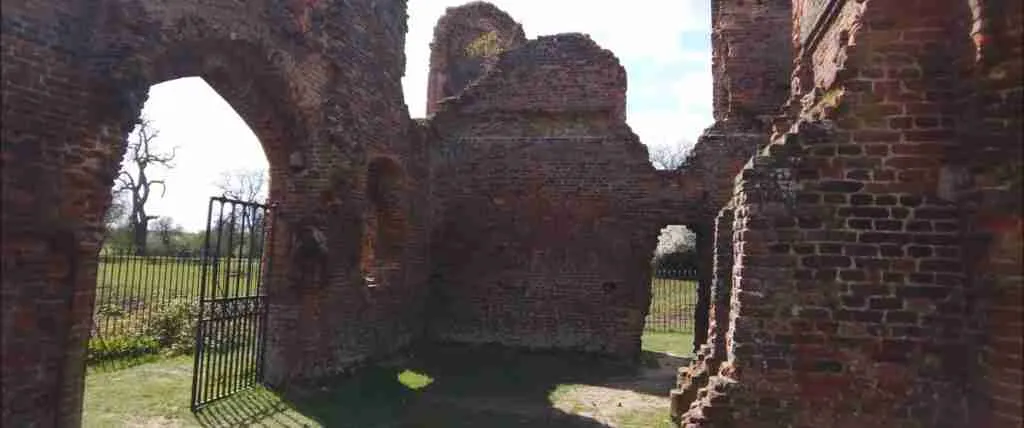
Fotheringhay Castle, by contrast, is entirely self-directed and freely accessible. The castle exists today only as earthworks — a substantial grassy mound on the south bank of the River Nene — reached via a signed public footpath from the road into Fotheringhay village. There is no entry charge, no opening hours, and no booking requirement; the site is on farmland and is accessible on foot from the village throughout daylight hours. The Church of the Virgin Mary and All Saints, Fotheringhay, stands approximately 200 metres from the castle mound and is generally open during daylight hours. A donation box is located inside. Both sites can be visited informally and, in the off-season when Longthorpe Tower and Flag Fen are closed, remain available year-round.
Seasonal access variations to plan around: Flag Fen shifts from daily opening (Thursday–Monday through summer, or daily in the current summer 2026 extended schedule) to Wednesday–Sunday in September and October, then Friday–Sunday from November through February. In practice, the Fenland circuit makes most sense on a Saturday or Sunday in the core season (April through October), when Longthorpe Tower is open and Flag Fen is running its maximum schedule. A Saturday visit in May, June, or early July — when Longthorpe Tower bookings are not yet exhausted and Fenland light is at its best — is the optimal combination.
The A10 Scenic Route vs. A14/A1(M) Fast Corridor: Approach Options for 2026
The choice between the two outbound routes carries practical consequences beyond journey time. The A10 via Ely adds approximately 6 miles and 20–25 minutes to the outbound leg compared with the A14/A1(M) direct approach, but it passes through Ely — which offers one of the most compelling unplanned heritage additions a driver could encounter. Ely Cathedral’s octagonal lantern tower, visible across the Fens for miles, was constructed following the collapse of the Norman crossing tower around 1322 and remains an engineering achievement that most architectural historians place among the most inventive medieval solutions in England. A 45-minute stop at Ely Cathedral (free entry with donations welcomed) transforms the A10 leg from a transit road into a heritage opening that sets the context for the Peterborough Cathedral comparison later in the day.
For EV drivers, the A14/A1(M) route has a practical advantage: the A1(M) corridor between Cambridge and Peterborough is better served by rapid charging infrastructure than the cross-Fen A10 route, and saving 20 minutes on the outbound run preserves more time for charging in Peterborough before the rural leg. Drivers in conventional petrol or diesel vehicles for whom range anxiety is not a factor may find the A10/Ely route more rewarding on a clear morning.
The return from Oundle to Cambridge on the A605 southbound runs through Thrapston, crosses the A14 at Huntingdon, and takes 70–80 minutes; it is a quiet, well-surfaced road with few traffic complications outside school-run periods. An alternative return via the A1(M) southbound from Peterborough (retracing the fast outbound route) is slightly shorter but bypasses Oundle as a stopping point and involves the motorway again rather than the more pleasant cross-country A605. Most visitors completing the full circuit will find Oundle the natural endpoint and use the A605 for the return.
Rural Navigation Notes: Fenland Roads, Junctions, and Seasonal Conditions
The rural segment between Longthorpe Tower, Barnack Hills and Holes, and Fotheringhay runs on a mix of B roads and unclassified lanes. The B1443 from Longthorpe toward Barnack is straightforward and well-surfaced. The approach to Barnack Hills and Holes from the B1443 requires a turn into the village of Barnack itself; follow signs to the nature reserve, which has a small car park and is managed by Natural England. From Barnack, the route south to Fotheringhay typically runs via Southwick and Woodnewton through pleasantly rolling Northamptonshire limestone countryside; these are single-carriageway lanes that carry local agricultural traffic and require attention to passing places in narrower sections. Navigation software is generally reliable for this leg, though some older maps route through Nassington rather than directly to Fotheringhay; either approach works, but the Nassington route adds approximately two miles.
In winter and early spring, Fenland roads in the eastern section — particularly the A142 approach from Ely — can be affected by flooding after heavy rain. The River Nene and the Welland are embanked and rarely breach in normal conditions, but drainage channels adjacent to unclassified roads can overflow in exceptional rainfall. Check road condition reports on highways.cambridgeshire.gov.uk and northamptonshire.gov.uk before winter visits. Summer conditions present no significant access issues for any site on the circuit.
The Heritage Sites of the Fenland Circuit 2026: Complete Visitor Guide
Peterborough Cathedral: The Norman Masterpiece at the Circuit’s Core
Peterborough Cathedral stands at the centre of the circuit geographically and chronologically. Founded as an abbey in the 7th century, the present building was begun by the Normans in 1118 following a fire that destroyed the Saxon predecessor — a construction date that places it among the earliest surviving examples of Romanesque ecclesiastical architecture in England. The west front, added in the early 13th century, presents a triple portal composition of three immense arches that constitutes one of the most photographed Gothic facades in the country, though the building behind it retains almost entirely Norman character in its nave, with round-headed arches, thick cylindrical piers, and the painted wooden ceiling panels stretching the length of the nave roof.
Those ceiling panels deserve attention before the visit. Dating from approximately the 12th century, they are decorated with figures — kings, bishops, and hybrid creatures — painted on timber boards that effectively constitute a medieval picture book suspended over the nave floor. Their survival is remarkable given the cathedral’s history, which includes significant damage and restoration. Entry is free, with donations welcomed; no booking is required. The cathedral is generally open daily, typically 9am–5pm in summer and reduced hours in winter — confirm current times on peterborough-cathedral.org.uk before visiting. Allow at least 60–90 minutes for a thorough visit.
Two particular historical connections give Peterborough Cathedral added circuit relevance. Katharine of Aragon, Henry VIII’s first queen, died at Kimbolton Castle on 7 January 1536 and was buried in the cathedral choir — her tomb is clearly signed and still marked by fresh flowers on most visits, representing one of the more poignant royal graves in English history given her treatment in the final years of her life. Mary Queen of Scots’ remains were also held here temporarily following her execution at Fotheringhay Castle on 8 February 1587, before her son James I arranged for their reinterment at Westminster Abbey in 1612. The geographic connection — execution at Fotheringhay, interment at Peterborough Cathedral — is one of the Fenland Heritage Circuit’s most compelling narrative threads.
Flag Fen Archaeology Park: Three Thousand Years of Bronze Age Fenland
Flag Fen Archaeology Park sits three miles east of Peterborough on the Northey Road (PE6 7QJ), and is accessible only by car on the circuit. It preserves the remains of a Bronze Age timber platform and causeway dated to approximately 1300–900 BC, constructed from an estimated 60,000 individual wooden posts and cross-members driven and laid across the waterlogged fenland. The site was discovered by archaeologist Francis Pryor in 1982, when ploughing in a field revealed preserved timber at unusual depth; subsequent investigation revealed what is now recognized as one of the largest Bronze Age timber structures in Britain.
The visitor experience in 2026 centres on the causeway preservation hall, a purpose-built humidity-controlled building that maintains conditions to preserve the original timbers — some of which remain visible in a shallow controlled-water tank. A reconstructed Bronze Age roundhouse and associated exhibit areas interpret daily life and material culture. The park also holds a collection of bronze metalwork recovered from the waterlogged deposits, including weapons, tools, and personal ornaments, interpreted as deliberate votive deposits made in the water alongside the causeway. A reconstructed Roman herb garden and a small herd of rare-breed sheep add further visitor interest.
Admission in 2026: £8 per adult, £4 per child, £20 for a family of two adults and up to three children; under-5s and carers free. Annual passes are available at £23 for adults and £57.50 for families. Opening hours in summer 2026 (through August): daily 10am–4pm (last admission 3:15pm). September and October: Wednesday–Sunday; November to February: Friday–Sunday. Free car parking on a gravel surface with accessible spaces near the visitor centre. A Roundhouse Café operates on site. Dogs are now welcome on leads throughout most of the site. Confirm the latest hours at flagfen.org.uk before visiting, as seasonal transitions occur in September.
Longthorpe Tower: Pre-Booked Access to Northern Europe’s Finest Medieval Domestic Wall Paintings
Longthorpe Tower is the circuit’s most demanding logistical stop and its most intellectually rewarding. The tower is the surviving element of a 14th-century fortified manor house built by the Thorpe family, who gave their name to both the tower and the village of Longthorpe, two miles west of Peterborough city centre. What makes it exceptional is not the architecture, which is solid but modest — a three-story squared tower of limestone rubble with later modifications — but the paintings that cover almost every interior wall surface of the first-floor chamber.
Discovered in 1945 when whitewash applied during a wartime billet was stripped back, the wall paintings present what English Heritage describes as one of the most complete and important sets of 14th-century domestic wall paintings in northern Europe. Their subjects constitute a kind of moral and cosmological encyclopedia: the Wheel of Fortune (Wheel of Life), the Three Living and Three Dead, the Nativity, King David and his harpists, the Three Kings, the Labors of the Months, the Apostles, and a rich border of birds, animals, and hybrid creatures including one celebrated beast equipped with projectile flaming excrement that has puzzled iconographers for decades. The paintings are believed to date from approximately the 1320s to 1340s, and the precise identity of the commissioner within the Thorpe family is not definitively established in the documentary record — the consensus view associates them with the family’s period of greatest prosperity and civic prominence in Peterborough, though the specific individual who ordered the work remains a subject of scholarly discussion.
Guided tours last one hour and are delivered by trained volunteer guides who bring the iconographic program to life with informed commentary. For visitors with limited time, this format is more efficient than a self-guided visit would be: the paintings are densely layered and require explanation to decode fully, and the guides’ expertise converts what might otherwise be a puzzling array of pigment into a coherent medieval worldview. A small exhibition on the ground floor contextualizes the tower’s construction and family history. A gift shop on the first floor sells guidebooks and souvenirs. There are no food facilities at the tower; the nearest café is approximately 100 metres away in the village.
Admission: English Heritage members free (must pre-book); non-members pay the guided-tour charge confirmed at booking (verify current rate at nenepark.org.uk when reserving). Pre-booking is essential and non-negotiable — the tower has no walk-up capacity. Book via nenepark.org.uk. Saturday and Sunday openings only, 28 March to 1 November 2026, 10am–4:30pm, last admission 3:30pm. Free parking (~20 cars) in Woburn Close, shared with the adjacent church. No coach parking available. Note that the tower is accessed by historic stairs and is not accessible to pushchairs; mobility requirements should be checked against the English Heritage access statement before visiting.
Barnack Hills and Holes: The Exhausted Quarry That Built England’s Cathedrals
Six miles northwest of Peterborough, the village of Barnack sits at the edge of what appears to be an undulating park of gentle humps and hollows — a landscape so unusual in this flat region that visitors encountering it for the first time typically mistake it for natural geology. It is not. Barnack Hills and Holes is a National Nature Reserve of approximately 22 hectares occupying the remnants of a medieval limestone quarry, one of the most extensively worked stone quarries in early medieval England, now managed by Natural England and maintained as a nationally significant calcareous grassland habitat.
The stone extracted here — known as Barnack rag or Barnack limestone — is a shelly, oolithic Jurassic limestone particularly suited to worked ecclesiastical architecture. It was the material of choice for Norman and Early English builders across the region. Peterborough Cathedral is constructed predominantly from Barnack stone. Ely Cathedral’s Romanesque nave uses Barnack limestone extensively. Ramsey Abbey, Crowland Abbey, Sawtry Abbey, and numerous parish churches across Cambridgeshire and Northamptonshire were built from or substantially supplemented with Barnack stone. The quarry was eventually worked out — exhausted of commercially viable stone by the late medieval period — leaving the characteristic humps and hollows that today support a rich flora of orchids, chalk-loving wildflowers, and the associated invertebrate communities that have earned the site its National Nature Reserve designation.
The interpretive dimension of visiting Barnack Hills and Holes as part of the Fenland Heritage Circuit is considerable: standing on the quarry floor from which Peterborough Cathedral was built, then driving to that cathedral within twenty minutes, closes a production-to-destination loop that most visitors to the cathedral never experience. There is no visitor centre, no entry charge, and no booking requirement. The site is accessible year-round on foot via the signed entrance from the village; a small Natural England car park is available nearby. Allow 30–45 minutes for a comfortable circuit of the hills and hollows, which rewards slow exploration among the orchid-rich grassland in May and June.
Fotheringhay Castle and the Church of the Virgin Mary and All Saints
The village of Fotheringhay sits on a loop of the River Nene in a landscape so tranquil that the weight of history attached to it requires conscious effort to perceive. The castle, once one of the largest fortified complexes in the East Midlands, is now visible only as a substantial earthwork mound on the riverbank — the material remains of decades of post-dissolution demolition and stone robbing that reduced a royal palace to its foundations and then to their outline. What is visible is enough: the mound is large, the river is wide and reflective, and the surrounding pasture gives the site an atmosphere of deliberate quiet that makes it unexpectedly affecting.
Two events give Fotheringhay Castle an outsized place in English history. Richard III was born here on 2 October 1452, the son of Richard, Duke of York, who held the castle at that time. The Duke of York was later killed at the Battle of Wakefield in 1460, and his remains — and those of his wife Cecily Neville — were reinterred at Fotheringhay Church by Edward IV in 1476 in a ceremony of considerable dynastic significance. The other event is the better known: Mary Queen of Scots, imprisoned for nineteen years in a succession of English castles, was brought to Fotheringhay in 1586, tried in the castle’s Great Hall that autumn, and executed there on 8 February 1587. A memorial stone marks the approximate location of the execution hall within the site.
The Church of the Virgin Mary and All Saints, Fotheringhay, stands approximately 200 metres from the castle mound and is one of the finest Perpendicular Gothic churches in Northamptonshire. Its distinctive lantern tower — a candle-light octagonal structure — dominates the village from every approach. The interior holds the memorials associated with the York reinterment, including heraldic achievements and the rebuilt chancel that replaced a larger medieval predecessor. Entry is free and the church is generally open during daylight hours. No booking is required. Allow 30–45 minutes for the castle mound walk and church visit combined; the setting on the Nene, particularly in morning or late afternoon light, is among the most photographically compelling on the entire circuit.
Oundle: A Limestone Market Town as Circuit Endpoint
Oundle functions as the natural endpoint of the circuit — large enough to offer good lunch options and a market atmosphere, small enough to preserve the limestone vernacular architecture that makes the Northamptonshire built environment so distinctive. The town’s medieval street plan, centred on the Market Place and the long stretch of New Street, is largely intact and lined with buildings in the warm-coloured local limestone that is visually related to the Barnack stone seen at the quarry earlier in the day. The Church of St Peter, Oundle — a Perpendicular Gothic building with an elegant spire — anchors the market square and rewards a brief visit.
For lunch on the circuit, the Talbot Hotel on New Street is a coaching inn of medieval origin and the most characterful option in the town centre; the Riverside Walk along the Nene provides a quieter alternative for a packed lunch in good weather. Several independent cafés and pubs operate along New Street. Parking in the town is available in the main car park off East Road and on-street in the surrounding streets; check current restrictions as town-centre management occasionally changes. Oundle also has a small independent bookshop and a selection of antique and general shops that reward a browse if time allows. A 20-to-30-minute Oundle stop after a full day’s circuit provides a comfortable decompression before the A605 return to Cambridge.
Self-Drive Fenland Itinerary 2026: Linking Monastic Quarries, Roman Canals, and Norman Keeps
Practical Parking, Rural Road Networks, and Infrastructure Access for Heritage Travel
Each stopping point on the circuit has distinct parking characteristics that affect the day’s flow. Flag Fen Archaeology Park has a spacious free gravel car park with accessible spaces directly in front of the visitor centre — no charges, no time limits, ample capacity for most visit days. Peterborough Cathedral has no dedicated visitor car park; the most convenient paid car parks are at Queensgate Shopping Centre (short walk to the cathedral, standard city-centre rates of approximately £4–6 for 2–4 hours) and the Queensgate multi-storey on Bridge Street. For a Peterborough morning that covers both the cathedral and Flag Fen, parking once in the central area for the cathedral then driving to Flag Fen afterward is more efficient than attempting to park centrally for both.
Longthorpe Tower’s 20-space free car park in Woburn Close fills by mid-morning on summer weekends. On-street parking in Longthorpe village is available as a second-tier option, though distances from the tower can reach 300–400 metres. Barnack Hills and Holes has a small Natural England car park at the reserve entrance. Fotheringhay has no formal car park; visitors typically park on the grass verge near the footpath to the castle mound or on the road through the village, where space is generally available outside summer bank holidays. Oundle’s main car park off East Road is pay-and-display, typically £2–4 for two hours in 2026 — confirm current charges on the Northamptonshire Highways sign at the entrance.
Road surfaces between Barnack and Fotheringhay include a mix of B-road and unclassified single-carriageway lanes. These are well-maintained but occasionally narrow, and drivers of larger SUVs or campervans should take particular care at blind bends near Southwick. The lanes carry limited traffic outside agricultural operations and are straightforward in normal conditions. The Nene flood plain to the south of Peterborough and around Fotheringhay is managed by the Environment Agency’s drainage network; after exceptional rainfall events, a small number of low-lying unclassified roads near the river can experience brief flooding — this has not been a regular occurrence on the main circuit route but is worth checking after heavy autumn rain via the Environment Agency flood map service at flood-map-for-planning.service.gov.uk.
Hour-by-Hour Day Itinerary: Cambridge → Ely → Peterborough → Fotheringhay → Oundle 2026
The following schedule assumes a 7:45am Cambridge departure using the scenic A10/Ely outbound route and a pre-booked 11:30am Longthorpe Tower tour slot. Adjust departure time to match your chosen Longthorpe booking.
7:45am: Depart Cambridge, A10 northbound. The road is quiet at this hour, particularly on weekday circuits. Expect no significant delays until the Ely bypass junction.
8:30am: Arrive Ely. Optional 30–45 minute stop at Ely Cathedral (opens 7am daily). The approach along the Ely riverside offers a particularly strong first impression. If skipping Ely, continue northwest on the A142 toward March and then the A141 north toward Peterborough, arriving in the city by approximately 9:30am.
9:30am–10:30am: Flag Fen Archaeology Park. The park opens at 10am; allow 60–75 minutes for a thorough visit covering the causeway hall, reconstructed roundhouse, and museum exhibits. This is the most immersive introduction to the region’s pre-history and sets the temporal scale for the rest of the day.
10:45am–11:15am: Drive from Flag Fen to Peterborough Cathedral (12 minutes via Oundle Road and Bridge Street), visiting the Norman nave, painted ceiling, and Katharine of Aragon’s tomb. Allow 60–75 minutes inside the cathedral.
11:30am (or your booked slot): Longthorpe Tower guided tour. This is the logistical anchor of the day; the visit is exactly one hour and non-negotiable in timing. Arrive five minutes early and allow a few minutes for parking in Woburn Close. Exit by approximately 12:45–1pm.
1pm–1:45pm: Drive from Longthorpe to Barnack Hills and Holes (approximately 20 minutes via the B1443 and B1443/village roads). A 30-minute walk around the quarry hollows provides a contemplative midday interlude and the conceptual connection between the stone underfoot and the cathedral walls seen that morning.
2:15pm–3:15pm: Fotheringhay Castle mound and the Church of the Virgin Mary and All Saints. Allow 15–20 minutes for the castle earthworks walk and 20–25 minutes for the church. The combined atmosphere of the site — castle mound, river, church lantern — is best experienced without rushing.
3:30pm–4:30pm: Oundle for lunch or a late-afternoon break. The Talbot Hotel and New Street cafés serve until mid-afternoon; if arriving at 3:30pm, both pub and café options remain open. Browse the Market Place and St Peter’s Church if time allows.
4:30pm: Depart Oundle on the A605 southbound toward Thrapston (10 minutes), then the A14 eastbound to Cambridge (55–65 minutes). Estimated arrival Cambridge: 5:45–6pm depending on traffic.
Two-Day Overnight Variant: Oundle Base, Kirby Hall Extension, and Nene Valley Photography 2026
For visitors who find the single-day circuit rushed — particularly those planning photography stops or extended time at Flag Fen and Fotheringhay — a two-day structure with an overnight in Oundle or Peterborough is the recommended alternative. The Talbot Hotel in Oundle offers a coaching-inn experience directly on the circuit’s natural endpoint; B&Bs in Oundle village also provide comfortable bases at lower cost. Peterborough has a full range of chain and independent hotels near the city centre, with rooms available at budget to mid-range price points.
Day 2 of the overnight extension benefits from proximity to Kirby Hall (English Heritage, approximately 15 miles southwest of Oundle via the A43 near Corby), a roofless Elizabethan mansion of considerable architectural drama that receives only a fraction of the visitors its quality deserves. Kirby Hall entry in 2026 costs £9.26–£12.32 per adult depending on the day (Saver or Standard rate, confirmed from English Heritage’s 2026/27 Group Rates PDF; check english-heritage.org.uk for the specific rate applicable to your visit day). The combination of Kirby Hall’s Elizabethan stonework with the Norman Fenland context of Day 1 creates a satisfying architectural range across both days. English Heritage members pay nothing at Kirby Hall and benefit from the same free Longthorpe Tower access on Day 1.
A two-day overnight trip budget (two people sharing accommodation) runs £145–225 per person: Day 1 outbound fuel share, Flag Fen entry, Longthorpe Tower, Cathedral donation, parking, lunch, and Oundle dinner account for approximately £70–105; accommodation per person (two sharing, budget B&B to mid-range hotel) adds £40–75; Day 2 breakfast, Kirby Hall entry, lunch, and the return fuel share total approximately £39–45. Verify accommodation current availability and rates at time of booking as Oundle’s limited hotel stock means popular weekends can book early.
Canal Engineering Across Civilizations: Roman Fenland Waterways and Mesoamerican Stone Transport Networks
One of the more instructive structural observations available from the Fenland Heritage Circuit is the parallel it offers to hydraulic transport systems developed independently in entirely different parts of the world. When Roman engineers and medieval monastic builders moved heavy limestone from Barnack to Peterborough, Ely, and beyond, they were solving a logistical problem that canal-building civilizations across history have repeatedly addressed through the same basic mechanism: using the buoyancy and low friction of water to move bulk loads that land transport of the period could not efficiently shift. The same logic, independently arrived at, underlies the canal networks around Lake Xochimilco in pre-Columbian Mesoamerica — and the structural comparison illuminates something important about the universal engineering intelligence applied to waterlogged terrain.
The Car Dyke and the River Nene: Roman Hydraulic Engineering and Medieval Stone Distribution in the Fens
The Car Dyke is a linear earthwork and channel that runs approximately 56 miles from the River Nene near Peterborough northward toward Lincoln, cut in the Roman period — almost certainly during the 1st or 2nd century AD, though the precise dating of its construction remains debated among archaeologists. The dyke’s primary function is itself a subject of continuing scholarly discussion: some researchers emphasize its role as a navigation channel for transporting goods southward from the agricultural hinterland around Lincoln toward the Nene and thence to the Roman Fens distribution network; others argue it functioned primarily as a catchwater drain to prevent upland runoff from flooding the reclaimed fenland below. The surviving evidence suggests it likely served both purposes at different times and in different sections, as is common with Roman waterway infrastructure that was repaired and adapted across multiple generations.
What is clear is that the Fenland waterway network as a whole — of which the Car Dyke was one engineered element — served as the primary bulk-goods transport corridor for a region that was largely impassable overland during wet periods. The River Nene, running from its origins in Northamptonshire eastward through Peterborough and thence across the Fens to the Wash, was the main artery. Barnack limestone entered this network from channels leading from the quarry area west of Peterborough, was loaded onto flat-bottomed barges at the Nene, and distributed eastward to Ely and the Cambridge Fens, and possibly to the Wash coast for coastal redistribution. The Norman cathedral at Peterborough and the Romanesque nave at Ely are, in a direct logistical sense, the downstream endpoints of a water-freight system that the Romans had established and the Fenland monasteries then continued to operate across the medieval period.
Xochimilco’s Canal Networks and the Independent Logic of Water-Based Heavy Transport
The chinampa landscape of Xochimilco, in the southern reaches of the Basin of Mexico, constitutes one of the most intensively engineered waterscapes in pre-Columbian history. The Mexica and their predecessors developed a system of artificial islands (chinampas) and interconnecting canals that transformed the shallow lake margins into productive agricultural and logistical infrastructure over several centuries. By the time the Aztec capital Tenochtitlan reached its greatest extent in the early 16th century, the lake system extending from Xochimilco northward to the island capital was served by a canal network used by tens of thousands of canoes for the daily supply of food, raw materials, and bulk construction goods to the city.
Among the goods moved through this network was volcanic stone. Tezontle — a porous, lightweight red volcanic rock quarried from the hills surrounding the Basin of Mexico — was the standard construction material for the monumental platforms, temples, and administrative buildings of the Aztec city. Its transport from quarry to building site depended entirely on water: overland movement of stone in a society without wheeled goods vehicles or draft animals available for burden carrying was effectively impractical for any distance, and the lake-canal system provided the same buoyancy advantage that the Nene waterway system had offered to Barnack stone carriers a continent and a millennium away.
The structural parallel between these two systems is not a genealogical connection — there is no relationship whatsoever between Roman Fenland hydraulic engineering and Aztec chinampa canals — but a convergent engineering logic. Both systems represent independent human responses to the same physical constraint: how to move heavy stone from source to site when the intervening terrain is waterlogged, when land transport is prohibitively inefficient, and when the technology of the period offers water as the most reliable low-friction medium for bulk loads. In each case, the engineering solution was the canal: a controlled water channel that extended the navigable network beyond natural river courses into the landscape’s interior. In each case, the infrastructure created was not temporary or single-purpose but a durable regional system that shaped settlement patterns, agricultural land use, and monumental construction for generations. Encountering the Barnack quarry and the Nene valley on the Fenland Heritage Circuit offers a concrete, touchable version of a problem-solving logic that recurs independently wherever civilizations build in watered landscapes.
EV Charging and Zero-Emission Heritage Road Trips on the Fenland Circuit 2026
Fast Charging in Peterborough: The MFG Station on Oundle Road and City-Centre Options
Peterborough is the primary EV charging hub for the Fenland Heritage Circuit in 2026, and the most strategically useful charger for the route is the MFG EV-Power station located at the Esso forecourt on Oundle Road (PE2 9QP). This station provides four CCS connectors rated at up to 300kW — among the fastest commercially available charging connectors in this part of the East Midlands — and sits approximately four miles from Flag Fen on the natural driving approach from Cambridge. Drivers following the A14/A1(M) route toward Peterborough will pass through the Oundle Road corridor naturally; those using the A10/Ely route can reach the station via the A15 approach into Peterborough from the north.
The strategic logic of charging here is straightforward: arrive at Flag Fen with a depleted battery from the Cambridge drive, charge to 80–90% on Oundle Road during or immediately before the Flag Fen visit, then proceed through Peterborough Cathedral and Longthorpe Tower before heading into the rural leg southwest toward Barnack and Fotheringhay. A full 80% charge from a 70kWh battery at a 300kW charger takes approximately 15–18 minutes if the charger is uncongested — feasible during the drive from Flag Fen into the city without materially disrupting the itinerary. Peterborough city centre also has several additional rapid chargers from Pod Point, BP Pulse, and Instavolt operators within walking distance of the Cathedral; these are useful for visitors who prefer to charge during the cathedral visit rather than at the Oundle Road forecourt.
Rural Range Planning: The Charging Gap Between Barnack and Oundle in 2026
Between Longthorpe Tower, Barnack Hills and Holes, Fotheringhay, and Oundle, public rapid charging is significantly less available than in Peterborough city. The rural Northamptonshire countryside in this arc — roughly 25 miles from Longthorpe southwest to Oundle — has limited EV infrastructure, and drivers should not rely on finding a convenient rapid charger between these sites. Most current rapid-charging provision in this area is destination charging at leisure facilities or slower AC charging at some car parks rather than rapid DC charging on the main route.
The range arithmetic for this segment: from a full charge (80%) in Peterborough, the rural leg to Oundle covers approximately 25 miles; the subsequent A605/A14 return to Cambridge adds a further 61 miles; total from Peterborough to Cambridge via Oundle is approximately 86 miles. A modern long-range EV (250+ miles WLTP range) leaving Peterborough at 80% charge has approximately 200 miles of remaining range — more than sufficient for the rural circuit and the Cambridge return combined, with comfortable margin. Shorter-range EVs or those with degraded batteries may wish to top up in Oundle; a small number of slower (7kW) public chargers are reportedly available in Oundle, though these are suitable only for a longer stop of 45–60 minutes. Verify current Oundle charging provision via the Zap-Map mobile app before the rural leg if your vehicle’s range is constrained.
For winter visitors, reduced battery range in cold temperatures should factor into the calculation: at 0°C, many EVs deliver 20–25% less effective range than their WLTP figures suggest. Winter Fenland circuits should treat the Peterborough MFG charger as a critical stop and aim to depart the city with a higher charge percentage than would be needed in summer.
Budget Breakdown for the Fenland Heritage Circuit 2026
Day Trip Costs per Person in 2026: Fuel, Entry Fees, Parking, and Meals
All costs below are per person, verified against 2026 prices where available, and calculated on the assumption of two people sharing one car. Hotel accommodation is not included in the day-trip figures; see the overnight section below for accommodation costs.
The circuit’s entry fee profile is unusually light for a day that includes so much heritage content. Flag Fen Archaeology Park is the only site with a standard adult admission (£8 in 2026). Peterborough Cathedral, Fotheringhay Castle, the Church of the Virgin Mary and All Saints, and Barnack Hills and Holes are all free. Longthorpe Tower admission depends on membership: English Heritage members pay nothing (though pre-booking via nenepark.org.uk is still mandatory); non-members pay the guided-tour fee confirmed at the Nene Park Trust booking portal at the time of reservation.
Fuel represents the largest variable. At August 2026’s average UK petrol price of 161.6p per litre, the 135-to-150-mile circuit costs approximately £25–37 in total petrol for the vehicle. Two people sharing that cost pay £12–18 each. Solo drivers absorb the full vehicle cost of £25–37.
Budget tier (English Heritage member, packed lunch from home, two sharing): fuel share £12–18, Flag Fen £8, Longthorpe Tower £0 (member), cathedral donation £3–5, Peterborough parking share £2–4, packed lunch £5–8, coffee and snacks £3–6. Total approximately £35–50 per person.
Mid-range tier (non-member, pub lunch in Oundle, two sharing): fuel share £12–18, Flag Fen £8, Longthorpe Tower guided tour (check current charge at nenepark.org.uk), cathedral donation £5, parking share £2–4, pub lunch £16–24, coffee £5–8. Total approximately £55–75 per person.
Solo driver (non-member, pub lunch): fuel £25–37, Flag Fen £8, Longthorpe Tower tour, cathedral donation £5, full parking £4–6, pub lunch £16–24, coffee £5–8. Total approximately £70–95 per person.
Ely Cathedral, if added to the A10 outbound route, contributes no mandatory entry cost (entry is free); a donation of £3–5 is appropriate. The optional Ely stop does not materially alter the per-person budget but adds 30–45 minutes to the journey time.
Overnight Extension Budget 2026: Oundle Accommodation and the Kirby Hall Add-On
A two-day overnight circuit significantly extends the historical range without demanding a dramatically higher budget per day. Oundle offers the most atmospheric overnight base, with the Talbot Hotel on New Street providing a full-service coaching-inn experience at mid-range prices (room rates vary by season; verify current availability at thetalbotoundle.co.uk). B&Bs in the village and surrounding parishes offer budget alternatives at lower per-night cost. Peterborough provides a wider range of chain hotel options (Premier Inn, Travelodge) at budget rates that can reduce per-night accommodation cost substantially.
Per person per night costs for accommodation (two sharing): budget B&B £40–55; mid-range hotel or coaching inn £55–75. These figures are halved room-rate estimates and should be verified against current availability at time of booking.
Day 2 of the overnight extension typically incorporates Kirby Hall (English Heritage, near Corby), 15 miles southwest of Oundle on the A43. Kirby Hall in 2026 charges £9.26–£12.32 per adult depending on Saver or Standard pricing day (as confirmed in the English Heritage 2026/27 Group Rates PDF; check english-heritage.org.uk for your specific day’s rate). English Heritage members enter free. Kirby Hall is a roofless Elizabethan mansion of exceptional architectural quality set in partially restored formal gardens — a compelling companion piece to the Norman and medieval heritage of Day 1.
Two-day overnight total (two sharing, one-night Oundle B&B to mid-range hotel, Day 2 including Kirby Hall, full Day 1 mid-range costs): Day 1 fuel and activities £40–58, Day 1 lunch £14–20, Day 1 dinner £20–32, accommodation per person £40–75, Day 2 breakfast £8–15, Day 2 Kirby Hall entry £9–12, Day 2 lunch £12–18, Day 2 return fuel share £10–15. Total approximately £145–225 per person for the full two-day circuit.
Seasonal Planning for the Fenland Heritage Circuit 2026
Best and Worst Times to Drive the Circuit: Daylight, Access Windows, and Crowd Patterns in 2026
The Fenland Heritage Circuit is functionally available for most of the year, but the quality of the experience varies considerably by season. The optimal visit window is May through early July 2026: Longthorpe Tower’s guided tours are running (from 28 March), Flag Fen is open daily, Fenland daylight extends to 9pm or beyond, orchard and hedgerow wildflowers are in bloom across the limestone countryside toward Barnack, and spring orchid populations at Barnack Hills and Holes typically peak in late May and early June. Visitor numbers at all sites are lower than in the school summer holidays, and Longthorpe Tower tour bookings are less pressed than in August.
August brings the longest guaranteed good weather probability but also the highest visitor numbers at Flag Fen and increased pressure on Longthorpe Tower bookings; book two to three weeks ahead for any August Saturday or Sunday. September and October retain the core circuit availability (Longthorpe Tower runs until 1 November) but Flag Fen reduces to Wednesday–Sunday opening, meaning the Peterborough leg needs adjusting accordingly. November through February closes Longthorpe Tower entirely and reduces Flag Fen to Friday–Sunday; a winter circuit skipping both sites retains Peterborough Cathedral, Barnack Hills and Holes (spectacular on a frost-clear December morning), Fotheringhay, and Oundle as free and accessible stops, but loses the circuit’s two most distinctive commercial attractions.
Bank holiday weekends should be approached with planning: Longthorpe Tower tours on bank holiday Saturdays and Sundays fill earlier than normal weekends; Peterborough Cathedral occasionally hosts special services on bank holidays that may affect visitor access to certain areas. Fotheringhay and Barnack are unaffected. Oundle’s Market Place is busier on bank holiday Mondays but still walkable. The A14/A1(M) corridor can be congested on bank holiday Fridays and Sundays; departing Cambridge before 8am or after 7pm avoids the worst of the traffic.
Photography Opportunities and Fenland Light Conditions by Season
The Fenland Heritage Circuit offers a photographic program dominated by two qualities: the extraordinary flatness of the landscape and its effect on sky and light, and the architectural drama of sites that appear largely unchanged since their medieval construction. In both cases, season and time of day matter considerably. Fenland skies in May and June, when cloud formations can build to impressive heights against the horizontally defined landscape, provide a characteristic East of England visual that contrasts sharply with the enclosed architectural spaces of the heritage sites themselves — the external panorama at Barnack Hills and Holes or across the Nene at Fotheringhay and the interior intimacy of Longthorpe Tower’s painted chamber are natural paired contrasts.
Peterborough Cathedral’s west front is oriented roughly west-southwest, meaning it receives the most flattering front-light in the late afternoon and evening; a visit that places the cathedral in the late afternoon, as the circuit typically does when Flag Fen comes first in the morning, works well for exterior photography. Longthorpe Tower’s interior paintings require available light from the chamber windows — no flash photography is permitted during tours — and the morning tour slots from 10am tend to deliver better interior light than the afternoon sessions when the window orientation changes. Flag Fen’s causeway hall is artificially lit and not primarily a photographic subject, but the reed-edged approach roads and the wetland landscape east of Peterborough offer strong landscape opportunities at dawn. Fotheringhay Castle mound, photographed from the riverbank looking northwest with the church tower beyond, is at its most atmospheric in slanted low-sun conditions — late afternoon in summer or any clear day in winter when the sun stays low across the Nene valley throughout the day.
Frequently Asked Questions About the Fenland Heritage Circuit Road Trip 2026
Can the Fenland Heritage Circuit be completed as a day trip from Cambridge in 2026?
Yes, with good planning. The circuit covers 130–150 miles total and visits six primary sites, with the pre-booked Longthorpe Tower tour providing the one logistical anchor. Departing Cambridge at 7:45am on the A10 via Ely and returning by 6pm via the A605/A14 from Oundle is achievable for most site combinations; the key constraint is pre-booking the Longthorpe Tower tour slot well in advance, since a missed booking eliminates the tower visit entirely. Visitors who want relaxed time at Flag Fen and Fotheringhay may find a 2-day overnight more comfortable than the full-day sprint, but the day-trip format is the default for most visitors.
Is an English Heritage membership worth buying for the Fenland Heritage Circuit in 2026?
If Longthorpe Tower is on your itinerary — and it should be — English Heritage membership reduces your per-person day-trip cost by the Longthorpe Tower tour admission and potentially by Kirby Hall entry on a Day 2 extension. Membership (check current price at english-heritage.org.uk) provides unlimited access to over 400 sites across England for a year; whether the Fenland Circuit alone justifies it depends on your broader travel plans. For visitors planning additional heritage circuits across the East of England, West Midlands, or other EH-rich regions in 2026, membership pays for itself quickly. For a single visit, the math is tighter but the Longthorpe Tower saving is the primary circuit-specific benefit.
What is the best car park for visiting Peterborough Cathedral in 2026?
The most practical options near Peterborough Cathedral in 2026 are the Queensgate Shopping Centre multi-storey on Bridge Street (short walk to the Cathedral Green from the upper levels) and the Westgate car park on Westgate. Both charge standard city-centre rates, typically £3–6 for two to three hours in 2026 — confirm current tariffs at peterborough.gov.uk/parking or on arrival. The Cathedral Green itself has no public parking. If you are driving the full circuit, parking for Flag Fen and then driving to the city centre works better than the reverse, since Flag Fen’s free car park allows an unhurried start to the day before the city-centre parking cost is incurred.
Can I visit Longthorpe Tower as a walk-in visitor without a pre-booked tour in 2026?
No. Walk-up access is not available at Longthorpe Tower on any date in 2026. The guided-tour format means visitor numbers are controlled by available slots, and capacity is confirmed only by advance reservation. This applies equally to English Heritage members and non-members. Book via the Nene Park Trust portal at nenepark.org.uk as early as possible — for summer weekend slots, two to four weeks lead time is recommended. If you arrive without a booking and tours are full, the tower exterior is visible from the road but no access to the interior is possible.
What is the driving distance between Cambridge and Peterborough on the fastest route in 2026?
The fastest route from Cambridge to Peterborough in 2026 is via the A14 westbound to Huntingdon and then the A1(M) northbound to Peterborough, covering approximately 45 miles. Journey time in normal traffic is 45–55 minutes. The alternative A10 scenic route via Ely is approximately 51 miles and 70–80 minutes; it adds the Ely Cathedral detour option and the cross-Fen landscape experience but is slower. Both routes are well-signposted and require no specific navigational preparation beyond knowing which junction to take from the A1(M) for Peterborough central (junction 17 for the city centre via the A1139 Peterborough parkway).
How do Roman-period Fenland canals relate to the heritage sites on the 2026 circuit?
The Car Dyke — a Roman-period channel of approximately 56 miles running north from the River Nene near Peterborough toward Lincoln — was part of a Fenland waterway network that enabled bulk goods transport across what was otherwise difficult, often flooded terrain. Its precise primary function (navigation, drainage, or a combination) is debated in archaeological scholarship, but the broader Fenland waterway system of which it formed a part was the logistics infrastructure that made medieval Fenland cathedral construction economically feasible: Barnack stone moved by water from the quarries northwest of Peterborough through river channels to the Nene, then eastward to Peterborough Cathedral, Ely Cathedral, and other major building sites. The Car Dyke, Barnack quarry, and Peterborough Cathedral are therefore linked elements of the same supply chain, visible today at three stopping points on the circuit within 20 miles of each other.
Are dogs allowed on the Fenland Heritage Circuit stops in 2026?
Dogs are now welcome at Flag Fen Archaeology Park on leads throughout most of the site (with some dog-free zones marked on-site and exceptions on special event days). Barnack Hills and Holes National Nature Reserve is generally dog-friendly on leads; follow Natural England guidance at the reserve entrance. Fotheringhay Castle earthworks and the surrounding public footpath are accessible with dogs on leads. The Church of the Virgin Mary and All Saints does not formally restrict well-behaved dogs in its churchyard. Peterborough Cathedral and Longthorpe Tower are not dog-friendly inside the buildings; leave dogs in ventilated vehicles for these stops in cooler weather, or arrange for one person to remain with the dog outside during visits.
Is the Fenland Heritage Circuit accessible for visitors with mobility limitations in 2026?
Accessibility varies considerably between sites. Peterborough Cathedral is largely accessible, with level access to the main nave. Flag Fen Archaeology Park has an accessible car park and a partially accessible route from the visitor centre to the causeway hall on firm surfaces; the mere walk and reed-bed paths may be less suitable for wheelchairs in wet weather. Longthorpe Tower is accessed via historic steps and is not accessible to wheelchair users or pushchair users — check the English Heritage access statement at english-heritage.org.uk/visit/places/longthorpe-tower/access/ before visiting. Barnack Hills and Holes has uneven ground throughout and is not suitable for wheelchairs. Fotheringhay Castle mound is on grass and is accessible for those who can walk on uneven surfaces but not for wheelchairs. Oundle is largely accessible on its main streets with standard town-centre kerb drops.
What other English Heritage sites can I add to the Fenland Heritage Circuit in 2026?
Kirby Hall, near Corby (approximately 15 miles southwest of Oundle on the A43), is the natural addition for a two-day circuit. A ruined Elizabethan mansion of exceptional quality, it charges £9.26–£12.32 per adult (Saver to Standard rate, 2026/27 season) with EH members entering free. Lyddington Bede House in Leicestershire (another EH property occasionally combined with Kirby Hall in heritage itineraries) is 25 miles further west and more suited to a separate outing. For visitors approaching from the south, Wrest Park in Bedfordshire or Audley End House in Essex (both English Heritage) can be incorporated into the outbound or return legs without major detours, though each extends the day significantly.
How should I split a two-day Fenland Heritage Circuit for the best experience in 2026?
Day 1: outbound via A10/Ely (including 45-minute Ely Cathedral stop), Flag Fen (60–75 minutes), Peterborough Cathedral (60 minutes), Longthorpe Tower pre-booked tour (60 minutes), Barnack Hills and Holes (30 minutes), overnight in Oundle. Day 2: Fotheringhay Castle and church (45 minutes), Oundle Market Place (30 minutes), Kirby Hall (90 minutes), return to Cambridge via A43/A14. This structure gives each site appropriate time, avoids the end-of-day rush at Fotheringhay that the day-trip itinerary can produce, and places Kirby Hall — the most architecturally distinctive Day 2 option — at the logical endpoint of the second day before the Cambridge return. Book Longthorpe Tower for Day 1 morning (10am–11am slot) to anchor the afternoon’s rural circuit with maximum time downstream.