
Faro Travel Guide 2026: Gateway to the Algarve
Faro, the charming capital of Portugal’s Algarve region, combines authentic Portuguese culture with stunning natural beauty as the region’s main gateway and often-overlooked destination. While most travelers rush through its international airport toward coastal resorts, those who linger discover a historic walled Old Town, pristine barrier islands within Ria Formosa Natural Park, and affordable prices that make it the Algarve’s most genuine local experience in 2026.
Key Takeaways for Visiting Faro 2026
- Gateway Location: Faro Airport (FAO) serves as the Algarve’s primary international hub, positioned 7km from the city center with connections to all major Portuguese and European cities.
- Budget-Friendly Destination: Budget travelers spend €55-95 per person daily (two sharing budget accommodation), mid-range visitors invest €120-200 per person daily, and luxury travelers budget €250-385 per person daily for complete Algarve capital experiences.
- Optimal Timing: June and September offer ideal weather (22-26°C) with significantly fewer crowds and lower prices than peak July-August season, while April-May and October provide excellent shoulder-season value with comfortable temperatures.
- Historic Character: The medieval Cidade Velha (Old Town) survived the devastating 1755 earthquake that destroyed most of Faro, preserving cobblestone streets, 13th-century Sé Cathedral, and ancient walls that make it the Algarve’s most culturally significant city.
- Natural Paradise Access: Ria Formosa Natural Park surrounds Faro with 18,000 hectares of protected lagoons, salt marshes, and pristine barrier islands including Ilha Deserta’s 7-kilometer uninhabited beach and Ilha da Culatra’s traditional fishing village.
- Authentic Portuguese Experience: Unlike tourism-dependent resort towns, Faro functions as a working city with University of Algarve students, local markets, genuine neighborhood cafés, and Portuguese residents who make this the region’s most authentic cultural destination in 2026.
People Also Ask About Faro Travel 2026
How much does a trip to Faro cost in 2026?
A trip to Faro in 2026 costs €55-95 per person daily for budget travelers (two sharing hostel dormitories or budget hotels), €120-200 per person daily for mid-range comfort (two sharing quality hotels), or €250-385 per person daily for luxury experiences (two sharing upscale properties). These ranges include accommodation, meals, local transportation, and attraction fees. A complete week in Faro costs approximately €385-665 per person for budget travelers, €840-1,400 per person for mid-range comfort, and €1,750-2,695 per person for luxury stays. Faro offers exceptional value compared to more expensive Algarve resort towns like Albufeira or Vilamoura, with accommodation and dining costs averaging 30-40% lower while maintaining high quality standards.
What is the best time to visit Faro in 2026?
The best time to visit Faro in 2026 is June or September, when temperatures reach comfortable 22-26°C, beaches remain warm and accessible, and tourist crowds stay moderate compared to peak July-August season. June offers the advantage of longer daylight hours and the International Music Festival in late May through early June, while September provides slightly warmer ocean temperatures after summer heating. April-May and October represent excellent shoulder-season alternatives with pleasant 18-22°C temperatures, significantly lower accommodation prices (30-50% below summer peaks), and minimal crowds at major attractions. Winter months (November-March) see occasional rain and cooler 12-16°C temperatures but offer the lowest prices and authentic local atmosphere when northern European visitors seeking mild weather outnumber peak-season tourists.
Is Faro worth visiting in 2026 or just an airport stopover?
Faro absolutely merits 2-3 days minimum in 2026 beyond its airport function, offering the Algarve’s most authentic Portuguese experience with historic attractions, natural beauty, and cultural depth that tourism-focused resort towns cannot match. The medieval Cidade Velha preserves cobblestone streets, 13th-century Sé Cathedral with panoramic tower views, Igreja do Carmo’s macabre Capela dos Ossos bone chapel featuring 1,200 monk skeletons, and ancient walls providing genuine historical atmosphere. Ria Formosa Natural Park surrounds the city with pristine barrier islands accessible via regular ferry services, including Ilha Deserta’s completely uninhabited 7-kilometer beach and Ilha da Culatra’s traditional fishing village where Portuguese fishermen maintain centuries-old lifestyles. The waterfront marina, atmospheric Mercado Municipal where locals shop daily for fresh sardines and regional produce, and University of Algarve student population create lived-in authenticity absent from Albufeira or Lagos resort areas.
How do I get from Faro Airport to the city center in 2026?
Faro Airport connects to the city center in 2026 via Route 16 Próximo bus (€2.85 per person, 40 minutes, departures every 30-50 minutes between 5:00 AM and midnight), taxi (€15-20, 15 minutes, meters mandatory), or Uber/Bolt rideshare (€12, 15 minutes, surge pricing during July-August peaks). The Route 16 bus terminates at Próximo Bus Terminal in the city center, located 200 meters from the train station and adjacent to the intercity bus station, making it the most economical choice for budget travelers. Taxis offer faster, more convenient service particularly for travelers with significant luggage, families with children, or those arriving during off-peak hours when bus frequency decreases. Pre-booking private transfers through hotels or specialized services costs €20-35 but guarantees fixed pricing and door-to-door service. The compact 7km distance makes all options affordable, though Uber availability can decrease dramatically during peak summer months when demand exceeds driver supply.
Extended multi-day tours – 5+ days
Featured Algarve Multi-Day Tour Packages
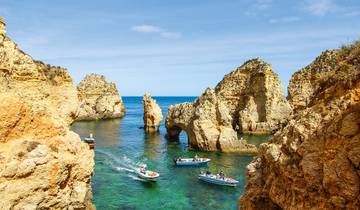
4 days
Algarve Discovery Tour
- ✓ Booking needs min. 2 travelers

8 days
Walking in Portugal – Remote Coastal Trails
- ✓ Comprehensive Algarve tour
- ✓ Expert local guides included
- ✓ All accommodation arranged
- ✓ Transportation provided
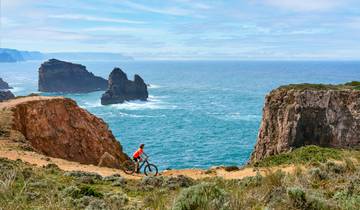
7 days
Costa Vicentina: Natural Park self-guided bike tour
- ✓ Comprehensive Algarve tour
- ✓ Expert local guides included
- ✓ All accommodation arranged
- ✓ Transportation provided
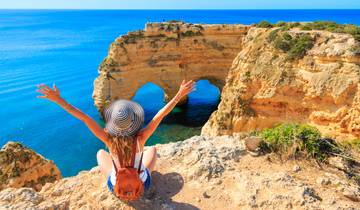
7 days
Algarve – a holiday full of wine
- ✓ Comprehensive Algarve tour
- ✓ Expert local guides included
- ✓ All accommodation arranged
- ✓ Transportation provided
Multi-day tour packages powered by TourRadar. Prices and availability subject to change.
Introduction: Faro in 2026 – The Algarve’s Authentic Capital
Faro stands as Portugal’s Algarve region’s administrative capital, welcoming nearly all international visitors through its primary airport yet remaining remarkably overlooked as travelers rush westward toward Albufeira’s beaches or Lagos’s dramatic coastline. This oversight creates one of southern Europe’s most rewarding travel opportunities in 2026: a genuine Portuguese city where approximately 70,000 permanent residents maintain authentic daily rhythms undistorted by mass tourism, where University of Algarve students populate neighborhood cafés and budget bars creating youthful energy, and where the atmospheric Mercado Municipal operates Monday through Saturday mornings as it has for generations, locals shopping for fresh grilled sardines, cataplana ingredients, artisan cheeses, and tropical figs while tourists remain absent.
The city’s history stretches back to Phoenician settlements, flourished as the Roman city of Ossonoba, endured Visigoth conquest in 418 AD, and thrived under Moorish rule from the 8th century until Portuguese reconquest in 1249 when King Afonso III built protective walls defining what remains today’s remarkably preserved Cidade Velha (Old Town). Faro achieved cultural prominence by the 1400s, establishing Portugal’s first printing press and producing the country’s earliest books, only to suffer English plunder in 1597 when the Earl of Essex systematically looted treasures now held in Oxford University libraries and English museums. The devastating 1755 earthquake that destroyed most of Portugal remarkably spared substantial portions of Faro’s Old Town, though reconstruction efforts shaped the modern city outside medieval walls. Designation as Algarve’s capital in 1834 cemented Faro’s administrative importance while preserving its working-city character distinct from beach-resort development dominating neighboring coastal towns.
Ria Formosa Natural Park encompasses Faro with 18,000 hectares of protected coastal lagoons, salt marshes, mudflats, and pristine barrier islands forming one of Europe’s most important wetland ecosystems and a critical stopover for migratory birds traveling between Africa and northern Europe. The park stretches 60 kilometers along the coast from Manta Rota to Vale do Lobo, sheltering five barrier islands accessible from Faro including Ilha Deserta (Deserta Island), a 7-kilometer completely uninhabited sandy paradise with one seasonal restaurant and endless beaches, and Ilha da Culatra, where traditional Portuguese fishing families maintain centuries-old lifestyles in colorful villages without vehicular traffic. Regular ferry services connect Faro’s marina to these islands year-round (with reduced winter schedules), offering day trips combining pristine beaches, excellent seafood restaurants, and genuine Portuguese coastal culture unaffected by Algarve’s resort development pressures.
Faro’s position as the Algarve’s transportation hub creates practical advantages for 2026 travelers planning comprehensive regional exploration. The city hosts the region’s primary train station with Comboios de Portugal services connecting eastward to Tavira and Olhão, westward to Lagos and Portimão, and northward to Lisbon (3.5 hours, €15-25 depending on service class). The adjacent intercity bus station operates Eva Transportes and Rede Expressos routes throughout the Algarve and beyond, with connections to Seville, Spain (3+ hours, €15-30) offering international day-trip possibilities. This transportation infrastructure, combined with accommodation prices 30-40% below resort town rates, makes Faro the optimal base for travelers prioritizing authentic Portuguese experiences, natural beauty access, historic exploration, and budget-conscious Algarve discovery in 2026.
Understanding Faro’s Layout and Neighborhoods in 2026
Faro’s compact layout divides into three distinct zones that travelers navigate easily on foot, by bicycle, or via efficient local bus services. The medieval Cidade Velha (Old Town) occupies a small peninsula jutting into Ria Formosa lagoon, entirely surrounded by reconstructed defensive walls accessed through three main gates including the iconic Arco da Vila archway. This atmospheric quarter contains Faro’s primary historic attractions within an area walkable in 15 minutes end-to-end, characterized by narrow cobblestone streets, traditional whitewashed buildings with terracotta roofs, outdoor café tables in intimate plazas, and tourist-oriented restaurants catering to visitors exploring Sé Cathedral, the Municipal Museum, and the Bishop’s Palace.
The modern city center radiates outward from the Old Town’s northern edge, encompassing the waterfront marina area where renovated docks completed in 2011 host leisure boats, waterfront restaurants with outdoor seating, and ferry departure points for island excursions. Pedestrian shopping streets including Rua de Santo António extend northward from the marina, lined with Portuguese chain stores, independent boutiques, traditional cafés serving pastel de nata, and restaurants frequented by local residents rather than tourists. This commercial district contains the atmospheric Mercado Municipal (municipal market) on Largo Dr. Francisco Sá Carneiro, operating Monday through Saturday 7:00 AM to 2:00 PM with fresh fish stalls, produce vendors, regional cheese merchants, and grilled sardine vendors where Faro residents conduct daily shopping. The Próximo Bus Terminal and train station anchor the northeastern edge of this zone, approximately 1 kilometer (15-minute walk) from the Old Town.
Residential neighborhoods extend outward in all directions, predominantly characterized by modern apartment buildings, local services, and authentic Portuguese daily life with minimal tourist infrastructure. Igreja do Carmo sits in one such neighborhood approximately 800 meters northwest of the Old Town, housing the famous Capela dos Ossos (Bone Chapel) that most visitors walk to via Largo do Carmo. Praia de Faro (Faro Beach) occupies Ilha de Faro, a barrier island 10 kilometers southwest of the city center, connected by bridge and accessible via Route 16 bus (20-30 minutes, €2.35) or short drive. This long sandy beach stretches 5 kilometers along the island’s ocean-facing side, backed by dunes and featuring beach bar restaurants, watersports rentals, and significantly fewer crowds than central Algarve resort beaches even during peak July-August season. The airport occupies the western edge of this same barrier island, making Faro Beach potentially the closest beach to any European capital city airport.
Getting to Faro in 2026: International Access and Transportation
Faro Airport (FAO) functions as the Algarve’s primary international gateway and Portugal’s third-busiest airport, handling approximately 9 million passengers annually with direct connections throughout Europe and seasonal transatlantic service. The airport sits 7 kilometers west of the city center on Ilha de Faro, making it one of Europe’s most conveniently located regional airports with quick access to both the capital city and beach areas. Terminal facilities completed in recent expansions include modern check-in areas, security checkpoints, duty-free shopping, restaurants serving Portuguese cuisine, car rental desks representing all major international agencies, and excellent information services providing route planning assistance and booking capabilities for travelers arriving without hotel reservations.
International flight options in 2026 reflect Faro’s popularity as a European beach destination, with particularly strong connections from the United Kingdom, Ireland, Germany, France, Netherlands, and Scandinavia. Budget carriers including Ryanair, easyJet, and Wizz Air operate extensive networks with fares starting as low as €20-60 for advance-purchase tickets during shoulder seasons, while full-service carriers TAP Air Portugal, British Airways, Lufthansa, and KLM provide traditional service with included baggage and frequent flyer benefits for fares typically starting at €80-180 round-trip from major European hubs. North American travelers connect through Lisbon (TAP Air Portugal), London Heathrow (British Airways), Paris Charles de Gaulle (Air France), or Frankfurt (Lufthansa) with total journey times of 12-16 hours from East Coast cities and 16-20 hours from West Coast origins. Transatlantic fares range €600-1,200 for economy class depending on season and advance booking, with peak July-August commanding premium pricing.
Ground transportation from Faro Airport to the city center offers multiple options suiting different budgets and convenience preferences. Route 16 Próximo bus departs from the airport terminal forecourt approximately every 30-50 minutes between 5:00 AM and midnight, following a 40-minute route with multiple stops before terminating at Próximo Bus Terminal adjacent to the intercity bus station and 200 meters from the train station. Single tickets cost €2.85 purchased from the driver (exact change recommended though not required). This economical option suits budget travelers comfortable with public transit and those without time pressures, though luggage storage remains limited during peak hours when buses fill with commuters and students. Taxis queue outside the arrivals hall with fixed-price potential though meter use remains legally required, typically charging €15-20 for the 15-minute journey to central hotels depending on specific destination. Rideshare services Uber and Bolt operate extensively in Faro with typical airport-to-center fares of €12 during normal hours, though surge pricing during peak July-August season can double or triple rates while extended wait times for available drivers become common. Pre-booked private transfers arranged through hotels or specialized services guarantee fixed pricing (€20-35) and meet arriving passengers with name signs, providing door-to-door convenience particularly valuable for families with children, travelers with significant luggage, or those arriving during overnight hours when public transit operates infrequently.
Arriving in Faro by train from other Portuguese cities offers scenic, comfortable, and increasingly sustainable transportation in 2026. Comboios de Portugal operates Alfa Pendular (high-speed) and Intercidades (intercity) services connecting Faro with Lisbon (3.5 hours, €15-25 second class, €25-45 first class depending on advance purchase and departure time) via Albufeira, Loulé, and intermediate stations. Porto to Faro requires changing trains in Lisbon with total journey times of approximately 7-8 hours, though the two-leg journey rewards travelers with views of Portuguese countryside, coastal vistas, and authentic station atmosphere in historic Lisbon Santa Apolónia or modern Oriente terminals. Trains arrive at Faro’s central railway station on Largo da Estação, within 1 kilometer walking distance of the Old Town (15 minutes on foot) or connecting easily via local buses. Advance ticket purchases through the CP website or app (available in English) secure best fares and guarantee seat reservations on popular services, particularly important during summer weekends and Portuguese holiday periods when trains sell out days in advance.
Bus services provide economical alternatives and connections to destinations not served by rail. Eva Transportes operates comprehensive routes throughout the Algarve with Faro as the primary hub, while Rede Expressos connects Faro to Lisbon (4 hours, €20-25), Porto (9+ hours, €35-45), and Seville, Spain (3-4 hours depending on border crossing procedures, €15-30). Buses depart from the intercity bus station adjacent to the Próximo Bus Terminal on Avenida da República, approximately 1 kilometer northeast of the Old Town. This location positions arriving passengers conveniently for onward local transit or short walks to central accommodations. International bus services, while slower than flying, offer budget-conscious alternatives particularly attractive for travelers already in Spain or northern Portugal who can take advantage of dramatic fare differences compared to short-haul flights during peak season.
Accommodation Costs and Options in Faro 2026
Faro’s accommodation market in 2026 offers exceptional value compared to Algarve resort towns, with hotels, guesthouses, and hostels typically priced 30-40% below equivalent properties in Albufeira, Lagos, or Vilamoura while maintaining comparable quality standards and often superior authentic Portuguese character. This affordability reflects Faro’s status as a working city rather than beach resort, with accommodation infrastructure developed primarily for Portuguese business travelers, visiting families, and budget-conscious tourists prioritizing cultural experiences over beach-club amenities. The compact city center concentrates most lodging options within a 1-kilometer radius of the Old Town, making location less critical than in sprawling resort areas where beach proximity commands premium pricing.
Budget accommodation in Faro encompasses hostels, guesthouses, and basic hotels priced €25-60 per room nightly (€13-30 per person when sharing), delivering clean, comfortable lodging with essential amenities and strategic locations near the Old Town or train station. Hostel Casa d’Alagoa occupies an elegant building on landscaped Jardim da Alameda adjacent to the Old Town, offering mixed dormitories €15-20 per bed and private rooms €35-50 per night, fully-equipped shared kitchen, barbecue facilities, and helpful staff providing activity recommendations and tour booking assistance. The Humble Pirate Inn near the marina delivers budget-hostel atmosphere with private rooms €30-45 and dormitories €18-25 per bed, attracting predominantly younger travelers creating social atmosphere through organized activities and common areas. Tillia Hostel on the Old Town’s edge provides dormitory beds €15-22 and private rooms with ensuite bathrooms €40-55, praised particularly for its authentic Portuguese guesthouse character within a newly renovated traditional building featuring tiled floors and period architectural details.
Traditional Portuguese guesthouses represent excellent budget-moderate alternatives offering more privacy and local character than hostels at moderate price points. Pensão Residencial Adelaide operates near the train station with basic but immaculately maintained rooms €30-45 per night including breakfast, attracting Portuguese business travelers and international visitors seeking authentic neighborhood atmosphere away from tourist areas. Stay Hotel Faro Centro, despite its modern branding, functions as a traditional guesthouse in a decades-old building offering family rooms accommodating up to six people (four adults maximum) for €55-75 nightly, making it exceptional value for traveling families. Hospedaria Frangaria combines guesthouse accommodation €35-55 per room with a popular ground-floor restaurant serving traditional Portuguese cuisine, its satellite television, air conditioning, and free parking providing modern amenities within historic ambiance decorated with oil paintings and traditional tiled floors.
Mid-range hotels dominate Faro’s accommodation landscape, delivering comfortable three-star and boutique properties €65-150 per room nightly (€33-75 per person when sharing two to a room) with contemporary design, quality amenities, convenient locations, and breakfast typically included in rates. Best Western Hotel Dom Bernardo occupies a central location near the Old Town with standard three-star rooms €70-95 per night, buffet breakfast included, basic but comfortable furnishings, and the reliability expected from an international chain at prices below equivalent properties in resort towns. Hotel Faro combines modern four-star comfort with waterfront marina location, rooms €85-130 depending on season and view, some featuring balconies overlooking the harbor, and its downtown position within walking distance of all major attractions while maintaining quiet evening atmosphere absent in resort areas. Made Inn Faro delivers contemporary design focused on younger travelers and couples, rooms €80-110 per night, rooftop terrace, and deliberately hip aesthetic differentiating it from traditional hotel options.
Boutique hotels offer elevated design, personalized service, and distinctive character at prices remaining remarkably affordable by European standards. Faro Boutique Hotel provides elegantly designed rooms €90-140 per night in a historic building near the Old Town, each room individually decorated, some featuring private terraces with city views, and sophisticated common areas creating refined atmosphere appreciated by couples and travelers prioritizing ambiance over standardized hotel features. 3HB Faro represents Faro’s premier boutique property with five-star amenities including rooftop infinity pool, full-service spa with indoor pool, individually decorated rooms in greens and blues with large windows maximizing natural light, and Portuguese-Italian restaurants emphasizing locally sourced ingredients. Rooms range €155-280 per night depending on season and room category, positioning it as Faro’s luxury option yet priced comparably to mid-range properties in Albufeira or Vilamoura. The hotel sits minutes from the Old Town and marina, creating resort-like atmosphere within authentic city setting where guests access genuine Portuguese restaurants, local markets, and cultural attractions absent from isolated resort properties.
Seasonal pricing patterns follow predictable Algarve trends with July-August peak season commanding highest rates, shoulder seasons (April-June, September-October) offering 20-30% discounts, and winter months (November-March) delivering 40-50% below peak pricing. Advance booking remains essential for July-August visits when properties often sell out weeks or months ahead, while last-minute deals become increasingly common during shoulder and off-seasons when hotels discount unsold inventory. Portuguese holiday weekends (Easter, June Santos Populares festivals, August Assumption) see increased demand from domestic travelers, requiring advance planning even outside peak international tourist season. Many hotels include breakfast in published rates, typically offering buffet service with fresh pastries, fruits, Portuguese cheeses and cured meats, eggs, and strong coffee starting the day with substantial nutrition before sightseeing.
Daily Food and Dining Costs in Faro 2026
Faro’s dining scene in 2026 combines authentic Portuguese cuisine, fresh Algarve seafood, and international options at prices significantly below northern European standards and even moderate savings compared to Algarve resort towns where tourist-focused restaurants command premium pricing. The city’s working population and University of Algarve student community support genuine neighborhood restaurants, traditional cafés, and local markets delivering excellent value for budget-conscious travelers while upscale options cater to visitors seeking refined dining without resort-town surcharges. Daily food costs range from budget-conscious €25-35 per person emphasizing supermarket purchases, local bakeries, and inexpensive restaurants, to mid-range €48-75 per person combining quality restaurant meals with café breaks, to luxury €95-145 per person featuring upscale restaurants, wine pairings, and premium ingredients.
Breakfast options span traditional Portuguese cafés serving pastéis de nata and coffee for €3-5 to hotel buffets included with accommodation to supermarket purchases creating picnic-style meals. Pastelaria Coelho operates extended hours (approximately 7:00 AM until late evening) serving Portugal’s iconic custard tarts alongside savory Portuguese breakfast dishes including tosta mista (grilled ham and cheese sandwich) €3-4 and freshly squeezed orange juice €2-3. Faisca & Henriques earns particular recommendations for exceptional pastry quality, with multiple varieties beyond standard pastéis de nata all priced €1-2 each, making morning café visits affordable daily indulgences. Budget travelers purchasing breakfast supplies from Pingo Doce or Continente supermarkets spend €8-12 total for bread, cheese, fruit, yogurt, and coffee or tea sufficient for two people, while hotel buffets included in €70-95 mid-range accommodation rates eliminate separate breakfast costs entirely.
Lunch represents Faro’s best dining value, with many restaurants offering prato do dia (daily specials) €8-12 including soup, main course, dessert, and coffee during weekday lunch hours (roughly 12:00-3:00 PM). These worker-focused menus feature traditional Portuguese dishes like bacalhau (salt cod), grilled sardines during summer months, pork alentejana (pork with clams), and arroz de marisco (seafood rice) served in generous portions aimed at satisfying construction workers and office employees rather than tourists seeking Instagram-worthy presentations. Budget travelers eating lunch daily at these establishments maintain €8-12 per person costs while consuming authentic cuisine. The Mercado Municipal offers exceptional value for adventurous eaters, with grilled sardine vendors €3-5 per serving, fresh fruit stands €1-3, and standing counters serving espresso €0.80-1 throughout the market’s morning operation Monday through Saturday. Sandwich shops and cafés near the university and train station provide bocadillos (submarine sandwiches) €4-6 and salads €5-8 appealing to students and travelers grabbing quick meals between sightseeing.
Mid-range lunch options encompass sit-down restaurants in the Old Town and marina area where tourists and local professionals overlap, with full meals including drinks typically €15-25 per person. Outdoor tables along cobblestone streets in Largo da Sé and near Arco da Vila charge modestly inflated prices for atmosphere, appetizers like grilled octopus or prawns €8-14, mains €12-20, desserts €4-6, and wine by the glass €3-5 creating complete meals €18-28 per person with moderate alcohol consumption. Portuguese restaurants emphasizing fresh fish display the day’s catch on ice at restaurant entrances, with pricing by weight (typically €25-40 per kilogram) resulting in grilled fish dinners €15-25 depending on selection and preparation. Tourist menus offering starter, main, dessert, and drink for fixed prices €15-20 represent reasonable value when featuring quality preparation, though discriminating diners often find better meals and prices at neighborhood restaurants blocks away from prime Old Town locations where locals actually eat.
Dinner costs range dramatically based on restaurant selection and ambitions. Budget-conscious travelers continue patronizing prato do dia restaurants during evening hours (many operate through dinner though daily specials typically only lunch), spending €10-15 per person for complete meals. Pizzerias, kebab shops, and international quick-service options near the university cluster around €8-12 per person providing filling if unexceptional meals. Mid-range dinner experiences at quality Portuguese restaurants featuring fresh fish, regional specialties, and wine pairings typically cost €25-40 per person including drinks, with standout restaurants like O Castelo near the cathedral and Faz Gostos emphasizing seasonal ingredients and traditional recipes justifying prices at the higher end of this range. Luxury dining in Faro remains remarkably affordable by international standards, with the city’s finest restaurants rarely exceeding €50-70 per person including wine, appetizers, mains, desserts, and coffee. The 3HB Faro hotel’s restaurants represent Faro’s most upscale options, serving contemporary Portuguese cuisine with ocean views at €40-65 per person or Italian specialties €35-55 per person, still modest compared to equivalent dining in resort towns or major European cities.
Café culture permeates Portuguese daily life, with Faro residents taking mid-morning and afternoon breaks at neighborhood establishments where espresso costs €0.80-1.20, pastries €1-2, and sitting at outdoor tables adds minimal surcharge. Beer (cerveja) costs €1.50-3 depending on establishment and size, with 0.5-liter drafts at harbor restaurants like O Coreto charging €4 representing upper-range pricing. Wine by the glass runs €2.50-5 for house selections and €5-8 for premium regional bottles, though purchasing bottles at restaurants (€12-25 for quality Algarve, Alentejo, or Douro wines) often provides better value when dining in groups. Supermarket wine purchases (€3-8 for respectable bottles) allow budget travelers to enjoy evening drinks in accommodations or at beach picnics at fraction of restaurant costs.
Grocery shopping at Pingo Doce, Continente, or Lidl supermarkets enables dramatic food cost reductions, with couples spending €30-50 for three days of breakfast supplies, sandwich materials, snacks, and picnic components. The Mercado Municipal offers superior produce quality and regional specialties compared to supermarkets, particularly for fresh fish, Portuguese cheeses, and seasonal fruits, though prices run moderately higher and language barriers require basic Portuguese or pointing communication. Budget travelers emphasizing self-catering in hostel kitchens or guesthouse facilities reduce daily food costs to €15-25 per person while still incorporating occasional restaurant meals for social experiences and local cuisine sampling. This approach particularly suits longer stays when restaurant fatigue and budget consciousness make grocery preparation attractive alternatives to constant dining out.
Transportation and Getting Around Faro 2026
Faro’s compact size makes walking the primary transportation method for visitors exploring the city center, Old Town, and marina area, with distances rarely exceeding 15-20 minutes on foot between major attractions. The flat terrain, pedestrianized zones throughout the commercial center, and numerous shaded streets make walking pleasant even during warm summer months, while evening strolls along the marina provide cooling breezes and atmospheric views as the sun sets over Ria Formosa lagoon. Comfortable walking shoes remain essential given cobblestone streets throughout the Cidade Velha and extended periods on foot when combining Old Town exploration with visits to Igreja do Carmo’s Bone Chapel (800 meters northwest) and the Mercado Municipal.
Local buses operated by Próximo connect neighborhoods, beach areas, and transportation terminals throughout greater Faro, with single tickets €2.35 purchased from drivers and 24-hour unlimited passes available offering value for travelers making multiple journeys daily. Route 16 serves as the most tourist-relevant line, connecting Faro Airport to the city center (€2.85, 40 minutes) and continuing to Praia de Faro beach (additional 20-30 minutes from center), operating approximately every 30-50 minutes from early morning until midnight with reduced frequency during midday and evening hours. Route maps and schedules appear at major bus stops though often only in Portuguese, while the Próximo website provides English-language information and journey planning tools useful for pre-trip research. Buses generally run punctually during peak hours but can experience delays during summer when beach traffic congests the Ilha de Faro bridge crossing.
Taxis operate throughout Faro with vehicles identifiable by cream or black color and illuminated rooftop signs, hailed from taxi ranks outside the train station, at Jardim Manuel Bivar near the marina, or in front of larger hotels. Meters remain legally required for all journeys, with base fares starting around €3.50 and subsequent charges approximately €0.50 per kilometer, resulting in €6-10 for most intracity journeys. Airport transfers cost €15-20 to central hotels as previously discussed. Tipping remains optional though rounding up fares or adding €1-2 represents common practice for good service. Ensure drivers activate meters at journey start, as occasional unscrupulous operators attempt charging fixed rates substantially above metered fares, particularly targeting tourists departing the airport or train station. Legitimate taxi drivers provide receipts upon request, useful when expense tracking or documenting service issues.
Rideshare services Uber and Bolt operate extensively throughout Faro and the Algarve, offering convenient app-based booking, transparent pricing, and English-language interfaces eliminating communication barriers. Typical intracity fares run €5-8, with airport transfers €12-15 during normal hours. Surge pricing activates during peak demand periods, particularly summer weekends, late evenings, and when major events coincide, potentially doubling or tripling standard rates. Driver availability fluctuates dramatically by season, with July-August seeing extended wait times (15-30+ minutes) even when accepting surge prices due to insufficient driver supply meeting extreme demand. Shoulder and off-season months generally provide 5-10 minute pickup times at standard rates. Both services accept credit cards through their apps, eliminating cash-handling requirements and providing automatic electronic receipts valuable for record-keeping.
Bicycle rental offers appealing transportation for athletic travelers, with several shops near the marina and train station renting city bikes €10-15 daily, electric bikes €20-30 daily, and providing weekly rates delivering 20-30% discounts. Faro’s flat terrain makes cycling effortless, dedicated bike lanes along major routes provide safety, and the 7-8 kilometer ride to Praia de Faro features scenic views across Ria Formosa salt marshes while offering independence from bus schedules. The bridge to Ilha de Faro includes protected bike lanes separating cyclists from vehicular traffic, though summer winds can challenge less-experienced riders. Bicycle parking remains informal, with riders locking bikes to street furniture outside restaurants and attractions, though hotel and hostel facilities often provide secure indoor storage. Theft remains relatively uncommon but taking reasonable precautions and using quality locks prevents opportunistic problems.
Car rental suits travelers planning extensive Algarve exploration or visiting multiple coastal towns where public transportation operates infrequently. International agencies including Hertz, Avis, Europcar, and Budget maintain desks at Faro Airport with vehicles starting around €25-40 daily for economy cars, €40-65 for mid-size vehicles, and €70-120 for SUVs and premium models during shoulder seasons with advance booking. Peak summer rates increase 50-100% while vehicle availability decreases, making advance reservations essential. Parking in central Faro operates via pay-and-display meters €1-2 per hour during business hours (free evenings and Sundays), with the large Fórum Algarve shopping center offering free parking suitable for park-and-walk strategies when exploring the Old Town. Driving within Faro provides minimal advantages given compact layout and pedestrian zones restricting vehicle access, though cars enable independent day trips to Tavira, Silves, Lagos, or inland Algarve villages where public transit proves time-consuming or unavailable. Portuguese drivers maintain aggressive styles by northern European standards but reasonable courtesy by southern European norms, while road conditions throughout the Algarve remain excellent with clear signage in Portuguese and international symbols.
Top Attractions and Activities in Faro 2026
Faro’s attractions concentrate heavily in and around the Cidade Velha (Old Town), a remarkably preserved medieval quarter surrounded by reconstructed defensive walls accessed through three main gates with Arco da Vila serving as the primary entrance. This imposing arched gateway was built in 1812 on the site of a medieval castle gate, decorated with a niche containing a statue of Saint Thomas Aquinas, and opening onto Largo da Sé, the main plaza containing the cathedral and Bishop’s Palace. The cobblestone streets within radiate from this central square, lined with traditional whitewashed buildings featuring wrought-iron balconies, terracotta roof tiles, and blue-and-white azulejo tile decorations that characterize Portuguese architecture. Wandering these atmospheric lanes provides Faro’s most quintessential experience, discovering hidden plazas, outdoor café tables perfect for afternoon breaks, souvenir shops selling Portuguese ceramics and textiles, and quiet corners where local residents maintain daily routines unchanged by tourism.
Sé de Faro (Faro Cathedral) dominates Largo da Sé, built in the 13th century on the site of a former mosque following Portuguese reconquest and incorporating Gothic, Renaissance, and Baroque elements reflecting centuries of modifications and earthquake reconstructions. The cathedral’s simple exterior belies elaborate interior decoration including three naves separated by Tuscan columns, chapels showcasing Gothic arches and Baroque gilded altars, intricate azulejo tile panels depicting biblical scenes, and a magnificent organ dating to 1715. The cathedral’s greatest attraction remains the bell tower, accessible via narrow spiral staircase climbing to panoramic viewing platform providing 360-degree views across the Old Town’s terracotta rooftops, Ria Formosa’s blue lagoons dotted with barrier islands, and the modern city stretching northward. Entry costs €4 (€3 for seniors and students) with tower access included, operating Monday through Friday 10:00 AM-5:00 PM and Saturday 9:30 AM-1:00 PM (check official site as hours vary seasonally). Audio guides available for €2 provide English-language explanations of architectural features, historical events, and artistic treasures, though the cathedral’s compact layout and excellent interpretive signage make guided assistance optional for many visitors.
Igreja do Carmo (Carmo Church) sits approximately 800 meters northwest of the Old Town in a residential neighborhood, built in the mid-18th century featuring elaborate Baroque facade with twin bell towers and gilded interior decorations. The church attracts visitors primarily for Capela dos Ossos (Chapel of Bones), accessed through the church’s rear courtyard, where walls and ceiling are decorated with bones and skulls from more than 1,200 monks exhumed from the church cemetery. This macabre yet strikingly beautiful ossuary follows Portuguese tradition established at Évora’s larger Capela dos Ossos, arranging skeletal remains in geometric patterns creating memento mori artwork reminding visitors of mortality while celebrating resurrection theology. The chapel entrance features an inscription translating roughly as “We bones here await yours,” setting appropriately somber tone for the small chamber where skulls peer from alcoves and femurs form decorative borders. Entry costs €2, operating Monday through Saturday with varying hours (typically 10:00 AM-1:00 PM and 3:00 PM-5:00 PM). Photography is permitted though respectful behavior remains essential given the sacred nature of this funerary chapel. Many visitors find the Capela dos Ossos simultaneously unsettling and fascinating, spending 10-15 minutes examining the intricate bone arrangements before proceeding to explore the main church’s gilded altars and religious artworks.
Museu Municipal de Faro (Faro Municipal Museum) occupies the former Convent of Nossa Senhora da Assunção adjacent to the cathedral, displaying archaeological artifacts, religious art, and historical exhibits documenting Faro’s evolution from Roman Ossonoba through Moorish occupation to modern capital. The Renaissance cloister provides the museum’s architectural highlight, featuring two-story arcaded galleries surrounding a peaceful courtyard with ancient Roman mosaics including impressive marine scenes and geometric patterns excavated from local archaeological sites. Collections include Roman amphorae, Moorish pottery, religious sculptures spanning multiple centuries, and period furnishings illustrating Portuguese bourgeois domestic life. Entry costs €2, operating Tuesday through Friday 10:00 AM-6:00 PM and weekends 11:30 AM-6:00 PM. English-language labels accompany major exhibits though detailed context remains primarily Portuguese, making audio guides or prior research valuable for visitors seeking comprehensive historical understanding.
The marina and waterfront area provide pleasant strolling, outdoor dining, and departure points for boat excursions to Ria Formosa islands. The renovated docks completed in 2011 transformed formerly industrial waterfront into leisure zone with promenade walkways, manicured gardens, contemporary sculptures, and restaurants ranging from tourist-focused seafood establishments to genuinely local spots where Portuguese families gather for weekend lunches. This area particularly appeals during evening hours when cooling breezes provide relief from afternoon heat, outdoor tables fill with diners watching sunset colors paint the lagoon, and street musicians occasionally perform adding festive atmosphere. The marina also hosts the ferry terminal where boat services depart for Ilha Deserta and Ilha da Culatra.
Ilha Deserta (Deserta Island or Ilha da Barreta) represents one of Ria Formosa Natural Park’s most pristine experiences, a 7-kilometer barrier island completely uninhabited except for a single seasonal restaurant accessed exclusively by ferry or private boat. No vehicles, no development, no permanent structures beyond the restaurant-bar O Estaminé that operates during summer months—just endless white sand dunes, crystal-clear Atlantic waters, and protected ecosystems supporting migratory birds and native flora. Ferries operated by Animaris depart from Faro marina year-round (reduced winter schedule), with round-trip tickets costing €12 and journey time 45 minutes each direction. The boat drops passengers at the island’s lagoon-side dock, from where a 200-meter walk across low dunes reaches the ocean-facing beach stretching uninterrupted along the island’s entire length. O Estaminé serves fresh seafood, salads, drinks, and light meals at moderate prices (€12-25 per person), providing the only food and restroom facilities on the island, making timing return ferries essential for avoiding hours stranded without services. Most visitors spend 2-4 hours swimming, sunbathing, walking the endless beach, and observing birds in the dune ecosystem before returning to Faro. This excursion ranks among the Algarve’s most memorable experiences, offering genuine deserted-island atmosphere minutes from a city center.
Ilha da Culatra provides contrasting island experience, home to traditional Portuguese fishing village where several hundred permanent residents maintain centuries-old lifestyles in colorful houses along narrow lanes where cars cannot enter. Regular ferry service from Faro marina costs €3-4 round-trip with journey time approximately 30 minutes, departing multiple times daily year-round (check schedules at marina ticket office as times vary seasonally). The village features seafood restaurants where local catches transform into grilled fish, cataplana (seafood stew cooked in copper pot), and arroz de marisco served at excellent prices (€12-20 per person for complete meals), all the more authentic given primarily Portuguese clientele of visiting families and fishermen rather than tourist groups. The ocean-facing beach stretches several kilometers with pristine sand, gentle waves, and far fewer visitors than mainland beaches even during peak season. Most travelers visit for half-day or full-day excursions, timing ferry departures and returns to include lunch at island restaurants and several hours of beach time while also wandering the village observing traditional fishing boats, drying nets, and Portuguese coastal life continuing as it has for generations.
Praia de Faro (Faro Beach) offers mainland beach access via bridge to Ilha de Faro, easily reached by Route 16 bus (€2.35, 20-30 minutes from city center) or short drive (10 kilometers, 15 minutes without traffic). This 5-kilometer sandy beach faces the Atlantic Ocean on the barrier island’s southern side, backed by dunes and featuring beach bar restaurants, watersport rentals including paddleboards and kayaks, and significantly less crowded conditions than central Algarve resort beaches despite proximity to the city. The lagoon side of the island provides calm, shallow waters ideal for families with young children and paddling activities. Summer weekends attract local Portuguese families and Faro residents, creating more authentic atmosphere than tourist-heavy beaches while still providing amenities including restrooms, showers, and lifeguard supervision during peak season. Budget travelers often prefer Praia de Faro for beach days given easy public transportation access eliminating car rental costs while delivering comparable sand and ocean quality to resort areas commanding higher accommodation prices.
Parque Natural da Ria Formosa extends 60 kilometers along the coast encompassing 18,000 hectares of protected lagoons, salt marshes, mudflats, channels, and barrier islands forming one of Portugal’s most important natural areas. The park supports diverse ecosystems including critical habitat for migratory birds traveling between Africa and northern Europe, with more than 200 bird species documented including flamingos, spoonbills, herons, and purple gallinules. Guided nature tours operated by park authorities and private companies explore these ecosystems via walking trails, kayak excursions through mangrove channels, and boat trips explaining ecological significance and conservation efforts. Tours typically last 2-4 hours and cost €25-45 per person depending on duration and activities included. Independent visitors access portions of the park via walking and cycling trails, including routes along the salt marsh edges near Faro’s marina and paths on Ilha da Culatra and Ilha de Faro. The park’s visitor center in Olhão (10 kilometers east of Faro, accessible by train or bus) provides excellent interpretive exhibits, trail maps, and current information on bird sightings and seasonal ecological events.
Day Trips and Excursions from Faro 2026
Faro’s central Algarve position and excellent transportation connections make it an ideal base for day trips exploring the region’s diverse attractions including historic towns, dramatic coastline, traditional villages, and natural areas. Most popular destinations reach easily via public transportation, rental car, or organized tours, with day trips ranging from quick half-day excursions to neighboring towns to full-day adventures exploring western Algarve’s famous rock formations and beaches.
Tavira sits 40 kilometers east of Faro (30-40 minutes by regional train €3-4, or 45 minutes by Eva bus €5-6), considered the Algarve’s most beautiful historic town featuring remarkably preserved architecture spanning Roman, Moorish, and Portuguese periods. The town straddles the Gilão River crossed by Roman bridge, its center characterized by traditional whitewashed buildings, 37 churches representing various architectural periods, cobblestone streets climbing hillsides, and relaxed atmosphere refreshingly free from mass tourism despite increasing popularity. Key attractions include Moorish castle ruins offering panoramic town views (free admission), Igreja de Santa Maria do Castelo with its Gothic architecture, traditional tile-decorated buildings throughout the historic quarter, and the covered market selling fresh fish, produce, and regional products daily. Ilha de Tavira, an offshore barrier island with pristine beaches, connects via summer ferry service (€2 round-trip, 10 minutes) from Quatro Águas dock 2 kilometers from town center (accessible by bus or pleasant riverside walk). Most visitors spend 4-6 hours exploring Tavira, timing visits to include lunch at riverside restaurants serving excellent seafood €12-18 per person, afternoon wandering the historic quarter, and potentially ferry to the island beach before returning to Faro on evening trains.
Lagos represents western Algarve’s most popular resort town, 90 kilometers west of Faro (1.5 hours by regional train €9-12, or 2 hours by Eva bus €10-15), combining historic town center with dramatic coastline famous for spectacular rock formations, golden beaches, and sea caves accessible by boat tours. The old town within partially preserved defensive walls features cobblestone streets, traditional restaurants, and historic sites including Igreja de Santo António with elaborate Baroque interior and military museum. Lagos’s primary attraction remains its coastline, particularly Ponta da Piedade with towering limestone cliffs, natural arches, hidden grottoes, and turquoise waters creating photogenic landscapes featured extensively in Algarve tourism marketing. Boat tours departing from Lagos marina explore these formations up close, entering sea caves and navigating between rock pillars during 1-2 hour excursions costing €20-35 per person. Praia Dona Ana and Praia do Camilo rank among Portugal’s most beautiful beaches, their golden sand backed by striking cliffs reached via wooden stairways descending from clifftop viewpoints. Day trips to Lagos require early morning departure and evening return (last trains depart Lagos around 7:00-8:00 PM), making full days feasible though rushed compared to overnight stays allowing more relaxed exploration.
Benagil Cave (Algar de Benagil) ranks as the Algarve’s most Instagram-famous attraction, a cathedral-like sea cave with circular skylight opening above illuminating turquoise pool and small beach within the grotto 50 kilometers west of Faro near Carvoeiro. New regulations in 2026 prohibit independent access via swimming or unguided kayak rentals, restricting entry exclusively to licensed boat tours, guided kayak tours, or stand-up paddleboard tours operated by registered companies. Tours depart from Benagil beach, Carvoeiro, or Lagos, typically lasting 1-2 hours and costing €25-50 depending on departure point, vessel type, and itinerary including additional caves and coastal attractions. July-August crowds result in multiple boats simultaneously jockeying for position within the relatively small cave, diminishing the ethereal atmosphere captured in professional photographs taken during off-season calm conditions. Organized day trips from Faro combining Benagil Cave with coastal sightseeing and beach time typically cost €55-75 per person including transportation and boat tour, eliminating independent travel logistics while ensuring timely access to this highly regulated attraction.
Silves occupies a hilltop 60 kilometers north of Faro (1 hour by regional train €5-7, or 1.5 hours by Eva bus €8-10), serving as the Algarve’s Moorish capital before Portuguese reconquest and preserving the region’s most impressive castle. The massive red sandstone Castelo de Silves dominates the town, its crenellated walls, towers, and ramparts substantially intact, offering extensive exploration of medieval fortifications and panoramic views across surrounding countryside dotted with orange groves and cork oak forests. Entry costs €3 with the adjacent Museu Arqueológico (archaeological museum) included, open daily except major holidays. The Gothic cathedral constructed after Portuguese conquest features simple yet elegant architecture, while narrow medieval streets climbing from the Arade River valley reveal traditional Portuguese life in a small inland town largely bypassed by coastal tourism. Most visitors spend 3-4 hours exploring Silves, making it suitable for morning or afternoon half-day excursions allowing combination with other activities or relaxed pacing without rushed schedules. Restaurants near the castle serve regional Algarvian cuisine including game dishes, mountain lamb, and local sausages providing different culinary perspective from coastal seafood focus.
Loulé lies just 20 kilometers northwest of Faro (20 minutes by Eva bus €3-4, or 15 minutes by regional train €2-3), offering authentic Algarvian market town atmosphere, Moorish castle ruins, and the Algarve’s largest traditional market operating Saturday mornings. The Mercado Municipal building itself merits attention, a neo-Moorish structure from 1908 featuring distinctive dome and decorative tilework, housing dozens of vendors selling produce, fish, regional cheeses, cured meats, honey, sweets, and artisan products. Saturday market days expand to surrounding streets with hundreds of vendors creating carnival atmosphere as local residents and tourists browse everything from household goods to handicrafts. The weekly market runs from early morning until early afternoon, making morning visits essential for best selection and atmosphere before vendors pack up by 2:00-3:00 PM. Loulé’s compact historic center explores in 1-2 hours, including castle ruins (free admission), traditional whitewashed streets, and craftsmen workshops where artisans produce copper goods, leather items, and traditional baskets using centuries-old techniques. This half-day excursion combines easily with Faro beach visits or afternoon relaxation, making it ideal for travelers wanting cultural experiences without committing entire days to excursions.
Seville, Spain, sits 200 kilometers northeast of Faro (3-4 hours by Damas or Rede Expressos bus €15-30 depending on advance purchase and service), offering ambitious day-trip possibilities for travelers wanting to experience Andalusian culture during extended Faro stays. This magnificent Spanish city features world-class attractions including Alcázar royal palace (€14-18 entrance), Seville Cathedral and Giralda tower (€12 entrance), historic Jewish Quarter (Barrio Santa Cruz), Plaza de España, and vibrant tapas bar culture. Bus departures begin early morning (7:00-8:00 AM) with returns late evening (7:00-9:00 PM), providing roughly 8 hours in Seville sufficient for major highlight visits though inadequate for comprehensive exploration. Note the one-hour time difference between Portugal and Spain when planning schedules. While Seville richly rewards multi-day visits, determined travelers can experience essential attractions during long day trips accepting necessarily rushed pacing and selective itinerary focus on top priorities.
Budget Breakdown: Complete Daily Costs in Faro 2026
Planning accurate budgets for Faro travel in 2026 requires understanding component costs across accommodation, meals, transportation, and activities while recognizing significant variability based on travel style, seasonal timing, and personal preferences. The following comprehensive breakdowns provide realistic daily cost ranges for three budget tiers assuming two travelers sharing hotel accommodation, with all figures expressed per person, per day.
Budget Travel: €55-95 Per Person Daily
Budget-conscious travelers prioritizing affordability while maintaining reasonable comfort and accessing Faro’s attractions spend €55-95 per person daily when sharing budget accommodation. This range assumes hostel dormitories or shared rooms in budget hotels, self-catered breakfasts supplemented by affordable café visits, lunch at worker-focused restaurants serving daily specials, moderate dinner spending mixing inexpensive restaurants with occasional splurges, public transportation exclusively, and selective attraction visits emphasizing free and low-cost options.
Accommodation costs €15-28 per person nightly (€30-55 total per room divided by two) in hostel dormitories (€15-20 per bed), private hostel rooms (€35-50 per room), or budget guesthouses and hotels (€30-55 per room). These properties provide clean, basic rooms with private or shared bathrooms, often including breakfast, located centrally near the Old Town or train station. Hostels additionally offer shared kitchens enabling grocery preparation and common areas facilitating social interaction with fellow travelers.
Food expenses total €25-35 per person daily through strategic combination of self-catered meals and affordable restaurants. Breakfast purchased from supermarkets (bread, cheese, fruit, yogurt, coffee) costs €4-6 per person or enjoyed at cafés (pastries and coffee) €3-5. Lunch at restaurants serving prato do dia (daily specials) costs €8-12 including soup, main course, dessert, and coffee, or at sandwich shops and cafés €5-8. Dinner options include continuing with daily special restaurants €10-15, pizzerias or quick-service establishments €8-12, or self-prepared meals using supermarket ingredients €5-8 per person. Occasional café breaks (coffee and pastry) add €2-3. This strategy allows enjoying authentic Portuguese cuisine at reasonable costs while utilizing grocery stores to minimize breakfast and some dinner expenses.
Transportation expenses run €5-10 per person daily using exclusively public buses including Route 16 to Praia de Faro for beach days (€2.35 per journey) and occasional intracity rides (€2.35 single tickets). Walking provides primary transportation for Old Town exploration, marina visits, and city center navigation, effectively reducing mechanical transportation to beach trips and occasional longer distances. Budget travelers visiting for multiple days might purchase 24-hour bus passes when planning extensive public transit use, though many find single tickets sufficient given Faro’s walkable layout.
Activity and attraction costs range €10-20 per person daily through strategic selection of free and low-cost options. Many attractions cost nothing including walking Old Town streets, viewing Arco da Vila, strolling marina promenade, visiting Mercado Municipal during morning hours, and beach days at Praia de Faro (bus cost only). Paid attractions typically cost €2-5 including Capela dos Ossos (€2), museums (€2-5), and Sé Cathedral with tower (€4). Ferry to Ilha Deserta (€12 round-trip) or Ilha da Culatra (€3-4 round-trip) represents splurge days exceeding typical daily attraction budgets but delivering memorable experiences justifying occasional increased spending. Budget travelers average lower daily attraction costs by interspersing free activities (beach days, walking tours, market visits) with selective paid attractions every 2-3 days.
Mid-Range Comfort: €120-200 Per Person Daily
Mid-range travelers seeking comfortable accommodation, quality restaurant meals, convenient transportation options, and comprehensive attraction access spend €120-200 per person daily when sharing good hotels. This range assumes three-star or boutique hotels, breakfast included with accommodation or enjoyed at quality cafés, lunch and dinner at recommended restaurants serving fresh Portuguese cuisine and Algarve seafood, flexible transportation mixing walking with taxis or rideshare services, and unrestricted attraction visits including paid museums, boat tours, and activities.
Accommodation costs €40-70 per person nightly (€80-140 total per room divided by two) in comfortable three-star hotels, boutique properties, or quality guesthouses featuring private bathrooms, air conditioning, contemporary furnishings, and central locations within walking distance of the Old Town and marina. These properties typically include buffet breakfast in published rates, eliminating separate breakfast costs while providing substantial morning nutrition before sightseeing. Room amenities might include balconies, modern bathrooms, flat-screen televisions, and reliable WiFi.
Food expenses total €48-75 per person daily through quality restaurant meals and occasional café breaks. Breakfast included with hotels or purchased at quality cafés (€6-10) starts the day. Lunch at mid-range Old Town restaurants costs €15-25 per person including drinks, featuring fresh fish, regional specialties, or tourist menus providing three courses and beverage. Dinner at quality Portuguese restaurants runs €25-40 per person including wine, appetizers, main courses, and desserts, focusing on fresh ingredients, traditional recipes, and atmospheric settings. Afternoon café breaks (coffee, pastries, perhaps ice cream) add €5-8. This spending level allows consistently enjoying recommended restaurants, sampling regional wines, ordering multiple courses, and experiencing Algarve culinary traditions without budget constraints limiting choices.
Transportation expenses run €10-20 per person daily using convenient options mixing walking with taxis, Uber, or rideshare services when advantageous. Walking remains primary for Old Town exploration and central area navigation, while taxis or rideshare handle airport transfers (€6-10 per person when sharing), trips to Igreja do Carmo’s Bone Chapel (€4-6), or evening returns from marina restaurants (€3-5). Beach visits use either Route 16 bus (€2.35) or rideshare services (€8-12 split between two people) depending on convenience and timing. Mid-range travelers value time efficiency and comfort, selecting mechanical transportation when walking would consume excessive time or energy better preserved for sightseeing and activities.
Activity and attraction costs range €20-35 per person daily through unrestricted access to Faro’s attractions without budget limitations requiring selective choices. Paid attractions including Sé Cathedral (€4), Capela dos Ossos (€2), museums (€2-5), and various church entries total €10-15 when visiting multiple sites over 3-4 days. Boat excursions to Ilha Deserta (€12) or Ilha da Culatra (€3-4) add modest costs while delivering memorable island experiences. Occasional splurges on guided tours (Ria Formosa nature tours €25-45, Benagil Cave tours €25-50) or day trip transportation (train to Tavira €3-4, to Lagos €9-12) distribute across trip duration reducing daily averages while ensuring comprehensive Faro and Algarve exploration without financial constraints dictating itinerary decisions.
Luxury Experience: €250-385 Per Person Daily
Luxury travelers prioritizing premium accommodation, upscale dining, private transportation, and exclusive activities spend €250-385 per person daily when sharing top-tier hotels. This range assumes four-star or five-star boutique hotels, gourmet restaurant meals featuring premium ingredients and wine pairings, private transportation via taxis and rideshare services, and premium experiences including private boat tours, spa treatments, and exclusive activities.
Accommodation costs €90-140 per person nightly (€180-280 total per room divided by two) in Faro’s finest properties including 3HB Faro with rooftop infinity pool and full-service spa, boutique hotels featuring designer interiors and personalized service, or luxury suites in premium waterfront locations. These properties provide extensive amenities including 24-hour room service, concierge assistance, premium bedding and bathrooms, complimentary beverages, and often direct marina or lagoon views. Breakfast buffets featuring extensive selections with champagne, fresh juices, artisan pastries, and cooked-to-order options start luxury days appropriately.
Food expenses total €95-145 per person daily through upscale restaurant selections, premium wine pairings, and refined dining experiences. Lunch at quality restaurants costs €30-45 per person including wine, featuring fresh seafood, regional specialties prepared with premium techniques, and elegant presentations. Dinner at Faro’s finest restaurants runs €50-80 per person including wine pairings, multi-course meals, premium ingredients including fresh lobster and premium Iberian meats, and refined service. Afternoon breaks at upscale cafés or hotel terraces (€10-15) provide refreshment between activities. This spending level ensures consistently exceptional dining, opportunities to sample premium Portuguese and Algarve wines, chef recommendations and tasting menus, and culinary experiences forming integral trip memories rather than mere sustenance.
Transportation expenses run €25-40 per person daily through convenient private transportation eliminating public transit and walking when mechanized options provide comfort advantages. Airport transfers use pre-arranged private services (€15-20 per person when sharing), intracity movements employ taxis or rideshare liberally (€5-10 per person daily for multiple short trips), and beach visits or day trip transportation prioritize convenience over economy. Luxury travelers might arrange private drivers for day trips to Lagos, Tavira, or Benagil Cave (€100-200 total for couple), distributing costs across trip duration while ensuring comfortable, flexible transportation matching luxury accommodation and dining standards.
Activity and attraction costs range €40-60 per person daily through premium experiences and private tours. Standard attraction entries remain modest (Sé Cathedral €4, museums €2-5) regardless of budget tier, but luxury travelers supplement with private boat tours to Ria Formosa islands (€100-150 for private boat accommodating couples), premium Benagil Cave tours on smaller vessels with fewer passengers (€45-60), spa treatments at hotel facilities (€60-120 per treatment), private guided Old Town walking tours (€80-150 for private guide), and premium day trip experiences including private transportation and exclusive access. These elevated costs reflect personalized service, smaller group sizes or private experiences, premium equipment and vessels, and flexible timing accommodating luxury travelers’ preferences rather than group tour schedules.
Money-Saving Strategies for Faro Travel 2026
Strategic planning and informed choices enable substantial savings without sacrificing essential experiences or overall trip quality. Timing represents the most impactful variable, with shoulder seasons (April-June, September-October) delivering 20-30% accommodation and activity discounts compared to peak July-August while maintaining excellent weather and manageable crowds. Booking accommodation 2-3 months in advance secures best selection and occasionally early-bird discounts, while last-minute deals during shoulder seasons (particularly visible on booking platforms 1-2 weeks before arrival) can deliver exceptional value when hotels discount unsold inventory. Conversely, delaying summer bookings often results in sold-out properties or inflated pricing as availability tightens.
Accommodation savings accumulate through strategic selection and flexibility. Hostels deliver obvious value for solo travelers and couples comfortable with dormitories or private rooms in social environments, while guesthouses often provide better value than equivalent-price budget hotels through included breakfasts, more personal service, and authentic Portuguese character. Staying slightly outside the immediate Old Town area (though still within 1-kilometer walking distance) reduces rates 15-25% compared to prime locations while maintaining easy walking access to all attractions. Properties near the train station or university areas particularly offer value, serving predominantly Portuguese clientele rather than tourists and consequently pricing for local market rather than international visitors. Multi-night stays (4+ nights) sometimes qualify for negotiated direct-booking discounts when contacting properties directly rather than through booking platforms, though this approach works better with smaller guesthouses than chain hotels with rigid pricing structures.
Food represents budget category offering greatest flexibility and savings potential. Self-catering breakfast using supermarket ingredients (€4-6 per person) instead of café meals (€6-10) or restaurant buffets (€8-12) saves €25-40 weekly per person. Prato do dia lunch specials (€8-12) at worker-focused restaurants deliver authentic Portuguese meals at half the cost of tourist-oriented establishments while often providing superior quality and generous portions. Seeking restaurants one or two streets back from prime Old Town and marina locations reduces prices 20-30% while maintaining quality, as these slightly less convenient spots cater predominantly to Portuguese residents rather than tourists willing to pay premium for waterfront tables. Purchasing wine at supermarkets (€3-8 for quality bottles) for hotel room or beach consumption instead of restaurant markups (€12-25 for same bottles) creates significant savings for wine-appreciating travelers. Avoiding tourist-trap restaurants displaying multilingual menus, aggressive touts recruiting sidewalk traffic, and prominently photographed dishes generally improves both value and quality, as quality establishments rely on Portuguese patronage and reputation rather than tourist volume.
Transportation savings emphasize walking and public buses while strategically deploying taxis and rideshare only when truly valuable. Faro’s compact layout makes walking practical for most intracity movement, while Route 16 bus (€2.35) handles airport and beach transfers at fraction of taxi costs (€15-20 airport, €8-12 beach). Bicycle rental (€10-15 daily) provides economical all-day transportation including beach access while delivering independent flexibility rivaling car rental without associated parking costs and fuel expenses. Day trips via public transit (trains to Tavira €3-4, to Lagos €9-12, buses to Loulé €3-4) cost substantially less than organized tours (€45-75) while allowing flexible timing and spontaneous itinerary adjustments. Car rental makes financial sense primarily when visiting multiple destinations over several days, as daily rates (€25-40) plus fuel (€10-15 daily) exceed public transit costs for single-destination day trips.
Activity and attraction savings accumulate through strategic selection and timing. Many of Faro’s most memorable experiences cost nothing including walking Old Town streets, viewing medieval architecture, browsing Mercado Municipal, strolling marina promenade, and beach days at Praia de Faro (bus cost only). Paid attractions remain remarkably affordable (Sé Cathedral €4, Capela dos Ossos €2, museums €2-5), making selective admission purchases rather than comprehensive access deliver minimal savings. Ilha da Culatra ferry (€3-4) provides fraction the cost of Ilha Deserta excursion (€12) while delivering comparable beach quality and the added bonus of traditional fishing village exploration. Free walking tours operating on tips-appreciated basis (€5-10 per person typical) provide guided Old Town orientation at budget-friendly rates compared to private guides (€80-150). Visiting Tavira, Silves, or Loulé independently via public transit and exploring with maps and guidebook descriptions costs substantially less than organized day tours while maintaining flexibility and enabling deeper exploration at individual pace.
Seasonal Weather Patterns and Climate in Faro 2026
Faro enjoys Mediterranean climate characterized by hot, dry summers, mild winters, and transitional spring and autumn seasons offering perhaps the region’s most pleasant weather overall. The Algarve boasts Portugal’s warmest year-round temperatures and highest annual sunshine hours (approximately 3,000 hours annually), making it attractive to northern European visitors seeking warm weather even during winter months. Understanding seasonal patterns helps travelers select optimal timing matching weather priorities, crowd preferences, and activity plans.
Summer (June-August) delivers consistently hot, dry weather with daytime highs 28-32°C, evening lows 18-22°C, minimal rainfall, and intense sunshine requiring sun protection. July and particularly August represent peak heat with temperatures occasionally exceeding 35°C during heat waves, though coastal breezes along Faro Beach and barrier islands moderate temperatures compared to interior Algarve. Ocean temperatures reach yearly peaks 21-24°C in August and September, warmest for swimming though July remains comfortably swimmable at 20-22°C. July-August crowds peak dramatically with Portuguese families taking August holidays, northern European tourists filling resort towns, and accommodation prices reaching yearly highs with advance booking essential. Faro itself experiences more moderate crowding than resort towns, though popular attractions see increased visitors and restaurants busier during prime dining hours. Summer represents optimal timing for travelers prioritizing guaranteed warm beach weather and maximum daylight hours (sunset after 9:00 PM in July) while accepting crowds and higher costs.
Spring (April-May) and autumn (September-October) provide arguably optimal visiting periods, balancing warm temperatures with moderate crowds and reasonable prices. April averages 18-23°C with occasional rainfall increasing vegetation lushness after winter dormancy, wildflowers blooming across countryside and along coastal trails, and lengthening daylight hours creating pleasant evening atmosphere. May delivers consistently warm 20-26°C temperatures with minimal rain, ocean temperatures 17-19°C becoming swimmable for hardy visitors, and northern European tourist arrivals increasing though remaining well below summer peaks. September continues summer weather patterns (24-28°C, minimal rain, ocean at yearly warmest 22-24°C) with dramatically reduced crowds as European children return to school and Portuguese families conclude August holidays. October transitions toward autumn with slightly cooler 19-24°C temperatures, increasing rainfall probability though still predominantly sunny days, ocean cooling to 20-21°C but remaining swimmable, and substantially reduced tourist presence in Faro and throughout the Algarve. These shoulder months offer weather suitable for all beach and outdoor activities while providing authentic local atmosphere, accommodation availability and value, and comfortable temperatures for walking historical sites and inland excursions.
Winter (November-March) brings mild temperatures 12-18°C, increased rainfall with November-January wettest months, occasional cloudy periods, and significantly fewer tourists creating authentic local atmosphere appreciated by visitors prioritizing culture over beach activities. Daytime temperatures remain comfortable for walking and outdoor exploration when sunny, though evenings require light jackets and occasional rainy days necessitate indoor contingency plans. Ocean temperatures drop to 15-17°C, cold for swimming but comfortable for coastal walking when bundled appropriately. Northern European retirees and cold-averse travelers visit Faro during winter seeking mild weather unavailable in northern climates, while accommodation prices reach yearly lows (40-50% below summer peaks) and restaurants, attractions, and services cater predominantly to local Portuguese residents rather than tourists. Winter suits travelers flexible with occasional weather disruptions, prioritizing budget savings and authentic experiences over guaranteed beach weather, and interested in quiet season exploration when Faro functions primarily as working Portuguese city rather than tourist destination.
Practical Travel Tips and Essential Information for Faro 2026
Language in Faro combines Portuguese as the universal native language with functional English throughout tourism industry infrastructure including hotels, restaurants near the Old Town and marina, tour operators, and transportation services. Staff at budget accommodation, neighborhood restaurants, and services catering predominantly to Portuguese clientele may speak limited English, making basic Portuguese phrases valuable for these interactions. Key phrases include “bom dia” (good morning), “obrigado/obrigada” (thank you – masculine/feminine), “por favor” (please), “quanto custa?” (how much?), “não falo português” (I don’t speak Portuguese), and “fala inglês?” (do you speak English?). Most Portuguese appreciate visitors attempting their language even when conversations quickly switch to English, viewing effort as respectful rather than expecting fluency. Menus at tourist-oriented restaurants typically include English translations, while neighborhood establishments frequently offer only Portuguese menus making translation apps useful for deciphering specialties and ingredients.
Currency throughout Portugal uses the euro (€), with credit cards widely accepted at hotels, restaurants, shops, and larger businesses while cash remains preferred or occasionally required at small neighborhood cafés, market vendors, some guesthouses, and bus drivers (though drivers typically accept payment for tickets). ATMs (Multibanco) appear frequently throughout Faro dispensing euros using international debit or credit cards, with banks like Millennium BCP, Caixa Geral de Depósitos, and Santander Totta maintaining multiple locations near the Old Town and train station. ATM withdrawals typically incur €2-5 fees from Portuguese banks plus potential foreign transaction fees charged by home banks, making larger infrequent withdrawals more economical than multiple small transactions. Currency exchange offices exist in tourist areas though ATM rates generally prove more favorable. Credit cards using PIN verification work universally, while signature-only cards occasionally encounter issues at automated payment terminals requiring staff assistance. Notify credit card companies of Portuguese travel dates preventing fraud-triggered card blocks that strand travelers without payment methods.
Safety in Faro remains excellent by international urban standards, with violent crime rare and most security concerns involving petty theft targeting tourists in crowded areas, beaches, and public transportation. Standard precautions prevent most incidents: maintain awareness in crowded tourist zones, secure valuable items rather than leaving phones and wallets in easily accessible pockets, use hotel safes for passports and excess cash, and avoid displaying expensive jewelry or electronics unnecessarily. Beach theft targeting unattended bags occurs occasionally at Praia de Faro and Ilha da Culatra when swimmers leave belongings on sand, making waterproof pouches or designating non-swimming companions to watch possessions sensible precautions. Pickpocketing remains uncommon but not unknown on crowded summer buses and in dense Old Town crowds during peak season. Walking Faro streets after dark poses minimal security concerns even for solo travelers, though standard urban caution applying to poorly lit areas and deserted neighborhoods after midnight remains advisable. Emergency services reach via 112 (equivalent to 911), with English-speaking operators available. Police maintain stations near the marina and throughout the city, responding professionally to tourist issues including theft reports required for insurance claims.
Health and medical facilities in Faro provide European Union standard care with Hospital de Faro serving as the district’s main medical center providing emergency services, specialized care, and 24-hour emergency department. European Health Insurance Card (EHIC) holders from EU countries receive treatment on same basis as Portuguese residents, though travel insurance remains advisable covering medical evacuation, prescription medications, and treatment beyond EHIC coverage. Private clinics throughout central Faro provide English-speaking doctors for non-emergency consultations typically costing €50-100, with many accepting direct billing to international travel insurance providers when arrangements made in advance. Pharmacies (farmácias) identified by green cross signs provide over-the-counter medications, prescription filling, and basic health advice, with staff frequently speaking functional English and providing professional guidance on medication equivalents for common remedies. Portuguese pharmacies stock broader medication ranges than many countries, selling items like antibiotics requiring prescriptions elsewhere, though travelers should bring adequate supplies of prescription medications plus written prescriptions or doctor’s letters documenting legitimate medical need. Summer sun intensity requires serious sun protection including high-SPF sunscreen, hats, and midday shade particularly for fair-skinned visitors unused to southern European sun exposure. Tap water throughout Faro meets European safety standards and remains perfectly drinkable, though mineral water remains popular among Portuguese residents and visitors preferring bottled options.
Internet connectivity and mobile coverage provide reliable service throughout Faro and the Algarve. WiFi appears free at most hotels, hostels, guesthouses, and many cafés and restaurants, with speeds generally adequate for email, messaging, social media, and standard web browsing though upload speeds sometimes limit cloud photo backup or video calls. Public WiFi at the Próximo Bus Terminal, train station, and some public plazas requires no password but exercises appropriate caution with sensitive transactions over unsecured networks. Mobile coverage throughout Faro and coastal areas provides excellent 4G/5G service from Portugal’s three main operators (MEO, NOS, Vodafone), with 5G expansion continuing in urban areas during 2026. EU roaming regulations allow European visitors to use home country mobile plans throughout Portugal at no additional charge, while non-EU visitors should investigate international roaming costs or consider purchasing Portuguese prepaid SIM cards (€10-20 with 5-10GB data) for extended stays to avoid expensive roaming charges.
Tipping practices in Portugal remain more modest than American standards but increasingly expected in tourist areas. Restaurant bills typically don’t include service charges, with 5-10% tips appropriate for good service at sit-down restaurants, rounding up or small change (€1-2) sufficient at casual cafés, and nothing expected at counter-service establishments or when service proves poor. Taxi drivers appreciate rounding up fares or €1-2 additions though don’t expect percentage-based tips. Hotel staff merits small tips for helpful service (€1-2 per bag for porters, €2-5 daily for housekeeping when staying multiple nights), while tour guides merit €5-10 per person for full-day excursions with particularly excellent service. Portuguese service industry workers earn living wages unlike tip-dependent American servers, making gratuities appreciated bonuses rather than economic necessities, though international tourist volumes increasingly normalize tipping expectations in Faro’s tourist zones.
Sample Faro Itineraries for 2026
Budget-Conscious 3-Day Faro Itinerary
This economical itinerary maximizes authentic experiences while minimizing costs through strategic attraction selection, public transportation, affordable dining, and free activities, suitable for backpackers, budget travelers, and anyone prioritizing experiences over luxury.
Day 1 – Old Town Exploration (approximately €33 per person): Arrive via Route 16 airport bus (€2.85), check into Hostel Casa d’Alagoa (€20 per bed), and walk to Cidade Velha for afternoon exploration. Enter through Arco da Vila (free), wander cobblestone streets (free), visit Sé Cathedral and climb tower for panoramic views (€4), and explore the Municipal Museum in former convent (€2). Lunch at prato do dia restaurant near cathedral (€10 including drink). Evening stroll along marina promenade (free) followed by budget dinner at neighborhood restaurant near hostel (€12 including drink). Daily total: accommodation €20, meals €22, attractions €6, transport €2.85 = approximately €33 per person.
Day 2 – Island Beach Experience (approximately €30 per person): Self-cater breakfast at hostel kitchen (€3 supplies from supermarket), take early Route 16 bus to Praia de Faro (€2.35), spend morning and afternoon at beach (free), purchase lunch from beach bar (€12 sandwich, drink, and coffee), swim and sunbathe through afternoon, return to Faro via bus (€2.35), prepare simple dinner at hostel using supermarket ingredients (€8), evening drinks at budget bar in student quarter (€6 for two beers). Daily total: accommodation €20 included previously, meals €23, transport €4.70, attractions/activities free = approximately €30 per person including accommodation.
Day 3 – Cultural Immersion (approximately €28 per person): Morning visit to Mercado Municipal market (free, coffee €1), walk to Igreja do Carmo and Capela dos Ossos bone chapel (€2), lunch at worker-focused restaurant serving daily special (€9), afternoon train to nearby Olhão (€2 round-trip) to explore authentic fishing town and harbor (free), return to Faro for evening farewell dinner at mid-level restaurant (€15 including wine). Daily total: accommodation €20 included previously, meals €25, attractions €2, transport €2 = approximately €28 per person including accommodation.
Three-day total: approximately €90-95 per person including all accommodation, meals, local transportation, and attraction fees, demonstrating feasibility of meaningful Faro experiences on genuine budget constraints through strategic choices and local-lifestyle approach.
Mid-Range Comfort 4-Day Faro Itinerary
This balanced itinerary combines comfortable accommodation, quality dining, comprehensive attraction access, and flexible transportation, suitable for couples, friends, and travelers prioritizing experience quality without luxury excesses.
Day 1 – Arrival and Old Town Discovery (approximately €150 per person): Uber from airport to Hotel Faro (€6 per person sharing), check into marina-view room (€65 per person for €130 room rate divided by two), afternoon exploring Cidade Velha including Arco da Vila, Sé Cathedral with tower (€4), wandering medieval streets, and visiting Municipal Museum (€2). Lunch at Old Town restaurant with outdoor seating (€20 including wine). Evening waterfront dinner at marina restaurant featuring fresh fish (€35 including wine), followed by after-dinner drinks at marina bar (€8). Daily total: accommodation €65, meals €63, attractions €6, transport €6 = approximately €150 per person.
Day 2 – Natural Beauty and Islands (approximately €160 per person): Hotel breakfast included with room, morning ferry to Ilha Deserta (€12 round-trip), several hours on deserted beach swimming and relaxing, lunch at O Estaminé island restaurant (€18 seafood meal), afternoon continued beach time, return to Faro, evening taxi to Igreja do Carmo bone chapel (€5 per person sharing) followed by dinner at recommended Portuguese restaurant (€32 including wine). Daily total: accommodation €65 included, meals €50, attractions/activities €12, transport €5 = approximately €160 per person.
Day 3 – Tavira Day Trip (approximately €145 per person): Hotel breakfast included, mid-morning train to Tavira (€4 round-trip), explore historic town including castle ruins (free), traditional streets, and riverside location, lunch at Tavira seafood restaurant (€22 including wine), afternoon ferry to Ilha de Tavira beach (€2 round-trip), beach time, return to Tavira then train to Faro, dinner at mid-range Faro restaurant (€28 including wine). Daily total: accommodation €65 included, meals €50, attractions €2, transport €6 = approximately €145 per person.
Day 4 – Relaxed Exploration and Departure (approximately €85 per person): Hotel breakfast included, morning visit to Mercado Municipal and coffee at traditional café (€3), shopping for Portuguese ceramics and souvenirs, lunch at quality restaurant (€25 including wine), afternoon at Praia de Faro beach via Uber (€6 per person sharing), beach time, return Uber to hotel (€6 per person sharing), early dinner before departure (€20), airport Uber (€6 per person sharing). Daily total: accommodation checkout, meals €48, transport €18 = approximately €85 per person.
Four-day total: approximately €650-700 per person including comfortable accommodation with breakfast, quality restaurant meals, comprehensive attractions, flexible transportation, and island excursion, representing mid-range Faro experience balancing quality and value.
Luxury 3-Day Faro Getaway
This premium itinerary emphasizes exceptional accommodation, gourmet dining, private experiences, and elevated service, suitable for couples celebrating special occasions, luxury travelers, and visitors prioritizing comfort and exclusivity.
Day 1 – Luxurious Arrival (approximately €360 per person): Pre-arranged private transfer from airport (€20 per person sharing), check into 3HB Faro five-star boutique hotel in premium room with marina views (€130 per person for €260 room divided by two), afternoon spa treatment and rooftop infinity pool (€80 per person), evening exploring Old Town on foot including cathedral and bone chapel (€6 combined admission), dinner at hotel’s Portuguese restaurant featuring locally sourced ingredients and regional wines (€65 including premium wine pairing). Daily total: accommodation €130, meals €65, activities €80, attractions €6, transport €20 = approximately €360 per person.
Day 2 – Private Island Experience (approximately €330 per person): Hotel breakfast buffet included with room, late morning departure on private boat charter to Ria Formosa islands (€120 per person for couple sharing private boat), exploring multiple islands including Ilha Deserta and Ilha da Culatra with flexible timing, swimming in secluded coves, seafood lunch at Culatra village restaurant (€35 including wine), return late afternoon, evening at hotel preparing for dinner, gourmet dinner at upscale Faro restaurant (€75 including premium wine pairing). Daily total: accommodation €130 included, meals €110, activities €120 = approximately €330 per person.
Day 3 – Refined Exploration (approximately €295 per person): Hotel breakfast included, mid-morning private guided walking tour of Old Town with cultural historian (€80 per person for couple sharing private guide), lunch at boutique restaurant featuring modern Portuguese cuisine (€45 including wine), afternoon at hotel spa and pool, evening taxi to recommended upscale restaurant outside tourist center (€8 per person sharing), refined dinner featuring contemporary Algarve cuisine (€70 including wine pairing), return taxi (€8 per person sharing). Daily total: accommodation €130 included, meals €115, activities €80, transport €16 = approximately €295 per person.
Three-day total: approximately €1,000-1,150 per person including five-star accommodation, gourmet dining throughout, spa treatments, private boat charter, private guide, and premium transportation, demonstrating luxury Faro experiences emphasizing service quality, exclusivity, and elevated comfort.
Frequently Asked Questions About Faro Travel 2026
How many days do I need in Faro?
Faro warrants minimum 2-3 days for comprehensive exploration of the Old Town, major attractions, and at least one island excursion, with 4-5 days allowing relaxed pacing, multiple beach days, and day trips to nearby destinations like Tavira or Lagos. First-time visitors typically spend 2-3 days in Faro itself before continuing to other Algarve destinations, while travelers using Faro as their Algarve base for regional day trips might stay 5-7 days taking advantage of central location, affordable accommodation, and excellent transportation connections. Single-day visits prove feasible when passing through between other destinations, focusing on rapid Old Town highlights, though this rushed approach misses Faro’s authentic character and the barrier islands that represent its most memorable experiences.
Is Faro better than Albufeira or Lagos for visiting the Algarve?
Faro, Albufeira, and Lagos serve different traveler priorities and cannot be ranked universally better or worse without considering individual preferences. Faro excels for travelers prioritizing authentic Portuguese culture, historic attractions, affordable prices, and genuine local atmosphere while maintaining beach access via nearby Praia de Faro and ferry-accessible islands. It functions as a working Portuguese city rather than tourism-dependent resort, offering the Algarve’s most authentic urban experience. Albufeira dominates for travelers seeking vibrant nightlife, extensive beach club infrastructure, numerous bars and restaurants catering to international tourists, and social atmosphere attracting predominantly younger visitors and party-focused crowds. Lagos delivers the Algarve’s most dramatic coastal scenery with spectacular rock formations, sea caves accessible by boat tours, historic town center combining culture with resort amenities, and balanced atmosphere appealing to diverse age ranges. Budget-conscious travelers favor Faro’s lower accommodation and dining costs, culture-focused visitors appreciate its historic character and museum quality, while beach-priority travelers might prefer Albufeira or Lagos despite higher expenses. Many comprehensive Algarve itineraries incorporate multiple destinations, using Faro as entry/exit point and transportation hub while also visiting resort towns and dramatic western coastline.
Can I visit the Benagil Cave from Faro in 2026?
Benagil Cave visits from Faro remain entirely feasible in 2026 though require planning given the 50-kilometer distance and current regulations restricting access to licensed tour operators only. Independent travelers arrange Benagil visits via three main approaches: booking organized day tours from Faro (€55-75 per person including transportation and boat tour), traveling independently to Benagil or Carvoeiro via rental car or public transportation then joining boat tours departing from these beaches (€25-50 per person for boat tour only), or prebooking comprehensive Algarve coastal tours combining Benagil Cave with additional sights along the dramatic western coastline. Tour operators in Faro offer full-day excursions departing morning and returning evening, handling all transportation logistics while providing coastal sightseeing, beach stops, and the boat tour entering Benagil Cave’s famous domed grotto with circular skylight. Independent travelers reaching Benagil area via car (1 hour drive) or bus connections (multiple transfers required, 2+ hours total) gain flexibility for extended beach time before or after cave tours but must navigate booking boat tours upon arrival during busy summer months when tours often sell out by midday. Current regulations prohibit swimming into the cave, unguided kayak access, and landing on the cave’s internal beach, restricting access exclusively to registered tour operators providing guided experiences via boat or supervised kayak excursions. July-August crowds result in multiple boats simultaneously occupying the cave, diminishing the ethereal atmosphere captured in promotional photographs taken during quiet off-season conditions.
What is the best month to visit Faro in 2026?
June and September emerge as optimal months for most Faro visitors in 2026, balancing consistently warm weather (22-28°C), minimal rainfall, warm ocean temperatures (20-24°C by September), significantly reduced crowds compared to peak July-August, and moderate accommodation prices 15-25% below summer peaks. June offers advantages of longer daylight hours (sunset after 9:00 PM), early summer energy, the International Music Festival in late May through early June, and everything operating on full summer schedules without overwhelming tourist volumes. September provides marginally warmer ocean temperatures after full summer heating, more authentic local atmosphere as Portuguese families return to work and school routines, increased accommodation availability enabling last-minute bookings, and arguably the year’s best weather combining summer warmth with autumn’s first pleasant breezes. May and October represent excellent secondary choices for travelers accepting slightly cooler conditions (18-24°C) and occasional rain probability in exchange for even lower prices, minimal crowds, and authentic off-season atmosphere. Budget travelers prioritizing maximum savings over guaranteed beach weather consider April or November when accommodation costs reach 40-50% below summer yet weather remains pleasant for cultural sightseeing, historic site exploration, and coastal walking if not swimming. July-August suit travelers requiring school holiday timing, prioritizing guaranteed hot weather above all other considerations, or specifically seeking summer festival atmosphere despite peak pricing and crowding.
How much does a week in Faro cost in 2026?
A complete week in Faro costs approximately €385-665 per person for budget travelers (two sharing hostel dormitories or budget hotels), €840-1,400 per person for mid-range comfort (two sharing quality hotels), or €1,750-2,695 per person for luxury experiences (two sharing upscale properties), based on daily cost ranges detailed in comprehensive budget sections multiplied by seven days. These totals include accommodation, all meals, local transportation, attraction fees, and activities but exclude international airfare to Portugal. Budget travelers emphasizing self-catered meals, hostel accommodation, public transportation exclusively, and free/low-cost activities achieve lower range figures, while those incorporating occasional restaurant meals, modest hotel upgrades, and selective paid activities trend toward higher budget range figures. Mid-range travelers dining consistently at quality restaurants, staying in comfortable three-star hotels, using flexible transportation mixing walking with taxis when convenient, and accessing all attractions without budget limitations maintain moderate daily spending that accumulates to €840-1,400 weekly per person. Luxury travelers in five-star accommodation, emphasizing gourmet dining, private transportation and experiences, spa treatments, and premium activities naturally reach upper ranges. Solo travelers sharing accommodation costs cannot divide by two, effectively increasing per-person costs for hotel accommodations though hostel dormitories remain priced per bed maintaining budget options. Families booking family rooms or apartments often achieve economies of scale compared to couples requiring two separate rooms, while grocery shopping for children’s meals significantly reduces food costs compared to restaurant dining for entire families.
Is Faro safe for solo travelers in 2026?
Faro proves exceptionally safe for solo travelers in 2026, with violent crime virtually non-existent and most security concerns limited to minor petty theft targeting inattentive tourists in crowded areas or on beaches. Solo female travelers report consistently positive experiences walking city streets at all hours, dining alone at restaurants, and exploring attractions without encountering harassment beyond occasional polite conversation attempts from friendly locals. Standard urban precautions prevent virtually all incidents: maintain awareness in crowded tourist zones, secure valuable items rather than leaving phones or bags unattended on beaches or café tables, avoid displaying expensive jewelry or electronics unnecessarily, and use hotel safes for passports and excess cash when leaving for day activities. Walking deserted areas late at night warrants common sense caution applying to any urban environment, though Faro’s compact tourist center, well-lit streets near the Old Town and marina, and consistent evening foot traffic create safe environments even past midnight. Solo travelers sometimes feel conspicuous dining alone at romantic waterfront restaurants clearly catering to couples, though Portuguese culture accepts solo dining without stigma and servers treat individual diners professionally. Hostels provide instant social atmosphere for solo travelers seeking companionship and group day-trip possibilities, while hotels and guesthouses suit those preferring privacy and independence. Portuguese residents generally prove helpful when solo travelers request directions or recommendations, with English-speaking ability sufficient for basic assistance even when comprehensive conversations prove difficult.
What should I pack for Faro in 2026?
Packing for Faro 2026 emphasizes comfortable warm-weather clothing, effective sun protection, and walking-appropriate footwear with specific requirements depending on season. Summer visitors (June-August) require lightweight breathable clothing including shorts, sundresses, t-shirts, and tank tops for daytime, light cardigan or long-sleeve shirt for air-conditioned restaurants and buses, swimwear and beach cover-up, comfortable walking sandals for city exploration, and closed-toe walking shoes or sneakers for extensive Old Town cobblestone walking. High-SPF sunscreen (30+ minimum, 50+ recommended), wide-brimmed hat or cap, quality sunglasses with UV protection, and after-sun lotion remain essential given intense summer sun and extended outdoor time. Shoulder seasons (April-May, September-October) add light jacket for cooler evenings, longer pants for comfortable evening dining, and closed-toe shoes becoming more practical for full-day wear. Winter visitors (November-March) pack layers including long pants, long-sleeve shirts, light sweater or fleece, waterproof jacket for rain probability, closed-toe walking shoes, and optional warmer jacket for December-February evenings reaching 10-12°C. Year-round essentials include reusable water bottle, day pack for beach trips and excursions, travel adapter for European outlets (Type C and F), medications with prescriptions or doctor’s letters, and photocopies of passport stored separately from original. Beach-specific items include beach towel (often not provided by budget accommodation), waterproof pouch for phone and money, and reef-safe sunscreen respecting marine environments particularly when visiting Ria Formosa Natural Park islands. Conservative dress for church visits (covered shoulders, no short shorts, no revealing clothing) shows appropriate respect though enforcement remains minimal at Faro’s tourist-frequented sites. Quality walking shoes matter enormously given extensive cobblestone streets throughout the Old Town and long walking distances when exploring city neighborhoods and attractions spread across greater Faro area.
Can I drink the tap water in Faro?
Tap water throughout Faro and Portugal generally meets European Union safety standards and remains perfectly safe for drinking, cooking, and brushing teeth without risk of waterborne illness for international visitors including those from countries with comparable water treatment standards. The water comes from municipal systems treating supplies to eliminate bacteria, parasites, and contaminants, with regular testing ensuring quality maintenance. Taste varies by neighborhood and individual sensitivity, with some visitors detecting mineral content or chlorine treatment that doesn’t appeal despite safety, while others find it entirely acceptable. Portuguese residents themselves show divided preferences, with many purchasing bottled water for daily drinking while freely using tap water for cooking and other purposes, suggesting taste preference rather than safety concerns driving bottled water popularity. International visitors unaccustomed to local mineral content or treatment methods sometimes experience minor digestive adjustment during the first 1-2 days, similar to any international destination, though this proves rare and typically resolves quickly. Travelers with particularly sensitive digestive systems or those preferring absolute certainty can purchase bottled water economically throughout Faro, with supermarket prices €0.20-0.50 per 1.5-liter bottle and restaurant markups typically €1-2 per bottle. Reusable water bottles filled from hotel taps provide economical and environmentally-friendly hydration for day trips and beach visits, with refill opportunities at cafe and restaurant taps when requested politely.
Are there direct flights to Faro from the United States in 2026?
No regularly scheduled direct flights operate between the United States and Faro Airport (FAO) in 2026, requiring all North American travelers to connect through major European hubs or Lisbon for final leg to Faro. Common routing options include connecting through Lisbon via TAP Air Portugal’s transatlantic services from Newark, New York JFK, Boston, Miami, Washington Dulles, San Francisco, and other major US cities, with total journey times 12-16 hours including connection time at Lisbon and the short 50-minute Lisbon-Faro connecting flight. Alternative connections route through London Heathrow (British Airways), Paris Charles de Gaulle (Air France), Frankfurt (Lufthansa), Amsterdam Schiphol (KLM), or Madrid (Iberia) with similar total journey times though sometimes requiring overnight layovers when convenient connecting flight times don’t align with transatlantic arrival schedules. TAP Air Portugal’s Lisbon hub provides most convenient connections for US travelers targeting Faro, offering multiple daily Lisbon-Faro flights and dedicated transfer facilities at Lisbon airport streamlining connection processes. Some North American travelers flying to Faro actually find better value and schedule convenience routing to Lisbon then completing the 3.5-hour train journey to Faro rather than taking the connecting flight, particularly when transatlantic flights arrive Lisbon early morning enabling immediate train departure and avoiding hours waiting for afternoon Faro connection flights. Package tours sometimes charter seasonal direct flights from major US markets to Faro during peak summer weeks, though these remain limited to specific departure cities and dates rather than regularly scheduled service available for independent booking. Canadians enjoy seasonal direct service from Toronto to Faro via Air Transat charter flights operating primarily during summer months, though schedules and availability vary annually requiring advance research for specific travel dates.
What Portuguese dishes should I try in Faro?
Faro’s culinary landscape emphasizes fresh Algarve seafood, traditional Portuguese preparations, and regional specialties that visitors should prioritize sampling during their stay. Cataplana represents the Algarve’s signature dish, a seafood stew traditionally prepared in distinctive copper pot shaped like clamshell, combining clams, prawns, monkfish or other fish, onions, tomatoes, white wine, and spices, served dramatically at table when the pot opens releasing aromatic steam. Restaurants throughout Faro serve various cataplana interpretations typically priced €18-30 per person with portions sized for sharing between two diners. Grilled sardines (sardinhas assadas) dominate during summer months (May-October) when the oily fish reaches peak quality, simply grilled over charcoal, salted, and served with boiled potatoes and salad, representing quintessential Portuguese coastal cuisine at bargain prices €8-12 at traditional restaurants or even cheaper €3-5 at Mercado Municipal vendors. Bacalhau (salt cod) appears in numerous preparations despite the Algarve’s fresh fish abundance, with bacalhau à brás (shredded cod with thin-cut fried potatoes, scrambled eggs, and olives) and bacalhau com natas (cod with cream sauce and oven-baked potatoes) showing particular popularity. Fresh fish displays at restaurant entrances showcase daily catches, typically priced by weight (€25-40 per kilogram) including grilling, with robalo (sea bass), dourada (gilt-head bream), and peixe-espada (scabbardfish) representing excellent choices when prepared simply with olive oil, garlic, and sea salt allowing natural flavors to dominate. Pork alentejana combines cubed pork with clams in a uniquely Portuguese surf-and-turf preparation, typical of the neighboring Alentejo region but popular throughout the Algarve, served with fried potatoes and representing hearty comfort food. Arroz de marisco (seafood rice) resembles Spanish paella though prepared distinctly Portuguese style, combining various shellfish, fish, tomatoes, and rice into somewhat soupy consistency compared to drier Spanish versions, excellent for sharing at €12-18 per person. Açorda, a bread-based soup thickened with garlic, olive oil, and cilantro, sometimes includes seafood or poached eggs, representing traditional Portuguese comfort food though often overlooked by tourists seeking more glamorous preparations. Pastéis de nata (custard tarts) represent Portugal’s most famous dessert, best sampled fresh from quality pastelarias like Pastelaria Coelho or Faisca & Henriques where warm tarts with flaky pastry and creamy custard cost €1-2 each, perfect accompaniment to strong espresso during afternoon café breaks. Portuguese wines deserve attention, with Algarve regional wines improving dramatically in recent quality and Alentejo reds offering exceptional value, while vinho verde (young, slightly sparkling white wine) from northern Portugal provides refreshing accompaniment to seafood though requiring acquired taste for its distinctive character.