The Andes Mountains stretch an amazing 7,000 kilometers across seven South American countries. They are the longest mountain range on Earth. This incredible landscape offers a journey through stunning terrain, rich culture, and natural wonders.
The Andes are more than just mountains. They are a place that changes you. From Peru’s high peaks to Chile and Argentina’s wild places, they show a world of beauty and diversity.
Whether you’re a seasoned trekker or just starting out, the Andes are perfect. They offer adventures, cultural discoveries, and personal growth in South America’s heart.
Key Takeaways
- Spans 7,000 kilometers across seven South American countries
- Home to over 30,000 plant species and 3,700 animal species
- Contains more than 200 active volcanoes
- Offers diverse ecosystems and unique microclimates
- Rich in cultural heritage with ancient civilizations like the Inca
- Contact us by filling out the trip planner form, our expert travel advisors will work closely with you to create your journey (Free Service)
Introduction to the Andean Mountain Range
The Andes Mountain Range is a stunning natural wonder in South America. It’s one of the most impressive geological formations, showing the beauty of Andean geography. Its scale and diversity are truly remarkable.
The Andes stretch for an amazing 5,500 miles (8,900 kilometers). They connect many South American countries with their high peaks and rough terrain. The range’s features are spectacular, creating unique ecosystems and landscapes that amaze and inspire.
Geographic Scope and Scale
The Andes are wide, from 200-700 km (124-435 miles), and very high, averaging 4,000 meters (13,000 feet). This range is incredibly complex, showing the power of nature:
- Extends from Venezuela to Argentina
- Covers about 1,000,000 square kilometers
- Has many volcanic peaks and deep valleys
Seven Countries of the Andes
The Andean region covers seven countries in South America. Each country has its own special mountain features:
| Country | Andean Regions | Highest Peak |
|---|---|---|
| Venezuela | Cordillera de Mérida | Pico Bolívar (16,023 ft) |
| Colombia | Three Cordilleras | Nevado del Huila (18,865 ft) |
| Ecuador | Central Plateau | Chimborazo (20,702 ft) |
| Peru | Central Andes | Huascarán (22,205 ft) |
| Bolivia | Altiplano Region | Nevado Sajama (21,463 ft) |
| Chile | Southern Andes | Ojos del Salado (22,615 ft) |
| Argentina | Northwest Regions | Aconcagua (22,831 ft) |
Key Features and Characteristics
The Andes are more than mountains. They are a complex system of tectonic interactions, volcanic activity, and varied environments. Their formation started about 25 million years ago, from the collision of the South American and Nazca plates.
“The Andes are not just mountains, but a living, breathing geographical marvel that continues to shape the continent’s landscape and culture.”
The Andes offer a unique exploration experience. From snow lines to diverse ecosystems, they are a wonder for adventurers and nature lovers.
The Formation and Geology of the Andes
The Andes Mountains are a true marvel of nature. They were shaped by millions of years of tectonic forces. The South American and Pacific tectonic plates collided, creating this complex mountain range.
The story of the Andes is one of change and growth. It started about 50 million years ago, during the Paleogene period. Volcanic activity was key in its formation. The Western Volcanic Range, with volcanoes from the last 65 million years, continues to shape the landscape.
“The Andes are not just mountains, but living testaments to the Earth’s dynamic geological processes.” – Geological Research Institute
Key geological features of the Andes include:
- Extensive volcanic activity during the Miocene period (25-22 million years ago)
- Diverse rock compositions, including granodiorite in high peaks
- Sedimentary rock layers from Paleozoic and Mesozoic eras
- Rich mineral deposits spanning hundreds of kilometers
The Andes are still growing today, thanks to plate tectonics. Researchers have found important factors that shape the Andes:
- Flat slab subduction
- Ridge subduction mechanisms
- Tectonic inheritance patterns
- Variations in stratigraphic wedge thickness
Spanning approximately 8,000 kilometers in length and 300-900 kilometers in width, the Andes remain a dynamic geological wonder.


Climate and Weather Patterns in the Andes
Understanding the Andean climate is key. The Andes mountain range has a unique weather pattern. Altitude greatly affects temperature and rain across different areas.
The climate in the Andes changes a lot because of its high elevations. From Lake Titicaca at 4000 m to valleys and deserts, you’ll see many weather types. This means you need to plan carefully.
Seasonal Variations
Knowing the seasons is important for traveling in the Andes. The area has two main seasons:
- Dry Season (May to October):
Ideal for outdoor activities with cooler, stable weather - Rainy Season (November to April):
Characterized by frequent precipitation and potential travel challenges
Altitude Effects on Weather
Weather changes a lot with altitude in the Andes. At different heights, you might see:
- Mountain peaks: Temperatures ranging from -5°C to 15°C
- High plateaus: Daytime temperatures around 10°C to 20°C
- Lowland regions: Warmer temperatures reaching up to 30°C
Best Times to Visit
The best time to visit depends on where you’re going and what you want to do. Generally, the dry season is the best for seeing the Andes.
Pro tip: Always pack layers and be prepared for rapid weather changes in mountain environments.
When planning your Andean trip, think about local weather and specific areas. Each place has its own weather that can change your trip a lot.
Everything You Need to Know About Exploring the Andes
Getting ready for an Andes adventure needs careful planning. You must know this amazing mountain range well. Traveling in the Andes requires smart preparation for a safe and unforgettable trip.
When planning your Andean trip, keep these key points in mind:
- Pack versatile clothing layers for extreme temperature variations
- Invest in high-quality, waterproof hiking boots
- Bring comprehensive sun protection for high-altitude environments
- Carry essential altitude sickness prevention medications
Understanding the Andes’ unique challenges is vital. This mountain range stretches over 4,500 miles across seven countries. It offers diverse landscapes and climates.
| Essential Gear | Recommended Items |
|---|---|
| Clothing | Thermal base layers, waterproof jacket, quick-dry pants |
| Footwear | Sturdy hiking boots, wool socks, lightweight camp shoes |
| Altitude Protection | Oxygen supplements, altitude sickness medication |
| Safety Gear | First aid kit, emergency communication device |
Our travel tips aim to help you safely explore the Andes. From the high-altitude Lake Titicaca to challenging treks, knowing the local conditions is key.
The Andes are not just a mountain range—they’re a world of extraordinary experiences waiting to be discovered.
Proper acclimatization, respect for local communities, and flexible plans will make your Andes trip unforgettable. It will be a journey through one of the world’s most stunning mountain landscapes.
Wildlife and Natural Wonders
The Andes Mountains are home to a stunning ecosystem. They stretch for 7,000 kilometers, filled with incredible wildlife. These animals have learned to survive in some of the toughest places on Earth.
This area is full of life, with over 30,000 plant and 3,700 animal species. Amazingly, 75% of these animals are found nowhere else. They have developed special ways to live in the high mountains.
Endemic Species of the Andes
- Andean Condor: A majestic bird with a wingspan up to 3.2 meters
- Spectacled Bear: The only bear species native to South America
- Mountain Tapir: An endangered species weighing up to 250 kilograms
- Andean Fox: Ranging from Colombia to Patagonia
Ecological Zones
The Andes have different climates that support many ecosystems. From páramo grasslands to cloud forests, each area has its own special conditions. These conditions help different animals live in harmony.
| Ecological Zone | Characteristics | Typical Wildlife |
|---|---|---|
| Páramo Grasslands | High-altitude alpine ecosystem | Andean Condor, Mountain Tapir |
| Cloud Forests | Humid, misty mountain forests | Spectacled Bear, Numerous Bird Species |
| Alpine Tundra | Cold, rocky high-elevation areas | Vicuñas, Llamas |
Conservation Efforts
Efforts are being made to save these delicate ecosystems. Scientists and groups work hard to protect the Andes’ unique wildlife. They focus on saving endangered species and keeping the environment balanced.
The Andes: A living museum of evolutionary adaptation and natural wonder.
Major Peaks and Climbing Destinations
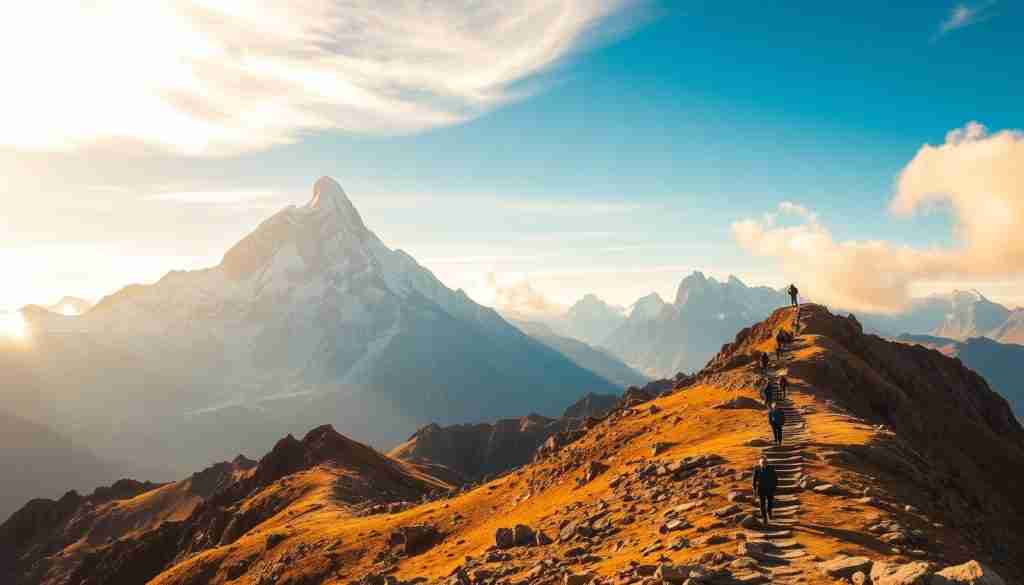
The Andean peaks are a top choice for mountain climbers looking for a big challenge. These mountains stretch across seven countries. They offer some of the most stunning and tough climbs in the world.
Aconcagua is the highest peak in the Western Hemisphere, standing at 6,960 meters in Argentina. It attracts climbers from everywhere who want to conquer its tough terrain.
“The Andes are not just mountains, they are a testament to nature’s grandeur and human endurance.” – Mountaineering Expedition Leader
Top Climbing Destinations
- Aconcagua (Argentina) – 6,960 m
- Huayna Potosí (Bolivia) – 6,088 m
- Nevado Pisco (Peru) – 5,753 m
- Illiniza North (Ecuador) – 5,126 m
- Villarrica Volcano (Chile) – 2,847 m
Our expedition insights offer key information for climbers getting ready for these high-altitude adventures.
| Peak | Height (m) | Best Climbing Months | Typical Ascent Duration |
|---|---|---|---|
| Aconcagua | 6,960 | December-February | 7-10 days |
| Huayna Potosí | 6,088 | May-September | 2-3 days |
| Nevado Pisco | 5,753 | April-September | 3 days |
| Illiniza North | 5,126 | December-February | 2 days |
| Villarrica Volcano | 2,847 | November-April | 5 hours |
Each Andean peak offers its own unique challenges and rewards. Climbers need to be well-prepared, have the right skills, and respect the mountain. This is key for a successful climb.
Cultural Heritage and Ancient Civilizations
The Andean region is a living museum of human history. It shows the rich culture of indigenous traditions and ancient civilizations. From the high mountains to the deep valleys, this area has supported some of the most advanced societies in history.
Andean culture is more than just old ruins. It’s a complex mix of social, technological, and spiritual achievements. These continue to fascinate researchers and travelers today.
Incan Empire Legacy
The Inca Empire, known as Tawantinsuyu, covered 4,000 kilometers across South America. At its height, it ruled over what is now Peru, Ecuador, Bolivia, Argentina, Chile, and Colombia.
- Founded around 1230 CE
- Lasted until Spanish conquest in 1572
- Developed sophisticated agricultural techniques
- Cultivated approximately 70 different plant species
Archaeological Sites
Incan ruins show amazing architectural and engineering skills. Machu Picchu, found in 1911, is a prime example. Its buildings have survived for centuries, despite earthquakes.
| Archaeological Site | Location | Significance |
|---|---|---|
| Machu Picchu | Peru | 15th-century Incan citadel |
| Tiwanaku | Bolivia | UNESCO World Heritage Site |
| Caral | Peru | Oldest civilization in Americas |
Living Traditions
Indigenous traditions are still alive in the Andean region. Communities keep up ancient farming, weaving, and spiritual practices. These connect them to their ancestors.
The spirit of Andean culture shows a deep bond between people and the mountains they live in.
Popular Trekking Routes and Trails
The Andes mountain range is home to some of the most stunning hiking trails globally. Spanning 6,999 km across seven South American countries, these treks offer a unique blend of natural beauty and cultural richness.
Exploring the Andes reveals a diverse landscape of challenging and rewarding hikes. From ancient paths to remote wilderness, there are many iconic routes. These showcase the region’s stunning geological diversity.
Most Remarkable Andean Treks
- Inca Trail to Machu Picchu: A classic 26-mile trek through cloud forests and archaeological sites
- Salkantay Route: A 46-mile challenging trek peaking at 4,600 m
- Cordillera Huayhuash Circuit: A challenging multi-day mountain expedition
- El Choro Trek: A three-day descent from 4,600 m to 1,750 m
| Trek Name | Distance | Duration | Difficulty |
|---|---|---|---|
| Inca Trail | 26 miles | 4-5 days | Moderate |
| Salkantay Route | 46 miles | 5-7 days | Challenging |
| El Choro Trek | 30 miles | 3 days | Moderate |
When planning Andean treks, consider altitude acclimatization, seasonal variations, and local guide recommendations. Each trail offers a unique view of the mountain landscape. You’ll see glacial peaks and lush valleys.
The Andes are not just a mountain range, but a journey through living history and breathtaking natural wonders.
Our recommended routes combine physical challenge with cultural immersion. They allow travelers to experience the raw beauty of South America’s most spectacular mountain environment.
Adventure Activities and Experiences
The Andean mountain range is a top spot for adventure lovers. It offers extreme sports and wilderness adventures against a stunning backdrop. These mountains are perfect for making memories that last a lifetime.

There’s a wide range of outdoor activities in the Andes for all skill levels. Whether you’re looking for a rush or a peaceful journey, the Andes have it all. You can explore some of the world’s most beautiful landscapes while having fun.
Mountain Climbing
Mountain climbing in the Andes is a thrilling extreme sport. Peru’s Peruvian Andes have peaks over 6,000 meters high. Huascarán is the highest mountain in Peru, offering challenging climbs with amazing views.
- Skill levels range from beginner to expert
- Recommended peaks for different experience levels
- Essential climbing gear and preparation
White Water Rafting
White water rafting is an exciting way to see the Andean landscape. The Río Mendoza has rapids from Class II to Class IV. It’s fun for both new and seasoned rafters.
| Location | Difficulty Level | Best Season |
|---|---|---|
| Mendoza | Class II-IV | May-October |
| Salta | Class I-III | June-September |
Mountain Biking
Mountain biking in the Andes is a unique way to see the area’s beauty. Riders can go through cloud forests, high plateaus, and valleys. It’s a great way to see the region’s amazing wildlife.
- Trail difficulty varies from beginner to advanced
- Recommended routes across different Andean countries
- Essential safety and equipment guidelines
Planning Your Andean Adventure
Planning a trip to the Andes needs careful thought. Your journey through this stunning mountain range requires preparation. Exploring the Andean region means choosing the right itinerary. It’s about finding a balance between adventure and practical planning.
Choosing the right time for your trip is key. May to October is the best time to explore the Andes. You’ll find drier weather and clearer skies, making hiking more enjoyable.
- Choose destinations that showcase the region’s diverse landscapes
- Plan for altitude acclimatization
- Pack layers for rapidly changing mountain temperatures
- Research local transportation options
Traveling in the Andes means understanding transportation challenges. Peru Hop offers flexible travel options. This lets you customize your journey across different Andean spots. Budget travelers should look into multi-day passes for better value.
| Travel Consideration | Recommended Approach |
|---|---|
| Accommodation | Mix eco-lodges and mountain refuges |
| Currency | Carry local currency and inform bank of travel |
| Communication | Purchase local SIM card or international plan |
Travelers will experience everything from snow-capped peaks to rolling valleys. Knowing the local culture makes your trip more than just a journey. It becomes an adventure through one of the world’s most incredible mountain ranges.
Safety and Altitude Considerations
Exploring the Andes requires careful planning and understanding of mountain safety. High-altitude areas pose unique challenges that need respect and planning. It’s vital to prevent altitude sickness when traveling to these stunning mountains.
Acclimatization Strategies
Starting a mountain journey with smart acclimatization is key. Altitude affects the body between 1,500m to 2,000m (4,921ft to 6,561ft). Experienced travelers suggest a slow increase in elevation.
- Spend 2-3 days at intermediate elevations before ascending
- Follow the “walk high, sleep low” principle
- Limit daily elevation gain to 300-500 meters
- Stay hydrated and avoid alcohol
Essential Safety Guidelines
Mountain safety needs thorough preparation and awareness. Trekkers should know about altitude risks and their physical limits.
- Carry emergency communication devices
- Pack appropriate high-altitude medical supplies
- Understand early symptoms of altitude sickness
- Travel with experienced local guides
Emergency Preparedness
Being ready for emergencies is crucial in high-altitude areas. Trekking groups usually have oxygen tanks and medical kits for altitude issues.
“Prevention is always better than cure in high-altitude environments.” – Andean Expedition Experts
Important emergency steps include knowing local medical facilities, having travel insurance, and being in good physical shape before high-altitude trips.
Conclusion
The Andes mountains are the ultimate South American adventure. They offer travelers a journey through stunning landscapes and rich cultures. From Pisac’s bustling markets to Vilcabamba’s intimate artisan markets, the Andes show the diverse life of the Andean people.
Planning your trip with care and respect for the environment is key. Sustainable tourism helps keep these mountains beautiful for future visitors. Try visiting during shoulder seasons like April-May or September-October for a more authentic experience.
Trekking the Inca Trail or exploring other paths like the Salkantay Trek is unforgettable. The Andes are not just a place; they offer a journey that changes you. They connect you with South American culture, challenge you, and create lasting memories.
An Andean adventure needs preparation, respect for locals, and an open heart. Traveling mindfully and with curiosity unlocks the Andes’ magic. It offers a world beyond the usual tourist spots.
