Get ready to explore the amazing Inca citadel, Machu Picchu, in 2025. This guide will lead you through Peru’s ancient ruins, rich history, and vibrant culture. Located 45 miles from Cusco, Machu Picchu sits at 8,000 feet, offering stunning views and a peek into Incan life.
The Machu Picchu site welcomes visitors daily from 6:00 AM to 5:00 PM. Each hour has a specific entry slot until 3 p.m. Because it’s so popular, only 4,500 people can visit during the low season and 5,600 in the high season (June 1 to October 15). You must have a certified guide to explore the site and its many paths.
Key Takeaways
- Machu Picchu is open daily from 6:00 AM to 5:00 PM, with hourly entry slots
- Maximum visitor capacity is 4,500 during low season and 5,600 during high season
- Certified guides are required to enter the site and explore the three main circuits
- Advance ticket booking is essential as they can sell out quickly, specially during peak seasons
- Comfortable shoes and preparation for high-altitude conditions are recommended
- Contact us for a comfortable and personalized itinerary (Free Service)
Overview of Machu Picchu: A Historic Wonder
Machu Picchu is a gem of Incan architecture and a UNESCO World Heritage site. It shows the engineering and cultural skills of the Inca civilization. Rediscovered in 1911 by Hiram Bingham, it’s now a famous site in South America.
Importance of Machu Picchu in Incan History
Built around 1450 AD, Machu Picchu was a royal estate and ceremonial center. It’s located between the Andes and the Urubamba River. This shows the Incas’ skill in architecture and understanding of nature.
UNESCO World Heritage Status
In 1983, Machu Picchu was named a UNESCO World Heritage site. This honor highlights its historical, cultural, and archaeological value. It attracts millions of visitors each year from all over.
Fun Facts About Machu Picchu
- Machu Picchu spans 32,592 hectares (80,535 acres) and has 2,350 to 3,400 plant species.
- It’s home to over 423 bird species and 53 mammal species.
- In 2007, it was named one of the New Seven Wonders of the World.
Machu Picchu’s legacy in Incan architecture and Peruvian archaeology is inspiring. It shows UNESCO’s dedication to preserving cultural heritage. It continues to captivate travelers worldwide.
Best Time to Visit Machu Picchu in 2025
Planning your trip to Machu Picchu is all about timing. Weather, seasons, and festivals can change your experience. Let’s find the best time to visit in 2025 for an unforgettable journey.
Weather Patterns and Seasonal Trends
Machu Picchu has two main seasons: dry and wet. The dry season is from May to October, with sunny days and mild temperatures. Daytime highs are around 68 to 77 degrees Fahrenheit.
The wet season is from November to April. It’s cooler, with temperatures from 64 to 72 degrees Fahrenheit. You’ll see more rain during this time.
Significant Events and Festivals
Machu Picchu hosts many Andean festivals and cultural events. The Inti Raymi celebration in June is a highlight. It honors the sun god and attracts many visitors.
Peak and Off-Peak Travel Times
The high season at Machu Picchu is from June 1 to October 15. This time has the most visitors, with up to 5,650 tickets daily. The off-peak season, from November to April, has fewer crowds and rain.
| Season | Months | Weather | Ticket Availability |
|---|---|---|---|
| High Season | June 1 to October 15 | Dry, sunny days | 5,650 tickets per day |
| Low Season | November to April | Cooler, more rain | 4,600 tickets per day |
Choosing the best time to visit Machu Picchu in 2025 depends on what you want. Shoulder seasons like April, May, September, and October are great. They have mild weather, fewer people, and beautiful landscapes.


How to Get to Machu Picchu
Machu Picchu is in the Andes Mountains. You can get there from Aguas Calientes, also known as Machupicchu Pueblo. There’s no direct road to the site, so you have a few ways to travel.
Transportation Options: Trains and Buses
Trains from Cusco or nearby towns are the best way to get to Machu Picchu. They are comfy and show off the Andes’ beauty. After arriving in Aguas Calientes, buses take you up to Machu Picchu every 5 minutes, from 5:30 AM to 3:30 PM.
Flights to Cusco: What You Need to Know
Flights to Cusco are quick and easy. From there, you can take a train or bus to Aguas Calientes. Remember to get used to the high altitude in Cusco before visiting Machu Picchu.
Trekking Routes for Adventurers
- The famous Inca Trail trek is a popular multi-day hike. It goes through the Andes, offering amazing views and cultural experiences. You need a permit in advance.
- For those who love adventure, the Salkantay Trek is a great choice. It lets you see different landscapes and experience high-altitude hiking.
| Transportation Option | Details |
|---|---|
| Train | Trains from Cusco and other towns are comfy. They show off the Andes’ beauty. |
| Bus | Buses from Aguas Calientes to Machu Picchu run every 5 minutes. They operate from 5:30 AM to 3:30 PM. |
| Flights to Cusco | Flights to Cusco are quick. It’s the start of your journey to Machu Picchu. Get used to the high altitude in Cusco first. |
| Inca Trail Trek | The Inca Trail is a famous multi-day hike. It offers stunning views and cultural experiences. You need a permit in advance. |
| Salkantay Trek | The Salkantay Trek is for adventure lovers. It lets you see different landscapes and experience high-altitude hiking. |
“Exploring Machu Picchu is a once-in-a-lifetime experience, and getting there is part of the adventure. Whether you choose to take the train, hike the iconic Inca Trail, or embark on an alternative trekking route, the journey itself will be a memorable chapter in your Peruvian odyssey.”
Essential Packing List for a Trip to Machu Picchu
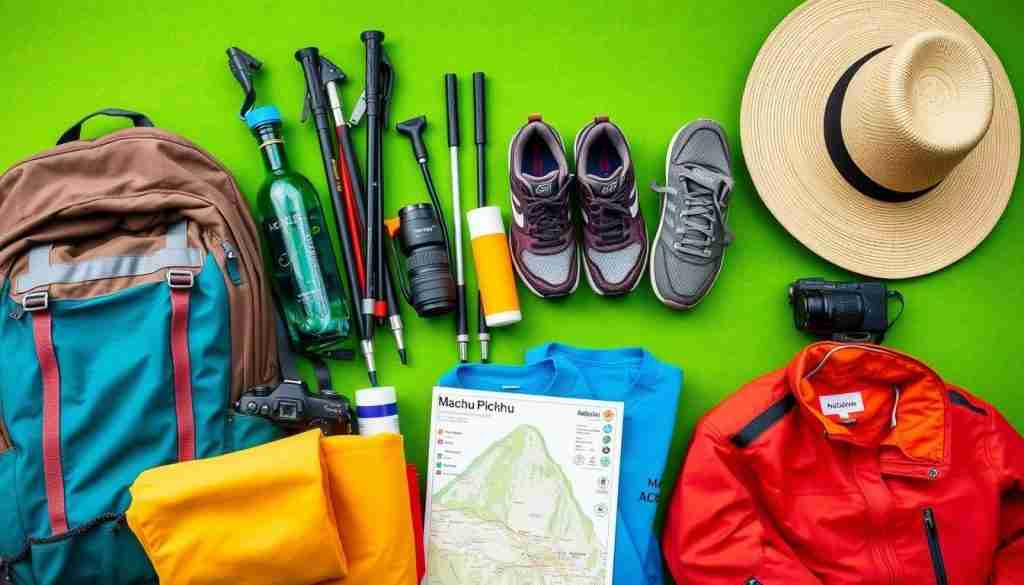
Going to Machu Picchu needs careful packing. You’ll want the right clothes and gear for a great trip. Let’s look at what you should pack for your Machu Picchu adventure.
Clothing Recommendations for Varying Weather
The weather in Machu Picchu can change a lot. It’s important to pack clothes for different temperatures and rain. Wear moisture-wicking clothes to stay dry. Also, bring a waterproof and windproof jacket.
Choose sturdy, supportive trekking boots. They should have good ankle support and grip for the uneven paths.
Gear for Hiking and Exploring
- A 30-50 liter backpack or duffel bag designed for the Inca Trail
- A sleeping bag rated for temperatures around 0°C (32°F) for chilly nights
- Trekking poles to provide extra stability, specially on descents
- A reliable headlamp or flashlight for navigating in low-light conditions
- A portable charger to keep your devices powered during the hike
Travel Essentials for a Smooth Journey
For your trip, you’ll also need some travel essentials. Bring your passport for Machu Picchu entry. It’s smart to have local currency for shopping and tips. And, don’t forget a camera to capture the stunning views.
With the right packing, your Machu Picchu trip will be amazing. Think about the weather, hiking gear, and travel needs. You’ll be ready to explore this ancient wonder with ease and joy.
Accommodation Options Near Machu Picchu
The town of Aguas Calientes, in Peru’s Sacred Valley, has many places to stay. You can find everything from fancy hotels to budget-friendly hostels. Each option offers a unique experience, making your trip memorable.
Luxury Hotels for Comfort and Convenience
The Belmond Sanctuary Lodge is the best choice for luxury near Machu Picchu. It’s the only hotel right at the entrance. It offers top-notch service and access, making your stay unforgettable.
Affordable Lodging for Budget Travelers
Aguas Calientes also has mid-range hotels and guesthouses for those on a budget. These places offer clean rooms at lower prices. This way, you can enjoy your trip without spending too much.
Unique Stays: Eco-Lodges and Hostels
Eco-lodges and hostels near Machu Picchu offer a special experience. They focus on being green and connecting with local cultures. This lets you feel closer to nature and the community.
Ollantaytambo, a short train ride from Machu Picchu, is another great choice. It’s a historic Inca town with easy access to the ruins. You can take the Inca Rail or Perurail to get there.
“Machu Picchu is a place that is shrouded in mystery, and the accommodation options nearby only add to the sense of adventure and discovery. Whether you choose a luxurious resort or a cozy eco-lodge, the journey to this ancient wonder is sure to be a truly unforgettable experience.”
Must-See Attractions Around Machu Picchu
There’s more to see around Machu Picchu than just the famous Inca citadel. The area is full of amazing attractions that show off the Inca empire’s skills in building and culture. From stunning views to secret spots, these places are a must-see for anyone visiting the Machu Picchu landmarks.
The Sun Gate: An Iconic Viewpoint
The Sun Gate (Inti Punku) is a famous spot near Machu Picchu. It’s an ancient Inca entrance with a view of the whole Inca city. Trekkers on the Inca Trail reach it for their first look at the Inca architecture below, making it a top experience.
Temple of the Sun: Architectural Marvel
The Temple of the Sun is inside Machu Picchu and shows off Inca engineering and astronomy. Its windows and stonework show the Incas’ knowledge of the sun and stars. It’s a key spot for hidden attractions fans.
Inka Bridge: A Hidden Gem
The Inka Bridge is a hidden but impressive site along the Inca Trail. It’s a narrow path carved into a cliff, once a secret entrance to Machu Picchu. It shows the Inca’s smart ways to move and defend themselves. It’s a unique Machu Picchu landmarks experience for the brave.

There’s more to Machu Picchu than these famous spots. The complex also has the Intihuatana stone, the Royal Tomb, and the Temple of Three Windows. Each shows the Inca’s skill in building and culture. The Plaza de Armas is the heart of the citadel, with its main ceremonial buildings. For a tough hike, try Huayna Picchu mountain for amazing views, but get a permit first.
Exploring the Inca Trail: Tips and Insights
Many travelers dream of hiking the Inca Trail to Machu Picchu. This 26-mile trek over 4 days is a journey into Peru’s history and landscapes. To make the most of this adventure, you need to plan and prepare well.
Overview of the Inca Trail Experience
The Inca Trail to Machu Picchu is 26 miles long and was found in 1915. It offers breathtaking views, ancient ruins, and the chance to see Machu Picchu. The trail goes up 3,000 feet, with the highest point at Dead Woman’s Pass.
Permits and Reservations: What to Prepare
Getting Inca Trail permits is competitive, as only 500 hikers are allowed daily. Start booking early, as permits for 2025 will be available in October 2024. Alpaca Expeditions offers various routes, from 4 Days / 3 Nights to 7 Days / 6 Nights, to fit your needs.
Safety Tips for Trail Hikers
Keeping safe on the Inca Trail is crucial. Start training two months before, with cardio exercises. The Cloud Forest weather can be unpredictable, so pack right.
Guides are experienced, with a good ratio of hikers to guides. Personal porters carry your gear, and the crew is ready for emergencies. They have radios and a medical kit.
Whether you choose the classic Inca Trail or other Machu Picchu hikes, it’s an unforgettable journey. With the right prep and guidance, you’ll make memories and appreciate Peru’s wonders.
Cultural Etiquette While Visiting Machu Picchu
As you get ready to see Machu Picchu, it’s key to respect the local Andean culture and heritage. By following the right etiquette, you’ll make your visit better and help keep this UNESCO World Heritage site safe.
Respecting Local Traditions and Heritage
Machu Picchu is very special to the Inca people. It’s important to be careful and respectful. Stay on the paths, don’t touch the ruins, and wear modest clothes.
Try to learn some Quechua phrases to talk with the locals. But only join in on traditional ceremonies if you’re invited.
Photography Guidelines: Do’s and Don’ts
Taking pictures of Machu Picchu is a must, but do it right. Always ask before taking photos of people. Don’t use flash in temples or sacred places. And remember, no loud noises or blocking paths.
Engage with Local Communities Responsibly
Meeting the local people can make your trip even better. Support responsible tourism by buying real crafts and souvenirs. Learn about their Andean culture and traditions.
Be careful of how you act. Avoid being too loud or intrusive. This way, you’ll have a great time and help protect this amazing place.
Sustainable Travel Practices in Machu Picchu
Machu Picchu is a big draw for tourists, but it faces environmental challenges. It’s important to keep this historic site safe while welcoming visitors. Sustainable tourism helps travelers see this wonder without harming it.
Importance of Eco-Tourism in Peru
In Peru, eco-tourism is key to saving places like Machu Picchu and the Amazon. It helps avoid overcrowding and damage to nature. This way, we can keep the beauty of Peru for everyone to enjoy.
How to Reduce Your Environmental Impact
- Follow the “Leave No Trace” rules by staying on paths and not damaging plants.
- Carry a refillable water bottle and say no to plastic bags and bottles.
- Pick tours that care about the environment and don’t harm local areas.
Supporting Local Businesses and Artisans
Peruvian Sunrise works with green hotels and lodges. This helps the local economy and protects nature. Buying local goods and supporting local shops makes a big difference.
Supporting sustainable tourism in Peru is essential. It keeps the country’s beauty and culture alive for the future. By choosing eco-friendly options and backing local efforts, we help preserve Machu Picchu and its surroundings.
“Sustainable tourism is not just a luxury, but a necessity for preserving the very places that captivate travelers and sustain local communities.” – Peruvian Sunrise, Eco-Tourism Expert
Planning Your Itinerary: A Balanced Approach
When planning your Machu Picchu adventure, finding a balance is key. Spend at least 3-4 days to fully enjoy the region’s history and culture. This time allows for both active exploration and relaxation.
Suggested Itineraries for Different Durations
For a full Machu Picchu experience, spend 2-3 days in Cusco first. This helps your body adjust to the high altitude. Then, trek the Inca Trail and enjoy its scenic views.
Also, visit the Sacred Valley on your way to Machu Picchu. It offers a deeper look into the Incan empire’s history.
Activities to Include for Adventure and Relaxation
It’s important to balance active and leisurely activities. In Cusco, explore local markets, take cooking classes, and enjoy the arts scene. For longer trips, add excursions to Rainbow Mountain or Lake Titicaca.
Allowing Time for Acclimatization in Cusco
Cusco, at 3,400 meters (11,150 feet) above sea level, is the gateway to Machu Picchu. Spend 2-3 days acclimatizing before your trek. This reduces the risk of altitude sickness and lets you enjoy the Inca Trail fully.
