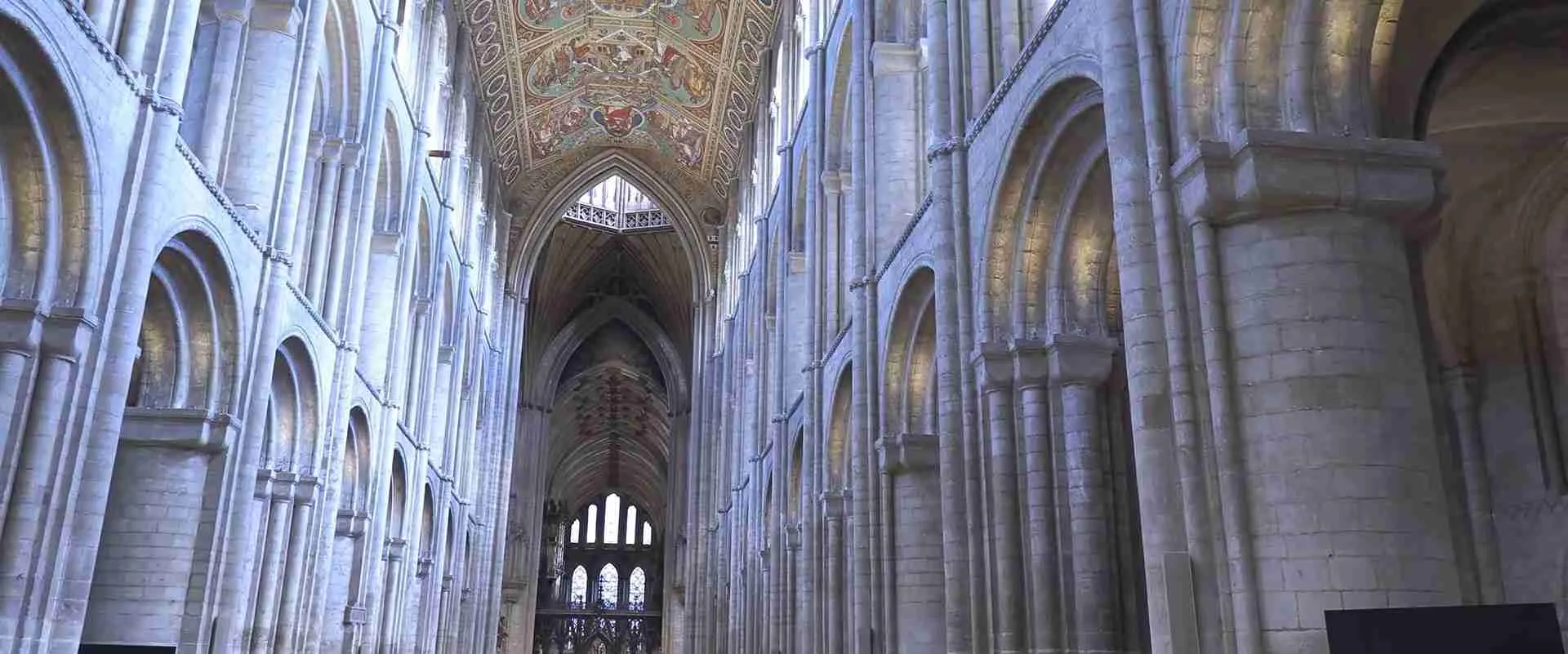
Ely Cathedral and Fenland Architectural Road Trip 2026 from Cambridge: Exploring Ely, Denny Abbey & Wicken Fen Without the Crowds
Cambridgeshire’s flat fenland sky frames one of medieval England’s most arresting silhouettes: the twin towers and soaring octagon lantern of Ely Cathedral, visible from more than twenty miles away across barely interrupted farmland. A single circuit taking in the cathedral, the layered monastic ruins at Denny Abbey, and the ancient reedbeds and historic drainage windpump at Wicken Fen covers fewer than forty driving miles but spans more than a thousand years of human history. This guide provides the verified logistics, confirmed admission costs, and crowd-timing strategies to plan that circuit confidently in 2026.
Key Takeaways
- Ely Cathedral adult admission costs £14 in 2026, with the Stained Glass Museum available as an optional add-on for £6.50 extra; children under 16 enter free when accompanied by a paying adult in a family group.
- Denny Abbey and the Farmland Museum charges £8.50 for adults and is open Thursday to Sunday and Bank Holiday Mondays from 10am to 4pm, from late March to early November; confirm the 2026 open season dates at dennyfarmlandmuseum.org.uk before visiting.
- Wicken Fen National Nature Reserve charges £11 per adult (without Gift Aid) for entry; National Trust members enter free but still pay £3.20 for parking unless a Blue Badge applies.
- A driving day trip from Cambridge visiting all three sites costs approximately £70-85 per person (two sharing a car), covering fuel, entry to every site, and a pub lunch; a rail day trip to Ely Cathedral alone costs approximately £40-50 per person.
- A weekend stay near Ely costs approximately £195-240 per person in the budget tier or £245-300 per person at mid-range (both figures assume two nights and two people sharing a room, all three sites included).
- Arriving at Ely Cathedral between 9am and 10am on weekdays dramatically reduces queuing at the ticket desk; Wicken Fen is quietest mid-week and in the early morning when low mist over the sedge beds provides the most atmospheric photography conditions.
People Also Ask About the Ely and Fenland Architectural Road Trip 2026
How much does a day trip to Ely Cathedral cost in 2026?
A day trip to Ely Cathedral costs £14 per adult for visitor entry in 2026, with the option to add the Stained Glass Museum for £6.50 extra. Children under 16 are free when accompanied by a paying adult in a family group. If you travel from Cambridge by train on an off-peak day return ticket, Greater Anglia fares start from around £4-6 return per person; check greateranglia.co.uk for current pricing. A full day from Cambridge including the train, cathedral entry, the Stained Glass Museum, and a pub lunch comes to approximately £40-50 per person. City-centre parking in Ely is free at Barton Road, Forehill, and Ship Lane car parks after 8:30am, making the driving option comparably affordable if you are already in the area or sharing a car from Cambridge.
Can you visit Denny Abbey and Wicken Fen on the same day in 2026?
Yes, but only if you have a car. Denny Abbey, situated on the A10 roughly nine miles south of Ely near Waterbeach, is about a fifteen-minute drive from the cathedral. Wicken Fen is approximately twenty minutes by road from Ely, heading east through the village of Soham. Neither site is served by regular public transport that would make linking them practical without a vehicle. Both sites are open Thursday to Sunday; Denny Abbey and the Farmland Museum closes from early November until late March, so check dennyfarmlandmuseum.org.uk for the 2026 season opening date before planning a spring visit. Allow at least an hour and a half at Denny Abbey and a minimum of two hours at Wicken Fen to do each site justice.
Is it better to travel to Ely by train or by car in 2026?
It depends on which sites you plan to include. Train travel on the Greater Anglia or Great Northern service from Cambridge reaches Ely station in roughly eighteen minutes, and Ely’s city centre is walkable from the station. If you are visiting only Ely Cathedral and the Stained Glass Museum, the train is the simpler and often cheaper option, avoiding the need to find parking entirely. However, if you intend to include Denny Abbey and Wicken Fen in the same day, a car is essential: neither site is accessible by regular bus from Ely on a timetable suited to tourism. A hybrid approach works well for groups — one person drives directly to Ely while others take the train, and the group drives together to the rural stops after the cathedral.
What is the best time to visit Ely Cathedral without the crowds in 2026?
Weekday mornings, particularly Tuesday through Thursday, are the least crowded times at Ely Cathedral. Arriving before 10:30am means you are likely to have the nave largely to yourself before coach parties arrive around mid-morning. Saturday afternoons between June and September are the busiest periods; Heritage Open Days in September attract specific crowds but also grant free admission at some sites. The cathedral is a working place of worship, and choral Evensong takes place most evenings from Monday to Saturday at 5:30pm (and Sundays at 4pm), which draws a different, smaller audience and is free to attend as a worshipping visitor. Avoiding the summer Saturday afternoon window is the single most effective crowd-avoidance strategy.
Extended multi-day tours – 5+ days
Featured South East England Multi-Day Tour Packages
3 days
South East England 3-Day Discovery Tour
- ✓ Comprehensive South East England experience
- ✓ Expert local guides included
- ✓ All accommodation included
- ✓ Transportation provided

5 days
South East England 5-Day Highlights Experience
- ✓ Comprehensive South East England experience
- ✓ Expert local guides included
- ✓ All accommodation included
- ✓ Transportation provided
7 days
South East England 7-Day Cultural Journey
- ✓ Comprehensive South East England experience
- ✓ Expert local guides included
- ✓ All accommodation included
- ✓ Transportation provided

10 days
South East England 10-Day Complete Adventure
- ✓ Comprehensive South East England experience
- ✓ Expert local guides included
- ✓ All accommodation included
- ✓ Transportation provided
Multi-day tour packages powered by TourRadar. Prices and availability subject to change.
Introduction: Three Sites, One Landscape, One Thousand Years of History
The Cambridgeshire Fens were once one of the most inhospitable and untameable landscapes in England — a shallow inland sea of peat bog, river channels, and flood plain that resisted large-scale settlement for centuries and rewarded only those communities, monastic or otherwise, with the determination and resources to build on its islands and margins. The three sites on this route each embody a distinct chapter in how human civilization and the fen landscape shaped each other over the course of a millennium.
Ely Cathedral’s position is not accidental. The Isle of Ely was precisely that — an actual island rising from the surrounding wetland, accessible only by causeways and boats through much of its medieval history. When Etheldreda (also known as Audrey), an East Anglian queen, founded a double monastery here in 673, she was choosing one of the most strategically defensible and spiritually resonant high points in the entire fenland basin. The settlement she established would eventually give rise to one of England’s most ambitious Norman building projects, its west tower and nave still constituting one of the most powerful exercises in Romanesque mass and proportion in the country.
Denny Abbey, some nine miles to the south on what was the eastern bank of the old A10 corridor, tells a compressed and turbulent version of English monastic history. Within the space of three centuries, the site housed Benedictine monks from Ely Cathedral’s own priory, then Knights Templar occupying it as a preceptory, then Franciscan nuns established there under the patronage of Mary de St Pol, Countess of Pembroke. Each community left its mark in the exposed stonework, the repurposed columns, and the uneven floorplan that visitors can read today as a palimpsest of competing architectural intentions. English Heritage manages Denny Abbey jointly with the independent Farmland Museum Trust, which brings a complementary focus on domestic and agricultural life in the fens up to the mid-twentieth century.
Wicken Fen, acquired by the National Trust in 1899 as its very first nature reserve, represents the third layer of this story: the post-drainage fen landscape and the modern conservation effort to preserve and extend what remains of it. The historic windpump on the reserve is a tangible remnant of the nineteenth-century drainage technology that transformed the wider fenland from wetland to arable farmland, leaving Wicken as one of the few surviving undrained peat fens in lowland England. The Wicken Fen Vision, the Trust’s current long-term project to restore and reconnect approximately fifty-three square kilometres of fenland, uses the windpump site as an interpretive anchor for explaining what the whole landscape once looked like.
For the architectural and heritage visitor, this route offers something comparatively rare in English day-tripping: three genuinely distinct site types — a great medieval cathedral, a multi-phase monastic ruin, and a working conservation landscape with historic engineering infrastructure — within a geography compact enough to manage in a single day or a relaxed weekend.
Route Overview & Time-Budget Allocation (Day-Trip vs. Weekend Itinerary)
The core driving circuit from Cambridge runs north along the A10 to Ely, south again to Denny Abbey near Waterbeach, and then east from the Ely area to Wicken Fen before returning to Cambridge on the A142 and A10. Total driving distance is approximately sixty to sixty-five miles round trip from Cambridge city centre. The three sites form a loose triangle rather than a straight line, which means the route involves a degree of doubling back — specifically the southward return from Ely to Denny before heading east to Wicken. This is unavoidable given the positions of the sites, and the rural roads are straightforward to navigate with standard mapping applications.
For a day trip, a realistic minimum time allocation is two and a half hours at Ely Cathedral and the Stained Glass Museum, one and a half hours at Denny Abbey and the Farmland Museum, and two hours at Wicken Fen. Adding drive times between sites and a lunch stop brings the total to approximately eight to nine hours from a Cambridge departure. This is achievable if you leave Cambridge by 8:30am and plan to be back by 5:30pm or 6pm. It is, however, a full day with no slack; anyone wishing to spend more time at any site — and Ely Cathedral in particular rewards unhurried exploration — should plan for an overnight stay in Ely rather than treating the full circuit as a rushed single-day exercise.
For a weekend itinerary, the natural division is to spend the first afternoon and evening arriving in Ely, with a morning at the cathedral, and then to dedicate the second full day to the Denny Abbey and Wicken Fen leg before returning home. A Saturday morning arrival in Ely still means managing weekend crowds at the cathedral, but arriving on a Friday evening and visiting the cathedral first thing Saturday before the coach parties arrive is the most effective approach for a relaxed circuit.
Driving vs. Rail Logistics: Accessing Ely Station from Cambridge in 18 Minutes
The rail connection between Cambridge and Ely is one of the most convenient short-hop services in eastern England. Greater Anglia and Great Northern trains operate on the route, with services at broadly four-per-hour frequency on weekdays and a reduced but still frequent timetable at weekends. Journey time averages around sixteen to nineteen minutes, and the service is generally reliable. Ely station is about a ten-to-twelve-minute walk from Ely Cathedral, following the Market Street and High Street pedestrian routes through the small city centre. The walk is flat and straightforward.
Off-peak day return tickets start from approximately £4-6 per person when bought in advance through Greater Anglia’s app or website; check greateranglia.co.uk for current fares, since these have been adjusted periodically. Advance fares can occasionally be lower. The key boundary for off-peak classification is departure after 9:30am from Cambridge Monday to Friday, which aligns conveniently with a morning start that already avoids peak-hour trains.
The limitation of the rail option is that neither Denny Abbey nor Wicken Fen is accessible from Ely by any practical regular bus service. Wicken Fen is approximately ten miles east of Ely by road, and Denny Abbey is nine miles south of Ely on the A10. Cycling is theoretically possible for fit cyclists — the Sustrans National Cycle Network Route 11 runs through the area — but linking all three sites by bicycle in a single day is demanding given the distances. The Wicken Fen Visitor Centre does operate cycle hire (typically from 10am, closing around 4:30pm; check nationaltrust.org.uk/wicken-fen-nature-reserve for current availability and pricing) for exploring the reserve itself, but this is on-site hire rather than a solution for inter-site travel. For the complete three-site circuit, a car remains the practical requirement. Rail makes excellent sense for Cambridge-based visitors wanting a focused half-day at Ely Cathedral without attempting the full circuit.
If you arrive at Ely by train and wish to extend to Wicken Fen, the most workable option is a local taxi from Ely to Wicken and back, or car hire from Cambridge in advance. Taxis from Ely can be arranged through local operators; confirm availability and approximate fare (estimated at £20-30 each way for a taxi to Wicken Fen) before relying on this option for a time-sensitive day trip. The Uber and Bolt apps have limited coverage in this rural area.
Parking Strategies Near Ely Cathedral and Navigating Rural Fenland Roads
Ely city centre benefits from free public car parking at several council-operated locations within a short walk of the cathedral. Barton Road Car Park, Forehill Car Park, and Ship Lane Car Park all offer free all-day parking for arrivals after 8:30am. Arriving before 8:30am restricts parking to ninety minutes, making an after-8:30am arrival the standard strategy for heritage visitors. These car parks are typically five to ten minutes on foot from the cathedral’s west door. On busy summer Saturdays and during major events, these car parks can fill by late morning; a secondary option is the Angel Drove car park or The Dock car park, both council-operated at £4 per day in the 2025/26 fee schedule. Confirm current charges at eastcambs.gov.uk before travelling, as these may be updated.
Denny Abbey has a grass field car park opposite the museum entrance, described on the museum’s own website as free. The field surface is uneven and may be soft in wet weather; visitors with low ground-clearance vehicles or mobility needs should check the museum’s current access information at dennyfarmlandmuseum.org.uk.
At Wicken Fen, the National Trust car park is located midway along Lode Lane and requires payment for non-members: £3.20 by pay-and-display or the JustPark app (no cash option; have the app pre-downloaded or a payment card). Blue Badge holders park free. National Trust members must scan their membership card at the parking machine for a free parking ticket. The lane to the car park and visitor centre is a single-track rural road; passing places are marked, but meeting oncoming traffic requires care. Pedestrians who have walked from Wicken village reach the visitor centre along the same lane.
The fenland A-roads — primarily the A10 and A142 — are wide, well-maintained, and straightforward. The minor roads accessing both Denny Abbey and Wicken Fen are narrower but entirely passable in a standard car; avoid large vehicles unless you know the roads. Standard mapping apps (Google Maps, Apple Maps, Waze) accurately route both locations. The postcode for Denny Abbey is CB25 9PQ; for Wicken Fen, CB7 5XP.
Stop-by-Stop Architecture & Heritage Itinerary
The itinerary below assumes the order specified in this guide’s structure: Ely Cathedral first, then the southward diversion to Denny Abbey, then the eastward drive to Wicken Fen. This order places the most impressive architectural experience first and leaves the outdoor landscape element for the afternoon, when light conditions often improve over the open fen.
Stop 1: Ely Cathedral & The Stained Glass Museum (2.5-Hour Visit)
Ely Cathedral announces itself from the A10 approach road long before the city itself comes into view. The twin Norman towers of the west front and the distinctive eight-sided silhouette of the Octagon Tower catch the eye across the flat agricultural plain in a way that must have been even more dramatic when the surrounding land was still open fen. The effect is not accidental: cathedral builders positioned their structures on the highest available ground precisely to create this kind of long-distance visual authority.
Adult visitor tickets cost £14 in 2026 (check elycathedral.org for current rates as these are subject to periodic review). Children under sixteen are free when accompanied by a paying adult in a family group. The ticket includes either a free guided tour of the ground floor or a multimedia digital guide; tours typically run at specific times, so check availability when purchasing tickets. Upgrading your visitor ticket to an annual pass at no extra cost on the day of purchase — allowing free return visits throughout the following twelve months — is worth doing even if a return visit seems uncertain; the pass has genuine value for anyone planning further Cambridgeshire heritage exploration.
The sequence of spaces inside the cathedral is one of its great pleasures. The Norman nave extends for some two hundred and forty feet, one of the longest in England, and its Romanesque elevation — circular piers, rounded arches, three-level arcade — establishes a rhythm of confident solidity that is very different from the lighter Gothic that followed it elsewhere. The nave ceiling’s nineteenth-century painted decoration, installed during Sir George Gilbert Scott’s restoration of the 1840s and 1850s, is Victorian in execution but Romanesque in compositional intent.
The Octagon Tower is the cathedral’s signature spatial achievement and the feature that distinguishes Ely from every other English cathedral. When the Norman central tower collapsed in 1322, apparently without warning, it created both a catastrophe and an opportunity. The solution devised for the replacement was unprecedented: a stone octagon at crossing level, topped by a timber-framed octagonal lantern structure that lets natural light pour into the crossing from eight clerestory windows. The engineering challenge of spanning the enormous gap required innovative woodwork, and the lantern remained structurally remarkable by any standard of the era. Visitors looking up into the octagon from directly below experience a sense of vertiginous vertical space that distinguishes it from any other medieval interior in England.
The Lady Chapel, a separately entered structure on the north side of the cathedral, was constructed in the early fourteenth century and is notable for its wide span — it has the widest medieval vaulted interior in England at approximately forty-six feet — and for the carved canopied niches that line its walls. Most of the carved figurative work was systematically destroyed during the Reformation, but enough of the architectural framework survives to convey the original decorative ambition. The Lady Chapel also served as the parish church of Holy Trinity for several centuries, which accounts for some of the furnishing anomalies visible today.
The Stained Glass Museum occupies a gallery above the nave and is accessed by a spiral stone staircase of forty steps (no lift access; those with mobility difficulties may wish to enquire about alternatives at the ticket desk). The museum is an independent organisation within the cathedral and charges £6.50 per adult above the standard cathedral ticket in 2026. It opens Tuesday to Saturday, from 10am to 5pm between 1 April and 31 October and from 10am to 4pm between 1 November and 31 March. The collection covers the history of stained glass manufacture and design from medieval examples through to twentieth-century ecclesiastical commissions, and it functions as an educational resource quite distinct from the cathedral’s own windows. For visitors with a specific interest in glass art or craft heritage, it merits the additional ticket price; for those primarily focused on the cathedral’s architecture, it is an optional extension rather than an essential component of a two-and-a-half-hour visit.
For lunch before continuing the circuit, Ely’s Fore Hill and Market Street area offer a concentrated cluster of independent cafes and pubs within five minutes of the cathedral. The Almonry Kitchen, the cathedral’s own café, is situated in the medieval buildings adjacent to the south entrance and offers hot food and lighter options; it can be busy on weekends. Budget approximately £14-22 per person for a pub lunch or café meal, including a drink.
Stop 2: Denny Abbey & Farmland Museum (15-Min Drive South)
Leaving Ely by the A10 heading south, Denny Abbey appears on the right side of the road after approximately ten to twelve miles, announced by a brown English Heritage sign. The postcode CB25 9PQ brings mapping apps accurately to the entrance. The grass car park is directly opposite the site entrance. Allow a fifteen-minute drive from Ely in normal traffic conditions.
Denny Abbey and the Farmland Museum is open Thursday to Sunday and Bank Holiday Mondays from 10am to 4pm, with last admission thirty minutes before closing. The site closes each winter; in 2025 the season ran from late March to early November, and the 2026 dates are expected to follow a similar pattern, but confirm at dennyfarmlandmuseum.org.uk before visiting. Adult admission is £8.50, concessions £7, children aged five to sixteen £5.50, and families (two adults and up to three children) £24. English Heritage members, National Art Pass holders, and Museum Association members enter free. Crucially, all standard admission tickets function as annual passes: a purchased ticket allows unlimited free return visits to the site for twelve months from the date of purchase. Children under five are free at all times.
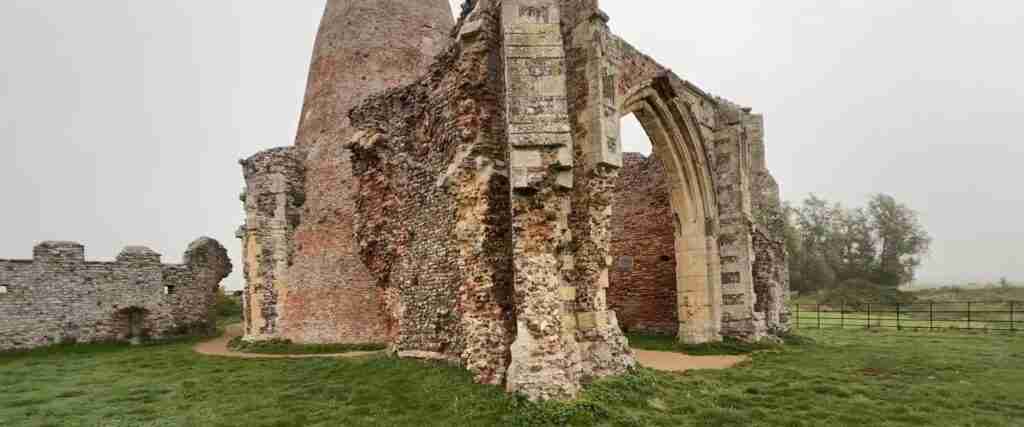
The physical fabric of Denny Abbey is remarkable precisely because it has not been tidied into a conventional ruin. The interior of the building — which functions today as both the exhibition and interpretive space — shows the overlapping occupancies of its three main monastic communities in the exposed structural elements themselves. Rounded Norman arches sit alongside pointed Gothic ones. A Templar-period refectory space opens onto a Franciscan conversion. The farmhouse skin that enveloped the whole structure after the Dissolution of the Monasteries in 1539 left sections of the medieval fabric embedded in the later agricultural building rather than demolished, which is why so much survives.
The Benedictine monks from Ely Cathedral Priory established the house in the mid-twelfth century, initially as a cell dependent on the mother house. The Knights Templar acquired the site in around 1170 and used it as a preceptory, one of their administrative and residential centres in England, until the suppression of the Templar order in 1308. The property then passed through several hands before Mary de St Pol, Countess of Pembroke, established a house of Poor Clares (Franciscan nuns) here in the 1340s, with the community remaining until the Reformation. Each phase left distinct marks in the architecture that English Heritage’s interpretive panels identify clearly.
The Farmland Museum sits in a separate timber-framed agricultural building within the grounds and focuses on domestic and farming life in the Cambridgeshire Fens from the medieval period through to the mid-twentieth century. It is an accredited museum managed by the Farmland Museum Trust as an independent charity. The collections include farm machinery, domestic artefacts, tools, and reconstructed domestic interiors representative of fenland working life. For visitors primarily focused on architecture and heritage rather than agricultural history, the abbey building itself will occupy most of the visit time, but the Farmland Museum provides useful social and economic context for understanding how the fenland landscape functioned after the monasteries closed and the agricultural drainage era began. The on-site café is operated by the Farmland Museum Trust.
From Denny Abbey, the drive to Wicken Fen requires either returning briefly north toward Ely and then heading east, or navigating cross-country via the B1102 and minor roads through Burwell toward Wicken. Mapping apps vary in their preferred route; the B1102 approach via Burwell is direct and adds around twenty to twenty-five minutes of driving, depending on your starting point.
Stop 3: Wicken Fen Nature Reserve & Historic Windpump Engineering (20-Min Drive East)
Wicken Fen National Nature Reserve occupies a unique position in English conservation history: it is the National Trust’s oldest nature reserve, with the first parcel of land acquired in 1899. The site now covers approximately 1,600 acres and hosts over 9,000 recorded species, making it one of the most biologically diverse protected landscapes in lowland England. For the heritage visitor, its significance goes beyond ecology: Wicken Fen preserves in its windpump, drainage lodes, and sedge-cutting traditions a legible record of the human management systems that once operated across the entire Cambridgeshire Fen basin.
Adult admission in 2026 is £11 per person without Gift Aid, or £12.10 with Gift Aid (check nationaltrust.org.uk for current pricing). Children aged five to seventeen pay £5.50 without Gift Aid. National Trust members enter free on production of their membership card but must still pay the car park charge of £3.20 unless they are Blue Badge holders. The car park operates pay-and-display for non-members (card payment or JustPark app; no cash); Blue Badge parking is free. The visitor centre, café, and shop open from 9:30am; the nature reserve itself opens at the same time. The Summer Nature Trail operates from June through to the end of September, opening up additional paths on the undrained Sedge Fen; at other times of year, the Boardwalk and Woodland Walk remain accessible.
The most architecturally and historically significant element at Wicken from an engineering perspective is the windpump on Adventurers’ Fen, reached from the visitor centre along the main drove. Fenland drainage in the seventeenth, eighteenth, and nineteenth centuries depended on scoop-wheel pumps driven first by wind and later by steam to lift water from drainage channels into higher-level drains and ultimately into rivers. The Wicken windpump, a smock-type mill with a horizontal scoop wheel rather than the more familiar vertical sails of grain mills, represents the machinery type that was once ubiquitous across the fens. At Wicken, unusually, the machine has been maintained in working condition as an interpretive exhibit rather than allowed to decay. Understanding how the windpump functioned — raising water from the low interior field level of the fen into the higher lode channels surrounding it — helps explain why Wicken Fen remains wet and wild while the surrounding farmland, pumped dry by successor technologies, now lies several feet lower than the reserve’s peat surface.
The peat compression and land subsidence caused by drainage is itself an architectural narrative of sorts. As the surrounding agricultural land has dried and oxidised, the water table at Wicken Fen has remained at or near the surface, causing the reserve to stand physically higher than the adjacent farmland — in places by a metre or more. Walking across the boardwalk, you are traversing ground that has remained essentially stable for centuries, while the fields visible beyond the boundary dykes have been sinking continuously since drainage began in earnest in the seventeenth century. This reversal of relative elevation, invisible to the casual observer but measurable and documented, is one of the most striking long-term consequences of fen drainage and provides a vivid spatial dimension to the site’s interpretive narrative.
The Wicken Fen Vision project, the Trust’s current landscape-scale conservation initiative, aims to restore and reconnect approximately fifty-three square kilometres of fenland around the existing reserve over a period of decades, using grazing herds of Highland cattle and Konik ponies to manage new acquisitions and create transitional habitat zones. Evidence of this programme is visible from various points in the reserve: the grazing animals and the varied vegetation stages of newly acquired fields contrast with the more established habitats of the old Sedge Fen. Cycle hire is available from the visitor centre (typically 10am to 4:30pm; check nationaltrust.org.uk for current availability and charges) for exploring Adventurers’ Fen and the broader accessible network of drove paths.
Practical 2026 Travel Logistics, Tickets, and Crowded-Hour Avoidance
Each of the three sites on this circuit has distinct ticketing arrangements, seasonal constraints, and operational patterns. Understanding these in advance prevents the commonest planning failures — arriving at Denny Abbey on a Wednesday (closed), appearing at Wicken Fen without the JustPark app installed, or reaching Ely Cathedral at 2pm on a summer Saturday and facing a thirty-minute ticket queue.
Ely Cathedral recommends booking visitor tickets online in advance at elycathedral.org/plan-your-visit/visitor-tickets-and-tours/visitor-tickets, though walk-up purchase at the cathedral is also available and tickets are priced identically. The upgrade to an annual pass is free on the day and can only be done in person. The Stained Glass Museum ticket must be purchased separately; check whether combined tickets or linked booking options are available on the cathedral’s ticketing page when planning your visit. Online booking avoids queuing at the main ticket desk during busy periods. The cathedral’s own guidance notes that CB6 and CB7 residents qualify for free entry on production of valid proof of address; local visitors should check the free entry criteria before purchasing tickets.
The cathedral is a functioning place of worship, and services, choral rehearsals, and occasional special events may temporarily close specific areas or limit visitor access at certain times of day. Checking the cathedral’s current calendar at elycathedral.org before finalising visit times is strongly recommended, particularly for Saturday visits when events and services are more frequent. Choral Evensong, which takes place most weekdays at 5:30pm and Sundays at 4pm, is open to all as a worshipping visitor without a visitor ticket and represents one of the best-value cultural experiences in the region.
Denny Abbey and the Farmland Museum requires no advance booking for standard admission. The primary risk at this site is visiting on a Monday, Tuesday, or Wednesday, when the site is entirely closed to the public, or arriving outside the seasonal open period. The 2025 season ran from 27 March to 2 November; check dennyfarmlandmuseum.org.uk for the confirmed 2026 dates. The site does hold special event days on which standard admission tickets (annual passes) are not valid; these events are advertised on the museum’s website. English Heritage members should be aware that corporate English Heritage membership schemes often do not cover Denny Abbey, though personal memberships do; verify your membership type before assuming free entry.
Wicken Fen operates continuously throughout the year, unlike Denny Abbey, making it the most accessible of the three sites for winter and shoulder-season visitors. The reserve is open daily, with the visitor centre, café, and shop following the hours noted above. The Summer Nature Trail’s June to September window is worth factoring into timing for those wanting to access the broadest range of walking routes. The café, known as the Docky Hut, is positioned adjacent to the visitor centre and serves hot food and drinks; it becomes busy on summer weekends. Downloading the JustPark app (or having a working payment card) before setting out is essential for the car park, as no cash payment is accepted.
For visitors with National Trust and/or English Heritage memberships, the savings on this circuit are substantial. NT members at Wicken Fen save the £11 adult entry fee and the £3.20 parking charge — a saving of £14.20 per person. English Heritage members at Denny Abbey save the £8.50 adult admission. Visitors holding both memberships save approximately £22.70 per adult on this circuit, which represents a compelling argument for annual membership for anyone making more than two or three comparable heritage visits per year.
Accessibility across the three sites is varied. Ely Cathedral has level or ramped access to most of the ground floor, including the nave, the Octagon, and the choir; the Stained Glass Museum is not accessible to those who cannot manage the forty-step spiral staircase. Denny Abbey’s uneven floors and mixed surfaces require care; contact the museum in advance if you have specific mobility requirements. Wicken Fen’s main boardwalk path is paved and accessible for most mobility aid users; the wider reserve paths are unpaved and variable. The Wicken Fen website provides detailed accessibility information, including a downloadable access guide.
Day-Trip and Weekend Budget 2026
The following calculations assume two adults sharing a car and all three sites visited, using 2026 ticket prices. Individual components are stated first; totals follow.
Full driving day trip from Cambridge (all three sites, two sharing car): fuel share approximately £12-16 per person based on a sixty-five-mile round trip; Ely Cathedral admission £14; Stained Glass Museum £6.50; Denny Abbey adult £8.50; Wicken Fen adult £11; Wicken Fen parking share £1.60; pub lunch in Ely approximately £15-22. Total approximately £70-85 per person. This range reflects the difference between a light lunch and a sit-down meal, and normal fuel price variation; it assumes no optional tours and no Octagon Tower visit, which carries an additional charge — see elycathedral.org for the current Tower Tours price. Families with children under sixteen enjoy free cathedral and free Denny Abbey (under five) entry, which materially reduces the group cost.
Rail day trip from Cambridge to Ely Cathedral only: off-peak day return approximately £4-6 per person (verify current fares at greateranglia.co.uk); cathedral admission £14; Stained Glass Museum £6.50; light lunch in Ely £14-20. Total approximately £40-50 per person. This is the lower-cost option for visitors without a car or those wanting a half-day outing focused purely on the cathedral.
Budget weekend stay (two nights, two sharing budget hotel near Ely): budget hotels in Ely in the Nyton Hotel, High Flyer, or Lamb Hotel by Greene King Inns category range from approximately £70-80 per room per night in standard periods; check booking platforms for current availability and rates. Per person for two nights (two sharing): hotel £70-80; meals over the stay approximately £68-95 (covering Friday dinner, Saturday breakfast and lunch, Saturday dinner, Sunday breakfast); fuel and parking approximately £18-25; all three sites’ admission approximately £40 per adult. Total approximately £195-240 per person for the full weekend. This assumes travelling on a budget, eating at pubs and cafés rather than restaurants, and skipping the optional Stained Glass Museum and Tower tours.
Mid-range weekend stay (two nights, two sharing mid-range hotel): hotels such as the Royal Standard or Riverside Inn typically run from approximately £95-110 per room per night. Per person for two nights (two sharing): hotel £95-110; meals approximately £88-123 (including a Friday evening restaurant dinner and more substantial Saturday meals); fuel and parking approximately £20-28; all attractions approximately £40 per adult. Total approximately £245-300 per person for the full weekend. This range allows for a dinner at a slightly more formal restaurant and a more leisurely pace throughout.
National Trust and English Heritage memberships materially alter these calculations. A visitor holding both saves approximately £22.70 per person at this circuit’s sites. Annual NT membership (check nationaltrust.org.uk for current subscription rates) becomes cost-effective with just two or three comparable day trips per year and includes access to over five hundred properties across the UK. English Heritage membership similarly covers a large estate of managed ruins and historic sites. Both are worth considering for regular heritage visitors regardless of this particular trip.
Budget travellers can reduce costs further by preparing a packed lunch rather than eating at site cafés or Ely pubs. The picnic area outside Ely Cathedral’s south door and the open drove paths at Wicken Fen both accommodate outdoor eating. A thermos of coffee and a packed lunch could save £15-20 per person across the day.
Best Times to Visit Ely, Denny Abbey, and Wicken Fen in 2026
Ely Cathedral is open to visitors every day of the year, making timing decisions primarily about crowd management rather than access. The absolute peak period is school summer holidays, particularly late July and August on weekends. During these weeks, the cathedral’s nave can be noticeably crowded between 11am and 3pm, coach parties arriving from as far as London and Norwich. Weekday mornings in July and August are still manageable, but the transformation between a 9:30am visit and a 12:30pm visit on a summer weekend is dramatic. The shoulder seasons of April to June and September to October offer the best combination of reasonable weather, full visitor facilities, and manageable crowd levels. Late autumn and winter weekday visits provide the most solitary experience of the Norman nave, though natural light levels inside the cathedral are significantly lower between November and February.
The choral music programme at Ely Cathedral follows the cathedral’s liturgical year, with the choir in residence from September to July and on break during August. Evensong during term time is one of the most atmospheric ways to experience the building’s acoustic properties, and the daily 5:30pm service is free to attend as a worshipping visitor. Heritage Open Days in September typically offer free admission to the cathedral and occasionally include access to spaces not normally open to the public; check the national Heritage Open Days programme at heritageopendays.org.uk for 2026 dates and access specifics.
Denny Abbey and the Farmland Museum is only accessible from late March to early November and is open Thursday to Sunday. The practical implication is that a Tuesday or Wednesday visit to this site is impossible, and a Monday visit likewise. For visitors working a standard Monday-to-Friday schedule, the site can only be reached on a Saturday or Sunday, which aligns with the weekend itinerary option rather than a midweek day trip. Spring visits in April and May, when the season has just opened and visitor numbers are low, offer the most uncrowded experience of the medieval fabric. Visiting on a Heritage Open Day in September, which has brought free admission to the site in recent years, is worth checking for those flexible on dates.
Wicken Fen’s character shifts substantially across the seasons in ways that reward different types of visitor. Spring, from April to June, brings breeding birds — marsh harriers, sedge warblers, and reed buntings are reliably present on the Sedge Fen — and the wildflower display on the meadow areas of Adventurers’ Fen reaches its peak. Early summer mornings over the fen, with low mist hanging above the reedbeds and distant calls of bittern, represent the classic Wicken Fen experience. The Summer Nature Trail (open June to September) unlocks the broadest range of walking options, including paths across the undrained Sedge Fen.
Autumn at Wicken Fen brings different rewards: migrating raptors, including occasional hen harriers and merlin in October and November, and the visual drama of the Highland cattle and Konik ponies silhouetted in low golden light. Winter is the least visited season and can offer remarkable wildlife experiences — large starling murmurations gather in the area in late autumn, and short-eared owls regularly hunt the open ground in winter. The reserve is open year-round, so winter visits are entirely practical, though the café and cycle hire have reduced hours during the off-season; check nationaltrust.org.uk for current winter opening arrangements.
For the full three-site circuit, the optimal months in 2026 are May, June, and September. May and June offer good weather probability, Denny Abbey in full season, the Summer Nature Trail opening at Wicken, and moderate crowd levels. September combines the Heritage Open Days window with still-decent weather and the widest accessibility across all sites. Avoid August weekends if crowd-avoidance is a priority.
Interactive Route Map & Spatial Blueprint (Leaflet Asset Attached)
The interactive route map attached to this guide shows the complete driving circuit from Cambridge, with numbered stops at Ely Cathedral, Denny Abbey and the Farmland Museum, and Wicken Fen National Nature Reserve, plus an optional rail line overlay indicating the Cambridge-to-Ely train corridor. Each marker includes a clickable popup with verified practical information: admission prices, opening days, and key timing notes drawn from the operational data confirmed above.
The map uses MapTiler Dataviz base tiles and Leaflet.js and is designed to be embedded directly within this article’s WordPress page via the iframe code provided below. The map renders at a viewport of 960 pixels wide with a 490-pixel canvas, sized to show the entire Cambridgeshire fenland circuit at a zoom level where all three stops and their driving connections are visible simultaneously. Users can zoom in to explore individual site locations, road approaches, and the relationship between the sites and the wider A10 and A142 road network.
All popup content is in US English and mirrors the operational facts stated in this article. Distances and drive times shown in the map are approximate and based on standard road routing; actual travel time will vary with traffic conditions and route choices. The map is an indicative guide, not a turn-by-turn navigation tool; use a dedicated mapping application for live navigation.
The embedded map can be accessed directly at the link attached to this article and functions as a standalone indexable page, allowing visitors who arrive at the map directly from a search result to navigate back to this full guide via the return links in the map’s header and footer.
Frequently Asked Questions
What is the best order to visit Ely Cathedral, Denny Abbey, and Wicken Fen in 2026?
The most logical route for a day trip from Cambridge is to drive north to Ely Cathedral first — visiting the cathedral and optionally the Stained Glass Museum in the morning — then drive south along the A10 to Denny Abbey near Waterbeach for a post-lunch visit, before heading east to Wicken Fen for the late afternoon. This order keeps driving efficient and places the largest architectural site (the cathedral) at the moment when energy and attention are at their peak. It also means you end the day at Wicken Fen, where the late-afternoon light over the fen and the possibility of seeing wildlife activity before dusk makes the timing particularly rewarding. An alternative order — stopping at Denny Abbey on the outbound journey before continuing to Ely, then heading east to Wicken — works better if you prefer to leave the cathedral as the day’s centrepiece experience.
How much does it cost to visit all three Fenland sites in one day in 2026?
For two adults driving from Cambridge and visiting all three sites, including the Stained Glass Museum at the cathedral, the total admission cost is approximately £80 per adult (£14 cathedral + £6.50 Stained Glass Museum + £8.50 Denny Abbey + £11 Wicken Fen). Adding fuel share of approximately £13-16 per person, Wicken Fen parking of £1.60 per person (shared car), and a pub lunch of £15-22 brings the full day trip cost to approximately £70-85 per person in 2026. National Trust members save £14.20 per person at Wicken Fen (entry plus parking), and English Heritage members save £8.50 at Denny Abbey; visitors holding both memberships reduce the admission component of the day’s cost significantly.
Can I complete this road trip from London in a day in 2026?
In principle, yes — Cambridge is approximately fifty minutes from London King’s Cross by train on the fast service, and a hired car from Cambridge makes the fenland circuit workable. In practice, the logistics are demanding. Arriving in Cambridge by 9am to pick up a hire car and reach Ely by 9:30-10am requires leaving London by 8am at the latest. Completing all three sites, including travel between them, and returning to Cambridge for a 6pm or 7pm train back to London is achievable if you move briskly and skip a sit-down lunch. For visitors travelling from London, the more relaxed and recommended option is an overnight stay in Ely, allowing a full day at the sites without the pressure of a same-day return.
Is Denny Abbey open year-round in 2026?
No. Denny Abbey and the Farmland Museum closes for the winter season each year, typically from early November until late March. In 2025 the open season ran from 27 March to 2 November. The 2026 open season dates should be confirmed at dennyfarmlandmuseum.org.uk before planning a visit, as the exact dates can vary. During the open season, the site is open Thursday to Sunday and Bank Holiday Mondays only, from 10am to 4pm. It is entirely closed on Mondays, Tuesdays, and Wednesdays throughout the year. Visiting on a non-open day will result in a locked gate; there is no facility for out-of-hours access.
Do National Trust members get free entry to Wicken Fen in 2026?
Yes, National Trust members with a valid membership card enter Wicken Fen free of charge. They must scan their card at the car park machine to obtain a free parking ticket; members who fail to do this will be charged the standard £3.20 parking fee. Blue Badge holders are additionally exempt from the parking charge regardless of membership status. National Trust membership covers access to over five hundred properties across the UK and pays for itself quickly for visitors who make regular heritage and nature reserve visits. Check nationaltrust.org.uk for current membership rates and whether your specific membership category (individual, joint, family, etc.) covers all adults in your party.
What is the best time of year to visit Wicken Fen in 2026?
May and June offer the best overall visitor experience at Wicken Fen in 2026: good weather probability, the Summer Nature Trail newly open (from June onwards), peak breeding bird activity, and wildflower displays on the meadow habitats. Early morning visits — arriving at 9:30am when the reserve opens — provide the quietest conditions and the best chance of seeing wildlife before other visitors arrive. September is the second-best window, combining lower visitor pressure with migrating raptors, autumn colour on the fen vegetation, and Heritage Open Days access at other sites on the circuit. Winter visits (November to March) are possible — Wicken Fen is open year-round — and reward visitors with short-eared owls and occasional hen harriers, but café hours are reduced and the cycle hire service is typically not operating.
How accessible are Ely Cathedral, Denny Abbey, and Wicken Fen for visitors with mobility needs in 2026?
Ely Cathedral provides level or ramped access to most of its ground-floor spaces, including the nave and the choir area, and details are on the Accessibility page at elycathedral.org. The Stained Glass Museum requires forty steps up a spiral stone staircase with a handrail and has no lift alternative; visitors unable to manage the stairs cannot access the museum. Denny Abbey has a mixed-surface, uneven interior; visitors with specific mobility requirements should contact the museum directly at dennyfarmlandmuseum.org.uk for current access information before visiting. Wicken Fen’s main boardwalk is paved and accessible; the wider reserve tracks are unpaved. The National Trust provides a downloadable Access Guide for Wicken Fen on its website, detailing surface conditions and accessible routes. Blue Badge holders park free at Wicken Fen.
Are there electric vehicle charging points near Ely Cathedral in 2026?
EV charging infrastructure in Ely city centre has been expanding but provision remains more limited than in larger cities. Before travelling, check current charger availability and locations through Zap-Map (zap-map.com) or your vehicle’s own routing system, which will show real-time charger status. Cambridge has extensive public charging infrastructure at car parks and retail sites, making it a more reliable option for longer charging stops on either end of the fenland circuit. The grass car parks at Denny Abbey and the rural car park at Wicken Fen do not have EV charging. Plan charging around Cambridge and/or Ely rather than at the rural sites.
Can I cycle between Ely Cathedral, Denny Abbey, and Wicken Fen in 2026?
Cycling the complete circuit is physically possible for experienced cyclists comfortable with twenty-five to thirty miles of mixed road cycling, but it is not practical as a casual day trip. The National Cycle Network Route 11 passes through the Ely area and provides signed off-road or quiet-road options on some sections of the route. The ride from Ely to Wicken Fen via the back roads through Soham is popular with local cyclists. The section from Ely south to Denny Abbey follows the A10, which is a fast dual-carriageway road unsuitable for most cyclists. Wicken Fen itself offers on-site cycle hire for exploring the reserve’s drove paths (typically open 10am to 4:30pm; check nationaltrust.org.uk for current availability). The most feasible cycling approach is to ride from Cambridge to Ely using the riverside path and then travel to other sites by car or taxi, or to focus on a Ely-to-Wicken cycling day using a mapped route avoiding the A10.
What should I eat in Ely after visiting the cathedral in 2026?
Ely’s small city centre punches above its weight for food options given its population of around twenty thousand. The Old Fire Engine House restaurant on St Mary’s Street, close to the cathedral, is an Ely institution serving traditional English food with a loyal local following and a garden that works well in summer; book in advance for weekend lunches. The Almonry Kitchen, the cathedral’s own café within the monastic buildings adjacent to the south door, is a straightforward and convenient option for a lighter lunch immediately after visiting. Fore Hill has several independent cafés suited to coffee and sandwiches. For a pub lunch, the Lamb Hotel by Greene King Inns on Lynn Road (adjacent to the cathedral quarter) is a reliable option with standard pub menu fare. Budget approximately £14-22 per person for a lunch with a drink at any of these options.