El Calafate Budget Guide 2026: Complete Cost Breakdown
Key Takeaways
- Budget travelers spend $60-90 daily including hostel accommodation ($35-50), basic meals ($15-25), and local transportation in El Calafate for 2026
- Mid-range budgets run $130-180 daily with 3-star hotels ($80-120), restaurant dining ($35-50), and one major tour every 2-3 days
- Luxury experiences cost $250-400+ daily featuring 4-5 star hotels ($180-280), premium dining ($70-100), and exclusive glacier tours with gourmet services
- Los Glaciares National Park entrance fees cost $30-45 per adult, with Flexipass multi-day options at $75-90 for three visits within six months
- Major glacier tours range $80-240 per person: standard Perito Moreno tour $80-100, ice trekking $180-240, boat cruises $150-200 in 2026
- October-November and March-April shoulder seasons deliver 30-40% savings across all budget categories versus December-February peak pricing
Understanding El Calafate Costs in 2026
El Calafate operates as Argentina’s premier glacier tourism destination, where UNESCO World Heritage site access combines with remote Patagonian location creating cost structures significantly above national averages. The town’s isolation (1,300 kilometers southwest of Buenos Aires, 600 kilometers from nearest major city) necessitates air freight for most goods, inflating supermarket prices 30-50% beyond Argentine capital rates. Tourism infrastructure concentrates around December-February summer season when daily visitor counts exceed 15,000, driving accommodation and tour pricing to annual peaks while shoulder months of October-November and March-April offer dramatic cost reductions maintaining identical glacier viewing experiences.
Understanding El Calafate’s dual currency economy proves essential for 2026 budget planning. Most hotels, tour operators, and restaurants quote prices in US dollars or Argentine pesos at official exchange rates, though actual costs vary based on payment method and currency used. Credit card transactions receive favorable “blue” dollar exchange rates providing 15-25% savings over cash payments at official rates, while Argentine peso cash purchases enable 5-15% discounts at some establishments preferring local currency over dollar reserves. Los Glaciares National Park entrance fees, fuel costs, and supermarket groceries require Argentine peso payment, necessitating currency exchange at El Calafate’s casas de cambio along Avenida del Libertador offering competitive rates 2-5% better than airport or hotel exchanges.
Budget categories span wide ranges based on accommodation choices, dining preferences, and tour selections. Backpacker budgets accomplish 5-7 day El Calafate visits for $300-630 total staying in hostel dorms, preparing supermarket meals, and limiting excursions to free or low-cost activities. Mid-range travelers investing $910-1,260 weekly enjoy private hotel rooms, restaurant dining, and one to two major glacier tours. Luxury budgets exceeding $1,750-2,800 weekly provide boutique accommodations, premium dining experiences, and comprehensive tour programs including ice trekking, boat cruises, and estancia visits. Each category delivers authentic Los Glaciares National Park experiences though comfort levels, culinary quality, and glacier access methods vary significantly across budget tiers.
People Also Ask About El Calafate Budget 2026
How much money do I need per day in El Calafate in 2026?
Daily costs range $60-90 for budget travelers, $130-180 for mid-range visitors, and $250-400+ for luxury experiences in El Calafate during 2026. Budget allocations break down as: accommodation $35-50 (hostels) or $80-120 (mid-range hotels) or $180-280 (luxury properties), meals $15-25 (budget) or $35-50 (mid-range) or $70-100 (luxury), tours $0-80 daily average (budget travelers take 1-2 tours across week-long stays), local transportation $5-10, and miscellaneous expenses (snacks, drinks, souvenirs) $10-20. Peak December-February season adds 20-30% across all categories, while shoulder October-November and March-April months reduce costs 30-40% versus summer rates. Week-long visits require $420-630 budget tier, $910-1,260 mid-range, or $1,750-2,800 luxury total including all accommodation, dining, tours, and incidental costs.
Is El Calafate expensive compared to other Patagonian destinations?
El Calafate ranks as Patagonia’s most expensive destination, with costs 20-30% above El Chaltén, 40-50% higher than Puerto Natales (Chile), and 60-80% beyond northern Patagonia cities like Bariloche or Esquel in 2026. The premium reflects concentrated tourism infrastructure around Los Glaciares National Park’s UNESCO glacier access, limited accommodation supply relative to peak season demand, and remote location requiring expensive logistics for food and fuel shipments. Budget hostel beds cost $35-50 nightly in El Calafate versus $25-35 in El Chaltén, while mid-range hotel rooms run $80-120 compared to $60-80 in Chilean Puerto Natales. Restaurant meals range $15-30 in El Calafate against $10-20 in other Patagonian towns, and glacier tour costs ($80-240) exceed El Chaltén’s free hiking trail access or Puerto Natales’s lower-priced Torres del Paine excursions ($120-160).
What are the biggest expenses in an El Calafate trip?
Glacier tours represent the largest single expense category, consuming 40-50% of total trip budgets for travelers prioritizing Los Glaciares National Park experiences in 2026. Perito Moreno ice trekking costs $180-240, boat cruises to Upsala-Spegazzini run $150-200, and Estancia Cristina glacier viewpoint excursions reach $240-280 per person. A typical 5-day visit including three major tours requires $490-720 just for excursion costs before accommodation, meals, or park entrance fees. Accommodation ranks second, with mid-range hotels charging $80-120 nightly ($400-600 for 5 nights) and luxury properties reaching $180-280 ($900-1,400 weekly). Dining costs accumulate to third position at $35-50 daily mid-range ($175-250 weekly) or $70-100 luxury tier ($350-500 weekly). Transportation to/from El Calafate (flights from Buenos Aires $250-450 roundtrip) and Los Glaciares National Park entrance fees ($30-45 per visit) complete major expense categories.
Can you visit El Calafate on a budget in 2026?
Budget travel proves achievable through hostel accommodation ($35-50 nightly), supermarket meal preparation ($15-25 daily), selective tour participation (one major glacier excursion plus free hiking), and shoulder season timing delivering 30-40% savings in 2026. Accomplish 5-day El Calafate visits for $300-450 total by staying in America del Sur Hostel or Calafate Hostel dorm rooms, cooking breakfast and dinner from La Anónima supermarket purchases, taking one Perito Moreno standard tour ($80-100), hiking Laguna Nimez reserve (free), exploring town attractions (Glaciarium museum $10-15), and using rental car shared among 3-4 travelers for independent glacier visits. October-November or March-April timing cuts accommodation 40% and tour prices 30% below December-February peaks while maintaining identical weather conditions and glacier viewing experiences.
Extended multi-day tours – 5+ days
Featured Park Los Glaciares National Park Multi-Day Tour Packages
9 days
Patagonia Hiking
- ✓ Comprehensive Park Los Glaciares National Park tour
- ✓ Expert local guides included
- ✓ All accommodation arranged
- ✓ Transportation provided
4 days
Land of Glaciers: El Calafate
- ✓ Comprehensive Park Los Glaciares National Park tour
- ✓ Expert local guides included
- ✓ All accommodation arranged
- ✓ Transportation provided
3 days
3-Day El Calafate Escape with Optional Airfare from Buenos Aires
- ✓ Comprehensive Park Los Glaciares National Park tour
- ✓ Expert local guides included
- ✓ All accommodation arranged
- ✓ Transportation provided
4 days
4 Days and 3 Nights: El Calafate & El Chalten Majestic Wonders
- ✓ Comprehensive Park Los Glaciares National Park tour
- ✓ Expert local guides included
- ✓ All accommodation arranged
- ✓ Transportation provided
Multi-day tour packages powered by TourRadar. Prices and availability subject to change.
Essential Planning Information 2026
Currency and Payment Methods
Argentine peso (ARS) functions as El Calafate’s primary currency, with US dollars widely accepted at hotels, tour operators, and restaurants during 2026. Exchange rates fluctuate significantly, with the “blue” dollar rate (unofficial but legal parallel exchange market) offering 15-25% better value than official government rates. Credit card transactions automatically process at favorable “blue” rates through Argentina’s special tourist exchange program implemented to boost foreign visitor spending, making Visa and Mastercard optimal payment methods for tours, accommodation, and restaurant bills. Bring small denomination US dollar bills ($20s, $50s) for currency exchange at El Calafate’s casas de cambio along Avenida del Libertador, which convert currency at rates 2-5% better than airport exchanges or hotel front desks.
Los Glaciares National Park entrance fees require Argentine peso cash payment at park gates, though online ticket purchases through ventaweb.apn.gob.ar accept Visa cards with automatic favorable exchange rate application. Supermarkets, gas stations, and small restaurants prefer peso cash over dollars, offering 5-10% discounts for local currency payments versus credit cards. ATMs throughout El Calafate dispense Argentine pesos at official exchange rates plus 3-5% international withdrawal fees, making currency exchange from dollars more economical than ATM usage. Budget daily $50-100 peso cash for small purchases, park entries, and vendor transactions, keeping credit cards for major hotel and tour expenses optimizing exchange rate advantages.
Seasonal Price Variations
El Calafate’s pricing structure follows dramatic seasonal fluctuations, with December 15-February 28 peak season commanding 50-80% premiums above shoulder season rates for accommodation, tours, and rental cars in 2026. Mid-range hotels charging $80-100 nightly in November jump to $120-150 during peak January weeks, while hostel dorm beds rise from $35-40 to $50-60. Tour operators maintain relatively stable pricing year-round, though December-January departures sell out 3-4 months ahead requiring either early booking or acceptance of limited availability. Shoulder months October-November and March-April deliver optimal value maintaining stable weather patterns (10-15°C temperatures, 13-15 hour daylight) while reducing accommodation costs 30-40% and enabling last-minute tour bookings unavailable during summer peaks.
September and April represent absolute cheapest periods, with hotels offering 50-60% discounts off peak rates accepting walk-in bookings and same-day reservations. These extreme shoulder months experience colder temperatures (5-10°C), shorter daylight (11-13 hours), and higher wind frequencies though Los Glaciares National Park remains fully accessible with identical glacier viewing experiences minus summer crowds. May through August winter season sees many hotels closing entirely, with operating properties discounting rooms 60-70% for the handful of winter visitors prioritizing solitude over optimal weather conditions. Glacier boat services cease May-September as ice conditions prevent safe navigation, limiting tour options to land-based Perito Moreno walkways visits and El Chaltén hiking accessible year-round.
Hidden Costs and Unexpected Expenses
Gratuities add 10-15% to total trip costs, with restaurant bills including optional 10% service charges, tour guides expecting $10-15 per person daily tips, and hotel housekeeping receiving $2-3 daily. Los Glaciares National Park entrance fees ($30-45) get paid separately from tour costs, catching first-time visitors off-guard when purchasing Perito Moreno or El Chaltén excursions quoted excluding park access. Rental car insurance premiums reach $25-35 daily beyond base $60-80 vehicle rates, making comprehensive coverage packages cost $85-115 total daily. Border crossing fees for Torres del Paine day trips include Chilean park entrance at $24-26 USD cash only, requiring currency exchange stops adding 30-60 minute delays to already long 14-hour excursion days.
Weather-related delays and cancellations create rebooking costs, with glacier boat cruises postponing 2-3 days monthly during peak season when winds exceed 60 km/h or ice conditions prevent safe navigation. Operators provide full refunds or alternative date rebooking, though sold-out periods force itinerary adjustments affecting onward transportation bookings. Medication and minor health supplies cost 30-50% above US prices at El Calafate’s pharmacies, making advance provision of prescription medications, pain relievers, and first-aid items from home countries economical. Souvenir pricing reaches tourist premiums with Patagonian wool sweaters costing $80-150, artisan crafts $30-80, and regional wines $15-30 bottles compared to $50-100, $15-40, and $8-15 respectively at Buenos Aires or Bariloche locations.
Accommodation Costs 2026
Budget Hostels and Dorm Beds
El Calafate’s hostel scene concentrates along downtown streets within 500 meters of Avenida del Libertador, offering dorm beds ranging $35-50 per person nightly during 2026 peak season and $25-35 shoulder months. America del Sur Hostel provides the best value combining $40-45 dorm rates with panoramic Lago Argentino views from common areas, full kitchen facilities for meal preparation, and free breakfast buffets including homemade bread, jams, coffee, and cereals. The property sits 800 meters from the bus terminal enabling easy Perito Moreno tour pickups while maintaining quiet residential location away from downtown bar noise. Calafate Hostel charges similar $35-42 rates delivering central Avenida Libertador position, though smaller kitchen spaces and less impressive lake views compared to America del Sur’s stunning waterfront setting.
Hostel services include free WiFi throughout properties, common lounge areas with cable TV and board games, shared bathroom facilities cleaned twice daily, and luggage storage for post-checkout day trip participation. Most hostels provide tour booking assistance through partnerships with local operators, occasionally securing 5-10% booking discounts unavailable through independent street purchases. Kitchen equipment enables budget meal preparation, with shared refrigerators storing labeled groceries, gas stoves, cooking utensils, and dining tables accommodating 12-20 guests during communal dinner preparations. Lock personal belongings in provided lockers, as mixed dorm rooms house 4-8 beds creating theft risks for unsecured valuables, cameras, and electronics.
Mid-Range Hotels and Private Rooms
Three-star hotels dominate El Calafate’s mid-range accommodation sector, charging $80-120 nightly for double occupancy rooms during peak 2026 season and $60-90 shoulder periods. Kosten Aike Hotel offers excellent value at $90-110 combining downtown Avenida Libertador location, lake view rooms with private bathrooms, breakfast buffets featuring hot and cold options, and included parking for rental car travelers. The hotel’s restaurant serves lunch and dinner at reasonable $15-25 meal prices, while rooftop lounge provides panoramic Andes vistas ideal for evening wine sessions viewing sunset light on mountain peaks. Los Ponchos Hotel delivers slightly lower $80-100 rates in less prime location 1 kilometer from downtown core, compensating with larger rooms, quieter residential surroundings, and garden courtyard areas.
Mid-range properties include free breakfast buffets, private bathrooms with hot water showers, cable TV, WiFi, room heating for cold Patagonian evenings, and daily housekeeping service. Some hotels provide airport shuttle service at $10-15 per person each way, tour booking desks arranging glacier excursions at standard operator rates, and luggage storage enabling late checkouts before evening departures. Request lake-view rooms when booking, as these units command identical pricing to standard rooms while delivering vastly superior panoramas across Lago Argentino to distant glacier-covered peaks. Peak season December-January weeks require 2-3 month advance bookings, while shoulder periods accept 1-2 week notice reservations maintaining availability for flexible travelers.
Luxury Hotels and Boutique Properties
Four and five-star hotels charge $180-280 nightly during 2026 peak season, providing premium amenities including spa facilities, gourmet restaurants, concierge services, and exclusive locations overlooking Lago Argentino’s turquoise waters. Design Suites Calafate positions 3 kilometers from downtown offering $200-250 rates for contemporary rooms featuring floor-to-ceiling lake view windows, private balconies, luxury bedding, and minimalist Patagonian design aesthetics incorporating native woods and stone materials. The property’s spa includes heated indoor pool, massage treatments ($80-120 per session), sauna, and jacuzzi overlooking mountain vistas, while the restaurant serves regional cuisine and extensive Argentine wine lists.
Xelena Hotel & Suites delivers lakeside luxury at $220-280 nightly, with suites containing separate living areas, kitchenettes, oversized bathrooms with soaking tubs, and furnished balconies facing Lago Argentino’s sunset views. Premium services include turn-down service with chocolates and dulce de leche treats, complimentary afternoon tea and pastries in the lobby lounge, evening cocktail hours with regional wines, and personalized concierge assistance booking exclusive glacier tours and estancia visits. Hotel Posada Los Alamos stands as El Calafate’s only five-star property commanding $250-320 rates justified by expansive grounds, full-service spa with massage and aesthetic treatments, indoor heated pool, and high-end dining featuring tasting menus of Patagonian lamb, king crab, and premium Argentine beef cuts.
Luxury properties cluster along Lago Argentino’s shore 2-4 kilometers from downtown, requiring taxis ($5-8) or hotel shuttle services for restaurant and shopping access. Book 3-4 months ahead for December-February dates when top-tier hotels sell out to advance planners prioritizing guaranteed luxury accommodations. Shoulder season October-November and March-April rates drop to $140-200, delivering 30-40% savings while maintaining identical amenities, lake views, and service standards during periods of reduced guest occupancy.
Dining and Food Costs 2026
Budget Meals and Supermarket Options
Self-catering through El Calafate’s supermarkets enables daily food budgets of $15-25 per person, with La Anónima and Cordiez markets stocking extensive produce, meats, dairy, bakery goods, and packaged foods at prices 30-40% below restaurant meal costs. Typical budget daily menu: breakfast of yogurt ($2), granola ($3), and fruit ($2), packed lunch of sandwiches assembled from fresh bread ($1.50 loaf), ham or cheese ($4-5), tomatoes and lettuce ($3), plus snacks, totaling $8-10, and dinner of pasta ($2), jarred sauce ($3), salad ingredients ($3-4), reaching $15-18 daily total. Add bottled water ($1.50 per 2-liter bottle), coffee ($5 for 250g package), and treats like alfajores or chocolate ($1-2 per item).
Budget restaurant options include empanada vendors selling meat, chicken, or vegetable turnovers at $1.50-2.50 each (consume 3-4 for full meal), pizza shops offering large pies at $12-18 feeding two to three people, and rotisserie chicken outlets charging $8-12 for whole roasted birds with side salads. La Lechuza pizzeria serves quality thin-crust pies at $14-18, operating downtown with casual atmosphere and outdoor seating during warm December-February evenings. Kau Kaleshen provides empanada variety at $2-2.50 each, with lamb, beef, chicken, cheese, and vegetable fillings prepared fresh throughout the day. Pack supermarket lunches for glacier and hiking day trips avoiding $25-35 tour operator boxed meals or $15-25 park restaurant charges.
Mid-Range Restaurant Dining
Mid-range restaurants serve three-course dinners at $25-40 per person before drinks and tips, featuring Patagonian specialties including lamb, trout, and king crab alongside Argentine steak and pasta standards. La Tablita specializes in Patagonian lamb prepared “a la cruz” (slow-roasted on iron crosses over open fires), charging $28-35 for full lamb meals with salad, vegetables, and bread baskets. The rustic wooden interior and stone fireplace create cozy atmosphere, while windows overlook gardens with mountain vistas. Portions exceed North American restaurant standards, with single lamb orders easily feeding two moderate appetites when supplemented with shared appetizers and salads.
Casimiro Biguá elevates Patagonian cuisine through contemporary preparations, offering lamb shoulder ($32-38), grilled trout ($25-30), and king crab dishes ($40-50) in upscale setting with attentive service and extensive Argentine wine list. Budget $35-45 per person for full meals including appetizers, main courses, and desserts, plus $15-25 for wine bottles from Mendoza’s Malbec regions or Patagonian vineyards. Pura Vida delivers vegetarian and vegan options rare in meat-centric El Calafate, providing vegetable curries ($18-22), quinoa bowls ($15-20), and fresh salads ($12-16) in casual counter-service format. The restaurant sources local organic produce when available, supplementing with imported ingredients creating higher pricing than traditional Argentine meat-focused establishments.
Fine Dining and Premium Experiences
Fine dining venues charge $50-80 per person for multi-course tasting menus showcasing premium Patagonian ingredients through creative presentations and wine pairings. Ovejero Patagónico features tasting menus ($65-75) combining lamb tartare appetizers, grilled trout entrees, king crab risottos, and chocolate desserts with calafate berry compotes, each course paired with Argentine wines from sommelier selections. The intimate 30-seat dining room maintains reservation-only policy during peak season, requiring 1-2 week advance booking for December-February tables. Estancia 25 de Mayo’s on-property restaurant delivers $70-90 asado experiences combining traditional lamb preparation with premium cuts, artisanal sides, and multiple courses served in historic ranch house setting 12 kilometers from El Calafate center.
Hotel restaurants in luxury properties provide convenient fine dining without transportation logistics, though premium pricing reaches $60-100 per person for comparable meal quality available at independent downtown venues for $35-50. Budget wine pairings add $25-40 to dinner costs, with Argentine Malbecs, Cabernet Sauvignons, and Patagonian Pinot Noirs ranging $8-15 glasses or $30-60 bottles. Gratuities of 10% appear as optional service charges on restaurant bills, with additional 5-10% cash tips appreciated for exceptional service creating total dining costs 15-20% above menu pricing.
Tour and Activity Costs 2026
Perito Moreno Glacier Tour Pricing
Standard Perito Moreno walkways tours cost $80-100 per person in 2026 including roundtrip hotel transportation, bilingual guide services during the 80-kilometer drive, and 3-4 hours free time at the glacier’s viewing boardwalks (check tour operator websites for current rates as prices may vary). Tours depart 8-8:30 AM daily returning 4-5 PM, enabling afternoon availability for town exploration or second half-day activities. Los Glaciares National Park entrance fees cost additional $30-45 paid separately at park gates or purchased online through ventaweb.apn.gob.ar one day prior. Optional Nautical Safari boat rides circling the glacier’s north face add $25-30 to standard tour costs, reducing walkway exploration time from 3 hours to 60-90 minutes while providing water-level ice wall perspectives.
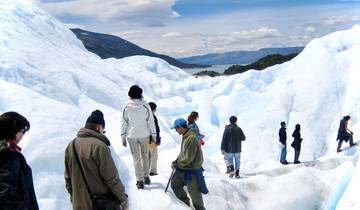
Perito Moreno ice trekking experiences elevate costs to $180-200 for Minitrekking (ages 10-65, moderate fitness) or $220-240 for Big Ice (ages 18-50, above-average conditioning), both excluding park entrance fees. These programs include boat crossings to glacier access points, crampon and safety equipment provision, specialized glacier guides, and post-trek whiskey service over ancient glacial ice. Book ice trekking 3-4 months ahead for December-February peak season as daily permits cap at 100-120 participants, selling out through Hielo y Aventura’s monopoly operations. Independent car rental for self-driven Perito Moreno visits costs $60-80 daily vehicles split among multiple passengers ($20-27 per person with three travelers), plus fuel at $5-8 roundtrip and park entrance fees, totaling $55-80 per person savings versus guided tours when traveling in groups.
Glacier Boat Cruise Expenses
Upsala and Spegazzini glaciers full-day cruises range $150-200 per person in 2026 for standard class service aboard modern catamarans departing Puerto Punta Bandera 9 AM and returning 5:30 PM. Tours include El Calafate hotel pickup at 7-7:30 AM, boat navigation through iceberg fields, close approaches to two major glaciers, forest hike at Puesto de Las Vacas, and bilingual naturalist guides explaining glacier formation and Southern Patagonian Ice Field geology. Bring packed lunches from supermarkets ($8-12) or purchase onboard boxed meals ($25-30) and hot buffet service ($35-40), as catamaran snack bars offer limited selections at premium pricing. Premium Captain’s Club upgrades cost additional $75-100 providing exclusive upper deck seating, gourmet Patagonian menu with regional wine service, and dedicated guides creating total costs of $225-300 per person.
Glaciares Gourmet three-glacier cruise incorporating Upsala, Spegazzini, and Perito Moreno costs $280-320 per person including hotel transfers, onboard three-course lunch with wine, and visits to all three glaciers in single full-day excursion. This comprehensive option suits travelers with limited El Calafate time (2-3 days) seeking maximum glacier exposure in minimal tour days, though the compressed schedule reduces viewing time at each location compared to dedicated single-glacier visits. All boat tours exclude Los Glaciares National Park entrance fees ($30-45) paid separately, and depart daily October through April with December-February sailings requiring 2-3 week advance booking versus flexible shoulder season availability accepting 3-5 day notice reservations.
Mountain and Cultural Tour Costs
El Chaltén day trip tours cost $120-150 per person including roundtrip transportation along 220-kilometer routes, breakfast stop at Estancia La Leona, and 3-4 hours hiking time at Argentina’s trekking capital. Optional restaurant lunch adds $20-30, while self-guided options enable independent trail exploration to Chorrillo del Salto waterfall (45-minute easy hike) or Laguna Capri viewpoint (90-minute moderate difficulty). Torres del Paine full-day excursions to Chilean national park require $200 per person covering adventure truck transportation, border crossing logistics, packed lunch, and 4-5 hours inside the park visiting Salto Grande waterfall and Lake Pehoé viewpoints. Chilean park entrance fees cost additional $24-26 USD cash only at gates.
Estancia day trips range $100-150 for full-day programs incorporating horseback riding (1-3 hours depending on package), sheep shearing demonstrations, asado lunch, and traditional gaucho cultural activities. Half-day afternoon estancia visits cost $75-100 reducing horseback duration to 60 minutes and eliminating breakfast services. Estancia Cristina glacier viewpoint excursions reach $240-280 including boat transport to remote northwestern Lago Argentino position, choice of 4×4 trek to Upsala overlook or waterfall hiking, estancia tour, and three-course lunch. Archaeological tours to Walichu Caves cost $60-80 for half-day programs, while Laguna Nimez bird watching charges $50-70 with specialist guides and binocular rental.
Transportation Costs 2026
Getting to El Calafate
Flights from Buenos Aires to El Calafate cost $250-450 roundtrip economy class depending on booking timeline and seasonal demand, with Aerolíneas Argentinas, LATAM, and Flybondi operating daily 3-hour direct services. Book flights 2-3 months ahead for December-February peak season securing lowest $250-300 fares, versus last-minute bookings reaching $400-450 during sold-out periods. October-November and March-April shoulder seasons deliver $200-280 roundtrip economy fares, representing 30-40% savings below summer rates. Buses from Buenos Aires require 40-hour journeys costing $120-180 one-way, proving economical only for budget travelers with extreme time flexibility accepting exhausting multi-day transit replacing expensive flight alternatives.
Regional flights connect El Calafate to Ushuaia ($180-250 roundtrip, 90-minute flights), Bariloche ($220-300 roundtrip, 2-hour flights), and El Chaltén connections via Aerolíneas Argentinas and LADE military airline operating subsidized services. Airport taxis from Comandante Armando Tola International Airport to downtown hotels cost $12-15 for 25-kilometer drives, with shared shuttle services charging $8-10 per person when booking through hotel concierge desks. El Calafate’s compact town size (1.5 square kilometer central core) enables walk-in exploration without vehicle requirements for accommodation, dining, and tour operator access.
Local Transportation and Car Rental
Local transportation proves minimal for travelers staying downtown and joining organized tours with included hotel pickups. Taxis charge $3-5 for downtown trips, $8-12 for Laguna Nimez reserve visits, and $15-20 for Glaciarium museum access 5 kilometers from center. The town lacks public bus services, with walking as primary transportation method for central area navigation spanning Avenida del Libertador’s commercial corridor. Rental cars cost $60-80 daily for compact vehicles during 2026, enabling independent Perito Moreno visits, El Chaltén day trips, and estancia explorations without tour group schedules.
Rental car economics favor groups of three to four splitting costs at $20-27 per person daily plus fuel ($1.40 per liter, $40-60 tank fills covering 500-600 kilometers), creating total costs of $35-50 per person for week-long rentals. Comprehensive insurance coverage adds $25-35 daily essential for Patagonian gravel road conditions and wildlife collision risks (guanacos crossing highways). Book rentals 1-2 months ahead for December-February peak season when fleets sell out, particularly 4×4 vehicles required for Torres del Paine border crossings or remote estancia visits along unpaved roads. Budget airlines prohibit one-way rentals between El Calafate and other Patagonian cities (Ushuaia, Bariloche), necessitating roundtrip bookings returning vehicles to origin locations.
Sample 2026 Budget Breakdowns
Five-Day Budget Traveler Itinerary
Day 1 arrival includes airport shuttle $8, hostel dorm bed $40, supermarket dinner $8, totaling $56. Day 2 features Perito Moreno standard tour $90, park entrance $35, packed lunch $10, hostel $40, supermarket breakfast and dinner $12, daily total $187. Day 3 combines Laguna Nimez reserve visit $10, town hiking and Glaciarium museum $15, hostel $40, three supermarket meals $18, totaling $83. Day 4 schedules Upsala-Spegazzini glacier cruise $170, packed lunch $10, hostel $40, supermarket breakfast and dinner $12, daily total $232. Day 5 checkout includes half-day estancia visit $95, restaurant celebratory dinner $25, airport shuttle $8, daily total $128. Five-day budget trip totals $686 per person including accommodation, meals, major tours, local transportation, and park fees, proving Los Glaciares UNESCO access achievable below $700 weekly budgets.
Five-Day Mid-Range Experience
Day 1 arrival features airport taxi $15, mid-range hotel $100, restaurant dinner $28, wine $12, daily total $155. Day 2 incorporates Perito Moreno Minitrekking $190, park entrance $35, hotel $100, restaurant lunch $20, dinner $32, wine $15, totaling $392. Day 3 includes hotel $100, three restaurant meals (breakfast $12, lunch $18, dinner $28) with coffee and wine $18, Glaciarium museum $15, local transportation $10, daily total $201. Day 4 schedules glacier cruise $180, hotel $100, breakfast $12, packed lunch $12, celebration dinner $40, wine $20, totaling $364. Day 5 combines El Chaltén tour $135, restaurant lunch $22, hotel checkout and airport taxi $15, daily total $172. Five-day mid-range trip totals $1,284 per person delivering comfortable hotel accommodation, restaurant dining, premium glacier experiences, and diverse tour programming.
Five-Day Luxury Itinerary
Day 1 begins with private airport transfer $40, luxury hotel $230, spa massage $100, gourmet dinner $65, premium wine $35, totaling $470. Day 2 features Big Ice glacier trek $230, park entrance $35, hotel $230, room service breakfast $25, restaurant lunch $30, fine dining dinner $75, wine pairings $40, totaling $665. Day 3 includes hotel $230, spa treatments $120, three gourmet meals (breakfast $25, lunch $35, dinner $80) with wine $45, local transportation $20, daily total $555. Day 4 schedules Glaciares Gourmet three-glacier cruise $300, hotel $230, breakfast $25, celebration dinner $85, premium wine $50, totaling $690. Day 5 combines Estancia Cristina exclusive tour $260, hotel checkout, private airport transfer $40, lunch $30, daily total $330. Five-day luxury experience totals $2,710 per person providing boutique accommodation, premium dining, exclusive tours, spa services, and elevated Patagonian immersion.
Money-Saving Strategies for 2026
Shoulder Season Timing Advantages
October-November and March-April shoulder seasons reduce accommodation costs 30-40%, tour prices 10-20%, and rental car rates 25-35% below December-February peak pricing while maintaining identical weather conditions and glacier viewing experiences. Mid-range hotels dropping from $120 peak to $80-90 shoulder rates save $150-200 over five-night stays, while glacier tours declining from $200 to $160-170 preserve $40-50 per excursion. Combine shoulder season timing with advance booking 2-3 months prior locking guaranteed pricing before potential late-season rate increases, and flexible scheduling accommodating weather contingencies without peak season rebooking constraints.
Shoulder seasons deliver additional advantages including smaller tour group sizes (10-15 participants versus 20+ peak season), easier walkway platform access for photography without crowd congestion, and better last-minute accommodation availability enabling spontaneous itinerary adjustments. Wildlife viewing improves during shoulder months when flamingo migrations peak November and March, while autumn colors transform Patagonian forests during late March-early April creating enhanced landscape photography opportunities. Total five-day trip savings reach $300-500 per person through shoulder season timing, representing 30-40% reductions below peak period costs.
Self-Catering and Meal Preparation
Supermarket meal preparation reduces daily food costs from $35-50 restaurant dining to $15-25 self-catering, saving $100-125 over five-day stays. Budget weekly meal plan: breakfast of yogurt, granola, fruit ($30 total for 5 days), packed lunches of sandwiches, snacks, beverages ($50 total), and dinner pasta, rice dishes, salads ($45 total), combined with two restaurant celebration dinners ($60) reaches $185 total versus $175-250 full restaurant program. Hostel and mid-range hotel kitchens enable cooking, while luxury properties lack preparation facilities necessitating restaurant reliance.
Pack reusable water bottles refilling from El Calafate’s potable tap water avoiding bottled water purchases at $1.50-2 per liter, saving $10-15 weekly on hydration costs. Bring trail snacks (energy bars, nuts, dried fruit) from home countries where prices run 40-60% below El Calafate supermarket rates for equivalent products. Purchase Argentine wines at supermarket prices ($8-15 bottles) versus restaurant markups ($30-60 identical bottles), enabling evening hotel room wine sessions with cheese and cured meats from market deli counters assembled at 50% below restaurant charcuterie board costs.
Group Travel and Cost Splitting
Traveling in groups of three to four splits accommodation costs through shared hotel rooms, rental car expenses via multi-passenger vehicles, and private tour guide fees when booking exclusive excursions replacing standard group departures. Mid-range hotel rooms accommodating two to three guests cost $80-120 total ($40-60 per person) versus $35-50 hostel dorms, delivering superior privacy and comfort at minimal premium pricing. Rental cars split among three passengers run $60-80 daily ($20-27 per person), enabling independent Perito Moreno visits saving $40-50 each versus $80-100 guided tours, plus flexible timing avoiding group schedule constraints.
Private glacier tour guides cost $200-300 total for groups of 4-6, providing personalized attention, flexible pacing, and extended photography time unavailable during standard 20-person group departures charging $80-100 per person. Estancia visits accommodate private groups of 6-8 at $600-900 total ($75-150 per person), matching or beating standard tour pricing while delivering exclusive ranch experiences without sharing facilities with multiple tour groups. Combine forces with fellow travelers met at hostels or through travel forums organizing group departures, or recruit friends/family for coordinated Patagonian adventures maximizing cost efficiency through shared expense splitting across accommodation, transportation, and tour categories.
Planning Your 2026 El Calafate Budget
Creating Realistic Daily Allocations
Establish daily budgets allocating 40% to accommodation, 25% to dining, 25% to tours and activities, and 10% to transportation and miscellaneous expenses for balanced spending across essential categories. Budget tier travelers allocating $60-90 daily budget: accommodation $25-35 (hostels), food $15-20 (supermarket), tours $10-15 (amortized across one major excursion per 5-6 days), transportation $5-8, miscellaneous $5-12. Mid-range allocations of $130-180 daily: accommodation $50-70 (mid-range hotels), dining $35-45 (restaurant meals), tours $30-45 (one major excursion every 2-3 days), transportation $8-12, miscellaneous $7-13.
Luxury budgets exceeding $250-400 daily: accommodation $100-160 (boutique hotels), dining $70-100 (fine dining), tours $60-100 (premium glacier experiences and exclusive programs), transportation $12-20, miscellaneous $8-20. Track expenses using budgeting apps or spreadsheets documenting daily spending against planned allocations, identifying overspend categories requiring adjustment through self-catering substitution, tour reduction, or accommodation downgrade. Build 15-20% contingency buffers above baseline budgets accommodating weather delays, unexpected activities, or souvenir purchases exceeding original projections.
Balancing Value and Experience Quality
Prioritize spending on unique glacier experiences impossible to replicate elsewhere, allocating premium budgets to Perito Moreno ice trekking ($180-240) or glacier boat cruises ($150-200) delivering UNESCO heritage access justifying El Calafate visits. Economize on accommodation through budget hostels or shoulder season hotel discounts, as sleep quality proves secondary to daytime glacier exploration and outdoor adventures. Invest in one to two celebration restaurant dinners featuring Patagonian specialties (lamb asado, king crab, premium Argentine beef) at $35-50 per meal, while self-catering remaining days through supermarket meal preparation.
Evaluate tour value through cost-per-hour and uniqueness metrics: $180 Perito Moreno Minitrekking delivering 10 hours total experience including ice walking reaches $18 hourly cost for once-in-lifetime glacier surface access. $150 boat cruise spanning 8-9 hours viewing multiple glaciers costs $17-19 hourly for comprehensive ice field exposure. Compare against $120 El Chaltén day trip requiring 12 hours total ($10 hourly) though much driving time, or $100 estancia visit providing 6-7 hours cultural immersion ($14-17 hourly). Prioritize highest-value experiences matching personal interests whether glacier trekking, boat navigation, mountain hiking, or cultural ranch activities, building budgets around 2-3 premium excursions supplemented by free hiking, museum visits, and town exploration.
Frequently Asked Questions About El Calafate Budget 2026
How much cash should I bring to El Calafate?
Bring $500-800 US dollars in small bills ($20s, $50s) for currency exchange to Argentine pesos covering park entrance fees, supermarket purchases, small restaurant bills, and local transportation during 5-7 day El Calafate visits in 2026. Exchange $100-150 daily at casas de cambio along Avenida del Libertador offering rates 2-5% better than airport or hotel exchanges, keeping remaining dollars as backup. Credit cards handle major expenses (hotels, tours, upscale restaurants) at favorable “blue” dollar exchange rates, though cash proves essential for Los Glaciares National Park entrance gates, taxi rides, market purchases, and small vendor transactions preferring peso payment over foreign currency.
Are credit cards widely accepted in El Calafate?
Visa and Mastercard acceptance spans major hotels, tour operators, and restaurants throughout El Calafate in 2026, with transactions processing at favorable “blue” exchange rates providing 15-25% better value than official rates. Most establishments prefer credit cards over cash for large purchases (tours, accommodation, multi-course dinners) due to Argentina’s special tourist exchange program maximizing foreign visitor spending. Los Glaciares National Park gates, supermarkets, small restaurants, taxis, and market vendors require Argentine peso cash payment, as do Chilean border crossings for Torres del Paine entrance fees ($24-26 USD cash only). American Express and Discover cards receive limited acceptance, with many vendors declining these networks in favor of Visa/Mastercard ubiquity.
What’s the best way to budget for Los Glaciares National Park entrance fees?
Budget $30-45 per Los Glaciares National Park entry multiplied by planned visit days, with most travelers entering 2-3 times during 5-7 day El Calafate stays covering Perito Moreno glacier, El Chaltén hiking, and boat cruise departures from Puerto Punta Bandera. Purchase $75-90 Flexipass multi-day tickets online through ventaweb.apn.gob.ar enabling three park entries within six-month periods, saving $15-25 versus individual entry purchases. Bring Argentine peso cash ($45,000 pesos approximately) or Visa cards (Mastercard not accepted at some gates) to park entrance stations, as credit card terminals experience occasional connectivity failures during peak season processing hundreds of daily transactions. Plan park entries strategically combining multiple activities in single days when possible, such as Upsala-Spegazzini boat cruise launching from Puerto Punta Bandera inside park boundaries enabling evening Perito Moreno walkways visits under same entrance fee.
How much should I tip in El Calafate?
Restaurant bills include optional 10% service charges (propina) with additional 5-10% cash tips appreciated for exceptional service, creating total gratuities of 15-20% for full-service dining. Tour guides expect $10-15 per person daily tips for full-day glacier excursions, boat cruises, and mountain tours, with ice trekking guides receiving $15-20 given specialized glacier expertise. Hotel housekeeping merits $2-3 daily cash tips left in rooms, while porters handling luggage receive $1-2 per bag. Taxi drivers appreciate small tips of $1-2 on $10-15 rides, though rounding up meter totals proves sufficient for basic service. Budget 15% above base pricing for all service-based expenses (dining, tours, accommodation, transportation) covering gratuity expectations without constantly calculating tip percentages during transactions.
Is it cheaper to book tours in El Calafate or advance online?
Direct booking through El Calafate operators along Avenida del Libertador delivers 10-20% cost savings versus international online platforms (GetYourGuide, Viator) charging service fees, though requires in-person visits or Spanish-language phone reservations creating booking friction for advance planners. Online platforms provide instant confirmation, English customer service, flexible cancellation policies, and secure international credit card processing justifying 10-15% premiums for travelers prioritizing booking convenience over absolute lowest pricing. Ice trekking reservations require 3-4 month advance booking during December-February peak season regardless of channel used, as Hielo y Aventura’s monopoly operations sell out through all booking methods. Book capacity-controlled tours (ice trekking, boat cruises) online 2-3 months ahead guaranteeing availability, while reserving flexible tours (standard Perito Moreno, El Chaltén, estancias) for in-person El Calafate booking upon arrival when walk-in rates run 5-10% below pre-paid online pricing.
Can I negotiate tour prices in El Calafate?
Tour price negotiation proves ineffective during December-February peak season when operators maintain fixed pricing for sold-out departures, though shoulder October-November and March-April periods enable 5-10% discounts for cash payment, group bookings of 6+ participants, or last-minute availability filling otherwise empty tour slots. Standard glacier tour pricing remains firm across operators due to consolidated market structure and comparable service offerings, but estancia visits and private guide arrangements accommodate negotiation when booking directly through property owners or independent guides bypassing agency commissions. Request cash payment discounts of 5-15% at accommodations, restaurants, and tours preferring Argentine peso payment avoiding credit card processing fees, though success varies by establishment policy and seasonal demand levels.
What costs are unavoidable versus optional in El Calafate?
Unavoidable costs include flights to El Calafate ($250-450 roundtrip from Buenos Aires), accommodation ($35-280 nightly depending on category), meals ($15-100 daily), and Los Glaciares National Park entrance fees ($30-45 per visit) totaling minimum $550-850 for 5-day stays before any tour expenses. Optional costs span glacier tours ($80-320 per excursion), estancia visits ($100-280), El Chaltén trips ($120-150), rental cars ($60-80 daily), spa treatments ($80-120 per session), fine dining ($50-100 meals), and premium accommodation upgrades ($100-150 additional nightly). Perito Moreno access proves theoretically optional, though 95%+ of El Calafate visitors prioritize glacier viewing justifying at minimum the $80-100 standard walkways tour investment. Budget absolute minimum $700-900 per person for 5-day El Calafate visits accomplishing basic UNESCO glacier heritage access through budget accommodation, self-catering, and one major tour, or plan $1,200-1,800 mid-range experiences incorporating comfortable hotels, restaurant dining, and comprehensive tour programs.
How much money do I need for souvenirs and shopping?
Souvenir budgets range $50-150 depending on purchase categories, with Patagonian wool sweaters costing $80-150, artisan crafts $30-80, regional wines $15-30 bottles, local jams and preserves $8-15, and postcards or magnets $2-5 each. El Calafate’s craft market along Avenida Libertador offers handmade leather goods, wool textiles, mate gourds, and indigenous artwork at negotiable pricing enabling 10-15% discounts from initial quotes. Book stores stock Patagonian photography collections ($30-50), hiking guides ($15-25), and regional history books providing lasting trip memories beyond typical souvenir categories. Avoid purchasing Argentine wines, chocolates, or leather goods in tourist-heavy El Calafate when these items cost 30-50% less at Buenos Aires markets or northern Argentina cities offering superior selection and competitive pricing without Patagonian remote location premiums.