Edinburgh Castle History: 1000 Years of Scottish Royal Heritage
Key Takeaways
- Ancient Origins: Human settlement on Castle Rock dates to Iron Age (9th century BC) with strategic position dominating central Scotland
- Royal Residence: Primary seat of Scottish monarchy from David I (1124) through union with England, witnessing coronations, births, and deaths of Scottish royalty
- Military Fortress: Withstood numerous sieges including Wars of Scottish Independence, English occupations, and Jacobite uprisings
- Architectural Evolution: Buildings span 900+ years from St Margaret’s Chapel (c.1130) to Victorian military barracks
- Crown Jewels Guardian: Protected Scotland’s royal regalia through centuries of political upheaval, hidden 1707-1818
- Modern Heritage: UNESCO World Heritage Site continuing as active military base and Scotland’s premier tourist attraction
The Rock: Geological Foundation of Scottish Power
Volcanic Origins and Strategic Position
Edinburgh Castle’s commanding position atop Castle Rock results from ancient volcanic activity that occurred approximately 350 million years ago during the Carboniferous period. This volcanic plug of dolerite rock, rising 130 meters (430 feet) above sea level, provided the perfect natural fortress that would shape Scottish history for over a millennium.
Geological significance:
- Volcanic formation: Extinct volcano creating defensible elevated position
- Glacial sculpting: Ice Age erosion created the distinctive “crag and tail” formation
- Natural defenses: Steep cliffs on three sides leaving only eastern approach
- Strategic command: Visual control over central Scotland’s transportation routes
- Water access: Natural springs within the rock provided reliable water supply
The Rock’s strategic importance cannot be overstated—whoever controlled this elevation controlled the routes between Scotland’s Highlands and Lowlands, making it the key to Scottish political and military power. Archaeological evidence suggests continuous human occupation for over 3,000 years, with each successive culture recognizing and exploiting the site’s natural advantages.
Iron Age Settlement and Early Fortification
Archaeological discoveries:
- Bronze Age artifacts: Evidence of settlement dating to 9th century BC
- Iron Age hillforts: Defensive structures from 2nd-1st centuries BC
- Roman period: Possible Votadini tribal stronghold resisting Roman occupation
- Early medieval fortress: Post-Roman British kingdom seat of power
The earliest known name for the fortress was “Din Eidyn,” a Brythonic Celtic term meaning “fortress of Eidyn.” This evolved through “Edin’s burgh” to the modern Edinburgh, eternally linking the city’s identity to its castle’s ancient origins.
Medieval Origins: From Fortress to Royal Capital
King David I and the Birth of Royal Edinburgh (1124-1153)
King David I of Scotland transformed Edinburgh from a simple fortress into Scotland’s emerging royal capital, establishing the institutional foundations that would make the castle the heart of Scottish monarchy for centuries.
David I’s transformative reign:
- 1124: Establishes Edinburgh as royal burgh, Scotland’s first chartered city
- c.1130: Builds St Margaret’s Chapel in memory of his mother
- 1143: Grants extensive lands to Holyrood Abbey, creating religious counterbalance
- 1150s: Constructs early royal apartments within castle walls
- Administrative center: Establishes royal court and government functions
St Margaret’s Chapel: Scotland’s Architectural Gem
The tiny Norman chapel built by David I remains Edinburgh Castle’s oldest surviving structure and provides crucial insight into 12th-century royal piety and architectural skill. Dedicated to his mother St Margaret of Scotland, the chapel represents the synthesis of Celtic Christianity with Norman architectural traditions that characterized David’s reign.
Chapel architectural significance:
- Romanesque design: Rounded arches and thick stone walls typical of Norman period
- Intimate scale: Designed for royal family private worship
- Survival miracle: Only castle building to survive numerous sieges intact
- Continuous use: Still employed for religious ceremonies after 900+ years
The Royal Mile Connection: Castle to Abbey
David I’s urban planning genius created the Royal Mile as the spine connecting Edinburgh Castle to Holyrood Abbey, establishing the urban framework that would define Edinburgh’s development for nearly a millennium.
Medieval urban development:
- Planned street layout: Royal Mile as primary east-west axis
- Defensive considerations: Castle controls approach routes
- Religious balance: Abbey provides spiritual counterpoint to military fortress
- Commercial development: Markets and trades establish along connecting route
Wars of Scottish Independence: Fortress Under Siege
Edward I “Longshanks” and the First War (1296-1357)
The Wars of Scottish Independence transformed Edinburgh Castle from royal residence into embattled fortress, experiencing some of the most dramatic military encounters in Scottish history. Edward I of England’s campaign to subjugate Scotland made the castle a prime target and symbol of Scottish resistance.
1296: The Great Siege and English Occupation
- Edward I’s invasion: English forces besiege castle as part of Scottish conquest
- Castle falls: Three-day siege ends with Scottish capitulation
- English garrison: Foreign occupation begins under English commanders
- Stone of Destiny seized: Ancient coronation stone removed to Westminster
- Symbol of subjugation: Castle becomes headquarters of English rule
1314: Thomas Randolph’s Daring Recapture
One of the most celebrated episodes in Scottish military history occurred when Thomas Randolph, Earl of Moray (Robert the Bruce’s nephew), recaptured Edinburgh Castle through an audacious nighttime climbing assault that became legendary.
The famous night assault:
- March 14, 1314: Thirty Scottish soldiers scale castle’s north face
- Local knowledge: William Francis, former castle guard, guides climbers
- Surprise attack: Scots overcome English garrison through stealth
- Strategic demolition: Bruce orders castle partially destroyed to prevent English reoccupation
- Psychological victory: Recapture boosts Scottish morale before Bannockburn
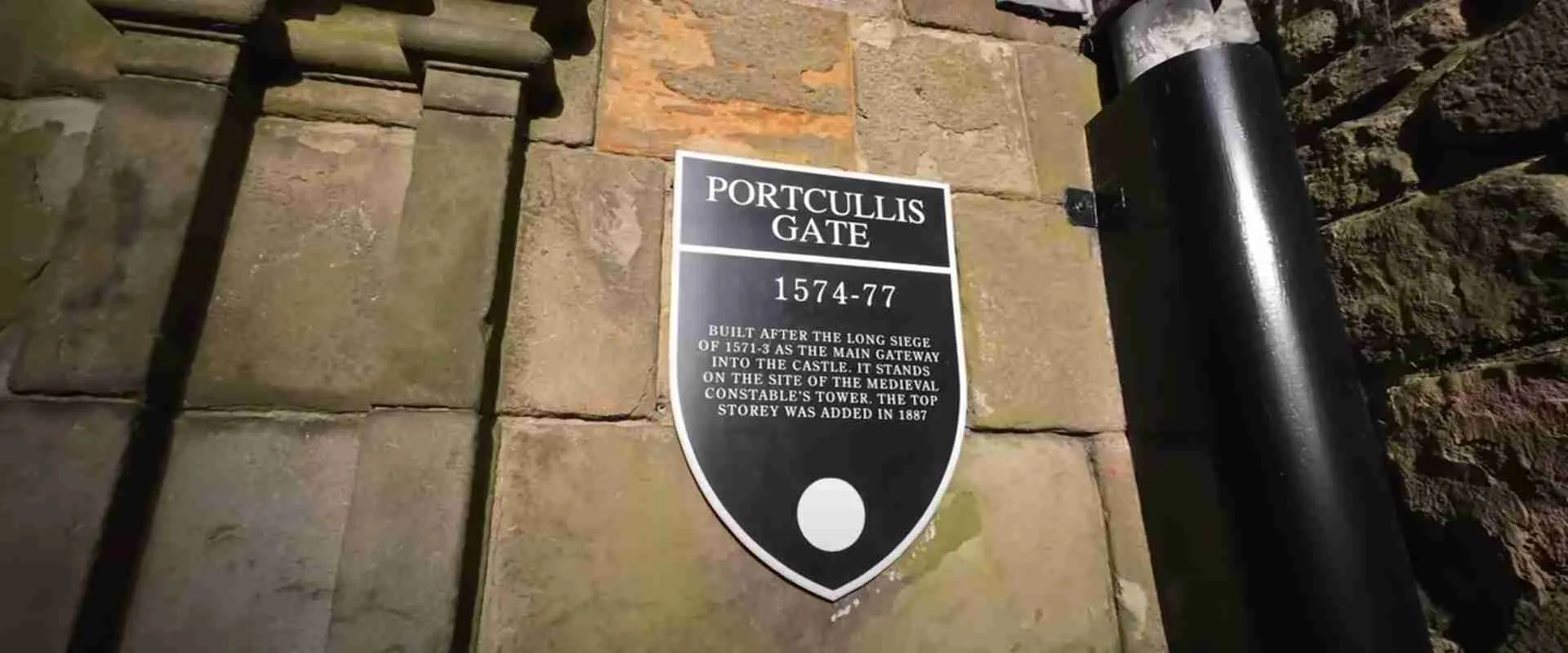
The Long Siege of 1571-1573: Civil War Fortress
Edinburgh Castle’s longest and most devastating siege occurred during the civil war following Mary Queen of Scots’ abdication, when the fortress held out for Mary’s cause against the forces supporting her infant son James VI.
Background to the siege:
- 1567: Mary Queen of Scots abdicates, flees to England
- Regency established: Earl of Morton rules for infant James VI
- Castle loyalty: Governor Sir William Kirkcaldy supports Mary
- Political division: Scotland splits between Queen’s Party and King’s Party
Siege progression and outcome:
- 1571-1572: Castle withstands repeated assaults and blockades
- English intervention: Elizabeth I provides artillery support to King’s Party
- 1573 bombardment: Heavy cannon destroy much of castle’s medieval structures
- Surrender: Garrison capitulates after two-year resistance
- Executions: Kirkcaldy and supporters executed for treason
- Reconstruction: Major rebuilding required after siege damage
Royal Residence: Births, Deaths, and Drama
Mary Queen of Scots and the Royal Palace
Mary Queen of Scots (1542-1567) represents Edinburgh Castle’s most glamorous and tragic royal resident, whose life within the castle walls epitomized the political intrigue and personal drama that characterized 16th-century Scottish monarchy.
Mary’s castle connections:
- 1543: Crowned Queen of Scots at Stirling Castle as infant
- 1561: Returns from France to begin personal rule from Edinburgh
- Royal apartments: Occupies newly renovated palace within castle
- 1566: Gives birth to future James VI in castle’s Royal Palace
- Political intrigue: David Rizzio murder occurs at Holyroodhouse
- 1567: Final departure following abdication
The Birth of James VI: Future King of Two Kingdoms
On June 19, 1566, Edinburgh Castle witnessed one of the most significant royal births in British history when Mary Queen of Scots delivered the future James VI of Scotland and I of England, who would unite the Scottish and English crowns in 1603.
Birth significance:
- Dynastic continuity: Secures Stuart succession to Scottish throne
- Political implications: Protestant nobles support infant against Catholic mother
- English succession: Eventually inherits English crown from Elizabeth I
- Union of Crowns: Personal union creates basis for later political union
Royal Ceremonies and State Occasions
Notable royal ceremonies at Edinburgh Castle:
- Coronations: Scottish monarchs crowned with Honours of Scotland
- Royal births: Secure fortress setting for royal deliveries
- State banquets: Great Hall hosts diplomatic and ceremonial events
- Royal funerals: Lying in state for Scottish monarchs
- Treaty signings: Important diplomatic agreements concluded
Military Evolution: From Medieval Fortress to Modern Barracks
Artillery Revolution and Defensive Adaptation
The introduction of gunpowder weapons in the 15th and 16th centuries revolutionized castle design, forcing Edinburgh Castle to evolve from medieval stronghold into early modern artillery fortress.
Military technological adaptation:
- 1430s-1440s: First cannon installed for castle defense
- Mons Meg (1457): Massive siege gun demonstrates royal military power
- Battery construction: New gun platforms built around castle perimeter
- Wall modifications: Medieval walls adapted for artillery warfare
- Powder magazines: Specialized storage for gunpowder and ammunition
Mons Meg: Medieval Superweapon
The famous cannon Mons Meg, gifted to James II of Scotland in 1457, represents the pinnacle of medieval artillery technology and demonstrates Edinburgh Castle’s role as center of Scottish military power.
Mons Meg specifications and history:
- Weight: 6 tons of iron construction
- Capability: Fired 150kg stone balls over 3km distance
- Royal ceremonies: Used for celebratory salutes and royal occasions
- 1681 accident: Barrel burst during salute for Duke of York
- 1829 return: Brought back from London Tower for permanent display
Jacobite Uprisings and the Final Sieges
Edinburgh Castle played crucial roles during the Jacobite uprisings of 1715 and 1745, serving as government stronghold against attempts to restore the Stuart dynasty to British thrones.
1715 Jacobite Rising:
- Government stronghold: Castle remains loyal to Hanoverian dynasty
- Strategic base: Launches operations against Jacobite forces
- Political prisoners: Holds captured Jacobite nobles
- Symbol of authority: Represents legitimate government power
1745 Jacobite Rising and Bonnie Prince Charlie:
- September 1745: Prince Charles Edward Stuart occupies Edinburgh city
- Castle holds out: Garrison refuses to surrender to Jacobites
- Bombardment exchange: Castle guns fire on Jacobite-occupied city
- Government reinforcement: Remains base for anti-Jacobite operations
- 1746 aftermath: Holds Jacobite prisoners following Culloden defeat
The Great Concealment: Crown Jewels Hidden
Union of Parliaments and Strategic Secrecy (1707)
The Act of Union 1707 joining Scottish and English parliaments triggered one of the most dramatic episodes in Edinburgh Castle’s history: the secret concealment of Scotland’s Crown Jewels that lasted 111 years.
Political context of concealment:
- Union negotiations: Fear that Scottish regalia would be destroyed or removed
- Secret conspiracy: Scottish nobles arrange clandestine hiding
- Crown Room sealing: Honours locked in oak chest, room sealed
- Knowledge loss: Conspirators die, location becomes forgotten
- Official denial: Government claims regalia doesn’t exist
The 111-year mystery:
- 1707-1818: Honors remain hidden and forgotten
- Rumors persist: Legends claim regalia destroyed or stolen
- Official searches: Failed attempts to locate missing treasures
- Castle personnel: Even governors unaware of hidden location
- Political pressure: Periodic attempts to prove regalia’s destruction
Sir Walter Scott: Literary Detective and National Hero
Sir Walter Scott’s role in rediscovering the Honours of Scotland demonstrates how literary fame could influence royal policy and reshape national heritage understanding.
Scott’s quest for the Honours:
- 1817 petition: Scott requests royal permission to search castle
- Prince Regent approval: Future George IV authorizes official search
- 1818 commission: Royal warrant grants access to sealed chambers
- February 4, 1818: Crown Room chest opened with crowbars
- Perfect preservation: Honours found intact after 111 years
- National celebration: Discovery sparks Scottish cultural renaissance
Scott’s dramatic account of the discovery:
“The chest was carefully opened, and the regalia of Scotland were displayed to the astonished eyes of the spectators… The relics were found in perfect preservation. The gold and silver were entirely untarnished; the jewels, particularly a large ruby in the crown, glowed with all their ancient lustre.”
Victorian Military Base and Modernization
19th Century Transformation
The Victorian era transformed Edinburgh Castle from medieval royal residence into modern military installation, reflecting Britain’s expanding empire and Edinburgh’s role as Scottish administrative center.
Military infrastructure development:
- New barracks construction: Accommodations for larger military garrison
- Military hospital: Medical facilities for Scottish Command
- Administrative buildings: Headquarters for Scottish military operations
- Weapons storage: Modern armory and ammunition facilities
- Officer quarters: High-quality accommodations for military elite
Scottish National War Memorial (1927)
The construction of the Scottish National War Memorial after World War I created one of Edinburgh Castle’s most moving and architecturally significant additions, honoring Scottish military sacrifice while maintaining historical authenticity.
Memorial significance:
- WWI commemoration: Honors 150,000+ Scottish war dead
- Architectural excellence: Arts and Crafts design by Sir Robert Lorimer
- Regimental shrines: Individual memorials for Scottish military units
- Continuous remembrance: Annual ceremonies and pilgrimage site
- Living memorial: Updated to honor subsequent conflicts
One O’Clock Gun Tradition
The establishment of the One O’Clock Gun tradition in 1861 created one of Edinburgh’s most enduring and beloved customs while serving practical maritime navigation needs.
Gun tradition origins:
- 1861 establishment: Time signal for ships in Leith harbor
- Naval navigation: Visible and audible time reference
- Daily precision: Fired every day except Sundays and major holidays
- Tourist attraction: Crowds gather daily for ceremony
- Continuous tradition: Over 160 years of unbroken service
20th Century: Wars, Celebrations, and Heritage
World Wars and Military Service
Both World Wars demonstrated Edinburgh Castle’s continuing military importance while transforming it into a center for Scottish military coordination and prisoner-of-war detention.
World War I roles:
- Recruitment center: Scottish regiments organized and trained
- Prisoner detention: German POWs held in castle facilities
- Military headquarters: Scottish Command coordination center
- Home defense: Anti-aircraft guns installed on ramparts
- War memorial planning: Scottish National War Memorial conceived
World War II activities:
- Air raid precautions: Castle serves as bomb shelter
- Military training: Specialized courses for Scottish forces
- Intelligence operations: Code-breaking and reconnaissance work
- Prisoner facilities: High-security detention for important captives
- Civil defense: Emergency government coordination center
Royal Ceremonies and State Occasions
Notable 20th-century royal events:
- 1911: George V’s Scottish coronation honors
- 1953: Honours of Scotland presented at Elizabeth II’s coronation
- 1969: Prince Charles’s investiture as Prince of Wales includes Scottish elements
- 1999: Scottish Parliament reconvening ceremony
- Multiple royal visits: Regular ceremonial appearances by British royalty
Modern Heritage: UNESCO Recognition and Tourism
UNESCO World Heritage Designation (1995)
Edinburgh Castle’s inclusion in the “Old and New Towns of Edinburgh” UNESCO World Heritage Site in 1995 recognized its outstanding universal value while ensuring international protection and sustainable tourism development.
UNESCO recognition criteria:
- Architectural significance: Outstanding examples spanning 1000+ years
- Cultural importance: Center of Scottish political and royal history
- Urban planning: Demonstrates evolution of European city development
- International value: Influences extending beyond national boundaries
- Authenticity preservation: Maintains historical integrity and character
Heritage conservation challenges:
- Visitor management: 2+ million annual visitors requiring sustainable access
- Structural preservation: Ancient buildings needing constant maintenance
- Climate change: Weather impacts on stone structures and artifacts
- Urban pressure: Modern city development affecting historical setting
- Military balance: Continuing military use alongside heritage tourism
Contemporary Role and Future Challenges
Modern castle functions:
- Tourist attraction: Scotland’s most visited paid attraction
- Military base: Active headquarters for Scottish military units
- Ceremonial venue: State occasions and royal ceremonies
- Cultural center: Edinburgh Military Tattoo and special events
- Educational resource: School visits and academic research
- National symbol: Icon of Scottish heritage and independence
Future preservation priorities:
- Sustainable tourism: Managing visitor impact on historic structures
- Climate adaptation: Protecting artifacts and buildings from weather changes
- Technology integration: Digital heritage and virtual access
- Community engagement: Maintaining relevance to modern Scottish identity
- International cooperation: Sharing conservation expertise globally
Architectural Timeline: Building Through the Ages
Medieval Foundations (1100-1400)
- c.1130: St Margaret’s Chapel – Norman religious architecture
- 1140s: Early royal apartments – domestic royal accommodation
- 1200s: David’s Tower – royal residence and defensive structure
- 1300s: Great Hall foundations – ceremonial and administrative space
Renaissance Royal Palace (1400-1600)
- 1433-1437: Great Hall completed – magnificent banqueting space
- 1501-1511: Royal Palace constructed – Renaissance royal apartments
- 1540s: Palace modifications for Mary Queen of Scots
- 1566: Royal apartments where James VI born
Military Adaptation (1600-1900)
- 1650s: Cromwellian fortifications – Commonwealth military improvements
- 1708: New barracks construction – Hanoverian military accommodation
- 1742: Governor’s House – Georgian military command
- 1753-1799: Military buildings expansion – imperial garrison needs
Victorian and Modern (1800-Present)
- 1840s: Military hospital – modern medical facilities
- 1888: Scottish National War Memorial site preparation
- 1927: War Memorial completion – Arts and Crafts masterpiece
- 1970s-present: Conservation and heritage development
Conclusion: Living History and Continuing Legacy
Edinburgh Castle’s thousand-year history encompasses virtually every major theme in Scottish national development: the establishment of royal power, the struggle for independence, the evolution of military technology, the preservation of cultural heritage, and the adaptation of ancient institutions to modern needs. From its prehistoric origins as an Iron Age hillfort to its contemporary role as UNESCO World Heritage Site, the castle has continuously evolved while maintaining its essential character as the heart of Scottish identity.
The castle’s stones have witnessed the full drama of Scottish history: royal births and deaths, political intrigue and military siege, cultural flowering and national crisis. Each successive generation has left its mark on the castle’s fabric while respecting the achievements of predecessors, creating a layered historical monument that speaks to different audiences across centuries and cultures.
Today’s visitors to Edinburgh Castle encounter not merely a tourist attraction but a living repository of Scottish heritage that continues to function as military base, ceremonial venue, and cultural center. The castle’s ability to serve contemporary needs while preserving historical authenticity demonstrates the successful balance between heritage conservation and practical adaptation that ensures its relevance for future generations.
As Scotland’s premier historical monument and most visited attraction, Edinburgh Castle carries the responsibility of representing Scottish heritage to global audiences while maintaining its significance for Scottish people themselves. The castle’s ongoing story—from ancient fortress to modern heritage site—illustrates the dynamic relationship between past and present that makes historical monuments not mere museum pieces but vital components of contemporary cultural life.
Understanding Edinburgh Castle’s complete history enhances every visit, transforming casual sightseeing into meaningful encounter with the forces, personalities, and events that shaped Scotland’s remarkable journey from medieval kingdom to modern European nation. The castle endures as testament to Scottish resilience, creativity, and pride—qualities that continue to define Scottish character in the 21st century.
Frequently Asked Questions
How old is Edinburgh Castle and when was it first built?
Edinburgh Castle has been continuously occupied for over 3,000 years, with archaeological evidence of Iron Age settlement from the 9th century BC. The first royal castle was established by King David I around 1130, with St Margaret’s Chapel being the oldest surviving building from this period.
Which famous historical figures lived at Edinburgh Castle?
Notable residents include Mary Queen of Scots (who gave birth to James VI there in 1566), King David I who established the royal court, and various Scottish monarchs. Many English kings also occupied the castle during periods of English rule over Scotland.
What were the most important battles and sieges at Edinburgh Castle?
Major military events include the 1296 siege by Edward I, the famous 1314 night assault by Thomas Randolph, the devastating 1571-1573 siege during Mary Queen of Scots’ civil war, and its role during the Jacobite uprisings of 1715 and 1745.
Why were the Scottish Crown Jewels hidden for over 100 years?
Following the 1707 Union of Parliaments, Scottish nobles secretly hid the Honours of Scotland in Edinburgh Castle, fearing they would be destroyed or removed to England. They remained hidden from 1707 until Sir Walter Scott rediscovered them in 1818.
What architectural styles can be seen at Edinburgh Castle?
The castle showcases architecture spanning nearly 900 years, from Norman Romanesque (St Margaret’s Chapel, c.1130) through Gothic (Great Hall, 1511), Renaissance (Royal Palace, 1540s), Georgian (Governor’s House, 1742), to Arts and Crafts (War Memorial, 1927).
How did Edinburgh Castle become a UNESCO World Heritage Site?
Edinburgh Castle was included in the “Old and New Towns of Edinburgh” UNESCO World Heritage Site designation in 1995, recognized for its outstanding universal value demonstrating the evolution of European urban planning and Scottish royal history.
What is the significance of Mons Meg cannon?
Mons Meg, gifted to James II in 1457, was one of medieval Europe’s largest siege cannons, capable of firing 150kg stone balls over 2 miles. It symbolized Scottish royal power and military might during the Renaissance period.
Does Edinburgh Castle still have military functions today?
Yes, Edinburgh Castle remains an active military base, housing the headquarters of the Royal Regiment of Scotland and other military units. It balances its heritage tourism role with continuing military operations and ceremonial functions.
What role did Edinburgh Castle play in Scottish independence?
The castle was central to Scottish independence struggles, changing hands multiple times during the Wars of Scottish Independence (1296-1357). Its control symbolized sovereignty over Scotland, making it a key strategic and political prize.
How has Edinburgh Castle been preserved for future generations?
Conservation efforts include UNESCO World Heritage protection, ongoing structural maintenance using traditional techniques, careful visitor management, climate-controlled environments for artifacts, and integration of modern conservation science with historical authenticity.