
Easter Island Cultural Significance & Heritage Guide
Key Takeaways
- Easter Island represents the easternmost point of Polynesian expansion, demonstrating extraordinary navigation capabilities and cultural adaptation in Earth’s most isolated inhabited territory
- Moai statues functioned as ancestral representations embodying spiritual power (mana) that protected communities, connected living populations to deceased chiefs, and expressed tribal prestige through monumental architecture
- The Rapa Nui civilization developed unique cultural synthesis combining Polynesian maritime traditions with localized innovations in stone carving, agricultural techniques, and ceremonial practices adapted to volcanic island ecology
- Societal transformation from moai-centered ancestor worship to Birdman cult competition reflects cultural resilience and adaptive capacity following ecological crisis and resource depletion during the 17th century
- UNESCO World Heritage designation recognizes Easter Island as exceptional testimony to cultural creativity, representing unique artistic achievement and demonstrating continuity of living indigenous traditions despite colonization trauma
- Contemporary Rapa Nui cultural revival emphasizes language preservation, traditional knowledge transmission, and indigenous self-determination within Chilean national framework, creating dynamic living culture beyond archaeological heritage
Introduction to Easter Island Cultural Heritage
Easter Island (Rapa Nui in the indigenous language) stands as one of humanity’s most remarkable cultural achievements, demonstrating sophisticated societal organization, monumental artistic expression, and successful adaptation to extreme isolation in the southeastern Pacific Ocean. Positioned 3,700 kilometers from mainland South America and 2,000 kilometers from the nearest inhabited Polynesian island, this 163.6 square kilometer volcanic landscape supported complex civilization producing nearly 900 monumental stone statues (moai) between 1250-1500 CE alongside distinctive ceremonial architecture, rich oral traditions, and unique cultural practices synthesizing Polynesian heritage with localized innovations.
The cultural significance of Easter Island extends beyond archaeological grandeur to encompass fundamental questions about human capability, environmental relationships, societal resilience, and cultural continuity. The Rapa Nui people navigated thousands of kilometers of open ocean using only stars, waves, and traditional knowledge to discover and colonize this remote territory, then developed sophisticated stone-working techniques without metal tools or wheeled transport, created complex religious systems encoding social hierarchies and cosmological beliefs, and ultimately demonstrated cultural adaptability when environmental crisis necessitated fundamental societal transformation during the 17th century.
Contemporary Easter Island exists as living cultural landscape where approximately 3,500 Rapa Nui descendants maintain indigenous identity, language, and traditions while engaging with global tourism, Chilean national integration, and modern economic systems. This dynamic cultural continuity distinguishes Easter Island from abandoned archaeological sites, creating opportunities for authentic cultural transmission, traditional knowledge preservation, and indigenous perspectives on heritage interpretation that enrich visitor understanding while supporting community self-determination and cultural sovereignty.
Understanding Easter Island’s cultural significance requires engagement with multiple interpretive frameworks including Polynesian settlement patterns and maritime traditions, monumental architecture as social and religious expression, environmental history and resource management debates, colonization impact and cultural trauma, and contemporary indigenous revival movements. These interconnected themes reveal complex civilization demonstrating both extraordinary achievement and cautionary lessons about sustainability, creating profound cultural heritage worthy of sustained study and respectful engagement.
People Also Ask About Easter Island Cultural Significance
What makes Easter Island culturally significant?
Easter Island holds profound cultural significance as the easternmost point of Polynesian expansion demonstrating extraordinary navigation and settlement capabilities, the site of unique monumental architecture with nearly 900 moai statues representing exceptional artistic achievement without parallel in Polynesian cultures, and living testimony to cultural resilience through indigenous population survival despite catastrophic colonization trauma reducing Rapa Nui numbers from 15,000 to approximately 100 by 1877. The island exemplifies human capacity for both monumental achievement and environmental adaptation, serving as case study in societal complexity, cultural transformation, and indigenous persistence under extreme circumstances. UNESCO World Heritage designation recognizes these universal values connecting Easter Island heritage to broader human cultural evolution.
Why did the Rapa Nui people build moai statues?
Moai statues functioned as ancestral representations embodying spiritual power (mana) believed to protect communities, ensure agricultural fertility, deliver fishing success, and maintain cosmic order connecting living populations to deceased chiefs and founding ancestors. Construction and erection of increasingly larger moai expressed tribal prestige and competitive display among Easter Island’s multiple clans (mata), with statue size, platform complexity, and pukao (red scoria topknot) presence indicating group status and resource control. The moai-building tradition reflected deeply rooted Polynesian practices of ancestor veneration transformed through Easter Island’s unique ecology, resources, and social organization into monumental scale unprecedented in other Pacific cultures. Statue production ceased around 1680 CE when ecological crisis and social upheaval rendered the resource-intensive tradition unsustainable.
What is the Birdman cult and why is it important?
The Birdman (Tangata Manu) cult emerged during the late 17th-early 18th centuries as alternative leadership system replacing collapsed moai-centered hierarchy following ecological crisis and social transformation. Annual competitions held at Orongo ceremonial village involved tribal representatives swimming 1.5 kilometers to offshore Motu Nui islet to retrieve the first sooty tern egg of the nesting season, with successful competitor’s sponsor becoming Birdman for one year with authority over resource distribution and ceremonial privileges. This system represented remarkable cultural adaptation maintaining social organization through competition and ritual rather than inherited chiefly authority and monumental construction, demonstrating Rapa Nui resilience and innovative capacity during crisis period. The Birdman cult operated until missionary conversion in the 1860s, leaving rich petroglyph tradition at Orongo documenting this unique cultural phenomenon.
How did colonization impact Rapa Nui culture?
European contact beginning with Dutch explorer Jacob Roggeveen in 1722 initiated catastrophic cultural disruption through introduced diseases reducing population by 30-50% within decades, Peruvian slave raids in 1862-1863 removing approximately 1,500 individuals including most cultural leaders and knowledge keepers, and Chilean annexation in 1888 establishing military control that confined surviving Rapa Nui to Hanga Roa village while converting remaining land to sheep ranching operated by Chilean and European interests. Population decline reached its nadir at approximately 100 survivors by 1877, with profound cultural knowledge loss including traditional navigation techniques, complete oral histories, religious practices, and rongorongo writing system interpretation. Contemporary cultural revival beginning in the 1960s-1970s involves reconstruction of lost traditions, language revitalization from fewer than 1,000 fluent speakers, and assertion of indigenous rights within Chilean legal frameworks, creating dynamic negotiation between heritage preservation and modern identity formation.
Extended multi-day tours – 5+ days
Featured Easter Island Multi-Day Tour Packages
3 days
Easter Island 3-Day Discovery Tour
- ✓ Comprehensive Easter Island experience
- ✓ Expert local guides included
- ✓ All accommodation included
- ✓ Transportation provided

5 days
Easter Island 5-Day Highlights Experience
- ✓ Comprehensive Easter Island experience
- ✓ Expert local guides included
- ✓ All accommodation included
- ✓ Transportation provided
7 days
Easter Island 7-Day Cultural Journey
- ✓ Comprehensive Easter Island experience
- ✓ Expert local guides included
- ✓ All accommodation included
- ✓ Transportation provided
10 days
Easter Island 10-Day Complete Adventure
- ✓ Comprehensive Easter Island experience
- ✓ Expert local guides included
- ✓ All accommodation included
- ✓ Transportation provided
Multi-day tour packages powered by TourRadar. Prices and availability subject to change.
Polynesian Settlement and Cultural Origins
Navigation and Discovery in the Pacific Context
Easter Island settlement represents the final phase of remarkable Polynesian expansion across the Pacific Ocean, with archaeological and linguistic evidence indicating colonization around 1200 CE by voyagers originating from the Marquesas Islands or Gambier Islands located 3,200-4,000 kilometers northwest. These master navigators utilized sophisticated wayfinding systems reading star paths, ocean swells, wind patterns, bird flight behaviors, and cloud formations to traverse vast oceanic distances in double-hulled voyaging canoes carrying founding populations with essential plants, animals, and cultural knowledge for establishing new communities.
The Polynesian triangle spanning Hawaii, New Zealand, and Easter Island encompasses the largest culture area on Earth, demonstrating human capacity for maritime exploration and settlement across 15 million square kilometers of ocean. Easter Island’s extreme eastern position established the geographical limit of this expansion, with no evidence of further colonization eastward toward South America despite the relatively modest additional distance to the continental coast. This easternmost achievement required extraordinary navigation precision given minimal land target (163.6 square kilometers) positioned in vast oceanic expanse with no intermediate stepping-stone islands providing navigation reference points.
Traditional Polynesian navigation knowledge transmitted orally through specialized navigator lineages emphasized memorization of star compass systems dividing horizons into houses where specific stars rise and set, deep understanding of ocean swell patterns generated by distant weather systems, recognition of bird species indicating land proximity, and reading of cloud formations reflecting over islands beyond visual range. Easter Island discovery demonstrates these sophisticated techniques applied at extreme range, with successful founding voyage requiring provisions for potential 30-40 day passage without landfall guarantee and commitment to unknown destination precluding simple return to origin points.
Founding Settlement and Early Cultural Development
Archaeological evidence from Anakena Beach indicates initial settlement concentration on the northern coast where protected anchorage, freshwater availability, and marine resources supported founding population establishing agricultural systems and constructing first permanent structures. The colonizing group brought essential Polynesian domesticates including chickens, Polynesian rats, and plants like sweet potato (kumara), banana, taro, and paper mulberry for bark cloth (tapa) production, though many traditional Polynesian crops failed in Easter Island’s subtropical climate and nutrient-poor volcanic soils requiring agricultural adaptation.
Early Rapa Nui culture maintained strong Polynesian characteristics including thatched boat-shaped houses (hare paenga) with distinctive foundation stone arrangements visible archaeologically, specialized elite residences for chiefs (ariki mau), hereditary social hierarchies dividing population into nobles, priests, specialists, and commoners, and religious practices centered on ancestor veneration with marae-style ceremonial platforms (ahu) serving as ritual centers. These cultural continuities connected Easter Island society to broader Polynesian traditions while isolation enabled distinctive local developments in architectural scale, artistic expression, and ceremonial elaboration.
Population growth from founding groups numbering 20-50 individuals reached maximum estimates of 10,000-15,000 by 1550-1650 CE, supporting complex societal organization including specialized craft production, organized labor for monumental construction, and territorial division among competing clans controlling discrete coastal sections with associated agricultural hinterlands. This demographic expansion occurred entirely through internal population growth without subsequent migration waves, creating genetically distinct population demonstrable through modern DNA analysis and distinguishing Easter Island settlement pattern from other Polynesian islands experiencing multiple colonization events.
Cultural Synthesis and Unique Developments
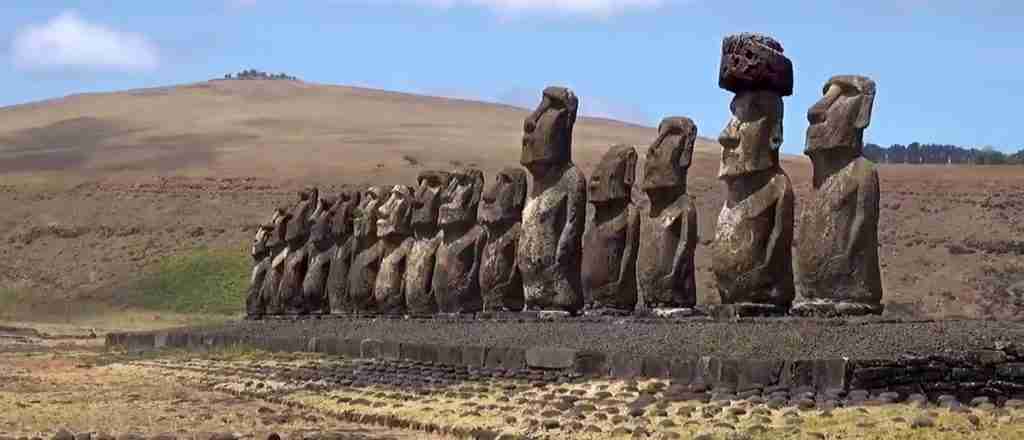
Easter Island culture represents distinctive synthesis of Polynesian heritage with localized innovations driven by island ecology, resource availability, and cultural elaboration. The evolution from small ahu platforms with single moai to massive structures like Ahu Tongariki supporting 15 statues reaching 9 meters height demonstrates monumental architecture escalation unprecedented in Polynesian contexts, likely driven by inter-tribal competition and prestige accumulation through increasingly ambitious construction projects consuming substantial community labor and resources.
Unique cultural developments include the rongorongo writing system consisting of glyphic inscriptions on wooden tablets representing one of few independent script inventions in human history, though post-contact knowledge loss precludes complete decipherment and prevents understanding whether the system recorded language phonetically, ideas logographically, or served mnemonic functions for oral traditions. Stone house construction at Orongo and elsewhere departs from typical Polynesian thatched architecture, adapting to limited timber resources and strong wind exposure through distinctive corbelled roof techniques and thick stone walls providing protection in exposed locations.
Agricultural innovations addressed challenging environmental conditions through extensive stone garden enclosures (manavai) protecting plants from wind and salt spray, lithic mulching techniques using surface stones to reduce evaporation and moderate soil temperatures, and coastal marine resource exploitation supplementing limited terrestrial protein sources. These adaptive strategies enabled sustained population support despite resource constraints, though ultimate environmental degradation through deforestation and soil erosion contributed to societal crisis during the 17th century requiring fundamental cultural transformation.
Moai Statues: Symbolism and Cultural Function
Ancestral Representation and Spiritual Significance
Moai statues functioned primarily as ancestral representations (aringa ora ava te atua – “living face of the ancestors”) embodying spiritual power (mana) connecting living communities to deceased chiefs and founding ancestors. Each moai represented specific individual from chiefly lineages, with physical characteristics including distinctive facial features, body proportions, and occasional back decorations identifying particular ancestors within oral tradition frameworks maintained by specialized knowledge keepers. The statues served as intermediaries between living populations and spiritual realm, channeling ancestral mana to ensure agricultural fertility, fishing success, community protection, and cosmic order maintenance.
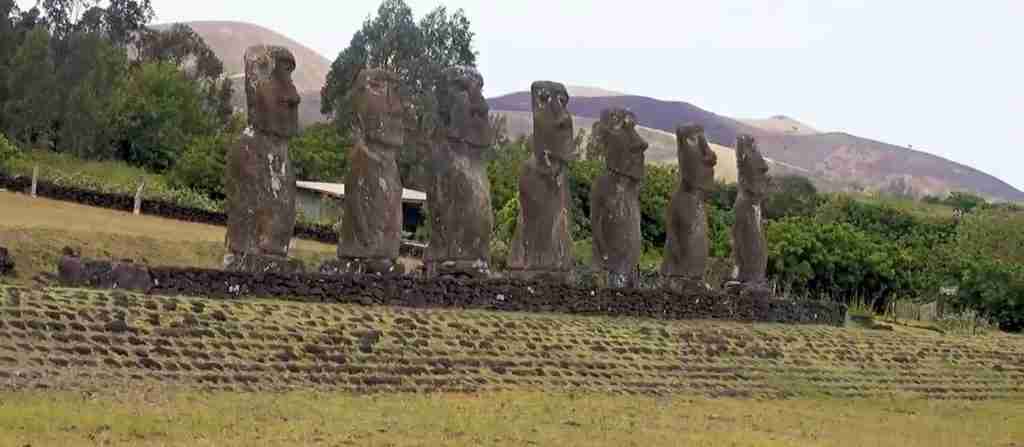
The positioning of moai facing inland toward communities rather than seaward reflects protective function watching over descendants and agricultural lands, with statue eyes (originally fitted with white coral and red scoria pupils visible on well-preserved examples like Ahu Nau Nau) enabling ancestors to see and respond to community needs. This orientation distinguishes Easter Island practice from some interpretations suggesting astronomical alignments or navigation functions, emphasizing domestic protective role within Polynesian ancestor veneration traditions adapted to monumental architectural scale unique to Rapa Nui culture.
Pukao (cylindrical topknots carved from red scoria and positioned atop select moai) represent traditional Polynesian hair styling worn by chiefs and nobles, with red color holding sacred significance in Polynesian cultures symbolizing chiefly rank and divine power. The addition of pukao to approximately 100 moai concentrated at premier ahu platforms indicates elite status of represented ancestors and enhanced prestige of communities commanding resources for these challenging additions requiring specialized quarrying, transport, and elevation techniques beyond base statue production and installation.
Construction Techniques and Cultural Knowledge
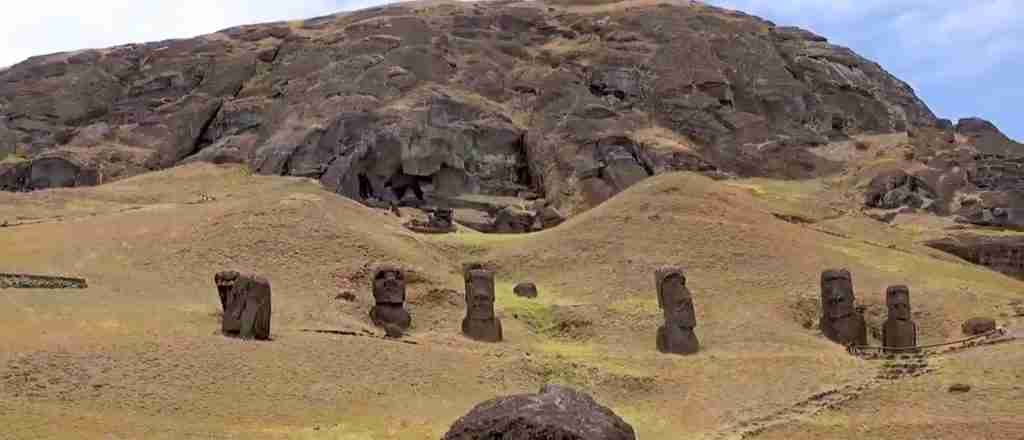
Moai production occurred primarily at Rano Raraku volcanic crater where suitable volcanic tuff (compressed ash) enabled carving using basalt hand tools (toki) without metal implements or advanced technologies. Carvers began with frontal features while statues remained attached to bedrock, progressively working sides and back until only narrow keel connected figure to quarry wall. Final separation required careful undermining and controlled collapse into prepared catching area, with some moai breaking during this critical phase resulting in abandonment and restart of production cycle with new statue blocks.
Statistical analysis of Rano Raraku moai reveals production characteristics including average height 4 meters (with range 2-12 meters), estimated carving time 12-15 months for typical statue employing 5-6 specialized carvers, and preference for specific tuff layers offering optimal carving properties balancing workability with durability. The largest completed moai measures 10 meters and weighs approximately 75 tons, while the largest begun but unfinished specimen reaches 21 meters suggesting ambitions extending beyond practical transport capabilities or reflecting competitive escalation between clans seeking prestige through size maximization.
Experimental archaeology programs including Norwegian explorer Thor Heyerdahl’s 1955 tests and subsequent studies demonstrate feasible transport methods using wooden sledges, rope systems, and coordinated labor teams numbering 50-70 individuals for typical 4-meter moai. Alternative theories propose “walking” techniques manipulating statue upright using ropes to rock forward progressively, with recent experimental validations suggesting practical feasibility though requiring extensive rope resources and skilled coordination. The actual historical methods remain debated, with probable diversity in techniques employed across the 400-year moai construction period adapting to changing resource availability and accumulated knowledge transmission through specialized guilds.
Ahu Platforms: Ceremonial Architecture and Social Expression
Ahu platforms serving as moai foundations represent sophisticated architectural achievements requiring extensive labor, engineering knowledge, and resource mobilization coordinated through chiefly authority and religious specialists. The 313 documented ahu vary dramatically in scale from simple family platforms supporting single small moai to massive structures like Ahu Tongariki (220 meters length) accommodating 15 statues and requiring estimated 10,000-15,000 labor days for construction excluding moai production and installation. This architectural diversity reflects social hierarchy and territorial organization, with premier platforms marking important chiefly lineage centers and smaller structures serving secondary family groups within clan territories.
Ahu construction techniques evolved across the moai period from early simple platforms to later sophisticated designs incorporating precisely fitted stonework (particularly visible at Ahu Vinapu resembling Incan masonry techniques), internal burial chambers for elite interments, and ceremonial features including ramps, stone paving, and enclosure walls defining sacred spaces. The orientation of ahu parallel to coastlines positions moai facing inland communities rather than ocean, emphasizing protective domestic function. Construction required quarrying and transporting massive basalt foundation stones, shaping and fitting facing blocks without mortar, creating stable platforms supporting multi-ton moai weights, and engineering ramps or levers for statue elevation and positioning on completed platforms.
The association between ahu platforms and elite burial practices indicates social hierarchy materialization, with high-status individuals interred in platform chambers or immediately adjacent positions receiving perpetual ancestral presence and mana protection. Cremation remains found at some ahu suggest complex mortuary practices possibly varying by status, family tradition, or temporal period. These ceremonial architecture complexes functioned as political centers, religious focal points, and territorial markers simultaneously, creating multilayered social landscapes where spiritual, political, and kinship relationships found physical expression through monumental construction.
Social Organization and Daily Life
Hierarchical Structure and Leadership Systems
Rapa Nui society operated through stratified hierarchy headed by supreme chief (ariki mau) claiming descent from founding ancestor Hotu Matu’a and holding paramount religious and political authority over the entire island. Below the ariki mau existed multiple clan chiefs (ariki paka) controlling discrete territories (mata) numbering 10-12 major divisions each associated with specific coastal sections and inland agricultural zones. These territorial chiefs commanded labor for moai construction, managed resource distribution, maintained genealogical knowledge validating their authority, and organized ceremonial activities reinforcing social hierarchies through ritual performance and prestige display.
Specialized social classes included priests (ivi atua) conducting ceremonies and maintaining religious knowledge, warriors (matato’a) defending territorial boundaries and participating in inter-clan conflicts, master carvers (tangata manu ahi ahi) possessing esoteric knowledge about statue production, navigators and fishermen controlling marine resource access, and agricultural specialists managing cultivation systems and weather prediction. This occupational specialization enabled complex society functioning beyond subsistence agriculture, creating surplus production supporting non-food-producing specialists and monumental construction labor demands consuming substantial community time and resources.
Commoner populations (kio) provided agricultural labor, participated in moai transport and platform construction, produced crafts and domestic goods, and supported elite consumption through tribute and service obligations. Social mobility remained limited though specialist knowledge acquisition offered pathways for status enhancement, particularly for individuals demonstrating exceptional carving skills, fishing abilities, or agricultural expertise valuable to community welfare. Gender divisions allocated agricultural work and domestic production to women, while men dominated fishing, carving, and construction activities, though female religious specialists and elite women exercised considerable social authority within kinship networks.
Agricultural Systems and Resource Management
Easter Island agriculture adapted Polynesian cultivation traditions to challenging environmental conditions including limited rainfall (1,100mm annually concentrated in winter months), nutrient-poor volcanic soils, strong winds creating salt spray and desiccation stress, and limited freshwater resources restricted to coastal springs and crater lakes. Sweet potato (kumara) served as primary staple crop supplemented by taro, yams, bananas, and sugar cane, with chicken providing principal protein source following loss of indigenous land birds to hunting and habitat destruction shortly after colonization.
Intensive agricultural techniques developed to maximize productivity including extensive stone garden enclosures (manavai) protecting plants from wind damage and creating favorable microclimates, lithic mulching systems covering soil surfaces with stones reducing evaporation and moderating temperature extremes, and coastal cultivation utilizing seepage zones where freshwater springs emerged near shorelines. These labor-intensive improvements enabled population support reaching 10,000-15,000 individuals by peak periods, though vulnerability to drought and environmental degradation created subsistence insecurity contributing to societal crisis during the 17th century.
Marine resource exploitation provided critical protein supplementation through inshore fishing capturing reef species and pelagic fish, shellfish collection along rocky coastlines, and occasional sea turtle or seal hunting when available. The lack of protective coral reefs limited lagoon fishing opportunities compared to other Polynesian islands, while deforestation eliminating large trees by 1500 CE prevented construction of substantial oceangoing canoes restricting fishing to inshore zones accessible from small reed boats or shore-based techniques. This marine resource limitation increased agricultural dependency and vulnerability to terrestrial productivity fluctuations during climate variations or environmental degradation phases.
Craft Production and Material Culture
Rapa Nui material culture demonstrates sophisticated craft traditions working limited raw materials into diverse functional and ceremonial objects. Stone tools dominated technology including obsidian blades (mata’a) serving multiple functions from weapons to surgical implements, basalt hammers and chisels for moai carving, fishing gear including hooks and octopus lures, and grinding stones for food processing. The absence of pottery distinguishes Rapa Nui from most Polynesian cultures, with cooking occurring through earth oven techniques (umu) and liquid storage utilizing gourds and wooden containers rather than ceramic vessels.
Wood carving produced ceremonial objects including moai kavakava (emaciated human figures), moai tangata (realistic human figures), rei miro (wooden pectorals), and ao (ceremonial paddles) despite limited timber resources following deforestation. These portable artworks incorporated distinctive Rapa Nui artistic styles featuring elongated forms, elaborate surface decorations, and symbolic motifs encoding cosmological and social meanings. The rongorongo tablets bearing glyphic inscriptions represent most enigmatic wooden artifacts, with post-contact knowledge loss preventing comprehensive interpretation though remaining objects demonstrate sophisticated script system and cultural knowledge documentation practices.
Bark cloth (tapa) production from paper mulberry bark provided principal fabric for clothing, ceremonial garments, and decorative purposes, continuing widespread Polynesian tradition adapted to Easter Island conditions. Featherwork utilizing endemic seabird plumage created prestigious ceremonial objects including headdresses and capes signaling elite status. Body modification practices included tattooing with distinctive Rapa Nui motifs, cranial deformation among elite families achieving elongated head shapes marking high status, and decorative implements like bone hair pins and shell ornaments completing material culture repertoire demonstrating aesthetic sophistication despite limited resource base.
Cultural Transformation and the Birdman Cult
Environmental Crisis and Societal Collapse
Easter Island experienced profound environmental and social transformation during the 17th century involving deforestation completion, soil erosion acceleration, agricultural productivity decline, population reduction, inter-clan warfare intensification, moai production cessation, and fundamental reorganization of religious and political systems. This crisis period results from complex interactions between environmental factors including climate variations and ecological damage, and social dynamics involving competitive prestige display, resource overexploitation, and political instability generating feedback loops culminating in societal transformation rather than complete collapse.
Deforestation occurred gradually across 500 years as expanding population cleared native palm forests for agricultural land, harvested timber for construction and fuel, and used logs for moai transport requiring substantial wood resources for sledges, rollers, and lever systems. By 1500-1650 CE, virtually all large trees disappeared from Easter Island, eliminating resources for oceangoing canoe construction, constraining marine resource access, reducing agricultural productivity through topsoil erosion, and eventually rendering moai transport impractical without timber for sledges or rollers. This environmental degradation resulted primarily from human activities though climate variations including Little Ice Age cooling 1500-1850 CE likely exacerbated agricultural stresses and contributed to subsistence insecurity.
Archaeological evidence indicates increased inter-clan warfare during the late moai period with fortified cave refuges, obsidian mata’a weapons proliferating, and oral traditions describing conflicts over diminishing resources. Moai toppling occurred during this period with statue destruction through intentional face-down positioning breaking vulnerable facial features, suggesting deliberate desecration possibly representing defeated clan monuments or rejection of ancestral protection systems failing to prevent environmental and social crisis. This iconoclasm marks fundamental cultural shift away from moai-centered religious practices toward alternative belief systems addressing changed social and environmental conditions.
Emergence of Birdman Ceremonial System
The Birdman (Tangata Manu) cult emerged around 1680-1720 CE as alternative leadership and resource allocation system replacing collapsed moai-based hierarchy. Annual competitions held at Orongo ceremonial village during September-October determined temporary leadership through ritualized contest rather than hereditary succession, representing remarkable cultural innovation maintaining social order during crisis period. The competition involved tribal representatives (hopu) swimming 1.5 kilometers from Orongo’s 300-meter cliffs to offshore Motu Nui islet to retrieve the first sooty tern (manutara) egg of nesting season, returning through rough ocean conditions to present egg to their sponsor.
The successful competitor’s sponsor received Birdman designation for one-year term with authority over resource distribution, fishing rights allocation, and ceremonial privileges including sacred seclusion, special dietary restrictions, and ritual head-shaving distinguishing the Birdman from other community members. This system distributed leadership opportunities across multiple clans annually rather than concentrating permanent power in single hereditary line, reducing inter-clan tensions while maintaining coordinated resource management and social organization during environmentally constrained period when permanent large-scale leadership became unsustainable.
Orongo village construction specifically for Birdman ceremonies demonstrates continued capacity for organized architecture despite moai production cessation, with 53 stone houses featuring distinctive corbelled roofs and thick walls accommodating clan representatives during competition periods. Extensive petroglyph traditions at Orongo depict Birdman figures (human bodies with bird heads), tangata manu motifs, and ceremonial objects including paddle designs and vulva symbols possibly representing fertility emphasis during population stress periods. These rock art concentrations create remarkable archaeological record documenting this unique cultural phenomenon connecting cosmological beliefs, political organization, and environmental adaptation in integrated ceremonial system.
Cultural Continuity and Adaptive Resilience
The transition from moai-centered ancestor worship to Birdman competition system demonstrates Rapa Nui cultural resilience and innovative capacity during crisis, challenging simplistic collapse narratives emphasizing societal failure. Rather than complete disintegration, Easter Island culture transformed substantially while maintaining social organization, religious practices, and community identity through adaptive mechanisms preserving core cultural values within changed environmental and social contexts. This resilience enabled Rapa Nui civilization to persist through the 18th century despite resource constraints, providing functioning society when European contact commenced in 1722.
Oral traditions maintained throughout transformation periods preserved genealogical knowledge, ancestral narratives, place names, and cultural practices connecting communities to their past despite material culture changes and religious system evolution. The persistence of Rapa Nui language throughout crises demonstrates linguistic continuity transmitting cultural knowledge across generations, while specialized knowledge about navigation, agriculture, and craft production continued functioning within modified social frameworks. These continuities enabled cultural survival and provided foundations for later revival movements following colonization trauma of the 19th-20th centuries.
Archaeological and anthropological research increasingly recognizes the Birdman period as sophisticated cultural adaptation rather than degraded remnant of moai-building civilization. The ceremonial complexity, political innovation, and continued artistic production during this era demonstrate sustained cultural creativity and problem-solving capacity addressing changed circumstances through cultural evolution rather than simple decline. This perspective emphasizes Rapa Nui agency and cultural sophistication throughout their history, providing more nuanced understanding than earlier deterministic collapse theories focusing exclusively on environmental degradation and societal failure.
Colonial Impact and Cultural Trauma
European Contact and Disease Introduction
European contact beginning with Dutch navigator Jacob Roggeveen’s Easter Sunday 1722 arrival initiated profound disruption to Rapa Nui culture through introduced diseases, technological shocks, and gradual integration into global colonial systems. Roggeveen’s visit introduced respiratory infections causing immediate mortality among immunologically naive population, establishing pattern repeated during subsequent European expeditions including Spanish visitors in 1770 establishing formal territorial claim, British Captain James Cook’s 1774 visit documenting standing moai and functioning society, and French navigator La Pérouse’s 1786 expedition providing detailed ethnographic observations.
Disease impacts escalated dramatically during the 19th century with introduced epidemics including smallpox, tuberculosis, and dysentery reducing population from estimated 3,000-4,000 at European contact to approximately 2,000 by 1850s. These demographic losses disrupted social organization, eliminated specialized knowledge holders, and reduced community capacity for traditional practices requiring coordinated labor. The biological catastrophe initiated by European contact paralleled patterns across the Americas and Pacific Islands where indigenous populations lacking immunity to Old World diseases experienced mortality rates of 50-90% within generations of contact.
Peruvian Slave Raids and Cultural Destruction
The most catastrophic single event in Rapa Nui history occurred during December 1862-March 1863 when Peruvian slavers captured approximately 1,500 islanders (nearly 50% of remaining population) for forced labor in Peruvian guano mines. Among the captives taken were the ariki mau (supreme chief), religious specialists, master carvers, oral tradition experts, and rongorongo readers, effectively eliminating the core of cultural knowledge transmission systems. Diplomatic interventions secured release of approximately 100 survivors attempting return to Easter Island, though 85 died en route from diseases contracted in captivity and only 15 ultimately reached home, where they introduced smallpox epidemic killing additional hundreds of remaining community members.
This population devastation reduced Easter Island inhabitants to approximately 100 individuals by 1877, creating profound cultural discontinuity as specialized knowledge died with expert practitioners, oral traditions suffered gaps and contradictions, rongorongo reading ability disappeared entirely, and social organization collapsed lacking sufficient population for traditional clan structures and ceremonial systems. The magnitude of this cultural destruction cannot be overstated, representing near-complete erasure of living tradition and creating circumstances where contemporary Rapa Nui culture involves substantial reconstruction and revival rather than unbroken transmission from pre-contact civilization.
Chilean Annexation and Land Dispossession
Chilean annexation of Easter Island in 1888 established formal sovereignty transferring from nominal Spanish colonial claim never actively enforced, inaugurating period of military control, land dispossession, and cultural suppression lasting through much of the 20th century. Chilean authorities leased virtually the entire island to Scottish-Chilean sheep ranching company (Compañía Explotadora de la Isla de Pascua) restricting Rapa Nui population to Hanga Roa village while 95% of territory operated as commercial ranch until 1953. This dispossession prevented traditional land use practices, restricted access to ancestral sites, and imposed economic dependence on wage labor within ranching operations controlled by external interests.
Catholic missionary activity beginning in 1860s-1870s converted the remaining Rapa Nui population to Christianity, suppressing traditional religious practices including Birdman ceremonies and ancestor veneration while introducing Western educational systems conducted exclusively in Spanish without accommodation for Rapa Nui language preservation. This cultural assimilation pressure combined with demographic crisis and knowledge loss created circumstances threatening complete cultural extinction, with Rapa Nui language declining to fewer than 1,000 fluent speakers by mid-20th century and traditional practices surviving primarily through fragmented family memories rather than comprehensive living tradition.
UNESCO World Heritage Recognition
Outstanding Universal Value Criteria
Easter Island received UNESCO World Heritage designation in 1995 under the name “Rapa Nui National Park” recognizing exceptional cultural significance through three criteria. Criterion (i) identifies the moai and ahu platforms as masterpieces of human creative genius representing unique artistic achievement in monumental sculpture and ceremonial architecture without parallel in Polynesian or global contexts. The scale, sophistication, and quantity of moai production demonstrates extraordinary technical skill, aesthetic refinement, and social organization capacity creating distinctive cultural landscape of universal significance.
Criterion (iii) recognizes Easter Island as exceptional testimony to cultural tradition representing Polynesian civilization at its geographical and cultural extreme. The archaeological remains document complete settlement sequence from initial colonization through cultural florescence, environmental transformation, societal adaptation, and colonial impact, providing comprehensive record of human-environment relationships and cultural evolution. The moai-ahu complexes bear witness to unique ancestor veneration practices, while Orongo ceremonial village demonstrates cultural innovation through the Birdman cult system, together illustrating cultural continuity and adaptive capacity across dramatically different historical periods.
Criterion (v) acknowledges Easter Island as outstanding example of traditional human settlement vulnerable to irreversible change, representing both achievement and cautionary lessons. The archaeological landscape demonstrates sophisticated resource management enabling complex civilization in remote isolated conditions, while environmental degradation and social transformation illustrate vulnerability of island ecosystems and societies to overexploitation and external shocks. This criterion emphasizes conservation urgency protecting both archaeological heritage and contemporary Rapa Nui culture from further deterioration through tourism pressures, climate change impacts, and ongoing development challenges.
Protected Area Management and Conservation
Rapa Nui National Park encompasses approximately 40% of Easter Island’s total area (71.4 square kilometers of 163.6 square kilometer territory) protecting major archaeological sites including Rano Raraku quarry, Ahu Tongariki, Orongo ceremonial village, and hundreds of smaller ahu platforms and moai scattered across the landscape. The Chilean National Forestry Corporation (CONAF) administers the park implementing visitor management systems, archaeological site protection measures, and research programs in collaboration with Rapa Nui community organizations and international conservation partners.
Conservation challenges include weathering impacts on volcanic tuff moai accelerated by salt spray, wind erosion, and lichen growth requiring periodic treatments and protective measures, tourism pressure creating foot traffic damage at popular sites and requiring access management balancing visitor experience with preservation needs, and climate change effects including increased storm intensity and rising sea levels threatening coastal ahu platforms. Active restoration programs continue addressing historical damage including the 1960 tsunami that scattered Ahu Tongariki moai, with Japanese-Chilean collaboration completing reconstruction during 1992-1995 and establishing protocols for ongoing maintenance and additional restoration projects.
Community Involvement and Indigenous Rights
Contemporary park management increasingly incorporates Rapa Nui community participation through co-management arrangements recognizing indigenous cultural rights and traditional knowledge contributions to heritage preservation. The Ma’u Henua indigenous community organization established in 2016 assumed administrative responsibilities for several park sectors, creating frameworks where Rapa Nui authorities determine access policies, interpretation programs, and conservation priorities reflecting indigenous perspectives and values. This governance evolution responds to decades of Rapa Nui advocacy demanding self-determination and cultural sovereignty over ancestral lands and heritage sites.
Indigenous perspectives emphasize living cultural relationships with archaeological sites rather than purely preservationist approaches treating moai as static museum objects. Rapa Nui protocols include ceremonial observances at significant sites, traditional ecological knowledge informing landscape management, and cultural interpretation programs employing community members transmitting oral traditions and family histories enriching visitor understanding. These collaborative frameworks balance international heritage preservation standards with indigenous rights and cultural continuity needs, creating models for heritage management respecting both global significance and local cultural authority.
Contemporary Rapa Nui Culture and Revival
Language Preservation and Educational Initiatives
Rapa Nui language revitalization represents critical cultural preservation priority addressing dramatic decline from universal community use through mid-20th century to endangered status with fewer than 3,000 fluent speakers by 2000. The Polynesian language retains strong connections to Tahitian, Marquesan, and other Eastern Polynesian tongues while incorporating unique vocabulary and grammatical features developed during 800+ years of isolation. Contemporary revitalization programs include immersion preschools (Te Kura o te Reo Rapa Nui) teaching exclusively in Rapa Nui language, bilingual elementary education incorporating traditional knowledge alongside standard Chilean curriculum, and adult language classes enabling community members to reclaim linguistic heritage.
Educational initiatives extend beyond language instruction to encompass traditional knowledge transmission including ancestral navigation techniques, agricultural practices, craft skills, oral traditions, and ceremonial protocols. Elder-youth mentorship programs connect fluent speakers and traditional knowledge holders with younger generations, creating intergenerational knowledge flows threatened by demographic transitions and cultural assimilation pressures. These programs operate through schools, cultural centers, and family networks, establishing multiple transmission pathways ensuring cultural knowledge persistence despite ongoing challenges including out-migration of youth seeking educational and economic opportunities on mainland Chile.
Cultural Performances and Traditional Arts Revival
Traditional dance, music, and ceremonial performances experience robust revival supporting both cultural preservation and tourism economy, with professional dance groups (kari kari) performing regularly at cultural centers and hotels presenting Polynesian movement traditions, historical narratives, and contemporary compositions. The annual Tapati Rapa Nui festival occurring in February showcases traditional competitions including takona (body painting), haka pei (downhill sliding on banana trunks), koro haka opo (reed float races), riu (song and dance), and kai kai (string figures), recreating historical competitions and ceremonies adapted for contemporary community celebration and tourist attraction.
Craft revival includes traditional wood carving producing moai replicas and traditional figures using indigenous techniques, tapa bark cloth production from cultivated paper mulberry, traditional tattoo revival incorporating ancestral motifs and contemporary Polynesian designs, and stone tool craftsmanship demonstrating ancestral technologies. Master craftspeople teach these skills through apprenticeship programs and workshop formats, creating economic opportunities supporting cultural knowledge transmission while supplying authentic cultural products for tourism markets. This integrated approach balances commercial viability with cultural authenticity, enabling traditional practices to function in contemporary economic contexts rather than existing purely as museum displays or academic subjects.
Political Autonomy and Self-Determination Movements
Rapa Nui political movements advocate for enhanced autonomy within Chilean legal frameworks, territorial control over ancestral lands, and recognition of indigenous rights including language, culture, and resource management authorities. The Parliament of Rapa Nui (Hitorangi Rapa Nui) functions as representative body articulating community positions on development policies, immigration controls limiting Chilean mainland settlement, and cultural heritage management. These advocacy efforts achieved significant success including 2007 constitutional amendment recognizing indigenous peoples’ rights, 2016 establishment of Ma’u Henua co-management of national park lands, and ongoing negotiations regarding territorial sovereignty and political status.
Self-determination priorities include restricting tourist numbers protecting infrastructure and cultural sites from overtourism damage, controlling immigration preventing demographic swamping of indigenous population by Chilean settlers, managing development balancing economic needs with environmental and cultural preservation, and asserting cultural authority over heritage interpretation and archaeological research. These movements reflect broader global indigenous rights activism while addressing Easter Island-specific circumstances including extreme isolation, tourism dependency, and demographic vulnerability creating unique challenges for cultural survival and political autonomy within nation-state frameworks designed for non-indigenous majority populations.
Cultural Tourism and Heritage Interpretation
Visitor Experience and Cultural Education
Easter Island hosts approximately 100,000-150,000 annual visitors engaging with archaeological sites, museums, cultural performances, and landscape features through independent exploration and guided tour programs. This tourism provides essential economic foundation supporting island employment, funding conservation programs, and creating markets for cultural products and services. Visitor experiences range from superficial cruise ship stops allowing 6-8 hours ashore visiting major sites, to extended stays of 4-7 days enabling comprehensive archaeological exploration, cultural program participation, and deeper engagement with Rapa Nui heritage and contemporary community.
Quality interpretation programs employ Rapa Nui guides transmitting cultural knowledge, family oral traditions, and indigenous perspectives enriching visitor understanding beyond guidebook information. The Museo Antropológico Padre Sebastián Englert in Hanga Roa provides comprehensive archaeological and cultural exhibits explaining settlement history, moai construction, societal organization, and colonial impact through artifacts, reconstructions, and interpretive displays. These educational resources transform tourism from mere sightseeing into meaningful cultural exchange supporting visitor appreciation while generating respect for Rapa Nui heritage and contemporary community resilience.
Sustainable Tourism Challenges
Tourism growth creates substantial challenges including archaeological site degradation from foot traffic erosion and visitor impact, infrastructure strain exceeding water supply and waste management capacities, cultural commodification risking authentic tradition erosion through commercial performance pressures, and demographic change as Chilean entrepreneurs establish tourism businesses creating non-indigenous resident population growth. Sustainable tourism initiatives address these challenges through visitor number limitations under consideration by Rapa Nui authorities, site access management rotating heavily visited locations allowing recovery periods, authentic cultural programming emphasizing education over entertainment, and community-controlled tourism ensuring economic benefits reach Rapa Nui families rather than exclusively external operators.
The COVID-19 pandemic 2020-2021 demonstrated both tourism dependency vulnerabilities when visitor arrivals ceased and opportunities for reflection on sustainable development models balancing economic needs with cultural preservation and environmental protection. Post-pandemic recovery involves negotiating tourism volume restoration while implementing lessons learned about overcapacity risks and advantages of controlled growth supporting quality experiences and meaningful cultural exchange over maximum visitor throughput and short-term economic optimization.
Environmental and Cultural Sustainability
Contemporary Environmental Challenges
Easter Island faces ongoing environmental challenges including limited freshwater resources straining under tourism and population growth demands, waste management difficulties on isolated island lacking mainland disposal options, invasive species threatening endemic flora and fauna including remnant native plant populations, and climate change impacts potentially affecting weather patterns, sea levels, and storm intensity threatening coastal archaeological sites. These environmental pressures connect to historical patterns of resource management and ecological transformation, creating continuity between past challenges and contemporary sustainability imperatives.
Conservation initiatives address environmental sustainability through native forest restoration programs replanting toromiro trees (extinct in wild but preserved through botanical garden cultivation and now being reintroduced), invasive species control managing feral horses and introduced plants threatening endemic species, renewable energy development including solar installations reducing diesel fuel dependency, and water conservation programs implementing rainwater harvesting and efficient distribution systems. These efforts involve collaboration between Chilean government agencies, international conservation organizations, and Rapa Nui community groups, creating integrated approaches recognizing environmental and cultural heritage interconnections.
Cultural Continuity and Future Prospects
Easter Island’s cultural future depends on sustaining Rapa Nui identity, language, and traditions while navigating integration with Chilean national society, global tourism economies, and contemporary technologies. Successful continuity requires balancing cultural preservation with adaptation, maintaining traditional knowledge while embracing beneficial innovations, controlling tourism growth while maximizing economic benefits, and asserting indigenous authority while operating within Chilean legal frameworks. These complex negotiations define contemporary Rapa Nui experience, creating dynamic living culture evolving within ancestral heritage frameworks rather than static museum preservation.
Youth engagement represents critical factor determining cultural transmission success, with younger generations navigating multiple identity frameworks including Rapa Nui indigenous heritage, Chilean national citizenship, and global cultural influences through internet connectivity and educational exchange programs. Cultural vitality depends on making traditional knowledge relevant to contemporary life circumstances, creating economic opportunities supporting community residence rather than requiring migration to mainland, and maintaining Rapa Nui language as living communication medium rather than ceremonial relic. These challenges face many indigenous communities globally, with Easter Island representing particular intensity case due to extreme isolation, small population size, and massive tourism pressures creating unique sustainability imperatives.
Frequently Asked Questions About Easter Island Cultural Heritage
What language did the ancient Rapa Nui people speak?
Ancient Rapa Nui people spoke the Rapa Nui language, an Eastern Polynesian tongue closely related to Tahitian, Marquesan, and other languages spoken across the Polynesian triangle. The language developed unique features during 800+ years of isolation including distinctive vocabulary for island-specific phenomena, grammatical structures diverging from other Polynesian languages, and possible influences from now-extinct dialects or registers associated with specialized social functions. The rongorongo writing system potentially represented this language though complete decipherment remains impossible due to knowledge loss following colonization. Contemporary Rapa Nui language survives with approximately 3,000 fluent speakers, undergoing revitalization through educational programs, community initiatives, and official recognition as co-equal language with Spanish on Easter Island.
How many moai statues originally existed on Easter Island?
Archaeological surveys document approximately 900 moai across Easter Island including erected statues on ahu platforms, toppled figures, unfinished examples in Rano Raraku quarry, and scattered moai in various transport positions or abandonment locations. Of these totals, roughly 400 remain at Rano Raraku in various production stages from barely roughed outlines to completed statues awaiting transport, approximately 230-250 were successfully erected on ahu platforms during the moai period, and the remainder exist as toppled platform statues, abandoned transport moai, or unfinished quarry specimens. This production scale spanning 400 years (1250-1650 CE) represents extraordinary cultural achievement requiring sustained community commitment, specialized expertise, and complex social organization supporting monumental construction alongside subsistence agriculture and daily life activities.
Did the Rapa Nui people have contact with South America?
Evidence for pre-Columbian contact between Easter Island and South America remains circumstantial and debated among researchers. Genetic studies identify limited South American DNA in Rapa Nui populations suggesting contact events possibly occurring 1400-1500 CE, while sweet potato (kumara) cultivation on Easter Island indicates Polynesian acquisition of this South American domesticate either through direct contact or intermediate exchange with South American coastal peoples who may have reached Polynesian islands. Archaeological evidence includes Ahu Vinapu stonework resembling Incan masonry techniques and totora reeds at Rano Raraku crater possibly introduced from South American species, though both remain disputed as definitive contact proof. The majority of Easter Island culture remains overwhelmingly Polynesian in origin, with any South American influences representing minor additions rather than foundational cultural elements, contradicting earlier theories proposing South American colonization or substantial cultural transmission.
What caused the moai construction period to end?
Moai construction ceased around 1680 CE due to multiple interconnected factors including environmental degradation through complete deforestation eliminating timber resources necessary for statue transport using wooden sledges or rollers, agricultural decline from soil erosion and reduced rainfall during Little Ice Age climate variations creating food security crises, population stress generating resource competition and inter-clan warfare, and societal transformation questioning effectiveness of ancestral protection systems failing to prevent deteriorating conditions. The cessation represents complex interaction between ecological, climatic, and social factors rather than single cause, with different regions possibly experiencing varying chronologies and circumstances. The subsequent Birdman cult emergence demonstrates cultural continuity through alternative religious and political systems adapted to changed environmental and social realities, indicating societal transformation rather than complete collapse.
Were the moai statues originally colored or decorated?
Archaeological and ethnographic evidence indicates moai featured decorative elements now largely lost through weathering and time. Coral and red scoria eyes (preserved on rare examples like Ahu Nau Nau moai) provided striking appearance with white coral sclera and red pupil creating lifelike gaze. Some moai displayed back decorations including geometric patterns, belt designs, and symbolic motifs carved into dorsal surfaces visible when statues stood on platforms. Red scoria pukao topknots crowned select high-status moai representing traditional Polynesian chiefly hairstyles. Paint application remains debated with some evidence suggesting red pigment usage though determining extent and patterns remains challenging given preservation difficulties. The original appearance of moai complexes likely involved considerably more visual elaboration than weathered contemporary examples suggest, with platforms possibly featuring additional decorative elements including wooden sculptures, bark cloth hangings, and ceremonial offerings creating vibrant ritual landscapes rather than austere stone monuments.
What role did women play in Rapa Nui society?
Rapa Nui women held significant social roles including agricultural production management providing primary food supply through cultivation systems, specialized craft production including tapa bark cloth manufacture and fiber working, religious functions with female priests conducting certain ceremonies and maintaining sacred knowledge, and kinship network maintenance transmitting genealogical information and family oral traditions. Elite women from chiefly families exercised political influence through marriage alliances, property rights, and advisory roles to male leaders, while commoner women’s agricultural expertise proved essential to community survival and economic organization. Gender divisions allocated heavy construction work and ocean fishing primarily to men, while women dominated cultivation, domestic production, and shoreline resource gathering, creating complementary economic systems where both genders contributed essential productive activities. Contemporary Rapa Nui culture includes strong female participation in cultural revival movements, political advocacy, and heritage preservation, continuing historical patterns of significant female social authority.
Is Easter Island culture still alive today?
Easter Island culture remains vibrantly alive through approximately 3,000 Rapa Nui individuals maintaining indigenous identity, speaking Rapa Nui language, practicing traditional arts and crafts, performing ceremonial dances and music, and asserting cultural authority over heritage sites and community development. Contemporary culture represents dynamic synthesis of ancestral traditions, colonial influences, Chilean national integration, and global cultural exchanges, creating living heritage evolving within historical frameworks rather than static preservation. Cultural vitality manifests through language revitalization programs achieving modest success, annual Tapati Rapa Nui festival celebrating traditional competitions and ceremonies, craft production maintaining ancestral techniques, political movements advocating indigenous rights and autonomy, and intergenerational knowledge transmission connecting elders with youth. While substantial cultural knowledge loss occurred during colonization trauma, contemporary revival efforts successfully restore practices, transmit traditions, and maintain Rapa Nui identity demonstrating cultural resilience and commitment to heritage preservation alongside adaptation to modern circumstances.
What does “Easter Island” mean in the Rapa Nui language?
Easter Island carries multiple Rapa Nui names each emphasizing different cultural significances. “Rapa Nui” (meaning “Big Rapa”) distinguishes the island from Rapa Iti (“Little Rapa”) in French Polynesia, with the name possibly bestowed by Tahitian sailors visiting during the 19th century though oral traditions suggest earlier indigenous usage. “Te Pito o Te Henua” translates as “The Navel (or Center) of the World” reflecting cosmological significance and foundational place in Rapa Nui worldview. “Mata Ki Te Rangi” means “Eyes Looking to Sky” referencing astronomical observations or spiritual connections, while “Te Pito o Te Kainga a Hau Maka” translates as “The Little Piece of Land of Hau Maka” connecting to founding ancestor narratives in oral traditions. These multiple names demonstrate layered cultural meanings and historical accumulations, with “Rapa Nui” predominating in contemporary usage among indigenous population and cultural practitioners, while “Easter Island” remains conventional international designation derived from Dutch explorer Jacob Roggeveen’s Easter Sunday 1722 arrival.
How can visitors respectfully engage with Easter Island culture?
Respectful cultural engagement requires visitors to recognize Easter Island as living cultural landscape with indigenous population maintaining spiritual and cultural connections to archaeological sites rather than outdoor museum existing solely for tourist entertainment. Essential practices include remaining on designated paths at archaeological sites protecting fragile volcanic tuff moai from touch damage and ground erosion, avoiding disrespectful photography poses treating moai as entertainment props rather than ancestral representations holding deep cultural significance, supporting Rapa Nui-owned businesses and cultural programs ensuring tourism revenue benefits indigenous community rather than exclusively external operators, learning basic Rapa Nui phrases (Iorana for hello, Mauruuru for thank you) demonstrating respect for indigenous language, and attending cultural performances and workshops approaching traditional knowledge with genuine interest rather than superficial curiosity. Recognize that moai represent ancestors in Rapa Nui worldview, warranting reverent approach similar to visiting sacred sites in any religious tradition. These respectful practices enhance personal experience through deeper cultural understanding while supporting indigenous heritage preservation and community wellbeing.
What is rongorongo and can it be read today?
Rongorongo represents a unique glyphic writing system inscribed on wooden tablets found on Easter Island, consisting of highly stylized human, animal, plant, and geometric figures arranged in alternating directional lines (boustrophedon format). Approximately 25 surviving tablets and fragments exist in museums worldwide, with most examples collected during the 1860s-1880s after knowledge loss prevented reading and interpretation. The system represents one of few independent script inventions in human history (along with Sumerian cuneiform, Egyptian hieroglyphs, Chinese characters, and Mayan glyphs), demonstrating sophisticated intellectual achievement. Unfortunately, rongorongo cannot be definitively read today because all individuals possessing reading knowledge died during 1860s Peruvian slave raids and subsequent disease epidemics. Scholarly attempts at partial decipherment identify possible calendrical notations, genealogical records, and ceremonial texts, though comprehensive translation remains impossible without bilingual texts or living knowledge transmission. The rongorongo mystery represents perhaps the most significant cultural knowledge loss from Easter Island’s colonial trauma, eliminating direct access to indigenous historical records and religious texts potentially illuminating moai construction, social organization, and cultural beliefs.