
East Midlands Best Tours & Routes 2026: Secret Spots & Lesser-Known Treasures
The East Midlands conceals some of England’s finest touring experiences from visitors who pass through on the motorway or limit themselves to Nottingham and the most-photographed Peak District car parks. Across six counties — Derbyshire, Nottinghamshire, Leicestershire, Rutland, Lincolnshire, and Northamptonshire — a rich network of UNESCO heritage circuits, disused-railway cycling trails, limestone gorge drives, and largely undiscovered village backroads rewards anyone willing to explore further. This guide maps the region’s best tours and lesser-known routes for 2026, from signed traffic-free cycling trails to self-guided heritage circuits that most visitors never find.
Key Takeaways
- The Derwent Valley Mills UNESCO Heritage Circuit — a 15-mile driving corridor from Derby to Matlock Bath — passes through five inscribed mill settlements and can be driven in half a day, leaving the afternoon free for walking, canal towpaths, and exploration of Arkwright’s original workers’ village at Cromford.
- Budget travelers can tour the East Midlands for approximately £65–110 per person daily (two sharing budget accommodation); mid-range exploration runs approximately £140–210 per person daily; a three-day mid-range trip totals approximately £420–630 per person.
- The Monsal Trail, Tissington Trail, and Rutland Water perimeter circuit are three of England’s most accessible signed cycling routes — all traffic-free, all scenically exceptional, and suitable for riders of modest fitness, with e-bike hire available at each.
- Southwell Minster, Breedon on the Hill church, Foxton Locks, and Derby’s Museum of Making rank among the region’s strongest heritage experiences — and all are free to enter.
- A three-county driving circuit covering the Derwent Valley, Sherwood Forest, and the Leicestershire secret-spots route can be completed comfortably in three days covering around 140–180 miles, with a well-planned itinerary accommodating both major highlights and genuine hidden gems.
- Most East Midlands heritage houses and gardens open from late March through October; advance booking for Chatsworth Estate and Haddon Hall is strongly advised for July and August 2026, when both routinely reach capacity without pre-purchase.
People Also Ask About East Midlands Tours & Routes 2026
What are the best lesser-known driving routes in the East Midlands in 2026?
Four routes stand out as genuinely off the mainstream radar yet rival the Peak District’s most famous roads in scenery and heritage content. The Via Gellia — a limestone gorge road threading seven miles between Cromford and Grangemill in Derbyshire — offers dramatic woodland defile scenery with almost no tourist infrastructure; pair it with Cromford village and Arkwright’s Mills for a half-day circuit of real substance. The Belvoir Vale tour, circling the escarpment below Belvoir Castle through the villages of Harston, Woolsthorpe, and Knipton, delivers the kind of pastoral English landscape that rarely appears in guidebooks. The Lincolnshire Wolds circuit from Louth through Tealby and Caistor traverses an Area of Outstanding Natural Beauty that remains one of England’s quietest AONB landscapes. And the Charnwood Forest back roads between Quorn and Markfield in Leicestershire pass through ancient pre-Cambrian upland terrain that looks more like Wales than the English Midlands. Each of these four routes can be combined with a heritage site stop and completed within half a day.
How much does an East Midlands touring day cost in 2026?
Budget travelers focusing on free trails and free-entry heritage sites keep daily costs to approximately £65–110 per person (two sharing a budget hotel or inn). Mid-range travelers paying a mix of attraction entries and eating at traditional pub restaurants spend approximately £140–210 per person daily. A luxury day combining a country house hotel with private heritage tours and fine dining typically costs £255–425 per person. The region’s exceptional concentration of free heritage — Southwell Minster, Breedon on the Hill, Sherwood Forest Country Park, Derby’s Museum of Making, Cromford Canal towpath, and Foxton Locks — means even budget travelers can access first-rate cultural experiences without stretching to paid entry.
Which secret cycling trails are worth exploring in the East Midlands in 2026?
The High Peak Trail and Tissington Trail in Derbyshire connect at Parsley Hay to form a combined 30-mile off-road cycling network across the limestone plateau of the southern Peak District, entirely free of motor traffic and passing through countryside of exceptional open character. The Rutland Water perimeter circuit — 25 miles of well-surfaced, flat, traffic-free cycling around England’s largest reservoir by surface area — is one of the most picturesque waterside rides in England and ideal for families or riders returning to cycling. The Monsal Trail through the Monsal Dale tunnels (reopened to cyclists in 2011) covers 8.5 miles of dramatic limestone dale scenery. For canal cycling, the Grand Union Canal towpath through Leicestershire from Market Harborough to Foxton Locks and beyond provides 15–20 miles of largely level riding through pastoral landscape, terminating at the most photographed piece of canal engineering in the English Midlands.
What heritage tours offer the best value in the East Midlands in 2026?
The Derwent Valley Mills self-guided circuit offers UNESCO World Heritage access with free exterior exploration at every inscribed settlement; only guided interior tours at Cromford Mill and Belper North Mill carry entry fees (approximately £10–12 per adult). National Trust membership (approximately £75–100 per adult annually, with joint and family discounts available) pays back within two or three East Midlands visits, covering Calke Abbey, Kedleston Hall, Hardwick Hall, Clumber Park, Canons Ashby, and Belton House at no additional cost. For non-members, Rockingham Castle (approximately £11–14 per adult) and Newark Castle (small interior charge; exterior free) offer substantial heritage for modest outlay. Free highlights requiring no membership include Sherwood Forest Country Park, Southwell Minster, Derby’s Museum of Making, Foxton Locks towpath, the Cromford Canal basin, and the complete exterior of all Derwent Valley Mills sites.
Extended multi-day tours – 5+ days
Featured Coventry Multi-Day Tour Packages
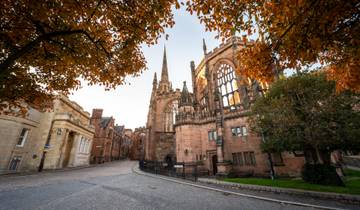
2 days
Essential England (7 destinations)
- ✓ Comprehensive Coventry tour
- ✓ Expert local guides included
- ✓ All accommodation arranged
- ✓ Transportation provided
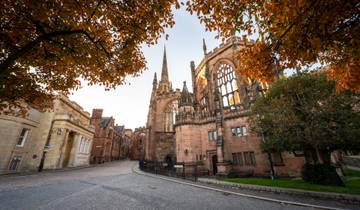
2 days
Essential England (7 destinations)
- ✓ Comprehensive Coventry tour
- ✓ Expert local guides included
- ✓ All accommodation arranged
- ✓ Transportation provided
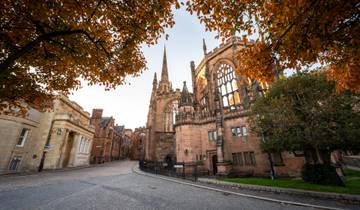
7 days
Touring Southern England with London (14 destinations)
- ✓ Comprehensive Coventry tour
- ✓ Expert local guides included
- ✓ All accommodation arranged
- ✓ Transportation provided

4 days
Touring Southern England (14 destinations)
- ✓ Comprehensive Coventry tour
- ✓ Expert local guides included
- ✓ All accommodation arranged
- ✓ Transportation provided
Multi-day tour packages powered by TourRadar. Prices and availability subject to change.
Why the East Midlands Rewards Explorers in 2026
The East Midlands occupies an awkward position in the mental geography of British tourism. Visitors routinely cross its motorways en route to the Peak District, divert to Nottingham for a Robin Hood afternoon, and continue north or south without exploring the remarkably varied terrain between. That oversight reflects the region’s historically poor self-promotion rather than any shortage of substance. In geological terms alone, the East Midlands encompasses more landscape variety than many visitors expect: the gritstone moors and limestone dales of the Derbyshire Peak; the red sandstone of Nottinghamshire’s Sherwood country; the chalk wolds of Lincolnshire; the ancient pre-Cambrian upland of Charnwood Forest in Leicestershire; and the wide water-meadowed valleys that give way to Rutland’s rolling pastoral countryside.
Heritage follows geology. The Derwent Valley’s mills and mill settlements represent the birthplace of the factory production system and carry UNESCO World Heritage designation, placing them among the globally significant landscapes of industrialization. Lincolnshire gave the medieval world some of its finest Gothic architecture: Lincoln Cathedral dominates its limestone ridge with a presence that remains extraordinary across a largely flat county, while Southwell Minster’s Norman towers and Decorated chapter house represent a different and equally compelling tradition. Nottinghamshire’s country house estates — Clumber Park, Rufford Abbey, Holme Pierrepont — speak to an eighteenth and nineteenth-century economic confidence that shaped the landscape as decisively as any earlier period. Leicestershire holds Foxton Locks, the most dramatic surviving piece of canal engineering in the English Midlands, and Breedon on the Hill, whose church contains the most extensive surviving collection of Mercian sculptural carving in England — a collection that is inexplicably almost unknown outside specialist circles.
The touring infrastructure in 2026 supports the region’s heritage better than it has for a generation. The Monsal Trail tunnels remain fully open to cyclists and walkers. The National Forest continues to mature across the borders of Derbyshire, Leicestershire, and Staffordshire, offering a growing network of cycling and walking routes on former coalfield land that combines ecological interest with genuine historical layering. Electric vehicle charging infrastructure has improved substantially across the region’s rural areas, making low-emission touring of countryside circuits more practical. Canal trust investment on the Grand Union and Cromford canals has improved towpath surfaces for cyclists and walkers. Most heritage attractions have introduced or expanded online booking systems that reduce queueing time at busy sites and, in some cases, offer modest pre-book discounts.
What follows is an honest guide to the routes and tours most likely to reward exploring travelers in 2026, with deliberate emphasis on the genuinely lesser-known alongside frank assessment of the region’s most popular highlights.
The Derwent Valley UNESCO Heritage Circuit 2026
The Derwent Valley Mills, inscribed as a UNESCO World Heritage Site in 2001, traces a 15-mile corridor of the River Derwent from Derby to Matlock Bath through a sequence of industrial mill settlements that collectively document the emergence of the factory production system in the late eighteenth century. Richard Arkwright’s development of water-powered cotton spinning at Cromford in 1771 triggered a rapid succession of mill construction down the valley; the World Heritage designation recognizes this corridor as a landscape of global significance in the history of technology, labor organization, and industrial community planning.
The circuit is most effectively approached as a half-day drive with selective stops on foot, traveled northward from Derby to allow visitors to end the journey at Matlock Bath — a small Victorian spa resort that retains much of its original character and offers an optional cable car finale over the gorge.
Derby: Museum of Making. The southern anchor of the circuit is Derby’s Silk Mill area, home to the Museum of Making (free entry). The site occupies the location of one of England’s earliest purpose-built factories; the Silk Mill of 1721 burned and was rebuilt over subsequent centuries, and the current building incorporates substantial nineteenth-century fabric. The Museum of Making explores manufacturing heritage through interactive displays and preserves structural elements from successive mill periods. The riverside setting beside Exeter Bridge provides immediate visual context for the Derwent’s role as the energy source that drove the valley’s entire industrial ambition. Allow 1.5 to 2 hours for a thorough visit before heading north on the A6.
Milford: Strutt’s Mills and Workers’ Village. Five miles north of Derby, the village of Milford contains the remains of mills developed by Jedediah Strutt and his sons — the business family whose early partnership with Arkwright made the Cromford enterprise possible and who subsequently built their own mill empire in the valley. The surviving remains at Milford are modest by comparison to Belper, but the village itself, the mill pond, the canal tunnel beneath the A6, and the surviving mill-worker housing clearly illustrate the complete social ecosystem the industrial revolution created in this tight valley. A brief stop of 20–30 minutes is rewarding; parking is limited to roadside spaces.
Belper: North Mill and Horseshoe Weir. Belper is the circuit’s most dramatically rewarding stop for those combining heritage and scenery. The Strutt family’s North Mill (1804) exemplifies early fireproof industrial construction: its iron columns, brick arch floors, and innovative structural approach represented the state of the art in factory safety at the time. The mill now houses the Derwent Valley Visitor Centre (permanent exhibition free; guided tower tours approximately £10–12 per adult — check with the centre directly for current 2026 session availability). The Horseshoe Weir, curving across the river below the mill to divert water into the mill race, remains one of the most photographed industrial heritage structures in England. Cross the weir footbridge for the full downstream view of mill, weir, and limestone escarpment above the gorge. Allow at least one hour in Belper; the town center itself, a short walk from the mill, has a good selection of independent cafés.
Cromford: Arkwright’s Mills and Village. Cromford is the circuit’s UNESCO core and deserves the most generous time allocation. Arkwright’s first mill (1771) stands beside the original mill pond below the village; the entire settlement of Cromford was constructed by Arkwright to house and provision his workforce, making it one of the earliest purpose-built industrial communities in England and a key element of the World Heritage inscription. The mill site is freely accessible for exterior exploration throughout opening hours; guided interior tours of the mill buildings run daily for approximately £10–12 per adult (check the official Cromford Mill website for current 2026 tour times and rates, as sessions vary seasonally). The Cromford Canal basin, a ten-minute walk south of the mill along the towpath, retains its original stone warehouses and forms the northern terminus of a picturesque towpath walk toward High Peak Junction. Cromford Market Place, laid out by Arkwright above the mill complex, presents the original workers’ houses, the Greyhound Hotel (rebuilt by Arkwright in the 1770s), and the parish church in a coherent ensemble rarely seen elsewhere in the industrial heritage landscape. Allow a minimum of two hours in Cromford; an afternoon could be spent here without difficulty.
Matlock Bath: Southern Gateway to the Derwent Gorge. The circuit ends at Matlock Bath, a small Victorian resort compressed into the narrow limestone gorge of the Derwent. The Heights of Abraham cable car (approximately £14–17 per adult; check the official site for current 2026 rates) ascends over the gorge to summit grounds with cavern tours and panoramic views. The Derwent Valley Heritage Centre on the main promenade provides a free orientation display for the World Heritage Site with maps, timelines, and interpretive material. The riverside walk south from the promenade toward Cromford, following the gorge, makes an excellent concluding walk of approximately one mile before returning by the same route or collecting a car.
The complete Derwent Valley circuit from Derby to Matlock Bath covers approximately 15 miles northward along the A6. The return to Derby via Ambergate and the A38 adds similar mileage. Budget three to four hours of driving plus stops for a focused circuit; a full day is well justified for those intending to explore Cromford and Belper on foot.
Peak District Hidden Roads, Trails and Villages 2026
The Peak District National Park draws more visitors than any other national park in England. That fact, however, conceals a more nuanced reality: visitor pressure is intensely concentrated in a small number of honeypot locations — Bakewell, Castleton, Dovedale, Stanage Edge — while large sections of the park remain genuinely uncrowded even at peak season. The routes below are among those where the Peak’s distinctive qualities of light, topography, and heritage reveal themselves without the car park queues or ice cream van competition.
Via Gellia. The Via Gellia is the informal name for the road threading a limestone gorge between Cromford and Grangemill, approximately seven miles. Named for the Gell family who constructed it in the early nineteenth century to connect their lead-mining interests to the Cromford Canal, it follows a dramatic defile between ash-wooded limestone cliffs. The spring wildflower display — ransoms, wood anemones, and early purple orchids — is among the finest in the Peak District for those traveling in late April or early May. The road carries relatively light traffic and is manageable by cyclists, though the narrow twists through the gorge require care. At its western end, Grangemill lies at the junction with the High Peak Trail, and the B5056 gives access south to Ashbourne.
Longdendale Circuit, Northern Peak. In the northern Peak, the Longdendale Valley — a chain of five reservoirs built between the 1840s and 1870s to supply Manchester — offers a high moorland experience that most southern Peak visitors never reach. The B6105 along the valley’s north side connects Crowden, where the National Trust maintains a farmhouse, to Woodhead. The old Woodhead railway tunnels (long abandoned) visible above the road carry a reminder that this valley once held one of the busiest mainline routes in England before the line’s closure in 1981. The Pennine Way crosses Longdendale here, making this a natural gateway to the high moorland for walking.
Litton, Tideswell, and the Cathedral of the Peak. The limestone villages of Litton and Tideswell, hidden behind the main tourist routes between Tideswell and Millers Dale, offer a concentrated landscape of dry-stone walls, village duck ponds, and fourteenth-century church architecture. Tideswell’s Church of Saint John the Baptist carries the informal title “Cathedral of the Peak” — an exaggeration, but a defensible one given the building’s scale for its remote setting. Its Perpendicular nave, built in the mid-fourteenth century, is among the finest examples of that phase in Derbyshire, and the building retains medieval brasses and carved details that justify a careful interior visit. The village has a functioning market square and several stone-built inns with limited tourist footprint.
Lathkill Dale National Nature Reserve. Lathkill Dale, south of Monyash, is accessible only on foot and is one of the Peak’s least crowded limestone dales despite its protected status. The River Lathkill has the unusual characteristic of disappearing entirely underground during dry summers and reappearing as full flow from valley-floor springs during wetter seasons — a visually dramatic geological phenomenon that contributes to the dale’s distinctive atmosphere. The dale’s lead mining remains are extensive: engine houses, rakes, and mineral processing sites document an industrial past that ended only in the 1850s. Lathkill Dale provides the experience of a Peak limestone dale almost without the crowds that gather at Dovedale three miles to the southwest.
Eyam: The Plague Village. Eyam (pronounced “Eem”) is the best-documented village quarantine story in English history. When bubonic plague arrived in 1665, probably by cloth bales from London, the community elected — under the combined leadership of rector William Mompesson and his predecessor Thomas Stanley — to self-quarantine in order to prevent disease spreading to the surrounding towns of Sheffield and Bakewell. The quarantine lasted approximately fourteen months and cost around 260 of the village’s estimated 700–800 inhabitants their lives, but is credited in local and regional histories with containing the epidemic in the surrounding area. The Eyam Museum (entry approximately £5–6 per adult; check for current 2026 rates) documents the quarantine through primary documents and individual family records; the parish church retains contemporary registers recording burial entries through the epidemic; and Plague Cottage — where the epidemic is traditionally considered to have first manifested — can be viewed from the outside. Eyam is one of the most affecting heritage visits in the East Midlands for those who approach it with appropriate preparation.
Nottinghamshire Beyond Robin Hood: Lesser-Known Gems 2026
Nottinghamshire’s tourism marketing relies heavily on the Robin Hood legend — a commercially understandable choice that risks obscuring a heritage that has little need for mythological support. The county contains one of England’s most rewarding medieval minsters, a National Trust estate of major landscape and architectural significance, a remarkably preserved manor house in private occupation, and a historic town whose Civil War associations are largely absent from national consciousness.
Southwell Minster. Southwell Minster ranks among England’s most consistently underappreciated medieval buildings. The minster — freely accessible, with donations welcomed — dates primarily from the eleventh and twelfth centuries; its twin Norman towers above the west front represent some of the best-preserved Romanesque tower design in the country. The Chapter House attached to the north choir aisle contains the celebrated Leaves of Southwell: an extraordinary suite of carved botanical capitals displaying naturalistic foliage — maple, hawthorn, hop, oak, and vine among them — executed around 1290 with a naturalistic precision that was exceptional for its period. Nikolaus Pevsner, in his architectural survey of Nottinghamshire, ranked the Chapter House among the supreme achievements of English Gothic decorative sculpture. It is rarely crowded; most visitors encounter it in near-solitude. Southwell is 14 miles east of Nottingham on the A612 and makes a natural pairing with the market town of Newark, a further 7 miles east.
Clumber Park. Clumber Park, a National Trust estate of approximately 3,800 acres in the Sherwood Forest district, occupies the site of the former principal seat of the Dukes of Newcastle. The great house was demolished in 1938 following financial pressures on the estate, leaving behind a landscape park of Georgian ambition: the ornamental lake, the double lime avenue (one of the longest in England at approximately two miles), and the estate chapel of Saint Mary the Virgin (1889, Gothic Revival, by G. F. Bodley — among the finest Victorian chapels in the Midlands). The absence of a country house, paradoxically, gives Clumber an openness and quiet that surviving-house estates rarely match. Entry to the parkland is free for National Trust members; vehicle entry for non-members carries a parking charge of approximately £5–8 per day. Cycling within the park is well-catered for; the estate cycles routes connect to the broader National Cycle Network.
Rufford Abbey Country Park. Rufford, founded as a Cistercian abbey in the twelfth century and dissolved at the Reformation, survives as extensive picturesque ruins within a country park managed by Nottinghamshire County Council (free entry). The roofless shell of the twelfth-century undercroft is the site’s architectural centerpiece; the surviving Jacobean additions and the eighteenth-century ornamental lake give the site multiple layers of history rarely encountered in a single unenclosed location. The gallery within the park runs a regular program of contemporary craft and visual art exhibitions. Rufford lies 2 miles south of Ollerton on the A614, easily combined with Sherwood Forest on a single day.
Newark-on-Trent. Newark is one of the East Midlands’ most consistently overlooked historic towns. The medieval market place — among the largest in England — is flanked by Georgian townhouses and the Church of Saint Mary Magdalene, whose spire at approximately 252 feet is the county’s tallest. Newark Castle (exterior freely accessible; limited paid interior access) is a twelfth-century structure that saw sustained action during the Civil War as a Royalist garrison besieged three times by Parliamentary forces; King John died at Newark in 1216. The Civil War Visitor Centre (entry approximately £5–7 per adult) provides an unusually strong local history narrative for its size. The town’s antique and specialty retail market, operating from permanent dealers, draws collectors from across the Midlands to Newark’s regular antique fairs, among the largest in Europe.
Holme Pierrepont Hall. Set in the Trent flood meadows east of Nottingham, Holme Pierrepont Hall is a mid-fifteenth-century courtyard manor house that has been continuously inhabited by the Pierrepont family for over five centuries. The hall opens for guided tours on selected dates through the year (check official listings for 2026 open days; entry approximately £8–10 per adult); the formal parterre garden was laid out in the seventeenth century and carefully restored in the twentieth. The hall is not aggressively signposted and remains one of the region’s most genuinely intimate heritage house experiences in private occupation.
Best Cycling Routes in the East Midlands 2026
The region’s cycling network, built on disused railway lines, reservoir perimeters, canal towpaths, and improving dedicated road infrastructure, creates a range of options from family-friendly flat circuits to more demanding limestone plateau crossings.
The Monsal Trail, Derbyshire. The Monsal Trail follows the former Midland Railway line through the limestone dales of the Derbyshire Peak for approximately 8.5 miles between Coombs Road near Bakewell and Wyedale car park. The reopening of five tunnels — including the 469-metre Headstone Tunnel — to walkers and cyclists in 2011 transformed the trail from an enjoyable but fragmented ride to one of England’s most spectacular short cycling experiences. The passage through Headstone Tunnel emerges onto Monsal Viaduct high above the River Wye, with views down the dale that stop most riders in their tracks. Several hire operators at Bakewell and at Hassop Station — a restored Victorian station building within the trail offering café facilities — provide standard bike hire for approximately £15–25 per day and e-bike hire for approximately £28–40 per day (check individual operators for current 2026 rates). The entire trail is traffic-free.
The Tissington and High Peak Trails, Derbyshire. The Tissington Trail (13 miles, Ashbourne to Parsley Hay) and the High Peak Trail (17.5 miles, Parsley Hay to Cromford High Peak Junction) share a junction at Parsley Hay on the limestone plateau, creating a combined 30-mile off-road cycling network of exceptional character. The Tissington Trail is the gentler of the two, running through open limestone countryside past the estate village of Tissington — whose well-dressings in May are among Derbyshire’s most photographed folk traditions. The High Peak Trail is more demanding, crossing exposed plateau terrain with steeper sections near Hurdlow and Middleton Top (where a restored Victorian winding engine can be viewed). Parsley Hay cycle hire centre (operated by the Peak District National Park Authority) offers standard bike hire for approximately £15–20 per day and e-bike hire for approximately £30–40 per day. The southern terminus at Ashbourne is a well-preserved Georgian market town worth an hour before or after the ride.
Rutland Water Circuit. Rutland Water’s 25-mile perimeter cycle path is the flattest and most family-accessible of the region’s major circuits, running around the shores of one of England’s largest reservoirs. The dedicated cycleway is entirely off-road and mostly well-surfaced, passing through the villages of Edith Weston and Normanton, across the Hambleton peninsula with its sweeping water views, and beside the Egleton nature reserve. Cycling Rutland Ltd at Normanton Park offers hire for approximately £12–18 per standard bike and £25–35 per e-bike per day (check official site for 2026 rates). The partially submerged Normanton Church — its nave was raised and buttressed when the reservoir was filled in 1975, leaving the tower and west front standing in the shallows — is the circuit’s most memorable sight and now houses a small museum (entry approximately £3–5).
Grand Union Canal Towpath, Leicestershire and Northamptonshire. The Grand Union Canal towpath from Market Harborough south to Foxton Locks and beyond provides 15–20 miles of largely level riding through pastoral countryside. Towpath surface quality varies but most sections between Market Harborough and Foxton are rideable on hybrid or gravel bikes. The focal point is Foxton Locks: a flight of ten locks in two sets of five, raising the canal 75 feet and constituting the most photographed piece of canal engineering in the Midlands. The towpath, locks, and visitor infrastructure are freely accessible; the Foxton Locks Visitor Centre (entry approximately £4–6 for the boat museum section) documents the locks’ Victorian construction and the briefly operated inclined plane boat lift (1900–1910) that was intended to accelerate passage but proved commercially unviable. The lock-side pub makes a natural turning point for an out-and-back ride from Market Harborough (approximately 5 miles each way).
National Forest Cycle Routes. The National Forest cycling network, centered on Ashby-de-la-Zouch in northwest Leicestershire, has expanded considerably as the forest itself has matured. The National Forest Cycle Route (approximately 38 miles, much of it off-road) connects former colliery sites, heritage woodland, and the Conkers visitor centre at Moira (entry approximately £10–13 per adult; check for 2026 rates). Cycling through the National Forest offers a genuinely distinctive experience: the landscape is in visible transformation, with maturing woodland contrasting with open heath, reed beds, and water features created on reclaimed industrial land. Several shorter loops — including the Rosliston Forestry Centre circuit — provide accessible family cycling of five to ten miles without the full route commitment.
Best Walking Trails for Secret Landscapes 2026
Walking access across the East Midlands is extensive and, in many areas, surprisingly uncrowded. The trails below range from short heritage walks to sections of long-distance routes that reveal landscapes the region’s motorway geography entirely conceals.
Charnwood Forest, Leicestershire. Charnwood Forest occupies a block of ancient upland in northwest Leicestershire whose rocks — pre-Cambrian volcanic and sedimentary formations — are among the oldest exposed at the surface in Britain. The landscape that results is unlike anything else in the English Midlands: rocky ridges, open heath, ancient woodland, and sudden outcrops that interrupt the surrounding agricultural plain. Beacon Hill Country Park and Bradgate Park together provide the most accessible walking in the area. The Outwoods near Loughborough — a remnant of ancient oak woodland with prehistoric earthworks visible at its edges — adds an atmospheric shorter walk of two to three miles. Charnwood Forest as a whole receives only modest visitor numbers despite being within 30 minutes of both Leicester and Derby.
Derwent Valley Canal Towpath. The Cromford Canal, running south from Cromford Canal Basin toward Ambergate and High Peak Junction, provides one of the region’s most historically layered walks on a level towpath of approximately three miles (one way). The canal was built in 1793 to connect Cromford Mill to the national waterway network and was in commercial use until the early twentieth century; the surviving infrastructure includes original stone warehouses at Cromford, the High Peak Junction workshops (where maintenance equipment from the horse-drawn tramway era survives), and two substantial canal tunnel portals. The towpath is freely accessible throughout; the Friends of the Cromford Canal have progressively restored sections and produced an excellent illustrated walking guide available from the Arkwright Society.
Hathersage and Stanage Edge, Derbyshire. The walk from Hathersage village to Stanage Edge — a dramatic gritstone escarpment approximately 4 miles from the village and 1,000 feet in elevation — is one of the Peak District’s classic moorland walks in a sector where visitor pressure is far lower than at Kinder Scout or Mam Tor. The edge extends for approximately three miles of open moorland walking with views across the Hope Valley and toward the Welsh hills on clear days. Hathersage itself is associated in literary tradition with Charlotte Brontë’s Jane Eyre; the church contains the grave of Little John, Robin Hood’s companion according to local tradition — though this is presented as legend rather than documented history. The village has an outdoor swimming pool (open seasonally) and several excellent cafés.
Viking Way, Lincolnshire. The Viking Way long-distance path runs 147 miles through Lincolnshire from the Humber Bridge to Rutland Water, passing through the Lincolnshire Wolds AONB along some of its most rewarding sections. Day-walk sections from Louth into the central Wolds, or between the valley villages of Tealby and Binbrook, provide accessible sample stretches of five to ten miles through chalk upland and pastoral valley terrain that receives negligible tourist footfall. The village churches along the Wolds route — many medieval, several with Norman fabric — are open and worth brief exploration. Accommodation on the Viking Way is limited between some sections; planning ahead is essential for multi-day walks.
Southwell and the Minster Countryside Walk. A circular walking route of approximately five miles links Southwell Minster through the historic parkland of Norwood Park (private estate; public footpaths cross it under a permissive access arrangement) and back through the edges of the Trent Vale. The walk provides context for understanding the agricultural and ecclesiastical landscape that supported Southwell’s minster status through the medieval period. Southwell itself warrants extended time: the minster, the medieval Saracen’s Head inn (associated with Charles I’s surrender in 1646), and the Workhouse (National Trust; entry approximately £8–10 per adult), a remarkably complete Victorian workhouse open to visitors, together provide a half-day of heritage of unusual variety.
Leicestershire and Rutland’s Secret Landscape 2026
Leicestershire and Rutland are the East Midlands’ most consistently underestimated counties for visitors, offering a landscape of gentle hills, ancient hunting forests, and pastoral valleys broken by the remarkable pre-Cambrian upland of Charnwood Forest. The two counties together contain heritage that, if transposed to a more fashionable English region, would attract considerably greater attention.
Bradgate Park. Bradgate Park (free entry; car parking approximately £4–6) is an 850-acre country park on the western edge of Charnwood Forest that was never enclosed for agriculture, preserving a remnant of the medieval hunting landscape of the Earls of Leicester within its original stone walls. The ruins of Bradgate House — a late fifteenth-century brick manor associated with the Grey family and most notably with Lady Jane Grey, the nine-day queen executed in 1554 — occupy the park’s center, freely accessible and substantial enough to convey the scale of the original building. Red deer herds roam Bradgate throughout the year; they are most visible and most photogenic in October during the autumn rut. The Little Matlock Gorge within the park — a geological exposure of ancient pre-Cambrian rocks — is one of the few places in England where billion-year-old rocks break the surface.
Breedon on the Hill. Breedon on the Hill, 12 miles north of Leicester, is a place that deserves to be far better known than it is. An Iron Age hillfort occupies the limestone hill; quarrying has removed much of the hillfort’s perimeter, but the summit retains the medieval Church of Saint Mary and Saint Hardulph, which contains one of the most remarkable collections of Anglo-Saxon carved stonework in England. The Breedon Friezes — long horizontal panels of carved Mercian interlace, figural sculpture, and inhabited vine-scroll, dating probably from the eighth or ninth century — represent the finest surviving sequence of their type. The carved figures include beasts, angels, and processional human forms executed with a fluency that surprises most visitors who encounter them for the first time. The church is freely accessible; no entry fee applies. The village below has changed little since the eighteenth century.
Staunton Harold Church and the Calke Circuit. In south Leicestershire, Staunton Harold Church (National Trust; freely accessible from exterior, interior access by arrangement) is one of a small number of English churches built during the Interregnum, its inscription over the west door recording that it was founded “In the year 1653 When all things Sacred were throughout ye nation Either demolisht or profaned.” The church and the adjacent reservoir — created in the 1960s for water supply — occupy a setting of exceptional tranquility. Three miles east lies Calke Abbey (National Trust; non-member entry approximately £12–16; check site for current 2026 rates), presented as a “time-warp” house: a country seat that the National Trust has preserved largely as found, with accumulated possessions of centuries of baronet occupation filling rooms sealed for decades. The experience of Calke is unlike that of any conventionally curated country house and rewards visitors who approach it with patience.
Oakham and Rutland’s Market Towns. Rutland, England’s smallest county, centers on Oakham — a market town of Georgian and medieval character whose Great Hall of Oakham Castle (Norman, approximately 1180–1190; free entry) is among the finest surviving examples of late-twelfth-century secular interior architecture in England. The Hall’s collection of horseshoes — presented as forfeit by any peer of the realm passing through Oakham by a long-standing tradition of uncertain origin — adds an incongruous and memorable detail to an already remarkable space. The Rutland County Museum (free entry) provides context for both the castle and the county’s broader history. From Oakham, the road southeast toward Stamford passes through the limestone villages of Edith Weston, Ketton (with a notable Norman church), and Tinwell, creating a 12-mile drive of consistent architectural quality through a countryside almost entirely free of commercial tourist development.
Lincolnshire: Britain’s Most Underrated Touring County in 2026
Lincolnshire consistently appears near the bottom of English county tourism surveys. Its landscapes are wide and, in the fenland south and east, flat; its main city lacks the critical visitor infrastructure of York or Bath. These facts, combined with an evident cultural aversion to aggressive self-promotion, have created a county where the ratio of heritage quality to visitor numbers is extraordinarily favorable: Lincoln Cathedral receives a fraction of the footfall of comparable English cathedrals; the Lincolnshire Wolds Area of Outstanding Natural Beauty is rarely crowded; and the market towns of Stamford, Louth, and Horncastle offer Georgian and medieval streetscapes encountered largely without queues.
Lincoln Cathedral and Castle Hill. Lincoln’s medieval heritage concentrates on the castle and cathedral hill, which rises dramatically above the modern city on a limestone ridge. Lincoln Cathedral — begun in 1072 and substantially rebuilt after an earthquake in 1185, with continued building through the thirteenth and fourteenth centuries — is one of the finest examples of English Gothic architecture and historically dominated the Lincolnshire skyline for hundreds of years. The medieval spire, whose documented height is subject to scholarly debate, was long considered among the tallest structures in the world during its period of standing; the surviving towers at approximately 83 metres remain visually commanding across the flat plain. Entry to the cathedral costs approximately £12–15 for adults (check the official website for current 2026 rates and exhibition details). Lincoln Castle, directly adjacent, houses one of the four surviving original copies of Magna Carta (1215); entry approximately £10–14. The medieval street of Steep Hill, connecting the cathedral quarter to the lower city, is among the most evocative urban streetscapes in England for those who climb it on foot.
The Lincolnshire Wolds. The Lincolnshire Wolds, designated an Area of Outstanding Natural Beauty, are a gentle chalk upland traversed by narrow lanes connecting settlements that have attracted almost no modern development. The principal Wolds market towns — Louth, with an extraordinary Perpendicular church spire at approximately 295 feet among the tallest in England; Horncastle, an antique dealer center; and Alford, home to a five-sailed windmill in operating condition — offer traditional commercial character without the tourist overlay of more fashionable destinations. The Bluestone Heath Road, a ridgeway route above Louth, provides open views east toward the coastal marshes and, on the clearest days, toward the North Sea itself. Walking and cycling in the Wolds is excellent, with relatively light traffic on lanes between settlements and a reasonable public footpath network across the agricultural upland.
Stamford and Burghley House. Stamford, on the Lincolnshire-Northamptonshire border, is frequently cited as one of England’s finest stone-built towns. Its Georgian and earlier streetscape — constructed predominantly in the local oolitic limestone — was designated one of England’s first conservation areas in 1967 and has served as a film and television location for its visual coherence and period character. Two miles southeast, Burghley House — the sixteenth-century mansion commissioned by William Cecil, principal minister to Elizabeth I — is considered one of the grandest Elizabethan country houses in England and contains a substantial collection of Old Master paintings and decorative arts across its State Rooms. The Heaven Room, its ceiling painted by Antonio Verrio in the 1690s, is among the most spectacular decorative schemes in any English private house. Entry approximately £22–26 for adults (check the official site for current 2026 rates). The grounds, landscaped by Capability Brown in the 1750s and 1760s, are available separately at lower cost and combine well with the house visit in a full day.
Tattershall Castle and RAF Heritage. Tattershall Castle (National Trust; entry approximately £8–10 per adult; check for 2026 rates) is a remarkable fifteenth-century brick tower commissioned by Ralph Lord Cromwell, Treasurer of England, around 1440. Its survival is exceptional: the castle retains complete original interiors including a collection of heraldic stone fireplaces of national significance that were rescued from sale abroad in 1911 by Lord Curzon, who purchased and restored the castle before transferring it to the National Trust. Lincolnshire’s flatlands made it ideal for wartime airfields; the aviation heritage of the Second World War is documented at the Lincolnshire Aviation Heritage Centre at East Kirkby (entry approximately £14–18 per adult; check for 2026 rates), where a Lancaster bomber in taxiing condition provides the centerpiece of one of the most moving aviation heritage experiences in the country.
Guided and Self-Guided Heritage Tours 2026
The East Midlands’ tour operator and site-based tour market is more developed than the region’s reputation suggests, offering structured options for visitors who prefer guided access to self-directed exploration.
National Trust Guided and Audio Tours. National Trust properties across the region offer room-by-room guided tours and audio guides as part of entry. Kedleston Hall — the neoclassical house 4 miles northwest of Derby where Robert Adam redesigned the main block and much of the interior from 1759 for the Curzon family — is particularly recommended for the completeness of its Adam vision: ceilings, furniture, door furniture, and fittings were all designed by Adam, creating one of the most internally coherent neoclassical interiors in England. Non-member entry approximately £11–14; check the official site for current 2026 rates. Hardwick Hall (Derbyshire), Belton House (Lincolnshire), and Canons Ashby (Northamptonshire) offer comparable guided-tour experiences of country-house interiors at different periods and architectural traditions. National Trust membership (approximately £75–100 per adult annually, with joint and family discounts) covers all of these at no additional charge and pays back within two or three East Midlands visits.
Haddon Hall Guided Tours. Haddon Hall, 2 miles southeast of Bakewell, is one of England’s most completely preserved sequences of medieval and Tudor domestic architecture. Unlike most comparable properties, it was not significantly rebuilt in the eighteenth century; its sequence of rooms from the twelfth to the seventeenth century survives largely as built. Guided tours (entry approximately £16–19 per adult; check the official site for current 2026 rates; advance booking strongly recommended July to August) proceed through the twelfth-century chapel with its wall paintings, the fourteenth-century banqueting hall, and the Long Gallery of the sixteenth century, with its carved linenfold paneling and views over the walled terraced gardens. The gardens themselves, planted on sloping terraces above the River Wye, are particularly strong in June for traditional rose varieties.
Chatsworth Estate Tours. Chatsworth, seat of the Duke of Devonshire on the eastern edge of the Peak District, represents the East Midlands’ largest-scale country house experience. The State Apartments — open to visitors since 1694 — contain one of the most significant collections of applied art in British private ownership, including Old Master paintings, decorative arts, sculpture, and the Devonshire Sculpture Gallery. Entry to house and garden combined costs approximately £24–28 per adult (check the official site for current 2026 rates; advance booking strongly advised for July and August). Garden-only tickets are available at reduced cost and provide access to the Emperor Fountain and the cascade waterfall without entering the house — a worthwhile option for repeat visitors or those prioritizing landscape over interiors.
Belvoir Castle Tours. Belvoir Castle (pronounced “Beaver Castle”), seat of the Duke of Rutland on the Leicestershire-Lincolnshire border, rises from a wooded escarpment above the Vale of Belvoir in a deliberately theatrical setting. The castle was rebuilt by James Wyatt from 1801 in the Gothic Revival style and further rebuilt after a fire in 1816. The Regent’s Gallery — 156 feet long and decorated for the visit of the Prince Regent — and a collection of Flemish tapestries of the seventeenth century are the interior highlights. Entry approximately £18–22 per adult (check the official site for current 2026 rates); the gardens and grounds are available at lower entry prices for those preferring the exterior and landscape setting.
Sherwood Forest Ranger-Led Tours. Sherwood Forest Country Park (free entry; parking fees apply) offers seasonal ranger-led walks through the ancient oak woodland, focusing on veteran trees, woodland ecology, and the documented landscape of the medieval royal hunting forest. The Major Oak — a pedunculate oak of great age, whose precise years are genuinely uncertain among specialists and have been the subject of considerable debate — is the park’s most-visited single feature and is freely accessible from the visitor centre. Ranger tour dates and booking are available from the visitor centre; tours run seasonally from April through October 2026, with a small additional charge of approximately £4–6 per adult. Booking is recommended for weekend sessions in summer.
Self-Guided Northamptonshire Heritage Circuit. Northamptonshire, the region’s southernmost county, supports a self-guided driving circuit connecting Canons Ashby (National Trust; entry approximately £10–13 per adult), Rockingham Castle (entry approximately £11–14 per adult; check for 2026 rates), and the village of Sulgrave — home to Sulgrave Manor (approximately £6–8 per adult), the Tudor house associated with the Washington family whose later descendants included President George Washington of the United States. The circuit of approximately 45 miles also passes the limestone villages of Middleton Cheney and King’s Sutton and can be completed comfortably in a long day. Charles Dickens was a frequent guest at Rockingham Castle, which provided inspiration for Chesney Wold in Bleak House.
East Midlands Tours Budget Planning 2026
Daily Budget Tiers (per person, two sharing accommodation):
Budget travelers (budget hotel or B&B, primarily free sites and trails): accommodation per person two sharing approximately £35–50; café and pub meals £20–30; fuel or transport share £10–18; site entries £0–12. Total approximately £65–110 per person daily. This range is achievable across almost any East Midlands circuit given the high concentration of free heritage — Southwell Minster, Breedon on the Hill, Bradgate Park, Museum of Making Derby, Cromford Mill exterior, Foxton Locks, Sherwood Forest, and Rutland Water walking circuit all carry no entry fee.
Mid-range travelers (3-star inn or hotel; mix of paid and free sites): accommodation per person two sharing approximately £65–90; pub restaurant and moderate café dining £38–55; fuel and parking £18–28; attraction entries and a guided tour £20–35. Total approximately £140–210 per person daily.
Luxury travelers (4- or 5-star country house hotel; private or premium tours): accommodation per person two sharing approximately £110–190; fine dining £65–100; private hire or premium car £40–65; exclusive tour packages and combined entry £40–70. Total approximately £255–425 per person daily.
Three-Day Mid-Range Trip (per person). Two adults sharing mid-range accommodation for three nights and three full touring days in the East Midlands: accommodation approximately £195–270 per person over three nights; meals approximately £115–165 per person over three days; fuel and parking approximately £55–85 per person; entries and guided tours approximately £60–105 per person. Total approximately £420–630 per person for three days.
Free and Near-Free Highlights. The following carry no entry charge in 2026 and represent some of the region’s strongest heritage experiences: Southwell Minster; Breedon on the Hill church; Bradgate Park (parking fee only); Sherwood Forest Country Park (parking fee applies); Derby’s Museum of Making; Cromford Mill and village exterior; Cromford Canal towpath; Foxton Locks towpath; Belper Horseshoe Weir; Oakham Castle Great Hall; Lincoln Cathedral exterior and close; Rutland County Museum; Newark Castle exterior. The Monsal Trail, Tissington Trail, High Peak Trail, and Rutland Water perimeter path are all free to walk or cycle (bike hire charges apply separately).
Money-Saving Strategies for 2026. Booking Chatsworth and Haddon Hall online at least two weeks ahead for summer visits avoids potential unavailability and, at some sites, offers modest pre-book discounts. National Trust membership (approximately £75–100 per adult annually) pays for itself within two East Midlands days if those days include Calke Abbey, Kedleston Hall, and Clumber Park. Cycle hire at multiple sites charges noticeably less Monday through Thursday than at weekends; planning cycling days mid-week saves 10–20% at most operators. Combined car-parking and cycling-hire packages at Rutland Water save approximately 15–20% over paying separately. The Great British Heritage Pass (available via VisitBritain for overseas visitors) includes Chatsworth and several other East Midlands properties and may represent significant savings on multi-site heritage itineraries.
Seasonal Timing for East Midlands Routes 2026
Spring (March to May). Spring offers the optimal combination of manageable crowds and exceptional seasonal scenery. Bluebells in Derbyshire’s woodland valleys arrive typically in late April; wildflowers in the limestone dales — Lathkill Dale, Via Gellia — bloom from April through May; the Tissington Trail well-dressings take place in late May. Most heritage sites reopen after winter closures by late March. Morning mist in the Derwent Valley gorge in April creates photographic conditions that summer clarity cannot replicate. Cycling trails dry out from winter mud and cycling is typically at its most pleasant from mid-April onward. All cycling hire operators are open from spring and often have better availability than summer weekends.
Summer (June to August). Summer brings significant visitor pressure to the most popular locations: Chatsworth, Dovedale, Castleton, and Bakewell experience genuine crowding in July and August, and advance booking for Chatsworth and Haddon Hall is non-optional for weekend visits. Lesser-known sites covered in this guide — Southwell, Breedon, Clumber Park, Rutland Water, Holme Pierrepont — remain manageable even in August. Rutland Water attracts watersports visitors in summer; weekday cycling is preferable to weekend visits. Evening light over the Lincolnshire Wolds in June and July provides ideal cycling and photography conditions in a landscape that rarely attracts comparable summer attention.
Autumn (September to October). Autumn is considered the region’s finest touring season by many experienced visitors. The Derwent Valley’s woodland cover turns to red and gold from late September; Bradgate Park’s red deer rut in October is one of the East Midlands’ most dramatic wildlife experiences; and Matlock Bath’s Illuminations — a Victorian tradition continued as an annual riverside light display — take place over consecutive Saturdays in October. Most heritage sites remain fully open through late October; a significant proportion reduce opening or close by the end of October. Autumn accommodation rates at country house hotels and rural B&Bs often decrease from August peaks while conditions remain excellent for touring.
Winter (November to February). Winter touring requires more planning. National Trust properties operate reduced opening schedules (frequently weekends only, or selected weekdays from November); Chatsworth and Haddon Hall typically close by the end of December and reopen in spring. Lincoln Cathedral, Southwell Minster, Newark, and urban heritage throughout the region remain accessible year-round. Surfaced cycling routes — Rutland Water, Monsal Trail — are usable in dry winter conditions; the unsealed sections of the High Peak and Tissington Trails can be heavy after sustained rain. Country house hotels and B&Bs in the region regularly offer winter discounts of 20–35% compared to summer rates, making a winter base-and-day-trip approach particularly economical for those who plan around open sites.
Frequently Asked Questions
Is a car essential for exploring East Midlands routes in 2026?
A car significantly expands access — particularly for the limestone dales, the Lincolnshire Wolds, and the Derwent Valley circuit — but is not essential for every worthwhile route. The Monsal Trail is accessible by bus from Bakewell or by train to Buxton (for the High Peak Trail end). Rutland Water is reachable by bus from Oakham station on the East Midlands Railway network. Sherwood Forest Country Park is served by bus from Nottingham. Lincoln, Newark, Southwell, and Stamford are all on rail lines. Haddon Hall and Chatsworth lie within a few miles of Bakewell, which is accessible by bus from Sheffield and Matlock. For those without a car, a combination of rail, local bus, and cycling covers the region’s headline highlights; the most remote limestone dales and the Belvoir Vale require private transport. E-bike hire at multiple trail points extends the practical range for car-free visitors considerably.
When is the best time to visit the East Midlands for tours in 2026?
May and September offer the most favorable balance of good weather, manageable visitor volumes, and full site availability. May brings spring wildflowers to the limestone dales and woodland valleys, and all tour operators and cycling hire centers are open with better availability than peak summer. September delivers autumn color in the Derwent Valley and Bradgate Park, comfortable walking and cycling temperatures, and the opening of Matlock Bath’s Illuminations in the final weeks of the month. School summer holidays — mid-July to early September — bring peak crowds to Chatsworth, Dovedale, Bakewell, and Castleton; advance booking for these sites is essential in August. Lincolnshire, Rutland, and Nottinghamshire remain considerably less crowded than the Peak District throughout the year.
Can I combine Peak District and Derwent Valley in one day in 2026?
Yes, with a car and an early start. A logical combined day travels north from Derby on the A6 to Cromford and Matlock Bath (allowing two hours for the Derwent Valley UNESCO core), then continues via the B6012 to Bakewell and Haddon Hall two miles south (allowing 90 minutes at Haddon with advance booking), returning via Chatsworth for a late-afternoon garden walk of 90 minutes before heading back to Derby via the A619 and A6. This covers approximately 80 miles and four major sites in one long day; a two-day approach is recommended for those who want to explore Cromford fully and spend genuine time in Chatsworth’s house. Advance booking for both Haddon Hall and Chatsworth is essential for this combination in summer 2026.
What are the best free attractions on East Midlands routes in 2026?
The region’s strongest free heritage experiences in 2026 include Southwell Minster (Nottinghamshire’s finest medieval building, with the Leaves of Southwell chapter house); Breedon on the Hill church (the East Midlands’ best-kept secret for early medieval carved stonework); Bradgate Park (850 acres of medieval hunting landscape in Leicestershire, free entry with small parking charge); Foxton Locks (10-lock canal staircase, free towpath access throughout); Derby’s Museum of Making (the birthplace of English industrial heritage interpretation, free entry); Cromford Mill exterior and village (UNESCO World Heritage, fully accessible without payment); and Oakham Castle Great Hall (a remarkable Norman interior, free entry). The Monsal Trail, Tissington Trail, High Peak Trail, and Rutland Water perimeter path are all free to walk or cycle; cycling hire costs apply separately but the infrastructure itself carries no access charge.
How do I plan a 3-day East Midlands heritage tour in 2026?
A well-structured three-day itinerary pairs the Derwent Valley UNESCO circuit (Derby, Cromford, Matlock Bath) with an afternoon in the Peak District dales on Day 1, based at Matlock or Bakewell; Chatsworth Estate and Haddon Hall on the morning of Day 2 followed by a drive to Clumber Park or Southwell Minster in Nottinghamshire in the afternoon; and either the Lincolnshire route (Lincoln Cathedral, Stamford, and Burghley House) or the Leicestershire secret-spots circuit (Bradgate Park, Breedon on the Hill, Foxton Locks) on Day 3. This triangular route covers approximately 160–200 miles, mixing driving, walking, and cycling as preferred, and includes both nationally recognized highlights and the lesser-known treasures that this guide emphasizes. Advance booking for accommodation is strongly recommended for summer 2026 in Bakewell and Lincoln, both of which operate at high occupancy in July and August.
Are the cycling routes in the East Midlands suitable for beginners in 2026?
Three of the region’s major cycling routes are genuinely suitable for beginners and families with no prior cycling experience: the Rutland Water perimeter circuit (25 miles, flat throughout, entirely traffic-free, well surfaced); the Monsal Trail (8.5 miles, gentle gradients, traffic-free, paved through all five tunnels); and the Tissington Trail (13 miles, entirely traffic-free, gentle gradients through open Peak District countryside). The High Peak Trail requires slightly more fitness for its exposed plateau sections. Canal towpath cycling on the Grand Union between Market Harborough and Foxton Locks is suitable for confident beginners on hybrid bikes, though towpath surfaces are occasionally rough. E-bike hire is available at Rutland Water (Cycling Rutland Ltd), Hassop Station on the Monsal Trail, and Parsley Hay on the Tissington and High Peak Trails, extending comfortable cycling range for those who want to cover more distance without the effort — typically at approximately £28–40 per day depending on location and specification.
What makes the East Midlands different from other UK touring regions in 2026?
The East Midlands offers a density of heritage at every scale — from UNESCO World Heritage through to a single church on a limestone hill — that is almost never crowded and rarely packaged for tourism in ways that compress or stage the experience. Visitors encounter most of the region’s highlights substantially as the sites themselves, without the commercial overlay that characterizes comparable heritage in the Cotswolds or Scottish Highlands. The Derwent Valley additionally provides the birthplace of the Industrial Revolution as a sustained landscape experience across 15 miles, rather than as a single interpreted building. The region’s spectrum of touring modes — driving, cycling, walking, canal boat — operates within a compact enough geography that all can be combined in a short trip without excessive driving. Budget and mid-range accommodation quality in the region has improved measurably since 2020; country house hotels offer exceptional value relative to equivalent properties in more fashionable touring areas.
Which East Midlands castle tours offer the best value in 2026?
Belvoir Castle offers the most theatrical setting and the most comprehensive interior tour for its admission price (approximately £18–22 per adult); the combination of Wyatt Gothic exterior, the Regent’s Gallery, and the Flemish tapestries justifies a half-day. Haddon Hall (approximately £16–19 per adult) represents the most rewarding value for authentic medieval atmosphere — its lack of significant Victorian alteration makes it more revealing of genuine medieval domestic fabric than most comparable properties in England. Rockingham Castle in Northamptonshire (approximately £11–14 per adult) is the most economically priced of the region’s significant castle experiences, combining Norman foundations, Tudor domestic buildings, and associations with Charles Dickens within a single relatively modest entry price. Newark Castle exterior is freely accessible; interior access carries a small additional charge.
How do I access the Derwent Valley Mills UNESCO sites in 2026?
All five principal inscribed settlements (Derby, Milford, Belper, Cromford, and Matlock Bath) are accessible by car via the A6, which runs through the valley floor from Derby to Matlock Bath in approximately 40–45 minutes of driving. East Midlands Railway (EMR) serves the valley via the Matlock line from Derby (approximately 40–50 minutes to Matlock Bath; trains roughly hourly throughout the day); Cromford, Matlock Bath, and Belper all have stations on this line. Ambergate station provides a connection for walkers who want to join the Cromford Canal towpath. For cyclists, a partially signed route follows the river corridor between Derby and Matlock, though several sections share road surface with the A6 and require confidence in traffic. The most complete circuit experience uses car travel between settlements and continues on foot within each; the Cromford Canal towpath walk (freely accessible from Cromford Basin) adds a non-road alternative for the southern section.
What hidden gems can I discover on a Lincolnshire road trip in 2026?
The Lincolnshire interior holds several places that consistently surprise visitors expecting uniform agricultural flatness. Tattershall Castle (National Trust; entry approximately £8–10 per adult) is a remarkable fifteenth-century brick tower with complete original interiors and a fireplace collection of national importance, largely unknown outside the county. The village churches of the Lincolnshire Wolds — particularly at Tealby, Swinhope, and Biscathorpe (the last a ruined medieval church accessible on foot across farmland) — represent medieval rural building at its most unrestored. Alford’s five-sailed windmill, in operating condition and open seasonally, is one of the finest in Lincolnshire. The Lincolnshire Aviation Heritage Centre at East Kirkby (entry approximately £14–18 per adult; check for current 2026 rates) provides one of the most moving Second World War aviation heritage experiences in England, centered on a Lancaster bomber restored to taxiing condition that operates on selected days. And Stamford itself — one of England’s finest stone towns and accessible in under two hours by road from most East Midlands bases — justifies the detour to the county’s southwestern corner regardless of what else Lincolnshire has in store.