
Drottningholm Palace Day Trip from Stockholm 2026: Sweden’s Royal Residence
Drottningholm Palace offers one of Stockholm’s most rewarding day trips, combining UNESCO World Heritage architecture with scenic Lake Mälaren views and royal Swedish history. Located just 11 kilometers west of central Stockholm, this 17th-century palace remains the permanent residence of Sweden’s royal family while welcoming visitors to explore its magnificent state apartments, baroque gardens, Chinese Pavilion, and historic Court Theatre.
Key Takeaways
- Easy Access 2026: Multiple transport options include scenic 50-minute ferry rides (SEK 170-220), metro plus bus combinations using SL travel cards, and private vehicle access with free parking
- UNESCO World Heritage: Sweden’s best-preserved 17th-century royal castle, awarded UNESCO status in 1991 for its exceptional baroque architecture and French-inspired design
- Palace Tickets 2026: Adult admission SEK 130, students/seniors SEK 90, children under 7 free, with optional Chinese Pavilion access (SEK 60) and guided tours (SEK 30)
- Multiple Attractions: Full day combines palace state apartments, baroque gardens (free access), Chinese Pavilion, and Court Theatre within walking distance
- Active Royal Residence: Southern wing reserved for King Carl XVI Gustaf and Queen Silvia since 1981, adding authentic royal atmosphere to your visit
- Year-Round Access: Palace open daily 10 AM-5 PM with seasonal variations, gardens accessible around the clock for early morning or evening strolls
People Also Ask About Drottningholm Palace Day Trip 2026
How much does a day trip to Drottningholm Palace cost in 2026?
A complete Drottningholm day trip costs SEK 280-410 per person in 2026. Palace admission is SEK 130, return ferry SEK 220 (or free with SL travel card using bus), Chinese Pavilion SEK 60, and lunch SEK 150-200. The scenic Stromma ferry provides the most memorable experience, departing from Klara Mälarstrand with historic turn-of-the-century vessels S/S Drottningholm or M/S Prins Carl Philip. Budget-conscious travelers can reduce costs by taking metro to Brommaplan (SEK 39 single with SL card) then bus 176 or 177, using SL commuter boat 89 plus bus connection (both included in standard SL travel card), or bringing picnic lunch to enjoy in the palace gardens. One-way ferry tickets (SEK 170) allow mixing scenic water arrival with efficient metro return.
What’s the best way to get to Drottningholm from Stockholm in 2026?
The most scenic route combines Stromma’s historic ferry from Klara Mälarstrand (50-60 minutes, SEK 170 one-way or SEK 220 return) with stunning Lake Mälaren views, passing wooden homes, private boats, and traditional saunas. Ferries depart multiple times daily from late spring through early autumn. For budget travel, use the SL travel card: take metro blue line to Brommaplan, then bus 176 or 177 to Drottningholm (total 35-40 minutes). Alternative SL option uses commuter boat 89 from Klara Mälarstrand to Tappström, connecting to bus 176/177. Drivers find free parking at the palace, making car rental viable for multi-site days. The ferry arrival provides the most dramatic first impression, with the palace gradually revealed across the water, while metro-bus combinations offer frequent departures and cost efficiency.
How much time should I spend at Drottningholm Palace in 2026?
Plan 3-5 hours at Drottningholm for complete exploration. Palace state apartments require 60-90 minutes including security screening and self-guided tour through ornate 17th-19th century rooms. Baroque gardens need 45-60 minutes to walk formal French sections, English landscape areas, and photograph the famous Hercules Fountain. Chinese Pavilion adds 30-45 minutes. Court Theatre exterior and grounds viewing takes 20-30 minutes (interior visits require separate timed tickets for guided tours). Most visitors spend 3.5-4 hours total, arriving on the 11 AM ferry, touring until 3 PM, and returning on the 3:30 PM or 5 PM ferry. Early birds can take first ferry at 9 AM to explore gardens before 10 AM palace opening, avoiding crowds. Half-day visits (2.5-3 hours) focus on palace apartments and main gardens, skipping Chinese Pavilion. Full-day visitors add picnic lunch in gardens, extended photography time, and leisurely exploration of all attractions.
Can I visit Drottningholm Palace in winter 2026?
Drottningholm Palace operates year-round with seasonal schedule variations. Winter months (November-March) see reduced palace hours, typically Saturday-Sunday noon-3:30 PM only, though gardens remain accessible 24/7 for atmospheric snow-covered walks. Ferry service suspends during winter, making metro-bus combination the only public transport option. Chinese Pavilion closes entirely October through March. Winter visits offer unique advantages: virtually no crowds inside palace rooms, magical snow-covered baroque gardens perfect for photography, opportunity to see palace as royal residence without tourist masses, and Christmas period decorations in November-December. Dress warmly for outdoor garden exploration and bus waits. Spring shoulder season (April-May) brings gradually increasing hours, reopening Chinese Pavilion, and returning ferry service, making late April-May excellent for smaller crowds before summer peak while enjoying full site access and pleasant temperatures.
Extended multi-day tours – 5+ days
Featured Stockholm Multi-Day Tour Packages

3 days
Stockholm 3-Day Discovery Tour
- ✓ Comprehensive Stockholm experience
- ✓ Expert local guides included
- ✓ All accommodation included
- ✓ Transportation provided
5 days
Stockholm 5-Day Highlights Experience
- ✓ Comprehensive Stockholm experience
- ✓ Expert local guides included
- ✓ All accommodation included
- ✓ Transportation provided
7 days
Stockholm 7-Day Cultural Journey
- ✓ Comprehensive Stockholm experience
- ✓ Expert local guides included
- ✓ All accommodation included
- ✓ Transportation provided
10 days
Stockholm 10-Day Complete Adventure
- ✓ Comprehensive Stockholm experience
- ✓ Expert local guides included
- ✓ All accommodation included
- ✓ Transportation provided
Multi-day tour packages powered by TourRadar. Prices and availability subject to change.
Introduction: Sweden’s Versailles on Lake Mälaren
Drottningholm Palace stands as Sweden’s answer to Versailles, a masterpiece of baroque architecture that has served as a royal residence continuously since the 17th century. Built on the island of Lovön in Lake Mälaren, the palace combines French-inspired grandeur with Swedish royal traditions, offering visitors a rare glimpse into both historical splendor and contemporary royal life. The UNESCO World Heritage designation recognizes Drottningholm as Northern Europe’s best-preserved royal residence from this era, maintaining original architectural details, furnishings, and artistic collections spanning three centuries.
Construction began in 1662 under architect Nicodemus Tessin the Elder, commissioned by Queen Hedvig Eleonora following the death of her husband King Karl X Gustav. The palace took its name from “Drottning” (Queen) and “holm” (island), reflecting its royal patronage and island setting. Tessin’s baroque design drew inspiration from contemporary French architecture, particularly the emerging grandeur of Versailles, creating a Swedish interpretation that would influence Nordic palace architecture for generations. His son, Nicodemus Tessin the Younger, completed the palace after his father’s death in 1681, adding refined details that enhanced the building’s elegance.
The palace reached its cultural zenith under Queen Lovisa Ulrika and her son King Gustav III during the 18th century. Lovisa, a Prussian princess who married Crown Prince Adolf Fredrik in 1744, demanded rococo enhancements and additional floors, transforming Drottningholm into a center of arts and enlightenment thinking. She commissioned the Chinese Pavilion in 1753 as a birthday gift, reflecting the period’s fascination with East Asian aesthetics. Gustav III, Sweden’s “Theatre King,” built the Court Theatre in 1766, creating one of Europe’s few surviving 18th-century theaters with original stage machinery still functional today.
King Carl XVI Gustaf and Queen Silvia moved into Drottningholm permanently in 1981, marking the first time since Gustav III that the palace served as a monarch’s primary residence rather than a summer retreat. The southern wing remains the royal family’s private quarters, while the rest of the palace and extensive grounds open to public exploration. This unique arrangement allows visitors to experience an active royal residence, where state functions occasionally occur and the royal family lives daily life, adding authentic atmosphere that distinguishes Drottningholm from museum-only palaces.
The UNESCO World Heritage designation in 1991 recognized Drottningholm’s exceptional value as a complete royal domain, encompassing palace, gardens, Chinese Pavilion, and Court Theatre in their original settings. The citation emphasized the site’s importance as “the best example of an 18th-century North European royal residence inspired by the Palace of Versailles,” praising its architectural unity and exceptional preservation. Today, over 600,000 visitors annually make the day trip from Stockholm to explore this royal jewel, experiencing baroque grandeur in a setting that remains both historical monument and living residence.
Getting to Drottningholm Palace 2026: Transport Options
By Ferry: The Scenic Route
Stromma operates historic ferry service from Klara Mälarstrand in central Stockholm to Drottningholm Palace, providing the most atmospheric arrival experience. The journey aboard turn-of-the-century vessels S/S Drottningholm or M/S Prins Carl Philip takes 50-60 minutes, crossing Lake Mälaren through scenic archipelago waters dotted with islands, wooden summer homes, private boats, and traditional red saunas. Passengers enjoy outdoor decks under canopies, onboard café service, and gradually unfolding views as the palace emerges across the water.
Ferry tickets cost SEK 220 for adults (return) or SEK 170 (one-way) in 2026, with children ages 6-15 at half price and under-6 free. Check Stromma’s website for current rates as pricing may vary seasonally. Purchase tickets online in advance during peak summer months (June-August) to guarantee space, or buy at the pier ticket office if traveling spontaneously. Return tickets offer best value for standard day trips, though one-way options allow mixing scenic ferry arrival with efficient metro-bus departure.
Peak season schedules (May-September) provide multiple daily departures, typically 10 AM, 11 AM, noon, 1 PM, and 2 PM from Stockholm, with return sailings from Drottningholm at 1:30 PM, 3:30 PM, 5 PM, and 6 PM. Shoulder season (April, October) sees reduced frequency, often 2-3 sailings daily. Winter months suspend ferry service entirely. Arrive at Klara Mälarstrand pier 15-20 minutes before departure to ensure boarding, especially weekends and holidays when locals and tourists both utilize the service.
Onboard amenities include café serving coffee, sandwiches, and Swedish pastries (SEK 40-80 for light meals), restrooms, and both covered and open-air seating areas. M/S Prins Carl Philip offers lunch service (main course SEK 180-220) bookable with ferry tickets for travelers wanting full dining experience during the crossing. The vessels’ historic character adds charm, with S/S Drottningholm dating to 1909 and maintaining period details alongside modern safety equipment.
By Metro and Bus: Budget-Friendly Option
Stockholm’s SL public transport network provides efficient, economical access to Drottningholm using metro plus bus combination. Take the blue line (T-bana) from central stations like T-Centralen or Gamla Stan to Brommaplan station (15-20 minutes). From Brommaplan, catch bus 176 or 177 marked “Drottningholm” for the final 10-12 minute journey to the palace gates. Total travel time runs 35-40 minutes door-to-door, comparable to ferry duration but at fraction of the cost.
SL travel cards cover the entire journey with no additional fees beyond standard Stockholm zone charges. Single tickets cost SEK 39 for 75 minutes of unlimited transfers, while 24-hour cards (SEK 165), 72-hour cards (SEK 350), and 7-day cards (SEK 450) offer better value for visitors making multiple trips around Stockholm. Buses depart Brommaplan every 10-15 minutes during daytime hours, making schedule coordination simple without pre-planning specific departure times.
The metro-bus route lacks ferry service’s scenic drama but provides practical advantages: frequent departures throughout the day, year-round operation including winter when ferries don’t run, flexibility to arrive early or depart late without ferry schedule constraints, and significantly lower cost (SEK 39 vs. SEK 220). Budget-conscious travelers and winter visitors find this option ideal, while those prioritizing experience over economy generally prefer the ferry at least one direction.
By SL Commuter Boat: Alternative Water Route
SL operates commuter boat 89 from Klara Mälarstrand (same pier as Stromma ferries) to Tappström on Ekerö, where passengers transfer to bus 176 or 177 for the final leg to Drottningholm. This hybrid water-bus route costs only standard SL fare (included in travel cards), providing budget water experience though less direct than Stromma ferries. Total journey time runs 50-60 minutes including boat segment (25-30 minutes) plus bus connection (15-20 minutes) and brief transfer wait.
Boat 89 operates modern, functional vessels prioritizing commuter transport over tourist experience, with fewer scenic amenities than Stromma’s historic ships. However, the route still crosses Lake Mälaren with pleasant water views, and the cost savings prove substantial for travelers already holding SL cards. Commuter boats run frequent schedules weekdays serving local residents, with reduced weekend frequency. Check SL journey planner app for real-time departures and connections.
By Car: Maximum Flexibility
Drivers reach Drottningholm via Route 261 west from Stockholm, following signs through residential areas and across bridge to Lovön island. The 11-kilometer journey takes 20-25 minutes in light traffic, potentially 35-45 minutes during rush hours (7:30-9 AM, 4-6 PM). Free parking adjacent to the palace entrance accommodates cars and motorcycles, making vehicle access convenient for visitors combining Drottningholm with other regional sites or traveling with mobility limitations.
Car rental rates in Stockholm 2026 range SEK 400-700 daily for economy vehicles. Fuel costs add approximately SEK 40-50 for the round trip to Drottningholm. Driving makes sense for multi-destination days (combining Drottningholm with nearby Birka archaeological site or Gripsholm Castle, both accessible via island roads and bridges), for families with young children needing flexibility, and for winter visits when ferry service suspends. Solo travelers and couples generally find public transport or ferry more economical and relaxing than navigating Stockholm traffic and parking.
Palace Admission and Ticket Information 2026
Entry Prices and Purchasing
Drottningholm Palace tickets cost SEK 130 for adults in 2026, with reduced rates of SEK 90 for students and seniors (proof of age/student status required). Children under 7 enter free. Check the Royal Palaces official website for current rates as pricing may vary. Tickets grant access to all palace state apartments, including the magnificent central staircase, royal bedchambers, library, and ceremonial halls displaying 17th-19th century furniture, paintings, and decorative arts.
Purchase tickets at the palace entrance upon arrival, or pre-book online during peak summer months to avoid queues at the ticket office. Online booking through Go City Stockholm Pass or various tour operators often bundles palace admission with ferry transport, simplifying logistics though potentially at premium pricing. Compare bundled vs. separate ticket costs to determine best value for your specific travel dates.
The Chinese Pavilion requires separate admission beyond palace tickets: SEK 60 adults, SEK 30 students. Combined palace-pavilion tickets offer slight discount at SEK 180 adults (vs. SEK 190 purchased separately). Court Theatre guided tours cost additional SEK 70 adults, SEK 35 children 7-18, operating May-September only with tours in English available noon-4:30 PM June-August. Most visitors purchase palace-only tickets, adding Chinese Pavilion if time and interest permit.
Opening Hours and Seasonal Variations
Palace opening hours vary significantly by season. Peak summer months (June-August) see daily hours of 10 AM-4:30 PM, providing ample time for exploration. May and September operate slightly reduced schedules, typically 11 AM-4:30 PM daily. Shoulder months (April, October) limit access to weekends only, noon-3:30 PM Saturday-Sunday. Winter months (November-March) close weekdays entirely, opening only weekends noon-3:30 PM. Plan visits accordingly, especially during autumn and winter when limited hours restrict day trip timing.
Palace gardens remain accessible year-round, 24 hours daily, allowing early morning or evening strolls even when palace interiors close. Early risers can explore gardens before 10 AM opening, photographing baroque landscapes in soft morning light without crowds. Gardens provide free access without admission charges, making them popular with local residents for jogging, picnicking, and casual walks regardless of palace visit plans.
Special closures occur occasionally for official royal events, state visits, and maintenance. Check the Royal Palaces website or Visit Stockholm before traveling to confirm operational status. December sees partial closures December 11-23 annually for year-end maintenance and royal holiday preparations, though specific 2026 dates should be verified closer to travel time.
Security and Entry Procedures
All visitors pass through security screening before entering palace interiors. Expect airport-style metal detectors and bag checks taking 5-10 minutes during moderate crowds, potentially 15-20 minutes in peak summer periods. Large bags and backpacks must be left in coat check facilities (no charge, but queues add time). Arrive with extra buffer time beyond published opening hours if visiting during July-August peak to account for security lines.
Photography is prohibited inside palace state apartments, protecting valuable furnishings and artworks from flash damage. Guards enforce this rule strictly, so store cameras before entering interior rooms. Gardens, exteriors, and Chinese Pavilion allow photography freely. Visitors receive printed information brochures in multiple languages (English, Swedish, German, French) at entry, providing room-by-room descriptions of palace highlights.
Exploring the Palace State Apartments 2026
The Central Staircase and Grand Entrance
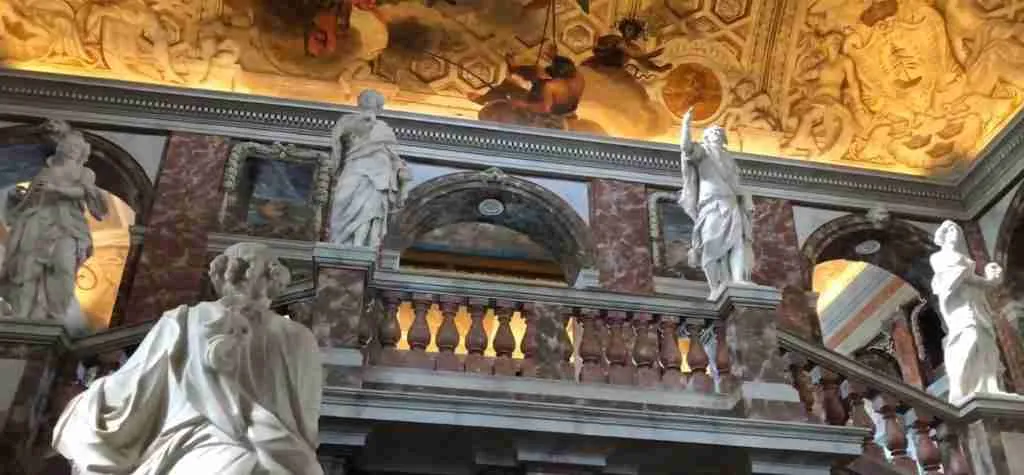
Visitors enter Drottningholm Palace through the central grand entrance, immediately encountering the spectacular baroque staircase designed by Tessin the Elder and decorated by Italian master Giovanni Carove. The staircase rises through multiple flights adorned with ornate stucco work, trompe-l’oeil ceiling frescoes creating illusions of architectural depth, and balustrades featuring gilded details catching light from tall windows. This theatrical entrance sets the tone for the palace’s grandeur, demonstrating the wealth and artistic patronage of Sweden’s 17th-century royal court.
Carove’s stucco decorations feature mythological scenes, royal emblems, and allegorical figures representing virtues associated with the Swedish monarchy. The ceiling frescoes employ sophisticated perspective techniques, making flat surfaces appear as soaring architectural spaces receding into heavenly clouds. Photography restrictions prevent capturing these details directly, so take time to study the craftsmanship closely, noting how light, color, and spatial illusion combine to create awe-inspiring effect on arriving guests.
Queen Hedvig Eleonora’s State Bedroom
The state bedroom of Queen Hedvig Eleonora represents one of Drottningholm’s finest baroque interiors, completed in 1663 under Tessin the Elder’s direction. The room centers on an elaborate canopy bed with silk damask hangings, gold-embroidered textiles, and carved wooden frame demonstrating 17th-century luxury furnishing. Surrounding walls feature painted silk panels, gilt-framed mirrors multiplying light and space, and period furniture including writing desks, chairs, and cabinets displaying Queen Hedvig Eleonora’s personal taste.
Details reveal the room’s function as ceremonial space rather than actual sleeping quarters. Royal bedchambers in this era served as reception rooms where monarchs granted audiences to courtiers and dignitaries, conducting state business in intimate yet formal settings. The bed’s placement, textile quality, and decorative richness all communicated royal power and taste to visitors, making the bedroom an important stage for court protocol and diplomatic impressions.
The Library and Queen Lovisa Ulrika’s Apartments
Queen Lovisa Ulrika’s 18th-century additions transformed portions of Drottningholm from baroque formality to rococo elegance. The library exemplifies this shift, featuring floor-to-ceiling bookcases housing thousands of volumes collected by the intellectually ambitious queen. Lovisa, sister of Frederick the Great of Prussia, maintained correspondence with Voltaire and other Enlightenment thinkers, making her library both functional workspace and statement of intellectual engagement unusual among European royalty.
Rococo decorative elements contrast with earlier baroque severity: lighter colors, asymmetrical ornamental details, delicate furniture with curved legs, and Chinese-influenced motifs reflecting 18th-century European fascination with East Asian aesthetics. Painted ceiling medallions feature pastoral scenes and classical references rather than heavy allegorical programs. The queen’s private apartments demonstrate how successive royal residents adapted Drottningholm to evolving tastes while respecting original architectural framework.
State Dining Halls and Ceremonial Rooms
The palace’s state dining halls and ceremonial rooms served official functions from royal banquets to diplomatic receptions. Tables display period porcelain services, crystal glassware, and silver candlesticks demonstrating the elaborate dining protocols of royal courts. Walls feature tapestries woven in Swedish manufactories, large-scale paintings depicting historical events and royal portraits, and ornate chandeliers combining brass, crystal, and candle power to illuminate evening gatherings.
Gustav III’s tenure added neoclassical touches to some ceremonial spaces, reflecting late 18th-century taste shifts toward cleaner lines and classical antiquity references. These later additions coexist with earlier baroque elements, creating layered interiors documenting evolving royal aesthetics across 200+ years. Modern conservation efforts preserve original materials while carefully maintaining spaces for continued royal use, evidenced by occasional closed rooms when state functions occur.
The Baroque Gardens and Park 2026
French Formal Gardens
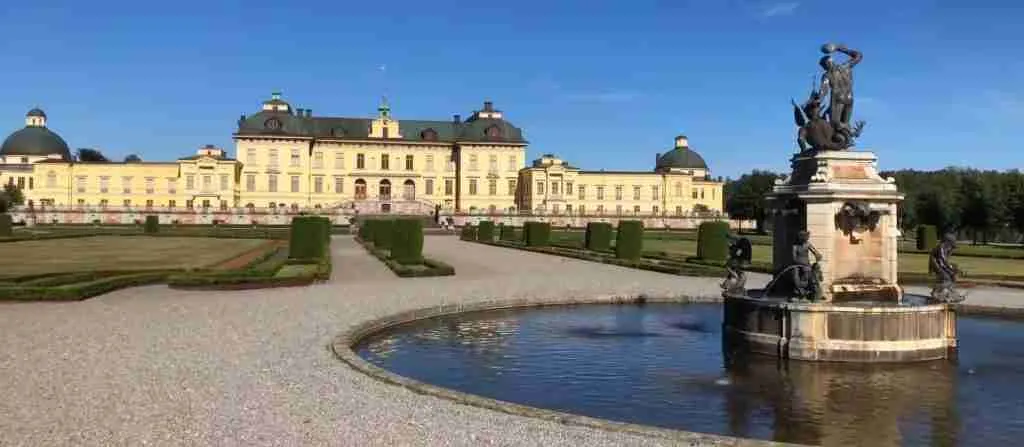
Tessin the Younger designed Drottningholm’s formal baroque gardens in 1681, creating Northern Europe’s finest example of French garden aesthetics adapted to Swedish climate and landscape. Geometric parterres radiate from the palace’s garden facade, featuring precisely trimmed boxwood hedges forming intricate patterns, gravel paths defining circulation routes, and seasonal flower beds providing color accents. The design emphasizes symmetry, human control over nature, and visual perspectives extending from palace windows across ordered landscape to distant water views.
The famous Hercules Fountain anchors the central axis, featuring bronze sculpture by Adriaan de Vries originally created for Prague but seized by Swedish soldiers in 1648 and installed at Drottningholm. The fountain’s classical subject matter and masterful execution exemplify baroque garden art, where sculpture, water, and landscape architecture combined into unified artistic statements. Surrounding statues, urns, and decorative elements maintain the classical theme throughout formal garden sections.
Lime tree avenues flank the formal parterres, providing shaded walks and framing garden views. These trees, planted in the 17th century and replaced as needed over subsequent centuries, create architectural forms through careful pruning and spacing. Spring and summer see the gardens in peak splendor with blooming flowers and full foliage, while autumn brings golden colors and winter reveals the gardens’ underlying geometric structure beneath snow.
English Landscape Park
Later 18th and early 19th-century additions introduced English landscape garden aesthetics to Drottningholm’s grounds, creating contrast with earlier French formality. Winding paths replace straight axes, naturalistic tree groupings substitute for geometric plantings, and artificial “rustic” features like garden pavilions and ornamental bridges create picturesque compositions. This section reflects Romantic era sensibilities valuing nature’s irregular beauty over baroque order and control.
Ornamental pools dot the landscape park, connected by streams and featuring water lilies, reeds, and aquatic plants encouraging wildlife. Benches positioned at scenic viewpoints invite contemplative rest while surveying carefully composed landscape pictures. The English sections occupy areas farther from the palace, allowing visitors to experience both garden philosophies by walking outward from formal parterres through transitional zones into naturalistic parkland.
Water Gardens and Canals
Drottningholm’s water gardens showcase baroque hydraulic engineering, featuring nearly a dozen water jets, cascades, and pools integrated into the formal garden design. These water features provided both visual spectacle and cooling effects during summer garden entertainments. Original 17th-century waterworks technology utilized natural water pressure from Lake Mälaren, pumping water through underground pipes to power fountains and jets without modern mechanical systems.
Canals extend garden perspectives toward the lake, creating visual connections between controlled garden spaces and natural water landscape beyond palace grounds. Bridges cross canals at strategic points, offering photo opportunities and varied viewing angles across gardens. The water elements particularly appeal to children visiting Drottningholm, providing movement and sound that enliven formal garden exploration.
The Chinese Pavilion: East Asian Fantasy 2026
History and Architecture
King Adolf Fredrik commissioned the Chinese Pavilion in 1753 as birthday surprise for Queen Lovisa Ulrika, reflecting 18th-century European fascination with Chinese art and culture. Architect Carl Fredrik Adelcrantz designed the structure combining authentic Chinese architectural elements with European rococo sensibilities, creating fantasy interpretation rather than accurate reproduction. The pavilion’s exotic appearance contrasted dramatically with the palace’s French baroque aesthetic, demonstrating aristocratic taste for novelty and international cultural exchange.
Original pavilion construction used prefabricated wooden components assembled on site, allowing rapid building completion. The current structure dates from 1769 replacement of the original 1753 version, enlarging the building while maintaining essential character. Exterior features include upturned roof eaves, decorative brackets, red and gold color scheme, and latticework panels echoing Chinese architectural motifs filtered through European craftsmen’s interpretation.
Interior Decorations and Collections
Interior rooms display extensive collections of Chinese export porcelain, lacquerwork, silk textiles, and decorative objects acquired by Swedish royalty during the 18th century. These authentic Chinese pieces mix with European furniture featuring Chinese-inspired decoration, demonstrating the era’s “chinoiserie” aesthetic blending East Asian motifs with Western forms. Wall panels, ceiling decorations, and floor coverings all incorporate Chinese-derived patterns and colors, creating immersive environment transporting visitors into 18th-century European fantasy of Chinese court life.
Specific highlights include porcelain vases displayed in custom-built wall niches, elaborate lacquer cabinets with gold decoration on black backgrounds, silk damask wall hangings featuring exotic birds and landscapes, and rococo furniture painted with Chinese-style floral and figurative scenes. The pavilion’s relatively small scale (compared to palace interiors) allows concentrated viewing of these objects in intimate room settings approximating original display contexts.
Visiting Practicalities
The Chinese Pavilion sits 10-minute walk from the main palace through park grounds, well-signposted with directional markers. Separate admission (SEK 60 adults) or combined tickets required. Opening hours match palace schedules May-September, with closure October-March during winter months. Guided tours available some periods, though self-guided visits work well given compact size and clear labeling of displayed objects.
Photography allowed inside the pavilion, making it popular with visitors documenting decorative details forbidden in main palace apartments. The building’s modest size means groups can create crowding during peak hours; visit early morning or late afternoon for calmer exploration. Gardens surrounding the pavilion feature additional Chinese-inspired structures and plantings, extending the exotic theme beyond main building into landscape design.
The Court Theatre: 18th-Century Performance Venue 2026
Architectural and Historical Significance
Drottningholm Court Theatre, built 1766 by Carl Fredrik Adelcrantz for Queen Lovisa Ulrika, represents one of Europe’s few surviving 18th-century theaters with original stage machinery intact and functional. Gustav III transformed the theater into major cultural venue during his reign, commissioning operas and dramatic works that premiered here before Stockholm audiences. The building’s exceptional preservation allows modern performances using authentic baroque staging techniques, providing unique glimpse into historical theater practice.
The theater’s rococo interior seats approximately 450 spectators in tiered boxes and parterre seating reflecting 18th-century social hierarchies. Royal box occupies central position with optimal sightlines, while aristocratic families claimed side boxes according to court rank. Painted decorations, chandeliers, and architectural details maintain original appearance, carefully restored during 20th-century conservation campaigns that stabilized the structure and revived performance functions.
Stage Machinery and Technical Features
Backstage areas reveal sophisticated 18th-century stage technology still operational today. Wave machines create ocean effects, thunder runs produce storm sounds, wind machines generate atmospheric effects, and trap doors enable appearances and disappearances. Scene changes utilized sliding wing flats and backdrop drops painted with palace interiors, forest landscapes, and classical architectural views, allowing rapid transformation between opera acts without closing curtains.
Original hand-powered mechanisms operate these effects, requiring teams of stagehands working in coordination to execute complex scene changes and special effects. Modern performances occasionally employ these historical techniques, demonstrating baroque theater’s technical sophistication and the physical demands of pre-industrial entertainment production. Guided tours explain machinery operation and allow visitors to see backstage areas typically hidden from audiences.
Visiting and Performance Schedules
Court Theatre guided tours operate May-September with English-language tours available June-August noon-4:30 PM (SEK 70 adults). Tours last 45 minutes, covering theater history, architecture, stage machinery demonstrations, and costume displays. Opera and dance performances occur during summer months, typically June-August, presenting baroque-era works using period staging practices. Tickets for performances (SEK 165-610 depending on seating) sell out months in advance; check Drottningholm Theatre Museum website in early spring for 2026 summer season schedule.
Non-performance visitors can view theater exterior and entry hall free but cannot access auditorium or backstage areas without guided tour tickets. The theater sits 5-minute walk from main palace, easily incorporated into day trip itineraries. Attending evening performances requires separate planning beyond day trip logistics, as concerts typically begin 7:30-8 PM, necessitating Stockholm accommodation or late return transport.
Planning Your Day Trip 2026: Sample Itineraries
Half-Day Morning Visit (3.5 hours)
9:00-9:30 AM: Take first ferry departure from Klara Mälarstrand or metro-bus combination to arrive at Drottningholm before 10 AM opening. Use ferry travel time for coffee and pastry from onboard café.
9:30-10:00 AM: Arrive Drottningholm, explore palace gardens before interiors open. Photograph baroque formal gardens and fountains in morning light without crowds, walk to Chinese Pavilion exterior for overview of grounds layout.
10:00-11:30 AM: Enter palace state apartments when doors open, touring through central staircase, Queen Hedvig Eleonora’s bedroom, library, state dining halls, and ceremonial rooms. Allocate 90 minutes for thorough interior exploration including security screening time.
11:30-12:15 PM: Walk through gardens following formal parterres out to lake views, visiting Hercules Fountain and English landscape sections. Final garden photography before departing.
12:30 PM: Depart Drottningholm on ferry or bus for return to Stockholm, arriving central city by 1:30 PM for lunch and afternoon Stockholm sightseeing.
Daily Cost: Ferry return SEK 220, palace admission SEK 130, onboard coffee/pastry SEK 45-60. Total SEK 395-410 per person.
Full Day Complete Visit (6 hours)
9:00-9:30 AM: Early ferry departure or metro-bus arrival, reaching Drottningholm at 9:30 AM for maximum exploration time.
9:30-10:00 AM: Pre-opening garden walk and exterior photography, getting oriented to palace layout and identifying photo spots for later when light improves.
10:00-11:30 AM: Palace state apartments complete tour, taking time to read information panels and study decorative details in each room.
11:30 AM-12:15 PM: Walk to Chinese Pavilion, exploring interior rooms and collections of Chinese art and rococo decorations.
12:15-1:00 PM: Picnic lunch in palace gardens (pack from Stockholm) or café meal at palace restaurant (SEK 150-200). Gardens provide numerous scenic picnic spots near fountains and under lime tree avenues.
1:00-2:00 PM: Court Theatre guided tour (book in advance, SEK 70), learning about baroque stage machinery and theater history.
2:00-3:00 PM: Extended garden exploration, walking English landscape sections, water gardens, and canals. Final photography session as afternoon light softens.
3:30 PM: Depart on return ferry or bus, arriving Stockholm by 4:30-5 PM.
Daily Cost: Ferry return SEK 220, palace admission SEK 130, Chinese Pavilion SEK 60, Court Theatre tour SEK 70, lunch SEK 150-200. Total SEK 630-680 per person.
Budget Day Trip (3 hours)
10:00 AM: Depart Stockholm on metro-bus combination using SL travel card (SEK 39), arriving Drottningholm 10:40 AM.
10:40-11:00 AM: Free garden exploration before entering palace, photographing formal parterres and fountains.
11:00 AM-12:30 PM: Palace state apartments tour, focusing on major rooms and spending less time reading detailed information panels.
12:30-1:00 PM: Quick garden walk covering main baroque sections and Hercules Fountain.
1:00-1:40 PM: Return to Stockholm via bus-metro (SEK 39), arriving central city by 2 PM for lunch.
Daily Cost: SL tickets SEK 78 (round trip), palace admission SEK 130. Total SEK 208 per person (add SEK 100-150 if purchasing Stockholm lunch instead of pre-palace meal).
Practical Tips and Visitor Information 2026
Best Times to Visit
Late April through early June offers optimal Drottningholm visiting conditions: palace and gardens fully operational, Chinese Pavilion and Court Theatre open, ferry service running, spring flowers blooming, comfortable temperatures (12-18°C), and manageable crowd levels before July-August peak. September provides similar advantages with autumn foliage adding visual interest. Shoulder season visits avoid peak summer congestion while maintaining full site access.
Peak summer months (late June-August) bring largest crowds, particularly July when Swedish school holidays coincide with international tourism peak. Arrive on first ferry or early metro-bus to visit palace interiors before 11 AM crowds build. Weekdays see lighter visitation than weekends throughout year. Midsummer period (late June) creates especially heavy demand as Swedes and tourists both visit royal sites during traditional holiday.
Winter visits (November-March) offer unique atmospheric experience with snow-covered gardens and virtually empty interiors during limited weekend hours. Dress warmly for outdoor walking and accept reduced access (Chinese Pavilion closed, Court Theatre closed, palace weekend-only). Gardens become magical in snow, particularly baroque fountains and sculptures transformed by ice.
What to Bring
Comfortable walking shoes prove essential for garden exploration and extended standing during palace tours. Surfaces include gravel paths, grass lawns, and occasional uneven terrain. Weather-appropriate layers allow adjusting to conditions: interiors maintain comfortable temperatures while gardens vary with season and sun exposure. Summer sun protection (hat, sunscreen, sunglasses) matters during outdoor walking, while spring/autumn requires light jacket for lake breezes.
Camera or smartphone for garden and exterior photography makes sense, though remember interior photography prohibition inside palace apartments. Bring water bottle for summer visits as gardens lack drinking fountains and palace café areas can get crowded. Picnic supplies offer budget dining option and pleasant outdoor lunch setting in extensive gardens. Small backpack carries layers and lunch but expect coat check if bag appears large during security screening.
Dining Options
Palace café near entrance serves sandwiches (SEK 85-120), salads (SEK 95-130), Swedish pastries (SEK 45-60), and hot beverages (SEK 40-55). Outdoor terrace seating provides lake views during pleasant weather. Quality adequate for tourist café but pricing reflects captive audience; budget travelers benefit from packing Stockholm lunch. No full restaurant operates at the palace currently.
Gardens allow picnic dining at numerous scenic spots. Benches scattered throughout formal and landscape sections offer resting places, or spread blanket on grassy areas for casual outdoor meals. Stockholm grocery stores and cafés provide excellent picnic options: fresh bread, cheese, Swedish meatballs, pastries, and local specialties purchased before ferry or metro departure.
Accessibility Considerations
Drottningholm Palace provides wheelchair accessible entrances, ramps, and elevators allowing mobility-limited visitors to view state apartments. Some upper floor rooms remain inaccessible due to historic building constraints. Gardens feature paved and gravel paths suitable for wheelchairs, though some rougher sections present challenges. Chinese Pavilion’s small size and period construction limit accessibility. Contact Royal Palaces in advance for specific accessibility questions and assistance arrangements.
Visitors with mobility concerns benefit from driving rather than using public transport, as palace parking sits adjacent to entrance. Ferry service accommodates wheelchairs with ramps and designated seating areas. Staff assistance available upon request for boarding and security screening processes.
Family Visit Tips
Children under 7 enter palace free, making Drottningholm economical family destination. The extensive gardens provide space for active children to explore while adults tour interiors in shifts if needed. Fountains, water features, and open lawns appeal to young visitors more than formal palace rooms. Chinese Pavilion’s exotic appearance and manageable size holds children’s attention better than lengthy palace apartment tours.
Plan shorter palace interior visit with children (30-45 minutes hitting highlights) before extensive garden time where kids can move freely. Bring snacks and activities for ferry journey (coloring books, small toys) to keep children engaged during 50-minute crossing. Summer visits allow longer outdoor exploration when weather permits active garden play.
Frequently Asked Questions
Can I see the royal family at Drottningholm Palace?
The southern wing of Drottningholm Palace serves as the private residence of King Carl XVI Gustaf and Queen Silvia, but this section remains closed to the public and separated from tourist areas. Visitors will not encounter the royal family during normal palace visits, as the royal quarters maintain complete privacy. Occasionally, official state functions occur that temporarily close portions of public areas, but these events are scheduled well in advance and communicated through the Royal Palaces website. The royal presence adds authentic atmosphere as an active residence rather than pure museum, but direct sightings are extremely unlikely.
Is Drottningholm Palace worth visiting if I’ve seen Versailles?
Drottningholm offers distinct value even for travelers familiar with Versailles and other major European palaces. While inspired by French baroque architecture, Drottningholm maintains Swedish character through more intimate scale, exceptional preservation of original 17th-18th century details, the unique Court Theatre with functional baroque stage machinery, and beautiful island setting on Lake Mälaren rather than landlocked park. The combination of palace, gardens, Chinese Pavilion, and Court Theatre creates complete royal domain experience. Versailles veterans appreciate Drottningholm’s less crowded interiors allowing closer examination of furnishings, the functioning royal residence aspect, and distinctive Nordic interpretation of baroque aesthetics rather than pure French model imitation.
How crowded does Drottningholm get during summer?
Peak summer months (July-August) bring significant crowds to Drottningholm, with busiest periods around midday when multiple ferry arrivals converge. Expect security screening lines 15-20 minutes during peak times, crowded palace interior rooms where moving between spaces requires patience, and popular photo spots like the Hercules Fountain attracting clusters of visitors. However, crowds remain manageable compared to major European tourist sites; Drottningholm never reaches the overwhelming density of Versailles, Schönbrunn, or other famous palaces. Extensive gardens provide crowd dispersion, allowing escape to quieter sections even during busy days. Arrive on first morning ferry (typically 10 AM) or late afternoon sailings to avoid peak midday convergence. Weekdays see lighter visitation than weekends throughout summer.
Can I visit Drottningholm Palace and the Court Theatre in the same day?
Yes, combining palace state apartments, Chinese Pavilion, gardens, and Court Theatre tour fits comfortably within 5-6 hour visit. Court Theatre guided tours (SEK 70 adults) run May-September with English tours available June-August noon-4:30 PM. Schedule your palace arrival around preferred Court Theatre tour time, allowing 90 minutes for palace interiors and 30-45 minutes for Chinese Pavilion before or after the 45-minute theater tour. Full-day itineraries easily incorporate all attractions; even half-day visits (3.5 hours) can squeeze in Court Theatre if prioritizing theater over extended garden exploration. Attending evening opera or dance performances at the Court Theatre requires separate planning beyond day trip logistics, as performances typically begin 7:30-8 PM and run 2-3 hours, necessitating Stockholm accommodation or late return transport unavailable on standard ferry schedules.
What’s the difference between palace admission and Chinese Pavilion tickets?
Drottningholm Palace admission (SEK 130 adults) grants access only to main palace state apartments, central staircase, and surrounding baroque gardens (which are actually free and accessible 24/7 without tickets). The Chinese Pavilion requires separate admission (SEK 60 adults) beyond palace tickets, as it operates as distinct attraction 10-minute walk through park grounds from main palace. Combined palace-pavilion tickets cost SEK 180 adults (slight discount vs. SEK 190 purchased separately). Court Theatre tours cost additional SEK 70 beyond both palace and pavilion tickets. Most visitors purchase palace-only tickets, adding Chinese Pavilion if time and interest allow, while Court Theatre appeals primarily to theater history enthusiasts or visitors wanting comprehensive Drottningholm experience.
Is there WiFi and phone service at Drottningholm Palace?
Mobile phone service works reliably throughout Drottningholm Palace and gardens via standard Swedish network providers. International visitors with EU mobile plans experience seamless coverage, while visitors from outside EU should verify international roaming charges before extensive phone use. The palace does not advertise public WiFi access for general visitors, though network may exist for staff and royal family private use. Plan to use mobile data for real-time information, map navigation, and staying connected during your visit. Ferry boats typically have mobile service during most of the crossing, though brief coverage gaps may occur in some island-sheltered sections of Lake Mälaren.
Can I bring food and drinks into Drottningholm Palace?
Food and beverages are prohibited inside palace state apartments to protect valuable historic furnishings, textiles, and artworks from spills and damage. Visitors must finish or dispose of drinks and snacks before entering palace interiors, with coat check areas providing storage for bags containing food. However, palace gardens permit picnicking freely across extensive grounds, with numerous benches and grassy areas suitable for outdoor meals. The combination of restricted palace interiors and open gardens means timing matters: pack picnic lunch for after palace apartment tour, enjoying outdoor dining in scenic garden settings. Palace café near entrance sells sandwiches, pastries, and beverages for visitors who arrive without food, though pricing reflects tourist venue premiums.
What language are the palace tours and information provided in?
Drottningholm Palace operates primarily as self-guided experience rather than mandatory tour format. Visitors receive printed information brochures in multiple languages (English, Swedish, German, French, Spanish, Italian) at entry, with room-by-room descriptions of palace highlights and historical context. Informational plaques throughout palace rooms provide Swedish and English text explaining furnishings, artwork, and architectural features. Audio guides cost SEK 30 extra and can be purchased at the ticket office, offering detailed commentary in multiple languages synchronized to numbered stops throughout state apartments. Guided tours occasionally occur for special groups but are not standard public offering. Court Theatre operates differently, with guided tours (SEK 70) available in English June-August noon-4:30 PM, Swedish tours May-September, and occasional German/French tours by advance arrangement.
Are there lockers or coat check at Drottningholm Palace?
Coat check facilities near palace entrance provide free storage for bags, coats, and belongings that cannot be carried into state apartments due to space or security restrictions. Large backpacks, rolling luggage, and oversized bags must be checked before entering interiors. The service operates at no charge but creates additional time during entry and exit processes. No coin-operated lockers exist for independent storage. Visitors carrying small purses, camera bags, or light jackets can typically retain these items through security screening and during palace tours. Plan extra 5-10 minutes for coat check queues during peak summer hours when many visitors need bag storage. Ferry travelers bringing picnic supplies for garden lunch should expect to check food bags while touring palace interiors, retrieving them afterward for outdoor dining.
Can I visit just the gardens without buying palace tickets?
Yes, Drottningholm’s baroque gardens remain open 24 hours daily, year-round, with completely free access requiring no admission tickets. Visitors can explore formal French parterres, English landscape sections, Hercules Fountain, water gardens, canals, and lime tree avenues without entering palace interiors or paying any fees. This makes the gardens popular with local residents for jogging, walking, and picnicking regardless of palace visit plans. Chinese Pavilion, Court Theatre, and palace state apartments all require separate paid admission, but gardens surrounding these structures can be viewed from exteriors freely. Budget travelers can take ferry or metro-bus to Drottningholm, spend 1-2 hours exploring gardens completely free, photograph palace and Chinese Pavilion exteriors, then return to Stockholm having experienced the site’s landscape beauty without ticket costs.