Denmark Travel Guide 2026: Ultimate Planning Resource
Denmark delivers Scandinavian charm on an accessible scale, combining Copenhagen’s cutting-edge design culture with centuries-old Viking heritage, fairy-tale castles, and dramatic coastal landscapes across 12 UNESCO World Heritage Sites. This compact Nordic nation rewards visitors with efficient transportation, English-speaking locals, world-class museums, and that famous Danish concept of hygge – the art of cozy contentment that transforms everyday moments into memorable experiences.
Key Takeaways
- 12 UNESCO World Heritage Sites: Denmark protects remarkable cultural and natural treasures including Viking-Age ring fortresses, Kronborg Castle (Hamlet’s setting), Roskilde Cathedral with 40 royal burials, and Møns Klint’s dramatic 120-meter chalk cliffs added in 2025
- Budget planning 2026: Mid-range travelers budget €100-150 daily covering accommodation (€70-100), meals (€30-50), transport, and attractions; Copenhagen Card (€54-133 for 24-120 hours) provides significant savings with 80+ free attractions plus unlimited transport
- Efficient transportation: Copenhagen Airport connects to city center in 15 minutes via metro (DKK 36); extensive train network reaches all major destinations within 2-3 hours; City Pass options (DKK 100-680) cover public transport across the capital region
- Year-round accessibility: Peak season (June-August) offers warmest weather and maximum daylight but brings crowds and higher prices; shoulder seasons (April-May, September-October) provide optimal balance of pleasant conditions and better value
- Cultural highlights: Experience New Nordic cuisine pioneered by Copenhagen’s Michelin-starred restaurants, explore Tivoli Gardens amusement park (opened 1843), discover Hans Christian Andersen’s legacy in Odense, and witness the changing of the guard at Amalienborg Palace
- Practical advantages: High English proficiency eliminates language barriers, cashless payment systems accepted everywhere, exceptional bike-friendly infrastructure with 400+ kilometers of Copenhagen cycle lanes, and compact geography enabling exploration without car rental
People Also Ask About Denmark Travel 2026
How many days do you need to visit Denmark in 2026?
Denmark visits range from weekend Copenhagen city breaks (2-3 days) to comprehensive explorations (10-14 days) depending on interests and regions. First-time visitors allocating 5-7 days achieve balanced experiences combining Copenhagen’s attractions (3-4 days) with one UNESCO site day trip and one regional destination. This timeframe permits Tivoli Gardens, canal tours, major museums, Rosenborg Castle, Nyhavn harbor, plus excursions to Kronborg Castle or Roskilde. Extended 10-14 day itineraries add Odense (Hans Christian Andersen’s birthplace), Aarhus (Denmark’s second city with ARoS art museum), Aalborg, or Bornholm island. Cultural enthusiasts budget extra days for Copenhagen’s 80+ museums and galleries. Nature lovers extend stays for national park hiking in Mols Bjerge or Thy. Denmark’s compact size means most destinations lie within 2-3 hours from Copenhagen, enabling flexible daily excursions from a single base or multi-city routing. Budget travelers maximizing Copenhagen Card value (120-hour cards span 5 days) find 5-day Copenhagen-focused visits economically optimal.
What’s the best time to visit Denmark in 2026?
Denmark’s optimal visiting periods balance weather, daylight hours, crowds, and pricing across distinct seasons. Late spring (May-June) provides increasingly warm temperatures (15-20°C), blooming flowers, 16-17 hours of daylight, and manageable crowds before peak summer tourism. June offers near-ideal conditions with comfortable temperatures, maximum cultural events (Roskilde Festival, Copenhagen Jazz Festival), and full operational schedules for attractions and tours. Summer (July-August) delivers warmest weather (18-23°C), longest days (17-18 hours of light), and complete access to seasonal activities including harbor swimming and outdoor dining, though prices peak and popular attractions experience maximum crowds. Early autumn (September-early October) recreates spring’s advantages with pleasant temperatures (12-18°C), autumn foliage, reduced tourist numbers, and lower accommodation rates while maintaining full attraction operations. Winter (December-February) limits to 7-8 daylight hours and temperatures near freezing but offers unique experiences including Copenhagen’s Christmas markets (mid-November through December), cozy hygge culture, and significant accommodation discounts. Coastal regions experience stronger winds and rain during winter months. Spring and autumn represent best value overall, combining favorable weather with off-peak pricing and comfortable crowd levels.
Is Denmark expensive to visit in 2026?
Denmark ranks among Europe’s more expensive destinations though strategic planning significantly manages costs. Mid-range travelers budget €100-150 daily including accommodation (€70-100 for mid-range hotels), meals (€30-50 covering breakfast, lunch, and dinner), local transport, and attractions. Budget-conscious visitors reduce costs to €60-80 daily through hostel accommodation (€25-40 per bed in dorms), supermarket meals, free attractions, and walking rather than paid transport. Luxury travelers exceed €200-300 daily with upscale hotels, fine dining, and private experiences. Major cost drivers include accommodation (Copenhagen hotel rates DKK 800-1,500 nightly for mid-range), restaurant dining (lunch DKK 150-200, dinner DKK 250-400), and museum admissions (DKK 100-180 each). Cost-saving strategies employ the Copenhagen Card (€54-133 covering 80+ attractions plus unlimited transport), self-catering from supermarkets (Netto, Føtex offering affordable options), lunch-focused dining when restaurants offer better value than dinner, public transport over taxis, and free experiences including King’s Garden, beach access, and certain museum days. Denmark uses cashless payments ubiquitously, with credit cards accepted at even small vendors. Budget travel proves feasible with planning though Denmark never ranks as truly cheap compared to Southern or Eastern European destinations.
Do I need to speak Danish to visit Denmark in 2026?
English proficiency throughout Denmark eliminates language barriers for international visitors. Approximately 86% of Danes speak English fluently, with near-universal proficiency among younger generations, tourism workers, and urban populations. All tourist information, museum exhibits, restaurant menus, and transportation signage include English translations. Copenhagen’s service industry (hotels, restaurants, tour operators, shops) conducts business in English as standard practice. Train station announcements, metro systems, and public transport apps operate bilingually. Regional areas and older generations may have slightly lower English fluency though sufficient for essential communication. Learning basic Danish courtesies (goddag for hello, tak for thank you, undskyld for excuse me) proves appreciated though entirely optional. Restaurant staff accommodate English speakers without issue, and sophisticated translation apps handle any rare communication gaps. Nordic countries’ English proficiency consistently ranks among world’s highest, making Denmark among Europe’s easiest destinations for non-Danish speakers. Germans find additional advantage as German represents common second language particularly among older Danes, though English remains more universally reliable communication tool for international visitors.
Extended multi-day tours – 5+ days
Featured Denmark Multi-Day Tour Packages
5 days
5 Day Copenhagen, Denmark Adventure
- ✓ Comprehensive Denmark tour
- ✓ Expert local guides included
- ✓ All accommodation arranged
- ✓ Transportation provided
7 days
7 Day Stockholm And Copenhagen By Train
- ✓ Comprehensive Denmark tour
- ✓ Expert local guides included
- ✓ All accommodation arranged
- ✓ Transportation provided

5 days
5 Days in Copenhagen_ Nordic Wonders, Coastal Cliffs & Scandinavian Charm
- ✓ Comprehensive Denmark tour
- ✓ Expert local guides included
- ✓ All accommodation arranged
- ✓ Transportation provided
2 days
Explore Berlin to Copenhagen
- ✓ Comprehensive Denmark tour
- ✓ Expert local guides included
- ✓ All accommodation arranged
- ✓ Transportation provided
Multi-day tour packages powered by TourRadar. Prices and availability subject to change.
Planning Your Denmark Trip 2026
Entry Requirements and Practical Preparations
Denmark participates in the Schengen Area, permitting EU/EEA citizens to enter using valid national ID cards or passports without visa requirements for stays up to 90 days. Non-EU visitors from visa-exempt countries (USA, Canada, Australia, Japan, South Korea, New Zealand, and others) enter visa-free for tourism stays up to 90 days within 180-day period using valid passports with minimum 6-month validity beyond departure date. Visitors from countries requiring Schengen visas must obtain them before arrival through Danish embassies or consulates in their home countries.
Travel insurance covering medical emergencies, trip cancellation, and baggage loss proves highly recommended though not mandatory. EU citizens should carry European Health Insurance Cards (EHIC) providing access to Danish healthcare at reduced costs, while non-EU travelers need comprehensive travel medical insurance as Denmark’s healthcare costs rank among Europe’s highest. Denmark requires no specific vaccinations for entry though routine immunizations should be current. Travelers with prescription medications should carry prescriptions and medication in original packaging, particularly for controlled substances requiring documentation.
Denmark operates on Central European Time (CET, UTC+1) with Daylight Saving Time March-October. The country uses Type C and K electrical outlets (230V, 50Hz) requiring adapters for North American and British devices. Danish Krone (DKK) serves as official currency though credit/debit cards are accepted universally with contactless payment standard even for small purchases. ATMs dispense DKK with standard international fees. Most establishments decline cash with increasing frequency, making credit cards essential for smooth transactions.
Creating Your Denmark Itinerary 2026
Denmark itinerary planning begins with deciding Copenhagen-focused versus multi-region approaches. Copenhagen-centered itineraries allocate 3-5 days exploring the capital’s attractions, museums, food scene, and nightlife while using city as base for day trips to UNESCO sites (Kronborg Castle, Roskilde, Frederiksborg Castle). This strategy minimizes accommodation changes, maximizes Copenhagen Card value, and simplifies logistics. Ideal for first-time visitors, families with young children, and travelers prioritizing urban culture over countryside exploration.
Multi-region itineraries combine Copenhagen (2-3 days) with additional destinations: Odense for Hans Christian Andersen heritage plus Funen’s countryside, Aarhus for contemporary culture and ARoS art museum, Aalborg for Viking sites and modern architecture, or Bornholm island for coastal landscapes and medieval towns. These itineraries require 7-10 days minimum and suit return visitors, nature enthusiasts, or travelers seeking comprehensive Danish experiences. Transportation between regions utilizes Denmark’s efficient train network with 2-3 hour journey times and frequent departures.
Themed itineraries focus on specific interests: Viking heritage routes visiting Jelling UNESCO stones, Trelleborg ring fortress, and Roskilde Viking Ship Museum; New Nordic food tours emphasizing Copenhagen’s Michelin restaurants and food markets; castle circuit exploring Kronborg, Frederiksborg, and Rosenborg; or active outdoor programs combining coastal hiking, cycling routes, and national park exploration. Theme-focused visits benefit from expert guidance through specialized tour operators offering pre-planned logistics and insider access.
Denmark’s 12 UNESCO World Heritage Sites 2026
Cultural Heritage Sites in Metropolitan Denmark
Jelling Mounds, Runic Stones and Church (1994) represent Denmark’s spiritual birthplace where King Harald Bluetooth united Denmark and introduced Christianity around 965 AD. The two massive burial mounds, runic stones with Denmark’s earliest written mention, and medieval church create powerful historical ensemble 2.5 hours west of Copenhagen by train and bus. Free admission with interpretive museum explaining Viking transition from paganism to Christianity.
Roskilde Cathedral (1995) showcases Northern Europe’s earliest brick Gothic cathedral housing 40 Danish monarchs in ornate chapels and crypts. This active church 25 minutes from Copenhagen by train remains Denmark’s national burial church with royal funerals held through present day. Admission DKK 75 includes access to chapels, crypts, and cathedral towers with magnificent views. Guided English tours operate twice daily during summer.
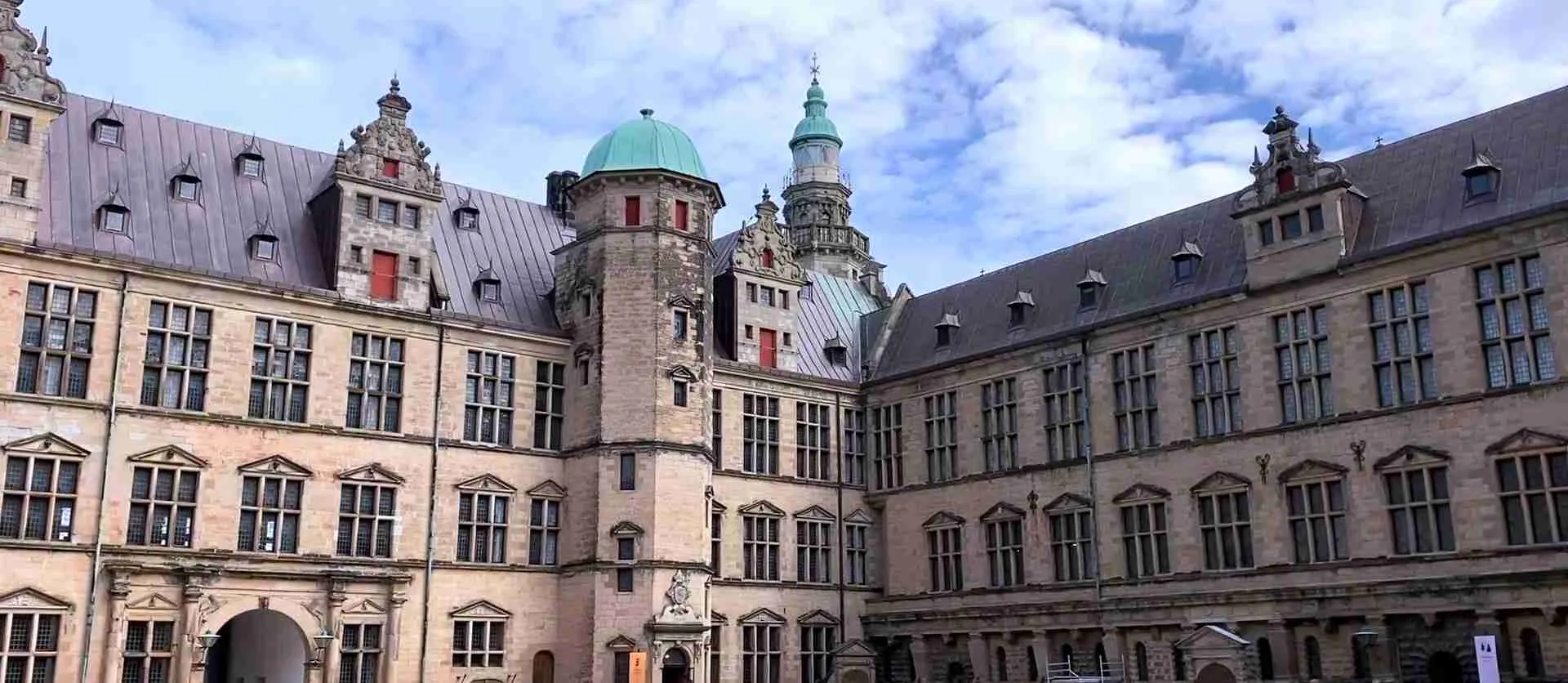
Kronborg Castle (2000) dominates the narrowest point of Øresund strait as the setting for Shakespeare’s Hamlet. The Renaissance fortress 45 minutes from Copenhagen contains royal apartments, dramatic ballroom, and underground casemates housing the legendary Holger Danske statue. Admission DKK 165 includes castle grounds, museum exhibitions, and summer Hamlet performances in the courtyard. Combined with Maritime Museum of Denmark nearby for comprehensive visit.
Christiansfeld Moravian Church Settlement (2015, extended 2024) preserves perfectly intact 18th-century Moravian Brethren town with characteristic yellow stone houses, central church, and communal buildings around town square. Located in southern Jutland near the German border, this quiet town produces famous honey cakes following traditional recipes. Free exploration of streets and church exterior with interior access during services (Sundays) or pre-arranged tours.
The Par force hunting landscape in North Zealand (2015) demonstrates baroque landscape architecture from King Christian V’s hunting grounds northwest of Copenhagen. Three forests (Store Dyrehave, Gribskov, Jægersborg Dyrehave) preserve geometric road patterns and star junctions designed for royal hunts. Free access via multiple S-train stations with marked walking and cycling paths throughout 14,000-hectare landscape. Deer sightings common, particularly during autumn rutting season.
Viking-Age Ring Fortresses (2023) encompass five perfectly circular military encampments built by King Harald Bluetooth around 980 AD: Trelleborg near Slagelse, Aggersborg near Løgstør, Fyrkat near Hobro, Nonnebakken in Odense, and Borgring near Køge. These geometrically precise fortresses demonstrate Viking engineering sophistication. Most sites offer free access with interpretive signs; Trelleborg features best-developed visitor center and reconstructed Viking houses (admission DKK 100).
Natural Heritage Sites
Wadden Sea (2009, extended 2014) represents world’s largest tidal flat system shared with Germany and Netherlands, stretching 500 kilometers along Denmark’s west coast. This UNESCO natural site supports 10-12 million migratory birds annually using mudflats as critical stopover habitat. Visitor centers at Ribe and Esbjerg coordinate guided walks onto mudflats during low tide, seal safaris, and oyster harvesting experiences. National Park status protects ecosystems while enabling controlled tourism access.
Stevns Klint (2014) exposes dramatic chalk and limestone cliff formations 65 million years old, revealing the Cretaceous-Paleogene boundary layer marking asteroid impact that ended dinosaur era. The 15-kilometer cliff stretch 65 kilometers south of Copenhagen provides global reference site for mass extinction studies. GeoCenter Stevns Klint visitor center (admission DKK 150) offers exhibitions, guided tours, and cliff-edge church Højerup demonstrating coastal erosion. Coastal walking paths provide spectacular Baltic Sea views.
Møns Klint (2025) became Denmark’s newest UNESCO site featuring brilliant white chalk cliffs rising 120 meters above the Baltic Sea on Møn island southeast of Copenhagen. Glacial forces created these spectacular formations containing ancient fossils. Well-developed infrastructure includes viewing platforms, marked hiking trails, GeoCenter Møns Klint museum (admission DKK 150), and forest paths through adjacent beech woods. Beach access permits fossil hunting below cliffs. Located 2-3 hours from Copenhagen via bus and train combination; popular day trip destination.
Greenland UNESCO Sites
Denmark’s realm includes three Greenland UNESCO sites demonstrating Inuit heritage and Arctic natural phenomena. Ilulissat Icefjord (2004) showcases spectacular calving glacier producing massive icebergs at rates up to 35 meters daily. Kujataa (2017) preserves Norse and Inuit farming settlements demonstrating cultural adaptation to sub-Arctic agriculture. Aasivissuit-Nipisat (2018) protects Inuit hunting grounds spanning ice sheet to sea, displaying 4,200 years of human adaptation to Arctic conditions. These remote sites require dedicated Greenland travel separate from Denmark mainland visits, typically involving flights from Copenhagen to Greenland’s western settlements.
Essential Denmark Destinations 2026
Copenhagen: Capital City Experiences
Copenhagen blends historic charm with cutting-edge design, sustainable urban planning, and world-class culinary innovation. The compact city center enables walking exploration from Nyhavn’s colorful 17th-century townhouses to Strøget pedestrian shopping district, The Little Mermaid statue at Langelinie, and Amalienborg Palace complex. Tivoli Gardens amusement park (opened 1843) operates mid-April through September plus Christmas season, combining vintage charm with modern rides; admission DKK 175 with separate ride tickets or unlimited passes (DKK 270).
Museums cater to diverse interests: National Museum covers Danish cultural history from Viking Age to present (free admission), Design Museum Denmark showcases Scandinavian furniture and contemporary design (DKK 130), Louisiana Museum of Modern Art located 35 minutes north combines international contemporary art with stunning coastal setting (DKK 165). Rosenborg Castle houses Crown Jewels and 400 years of royal treasures in Renaissance palace surrounded by King’s Garden, Copenhagen’s oldest park (admission DKK 145).
Copenhagen’s food scene ranges from Michelin-starred New Nordic restaurants (Noma, Geranium) requiring months-advance reservations to accessible food markets including Torvehallerne’s glass-roofed halls featuring artisan producers and international cuisines. Reffen street food market in Refshaleøen operates May-September with 50+ vendors. Traditional smørrebrød (open-faced sandwiches) at historic restaurants like Restaurant Schønnemann or Aamanns maintains Danish culinary heritage at DKK 100-150 per sandwich.
Neighborhoods offer distinct experiences: Christianshavn’s canals and houseboat communities, trendy Nørrebro with multicultural dining and nightlife, upscale Frederiksberg gardens and shopping, Vesterbro’s meatpacking district (Kødbyen) combining galleries and restaurants, and Freetown Christiania’s alternative community permitting photography only in designated areas. Copenhagen’s extensive cycle network and bike-share programs (Bycyklen) encourage two-wheel exploration like locals.
Odense: Hans Christian Andersen’s Birthplace
Denmark’s third-largest city honors fairy-tale author Hans Christian Andersen with museums, statues, and street plaques marking locations from his life. The H.C. Andersen Museum (reopened 2021 in modern architecture) presents biographical exhibitions, original manuscripts, and interactive storytelling experiences (admission DKK 150). Anderson’s childhood home, birth house, and boyhood street create pilgrimage route for literature enthusiasts. Funen Village open-air museum recreates 19th-century Danish village life Anderson knew, with period buildings, gardens, and costumed interpreters (admission DKK 100).
Beyond Anderson heritage, Odense offers Brandts cultural center housing art galleries and museums, Odense Cathedral dating to 13th century, and Munke Mose urban park system along Odense River enabling walking and cycling paths. The city’s compact center permits exploration on foot or bicycle within 2-3 hours. Located 90 minutes west of Copenhagen by direct train (DKK 320 roundtrip), Odense serves as gateway to Funen island’s pastoral landscapes, manor houses, and coastal villages. Day trips or overnight stays integrate easily into multi-region Denmark itineraries.
Aarhus: Cultural Capital of Jutland
Denmark’s second city combines thousand-year history with vibrant contemporary culture earned through designation as European Capital of Culture 2017. ARoS art museum’s rainbow panorama walkway creates Aarhus’s most photographed landmark, while galleries inside display Danish and international art from 1750 to present (admission DKK 180). Den Gamle By (The Old Town) open-air museum reconstructs Danish urban life across three centuries with 75 historic buildings, period shops, and costumed interpreters (admission DKK 180).
Aarhus Cathedral represents Denmark’s longest church at 93 meters, featuring Gothic architecture and ornate frescoes. The Latin Quarter’s cobblestone streets house boutiques, cafes, and galleries in medieval buildings. Aarhus’s young population (large university) creates dynamic nightlife and cultural programming. Moesgaard Museum combines Viking artifacts and prehistoric exhibits with striking modern architecture in forested setting 10 kilometers south (admission DKK 165, accessible by bus).
Located 3 hours north of Copenhagen by direct train (DKK 560 roundtrip), Aarhus serves as Jutland exploration base. Nearby attractions include Mols Bjerge National Park hiking, Djursland’s beaches and manor houses, and Randers Tropical Zoo. The city’s compact size permits walking or cycling throughout central areas, with efficient bus network connecting outlying attractions.
Bornholm: Denmark’s Sunshine Island
Bornholm island in the Baltic Sea combines dramatic coastal cliffs, medieval round churches, artists’ colonies, and Denmark’s sunniest climate. The rocky “sunshine island” located 6 hours by ferry from Copenhagen (Køge) or 80 minutes from Ystad, Sweden attracts visitors seeking nature, relaxation, and artistic heritage. Four unique round churches (Østerlars, Nylars, Olsker, Nyker) built 12th-13th centuries served as fortified sanctuaries during conflicts; all maintain active worship with visitor access between services.
Gudhjem and Svaneke rank among Denmark’s most picturesque towns with half-timbered houses, harbors, smokehouse restaurants serving Bornholm’s famous smoked herring, and artisan workshops. Hammershus fortress ruins dominate northern cliffs as Northern Europe’s largest medieval fortification, offering panoramic Baltic views and historical interpretation (free access). Dueodde beach features remarkably fine white sand stretching for kilometers, popular for swimming and beach walking.
Bornholm’s compact size (588 square kilometers) enables complete exploration in 3-5 days using rental car or bicycle given limited public transport frequency. Artists’ workshops and glass studios welcome visitors, particularly around Gudhjem and Svaneke. Local specialties include Bornholm’s microbreweries, ice cream producers, and restaurants emphasizing local fish and produce. Ferry schedules require advance planning with reduced winter service; summer months (June-August) provide maximum departures and attractions operating at full capacity.
Transportation Within Denmark 2026
Copenhagen Public Transport System
Copenhagen’s integrated public transport network combines Metro, S-tog suburban trains, regional trains, city buses, and harbor buses under unified zone-based ticketing. The Metro operates 24/7 on four lines (M1, M2, M3, M4) reaching airport, city center, and surrounding municipalities with 2-4 minute headways during peak hours. S-tog regional trains connect outlying suburbs and North Zealand destinations on seven lines converging at Copenhagen Central Station. All systems accept single tickets, City Passes, and Copenhagen Cards with seamless transfers.
Zone-based pricing starts at DKK 24 for 2-zone tickets (most central Copenhagen journeys) valid 75 minutes from validation. City Pass Small covers zones 1-4 including airport for DKK 100-340 depending on duration (24-120 hours). City Pass Large encompasses entire capital region (zones 1-99) at DKK 200-680. Tickets purchase via Rejsebillet smartphone app (accepts international credit cards), DSB ticket machines at major stations, or 7-Eleven convenience stores near transit stops.
Harbor buses function as scenic transport along waterways from southern Teglholm to northern Refshaleøen, accepting standard tickets and passes. Service operates reduced frequency outside summer months. Bicycles board Metro free outside rush hours (weekdays 7-9 AM, 3:30-5:30 PM prohibited) though bicycle tickets (DKK 13) required on regional trains. Copenhagen’s 400+ kilometers of segregated bike lanes create world-class cycling infrastructure with Bycyklen bike-share offering electric bikes at DKK 30 per 30 minutes through smartphone app.
National Train Network
DSB (Danish State Railways) operates comprehensive passenger rail network connecting all Danish cities and towns. Copenhagen-Aarhus direct trains complete journeys in 3 hours (DKK 560 standard fare), Copenhagen-Aalborg in 4.5 hours (DKK 700), Copenhagen-Odense in 90 minutes (DKK 320). Regional trains serve destinations including Roskilde (25 minutes, DKK 72), Helsingør/Kronborg Castle (45 minutes, DKK 88), and Hillerød/Frederiksborg Castle (40 minutes, DKK 100). All fares are roundtrip estimates subject to seasonal variations.
Advance booking through DSB website or mobile app offers Orange tickets (discounted advance-purchase fares) at 30-50% reductions for travel booked weeks ahead on specific departures. FlexKort packages provide multi-journey discounts for frequent travelers. Children ages 0-11 travel free when accompanying adults (maximum 2 children per adult). InterRail passes valid for European residents and Eurail passes for non-Europeans provide unlimited Denmark travel though single-country Denmark passes rarely represent better value than standard tickets for short visits.
Trains feature modern rolling stock with comfortable seating, power outlets, WiFi (variable quality), bicycle spaces, and accessibility provisions. First-class upgrades (approximately 50% premium over standard fares) offer quieter cars, guaranteed seating, and included beverages on longer routes. Reservation requirements vary by route; most regional trains operate without reservations while some long-distance services recommend booking seats during peak periods.
Alternative Transportation Options
FlixBus operates intercity coach services at lower costs than trains though significantly slower travel times. Copenhagen-Aarhus buses cost DKK 150-250 versus DKK 560 by train, requiring 4 hours versus 3 hours. Bus routes serve smaller towns without direct train service, particularly in rural Jutland and island destinations. Advance online booking provides best prices with significant walk-up premiums.
Rental cars from major international companies (Avis, Hertz, Europcar, Sixt) operate at Copenhagen Airport and city locations. Daily rates start DKK 300-500 for economy vehicles plus mandatory insurance (DKK 150-250 daily) and fuel. Denmark’s compact geography and excellent public transport generally make rental cars unnecessary for standard tourist itineraries focused on major cities and UNESCO sites. Cars prove beneficial for remote hiking trails, multi-stop southern Jutland routes, or explorations of Funen and smaller islands with limited bus service.
Domestic flights connect Copenhagen to Aalborg (50 minutes) and Bornholm (35 minutes) via SAS and Norwegian airlines. Flight costs (DKK 500-1,200 one-way) plus airport transfers rarely compete with surface transport for time savings given Denmark’s modest distances. Flights prove most relevant for tight schedules requiring Bornholm access without ferry time or business travelers maximizing efficiency.
Ferry services reach Bornholm from Køge (6 hours, DKK 800-1,200 including car) and Ystad, Sweden (80 minutes express ferry, DKK 400-600). Smaller ferries connect Danish islands including routes to Ærø, Fanø, and Als. Most ferries accept vehicles, bicycles, and foot passengers with advance booking recommended during summer months when island tourism peaks.
Accommodation Strategies 2026
Hotel Categories and Pricing
Copenhagen hotel rates reflect demand-based pricing with significant seasonal variations. Budget hotels (Wakeup Copenhagen chain, Go Hotel Saga) offer DKK 600-900 nightly for compact but modern rooms in central locations near Copenhagen Central Station. These stripped-down hotels provide essential amenities (free WiFi, breakfast available for purchase DKK 100-150) without luxury features, suitable for cost-conscious travelers prioritizing location over space.
Mid-range hotels (DKK 900-1,500 nightly) provide comfortable accommodations with better locations, larger rooms, and included amenities. Properties like Copenhagen Strand, Scandic chain hotels, and Andersen Hotel offer 3-4 star service with breakfast often included, central neighborhood positions, and professional service standards. These represent best value for mainstream travelers seeking comfort without luxury pricing.
Luxury hotels (DKK 2,000-4,000 nightly) encompass design properties like Hotel d’Angleterre, historic luxury at Nimb Hotel within Tivoli Gardens, and contemporary options like Manon Les Suites with indoor pool and spa facilities. Premium amenities include concierge services, upscale dining, spa access, and distinctive architecture or interior design. Summer rates peak July-August while winter months (November-March excluding Christmas) offer substantial discounts often 30-40% below peak pricing.
Regional Denmark accommodation costs less than Copenhagen with Odense and Aarhus mid-range hotels DKK 700-1,200 nightly. Smaller towns and rural areas offer even lower rates (DKK 500-900) though hotel selection narrows considerably. Coastal areas like Bornholm and Skagen experience summer premiums when domestic tourism peaks while maintaining low off-season rates.
Alternative Accommodation Options
Danhostel operates Denmark’s national hostel network with facilities in all major cities and near most UNESCO sites and hiking trails. Copenhagen hostels charge DKK 250-400 per bed in shared dorms (4-8 beds) or DKK 600-1,000 for private rooms with shared bathrooms. Family rooms accommodate 3-5 people at DKK 800-1,400 nightly, often representing better value than hotel alternatives for groups. Hostels provide communal kitchens, common areas, and luggage storage with varying breakfast options (DKK 75-100 when available).
Vacation rentals through platforms like Airbnb and Booking.com offer apartments (DKK 700-1,500 nightly) providing kitchen facilities enabling self-catering cost savings. Copenhagen apartments sleep 2-4 people in neighborhoods beyond tourist center, creating authentic residential experiences while reducing central hotel costs. Minimum stays (often 2-3 nights) and cleaning fees require calculation in total costs. Regional Denmark vacation rentals including summer houses (sommerhus) provide options for longer stays or family groups seeking space and flexibility.
Camping facilities operate May-September throughout Denmark with sites near all major attractions and hiking trails. Basic tent sites cost DKK 100-200 per night with facilities including toilets, showers, and often kitchens. Simple cabins (DKK 400-700 nightly) provide shelter without requiring camping equipment, sleeping 2-6 people on bunk beds with shared facilities. Advance booking proves essential July-August while shoulder months permit spontaneous arrivals. Denmark’s Shelter program offers free overnight accommodation in three-sided wooden structures along hiking trails, bookable through Naturstyrelsen website.
Booking Strategies and Timing
Copenhagen accommodation books months ahead for peak summer (June-August) with best property selections available 3-4 months before arrival. Shoulder seasons (April-May, September-October) permit 1-2 month advance booking though popular weekends still fill early. Winter months (November-March) often allow week-ahead booking with last-minute deals common as hotels seek to fill inventory. Major events including Copenhagen Jazz Festival (July), Roskilde Festival (late June), and Christmas markets (December) require earliest possible booking as accommodation sells out city-wide.
Price comparison across booking platforms (Booking.com, Hotels.com, direct hotel websites) ensures best rates with direct bookings sometimes offering price matching and additional benefits (early check-in, late checkout, room upgrades). Flexible cancellation policies prove valuable given changing travel plans though non-refundable rates offer 15-25% discounts for confirmed schedules. Package deals combining flights and hotels through tour operators occasionally beat independent booking particularly for multi-city itineraries.
Location selection balances price, convenience, and neighborhood character. Central Copenhagen hotels (Indre By around Town Hall Square and Nyhavn) command premiums but enable walking to attractions. Vesterbro and Nørrebro neighborhoods offer lower prices 10-15 minutes from center via Metro or bus with vibrant local dining and nightlife. Properties near Copenhagen Central Station provide excellent transport connections though neighborhood character varies. Regional Denmark accommodation near train stations simplifies car-free travel while countryside properties require rental vehicles.
Danish Food and Dining 2026
Traditional Danish Cuisine
Danish culinary heritage centers on simple, high-quality ingredients prepared through traditional techniques. Smørrebrød (open-faced sandwiches) builds elaborate combinations on dense rye bread: pickled herring with onions, roast beef with remoulade and crispy onions, or egg and shrimp with mayonnaise and dill. Traditional restaurants like Restaurant Schønnemann (since 1877) and Aamanns serve authentic smørrebrød at DKK 80-150 per piece with lunch menus requiring 3-4 pieces for satisfying meals.
Frikadeller (Danish meatballs) combine pork and veal with onions and seasoning, served with potatoes, red cabbage, and brown gravy at traditional restaurants and home kitchens. Flæskesteg (roast pork with crispy skin) appears as Sunday dinner staple and Christmas feast centerpiece. Bornholm smoked herring (røget sild) showcases island specialty while æbleskiver (spherical pancakes) dusted with powdered sugar satisfy sweet cravings during Christmas season.
Danish pastries (wienerbrød) receive proper appreciation in Copenhagen bakeries like Lagkagehuset and Juno the Bakery, offering traditional varieties including spandauer (custard-filled), kanelsnegle (cinnamon rolls), and tebirkes (poppy seed) at DKK 30-50 each. Morning pastries accompany coffee creating Danish breakfast ritual. Bakeries also supply rugbrød (dense rye bread) forming foundation of smørrebrød and everyday Danish sandwiches.
New Nordic Cuisine Revolution
Denmark pioneered New Nordic movement emphasizing local, seasonal ingredients, traditional preservation techniques, and creative presentation. Noma restaurant achieved global fame under chef René Redzepi, earning multiple World’s Best Restaurant titles though operating limited schedule requiring advance booking up to year ahead. Two Michelin-starred Geranium presents elaborate tasting menus (DKK 3,000+ per person) showcasing Nordic ingredients and innovative techniques. Alchemist pushes boundaries further with theatrical 50-course experiences (DKK 4,500+) combining food, art, and social commentary.
More accessible New Nordic restaurants include Restaurant Barr focusing on traditional dishes reinterpreted with modern technique (mains DKK 300-400), Kadeau bringing Bornholm ingredients to Copenhagen (tasting menus DKK 1,500+), and Relæe offering organic, sustainable dishes in casual setting (DKK 500-700 for multi-course dinners). These restaurants emphasize vegetable-forward plates, wild ingredients (foraged herbs, coastal plants, wild game), and artisan producers supplying exceptional raw materials.
New Nordic movement influenced casual dining throughout Denmark with contemporary bistros, farm-to-table restaurants, and food markets elevating ingredient quality and presentation. Torvehallerne market houses vendors embodying these principles at accessible prices, while smaller cities’ restaurants increasingly adopt seasonal, local sourcing philosophy demonstrating movement’s broad impact beyond Copenhagen fine dining.
Dining Budget Strategies
Restaurant costs in Denmark rank high by international standards with dinner mains DKK 200-350 at mid-range restaurants, fine dining reaching DKK 400-600 per main course. Strategic approaches manage food costs through lunch-focused dining (frokost menus offering same quality at DKK 150-250 versus DKK 300-500 dinner pricing), supermarket meal assembly (Netto, Føtex, SuperBrugsen offering prepared salads, sandwiches, hot meals at DKK 40-80), and street food markets including Reffen, Broens Gadekøkken, and Papirøen offering international cuisines DKK 80-150 per dish.
Traditional Danish lunch buffets (frokostbuffet) at restaurants provide all-you-can-eat smørrebrød, salads, and traditional dishes DKK 200-300 per person, representing good value for hearty appetites. Bakeries sell sandwiches and pastries DKK 40-80 suitable for lunch or light dinner. Pølsevogne (hot dog stands) throughout Denmark serve classic fast food at DKK 35-50, though quality varies significantly; seek stands near busy areas indicating steady turnover and fresh products.
Accommodation with kitchen facilities enables self-catering leveraging Denmark’s excellent supermarkets. Breakfast provisions from supermarkets cost DKK 50-80 versus DKK 100-200 hotel breakfast buffets. Dinner preparation using local ingredients (excellent seafood, dairy, produce) creates authentic experiences while controlling costs. Netto represents Denmark’s discount supermarket chain with locations throughout Copenhagen and regional cities, offering basic groceries at lowest prices. Føtex and SuperBrugsen provide mid-range options with wider selections.
Cultural Experiences and Activities 2026
Museums and Galleries
Denmark’s museum landscape spans world-class collections to specialized niche institutions. The National Museum of Denmark (free admission) presents 14,000 years of Danish history from Stone Age through present in former royal palace near Christiansborg. Viking exhibitions display original ships, weapons, jewelry, and everyday objects explaining Norse culture. Ethnographic collections explore global cultures through Danish colonial and trading connections.
Ny Carlsberg Glyptotek combines ancient Mediterranean art (Egyptian, Greek, Roman) with Danish Golden Age paintings and French Impressionist masterpieces in stunning 19th-century building with winter garden (admission DKK 130, free Tuesdays). Louisiana Museum of Modern Art overlooking Øresund Sound presents international contemporary art, sculpture gardens, and temporary exhibitions in architectural masterpiece 35 kilometers north of Copenhagen (admission DKK 165).
Design Museum Denmark showcases Danish furniture, textiles, ceramics, and industrial design from medieval crafts through contemporary innovations (admission DKK 130). Designmuseum explores how Danish design principles influenced global aesthetics through exhibitions featuring Arne Jacobsen, Hans Wegner, and other masters. The Royal Danish Arsenal Museum houses world’s longest vaulted Renaissance hall filled with historical weapons and military equipment (admission DKK 95).
Specialized museums cater to particular interests: Medical Museion explores medical history and contemporary health issues, Workers Museum presents working-class life, Danish Film Institute archives 100+ years of cinema. Most museums offer free admission for visitors under 18, reduced rates for students and seniors, and free entry days (often Wednesdays or specific first Sundays monthly). The Copenhagen Card includes 80+ museums and attractions providing exceptional value for museum enthusiasts.
Performing Arts and Entertainment
The Royal Danish Theatre operates multiple venues presenting opera, ballet, drama, and contemporary performance. The waterfront Opera House (opened 2005) stages elaborate opera productions in state-of-the-art facility with tickets DKK 200-1,500 depending on production and seating. Royal Danish Ballet performs classical and contemporary works showcasing company’s 270-year tradition. The Royal Playhouse presents drama from Shakespeare to contemporary Danish playwrights with some productions offering English subtitles or surtitles.
Copenhagen Jazz Festival (early July) transforms the city into music venue with 1,000+ concerts spanning jazz, blues, soul, and related genres. Most concerts are free outdoor performances while ticketed events range DKK 100-500. The festival atmosphere creates unique opportunity experiencing Copenhagen’s music culture beyond typical tourist season. Roskilde Festival (late June) ranks among Europe’s largest music festivals with 130,000+ attendees and major international headliners; tickets (DKK 2,500+ for full festival pass) sell out months ahead.
Tivoli Gardens presents seasonal entertainment beyond rides including Friday night summer concerts featuring international pop/rock acts (included with Tivoli admission), pantomime theater maintaining 200-year tradition, and elaborate fireworks displays. The garden’s illuminations create magical evening atmosphere particularly during Halloween (September-October) and Christmas seasons (mid-November through December). Amusement park entrance DKK 175 with separate ride pricing or unlimited ride passes.
Seasonal Events and Festivals
Copenhagen’s calendar features annual events drawing international visitors. Copenhagen Cooking & Food Festival (August) celebrates Nordic cuisine through tastings, demonstrations, and special restaurant menus. Copenhagen Light Festival (February) illuminates winter darkness with light art installations throughout city center. Copenhagen Pride (August) brings week of LGBTQ+ celebrations culminating in parade through city center with 200,000+ participants and spectators.
Christmas markets transform Danish cities mid-November through December with Tivoli’s Christmas market creating quintessential Danish holiday experience combining market stalls, amusement rides, seasonal foods, and festive atmosphere (separate entrance ticket required). Nyhavn’s Christmas market offers waterfront setting with mulled wine (gløgg), roasted almonds, and handicrafts. Regional cities including Odense, Aarhus, and Aalborg operate Christmas markets with more local character and lower crowds than Copenhagen’s tourist-heavy events.
Midsummer celebrations (Sankt Hans Aften, June 23) feature bonfire gatherings on beaches and in parks throughout Denmark singing traditional songs and burning symbolic witches atop bonfires. This thoroughly Danish tradition provides authentic cultural immersion. Fastelavn (February/March, Danish Carnival) involves children’s costume parties and the barrel game (slå katten af tønden) though primarily family-focused rather than tourist-oriented spectacle.
Budget Planning and Money Matters 2026
Daily Budget Breakdown by Travel Style
Budget travelers (€60-80 daily) utilize hostel dormitory accommodation (€25-40), supermarket meals for breakfast and lunch (€10-15), affordable restaurant dinner or takeaway (€15-20), free attractions and walking tours, and public transport day passes (€10-15). This approach requires discipline avoiding restaurant meals, leveraging Copenhagen Card for attractions and transport, and accepting basic accommodation standards. Budget travelers save significantly by visiting during shoulder or winter seasons when accommodation costs drop 30-40%.
Mid-range travelers (€100-150 daily) enjoy comfortable hotel accommodation (€70-100), breakfast at cafes or hotel buffets (€15-20), lunch at casual restaurants (€20-30), dinner at mid-range restaurants (€30-50), attraction admissions via Copenhagen Card (€10-15 daily equivalent), and unlimited public transport. This represents realistic mainstream budget combining comfort with cost consciousness, suitable for most independent travelers seeking balance between experience quality and spending control.
Luxury travelers (€200-300+ daily) select upscale hotels (€150-300), dine at New Nordic restaurants and Michelin-starred establishments (€80-150+ per meal), use taxis or rental cars rather than public transport, book private guided tours, and add spa treatments or unique experiences. Luxury budgets escalate rapidly with fine dining tasting menus easily reaching €200-400 per person and premium hotel suites DKK 3,000-6,000 nightly.
Actual spending varies based on alcohol consumption (wine/beer at restaurants adding €5-15 per drink, with meals including drinks increasing costs 40-60%), shopping purchases, and seasonal timing. Summer peak season increases accommodation costs 30-50% while winter discounts reduce expenses significantly. Children traveling with adults benefit from free public transport (under 12), free museum admission (under 18), and Copenhagen Card family provisions (two children free per adult card).
Currency and Payment Systems
Denmark uses the Danish Krone (DKK) with exchange rates approximately DKK 7.5 per Euro, DKK 6.8 per US Dollar (rates fluctuate). Despite EU membership, Denmark retained its currency through opt-out provisions, though Euros are sometimes accepted at major tourist attractions at unfavorable exchange rates. ATMs throughout Denmark dispense DKK with standard international transaction fees (typically 2-3% plus flat fee €3-5 per withdrawal); using ATMs for larger amounts minimizes per-transaction costs.
Denmark operates nearly cashless society with credit/debit cards accepted universally including small vendors, public transport ticket machines, and street food stalls. Contactless payment dominates with transactions under DKK 500 requiring no PIN entry. Visa and Mastercard enjoy universal acceptance while American Express acceptance varies. Some vendors actively discourage or refuse cash transactions given security and handling costs, making credit cards essential for smooth travel. Small independent shops in rural areas occasionally accept cash only though this becomes increasingly rare.
Mobile payment apps including Apple Pay, Google Pay, and Samsung Pay function seamlessly throughout Denmark with contactless terminals. Denmark’s own MobilePay app dominates domestic person-to-person transfers though not essential for tourists. Notify credit card companies of Denmark travel to prevent fraud blocks on foreign transactions. EMV chip cards represent standard with contactless functionality near-universal; old magnetic stripe cards may face acceptance issues at automated machines.
Tipping Customs and Service Charges
Denmark does not maintain tipping culture with service charges included in restaurant bills and wages set at livable levels eliminating reliance on gratuities. Restaurant bills show final prices including service with no expectation of additional tips. Rounding up bills or leaving small amounts (10-20 DKK) for exceptional service proves appreciated though entirely optional. Taxi drivers receive exact meter fare without supplements. Hotel porters might receive DKK 10-20 per bag though not expected. Tour guides on paid tours might receive DKK 50-100 if particularly informative though again purely discretionary.
The absence of tipping simplifies budget planning as listed prices reflect actual costs. Service quality remains high given proper employee compensation rather than tip-dependent income. Tourists unfamiliar with no-tipping norms sometimes attempt American-style 15-20% gratuities though this creates uncomfortable situations as Danish service workers perceive tips as unnecessary or suggesting inadequate wages. When in doubt, refrain from tipping beyond small amount rounding up for outstanding service.
Practical Travel Information 2026
Safety and Health
Denmark ranks among world’s safest countries with low crime rates and minimal threats to tourists. Petty theft (pickpocketing, bag snatching) occasionally occurs in crowded tourist areas particularly around Copenhagen Central Station, Nyhavn, and on public transport during peak hours. Standard precautions (securing valuables, using anti-theft bags, awareness of surroundings) prove sufficient. Bicycle theft represents Copenhagen’s most common property crime; always lock rental bikes even for brief stops using provided locks.
Emergency services dial 112 (universal European emergency number) with operators speaking English. Police, ambulance, and fire services respond quickly throughout Denmark. Pharmacies (apotek) identified by green cross signage dispense prescription medications and over-the-counter remedies with qualified pharmacists providing consultations. Opening hours vary though major cities have at least one 24-hour pharmacy. Healthcare quality ranks exceptionally high though expensive for non-EU visitors without travel insurance.
Tap water throughout Denmark meets strict quality standards, safe for drinking without filtration or boiling. Restaurants provide tap water free upon request though still water bottles remain common default. Denmark experiences minimal natural hazards beyond occasional winter ice on walkways (wear appropriate footwear December-February) and strong coastal winds during autumn storms. Summer heat waves prove rare though increasing with climate change; summer 2026 may experience periods above 25°C requiring sun protection and hydration.
Internet and Communication
Denmark provides extensive public WiFi coverage in Copenhagen and other cities through free networks in libraries, some metro stations, cafes, and restaurants. Hotel WiFi is universally free across all accommodation categories. Mobile data coverage reaches effectively 100% of populated areas and most countryside with 4G/5G speeds. EU residents use domestic data plans without roaming charges under EU regulations. Non-EU visitors should purchase local SIM cards from providers (TDC, Telia, 3) available at Copenhagen Airport, train stations, and mobile shops; prepaid tourist SIMs cost DKK 100-150 for 10-20GB data plus calls.
International calling using home country mobile plans incurs significant roaming charges for non-EU visitors. WhatsApp, Signal, Skype, and similar internet-based services provide free communication over WiFi or data connections. Denmark’s country code is +45 with 8-digit local numbers (no area codes). Public payphones have largely disappeared with mobile phones universal.
Cultural Norms and Etiquette
Danish culture emphasizes equality, modesty, and respect for personal space. Danes maintain reserved demeanor in public spaces though warm once conversations develop. Punctuality receives strong emphasis; arrive on time for reservations, tours, and appointments. Queuing culture expects orderly lines without pushing or cutting. Public behavior remains quiet and controlled; loud conversations on public transport are frowned upon.
Danes cycle as primary transportation creating specific etiquette: stay right on cycle paths, signal turns with hand gestures, don’t stop abruptly blocking paths, and never walk in cycle lanes marked by different pavement color and painted bicycles. Copenhagen’s cycling culture tolerates no tourist errors; local cyclists expect proper lane discipline. Restaurant dress codes remain casual except fine dining establishments; smart casual (no shorts/flip-flops) suffices for most situations.
Photography is generally permitted at attractions unless explicitly prohibited by signage. Freetown Christiania enforces strict no-photography rules in parts of the community; respect these clearly posted restrictions. Private property and residential areas deserve respect; don’t photograph people in homes or private moments without permission. Most Danes speak excellent English though greeting in Danish (goddag for hello) before switching to English shows politeness.
Frequently Asked Questions
Can I see Denmark without speaking Danish?
English proficiency throughout Denmark eliminates language barriers completely. Approximately 86% of Danes speak English fluently with near-universal proficiency among younger generations, service industry workers, and urban populations. All tourist information, museum exhibits, transportation signage, and restaurant menus provide English translations. Tour operators, hotel staff, restaurant servers, and shop employees conduct business in English as standard practice without requiring prompting. Even government services and healthcare facilities maintain English-speaking staff for international visitors. Nordic countries’ exceptional English education creates communication environment where international visitors function entirely in English throughout visits. Some elderly rural residents may have limited English though younger family members or neighbors assist when needed. Learning Danish phrases like tak (thank you) and undskyld (excuse me) proves appreciated though entirely optional for practical purposes.
Is the Copenhagen Card worth buying in 2026?
The Copenhagen Card delivers exceptional value for visitors planning 3+ major attractions daily plus regular public transport use. The 72-hour card (€104) breaks even after visiting 3-4 paid attractions (Tivoli Gardens €23, Rosenborg Castle €19, canal tour €12-15, Kronborg Castle €22) plus estimated €30-40 in public transport costs across three days. Day trips to Roskilde (train €10 + Viking Ship Museum €24 + Cathedral €10) or Kronborg Castle (train €12 + admission €22) alone justify significant card value. Each adult card permits two children ages 3-11 free attraction admission, making family travel substantially more economical. The card proves less valuable for visitors focusing on free attractions, walking rather than using transport, or preferring selective attraction visits rather than intensive sightseeing. Calculate planned attraction costs versus card price; visitors seeing 2+ paid attractions daily plus using public transport typically achieve savings while gaining convenience of unlimited access without individual ticket purchases. The 120-hour card (€133) suits five-day Copenhagen-focused visits including multiple day trips.
What are Denmark’s hidden costs to budget for?
Denmark’s high cost of living creates expenses beyond obvious accommodation and dining categories. Alcohol prices rank among Europe’s highest with restaurant wine glasses DKK 80-120, beers DKK 60-90, making social drinking expensive compared to Southern European destinations. Tourist attraction locker storage (DKK 20-40), coat check fees (DKK 20-30), and public toilet charges (DKK 5-10) add incremental costs. Some museums charge extra for temporary exhibitions beyond base admission. Tivoli Gardens separates entrance admission (DKK 175) from ride tickets (DKK 30-50 each) or unlimited ride passes (DKK 270), with total costs for rides-included visit reaching DKK 450+ per person. Transportation baggage fees apply to large luggage on regional trains (DKK 30) though standard suitcases travel free. Restaurant tap water is free but still water bottles default to purchases (DKK 30-40) unless specifically requesting tap water. City tax (visitor tax) at hotels adds DKK 20-50 per night to accommodation costs though included in online booking totals. Budget 10-15% above calculated costs for these miscellaneous charges plus unanticipated expenses.
How do I visit Legoland from Copenhagen?
Legoland Billund lies 260 kilometers west of Copenhagen requiring 3-3.5 hours travel each way, making day trips impractical though feasible with early departure and late return. Direct trains from Copenhagen Central Station to Vejle (2.5 hours, DKK 400 roundtrip) connect to regional bus 43 reaching Billund and Legoland (35 minutes, DKK 40). Alternative route via Kolding station offers similar timing. Organized day tours from Copenhagen operate during peak season (June-August) including transportation and admission at €150-200 per person though require 12-14 hour days with limited park time. Most visitors treat Legoland as destination requiring overnight stay either in Billund (hotel options adjacent to park) or Vejle (larger city 40 minutes away). Legoland admission costs DKK 370-450 depending on season with online advance purchase offering 10-15% discounts. The park operates April-October with extended summer hours; winter closure makes timing essential for planning. Families with children typically allocate full day for Legoland experience, making two-day trip from Copenhagen (overnight near park) more practical approach than exhausting same-day return.
What souvenirs represent authentic Danish culture?
Danish design products represent most authentic souvenirs ranging from affordable to investment pieces. Georg Jensen silver jewelry and homeware, Royal Copenhagen porcelain (famous Blue Fluted pattern), Kay Bojesen wooden toys (especially monkey designs), and Danish furniture classics (miniatures or posters if full pieces exceed budgets) embody Danish aesthetic philosophy. Magasin du Nord department store, Illums Bolighus design store, and Design Museum Denmark shop stock authentic pieces. Budget-friendly design options include tea towels featuring Hans Wegner chairs or Arne Jacobsen prints (DKK 100-200), Danish-designed kitchen utensils (DKK 150-400), and minimalist ceramics from contemporary designers (DKK 200-500). Food souvenirs include Danish cookies (butter cookies in blue tins), liquorice (Danes consume more per capita than any nation), aquavit spirits, Carlsberg or Mikkeller craft beers, and Anthon Berg chocolates. Strædet shopping area between Strøget and Latin Quarter houses independent Danish design shops avoiding mass-market tourist items. Avoid Chinese-manufactured “Danish” souvenirs flooding tourist shops near Nyhavn; verify “Made in Denmark” labeling for authentic products.
Can I visit Denmark car-free?
Denmark functions excellently for car-free travel with Copenhagen and all major destinations highly accessible via public transport. Copenhagen’s Metro, S-tog, buses, and trains reach every attraction covered in typical itineraries. Regional trains connect Copenhagen to Odense (90 minutes), Aarhus (3 hours), Aalborg (4.5 hours), and smaller towns with frequent departures. UNESCO sites including Kronborg Castle, Roskilde Cathedral, Frederiksborg Castle, and Jelling Mounds lie near train stations enabling day trips without vehicles. Denmark’s compact size means destinations rarely exceed 3-4 hours from Copenhagen. Bicycles function as car replacements for local exploration with rental bikes available in all cities and bike-friendly infrastructure universal. Limitations emerge for remote hiking trails, rural Jutland locations with infrequent bus service, and multi-stop touring of small towns. Organized tours provide alternative access to car-requiring destinations. Most international visitors complete Denmark trips entirely via public transport, bicycles, and walking without feeling restricted. Cars prove beneficial primarily for families seeking flexibility, visitors with mobility limitations, or travelers planning extensive rural exploration beyond typical tourist routes.
What’s the current situation with Freetown Christiania?
Freetown Christiania remains controversial self-governing community in Copenhagen’s Christianshavn district, occupying former military barracks since 1971. The approximately 900 residents maintain alternative lifestyle community with collective decision-making, though Danish government retains ultimate authority. Cannabis sales occur openly on “Pusher Street” despite illegality under Danish law, creating ongoing tensions with authorities. Major police raids occasionally occur though daily life continues with tacit tolerance. Photography prohibitions exist throughout parts of Christiania with clear signage warning against cameras; violations risk confrontation with residents protecting privacy. Visitors explore Christiania’s alternative architecture, organic cafes, music venues, and murals legally though participating in cannabis culture risks legal consequences. The area operates as tourist attraction with guided tours explaining history and philosophy while emphasizing photography restrictions and community norms. Personal safety concerns remain minimal though normal urban awareness applies. Most tourists visit for cultural curiosity and hippie-era architecture rather than drug culture. Future status remains uncertain with development pressures and government policy potentially transforming the community, though Christiania has survived numerous closure threats across five decades.
How accessible is Denmark for travelers with disabilities?
Denmark ranks among Europe’s most accessible destinations with strong disability rights legislation and universal design principles. Copenhagen Metro features elevator access at all stations, low-floor entry, wheelchair spaces, and audio/visual announcements. Buses offer kneeling capability and wheelchair ramps with designated priority seating. Most museums, attractions, and restaurants provide wheelchair access, accessible toilets, and assistance services. Major attractions including Tivoli Gardens, National Museum, and Rosenborg Castle maintain comprehensive accessibility with wheelchair loans, adapted routes, and accessible facilities. Modern hotels comply with accessibility standards though older properties in historic buildings may have limitations; verify specific access needs when booking. Sidewalks throughout Copenhagen and other cities include curb cuts and smooth surfaces supporting wheelchair navigation. Service dogs are widely accepted. Accessible transport information appears on Rejseplanen journey planner app marking wheelchair-accessible routes. “Handicap” parking signs indicate designated spaces throughout Denmark. Regional variations exist with Copenhagen offering best accessibility infrastructure while rural areas may pose challenges. Advance research and communication with attractions ensures smooth experiences for visitors with various access needs.
What sustainability initiatives should eco-conscious travelers support?
Denmark leads European sustainability efforts, creating opportunities for environmentally conscious travel choices. CopenHill (Amager Bakke) waste-to-energy plant features public ski slope and climbing wall atop functioning facility treating Copenhagen’s waste while generating electricity and heat, representing Denmark’s innovative environmental solutions. Harbor swimming areas at Islands Brygge and Sluseholmen demonstrate Copenhagen’s clean water achievements through pollution reduction and natural purification. Choosing accommodations with certified eco-labels (Nordic Swan, Green Key) supports properties meeting environmental standards for energy use, waste management, and sustainable operations. Organic restaurants marked by Ø symbol prioritize organic ingredients supporting sustainable agriculture; New Nordic cuisine restaurants emphasize local, seasonal ingredients reducing carbon footprints. Bicycle transportation (rental bikes or Bycyklen bike-share) produces zero emissions while experiencing Copenhagen like locals; the city aims for carbon neutrality by 2025 through cycling infrastructure and renewable energy. Public transport over taxis reduces environmental impact with Copenhagen’s metro powered partially by wind energy. Supporting Refshaleøen’s Reffen street food market emphasizes recycled materials and zero-waste initiatives. Purchasing from Danish design brands emphasizing sustainable materials and long-lasting quality over disposable goods aligns with Denmark’s circular economy principles. Waste sorting at accommodations and public spaces using Denmark’s comprehensive recycling systems (paper, glass, plastic, organic) helps achieve high recycling rates.
How does Denmark compare to other Scandinavian countries for visitors?
Denmark offers most accessible Scandinavian introduction with compact geography, easier logistics, and lower costs than Norway or Iceland. Copenhagen functions as quintessential Scandinavian capital combining historic architecture, modern design, sustainable urban planning, and vibrant cultural life while remaining manageable in size (unlike Stockholm’s sprawl or Oslo’s higher costs). Denmark’s flat terrain and moderate climate prove less intimidating than Norway’s dramatic mountains or Iceland’s extreme weather, suiting first-time Nordic visitors or those with limited outdoor experience. Transportation costs remain lower than Norway (DKK 560 Copenhagen-Aarhus train versus 800 NOK Oslo-Bergen equivalent) though higher than Eastern European destinations. Accommodation pricing sits between expensive Norway and more moderate Sweden. Denmark’s Viking heritage, royal palaces, and fairy-tale associations create romantic appeal distinct from Sweden’s modern efficiency or Norway’s nature focus. Sweden offers more wilderness and space with lower population density; Norway provides dramatic natural landscapes unmatched in Denmark; Iceland delivers otherworldly volcanic scenery Denmark cannot match. For compact cultural experiences, efficient logistics, and manageable costs, Denmark wins; for nature and outdoor adventures, Norway and Iceland excel; for balanced experiences, Sweden competes well. Many visitors combine Denmark with Southern Sweden (Malmö, Lund) given 35-minute train connection across Øresund Bridge, creating two-country trips efficiently.