Delft Travel Guide 2026: Best Things to Do & See
Delft offers travelers an authentic Dutch experience combining Golden Age history, world-famous blue pottery, and peaceful canals just an hour from Amsterdam. This historic city, home to Johannes Vermeer and the Royal House of Orange, provides a perfect blend of museums, architecture, and cultural heritage without the overwhelming crowds of larger Dutch cities.
Key Takeaways:
- Delft sits 55 kilometers from Amsterdam with direct trains departing every 30 minutes, making it highly accessible for 2026 visitors
- Museum Prinsenhof Delft chronicles William of Orange’s assassination and showcases 17th-century Dutch Golden Age art and history
- Royal Delft factory remains the world’s only active producer of authentic Delftware pottery using traditional hand-painting techniques from 1653
- Vermeer Centrum Delft celebrates the city’s most famous artist through multimedia exhibitions exploring his 37 known paintings
- Budget €78-120 per day excluding accommodation, with major attractions priced €9-12 and excellent canal-side dining options throughout the historic center
- Spring (April-May) and early autumn (September-October) provide optimal weather with fewer crowds than summer peak season
People Also Ask About Delft 2026
Is Delft Worth Visiting in 2026?
Delft absolutely merits a visit in 2026 for travelers seeking authentic Dutch culture beyond Amsterdam’s tourist crowds. The city preserves exceptional 17th-century architecture along its canals, houses world-class museums dedicated to William of Orange and Johannes Vermeer, and maintains the only remaining traditional Delftware pottery factory. Located just 58 minutes by train from Amsterdam, Delft offers a compact historic center easily explored on foot in 1-2 days. The city combines practical accessibility with genuine cultural significance—this is where Dutch independence began and where Vermeer created his masterpieces. Budget-conscious travelers appreciate Delft’s reasonable prices compared to Amsterdam, while history enthusiasts value the well-preserved Golden Age atmosphere and museums that bring Dutch history to life.
How Many Days Do You Need in Delft in 2026?
Most visitors find 1-2 days sufficient to experience Delft’s main attractions comfortably in 2026. A single full day allows you to tour Museum Prinsenhof Delft, visit Royal Delft pottery factory, explore Vermeer Centrum, climb the Nieuwe Kerk tower for panoramic views, and take an evening canal cruise. Two days provide time for leisurely museum visits, exploring lesser-known attractions like the Van Meerten Museum, enjoying multiple canal-side meals, shopping for authentic Delftware, and experiencing the Thursday and Saturday markets on the Markt square. Day-trippers from Amsterdam can see the top three highlights (Prinsenhof, Royal Delft, and Vermeer Centrum) plus enjoy lunch and a canal walk in 6-7 hours. The city’s compact size means you’re never rushing between attractions—everything sits within a 15-minute walk of the central Markt square.
What is Delft Most Famous For in 2026?
Delft’s international fame rests on three pillars: distinctive blue-and-white Delftware pottery, painter Johannes Vermeer, and its role as the cradle of Dutch independence. Royal Delft factory continues producing hand-painted pottery using 17th-century techniques, making it the world’s oldest Delftware manufacturer still operating. Vermeer spent his entire life in Delft, creating iconic works like “Girl with a Pearl Earring” and “View of Delft”—though originals hang elsewhere, the Vermeer Centrum provides comprehensive insight into his life and techniques. Historically, Delft served as William of Orange’s headquarters during the Dutch revolt against Spain, and his 1584 assassination in Museum Prinsenhof Delft marked a turning point in Dutch history. The city also attracts engineers and students as home to Delft University of Technology, one of Europe’s leading technical universities, adding a contemporary dimension to its historic character.
How Much Does It Cost to Visit Delft in 2026?
Budget €78-120 per day for activities, meals, and local transport in Delft during 2026, excluding accommodation. Museum admissions range €9-12 per attraction (Museum Prinsenhof €12, Vermeer Centrum €9, Royal Delft €14.50), allowing you to visit 2-3 major sites for €25-35 daily. Lunch costs €12-20 at cafés around the Markt, while dinner at canal-side restaurants runs €25-45 per person. Canal boat tours cost €10-15 for 45-60 minute trips, and the Nieuwe Kerk tower climb adds €5.50. Local transport within Delft proves unnecessary as everything is walkable, though train tickets from Amsterdam cost €16-21 one-way. Accommodation ranges €90-140 for budget hotels, €140-200 for mid-range options. Travelers combining visits to multiple Dutch cities benefit from purchasing museum cards or multi-day transportation passes that reduce per-attraction costs significantly.
Extended multi-day tours – 5+ days
Featured Netherlands Multi-Day Tour Packages
5 days
Around Amsterdam in 5 Days
- ✓ Comprehensive Netherlands tour
- ✓ Expert local guides included
- ✓ All accommodation arranged
- ✓ Transportation provided
6 days
6 Day Amsterdam and Beyond Self-Adventure
- ✓ Comprehensive Netherlands tour
- ✓ Expert local guides included
- ✓ All accommodation arranged
- ✓ Transportation provided
7 days
Best of Holland
- ✓ Comprehensive Netherlands tour
- ✓ Expert local guides included
- ✓ All accommodation arranged
- ✓ Transportation provided
5 days
5-Day Amsterdam Including Rotterdam and Giethoorn
- ✓ Comprehensive Netherlands tour
- ✓ Expert local guides included
- ✓ All accommodation arranged
- ✓ Transportation provided
Multi-day tour packages powered by TourRadar. Prices and availability subject to change.
Introduction to Delft
Delft presents travelers with an authentic slice of Dutch Golden Age heritage, positioned perfectly between Rotterdam and The Hague in South Holland province. This city of 103,000 residents maintains its historic character while serving as an important center for education, technology, and traditional crafts. Unlike Amsterdam’s tourist-saturated streets, Delft offers a more intimate experience where you can genuinely connect with Dutch culture, architecture, and history.
The city’s compact historic center, encircled by canals, preserves architecture from the 16th and 17th centuries remarkably intact. Walking along the Oude Delft canal or through the Markt square, you step into scenes that haven’t changed substantially in 300 years. This preservation stems partly from Delft’s importance as William of Orange’s residence and the subsequent Dutch royal patronage that protected the city’s heritage.
Delft’s fame extends across three distinct realms that rarely intersect elsewhere. First, the city produces Delftware—the iconic blue-and-white pottery that became synonymous with Dutch craftsmanship worldwide. Royal Delft factory continues this 371-year tradition, allowing visitors to watch artisans hand-paint pottery using techniques unchanged since 1653. Second, Johannes Vermeer, one of history’s greatest painters, lived and worked exclusively in Delft, creating masterpieces that capture light and domestic life with unprecedented skill. Third, Delft served as the political epicenter of Dutch independence, where William of Orange directed the revolt against Spanish rule until his assassination in 1584.
Modern Delft balances this historical weight with contemporary vitality. Delft University of Technology attracts students from around the world, infusing the city with youthful energy and creating a café culture that complements traditional Dutch establishments. The Thursday and Saturday markets on the Markt square bring locals and visitors together over fresh produce, flowers, and artisanal goods, maintaining traditions that stretch back centuries.
For 2026 visitors, Delft offers exceptional accessibility from Amsterdam, Rotterdam, and The Hague via frequent train service, making it ideal for day trips or as a base for exploring South Holland. The city’s walkable size means you can experience its major attractions, enjoy excellent dining, and still have time for leisurely canal walks—all without the exhaustion that often accompanies visits to larger cities. Whether you’re drawn by pottery, painting, history, or simply seeking an authentic Dutch experience, Delft delivers substance and atmosphere in equal measure.
Essential Delft Planning Information 2026
Delft’s location in South Holland positions it ideally for exploring the Netherlands’ western region. The city sits 55 kilometers southwest of Amsterdam, 14 kilometers northwest of Rotterdam, and directly adjacent to The Hague. This central position within the Randstad metropolitan area provides easy access to multiple Dutch cities while maintaining its own distinct character.
Train connections make Delft highly accessible throughout 2026. Amsterdam Centraal to Delft trains depart every 30 minutes, with 114 daily services covering the 55-kilometer journey in 58 minutes. Direct trains cost €16-21 one-way when booked in advance. From Schiphol Airport, direct trains reach Delft in 37 minutes, operating 122 times daily. Rotterdam to Delft trains take just 12 minutes, while The Hague sits only 8 minutes away by train. Nederlandse Spoorwegen operates all services with modern, comfortable trains offering free WiFi in second class.
Delft’s compact historic center measures roughly 2 kilometers across, making walking the most practical way to explore. From Delft train station, the 10-minute walk to the Markt square passes through the city’s main shopping streets. Once you reach the historic center, every major attraction sits within 15 minutes’ walk. The flat terrain and well-maintained sidewalks make navigation easy, while the canal layout provides natural orientation—following any canal eventually leads you to familiar landmarks.
The city operates on Central European Time (UTC+1), switching to Central European Summer Time (UTC+2) from late March through late October 2026. Dutch serves as the primary language, though English is widely spoken in tourist areas, museums, and restaurants. Most museum signage includes English translations, and staff at major attractions speak English fluently.
Currency throughout the Netherlands is the Euro. Credit and debit cards are accepted almost universally, including contactless payments via Apple Pay or Google Pay. Some smaller cafés and market stalls prefer cash, so carrying €20-50 in small bills proves useful. ATMs are readily available throughout the city center, though your bank may charge foreign transaction fees.
For public transportation within Delft and to nearby cities, use contactless bank cards or the OV-chipkaart (Dutch transit card). Simply tap your card on the reader when entering and exiting stations or trams. Train fares between major cities are fixed and transparent—Amsterdam to Delft always costs €16-21 regardless of the train you board. Peak hours (weekdays 6:30-9:00 AM and 4:00-6:30 PM) don’t affect ticket prices on intercity routes.
Mobile connectivity in Delft is excellent with 4G and 5G coverage throughout the city. EU residents can use their home mobile plans without roaming charges. Visitors from outside the EU should consider purchasing a Dutch SIM card or European eSIM plan—major providers include KPN, Vodafone, and T-Mobile, with starter packs available at the train station and throughout the city for €10-20.
Museum hours typically run 10:00 AM to 5:00 PM Tuesday through Sunday, with Monday closures common. Royal Delft and Vermeer Centrum open daily during summer months (April-October) but may close Mondays in winter. Church visiting hours vary—the Nieuwe Kerk and Oude Kerk generally open 10:00 AM to 5:00 PM, though religious services may restrict access. Always verify specific opening times before visiting, as Dutch holidays can affect schedules.
Delft experiences typical Dutch weather patterns throughout 2026. Winters (December-February) bring temperatures of 2-6°C with frequent rain and occasional frost. Spring (March-May) sees temperatures rising to 10-17°C with increasing sunshine and blooming tulips in nearby fields. Summer (June-August) provides the warmest weather at 17-22°C, though rain remains possible on 40-50% of days. Autumn (September-November) offers pleasant temperatures of 12-16°C with beautiful light for photography, particularly in September and October.
Best Time to Visit Delft 2026
Spring stands as Delft’s optimal season, particularly April and May when the city balances pleasant weather, manageable crowds, and vibrant atmosphere. April temperatures average 12-16°C, providing comfortable conditions for walking tours and canal boat rides. The famous Dutch tulip season peaks in April, and while Delft itself doesn’t have tulip fields, nearby Keukenhof gardens (30 minutes away) create an opportunity to combine city sightseeing with flower viewing. May brings even better weather with temperatures reaching 15-20°C and longer daylight hours extending until 9:00 PM, allowing more time for evening canal walks and outdoor dining.
Early autumn, specifically September and October, rivals spring as Delft’s best visiting period. September temperatures remain mild at 15-19°C while summer crowds disperse after school holidays end in late August. The quality of light during autumn months appealed to Dutch Masters like Vermeer, and photographers today still appreciate the golden-hour illumination on historic facades and canal reflections. October maintains pleasant conditions with temperatures of 12-16°C, though rain frequency increases slightly compared to September.
Summer months from June through August bring Delft’s peak tourist season and highest temperatures averaging 18-22°C. While weather is most reliable during this period, popular attractions like Museum Prinsenhof and Royal Delft experience their longest queues, particularly between 11:00 AM and 3:00 PM. The Markt square’s outdoor terraces fill quickly during lunch and dinner hours. If visiting in summer, arrive at major museums when they open at 10:00 AM to avoid crowds, and book canal boat tours in advance. The extended daylight hours (sunset around 10:00 PM in June) compensate for daytime crowds by allowing for atmospheric evening walks when tour groups have departed.
Winter presents Delft at its quietest but also coldest and darkest. December through February see temperatures between 2-6°C with sunset as early as 4:30 PM in December. However, winter visits offer distinct advantages: accommodation costs drop 30-40% compared to summer, major attractions have no queues, and you experience Delft as locals do. The Christmas season (late November through early January) transforms the Markt square with a traditional market featuring local crafts, stroopwafels, and glühwein. Museums are less crowded, allowing unhurried appreciation of exhibitions, and canal-side cafés provide cozy refuges with their characteristic warmth and gezelligheid (Dutch coziness).
Special events throughout 2026 influence timing decisions. The Delft Chamber Music Festival typically occurs in late July or early August, attracting classical music enthusiasts for concerts in historic venues throughout the city. King’s Day on April 27 fills Delft with orange-clad revelers, street markets, and celebrations—hotels book months in advance for this national holiday. The Delft Art Fair in late May showcases contemporary art alongside traditional crafts. Check specific 2026 dates when planning, as these events either enhance your visit or necessitate advance booking.
Day-of-week timing matters as much as season. Thursdays and Saturdays bring the outdoor market to the Markt square from 9:00 AM to 5:00 PM, adding local color and fresh produce stands to your visit. Museums are least crowded on Tuesday and Wednesday mornings. Sunday sees many locals strolling through the center and lingering over brunches, creating pleasant atmosphere but potentially longer waits at popular cafés. Monday closures at some museums require planning—verify that your priority attractions operate on your intended visiting day.
Weather remains unpredictable regardless of season—rain falls on approximately 160 days annually in Delft, distributed fairly evenly throughout the year. Pack rain gear year-round, wear comfortable waterproof walking shoes, and plan indoor backup activities. Many museums offer excellent refuge during showers, and the compact city center provides numerous café options for waiting out brief rain bursts. The Dutch weather app Buienradar provides accurate short-term rain forecasts, allowing you to time outdoor activities during dry windows.
Top Delft Attractions and Museums 2026
Museum Prinsenhof Delft
Museum Prinsenhof Delft stands as the city’s premier historical museum, housed in the former convent of St. Agatha that served as William of Orange’s residence from 1572 until his assassination in 1584. The museum occupies a pivotal place in Dutch history—this building witnessed the birth of the Dutch Republic and the murder that made William a national martyr.
The assassination site forms the museum’s most dramatic exhibit. In the main stairwell, you can still see two bullet holes in the wall where Balthasar Gerards shot William of Orange on July 10, 1584. The preserved holes serve as tangible connections to a moment that changed European history, marking the first political assassination of a head of state by firearm. The exhibition surrounding this site explains William’s role in the Dutch Revolt against Spanish rule, the religious and political conflicts that motivated his assassination, and the subsequent impact on Dutch independence.
Beyond William of Orange, the museum showcases exceptional 17th-century art and Delftware collections. Paintings from Delft Masters provide context for the city’s Golden Age artistic community that included Vermeer. The pottery collection demonstrates Delftware’s evolution from Chinese-inspired blue-and-white designs to distinctly Dutch interpretations. Recent exhibitions explore Delft’s role in global trade through the Dutch East India Company and the city’s development as a center for innovation and craftsmanship.
The museum building itself merits attention. The 15th-century architecture features a peaceful courtyard garden, Gothic details, and period rooms that recreate 17th-century Dutch interiors. Audio guides (included with admission) provide 90 minutes of commentary in multiple languages, explaining both historical events and artistic collections.
Museum Prinsenhof Delft opens Tuesday through Sunday from 10:00 AM to 5:00 PM (closed Mondays). Admission costs €12 for adults, €9 for students with valid ID, €6 for ages 12-17, and free for children under 12. The Museumkaart (Dutch museum pass) provides free entry. Located at Sint Agathaplein 1, the museum sits a 5-minute walk from the Markt square. Allow 90-120 minutes for a thorough visit. The museum café serves lunch and refreshments with views of the courtyard garden.
Important note: Museum Prinsenhof Delft closed in January 2025 for an extensive renovation project expected to last approximately two years. The museum plans to reopen in early 2027 with modernized exhibitions and improved facilities. During closure, a temporary exhibition space may operate in an alternative location—check the museum’s official website for current status before planning your 2026 visit. This closure significantly impacts Delft’s museum offerings for most of 2026.
Royal Delft (Koninklijke Porceleyne Fles)
Royal Delft represents the world’s only remaining Delftware factory from the Golden Age, producing hand-painted blue-and-white pottery continuously since 1653. This living museum combines factory tours, historical collections, and active production workshops where you can watch artisans practice their craft.
The museum section displays Delftware’s evolution from its 17th-century origins as Dutch attempts to replicate Chinese porcelain through its development into a distinct Dutch art form. The historical collection includes pieces commissioned by Dutch royalty, religious institutions, and wealthy merchants. You’ll see the Royal Collection featuring items created for the Dutch Royal Family, demonstrating how Delftware remained prestigious even as mass production emerged elsewhere.
The factory tour provides the museum’s most engaging experience. You watch master painters apply designs freehand to pottery, demonstrating techniques passed down through generations. The painting process uses black paint that transforms to the famous Delft blue during firing—seeing this transformation explained helps visitors appreciate the skill required. The tour includes the kilns where pieces are fired at 1250°C for 26 hours, emerging with their characteristic glaze and color.
Interactive workshops allow hands-on pottery painting. The basic tile painting workshop (€25-35 per person, 45 minutes) lets you decorate your own Delft blue tile with guidance from staff. More extensive plate painting workshops (€45-65, 90 minutes) provide additional instruction and a larger surface for creativity. You take home your creation after firing, either collecting it later or having it shipped.
The museum shop sells authentic Royal Delft pottery, from affordable €15 tiles to €500+ vases and display pieces. Each item includes a certificate of authenticity and the factory’s hallmark. While prices exceed what you’ll find in souvenir shops, you’re purchasing genuine hand-painted pottery rather than mass-produced imitations.
Royal Delft opens daily from 9:00 AM to 5:00 PM. Admission costs €14.50 for adults and includes the museum, factory tour, and demonstrations. Children under 12 enter free. The site includes Brasserie1653, a restaurant with garden views serving lunch and traditional Dutch high tea. Located at Rotterdamseweg 196, Royal Delft sits 15 minutes’ walk south of the city center, or take bus 40 from the train station. Allow 90-120 minutes for the visit, more if participating in workshops. Book workshops in advance through the museum’s website, as they fill quickly during peak season.
Vermeer Centrum Delft
Vermeer Centrum Delft celebrates the city’s most famous artist through multimedia exhibitions exploring Johannes Vermeer’s life, techniques, and 37 known paintings. The museum provides comprehensive insight into Vermeer’s world, though it contains no original paintings—those hang in major museums worldwide including Amsterdam’s Rijksmuseum, The Hague’s Mauritshuis, and New York’s Metropolitan Museum of Art.
The permanent exhibition occupies three floors in a restored canal house on the Markt square. Interactive displays explain Vermeer’s innovative use of light, his camera obscura techniques, and the symbolism embedded in his paintings. You see high-quality reproductions of all 37 authenticated Vermeer paintings, accompanied by detailed analysis of composition, perspective, and paint application. The exhibition contextualizes Vermeer within Delft’s 17th-century artistic community, explaining how his work related to contemporaries like Pieter de Hooch and Carel Fabritius.
A reconstructed 17th-century studio demonstrates how Vermeer worked, including the expensive ultramarine blue pigment that contributed to his financial difficulties. Audio guides walk you through Vermeer’s techniques, explaining why his paintings took months or years to complete and how he achieved effects that remain remarkable four centuries later. The “Love Letter Room” allows you to step into a recreation of the setting from one of Vermeer’s famous paintings, experiencing the perspective and light conditions he captured.
Special exhibitions rotate throughout the year, often exploring themes related to Vermeer, 17th-century Dutch life, or contemporary artists inspired by Vermeer’s work. Recent exhibitions have examined women’s roles in Golden Age society and the restoration techniques applied to Vermeer’s paintings.
The museum shop sells Vermeer-related books, reproductions, and gifts. The quality of reproduction prints exceeds typical museum shops, with archival-quality options suitable for framing. You’ll also find books analyzing Vermeer’s technique and historical fiction set in Delft during his lifetime.
Vermeer Centrum opens daily from 10:00 AM to 5:00 PM. Admission costs €9 for adults, €7.50 for students and seniors, €4.50 for ages 5-12, and free for children under 5. The Museumkaart provides free entry. Located at Voldersgracht 21 directly on the Markt square, the museum occupies an ideal position for combining with other city center activities. Allow 60-90 minutes for a thorough visit. The museum has no café, but numerous options surround the Markt.
Nieuwe Kerk (New Church)
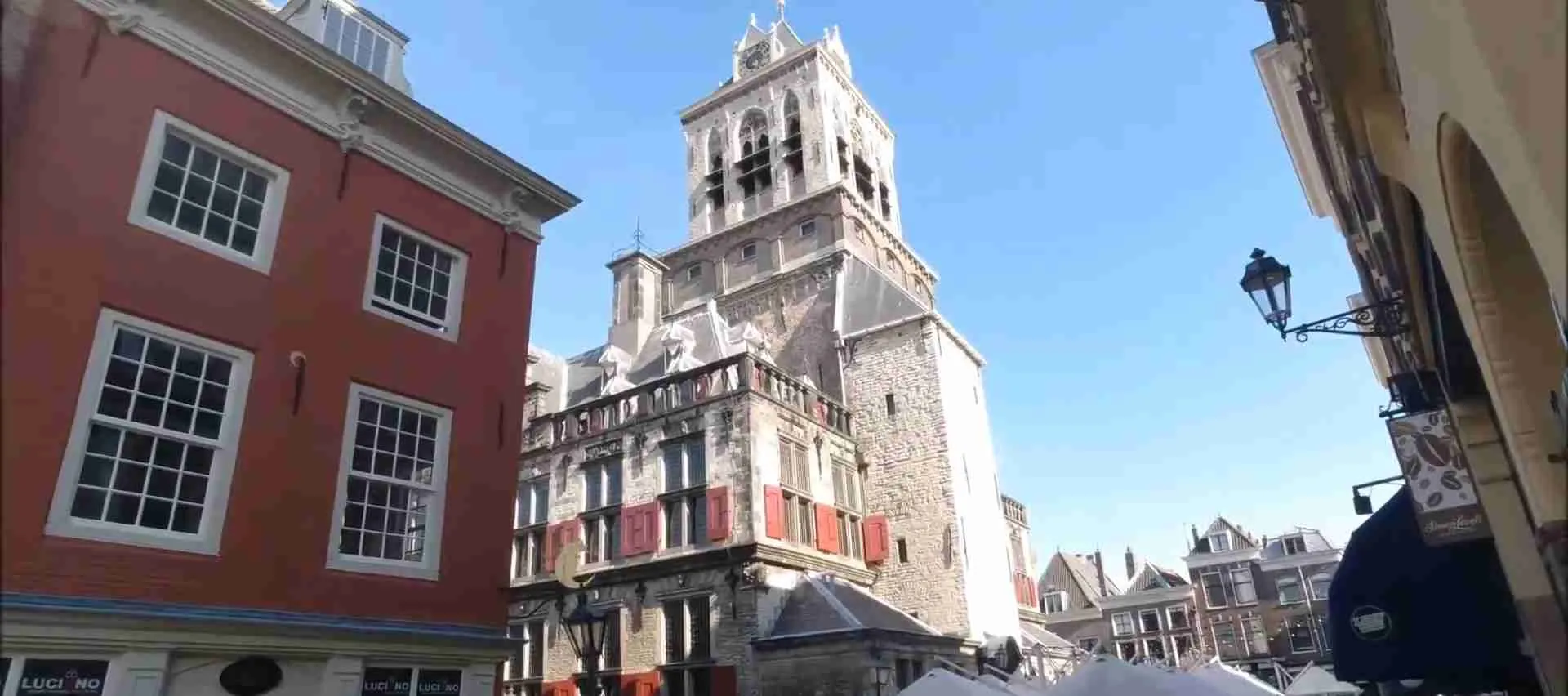
The Nieuwe Kerk dominates the Markt square with its 108.75-meter tower, the second-highest church tower in the Netherlands. Despite its name meaning “New Church,” construction began in 1381, though it’s “new” compared to the 13th-century Oude Kerk. The church serves as the burial place of Dutch royalty, most notably William of Orange, making it a pilgrimage site for those interested in Dutch history.
William of Orange’s tomb occupies the place of honor in the chancel, crafted by Hendrick de Keyser in white and black marble. The elaborate monument depicts William lying in state surrounded by allegorical figures representing Liberty, Justice, Religion, and Valor. Members of the Dutch Royal Family continue to be buried here, including all monarchs since William I who became the first king of the Netherlands in 1815. Walking through the church, you pass the final resting places of crucial figures in Dutch history, each with elaborate monuments and inscriptions.
The church interior showcases exceptional Gothic architecture with soaring vaulted ceilings supported by massive columns. The organ, built by Johannes Duyschot in 1839, ranks among the finest in the Netherlands. Regular organ concerts demonstrate its remarkable sound in the church’s superb acoustics. Stained glass windows, though damaged during the iconoclasm of 1566 and subsequent conflicts, retain examples from the 16th and 17th centuries.
The tower climb provides Delft’s best panoramic views. You ascend 376 steps through increasingly narrow staircases, passing the bell chamber with its historic carillon of 48 bells. The viewing platform at 85 meters offers 360-degree views across Delft’s roofscape, surrounding farmland, and on clear days, you can see Rotterdam’s skyline to the southeast and The Hague to the northwest. The climb requires reasonable fitness and isn’t recommended for those uncomfortable with heights or tight spaces.
The Nieuwe Kerk opens Monday through Saturday from 9:00 AM to 6:00 PM (February-October) and 11:00 AM to 4:00 PM (November-January). Sunday hours are 12:00 PM to 5:00 PM year-round. A combined ticket for both the Nieuwe Kerk and Oude Kerk costs €8 for adults, €7 for seniors and students, €5 for ages 5-12, and free for children under 5. The tower climb costs an additional €5.50 and operates April through October, weather permitting. Located on the Markt square, the church stands at the heart of the city. Allow 45 minutes for the church interior, plus 45-60 minutes if climbing the tower.
Oude Kerk (Old Church)
The Oude Kerk stands as Delft’s oldest building, with construction beginning around 1246. The church’s most distinctive feature—its leaning tower, tilted 2 meters from vertical—appears to emerge directly from the Oude Delft canal, creating one of the city’s most photographed views.
Johannes Vermeer lies buried here in the family crypt, marked by a simple memorial stone in the north transept. While Vermeer achieved posthumous fame only in the 19th century, his grave attracts art enthusiasts from around the world. The church interior also contains monuments to other notable Delft citizens including scientist Antoni van Leeuwenhoek, who pioneered microscopy and discovered microorganisms.
The church showcases exceptional medieval craftsmanship in its carved wooden choir stalls, pulpit, and organ case. The floor comprises hundreds of tombstones dating from the 14th through 18th centuries, creating a patchwork of memorial inscriptions beneath your feet. Stained glass windows include 16th-century panels depicting biblical scenes and heraldic designs of Delft’s noble families.
The tower’s lean resulted from foundation settlement in Delft’s soft soil, a common problem in Dutch cities built on wetlands. Engineers have stabilized the structure, but the dramatic tilt remains visible from multiple vantage points around the city. The interior contains a museum explaining the tower’s construction and the engineering challenges of building on reclaimed land.
The Oude Kerk opens Tuesday through Saturday from 10:00 AM to 5:00 PM (April-October) and 11:00 AM to 4:00 PM (November-March). Sunday hours are 11:00 AM to 5:00 PM year-round. The church closes Mondays. The combined ticket with the Nieuwe Kerk (€8) provides the best value if visiting both churches. Located on Heilige Geestkerkhof adjacent to the Oude Delft canal, the church sits a 5-minute walk north from the Markt square. Allow 30-45 minutes for your visit.
Van Meerten Museum
The Van Meerten Museum offers an intimate glimpse into 19th-century Dutch life through the preserved home and collection of Lambert van Meerten, a successful industrialist and passionate collector. This canal house museum provides a stark contrast to larger institutions, encouraging visitors to open drawers, sit in chairs, and interact with the furnishings as van Meerten’s guests would have.
The collection spans Delftware tiles, furniture, paintings, and decorative arts from the 16th through 19th centuries. Van Meerten specialized in Dutch tiles, and the museum displays thousands of examples covering walls throughout the house. The tile collection demonstrates regional variations and changing decorative styles from religious scenes to pastoral landscapes and geometric patterns. Reconstructed period rooms show how wealthy Dutch families arranged their homes during different eras.
The museum’s informal atmosphere distinguishes it from more traditional institutions. Staff encourage touching appropriate items and exploring cupboards to discover hidden pieces. This hands-on approach especially appeals to children who can tire of the “look but don’t touch” rules at larger museums. The intimate scale—you can tour the entire museum in 45 minutes—makes it ideal for those seeking a break from major attractions or interested in domestic history and decorative arts.
The garden courtyard provides a peaceful retreat on warm days, planted with herbs and flowers typical of 17th-century Dutch gardens. Benches invite you to sit and appreciate the canal views framed by historic houses—free and far from tourist crowds.
The Van Meerten Museum opens Tuesday through Sunday from 10:00 AM to 5:00 PM (closed Mondays). Admission costs €9 for adults, €7 for students and seniors, €4.50 for ages 4-12, and free for children under 4. The Museumkaart provides free entry. Located at Oude Delft 199, directly opposite the Oude Kerk, the museum sits a 5-minute walk from the Markt square. Allow 45-60 minutes for your visit. The museum has no café, but several options line the adjacent canal.
Delft Canals and Architecture 2026
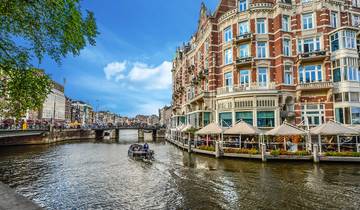
Delft’s canal network creates the framework for the historic city center, with the Oude Delft serving as the main waterway running north-south through the heart of the old town. Unlike Amsterdam’s famous canals, Delft’s remain quieter and less commercially developed, offering more authentic atmosphere for canal walks and boat tours.
The Oude Delft canal dates to the 13th century when it served as the city’s primary water route for commerce and defense. Houses lining the canal represent various architectural periods from the 15th century onward, creating a streetscape where Gothic meets Renaissance meets Dutch Baroque. Many buildings lean slightly due to foundation settlement in the soft soil—this “character” adds to Delft’s charm rather than indicating structural danger, as modern engineering has stabilized most buildings.
Walking the canal paths provides free entertainment and excellent photography opportunities. Start at the Oude Kerk where the canal frames the leaning tower, then walk south past historic merchants’ houses, hidden courtyards, and small bridges. The Oostpoort (East Gate), Delft’s only surviving city gate, spans the canal at the eastern edge of the old town, its twin towers and drawbridge creating a perfectly preserved medieval entrance to the city.
Canal boat tours offer perspective impossible from shore, gliding beneath low bridges and past private gardens invisible from the street. Tours typically last 45-60 minutes, departing from docks near the Markt square. Boats hold 8-12 passengers, creating intimate experiences unlike the crowded tourist boats in Amsterdam. Guides provide commentary on the buildings, history, and residents (including current Dutch royalty who maintain residences in Delft). Tours operate daily April through October, with reduced frequency November through March, weather permitting. Expect to pay €10-15 per person. Reserve in advance during summer weekends when tours fill quickly.
Self-drive electric boat rentals provide alternative water exploration for groups of 4-8 people. Companies like Randstad Recreaties rent boats for €45-75 per hour, no license required. You receive brief instruction on steering and canal rules, then navigate Delft’s waterways at your own pace. This option works particularly well for families or friend groups who want flexibility to stop for photos or picnics along the canal.
Architecture enthusiasts should walk the streets radiating from the Markt square to appreciate Delft’s building stock. The Stadhuis (Town Hall) on the Markt showcases Dutch Renaissance style from 1618, designed by Hendrick de Keyser. Its ornate façade contrasts with the simple brick of surrounding buildings. The former Gemeenlandshuis (Water Board House) on Oude Delft demonstrates how institutions managing water levels and flood protection—critical in a below-sea-level country—warranted impressive architecture.
Several hofjes (almshouse courtyards) hide behind inconspicuous doors throughout the city. These charitable housing complexes, built by wealthy merchants for elderly women, surround peaceful gardens accessible through narrow passages. The Bagijnhof, reached through a door on Oude Delft, dates to 1395 and remains one of Delft’s best-preserved hofjes. Respectful visitors can peek into these courtyards during daylight hours, though remember they remain private residences—quiet appreciation is expected.
Shopping and Delftware in Delft 2026
Shopping in Delft centers on Delftware pottery, with quality and authenticity varying dramatically between shops. Understanding what distinguishes genuine hand-painted Delftware from mass-produced souvenirs helps you make informed purchases and avoid disappointment.
Authentic Delftware is hand-painted by trained artisans, fired in kilns, and marked with the manufacturer’s hallmark. Royal Delft pieces carry the highest prestige and corresponding prices—a simple €15 tile to €500+ vases for complex designs. Each piece includes a certificate of authenticity. The Royal Delft shop at the factory offers the complete range, while smaller shops in the city center stock selected items. Expect to pay premium prices for authentic pieces, but you’re purchasing art rather than souvenirs.
De Candelaer on Kerkstraat operates a working pottery where you can watch artists paint designs and purchase their work directly. Prices here sit between souvenir shop mass production and Royal Delft’s premium pieces. The shop has operated since 1983, maintaining quality standards while remaining more affordable than factory pieces. Custom commissions allow you to request specific designs or personalized items, delivered within 4-8 weeks.
Mass-produced “Delftware” sold in many tourist shops comes from factories in Asia using decals rather than hand-painting. These items cost €5-20 and serve adequately as inexpensive gifts or casual souvenirs, but they’re not authentic Delftware. Check for hallmarks, inspect painting quality (genuine pieces show slight variations proving hand work), and ask about origin if authenticity matters to you.
Beyond pottery, Delft’s shopping districts offer typical Dutch products and services. The streets between the train station and the Markt (particularly Brabantse Turfmarkt, Oude Langendijk, and Hippolytusbuurt) contain clothing boutiques, bookshops, and specialty food stores. Albert Heijn and Jumbo supermarkets provide groceries and Dutch snacks for picnics or apartment stays. The Bastille shopping center near the train station houses chains and practical services.
The Thursday and Saturday markets on the Markt square offer fresh produce, flowers, Dutch cheeses, stroopwafels, and prepared foods from 9:00 AM to 5:00 PM. The flower stalls provide affordable ways to bring Dutch tulips or other blooms back to your accommodation. Cheese vendors offer samples of various Dutch styles from mild young Gouda to aged varieties with crunchy protein crystals. Stroopwafel stands sell the traditional caramel-filled waffles fresh and warm, vastly superior to pre-packaged versions.
A dedicated antique market operates on Saturdays from April through October along the Hippolytusbuurt and Voldersgracht canals. Vendors sell vintage Delftware, old books, prints, furniture, and collectibles. This market attracts serious collectors and casual browsers alike. Prices vary from a few euros for small items to hundreds for rare pieces. Bargaining is acceptable and expected at antique stalls, unlike in regular shops.
Delft Dining and Food Scene 2026
Delft’s dining scene balances traditional Dutch cuisine with international options, all served in atmospheric canal-side locations or around the historic Markt square. The city’s student population ensures variety beyond traditional offerings while maintaining reasonable prices compared to Amsterdam.
Traditional Dutch restaurants serve stamppot (mashed potatoes with vegetables), erwtensoep (thick pea soup), and bitterballen (deep-fried meat croquettes). Stads-Koffyhuis on the Markt offers classic Dutch fare in a restored 17th-century building with views of the Nieuwe Kerk. Their stamppot variations (€14-18) provide hearty comfort food, while the lunch menu features uitsmijters (Dutch open-faced sandwiches, €9-12) and tosti (grilled cheese, €7-9). The terrace fills quickly on pleasant days—arrive before noon for lunch or before 6:00 PM for dinner to secure outdoor seating.
Locus Publicus specializes in Belgian and Dutch beers with over 200 varieties including rare Trappist ales and local microbrews. The traditional brown café atmosphere (exposed beams, candlelight, worn wooden tables) provides authentic Dutch gezelligheid. Simple food like bitterballen (€6), cheese plates (€12), and sandwiches (€8-10) accompanies the beer selection. Beer experts can guide you through options suited to your taste preferences. Located on the quiet Brabantse Turfmarkt, it’s less touristy than Markt establishments while remaining central.
International dining options cluster around the Markt and Beestenmarkt. ‘t Postkantoor occupies a converted post office with high ceilings and original architectural details, serving modern European cuisine with Dutch influences (mains €22-32). De Waag inhabits the former weigh house (weighing station for trade goods) on the Markt, offering contemporary Dutch cooking in a historic setting (mains €18-28). Both restaurants require reservations on weekends.
Lunch prices in Delft range €12-20 for sandwiches, salads, or light meals at cafés around the Markt. Brownies & Downies combines social enterprise (employing people with disabilities) with quality lunch service, serving hearty sandwiches (€8-12), soups (€7-9), and excellent coffee in a friendly atmosphere on Voorstraat. Café de Ruif on Koornmarkt offers outdoor seating overlooking a quiet canal with lunch specials €10-15.
Dinner at mid-range restaurants costs €25-45 per person including a main course and beverage. High-end dining reaches €50-80 per person at establishments like Restaurant Métropole or Le Vieux Jean. Budget travelers can eat well for €15-25 at Turkish, Indian, or Indonesian restaurants along Brabantse Turfmarkt and Wijnhaven.
Indonesian restaurants merit particular attention—the Netherlands’ colonial history with Indonesia created lasting culinary connections. Kota Radja on Brabantse Turfmarkt serves rijsttafel (rice table), a Indonesian feast with 12-18 small dishes for €25-30 per person. This serves as an excellent introduction to Indonesian cuisine if you’re unfamiliar with the style.
For quick, inexpensive meals, Turkish kebab shops and Dutch snack bars (selling frites with various toppings) operate throughout the city. A large order of frites with mayo or satay sauce costs €4-6, while döner kebabs run €6-8. These provide satisfying fuel for continued exploration without restaurant formality or expense.
Coffee culture thrives in Delft with numerous cafés serving excellent coffee and pastries. Kek on Wijnhaven combines café, gallery, and shop in a creative space with excellent coffee (€3-5), homemade cakes (€4-6), and lunch options (€9-14). Uit de Kunst Café on Oude Delft offers quirky atmosphere with a courtyard, parrots, and art installations alongside quality coffee and light meals. Koffiehuis Souren, operating since 1839, sells expertly roasted coffee beans to take home along with traditional Dutch sweets.
Practical Delft Information 2026
Delft operates safely with low crime rates typical of Dutch cities. The historic center sees regular police presence, and violent crime against tourists is extremely rare. Standard urban precautions apply—watch your belongings in crowded areas like the Thursday/Saturday markets, and don’t leave bicycles unlocked even briefly. Bicycle theft represents the most common crime affecting visitors, so always use good locks when renting bikes.
Emergency services use the European emergency number 112 for police, fire, and ambulance. For non-emergency police matters, call 0900-8844. The nearest hospital, Reinier de Graaf Gasthuis, operates 24/7 emergency services at Reinier de Graafweg 5 (15-minute tram ride from the center). Pharmacies (apotheek) are marked with green crosses and operate Monday-Friday 8:30 AM to 5:30 PM, Saturday morning only. Rotating weekend/evening duty pharmacies are posted at all pharmacy doors.
Free public WiFi operates throughout the Markt square and in most cafés and restaurants with purchase. Major attractions including Museum Prinsenhof and Royal Delft offer free WiFi. The Delft train station provides free WiFi throughout the building. However, cellular data often proves more reliable than public WiFi for navigation and research while exploring the city.
Public restrooms in Delft typically charge €0.50 coin payment. Clean facilities operate in the parking garage under the Markt, at the train station, and at major museums. Cafés and restaurants generally restrict restrooms to paying customers, though a coffee purchase (€3-5) grants access if needed.
Tipping practices in the Netherlands differ from US customs. Service charges are included in restaurant bills, and tipping is optional. Leaving €2-5 at casual cafés or rounding up the bill (€27 becomes €30) is appreciated but not required. At upscale restaurants, leaving 5-10% for exceptional service is generous but uncommon among Dutch patrons. Taxi drivers and tour guides appreciate small tips but don’t expect percentages.
Banking and currency exchange in Delft centers on ATMs rather than exchange bureaus. ATMs from major Dutch banks (ING, ABN AMRO, Rabobank) are available throughout the center and don’t charge withdrawal fees beyond what your home bank may levy. Credit and debit cards work almost universally except at small market stalls and some traditional cafés. Contactless payment has become standard—most purchases under €50 can be completed by tapping your card or phone.
The Museumkaart (Museum Card) provides value for visitors planning to tour multiple Dutch museums. The card costs €65 annually (€32.50 for ages 18 and under) and grants free entry to over 400 Dutch museums including Museum Prinsenhof Delft, Vermeer Centrum, Van Meerten Museum, and both churches. The card pays for itself after visiting 5-6 museums. Purchase at any participating museum with passport photo. The card activates with your first museum visit and expires one year later.
For travelers visiting multiple cities in the Netherlands, the NS (Nederlandse Spoorwegen) offers various rail passes. The Holland Travel Ticket provides unlimited train, bus, tram, and metro travel across the country for one day at €64, or three consecutive days for €134. This proves economical if making multiple day trips from a single base. Single tickets from Amsterdam to Delft cost €16-21, so the day pass breaks even with two round trips.
Luggage storage at Delft train station costs €6-10 per bag per day at the staffed luggage desk on the main hall. Service operates daily 7:00 AM to 11:00 PM. This facility allows day-trippers from Amsterdam or travelers between destinations to explore Delft unencumbered by bags. Some hotels offer luggage storage after checkout for their guests—ask when checking out if you’re departing Delft later in the day.
Delft respects Sunday closures less strictly than some traditional Dutch towns, with most shops around the Markt open Sunday 12:00 PM to 5:00 PM. However, smaller businesses and those away from tourist areas typically close Sundays. Museums maintain Sunday hours, and restaurants operate normally. Thursday evenings feature late shopping (koopavond) with stores open until 9:00 PM rather than the usual 6:00 PM closing.
Cycling in Delft follows the same rules as elsewhere in the Netherlands. Bicycle rental shops near the train station charge €10-15 per day for basic city bikes. However, Delft’s compact size means walking covers most destinations efficiently, and the historic center has limited bicycle parking. If cycling, always use designated bike lanes (marked with white bicycle symbols on red-brown pavement), yield to pedestrians, and lock your bike securely. Bicycles stolen in tourist areas rarely get recovered.
Day Trips from Delft 2026
Delft’s central location in South Holland makes it an excellent base for exploring nearby cities and attractions. The dense rail network connects Delft to major destinations within 10-60 minutes, allowing easy day trips without changing accommodation.
The Hague (Den Haag) sits just 8 minutes away by train, with services departing every 10-15 minutes throughout the day. As the seat of Dutch government and home to the International Court of Justice, The Hague combines political importance with cultural attractions. The Mauritshuis museum houses Vermeer’s “Girl with a Pearl Earring” and other Dutch Golden Age masterpieces. Binnenhof, the medieval government complex, offers guided tours of the historic parliament chambers. Scheveningen beach provides North Sea coastline with a long pier, seafood restaurants, and beach activities from May through September. The Hague’s urban atmosphere contrasts with Delft’s intimate scale while remaining easily accessible.
Rotterdam requires just 12 minutes by train, transforming from Delft’s historic architecture to ultra-modern urban design. The city’s post-WWII reconstruction created striking contemporary architecture including the Markthal (market hall with enormous residential arc), cubic houses designed by Piet Blom, and the Erasmus Bridge. The maritime museum showcases Rotterdam’s history as Europe’s largest port. Foodies appreciate Rotterdam’s diverse restaurant scene spanning dozens of cuisines at various price points. The contrast between Delft’s preservation and Rotterdam’s innovation makes this combination particularly striking within a single day.
Amsterdam sits 58 minutes away, easily manageable for day trips though most visitors approach this pairing reversed—day-tripping to Delft from Amsterdam accommodation. The comprehensive train frequency (every 30 minutes) allows flexibility in timing your Amsterdam visits. Rijksmuseum, Van Gogh Museum, Anne Frank House, and canal cruises top Amsterdam attraction lists. However, Amsterdam’s crowds, higher prices, and tourist-oriented atmosphere provide sharp contrast to Delft’s authentic residential character.
Leiden, located 25 minutes from Delft, offers another historic university city with beautiful canals and exceptional museums. The Rijksmuseum van Oudheden (National Museum of Antiquities) houses one of Europe’s finest Egyptian collections outside of Egypt itself, including a complete temple relocated from Nubia. Leiden’s historic center preserves Renaissance and Golden Age architecture along its canals, with fewer tourists than Delft despite comparable charm. The Wednesday and Saturday markets on the Beestenmarkt date to the medieval period and remain authentically local.
Keukenhof Gardens, located 40 minutes from Delft by train and bus, opens for eight weeks annually (late March through mid-May) showcasing millions of tulips, daffodils, and hyacinths. This seasonal attraction coordinates with spring’s optimal Delft visiting season, allowing combination trips. The gardens display formal plantings, themed gardens, and naturally landscaped areas with bulbs beneath trees. Expect massive crowds on weekends and holidays—weekday morning visits provide the most pleasant experience. Direct bus services operate from Leiden train station (15 minutes from Delft) to Keukenhof during the season.
Gouda, situated 30 minutes north of Delft, produces the famous cheese bearing its name. The Thursday morning cheese market (April-August) demonstrates traditional cheese trading ceremonies with porters in historic dress carrying enormous cheese wheels. Beyond cheese, Gouda preserves a beautiful medieval center with an ornate Gothic town hall and Sint-Janskerk, featuring the Netherlands’ finest collection of 16th-century stained glass windows. The city receives far fewer tourists than Delft despite comparable attractions, offering authentic Dutch small-city atmosphere.
Kinderdijk, a UNESCO World Heritage site 25 kilometers from Delft, preserves 19 authentic 18th-century windmills used for water management. This network of windmills represents the engineering that allowed the Netherlands to reclaim land from water and maintain drainage in areas below sea level. Visiting requires a 20-minute train to Rotterdam Zuid station plus a 20-minute ferry ride, making it a half-day excursion. Waterbus 202 operates the scenic ferry route through Dutch polder landscape. One or two windmills operate as museums, others as private residences. The site provides excellent cycling through flat landscape with photogenic windmill compositions.
Frequently Asked Questions About Delft 2026
How do I get from Amsterdam to Delft?
Take direct trains from Amsterdam Centraal to Delft, departing every 30 minutes throughout the day with 114 daily services. The journey covers 55 kilometers in 58 minutes on Nederlandse Spoorwegen (NS) intercity trains. Tickets cost €16-21 one-way when purchased in advance through NS app, website, or at the station. No reservations are needed—simply board any train heading to Delft via Rotterdam. All trains offer free WiFi and comfortable seating. The first train departs Amsterdam around 12:05 AM, and the last around 11:35 PM. From Delft station, the historic center is a 10-minute walk following signs to Markt or Centrum. Alternatively, buses 40 and 455 connect the station to the city center, though walking proves faster and more scenic.
Can I visit Delft as a day trip?
Yes, Delft works perfectly as a day trip from Amsterdam, Rotterdam, or The Hague due to its compact size and excellent train connections. A full day allows you to visit 2-3 major museums, climb the Nieuwe Kerk tower, take a canal boat tour, and enjoy lunch and dinner at canal-side restaurants. Arriving at 9:30-10:00 AM and departing around 7:00-8:00 PM provides 9-10 hours of exploration time. Prioritize Museum Prinsenhof (currently closed for renovation through early 2027), Royal Delft, and Vermeer Centrum as top attractions. The historic center’s walkability means no time wasted on local transportation. However, Delft’s relaxed atmosphere rewards slower pacing—consider staying overnight to experience the city beyond standard tourist hours, particularly the peaceful early mornings and atmospheric evenings after day-trippers depart.
What’s the difference between Delft and Delftware?
Delft is the city in South Holland, Netherlands, while Delftware (or Delft Blue) refers to the distinctive blue-and-white pottery produced there. Delftware originated in the 17th century when Dutch potters attempted to replicate Chinese porcelain imported by the Dutch East India Company. Unable to duplicate true porcelain, they developed tin-glazed earthenware painted with cobalt blue designs that became distinctly Dutch. The pottery’s name derives from the city where production centered during the Golden Age. Royal Delft factory continues traditional production using hand-painting techniques unchanged since 1653. Today, “Delftware” encompasses both authentic hand-painted pottery produced in Delft and mass-produced imitations made elsewhere—checking for manufacturer hallmarks helps identify genuine pieces.
Are there any original Vermeer paintings in Delft?
No, Delft currently holds no original Vermeer paintings despite the artist spending his entire life in the city. Vermeer’s complete output of 37 authenticated paintings dispersed to museums and private collections worldwide following his death in 1675. The Mauritshuis in The Hague (8 minutes by train from Delft) owns three Vermeers including the famous “Girl with a Pearl Earring” and “View of Delft”—this represents the closest location to see original Vermeers. Amsterdam’s Rijksmuseum holds four Vermeers including “The Milkmaid.” Vermeer Centrum Delft displays high-quality reproductions of all 37 paintings with detailed analysis of his techniques, providing comprehensive understanding of his work even without originals. The museum contextualizes Vermeer within Delft’s 17th-century artistic community and explains his connections to specific city locations you can still visit.
Is Delft expensive to visit?
Delft costs moderately less than Amsterdam while remaining comparable to other mid-sized Dutch cities like Leiden or Haarlem. Budget €78-120 per day for attractions, meals, and transport excluding accommodation. Museum admissions cost €9-14 per attraction, allowing 2-3 major sites for €25-35 daily. Lunch at canal-side cafés runs €12-20, while dinner at mid-range restaurants costs €25-45 per person. Accommodation ranges €90-140 for budget hotels, €140-200 mid-range, with Airbnb apartments often offering better value. The compact walkable center eliminates local transport costs. Compared to Amsterdam, expect to save 20-30% on accommodation and 15-20% on dining while enjoying similar quality. Free activities like canal walking, church exteriors, and Thursday/Saturday markets stretch budgets further. The Museumkaart (€65 annually) provides excellent value if visiting 5+ museums across multiple Dutch cities.
What should I buy in Delft?
Authentic hand-painted Delftware represents the most meaningful purchase from Delft, ranging from €15 tiles to €500+ vases at Royal Delft. Verify authenticity through manufacturer hallmarks and certificates—mass-produced imitations lack the detail and quality of genuine pieces. De Candelaer on Kerkstraat offers mid-priced authentic Delftware between souvenir-shop quality and Royal Delft prices. Beyond pottery, consider Dutch cheese from Thursday/Saturday market vendors who provide samples and vacuum-seal selections for travel. Stroopwafels (caramel-filled waffles) from market stalls taste vastly superior to pre-packaged versions. Indonesian spices and sambal from shops along Brabantse Turfmarkt reflect the Netherlands’ colonial connections. High-quality coffee beans from Koffiehuis Souren make excellent gifts. Books about Delft history, Vermeer, or Dutch Golden Age available at museum shops provide lasting value beyond typical souvenirs.
Where can I see windmills near Delft?
Kinderdijk, the UNESCO World Heritage site featuring 19 authentic 18th-century windmills, sits 25 kilometers from Delft. Reach Kinderdijk via 20-minute train to Rotterdam Zuid station, then 20-minute Waterbus 202 ferry through polder landscape. This half-day excursion shows working windmills in their original water-management context rather than isolated tourist attractions. One or two windmills operate as museums explaining drainage technology that enabled land reclamation below sea level. Visit operates year-round, though spring (April-May) provides the most pleasant weather for the outdoor site. Closer to Delft, Molen de Roos (the Rose windmill) on Phoenixstraat in Delft’s Schie district produces stone-ground flour using traditional methods. This working grain mill opens for tours Saturday afternoons, demonstrating how windmills functioned beyond water management. The Saturday tours cost €3-5 and run March through October.
Can I visit Delft in winter?
Yes, winter visits (December-February) offer advantages despite cold weather and limited daylight. Accommodation costs drop 30-40% compared to summer, major attractions have minimal queues, and you experience Delft as residents do without tourist crowds. Temperatures range 2-6°C with frequent rain but occasional crisp clear days perfect for photography. Museums and churches provide warm refuges, while canal-side cafés offer gezelligheid (cozy atmosphere). The Christmas season transforms the Markt square with a traditional market selling crafts, glühwein, and stroopwafels (late November through early January). Shorter daylight hours (sunset around 4:30 PM in December) necessitate earlier starts to maximize sightseeing. Pack warm waterproof clothing, expect 160+ annual rain days distributed throughout the year, and use the Buienradar weather app to time outdoor activities during dry windows. Museums maintain normal hours except during major holidays (Christmas Day, New Year’s Day).
Is Delft suitable for children?
Delft welcomes families with children through its compact walkable scale, traffic-calmed historic center, and hands-on museum options. The Van Meerten Museum encourages children to open drawers and interact with furnishings, contrasting with “don’t touch” rules at larger museums. Royal Delft offers tile-painting workshops where children create and take home their own Delftware (€25-35, ages 6+). Canal boat tours (45-60 minutes) maintain children’s attention better than extended museum visits. The Thursday and Saturday markets provide sensory experiences with free samples at cheese stalls and fresh stroopwafels. Parks like Delftse Hout recreation area (20 minutes by bus from center) offer playgrounds, swimming beach, and water sports for active breaks from sightseeing. Most restaurants welcome children with high chairs and children’s menus available. The flat terrain and pedestrian-friendly streets make stroller navigation easy throughout the historic center. Museum Prinsenhof may interest older children and teenagers studying history, while younger children might find it less engaging than interactive attractions.
How accessible is Delft for wheelchair users?
Delft provides moderate accessibility, though historic buildings and uneven cobblestones present challenges typical of medieval Dutch cities. The train station offers lifts to all platforms and accessible restrooms. Modern museum buildings like the Vermeer Centrum provide wheelchair access via ramps or lifts, and accessible restrooms. Royal Delft factory complex is wheelchair accessible with designated parking. However, historic buildings including Museum Prinsenhof (currently closed for renovation), both churches, and the Van Meerten Museum feature stairs without lift alternatives, limiting access to ground floors only. Sidewalks throughout the historic center include dropped curbs at crossings, though cobblestone surfaces create vibration and difficulty for manual wheelchair users. Many restaurants and cafés have level entrances, but historic canal houses often feature step entries. Modern hotels near the train station generally provide accessible rooms, while canal-house hotels in the center may lack lifts or have narrow historic staircases. Check specific accessibility details with your accommodation and planned attractions before booking.