Death Road Bolivia 2026: Mountain Biking the World’s Most Dangerous Road
Key Takeaways:
- Death Road tours cost $80-150 in 2026, including transportation, equipment, meals, and professional guides
- The 64-kilometer descent drops 3,500 meters from La Cumbre pass (4,700m) to Yolosa (1,200m) over 4-5 hours of riding
- No technical mountain biking experience required—tours suit intermediate cyclists comfortable with sustained braking
- The dry season (May-October) offers optimal conditions with clear visibility and dry surfaces
- Quality operators provide full-suspension bikes, safety equipment, and support vehicles throughout the descent
Introduction to Death Road Bolivia 2026
The North Yungas Road, infamously known as “Death Road” or “El Camino de la Muerte,” has transformed from one of Bolivia’s deadliest thoroughfares into South America’s most thrilling adventure tourism experience. This narrow road carved into sheer cliff faces, where an estimated 200-300 vehicles plunged to their destruction annually before a modern bypass opened in 2006, now draws over 25,000 mountain bikers each year seeking the ultimate adrenaline experience.
In 2026, the Death Road experience represents a well-organized adventure activity rather than a reckless stunt. Professional operators have refined the experience over two decades, developing safety protocols, investing in quality equipment, and training guides who balance thrill with responsibility. The road’s reputation rests on its history—modern biking tours see remarkably few serious incidents when conducted by reputable companies.
The descent offers far more than danger-seeking novelty. Riders traverse dramatic ecological zones from alpine tundra through cloud forest to subtropical jungle, experiencing temperature swings from near-freezing at the summit to balmy warmth at the finish. Waterfalls cascade across the road, condors soar overhead, and the vegetation transforms dramatically throughout the descent. For 2026 visitors to La Paz, Death Road delivers one of the world’s most memorable cycling adventures.
People Also Ask About Death Road 2026
How much does Death Road cost in 2026?
Death Road tours in 2026 range from $80-150 per person depending on operator, bike quality, group size, and inclusions. Budget operators charge $80-100, providing basic dual-suspension bikes and larger group sizes. Premium operators like Gravity Bolivia and Barracuda Biking charge $120-150 for high-end bikes, smaller groups, and enhanced services. All tours include transportation from La Paz, equipment, breakfast, lunch, and a support vehicle. Check with specific operators for current rates as pricing may vary.
Is Death Road actually dangerous in 2026?
Death Road earned its name from vehicle accidents before the modern bypass opened in 2006. Mountain biking tours have excellent safety records when conducted by reputable operators. Serious injuries remain rare—perhaps 2-3 per year across all operators combined—and fatalities are exceptional events rather than routine occurrences. Risk exists primarily from rider error (excessive speed, ignoring guide instructions) rather than inherent road dangers. Choose established operators with documented safety protocols.
How fit do I need to be for Death Road in 2026?
Death Road requires intermediate cycling ability rather than extreme fitness. The route descends almost entirely—riders gain virtually no elevation after the initial paved section. Physical demands include sustained braking (4-5 hours with hands on brake levers), handlebar control on rough surfaces, and mental focus throughout the descent. Anyone comfortable riding a bicycle for several hours can complete the route. No technical mountain biking skills (jumps, drops, extreme terrain) are required.
What is the best time to ride Death Road in 2026?
The dry season from May through October offers optimal Death Road conditions. Clear skies provide spectacular views, dry surfaces ensure better traction, and comfortable temperatures make the descent pleasant. June through August sees the clearest weather but also peak tourist season with more riders on the road. September-October combines good weather with smaller groups. Wet season rides (November-April) proceed but encounter rain, fog, slippery surfaces, and reduced visibility.
Extended multi-day tours – 5+ days
Featured Bolivian Altiplano Multi-Day Tour Packages
12 days
Salta to La Paz Travel Pass
- ✓ Comprehensive Bolivian Altiplano tour
- ✓ Expert local guides included
- ✓ All accommodation arranged
- ✓ Transportation provided
4 days
Uyuni Salt Flats & Desert Adventure 4D/3N (Atacama to Atacama)
- ✓ Comprehensive Bolivian Altiplano tour
- ✓ Expert local guides included
- ✓ All accommodation arranged
- ✓ Transportation provided
10 days
10 Days Essential and natural Bolivia: from Santa Cruz to the salar de Uyuni
- ✓ Comprehensive Bolivian Altiplano tour
- ✓ Expert local guides included
- ✓ All accommodation arranged
- ✓ Transportation provided
4 days
From La Paz: Uyuni Salt Flats ending in Atacama
- ✓ Comprehensive Bolivian Altiplano tour
- ✓ Expert local guides included
- ✓ All accommodation arranged
- ✓ Transportation provided
Multi-day tour packages powered by TourRadar. Prices and availability subject to change.
Understanding the Death Road Experience 2026
Route Overview and Key Statistics 2026
The Death Road route spans 64 kilometers from La Cumbre pass to Yolosa in the Yungas region. The journey begins with a 20-kilometer paved section from La Cumbre (4,700 meters) to the junction at Cotapata (4,000 meters). This warm-up stretch follows modern highway with separated bike lanes and gentle descents, allowing riders to adjust to their equipment and the altitude before tackling the infamous unpaved section.
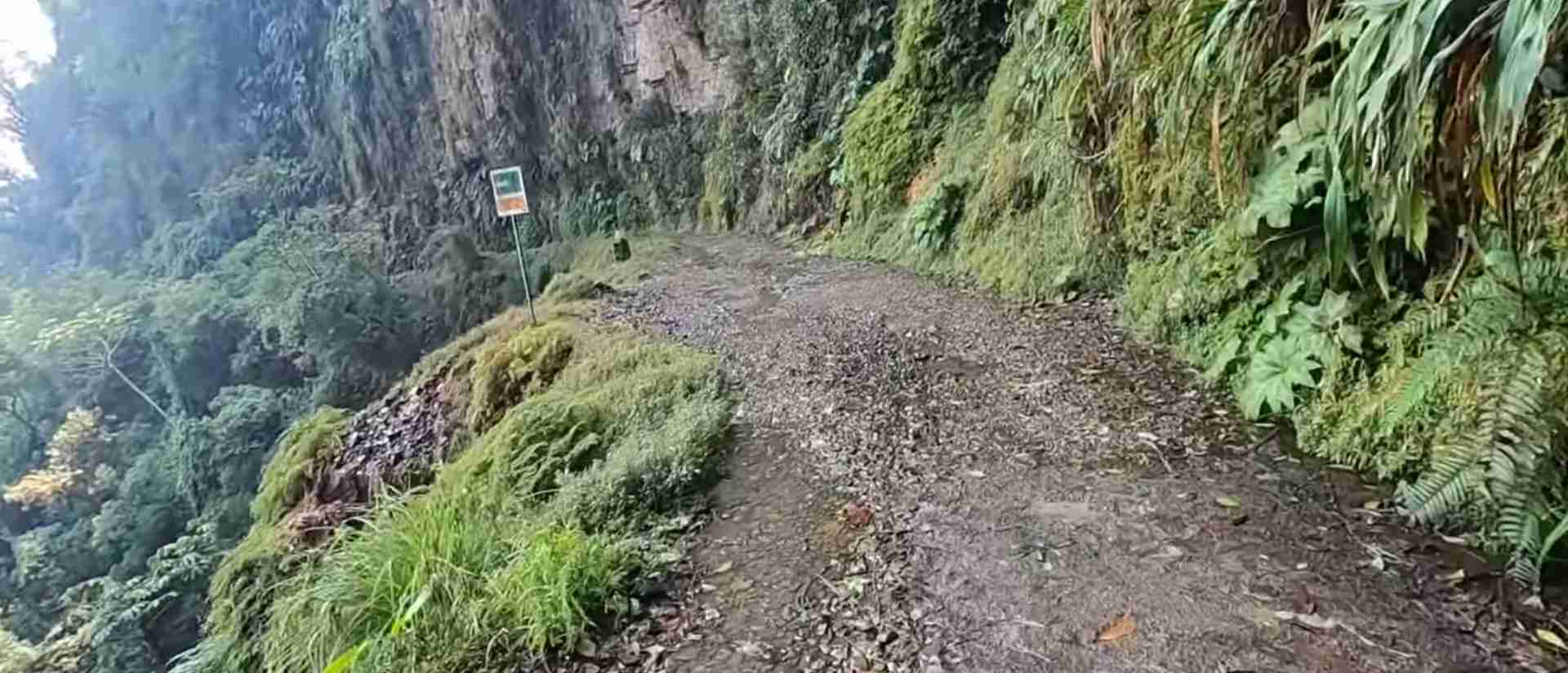
The authentic Death Road begins at Cotapata, where riders turn onto the original single-lane dirt road. Over 44 kilometers, the route descends 2,800 meters to Yolosa at 1,200 meters elevation. This section features the narrow cliff-hugging passages, 300-meter vertical drops, and waterfalls crossing the road that define the Death Road experience. The dirt surface varies from packed gravel to loose rocks depending on recent weather and maintenance.
Total riding time runs 4-5 hours including stops for photos, water breaks, and group regrouping. The paved section takes 45-60 minutes, while the dirt road requires 3-4 hours depending on pace and group size. Most tours spend 15-20 minutes at the finish celebrating with photos and cold drinks before the drive back to La Paz.
Why Death Road Earned Its Name
The North Yungas Road earned its deadly reputation during decades as Bolivia’s primary route connecting La Paz to the Yungas and Amazon regions. Constructed in the 1930s by Paraguayan prisoners during the Chaco War, the road was carved into mountainsides without modern engineering standards. The single-lane width (often under 3 meters) combined with 300-600 meter vertical drops, lack of guardrails, and frequent fog created deadly conditions for vehicles.
Before the modern bypass opened in 2006, an estimated 200-300 people died annually on this road. Vehicles meeting on blind corners had no margin for error. The left-hand traffic rule (unique in Bolivia) placed downhill vehicles on the outside edge, requiring them to reverse to passing places when meeting uphill traffic. Crosses and memorials marking accident sites dot the entire route.
The 2006 bypass redirected commercial traffic to a modern paved highway, leaving the original road primarily for tourists and occasional local traffic. This transformation enabled the mountain biking industry to develop, converting a death trap into an adventure tourism destination. The name “Death Road” now serves marketing purposes rather than reflecting current reality for properly supervised cyclists.
Ecological Zones and Scenery 2026
Death Road traverses three distinct ecological zones, making the descent a journey through dramatically different landscapes. The route begins in the puna—high-altitude grassland above the tree line where temperatures hover near freezing and sparse vegetation clings to rocky slopes. Snow patches often remain on surrounding peaks, and the thin air (30% less oxygen than sea level) requires careful acclimatization.
Descending through 4,000-3,000 meters, riders enter the cloud forest zone characterized by perpetual mist, gnarled trees draped in moss and orchids, and increasing biodiversity. Waterfalls appear along this stretch, sometimes crossing directly over the road in sheets that drench passing cyclists. The temperature rises noticeably, and the air thickens with humidity and oxygen.
Below 2,500 meters, subtropical vegetation dominates. Banana trees, giant ferns, and tropical flowers replace the cloud forest species. Birds become abundant—toucans, parrots, and hummingbirds frequent the lower sections. By the Yolosa finish at 1,200 meters, temperatures reach 25-30°C with full tropical warmth. This ecological transformation ranks among Death Road’s most remarkable aspects beyond the adrenaline.
Choosing Your Death Road Tour Operator 2026
Premium Operators for 2026
Gravity Bolivia leads the Death Road industry as the original specialized operator, launching tours in 1998. Their 2026 offerings feature Kona Stinky downhill bikes, maximum 12-rider groups, bilingual guides, and comprehensive safety briefings. Tour prices run $130-150 including premium Alpinestars body armor, GoPro footage, and professional photos. Their safety record remains among the best in the industry.
Barracuda Biking established itself as Gravity’s primary competitor, offering similar quality with distinctive service elements. Their tours use GT Fury bikes with top-tier components, limit groups to 10 riders, and emphasize personalized attention. Pricing at $120-140 includes all equipment, meals, and a cold beer celebration at the finish. Guides undergo extensive training with documented certification processes.
Altitude Biking fills the quality-focused mid-market segment. Their dual-suspension bikes may not match Gravity or Barracuda’s specifications but remain well-maintained and appropriate for the terrain. Groups run 10-14 riders at $100-120 per person. They maintain strong safety protocols and experienced guides while offering slightly lower pricing than premium competitors.
Budget Operators Considerations 2026
Budget operators charging $80-100 exist throughout La Paz, primarily along Calle Sagárnaga. These companies vary significantly in quality—some provide adequate experiences while others cut corners on equipment and safety. Riders choosing budget options should inspect bikes before departure, verify guide qualifications, and confirm support vehicle arrangements.
Warning signs for questionable operators include oversized groups (15+ riders), bikes with visible wear or poor components, guides who cannot answer safety questions confidently, and vague responses about insurance coverage. The price difference between budget and premium operators ($30-70) represents minimal savings compared to potential consequences of equipment failure on cliff-edge roads.
Recommendations for budget-conscious travelers: choose mid-tier operators like Altitude Biking rather than bottom-tier providers, book directly (avoiding hostel commissions), and travel during shoulder season when operators offer promotions. The experience quality difference between $100 and $150 options exceeds the difference between $80 and $100 options.
What’s Included in Death Road Tours 2026
Standard inclusions across reputable operators cover transportation (hotel pickup in La Paz, transfer to La Cumbre, and return from Yolosa), dual-suspension mountain bike, full-face helmet, gloves, knee and elbow pads, breakfast before departure, and lunch after the ride. Support vehicles follow the group carrying spare bikes, first aid equipment, water, and riders who cannot continue.
Premium operators add body armor (spine and chest protection), waterproof jackets, GoPro helmet cameras, professional photography, cold drinks at the finish, and smaller group sizes. Some include evening activities in Coroico or extended Yungas region exploration for additional cost.
Not typically included: tips for guides (Bs 50-100 / $7-15 recommended), personal travel insurance, optional upgrades like private tours or extended Yungas stays, and souvenirs. Confirm exactly what your chosen operator includes before booking—prices alone don’t indicate inclusion levels.
Preparing for Death Road 2026
Physical Preparation for 2026
Death Road demands sustained grip strength and braking endurance rather than cardiovascular fitness. Riders maintain pressure on brake levers for 4-5 hours with minimal rest. Practice strengthening forearms and hands in the weeks before your trip through exercises like dead hangs, farmer carries, or simply squeezing stress balls.
Basic cycling competence proves essential. Riders should feel comfortable controlling a bike at varying speeds on different surfaces. Practice riding on gravel or dirt paths if possible. Experience with hand brakes (versus coaster brakes) is necessary—the terrain requires constant modulated braking rather than intermittent hard stops.
Mental preparation matters as much as physical readiness. The route includes sections with precipitous drops visible centimeters from your tires. Heights sensitivity can transform excitement into paralyzing anxiety. Be honest with yourself about comfort levels with exposure—the views down are spectacular but unavoidable.
What to Bring for Death Road 2026
Operators provide technical cycling equipment, but personal items enhance comfort and safety. Bring layers for temperature changes (warm clothing for the summit, light layers to remove during descent), sturdy closed-toe shoes (hiking shoes or sneakers work well—avoid sandals), sunglasses or clear glasses for eye protection, and sunscreen for high-altitude UV exposure.
Essential personal items include a small backpack or waist pack for valuables, cash for tips and extras, prescription medications if needed, and a fully charged phone for photos (with waterproof protection). Energy bars or snacks supplement tour-provided meals. A change of clothes for the post-ride return proves welcome after dusty or muddy descents.
Leave behind valuables you cannot secure while riding. Large cameras, excessive cash, and important documents stay safer at your La Paz accommodation. Operators provide storage for items during the ride, but minimizing risk remains prudent.
Altitude Considerations for Death Road 2026
The tour begins at 4,700 meters—higher than La Paz itself—before descending into oxygen-rich lower elevations. Riders should spend at least 2-3 days acclimatizing in La Paz before attempting Death Road. Those arriving directly from low elevations risk altitude sickness symptoms that compound the physical demands of the ride.
The descent’s physiological advantage is significant: riders start at extreme altitude where physical exertion proves difficult and finish at comfortable elevation where oxygen abundance aids recovery. By Yolosa, the thick air at 1,200 meters feels almost intoxicating compared to La Paz’s thin atmosphere.
Morning cold at the summit (often near or below freezing) requires warm starting layers that become unnecessary within an hour of descending. Temperature increases approximately 6°C for every 1,000 meters of descent. By the subtropical finish, temperatures reach 25-30°C—anticipate removing layers throughout the ride.
The Death Road Experience Day-by-Day 2026
Tour Day Timeline 2026
5:30-6:00 AM: Hotel pickup in La Paz. Operators collect riders from various accommodations, consolidating groups before heading to the office or directly to La Cumbre. Early starts maximize daylight riding time.
6:30-7:30 AM: Equipment fitting and breakfast. At the operator’s headquarters or roadside stop, riders receive bikes adjusted for height, select helmets and pads, and eat breakfast (typically bread, eggs, coffee, and juice). Guides provide initial safety briefings.
8:00-8:30 AM: Arrival at La Cumbre pass. The highest point of the journey at 4,700 meters provides panoramic Andean views—when clear weather cooperates. Final bike adjustments, comprehensive safety briefing, and group photo opportunities precede departure.
8:30-9:30 AM: Paved descent to Cotapata. The first 20 kilometers follow modern highway with bike lanes. This section allows riders to familiarize themselves with bike handling and braking at altitude before the challenging dirt road begins.
9:30 AM-1:30 PM: Death Road descent. The 44-kilometer dirt road section takes 3-4 hours including stops for photos, water, and regrouping. Guides lead groups at controlled paces, stopping at viewpoints and allowing faster riders to proceed in stages.
1:30-2:00 PM: Arrival at Yolosa. Celebration drinks, photo opportunities, and removal of equipment mark the finish. Some operators include pool access at local hotels for cooling off in the tropical heat.
2:30-3:30 PM: Lunch. Post-ride meals typically occur in Yolosa or Coroico, featuring hearty Bolivian fare and well-earned relaxation. Some tours offer swimming pool access during lunch stops.
3:30-6:00 PM: Return to La Paz. The 3-hour drive back climbs through the modern bypass tunnel and returns riders to their La Paz accommodations by early evening.
Key Sections of the Death Road 2026
La Cumbre to Cotapata (Paved Warm-up): The initial paved section serves essential purposes beyond mere warm-up. Riders descend 700 meters over 20 kilometers, reaching speeds up to 50 km/h on smooth asphalt. This stretch reveals individual riding styles, allows guides to identify riders needing extra attention, and builds confidence before the challenging terrain ahead. Mountain scenery dominates with occasional alpaca herds grazing roadside.
Cotapata Junction: The transition point where tours leave modern pavement for the original Death Road. A brief stop here includes additional safety reminders, final adjustments, and the iconic “Death Road” entrance sign photo opportunity. Atmospheric shifts become immediate—mist often shrouds this cloud forest altitude, and the first narrow sections begin within meters.
Upper Death Road (Cloud Forest Zone): The first 15 kilometers of dirt road traverse cloud forest with the narrowest passages and most dramatic cliff exposures. Waterfalls cross the road at several points—sometimes gentle spray, sometimes full streams requiring careful passage. Fog can reduce visibility to meters. The road surface alternates between packed gravel and loose rocks.
Cross Monuments Section: The most photographed stretch features dozens of crosses and memorials marking accident sites. This somber reminder of the road’s history provides powerful photo opportunities while reinforcing the importance of maintaining concentration. The terrain opens slightly here with better visibility than the upper sections.
Lower Death Road (Subtropical Zone): Below 2,000 meters, the road widens somewhat and vegetation becomes tropical. Temperatures climb noticeably, and the challenging technical terrain gives way to faster flowing sections. Riders often feel most comfortable here as fatigue balances against easier terrain and richer oxygen.
Final Descent to Yolosa: The last 10 kilometers feature the smoothest surfaces and warmest temperatures. Riders frequently achieve their highest speeds here as finishing energy surges. The support vehicle follows closely, celebrating riders across the informal finish line with photos and congratulations.
Death Road Safety Protocols 2026
Operator Safety Standards 2026
Reputable operators maintain rigorous safety protocols developed over two decades of Death Road experience. Pre-departure bike inspections check brake function, tire pressure, handlebar alignment, and component integrity. Guides test each bike personally before assigning to riders. Backup bikes travel in support vehicles for immediate replacement if mechanical issues arise.
Safety briefings cover braking technique (steady pressure rather than grabbing), passing protocols (call out before passing, pass on the mountain side only), group formation (maintain spacing, never bunch), hazard awareness (wet rocks, soft shoulders, oncoming vehicles), and emergency procedures. Quality operators spend 15-30 minutes on briefings—rushed briefings suggest questionable operations.
Support vehicles carry first aid equipment, spare bikes, water, and communication devices. Guides position themselves strategically throughout the group—lead guide controlling pace, sweep guide ensuring no rider falls behind. Radio or phone communication maintains contact between guides and support vehicles. Medical evacuation protocols establish procedures for serious injuries.
Rider Responsibilities for 2026
Individual responsibility significantly determines Death Road safety outcomes. Riders must follow guide instructions without exception—guides understand the terrain and have valid reasons for every directive. Speed limits exist for safety, not to diminish experience. Passing only where guides indicate prevents collisions on blind corners.
Honest self-assessment matters critically. Riders experiencing fear, fatigue, mechanical problems, or loss of concentration should immediately inform guides. Support vehicles provide rides for anyone unable to continue safely. No shame accompanies choosing to ride in the truck—experienced guides respect self-aware decisions far more than reckless attempts to continue.
Alcohol and drug consumption before or during rides is prohibited by all reputable operators. The physical demands and technical requirements make impairment extremely dangerous. Some budget operators fail to enforce this rule—their casualty rates reflect this negligence. Choose operators who take rider condition seriously.
Emergency Procedures on Death Road 2026
Accidents do occur despite precautions. Minor incidents (scrapes, bruises, minor falls) receive first aid treatment from guides trained in emergency response. Tours continue after basic treatment if riders wish. The support vehicle provides transportation for anyone unable to continue riding.
Serious incidents trigger evacuation protocols. The support vehicle serves as ambulance transport to Coroico hospital (30-45 minutes from most points on the road) or helicopter landing zones for La Paz evacuation. Reputable operators carry satellite communication devices for areas without cell coverage. Insurance documentation should be readily accessible.
The statistical reality provides context: among thousands of annual riders, serious injuries requiring hospitalization number in single digits. Fatalities—while each is tragic—occur approximately once every 2-3 years across all operators. Following guide instructions and riding within ability virtually eliminates serious incident risk.
Death Road Tour Costs and Value Analysis 2026
Complete Cost Breakdown 2026
Tour prices represent the primary Death Road expense, ranging $80-150 as detailed above. Additional costs include tips for guides (Bs 50-100 / $7-15 recommended for quality service), personal photos or videos not included in tour price ($15-30 if purchasing), and optional extensions like overnight Coroico stays ($30-80 for accommodation and additional transport).
Pre-tour expenses to consider: travel insurance with adventure activity coverage (verify Death Road/mountain biking inclusion), appropriate clothing if lacking, and any altitude medication. Post-tour, celebratory dinners and drinks in La Paz or Coroico often occur—budget accordingly.
Total Death Road costs for 2026 including tour, tips, incidentals, and celebration: $100-200 depending on operator choice and extras. Budget option total: $90-130. Premium option total: $150-200. The experience delivers exceptional value at either price point compared to similar adventure activities worldwide.
Budget vs. Premium Comparison 2026
Budget operators ($80-100) provide functional equipment and basic services. Expect bikes with entry-level components (adequate but not luxurious), larger groups (12-16 riders), basic safety equipment (helmet, gloves, knee pads), simple meals, and less personalized attention. Tours accomplish the Death Road descent safely but without premium touches.
Premium operators ($130-150) deliver noticeably enhanced experiences. High-end dual-suspension bikes with quality components (smoother riding, better braking, increased confidence), smaller groups (8-12 riders), comprehensive safety equipment (body armor, better helmets, waterproof gear), superior meals, GoPro footage, professional photos, and guides with deeper knowledge. The comfort and confidence difference proves substantial.
Mid-tier operators ($100-120) offer compelling value—better bikes than budget options, reasonable group sizes, adequate equipment, and experienced guides at modest premiums over budget pricing. For most riders, this segment provides optimal value balancing cost and quality.
When to Book and Find Deals 2026
Peak season (June-September) sees highest prices and fullest tours. Booking 3-5 days ahead during these months ensures availability with preferred operators. Walk-in booking works but may limit choices. No significant discounts apply during peak season.
Shoulder seasons (April-May, October-November) offer optimal value. Weather remains reasonable, crowds diminish, and operators sometimes discount prices 10-20% to fill tours. Groups run smaller by default. Booking 1-2 days ahead suffices for most operators.
Rainy season (December-March) brings lowest prices but compromised conditions. Tours operate despite rain, but reduced visibility, slippery surfaces, and muddy roads diminish the experience. Only riders comfortable with adverse conditions should book during these months. Discounts of 20-30% may apply.
After the Death Road 2026
Coroico Extension Options 2026
Many Death Road tours offer overnight extensions in Coroico, a pleasant Yungas town at 1,525 meters elevation. Staying overnight allows relaxation in the subtropical climate, pool swimming, jungle walks, and fuller recovery from the ride’s physical demands. Hotel options range from basic hostels ($10-20) to comfortable mid-range properties ($40-80) to luxury eco-lodges ($100-200).
Independent Coroico visits work easily for those not taking tour extensions. Buses run regularly from Yolosa to Coroico (Bs 5, 20 minutes). The town offers cafes, restaurants, markets, and stunning valley views. Zip-lining and coffee plantation tours provide additional activities. Return buses to La Paz depart hourly through mid-afternoon (Bs 40-60, 3-4 hours).
Two-day tour packages combining Death Road with Coroico overnight typically cost $180-250, including accommodation, additional meals, and sometimes extra activities. This extension transforms the experience from adrenaline rush to memorable Yungas immersion.
Post-Ride Celebrations in La Paz 2026
Completing Death Road earns celebration, and La Paz delivers options. Wild Rover and Loki hostels host parties most nights, welcoming Death Road veterans with special drinks and shared stories. Adventure Brew serves craft beers perfect for post-ride relaxation. The Route 36 bar scene comes alive after dark.
For quieter celebration, Sopocachi neighborhood restaurants provide excellent dining experiences. Gustu offers upscale Bolivian cuisine for those wanting memorable meals. More casual options along Avenida 20 de Octubre serve international cuisine with good drinks menus.
Tour operators often facilitate group dinners or drinks, creating social connections among riders. These bonding opportunities frequently lead to travel partnerships for onward Bolivian adventures—Uyuni salt flat trips, Lake Titicaca excursions, and Amazon explorations.
Documenting Your Death Road Experience 2026
Photos and videos capture Death Road memories for future sharing. Tour-provided GoPro footage (premium operators) delivers helmet-cam perspectives of the descent. Professional photographers at key viewpoints capture group shots and dramatic backdrops. These services typically download to USB drives or cloud links for post-tour access.
Personal photography works best during designated stops—attempting photos while riding distracts from essential concentration. Smartphone cameras capture adequate images; waterproof cases protect against spray from waterfalls. Request guides to photograph you at particularly dramatic viewpoints.
Social media sharing has become integral to the Death Road experience. The iconic “Death Road” sign at Cotapata junction, cross memorials, and finish line celebrations provide essential documentation for Instagram, TikTok, and YouTube. Most operators actively facilitate content creation, understanding its marketing value.
Death Road Alternatives and Comparisons 2026
Other Bolivian Cycling Adventures 2026
Bolivia offers additional mountain biking experiences beyond Death Road. The Choro Trek combines hiking and biking over three days through similar Yungas terrain with pre-Columbian Inca trail sections. Fully supported biking expeditions descend from the Zongo Valley through dramatic glacier-carved landscapes. These alternatives provide longer adventures for serious cyclists.
Gravity Bolivia and specialized operators offer multi-day downhill packages combining Death Road with other routes. The “World’s Most Dangerous Roads” package links multiple Bolivian mountain descents over 3-5 days. Costs run $400-800 depending on duration and inclusion level. These suit riders wanting more than single-day experiences.
For less extreme cycling, the road around Lake Titicaca offers gentle terrain with stunning altiplano views. Copacabana-based operators rent bikes for independent exploration. The Isla del Sol also permits limited cycling on its ancient trails.
Death Road vs. Other Adventure Activities 2026
Within Bolivia, Death Road competes with Uyuni salt flat tours as the must-do adventure experience. Most travelers prioritize both when time permits. Uyuni requires 3-4 days minimum (including travel from La Paz), while Death Road accomplishes in a single day. Budget-conscious travelers can complete Death Road ($80-150) more affordably than standard Uyuni tours ($150-350).
Internationally, Death Road compares favorably to iconic cycling descents. Hawaii’s Haleakala descent drops similar elevation but on paved roads without cliff exposure. New Zealand’s Queenstown trails offer technical challenges without the extreme consequence of errors. The Manali-Leh highway in India provides remoteness but less organized tourism infrastructure. Death Road’s combination of drop, exposure, scenery, and professional organization remains unique.
Frequently Asked Questions About Death Road 2026
Can beginners ride Death Road?
Yes, with caveats. Complete beginners to cycling should not attempt Death Road. However, intermediate recreational cyclists comfortable with sustained riding and basic bike handling can successfully complete the descent. No technical mountain biking skills (jumps, drops, rock gardens) are required. The primary challenges are endurance (4-5 hours of braking) and mental focus (riding near cliff edges).
What happens if I crash on Death Road?
Minor crashes (scrapes, bruises) receive first aid treatment and tours continue if you choose. More significant falls prompt assessment by guides who determine whether you can safely continue. Support vehicles transport anyone unable to ride to the finish or medical facilities. Serious injuries trigger evacuation protocols with transport to hospitals. Insurance should cover potential medical costs.
Can I ride Death Road independently without a tour?
Technically possible but strongly discouraged. The road remains public access. However, independent riders lack safety support, backup equipment, route knowledge, and emergency assistance. No bike rental companies in La Paz rent suitable bikes for independent Death Road attempts. The modest tour costs provide enormous value in safety and convenience.
How many people have died on Death Road?
Historical vehicle deaths before 2006 numbered 200-300 annually. Tourist cycling deaths since organized tours began in the late 1990s total approximately 30-40 cumulative over 25+ years—roughly one death every year on average across all operators and thousands of annual riders. Most fatalities involved rider error, excessive speed, or use of questionable operators.
What if it rains during my Death Road tour?
Tours operate in rain unless conditions become dangerous (landslides, extreme visibility reduction). Operators provide waterproof gear at premium levels. Rain makes the road more challenging (slippery surfaces, reduced visibility) but also more dramatic (waterfalls increase, mist creates atmosphere). Some riders prefer wet conditions for the additional adventure element.
Can I ride Death Road with glasses or contacts?
Yes. Prescription glasses fit under full-face helmets, though straps may require adjustment. Contact lens wearers should bring eye drops for dust. Operators provide clear protective eyewear that fits over regular glasses. Sunglasses work for the paved section but become unnecessary in the often-cloudy dirt road sections.
Is Death Road worth the money?
For adventure-seeking travelers, Death Road delivers exceptional value. The combination of unique experience, professional operation, dramatic scenery, and adrenaline makes $80-150 reasonable compared to similar adventure activities globally. The experience generates stories and memories that endure long after the cost fades from significance.
How do I tip Death Road guides?
Tips are customary but not mandatory. Bs 50-100 ($7-15) per guide represents appropriate appreciation for quality service. Cash tips in Bolivianos are preferred. Tip at the finish in Yolosa or during the return drive to La Paz. Guides work demanding jobs ensuring visitor safety—generous tips are appreciated.
What’s the minimum age for Death Road?
Most operators require minimum age 14-16 with parental/guardian accompaniment and signed waivers. Some premium operators set minimum age 18 due to liability concerns. Children under 12 should not attempt Death Road regardless of cycling ability—the concentration demands exceed developmental capabilities.
Can I bring my own bike for Death Road?
Possible in theory but impractical. Your bike would need to be full-suspension mountain bike rated for extreme downhill use. Transport logistics complicate arrangements. Tour pricing includes bikes as standard—bringing personal equipment saves nothing while adding hassle. The only valid reason is professionals requiring specific equipment for filming or competitive attempts.