
Da Nang Travel Guide 2026: Central Vietnam Beach Gateway & Complete Planning Resource
Da Nang emerges as Central Vietnam’s premier coastal destination in 2026, combining pristine beaches stretching for miles, dramatic mountain landscapes, and modern urban infrastructure that positions it as the ideal base for exploring UNESCO sites in Hoi An and Hue. This comprehensive guide provides everything travelers need to plan successful Da Nang visits, from navigating accommodation options across budget ranges to understanding transportation logistics, optimal timing, and how to efficiently explore both the city and surrounding cultural treasures.
Key Takeaways for Da Nang Travel 2026
- Strategic Location: Da Nang serves as Central Vietnam’s transportation hub, located just 30 km (30 minutes) from Hoi An Ancient Town and 100 km (2.5 hours) from Hue Imperial City, making it the optimal base for exploring three UNESCO World Heritage sites within easy day trip range
- Accommodation Value: Budget hostels start at $5-11 per night, mid-range beachfront hotels cost $30-70, and luxury resorts range $100-300, offering exceptional value compared to comparable Southeast Asian beach destinations with My Khe Beach rankings among the world’s finest
- Ba Na Hills Access: The iconic Golden Bridge and French Village require cable car tickets costing 750,000 VND ($31) for adults and 600,000 VND ($25) for children, now valid for 3 consecutive days starting 2026; budget 6-8 hours for comprehensive exploration
- Transportation Efficiency: Da Nang International Airport sits just 3 km from the city center with Grab rides costing 77,000 VND ($3.30) and taxis 80,000-120,000 VND ($3-5), while the city’s compact layout and excellent infrastructure make navigation straightforward
- Best Travel Season: February through April 2026 offers optimal conditions with warm temperatures (25-30°C), minimal rainfall, calm seas perfect for beach activities, and comfortable humidity levels; May-August brings hot weather while September-January features cooler temperatures and occasional rain
- Beach Quality: My Khe Beach stretches 20 km along Da Nang’s coastline with soft white sand, clean azure waters, gentle waves ideal for swimming, and Forbes Magazine recognition as one of Earth’s most beautiful beaches, all accessible free of charge with developed amenities
People Also Ask About Da Nang Travel 2026
How many days should I spend in Da Nang in 2026?
Spending 3-4 days in Da Nang provides ideal balance for experiencing the city’s beaches, attractions, and nearby UNESCO sites in 2026. A three-day itinerary allows one full day exploring Da Nang itself (My Khe Beach, Marble Mountains, Dragon Bridge), one day visiting Ba Na Hills and Golden Bridge, and one day on a Hoi An Ancient Town day trip. Four days permits adding either a Hue Imperial City excursion or dedicating extra beach relaxation time and exploring Son Tra Peninsula. Travelers with just 2 days can still experience highlights by combining efficient Da Nang city touring with either Ba Na Hills or Hoi An, though this creates rushed schedules.
Extended 5-7 day stays suit travelers wanting leisurely beach time, deeper Hoi An exploration (potentially overnight stays), visits to multiple surrounding sites including My Son Sanctuary ruins, and experiencing Da Nang’s developing food scene and nightlife without constant rushing. Digital nomads and remote workers often base themselves in Da Nang for weeks or months, appreciating the combination of reliable internet, affordable long-term accommodation, beach lifestyle, and modern amenities. Weekend travelers from other Vietnamese cities typically allocate 2-3 days focused primarily on beaches and Ba Na Hills.
What is the best area to stay in Da Nang for tourists in 2026?
My Khe Beach area represents the best location for most tourists visiting Da Nang in 2026, offering direct beach access, the highest concentration of accommodation from budget to luxury, excellent seafood restaurants, and proximity to both the airport (10 minutes) and major attractions. Hotels along Vo Nguyen Giap Street and surrounding roads provide ocean views, easy beach access, and walking distance to restaurants, massage parlors, and convenience stores. This area suits beach-focused travelers, families, couples, and anyone prioritizing ocean proximity with modern amenities.
Non Nuoc Beach (southern extension of My Khe) provides slightly quieter, more upscale options with luxury resorts like InterContinental and Hyatt Regency, positioned near Marble Mountains for convenient exploration while maintaining beach access. This area appeals to luxury travelers and those seeking more secluded, resort-focused experiences. Downtown Da Nang along Han River offers urban energy, riverside dining, night markets, and central positioning for business travelers or those prioritizing city life over beaches, though beaches require 10-15 minute taxi rides. Budget backpackers often choose downtown for hostel concentration and nightlife access.
Is Da Nang better than Nha Trang for beach holidays in 2026?
Da Nang surpasses Nha Trang for well-rounded beach holidays in 2026 when factoring in cultural attractions, day trip options, beach quality, and overall value, though Nha Trang excels for pure beach resort experiences and water sports variety. Da Nang’s My Khe Beach matches or exceeds Nha Trang’s beach quality with cleaner sand, less crowding, and equally warm waters, while providing superior access to cultural treasures—Hoi An Ancient Town (30 minutes), Hue Imperial City (2.5 hours), My Son Sanctuary ruins (1.5 hours), and Ba Na Hills all within day trip range create richer overall experiences than Nha Trang’s limited cultural offerings.
Da Nang’s modern infrastructure, cleaner urban environment, less aggressive tourist touting, and better dining diversity appeal to travelers seeking polished destinations, while Nha Trang offers more developed water sports (scuba diving, island hopping, parasailing), more extensive Russian-influenced tourism infrastructure, and established beach party culture. Budget travelers find Da Nang more affordable for accommodation and dining, while both cities offer comparable mid-range and luxury resort values. Families with children often prefer Da Nang’s calmer beaches and cultural day trips, while young party-focused travelers may favor Nha Trang’s nightlife energy.
Can I visit Hoi An as a day trip from Da Nang in 2026?
Visiting Hoi An as a day trip from Da Nang remains entirely feasible and popular in 2026, with the 30 km distance requiring just 30-45 minutes via taxi, Grab, or shuttle bus, allowing 6-8 hours of exploration time before returning. Day trippers typically depart Da Nang around 8:00-9:00 AM, arrive in Hoi An by 9:30 AM for full-day exploration of Ancient Town’s architecture, Japanese Covered Bridge, Assembly Halls, tailor shops, riverside cafes, and museums, then return to Da Nang by 6:00-7:00 PM. This schedule provides comprehensive Old Town coverage, lunch at riverside restaurants, shopping for custom clothing or lanterns, and experiencing Hoi An’s pedestrian-only streets without overnight accommodation costs.
Transportation options include Grab rides (350,000-450,000 VND or $15-18 each direction), traditional taxis (400,000-500,000 VND or $16-20), Hoi An Express shuttle buses (150,000 VND or $6 per person one-way, departing hourly), or organized day tours ($25-45 per person including transportation, guide, and sometimes entry tickets). However, day trips miss Hoi An’s magical evening atmosphere when thousands of colored lanterns illuminate Ancient Town, creating romantic ambiance impossible to experience during daytime visits. Travelers wanting both lantern-lit evenings and morning market visits should consider overnight Hoi An stays, while day trippers accept missing nighttime charm in exchange for Da Nang base convenience and cost savings.
Extended multi-day tours – 5+ days
Featured Da Nang Multi-Day Tour Packages

3 days
Danang – Hoi An 3 Days 2 Nights With Small Group Tour
- ✓ Comprehensive Da Nang tour
- ✓ Expert local guides included
- ✓ All accommodation arranged
- ✓ Transportation provided
1 days
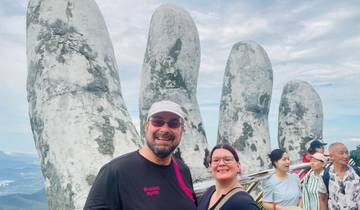
Ba Na Hills Day Tour from Da Nang – Golden Bridge & Cable Car 2026
- ✓ Comprehensive Da Nang tour
- ✓ Expert local guides included
- ✓ All accommodation arranged
- ✓ Transportation provided

5 days
5-Day Experience Central of Vietnam with Up Travel: Da Nang – Hoi An Ancient Town – Hue Imperial City
- ✓ Comprehensive Da Nang tour
- ✓ Expert local guides included
- ✓ All accommodation arranged
- ✓ Transportation provided
5 days
Vietnam Voyage 02 – 5 Days Central Marvels
- ✓ Comprehensive Da Nang tour
- ✓ Expert local guides included
- ✓ All accommodation arranged
- ✓ Transportation provided
Multi-day tour packages powered by TourRadar. Prices and availability subject to change.
Introduction to Da Nang: Central Vietnam’s Modern Beach City
Da Nang stands as Vietnam’s third-largest city and fastest-growing urban center, transforming over the past two decades from a quiet coastal town into Central Vietnam’s premier destination combining modern infrastructure, exceptional beaches, and strategic access to UNESCO World Heritage sites. Positioned along the central coast halfway between Hanoi (760 km north) and Ho Chi Minh City (960 km south), Da Nang’s geographic advantages create unique appeal—Vietnam’s cleanest and most livable city according to multiple surveys, blessed with 20 km of uninterrupted coastline including My Khe Beach (ranked among the world’s most beautiful by Forbes Magazine), yet serving as the transportation hub for accessing Hoi An Ancient Town (30 km south), Hue Imperial City (100 km north), and My Son Sanctuary ruins (70 km southwest).
This dual identity—modern beach resort and cultural gateway—distinguishes Da Nang from Vietnam’s other coastal destinations. Unlike Nha Trang’s focus on pure beach resort tourism or Phu Quoc’s island isolation, Da Nang balances beach relaxation with rich day trip opportunities visiting three UNESCO sites, exploring Ba Na Hills’ French colonial hill station and iconic Golden Bridge held aloft by giant stone hands, trekking through Marble Mountain caves and Buddhist pagodas, and experiencing authentic Vietnamese culture in surrounding villages. The city itself offers modern amenities including international airport with direct flights from Korea, Japan, Singapore, Thailand, and China, developed healthcare facilities, reliable high-speed internet attracting digital nomads, and sophisticated dining scene blending traditional Vietnamese cuisine with international options.
Da Nang’s appeal spans diverse traveler types: beach lovers attracted to clean sands and warm waters without remote island logistics, cultural enthusiasts using the city as base camp for UNESCO site explorations, families appreciating safe beaches and attraction variety, digital nomads seeking affordable long-term stays with modern infrastructure, and luxury seekers drawn to spectacular resort properties at prices far below comparable beach destinations in Thailand, Indonesia, or the Philippines. The city’s tropical monsoon climate creates distinct seasons affecting travel experiences—dry season (February-July) brings optimal beach weather with minimal rain and calm seas, while wet season (August-January) features afternoon showers, rougher surf, and lower accommodation prices appealing to budget travelers willing to accept occasional rain in exchange for 30-50% cost savings.
Recent infrastructure developments position Da Nang for continued growth as Central Vietnam’s tourism hub. The Dragon Bridge spanning Han River breathes fire and water on weekend evenings (Saturday-Sunday at 9:00 PM), creating spectacular shows drawing thousands of spectators. The Golden Bridge at Ba Na Hills opened in 2018 and quickly achieved global fame with photographs of the 150-meter pedestrian bridge held by giant concrete hands circulating worldwide, driving international visitor surges. Beach promenades feature dedicated cycling and walking paths, modern resorts line the coastline, and the compact city layout makes navigation simple even for first-time visitors without Vietnamese language skills.
Planning successful Da Nang visits in 2026 requires understanding accommodation options across neighborhoods and price ranges, transportation logistics including airport transfers and day trip arrangements, optimal timing balancing weather with crowds and pricing, essential attractions requiring advance planning versus spontaneous discoveries, and strategies for efficiently combining Da Nang relaxation with excursions to nearby cultural treasures. This guide explores every aspect of Da Nang travel, providing detailed information enabling travelers to maximize limited vacation time while experiencing both the city’s beach lifestyle and surrounding region’s extraordinary cultural and natural heritage.
When to Visit Da Nang: Seasonal Weather and Timing 2026
Da Nang’s tropical monsoon climate creates distinct wet and dry seasons dramatically affecting travel experiences, with the dry season (February-July) offering optimal beach conditions while the wet season (August-January) brings afternoon rain but lower prices and fewer crowds. Understanding monthly variations helps travelers select timing matching priorities for weather reliability, crowd levels, pricing, and specific events or activities requiring particular conditions.
February through April represents the ideal window for Da Nang visits in 2026, combining warm comfortable temperatures (25-30°C daytime, 20-23°C evenings), minimal rainfall (averaging 20-50mm monthly with precipitation occurring only 3-7 days), calm seas with gentle waves perfect for swimming, moderate humidity levels (70-75%) less oppressive than summer months, and clear skies ideal for photography and outdoor activities. This period sees moderate tourist numbers—higher than wet season but not peak crowds of summer vacation months—resulting in good accommodation availability at reasonable rates with some properties offering early booking discounts. February can experience occasional cool spells from northern cold fronts bringing temperatures down to 18-20°C for brief periods, making light jackets useful for evening activities, while March and April provide consistently warm sunny days ideal for beach focus.
May through July marks high season with peak summer temperatures (30-35°C daytime, 26-28°C evenings), continued dry weather with virtually no rainfall, very calm seas, and maximum sunshine hours. However, July especially sees the year’s highest tourist numbers as Vietnamese families vacation during school holidays, international visitors maximize summer travel, and beach crowds reach peaks particularly on weekends. Accommodation prices rise 20-40% above February-April levels, popular restaurants and attractions experience longer waits, and beaches fill with umbrellas and sunbathers reducing the peaceful ambiance some travelers seek. Heat-sensitive visitors may find midday temperatures uncomfortable, making early morning and late afternoon optimal times for outdoor activities with midday hours better spent in air-conditioned environments or shaded beach lounging.
August through November constitutes the wet season, characterized by afternoon thunderstorms (typically 2:00-5:00 PM) bringing heavy downpours lasting 1-3 hours, rougher seas with stronger waves and occasional dangerous swimming conditions, higher humidity (80-90%), and increased cloud cover. However, this period offers significant advantages for budget travelers and those with flexible plans: accommodation prices drop 30-50% from peak season rates, beaches feel nearly deserted compared to summer crowds, restaurant reservations become unnecessary, and morning hours often feature beautiful clear conditions before afternoon storms develop. The rain follows predictable patterns—mornings typically dry and sunny, allowing beach visits and sightseeing until early afternoon, then heavy rain for 2-3 hours, followed by clearing skies in late afternoon. Travelers comfortable with this rhythm enjoy Da Nang at its most affordable and uncrowded, while those requiring guaranteed sunny days should avoid this season.
December through January brings the coolest temperatures (22-27°C daytime, 17-20°C evenings) and continued wet season patterns with decreased but still significant rainfall (averaging 100-200mm monthly). This period sees moderate tourist numbers as international visitors increase during winter holidays while domestic Vietnamese tourism declines due to cooler temperatures. The cooler weather actually appeals to travelers from hot tropical countries or those uncomfortable with summer’s intense heat, while visitors from temperate climates may find temperatures perfectly pleasant. Sea temperatures remain warm (23-25°C) though wave conditions vary day to day requiring caution when swimming. This timing works well for cultural touring and Ba Na Hills visits where cooler temperatures prove more comfortable than summer heat, though beach focus travelers generally prefer warmer months.
Special events affecting Da Nang travel timing include the Da Nang International Fireworks Festival (typically late April to early June with exact dates varying annually) when the city hosts spectacular fireworks displays over Han River every weekend, drawing massive crowds and raising accommodation prices 50-100% during festival weekends. Booking months in advance becomes essential for festival period stays. Tet (Vietnamese Lunar New Year, February 14-22 in 2026) sees many businesses close for 5-7 days, accommodation prices surge, and domestic tourism peaks as Vietnamese families travel—this represents both opportunity for experiencing authentic Vietnamese celebrations and challenge for finding services and dealing with crowds. Christmas-New Year (December 25-January 2) brings international tourist peaks and premium pricing without Vietnamese holiday closures affecting services.
For travelers prioritizing: beach weather and swimming conditions → visit March-May; cultural touring with comfortable temperatures → choose February-April or November-January; budget minimization → select September-November; avoiding crowds → prefer September-November or January-February; photography with clear skies → book March-June; family-friendly conditions → target March-April or June-July (school vacation friendly). Most travelers find March through April the sweet spot balancing excellent weather, moderate crowds, reasonable pricing, and comfortable conditions across all activities, making this the most recommended period for first-time visitors unsure about seasonal trade-offs.
Da Nang Accommodation Options and Costs 2026
Da Nang’s accommodation landscape spans remarkable range from $5 backpacker hostels to $300+ luxury beachfront resorts, with price-to-value ratios exceeding comparable Southeast Asian beach destinations thanks to relatively recent tourism development and strong competition among properties. Understanding neighborhood characteristics, price ranges, and booking strategies helps travelers select optimal bases for their specific priorities and budgets.
Budget accommodation ($5-25 per night) concentrates primarily in downtown Da Nang near Han River and Han Market, approximately 2-3 km from beaches requiring short taxi or motorbike rides. Hostels like Lighthouse Hostel, Seahorse Hostel, and A L’Olivier Hostel offer dormitory beds from $5-8 per night with free WiFi, communal kitchens, social atmospheres popular among backpackers, and often complimentary breakfast. Private rooms in hostels or guesthouses cost $10-18 per night, providing basic air conditioning, private bathrooms, and similar free amenities. Budget hotels in downtown areas or slightly removed from beachfront locations charge $15-25 for clean, serviceable rooms with air conditioning, hot water, WiFi, and sometimes breakfast, though lacking pools, gyms, or premium amenities. These properties suit backpackers, solo budget travelers, and those prioritizing savings over beachfront convenience who don’t mind 10-15 minute commutes to My Khe Beach via Grab ($1-2 rides).
Mid-range accommodation ($30-70 per night) dominates My Khe Beach area with hundreds of 3-4 star hotels offering excellent value and beachfront or near-beach locations. Properties like Da Nang ELC Hotel, Prince Hotel, and numerous similar establishments feature spacious clean rooms (25-35 square meters), ocean or city views, rooftop swimming pools, breakfast buffets, 24-hour front desks, tour booking services, and prime locations within 50-200 meters of beach access. Rooms typically include air conditioning, flat-screen TVs, mini-fridges, safes, quality linens, and modern bathrooms with hot water. This category provides the best value for most travelers—combining beach proximity, comfortable amenities, and services at prices dramatically below comparable properties in Thailand, Indonesia, or the Philippines. Families find these hotels offer good space and facilities at affordable rates, couples appreciate romantic ocean views and rooftop pools, and quality-conscious budget travelers enjoy semi-luxury at mid-range prices.
Upscale accommodation ($80-150 per night) includes superior 4-star properties and entry-level 5-star hotels with enhanced amenities like beachfront locations, larger pools, fitness centers, spa services, multiple dining options, higher service standards, and more spacious rooms (35-50 square meters). Properties such as Monarque Hotel, Voco Ma Belle, and Brilliant Hotel offer premium experiences with attentive staff, quality restaurants, and excellent facilities while maintaining prices far below international luxury standards. These hotels suit travelers desiring high comfort levels without true luxury pricing, honeymooners wanting special experiences within budgets, and families needing extra space and kid-friendly amenities like children’s pools and play areas.
Luxury resorts ($150-300+ per night) line the coastline, particularly concentrated in Non Nuoc Beach area south of My Khe, offering the ultimate in beachfront indulgence. The InterContinental Danang Sun Peninsula Resort, Hyatt Regency Danang Resort & Spa, Furama Resort, and Vinpearl Luxury Da Nang provide 5-star experiences with private beach access, expansive pools, world-class spas, multiple specialty restaurants, premium bars, water sports facilities, kids’ clubs, and lavish rooms or villas featuring designer furnishings, luxury bathrooms, private balconies, and exceptional service. These properties compete with top resorts globally while charging 50-70% less than comparable Maldives, Bali, or Caribbean properties, creating exceptional value for luxury seekers. Check official resort websites for current rates as pricing varies seasonally with significant discounts possible during wet season (September-November).
Location considerations significantly impact accommodation choices. My Khe Beach area provides beach convenience and the densest concentration of mid-range hotels, restaurants, and services, ideal for travelers prioritizing beach access and food variety. Non Nuoc Beach offers more upscale, quieter options near Marble Mountains with luxury resort concentration, suiting travelers seeking resort-focused stays with less urban energy. Downtown Han River area delivers urban atmosphere with night markets, riverside dining, and central positioning for business or those less focused on beach time, requiring 10-15 minute travels to beaches but offering slightly lower prices and more local Vietnamese character. Son Tra Peninsula (Monkey Mountain) features isolated luxury resorts in dramatic hillside locations offering privacy and views but requiring transportation for all dining and activities beyond resort facilities.
Booking strategies for optimal value include: booking 2-4 weeks in advance for best selection during peak season (March-July), considering last-minute deals during wet season when high vacancy rates encourage discounts, using comparison sites like Booking.com, Agoda, and Expedia to compare rates but also checking hotel direct websites which sometimes offer better prices or upgrade incentives, reading recent reviews to verify property condition and service quality matches descriptions and photos, and clarifying breakfast inclusion, airport transfer options, and cancellation policies before booking. Many mid-range and luxury properties offer free airport pickups when booking directly, saving $5-10 on arrival transfers. Longer stays (5+ nights) often qualify for 10-20% discounts when requesting during booking or at check-in, particularly during off-peak periods.
Getting to Da Nang and Airport Transportation 2026
Da Nang International Airport (DAD) serves as Central Vietnam’s primary aviation gateway, located just 3 km from the city center and 10 km from My Khe Beach, making it among Vietnam’s most conveniently positioned airports for rapid city access. The modern facility operates two terminals—Terminal 1 for domestic flights and Terminal 2 for international arrivals—with efficient immigration procedures, ATMs, currency exchange counters, SIM card vendors, and free WiFi throughout. Airport facilities include cafes, duty-free shopping, and baggage storage, though arrival halls offer limited dining compared to post-security departure areas.
International flight connections to Da Nang in 2026 serve primarily Asian markets with direct routes from Seoul, Tokyo, Osaka, Singapore, Bangkok, Kuala Lumpur, Hong Kong, Taipei, Shanghai, Beijing, and Guangzhou. European and North American travelers typically connect through these Asian hubs, with Singapore and Bangkok offering the most convenient connection options for Western travelers. Vietnam Airlines, VietJet Air, and Bamboo Airways operate most domestic routes connecting Da Nang to Hanoi (1 hour 20 minutes, $40-80), Ho Chi Minh City (1 hour 15 minutes, $35-75), and Nha Trang (1 hour, $30-60), with multiple daily departures on major routes providing schedule flexibility. Booking domestic flights 2-4 weeks in advance typically secures lowest fares, while last-minute bookings face significant price premiums particularly during peak travel periods.
Transportation from Da Nang Airport to accommodation offers multiple options suiting different budgets and preferences. Grab ride-hailing app provides the most reliable and affordable option with transparent upfront pricing: rides to downtown or My Khe Beach cost approximately 77,000 VND ($3.30) for 4-seat sedans or 96,000 VND ($4.20) for 7-seat vans, with 10-15 minute journey times depending on traffic and exact destination. Using Grab requires smartphone with internet access (airport offers free WiFi for booking initial rides), downloading the Grab app before arrival, and following in-app pickup point directions to designated ride-hailing zones outside terminals. Drivers receive destination information through the app, eliminating language barrier concerns, and payment processes through app-linked credit cards or cash handed directly to drivers.
Traditional taxis queue outside arrival halls with metered fares regulated by authorities, charging 80,000-120,000 VND ($3-5) to central hotels or My Khe Beach. Reputable companies including Mai Linh (green cars), Vinasun (white cars), and Tien Sa operate at the airport, identifiable by clear company markings, meters, and professional appearance. Always insist meters start running and display active fares—drivers refusing meters or suggesting fixed prices should be avoided in favor of next available taxi. Most taxi drivers speak limited English, making hotel name cards or addresses written in Vietnamese helpful for communicating destinations. Airport surcharges of 10,000-15,000 VND typically apply in addition to metered fares. Taxis accept cash only, making ATM stops essential for arriving international travelers without Vietnamese dong.
Private transfers arranged through hotels or booking platforms cost $8-15 for sedan pickups with English-speaking drivers, hotel name signs for easy airport recognition, and door-to-door convenience. Many mid-range and luxury hotels offer complimentary airport transfers when booking directly through hotel websites, saving $5-10 and providing seamless arrivals. Private transfers suit families with children or multiple luggage, elderly travelers wanting assured assistance, and those arriving during late hours (after 10:00 PM) when Grab availability may be limited. Services like Danang Transfer, Klook, and GetYourGuide offer advance booking with guaranteed fixed prices and flight tracking ensuring drivers wait despite arrival delays.
Hoi An Express operates shuttle buses connecting Da Nang Airport to Hoi An Ancient Town (35 km, 45 minutes, 150,000 VND or $6 per person) with departures from Terminal 1 (Domestic) at Gate 4 running hourly from early morning through evening. This represents the most economical option for travelers heading directly to Hoi An from airport without stopping in Da Nang city, though buses require additional local transportation from Hoi An bus drop-off points to specific hotels. Public buses serving Da Nang city proper from airport exist but involve confusing routes, limited luggage space, and minimal cost savings compared to Grab, making them impractical for most international tourists.
For departures from Da Nang, booking return transportation through hotels typically costs 100,000-150,000 VND ($4-6) with pickup 2-3 hours before flight times, or using Grab for same rates as arrival transfers. Departure taxi fares include 10,000 VND airport access fees charged by meter. International departures require arriving 2 hours before flight times for immigration and security procedures, while domestic flights need only 60-90 minutes though Vietnamese domestic travel culture tends toward earlier arrivals. The airport’s proximity to hotels means 20-30 minute pre-flight departures from My Khe Beach area provide ample time, though allowing extra buffer during rush hours (7:00-9:00 AM, 5:00-7:00 PM) prevents stress from unexpected traffic.
Ba Na Hills and Golden Bridge: Complete Visit Guide 2026
Ba Na Hills represents Da Nang’s most famous attraction, featuring the globally-recognized Golden Bridge held aloft by giant concrete hands, a recreated French colonial village, and Southeast Asia’s longest cable car system ascending to a cool mountain resort 1,487 meters above sea level. The full complex—officially Sun World Ba Na Hills—functions as combination theme park, cultural showcase, and mountain retreat located 40 km southwest of Da Nang requiring 1-1.5 hours travel time each direction. Planning comprehensive Ba Na Hills visits requires understanding ticket options, included attractions, optimal timing, and transportation logistics to maximize the 6-8 hours needed for thorough exploration.
Ba Na Hills cable car tickets in 2026 cost 750,000 VND (approximately $31) for adults and 600,000 VND ($25) for children measuring 100-140 cm height, with free admission for children under 100 cm. Check official Sun World websites for current rates as pricing varies seasonally. This represents significant investment compared to other Vietnamese attractions but includes comprehensive access: unlimited cable car rides on five different routes valid for 3 consecutive days starting 2026 (allowing multi-day visits or afternoon returns), entrance to Fantasy Park indoor amusement complex with 105+ games and rides, access to French Village architecture and shops, Golden Bridge walking, Linh Ung Pagoda visits, flower gardens exploration, funicular railway rides, and most attractions within the complex. Excluded attractions requiring separate payment include Debay Wine Cellar (100,000 VND), Wax Museum (50,000 VND), and certain premium arcade games in Fantasy Park.
Combo tickets combining cable car access with buffet lunch cost 1,300,000 VND ($54) for adults and 1,050,000 VND ($43) for children, providing all standard inclusions plus comprehensive buffet meals at designated restaurants featuring Vietnamese, Asian, and international cuisines. These represent good value for visitors planning full-day explorations who prefer included meals over bringing outside food or purchasing a la carte restaurant options at inflated theme park prices. Alternative combo options include “Ba Na By Night” tickets (operating 4:00-10:00 PM, 650,000 VND or $27 adults) for sunset and evening experiences, though most visitors prefer full-day visits capturing both daytime photo opportunities and afternoon activities.
The iconic Golden Bridge opened in June 2018 and immediately achieved viral fame through photographs of the 150-meter pedestrian walkway emerging from fog held by weathered concrete hands designed to resemble divine intervention lifting the structure. The bridge itself costs nothing beyond basic admission, though reaching it requires cable car access. Optimal photography timing comes during early morning hours (8:00-9:00 AM) when crowds remain light and morning mist often creates dramatic atmospheric effects, or late afternoon (4:00-5:00 PM) when lighting angles improve and many day-trippers depart. Midday sees maximum crowds making photograph attempts frustrating with constant people-in-shot challenges. Weekdays feature notably lighter crowds than weekends, making Tuesday-Thursday ideal for photography-focused visits.
Transportation to Ba Na Hills from Da Nang includes several options. Private taxis cost 350,000-450,000 VND ($14-18) each direction with 45-60 minute journeys, suitable for groups of 3-4 splitting costs. Grab operates on this route with similar pricing though availability varies—booking 30+ minutes in advance recommended. Organized tours from Da Nang include round-trip transportation, English-speaking guides, and sometimes cable car tickets in $40-65 per person packages, convenient for travelers wanting assured logistics and cultural context during visits. Independent travelers comfortable with Vietnamese can take local buses toward Ba Na from Da Nang’s main bus stations, though this involves complicated transfers and minimal cost savings compared to Grab, making it impractical for most international tourists. Many hotels arrange Ba Na Hills transportation at competitive rates when booked the day before.
Recommended visit schedules for comprehensive Ba Na Hills experiences: 7:00-8:00 AM departure from Da Nang hotels, 8:00-8:30 AM arrival at Ba Na Hills parking area (arrive before ticket office and cable car station crowds build), 9:00 AM cable car ascent (15-20 minute ride providing spectacular mountain and valley views), 9:30 AM-12:00 PM Golden Bridge photography, French Village exploration, Linh Ung Pagoda visit, and flower garden strolling, 12:00-1:30 PM buffet lunch or packed lunch consumption, 1:30-4:00 PM Fantasy Park gaming and rides, additional photo opportunities, and wine cellar visits if interested, 4:30 PM cable car descent avoiding late afternoon queue peaks, 5:00-6:00 PM return to Da Nang. This schedule provides 6-7 hours on-site allowing comprehensive coverage without excessive rushing, though enthusiasts can extend to 8-9 hours exploring every corner.
Essential tips for successful Ba Na Hills visits include wearing comfortable walking shoes as the complex requires 2-3 km of walking across various elevations, bringing light jackets even during summer as mountaintop temperatures run 8-10°C cooler than Da Nang creating pleasant 18-22°C conditions (winter visits may see 10-15°C requiring warm layers), arriving early to avoid cable car lines (wait times can reach 45-60 minutes during peak midday hours on weekends), and planning weather appropriately—mountaintop fog and rain occur frequently even when Da Nang enjoys sunshine, with cloud cover sometimes obscuring valley views but creating atmospheric Golden Bridge photography opportunities. Visitors prone to motion sickness should consider medication as cable car rides involve swaying and height exposure potentially triggering discomfort in sensitive individuals.
My Khe Beach and Coastal Activities 2026
My Khe Beach stretches 20 km along Da Nang’s eastern coastline, recognized by Forbes Magazine as one of Earth’s most beautiful beaches and serving as the city’s primary attraction for beach-focused travelers. The wide sandy beach features soft white sand imported and maintained to high cleanliness standards, gentle waves ideal for swimming (except during monsoon season September-December when rougher conditions warrant caution), warm water temperatures (26-29°C year-round), and developed infrastructure including beach access paths, shower facilities, changing rooms, and designated swimming zones with seasonal lifeguard coverage during peak season months.
Beach access remains free with no admission fees or forced purchases, allowing unlimited enjoyment without the privatized beach structures common to many Southeast Asian resort destinations. The public nature creates accessible atmosphere where travelers staying in budget downtown hotels enjoy equal beach access to luxury resort guests, with the only distinction being convenience of direct beach access versus 5-10 minute walks or short taxi rides. Beach furniture rental (sunbeds, umbrellas) costs 50,000-80,000 VND ($2-3) per day from vendors operating along the beachfront, though bringing towels and finding shaded palm areas provides free alternatives for budget-conscious visitors.
The beach divides into several distinct sections each offering different character and amenities. The northern section near Han River mouth features urban development with Pullman Danang Beach Resort and nearby properties, convenient beach clubs, restaurants within walking distance, and slightly more active energy with water sports vendors offering jet ski rentals (500,000-700,000 VND or $20-28 per 15 minutes), banana boat rides (300,000 VND or $12 per person for group rides), and parasailing (800,000-1,000,000 VND or $32-40 per person). Central My Khe Beach sections offer the ideal balance of development and relaxation with excellent hotel concentration, abundant dining choices, and family-friendly atmosphere. Southern sections transitioning toward Non Nuoc Beach become progressively quieter with luxury resort dominance, less vendor activity, and more secluded ambiance appealing to travelers seeking escape from crowds.
Swimming conditions vary seasonally with February-July providing optimal safety and comfort featuring calm seas with gentle rolling waves, warm comfortable water temperatures, good visibility for enjoying tropical fish sometimes visible near shore, and consistent swimming conditions. August-January monsoon season brings rougher conditions with larger waves creating fun for body surfing and boogie boarding but requiring caution for weak swimmers, occasional dangerous rip currents prompting beach closure on extreme weather days, and reduced visibility from stirred sand and wave action. Red flag systems indicate dangerous swimming conditions—respect these warnings as drownings occasionally occur when visitors ignore safety guidance during storms or rough sea periods. Lifeguard coverage operates primarily during peak season and at more developed beach sections, with isolated areas lacking supervised swimming.
Beach activities beyond swimming include morning walks or jogs along the waterfront promenade (dedicated paved paths separate pedestrians from vehicle traffic), beach volleyball on public courts or informal games, sunset watching particularly spectacular during clear dry season evenings, beachfront dining at casual seafood restaurants lining Vo Nguyen Giap Street offering fresh catch at reasonable prices ($8-15 per person for seafood meals), and massage services with beach vendors offering foot massages (100,000-150,000 VND or $4-6 per 30 minutes) and full body treatments (200,000-300,000 VND or $8-12 per hour). Quality varies among beach massage providers—selecting vendors with established beach umbrellas and multiple customers suggests more reliable services than solo operators with minimal equipment.
Surfing and kiteboarding attract small dedicated communities during monsoon season (September-December) when wave sizes increase, though Da Nang doesn’t achieve renowned surf destination status. Local surf shops near My Khe Beach rent boards (300,000-400,000 VND or $12-16 per day) and offer lessons (800,000-1,200,000 VND or $32-48 for 2-hour sessions) introducing beginners to fundamentals. Stand-up paddleboarding (SUP) works well during calm season with rental rates around 250,000-350,000 VND ($10-14) per hour providing peaceful ways to explore coastline and get light exercise. Snorkeling opportunities prove limited as sandy bottom conditions and wave action create poor visibility compared to island destinations or reef environments—serious snorkelers should plan Cham Islands day trips from Hoi An (30 km offshore) for superior underwater experiences.
Beach safety considerations include sun protection (strong tropical sun causes severe burns rapidly, especially for light-skinned visitors unaccustomed to equatorial intensity—sunscreen reapplication every 90-120 minutes essential), hydration (bring water bottles or purchase from beach vendors as heat and sun create dehydration risks), secure storage (leave valuables in hotel safes rather than bringing to beach where theft occasionally occurs despite generally low crime rates), and awareness of water conditions (checking surf reports and heeding flag warnings prevents swimming accidents). Jellyfish occasionally appear in waters typically during certain tidal conditions—while encounters remain uncommon and most species relatively harmless, stings create painful experiences best avoided through awareness and immediate treatment with vinegar available at lifeguard stations.
Beach cleanliness maintenance happens daily with early morning cleaning crews removing trash and raking sand before tourist hours, creating pristine conditions particularly noticeable during morning hours. However, plastic pollution remains ongoing challenge with occasional debris washing up despite collection efforts—environmentally conscious visitors can contribute by properly disposing of any waste and participating in occasional beach cleanup initiatives organized by local environmental groups. The beach has improved dramatically over past decades through municipal investment in proper waste management and tourism infrastructure, representing one of Vietnam’s success stories in sustainable coastal development.
Transportation Within Da Nang 2026
Navigating Da Nang’s compact urban area proves remarkably straightforward thanks to grid-pattern street layouts, modern infrastructure, and multiple transportation options suiting various budgets and preferences. The city’s 10 km east-west extent from Han River to coastline and 15 km north-south span create manageable distances where most attractions and hotels cluster within tight geographical areas requiring minimal travel time and expense to reach destinations.
Grab ride-hailing app dominates local transportation serving both residents and tourists with reliable service, transparent pricing, and cashless payment options (credit card linking through app) or traditional cash payment. Typical Grab fares within Da Nang city range 25,000-60,000 VND ($1-2.50) for most hotel-to-attraction trips, with longer distances like downtown to Non Nuoc Beach or Marble Mountains reaching 80,000-120,000 VND ($3-5). The app automatically calculates fares before booking based on distance and time estimates, preventing price negotiation concerns and taxi meter fraud occasionally encountered with traditional taxis. Grab operates car service (GrabCar for 4-passenger sedans, GrabCar Plus for 7-passenger vans) and motorbike service (GrabBike, significantly cheaper at 15,000-30,000 VND or $0.60-1.20 for similar distances though requiring comfort riding on back of motorbikes in traffic). Booking Grab requires smartphone with internet—most hotels provide WiFi for booking pickups, and purchasing local SIM cards with data ($5-10 for tourist packages lasting full trips) enables booking from anywhere.
Traditional taxis operate extensively with metered fares charging base rates of 12,000-15,000 VND ($0.50-0.60) for first kilometer then 14,000-18,000 VND ($0.55-0.70) per additional kilometer, resulting in similar total costs to Grab for equivalent distances. Reputable companies including Mai Linh (green vehicles, phone +84 236 3 568 568), Vinasun (white vehicles, phone +84 236 3 686 868), Tien Sa (phone +84 236 3 797 979), and Song Han (phone +84 236 3 727 272) maintain professional drivers, working meters, and fair pricing. Hailing taxis on streets proves easy in central areas and along beach roads where vehicles actively cruise seeking passengers. Always insist meters start running and show active fare accumulation—drivers suggesting fixed prices should be refused in favor of finding alternative vehicles. Taxi drivers rarely speak English making hotel name cards or destination addresses written in Vietnamese helpful for communication, though showing locations on smartphone maps often works adequately.
Motorbike rentals provide freedom for exploring at personal pace, costing 100,000-150,000 VND ($4-6) per day from rental shops concentrated near backpacker areas and beach hotels. Rental requires passport deposit and international driving license technically, though enforcement varies with many shops accepting only passport deposits without license verification. Traffic in Da Nang flows less chaotically than Hanoi or Ho Chi Minh City but still requires confidence navigating among numerous motorbikes, occasional aggressive driving, and different traffic norms than Western countries. First-time Vietnam motorbike riders should consider whether comfort level suits rental, perhaps testing with short Grab motorbike rides to experience traffic before committing to self-driving. Helmets are mandatory by law and always provided by rental shops—police occasionally ticket helmetless riders with 200,000-500,000 VND ($8-20) fines.
Bicycle rentals suit short trips and leisurely beach area exploration, available from hotels (often free for guests) or rental shops (50,000-80,000 VND or $2-3 per day). Da Nang’s flat coastal areas and beach promenade dedicated cycling paths create pleasant cycling conditions, though venturing into traffic requires awareness as Vietnamese drivers show less accommodation for bicycles than motorbikes. Some hotels provide free bicycles as guest amenities, making this zero-cost option for nearby exploration. Organized bicycle tours operate showing cultural sites and countryside areas beyond typical tourist routes, typically costing $25-40 per person for half-day experiences including guide and bike.
Walking works well within specific areas like concentrated downtown districts or beach hotel zones but proves impractical for longer distances given tropical heat, limited pedestrian infrastructure on many streets, and spread-out attraction locations. The beach promenade allows pleasant walking for 2-3 km enjoying ocean views, while downtown Han River area features riverside paths suitable for evening strolls. However, sidewalk quality varies dramatically with some areas lacking proper pedestrian ways or featuring motorbike parking blocking passage, making walking frustrating outside of specifically developed zones.
Public buses exist with extremely low fares (6,000-7,000 VND or $0.25 per ride) but involve confusing route systems, limited English signage, crowded conditions, and minimal time savings compared to affordable Grab options. Tourists rarely use public buses except for the Hoi An Express shuttle specifically designed for tourist transport. Local buses work for budget-conscious long-term visitors willing to invest time learning routes, but short-term tourists find minimal benefit justifying the complexity.
For day trips to Hoi An (30 km), Marble Mountains (10 km), or Ba Na Hills (40 km), transportation options include Grab (negotiate with drivers for round-trip rates including waiting time, typically 600,000-900,000 VND or $24-36 for Hoi An full-day including wait time), private car hire through hotels or booking services ($25-45 for full day with driver to Hoi An or Marble Mountains, $50-70 for Ba Na Hills including wait time), or organized tours ($25-50 per person including transportation, guide, and sometimes admission tickets). Independent travelers comfortable with complexity can use Hoi An Express shuttle buses (150,000 VND or $6 one-way Da Nang-Hoi An) then arrange Grab or taxis locally, though convenience of pre-arranged full-day transportation often justifies modest additional costs over piecemeal arrangements.
Essential Attractions and Activities in Da Nang 2026
Beyond My Khe Beach and Ba Na Hills covered in dedicated sections, Da Nang offers concentrated attractions providing 2-3 days of diverse exploration balancing natural beauty, cultural sites, modern engineering marvels, and local experiences. Understanding each attraction’s highlights, visiting times, costs, and logistics helps travelers efficiently plan itineraries maximizing limited vacation time while experiencing the city’s multifaceted character.
Marble Mountains (Ngu Hanh Son) comprise five limestone outcrops 10 km south of central Da Nang named for the five elements (metal, wood, water, fire, earth), featuring cave systems housing Buddhist shrines, elaborate pagodas built into rock formations, and summit viewpoints overlooking coastline. The main mountain open to visitors (Thuy Son – Water Mountain) requires climbing 150+ marble steps (elevator available for 40,000 VND or $1.60) then exploring cave temples including Huyen Khong Cave housing enormous Buddha statue illuminated by natural light through ceiling opening, Tang Chon Cave with steep access ladder, and multiple shrines scattered across the mountain. Entrance fees cost 40,000 VND ($1.60) with the complex open 7:00 AM-5:30 PM daily. Budget 2-3 hours for comprehensive exploration including climb, cave visits, summit views, and marble carving village at mountain base where artisans produce sculptures sold across Vietnam.
Optimal visit timing comes in early morning (7:00-9:00 AM) before heat peaks and tour bus groups arrive, or late afternoon (3:00-5:00 PM) when lighting improves for photography and crowds thin though sunset occurs outside opening hours. Wear comfortable shoes with good grip as cave floors can be slippery and stairs steep in sections. The marble carving village surrounding the mountains features hundreds of workshops producing Buddha statues, decorative items, and custom pieces—browsing workshops provides cultural insight into traditional craftsmanship though purchasing large pieces involves shipping logistics. Transportation from My Khe Beach hotels requires Grab (40,000-60,000 VND or $1.60-2.40) or including in organized tours typically combining Marble Mountains with other attractions.
Dragon Bridge spans Han River connecting beach areas to downtown, famous for engineering design mimicking a golden dragon and weekend fire-breathing performances when the dragon head releases flames and water creating spectacular shows. The bridge itself doesn’t charge admission and can be walked across anytime, though crowds make this impractical during busy periods. The main attraction occurs Saturday and Sunday evenings at 9:00 PM when the dragon performs for 10-15 minutes sending fire from its mouth, followed by water spray soaking nearby spectators willing to get wet. Optimal viewing spots include the riverfront promenade on either bank where crowds gather 30+ minutes before performance start securing prime positions, or watching from restaurants with river views combining dinner with entertainment. Traffic closes for performances making crossing the bridge impossible 8:30-9:30 PM these evenings.
Son Tra Peninsula (Monkey Mountain) juts into the South China Sea north of My Khe Beach, featuring dense jungle, winding mountain roads, Linh Ung Pagoda with towering 67-meter Lady Buddha statue visible from much of Da Nang, and viewpoints overlooking the city and coastline. The peninsula requires motorbike or car access—no public transportation reaches the area. Linh Ung Pagoda entrance costs nothing though donation boxes encourage contributions (20,000-50,000 VND or $0.80-2 considered appropriate for tourists). The statue and pagoda grounds open sunrise to sunset with early morning visits (6:00-8:00 AM) offering cooler temperatures, fewer crowds, and opportunity to see monks conducting ceremonies. The peninsula also hosts rare red-shanked douc langurs (colorful monkey species) sometimes spotted in trees along roads, though sightings require luck and patience. Motorbike riders can complete circular routes enjoying coastal and city views from various vantage points, though roads wind significantly requiring confident riding skills.
Da Nang Museum of Cham Sculpture houses the world’s most comprehensive collection of Cham art and relics from the Champa Kingdom that dominated central Vietnam from approximately 7th-15th centuries. Located downtown near Han River, the museum displays elaborate sandstone sculptures depicting deities, dancers, and mythological scenes, plus architectural fragments from ruined Cham temples. Entrance costs 60,000 VND ($2.40) with hours 7:00 AM-5:00 PM except Mondays (closed). English explanatory panels provide context for artifacts making self-guided tours feasible, though hiring guides (available at entrance for negotiable 100,000-200,000 VND or $4-8) deepens understanding of Cham history and artistic traditions. Air-conditioned galleries make this excellent rainy day activity or midday escape from heat. Budget 1-1.5 hours for thorough exploration.
Han Market (Cho Han) operates as Da Nang’s main central market selling everything from fresh produce and seafood to clothing, souvenirs, and household goods. Located downtown near Han River, the market opens approximately 6:00 AM-7:00 PM daily with morning hours (6:00-9:00 AM) showcasing peak activity when locals shop for ingredients. The multi-story building’s ground floor features wet market sections with meat, fish, vegetables, and fruits, while upper levels house clothing, fabric, shoes, and general merchandise. Bargaining is expected with opening prices typically 20-50% above acceptable final prices—start negotiations around 50% of quoted price and meet somewhere middle. The market provides authentic local atmosphere though merchandise quality varies and tourist-focused stalls charge premium prices. Shopping for Vietnamese coffee, dried fruits, handicrafts, and local snacks creates opportunities for budget-friendly souvenirs, though supervision of personal belongings necessary in crowded areas.
Sunset and evening activities include Han River promenade walks enjoying riverside breezes and people-watching, visits to Asia Park featuring Sun Wheel (one of the world’s largest Ferris wheels at 115 meters height) with rotation rides costing 100,000 VND ($4) offering city night views, dining at riverside restaurants while watching illuminated bridges, and exploring night markets near Han Market selling street food, clothing, and accessories. The beach promenade also attracts evening walkers, joggers, and families with children, creating lively atmosphere particularly on weekends when Vietnamese families flock to beaches for evening recreation. Beachfront bars serve cocktails and beers allowing sunset watching from comfortable positions, though prices run 50-100% higher than inland establishments.
Day Trips from Da Nang: Hoi An and Hue 2026
Da Nang’s strategic central coast location provides exceptional access to UNESCO World Heritage sites in Hoi An (30 km south) and Hue (100 km north), plus My Son Sanctuary ruins (70 km southwest), allowing comprehensive Central Vietnam cultural tourism using Da Nang as base without constantly changing accommodations. Understanding logistics, timing, costs, and attraction highlights helps travelers efficiently plan day trips maximizing cultural experiences while returning to comfortable Da Nang hotels each evening.
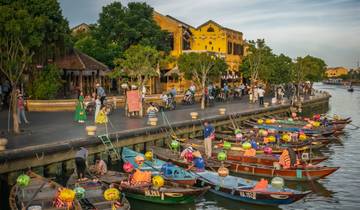
Hoi An Ancient Town preserves Vietnam’s best-surviving example of Southeast Asian trading port architecture from 15th-19th centuries, featuring narrow lanes lined with Chinese shophouses, Japanese Covered Bridge, assembly halls serving ethnic Chinese communities, waterfront cafes, and thriving tailor shops producing custom clothing. The entire Old Town functions as pedestrian zone 9:00 AM-11:00 PM, creating atmospheric ambiance free from motorbike traffic. Old Town entrance requires purchasing 120,000 VND ($5) tickets allowing entry to five attractions from larger list including Japanese Covered Bridge, assembly halls, historic homes, and museums—the ticket system intends controlling crowds though enforcement varies. Purchasing tickets at official stands (located at Old Town entrances) provides maps and attraction descriptions.
Hoi An day trip logistics from Da Nang: transportation via Grab (350,000-450,000 VND or $15-18 each direction with 30-45 minute journey times), traditional taxis (400,000-500,000 VND or $16-20), Hoi An Express shuttle buses (150,000 VND or $6 per person one-way, hourly departures 6:00 AM-7:00 PM from multiple Da Nang pickup points), or organized tours ($25-45 per person including round-trip transportation, guide, Old Town entrance ticket, and sometimes lunch). Independent travelers using Grab or shuttles save $10-20 compared to organized tours but sacrifice cultural explanation provided by guides. Recommended schedule: 8:00-9:00 AM departure from Da Nang, 9:30-10:00 AM Hoi An arrival, 10:00 AM-12:30 PM Old Town exploration covering Japanese Covered Bridge, assembly halls, historic homes, and atmospheric lanes, 12:30-2:00 PM lunch at riverside restaurant (budget $5-10 per person for local meals, $10-15 for nicer establishments), 2:00-4:00 PM additional wandering including tailor shop visits if ordering clothing (requires 24-hour minimum for completion), shopping for lanterns/souvenirs, or cycling to An Bang Beach (4 km from Old Town, bicycle rentals 30,000-50,000 VND or $1-2), 4:00-5:00 PM return to Da Nang. This provides 6-7 hours in Hoi An adequate for Old Town highlights without overnight stay.
Hoi An’s tailor shops number in hundreds with quality varying dramatically—reputable establishments cluster on main lanes including Le Loi Street, Tran Phu Street, and near Japanese Covered Bridge, while lower-quality shops operate in peripheral areas. Custom suits typically cost $60-150 depending on fabric quality and complexity, dresses $40-80, shirts $20-40, with 24-48 hours required for completion necessitating overnight Hoi An stays or return trips from Da Nang. Travelers short on time should order early in visits allowing pickup before departing or arranging hotel delivery. Quality verification requires checking fabric types (pure wool versus blends for suits), examining stitching detail in samples, reading recent reviews, and being skeptical of extremely low prices suggesting shortcuts in materials or workmanship.
Hue Imperial City served as Vietnam’s capital during Nguyen Dynasty (1802-1945), preserving massive citadel complex including Forbidden Purple City (emperor’s residence), throne halls, temples, gardens, and defensive walls. Located 100 km north of Da Nang (2.5-3 hour drive each direction), Hue works better as overnight destination but remains feasible as long day trip for travelers unwilling to move accommodations. Imperial City entrance costs 200,000 VND ($8) with hours 7:00 AM-5:00 PM. The complex requires 2-3 hours minimum for basic coverage, longer for thorough exploration including all pavilions and museums.
Hue day trip logistics from Da Nang: private car hire ($50-80 for full day including driver, fuel, tolls, waiting time at attractions), organized tours ($35-60 per person including round-trip transportation, Imperial City entrance, guide services, lunch, and sometimes additional stops at royal tombs or Thien Mu Pagoda), or Reunification Express train (70,000-150,000 VND or $3-6 per person one-way depending on seat class with 2.5-3 hour journey times and schedules limiting day trip feasibility). Recommended if attempting Hue day trip: 6:00-6:30 AM very early departure from Da Nang, 9:00 AM Hue arrival, 9:30 AM-12:30 PM Imperial City exploration, 12:30-1:30 PM lunch, 1:30-3:00 PM visit one royal tomb (Khai Dinh or Tu Duc, both charging 150,000 VND or $6 entrance) or Thien Mu Pagoda (free), 3:00-3:30 PM begin return journey, 6:00-6:30 PM Da Nang arrival. This creates 12-13 hour day trips with 6+ hours in vehicles making comfortable overnight Hue stays preferable when schedules permit.
My Son Sanctuary preserves Hindu temple ruins from ancient Champa Kingdom (4th-14th centuries), designated UNESCO World Heritage site and comparable to Angkor Wat’s Cham equivalents though substantially smaller scale. Located 70 km southwest of Da Nang in mountainous terrain (1.5 hour drive), the site features brick temples in various preservation states, some heavily damaged by U.S. bombing during Vietnam War. Entrance costs 150,000 VND ($6) with hours 6:30 AM-4:30 PM. Half-day tours from Da Nang including transportation and guide cost $25-40 per person with 4-5 hour durations allowing morning departure, 2-hour site visit, and return for afternoon beach time. Alternatively combine with Hoi An in full-day tours visiting both UNESCO sites though this creates rushed experiences.
Da Nang Food Scene and Dining 2026
Da Nang’s culinary landscape blends traditional Central Vietnamese specialties with modern international influences, offering everything from street food for $1-2 per meal to sophisticated restaurants charging $15-30 per person, with overall affordability and quality exceeding most Western beach destinations. Understanding regional dishes, dining areas, price ranges, and food safety helps travelers navigate the scene enjoying authentic experiences while avoiding tourist traps and maintaining digestive health.
Mi Quang (Quang-style noodles) represents Da Nang’s signature dish featuring wide rice noodles, small portions of broth (unlike typical Vietnamese pho’s soup-heavy presentation), proteins including pork, shrimp, chicken, or combinations, topped with fresh herbs, crushed peanuts, crispy rice crackers, and sometimes quail eggs. Quality Mi Quang appears yellow from turmeric, features al dente noodles, and balances rich broth with fresh vegetables. Local eateries charge 30,000-50,000 VND ($1.20-2) per bowl making this exceptional value for filling meals. Recommended Mi Quang restaurants include Mi Quang 1A (near Con Market, consistently rated among city’s best), Ba Mua (multiple locations including beach area), and numerous unnamed family operations identifiable by “Mi Quang” signs and crowds of Vietnamese customers.
Banh xeo (sizzling crepes) use rice flour batter fried until crispy, filled with pork, shrimp, and bean sprouts, served with lettuce leaves, herbs, and dipping sauce for wrapping into fresh spring rolls. Central Vietnamese versions tend smaller and crispier than southern styles, with excellent examples found at Banh Xeo Ba Duong (downtown location popular with both locals and tourists, 40,000-60,000 VND or $1.60-2.40 per serving). Bun cha ca (fish cake noodle soup) features springy fish cakes in light broth with noodles and fresh vegetables, particularly popular for breakfast (30,000-50,000 VND). Banh trang cuon thit heo (pork rice paper rolls) combines boiled pork, vegetables, and herbs wrapped in translucent rice paper with sweet-spicy dipping sauce.
Seafood restaurants concentrate along Vo Nguyen Giap Street parallel to My Khe Beach, offering fresh catches displayed in tanks allowing selection before cooking. Grilled tiger prawns, steamed fish with ginger, garlic stir-fried clams, and sweet and sour crab represent popular preparations. Prices vary dramatically with budget-friendly local restaurants charging $8-12 per person for seafood meals while tourist-oriented establishments reach $15-25. Quality correlates imperfectly with price—crowded restaurants full of Vietnamese families often provide better value than empty establishments aggressively soliciting tourist business. Ordering whole fish priced by weight requires confirming prices before cooking to avoid bill shock, with 400,000-800,000 VND ($16-32) typical for 500-800 gram fish preparations serving 2-3 people.
Coffee culture thrives in Da Nang with traditional ca phe sua da (iced coffee with sweetened condensed milk, 15,000-25,000 VND or $0.60-1) available everywhere from street carts to sophisticated cafes. Notable cafes include Cong Caphe (chain with vintage Vietnamese propaganda theme, multiple locations including beach area), Tranquil Books & Coffee (combination bookstore-cafe popular with expats and remote workers), and countless unnamed local establishments where Vietnamese gather reading newspapers and conversing. Quality Vietnamese coffee surpasses most Western expectations with strong flavor profiles from robusta beans common in Vietnam contrasting with arabica’s gentler notes.
Western food availability increases steadily catering to international tourists and expat residents, with pizza, pasta, burgers, and steaks widely available though authenticity and quality vary. European-standard pizzas cost $8-12 at specialized pizzerias, while fusion restaurants attempting Italian, French, or American concepts charge $10-18 for main courses. Korean and Japanese restaurants cluster near My Khe Beach serving expat communities from those countries with prices comparable to mid-range Vietnamese establishments ($6-12 per person). Indian restaurants operate several locations providing curry, tandoori, and vegetarian options for guests seeking familiar flavors during extended Vietnam stays.
Street food vendors operate throughout downtown and beach areas particularly concentrated near markets and busy intersections, selling banh mi (Vietnamese baguette sandwiches, 20,000-30,000 VND or $0.80-1.20), fresh fruit (dragon fruit, pineapple, mango sold pre-cut in bags, 20,000-40,000 VND depending on portions), and various grilled items. Food safety with street vendors requires judgment—choosing busy stalls with high customer turnover ensures fresher ingredients and proper cooking, while empty carts suggesting slow sales raise concerns about ingredient age. Avoiding raw vegetables from questionable sources, selecting thoroughly cooked proteins, and choosing fruits you peel yourself (bananas, dragon fruit, rambutan) over pre-cut items minimizes food poisoning risks.
Vegetarian and vegan travelers find Da Nang increasingly accommodating with Buddhist vegetarian restaurants (com chay) offering entirely plant-based menus, modern vegan cafes catering to health-conscious crowds, and most restaurants willing to modify dishes removing meat though fish sauce ubiquity in Vietnamese cooking requires specific requests. Phrases for communicating dietary restrictions include “An chay” (vegetarian), “Khong thit” (no meat), “Khong ca” (no fish), “Khong trung” (no eggs), though writing requests in Vietnamese using translation apps prevents misunderstanding. Indian restaurants provide reliable vegetarian options familiar to Western vegetarians.
Dining budget expectations for different meal types: street food and local restaurants $2-5 per person for filling meals, mid-range Vietnamese restaurants $5-10, tourist-oriented beachfront establishments $8-15, Western/international restaurants $12-25, and luxury fine dining $30-60 for multi-course meals with wine. Seafood meals at decent quality restaurants typically run $10-18 per person including rice, vegetables, and drinks. These prices create remarkable value compared to Western countries or even neighboring Thailand, allowing travelers to dine very well without budget strain even when choosing higher-end establishments occasionally.
Sample Da Nang Itineraries 2026
Structured itineraries help travelers efficiently plan Da Nang visits maximizing experiences within limited timeframes. The following sample schedules suit different trip lengths and priorities, adaptable based on personal interests, weather conditions, and energy levels.
Three-Day Da Nang Itinerary (First-Time Visitors):
Day 1 – Da Nang City and Beach: Morning arrival at Da Nang Airport, hotel check-in My Khe Beach area, lunch at beachfront restaurant sampling Mi Quang ($3-5), afternoon beach relaxation and swimming (3-4 hours), late afternoon visit to Marble Mountains with cave temple exploration ($2 entrance plus $2-3 Grab), dinner at seafood restaurant ($10-15 per person), evening Dragon Bridge fire-breathing show viewing (9:00 PM Saturday/Sunday) or Han River promenade walk.
Day 2 – Ba Na Hills Full Day: 7:00 AM hotel departure via pre-arranged transportation ($15-18 taxi/Grab or $40-50 organized tour), 8:30 AM cable car ascent ($31 adult ticket), 9:00 AM-4:00 PM comprehensive Ba Na Hills exploration including Golden Bridge photography, French Village wandering, Fantasy Park rides, buffet lunch ($23 additional if not included in combo ticket), afternoon Linh Ung Pagoda and gardens, 5:00 PM return to Da Nang, dinner in hotel area.
Day 3 – Hoi An Day Trip: 8:00 AM departure to Hoi An via Grab or shuttle bus ($6-18 depending on option), 9:30 AM-4:30 PM Hoi An Ancient Town exploration including Japanese Covered Bridge, assembly halls, lunch at riverside restaurant, tailor consultations if interested, afternoon cycling or additional Old Town wandering ($5 entrance ticket), 5:00 PM return to Da Nang, farewell dinner, evening beach walk or packing for morning departure.
Total estimated costs excluding accommodation: Transportation $35-50, attraction tickets $38, meals $40-60, miscellaneous $10-20. Total: $123-168 per person excluding accommodation.
Five-Day Da Nang Itinerary (Comprehensive Exploration): Follows three-day schedule above then adds Day 4 – Hue day trip or additional beach relaxation plus Son Tra Peninsula exploration (visit Linh Ung Pagoda, drive scenic peninsula roads, search for monkeys), Day 5 – Morning My Son Sanctuary half-day tour ($25-35), afternoon final beach time, sunset from rooftop bar, farewell dinner at special restaurant. Additional costs: $40-60 for Day 4-5 activities and transport.
Budget Backpacker Weekend (Two Days): Maximize free/cheap activities using hostel base ($5-8 per night), Day 1 – Beach morning and afternoon (free), street food meals ($4-6 daily), evening Han Market exploration and riverside walk, Day 2 – Marble Mountains morning ($2), beach afternoon, Dragon Bridge show (free), street food dinner, late-night budget bar. Total excluding accommodation: $15-25.
Luxury Romantic Getaway (Four Days): Resort base ($150-250 per night), Day 1 – Arrival, spa treatments, sunset beach dinner, Day 2 – Private Ba Na Hills tour with guide ($80-100 per person), Day 3 – Hoi An private car tour including tailor fitting, upscale riverside lunch, Day 4 – Resort relaxation, couples massage, farewell fine dining. Total excluding accommodation: $350-500 per couple.
Practical Information and Travel Tips 2026
Successful Da Nang visits require understanding practical matters including currency, communication, safety, health, and cultural etiquette. This section addresses common concerns and provides actionable guidance for smooth experiences.
Currency and money management: Vietnam uses Vietnamese Dong (VND) with approximate exchange rates of 24,000 VND = $1 USD in 2026. ATMs widely available throughout Da Nang dispense up to 2,000,000-6,000,000 VND ($83-250) per transaction depending on bank and card limits, charging 20,000-50,000 VND ($0.80-2) fees per withdrawal plus home bank foreign transaction fees. Vietcombank, BIDV, and Techcombank ATMs generally provide best reliability and highest withdrawal limits. Using ATMs in bank lobbies during business hours rather than standalone street machines provides recourse if card retention or technical issues occur. Credit cards work at hotels, larger restaurants, and tour operators but rarely at small businesses, street vendors, or local restaurants—carrying 1,000,000-2,000,000 VND ($40-80) daily in cash for meals, transportation, and incidental purchases proves necessary. Smaller denomination bills (20,000, 50,000, 100,000 VND) facilitate transactions avoiding change issues with street vendors. U.S. dollars widely recognized but receive unfavorable exchange rates when used for small purchases—exchanging to VND provides better value.
Internet and communication: Most hotels, cafes, and restaurants provide free WiFi with varying quality—beach hotels generally offer better speeds than budget downtown properties. Purchasing local SIM cards from Viettel, Mobifone, or Vinaphone providers (available at airport arrivals hall, phone shops, and convenience stores) costs 100,000-200,000 VND ($4-8) for tourist packages including 4-15 GB data valid 15-30 days, providing reliable internet access for navigation, Grab booking, and communication. Registration requires passport presentation and basic contact information. Data coverage extends throughout Da Nang and most tourist areas in Vietnam making SIM cards worthwhile for trips longer than 2-3 days or travelers prioritizing constant connectivity.
Health and safety: Da Nang ranks among Vietnam’s safest cities with low violent crime rates and minimal tourist-targeted theft compared to Hanoi or Ho Chi Minh City. Standard precautions apply: using hotel safes for passports and large cash amounts, maintaining awareness in crowded areas, avoiding ostentatious jewelry displays, and keeping phones secured (not on restaurant tables where grab-and-run thefts occasionally occur). Scams remain relatively uncommon though occasional taxi meter fraud happens—using Grab eliminates this concern. Late-night safety generally good with women reporting comfortable solo evening walking in tourist areas, though usual urban caution applies avoiding isolated areas after midnight. Healthcare facilities include Vinmec Hospital (international standard, English-speaking doctors, high prices comparable to Western medical costs) and Family Medical Practice (expat-oriented clinic) for serious medical needs, plus numerous pharmacies selling medications often requiring prescriptions in Western countries. Travel insurance strongly recommended covering medical evacuation and treatment as quality care proves expensive without coverage.
Food and water safety: Tap water unsuitable for drinking—consume only bottled water (10,000-15,000 VND or $0.40-0.60 per 1.5L bottle) or boiled water provided in hotels. Ice in tourist restaurants generally safe using purified water, while street vendor ice quality varies. Digestive issues affect some travelers adjusting to Vietnamese cuisine and preparation methods even at hygienic establishments—bringing anti-diarrheal medication (loperamide) and probiotics helps manage minor stomach troubles. Choosing busy restaurants with high turnover ensures fresher ingredients, while empty establishments raise food safety concerns. Thoroughly cooked proteins prove safer than rare preparations, and avoiding raw vegetables at questionable venues limits food poisoning risks. Most travelers experience no digestive issues following basic precautions.
Cultural etiquette and customs: Modest dress required at temples and pagodas covering shoulders and knees—carrying lightweight long pants or sarongs allows respectful temple visits after beach time. Shoes removed before entering temples and most Vietnamese homes. Pointing feet toward people or sacred objects considered disrespectful. Public displays of affection tolerated in tourist areas though Vietnamese culture remains conservative making excessive intimacy inappropriate. Bargaining expected at markets with opening prices often 30-50% above reasonable finalpayments—start negotiations around 50% of quoted price. Tipping not customary at local Vietnamese establishments though appreciated at tourist restaurants (10% for good service) and by tour guides ($3-5 per day) and drivers ($2-3 per day for full-day services).
Language: Vietnamese widely spoken with English proficiency concentrated among younger generations in tourism sectors. Hotel staff, tour guides, and upscale restaurant servers generally communicate in functional English, while taxi drivers, market vendors, and small restaurant operators often speak minimal English. Translation apps like Google Translate help bridge gaps, while learning basic Vietnamese phrases (“Xin chao” – hello, “Cam on” – thank you, “Bao nhieu” – how much) creates positive interactions and delights locals. Most signs in tourist areas include English translations though some local establishments operate with Vietnamese-only signage.
Frequently Asked Questions About Da Nang Travel 2026
Is Da Nang safe for solo female travelers in 2026?
Da Nang ranks as one of Vietnam’s safest cities for solo female travelers with low crime rates, well-lit tourist areas, and generally respectful local attitudes toward women. Solo women report feeling comfortable walking in beach and downtown areas during evening hours, dining alone at restaurants without unwanted attention, and using transportation services without harassment concerns. Standard precautions apply including avoiding isolated areas late at night, using reputable transportation (Grab or established taxi companies), maintaining awareness of surroundings in crowded markets where pickpocketing occasionally occurs, and keeping hotel details private from casual acquaintances met while traveling. Beach areas attract few aggressive vendors compared to some Southeast Asian destinations, creating relaxed atmosphere for solo sunbathing or swimming.
Vietnamese culture’s conservative nature generally translates to respectful treatment of women travelers, with serious harassment extremely rare though occasional mild flirtation from young Vietnamese men sometimes occurs. Most interactions involve vendors attempting sales rather than romantic approaches. Solo women should exercise same judgment used anywhere regarding alcohol consumption in unfamiliar environments and being cautious about accepting drinks from strangers at bars. Joining other travelers for evening activities provides additional security and social opportunities—hostels facilitate group formations while hotel bars and beach clubs attract international crowds. Many solo female travelers use Da Nang as comfortable base for extended stays given safety, amenities, and welcoming atmosphere.
Can I drink alcohol on Da Nang beaches in 2026?
Public alcohol consumption remains legal on Da Nang beaches with no regulations prohibiting drinking on the sand, though discretion and responsible behavior expected. Many beachgoers bring beer from nearby convenience stores (15,000-25,000 VND or $0.60-1 per can) enjoying drinks while sunbathing or socializing, creating relaxed beach atmosphere particularly during afternoons and evenings. Beach bars and restaurants serve alcohol with tables positioned directly on sand allowing legitimate consumption, while some vendors walk beaches selling cold beers to sunbathers for premium prices (30,000-40,000 VND or $1.20-1.60).
However, excessive intoxication or disorderly conduct attracts police attention and potential fines, making responsible drinking important. Glass containers sometimes prohibited with vendors and police preferring canned or plastic bottles for safety reasons on beaches where barefoot walking common. Evening beach parties occasionally occur in designated areas near beach clubs, though Da Nang lacks the notorious full moon party culture of Thailand’s islands, maintaining more family-friendly beach environment. Most alcohol consumption happens at beachfront bars and restaurants rather than on sand itself, with sunset drinking from bar terraces popular among tourists and expats. Visitors wanting party atmosphere should seek specific beach clubs advertising events rather than expecting spontaneous beach parties.
What vaccinations do I need for Da Nang travel in 2026?
No vaccinations are strictly required for Da Nang visits from most countries, though several are recommended by health authorities to protect against diseases present in Vietnam. The CDC and WHO recommend travelers to Vietnam receive vaccinations for Hepatitis A (transmitted through contaminated food and water, particularly relevant given street food consumption), Typhoid (also transmitted through food and water, important for travelers eating at local establishments), and ensuring routine vaccinations remain current including measles-mumps-rubella (MMR), diphtheria-tetanus-pertussis, varicella (chickenpox), and annual influenza vaccines.
Additional vaccinations considered for certain travelers include Hepatitis B for those with longer stays or potential medical procedures, Japanese Encephalitis for extended rural area stays particularly during rice growing seasons (though urban Da Nang presents minimal risk), and Rabies for travelers expecting animal contact or adventure activities in remote areas. Malaria prophylaxis proves unnecessary for Da Nang and surrounding tourist areas as malaria has been eliminated from coastal Central Vietnam, though travelers extending to remote highland or forest regions should consult travel medicine specialists. Yellow fever vaccination certificate required only for travelers arriving from yellow fever endemic countries (primarily parts of Africa and South America), not applicable to most Da Nang visitors.
Travelers should consult healthcare providers or travel medicine clinics 4-6 weeks before departure allowing time for multi-dose vaccination series. Most vaccinations recommended for Vietnam benefit general health beyond the specific trip, making them worthwhile investments for future travel. Travel health insurance providing medical coverage and evacuation proves more important than vaccinations given Da Nang’s modern medical facilities and generally low disease risks in tourist areas with proper food and water precautions.
How much money should I budget per day in Da Nang in 2026?
Daily budget requirements in Da Nang vary dramatically based on travel style, accommodation choices, dining preferences, and activity participation. Budget backpackers survive comfortably on $25-35 per day staying in hostel dormitories ($5-8 nightly), eating primarily at local restaurants and street food vendors ($8-12 daily for all meals), using Grab for necessary transportation ($3-5 daily), visiting free attractions like beaches and limiting paid activities, and drinking local beer at cheap bars ($1-2 per beer). This minimal budget allows decent experiences though requires constant cost consciousness and accepting basic accommodation without luxury amenities.
Mid-range travelers spending $60-90 per day enjoy far more comfortable experiences staying in nice beach hotels ($30-50 nightly), eating mixed Vietnamese and Western restaurants with occasional nicer seafood dinners ($20-30 daily), taking Grab everywhere without budget stress ($8-12 daily), visiting paid attractions like Ba Na Hills every few days (amortized to $10-15 daily), and enjoying evening drinks at beach bars ($5-8 daily). This category provides excellent value with quality accommodation, diverse dining, and freedom to explore attractions without constant calculation.
Luxury travelers allocating $150-250+ per day stay in top resorts ($100-200+ nightly), dine at upscale restaurants and hotel venues ($40-70 daily), hire private drivers for day trips rather than using Grab ($30-50 daily amortized across trip), participate in premium tours and activities ($30-50 daily amortized), enjoy spa treatments and cocktails at resort bars ($20-40 daily), and shop for custom tailored clothing or handicrafts. This spending level delivers exceptional experiences given Da Nang’s value proposition compared to other international beach destinations where equivalent luxury requires 2-3 times higher budgets.
For reference, three-day trips typically cost budget travelers $75-105 total excluding flights, mid-range visitors $180-270, and luxury seekers $450-750+, all excluding international transportation. Longer stays reduce daily averages as accommodation often negotiates weekly rates and initial arrival costs (SIM cards, basic supplies) spread across more days. Activities like Ba Na Hills ($31 entrance) significantly spike daily costs on participation days but don’t recur daily, making multi-day averaging important for realistic budgeting.
Can I use credit cards in Da Nang or do I need cash in 2026?
Cash remains essential for Da Nang travel with credit cards accepted only at hotels, larger restaurants, international chains, tour operators, and some shops, while street vendors, local restaurants, taxis, markets, and many small businesses operate exclusively with Vietnamese Dong. Travelers should plan to conduct 60-70% of transactions in cash including virtually all street food purchases, Grab rides when not paying through app, market shopping, small souvenirs, local restaurant meals, and tips for guides and drivers. Credit cards work reliably for hotel payments, booking tours at travel agency offices, dining at Western restaurants and upscale Vietnamese establishments, and shopping at modern malls or boutiques.
ATM availability makes obtaining cash straightforward with machines concentrated in tourist areas, near hotels, at shopping centers, and throughout downtown accepting major international cards (Visa, Mastercard, American Express, Discover with varying acceptance rates—Visa most universally accepted). ATM withdrawal limits typically range 2,000,000-6,000,000 VND ($83-250) per transaction with 20,000-50,000 VND ($0.80-2) fees charged by Vietnamese banks plus whatever foreign transaction fees apply from home banks. Using ATMs multiple times weekly proves more practical than single large withdrawals given security concerns carrying excessive cash and exchange rate risks if departing Vietnam with leftover currency.
Visa and Mastercard offer best acceptance among credit card networks, while American Express and Discover face limited acceptance even at establishments taking credit cards. Contact card issuers before traveling to notify them of Vietnam plans preventing fraud-triggered card blocks that leave travelers without access to funds. Consider bringing backup cards (second credit card, debit card from different bank) in case one card experiences problems or gets lost. Credit card fraud remains relatively uncommon in Da Nang though standard precautions apply including shielding PIN entry, checking card returned after restaurant payments actually belongs to you (card swapping scams occasionally happen), and monitoring statements for unauthorized charges.
Is Da Nang or Hoi An better for a beach holiday in 2026?
Da Nang offers superior beach holiday experiences compared to Hoi An when prioritizing beach quality, beachfront accommodation variety, beach activity infrastructure, and modern amenities, while Hoi An excels for cultural immersion, historic architecture, and romantic atmosphere. My Khe Beach in Da Nang provides 20 km of uninterrupted white sand with consistent cleanliness, developed amenities including showers and changing facilities, gentle waves ideal for swimming, and Forbes recognition among the world’s most beautiful beaches. Da Nang’s beach hotels span full price spectrum from $5 hostels to $300 luxury resorts all within short distances of beach access, creating options for every budget with beachfront positioning.
Hoi An’s beaches (An Bang Beach and Cua Dai Beach) offer pleasant swimming and sand quality but face ongoing erosion issues requiring periodic sand replacement, less development meaning fewer beachfront hotels and amenities, and smaller overall beach scope compared to Da Nang’s expansive coastline. An Bang Beach has gained popularity recently with beach clubs and restaurants providing Bali-like atmosphere popular with younger travelers and digital nomads, though infrastructure remains less developed than Da Nang. Most Hoi An hotels locate in or near Ancient Town requiring 10-20 minute bicycle rides or taxi trips to beaches, making beach-focused stays logistically challenging compared to Da Nang’s walk-out-your-hotel-directly-to-sand convenience.
However, Hoi An compensates through unmatched cultural atmosphere with Ancient Town’s lantern-lit streets creating magical evening ambiance impossible to replicate, hundreds of tailor shops enabling custom clothing orders, riverside dining along Thu Bon River providing romantic settings, and UNESCO World Heritage protection preserving historic architecture. Travelers prioritizing: pure beach relaxation → choose Da Nang; cultural immersion with some beach time → choose Hoi An or split stays; photography of historic architecture → choose Hoi An; modern amenities and beach variety → choose Da Nang; romantic atmosphere → slight edge to Hoi An evenings though Da Nang offers romantic beach sunsets. The ideal solution involves using Da Nang as beach base with day trips to Hoi An for cultural experiences, providing best of both destinations without constant packing and hotel changes.
What should I pack for Da Nang in 2026?
Packing for Da Nang requires balancing beach essentials with cultural site requirements and urban exploration needs. Essential items include lightweight breathable clothing (shorts, t-shirts, sundresses for women, cotton or technical fabrics that dry quickly in humid tropical climate), swimwear (bikinis, board shorts, one-piece suits with cover-ups for walking between hotel and beach), comfortable walking shoes (sandals, flip-flops, or athletic shoes for extended walking and temple visits), light long pants and sleeved shirts for temple visits and sun protection, and light jacket or sweater for air-conditioned restaurants and buses (temperature differentials between outdoor heat and indoor cooling can be jarring).
Sun protection proves critical given tropical UV intensity including broad-spectrum sunscreen SPF 30+ (Western brands preferred as quality varies with Vietnamese products, though available in convenience stores if forgotten), wide-brimmed sun hat, sunglasses with UV protection, and aloe vera gel for treating inadvertent burns. Rain gear for wet season visits (May-January) includes compact umbrella or lightweight rain jacket, though most travelers find brief afternoon showers simply mean waiting in cafes rather than requiring extensive rain equipment. Dry season visitors (February-July) can skip rain gear entirely.
Health and hygiene items include prescription medications in original containers with doctors’ notes for controlled substances, basic first aid supplies (adhesive bandages, antibiotic ointment, anti-diarrheal medication like loperamide, motion sickness tablets for boat trips), insect repellent containing DEET for evening beach walks and rural area visits, hand sanitizer for situations without handwashing access, and feminine hygiene products (available locally but specific brands may not be found). Contact lens wearers should bring adequate supplies plus backup glasses as tropical humidity affects lens comfort and replacement options may be limited.
Technology essentials include smartphone with international capabilities or SIM card compatibility, power bank for charging during day trips, universal power adapter (Vietnam uses Type A, C, and D outlets with 220V electricity—two flat pins American-style or two round pins European-style), camera equipment with weatherproof protection for beach sand and humidity, waterproof phone case or dry bag for beach and boat activities, and copies of important documents (passport data page, travel insurance policy, credit card numbers) stored separately from originals. Travelers bringing laptops or tablets for work should include appropriate chargers and consider VPN services for secure internet access.
Items not necessary include formal clothing (Da Nang maintains casual atmosphere even at nicer restaurants though swimwear prohibited in dining areas), extensive toiletries (shampoo, soap, toothpaste readily available and often provided by hotels), beach towels (hotels provide these or sell inexpensive replacements), hair dryers (most hotels include these), and excessive medication quantities (pharmacies well-stocked with international and local brands). Pack light leaving room for purchases including Vietnamese coffee, handicrafts, custom tailored clothing, and other souvenirs. Domestic flight baggage allowances typically 20-23 kg checked plus 7 kg carry-on making reasonable packing essential for travelers continuing to other Vietnamese destinations.
Are there direct flights to Da Nang from major cities in 2026?
Da Nang International Airport receives direct international flights primarily from major Asian cities rather than long-haul European or North American routes, requiring most Western travelers to connect through Asian hubs. Direct flight routes in 2026 include Seoul (Korean Air, Asiana, Jin Air, 4.5 hours), Tokyo (Vietnam Airlines, All Nippon Airways, 5 hours), Osaka (Vietnam Airlines, Jetstar, 5 hours), Singapore (Singapore Airlines, Vietnam Airlines, Scoot, 2.5 hours), Bangkok (Thai Airways, Vietnam Airlines, VietJet, 2 hours), Kuala Lumpur (Malaysia Airlines, Vietnam Airlines, AirAsia, 2.5 hours), Hong Kong (Cathay Pacific, Vietnam Airlines, 2 hours), Taipei (EVA Air, China Airlines, 3 hours), Shanghai (China Eastern, Vietnam Airlines, 3.5 hours), Beijing (Air China, Vietnam Airlines, 4 hours), and Guangzhou (China Southern, 2.5 hours).
European travelers typically connect through Singapore, Bangkok, or Hong Kong with total journey times from London approximately 15-17 hours, from Paris 16-18 hours, and from Frankfurt 15-17 hours including connection time. Singapore offers the most convenient single-connection option for many European cities given Singapore Airlines’ extensive European network and Da Nang service frequency. North American travelers similarly connect through Asian hubs with Los Angeles-Singapore-Da Nang requiring approximately 20-22 hours total, New York-Seoul-Da Nang about 22-24 hours, and San Francisco-Hong Kong-Da Nang around 19-21 hours including connections.
Domestic Vietnamese flights connect Da Nang to Hanoi (Vietnam Airlines, VietJet Air, Bamboo Airways, 1 hour 20 minutes, 10+ daily flights), Ho Chi Minh City (same carriers, 1 hour 15 minutes, 12+ daily flights), and Nha Trang (Vietnam Airlines, VietJet, 1 hour, 2-3 daily flights) providing convenient connections for multi-destination Vietnam itineraries. Domestic flight prices remain affordable with advance booking (2-4 weeks prior) securing fares around $40-80 for most routes, while last-minute purchases face significant premiums potentially reaching $100-150 during peak demand periods. Budget carriers like VietJet often offer lower base fares but charge separately for checked baggage, seat selection, meals, and other services included in Vietnam Airlines’ slightly higher prices, making cost comparison requiring careful examination of total expense after ancillary fees.
Is it worth visiting Da Nang if I only have 2 days in 2026?
Two-day Da Nang visits remain worthwhile for travelers prioritizing beach experiences, Ba Na Hills exploration, or using the city as overnight stop between Hanoi and Ho Chi Minh City, though the timeframe severely limits comprehensive exploration and requires careful itinerary planning maximizing limited hours. A strategic two-day schedule allocates Day 1 to Ba Na Hills full-day excursion departing early morning for Golden Bridge photography, French Village exploration, and cable car experiences, returning late afternoon for sunset beach time and evening Dragon Bridge show if visiting Saturday or Sunday. Day 2 focuses on beach relaxation and local Da Nang attractions like Marble Mountains or Son Tra Peninsula half-day, followed by afternoon Hoi An quick visit (4-5 hours covering Japanese Covered Bridge and Old Town highlights) before evening departure.
However, two days creates rushed experiences missing Da Nang’s appeal as relaxed beach destination where value emerges through leisurely morning beach sessions, afternoon cultural explorations, and evening dining and strolling without constant rushing. The schedule eliminates Hue day trips (requiring full day with 5-6 hours driving round-trip), prevents meaningful Hoi An immersion (day trips provide 6-8 hours but miss evening lantern atmosphere), and forces choosing between Ba Na Hills or local Da Nang attractions rather than experiencing both. Travelers find three days minimum allows proper rhythm balancing beach time, major attraction visits, and cultural day trips without exhausting schedules.
Two-day visits work best for: travelers primarily interested in Ba Na Hills Golden Bridge willing to sacrifice other Central Vietnam experiences, beach-focused visitors comfortable devoting entire second day to beach relaxation without attraction visits, business travelers extending work trips by weekend for brief vacation experiences, or multi-destination travelers overnighting in Da Nang while traveling between Hanoi and Ho Chi Minh City who want brief beach introduction. Those seriously interested in Central Vietnam’s UNESCO sites, beach lifestyle, and cultural richness should allocate minimum three days, ideally 4-5 days for comfortable pace allowing both relaxation and comprehensive exploration. Budget travelers particularly benefit from longer stays spreading fixed costs (airport transfers, SIM cards) across more days while enjoying lower long-term accommodation rates.
Can I extend my visa to stay longer in Da Nang in 2026?
Visa extension procedures depend on original visa type and nationality, with processes managed through Vietnam Immigration Department offices or licensed visa agent companies operating in Da Nang. Travelers entering on 15-30 day visa exemptions (available to many Western nationalities) cannot extend these exemptions and must exit Vietnam before expiration, then re-enter on new exemptions or tourist visas. Those holding e-visas or visa-on-arrival documents can apply for extensions through official channels though approval remains discretionary and processing times unpredictable. The Da Nang Immigration Department office (located at 7 Tran Quy Cap Street, Hai Chau District) processes extension applications requiring completed forms, passport photos, passport copies, proof of accommodation, and extension fees typically 500,000-1,000,000 VND ($20-40) depending on extension length requested, with processing taking 5-10 business days.
Visa agent companies throughout Da Nang’s tourist areas advertise extension services charging 800,000-1,500,000 VND ($32-60) including government fees and service charges, handling paperwork submission and passport collection to streamline processes for travelers unfamiliar with Vietnamese bureaucracy. Reputable agencies include Vietnam Visa Center, Vietnam Visa Pro, and agencies recommended by hotels. Extension duration typically allows additional 30 days though 15-day extensions possible for shorter needs. Travelers planning longer Vietnam stays should consider applying for initial 90-day e-visas rather than entering on visa exemptions, avoiding extension complications entirely.
Alternative to extension for travelers wanting extended Central Vietnam stays involves brief border runs to Cambodia or Laos, exiting Vietnam before visa expiration then immediately re-entering on new visa exemptions or visas. The Cambodia border at Moc Bai (250 km from Da Nang, 4-5 hour bus ride) provides closest option with day-trip border runs feasible though requiring full day. However, immigration authorities have cracked down on obvious visa runs with multiple same-day exits and entries attracting scrutiny and potential denial, making genuine overnight stays in neighboring countries safer approach. Travelers requiring extended Da Nang stays for remote work or extended holidays should consult visa specialists before arrival arranging appropriate long-term visas avoiding extension complexities and border run uncertainties.