Nestled high in the Andes Mountains lies a destination where ancient history meets breathtaking vistas. Once called “the navel of the Inca world,” this region captivates travelers with its blend of sacred ruins, colonial architecture, and vibrant traditions. Monasteries and pre-Columbian sites stand as testaments to its layered past, while Che Guevara’s writings in The Motorcycle Diaries immortalized its raw beauty.
This guide simplifies exploring this storied area for first-time visitors. Designed as a beginner-friendly roadmap, it helps travelers navigate everything from cobblestone streets to mountain trails. Whether marveling at Inca engineering or savoring local markets, every moment here tells a story.
The terrain rewards those willing to venture beyond the ordinary. Towering peaks offer dramatic views, while winding paths lead to hidden archaeological gems. Adventurers can hike through cloud forests or explore valleys where llamas graze beneath snow-capped summits.
Altitude challenges are real but manageable. Our tips help visitors acclimate smoothly, ensuring energy stays focused on discovery. From planning day trips to understanding cultural etiquette, practical advice bridges the gap between excitement and preparedness.
Key Takeaways
- Discover a seamless blend of Inca heritage and Spanish colonial influences
- Learn altitude management strategies for comfortable exploration
- Access curated adventure ideas, from gentle walks to multi-day hikes
- Gain historical context through iconic landmarks and literary references
- Find expert-approved methods to experience authentic local culture
- Contact us for a comfortable and personalized itinerary (Free Service)
Discover the Wonders of Cusco
Where stone walls whisper ancient secrets and terraced hillsides frame the horizon, the Sacred Valley anchors the region’s identity. This fertile basin once fueled the Inca Empire’s growth, blending spiritual significance with agricultural ingenuity. Today, it serves as a living museum where history breathes through every cobblestone and mountain pass.
Understanding Cusco’s Rich Incan Culture
The Inca legacy thrives in architectural marvels like Sacsayhuamán, where 200-ton stones fit seamlessly without mortar. Sites like Qorikancha—a temple once plated in gold—reveal how spirituality shaped daily life. Local guides often share oral traditions that textbooks overlook, adding depth to each carved symbol.
Agricultural terraces in Moray and Maras showcase advanced engineering designed to sustain communities at high altitude. These innovations still inspire modern farming practices in the Andes. Exploring these areas offers a bit of insight into how ancient societies harmonized with challenging landscapes.
Top Attractions and Iconic Sights
From Machu Picchu’s mist-shrouded peaks to Sacred Valley, the region’s stunning views captivate every traveler. Below are key landmarks that define this destination:
| Site | Type | Highlight | Tip |
|---|---|---|---|
| Machu Picchu | Archaeological | Sunrise over the Andes | Arrive early to avoid crowds |
| Sacsayhuamán | Fortress | Massive stone walls | Hire a guide for historical context |
| San Blas | Neighborhood | narrow streets, colonial houses | Visit in morning light |
The stunning landscapes extend beyond ruins. Trails like the Inca Jungle Trek merge hiking with cultural immersion, passing through cloud forests and rural villages. As travel writer Chris Moss notes, “Every turn here feels like stepping into a layered story—one that rewards curiosity.”
Explore Cusco For Dummies: Tips for First-Time Travelers
Exploring the high-altitude wonders of the Andes requires smart preparation. First-time visitors often balance excitement with practical challenges—altitude adjustments, trail choices, and cultural immersion. These strategies ensure beginners enjoy the region’s magic without missing a beat. Cusco is an excellent city to explore on foot, with its winding cobblestone streets and fascinating mix of Incan and colonial architecture. Here are 3 walking tour options:
1-The Cusco Historic Center Loop Walking Tour
This 2-3 hour self-guided walking tour takes you through the heart of Cusco, showcasing the city’s remarkable blend of Incan and colonial architecture.
Starting Point: Plaza de Armas
- Begin at Cusco’s main square, surrounded by colonial arcades
- Admire the Cathedral (built 1560-1654) on the northeast side
- Note La Compañía de Jesús church on the southeast side
- Look for the statue of Pachacuti Inca in the center
Head to San Blas Neighborhood
- Walk northeast up Calle Triunfo, which turns into Calle Hatunrumiyoc
- Stop to see the famous 12-angled stone in the Inca wall along Hatunrumiyoc
- Continue uphill to reach Plaza San Blas
- Explore this artistic quarter with its narrow cobblestone streets
- Visit the San Blas Church with its ornate wooden pulpit
- Browse artisan workshops and small galleries

Descend to San Pedro Market
- Take Calle Carmen Alto southwest
- Turn right on Calle Thupaq
- Continue to Calle Santa Clara and follow to San Pedro Market
- Experience this bustling local market with sections for fruits, meats, breads, textiles, and more
- Try fresh juice or local snacks from the food stalls
Return via Qorikancha
- Exit the market and head east on Avenida Sol
- Visit Qorikancha (Temple of the Sun), once the most important Incan temple
- Note how Santo Domingo Church was built directly on top of Incan foundations
- Admire the precision stonework of remaining Incan walls
End at Plaza de Armas
- Continue north on Avenida Sol
- Turn left on Calle Mantas to return to Plaza de Armas
Tips for This Route:
- Start in the morning to avoid afternoon crowds
- The walk includes some uphill sections, so pace yourself with the altitude
- Qorikancha requires an entrance fee (approximately 15 soles)
- Many small cafés along the route offer perfect rest stops
- Consider hiring a local guide at Plaza de Armas if you want detailed historical information
2-The Inca Trail in the Cusco City Walking Tour
This fascinating 3-4 hour self-guided walking tour takes you from Cusco’s colonial center to impressive Inca ruins on the city’s outskirts, offering panoramic views and a deeper understanding of Inca engineering.
Starting Point: Plaza de Armas
- Begin at Cusco’s historic main square
- Notice the colonial architecture built on Inca foundations
- Look for the colonial fountain and statue of Pachacuti Inca
San Cristobal Church (25 min walk uphill)
- Exit the plaza heading northwest up Calle Triunfo
- Continue to Calle Pumacurco and turn right
- Follow the steep climb toward San Cristobal Church
- This colonial church offers excellent views over the red-tiled roofs of Cusco
- Rest here to adjust to the increasing altitude
Sacsayhuamán (30 min walk from San Cristobal)
- From San Cristobal, continue uphill along Calle Pumacurco
- Follow signs or ask locals for directions to “Sacsayhuamán”
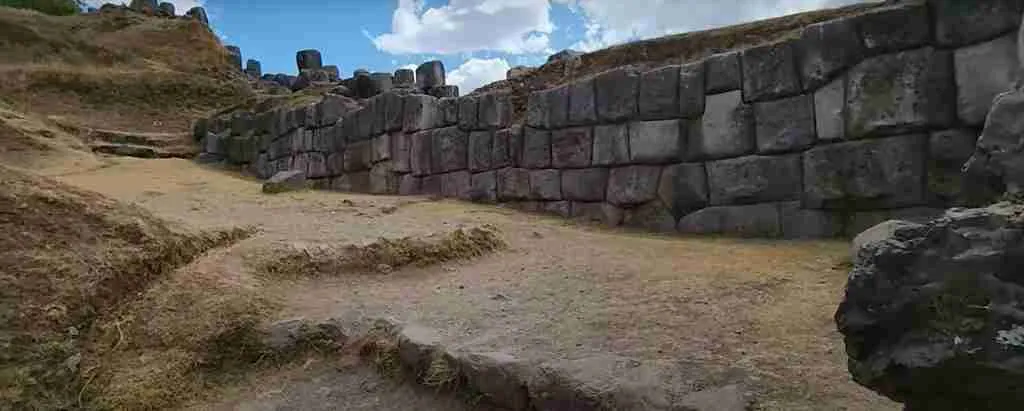
- This massive Inca fortress features enormous stone blocks precisely fitted without mortar
- Some stones weigh over 100 tons and stand nearly 30 feet tall
- Explore the three tiered zigzag walls and ceremonial platforms
- Take time to enjoy panoramic views of Cusco from here
- Note: Requires the Boleto Turístico (tourist ticket)
Q’enqo (20 min walk from Sacsayhuamán)
- Continue northeast along the road from Sacsayhuamán
- Q’enqo is a sacred Inca site carved from a single limestone outcrop
- Explore the zigzagging channels (possibly used for ritual chicha pouring)
- See the underground chamber believed to be used for mummification
- Note: Also covered by the Boleto Turístico
Return via Different Path (45 min downhill)
- From Q’enqo, take the path heading southwest
- Follow Calle Suecia downhill
- This route offers different views of Cusco and passes through residential areas
- Continue to Calle Saphy which leads back to the Plaza de Armas
Tips for This Route:
- Start early in the morning to avoid afternoon rain (during wet season)
- Bring water, sunscreen, and a hat (the sun is intense at this altitude)
- Wear sturdy shoes as paths can be steep and uneven
- Purchase the Boleto Turístico before starting your walk (available at the tourist office)
- Consider taking a taxi to Sacsayhuamán and walking back if you’re not fully acclimatized
- Stay alert and secure valuables, especially when moving between main tourist areas
3-Cusco Free Walking Tours
Cusco Free Walking Tours is one of the most popular walking tour operations in the city. Here’s what you should know:
Tour Details
- Departure Times: Tours typically leave twice daily at 10:00 AM and 2:00 PM
- Starting Point: Plaza Regocijo (one block from Plaza de Armas)
- Duration: Approximately 2-3 hours
- Languages: English and Spanish tours available (sometimes in other languages if arranged in advance)
- Cost: Free, but tipping your guide is customary (50-70 soles/$15-20 per person is appreciated)
What’s Covered
- Historical Center: Learn about Cusco’s evolution from Inca capital to Spanish colonial city
- Plaza de Armas: Detailed explanation of the cathedral and surrounding architecture
- Qorikancha: View from outside (entry fee not included)
- San Pedro Market: Brief introduction to local foods and products
- San Blas Neighborhood: Visit to this artistic quarter with its narrow streets
- Hidden Courtyards: Access to colonial homes not usually open to tourists
- Local Stories: Insights into current Cusquenian life and culture
What to Expect
- Tours run in all weather (bring rain gear if necessary)
- Guides are typically university students or graduates with good English skills
- Groups range from 5-20 people depending on the season
- No need to book in advance – just show up at the meeting point
- Look for guides with blue vests or umbrellas with the company logo
Tips for Joining
- Arrive 10-15 minutes early, especially in high season
- Wear comfortable walking shoes and dress in layers
- Bring water and sun protection
- The tour includes some uphill walking, so be prepared for the altitude
- Have small bills ready if you plan to tip (ATMs sometimes give large bills)


Beginner-Friendly Hikes and Scenic Trails
Newcomers should start with shorter routes that blend stunning views with manageable effort. The Chacan Bridge trail offers gentle slopes and Inca ruins, while Laguna Humantay’s turquoise waters reward a moderate 2-hour climb. Both paths deliver culture and history alongside postcard-worthy landscapes.
Devil’s Balcony provides another accessible option. This half-day hike winds through cloud forests to a dramatic cliffside viewpoint. Local guides often share stories about the site’s spiritual significance, deepening the experience.
How to Prepare for High-Altitude Challenges
Altitude impacts everyone—even seasoned hikers. Arrive 2-3 days early to acclimate, and prioritize hydration. Coca tea helps ease symptoms, but avoid alcohol. A detailed guide on high-altitude hiking safety recommends ascending gradually and recognizing early signs of sickness.
Pace yourself: walk slower than usual and take breaks. Many hotels in the Sacred Valley sit at lower elevations, making them ideal bases for gradual adaptation.
Essential Packing and Safety Strategies
Pack layers—mornings chill quickly, while midday sun blazes. Sturdy shoes, a refillable water bottle, and energy bars are non-negotiable. Carry sunscreen and a hat; UV rays intensify at elevation.
Hire certified guides for remote trek routes. They’ll navigate trails safely while explaining ancient agricultural techniques visible along paths. As one hiker noted, “Knowing the stories behind those terraces transformed my walk into a time-travel adventure.”
Beginner’s Trekking and Adventure in the Sacred Valley
The Sacred Valley unfolds like a living atlas, where trails weave through terraced slopes and past Inca-era water channels. Beginners find ideal routes here—paths that balance physical challenge with cultural discovery. These journeys reveal how ancient engineering harmonized with nature while offering modern explorers stunning views of Andean peaks.
Trek Highlights from Chacan Bridge to Laguna Humantay
The Chacan Bridge trail offers a gentle introduction to high-altitude hiking. Walkers pass stone aqueducts built by the Incas, with the Urubamba River roaring below. After 3 hours, the path opens to Laguna Humantay—a glacial lake so turquoise it seems painted.
| Trek | Distance | Elevation Gain | Key Feature | Tip |
|---|---|---|---|---|
| Chacan Bridge | 4 miles | 1,200 ft | Inca irrigation systems | Start at dawn for calm winds |
| Laguna Humantay | 5.5 miles | 1,800 ft | Glacial lake vistas | Pack layers for shifting weather |
Cultural and Historical Insights Along the Trail
Guides point out apachetas—stone cairns left by pilgrims—near mountain passes. These markers reveal spiritual practices still honored by locals. At Moray’s circular terraces, learn how Incas tested crops at different altitudes.
Hiring a guide transforms a simple hike into a history lesson. Many share ancestral stories about Pachamama (Mother Earth) while demonstrating traditional weaving techniques. This blend of adventure and learning creates trips that resonate long after boots dry.
Acclimate wisely: sip coca tea and snack on local chocho beans to combat elevation. As one traveler noted, “Understanding the land’s heartbeat makes every step matter.”
Conclusion
Every journey through this Andean wonder weaves together ancient echoes and modern discoveries. With the right preparation, travelers unlock stunning landscapes while managing altitude sickness effectively. Whether choosing a short trek or multi-day hike, adventure thrives in every valley and mountain pass.
Prioritize safety: drink water regularly, acclimate gradually, and respect elevation challenges. These strategies ensure energy stays focused on absorbing panoramic views and rich history. As Chris Moss observed, the region’s magic lies in its layered stories—from Inca engineering to living culture.
Beginners now have a clear way to explore. Opt for guided options that blend outdoor thrills with cultural insights. Each path reveals something new—a bit of ancestral wisdom in stone carvings, or the vibrant life of local markets.
Embrace this balance of adventure and discovery. Let mist-shrouded peaks and terraced slopes transform your travel into a life-enriching experience. The Andes await—step forward with confidence, and let every moment matter.
