
Cradle of Humankind Day Trip 2026: Johannesburg UNESCO Heritage Site
Key Takeaways:
- Cradle of Humankind preserves the world’s richest hominin fossil sites documenting 3.5 million years of human evolution
- Day trips from Johannesburg cost R650-950 per person including transport, cave tours, and museum entry in 2026
- Sterkfontein Caves contain Mrs. Ples and Little Foot, two of paleontology’s most significant fossil discoveries
- Maropeng Visitor Centre provides interactive exhibits explaining human origins through immersive experiences
- The 47,000-hectare site lies 50 kilometers northwest of Johannesburg requiring 60-90 minute drives
- Underground cave temperatures stay constant 18°C year-round making warm clothing essential
Planning Your Cradle of Humankind Visit in 2026
The Cradle of Humankind stands as one of the world’s most scientifically significant paleoanthropological sites, designated UNESCO World Heritage status in 1999 for containing evidence of human evolution spanning 3.5 million years. Located in Gauteng Province 50 kilometers northwest of Johannesburg, this 47,000-hectare protected area encompasses over 300 fossil-bearing caves where scientists have discovered approximately 40% of all known human ancestor fossils.
The site gained global recognition through discoveries including Mrs. Ples, a 2.05-million-year-old Australopithecus africanus skull found in 1947 that helped prove Africa as humanity’s birthplace, and Little Foot, one of the most complete early hominin skeletons ever discovered dating to 3.67 million years. These findings revolutionized understanding of human evolution, demonstrating that our ancestors walked upright far earlier than previously believed and that Africa served as the crucible of human development.
Modern visitors explore this remarkable heritage through two primary attractions: Sterkfontein Caves, where guided underground tours reveal the fossiliferous limestone chambers where most major discoveries occurred, and Maropeng Visitor Centre, a world-class interactive museum explaining human evolution through immersive exhibits, multimedia presentations, and hands-on experiences. Together, these sites translate complex scientific discoveries into accessible educational experiences suitable for all ages.
The 2026 season features enhanced facilities including upgraded cave walkways improving accessibility and safety, expanded museum exhibits incorporating recent fossil discoveries, and new guided tour options focusing on specialized topics like archaeological techniques, geological formation processes, and conservation challenges. Additional outdoor activities include game viewing in the adjacent Rhino & Lion Nature Reserve, hot air balloon flights over the fossil sites, and hiking trails through the dolomitic landscape.
Day trip planning from Johannesburg requires consideration of transportation logistics, tour timing to coordinate Sterkfontein cave tours with Maropeng exhibits, meal arrangements at on-site restaurants, and potential extensions to nearby attractions. Most visitors allocate 6-8 hours for comprehensive exploration including travel time from Johannesburg, both main attractions, lunch, and optional activities like the boat ride through Maropeng’s underground exhibition or shopping at craft markets.
People Also Ask About Cradle of Humankind 2026
How much does Cradle of Humankind cost in 2026?
Sterkfontein Caves entry costs R220 for adults, R145 for children (4-14 years) including guided cave tours in 2026. Check maropeng.co.za for current official rates as pricing may vary. Maropeng Visitor Centre charges R170 for adults, R115 for children. Combination tickets covering both attractions cost R330 for adults, R220 for children, saving R60 per adult compared to separate purchases. South African residents receive discounted rates at R190 for adults, R125 for children for combination tickets.
Self-drive transportation adds R150-200 per person for fuel costs (round trip from Johannesburg), while organized tours cost R850-1,200 per person including transport, entry fees, and guide services. Meals at on-site restaurants run R120-180 per person for lunch. Total day costs range R650-900 for self-drive visits, R1,050-1,400 for organized tours including meals.
How far is Cradle of Humankind from Johannesburg in 2026?
The Cradle of Humankind sits 50 kilometers northwest of Johannesburg city center via the R512/R563 route through Roodepoort and Krugersdorp. Drive time takes 60-75 minutes under normal traffic conditions, extending to 90-120 minutes during morning rush hour (7:00-9:00 AM) when leaving Johannesburg or evening rush (4:00-6:00 PM) on return journeys. Most day trips depart Johannesburg 8:00-9:00 AM after rush hour clears, returning 4:00-5:00 PM before peak traffic.
Alternative routes via the N14 highway measure slightly longer at 55-60 kilometers but offer faster travel with less traffic, taking 65-80 minutes. GPS navigation provides real-time route optimization based on current traffic. Tours include air-conditioned transport eliminating navigation concerns and allowing passengers to relax or learn from guide commentary during transfers.
What is the best time to visit Cradle of Humankind in 2026?
March through May (autumn) delivers optimal Cradle of Humankind conditions with mild temperatures (18-25°C), minimal rainfall, comfortable cave touring, and fewer school group crowds compared to peak season. September through November (spring) offers similar advantages plus wildflower displays across the grasslands and increased bird activity, though occasional afternoon thunderstorms develop October-November.
June through August (winter) provides excellent visibility with crystal-clear skies, comfortable cave temperatures contrasting with cold surface conditions (5-18°C), and lowest tourist volumes, though morning frost occurs regularly and outdoor activities feel chilly. December through February (summer) brings hot temperatures (25-35°C), afternoon thunderstorms most days after 3:00 PM, school holiday crowds, and the advantage of lush green landscapes contrasting with winter’s brown grasslands.
Do you need advance bookings for Cradle of Humankind in 2026?
Sterkfontein Caves requires advance bookings for guided tours departing hourly 9:00 AM – 4:00 PM daily. Book online through maropeng.co.za or by phone 2-7 days ahead during peak season (December-January, school holidays) when tours fill to their 30-person capacity. Off-season visits (February-November excluding school holidays) accommodate walk-ins on most weekdays, though weekend tours still benefit from advance booking.
Maropeng Visitor Centre operates without timed entry tickets, accepting visitors throughout operating hours 9:00 AM – 5:00 PM. However, the underground boat ride operates on a first-come basis with 20-minute cycles, potentially causing waits during busy periods (late mornings and early afternoons on weekends). Arriving before 10:30 AM or after 2:30 PM reduces wait times.
Extended multi-day tours – 5+ days
Featured Johannesburg Multi-Day Tour Packages
1 days
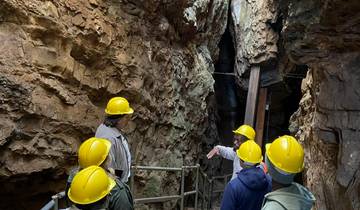
Cradle of HumanKind – Maropeng and Sterkfontein Caves
- ✓ Comprehensive Johannesburg tour
- ✓ Expert local guides included
- ✓ All accommodation arranged
- ✓ Transportation provided
1 days
Pilanesberg Wildlife Safari
- ✓ Comprehensive Johannesburg tour
- ✓ Expert local guides included
- ✓ All accommodation arranged
- ✓ Transportation provided
2 days
2-Day Authentic Big Five Camping Safari at Pilanesberg
- ✓ Comprehensive Johannesburg tour
- ✓ Expert local guides included
- ✓ All accommodation arranged
- ✓ Transportation provided

2 days
2-Day Wildlife Safari at Pilanesberg
- ✓ Comprehensive Johannesburg tour
- ✓ Expert local guides included
- ✓ All accommodation arranged
- ✓ Transportation provided
Multi-day tour packages powered by TourRadar. Prices and availability subject to change.
Essential Planning Information 2026
Entry Fees and Ticketing Options
Combination tickets provide the best value for visitors planning to see both Sterkfontein Caves and Maropeng Visitor Centre. Adults pay R330, children (4-14 years) R220 in 2026. Check maropeng.co.za for current official rates as pricing may vary. These combination tickets save R60 per adult compared to purchasing separate attractions and remain valid for one year from purchase date, allowing split visits across multiple days if desired.
Individual attraction pricing offers flexibility for visitors with limited time or specific interests. Sterkfontein Caves costs R220 for adults, R145 for children including mandatory guided cave tours. Maropeng Visitor Centre runs R170 for adults, R115 for children with self-guided exploration of all exhibits. Children under 4 enter free at both attractions when accompanied by paying adults.
South African residents receive discounted rates upon presenting valid ID documents. Resident combination tickets cost R190 for adults, R125 for children. Senior citizens (60+ years) receive additional 10% discounts. Student groups (10+ students) qualify for group rates 15-20% below standard pricing when booking advance through the reservations office.
Payment methods include cash (South African Rand), credit cards (Visa, Mastercard), and debit cards at both attractions. The gift shops and restaurants accept the same payment methods. Online bookings require credit card payment with tickets delivered via email for printing or mobile display at entry gates.
Operating Hours and Timing
Both Sterkfontein Caves and Maropeng Visitor Centre operate daily 9:00 AM – 5:00 PM year-round including public holidays (closed Christmas Day only). Last cave tour entry departs 4:00 PM with tours lasting 60-75 minutes, meaning the 4:00 PM tour concludes after official closing time. Maropeng admits last visitors at 4:30 PM allowing 30 minutes for final exhibit viewing before 5:00 PM closure.
Sterkfontein Caves guided tours depart hourly on the hour (9:00 AM, 10:00 AM, 11:00 AM, etc.) with additional half-hour departures (9:30 AM, 10:30 AM, etc.) during busy periods June-July and December-January. Tour groups max at 30 people with tours departing on schedule regardless of group size. Arrive 15 minutes before scheduled departure for ticket verification, safety briefing, and group formation.
Optimal daily scheduling visits Sterkfontein Caves first with a morning tour (9:00 or 10:00 AM), followed by lunch at the Sterkfontein restaurant (12:00-1:00 PM), then Maropeng Visitor Centre exploration (2:00-4:30 PM). This sequence allows comfortable progression without rushing and aligns with natural energy flows (active cave touring morning, museum learning afternoon).
Getting There: Directions and Navigation
From Johannesburg city center, take the M5 west becoming the R563 (Hendrik Potgieter Road) through Roodepoort. Continue on R563 through Krugersdorp, following brown UNESCO World Heritage Site directional signs after 35 kilometers. The clearly marked route includes regular signage preventing wrong turns.
Alternative route via N14 highway: Take N14 west from Johannesburg toward Krugersdorp, exit at R512 (Pelindaba Road), turn right following signs to Sterkfontein. This route offers faster highways with less traffic but includes several turns requiring attention to signage. GPS coordinates for Sterkfontein Caves: -26.0156°S, 27.7367°E. Maropeng: -25.9258°S, 27.7572°E.
Road conditions remain excellent on all major routes with paved surfaces throughout. Minor roads within the Cradle area feature some gravel sections maintained regularly. Standard sedan vehicles handle all roads comfortably without requiring 4WD. Fuel stations in Krugersdorp (30 kilometers before Cradle) provide last convenient refueling before the attractions.
Transportation Options for 2026 Day Trips
Self-Drive Planning
Rental cars from Johannesburg’s OR Tambo International Airport or city center locations cost R350-550 per day for economy sedans, R650-850 for SUVs through major agencies including Avis, Europcar, Budget, and First Car Rental. Daily rates include 200 kilometers mileage allowance (sufficient for round trip plus local driving), collision damage waiver insurance, and GPS navigation. Fuel costs R150-200 for round trip depending on vehicle fuel efficiency.
Self-drive advantages include complete schedule flexibility adjusting tour times based on interests, ability to stop at additional attractions like Rhino & Lion Nature Reserve or Wonder Cave, cost savings for groups of 3-4 people splitting expenses, and independence from tour group timing constraints. Navigation remains straightforward following highway signs and GPS guidance.
Disadvantages include missing expert guide commentary on fossil discoveries and evolutionary science, potential navigation confusion at turn-offs despite signage, parking management during busy periods, and need for licensed drivers comfortable with South African road conditions including left-side driving. Johannesburg traffic poses challenges for unfamiliar drivers during rush hours.
Organized Tour Options
Small group tours (6-12 people) depart Johannesburg hotels 8:00-8:30 AM, returning 4:00-5:00 PM. Tours cost R1,050-1,350 per person including luxury transport (Mercedes Sprinter or similar), expert guide specializing in paleoanthropology or archaeology, both attraction entry fees, and sometimes lunch. Companies like African Eagle Day Tours, Viva Safaris, and Day Tours Africa maintain excellent reputations with 4.8-5.0 star review averages.
These tours provide comprehensive commentary contextualizing fossil discoveries within broader human evolution narrative, explaining archaeological techniques used in excavations, discussing ongoing research projects, and answering questions about specific finds. Guides often hold degrees in relevant fields bringing authentic expertise beyond standard tour script delivery.
Larger group tours accommodate 15-25 people in full-size coaches costing R850-1,050 per person with similar inclusions but less personalized attention and flexibility. These tours follow fixed schedules moving groups through attractions on predetermined timing. Value-conscious travelers find excellent cost savings though reduced opportunity for question-asking and individualized pacing.
Private Tour Arrangements
Private tours offer maximum flexibility with customized itineraries, extended time at preferred attractions, photography stops on request, and personal guide attention throughout. Costs start at R4,000-5,500 for groups of 1-4 people, R6,000-8,000 for groups of 5-8 people including transport, guide, and entry fees (meals additional). Extended tours combining Cradle of Humankind with Johannesburg city highlights, Soweto township, or Pilanesberg Game Reserve create multi-day itineraries.
Specialized private tours focus on specific interests including paleontology deep-dives with university professors, photography-focused tours timing visits for optimal lighting, family-oriented tours with child-friendly pacing and simplified explanations, or luxury experiences with gourmet picnics and upgraded transport. Book private tours 7-14 days ahead through specialized operators or concierge services.
Sample 2026 Itinerary: Complete Cradle Experience
Johannesburg Departure (8:00-9:00 AM)
Depart Johannesburg accommodation 8:00 AM heading northwest on the R563 (Hendrik Potgieter Road) through Roodepoort’s suburbs. The 50-kilometer drive takes 60-75 minutes passing through Gauteng’s industrial areas before entering the rural Cradle of Humankind landscape. Traffic flows smoothly after morning rush hour with clear highway signage preventing navigation errors.
The landscape transitions from urban development to open grasslands dotted with dolomite outcrops characteristic of the Cradle geology. These limestone formations contain the cave systems where fossil discoveries occurred, visible as rocky ridges across the rolling countryside. Brief photo stops at viewpoints along R563 capture the Magaliesberg mountain range backdrop and endless horizons of highveld grasslands.
Sterkfontein Caves Exploration (9:30-11:30 AM)
Arrive Sterkfontein Caves 9:15 AM for the 9:30 AM guided tour (book advance online or by phone). Collect tickets at the reception building housing exhibits on fossil discoveries, excavation history, and limestone cave formation processes. The pre-tour exhibits provide context for the upcoming underground exploration, explaining how caves form through water erosion over millions of years.
The 60-75 minute guided tour descends into underground chambers through narrow passages and steep staircases, requiring moderate fitness and mobility. Cave temperatures remain constant 18°C year-round regardless of surface conditions, making warm clothing essential even during summer visits. Guides explain limestone formations including stalactites and stalagmites while highlighting excavation sites where major fossils emerged.
The tour route passes the original 1947 excavation site where Dr. Robert Broom discovered Mrs. Ples, the remarkably complete Australopithecus africanus skull proving early hominins inhabited the caves 2 million years ago. Displays show fossil casts and excavation photographs documenting the painstaking archaeological work. The Underground Lake, a crystalline pool deep in the cave system, marks the tour’s dramatic midpoint before ascending to surface chambers.
Little Foot fossil site receives special attention as guides describe the 3.67-million-year-old skeleton discovered in 1994 and excavated over 20 years. This remarkably complete skeleton (90% preserved including skull, arms, legs, and feet) represents one of paleoanthropology’s most significant discoveries, providing unprecedented detail about early hominin anatomy and behavior. The skeleton remains in-situ embedded in breccia (consolidated sediment) visible through protective barriers.
Surface time after the tour (11:00-11:30 AM) allows exploration of outdoor exhibits including the archaeological dig demonstration area where visitors try excavation techniques, fossil casting stations, and interpretive signage explaining the site’s UNESCO significance. The gift shop sells books on human evolution, fossil replicas, and locally crafted souvenirs.
Lunch Break (11:45 AM-12:45 PM)
The Sterkfontein Caves Restaurant serves lunch 11:00 AM – 3:00 PM with indoor and outdoor seating overlooking grasslands and the Magaliesberg mountains. Menu features traditional South African dishes including bobotie (Cape Malay curry), boerewors (farmer’s sausage), bunny chow, and vegetarian options. Lunch costs R120-180 per person including drinks.
Alternative dining at Maropeng’s Tumulus Restaurant (15 minutes drive) offers more extensive menu, modern atmosphere, and interesting architecture built into an artificial mound mimicking ancient burial tumuli. The restaurant’s panoramic windows provide views across the Cradle landscape while explaining the area’s significance through interpretive displays integrated into the dining space.
Maropeng Visitor Centre (1:00-4:00 PM)
Drive 15 minutes (12 kilometers) from Sterkfontein to Maropeng Visitor Centre, arriving 1:00 PM with 3 hours for comprehensive exploration. The architecturally striking building emerges from an artificial burial mound, symbolizing excavation and discovery themes. Entry begins with the dramatic underground boat ride through exhibits explaining Earth’s history from creation through present day.
The 10-minute boat ride travels through darkened passages with multimedia projections showing planetary formation, early life emergence, continental drift, and extinction events. Water effects and atmospheric soundtrack create immersive experience contextualizing human evolution within Earth’s 4.6-billion-year history. The ride concludes at an ice tunnel representing ice ages that influenced human development.
Main exhibition hall (1:30-3:30 PM) displays interactive exhibits covering human evolution from earliest hominins through modern humans. Touch screens allow exploration of fossil evidence, archaeological sites worldwide, genetic relationships between species, and evolutionary timeline spanning 7 million years. Reconstructed hominin figures show physical changes across species with detailed explanations of anatomical adaptations.
Key exhibits include the “Journey to the Stars” galaxy projection mapping human DNA back to common ancestors, the “Face-to-Face” section comparing modern human skulls with ancient hominin replicas, and hands-on activities like tool-making demonstrations showing how stone technology evolved. Children particularly enjoy the footprint stations comparing their feet to fossilized hominin tracks and the body proportion comparisons revealing how modern humans differ from ancestors.
The temporary exhibition space (rotating displays) presents current archaeological research, recent fossil discoveries, and conservation challenges facing paleontological sites. 2026 exhibitions focus on climate change impacts on fossil preservation, new DNA extraction techniques revealing hominin interbreeding, and African nations’ efforts protecting heritage sites from looting and destruction.
Gift shop and café area (3:30-4:00 PM) sell books on human evolution, documentary DVDs, fossil replicas, and local crafts. The café serves coffee, snacks, and cold drinks for refreshment before the return drive to Johannesburg. Many visitors purchase “I Am Humanity” branded merchandise supporting the site’s educational programs.
Return to Johannesburg (4:00-5:30 PM)
Depart Maropeng 4:00 PM via R563/R512 route or alternative N14 highway depending on traffic conditions (check phone GPS for real-time routing). The return drive takes 60-90 minutes depending on afternoon traffic building toward rush hour. Leaving by 4:00 PM usually beats worst congestion entering Johannesburg 5:00-5:30 PM.
Optional stop at Kromdraai Gold Mine (5 minutes off-route) adds historical context showing how gold mining activities in the early 1900s inadvertently led to fossil discoveries when miners broke through cave systems. The small museum displays mining artifacts and explains the relationship between commercial mining and paleontological research. Brief 20-minute stops add minimal time while enriching understanding of the area’s complex history.
Budget Planning for 2026 Cradle Day Trips
Budget Conscious Approach (R650-850 per person)
Budget travelers minimize costs through self-driving in economy rental cars (split among multiple passengers), combination tickets for both attractions, packed snacks instead of restaurant meals, and skipping optional paid activities like boat rides at Maropeng (these are included in general admission). This approach captures essential experiences while maintaining tight budget control.
Combination ticket R330, fuel contribution R150 per person (split car costs), packed lunch and snacks R80-100, drinks R40-60, optional gift shop purchases R50-100. Total day cost: R650-740 per person (excluding accommodation). Groups of 3-4 people sharing rental car costs achieve lower per-person fuel expenses, dropping total costs to R600-680 range.
Mid-Range Experience (R900-1,200 per person)
Mid-range visitors balance cost and convenience through small group organized tours including expert guides, or self-driving with restaurant meals and additional activities. This approach provides comfortable transportation, comprehensive commentary explaining scientific significance, restaurant dining at both locations, and gift shop purchases for educational materials and souvenirs.
Organized tour R1,050-1,350 including transport and entry, or combination ticket R330 plus fuel R150 if self-driving, restaurant lunch R120-180, café snacks R50-80, gift shop R100-150. Total day cost: R1,050-1,350 for organized tour, R750-890 for self-drive option. Mid-range budgets accommodate additional attractions like Wonder Cave (R120 entry) or Rhino & Lion Nature Reserve (R195 entry) for extended day experiences.
Luxury Comprehensive Tour (R1,400-2,000 per person)
Luxury experiences emphasize private tours with paleontology expert guides, gourmet dining, extended time for in-depth exploration, and exclusive activities like after-hours cave tours or private meetings with resident archaeologists. Luxury operators customize itineraries for photography enthusiasts, academic groups, or families seeking VIP treatment.
Private tour R1,200-1,500 per person (for 2-4 people groups), combination ticket R330, premium dining at both locations R250-350, exclusive after-hours cave tour R350-450 per person, gift shop purchases R150-250, optional helicopter flight over Cradle R2,500-3,000 per person. Total day cost: R2,280-2,880 per person excluding helicopter, R4,780-5,880 including helicopter experience.
Understanding the Fossil Discoveries 2026
Mrs. Ples: The Discovery That Changed Science
Mrs. Ples represents one of the most complete Australopithecus africanus skulls ever discovered, found by Dr. Robert Broom at Sterkfontein Caves in 1947. The nickname “Mrs. Ples” derives from the scientific designation “Plesianthropus transvaalensis” (near-man from Transvaal) assigned before researchers determined all Australopithecus africanus fossils belonged to the same species. Recent analysis suggests the skull likely belonged to a male individual despite the “Mrs.” nickname persisting in popular culture.
The skull dates to 2.05 million years ago based on geological dating techniques analyzing the surrounding breccia (consolidated cave sediment). Mrs. Ples shows the characteristic small brain size (485 cubic centimeters versus modern human 1,400cc), protruding face, large teeth adapted for tough plant foods, and evidence of bipedal locomotion through foramen magnum position (the hole where spinal cord enters skull) placed beneath rather than behind the skull.
This discovery proved revolutionary by confirming Raymond Dart’s controversial 1924 claim that the Taung Child skull represented an early human ancestor. Before Mrs. Ples, many scientists doubted Africa as humanity’s birthplace, assuming Asia based on limited evidence. The Sterkfontein discoveries established Africa’s central role in human evolution, shifting global paleontological focus to the continent and launching intensive fossil searches across East and South Africa.
Little Foot: The Most Complete Early Skeleton
Little Foot represents the most complete early hominin skeleton ever discovered, with approximately 90% of bones preserved including skull, arms, legs, feet, hands, and torso. The skeleton emerged gradually through excavations starting in 1994 when researcher Ron Clarke identified four small foot bones in Sterkfontein storage boxes from earlier excavations. Clarke nicknamed the specimen “Little Foot” based on these small foot bones, later discovering the complete skeleton embedded in cave breccia.
Dating techniques place Little Foot at 3.67 million years old, making it older than the famous Lucy skeleton (3.2 million years) discovered in Ethiopia in 1974. Little Foot’s exceptional preservation provides unprecedented details about early hominin anatomy, locomotion, and behavior impossible to determine from fragmentary fossils. The skeleton reveals a species adapted to both bipedal walking (evidenced by leg and pelvis structure) and tree climbing (shown by long arms and curved fingers).
Excavation proved extraordinarily challenging, requiring 20 years of careful work removing the skeleton from solid breccia without damage. Dr. Clarke and his team worked with dental picks, small chisels, and microscopes, removing matrix grain by grain to expose delicate bone surfaces. The skeleton remained in-situ during excavation, allowing researchers to study burial context, associated fauna, and geological conditions providing environmental information about the individual’s life and death.
Little Foot’s significance extends beyond completeness to include evidence of intentional burial or cave dwelling. The skeleton’s position deep within cave chambers raises questions about how the individual entered the cave, whether alive or dead, and whether hominins used caves for shelter 3.67 million years ago (earlier than previously documented). These mysteries drive ongoing research analyzing bone chemistry, wear patterns, and cave geology.
Additional Significant Discoveries
Sterkfontein has yielded over 500 hominin fossils representing multiple individuals and species including Australopithecus africanus, Homo habilis, and Homo ergaster. This fossil abundance spanning 2.5 million years documents evolutionary transitions as brain sizes increased, teeth reduced, and stone tool use developed. The cave system essentially functions as a time capsule preserving successive populations that inhabited the area across enormous time spans.
Other Cradle caves contribute additional discoveries amplifying understanding of human evolution. Swartkrans Cave revealed robust australopithecines (Paranthropus robustus) with massive jaws adapted for hard foods alongside early Homo species, demonstrating multiple hominin lineages coexisted 1.8 million years ago. Gladysvale Cave produced 1-million-year-old fossils showing both australopithecines and Homo erectus remains in the same deposits.
Recent discoveries continue adding to the Cradle’s fossil wealth. The 2015 announcement of Homo naledi from Rising Star Cave introduced an entirely new species combining primitive and modern features, challenging assumptions about linear human evolution. Over 1,500 individual fossils representing at least 15 individuals make Homo naledi the most abundantly represented early hominin species, though considerable debate surrounds its dating and evolutionary relationships.
Scientific Significance and Research 2026
Active Archaeological Research
Sterkfontein Caves host ongoing excavations supervised by University of the Witwatersrand (Wits University) researchers continuing work started in 1936. Current excavations focus on deepening existing sites, exploring new chambers discovered through ground-penetrating radar, and applying advanced dating techniques to previously excavated materials. The research operates under strict protocols protecting the site’s scientific integrity while allowing public viewing of work in progress during tours.
Modern archaeological techniques employed at Sterkfontein include 3D laser scanning documenting every bone fragment’s position before removal, DNA sampling attempting to extract genetic material from fossils (extremely challenging given age and tropical conditions degrading DNA), and chemical analysis of bone revealing diet, disease, and environmental conditions. These technologies provide exponentially more information than earlier excavations using crude removal techniques.
The Malapa site discovered in 2008 represents one of the Cradle’s newest and most significant discoveries. Australopithecus sediba fossils from this site date to 1.98 million years ago, showing anatomical features potentially linking australopithecines to early Homo species. The site’s remarkable preservation includes skin impressions, articulated skeletons, and associated fauna providing exceptional environmental context. Limited public access protects ongoing excavations though Maropeng displays comprehensive exhibits on the finds.
Conservation and Preservation Challenges
Preserving the Cradle of Humankind requires balancing public access against fossil preservation, managing urban development pressure from Johannesburg’s expansion, controlling illegal fossil collecting and vandalism, and maintaining cave environments critical for fossil preservation. The UNESCO designation provides international recognition supporting conservation efforts though implementation depends on South African government resources and political will.
Climate change poses emerging threats to fossil sites through altered rainfall patterns affecting cave hydrology, temperature fluctuations stressing delicate cave environments, and vegetation changes altering erosion patterns. Researchers monitor these changes developing adaptive management strategies protecting sites for future generations. The Cradle’s role documenting climate change impacts on human ancestors provides ironic context given current climate challenges.
Education programs constitute crucial conservation components by building local community support for site protection, training South African students in paleontology and archaeology, and engaging youth with heritage preservation. Maropeng’s educational initiatives reach over 50,000 students annually through subsidized school visits, teacher training workshops, and curriculum development supporting science education nationwide.
Additional Attractions in the Cradle Area 2026
Wonder Cave
Wonder Cave ranks among South Africa’s most spectacular show caves, featuring a massive chamber 60 meters deep with stunning stalactite and stalagmite formations. Located 15 kilometers from Sterkfontein within the Cradle area, the cave offers 90-minute guided tours descending steep stairs into cathedral-like chambers decorated with flowstone curtains, columns, and delicate crystal formations. Entry costs R120 for adults, R80 for children.
Unlike Sterkfontein’s fossil focus, Wonder Cave emphasizes geological formations created over millions of years through water depositing dissolved limestone. The main chamber reaches 125 meters long by 154 meters deep with formations reaching 15 meters height. Underground lighting creates dramatic effects highlighting the formations’ textures and colors ranging from white calcite to orange iron-stained sections.
Cave tours require moderate fitness climbing 200+ steps down and back up, taking 75-90 minutes total. The constant 18°C temperature and high humidity mean warm, non-slip clothing essential. Photography allowed throughout using flash or high-ISO settings capturing the spectacular formations. Combination tickets with Sterkfontein/Maropeng not available but Wonder Cave provides excellent addition for visitors interested in geological processes complementing fossil focus of main attractions.
Rhino & Lion Nature Reserve
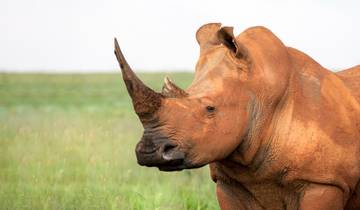
Rhino & Lion Nature Reserve spans 1,200 hectares adjacent to the Cradle area, protecting white rhino, lion, cheetah, wild dog, and over 30 mammal species in natural bushveld habitat. The reserve offers game drives (R195 entry for adults, R120 children), lion and cheetah feeding experiences (R450-550 per person), and walking trails providing Cradle countryside exploration without fossil focus.
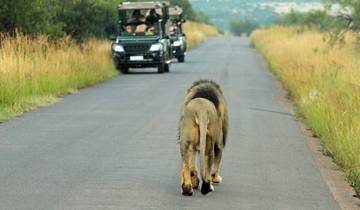
Self-drive game viewing follows 10 kilometers of gravel roads through savanna, woodland, and wetland habitats where rhino, giraffe, zebra, wildebeest, and various antelope roam freely. Most visitors spend 2-3 hours driving slowly watching for wildlife, though serious photographers allocate full mornings or afternoons capturing optimal lighting. The reserve’s compact size means high wildlife density and excellent viewing success rates.
Lion and cheetah feeding sessions provide thrilling close encounters as guides explain predator behavior and conservation challenges facing these species. Visitors watch from safely fenced platforms as lions tear into carcasses or cheetahs sprint after lures demonstrating their famous speed. These experiences particularly appeal to children and families seeking exciting activities beyond museum learning at Maropeng.
Hot Air Balloon Flights
Hot air balloon flights over the Cradle of Humankind provide spectacular aerial perspectives on the fossil sites, cave systems, and surrounding landscape at sunrise. Flights depart weather-permitting at dawn, floating over the grasslands, rocky ridges, and valleys for 60-90 minutes before champagne breakfast landings. Costs run R2,500-3,000 per person with advance bookings required 7-14 days ahead.
The bird’s-eye view reveals the geological features defining the Cradle including dolomite ridges containing cave systems, ancient river valleys concentrating fossil deposits, and the extent of the 47,000-hectare UNESCO zone. Guides explain visible landmarks including Sterkfontein, Swartkrans, and other fossil sites plus the Magaliesberg mountains forming the northern backdrop. Calm morning air provides smooth flights optimal for photography.
Balloon companies operating in the area include Bill Harrop’s Original Balloon Safaris and Life Spring Wellness managing bookings, transport from Johannesburg accommodations, and complete experiences including pre-flight briefings and post-flight meals. Weight and health restrictions apply due to landing impacts and high-altitude conditions. Minimum age requirements vary by operator (usually 6-10 years).
Dining and Accommodation Options 2026
On-Site Dining
Sterkfontein Caves Restaurant serves traditional South African cuisine 11:00 AM – 3:00 PM daily with indoor and outdoor seating. Menu highlights include bobotie (R135), boerewors with pap and relish (R125), bunny chow (R115), grilled chicken (R140), vegetarian curry (R110), and various salads and sandwiches (R85-120). The restaurant accommodates dietary restrictions with advance notice preparing gluten-free and vegetarian alternatives. Lunch costs R120-180 per person including drinks.
Maropeng’s Tumulus Restaurant offers more extensive menu 8:00 AM – 5:00 PM serving breakfast, lunch, and snacks. Breakfast buffet (8:00-10:30 AM) costs R165 per person with hot and cold options including eggs, bacon, pastries, fruits, and cereals. Lunch menu (11:30 AM-3:30 PM) features gourmet sandwiches (R95-125), burgers (R135-165), pasta dishes (R125-155), and daily specials (R145-185). The modern atmosphere and panoramic windows create pleasant dining experiences.
Both restaurants serve local wines, craft beers, soft drinks, and coffee. The cafés operate with counter service and table delivery, accepting cash and cards. Outdoor seating at both venues provides views of the surrounding Cradle landscape with interpretive signage explaining visible geological features. Many visitors prefer outdoor dining during pleasant weather months (March-May, September-November).
Nearby Accommodation
Accommodation options within the Cradle area range from budget guesthouses to luxury lodges, though most Johannesburg-based visitors complete the Cradle as a day trip returning to city hotels. For overnight stays extending exploration or reducing travel time, several quality properties operate within 10-15 kilometers of the main attractions.
De Wagensdrift Guest Farm (R1,200-1,800 per night double occupancy) offers farm-style accommodation with breakfast included, working farm activities, and walking trails through grasslands. Mhondoro Game Lodge (R3,500-5,500 per night) provides luxury tented accommodation with game drives, spa services, and upscale dining. Cradle Boutique Hotel (R1,500-2,200 per night) combines convenience with comfort, located 5 kilometers from Maropeng with restaurant, pool, and modern amenities.
Budget travelers find excellent value at Cradle Moon Lakeside Game Lodge (R950-1,400 per night) offering simple but comfortable rooms, breakfast, and beautiful lake setting with bird watching opportunities. All properties include breakfast and provide easy access to Sterkfontein and Maropeng for early morning arrivals avoiding crowds. Book 3-5 weeks ahead during peak season (December-January) when limited capacity fills completely.
Practical Tips for 2026 Visits
What to Bring
Warm clothing proves essential for Sterkfontein Caves where constant 18°C temperatures feel cold after descending from summer surface temperatures of 25-30°C. Bring light jacket or sweater regardless of surface conditions. Closed-toe shoes with good grip required for cave stairs and uneven surfaces (sandals and flip-flops prohibited). Hiking boots or athletic shoes work perfectly.
Photography equipment should include cameras capable of low-light performance (high ISO settings 3200-6400) or flash units. Tripods prohibited in Sterkfontein Caves during tours due to space constraints and safety but allowed at Maropeng. Wide-angle lenses (16-35mm) capture cave chambers and museum spaces while standard zooms (24-70mm) work for detail shots. Extra batteries essential as cold cave temperatures drain power quickly.
Water bottles and snacks recommended for full-day visits though both attractions sell beverages and light refreshments. Sunscreen and hats necessary for outdoor areas and parking lot walks. Binoculars enhance wildlife viewing if visiting Rhino & Lion Nature Reserve. Cash backup supports vendors at craft markets near entrances though main facilities accept cards.
Accessibility Considerations
Maropeng Visitor Centre maintains full wheelchair accessibility throughout main exhibits, boat ride, restaurant, and gift shop with ramps, elevators, and accessible restrooms. The modern facility design incorporated universal access from inception. Wheelchair users tour independently without assistance required for navigation.
Sterkfontein Caves present accessibility challenges due to underground environment with steep stairs (180+ steps down and up), narrow passages, uneven surfaces, and lack of elevator alternatives. The caves remain unsuitable for standard wheelchair users though some visitors with moderate mobility limitations complete tours moving slowly with assistance. Contact the caves office advance discussing specific mobility concerns for personalized advice.
Accessible parking at both attractions provides close spots near entries. Service animals permitted throughout facilities. Audio guides and descriptive tours available by advance arrangement for visually impaired visitors. Large print materials and sign language interpreters arranged with 7-10 days notice for groups requiring these services.
Family-Friendly Tips
Children generally find Maropeng more engaging than Sterkfontein Caves due to interactive exhibits, hands-on activities, and boat ride adventure. The recommended age for Sterkfontein cave tours starts at 6 years due to steep stairs, long walks, and attention span requirements for 60-75 minute guided tours. Younger children struggle with cave environment and benefit more from Maropeng’s designed-for-families approach.
Family-focused tours from Johannesburg cater specifically to children with simplified explanations, shorter attention span accommodations, more frequent stops, and child-friendly lunch options. These tours cost R900-1,100 per child (4-14 years) versus adult rates. Private family tours provide maximum flexibility allowing parents to set pace based on children’s energy and interest levels.
Educational value makes Cradle visits excellent for school-age children studying science, archaeology, or South African heritage. Many schools organize field trips coordinating curriculum with site experiences. Parents enhance learning by reviewing evolution basics before visits, purchasing age-appropriate books at gift shops, and discussing observations during drives. The combination of adventure (caves), animals (Rhino & Lion), and learning (Maropeng) creates memorable family experiences.
Frequently Asked Questions About Cradle of Humankind 2026
Is Cradle of Humankind worth visiting?
The Cradle of Humankind absolutely merits visiting for anyone interested in human evolution, archaeology, South African heritage, or science education. The site’s significance as humanity’s birthplace combined with world-class presentation at Maropeng and authentic fossil site experience at Sterkfontein creates educational experiences impossible to replicate elsewhere. Families, students, and curious travelers all find value despite differing interest levels in paleontology.
Can you see actual fossils at Cradle of Humankind?
Original fossils including Mrs. Ples and Little Foot remain preserved in secure research facilities not accessible to public viewing due to conservation requirements and priceless scientific value. However, Sterkfontein displays high-quality casts (replicas) of major discoveries in exhibition areas, and cave tours show actual excavation sites where fossils emerged embedded in breccia. Maropeng exhibits include fossil casts and reconstructions allowing close examination without endangering irreplaceable originals.
How physically demanding is the Sterkfontein Caves tour?
The Sterkfontein cave tour requires moderate fitness climbing approximately 180 steps down into the cave system and back up at tour’s end. The 60-75 minute tour includes walking on uneven surfaces, navigating narrow passages requiring occasional ducking, and standing for extended periods during guide explanations. Most visitors with average fitness complete tours comfortably though those with knee problems, breathing difficulties, or significant mobility limitations should carefully consider whether the physical demands match their capabilities.
What language are tours conducted in?
English serves as primary language for Sterkfontein cave tours with guides fluent and comfortable explaining complex scientific concepts. Advance arrangements provide tours in Afrikaans, Zulu, or other South African languages for groups requesting language options when booking. Maropeng operates primarily as self-guided experience with exhibits displaying information in English and selected other languages. Audio guides available in multiple languages by request at ticket desk.
Is it safe to visit Cradle of Humankind?
The Cradle of Humankind maintains excellent safety standards with well-maintained facilities, professional guides, security personnel, and emergency protocols. The rural location 50 kilometers from Johannesburg experiences significantly less crime than urban areas. Standard precautions apply: secure valuables, lock vehicles, stay on designated paths, and follow guide instructions. Cave tour safety includes handrails, lighting, and group supervision preventing accidents. The site welcomes over 300,000 visitors annually with exceptional safety records.
Can you visit Cradle of Humankind without a tour?
Maropeng Visitor Centre operates as self-guided experience allowing independent exploration at personal pace without mandatory tours. Sterkfontein Caves requires participation in guided tours for safety and conservation reasons, with no self-guided cave access permitted. Transportation to the site works perfectly as self-drive day trip following clear signage and GPS navigation. Organized tours add value through expert guide commentary and convenient transport but remain optional rather than required.
What is the best age to visit Cradle of Humankind?
Children ages 8-16 typically gain maximum educational value understanding evolution concepts while remaining engaged by interactive exhibits and cave adventure. Younger children (4-7) enjoy Maropeng’s hands-on activities and boat ride but struggle with abstract evolution concepts and long cave tours. Adults of all ages appreciate the site though backgrounds in science, archaeology, or anthropology deepen engagement with complex information presented.
Are there restaurants near Cradle of Humankind?
Both Sterkfontein and Maropeng operate on-site restaurants serving lunch, snacks, and beverages during attraction operating hours. No other dining options exist within 10 kilometers given the rural location. Visitors planning full-day trips should expect on-site dining or bring packed meals. The nearest significant restaurant concentration appears in Krugersdorp 30 kilometers away or Muldersdrift area 20 kilometers southeast featuring several upscale restaurants and cafes.
Conclusion: Your 2026 Cradle of Humankind Experience
The Cradle of Humankind stands as one of the world’s most significant archaeological sites, preserving evidence of human evolution spanning millions of years within a landscape that shaped our species’ earliest chapters. Day trips from Johannesburg provide accessible entry into this remarkable heritage, combining authentic fossil site exploration at Sterkfontein Caves with world-class interpretive experiences at Maropeng Visitor Centre.
Successful 2026 visits require planning coordination between the two main attractions, appropriate timing for optimal cave tour experiences, and consideration of weather conditions affecting cave temperatures and surface comfort. Most visitors allocate 6-8 hours for comprehensive exploration including travel from Johannesburg, guided cave tours, museum exhibits, meals, and optional activities. The investment rewards travelers with profound insights into human origins, evolutionary processes, and ongoing scientific discoveries revealing our species’ African genesis.
Whether choosing budget self-drive approaches, comfortable organized tours with expert guides, or luxury private experiences customized to specific interests, the Cradle of Humankind delivers educational experiences transcending typical tourist attractions. The combination of scientific significance, professional presentation, beautiful landscape setting, and proximity to Johannesburg makes this UNESCO World Heritage Site an essential component of comprehensive South African travel experiences.
Book Sterkfontein cave tours advance during peak season (December-January), dress appropriately for 18°C cave temperatures, allocate sufficient time for both attractions without rushing, and consider combining the Cradle with nearby activities like Rhino & Lion Nature Reserve or Wonder Cave for extended exploration. These elements unite creating memorable encounters with humanity’s deepest past while supporting ongoing conservation and research efforts protecting this irreplaceable heritage for future generations.