
Cork Food Guide: English Market, Irish Cuisine & Best Restaurants
Cork claims Ireland’s culinary crown through centuries of maritime trade, agricultural abundance, and an unwavering commitment to food craftsmanship that fills every market stall, restaurant table, and pub counter. The city’s English Market stands as Europe’s oldest covered food hall, while Cork’s specialty foods—spiced beef, drisheen, and artisan cheeses—reflect a provision trade that once fed navies across the globe. From Michelin-starred innovation to traditional tripe vendors continuing recipes unchanged for generations, Cork offers food experiences found nowhere else in Ireland.
Key Takeaways About Cork’s Food Scene
- English Market Heritage: Trading continuously since 1788, the English Market remains Cork’s culinary heart, with Victorian architecture housing butchers, fishmongers, cheese makers, and produce vendors sourcing from within 50 kilometers of the city.
- Cork Specialty Foods: Spiced beef, drisheen blood pudding, tripe, and crubeens emerged from Cork’s 17th-century status as the world’s primary salt-beef provisioning port, when barrels of Cork beef could be found from China to Chile.
- Restaurant Excellence: Cork supports a Michelin-starred Japanese restaurant (Ichigo Ichie), Ireland’s premier vegetarian destination (Paradiso), and dozens of establishments where chef-owners maintain direct relationships with market vendors and artisan producers.
- Farmhouse Cheese Tradition: West Cork’s pasture-based dairy farming produces over 40 artisan cheeses, from Gubbeen’s washed-rind rounds to Durrus’s farmhouse wheels, available at English Market cheese stalls and specialty shops.
- Seasonal Market Culture: Beyond the English Market, Cork hosts year-round farmers’ markets including the Saturday Cornmarket Street market, where small-scale growers sell vegetables picked that morning and bakers offer loaves still warm from the oven.
- Culinary Education Access: Food tours, cooking classes using market ingredients, and butchery demonstrations preserve traditional techniques while Cork’s restaurants experiment with modern Irish cuisine that respects ingredient integrity above all else.
People Also Ask About Cork Food Culture
What Makes Cork the Food Capital of Ireland?
Cork earned its title as Ireland’s food capital through geographic abundance, historical trade legacy, and contemporary dedication to artisan production. The city sits at the mouth of Ireland’s longest river, surrounded by fertile farmland producing grass-fed beef, dairy products, and vegetables, while the Atlantic coastline provides daily catches of mackerel, hake, and monkfish. Cork’s status as a 17th-century provisioning port established butchery expertise and curing traditions that continue today, visible in English Market stalls where families have sold meat for five generations. The modern food movement began in Cork with Myrtle Allen’s Ballymaloe House in the 1960s, inspiring generations of chefs to prioritize local sourcing and traditional preparation methods. Cork’s food culture combines working-class market traditions with fine dining innovation, farm-to-table principles practiced since before the term existed, and a concentration of artisan cheese makers, organic growers, and craft beverage producers unmatched elsewhere in Ireland.
What Is Drisheen and Where Can You Try It in Cork?
Drisheen is Cork’s distinctive blood pudding, made from sheep’s or beef blood serum rather than whole blood, resulting in a soft, gelatinous texture lighter and more delicate than British black pudding. The preparation involves salting the blood’s liquid portion, mixing it with cream and breadcrumbs, stuffing it into casings, then poaching until set. Drisheen originated in Cork’s 19th-century slaughterhouse economy when workers received offal as part of their wages, transforming byproducts into valued delicacies. The dish appears pale gray when sliced, unlike the dark color of other blood sausages, with a mild, slightly mineral flavor enhanced by the traditional accompaniment of white onion sauce and boiled tripe. Farmgate Café in the English Market serves tripe and drisheen following a recipe from Declan Ryan of Arbutus Lodge, Cork’s first Michelin-starred restaurant. O’Reilly & Sons butchers in the English Market have sold drisheen continuously since the early 1900s, slicing and grilling portions to order. The dish represents Cork’s unique position in Irish food culture, where offal traditions survived industrialization and remain celebrated rather than relegated to historical curiosity.
How Does Cork Spiced Beef Differ from Other Cured Meats?
Cork spiced beef distinguishes itself through a two-week curing process using sugar, salt, and secret spice blends specific to each butcher, followed by slow cooking that produces tender, aromatic meat unlike pastrami, bresaola, or standard corned beef. The tradition began when Cork’s salt-beef trade brought West Indies sugar and spices to the city in exchange for preserved meat exports, with Christmas celebrations incorporating these exotic ingredients into festive dishes. Traditional Cork spiced beef uses cuts like silverside or topside rubbed daily with a mixture including black pepper, allspice, juniper berries, cinnamon, cloves, ginger, and brown sugar, then boiled or steamed in water or Guinness for five to seven hours. Tom Durcan at the English Market has won multiple Blas na hEireann awards for his spiced beef, cured to a proprietary blend he developed over decades. Unlike cold-cured Italian bresaola or hot-smoked pastrami, Cork spiced beef is fully cooked, sliced thick, and served cold or at room temperature, releasing aromatic spices with each cut. The meat appears deep mahogany with visible spice coating, tastes sweet-savory with warming spice notes, and maintains a moist, tender texture from the long cooking process. While originally a Christmas specialty, Cork butchers now prepare spiced beef year-round for visitors seeking this regional delicacy.
What Should First-Time Visitors Do at Cork’s English Market?
First-time English Market visitors should arrive between 9:00 AM and 11:00 AM when vendors arrange fresh deliveries and weekday morning shoppers create authentic market atmosphere without weekend crowds. Enter through the ornamental Victorian pavilion on Grand Parade to experience the architectural grandeur, then proceed directly to the fish aisle where K. O’Connell Fish Merchants displays Atlantic catches on ice alongside shellfish tanks. The central fountain area provides orientation, with pathways radiating to specialized sections: butchers along one corridor, produce and cheese vendors along another, bread and prepared foods near the Princes Street entrance. Stop at On the Pigs Back for Irish farmhouse cheese tastings, where staff explain the differences between Cashel Blue, Gubbeen, and Durrus while offering samples. Tom Durcan’s meat stall demonstrates Cork spiced beef preparation techniques and sells portions for immediate consumption. The Real Olive Company provides Mediterranean imports creating contrast with traditional Irish products. Ascend to Farmgate Café on the mezzanine level for breakfast or lunch using ingredients purchased from stalls below, watching market activity through gallery windows. Allow 90 minutes for thorough exploration, speaking with vendors about sourcing, preparation methods, and family histories that often span a century. Purchase items for picnic lunch or self-catering accommodation, taking advantage of quality impossible to find in standard grocery stores. The market operates Monday through Saturday 8:00 AM to 6:00 PM, closing Sundays and bank holidays.
Extended multi-day tours – 5+ days
Featured Cork Multi-Day Tour Packages
3 days
Cork 3-Day Discovery Tour
- ✓ Comprehensive Cork experience
- ✓ Expert local guides included
- ✓ All accommodation included
- ✓ Transportation provided

5 days
Cork 5-Day Highlights Experience
- ✓ Comprehensive Cork experience
- ✓ Expert local guides included
- ✓ All accommodation included
- ✓ Transportation provided
7 days
Cork 7-Day Cultural Journey
- ✓ Comprehensive Cork experience
- ✓ Expert local guides included
- ✓ All accommodation included
- ✓ Transportation provided
10 days
Cork 10-Day Complete Adventure
- ✓ Comprehensive Cork experience
- ✓ Expert local guides included
- ✓ All accommodation included
- ✓ Transportation provided
Multi-day tour packages powered by TourRadar. Prices and availability subject to change.
Introduction: Cork’s Culinary Identity Through Centuries of Trade and Tradition
Cork’s identity as Ireland’s food capital rests not on recent trends but on 400 years of continuous market culture, maritime commerce, and agricultural prosperity that embedded food craftsmanship into the city’s economic foundation. When the English Market opened in 1788, Cork was already established as Europe’s primary salt-beef provisioning port, with slaughterhouses processing cattle from fertile Munster pastures into barrels of preserved meat that provisioned British naval fleets, Caribbean plantations, and merchant vessels circling the globe. A 17th-century sailor could find Cork salt-beef in any port from Shanghai to Valparaíso, establishing the city’s reputation for meat quality that persists today.
This provision trade created food traditions still visible in English Market stalls. The massive beef exports generated offal byproducts distributed to slaughterhouse workers, who developed preparation methods for tripe, drisheen, and crubeens that transformed waste into valued cuisine. Incoming ships from West Indies sugar and spice ports provided ingredients for spiced beef, Cork’s signature Christmas dish that emerged when exotic aromatics met the city’s butchery expertise. The bidirectional trade—beef outbound, spices and sugar inbound—shaped Cork’s culinary character as both traditional and internationally influenced, a pattern continuing as modern Cork chefs apply Japanese, Spanish, and Middle Eastern techniques to Irish ingredients.
The English Market survived the Great Famine, Independence War, Civil War, and two devastating fires in 1980 and 1986, each time rebuilding to architectural plans respecting the Victorian original. The 1980s restoration won Europa Nostra’s Gold Medal for heritage conservation, recognizing Cork City Council’s decision to preserve rather than modernize the market’s covered walkways, cast-iron columns, and ornamental fountains. Today’s English Market operates much as it did in 1862 when Sir John Benson’s Princes Street entrance opened: family-owned stalls selling meat, fish, cheese, bread, and produce directly to customers who value quality over convenience and relationships over transactions.
Cork’s restaurant scene emerged from this market culture. Myrtle Allen opened Ballymaloe House in nearby Shanagarry in 1964, purchasing vegetables from small farmers and fish from day boats decades before “farm-to-table” became a movement, training chefs who spread her principles throughout Cork. Paradiso opened in 1993 with Denis Cotter’s vegetarian cuisine that elevated vegetables to central ingredients rather than side dishes, using techniques that revealed rather than masked produce quality. The English Market provided daily ingredient sourcing for restaurants within walking distance, creating direct connections between market vendors and restaurant kitchens visible when Farmgate Café opened on the market’s mezzanine level, sourcing everything from stalls below.
Cork’s contemporary food scene balances tradition with innovation. Butchers cure spiced beef using methods unchanged for two centuries while Michelin-starred Ichigo Ichie applies Japanese kaiseki techniques to Irish seafood. Farmgate Café serves tripe and drisheen following century-old recipes while Goldie creates modern seafood preparations showcasing overlooked species. Farmers’ markets on Cornmarket Street every Saturday operate alongside artisan cheese shops, craft breweries, and natural wine bars, all drawing from the same Cork principle: ingredient quality determines everything else, and relationships with producers matter more than price efficiency.
This food guide explores Cork’s culinary landscape through its historic English Market, traditional specialty foods with origins in maritime trade, restaurant scene ranging from casual to Michelin-starred, artisan producers making farmhouse cheese and craft beverages, food neighborhoods concentrating dining options, and seasonal markets extending beyond the city center. Cork’s food culture resists categorization as traditional or modern, working-class or refined, instead existing as a continuous evolution where butchers teach grandchildren techniques while chefs experiment with fermentation and preservation, where market vendors sell the same products their great-grandparents offered while adapting to customer demands for organic certification and traceability.
The English Market: Europe’s Oldest Covered Food Hall and Cork’s Culinary Heart
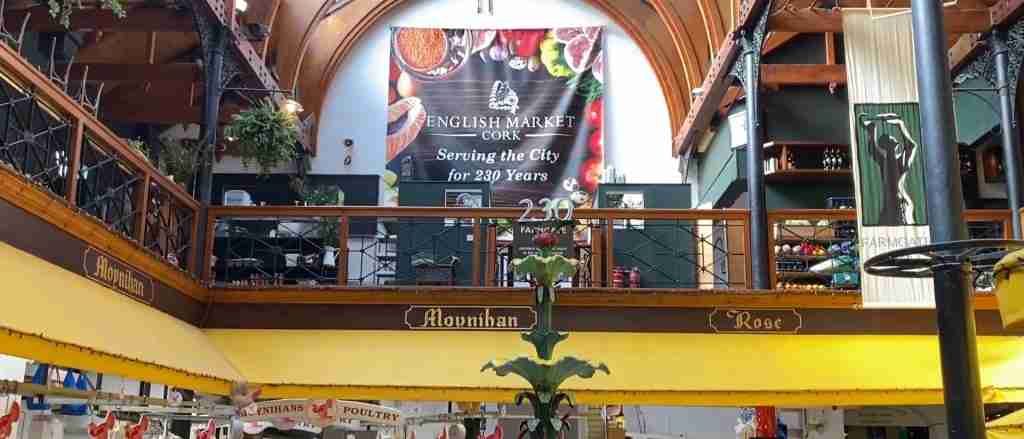
The English Market functions as Cork’s primary food source, tourist attraction, social gathering space, and living monument to Victorian commercial architecture, occupying an entire city block between Grand Parade and Princes Street with ornamental entrances designed by Sir John Benson in 1862. The name derives from the Protestant “English” corporation that controlled Cork until 1841, distinguishing this market from St. Peter’s “Irish Market” established later by the Catholic majority. The designation persists despite political changes, now referring to the building itself rather than any cultural affiliation.
The market’s current structure dates to mid-19th-century reconstruction that created covered walkways allowing all-weather shopping, cast-iron columns supporting glass-paneled roofs that flood interior spaces with natural light, decorative fountains providing visual focal points, and individual stall spaces leased to vendors by Cork City Council. The 1862 Princes Street entrance features limestone facades with arched doorways, clock tower, and carved details typical of Victorian civic architecture, while the Grand Parade entrance added in 1881 presents an equally elaborate pavilion design. These ornamental exteriors announce the market’s civic importance, transforming commercial space into architectural monument.
Disaster struck on June 19, 1980, when fire extensively damaged the market’s interior, destroying stalls and threatening the entire Victorian structure. Cork City Council commissioned architect T.F. McNamara to design restoration respecting historical character while meeting modern safety standards, work completed with such sensitivity that Europa Nostra awarded its Gold Medal for heritage conservation. A second fire in 1986 caused less damage but reinforced the building’s resilience. Today’s English Market seamlessly combines 19th-century architecture with contemporary function, operating as it did 140 years ago despite electrical systems, refrigeration, and safety measures invisible to casual visitors.
The market operates Monday through Saturday 8:00 AM to 6:00 PM, closing Sundays and bank holidays. Early morning sees wholesale deliveries and vendor setup, with serious shoppers arriving by 9:00 AM for first selection of fish landed overnight and vegetables picked that morning. Weekday mid-mornings offer the best balance of stock availability and manageable crowds, allowing conversation with vendors about sourcing and preparation methods. Saturday mornings attract largest crowds but also maximum vendor presence, with some stalls only fully stocked on weekends. Tourist peaks occur June through August and around Christmas when spiced beef production reaches maximum output.
The market divides into specialized sections though boundaries blur with adjacent stalls sometimes selling overlapping products. The fish aisle concentrates near the Grand Parade entrance, with multiple fishmongers displaying Atlantic catches on crushed ice: whole mackerel, hake, monkfish, John Dory, and Dublin Bay prawns alongside smoked fish and prepared seafood. K. O’Connell Fish Merchants has operated for generations, with current owners maintaining the family’s reputation for quality and fair pricing. Ballycotton seafood arrives daily from the coastal village 40 kilometers southeast, where small boats land catches sold within hours.
Butcher stalls occupy the market’s central corridor, showcasing meat from Cork and Kerry farms. Tom Durcan’s stall draws crowds for spiced beef prepared to award-winning recipes, with the curing process visible through hanging joints marked with preparation dates. Traditional butchery skills remain standard: whole animals broken down on-site, offal displayed alongside premium cuts, and custom preparation completed while customers wait. Multiple butchers sell organic, grass-fed beef from named farms, creating traceability before certification programs formalized the practice.
On the Pigs Back specializes in Irish farmhouse cheeses, pâtés, and artisan chutneys, functioning as both retailer and educational resource. Staff guide customers through West Cork’s cheese landscape, explaining how Durrus differs from Gubbeen, why Cashel Blue’s veining develops distinctly from French Roquefort, and which cheeses pair with Irish craft beers. Tastings occur freely, with the assumption that informed customers make better purchases and return for additional products. The stall stocks over 40 Irish artisan cheeses alongside European imports for comparison.
The Real Olive Company provides Mediterranean ingredients: olive varieties from Spain, Greece, and Italy; pestos made in-house; marinated vegetables; and specialty oils creating flavor profiles unavailable in Irish production. This stall represents the English Market’s evolution, adding international products that complement rather than replace traditional Irish offerings. The olive selection allows comparison between Mediterranean terroir and Irish ingredients, with staff explaining production methods and suggesting combinations.
Alternative Bread Company bakes sourdough using traditional fermentation, with multiple grain combinations producing crusty loaves sold still warm. Irish soda bread appears alongside European-style rye and whole wheat, representing Cork’s bread culture that ranges from traditional to contemporary. The bakery sources organic flour from Irish mills, maintaining traceability through ingredient sourcing.
Produce stalls sell vegetables from small farms within 50 kilometers, with seasonal variation determining availability. Spring brings purple sprouting broccoli and new potatoes; summer offers heritage tomatoes and salad greens; autumn provides pumpkins and root vegetables; winter features stored apples and cabbage. The absence of year-round availability for all vegetables seems inconvenient until recognizing that seasonality guarantees freshness and supports local growers. Vendors know farm sources personally, describing growing methods and suggesting preparation techniques.
Specialty stalls sell crubeens (pig trotters), tripe, drisheen, black pudding, and other traditional Cork products that disappeared from mainstream grocery stores but survive in the English Market through continued demand and cultural preservation efforts. These products occupy modest stall space yet represent irreplaceable culinary heritage, with vendors explaining preparation methods to younger Cork residents and curious visitors equally.
Farmgate Café operates from the market’s mezzanine level, accessible via stairs near the fish aisle. The café sources ingredients directly from market stalls below, creating menu transparency where diners watch vendors selling produce that appears on their plates hours later. Traditional Irish dishes dominate: lamb stew, fish pie, corned beef with cabbage, and tripe with drisheen, all prepared using techniques that respect ingredient quality. The café’s elevated position provides views across the entire market floor, with tables positioned along gallery windows for optimal people-watching. Breakfast service begins at 8:00 AM with Irish porridge, eggs from market vendors, and house-baked brown bread; lunch continues until market closing at 6:00 PM. Reservations advised for weekend lunches when locals and visitors compete for limited seating.
The English Market serves multiple functions beyond food retail. It operates as community gathering space where Cork residents maintain weekly shopping routines, greeting familiar vendors and exchanging news. It provides employment for families spanning generations, with children learning business practices while assisting parents during busy periods. It preserves Victorian architecture and commercial traditions that modernization eliminated elsewhere. It attracts tourists generating revenue while maintaining primary function as local food source rather than tourist attraction. This balance between heritage preservation and contemporary function makes the English Market exceptional: it remains a working market rather than a museum recreation, adapting to modern food safety requirements while maintaining character that defined it in 1862.
Traditional Cork Specialty Foods: Maritime Heritage on the Plate
Cork’s signature foods emerged from the city’s position as Ireland’s primary provision port between 1650 and 1850, when processed beef, pork, and butter constituted major exports feeding British colonies, naval fleets, and merchant ships worldwide. This industrial-scale meat processing generated enormous offal quantities that fueled working-class cuisine, while spice and sugar imports from return voyages created the ingredients for Cork’s distinctive cured beef preparation. These foods represent Cork’s unique culinary position, different from Dublin’s urban traditions and rural Irish farmhouse cooking.
Cork Spiced Beef: Christmas Tradition with Year-Round Appeal
Spiced beef occupies central position in Cork Christmas celebrations, appearing on every festive table alongside ham and turkey, sliced thin and served cold with mustard or brown bread. The preparation involves two weeks of curing followed by six hours of cooking, producing meat with deep mahogany color, aromatic spice coating, and tender texture from sugar-enhanced preservation and long, slow cooking. While associated with Christmas, butchers now cure spiced beef year-round for visitors and Cork emigrants returning home craving this distinctive taste.
The process begins with beef cuts—typically silverside, topside, or round—rubbed daily with dry cure containing brown sugar, salt, saltpeter, black pepper, allspice berries, juniper, and the butcher’s secret spice blend often including cinnamon, cloves, ginger, mace, and nutmeg. The sugar draws moisture while penetrating the meat with sweetness, the salt preserves and flavors, and the spices create aromatic complexity. After 12-14 days of daily rubbing and refrigeration, the beef develops a dark crust and firm texture indicating proper cure.
Cooking traditionally occurs through boiling in a large pot, though some cooks use Guinness or water with added aromatics. The long, slow cooking—typically 40 minutes per kilogram at gentle simmer—breaks down connective tissue without drying the meat, producing tenderness while allowing spices to permeate throughout. Modern cooks sometimes bake or braise the beef, but boiling remains traditional Cork method, practical when large pots sat continuously over open fires in 19th-century kitchens.
Tom Durcan at the English Market represents Cork’s spiced beef tradition at its finest, with multiple Blas na hEireann awards recognizing his preparation. Durcan sources beef from known Cork farms, cures to his proprietary spice blend developed over decades, and sells both uncooked joints for home preparation and fully cooked portions ready to eat. His stall attracts lines during November and December when Cork families order spiced beef weeks in advance, but maintains stock throughout the year for visitors discovering this specialty.
Historical context explains spiced beef’s Cork association. The city’s 17th-century position as Europe’s primary salt-beef exporter meant ships arrived from West Indies ports carrying sugar and spices as return cargo. Cork butchers accessed these ingredients more readily than anywhere else in Ireland, incorporating exotic aromatics into Christmas preparations. The tradition became so identified with Cork that emigrants from the city requested spiced beef shipments during holidays, and Irish-American butchers in Boston and New York developed their own versions serving Cork diaspora communities.
Contemporary spiced beef appears across Cork’s food scene: sliced thin at Farmgate Café, featured in English Market tastings, incorporated into modern dishes at innovative restaurants, and sold at farmers’ markets by artisan butchers. The preparation resists industrial production—the two-week curing process and individual spice application require time and skill unsuited to factory efficiency—ensuring spiced beef remains small-batch, artisan product even as demand increases.
Drisheen: Cork’s Unique Blood Pudding Tradition
Drisheen occupies a peculiar position in Irish cuisine: beloved in Cork, virtually unknown elsewhere in Ireland, and distinguished from British black pudding through preparation methods producing dramatically different texture and flavor. Made from the serum portion of sheep’s or beef blood rather than whole blood, drisheen appears pale gray when sliced, possesses soft, gelatinous texture, and offers mild, slightly mineral taste requiring traditional accompaniments for full appreciation.
The preparation begins with separating blood serum—the liquid portion remaining after blood cells settle—from whole blood through salting and straining. This serum mixes with cream, breadcrumbs, and seasonings before stuffing into casings and poaching at 80-85°C for 60-90 minutes. The gentle cooking sets the mixture into pudding consistency, softer and more delicate than firm black pudding. The use of serum rather than whole blood creates the distinctive pale color and smooth texture that defines drisheen’s character.
Traditional Cork service pairs drisheen with boiled tripe and white onion sauce, creating a dish that seems unusual to outsiders but represents comfort food for Cork natives. The tripe provides chewy texture contrasting with soft drisheen, while the mild onion sauce adds creaminess binding the components. This combination appears on Farmgate Café’s menu, prepared following the recipe Declan Ryan of Arbutus Lodge provided, maintaining tradition while introducing visitors to Cork’s offal cuisine.
Drisheen originated in Cork’s 19th-century slaughterhouse economy when workers received offal as partial payment. The blood pudding tradition existed throughout Europe—France’s boudin noir, Spain’s morcilla, Britain’s black pudding—but Cork’s version developed distinctly through use of serum rather than whole blood, likely influenced by the scale of beef processing that provided enormous blood quantities. Families preserved blood by salting to prevent coagulation, then prepared it into puddings stored for winter consumption.
The dish nearly disappeared during the mid-20th century as slaughterhouses closed and younger generations rejected offal cuisine. O’Reilly & Sons butchers in the English Market maintained continuous drisheen production since the early 1900s, supplying the small but dedicated customer base. Recent years have seen modest revival as chefs explore traditional Irish ingredients and food heritage gains cultural appreciation. Farmgate Café serves tripe and drisheen to dozens of customers weekly, many trying the dish for the first time at staff recommendation.
Drisheen’s survival represents broader preservation of Cork food heritage. While most Irish cities abandoned offal traditions, Cork maintained them through English Market vendors continuing family recipes and restaurants treating traditional dishes as valuable cuisine rather than historical curiosities. This preservation occurred without government intervention or organized heritage programs, instead emerging from Cork residents’ continued demand for foods they grew up eating and vendors’ commitment to maintaining their families’ craft.
Tripe, Crubeens, and Cork’s Offal Heritage
Tripe—the honeycomb-patterned lining of a cow’s stomach—appears throughout global cuisines but holds special significance in Cork where its preparation and serving traditions continue unchanged for centuries. Cork tripe undergoes thorough cleaning, bleaching for white appearance, then long, gentle cooking in milk with onions, bay leaf, and thyme until tender. The resulting dish offers subtle flavor, soft texture, and creamy sauce, appreciated more for comfort and tradition than bold taste.
Crubeens—pig trotters—represent Cork pub food par excellence, though less common now than mid-20th-century when every pub served them as evening snacks. The trotters undergo long braising until the meat turns tender and gelatinous, served whole for customers to eat with hands, pulling meat from bones and appreciating the rich, collagen-heavy texture. Traditional accompaniments include mustard, brown bread, and additional pints of stout. Some English Market butchers sell prepared crubeens, though most vendors focus on raw products for home preparation.
These offal products emerged from Cork’s provision trade economy. When slaughterhouses processed thousands of cattle weekly for export, the organs, feet, and stomach linings remained in Ireland while premium cuts shipped overseas. Working-class families received offal as payment or purchased it cheaply, developing preparation methods that transformed these products into valued dishes. The tradition persisted because Cork residents continued demanding these foods while butchers maintained knowledge of proper preparation, creating cultural continuity that survived economic changes.
Contemporary appreciation for nose-to-tail eating has renewed interest in Cork’s offal heritage. Chefs recognize that tripe and crubeens represent sustainable eating practices before sustainability became marketing term, utilizing entire animals rather than discarding valuable protein. This traditional Cork approach aligns with modern environmental awareness, though the original motivation was economic necessity rather than ecological consciousness.
Cork Restaurant Scene: From Michelin Stars to Market Cafés
Cork supports approximately 300 restaurants ranging from casual cafés to Michelin-starred fine dining, with concentration in the city center providing walking-distance access to diverse cuisines and price levels. The restaurant scene reflects Cork’s agricultural abundance and market culture, with chef-owned establishments maintaining direct relationships with English Market vendors, farmers’ market growers, and artisan producers. This proximity between ingredient source and restaurant kitchen creates supply chains measured in meters rather than kilometers, enabling same-day harvest-to-table service that defines Cork’s culinary advantage.
Fine Dining Excellence: Michelin Recognition and Award-Winning Restaurants
Ichigo Ichie brought Michelin-star recognition to Cork in 2019 when chef Takashi Miyazaki earned the prestigious award for his kaiseki-style Japanese restaurant occupying a five-seat counter where diners watched every preparation step. The omakase menu changed every six weeks, combining traditional Japanese techniques with Irish ingredients—particularly seafood from Cork’s Atlantic coast—creating dishes that respected both cultural traditions. Miyazaki’s approach involved direct relationships with fishermen and foragers, sourcing ingredients unavailable through conventional supply chains.
In 2024, Ichigo Ichie transformed from exclusive counter dining to Ichigo Ichie Bistro and Natural Wine, a more accessible format maintaining high quality while serving larger numbers. The bistro menu features small plates, donburi rice bowls, and teuchi soba (handmade buckwheat noodles), Cork’s first such offering. Dishes showcase seasonal Irish produce prepared using Japanese techniques: scallops with ume plum and wakame, Hereford beef with yuzu, duck ramen with dashi broth. The natural wine selection includes European organic and biodynamic bottles chosen to complement Japanese flavors. While more casual than the original kaiseki format, the bistro maintains ingredient quality and technical precision that earned Michelin recognition.
Paradiso established Cork’s reputation for vegetarian excellence when Denis Cotter opened the restaurant in 1993, pioneering elevated vegetable cuisine in Ireland decades before plant-based dining became mainstream. The menu evolves constantly based on seasonal availability, with vegetables treated as central ingredients deserving the same attention traditionally reserved for meat and fish. Techniques include grilling, roasting, fermenting, and layering flavors to create complexity rivaling any protein-centered dish. Cashel Blue cheese features in multiple preparations, roasted beetroot receives sophisticated treatment with herbs and nuts, and every dish demonstrates that vegetarian cooking offers unlimited creative possibility when chefs prioritize ingredient quality.
Paradiso sources from organic growers, English Market vendors, and foragers supplying wild ingredients. The restaurant’s success validated vegetarian dining as serious cuisine rather than dietary restriction, influencing a generation of Irish chefs to reconsider vegetables’ role in menu planning. Paradiso earned Best Restaurant in Ireland awards from multiple publications and trained chefs who spread Cotter’s ingredient-focused philosophy throughout Cork and beyond.
Jacobs on the Mall has operated since 1999 in Cork’s former Turkish baths, offering modern European cuisine with local sourcing emphasis. The 130-seat restaurant maintains relationships with English Market vendors, Ballycotton seafood suppliers, and Con’s Vegetables, creating menu transparency where dish descriptions specify ingredient origins. Jacobs earned Michelin Bib Gourmand recognition for quality-price ratio, with early dinner menus providing fine dining experience at accessible prices. The restaurant operates Monday through Saturday for dinner, with Thursday and Friday lunch service.
Seafood Specialists: Atlantic Catch to Cork Plates
Goldie represents Cork’s contemporary approach to seafood, serving overlooked species alongside familiar favorites in preparations showcasing fish quality through minimal intervention. Executive chef Stephen Kehoe’s menu features red mullet with escabeche, gurnard with spiced broth, and hake tail schnitzel—cuts and species often discarded by commercial fishing operations. This approach reduces waste while offering customers unfamiliar textures and flavors at prices below premium species. The restaurant maintains connections with day boats landing catches at Ballycotton and Union Hall, selecting fish based on daily availability rather than fixed menu requirements.
Quinlans Seafood Bar operates as both fishmonger and restaurant, with retail counter displaying the same fish served in the dining room. This dual function creates complete transparency: customers see exactly what they’ll eat, observing freshness and quality firsthand. The menu focuses on simple preparations—grilled whole fish, seafood platters, fish and chips using premium species—allowing ingredient quality to determine dish success. Quinlans sources from Cork coast fishing villages, with some catches arriving directly from boats to restaurant within hours.
Traditional Irish Cuisine: Farmgate Café and Heritage Cooking
Farmgate Café occupies the English Market’s mezzanine level, sourcing ingredients from stalls below and creating menus celebrating Cork’s culinary traditions. The restaurant opened over 25 years ago with explicit mission to preserve traditional dishes disappearing from Cork tables: lamb stew using neck and shoulder cuts, fish pie with local catch, tripe and drisheen prepared to Declan Ryan’s Arbutus Lodge recipe, corned beef with cabbage, and lamb’s liver with onions. These dishes represent home cooking elevated through professional technique and ingredient quality, prepared as Cork grandmothers would have made them with access to English Market’s best products.
The café operates breakfast through dinner Monday through Saturday, with weekend reservations essential due to limited seating. Early morning brings Irish porridge, eggs from market vendors, house-baked brown bread, and traditional breakfast items. Lunch service attracts largest crowds, with fish chowder—thick with chunks of hake, monkfish, and salmon in cream broth—consistently praised as Cork’s best. Daily specials reflect market availability: if exceptional pork arrives at butcher stalls below, pork appears on Farmgate’s menu that afternoon.
The café’s physical connection to the English Market creates unusual dining experience. Tables along the gallery railing provide views across the entire market floor, allowing diners to watch vendors they purchased from hours earlier. This transparency extends to ingredients: when tripe and drisheen arrives on the plate, customers know it came from O’Reilly’s stall twenty meters below. The building’s lack of climate control means winter dining requires warm clothing while summer becomes uncomfortably hot, but this authenticity—the market operates as working commercial space rather than sanitized tourist attraction—constitutes part of the experience.
International Cuisine: Japanese, Italian, and Mediterranean Influences
Cork’s restaurant scene extends beyond Irish and seafood traditions to international cuisines adapted to local ingredients. Miyazaki, Takashi Miyazaki’s second Cork restaurant, offers Japanese dining in more casual format than Ichigo Ichie, with ramen, tempura, and donburi featuring Irish beef, pork, and vegetables prepared using traditional Japanese techniques. The restaurant demonstrates how Cork’s ingredient quality suits diverse culinary approaches, with grass-fed beef producing excellent sukiyaki and local vegetables adapting well to Japanese pickling methods.
Multiple Italian restaurants operate throughout Cork, sourcing from English Market vendors while importing specialty items unavailable in Ireland. The cuisine adapts to ingredient availability: Irish lamb replaces imported Italian varieties in ragu, Cork butter substitutes for Parmigiano-Reggiano in risotto finishing, and local tomatoes when in season produce sauces competitive with San Marzano varieties. This adaptation represents Cork’s approach to international cuisine—respect source culture’s techniques and philosophy while applying them to Ireland’s seasonal products.
Mediterranean and Middle Eastern influences appear in restaurants featuring olive oils, spices, and preparation methods from Greece, Spain, and North Africa. These establishments source Irish proteins and vegetables, applying Mediterranean techniques that enhance rather than mask ingredient quality. The approach mirrors English Market’s Real Olive Company strategy: introduce international flavors that complement Cork’s agricultural products, creating fusion that respects both traditions.
Casual Dining and Pub Food
Cork’s pub scene serves food ranging from basic bar snacks to restaurant-quality meals, with traditional establishments maintaining Irish menu standards while contemporary venues offer international influences. Traditional pub food includes Irish stew, shepherd’s pie, fish and chips, and various sandwiches using English Market meats. Some pubs maintain relationships with specific butchers, advertising which English Market vendor supplies their beef or pork, creating traceability similar to fine dining establishments.
The Market Lane on Oliver Plunkett Street represents Cork’s gastropub approach, combining relaxed pub atmosphere with elevated food quality. The menu features burgers using Irish beef, fish specials from Ballycotton, and seasonal vegetables from small farms, all prepared with techniques borrowed from fine dining while maintaining casual service and pricing. This middle ground between traditional pub and formal restaurant attracts locals seeking quality without occasion requirements.
Elbow Lane Brew and Smokehouse combines craft brewery with barbecue restaurant, smoking Irish meats using American techniques while serving house-brewed beers. The establishment demonstrates Cork’s willingness to import culinary ideas while maintaining local ingredient sourcing, creating hybrid cuisine that respects both traditions.
Cork’s Artisan Food Producers and Farmhouse Cheese Tradition
West Cork’s concentration of artisan cheese makers, organic growers, and specialty food producers creates ingredient diversity supporting Cork’s restaurant scene and providing distinctive products unavailable elsewhere in Ireland. The region’s mild, humid climate, pasture-based dairy farming, and small-scale agricultural economy enable production methods unsuited to industrial efficiency but producing exceptional quality.
Farmhouse Cheese: West Cork’s Dairy Excellence
West Cork produces over 40 artisan cheeses, each reflecting specific farm terroir, milk source (cow, goat, sheep), and maker’s technique. These cheeses appear on Cork restaurant menus, English Market cheese stalls, and specialty shops, representing Ireland’s cheese renaissance that began in the 1970s when farmhouse production resumed after decades of industrial dominance.
Durrus, made by Jeffa Gill near Bantry since 1979, established West Cork’s farmhouse cheese reputation. The semi-soft washed-rind cheese uses raw milk from the farm’s cows, developing complex flavors through aging in special ripening rooms where Jeffa maintains precise temperature and humidity. Each wheel receives individual attention during the six-week maturation, with washing in brine developing the characteristic orange rind and pungent aroma. The interior paste ranges from firm when young to nearly liquid at full maturity, with flavors evolving from mild and nutty to intensely savory.
Gubbeen, produced by the Ferguson family near Schull, represents another West Cork cheese pioneering farmhouse production. The washed-rind cheese uses milk from the farm’s pasture-fed cows, developing pink-orange rind through washing in fermented whey and bacteria cultures. The Fergusons also produce Gubbeen butter and cured meats, creating complete farm-to-table operation where every product reflects their land’s specific characteristics.
Cashel Blue, from County Tipperary rather than Cork but widely sold in the city, established Ireland’s blue cheese tradition. Jane and Louis Grubb began production in 1984, developing techniques for consistent blue veining using Penicillium roqueforti cultures introduced through hollow needles. The cheese’s creamy texture, milder flavor than French Roquefort, and versatility in cooking made it Cork restaurant staple, appearing in salads, sauces, and cheese courses.
Desmond cheese from Schull represents Irish Gruyère-style production, using traditional Alpine techniques adapted to Irish conditions. The hard cheese undergoes extended aging developing crystalline texture and complex nutty flavors, suitable for grating, melting, or eating in chunks. Production involves heating milk to specific temperatures, cutting curd precisely, pressing wheels under exact weight, and aging in controlled conditions for 12-18 months—techniques requiring dedication unsuited to industrial scale.
Ardrahan from Kanturk offers semi-soft washed-rind character with distinctive yellow-brown rind and powerful aroma. The Burns family produces the cheese using their farm’s milk, washing wheels in salty brine that develops surface bacteria contributing complex flavors. The interior paste ranges from semi-firm to creamy depending on age, with taste progressing from mild when young to intensely savory at full maturity.
These cheeses reach Cork consumers through English Market stalls like On the Pigs Back, specialty cheese shops, farmers’ markets, and direct farm sales. The availability allows Cork residents daily access to farmhouse products that would constitute luxury items in most cities, normalizing artisan cheese consumption and creating market supporting continued small-scale production.
Artisan Producers: Butter, Preserves, and Specialty Foods
Beyond cheese, West Cork produces artisan butter, preserves, cured meats, and specialty foods sold throughout Cork. These products reflect the same small-scale, quality-focused approach characterizing farmhouse cheese production, with makers prioritizing flavor and traditional methods over production efficiency.
Cork’s butter tradition extends to Kerrygold and other national brands, but artisan producers create distinctive products using cream from specific dairy farms. Small-batch churning, lower moisture content, and higher butterfat percentage produce butter with deeper flavor and better cooking properties than industrial equivalents. Some English Market vendors sell farm butter directly from producers, maintaining freshness impossible in conventional distribution chains.
Preserves, chutneys, and condiments from West Cork producers appear on English Market shelves and restaurant tables. These products utilize seasonal fruit and vegetables preserved at peak ripeness, creating flavor concentrations that complement Irish meats and cheeses. Traditional recipes for apple chutney, rhubarb jam, and tomato relish continue alongside modern creations incorporating international influences.
Cured meats represent growing sector of Cork artisan production, with makers applying Italian, Spanish, and French techniques to Irish pork. Gubbeen produces chorizo and salami using their farm’s pork, while Frank Hederman’s smoked salmon from Belvelly represents Ireland’s premium smoked fish. These products compete with European imports through quality rather than price, finding customers valuing traceability and local production.
Cork Food Neighborhoods and Dining Districts
Cork’s compact city center concentrates restaurants within walking distance, but certain streets and districts offer higher dining density, creating food neighborhoods where multiple meal options exist within single blocks. Understanding these concentrations helps visitors maximize limited time while experiencing Cork’s culinary diversity.
Oliver Plunkett Street: Cork’s Restaurant Row
Oliver Plunkett Street functions as Cork’s primary dining corridor, with restaurants occupying nearly every ground-floor space along the pedestrianized section. The street’s central location between Grand Parade and MacCurtain Street creates natural foot traffic, while the mix of cuisine types—Irish, Japanese, Italian, Indian, Middle Eastern—provides options suiting diverse preferences and budgets.
The concentration allows restaurant-hopping for drinks and small plates rather than committing to single establishments, with casual service styles facilitating movement between venues. The street’s pedestrianization eliminates vehicle traffic, creating outdoor seating atmosphere during warmer months when tables extend onto sidewalks. Weekend evenings attract largest crowds when locals and visitors compete for tables, making weekday dining or early dinner service advisable for avoiding waits.
English Market Vicinity: Traditional Irish and Market-Sourced Dining
The blocks surrounding the English Market house restaurants emphasizing traditional Irish cuisine and market-sourced ingredients, creating natural synergy between vendors and dining establishments. Farmgate Café inside the market represents the most direct connection, but other nearby restaurants maintain English Market relationships, displaying vendor names in menu descriptions and ingredient sourcing information.
This neighborhood attracts daytime diners—breakfast and lunch constitute peak times—with evening service less common than entertainment districts. The proximity to the market creates ingredient freshness advantages impossible for restaurants located farther from supply sources, enabling same-day fish service and produce picked that morning. Visitors serious about experiencing Cork’s food culture should plan at least one meal in this area, ideally after exploring the market and understanding ingredient sourcing.
McCurtain Street: Casual International Dining
McCurtain Street offers Cork’s highest concentration of international restaurants, with Indian, Thai, Chinese, Italian, and Middle Eastern establishments operating alongside Irish pubs serving traditional food. The street’s lower rents compared to Oliver Plunkett Street enable smaller operations and ethnic restaurants serving immigrant communities before attracting broader Cork patronage.
The casual atmosphere and moderate prices make McCurtain Street popular for family dining and group meals where diverse preferences require varied cuisine options. Several establishments offer takeaway service, creating options for self-catering accommodation dining. The street’s character differs from central Cork’s polished restaurant scene—more working-class, less tourist-oriented, authentic to Cork residents’ actual dining habits rather than visitor expectations.
Marina and Blackrock: Waterfront Dining
The Marina and Blackrock areas southeast of city center offer waterfront dining overlooking the River Lee, with restaurants emphasizing seafood and upscale casual atmosphere. The locations require car or taxi access from central Cork, creating destination dining rather than casual walk-up service, but the waterfront setting and parking availability attract Cork residents seeking special occasion meals without city center’s density.
Several establishments maintain direct relationships with fishing boats landing catches at nearby Crosshaven and Ballycotton, enabling same-day fish service with complete traceability. The seafood focus reflects the maritime location, with restaurant windows providing views of the river while diners consume fish caught in these same waters hours earlier.
Cork Farmers’ Markets and Seasonal Food Culture
Beyond the English Market’s permanent operation, Cork hosts weekly farmers’ markets where growers, bakers, cheese makers, and prepared food vendors sell directly to customers. These markets operate year-round regardless of weather, creating regular gathering spaces that combine food shopping with social interaction and community building.
Cornmarket Street Saturday Market: Cork’s Premier Weekly Food Market
The Cornmarket Street Saturday market operates every weekend morning in Cork city center, attracting organic growers, artisan bakers, farmhouse cheese makers, craft beverage producers, and prepared food vendors. The market fills an entire pedestrianized street with stall canopies, creating covered shopping area protecting customers and vendors from Cork’s frequent rain while maintaining outdoor market atmosphere.
Vegetable vendors sell produce picked the previous day or that morning, with availability strictly seasonal: no tomatoes in January, no root vegetables in June, accepting that genuine local sourcing means limited selection outside growing season. This seasonality seems restrictive to customers accustomed to year-round supermarket access but guarantees freshness and supports small farms unable to compete on price with industrial agriculture. Growers describe farming methods, suggest preparation techniques, and develop relationships with regular customers who plan weekly menus around market availability.
Bread vendors offer sourdough, rye, whole wheat, and specialty loaves baked that morning, still warm when sold. The sourdough culture movement thrives in Cork’s farmers’ markets, with multiple bakers competing through flour sourcing, fermentation techniques, and creative flavor combinations. The breads cost more than supermarket equivalents but offer incomparable flavor and texture, justifying prices through quality rather than convenience.
Cheese makers sell farmhouse products directly, allowing customers to taste before purchasing and ask specific questions about production methods, aging periods, and serving suggestions. This direct connection between maker and consumer creates transparency impossible in conventional retail, where cheese passes through multiple distribution layers before reaching shelves. The tastings encourage experimentation with unfamiliar cheeses, expanding customers’ palates beyond familiar varieties.
Prepared food stalls serve breakfast and lunch items using market ingredients: vegetable frittatas, seafood chowder, ethnic specialties reflecting Cork’s immigrant communities, pastries, and coffee. These stalls transform the market into dining destination, with customers purchasing complete meals while shopping for ingredients. The prepared food quality rivals Cork restaurants, with vendors maintaining high standards to justify market attendance rather than commercial kitchen operation.
Douglas Village and Mahon Point: Suburban Markets
Suburban farmers’ markets operate in Douglas Village on Thursdays and Mahon Point on Saturdays, serving residential areas outside Cork city center. These markets offer similar vendor types as Cornmarket Street but smaller scale, with fewer stalls and more emphasis on convenient shopping for local residents rather than food enthusiast destination shopping.
The suburban locations provide parking access unavailable at city center markets, attracting customers purchasing larger quantities unsuited to pedestrian transport. Families buy week’s worth of vegetables, multiple bread loaves, and bulk cheese, using markets as primary food source rather than supplemental specialty shopping. This integration into regular shopping routines—as opposed to weekend excursions to city center—demonstrates markets’ practical function beyond tourist attraction or lifestyle choice.
Seasonal Variations and Year-Round Operation
Cork farmers’ markets operate year-round, with vendor participation and product availability varying by season. Summer brings maximum vendor presence with vegetable abundance, berry season, and outdoor dining weather creating festive atmosphere. Winter reduces vendor numbers but concentrates serious growers committed to year-round production using greenhouse growing, cold frames, and storage crops. The winter market’s smaller scale creates different experience—more intimate, less crowded, focused on core products rather than diverse selection.
Seasonal variation teaches customers about agricultural reality. The November market sells root vegetables, brassicas, stored apples, and preserved products but no fresh tomatoes or berries. Accepting this limitation—or paying premium prices for greenhouse production—creates awareness that food availability requires energy and resources, whether through local growing or long-distance transport. Cork farmers’ market customers develop seasonal eating patterns aligned with local growing cycles, planning menus around availability rather than demanding year-round access to all products.
Cork Food Tours and Culinary Experiences
Organized food tours provide structured introduction to Cork’s culinary landscape, combining English Market visits, restaurant tastings, and background about food traditions. These tours suit visitors with limited time seeking expert guidance rather than independent exploration, condensing multi-day market and restaurant discovery into three-hour guided experiences.
English Market Food Tours
Several companies operate English Market tours combining historical background with vendor visits and food tastings. Guides explain the market’s Victorian architecture, 1980 fire and restoration, family businesses operating for generations, and Cork specialty foods’ origins in maritime trade. Tours include stops at specific vendors with predetermined tastings: spiced beef from Tom Durcan, farmhouse cheese from On the Pigs Back, fresh fish examination at K. O’Connell’s, and often breakfast or lunch at Farmgate Café.
The guided format provides context independent visitors might miss, with explanations of drisheen preparation, spiced beef curing process, and seasonal vegetable availability creating educational component beyond simple tasting. Vendors appreciate regular tour business, preparing samples and sharing knowledge with guides who return weekly. The tours operate morning through early afternoon, avoiding weekend crowds that complicate group movement through market aisles.
Cork City Food Walking Tours
Broader Cork city food tours extend beyond the English Market to include restaurant visits, specialty shops, breweries, and historical sites related to food production. These three to four-hour walks cover two to three kilometers, combining walking with frequent stops for tastings. The route varies by operator but typically includes English Market segment, visits to artisan chocolate shops or cheese specialists, pub stops for craft beer or whiskey, and meal at traditional Irish restaurant.
The walking format creates natural pacing, with movement between stops providing digestion time before next tasting. Guides share Cork food history, explaining how the city’s provision trade created specific culinary traditions and how contemporary chefs balance tradition with innovation. The tours attract food enthusiasts seeking comprehensive introduction to Cork’s scene rather than focusing on single aspect like markets or fine dining.
Cooking Classes Using Market Ingredients
Several Cork cooking schools offer classes beginning with English Market shopping followed by instruction in preparing purchased ingredients. The format teaches both ingredient selection and preparation techniques, with emphasis on seasonal availability, quality indicators, and vendor relationships. Classes cover topics like Irish traditional cooking, seafood preparation, bread baking using Irish flour, and modern Irish cuisine adapting traditional recipes.
The shopping component demystifies ingredient sourcing, showing participants how to identify fresh fish, select appropriate beef cuts for different preparations, and navigate vendor selection. The hands-on cooking provides practical skills immediately applicable to home kitchens, whether in Ireland or abroad, with recipes scaled for domestic equipment rather than restaurant facilities. Classes typically run three to four hours, producing complete meal participants consume at conclusion while discussing techniques and ingredient sources.
Artisan Producer Visits and Farm Tours
West Cork artisan producers increasingly offer farm visits and production demonstrations, allowing consumers to see farmhouse cheese making, butter churning, or vegetable growing firsthand. These visits range from informal farm gate sales with brief farm tours to organized educational experiences including tastings, production demonstrations, and meals using farm products.
Gubbeen farm near Schull offers scheduled visits showing cheese production, cured meat preparation, and farm operations, with tastings of multiple products and lunch incorporating farm ingredients. Durrus farm provides cheese-making demonstrations by appointment, explaining raw milk handling, curd cutting, pressing, and aging room management. These experiences appeal to serious food enthusiasts seeking production knowledge beyond consumer-level understanding, creating appreciation for skill and dedication required for artisan food production.
Cork Food Festivals and Annual Events
Cork’s food culture extends beyond daily market shopping and restaurant dining to annual festivals celebrating specific products, producers, and culinary traditions. These events concentrate Cork’s food scene into multi-day gatherings, providing visitors during festival periods access to experiences unavailable at other times.
Cork on a Fork Festival
Cork on a Fork operates as Cork’s primary food festival, running for five days each August with events throughout the city and county. The festival includes pop-up dining experiences with chefs creating special menus for single nights, cooking demonstrations and workshops teaching specific techniques, guided tastings of Irish cheese, craft beer, and whiskey, food producer markets assembling artisan makers from across Cork and Ireland, and food trails encouraging exploration of multiple restaurants and cafés.
The festival attracts food enthusiasts from throughout Ireland and internationally, creating concentrated period when Cork’s food scene operates at maximum visibility. Restaurants develop special menus highlighting Cork products, English Market vendors offer demonstrations and tastings, and food producers who normally sell wholesale make retail appearances. The event requires advance planning with popular workshops and dinners selling out weeks before the festival, but also provides spontaneous opportunities for walk-up participation in markets and demonstrations.
English Market Special Events
The English Market hosts periodic special events including producer meet-and-greet sessions where artisan cheese makers, bakers, or meat curers demonstrate techniques and discuss their products; seasonal celebrations around Christmas featuring expanded spiced beef displays and traditional food preparations; and educational series teaching market navigation, ingredient selection, and cooking techniques using purchased products.
These events leverage the market’s infrastructure and vendor participation, creating programming that enhances rather than interrupts regular market operations. The educational component serves both Cork residents seeking to improve cooking skills and visitors wanting deeper engagement than simple market shopping provides.
Practical Information for Experiencing Cork’s Food Scene
Maximizing Cork food experiences requires understanding operational details, seasonal patterns, and local customs that differ from tourist-oriented destinations. Cork’s food culture exists primarily for local residents rather than visitors, creating authentic experiences but also requiring adaptation to local rhythms.
Best Times for Market Shopping
The English Market operates Monday through Saturday 8:00 AM to 6:00 PM, with optimal visiting times varying by purpose. Early morning 8:00-9:00 AM sees wholesale activity and vendor setup but limited customer service as stallholders arrange displays. Mid-morning 9:00-11:00 AM provides best balance of fresh stock, manageable crowds, and vendor availability for conversation. Weekday afternoons offer quiet browsing but reduced energy compared to morning activity. Saturday mornings attract largest crowds with maximum vendor participation but create difficult conditions for photography or extended conversations. The market closes Sundays and bank holidays, requiring planning around these closures.
Cornmarket Street Saturday farmers’ market operates 9:00 AM to 2:00 PM, with peak crowds between 10:00 AM and noon. Early arrival provides first selection of limited-quantity items like specific bread varieties or prepared foods, while late shopping near 2:00 PM sometimes yields discounted produce vendors prefer selling rather than transporting back to farms.
Restaurant Reservations and Walk-In Strategies
Cork restaurants range from reservation-essential fine dining to casual walk-in establishments, with varying policies requiring advance planning. Ichigo Ichie, Paradiso, and Jacobs on the Mall require reservations days to weeks in advance for weekend dinner service, with weekday evenings offering better availability. Farmgate Café accepts limited reservations, operating primarily first-come-first-served with waits common during weekend lunch service. Casual restaurants and pubs generally accommodate walk-ins though weekend dinner peaks create delays.
The reservation culture serves Cork residents planning weekend dining rather than tourist convenience, creating challenges for visitors making spontaneous decisions. Booking major restaurant reservations before arriving in Cork, even for trips months away, ensures access to premier establishments. Walk-in strategies include early dinner service before 6:30 PM when tables remain available, weekday dining when demand decreases, and flexibility to try second or third choices if preferred restaurants fully booked.
Tipping Practices and Payment Methods
Irish tipping customs differ from American standards, with 10-15% considered generous for good service rather than expected minimum. Many Cork restaurants add optional service charge to bills, indicated on menus and check presentation, with customers free to remove or adjust based on service quality. Card payment dominates Cork dining, though small market vendors and farmers’ market stalls sometimes operate cash-only, requiring ATM access before market visits.
Dietary Restrictions and Special Requests
Cork restaurants generally accommodate vegetarian, vegan, and gluten-free requirements with advance notice, though options vary by establishment type. Paradiso specializes in vegetarian cuisine with vegan adaptations available, while traditional Irish restaurants offer limited vegetarian selections beyond vegetables and cheese. Seafood allergy accommodation presents challenges given Cork’s fish-focused cuisine, requiring clear communication with servers about cross-contamination risks. Celiac requirements receive increasing attention, with some restaurants maintaining separate gluten-free preparation areas and offering dedicated menu sections, though traditional establishments may lack understanding of contamination prevention.
Seasonal Considerations and Weather Impact
Cork’s maritime climate creates year-round rainfall possibility, with waterproof jackets essential regardless of season. The English Market’s covered design protects from weather, but farmers’ markets operate outdoors with canopy protection creating damp shopping conditions during rain. Restaurant outdoor seating depends on weather cooperation, with April through September providing best odds for pleasant dining though never guaranteed. Winter months reduce tourist numbers, creating restaurant availability advantages and authentic local atmosphere but limiting some seasonal ingredients and farmers’ market vendor participation.
Frequently Asked Questions About Cork Food and Dining
Is the English Market Worth Visiting for Non-Shoppers?
The English Market rewards visitors whether purchasing food or simply exploring the Victorian architecture, observing vendor-customer interactions, and experiencing Cork’s living food culture. Non-shoppers should visit mid-morning weekdays when crowds allow leisurely observation without blocking purchasing customers, allocate 45-60 minutes for thorough exploration, and consider Farmgate Café lunch providing market experience without requiring ingredient shopping. The market functions as cultural attraction beyond shopping destination, with architectural significance, social gathering role, and food heritage preservation justifying visits for observation rather than purchasing. Photography enthusiasts appreciate the natural light filtering through glass roof panels, vendors arranging displays creating still-life compositions, and Victorian details providing historical context.
Can You Experience Cork Food Culture on a Limited Budget?
Cork food experiences range from expensive fine dining to affordable market shopping, with budget-conscious visitors accessing quality through strategic choices. English Market allows purchase of individual items—single pastry, cheese wedge, prepared sandwich—rather than requiring large expenditures. Farmers’ markets sell organic vegetables at prices competitive with supermarkets when comparing equivalent quality rather than standard vs. organic. Farmgate Café offers reasonably priced traditional Irish dishes using premium ingredients, with lunch mains costing less than casual restaurants while providing superior food quality. Cork pubs serve substantial meals at moderate prices, with traditional dishes like Irish stew or fish and chips representing good value. Budget strategy involves mixing self-catering using market ingredients with selective restaurant meals, prioritizing lunch service when prices run lower than dinner, and choosing casual establishments over fine dining while maintaining ingredient quality focus.
What Cork Foods Make Good Gifts or Travel-Friendly Purchases?
Cork specialty foods suitable for gifts or travel include farmhouse cheeses vacuum-sealed for transport, with hard varieties like Desmond traveling better than soft washed-rind types; spiced beef prepared uncooked as shelf-stable product requiring refrigeration only after cooking; artisan butter from small producers, though requiring cold storage; preserves, chutneys, and condiments in sealed jars traveling easily and representing Cork food culture; Irish craft chocolate from specialty makers; and packaged baked goods like soda bread mix or crackers. English Market vendors can recommend travel-appropriate products and arrange vacuum sealing for cheese. European Union customs regulations permit most food products traveling within EU, while restrictions apply to meat and dairy products entering United States and other non-EU countries, requiring research before purchasing perishable items for international travel. Many Cork food producers maintain online shops shipping internationally, allowing post-trip purchases of items discovered during visit but impractical for luggage transport.
How Do Cork Restaurants Compare to Dublin’s Dining Scene?
Cork and Dublin offer different dining experiences reflecting each city’s character, size, and food culture. Cork emphasizes ingredient sourcing and producer relationships, with restaurants maintaining direct connections to farmers, fishermen, and artisan makers creating supply chains measured in kilometers rather than conventional distribution systems. Dublin provides greater international cuisine diversity and higher concentration of Michelin-starred restaurants reflecting capital city’s size and wealth, but often sources ingredients through traditional wholesale channels rather than direct producer relationships. Cork’s smaller size enables chef-owner model where proprietors personally select market ingredients and maintain generational vendor relationships impossible in Dublin’s larger scale. Cork’s English Market provides ingredient access and market culture integration absent in Dublin, creating different restaurant-market dynamic. Price levels run lower in Cork for equivalent quality, with Cork’s lower overhead costs and less tourism-dependent economy creating value advantages. The choice between cities depends on priorities: international diversity and metropolitan dining scene favors Dublin, while ingredient quality focus and market culture integration favors Cork.
What Should Visitors Know About Cork Specialty Foods Before Trying Them?
Cork specialty foods—particularly drisheen, tripe, and crubeens—developed from economic necessity in 19th-century slaughterhouse economy, representing offal utilization rather than delicacies created for flavor appeal. Approaching these foods requires understanding historical context and accepting that textures and flavors differ significantly from contemporary mainstream cuisine. Drisheen offers mild, slightly mineral taste with soft texture requiring traditional accompaniments (tripe and onion sauce) for complete dish rather than standalone consumption. Tripe provides chewy texture and subtle flavor appreciated more for comfort and tradition than bold taste, with proper preparation requiring hours of cooking to achieve tenderness. Spiced beef presents more accessible introduction to Cork specialties, with familiar cured meat format and aromatic spice flavors creating appeal beyond historical interest. First-time triers should order these dishes at Farmgate Café where traditional preparation respects historical recipes while professional cooking produces optimal results, ask servers for eating suggestions and traditional accompaniments, and approach with cultural curiosity rather than expecting immediate flavor revelation. Cork residents value these foods for connection to city’s history and family memories rather than purely gastronomic merit, creating appreciation beyond taste alone.
Are Cork Food Tours Worth the Cost?
Cork food tours provide value through expert guidance, pre-arranged vendor access, historical context, and efficient time use, particularly for visitors unfamiliar with Irish food culture or limited by short Cork stays. Tours eliminate research burden by selecting vendors representing Cork’s best offerings, provide historical and cultural context explaining why specific foods matter to Cork identity, create vendor interactions that might not occur during independent market browsing as guides introduce participants to stallholders they know personally, and condense multi-day exploration into three to four-hour experiences covering highlights. Independent exploration costs less but requires advance research, willingness to make uninformed purchasing decisions, and time for trial-and-error vendor selection. The cost difference—typically €60-90 per person for tours versus €20-30 for equivalent food purchases independently—represents payment for expertise and convenience rather than food alone. Visitors with food knowledge, research skills, and multiple Cork days derive less value from tours than those seeking efficient introduction to unfamiliar food culture. Reading this guide before deciding provides foundation for independent exploration while identifying specific vendors and dishes tours typically visit, enabling informed choice between guided and self-directed experiences.
What Cork Dining Experiences Are Unique to the City?
Several Cork dining experiences exist nowhere else in Ireland, creating opportunities unavailable in Dublin or other Irish cities. Farmgate Café’s English Market location allows dining while overlooking the market floor where ingredients originated hours earlier, creating transparency impossible in conventional restaurants. Traditional Cork dishes—tripe and drisheen, spiced beef—appear on Cork restaurant menus but rarely elsewhere in Ireland, representing regional specialties rather than national cuisine. The concentration of West Cork artisan cheese makers creates cheese selection unavailable in other Irish cities, with Cork restaurants and shops stocking 40+ Irish farmhouse varieties. Cork’s Michelin-starred Japanese restaurant applies traditional kaiseki techniques to Irish ingredients, creating fusion unique to the city’s combination of Atlantic seafood abundance and international culinary talent. The density of restaurants within walking distance of English Market vendors creates same-day ingredient sourcing impossible in cities lacking comparable market infrastructure. These experiences distinguish Cork from other Irish dining destinations, justifying food-focused visits beyond general Ireland tourism.
How Has Cork’s Food Scene Changed in Recent Decades?
Cork’s transformation from traditional food city to Ireland’s recognized culinary capital occurred gradually over 40 years, beginning with Myrtle Allen’s Ballymaloe House in the 1960s establishing farm-to-table principles, accelerating with 1980s English Market restoration preserving Victorian market culture, and solidifying with 1990s-2000s artisan food movement producing farmhouse cheeses, organic vegetables, and craft beverages. The changes involved generational shifts as younger chefs trained internationally returned to Cork applying modern techniques to traditional Irish ingredients, economic development enabling Cork residents to support premium restaurants and artisan products, and cultural evolution recognizing food quality and sourcing as values worth pursuing and paying for. The English Market maintained continuous operation throughout this evolution, with family businesses adapting to changing customer demands while preserving traditional product offerings. Some traditional foods like drisheen and crubeens declined in popularity but avoided complete disappearance through dedicated vendors and heritage-minded restaurants. International influences—Japanese, Italian, Spanish—integrated into Cork dining scene through ingredient-focused approach rather than replacing Irish traditions. The contemporary result balances preserved heritage with culinary innovation, creating food culture respecting Cork’s provision trade history while embracing global techniques and flavors.
What Cork Food Experiences Work Best for Families with Children?
Cork’s family-friendly food experiences include English Market morning visits when children enjoy vendor interactions, watching fish displays, and observing market activity without requiring lengthy attention spans, with Farmgate Café providing familiar foods alongside traditional Irish dishes. Farmers’ markets offer outdoor atmosphere, prepared food options suiting children’s preferences, and vendor interactions creating educational experiences about food sources. Cork pubs serving food accommodate families during daytime and early evening, providing casual atmosphere without fine dining formality. Cooking classes designed for families teach Irish soda bread baking, scone preparation, or simple Irish dishes in hands-on format engaging children while educating about ingredients and techniques. Ice cream shops and chocolate makers along Oliver Plunkett Street create dessert destinations appealing to young palates. Beach towns near Cork like Kinsale and Crosshaven offer fish and chips from seafood shacks, combining outdoor activities with casual dining. The challenge involves balancing adult desires for traditional Cork cuisine with children’s preferences for familiar foods, solvable through selecting restaurants offering both Irish specialties and standard children’s menu items, visiting markets and food shops as short exploratory stops rather than lengthy shopping expeditions, and incorporating food experiences into broader activity itineraries rather than focusing entire days on culinary pursuits.
How Do Seasons Affect Cork Food Availability and Dining Experiences?
Cork’s seasonal food availability reflects Irish agricultural cycles and Atlantic fishing patterns, with spring (March-May) bringing purple sprouting broccoli, new potatoes, lamb, and increased fishing activity; summer (June-August) providing heritage tomatoes, berries, salad greens, and warmest weather enabling outdoor market browsing and restaurant terrace dining; autumn (September-November) offering pumpkins, root vegetables, game meats, and peak harvest season with maximum farmers’ market abundance; and winter (December-February) featuring stored apples, cabbage, Brussels sprouts, and spiced beef production peaking for Christmas demand. Restaurant menus change seasonally to reflect ingredient availability, with summer emphasizing vegetables and salads while winter focuses on stews and braised meats. The English Market maintains year-round operation with consistent core products—meat, fish, cheese, bread—while produce selections vary dramatically by season. Farmers’ markets show most dramatic seasonal variation, with summer featuring 30+ vendors selling diverse products while winter might reduce to 15 stalls offering storage crops and preserved foods. Visitor experiences differ by season: summer provides maximum ingredient diversity, pleasant market browsing weather, and outdoor dining opportunities; winter offers authentic Cork experience with reduced tourist numbers, Christmas specialty foods, and traditional dishes like Irish stew appearing on more restaurant menus. Spring and autumn represent shoulder seasons balancing weather cooperativeness with ingredient availability and tourist crowd sizes.