Colmar Best Tours 2027: Old Town, Alsace Villages & Wine Route
Colmar packs half-timbered lanes, a world-famous altarpiece and a canal quarter into a centre small enough to cross on foot, while the Alsace Wine Route and a string of walled villages sit within a short bus, train or car ride. This 2027 planning guide explains which tours are worth your time, what they cost, how to link them into one to five days, and where independent travel beats a guided option.
Key Takeaways
- Colmar’s old town is compact and walkable, but it is not a UNESCO World Heritage Site; the nearest inscribed sites are Strasbourg’s Grande-Île (inscribed in 1988) and the Neuf-Brisach fortifications, part of the Fortifications of Vauban (inscribed in 2008).
- Budget travelers need €85-145 per person daily (two sharing a budget hotel), mid-range travelers spend €155-255, and luxury visitors invest €330-585.
- The Unterlinden Museum, home of the Isenheim Altarpiece, is open Wednesday to Monday 9 AM-6 PM and closed on Tuesdays, so build your old town day around that closure.
- Eguisheim, Riquewihr, Kaysersberg, Ribeauvillé, Turckheim and Hunawihr are all reachable from Colmar by regional bus or a short drive, and the Alsace Wine Route links them over roughly 170 km of vineyards.
- Haut-Koenigsbourg Castle is the strongest half-day excursion: adult admission is €12, the visit takes about 1 hour 30 minutes, and tickets can be booked online.
- Christmas market dates for 2027 have not been announced; the 2026 edition runs 23 November to 29 December, and December is the one month when hotel prices spike.
People Also Ask About Colmar Tours 2027
What are the best tours in Colmar in 2027?
The best Colmar tours in 2027 are a self-guided or guided old town walk, a Little Venice boat ride, a visit to the Unterlinden Museum, a day among the Alsace wine villages, and a half-day at Haut-Koenigsbourg Castle. Most visitors combine two or three of these per day. A walking tour of the old town costs around €32 per person, a half-day small-group wine tour runs about €100-110, and the boat ride costs €8.
How many days do you need in Colmar in 2027?
Two full days cover the old town and one wine-village circuit; three days add Haut-Koenigsbourg Castle or a day trip to Strasbourg. A single day is enough for the old town and the Unterlinden Museum alone. Staying three days costs about €465-765 per person at mid-range level, with hotel rooms shared by two travelers.
Is Colmar a UNESCO World Heritage Site in 2027?
No. Colmar’s old town is not UNESCO-inscribed, despite its reputation. Strasbourg’s Grande-Île, about 30-40 minutes away by regional train, was inscribed in 1988, and the fortified town of Neuf-Brisach, around 16-18 km from Colmar, belongs to the Fortifications of Vauban, inscribed on 7 July 2008. Both make good 2027 extensions to a Colmar stay.
Can you visit the Alsace villages from Colmar without a car in 2027?
Yes. FLUO regional buses connect Colmar with Eguisheim, Riquewihr, Ribeauvillé and Kaysersberg, and fares run about €3-4 per journey. Some lines run only every few hours, so a car, a bicycle or a small-group tour gives more flexibility. Eguisheim is just 5 km from Colmar, close enough for a short ride or an easy walk.
Extended multi-day tours – 5+ days
Featured Alsace Lorraine Multi-Day Tour Packages
3 days
Alsace Lorraine 3-Day Discovery Tour
- ✓ Comprehensive Alsace Lorraine experience
- ✓ Expert local guides included
- ✓ All accommodation included
- ✓ Transportation provided
5 days
Alsace Lorraine 5-Day Highlights Experience
- ✓ Comprehensive Alsace Lorraine experience
- ✓ Expert local guides included
- ✓ All accommodation included
- ✓ Transportation provided
7 days
Alsace Lorraine 7-Day Cultural Journey
- ✓ Comprehensive Alsace Lorraine experience
- ✓ Expert local guides included
- ✓ All accommodation included
- ✓ Transportation provided

10 days
Alsace Lorraine 10-Day Complete Adventure
- ✓ Comprehensive Alsace Lorraine experience
- ✓ Expert local guides included
- ✓ All accommodation included
- ✓ Transportation provided
Multi-day tour packages powered by TourRadar. Prices and availability subject to change.
Planning Colmar Tours in 2027: Which Experiences Are Worth Your Time
Colmar works best as a base rather than a single stop. Its old town can be explored in a day, but the real value of a stay lies in how many different experiences sit within 30 minutes: vineyard villages, a Rhine-plain fortress town, a mountain castle and a major regional capital. This guide organizes those experiences by type, gives prices and opening hours for each, and then shows how to assemble them into sample itineraries and daily budgets for 2027.
What Makes Colmar a Good Base for Alsace in 2027
Colmar sits at the centre of the Alsace Wine Route, roughly midway between Strasbourg to the north and Mulhouse and Basel to the south. It is often described as the capital of Alsace wine, a title that reflects the density of winemaking villages around it rather than any official status. The city has a main railway station with regional trains and high-speed service, a compact centre where hotels, restaurants and sights are within a short walk of each other, and bus lines radiating toward the vineyards.
The city’s character comes from its history. Colmar was an imperial city within the Holy Roman Empire and belonged to the Decapolis league of ten Alsatian towns from the 14th century. It passed to France in the 17th century, belonged to the German Empire from 1871 to 1918, and returned to France after the First World War. That layered past explains why the architecture mixes Rhineland half-timbering, Renaissance ornament and French civic buildings, and why Alsatian, German and French names sit side by side on signs and menus.
How This Guide Is Organized for 2027 Trip Planning
The sections that follow move from the old town outward. First comes the old town itself, then the Unterlinden Museum and the boat and train tours, followed by the City Pass, the Alsace Wine Route, the individual villages, Haut-Koenigsbourg Castle, and the Neuf-Brisach and Strasbourg extensions. The practical sections then cover transport, daily budgets by tier, sample itineraries, seasons, accommodation, food, traveler types and hidden costs. Every price is in euros because France uses the euro; check official sites for current rates before booking, as prices can change between seasons.
Alsace History and Heritage Behind the Colmar Tours 2027
Alsace has changed hands between German-speaking and French rule several times, and that history shapes the architecture, the language on signs, the food and even the wine labels you meet on every tour. Understanding the outline makes the old town and the villages easier to read.
From Imperial City to French Town
Colmar belonged to the Holy Roman Empire and joined the Decapolis, a league of ten Alsatian imperial towns, in the 14th century. France took control of the city in the 17th century, and the region then passed to the German Empire after 1871 and returned to France after the First World War. The result is a cultural blend: Alsatian dialect is related to German dialects, family names are often Germanic, and the cuisine mixes both traditions. Many villages still show both French and Alsatian names on street signs.
Why the Houses Look the Way They Do
Timber framing was the standard building method in Rhineland towns for centuries, and the old town shows the technique at different stages. The earlier houses, such as Adolph House from around 1350, are structurally simple. Later buildings, including Pfister House from 1537 and the House of the Heads from 1609, add carved ornament, painted façades and projecting balconies as merchants competed to display wealth. Walking from the Tanners’ Quarter to the Old Customs House is therefore a short lesson in how a trading town grew.
Storks and Regional Symbols
Storks are the best-known animal symbol of Alsace and appear on souvenirs, signs and rooftops. Hunawihr’s NaturOparC is dedicated to the bird, and nests are often visible on towers and gates, including at Turckheim’s French Gate. Seeing them is seasonal, and they are usually most visible in spring and summer.
Colmar Old Town Walking Tour 2027: Route, Sights and Timing
The old town of Colmar takes about two to three hours to walk at a relaxed pace, longer with museum stops, and the compact centre can be crossed end to end in roughly 15 minutes. A guided architecture walking tour of about two hours costs around €32 per person, while a self-guided route costs nothing apart from museum entries. The sights below follow a logical loop that starts at the Old Customs House and ends in the canal quarter.
Old Customs House and the Merchants’ Street Area
The Old Customs House dates from the 15th century and is described as the oldest public building in Colmar. Goods arriving in the city were once taxed and stored here, and it stands at the junction of the main commercial streets. Today it is one of the most photographed façades in the centre, with a tiled roof and a prominent gallery, and the square outside serves as a natural starting point for any tour. From here, Merchants’ Street leads toward the oldest residential lanes and the main shopping streets.
House of the Heads and Pfister House
The House of the Heads was built in 1609 by Anton Burger and takes its name from the 106 carved faces and masks that decorate the façade. It now operates as a hotel and restaurant, so visitors usually admire it from the street rather than step inside. Pfister House, built in 1537 for a hatter named Ludwig Scherer, is named after a later owner, Pfister, who occupied it from 1841. Its painted façade, wooden balconies and corner turret make it a favorite for photographers, and it stands only a few minutes’ walk from the House of the Heads.
Dominican Church and St. Martin’s Collegiate Church
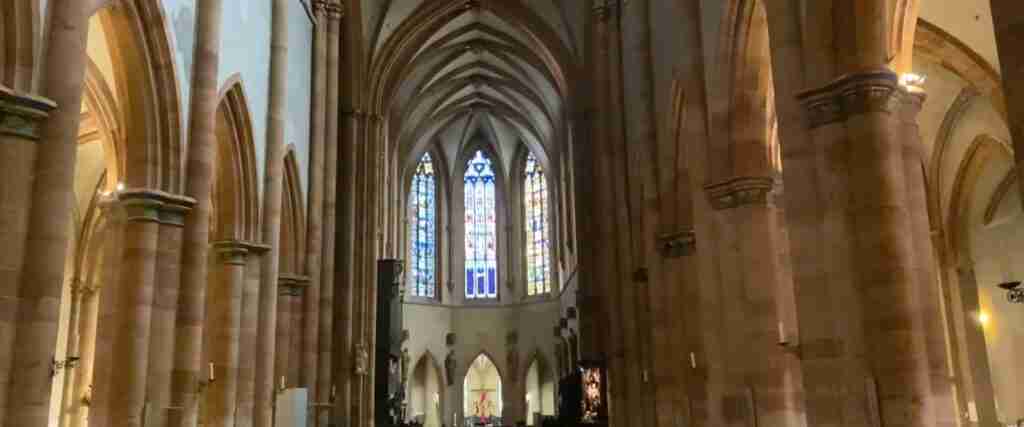
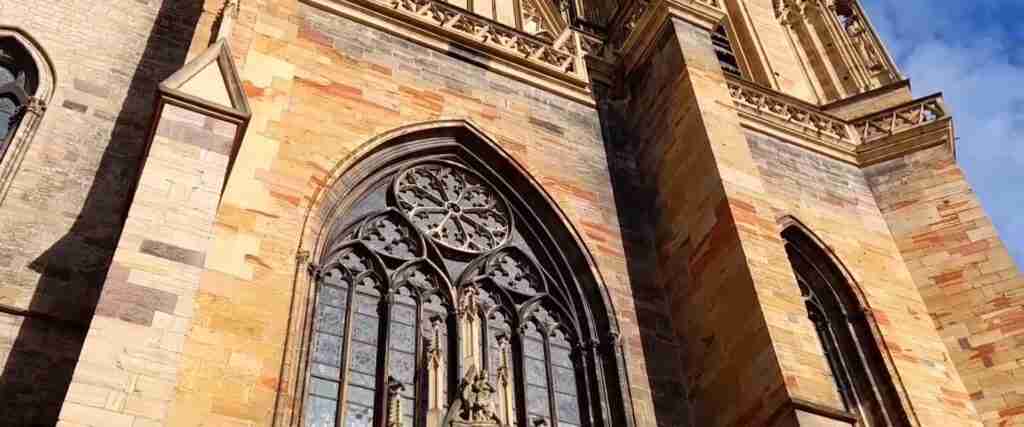
The Dominican Church is the stop for art lovers who want something quieter than the main museums. It holds Martin Schongauer’s painting the Virgin of the Rose Bush, a landmark of late medieval German painting, and 14th-century stained glass. St. Martin’s Collegiate Church, a large Gothic building near the Old Customs House, is often called Colmar’s cathedral by visitors, although the city is not the seat of a bishop. Both churches are free or low-cost to enter; check opening times on the day, as they vary with religious services and seasons.
Tanners’ Quarter, Fishmongers’ Quay and Covered Market
The Tanners’ Quarter preserves tall half-timbered houses with open upper galleries that were once used for drying hides. Nearby, Fishmongers’ Quay lines the river Lauch with narrow colorful houses where fishermen once lived and worked. The Covered Market, a 19th-century building on the edge of the canal quarter, sells Alsatian cheeses, charcuterie, bread and pastries and works well for a picnic lunch. These three areas sit within a few minutes of each other and form the most photogenic part of the walk.
Bartholdi Museum, Toy Museum and Hansi Museum
Frédéric Auguste Bartholdi, the sculptor of the Statue of Liberty, was born in Colmar in 1834. The Bartholdi Museum, which opened in 1922, is set in the house associated with his family and displays models, drawings and personal items. A scaled replica of the Statue of Liberty stands at a roundabout on the northern approach to the city. The Toy Museum appeals to families and railway enthusiasts, and the Hansi Museum is dedicated to the Colmar illustrator whose drawings of Alsatian life made him a regional icon. Check each museum’s official site for current prices and hours.
Adolph House and the Oldest Houses
Adolph House, dating to around 1350, is often cited among the oldest surviving houses in Colmar. Its upper levels show the timber framing techniques that later houses refined. Visitors who like architecture can compare it with the Renaissance-era buildings elsewhere in the old town to see how construction and ornament developed over roughly three centuries.
Unterlinden Museum and the Isenheim Altarpiece 2027: Hours, Tickets and Visit Time
The Unterlinden Museum is open Wednesday to Monday from 9 AM to 6 PM, with last entry at 5:30 PM, and it is closed on Tuesdays. Adult admission is about €14 (check the official museum site for current rates), and the audioguide supplement is €2. Allow two to three hours if the Isenheim Altarpiece is your main goal and you want to see the rest of the collection.
Opening Hours and Closing Days at the Unterlinden Museum
- Regular hours: Wednesday to Monday, 9 AM-6 PM; last entry 5:30 PM
- Weekly closure: Tuesday
- Annual closures: 1 January, 1 May, 1 November and 25 December
- Short days: 24 and 31 December, 9 AM-4 PM
Because the museum is closed on Tuesdays, the best old town itinerary on a Tuesday swaps the museum for the Dominican Church, the Covered Market and a boat ride. Online tickets are advised although booking is not required, and the on-site ticket desk takes cards only.
What to See: The Isenheim Altarpiece and the Museum Collection
The Isenheim Altarpiece was made between 1512 and 1516 by Niclaus of Haguenau, who carved the sculpted parts, and Matthias Grünewald, who painted the panels. It was created for the Antonite monastery at Isenheim, about 15 miles south of Colmar, and moved to Colmar in 1852. The museum opened in 1853 in a former Dominican convent, and an extension designed by Herzog & de Meuron opened in 2015. The altarpiece is a painted and carved polyptych whose panels were designed to be opened and closed during the church year, and it is usually described as one of the most important works of the northern European Renaissance. Plan your time so that you arrive early, when the room is quietest, and take the audioguide if you want context for the imagery.
Little Venice Boat Ride and Tourist Train 2027: Prices, Duration and Which to Choose
The Little Venice boat ride costs €8 for adults, lasts about 25-35 minutes and departs at the foot of the Saint-Pierre Bridge. The Colmar tourist train costs €8 for adults, about €5 for ages 12-18 and €4 for children under 12, and it runs every 30 minutes from Kléber Street for a 35-minute loop of roughly 7 km. Choose the boat for atmosphere and photographs and the train for context and for visitors who tire easily.
Little Venice Boat Tour: Route, Price and Timing
Little Venice is the nickname for the canal quarter along the river Lauch, built around the old Krutenau district. Flat-bottomed boats glide past the Fishmongers’ Quay houses, flower-covered balconies and low footbridges, with a short commentary by the boatman. The ticket price is €8 for adults, although some sources list closer to €9, so confirm at the departure point. Boats run in season, typically from spring to autumn, and queues build at midday in July and August; the first or last departures of the day give better light and shorter waits.
Colmar Tourist Train: Schedule and Languages
The green tourist train leaves every 30 minutes from Kléber Street and covers about 7 km in roughly 35 minutes, with recorded commentary in 16 languages. From Easter to All Saints it runs from 9 AM to 6:30 PM, and outside that period from 10 AM to 4 PM. Payment is cash only on board, so carry coins and small notes. The train suits families with young children and visitors with limited mobility, and it works well as a first orientation on arrival day.
Boat or Train: A Quick Comparison
- Boat: €8, about 25-35 minutes, seasonal, best for photography and canal views
- Train: €8 adult, about €5 for ages 12-18, €4 under 12, about 35 minutes, runs year-round with shorter winter hours, best for orientation
- Both: the Colmar City Pass includes a single boat or train ride, so no separate ticket is needed if you hold the pass
Colmar City Pass 2027: What It Includes and Whether It Pays Off
The official Colmar City Pass site lists the pass at €48, valid for three months from purchase and for four consecutive days after first use, and it covers nine museums plus a single boat or train ride. Older listings quote €35 for seven days, so confirm the current price and validity on the official site before you buy. The pass pays off only if you plan to enter several museums in a short window.
Is the City Pass Worth It for Most Visitors
A traveler who visits the Unterlinden Museum at about €14, the boat ride at €8 and two additional museums will come close to the pass price, so the saving is modest unless you add more museums. Visitors who plan only the Unterlinden Museum and one boat ride spend less by buying tickets individually. The pass makes most sense for families or museum enthusiasts spending three or four days in the city. Check the official site for the list of included museums before purchasing, as the inclusion list can change.
Alsace Wine Route Tours 2027: Guided Options and Self-Drive Planning
The Alsace Wine Route runs for about 170 km from Marlenheim in the north to Thann in the south, and Colmar sits near its centre. A half-day small-group wine tour from Colmar, with a maximum of 8 guests and two tastings, costs about €100-110, and a full-day tour costs roughly €165-185; check booking platforms for current rates. Visitors with a car can drive the route independently and taste at family estates without a guide.
About the Alsace Wine Route
The route opened in 1953 and follows the eastern foothills of the Vosges Mountains, where the vineyards face the Rhine plain. Alsace has 51 Grand Cru sites, and wines are typically labeled by grape variety rather than by village. Seven grape varieties dominate: Riesling, Gewurztraminer, Pinot Gris, Muscat, Pinot Blanc, Sylvaner and Pinot Noir. Alsace sparkling wine, often built on Pinot Blanc, adds another style. The route is not a UNESCO site, although several vineyard villages along it are famous in their own right.
Guided Wine Tour or Self-Drive: How to Choose
- Guided half-day: about €100-110, small group of up to 8, two tastings; best for first-time visitors and anyone who does not want to drive after tasting
- Guided full day: roughly €165-185, more villages and often lunch; best for wine enthusiasts
- Self-drive: costs fuel, parking and tasting fees, which vary by estate; best for confident drivers, but only one person in the car can taste safely
- Bus plus walking: cheapest option, but limited to villages on the FLUO lines and the timetables
Tasting Etiquette and Booking Tips
Many family estates welcome visitors without an appointment in the high season, but smaller producers prefer a call or message the day before. Tastings are often free if you buy a few bottles, while others charge a small fee that is deducted from purchases; ask when you arrive. Spitting is normal and expected in the tasting room. If you plan to carry wine home, check airline allowances and consider shipping through the estate. The Alsace Wine Fair is held in early August at the Colmar exhibition center; the 2026 edition ran from 31 July to 9 August, and the 2027 dates should be confirmed with the organizers.
Choosing Wines to Try on a Colmar Tour
Riesling is the signature white of the region, usually dry and mineral, while Gewurztraminer is aromatic with rose and lychee notes. Pinot Gris tends to be rounder and richer, Muscat is light and floral, and Pinot Noir is the region’s only widely made red. Asking each producer for a dry Riesling and a Gewurztraminer is a simple way to compare styles. Pairing these wines with a regional sauerkraut platter, Munster cheese or Alsatian flatbread is a local habit.
Best Alsace Villages From Colmar 2027: Eguisheim, Riquewihr, Kaysersberg and More
The six villages most visitors choose are Eguisheim (5 km from Colmar), Kaysersberg (about 12 km), Riquewihr (13-15 km), Hunawihr (about 15 km), Ribeauvillé and Turckheim. Each can be reached by regional bus or a short drive, and a well-planned day can combine two or three of them. Entry to the village streets is free; paid extras such as museums and towers are small additions to the daily attractions budget.
Eguisheim: Concentric Streets Around the Castle
Eguisheim lies just 5 km from Colmar and is the easiest village to reach, by bus on the Colmar-Eguisheim-Rouffach line or by a short bicycle ride. Its streets curve in concentric rings around the central castle, which makes it a natural walking loop. The village won the title of one of France’s Most Beautiful Villages in 2003 and was voted Favorite Village of the French in 2013. By tradition, Pope Leo IX was born here in 1002, and a chapel dedicated to St. Leo stands in the castle grounds. Grand Cru slopes such as Eichberg and Pfersigberg rise just above the village, so a tasting stop fits easily into the visit. Allow about two hours.
Riquewihr: The Walled Village Above the Vineyards
Riquewihr sits 13-15 km from Colmar on the FLUO line that also serves Ribeauvillé. Its main street is lined with half-timbered houses, wine cellars and courtyards, and the Dolder Tower, a 13th-century watchtower about 25 m high, closes the upper end. The Dolder Museum inside the tower presents local history; check the official site for current hours and prices. Riquewihr is the busiest of the villages in July, August and December, so arrive before 10 AM or after 4 PM if you want the lanes less crowded. A wine house established in the 17th century is among the best known producers here, but there are dozens of smaller cellars.
Kaysersberg: Birthplace of Albert Schweitzer
Kaysersberg lies about 12 km from Colmar and is served by the Colmar-Le Bonhomme bus line. Albert Schweitzer, the physician, theologian and musician, was born here in 1875. The village centres on a main street that descends toward a fortified bridge, and the ruins of a castle overlook the valley from above. A walk up to the ruins takes less than half an hour and gives a view over the rooftops and vineyards. Kaysersberg combines easily with Riquewihr by car, though the bus connection requires planning.
Ribeauvillé: Three Castles and a Festival
Ribeauvillé is a larger town on the Colmar-Riquewihr-Ribeauvillé line, set below three ruined castles on the hillside. Marked trails climb to the ruins, and the higher paths take a couple of hours. The town is known for the Pfifferdaj minstrels’ festival, held in September, when the main street fills with costumes and music; hotels book out quickly that weekend. In other seasons, Ribeauvillé feels calmer than Riquewihr and offers a good lunch stop with a range of Alsatian taverns.
Turckheim: Three Medieval Gates
Turckheim preserves three medieval gates, of which the French Gate is the best known and is often topped by storks’ nests. The town sits on a regional railway line and is reachable by bus or a short drive, so check SNCF Connect or the FLUO site for the current service. A walk through the old centre takes about an hour, and the compact size makes it a good late-afternoon stop after Riquewihr or Ribeauvillé. A night watchman’s walk is offered on summer evenings according to local tourism information; confirm the schedule with the tourist office.
Hunawihr: Fortified Church and NaturOparC
Hunawihr, about 15 km from Colmar, is smaller and quieter than Riquewihr. Its fortified church is the main historic sight. NaturOparC, a nature park focused on storks and otters, hosts around 150 storks and also has a butterfly garden, which makes it the best village stop for families with children. Check the official website for ticket prices and feeding times before planning the visit. Hunawihr pairs naturally with Riquewihr, as the two villages lie only a few kilometers apart.
How to Combine the Villages in a Single Day
- By bus (two villages): Colmar to Riquewihr and Ribeauvillé on one line, returning on the same line
- By car (three villages): Eguisheim in the morning, Riquewihr at midday, Kaysersberg or Hunawihr in the afternoon
- By guided tour: a half-day tour usually covers two villages and two tastings
- By bicycle: signed routes link Colmar and Eguisheim, and several other vineyard villages can be reached in a longer day
Haut-Koenigsbourg Castle 2027: Tickets, Hours and How to Get There
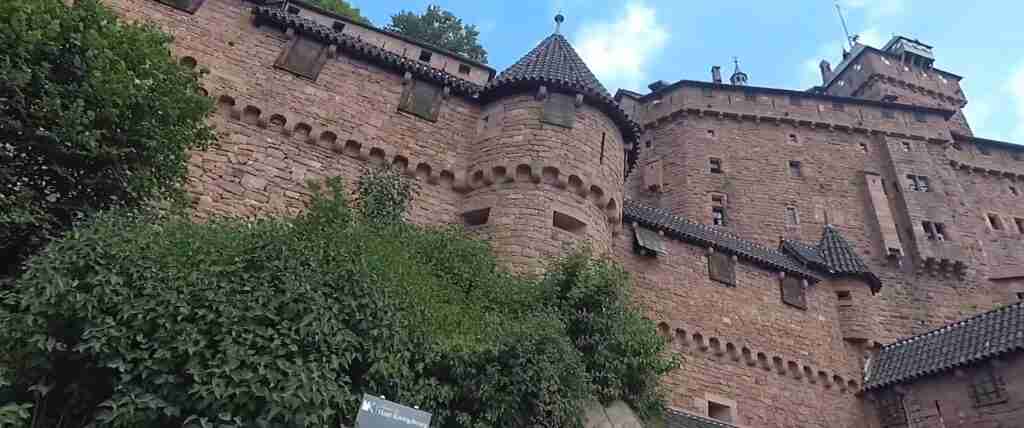
Haut-Koenigsbourg Castle in Orschwiller charges €12 for adults and €8 for children, with an audio tour at €16, and children under 6 enter free. The visit takes about 1 hour 30 minutes, and the castle is roughly 30 km from Colmar, about 40 minutes by car. Book online through the castle’s official ticket site to avoid queues. Admission is free on the first Sunday of the month from November to March and on Heritage Days.
Opening Hours and Closing Days at Haut-Koenigsbourg Castle
- January-March: 9:30 AM-12 PM and 1 PM-5 PM
- April-June and September-December: 9:30 AM-6 PM
- July-August: 9 AM-7 PM
- Last entry: one hour before closing
- Mondays: opens at 10:30 AM
- Closed: 1 January, 25 and 26 December
History and What to See Inside the Castle
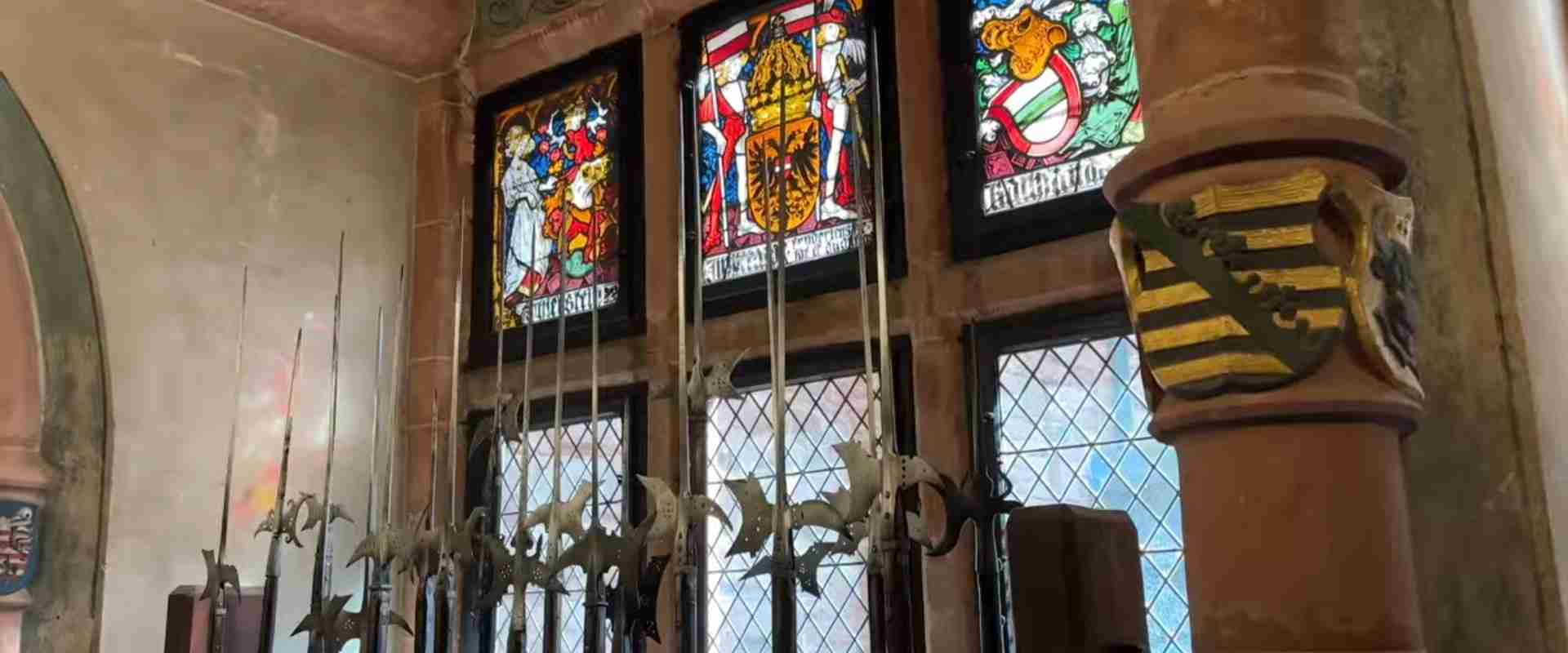
The castle stands on a ridge above the Rhine plain and was first documented in the 12th century. It was heavily damaged in the Thirty Years’ War, in 1633, and remained a ruin until the German Emperor Wilhelm II had it rebuilt between 1900 and 1908 under the architect Bodo Ebhardt, when Alsace belonged to the German Empire. The reconstruction has been debated by historians, since it blends documented medieval features with the taste of its own era. Inside, the keep, the great hall, the weapons collection and the viewing terraces are the main attractions, and the views over the plain toward the Rhine are excellent in clear weather.
Getting to Haut-Koenigsbourg From Colmar
By car, the castle is roughly 30 km from Colmar, about 40 minutes, with a car park at the site. Without a car, take a regional train from Colmar to Sélestat, a trip of about 20 minutes, and use the seasonal shuttle from Sélestat station to the castle; check the current schedule and fare before you travel. The shuttle does not run all year, so in winter a taxi or a guided tour is the practical alternative. Combine the castle with a stop at Sélestat or one of the villages on the way back.
Day Trips From Colmar 2027: Neuf-Brisach and Strasbourg
Two excursions add UNESCO World Heritage content to a Colmar stay: Neuf-Brisach, about 16-18 km east, and Strasbourg, 30-40 minutes north by regional train. Neither is part of Colmar itself, since the old town is not UNESCO-inscribed. Both work as half-day or full-day trips and fit well into a three-day itinerary.
Neuf-Brisach: The Vauban Fortress Town
Neuf-Brisach is part of the Fortifications of Vauban, a serial site of 12 components inscribed by UNESCO on 7 July 2008 (World Heritage reference 1283). The town was built between 1699 and 1703 for Louis XIV on an octagonal plan, with a grid of streets inside bastioned walls. A Vauban museum is housed in the Belfort Gate. The site is flat, so it suits cycling and walking, and a visit takes two to three hours. The town can be reached by car or by bus on the line toward Breisach; confirm the stop on the FLUO timetable.
Strasbourg: Grande-Île and the Cathedral Quarter
Strasbourg’s Grande-Île was inscribed by UNESCO in 1988 and covers the historic island at the heart of the city. A regional train from Colmar takes 30-40 minutes, and the high-speed link from Paris takes about 2 hours 20 minutes to Colmar, so many visitors combine the two cities on a longer trip. A full day in Strasbourg covers the cathedral, the old canal districts and the river boats. Check SNCF Connect for fares and timetables before you travel.
Sélestat: A Stop on the Way to the Castle
Sélestat sits between Colmar and Strasbourg and serves as the rail stop for Haut-Koenigsbourg Castle. The town is known for its humanist library, which preserves manuscripts and early printed books, and for a compact old centre that suits a one-hour stop. Check the library’s current hours and ticket prices on its official site before you plan around them. Sélestat is about 20 minutes from Colmar by regional train, so it fits easily into a castle day.
Getting Around Colmar and Alsace 2027: Trains, Buses, Cars and Bicycles
Regional trains and FLUO buses cover the main routes from Colmar, with fares of about €3-4 per bus journey, while a rental car gives the most flexibility among the vineyard villages. Colmar’s own city bus network is TRACE, but most visitors walk within the old town. Parking in the historic centre is limited and paid, so use car parks around the edge.
Arriving in Colmar by Train or Plane
Colmar has a main railway station with regional trains and direct high-speed service from Paris, which takes about 2 hours 20 minutes. Strasbourg is 30-40 minutes away by regional train. Most international visitors fly into Basel-Mulhouse-Freiburg EuroAirport or Strasbourg and continue by train or road; check connection times before booking flights, as ground transfer length varies.
FLUO Bus Lines From Colmar
- Line 68R016: Colmar, Riquewihr, Ribeauvillé
- Line 68R030: Colmar, Eguisheim, Rouffach
- Line 68R013: Colmar, Kaysersberg, Le Bonhomme
- Line 68R026: Colmar, Breisach (across the Rhine in Germany)
Fares run about €3-4 per journey, and some lines run only every few hours, so check the timetable before you leave and note the last return bus. Weekend and holiday service is usually reduced.
Driving, Parking and Bicycles
A car is the most efficient way to combine several villages and Haut-Koenigsbourg Castle in a single day. Park outside the old town and walk in, and avoid driving in the centre during the Christmas period, when the old town is largely car-free and shuttles run from the exhibition park and the station area. Bicycles suit the flat stretches between Colmar and Eguisheim and some vineyard villages, and many hotels can point you to rental shops. Distances from Colmar: Eguisheim 5 km, Kaysersberg about 12 km, Riquewihr 13-15 km, Hunawihr about 15 km, Neuf-Brisach about 16-18 km.
Colmar Tour Budget 2027: Daily Costs by Travel Style
Budget travelers need €85-145 per person daily (two sharing a budget hotel), mid-range travelers spend €155-255 per person daily (two sharing a mid-range hotel), and luxury visitors invest €330-585 per person daily (two sharing a luxury hotel). All figures assume two people sharing a room, with the room rate divided between them. Hotel prices are indicative and rise sharply in December.
Budget Travelers: €85-145 Per Person Daily
Budget rooms cost €70-110 per night, which is €35-55 per person with two sharing. Breakfast runs €5-8, lunch €12-18, dinner €18-28, local transport €6-12 and attractions €10-25. Total: approximately €85-145 per person daily. Alsatian flatbread at €10-15 and bakery lunches keep food costs low, and the Covered Market works for picnics.
Mid-Range Travelers: €155-255 Per Person Daily
Mid-range rooms cost €120-190 per night, which is €60-95 per person with two sharing. Breakfast runs €8-12, lunch €18-28, dinner €30-45, transport €10-25 and attractions €30-50. Total: approximately €155-255 per person daily. A typical restaurant meal costs €20-35 per person, a three-course menu about €40 and a sauerkraut platter about €24; a guided wine tour fits within the upper end of the attractions line on one day.
Luxury Travelers: €330-585 Per Person Daily
Luxury rooms cost €220-400 per night, which is €110-200 per person with two sharing. Breakfast runs €15-22, lunch €35-55, dinner €80-130, transport €30-60 and attractions €60-120. Total: approximately €330-585 per person daily. Tasting menus start from €100 per person, and private drivers or guided full-day tours account for most of the transport and attractions lines.
Multi-Day Totals and Special Cases
- Three days, budget: approximately €255-435 per person
- Three days, mid-range: approximately €465-765 per person
- Three days, luxury: approximately €990-1,755 per person
- Five days, budget: approximately €425-725 per person
- Five days, mid-range: approximately €775-1,275 per person
- Five days, luxury: approximately €1,650-2,925 per person
- Solo traveler, mid-range, private room: approximately €215-350 per person daily
- Christmas-week mid-range, room at €200-320, two sharing: approximately €195-320 per person daily
- Low-season winter mid-range, room at €90-140, two sharing: approximately €140-230 per person daily
Where the Money Goes: Cost Comparison of Main Tours
- Unterlinden Museum: about €14, plus €2 for the audioguide
- Little Venice boat ride: €8
- Colmar tourist train: €8 adult
- Old town architecture walking tour (2 hours): €32
- Haut-Koenigsbourg Castle: €12 adult, €16 audio tour
- Half-day small-group wine tour: about €100-110
- City Pass: €48 per the official site (confirm)
- Regional bus journey: about €3-4
Sample Colmar Itineraries 2027: One, Two and Three Days
The best Colmar itineraries in 2027 separate the old town day from the countryside days, because the old town opens late and closes early while the villages are best seen in morning light. Each plan below uses the sights and prices described earlier in this guide, with paid attractions listed per person.
One Day in Colmar 2027: Old Town and Museum
- 9 AM: Unterlinden Museum and the Isenheim Altarpiece (€14, audioguide €2)
- 12 PM: lunch near the Covered Market
- 2 PM: Old Customs House, House of the Heads, Pfister House and the Dominican Church
- 4 PM: Little Venice boat ride (€8)
- 6 PM: Alsatian dinner in a traditional tavern
Paid attractions for the day total about €25. On a Tuesday, replace the museum with the Bartholdi Museum or the Toy Museum after confirming their opening days.
Two Days in Colmar 2027: Add the Wine Villages
- Day 1: follow the one-day plan above
- Day 2, 9 AM: bus to Riquewihr and walk the main street, then continue to Ribeauvillé on the same line
- Day 2, afternoon: wine tasting in Ribeauvillé or Riquewihr, then return to Colmar
Three bus journeys that day cost about €10 in total at €3-4 each. With a half-day wine tour instead of the bus, budget about €100-110 for the tour.
Three Days in Colmar 2027: Add Haut-Koenigsbourg Castle
- Days 1 and 2: as above
- Day 3, morning: travel to Haut-Koenigsbourg Castle by car, or by train to Sélestat and the seasonal shuttle
- Day 3, afternoon: lunch in Sélestat or Kaysersberg, then Eguisheim on the way back
Castle admission and the audio tour total about €30. A fourth day can be given to Strasbourg or Neuf-Brisach.
Best Time for Colmar Tours 2027: Seasons, Crowds and Christmas Markets
The best months for Colmar tours in 2027 are April to June and September to October, when weather is mild and crowds are lighter than in July and August. December is the most atmospheric but also the busiest and most expensive month. Opening hours at attractions such as Haut-Koenigsbourg Castle and the tourist train also vary by season.
Spring and Early Summer 2027
April to June brings long daylight hours, flowering window boxes and open boat departures. Haut-Koenigsbourg Castle opens from 9:30 AM to 6 PM in this period. Crowds build toward the summer school holidays, so weekdays in May and June offer the best balance of weather and space.
Summer 2027: July and August
Summer is the busiest season. Riquewihr, Eguisheim and Kaysersberg fill by late morning, and the Alsace Wine Fair at the exhibition center in early August draws regional crowds. Haut-Koenigsbourg Castle extends its hours to 9 AM-7 PM. Start village visits early and plan indoor sights, such as museums, for midday heat.
Autumn 2027: Harvest Season
September and October are harvest months in the vineyards, with colorful slopes and many estates active. Ribeauvillé holds its Pfifferdaj festival in September. Weather is variable, so keep an indoor alternative on each day.
Christmas Markets 2027: What to Expect
Dates for the 2027 edition have not been announced. The 2026 edition runs from 23 November to 29 December 2026, with six markets across the old town; the Gourmet Market and the Ferris wheel on Rapp Square remain open until 3 January 2027. The markets were created in 1988, and the centre is car-free, with shuttles from the exhibition park and from the station area. Book hotels well ahead, since December is the one month when room prices spike, and expect Christmas-week mid-range costs of €195-320 per person daily.
Winter Low Season 2027
January to March is the quietest period. Hotels are cheaper, with mid-range costs of €140-230 per person daily, but the tourist train runs shorter hours from 10 AM to 4 PM, the boats are seasonal, and Haut-Koenigsbourg Castle closes for a midday break between 12 PM and 1 PM. Entry to the castle is free on the first Sunday of each month from November to March.
Rainy-Day and Evening Activities in Colmar 2027
On a wet day, the best Colmar options are the Unterlinden Museum, the Toy Museum, the Hansi Museum, the Bartholdi Museum, the Dominican Church and the Covered Market, all within walking distance of each other. Colmar’s compact centre means you can move between indoor sights in minutes, and the City Pass can pay for itself on a museum-heavy day. In the evening, the old town is atmospheric once day visitors leave: the canals and façades are lit, and traditional Alsatian taverns serve regional dishes until late in many cases.
Indoor Options Ranked by Time Needed
- Unterlinden Museum: two to three hours, about €14
- Bartholdi Museum, Toy Museum, Hansi Museum: about one hour each; check official sites for prices
- Dominican Church: 20-30 minutes
- Covered Market: 30-45 minutes with a snack
Photography Tips for Colmar Tours 2027
Early morning gives the old town its quietest streets and the softest light on the façades, while late afternoon works well along Fishmongers’ Quay and the canal quarter. In the villages, arrive before the tour buses, around 9 AM, and walk the upper streets first. Overcast days suit the half-timbered fronts because colors stay even. Keep the tripod for early hours, since the narrow lanes become crowded by late morning in summer.
Weather and What to Pack for Colmar Tours 2027
Colmar is often cited as one of the driest cities in France because the Vosges Mountains shelter it from Atlantic rain, but showers still occur, and summer afternoons can be hot while winter mornings are cold. Pack in layers, comfortable walking shoes for cobblestones and a light rain jacket in every season.
Seasonal Packing Guide
- Spring and autumn: layers, a light waterproof jacket and closed shoes for vineyard paths
- Summer: sun protection, a refillable water bottle and a light cover-up for church visits
- Winter and Christmas markets: a warm coat, gloves, a hat and shoes with grip for wet cobbles
- All year: a small bag for cash, since the tourist train takes cash only
Footwear and Vineyard Walks
The old town is flat, but the lanes are cobbled and uneven, so sneakers or walking shoes are better than sandals. Walks up to castle ruins at Kaysersberg and Ribeauvillé follow marked paths that can be slippery after rain. Allow extra time for the climbs, and carry water, since village shops may close at midday.
Where to Stay in Colmar 2027: Best Areas for Tours
The old town is the best area to stay for walking tours, with rooms at €70-110 in budget places, €120-190 in mid-range hotels and €220-400 in luxury properties. Staying near the station lowers the price slightly and shortens train connections. Colmar’s compact size means no neighborhood is far from the sights.
Old Town Centre
Staying within the old town puts every sight within a few minutes’ walk and makes evening strolls easy, but the lanes can be noisy on summer nights and cars cannot reach many hotels. Parking should be arranged in advance at a nearby car park.
Little Venice and the Krutenau District
The canal quarter has some of the most picturesque guesthouses and is quieter in the evenings than the central squares. It lies a short walk from the Fishmongers’ Quay and the boat departure point.
Station Area
The station area suits travelers who rely on trains and buses, and it is generally better value. The walk to the old town is short, and day trips to Strasbourg, Sélestat and the villages start from here.
Alsatian Food and Wine on Colmar Tours 2027: What to Eat and What It Costs
An Alsatian flatbread costs €10-15, a typical restaurant meal €20-35 per person, a sauerkraut platter about €24 and a three-course menu about €40. Traditional taverns serve regional dishes in a casual setting, and tasting menus start from €100 in fine dining restaurants.
Dishes to Try
- Alsatian flatbread: thin crust topped with cream, onions and bacon; €10-15
- Sauerkraut platter: fermented cabbage served with sausages and pork; about €24
- Slow-baked meat-and-potato casserole: a traditional marinated dish baked in a covered pot
- Munster cheese: a strong washed-rind cheese often served with potatoes
- Yeasted ring cake: a sweet bread baked in a fluted mold, common at breakfast
Where to Eat on a Tour Day
Eat lunch in the village where you are, since menus there are often priced lower than in the central squares of Colmar. Reserve dinner in the high season and during the Christmas markets, as small taverns fill quickly. Many restaurants close one or two days a week, so confirm opening days before planning an evening.
Colmar Tours for Different Travelers 2027: Families, Solo Travelers and Mobility Needs
Colmar suits most travelers, but each group benefits from a different mix of tours. The compact centre, the tourist train and the boat make family trips easy, while solo travelers and visitors with limited mobility should plan transport and room costs more carefully.
Families With Children
The tourist train, the boat ride, the Toy Museum and NaturOparC in Hunawihr are the most child-friendly options. Children under 12 pay €4 on the train, and children under 6 enter Haut-Koenigsbourg Castle free; the child ticket for the castle is €8.
Solo Travelers
Solo travelers pay the full room rate, so mid-range costs are approximately €215-350 per person daily. Small-group wine tours are a good way to meet other travelers and avoid driving, and the old town is easy to explore alone.
Travelers With Limited Mobility
The old town has cobbled streets and some uneven surfaces. The tourist train and boat ride offer an easier introduction, and a car or taxi helps for the villages. Contact attractions in advance about accessibility.
Money-Saving Strategies for Colmar Tours 2027
The simplest way to cut Colmar costs in 2027 is to travel outside July, August and December, use buses instead of guided tours for the villages, and picnic from the Covered Market. These changes can move a mid-range day toward the lower end of the €155-255 range without removing any major sight.
Free and Low-Cost Sights
- Old town streets: free to walk, including the House of the Heads, Pfister House and the Old Customs House exteriors
- Village streets: free in Eguisheim, Riquewihr, Kaysersberg, Ribeauvillé and Turckheim
- Haut-Koenigsbourg Castle: free on the first Sunday of the month from November to March and on Heritage Days
- Estate tastings: often free or refunded if you buy a bottle
Smart Booking Choices
Book rooms early for December and the August wine fair, since those are the dates when prices rise. Compare the City Pass with individual tickets before buying. Choose a half-day wine tour at about €100-110 rather than a full-day option if you only want two tastings, and use bus lines at about €3-4 per journey when you have no need for a guide.
Language, Payments and Local Etiquette for Colmar Tours 2027
French is the main language in Colmar, and English is widely understood in hotels, major attractions and tour offices, though less reliably in small village shops and taverns. Greeting staff with a simple hello before asking a question is the local courtesy, and a few French words go a long way. Cards are accepted at most restaurants and hotels, but the tourist train takes cash only and some small producers prefer cash for tastings.
Opening Hours and Sunday Closures
Many shops in the old town close on Sunday outside the Christmas period, and some restaurants close one or two days a week. Museums and attractions publish their own closing days, so check the Tuesday closure of the Unterlinden Museum and the Monday late opening of Haut-Koenigsbourg Castle before building your schedule. Village wine cellars often close for lunch between noon and 2 PM, so plan tastings for the morning or mid-afternoon.
Planning Checklist Before You Go
- Book hotels first, especially for December and early August
- Reserve small-group wine tours and Haut-Koenigsbourg Castle tickets online
- Check Unterlinden Museum hours and book online tickets if possible
- Download bus and train timetables for FLUO and SNCF Connect
- Carry cash for the tourist train and small purchases
- Choose one or two main sights per day rather than a full list
Hidden Costs and Practical Tips for Colmar Tours 2027
The main hidden costs on a Colmar trip are parking, the nightly visitor tax collected by hotels, cash-only payment on the tourist train and extras such as audio guides. Booking tickets online and carrying a small amount of cash avoids most problems.
- Tourist train: payment is cash only on board
- Unterlinden Museum: cards only at the desk; online tickets are advised
- Audio guides: €2 at the Unterlinden Museum, €16 at Haut-Koenigsbourg Castle
- Visitor tax: a small per-person nightly charge collected by hotels
- Tipping: service is included in restaurant prices; rounding up is a courtesy
- Closing days: check Tuesday for the Unterlinden Museum and Monday starts for the castle
- Bus timetables: note the last return bus before leaving a village
Frequently Asked Questions About Colmar Tours 2027
How much does a day of touring in Colmar cost in 2027?
A day of touring costs €85-145 per person for budget travelers, €155-255 for mid-range travelers and €330-585 for luxury travelers, assuming two people share a hotel room. Budget rooms run €70-110, mid-range rooms €120-190 and luxury rooms €220-400 per night. Solo travelers at mid-range level pay approximately €215-350 per person daily because they cover the full room rate. Attractions are a small part of the total: the Unterlinden Museum costs about €14, the boat ride €8 and Haut-Koenigsbourg Castle €12.
Is the Unterlinden Museum open on Tuesdays in 2027?
No. The Unterlinden Museum is closed on Tuesdays and open Wednesday to Monday from 9 AM to 6 PM, with last entry at 5:30 PM. It also closes on 1 January, 1 May, 1 November and 25 December, and opens only from 9 AM to 4 PM on 24 and 31 December. Admission is about €14, and the audioguide costs €2. Check the official museum site before travel, as hours and prices can change.
Is the Colmar City Pass worth buying in 2027?
The City Pass is worth buying only if you plan to enter several museums in a short time. The official site lists it at €48, valid for four consecutive days after first use and for three months from purchase, and it includes nine museums plus a single boat or train ride. A visitor who sees the Unterlinden Museum (about €14), the boat (€8) and two other museums will spend a similar amount without the pass. Confirm the current price and inclusions on the official site.
What is the best way to see the Alsace villages from Colmar in 2027?
A rental car or a small-group tour is the most flexible way to see several villages in one day, while FLUO buses at about €3-4 per journey are the cheapest. A half-day wine tour costs about €100-110 for up to 8 guests with two tastings. Eguisheim lies 5 km from Colmar, Kaysersberg about 12 km and Riquewihr 13-15 km. Check bus timetables before leaving, as some lines run only every few hours.
Is Colmar a UNESCO site in 2027, and where are the nearest UNESCO sites?
Colmar’s old town is not a UNESCO World Heritage Site. The nearest inscribed sites are Strasbourg’s Grande-Île, inscribed in 1988 and 30-40 minutes away by regional train, and Neuf-Brisach, about 16-18 km from Colmar, which is part of the Fortifications of Vauban inscribed on 7 July 2008. The Alsace Wine Route is not UNESCO-inscribed either, though it passes through many of the region’s best-known villages.
How do you get to Haut-Koenigsbourg Castle from Colmar in 2027?
The castle is roughly 30 km from Colmar, about 40 minutes by car. Without a car, take a regional train to Sélestat, which takes about 20 minutes, and use the seasonal shuttle from Sélestat station. Admission is €12 for adults and €8 for children, the audio tour costs €16, and children under 6 enter free. Book online at the castle’s official ticket site. The visit takes about 1 hour 30 minutes, and last entry is one hour before closing.
When do the Colmar Christmas markets run in 2027?
Dates for the 2027 markets have not been announced. The 2026 edition runs from 23 November to 29 December, with six markets, and the Gourmet Market and the Ferris wheel on Rapp Square stay open until 3 January 2027. The markets were created in 1988, and the centre is car-free with shuttles from the exhibition park and the station area. Mid-range costs in Christmas week run approximately €195-320 per person daily, so book rooms early.
How many days should you spend in Colmar in 2027?
Two days cover the old town and one wine-village circuit, and three days add Haut-Koenigsbourg Castle or Strasbourg. Three days at mid-range level cost approximately €465-765 per person, and five days cost approximately €775-1,275. Budget travelers spend approximately €255-435 for three days. One day is enough only for the old town, the Unterlinden Museum and a boat ride, which together cost about €25 in paid attractions.
Do you need to book Colmar tours in advance in 2027?
Booking ahead is advised for guided wine tours, Haut-Koenigsbourg Castle tickets and hotels during the Christmas markets and the August wine fair. Small-group wine tours are limited to 8 guests, so they sell out in the high season. The Unterlinden Museum recommends online tickets but does not require booking. The boat and the tourist train sell tickets on the day, and the train takes cash only.
Can you visit Colmar and the Alsace Wine Route without a car in 2027?
Yes. Regional trains reach Strasbourg and Sélestat, and FLUO bus lines 68R016, 68R030 and 68R013 connect Colmar with Riquewihr, Ribeauvillé, Eguisheim and Kaysersberg for about €3-4 per journey. A walking tour of the old town costs around €32, and guided wine tours include transport. The main limitation is timetable frequency on some lines, so plan the return journey before you depart.