
Coba Ruins from Tulum 2026: Climb the Tallest Maya Pyramid
Key Takeaways
- Coba’s Nohoch Mul pyramid stands 137 feet tall with 120 climbable steps, offering panoramic jungle views unavailable at most Maya sites in 2026
- Round-trip transportation from Tulum costs $15-25 by colectivo or $80-120 for private transfer, with the 45-minute journey departing as early as 6:00 AM for crowd avoidance
- Site admission runs $80 MXN ($4-5 USD) while bicycle rentals cost $50 MXN ($2.50-3 USD) for navigating the 6.5 square kilometer archaeological zone in 2026
- Optimal visiting strategy combines 7:00-8:00 AM arrival with 3-4 hour exploration time, allowing pyramid climbing before 10:00 AM heat and tour bus crowds
- Total day trip budget ranges $35-55 per person including transportation, admission, bicycle rental, meals, and refreshments (excluding Tulum accommodation)
- The climbing experience remains one of Mexico’s last accessible tall pyramid ascents, with Coba permitting direct pyramid access while sites like Chichen Itza prohibit climbing
Planning Your Coba Day Trip from Tulum in 2026
Coba represents one of the Yucatan Peninsula’s most distinctive archaeological experiences in 2026, offering visitors the increasingly rare opportunity to climb a major Maya pyramid. Located 44 kilometers northwest of Tulum through dense Quintana Roo jungle, this sprawling ancient city controlled critical trade routes between coastal and inland Maya settlements from 100 CE through the Spanish conquest period. The site’s most compelling feature—the Nohoch Mul pyramid rising 137 feet above the jungle canopy—provides panoramic views extending 30-40 kilometers across the Yucatan landscape, a perspective unavailable at most contemporary Maya archaeological sites.
The journey from Tulum to Coba takes approximately 45 minutes through rural Yucatan roads passing through small Maya communities and dense tropical forest. The route follows Highway 109, a well-maintained two-lane road that connects Tulum’s Caribbean coast location with the inland archaeological zone. Transportation options range from budget-friendly colectivo shared vans departing Tulum’s ADO bus terminal to private transfers offering flexible scheduling and direct service. The relatively short travel distance makes Coba ideal for early morning departures, allowing visitors to reach the archaeological site by 7:00-8:00 AM when temperatures remain comfortable and crowds minimal.
Coba’s significance in Maya archaeology extends beyond its climbable pyramid. The ancient city once supported an estimated 50,000 inhabitants across its 70 square kilometer extent, with the central archaeological zone spanning 6.5 square kilometers of excavated and stabilized structures. Archaeological research has identified over 6,500 structures throughout the greater Coba region, though only a fraction remain visible to contemporary visitors. The site features an extensive network of elevated stone causeways called sacbeob, with some routes extending up to 100 kilometers to connect Coba with distant Maya settlements. These engineering achievements demonstrate the sophisticated urban planning and political influence that characterized Coba’s classical period dominance.
The climbing experience at Nohoch Mul pyramid defines Coba’s appeal in 2026. Visitors ascend 120 steep steps, each rising approximately 12-16 inches with narrow treads requiring careful foot placement and the use of a central rope for stability. The climb demands moderate physical fitness and takes 10-15 minutes for most visitors at a steady pace. The pyramid’s steep 45-55 degree angle creates an exposed climbing sensation, particularly notable during descent when the height becomes more psychologically apparent. Summit views reveal the surrounding jungle stretching to the horizon, with the Coba lakes visible below and distant Maya structures protruding through the forest canopy.
Planning a successful Coba day trip from Tulum in 2026 requires understanding the site’s operational patterns, transportation logistics, and optimal timing strategies. The archaeological zone opens at 8:00 AM and closes at 5:00 PM, though arriving at opening time or earlier positions visitors for the best climbing conditions. Early morning visits avoid the 10:00 AM-2:00 PM tour bus arrivals that bring several hundred visitors simultaneously to the pyramid base. Temperature considerations also favor early visits, with morning temperatures ranging 75-82°F compared to afternoon peaks of 92-98°F during summer months. The comprehensive 2026 planning guidance that follows addresses every aspect of organizing this distinctive archaeological adventure.
People Also Ask About Coba Ruins from Tulum 2026
How much does a Coba day trip from Tulum cost in 2026?
A Coba day trip from Tulum costs $35-55 per person for independent travel in 2026, covering round-trip transportation ($15-25 by colectivo or $80-120 for private transfer split among passengers), site admission $80 MXN ($4-5 USD), bicycle rental $50 MXN ($2.50-3 USD), lunch $150-200 MXN ($8-11 USD), and refreshments $50-80 MXN ($2.50-4 USD). Check current pricing for colectivos at Tulum ADO terminal and verify site admission rates at the official INAH website, as prices may vary. Organized tours from Tulum travel agencies cost $45-75 per person including transportation, guide services, and admission but typically operate on fixed schedules with limited pyramid climbing time. Budget-conscious travelers reduce costs by bringing packed lunches and water bottles, while private transfer groups of 4-6 people achieve per-person costs comparable to colectivo pricing with added scheduling flexibility.
How long does it take to visit Coba from Tulum in 2026?
A complete Coba visit from Tulum takes 5-7 hours total in 2026, including 45-minute each-way transportation (1.5 hours total), 3-4 hours at the archaeological site, and 30-45 minutes for lunch either at Coba or returning to Tulum. The archaeological zone exploration breaks down into 45-60 minutes cycling between major structure groups, 45-60 minutes at Nohoch Mul pyramid including the 25-30 minute climb and summit time, 30-45 minutes exploring the ball court and sacbe network, and 30-45 minutes at secondary pyramid groups. Visitors departing Tulum at 6:30-7:00 AM return by 12:30-2:00 PM, leaving the afternoon free for Tulum beach time or additional activities. Extended visits incorporating swimming at nearby cenotes or lunch at traditional Maya restaurants add 2-3 hours to the total duration.
Can you still climb the pyramid at Coba in 2026?
Yes, Coba permits pyramid climbing in 2026, maintaining its status as one of the few major Maya archaeological sites allowing direct pyramid access. The Nohoch Mul pyramid’s 120 steps remain open to visitors throughout regular operating hours, with site staff monitoring the climbing route for safety compliance. This climbing privilege contrasts with most major Maya sites—Chichen Itza closed pyramid access in 2006, Tulum prohibits structure climbing entirely, and Uxmal restricts access to pyramid summits. Mexican archaeological authorities at INAH (Instituto Nacional de Antropología e Historia) review climbing policies annually based on structure preservation needs and visitor safety records. Current regulations permit climbing with proper footwear (closed-toe shoes required) and prohibit climbing during rain or high wind conditions when steps become slippery. The climbing experience remains Coba’s primary attraction, with the site receiving 400,000-500,000 annual visitors primarily motivated by the summit access opportunity.
What is the best time to visit Coba from Tulum in 2026?
The best time to visit Coba from Tulum in 2026 combines 7:00-8:00 AM arrival (requiring 6:00-6:30 AM departure from Tulum) with November-April dry season scheduling. Early morning arrival provides three critical advantages: comfortable 75-82°F temperatures for pyramid climbing, minimal crowds with 20-50 other visitors at the site compared to 200-300+ after 10:00 AM, and optimal photography lighting with soft sunrise illumination on pyramid faces. December-February represents peak visiting conditions with 0-2 rain days per month and consistent 70-80°F morning temperatures, though these months also bring maximum visitor numbers even during early hours. May-October rainy season visits work successfully with 7:00-8:00 AM arrival, allowing site exploration before typical 2:00-4:00 PM afternoon thunderstorms, though bring rain gear and prepare for 85-95°F temperatures with high humidity.
Extended multi-day tours – 5+ days
Featured Yucatan Multi-Day Tour Packages

14 days
Viva Mexico
- ✓ Comprehensive Yucatan tour
- ✓ Expert local guides included
- ✓ All accommodation arranged
- ✓ Transportation provided
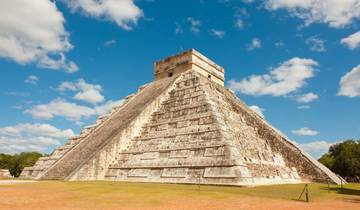
5 days
Mini Wonders of the Maya with the Maya Train
- ✓ Comprehensive Yucatan tour
- ✓ Expert local guides included
- ✓ All accommodation arranged
- ✓ Transportation provided

8 days
Premium Mexico Yucatan Highlights (from Cancun to Tulum)
- ✓ Comprehensive Yucatan tour
- ✓ Expert local guides included
- ✓ All accommodation arranged
- ✓ Transportation provided
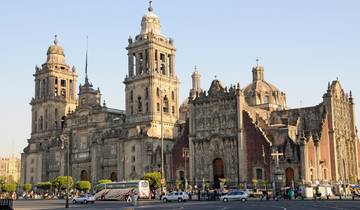
9 days
Mexico City & Merida City (Delight Mexican Cuisine)
- ✓ Comprehensive Yucatan tour
- ✓ Expert local guides included
- ✓ All accommodation arranged
- ✓ Transportation provided
Multi-day tour packages powered by TourRadar. Prices and availability subject to change.
Essential Planning Information for 2026 Coba Visits
Understanding Coba’s Archaeological Significance in 2026
Coba functioned as a major Maya political and economic center from approximately 100 CE through 1550 CE, with peak population and influence occurring during the Late Classic period (600-900 CE). The city’s strategic location between Caribbean coastal trade routes and inland agricultural regions generated the wealth and political power necessary for monumental construction projects. Archaeological evidence indicates Coba maintained strong political alliances with Tikal in Guatemala rather than closer Yucatan Maya cities, resulting in architectural styles and hieroglyphic writing systems more closely resembling Peten Maya traditions than northern Yucatan variants.
The site’s extensive sacbe network demonstrates sophisticated engineering capabilities. These elevated stone causeways connected Coba’s various architectural groups and extended to distant settlements, with the longest confirmed sacbe stretching approximately 100 kilometers to the ancient city of Yaxuna. The causeways averaged 4.5-10 meters in width and rose 1-2 meters above ground level, featuring limestone paving and edge retaining walls. Construction required massive labor investments, with archaeologists estimating millions of person-hours devoted to sacbe building across several centuries. The network facilitated trade goods movement, military communications, and ceremonial processions between Coba and subordinate settlements.
Nohoch Mul pyramid represents Coba’s most significant architectural achievement. Standing 137 feet (42 meters) tall across 9 ascending levels, the pyramid dominates the site’s visual landscape and served as the principal ceremonial structure during Coba’s Late Classic florescence. The structure’s name translates as “Great Mound” in Yucatec Maya, reflecting its massive presence within the ancient cityscape. Archaeological excavations revealed construction occurred in multiple phases spanning 200-300 years, with each building campaign adding height and elaborating the summit temple structures. The pyramid’s orientation aligns with astronomical observations, particularly solstice and equinox sunrise positions critical to Maya calendrical and agricultural systems.
Site Layout and Navigation Strategies for 2026
The Coba archaeological zone encompasses 6.5 square kilometers of excavated and consolidated structures, with the central area containing four major architectural groups: Nohoch Mul, Coba Group, Macanxoc Group, and Paintings Group. Distances between these clusters range from 1-2.5 kilometers along jungle trails and ancient sacbe routes. The site entrance positions visitors at the Coba Group near Lake Coba, with Nohoch Mul pyramid located 2 kilometers northwest along a restored sacbe. Navigation requires either walking the entire circuit (6-8 kilometers total), renting bicycles at the entrance, or hiring bicycle taxis that transport visitors between major structure groups.
Bicycle rental represents the most efficient exploration method in 2026. Rental costs run $50 MXN ($2.50-3 USD) for the day, with simple single-speed cruiser bikes suitable for the flat limestone terrain and wide sacbe routes. The rental facility operates near the entrance gate with bicycle return required before site closing at 5:00 PM. Riding between architectural groups takes 5-10 minutes compared to 20-30 minute walks, allowing visitors to allocate more time for structure exploration and photography rather than transit. Bicycle paths follow the ancient sacbe routes, providing shaded cycling through jungle canopy with occasional clearing views of surrounding landscape and distant structures.
Bicycle taxis offer an alternative for visitors preferring to avoid cycling. These three-wheeled vehicles carry 1-2 passengers with a Maya operator pedaling between site locations. Costs run $150-200 MXN ($8-11 USD) for the complete circuit visiting all major groups, with flexibility to stop at specific structures for designated photography or exploration time. Bicycle taxi operators function as informal guides, sharing basic site information and Maya cultural context during the journey between architectural groups. This option works well for visitors with mobility concerns, families with small children, or those prioritizing photography over physical exercise.
Current Coba Costs and Pricing in 2026
Coba archaeological site admission costs $80 MXN ($4-5 USD) for Mexican nationals and international visitors in 2026, with additional parking fees of $50 MXN ($2.50-3 USD) for private vehicles. Check the official INAH website for current rates as pricing may vary. The admission price includes access to all excavated structure groups, pyramid climbing privileges at Nohoch Mul, and use of site trails and restored sacbe routes. Children under 13 enter free when accompanied by paying adults, while students with valid identification receive 50% discounts on admission. Senior citizens over 60 with Mexican citizenship enter free on Sundays as part of federal heritage access programs.
On-site rental and service costs include bicycle rentals at $50 MXN ($2.50-3 USD), bicycle taxi complete circuit tours $150-200 MXN ($8-11 USD), and locker storage $30 MXN ($1.50-2 USD) near the entrance facilities. The site operates a small restaurant near the entrance serving lunch plates for $150-200 MXN ($8-11 USD) including traditional Yucatecan dishes like cochinita pibil, chicken pibil, and vegetarian options with beans, rice, and tortillas. Bottled beverages cost $25-35 MXN ($1.25-1.75 USD), while fresh coconut water runs $30-40 MXN ($1.50-2 USD). The restaurant maintains limited operating hours typically 8:00 AM-3:00 PM, with menu availability depending on daily preparation and ingredient supply.
Photography costs remain minimal with no additional fees for personal camera use, though professional photography requiring tripods or commercial filming requires special permits obtained through INAH regional offices in advance. Drone photography is strictly prohibited throughout the archaeological zone per federal antiquities protection regulations. Guidebook purchases at the entrance gift shop cost $80-150 MXN ($4-8 USD) depending on publication quality and detail level. Informal guide services offered by local Maya residents near the entrance run $300-500 MXN ($15-25 USD) for 2-3 hour tours covering major structure groups with cultural and historical context.
Transportation Options from Tulum to Coba 2026
Colectivo Shared Vans: Budget Transportation Strategy
Colectivo vans provide the most economical Coba transportation from Tulum in 2026, with one-way fares costing $60-80 MXN ($3-4 USD) and round-trip options at $120-160 MXN ($6-8 USD). These shared vans depart from Tulum’s ADO bus terminal on Avenida Tulum, operating on demand rather than fixed schedules. Colectivos typically depart when reaching 8-12 passenger capacity, with wait times ranging from immediate departure during peak morning hours to 20-45 minutes during slower periods. First morning departures begin around 6:00 AM, with frequent service continuing until approximately 5:00 PM for return trips from Coba.
The colectivo journey takes 45-55 minutes depending on passenger pickup and dropoff patterns along Highway 109. Vans stop to collect and discharge passengers at small communities along the route, adding 5-10 minutes to direct travel time. The vehicles consist of standard passenger vans with 12-15 seats, basic air conditioning, and minimal luggage storage space. Seats fill on a first-come basis without advance reservations, requiring early arrival during high-season months (December-April) to secure space on preferred departure times. Drivers announce the Coba archaeological zone as “Ruinas de Coba” and drop passengers directly at the site entrance gate.
Return colectivos from Coba to Tulum operate from the same entrance area where northbound vans discharge passengers. Service runs continuously throughout the day with peak frequency during 11:00 AM-3:00 PM periods when morning visitors complete their site exploration. Wait times for return service average 10-25 minutes, though afternoon periods after 3:00 PM see reduced frequency requiring 20-45 minute waits. Colectivos returning to Tulum also stop at other destinations including Valladolid (adding 20-30 minutes to journey time) and intermediate communities, so verify the van’s specific route before boarding. The budget-friendly colectivo option sacrifices scheduling flexibility and comfort for significant cost savings compared to private transfers or organized tours.
Private Transfer Services: Flexible Scheduling Approach
Private transfer services from Tulum to Coba cost $80-120 USD for round-trip transportation in 2026, with pricing based on vehicle type, passenger capacity, and booking source. Standard sedan transfers accommodate 1-3 passengers with minimal luggage, while van services handle groups of 4-8 people at rates of $100-150 USD round-trip. The per-person cost for groups of 4-6 travelers approximates colectivo pricing while providing scheduling flexibility, air-conditioned comfort, and direct service without intermediate stops. Private transfers allow custom departure times as early as 5:30-6:00 AM for optimal Coba arrival, plus flexible return timing based on actual site exploration duration.
Transfer booking occurs through Tulum hotels, travel agencies, or online transportation platforms. Advance booking 24-48 hours ensures vehicle availability and preferred departure times, particularly during high-season periods when demand exceeds immediate supply. Reputable transfer companies include licensed drivers with tourism insurance, GPS navigation equipment, and basic English language capability for communication with international visitors. Vehicles maintain air conditioning, clean interiors, and adequate trunk space for backpacks, camera bags, and water supplies necessary for day trip comfort.
The direct transfer journey takes exactly 45 minutes from most Tulum hotel zones to Coba’s entrance gate, following Highway 109 without passenger stops or route deviations. Drivers wait at the archaeological site entrance during the entire visit period, eliminating concerns about return transportation availability or scheduling coordination. This waiting service adds value for visitors uncertain about their preferred exploration duration or those wanting flexibility to extend site time based on crowd conditions or photography opportunities. Transfer services also accommodate add-on stops at nearby cenotes or restaurants for post-visit swimming or lunch, with additional charges of $20-40 USD depending on stop duration and distance from primary Coba route.
Rental Car Self-Drive: Maximum Independence Option
Rental car transportation from Tulum to Coba provides maximum schedule control and routing flexibility in 2026. The 44-kilometer drive follows Highway 109, a two-lane paved road maintained in good condition with clear directional signage at the Coba turnoff from Tulum’s main road system. Drive time averages 45 minutes under normal traffic conditions, with early morning departures (before 7:00 AM) encountering minimal traffic and optimal driving conditions. Parking at Coba costs $50 MXN ($2.50-3 USD) with a secured lot located 100 meters from the entrance gate, providing shade coverage and attendant supervision during site visits.
Rental car costs in Tulum range $35-60 USD per day for economy vehicles through $70-120 USD for SUVs or vans, depending on rental company, season, and advance booking timing. International rental agencies (Hertz, Avis, Budget) maintain Tulum locations along Avenida Tulum and at the airport, while local Mexican rental companies (Easyway, America Car Rental) offer competitive rates with more flexible policies. Insurance requirements add $15-30 USD per day to base rates, with Mexican liability insurance mandatory per federal law regardless of coverage through foreign credit cards or travel insurance policies. Fuel costs add approximately $8-12 USD for the Tulum-Coba round trip based on 2026 gasoline prices of $1.10-1.30 USD per liter and average vehicle fuel economy.
Self-drive benefits include the ability to depart Tulum at optimal times (5:30-6:30 AM for 7:00 AM Coba arrival), flexibility to explore nearby cenotes or communities en route, and no dependency on shared van schedules or private transfer availability. The approach works best for groups of 2-4 travelers splitting rental costs, international visitors comfortable with Mexican driving regulations and road signage, and those planning multi-day road trips incorporating Coba within broader Yucatan exploration itineraries. Navigation requires basic GPS capability or smartphone mapping apps with downloaded offline Mexico maps, as cellular coverage along Highway 109 varies with signal gaps in remote jungle sections.
Climbing Nohoch Mul Pyramid: Essential 2026 Guidance
Physical Requirements and Safety Considerations
Climbing Nohoch Mul pyramid requires moderate physical fitness, steady balance, and comfort with heights. The 120 steps rise at a 45-55 degree angle with each step measuring approximately 12-16 inches in height and 8-10 inches in depth. The steep angle and narrow treads create challenging climbing conditions, particularly for individuals with knee problems, balance issues, or height sensitivity. Most visitors complete the ascent in 10-15 minutes at a comfortable pace with periodic rest stops, while descent takes 8-12 minutes with careful foot placement on each step.
A thick rope secured at the pyramid’s center provides essential climbing assistance. The rope extends from base to summit along the stepped face, allowing climbers to steady themselves during ascent and control descent speed. Site regulations require proper footwear—closed-toe athletic shoes or hiking shoes with good tread—with sandals, flip-flops, and high heels prohibited for safety reasons. Rain conditions close the pyramid to climbing when steps become slippery, with site staff monitoring weather and making closure decisions prioritizing visitor safety over climbing access.
Physical challenges increase during midday heat when surface temperatures on exposed limestone steps reach 110-120°F under direct sunlight. The combination of heat, high humidity (often 70-90%), and physical exertion creates heat exhaustion risks for unprepared visitors. The pyramid offers no shade during climbing, with the exposed vertical face receiving full sun from approximately 9:00 AM through 4:00 PM. These conditions explain why experienced Coba visitors prioritize early morning climbing between 8:00-10:00 AM when temperatures remain 75-85°F and the pyramid’s east face receives partial shade from the pyramid’s own structure.
Summit Experience and Photography Opportunities
The Nohoch Mul summit provides 360-degree panoramic views extending 30-40 kilometers across the Yucatan Peninsula in clear conditions. The vantage point reveals dense jungle canopy stretching to the horizon, with Lake Coba and Lake Macanxoc visible as dark blue openings in the green forest below. Distant Maya structures protrude through the jungle as barely visible mounds and platforms, offering perspective on Coba’s vast archaeological extent beyond excavated and consolidated areas. On exceptional visibility days, careful observers identify the Caribbean Sea as a thin blue line along the eastern horizon approximately 45 kilometers distant.
Photography from the summit captures dramatic wide-angle landscape compositions, with the jungle canopy providing textured foreground leading to distant horizons. Early morning visits (7:00-9:00 AM) offer soft side-lighting that enhances jungle texture and creates atmospheric haze layers in distance. Late afternoon (3:00-5:00 PM before site closing) provides golden hour lighting with warm tones and long shadows, though these times coincide with tour group crowds at the pyramid base. A polarizing filter reduces jungle glare and enriches sky blues, while graduated neutral density filters balance bright sky exposures against darker jungle foreground.
The summit temple structure remains partially intact, with original stone architecture visible on the platform’s east side. This temple area provides photographic opportunities showing Maya construction techniques, architectural details, and the relationship between ceremonial structures and pyramid platforms. Visitors spend 10-25 minutes at the summit photographing, resting, and absorbing the extraordinary perspective on Maya civilization’s forest environment. The descent requires focus and careful foot placement, with many visitors finding the downward journey more psychologically challenging than ascent due to increased awareness of height and steepness angle.
Strategic Timing for Optimal Climbing Conditions
Optimal climbing conditions occur during the site’s first 90 minutes of operation from 8:00-9:30 AM in 2026. During this window, the pyramid hosts only 20-50 total climbers compared to 150-250+ during peak 10:00 AM-2:00 PM periods. The limited crowds allow unhurried climbing pace without waiting for ascending or descending climbers to clear the central rope, plus unobstructed summit photography without dozens of other visitors in frame compositions. Temperature advantages prove equally significant, with 75-82°F morning conditions contrasting sharply with 92-98°F midday heat that makes the exposed climbing physically taxing.
Tour bus arrivals fundamentally change pyramid conditions. The first large tour groups reach Coba around 9:30-10:00 AM, with peak arrivals between 10:30 AM-12:30 PM. Each tour bus brings 35-50 visitors proceeding directly to Nohoch Mul pyramid as the site’s primary attraction. During peak tour hours, 100-200 people queue at the pyramid base waiting for climbing access, with wait times of 20-45 minutes common before reaching the rope to begin ascent. The summit becomes crowded with 20-40 simultaneous visitors, making photography difficult and creating rushed conditions as ascending climbers pressure those at the summit to complete their visit and begin descent.
Afternoon periods after 2:00 PM see reduced crowds as morning tour groups complete their visits and depart for next destinations. Visitors arriving for 2:00-4:00 PM climbing experience fewer crowds than midday peaks, though the trade-off involves high temperatures with full sun exposure on the pyramid’s west face and heat radiating from limestone steps. The 3:00-4:30 PM window before 5:00 PM site closing offers the day’s final quiet period with golden hour lighting, though site staff begins encouraging visitors to descend and exit by 4:30 PM to ensure complete site evacuation by official closing time. Strategic timing choices balance crowd avoidance, temperature comfort, and lighting preferences based on individual priorities.
Complete Coba Exploration: Beyond Nohoch Mul in 2026
Coba Group Archaeological Complex
The Coba Group represents the site’s original civic and ceremonial center, located adjacent to Lake Coba where the ancient city’s population concentrated during early development phases. The architectural complex features the Iglesia pyramid, a 65-foot tall structure with rounded corners and multiple construction phases visible in partially exposed earlier building stages. The pyramid’s name (“Church” in Spanish) derives from Spanish colonial period when the structure’s prominence led explorers to assume religious Spanish colonial construction before recognizing Maya origins. Climbing access to Iglesia closed in the 1990s due to erosion concerns, but the structure provides excellent external photography and architectural study opportunities.
Adjacent to Iglesia stands the Coba ball court, one of several ball courts identified throughout the archaeological zone. This court measures approximately 60 meters in length with vertical side walls featuring stone rings near the top where the rubber ball passed through for scoring. The ball game held deep religious and political significance in Maya culture, with matches sometimes determining political disputes between cities or serving as ritual ceremonies honoring gods and ancestors. The court’s excellent preservation shows detailed architectural elements including carved stone markers and the slope of playing alley surfaces designed to keep the heavy rubber ball in motion during play.
The Paintings Group takes its name from faint traces of original Maya murals still visible on interior temple walls. Located southeast of the Coba Group along a short sacbe, this architectural complex features several small temple structures arranged around a plaza. The murals include representations of Maya deities, nobility, and ceremonial scenes painted in red, blue, and black pigments derived from natural minerals. While the paintings show significant fading and damage from centuries of exposure, enough detail remains visible to indicate the artistic sophistication and iconographic complexity of Maya mural traditions. The Paintings Group receives fewer visitors than Nohoch Mul, creating quiet exploration opportunities for visitors interested in Maya art and religious symbolism.
Macanxoc Group and Stelae Collection
The Macanxoc Group, located 1.5 kilometers south of the site entrance, contains Coba’s most significant collection of carved stone monuments called stelae. These monuments record the dynastic history, military conquests, and astronomical observations of Coba’s ruling elite through hieroglyphic inscriptions and carved relief imagery. The group features 8 major stelae depicting rulers in ceremonial regalia, with accompanying hieroglyphic texts recording dates, events, and genealogical relationships. Stela 1, the group’s most famous monument, shows a female ruler—evidence of women’s occasionally prominent political roles in Maya society.
The stelae date primarily to the Late Classic period (600-900 CE) when Coba achieved maximum political power and territorial extent. Hieroglyphic analysis reveals Coba’s political alliances with distant Peten Maya cities like Tikal and Calakmul rather than nearby Yucatan centers, suggesting the city operated within a broader Mesoamerican political sphere extending hundreds of kilometers beyond the immediate region. The monuments employ Peten-style hieroglyphic conventions and artistic motifs rather than Puuc or Chenes styles characteristic of northern Yucatan sites, archaeologically confirming Coba’s distinct cultural and political orientation.
Visiting Macanxoc Group requires cycling or walking 1.5 kilometers from the entrance along a sacbe through dense jungle. The journey takes 8-12 minutes by bicycle or 20-30 minutes walking, with the route providing shaded transit and occasional wildlife sightings including coatis, agoutis, and numerous tropical bird species. The group receives far fewer visitors than Nohoch Mul, with many Coba tourists skipping this area entirely to maximize pyramid climbing time. The result creates quiet exploration conditions ideal for photography, hieroglyphic study, and contemplation of Maya political history. Budget 30-45 minutes at Macanxoc for comprehensive stela examination and photography of the multiple monuments.
Sacbe Network and Engineering Achievements
Coba’s sacbe network represents one of pre-Columbian Mesoamerica’s most ambitious engineering projects. These elevated limestone causeways connected the city’s various architectural groups and extended to distant settlements throughout the Yucatan Peninsula. The longest confirmed sacbe stretches approximately 100 kilometers from Coba to Yaxuna, a distance requiring multiple days’ travel and crossing diverse terrain including seasonal wetlands, limestone hills, and dense jungle. The causeway’s construction involved clearing vegetation, leveling surfaces, building limestone retaining walls along edges, and paving the route with crushed limestone concrete topped with limestone plaster.
Within Coba’s central zone, approximately 16 sacbeob connect major architectural groups, ranging from short 100-meter paths between adjacent plazas to 2.5-kilometer routes linking distant structural clusters. The causeways average 4.5-10 meters in width and rise 1-2 meters above surrounding ground level, creating clearly defined routes through the jungle landscape. Modern visitors use these ancient routes as bicycle paths and walking trails, experiencing the same elevated perspectives that Maya merchants, warriors, and pilgrims traveled centuries earlier. The sacbeob demonstrate sophisticated surveying capabilities, with routes following efficient paths minimizing distance while avoiding low-lying areas prone to seasonal flooding.
The network facilitated trade goods movement, military communications during conflicts with rival cities, and ceremonial processions during religious festivals. Archaeological evidence suggests sacbeob also served astronomical observation purposes, with some routes aligning to solstice or equinox sunrise and sunset positions important to Maya calendar systems and agricultural timing. The massive labor investment required for construction—estimated at millions of person-hours across several centuries—reflects the political power and economic resources available to Coba’s ruling elite. Walking or cycling these ancient engineering marvels provides tangible connection to Maya technological achievements and the sophisticated urban planning that characterized classical Maya civilization.
Sample 2026 Itineraries and Cost Breakdowns
Budget Independent Day Trip Itinerary
This economical approach minimizes costs while maximizing archaeological exploration time. Depart Tulum via 6:30 AM colectivo from ADO terminal ($60-80 MXN/$3-4 USD), arriving Coba by 7:30 AM. The early arrival provides optimal climbing conditions with minimal crowds and comfortable temperatures. Purchase site admission $80 MXN ($4-5 USD) and bicycle rental $50 MXN ($2.50-3 USD) at entrance, then cycle directly to Nohoch Mul pyramid for 8:00-8:30 AM climbing. Spend 60-90 minutes at the pyramid including ascent, summit time, and descent plus photography around the structure’s base and plaza areas.
Continue cycling exploration to Coba Group (10-minute ride) for 9:30-10:30 AM visit examining the Iglesia pyramid and ball court. The timing positions this visit before major tour bus arrivals around 10:30-11:00 AM. Cycle to Paintings Group (5-minute ride) for 10:45-11:15 AM examination of the mural fragments and smaller temple structures. For visitors with energy and interest, extend the exploration to Macanxoc Group (15-minute ride from Paintings Group) for 11:30 AM-12:15 PM stelae examination, though many budget travelers skip this distant group to conserve time and energy.
Return to entrance area by 12:30 PM via bicycle return at rental facility. Depart Coba on return colectivo between 12:30-1:00 PM ($60-80 MXN/$3-4 USD), arriving back in Tulum by 2:00 PM. Eat packed lunch during travel or upon return to Tulum rather than using on-site restaurant. Total day cost: Colectivo round-trip $120-160 MXN ($6-8 USD), admission $80 MXN ($4-5 USD), bicycle $50 MXN ($2.50-3 USD), packed lunch $100-150 MXN ($5-8 USD prepared at hotel or purchased at Tulum market before departure), water and snacks $50-80 MXN ($2.50-4 USD). Total: $450-520 MXN per person ($22-26 USD), excluding Tulum accommodation.
Comfort-Focused Private Transfer Itinerary
This mid-range approach emphasizes comfort and flexibility while maintaining reasonable costs for small groups. Book private round-trip transfer 24-48 hours in advance ($80-120 USD total for vehicle, divided among 2-4 passengers = $20-60 USD per person depending on group size). Arrange 6:00 AM pickup from Tulum hotel for 6:45-7:00 AM Coba arrival. The private transfer eliminates colectivo wait times and provides air-conditioned comfort with luggage space for camera equipment, extra clothing layers, and substantial water supplies.
Begin site exploration immediately at 7:00 AM with bicycle rental $50 MXN ($2.50-3 USD) and admission $80 MXN ($4-5 USD). Cycle directly to Nohoch Mul for 7:15-8:45 AM pyramid climbing with summit time extended to 30-40 minutes for comprehensive photography without crowd pressure. The early timing provides exceptional light conditions and virtually private pyramid access. Continue to Coba Group for 9:00-10:00 AM detailed exploration including extensive photography of Iglesia pyramid from multiple angles and ball court architectural documentation.
Visit Paintings Group 10:15-11:00 AM, then cycle to Macanxoc Group for 11:15 AM-12:00 PM stelae examination and photography. The comprehensive coverage includes all major archaeological areas with adequate time for photography, hieroglyphic study, and jungle environment appreciation. Return to entrance by 12:15 PM for lunch at on-site restaurant ($150-200 MXN/$8-11 USD). Depart Coba at 1:30 PM for return transfer to Tulum, arriving 2:15 PM with afternoon free for beach time or rest.
Optional enhancement: Instruct driver to stop at Cenote Choo-Ha or Cenote Multum-Ha (2 kilometers from Coba) for 30-45 minute swimming break after site visit. Cenote admission adds $100-150 MXN ($5-8 USD) per person but provides refreshing swimming opportunity and enhanced cultural experience. Total day cost: Private transfer share $20-60 USD per person (depending on group size), admission $80 MXN ($4-5 USD), bicycle $50 MXN ($2.50-3 USD), lunch $150-200 MXN ($8-11 USD), drinks and snacks $50-80 MXN ($2.50-4 USD), optional cenote $100-150 MXN ($5-8 USD). Total: $35-55 per person (excluding accommodation), $40-63 with cenote addition.
Extended Cultural Immersion Itinerary
This comprehensive approach combines archaeological exploration with cultural activities and cenote swimming for full-day experience. Depart Tulum 6:00 AM via private transfer or rental car for 6:45 AM Coba arrival. Begin with 7:00-9:00 AM pyramid climbing and primary site exploration following the comfort itinerary pattern above. Complete all major architectural groups including Macanxoc by 11:30 AM, then visit the small Maya community of Coba village (1 kilometer from archaeological entrance) for 12:00-1:00 PM lunch at family-run restaurant specializing in traditional Yucatecan cuisine.
The village lunch provides authentic cultural experience with home-style preparation of cochinita pibil (achiote-marinated pork slow-roasted in banana leaves), pollo pibil (chicken equivalent), handmade tortillas, and traditional side dishes including black beans, pickled onions, and habanero salsa. Lunch costs $120-180 MXN ($6-9 USD) per person for generous portions with drinks. Engage with Maya family operating the restaurant about traditional cooking methods, agricultural practices, and contemporary Maya community life.
After lunch, visit nearby cenote cluster including Cenote Choo-Ha, Cenote Tamcach-Ha, and Cenote Multum-Ha (2 kilometers from Coba village along well-signed access road). These three cenotes feature underground cavern swimming with dramatic stalactite formations and crystal-clear water averaging 75-78°F year-round. Combined admission costs $250-300 MXN ($13-15 USD) for access to all three cenotes, with 1.5-2 hours adequate for swimming, photography, and cave exploration. The cenotes provide physical refreshment after morning archaeological exertion while offering geological and ecological learning opportunities about Yucatan’s karst limestone landscapes.
Return to Tulum by 4:00-4:30 PM, completing a full-day cultural immersion experience. Total costs: Private transfer/rental car $20-60 USD per person, admission $80 MXN ($4-5 USD), bicycle $50 MXN ($2.50-3 USD), village lunch $120-180 MXN ($6-9 USD), cenote admission $250-300 MXN ($13-15 USD), drinks and snacks $80-120 MXN ($4-6 USD). Total: $50-75 per person (excluding accommodation). This itinerary works best for visitors with strong interest in Maya culture, those seeking active adventure combining archaeology with swimming, and travelers wanting comprehensive regional experience beyond isolated monument visiting.
Practical Tips and Strategies for 2026 Visits
What to Bring for Optimal Coba Experience
Essential items for successful Coba visits begin with proper footwear. Closed-toe athletic shoes or hiking shoes with good tread prove necessary for pyramid climbing, with the steep steps and rope requiring secure foot placement. Sandals, flip-flops, and any open-toe footwear violate site safety regulations and prevent pyramid climbing privileges. The extensive site layout also demands comfortable walking or cycling shoes, as visitors typically accumulate 5-8 kilometers of walking even with bicycle use for major structure transit.
Hydration supplies prove critical given Yucatan’s heat and humidity. Bring minimum 2-3 liters of water per person in reusable bottles or hydration bladders, with extra water for post-climbing refreshment and afternoon site exploration. The on-site restaurant and entrance vendors sell bottled water at $25-35 MXN ($1.25-1.75 USD), but purchasing water in Tulum before departure reduces costs to $12-18 MXN ($0.60-0.90 USD) per liter. Electrolyte supplements or sports drinks help replace salts lost through perspiration during physical exertion in tropical heat.
Sun protection includes broad-spectrum SPF 50+ sunscreen applied before site entry and reapplied every 90-120 minutes during extended visits. The pyramid climbing exposes visitors to direct equatorial sun without shade protection, with reflected heat from limestone surfaces intensifying exposure. Wide-brimmed hats provide head and neck sun protection, though secure fitting proves essential during bicycle riding on potentially bumpy sacbe surfaces. Lightweight long-sleeve shirts and pants offer additional sun protection while allowing body cooling through breathable fabrics. Sunglasses with UV protection reduce glare from limestone surfaces and improve visibility during bright midday periods.
Photography Equipment and Strategy
Camera equipment for Coba depends on photography priorities and physical carrying capacity. Wide-angle lenses (16-35mm on full-frame, 10-24mm on crop sensor) prove essential for pyramid summit landscape photography, architectural detail shots, and sacbe perspective compositions. Standard zoom lenses (24-70mm or 24-105mm) handle most archaeological photography needs including structure details, hieroglyphic close-ups, and environmental portraits. Telephoto capability (70-200mm or 100-400mm) benefits wildlife photography along jungle trails and distant structure documentation from pyramid summit.
Tripods present complications at Coba given the extensive walking, bicycle transportation, and site regulations limiting professional photography equipment without special permits. Monopods offer acceptable compromise providing some stabilization without tripod bulk or regulatory concerns. The pyramid summit prohibits tripod use due to space limitations and crowd management needs. Most visitors successfully complete comprehensive Coba photography using handheld techniques with image stabilization and appropriate shutter speeds, particularly during optimal morning lighting conditions when adequate light eliminates low-shutter-speed requirements.
Drone photography remains strictly prohibited throughout Coba archaeological zone per federal INAH regulations protecting antiquities sites. Violations result in equipment confiscation, substantial fines, and potential criminal charges under Mexico’s federal antiquities protection laws. Site staff actively monitor for drone use and respond immediately to any aerial photography attempts. Visitors seeking aerial perspectives must rely on pyramid summit photography or book helicopter tours operating from Playa del Carmen with special INAH permits for aerial archaeological photography.
Weather Considerations and Seasonal Planning
Coba’s tropical climate divides into distinct dry (November-April) and rainy (May-October) seasons affecting visit planning. Dry season months provide reliable sunny conditions with minimal rain risk, comfortable morning temperatures 70-80°F, and lower humidity averaging 60-75%. These optimal conditions explain peak tourism during December-March when North American and European visitors escape winter weather. The trade-off involves maximum crowds at popular sites like Nohoch Mul pyramid even during early morning hours, with 100-200 visitors common at the pyramid base by 9:00 AM during peak season.
Rainy season visits require weather flexibility but offer significant crowd reductions. Morning hours typically remain clear with afternoon thunderstorms developing 2:00-5:00 PM. Strategic planning with 7:00 AM arrival allows complete site exploration before afternoon rain, with departure by 1:00-2:00 PM avoiding most precipitation. Rain gear including lightweight waterproof jacket and backpack rain cover provides protection for unexpected showers. The pyramid closes during active rain when steps become slippery, with closures lasting 30-90 minutes until surfaces dry sufficiently for safe climbing resumption.
Temperature management proves essential throughout the year. Morning visits (7:00-10:00 AM) provide the most comfortable conditions with temperatures 75-85°F even during summer months. Midday heat reaches 92-98°F during April-August with high humidity creating heat index values of 105-115°F. These extreme conditions make midday pyramid climbing physically demanding and potentially dangerous for visitors unprepared for tropical heat. Afternoon visits after 2:00 PM see slight temperature reductions but maintain high humidity until sunset cooling begins around 6:00 PM, well after the 5:00 PM site closing.
Cultural Context and Visitor Etiquette for 2026
Respecting Maya Heritage and Archaeological Preservation
Coba remains a significant cultural heritage site for contemporary Maya communities in addition to its international tourism role. The ancient city represents ancestral heritage for Maya people whose descendants continue living in communities surrounding the archaeological zone. Respectful visitor behavior acknowledges this living cultural connection rather than treating the site purely as tourist attraction or historical curiosity. Interactions with Maya site staff, vendors, and community members benefit from recognizing their cultural authority and hereditary connection to the location.
Archaeological preservation concerns limit physical interaction with ancient structures. Site regulations prohibit touching carved monuments, hieroglyphic inscriptions, or painted murals, with oils from skin contact accelerating deterioration of limestone surfaces and pigments. Photography remains permitted throughout the site, but removing artifacts, climbing roped-off structures, or creating graffiti results in serious legal consequences including federal criminal charges under Mexico’s antiquities protection laws. These regulations exist to preserve Coba for future generations and maintain the site’s integrity for ongoing archaeological research.
The climbing privilege at Nohoch Mul pyramid represents a special access opportunity that visitors should treat respectfully. Following site rules including proper footwear requirements, avoiding climbing during rain closures, and moving steadily during ascent and descent without extended stops blocking other climbers demonstrates consideration for both safety regulations and other visitors’ experiences. The climbing opportunity remains subject to ongoing review by Mexican archaeological authorities, with continued access depending on responsible visitor behavior and acceptable structural wear patterns from tourism traffic.
Supporting Local Maya Communities
Economic benefits from Coba tourism support local Maya communities through various channels. Site admission revenues fund ongoing archaeological excavation, conservation work, and facility maintenance while supporting INAH’s broader cultural preservation mission throughout Mexico. Local Maya residents staff site operations including entrance gates, facility maintenance, and security services, providing employment connected to their ancestral heritage. Purchasing from entrance vendors selling handicrafts, snacks, and beverages directs tourism income to community members augmenting agricultural income from the challenging limestone soil conditions of the Yucatan.
Bicycle rental operations at the entrance employ local Maya residents, with rental revenues supporting extended family networks typical of Maya community economic structures. The on-site restaurant sources ingredients including tortillas, produce, and meat from nearby Maya agricultural communities, creating market opportunities for small-scale farmers facing competition from industrial agriculture. Dining at community restaurants in Coba village rather than chain restaurants in Tulum further amplifies tourism’s benefits for local Maya economic development.
Respectful cultural engagement includes learning basic Yucatec Maya phrases for greetings and thanks: “Ba’ax ka wa’alik” (What do you say? – informal greeting), “Dios bo’otik” (Thank you, God pay you – traditional thanks), “Tu’ux yanech?” (Where are you from? – conversation starter). While most site staff and vendors speak functional Spanish and often basic English, demonstrating interest in Maya language shows cultural respect and frequently opens deeper cultural exchanges about Maya traditions, agricultural practices, and contemporary community life in the Yucatan Peninsula.
Safety and Security Considerations
Coba maintains excellent safety records with minimal crime affecting tourists. The archaeological zone employs security staff monitoring site areas, with particular attention to entrance zones, parking areas, and the isolated Macanxoc Group location. Standard travel safety practices including securing valuables in hotel safes rather than carrying during site visits, maintaining awareness of surroundings and personal belongings, and avoiding displays of expensive jewelry or equipment prove adequate for safe visits. The colectivo van system operates safely with licensed drivers and established routes, though monitoring personal belongings during boarding and departure prevents opportunistic theft.
Physical safety concerns focus on heat-related issues and climbing accidents. Heat exhaustion symptoms including dizziness, nausea, excessive fatigue, and confusion require immediate response through hydration, cooling, and rest in shaded areas. The site entrance area maintains a small first-aid station with basic medical supplies and Spanish-speaking staff who can contact emergency services if necessary. Climbing accidents typically involve minor scrapes, twisted ankles, or falls on steps, preventable through proper footwear, careful attention to foot placement, and appropriate use of the central climbing rope.
Wildlife encounters at Coba remain generally benign. The jungle environment supports diverse fauna including coatis (raccoon relatives), agoutis (large rodents), various lizard species, and numerous tropical birds. These animals habituate to human presence and exhibit minimal aggressive behavior. However, feeding wildlife violates site regulations and creates problematic behavior patterns encouraging animals to approach visitors aggressively seeking food. Snakes including venomous species inhabit the jungle but rarely appear along maintained trails and sacbe routes where visitor traffic discourages wildlife presence. Standard precautions including watching foot placement and avoiding reaching into dark spaces or log piles prevent the unlikely event of snake encounters.
Frequently Asked Questions About Coba from Tulum 2026
Is Coba worth visiting from Tulum in 2026?
Yes, Coba merits inclusion in Tulum-based itineraries for visitors interested in Maya archaeology, particularly those motivated by the increasingly rare opportunity to climb a major pyramid. The site offers distinct experiences unavailable at Tulum ruins including extensive jungle environment, large-scale sacbe network, multiple architectural groups requiring bicycle exploration, and the climbable Nohoch Mul pyramid providing summit views. The 45-minute travel distance positions Coba as convenient day trip, with 5-7 hour total durations leaving afternoons free for Tulum beach time or other activities. Budget considerations favor Coba with admission costs of only $4-5 USD plus minimal transportation expenses, providing substantial archaeological value for moderate financial investment. Visitors should prioritize Coba if interested in climbing experiences, jungle archaeological settings, or comprehensive Maya site exploration beyond coastal locations.
Can you visit both Tulum ruins and Coba in one day?
Yes, visiting both Tulum ruins and Coba in one day proves logistically feasible though physically demanding. The optimal sequencing visits Coba first with 6:30-7:00 AM departure from Tulum hotel, 3-4 hour Coba exploration 7:30-11:30 AM, return to Tulum by 12:30 PM, and afternoon Tulum ruins visit 2:00-4:30 PM after brief rest. This schedule provides optimal Coba conditions during early morning cool periods while reserving Tulum’s more compact site for afternoon when temperatures peak. The combined visits total 7-8 hours of active archaeological exploration including significant walking and climbing, requiring good physical fitness and Mexico heat tolerance. An alternative approach splits visits across two days, allowing more relaxed pace and better photography opportunities at each location. Budget approximately $15-18 USD total for both site admissions plus transportation costs.
What is better, Chichen Itza or Coba?
Coba and Chichen Itza offer distinct archaeological experiences with different strengths. Chichen Itza features more dramatic restored architecture including the iconic Kukulcan pyramid, elaborate Warrior’s Temple, and massive ball court, but prohibits pyramid climbing and attracts enormous crowds with 8,000-10,000 daily visitors during peak season. Coba provides climbable pyramid access, extensive jungle environment, bicycle exploration through connected architectural groups, and significantly fewer crowds with 1,500-2,000 daily visitors. Chichen Itza lies 2 hours from Tulum (178 kilometers) requiring full-day commitment, while Coba’s 45-minute proximity (44 kilometers) allows half-day visits. Photography enthusiasts favor Chichen Itza for dramatic architectural documentation, while adventure-oriented visitors prefer Coba’s climbing opportunity and jungle setting. Budget-conscious travelers appreciate Coba’s lower costs: $4-5 USD admission versus Chichen Itza’s $28-30 USD. Ideally visit both sites for comprehensive understanding of Maya civilization’s regional diversity.
How difficult is climbing the Coba pyramid?
Climbing Nohoch Mul pyramid demands moderate physical fitness but remains accessible for most healthy adults. The 120 steps rise at 45-55 degree angle with 12-16 inch step heights and 8-10 inch depths, creating steep climbing conditions requiring steady balance and comfortable height tolerance. Most visitors complete the ascent in 10-15 minutes using the central rope for stability, with rest stops common during the climb. Descent proves more psychologically challenging for some visitors due to increased height awareness and steep downward angle requiring careful foot placement on each narrow step. Physical challenges increase during midday heat when exposed limestone surfaces reach 110-120°F, making early morning climbing (8:00-10:00 AM) significantly more comfortable. Individuals with knee problems, significant balance issues, severe height phobia, or cardiovascular conditions should assess personal capabilities carefully before attempting the climb. The rope provides essential assistance, and thousands of visitors successfully complete the climb daily including older adults and families with teenagers.
Can children climb the Coba pyramid?
Children ages 10 and older with good coordination and balance successfully climb Nohoch Mul pyramid under direct parental supervision. Site regulations do not specify minimum age requirements, leaving climbing decisions to parental judgment of individual children’s capabilities. The steep steps, height exposure, and crowds during peak hours create challenging conditions for young children who may freeze midway during ascent or descent, creating difficult rescue scenarios. Families with children interested in climbing should visit during early morning hours (8:00-9:30 AM) when fewer crowds reduce pressure and provide more flexibility for slower climbing pace. Parents must closely supervise children throughout the climb, with physical assistance available if children struggle with steps or become frightened by height. Many families with younger children (under 10) choose to forgo pyramid climbing in favor of lower-risk activities including ground-level structure exploration, sacbe bicycle riding, and jungle wildlife observation.
Is Coba open on Sundays?
Yes, Coba operates regular hours on Sundays, opening 8:00 AM and closing 5:00 PM. Sunday visits attract Mexican families taking advantage of weekend leisure time, creating moderate crowd levels intermediate between weekday tranquility and peak-season intensity. Mexican citizens over age 60 enter free on Sundays as part of federal cultural access programs promoting heritage tourism among domestic populations. International visitors pay standard admission rates regardless of day of week. Sunday timing strategies mirror weekday recommendations with early morning arrival (8:00-9:00 AM) providing optimal climbing conditions before midday crowds and heat. Transportation options function normally on Sundays with colectivo service operating regular frequencies from Tulum ADO terminal throughout the day.
What should I wear to Coba?
Appropriate Coba attire balances sun protection, heat management, and site regulation compliance. Closed-toe athletic shoes or hiking shoes with good tread prove mandatory for pyramid climbing, with sandals and flip-flops prohibited by safety regulations. Lightweight, breathable clothing in light colors reflects heat while allowing perspiration evaporation—moisture-wicking synthetic fabrics perform better than cotton in tropical humidity. Long-sleeve shirts and pants provide enhanced sun protection for extended site visits, though many visitors prefer shorts and short sleeves during morning hours when temperatures remain comfortable. Wide-brimmed hats protect face and neck from direct sun, particularly crucial during midday periods when shade becomes unavailable. Sunglasses reduce glare from bright limestone surfaces. Modest clothing showing respect for the cultural heritage site proves appropriate, avoiding swimwear, very short shorts, or revealing clothing. Pack lightweight rain jacket during May-October rainy season for afternoon thunderstorm protection.
Are there bathrooms at Coba?
Yes, Coba maintains bathroom facilities near the entrance area with basic amenities including toilets, sinks, and paper supplies. The facilities operate standard flush toilets rather than pit latrines, with cleaning maintenance occurring multiple times daily during peak visiting hours. However, bathroom facilities do not exist within the archaeological zone along trails or at distant structure groups like Macanxoc, requiring visitors to use entrance facilities before beginning site exploration. The site’s extensive layout with 2.5 kilometer maximum distance from entrance to Macanxoc Group creates potential complications for visitors with urgent bathroom needs during exploration. Strategic planning includes using facilities immediately before site entry and monitoring water intake to balance hydration needs against bathroom access limitations during 3-4 hour archaeological visits.
Can I bring food and drinks into Coba?
Yes, visitors may bring food and beverages into Coba archaeological zone. Site regulations permit backpacks, water bottles, and packed meals, with consumption allowed at designated rest areas including shaded benches near major architectural groups. Bringing adequate water supplies (2-3 liters per person) proves essential given tropical heat, limited vendor availability within the zone, and physical demands of extensive walking and pyramid climbing. Packed lunches reduce costs compared to on-site restaurant use and provide flexibility for extended visits without returning to entrance dining facilities. Site regulations prohibit littering with all trash requiring pack-out in personal bags, and prohibit alcoholic beverages throughout the archaeological zone. Glass containers require careful packing to prevent breakage during bicycle transport along bumpy sacbe routes. The entrance area features multiple vendors selling water, soft drinks, beer (for consumption outside archaeological zone), and snack foods at standard tourist markup pricing $25-50 MXN ($1.25-2.50 USD) per item.
How long does it take to see everything at Coba?
Comprehensive Coba exploration including all major architectural groups requires 3-4 hours. Basic itineraries focusing on Nohoch Mul pyramid and Coba Group take 2-2.5 hours, while adding Paintings Group extends visits to 2.5-3 hours. Complete coverage including distant Macanxoc Group with stelae examination requires 3.5-4.5 hours depending on photography interests, hieroglyphic study time, and cycling versus walking pace between structure groups. Time allocations break down approximately: entrance procedures and bicycle rental 10-15 minutes, Nohoch Mul pyramid visit including climbing 60-90 minutes, Coba Group exploration 30-45 minutes, Paintings Group 20-30 minutes, Macanxoc Group 30-45 minutes, plus transit time between groups totaling 30-45 minutes by bicycle. Extended visits exceeding 4 hours suit archaeology enthusiasts, professional photographers seeking optimal lighting at multiple locations, or visitors combining site exploration with extended nature observation along jungle trails.