Cinque Terre Day Trip from Florence 2026: Complete Travel Guide
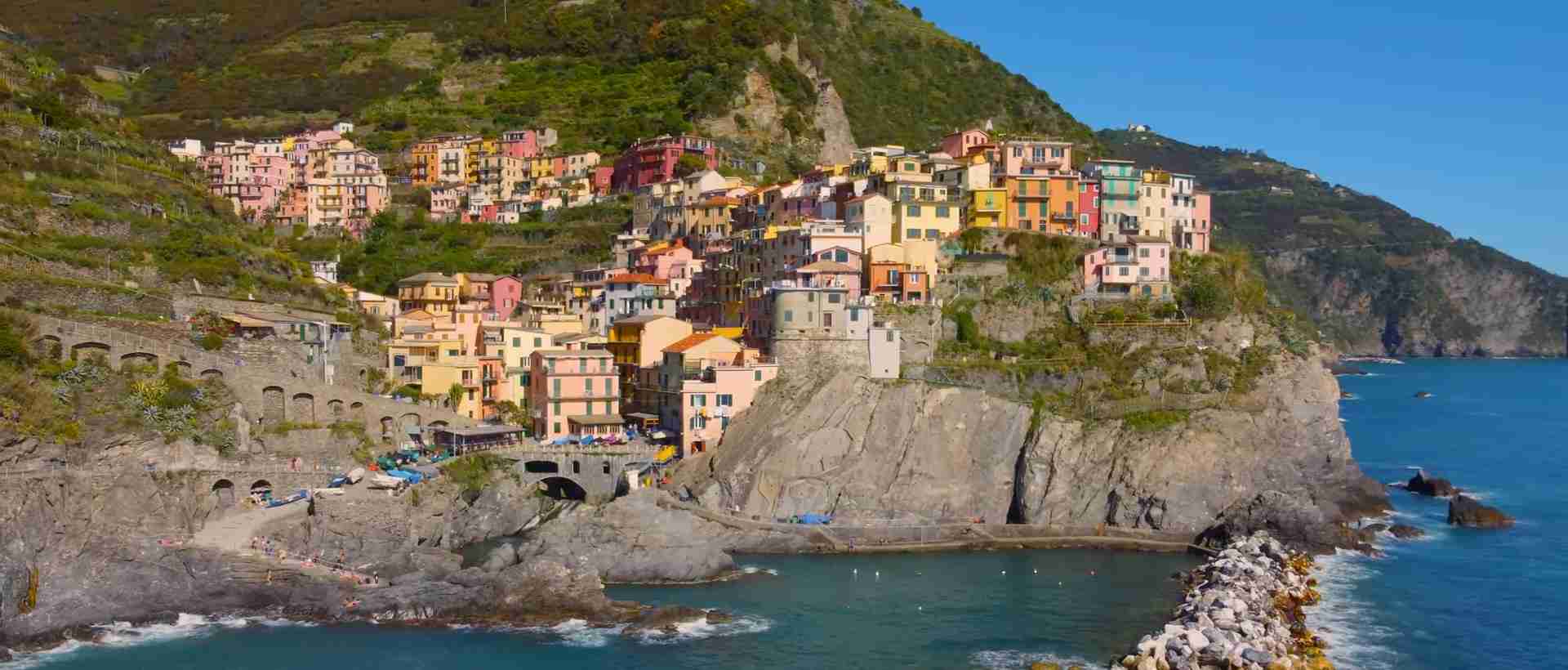
The Cinque Terre’s five pastel-colored fishing villages cling to impossibly steep cliffs along the Ligurian coastline 150 kilometers northwest of Florence, creating one of Italy’s most photographed UNESCO World Heritage landscapes accessible via direct train connections. Regional services from Florence’s Santa Maria Novella station reach La Spezia Centrale in 2-2.5 hours, where frequent local trains shuttle visitors among Monterosso, Vernazza, Corniglia, Manarola, and Riomaggiore—villages connected by coastal hiking trails, narrow medieval streets, and terraced vineyards producing the region’s distinctive sweet Sciacchetrà wine.
Key Takeaways
- Direct trains from Florence to La Spezia operate 24-44 times daily with journey times ranging 1 hour 58 minutes (fastest Frecciargento services) to 2 hours 27 minutes (regional trains), costing €10-23 depending on booking timing and train type. Check official Trenitalia website for current rates as pricing may vary.
- The Cinque Terre Train Card provides unlimited local train travel between La Spezia and Levanto plus access to paid hiking trails, costing €14.80-32.50 per day in 2026 depending on demand period (low/medium/high season classification). Verify current pricing on the official Cinque Terre National Park website as rates vary by specific travel date.
- Complete day trip costs from Florence range €45-85 per person including round-trip train tickets, Cinque Terre Train Card, meals, and miscellaneous expenses, making it an achievable full-day excursion for budget-conscious travelers
- Early morning departures from Florence (7:00-8:00 AM) enable arrival in first Cinque Terre village by 10:00-10:30 AM, providing 7-8 hours for exploring 2-3 villages before evening return trains to Florence
- The iconic Sentiero Azzurro (Blue Trail) coastal hiking path connecting Monterosso-Vernazza-Corniglia requires Cinque Terre Card access, while numerous free inland trails offer alternatives for hikers avoiding paid routes
- Summer months (June-September) deliver maximum daylight and warmest weather but bring intense crowding requiring strategic timing, while spring (April-May) and early autumn (September-October) offer optimal weather-crowd balance for day-trippers
People Also Ask About Cinque Terre Day Trips from Florence 2026
Is Cinque Terre a good day trip from Florence in 2026?
Cinque Terre represents an ambitious but achievable day trip from Florence in 2026, rewarding early departures with 7-8 hours among the five villages despite 4-5 hours total spent on trains. Direct Florence-La Spezia services (2-2.5 hours each way) enable realistic single-day visits when travelers depart Florence by 7:00-8:00 AM and accept compressed exploration focusing on 2-3 villages rather than comprehensive five-village coverage. The experience proves worthwhile for travelers prioritizing the distinctive clifftop village scenery and Mediterranean coastal atmosphere impossible to replicate elsewhere in Tuscany, though the long train journeys necessarily reduce time at destination compared to overnight stays enabling relaxed multi-day exploration. Travelers with flexible Italy itineraries benefit from adding one overnight in Cinque Terre or La Spezia to transform rushed day visits into immersive experiences, while those with limited schedules find the day trip delivers sufficient exposure to the region’s essential character justifying the transportation investment.
How much does a Cinque Terre day trip from Florence cost in 2026?
Complete Cinque Terre day trips from Florence cost €45-85 per person in 2026 depending on train class selections, dining choices, and optional hiking trail access. Budget-conscious travelers minimize expenses to €45-55 through advance-purchase regional train tickets (€20-26 round-trip), Cinque Terre Train Card at low-season rates (€14.80-19.50), packed lunch from Florence (€8-10), and limiting spending to essential gelato and coffee (€5-8). Mid-range visitors spend €60-75 including faster Frecciargento trains (€35-45 round-trip), Cinque Terre Card at medium-demand pricing (€21-27), restaurant lunch at village trattoria (€15-25), and typical incidentals including drinks and snacks (€8-12). Premium day trips reach €80-100 incorporating first-class train tickets (€50-65 round-trip), high-season Cinque Terre Card (€28-33), waterfront seafood lunch (€30-40), gelato at multiple villages (€10-15), and aperitivo before departure (€8-12). These costs exclude Florence-based accommodation as day trips by definition return to Florence nightly—overnight Cinque Terre or La Spezia stays add €60-200+ for hotels depending on property category and season.
What time should I leave Florence for Cinque Terre day trip in 2026?
Departing Florence’s Santa Maria Novella station between 7:00-8:00 AM optimizes Cinque Terre day trip logistics in 2026 by arriving La Spezia Centrale around 9:00-10:30 AM, connecting with local trains reaching first village (Riomaggiore or Monterosso depending on route choice) by 10:00-11:00 AM when shops open and crowds remain manageable. This schedule provides 7-8 hours of village exploration and hiking before catching practical return trains from La Spezia to Florence departing 6:00-7:00 PM, arriving Florence 8:00-9:30 PM for late dinner. Earlier departures (6:00-6:30 AM trains from Florence) deliver additional morning hours particularly valuable for photographers seeking soft light and empty village streets, though extreme early rising proves taxing for many travelers. Later departures (9:00-10:00 AM trains) remain viable but compress available time—10:00 AM Florence departure reaches first village around 1:00 PM, limiting itinerary to 4-5 hours enabling exploration of 1-2 villages maximum rather than the 2-3 village coverage possible with early starts. Summer’s extended daylight (sunset after 8:30 PM June-August) permits slightly more flexible timing as late afternoon arrivals still provide quality exploration hours, while spring and autumn’s earlier sunsets (7:00-7:30 PM April-May, September-October) reward morning-focused itineraries maximizing daylight hours at destination.
Do I need the Cinque Terre Card for a day trip in 2026?
The Cinque Terre Card’s necessity for day trips in 2026 depends entirely on planned activities—hikers intending to walk the famous Sentiero Azzurro (Blue Trail) coastal path connecting Monterosso-Vernazza-Corniglia require the card for mandatory trail access (€7.50-15 trekking-only card or €14.80-32.50 combined train-and-trekking card), while visitors focusing on village exploration via trains can purchase individual point-to-point tickets instead (€2.70-5 per segment). The Cinque Terre Train Card (including unlimited local trains plus hiking access) proves economical for travelers planning 6+ train segments in single day or combining 3+ train rides with coastal hiking, as the card pays for itself compared to individual ticket costs while eliminating ticket machine queues at each station. However, visitors exploring only 2 villages via train find individual tickets more economical (€8-12 total for 4 segments covering round-trip between villages), particularly during low-season when card pricing reaches €14.80-19.50 minimum. Budget day-trippers can avoid the card entirely by selecting free inland hiking trails (over 100 kilometers throughout the region requiring no access fees) combined with single train rides or bus connections between villages, though this approach sacrifices the iconic coastal trail views that constitute Cinque Terre’s primary appeal for most visitors.
Extended multi-day tours – 5+ days
Featured Liguria Multi-Day Tour Packages
8 days
Cinque Terre: Hike, Bike & Kayak
- ✓ Comprehensive Liguria tour
- ✓ Expert local guides included
- ✓ All accommodation arranged
- ✓ Transportation provided
7 days
Cinque Terre : Hiking Self Guided Tour – 7 days from Sestri Levante
- ✓ Comprehensive Liguria tour
- ✓ Expert local guides included
- ✓ All accommodation arranged
- ✓ Transportation provided
3 days
3-Days Florence & Cinque Terre Adventure: Discover the Best of Tuscany and the Italian Riviera
- ✓ Booking needs min. 2 travelers
7 days
Walking in the Cinque Terre and Portofino
- ✓ Comprehensive Liguria tour
- ✓ Expert local guides included
- ✓ All accommodation arranged
- ✓ Transportation provided
Multi-day tour packages powered by TourRadar. Prices and availability subject to change.
Introduction
Cinque Terre’s UNESCO World Heritage designation, awarded in 1997, recognizes not merely the five villages’ architectural preservation but the exceptional cultural landscape resulting from a millennium of human adaptation to one of the Mediterranean’s most challenging coastal terrains. Monterosso al Mare, Vernazza, Corniglia, Manarola, and Riomaggiore occupy isolated cliff-edge positions connected historically by mule tracks and coastal footpaths rather than roads, creating settlement patterns and agricultural terracing systems virtually unchanged since medieval times. This geographic isolation preserved the villages through Italy’s industrial transformation and mass coastal development of the 20th century, leaving intact the pastel-painted tower houses, narrow caruggi (alleyways), and steep vineyard terraces that now attract 2.5 million annual visitors to a region spanning merely 18 square kilometers.
The practical appeal of Cinque Terre day trips from Florence centers on accessible transportation infrastructure making what was historically a remote destination reachable within 2-2.5 hours via direct train services. Florence’s Santa Maria Novella station serves as northern Tuscany’s primary rail hub with frequent connections to La Spezia Centrale, the coastal city functioning as Cinque Terre’s gateway where visitors transfer to the Cinque Terre Express—regional trains running every 15-30 minutes connecting all five villages plus adjacent towns Levanto and Monterosso. This integrated rail network eliminates the need for car rental (impractical given villages’ car-free historic centers and extremely limited parking) while enabling flexible village-hopping impossible when relying on infrequent buses or expensive water taxi services.
What distinguishes Cinque Terre from competing Mediterranean coastal destinations is the concentration of photogenic villages within a compact linear geography spanning just 12 kilometers of coastline. This proximity enables comprehensive multi-village exploration within single-day parameters—travelers choosing strategic 2-3 village itineraries accomplish sufficient exposure to the region’s essential character without the rushed superficiality afflicting many ambitious day trip routes. The villages’ clifftop positions create dramatic vertical townscapes where colorful four-story houses stack impossibly against sheer rock faces, their shuttered windows and balconies framing glimpses of the Ligurian Sea hundreds of meters below. These architectural compositions, combined with the terraced vineyard landscapes climbing hillsides behind each village, deliver extraordinary visual impact within compact geographic areas requiring minimal walking distances between scenic viewpoints.
Understanding Cinque Terre’s seasonal dynamics proves essential for successful 2026 day trip planning. The region experiences extreme peak season crowding June-September when daily visitor numbers can exceed 30,000 across the five villages, creating bottleneck conditions on narrow village streets, 30-45 minute train platform queues, and restaurant waits stretching beyond 90 minutes at prime lunch hours. These challenges intensify during Italian summer holidays (particularly Ferragosto around August 15) and weekends throughout warm months when domestic tourists from Milan, Florence, and Genoa converge on the region. Conversely, spring shoulder season (April-May) and early autumn (September-early October) deliver near-ideal conditions combining comfortable temperatures (18-25°C), reduced though still substantial tourist volumes, and fully operational train schedules before winter service reductions begin November.
The challenge inherent in Cinque Terre day trips from Florence stems from the 4-5 hours total spent on trains (approximately 2 hours each direction Florence-La Spezia, plus local train segments between villages) consuming nearly half of a 10-12 hour day trip window. This transportation overhead necessitates strategic planning prioritizing efficiency over comprehensiveness—attempting to visit all five villages in single day results in rushed 30-45 minute village stops barely sufficient for quick photos and gelato, while focused 2-3 village itineraries allow 1.5-2 hours per destination enabling meaningful exploration of village centers, waterfront areas, and selected hiking trail segments. Most experienced Cinque Terre day-trippers accept that comprehensive five-village coverage requires overnight stays, treating single-day visits as sampling experiences establishing familiarity with the region potentially inspiring return visits for deeper exploration.
This guide provides comprehensive 2026-specific information for planning Cinque Terre day trips from Florence, addressing train route optimization, Cinque Terre Card economics, village selection strategies, hiking trail options, seasonal timing considerations, and budget planning. Each section functions as standalone resource answering specific planning questions while maintaining cross-references to related topics for readers constructing complete itineraries. Whether seeking budget-conscious exploration or premium experiences with waterfront dining and coastal trail hiking, Cinque Terre’s accessibility from Florence and integrated public transportation make it one of Tuscany’s most rewarding day trip destinations despite the necessarily compressed timeframes.
Transportation from Florence to La Spezia 2026
Florence’s Santa Maria Novella station serves as the departure point for Cinque Terre day trips, offering 24-44 daily train connections to La Spezia Centrale with journey times ranging 1 hour 58 minutes (fastest Frecciargento high-speed services) to 2 hours 51 minutes (slower regional trains with Pisa connections). Second-class tickets cost €10-23 depending on train type and booking timing, with advance-purchase regional fares starting around €10-13 and same-day Frecciargento tickets reaching €35-45. Check Trenitalia’s official website for current rates as pricing varies by specific departure and booking channel.
Frecciargento high-speed trains provide the fastest Florence-La Spezia connections at 1 hour 58 minutes to 2 hours 10 minutes, operating 4-6 times daily with departures concentrated morning and early afternoon hours. These services command premium fares (€25-45 second class depending on advance booking) but include reserved seating, air conditioning, and superior onboard comfort compared to regional alternatives. The speed advantage proves marginal for Cinque Terre day trips—saving 20-30 minutes versus slower regional trains rarely justifies 100-150% higher ticket costs, particularly when that saved time gets absorbed by inevitable waiting periods for local train connections at La Spezia.
Regional trains represent the most economical Florence-La Spezia option at €10-20 second-class fares, operating throughout the day with 15-25 daily departures including both direct services (2 hours 27 minutes average) and connections via Pisa Centrale (2 hours 10 minutes to 2 hours 51 minutes total). Direct regional trains prove slower than Pisa connection options despite the counterintuitive logic—the direct routes follow coastal tracks with numerous intermediate stops, while Pisa connections utilize faster inland lines reducing overall journey time despite the transfer. Most travelers find the 10-20 minute Pisa transfer worthwhile for both time savings and lower fares compared to premium Frecciargento services.
Optimal departure timing from Florence balances arrival at Cinque Terre against fatigue from excessive early rising. The 7:00-8:00 AM departure window enables La Spezia arrival around 9:00-10:30 AM depending on train type, connecting with Cinque Terre Express services reaching first village by 10:00-11:00 AM. Specific recommended trains include the 7:20 AM regional via Pisa (arriving La Spezia 9:38 AM), 7:53 AM Frecciargento direct (arriving 9:51 AM), and 8:08 AM regional direct (arriving 10:35 AM). Earlier departures (6:00-6:30 AM) exist for travelers prioritizing maximum village time but require pre-dawn wake-ups potentially reducing daytime energy levels. Later departures (9:00-10:00 AM) prove viable for relaxed morning routines but compress destination time to 4-6 hours rather than optimal 7-8 hour windows.
Return trains from La Spezia to Florence operate until late evening with final practical departures around 7:00-8:00 PM, though 6:00-7:00 PM departures provide comfortable buffers against delays or last-minute village exploration extensions. The journey back to Florence requires similar 2-2.5 hours, arriving Florence between 8:00-10:00 PM depending on departure timing and train selection. Evening regional trains typically run less frequently than morning services—verify return schedules when planning day trips to avoid being stranded by gaps in service or missing final convenient connections.
Booking strategies for Florence-La Spezia trains depend on flexibility requirements and budget priorities. Regional train tickets remain valid for any train on travel date without specific time restrictions, purchased at station automated machines or ticket windows for €10-20 depending on route. These unreserved tickets must be validated in yellow machines on platforms before boarding to avoid €50 fines, with validation creating 4-6 hour validity windows from stamp time. Advance booking provides no discounts on standard regional fares—purchase morning of departure at Florence station proves equally economical as online advance booking for these unreserved services.
Frecciargento and Intercity services require specific train reservations with tickets tied to particular departures. Advance booking (7-30 days before travel) can reduce fares to €18-28 compared to same-day tickets reaching €35-45, though these discounted advance tickets typically include restrictive change and cancellation policies. Travelers confident in specific departure times benefit from advance Frecciargento booking, while those preferring flexibility find standard regional tickets more practical despite marginally longer journey times.
Santa Maria Novella station sits in Florence’s historic center within 10-15 minute walk of most central accommodations, with excellent public bus connections (lines C2, C3, 6, 11) and taxi stands for travelers staying in outlying areas. The station’s impressive 1930s modernist architecture houses 19 platforms serving regional, high-speed, and international services, with Florence-La Spezia trains typically departing from platforms 5-12 on the station’s eastern side. Digital departure boards display platform assignments 10-20 minutes before scheduled departures—arrive station 15-20 minutes early to locate platform, validate regional tickets if necessary, and board without rush.
La Spezia Centrale serves as the transfer point where all Florence-based Cinque Terre day-trippers change from mainline trains to Cinque Terre Express local services. The station sits in La Spezia’s city center on Piazza Medaglie d’Oro, functioning as major regional hub with connections throughout Liguria and Tuscany. Cinque Terre Express trains depart from La Spezia’s lower-numbered platforms (typically 1-4), clearly marked with “Cinque Terre” signage directing passengers to correct boarding areas. Transfer times between arriving Florence trains and departing Cinque Terre Express services typically require 10-20 minutes allowing for platform changes, ticket purchases if needed, and brief orientation within the station.
Understanding the Cinque Terre Train Card 2026
The Cinque Terre Train Card (Cinque Terre Treno MS Card) combines unlimited regional train travel between Levanto and La Spezia with access to paid hiking trails, local bus services, and various park amenities under single pass costing €14.80-32.50 per day in 2026 depending on demand classification. The Cinque Terre National Park divides the calendar year into three demand periods—low (A), medium (B), and high (C)—with card pricing adjusted accordingly to manage visitor volumes and fund trail maintenance. Check the official Cinque Terre National Park calendar at parconazionale5terre.it for specific date classifications as rates vary by individual travel day.
Low-demand period (A) pricing applies to most March-April weekdays, May weekdays excluding holidays, and most October dates, with 1-day adult Train Card costing €14.80-19.50, 2-day cards €25-35, and 3-day cards €34-47. Medium-demand (B) rates cover June weekdays, most weekdays in early September, and select spring weekends, raising 1-day adult cards to €21-27, 2-day to €37-49, and 3-day to €50-66. High-demand (C) pricing applies to July-August, September weekends, all major Italian holidays, and peak spring weekends (Easter, April 25 Liberation Day, May 1), with 1-day adult cards reaching €28-33, 2-day €52-59, and 3-day €70-79.
The card’s value proposition requires mathematical evaluation based on planned train usage and hiking intentions. Individual Cinque Terre Express train tickets cost €2.70-5 per segment depending on distance—the short Manarola-Riomaggiore journey costs €2.70, while longer Monterosso-Riomaggiore trips reach €5. A typical day trip involving 6-8 train segments (example: La Spezia-Riomaggiore-Manarola-Corniglia-Vernazza-Monterosso-La Spezia) totals €18-32 in individual tickets, making the Train Card economical even at high-demand pricing when combined with trail access worth €7.50-15 as standalone hiking fee.
However, visitors exploring only 2 villages via train accumulate just 4 segments (example: La Spezia-Riomaggiore-Manarola-La Spezia) costing €10-15 in individual tickets, substantially below Train Card costs during medium and high-demand periods. These travelers should evaluate whether trail hiking justifies the card premium over individual tickets, or consider the trekking-only card (€7.50-15 without trains) combined with minimal point-to-point train tickets for specific journeys.
The Cinque Terre Trekking Card (without train travel) costs €7.50-15 per day depending on demand period, providing trail access, bus services, and park amenities identical to the Train Card minus unlimited train travel. This option suits travelers staying overnight within the villages (eliminating need for frequent La Spezia transfers) or those planning extensive hiking with minimal train use. Day-trippers from Florence typically find the full Train Card more practical due to inevitable multiple train segments, though budget-conscious visitors focusing on 1-2 villages plus extensive free trail hiking can save €7-18 daily using the trekking-only card plus limited individual train tickets.
Children ages 4-11 receive approximately 40% discounts on all Cinque Terre Card pricing—low-demand 1-day Train Card costs €9-11 for children versus €14.80-19.50 adults, with proportional savings across all demand periods and durations. Seniors over 70 receive modest 10-15% discounts. Family tickets covering 2 adults plus 2+ children (ages 4-11) provide 20-25% savings versus individual ticket totals—low-demand family 1-day Train Card costs €39-49 compared to €48-61 for four individual tickets. Children under age 4 travel free on all trains and access park services without charge when accompanied by adult holding valid Cinque Terre Card.
Cinque Terre Card Purchase and Logistics 2026
Cinque Terre Cards are available for purchase through multiple channels including online advance booking (recommended peak season), ticket offices at La Spezia Centrale and all five village train stations, tourist information points, and trail entrance booths at Sentiero Azzurro access points. Online purchase through the official Cinque Terre National Park website (card.parconazionale5terre.it) or MyPass mobile app enables advance booking avoiding ticket office queues during peak season when lines at popular stations like Monterosso and Vernazza can extend 30-45 minutes during midday hours.
Online booking requires selecting specific travel date and card type (Train Card vs. Trekking Card, duration 1/2/3 days), with digital tickets delivered via email as PDF files displayable on smartphones. The card becomes active upon first validation at green validation machines located on train platforms or at trail entrances, remaining valid until midnight of final day for multi-day cards. Travelers must write their full name on card back before first use and carry valid photo identification, as park staff and train inspectors regularly check cards and require ID verification to prevent sharing or transfer between users.
Station ticket offices at La Spezia Centrale open daily 7:00 AM-8:00 PM during peak season (April-October) with reduced hours 8:00 AM-6:00 PM November-March. Village station offices maintain variable hours with most opening 8:00-9:00 AM and closing 6:00-7:00 PM, subject to seasonal adjustments and occasional lunch closures at smaller stations. Arriving La Spezia Centrale by 9:00-10:00 AM typically allows card purchase with minimal queuing, while midday arrivals (11:00 AM-2:00 PM) peak season encounter longest waits as morning train arrivals from Florence, Genoa, and Milan converge simultaneously.
Automated ticket machines at major stations (La Spezia, Monterosso, Riomaggiore) sell Cinque Terre Cards during high season, though these machines frequently malfunction or run out of card stock during peak periods. Rely on staffed ticket offices or advance online purchase rather than depending on automation, particularly when tight schedules leave no buffer time for troubleshooting machine failures or seeking alternative purchase points.
The card includes several ancillary benefits beyond train travel and trail access. Local ATC buses connecting village centers with hillside sanctuaries, parking areas, and campgrounds operate free for cardholders, who otherwise pay €1.90-2.80 per bus ride. Public restrooms at all five village train stations (normally €1 per use) are free for cardholders. Selected museums in La Spezia including the Amedeo Lia Museum and CAMeC contemporary art museum offer discounted admission (typically 50% reductions) for card presentation. Free Wi-Fi access at park hotspots located in train stations enables mobile connectivity without consuming international data plans or paying for café Wi-Fi access.
Cinque Terre Village Profiles and Selection Strategies 2026
Monterosso al Mare occupies the northernmost position among the five villages, distinguished by Cinque Terre’s only significant beach—a crescent of coarse sand and pebbles extending 200 meters along the New Town waterfront backed by beach clubs offering umbrella and lounge chair rentals (€15-25 daily). The village divides into Old Town (concentrated around 13th-century Church of San Giovanni Battista with distinctive black-and-white striped facade) and New Town (developed late 1800s-early 1900s with hotels, restaurants, and beach facilities), connected by pedestrian tunnel carved through headland. Monterosso’s relatively flat terrain and beach facilities make it Cinque Terre’s most family-friendly village, though the beach focus and larger commercial development diminish the clifftop fishing village charm epitomized by smaller villages like Vernazza and Manarola.
Vernazza claims status as Cinque Terre’s most photogenic village based on its quintessential clifftop composition visible from harbor-level viewpoints and approaching coastal trails. The village clusters around a tiny natural harbor protected by 14th-century Doria Castle watchtower, with colorful tower houses ascending steep hillside arranged in terraced layers creating extraordinary three-dimensional townscape. The harborside Piazza Marconi functions as Vernazza’s social center, lined with outdoor restaurant tables where visitors consume freshly-caught anchovies and Ligurian focaccia while watching fishing boats navigate the narrow harbor entrance. Vernazza’s compact size enables thorough exploration in 60-90 minutes including castle climb (€1.50 voluntary contribution) for panoramic village and coastline views, making it ideal centerpiece for 2-3 village day trip itineraries.
Corniglia distinguishes itself as Cinque Terre’s only village without direct sea-level access, perched instead on 100-meter-high promontory requiring 377-step Lardarina staircase climb from train station or alternative shuttle bus service included with Cinque Terre Card. This vertical isolation preserved Corniglia’s agricultural character longer than coastal siblings—the village center retains working-class authenticity with local shops serving residents rather than tourist-focused boutiques, while surrounding terraced vineyards produce Cinque Terre’s finest wines including prized Sciacchetrà dessert wine from sun-dried grapes. Corniglia’s quiet atmosphere and minimal commercial development appeal to travelers seeking respite from crowds overwhelming Vernazza and Monterosso during peak season, though the stair climb or bus transfer adds 15-20 minutes to visit logistics compared to harbor-level villages.
Manarola presents Cinque Terre’s second-most photographed viewpoint—the harbor approach from Via Birolli captures pastel tower houses cascading down cliff face to tiny boat ramp, with composition appearing on countless postcards, Instagram posts, and travel publications. The village’s compact historic center follows single main street (Via Discovolo) lined with wine shops selling locally-produced Cinque Terre DOC and restaurants specializing in trofie pasta with pesto and seafood antipasti. Manarola’s train station sits immediately adjacent to village center (unlike Monterosso or Riomaggiore where 5-10 minute walks separate station from core), enabling efficient exploration in limited time frames. The village serves as ideal southern endpoint for day-trippers entering Cinque Terre from La Spezia, who can visit Manarola first before proceeding north to Corniglia and Vernazza.
Riomaggiore functions as Cinque Terre’s southernmost and second-largest village (after Monterosso), with steeply terraced houses painted traditional Ligurian pastels descending narrow ravine to small harbor and boat ramp. The village’s main street (Via Colombo) follows ancient streambed now covered, creating canyon-like passage through four-story buildings whose upper floors connect via arched bridges spanning the street. Riomaggiore offers most developed restaurant and shop infrastructure after Monterosso, making it practical lunch destination though lacking the concentrated scenic impact of Vernazza or Manarola’s signature viewpoints. The village serves as starting point for Via dell’Amore (Lovers’ Lane), the famous clifftop walkway to Manarola reopened 2024 after 12-year closure following 2012 landslide—note this section requires additional €10 fee beyond standard Cinque Terre Card and advance time-slot reservation at viadellamore.info.
Strategic village selection for day trips from Florence depends on available time, hiking intentions, and photographic priorities. Budget-conscious travelers maximizing village exposure should focus on Vernazza-Manarola-Riomaggiore circuit (southern villages) utilizing La Spezia as efficient entry point—this combination delivers Cinque Terre’s two most iconic village viewpoints (Vernazza harbor, Manarola boat ramp approach) plus the reopened Via dell’Amore coastal walk in 6-7 hours including train transfers and village exploration. Hikers prioritizing coastal trail experience should target Monterosso-Vernazza-Corniglia (northern villages) where the dramatic Sentiero Azzurro sections remain open, combining Vernazza’s photogenic harbor with Monterosso’s beach atmosphere and Corniglia’s vineyard landscapes.
Families with young children benefit from Monterosso-Vernazza combination providing beach activities, relatively level town centers compared to Corniglia’s stairs or Manarola’s steep streets, and concentrated restaurant options in compact areas. Photography enthusiasts seeking iconic Cinque Terre images prioritize Vernazza-Manarola pairing capturing the region’s signature clifftop village compositions, potentially adding Corniglia’s elevated vineyard viewpoints if time permits. First-time visitors attempting comprehensive introduction should focus on Vernazza as essential centerpiece, adding Manarola for contrasting clifftop perspective and available time permitting either Monterosso (beach, larger scale) or Corniglia (agricultural, quiet) as third village rather than attempting rushed coverage of all five villages in insufficient time.
Hiking Trails and Coastal Paths 2026
The Sentiero Azzurro (Blue Trail) represents Cinque Terre’s most famous hiking route, connecting all five villages via coastal clifftop path originally constructed as mule track and footpath linking isolated communities before road access arrived mid-20th century. The complete trail spans approximately 12 kilometers requiring 5-6 hours continuous hiking, though most visitors walk individual sections rather than the full route. As of 2026, two sections remain open—Monterosso to Vernazza (3.5 kilometers, 90 minutes, moderate difficulty with steep climbs) and Vernazza to Corniglia (4 kilometers, 90-120 minutes, moderate to difficult with elevation changes)—while the Corniglia-Manarola and original Manarola-Riomaggiore segments remain closed following landslides and erosion damage.
The Monterosso-Vernazza trail section delivers Cinque Terre’s most dramatic coastal scenery accessible to moderately fit hikers, ascending from Monterosso through terraced lemon groves and vineyards before traversing exposed clifftop sections offering spectacular Mediterranean views. The path includes steep stone staircases, uneven footing requiring sturdy shoes, minimal shade during summer midday hours, and exposure to sun and wind on clifftop segments. Water and sun protection prove essential—carry minimum 1 liter water per person, wear sun hat and high-SPF sunscreen, and avoid hiking during peak heat hours (12:00-4:00 PM) June-August when temperatures exceed 30°C and shade disappears.
The Vernazza-Corniglia section presents greater physical challenge than Monterosso-Vernazza due to sustained elevation gains and descents totaling approximately 500 meters vertical change across 4-kilometer distance. The trail rewards effort with vineyard landscapes, ancient stone terracing systems, and dramatic views across Vernazza’s harbor approached from elevated positions impossible to appreciate at village level. This section sees lighter traffic than Monterosso-Vernazza due to increased difficulty, providing quieter hiking experience for travelers comfortable with sustained climbs and exposure to heights along narrow clifftop passages.
Access to both open Sentiero Azzurro sections requires valid Cinque Terre Card (Train Card or Trekking Card), checked at trail entrance booths where park staff verify card validity and ID before permitting entry. Trail conditions vary seasonally—spring (April-May) provides optimal hiking weather with temperatures 15-22°C, abundant wildflowers, and green vineyard terraces, while summer heat (25-32°C June-August) creates challenging conditions particularly on exposed clifftop segments lacking shade. Autumn (September-October) delivers comfortable temperatures and grape harvest atmosphere though increased rain probability creates slippery trail conditions. Winter (November-March) sees trail closures during adverse weather with reduced or eliminated park staff presence at entrance points.
Via dell’Amore (Lovers’ Lane) connecting Riomaggiore and Manarola reopened August 2024 after 12-year closure, though with significant access changes from pre-2012 conditions. The 900-meter paved walkway carved into cliff face 30 meters above sea level now requires separate €10 entrance fee beyond standard Cinque Terre Card, advance reservation for specific 30-minute time slots via viadellamore.info, and mandatory helmet wearing provided at entrance. These restrictions manage visitor numbers preventing overcrowding on the narrow path while generating revenue for ongoing maintenance. The 15-20 minute walk delivers romantic clifftop views and historical connection to Cinque Terre’s past, though many travelers question whether the additional fee and reservation complexity justify the brief experience particularly when numerous free alternative trails offer superior scenery with greater solitude.
Free hiking trails throughout Cinque Terre National Park exceed 100 kilometers total distance, providing alternatives to paid Sentiero Azzurro sections while offering equally stunning though different perspectives on the landscape. The Sanctuaries Trail (Sentiero Rosso) connects hilltop religious shrines above each village via ridgetop paths through chestnut forests and terraced vineyards, requiring significant elevation gain (200-400 meters per village) but rewarding effort with panoramic coastal and mountain views. This high trail remains open year-round and requires no Cinque Terre Card access fee, making it ideal for budget-conscious hikers or those visiting during winter when coastal trails close.
Village-specific inland trails include the Monterosso to Levanto coastal path (easy-moderate, 8 kilometers, 2.5 hours through olive groves), Vernazza to Reggio sanctuary loop (moderate, 3 kilometers, 90 minutes with 300-meter elevation gain), and Manarola to Volastra vineyard circuit (easy-moderate, 4 kilometers, 90-120 minutes through terraced vineyards). These trails provide quality hiking experiences without crowds overwhelming the Sentiero Azzurro segments, though they sacrifice the iconic clifftop coastal views and village-to-village connectivity that make the Blue Trail Cinque Terre’s signature attraction.
Hiking timing strategies balance daylight availability, heat avoidance, and crowd management. Spring and autumn enable comfortable all-day hiking with temperatures remaining pleasant 8:00 AM-6:00 PM, while summer necessitates early morning starts (7:00-9:00 AM departures) or late afternoon hiking (after 4:00 PM) avoiding midday heat extremes. Morning hikes benefit from softer light for photography and emptier trails before mid-morning tour group arrivals, while afternoon options provide golden-hour lighting though compressed time before sunset and last train departures to La Spezia.
Sample Cinque Terre Day Trip Itineraries from Florence 2026
Classic Northern Villages Circuit (Monterosso-Vernazza-Corniglia): Depart Florence Santa Maria Novella 7:20 AM regional train via Pisa arriving La Spezia Centrale 9:38 AM. Purchase Cinque Terre Train Card at La Spezia station (15 minutes), catch 10:00 AM Cinque Terre Express to Monterosso arriving 10:35 AM. Explore Monterosso Old Town, beach area, and waterfront 10:45 AM-12:15 PM. Hike Sentiero Azzurro coastal trail Monterosso-Vernazza 12:30-2:00 PM (90 minutes with photo stops). Lunch in Vernazza harborside restaurant 2:15-3:15 PM (€18-28). Explore Vernazza village and climb castle tower 3:15-4:30 PM. Train to Corniglia 4:45 PM, bus or climb Lardarina stairs to village (5:00-5:15 PM). Explore Corniglia center and vineyard viewpoints 5:15-6:30 PM. Train from Corniglia 6:45 PM to La Spezia arriving 7:10 PM. Depart La Spezia 7:30 PM regional train arriving Florence 9:51 PM. Total costs: Florence-La Spezia train €22-26 round-trip, Cinque Terre Train Card €14.80-27 (depending on demand period), lunch €25, gelato/drinks €8 = €70-86 per person (excluding accommodation).
Southern Villages Photography Focus (Manarola-Riomaggiore-Vernazza): Depart Florence 8:08 AM regional arriving La Spezia 10:35 AM. Purchase Cinque Terre Train Card, depart La Spezia 11:00 AM to Manarola arriving 11:15 AM. Manarola exploration including classic harbor viewpoint photography, Via Discovolo shopping 11:30 AM-1:00 PM. Lunch at Manarola trattoria 1:00-2:00 PM (€20-30). Train to Riomaggiore 2:15 PM arriving 2:20 PM. Riomaggiore Via Colombo walking, harbor area exploration 2:30-4:00 PM. Optional Via dell’Amore to Manarola (requires separate €10 fee plus advance reservation) or train to Vernazza 4:15 PM arriving 4:35 PM. Vernazza golden-hour photography, aperitivo at harborside café 4:45-6:30 PM (€10-15). Train to La Spezia 6:45 PM arriving 7:15 PM. Depart La Spezia 7:46 PM Frecciargento arriving Florence 9:44 PM. Total costs: Florence-La Spezia train €20-24 round-trip regional, Cinque Terre Train Card €14.80-27, lunch €25, Riomaggiore-Manarola visits €8, Vernazza aperitivo €12 = €80-96 per person (excluding accommodation), add €10 for Via dell’Amore if visiting.
Budget-Conscious Two-Village Maximum: Depart Florence 8:08 AM regional arriving La Spezia 10:35 AM. Walk from La Spezia station to Manarola without Cinque Terre Card—purchase individual train ticket €4 Manarola one-way. Explore Manarola 11:00 AM-2:00 PM including packed lunch from Florence (€8-10). Individual train ticket €4 Manarola-Vernazza. Vernazza exploration and early dinner at budget-friendly focacceria 2:30-6:00 PM (€12-18). Individual train ticket €5 Vernazza-La Spezia. Depart La Spezia 7:30 PM regional arriving Florence 9:51 PM. Total costs: Florence-La Spezia train €20-24 round-trip, individual Cinque Terre trains €13 total (€4+4+5), packed lunch €9, Vernazza focaccia dinner €15 = €57-61 per person (excluding accommodation). This budget approach saves €7-26 versus Cinque Terre Train Card by limiting train segments and skipping paid trails, though sacrificing trail access and travel flexibility.
Comprehensive Three-Village Day: Depart Florence 7:20 AM regional arriving La Spezia 9:38 AM. Purchase Cinque Terre Train Card, depart 10:15 AM to Riomaggiore arriving 10:30 AM. Quick Riomaggiore orientation walk 10:30-11:30 AM. Train to Manarola 11:40 AM. Manarola exploration and lunch 11:50 AM-2:00 PM (€22-32). Train to Vernazza 2:15 PM arriving 2:35 PM. Vernazza extended exploration, possible short coastal trail walk toward Monterosso (30-40 minutes partial hike returning to Vernazza rather than full trail to Monterosso) 2:45-6:00 PM. Gelato and final village stroll 6:00-6:45 PM (€4-6). Train to La Spezia 7:00 PM arriving 7:30 PM. Depart La Spezia 8:00 PM regional arriving Florence 10:27 PM. Total costs: Florence-La Spezia train €22-26, Cinque Terre Train Card €14.80-27, lunch €27, gelato/drinks €6 = €70-86 per person (excluding accommodation).
Dining and Food Costs Cinque Terre 2026
Cinque Terre restaurant pricing reflects the region’s tourist-dependent economy and challenging logistics supplying remote clifftop villages, with meal costs running 20-30% above equivalent Florence establishments. Waterfront restaurants in prime Vernazza and Monterosso harbor positions charge €15-25 for pasta primi (trofie al pesto, spaghetti alle vongole), €20-35 for seafood secondi (grilled branzino, fried calamari, anchovy preparations), and €8-12 for contorni side dishes including Ligurian vegetable preparations. A two-course waterfront lunch with wine typically costs €30-45 per person, while three-course dinners with aperitivo reach €50-70 per person at popular establishments.
Budget-conscious alternatives include focaccerie selling Ligurian flatbread by weight (€3-6 per generous serving), pizza-by-slice shops (€4-7 per slice plus drink), and take-away options from alimentari (grocery shops) assembling sandwiches, local cheese, and fresh bread (€6-10 total). These options enable portable meals consumed at scenic viewpoints, harborside benches, or train platforms rather than dedicating 60-90 minutes to restaurant service during compressed day trip schedules.
Signature Cinque Terre dishes merit sampling despite premium pricing. Trofie al pesto utilizes traditional Ligurian basil pesto with twisted pasta ideal for capturing the sauce, while anchovies (acciughe) prepared fresh, marinated, or fried showcase the local fishing tradition. Sciacchetrà dessert wine produced from sun-dried grapes in Corniglia and Manarola vineyards costs €6-12 per glass but offers authentic taste of the region’s viticultural heritage. Farinata (chickpea flour flatbread) sold at focaccerie provides inexpensive filling snack at €3-5 per portion reflecting working-class Ligurian food traditions predating tourist development.
Strategic meal timing reduces costs and wait times compared to peak lunch hours (1:00-2:30 PM) when restaurants fill completely and service slows. Early lunch (12:00-12:45 PM) or late lunch (2:30-3:30 PM) enables easier table access and faster service, while some establishments offer reduced-price pranzo fisso (fixed lunch menus) outside peak hours at €12-18 including primo, secondo, and beverage. Dinner proves less practical for day-trippers given evening train schedules requiring La Spezia departure by 7:00-8:00 PM, though early aperitivo (5:00-6:30 PM) combining drinks with complimentary appetizers (€8-15) provides satisfying late-afternoon sustenance before return trains.
Gelato shops in all five villages charge tourist-oriented prices at €3.50-5 for two scoops compared to €2.50-3.50 equivalent servings in Florence, though quality generally matches pricing with artisanal production using local ingredients. Coffee costs remain relatively reasonable at €1.50-2 for espresso at bar, €3-5 for cappuccino seated with harbor view—these represent worthwhile expenditures for rest breaks and atmospheric village immersion rather than pure refreshment value.
Seasonal Timing and Weather Considerations 2026
Spring shoulder season (April-May) delivers near-optimal Cinque Terre conditions combining comfortable temperatures (15-22°C), reduced tourist volumes compared to summer peak, wildflower blooms throughout terraced landscapes, and full train schedule operations before summer frequency increases June. April experiences higher precipitation probability than May (8-10 rainy days monthly versus 6-7 days), though spring showers typically arrive as brief afternoon thunderstorms rather than all-day downpours disrupting plans. May’s later sunset (approaching 8:30 PM by month’s end) enables extended afternoon village exploration compared to April’s 7:45 PM sunset limiting evening activities.
Summer peak season (June-August) offers maximum daylight hours (sunrise before 6:00 AM, sunset after 8:30 PM), warmest weather enabling swimming in village harbors and at Monterosso beach, and fullest train frequencies with Cinque Terre Express departures every 15-20 minutes during peak hours. These advantages come at cost of intense tourist crowding—daily visitor numbers regularly exceed 25,000-30,000 across five villages creating bottleneck conditions on narrow streets, long restaurant waits (60-90 minutes without reservations during lunch peak), and packed trains requiring 20-30 minute platform queues at major stations. July-August temperatures frequently surpass 30°C with high humidity, making midday hiking uncomfortable and potentially dangerous without adequate water and sun protection.
Early autumn (September through mid-October) rivals spring as Cinque Terre’s premium season, delivering summer’s warm weather (20-26°C September declining to 16-22°C October) with significantly reduced tourist volumes once Italian schools resume after Labor Day. September maintains near-summer train frequencies and hours while October sees gradual reductions toward winter schedules beginning November. Grape harvest occurs September-October creating atmospheric vineyard activity and festival celebrations in villages, while autumn’s stable high-pressure weather patterns deliver extended sunny periods ideal for photography and hiking. Water temperatures remain swimmable through September (20-22°C) declining to borderline October (18-20°C), with Monterosso beach facilities operating through September before phased October closures.
Late autumn and winter (November-March) transform Cinque Terre into quiet destination with minimal international tourism, significantly reduced train frequencies (30-60 minute intervals versus 15-30 minute summer service), and winter closure of many restaurants and shops particularly in smaller villages like Corniglia. Temperatures range 8-15°C November-December and 6-12°C January-March, with frequent rain (10-12 days monthly November-February) and occasional dramatic winter storms creating spectacular wave action but closing hiking trails and ferry services. The Sentiero Azzurro coastal trail closes entirely November-March due to landslide risk during wet season, while other trails remain open weather-permitting though trail maintenance staff presence drops to minimal levels. Budget travelers benefit from dramatically reduced accommodation costs (€40-80 nightly versus €100-200+ peak season) and emptier villages enabling authentic local atmosphere, though limited dining options, reduced train schedules, and trail closures make winter visits appropriate primarily for travelers prioritizing low costs and solitude over comprehensive activity access.
Budget Planning and Cost Breakdown 2026
Transportation represents the largest fixed expense category for Cinque Terre day trips from Florence, with round-trip Florence-La Spezia train tickets costing €20-52 depending on train type and booking timing. Regional trains (€20-26 round-trip) provide most economical option requiring 2 hours 10 minutes to 2 hours 51 minutes each direction, while Frecciargento high-speed services (€36-52 round-trip when advance-booked, up to €70-90 same-day) reduce journey time to 1 hour 58 minutes to 2 hours 10 minutes. The Cinque Terre Train Card adds €14.80-32.50 daily depending on demand period, though travelers visiting only 1-2 villages can substitute individual train tickets (€8-15 total) eliminating card cost at expense of reduced flexibility and no trail access.
Dining expenses vary dramatically based on restaurant selection and meal timing. Waterfront restaurants charge €25-45 for two-course lunch with drinks, mid-range trattorias inland from harbors reduce costs to €18-28 for equivalent meals, and budget focaccerie plus take-away options enable €8-15 meals providing adequate sustenance without table service time investment. Most day-trippers find €20-30 lunch budget realistic for quality restaurant meals balancing cost control against experience quality, though ultra-budget strategies including packed lunch from Florence reduce food costs to €8-12 daily.
Miscellaneous costs including gelato (€3.50-5), espresso and drinks (€6-10 daily), Via dell’Amore entrance if visiting (€10 additional), and souvenir purchases (variable) add €10-25 to daily expenses depending on indulgence level. Water should be purchased in Florence (€1-2 per 1.5-liter bottle) rather than at inflated village prices (€3-4), with refillable bottles reducing ongoing beverage costs throughout the day.
Budget Day Trip Estimate: Regional train Florence-La Spezia round-trip €22, individual Cinque Terre train tickets €12 (visiting 2 villages), packed lunch €9, gelato/coffee €6. Total €49 per person (excluding accommodation). This ultra-budget approach sacrifices trail access, village quantity, and restaurant dining for minimal viable Cinque Terre exposure.
Mid-Range Day Trip Estimate: Regional train Florence-La Spezia round-trip €24, Cinque Terre Train Card low-season €15, restaurant lunch €25, gelato/drinks €8. Total €72 per person (excluding accommodation). This budget enables 2-3 village exploration with trail hiking and quality dining while maintaining cost discipline.
Premium Day Trip Estimate: Frecciargento trains Florence-La Spezia round-trip €45, Cinque Terre Train Card high-season €30, waterfront restaurant lunch €40, Via dell’Amore entrance €10, gelato/aperitivo €15. Total €140 per person (excluding accommodation). This premium budget prioritizes comfort and comprehensive experiences including fastest trains, peak-season access, premium dining, and special trail sections.
Practical Tips and Logistics 2026
Luggage minimization proves essential as Cinque Terre’s medieval village infrastructure includes no luggage storage facilities and narrow streets plus staircases make wheeled bags impractical. Limit items to small daypack containing water bottles (minimum 1 liter per person), sun protection (hat, sunscreen, sunglasses), light rain jacket (spring/autumn particularly), comfortable walking shoes with grip for cobblestones and trails, smartphone for photos and digital Cinque Terre Card display, and minimal valuables. Large backpacks create obstacles on crowded trains and village streets while advertising tourist status to opportunistic thieves.
Train platform crowding during peak season (June-September) requires strategic positioning and patience. Cinque Terre Express trains arriving La Spezia and Monterosso during midday hours (11:00 AM-3:00 PM) experience maximum crowding as Florence, Genoa, and Milan day-trippers converge simultaneously. Position yourself mid-platform where train doors typically align rather than platform ends where crowds concentrate, and board immediately when doors open as trains fill to standing-room capacity within 30-60 seconds during peak periods. Some travelers choose to wait for subsequent trains (15-30 minutes later) rather than standing for 20-30 minute journeys when trains arrive already full.
Theft prevention focuses on pickpocketing opportunities on crowded trains and village streets. Body-worn bags crossed in front prevent slash-and-grab theft on packed trains, while phones and wallets belong in front pockets or secured internal bag compartments rather than loose in jacket pockets or open backpack exterior pockets. Cinque Terre experiences lower violent crime than major cities but opportunistic theft targeting distracted tourists remains common, particularly on crowded Monterosso-Vernazza trains and in Vernazza’s packed harbor area during lunch hours.
Mobile connectivity varies across villages with reliable 4G/5G in larger Monterosso and Riomaggiore declining to intermittent 3G or no signal in Corniglia and along hiking trails. Download offline maps including trails.app or Maps.me before departure, and screenshot Cinque Terre Card QR code for offline display if relying on digital tickets. Public Wi-Fi at train stations (included with Cinque Terre Card) provides connectivity for brief periods but proves unreliable for sustained use or uploading photos.
Bathroom facilities exist at all five village train stations (free with Cinque Terre Card, €1 otherwise) and at restaurants for customer use, though public facilities remain scarce elsewhere. Strategic restaurant stops enable bathroom access combined with espresso consumption (€1.50-2 at bar), more economical than paying €1 per station restroom use multiple times daily.
Photography equipment considerations balance creative ambitions against practical carrying concerns. Smartphones capture publication-quality images in good light particularly for social media sharing, while dedicated cameras enable superior low-light performance and compositional control valuable for village twilight shots and shaded trail sections. Tripods prove impractical given crowded conditions and village staircase navigation, though compact travel tripods or gorilla-pods enable long-exposure harbor shots from stable positions. Drone operation faces significant restrictions throughout Cinque Terre National Park—recreational drones are prohibited over village centers and hiking trails, with violations subject to substantial fines.
Day Trip Alternatives and Extensions 2026
Portovenere presents an alternative coastal destination 20 minutes by bus or boat from La Spezia, offering clifftop village atmosphere, UNESCO World Heritage architecture, and Church of San Pietro dramatically positioned on rocky promontory overlooking the Ligurian Sea. The town sees significantly fewer tourists than Cinque Terre despite comparable scenic appeal, making it viable alternative or addition to Cinque Terre itineraries. Half-day Portovenere visits (4-5 hours) enable morning exploration before afternoon Cinque Terre village time, or serve as standalone destination when Cinque Terre crowding proves overwhelming.
Levanto functions as Cinque Terre’s northern gateway town with larger beach than Monterosso, developed town center with supermarkets and services, and train connections identical to Cinque Terre villages (included in Train Card coverage). Some travelers use Levanto as day trip base rather than La Spezia, staying overnight in generally less expensive hotels while accessing Cinque Terre via frequent trains. The town merits 1-2 hour exploration particularly for beach time in less-touristed setting than Monterosso.
Multi-day strategies transform Cinque Terre from rushed day trip into relaxed immersive experience. Staying overnight in any village (Vernazza and Manarola offer most atmospheric though expensive accommodations €100-250 nightly, Monterosso provides most hotel options €80-200) enables evening and early morning village exploration when day-trippers depart, access to sunset and sunrise photography hours impossible for Florence-based visitors, and elimination of 4-5 hours daily spent on Florence-La Spezia trains. Two-night stays allow comprehensive five-village coverage, extended trail hiking including full Sentiero Azzurro open sections plus inland routes, and authentic village dining at restaurants impossible to access during compressed day trip lunch rushes.
La Spezia overnight stays provide economical alternative to village accommodations at €50-120 nightly for mid-range hotels, with full restaurant infrastructure, supermarkets for picnic provisions, and evening entertainment options exceeding village offerings. This basing strategy trades atmospheric village ambiance for practical advantages including greater accommodation availability, lower costs, and easier luggage management compared to villages’ steep streets and staircase access.
Frequently Asked Questions
Can you do Cinque Terre in one day from Florence in 2026?
Cinque Terre day trips from Florence prove achievable though necessarily compressed, with early departures (7:00-8:00 AM) enabling 7-8 hours among the villages before evening return trains. The experience requires accepting approximately 4-5 hours total spent on trains (2-2.5 hours each direction Florence-La Spezia plus local train segments between villages) reducing time at destination to roughly half of a 12-hour day trip window. Strategic 2-3 village itineraries focusing on essential highlights (Vernazza harbor, Manarola viewpoints, possible coastal trail section) deliver sufficient exposure to Cinque Terre’s character justifying the transportation investment, though comprehensive five-village coverage with extensive hiking requires overnight stays rather than single-day visits. The day trip succeeds when travelers maintain realistic expectations prioritizing quality village immersion over rushed superficial coverage, accept that some famous attractions like Via dell’Amore require separate fees and reservations possibly complicating logistics, and choose villages strategically based on photographic priorities and hiking intentions rather than attempting impossible completionist approaches.
Which Cinque Terre villages should I visit on a day trip from Florence in 2026?
Vernazza merits inclusion in virtually every Cinque Terre day trip itinerary regardless of village count, offering the region’s most iconic harbor viewpoint, concentrated historic architecture, castle tower panoramas, and superior restaurant options in compact area explorable within 90-120 minutes. First-time visitors should pair Vernazza with Manarola for contrasting clifftop perspectives capturing Cinque Terre’s essential character—this two-village combination enables thorough exploration with flexible lunch timing and optional brief trail walks without the rushed pacing required for three-village itineraries. Travelers prioritizing hiking should focus on Monterosso-Vernazza-Corniglia northern circuit enabling coastal trail access on Sentiero Azzurro open sections, while photography enthusiasts benefit from Vernazza-Manarola-Riomaggiore southern villages delivering the region’s signature postcard compositions. Three-village days prove achievable but compress per-village time to 60-90 minutes requiring discipline to avoid lingering, while attempting four or five villages creates superficial 30-45 minute stops barely sufficient for quick photos and restroom use rather than meaningful village engagement. Weather, personal energy levels, and unexpected discoveries should guide final village counts—better to thoroughly enjoy two villages than rush through four in exhausted confusion.
Is the Cinque Terre Train Card worth it for day trips from Florence in 2026?
The Cinque Terre Train Card’s value depends entirely on planned train usage and hiking intentions, with break-even analysis requiring simple mathematics comparing card cost against individual ticket alternatives. Travelers planning 6+ train segments (example: La Spezia-Riomaggiore-Manarola-Vernazza-Monterosso-Corniglia-La Spezia equals 5 segments at €2.70-5 each totaling €15-25) plus coastal trail hiking find the card economical even at high-demand pricing (€28-33), as card includes both unlimited trains and trail access worth separate €7.50-15 trekking fee. However, visitors exploring only 2 villages via train (4 segments totaling €10-15) without hiking plans should purchase individual tickets rather than €15-33 card, particularly during medium and high-demand periods when card premium significantly exceeds minimal train usage. The card provides additional value through convenience (no ticket machine queues at each transfer), bus access (worth €1.90-2.80 per ride), free station restrooms (€1 each otherwise), and psychological comfort of unlimited train flexibility without cost concern when spontaneously adding extra villages. Budget-conscious travelers focused strictly on minimal cost should calculate actual segment needs, check specific travel date demand classification via official calendar, and choose individual tickets when math clearly favors that approach—in practice, most day-trippers find the Train Card worthwhile for both economic and practical convenience factors.
What should I pack for a Cinque Terre day trip from Florence in 2026?
Essential day trip packing focuses on lightweight versatility fitting small daypack without wheeled luggage impractical for village stairs and trains. Required items include comfortable walking shoes with grip (sneakers or light hiking shoes, not sandals or fashion footwear) as cobblestones, trail sections, and village staircases demand proper footwear, minimum 1-liter refillable water bottle per person (village prices reach €3-4 for bottled water versus €1-2 in Florence), sun protection including hat, sunglasses, and SPF 30+ sunscreen for extended outdoor exposure, smartphone for digital Cinque Terre Card display and photography, and light rain jacket or packable windbreaker providing weather protection without bulk. Optional additions worth considering include portable phone charger for photography-intensive days draining batteries, small first-aid kit with blister treatment for hiking, snacks or packed lunch from Florence for budget strategies or dietary restrictions, and minimal Italian phrasebook or translation app though English widely spoken in tourist areas. Avoid bringing large backpacks creating obstacles on crowded trains, valuable jewelry advertising tourist status, unnecessary electronics beyond phone and camera, formal clothing inappropriate for village walking and coastal trails, and wheeled luggage impossible to manage on village staircases and narrow medieval streets. Summer visits (June-September) require additional sun protection and may justify swimsuit for Monterosso beach or village harbor swimming, while spring/autumn shoulder seasons benefit from layering options as temperatures vary significantly between sunny exposed areas and shaded village passages.
Can you hike between Cinque Terre villages in 2026?
Hiking between Cinque Terre villages remains partially available in 2026 with significant limitations compared to pre-landslide conditions when the complete Sentiero Azzurro coastal trail connected all five villages. Currently, only two sections remain open—Monterosso to Vernazza (3.5 kilometers, 90 minutes, moderate difficulty) and Vernazza to Corniglia (4 kilometers, 90-120 minutes, moderate-difficult with elevation changes)—while Corniglia-Manarola and the original Manarola-Riomaggiore segments remain closed following 2011-2012 landslides with reopening dates uncertain. The famous Via dell’Amore connecting Riomaggiore-Manarola reopened August 2024 but requires separate €10 fee beyond standard Cinque Terre Card plus advance time-slot reservation via viadellamore.info, creating logistical complexity for spontaneous day-trippers. Access to open coastal trail sections requires valid Cinque Terre Card (Train Card or Trekking Card) verified at entrance booths, proper hiking footwear for steep uneven trails, adequate water (minimum 1 liter per person), sun protection for exposed clifftop segments lacking shade, and realistic fitness assessment as trails include sustained climbs unsuitable for sedentary visitors or those with mobility limitations. Alternative free hiking trails throughout the region exceed 100 kilometers total distance including inland ridge routes connecting village sanctuaries, vineyard circuits, and forest paths offering quality hiking without crowds or access fees, though sacrificing the coastal trail’s signature Mediterranean views and village-to-village connectivity that make the Sentiero Azzurro iconic despite current limited access.
How crowded is Cinque Terre in summer 2026?
Summer months June-August experience Cinque Terre’s most intense crowding with daily visitor numbers regularly exceeding 25,000-30,000 across five villages creating bottleneck conditions on narrow medieval streets, long restaurant waits requiring 60-90 minutes for tables without advance reservations, packed trains at La Spezia and Monterosso requiring 20-30 minute platform queues during midday peak hours, and Sentiero Azzurro coastal trails at capacity with continuous lines of hikers shuffling single-file along narrow clifftop passages. Peak crowding concentrates in Vernazza (smallest village receiving proportionally highest traffic due to iconic harbor views) and Monterosso (largest village with beach facilities attracting different tourist demographic), while Corniglia experiences lighter volumes due to 377-step staircase access deterring casual visitors. Strategic timing mitigates worst crowding—early morning arrivals before 10:00 AM and late afternoon visits after 4:00 PM when day-trippers depart provide substantially better experiences than midday convergence (11:00 AM-3:00 PM) when Florence, Genoa, and Milan tour groups arrive simultaneously. Tuesday-Thursday visits encounter lighter crowds than weekends when domestic Italian tourists supplement international visitors, while July proves marginally less crowded than August when Italian summer holidays create maximum tourism pressure. Travelers with schedule flexibility should strongly consider April-May or September-early October shoulder seasons delivering 40-60% fewer visitors than summer peak while maintaining favorable weather, full train schedules, and comprehensive restaurant operations—the dramatic improvement in experience quality justifies accepting slightly cooler temperatures or minor rain probability compared to summer’s oppressive crowds transforming intimate villages into outdoor shopping malls.
Do I need to book trains from Florence to Cinque Terre in advance in 2026?
Regional trains from Florence to La Spezia require no advance reservations, operating on open-ticket basis where passengers purchase tickets valid for any train on travel date at €10-20 cost regardless of booking timing. These unreserved tickets bought at Florence’s Santa Maria Novella station automated machines or ticket windows on departure morning prove equally economical as advance online purchase, providing maximum flexibility to adjust travel plans based on weather or personal circumstances without rebooking penalties. However, tickets must be validated in yellow platform machines before boarding to create 4-6 hour validity window from stamp time, with unvalidated tickets subject to €50 conductor fines despite valid purchase. Frecciargento high-speed services DO require specific train reservations with advance booking (7-30 days before travel) reducing fares to €18-28 compared to same-day tickets reaching €35-45, though these advance-discount tickets typically include restrictive change policies charging €5-15 modification fees plus fare difference. Most Cinque Terre day-trippers find standard regional trains preferable to Frecciargento despite 20-30 minute longer journey times due to lower costs, no advance booking requirement, complete schedule flexibility, and marginal time difference absorbed by inevitable La Spezia connection waits making the speed advantage negligible in practice. Cinque Terre Express local trains between villages never require reservations regardless of season, operating on first-come first-served basis with passengers purchasing Cinque Terre Train Card or individual tickets at any station before boarding.
What’s the best time of year to visit Cinque Terre from Florence in 2026?
Late April through May and September through mid-October represent optimal Cinque Terre visiting windows for day trips from Florence in 2026, delivering near-ideal weather (18-25°C comfortable for walking and hiking), substantially reduced crowds compared to summer peak (40-60% fewer visitors than June-August), full train schedule operations maintaining frequent service, complete restaurant availability before winter closures, and special seasonal attractions including May wildflower blooms on trails and September-October grape harvest in terraced vineyards. April’s higher rain probability (8-10 days monthly versus May’s 6-7) creates brief afternoon shower risk though rarely all-day disruptions, while May’s later sunset (8:30 PM by month end versus April’s 7:45 PM) enables extended afternoon village exploration maximizing day trip time. Early autumn September maintains near-summer weather with warm swimming temperatures (20-22°C) and peak harvest atmosphere as villagers gather grapes for wine production, while October’s cooling temperatures (16-22°C) and earlier sunsets (7:00 PM by month end versus September’s 7:30 PM) signal transition toward winter though conditions remain pleasant for walking and photography. Summer June-August offers maximum daylight hours and warmest weather enabling beach activities, offset by intense tourist crowding transforming intimate villages into overcrowded attractions requiring significant patience and strategic timing to enjoy, with July-August temperatures frequently exceeding 30°C creating uncomfortable midday conditions for hiking exposed coastal trails. Winter November-March provides dramatic opposite experience with minimal tourism, significantly reduced costs for accommodations and services, and authentic local atmosphere, though trail closures, reduced train frequencies, and many restaurant shutdowns limit practical activities making winter appropriate primarily for budget travelers accepting limited options in exchange for solitude and low prices.
Can you swim in Cinque Terre during day trips in 2026?
Swimming opportunities in Cinque Terre range from Monterosso’s organized beach facilities to improvised harbor swimming in other villages, with practical accessibility depending on season, weather conditions, and personal comfort with Mediterranean coastal water temperatures. Monterosso al Mare provides Cinque Terre’s only significant beach—200 meters of coarse sand and pebbles with beach club umbrella/lounge rentals (€15-25 daily) and changing facilities enabling conventional beach activities June-September when water temperatures reach 20-24°C. Smaller harbor beaches exist in Vernazza and Riomaggiore where locals and adventurous visitors swim from rocky platforms and small pebble beaches accessed via village harbors, though these lack organized facilities requiring changing in public restrooms (free with Cinque Terre Card) and accepting basic conditions without lifeguard supervision or amenity services. Swimming proves practical and pleasant June through mid-September as Ligurian Sea temperatures peak 22-24°C in July-August declining to still-comfortable 20-22°C in September, while May and October borderline temperatures (18-20°C) suit hardy swimmers but prove too cold for extended immersion without wetsuits. Day-trippers planning swimming should target Monterosso for organized beach facilities and bring swimsuit, towel, and sun protection, though dedicating 2+ hours to swimming significantly reduces time available for village exploration and hiking within compressed day trip schedules—most visitors find swimming more practical when staying overnight enabling early morning or evening beach time rather than consuming precious midday hours from already-limited day trip windows.
How much time do you need in each Cinque Terre village in 2026?
Individual village time requirements range from 45-60 minutes minimum for quick orientation and essential viewpoints to 2-3 hours enabling thorough exploration, quality restaurant meals, and short trail segments, with realistic day trip planning allocating 90-120 minutes per village for balanced coverage avoiding both rushed superficiality and excessive lingering. Monterosso’s larger size and beach area justify 90-120 minutes enabling Old Town exploration, beach area stroll, and waterfront walk, while compact Vernazza’s concentrated harbor area permits meaningful 60-90 minute visits though 120 minutes enables relaxed lunch at harborside restaurants plus castle climb for panoramic photography. Manarola requires minimum 60 minutes for iconic harbor viewpoint photography and brief Via Discovolo shopping street walk, extending to 90-120 minutes when including lunch or wine shop visits, while Riomaggiore’s larger scale supports 75-90 minute visits covering Via Colombo main street, harbor area, and scenic viewpoints approaching village. Corniglia presents special timing considerations as the 377-step Lardarina staircase or alternative shuttle bus access adds 15-20 minutes to village entry/exit logistics beyond other villages’ immediate train station-to-center access, with 75-90 minutes required for village exploration plus stairs/bus transfers. Coastal trail hiking between villages adds 90-120 minutes per section (Monterosso-Vernazza or Vernazza-Corniglia) including photo stops and rest breaks, consuming substantial portions of day trip time budgets. Practical day trip planning targeting 2 villages should allocate 2-2.5 hours per village including buffer time, while ambitious 3-village itineraries compress per-village time to 90-120 minutes requiring disciplined pacing and acceptance of skipping secondary attractions to maintain schedule.